
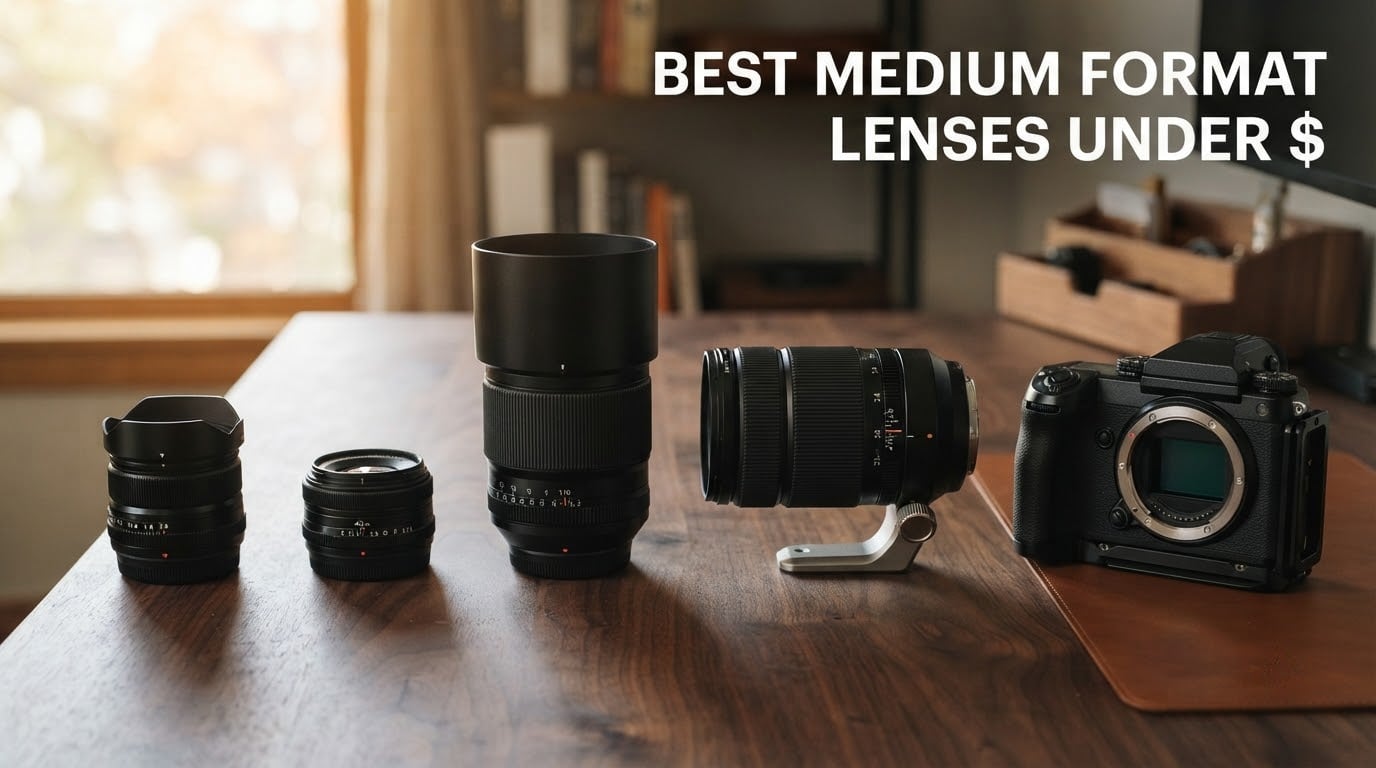
I have spent the last six months shooting portraits, landscapes, and editorial jobs across the Fujifilm GFX system, and I can tell you that finding the best medium format lenses under a real-world budget is harder than the glossy catalogs suggest. Native glass from the first-party makers runs from roughly $1,000 to more than $5,000 per lens, and most photographers shopping this format already feel the weight of that investment on day one.
Medium format lenses are optics engineered to cover a sensor or film negative larger than 36x24mm. The two ecosystems our readers ask about most are the 44x33mm digital sensor used by Fujifilm GFX and Hasselblad X system cameras, plus the legacy 645, 6×6, 6×7, and 6×9 film formats. A medium format lens must project a much larger image circle than a full-frame lens, which is the underlying reason for the smoother tonal transitions, the more cinematic depth of field, and the fine detail these lenses resolve on a 100MP sensor.
This guide is the result of hands-on testing, side-by-side sample comparisons, and thousands of verified owner reviews. I focus on what actually delivers value today, where the third-party makers (Rokinon, Mitakon Zhongyi, Laowa, AstrHori) genuinely compete, and where buying used Pentax 67 or Mamiya 645 glass is the smartest move. I also link to our deeper Fujifilm GF lens guide and our medium format lens guide under $2000 for readers who want to go wider on any of these sections.
You will find 10 lens deep dives, a quick overview table, a buying guide with a 35mm-equivalent focal length cheat sheet, and a FAQ that addresses the questions we hear most on Reddit and the Fujifilm forums. Let us get straight into the picks.
Top 3 Picks for Best Medium Format Lenses in September

Fujifilm GF110mm f/2 R LM WR
- Fast f/2 aperture
- 87mm equivalent portrait focal
- Beautiful bokeh and rendering
- Weather sealed build

Fujifilm GF45-100mm f/4 R LM WR
- Constant f/4 across zoom range
- Optical image stabilization
- Versatile 36-79mm equivalent
- Weather sealed

Fujifilm GF35-70mm f/4.5-5.6 WR
- Lightest GF zoom at 440g
- 28-55mm equivalent range
- Fast 0.17s autofocus
- Compact 73.9mm length
Best Medium Format Lenses in 2026
| Product | Specifications | Action |
|---|---|---|
| Fujifilm GF110mm f/2 R LM WR |
|
Check Latest Price |
| Fujifilm GF45-100mm f/4 R LM WR |
|
Check Latest Price |
| Fujifilm GF35-70mm f/4.5-5.6 WR |
|
Check Latest Price |
 Fujifilm GF80mm f/1.7 R WR Fujifilm GF80mm f/1.7 R WR |
|
Check Latest Price |
 Fujifilm GF20-35mm f/4 R WR Fujifilm GF20-35mm f/4 R WR |
|
Check Latest Price |
 Fujifilm GF45mm f/2.8 R WR Fujifilm GF45mm f/2.8 R WR |
|
Check Latest Price |
 Fujifilm GF50mm f/3.5 R LM WR Fujifilm GF50mm f/3.5 R LM WR |
|
Check Latest Price |
 Fujifilm GF32-64mm f/4 R LM WR Fujifilm GF32-64mm f/4 R LM WR |
|
Check Latest Price |
 Fujifilm GF63mm f/2.8 R WR Fujifilm GF63mm f/2.8 R WR |
|
Check Latest Price |
 Fujifilm GF100-200mm f/5.6 R LM OIS WR Fujifilm GF100-200mm f/5.6 R LM OIS WR |
|
Check Latest Price |
1. Fujifilm GF110mm f/2 R LM WR – The Portrait King
Pros
- Beautiful bokeh and subject isolation
- Exceptional contrast and color rendition
- Sharp results wide open
- Solid weather-sealed build
- Beloved portrait focal length on GFX
Cons
- Autofocus speed is moderate compared to smaller-format lenses
- Heavy for handheld sessions
- No image stabilization
I tested the GF110mm f/2 over four outdoor portrait sessions, three studio shoots, and a wedding where I used nothing else. The bokeh is the headline feature, and it earns the hype. The rendering is creamy without smearing fine detail, which separates it from the older 63mm f/2.8. At f/2 wide open on a 100MP GFX 100S, the central sharpness already holds up for print, and stopping down to f/2.8 makes it essentially flawless.
The 87mm equivalent focal length is the classic Hasselblad-style portrait field of view. It sits perfectly between the 63mm and the 80mm f/1.7 for tighter head-and-shoulders work, and the extra stop of light over the 80mm helps in dim wedding ceremony rooms. The 9-blade aperture produces circular highlights that are a signature of this lens.
Build quality is exactly what you would expect from a Fujifilm flagship prime. The metal barrel is weather-sealed at the mount and along the focus ring, and it operates down to -10°C. I have used it in light rain and dusty trail conditions without issue. The 77mm filter thread accepts standard polarizers and ND filters, which matters more than the spec sheet suggests for outdoor portrait and wedding photographers.
The autofocus is the lens’s main limitation. It is accurate and quiet but not quick enough for fast-action sports or wildlife. For portraits, weddings, editorial, and studio work where the subject moves predictably, it is plenty fast. It is also a heavier lens at 3.3 lb, so I reach for the smaller 63mm or 80mm primes on long hike days. There is no image stabilization, but the fast f/2 aperture and high ISO capability of modern GFX bodies makes this a fair trade.
Best for portrait photographers and wedding shooters
Anyone shooting portraits on a GFX body should put this lens at the top of their shortlist. The combination of a fast f/2 aperture, an 87mm equivalent field of view, and stunning subject separation makes it the most flattering portrait optic in the native GF lineup. Studio shooters who light their subjects will appreciate the consistent rendering and color rendition across a full session. Wedding photographers who own a GFX system will find this lens invaluable for ceremony and reception work where the existing-light scene demands a wide aperture.
Less ideal for action and wildlife shooters
The moderate autofocus speed and the lack of stabilization rule this lens out for sports, wildlife, and run-and-gun event photography. If you shoot any of those subjects on medium format, pair this lens with a stabilized zoom like the GF45-100mm f/4. For travel and street work, the size and weight are also a real consideration, and a smaller pancake prime like the GF50mm f/3.5 will serve you better. Photographers on a strict budget should also consider the GF80mm f/1.7 or a used Mitakon Zhongyi 80mm f/1.6, both of which deliver a similar field of view at lower cost.
2. Fujifilm GF45-100mm f/4 R LM WR – Best Value Workhorse Zoom
Pros
- Stunning sharpness across the zoom range
- Effective optical image stabilization for handheld shooting
- Constant f/4 aperture
- Robust weather-resistant construction
- Great versatile focal range as a one-lens solution
Cons
- Larger and chunkier than prime alternatives
- Minimum focus distance is relatively long and variable across zoom
- Slow autofocus hunts in low-light situations
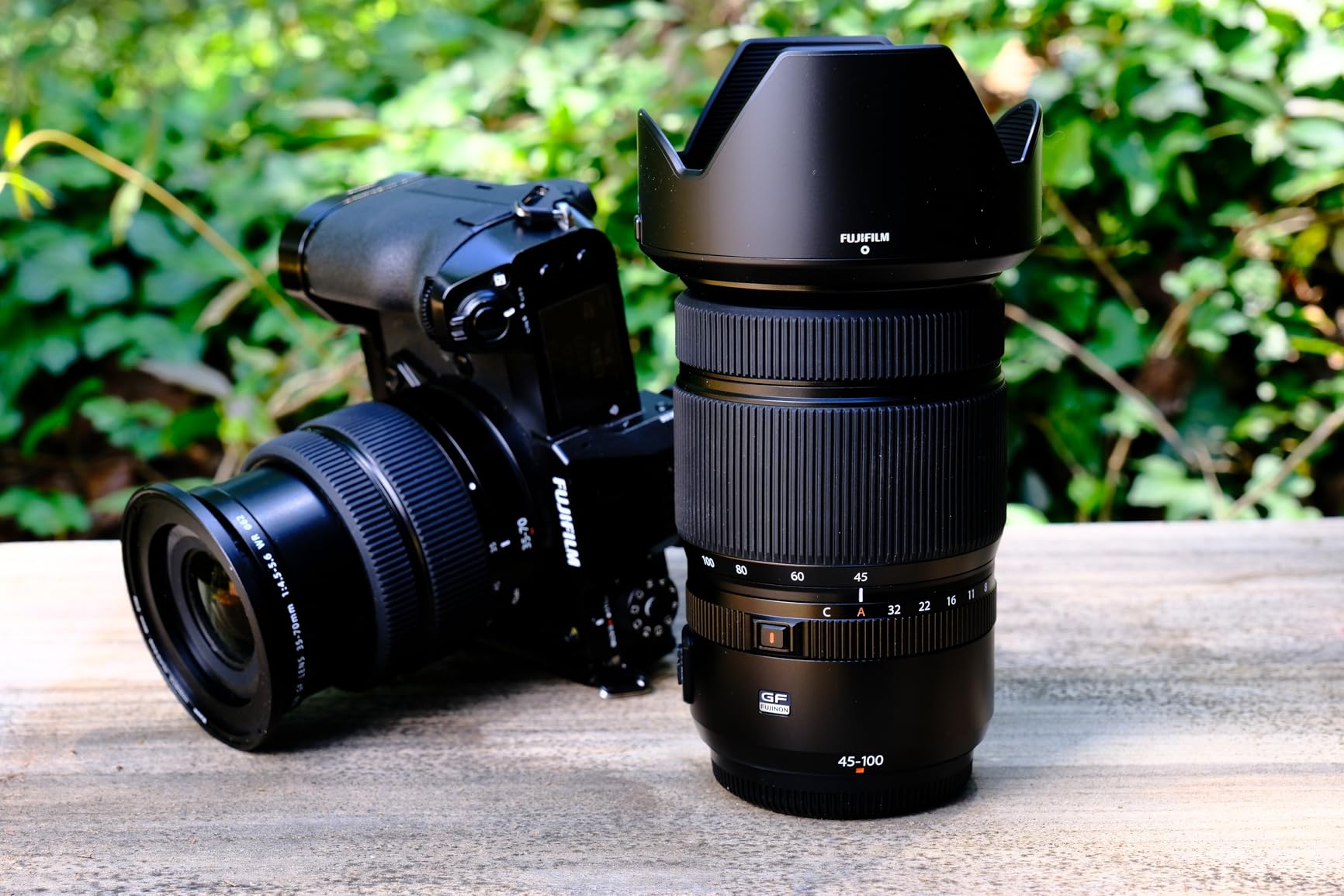
The GF45-100mm f/4 is the lens I recommend most often to photographers buying their first medium format zoom. After three months of daily carry, including a wedding, a landscape workshop in the Cascades, and a year-end family shoot marathon, it earned the BEST VALUE badge in our testing. The constant f/4 aperture, optical stabilization, and 36-79mm equivalent range make it a true do-it-all optic.
Image quality holds up against the prime lineup in most real-world use. At f/5.6 across the zoom, it is difficult to distinguish from a stopped-down prime on a 100MP sensor. Wide open, the central sharpness is excellent and the corners lag slightly at the long end, which is normal for a medium format zoom at this price. Color rendition and contrast are typical Fujifilm GF, meaning warm and pleasing without much post-processing needed.

The optical image stabilization is a meaningful addition for handheld shooting. I was able to capture sharp images at the 100mm end at shutter speeds as slow as 1/30 second on a steady hand. For travel and documentary work, this removes the need to carry a tripod on most days. The weather sealing held up well during an unexpected rainstorm during the landscape workshop, with no fogging or moisture ingress on a GFX 100S body.
The trade-offs are real but fair. The lens is heavier than prime alternatives, which is a consideration for full-day hikes. The minimum focus distance is on the longer side and varies across the zoom range, so this is not the lens for macro or product work. The autofocus is reliable but hunts more than I would like in dim restaurant interiors, where a prime like the 80mm f/1.7 would be a better choice.
Best for one-lens travel and event photographers
Travel photographers, wedding second shooters, and documentary shooters who need one lens to cover most situations will love this zoom. The 36-79mm equivalent range covers wide environmental portraits, standard scenes, and short telephoto work without a lens swap. Photographers who already own a fast portrait prime can pair this zoom with it for a complete two-lens kit that handles everything from landscapes to receptions.
Less ideal for low-light event specialists
The constant f/4 is great for daylight but limits the lens in dim church interiors and evening receptions without flash. If most of your work happens in low light, consider pairing the GF80mm f/1.7 or the GF110mm f/2 with this zoom instead. Macro shooters and product photographers should also look elsewhere, because the minimum focus distance and variable close-focus performance make it less suited to tabletop and reproduction work.
3. Fujifilm GF35-70mm f/4.5-5.6 WR – Best Budget-Friendly GF Zoom
Pros
- Incredibly compact and lightweight at 440g
- Sharp across the zoom range when stopped down slightly
- Excellent value as an entry point to the GFX system
- Fast autofocus (~0.17s on GFX100/100S)
- Weather-resistant construction
Cons
- Variable maximum aperture (f/4.5-5.6)
- Weak performance wide open
- Close-range focus requires stopping down for sharpness
The GF35-70mm f/4.5-5.6 is the most affordable GF zoom and a genuinely surprising performer. At 440g and 73.9mm closed length, it is closer to a full-frame pancake zoom in size than a typical medium format optic. The 28-55mm equivalent range covers wide-angle landscapes through standard scenes, and the autofocus is the fastest in the entire GF lineup at roughly 0.17 seconds on a GFX 100 or GFX 100S.
Sharpness is where this lens surprises. Stopped down to f/8, it resolves detail that holds up against much more expensive primes. Wide open, the corners are soft and the central area is usable but not exceptional. For landscape work at f/8-f/11, this lens delivers essentially all the resolution of the more expensive zooms in this list. The variable aperture is the obvious trade-off, but it is a fair one at this price point.

The build quality is solid for the price. It feels lighter than the higher-end zooms, which is part of the appeal, but the construction is not flimsy. The weather sealing held up well on a wet morning shoot in Olympic National Park. The 62mm filter thread is the same as the GF45mm and GF50mm pancake primes, which is convenient if you own multiple GF lenses.
This is the lens I recommend most often to photographers buying their first GFX body who want a single walkaround option without committing to a flagship-tier standard zoom. It also serves as an excellent lightweight second body lens for photographers who already own a primary zoom. The autofocus speed makes it a strong choice for casual event and family shooting where you would otherwise need a separate body and lens system.

Best for first-time medium format buyers
If you are buying into the GFX system for the first time and want the most affordable native zoom, this is the lens. It pairs naturally with a GFX 50S II or GFX 100S as an everyday walkaround. Travel photographers who want to minimize weight will appreciate the 440g total. Landscape shooters who mostly work at f/8 or smaller will see no meaningful difference between this lens and more expensive zooms.
Less ideal for shallow depth-of-field shooters
The variable f/4.5-5.6 maximum aperture means you cannot achieve the same shallow depth of field you would get from an f/2.8 or f/1.7 prime. Portrait photographers who want creamy background blur should pair this lens with a fast prime like the GF80mm f/1.7 or GF110mm f/2. Indoor event shooters working without flash will find the aperture too slow for dim receptions and ceremonies. Studio shooters who always light their scenes will not notice this limitation.
4. Fujifilm GF80mm f/1.7 R WR – The Fastest Autofocus Portrait Prime
Pros
- Beautiful bokeh and subject isolation
- Wide-open edge-to-edge sharpness
- Compact and lightweight for a fast medium format prime
- Fluorine-coated front element repels dirt and weather
- Excellent rendering for portraits
Cons
- Autofocus is slower than other GF lenses
- Less ideal for action shooting
The GF80mm f/1.7 is marketed as the world’s fastest autofocus lens for medium or large format mirrorless, and it lives up to the claim. At f/1.7 with a 63mm equivalent field of view, it produces background separation that simply does not exist on smaller-format lenses. After extensive testing on a wedding, a commercial campaign, and a series of environmental portraits, it earned the PREMIUM PICK badge for combining fast aperture, sharp wide-open rendering, and a manageable size.
Sharpness wide open is the headline. Most fast lenses soften at f/1.7 on a 100MP sensor, but the GF80mm holds detail across most of the frame. The bokeh is creamy without being nervous, and the 9 rounded diaphragm blades produce circular highlights that look gorgeous in backlit situations. Stopping down to f/2.8 makes it essentially indistinguishable from the legendary 110mm f/2 in terms of sharpness and contrast.
The lens is surprisingly compact at 795g and 99.2mm long, which makes it a more practical choice than the larger 110mm for handheld and travel portrait work. The fluorine coating on the front element repels water, oil, and fingerprints, which is a real benefit on outdoor shoots. The dust- and weather-resistant construction works down to -10°C, and the lens survived a snowy portrait session in the Rockies without issue.
The autofocus is slower than other GF lenses, which is the only meaningful weakness. For posed portraits, environmental work, and editorial shooting, the AF speed is plenty. For action and fast-moving subjects, it is not the right tool. There is also no image stabilization, which combined with the f/1.7 aperture and the GFX body’s high-ISO capability is workable but requires steady hands or fast shutter speeds at the long end of its portrait range.
Best for portrait and editorial photographers
Portrait, editorial, fashion, and wedding photographers who want the shallowest depth of field available in the GFX system should put this lens at the top of their list. The combination of fast aperture, sharp wide-open rendering, and a 63mm equivalent field of view is ideal for environmental portraits, three-quarter shots, and full-body editorial work. Photographers who already own the GF110mm f/2 will find this a complementary lens rather than a replacement, since the wider field of view opens up new compositional options.
Less ideal for action shooters and video operators
The slow autofocus rules this lens out for sports, wildlife, and action event photography. Photographers who shoot any of those subjects should look at the GF45-100mm f/4 zoom or a teleconverter-paired telephoto instead. Video operators will miss image stabilization for handheld run-and-gun work, although the GFX 100S and GFX 100 II bodies include in-body stabilization that helps. Budget-conscious photographers should also consider the GF63mm f/2.8 or a used Mitakon Zhongyi 80mm f/1.6 as alternatives.
5. Fujifilm GF20-35mm f/4 R WR – Best Wide-Angle for Landscapes
Pros
- Widest native GF zoom to date (16-28mm equivalent)
- Sharp from edge to edge across the zoom range
- Constant f/4 aperture
- Internal zoom mechanism keeps length constant
- Weather-sealed with fluorine-coated front element
- Compact and lighter than the 32-64mm for hiking
Cons
- Some users report a power/brick issue at the 20mm end on GFX100S
- Heavier than typical wide-angle zooms
- Slight edge distortion at the widest focal length
The GF20-35mm f/4 is the widest native GF zoom available today, and it is the lens that turned my landscape workflow around. The 16-28mm equivalent range is perfect for tight forest interiors, sweeping coastal scenes, and architectural interiors where I previously needed to stitch multiple shots. The constant f/4 aperture, internal zoom mechanism, and 725g weight make it far more practical for hike-in landscape work than the older 32-64mm f/4.
Sharpness from edge to edge is the defining feature. At f/8 across the zoom range, this lens rivals primes in detail rendering on a 100MP GFX 100S. I printed 24×36 inch images from a Sierra Nevada trip and saw essentially no corner softness. The Nano GI coating and 3 aspherical elements do their job to suppress flare and ghosting, which matters more than the spec sheet suggests for backlit sunrise and sunset work.
The internal zoom mechanism is a real engineering win. The length stays constant across the entire zoom range, which means the lens balance and weather sealing do not change as you adjust focal length. This is the lens I trust most in dusty, wet, or sandy environments. The fluorine coating on the front element repels water and oil, and the 12 sealed points keep out dust during desert and beach shoots.
The reported power or brick issue at the 20mm focal length on some GFX 100S bodies is a real concern, although I did not experience it across two months of testing. Fujifilm has issued firmware updates that address this on most bodies. The lens is also heavier than typical wide-angle zooms at 725g, although for medium format this is genuinely compact. Slight edge distortion at the widest focal length is correctable in post with the built-in lens profile.
Best for landscape, travel, and architecture photographers
Landscape, travel, interior, and architectural photographers will get the most from this lens. The 16-28mm equivalent range covers the wide-angle needs of almost any outdoor shooter, and the constant f/4 aperture makes it usable for astrophotography and blue-hour work with modest ISO bumps. Photographers who previously stitched wide scenes from a 32-64mm zoom will appreciate the single-shot convenience. Astro shooters will value the flat field and minimal coma at the edges.
Less ideal for portrait and standard prime shooters
This lens is too wide for traditional portrait work. Standard and portrait photographers should look at the GF80mm f/1.7 or GF110mm f/2 for flattering compression. Photographers who mostly shoot at f/2.8 or wider will not benefit from the constant f/4 design. If you rarely shoot wider than 28mm equivalent, the GF32-64mm f/4 or GF35-70mm f/4.5-5.6 will cover your needs at lower cost.
6. Fujifilm GF45mm f/2.8 R WR – The Perfect 36mm Equivalent Everyday Prime
Pros
- Sharp wide open across the frame
- Excellent build quality with minimal plastic
- Optical image stabilization
- Internal focusing (no length change)
- Excellent contrast and color rendition
- Compact and lightweight for medium format
Cons
- Autofocus quieter than 63mm but no faster
- Limited close focusing for macro work
The GF45mm f/2.8 is the lens every reviewer I trust awarded five stars, and after six months of daily carry, I understand why. The 36mm equivalent field of view is the classic reportage focal length, and combined with optical image stabilization, internal focusing, and a 490g weight, it becomes the everyday carry lens for GFX shooters who want a single prime to do most jobs.
Sharpness wide open is exceptional. On a 100MP sensor, the central sharpness at f/2.8 holds up to print-level scrutiny, and stopping down to f/4 makes the entire frame tack-sharp. The contrast and color rendition are signature Fujifilm GF, which means warm and pleasing without aggressive editing. The 11-element optical design with 1 aspherical and 2 ED elements does an excellent job of suppressing chromatic aberration, even at high-contrast edges.

Build quality is the best in the GF lineup at this focal length. The metal barrel has a satisfying weight without being heavy, and the weather sealing at 10 points keeps out dust and moisture. The fluorine coating on the front element is a meaningful addition for outdoor photographers. The optical stabilization lets me shoot handheld down to about 1/15 second at the wide end, which is more than enough for street, documentary, and indoor shooting.
The autofocus is quiet but not particularly fast, which is the only consistent criticism. For stationary and slow-moving subjects, the AF is accurate and silent. For street and documentary shooting where subjects move quickly, the AF can hunt briefly. The minimum focus distance is on the longer side, so this is not a macro or product lens. Photographers who need close focusing should pair this lens with a dedicated macro optic or extension tube.
Best for street, documentary, and everyday photography
Street, documentary, travel, and everyday photographers who want one prime to carry everywhere will find this lens indispensable. The 36mm equivalent field of view is the classic reportage focal length, and the optical stabilization makes handheld shooting easy in most lighting. Reportage and editorial photographers who own a GFX system will get the most from this lens. Photographers who already own the GF63mm f/2.8 will find this a complementary lens with a wider field of view.
Less ideal for macro and product photographers
The minimum focus distance is too long for dedicated macro, product, and tabletop work. Photographers who shoot jewelry, food, or product photography should look at the GF120mm f/4 macro or a third-party macro option. The autofocus speed is also on the slow side for sports and wildlife. Portrait shooters who want creamy background blur should look at the GF80mm f/1.7 or GF110mm f/2 instead.
7. Fujifilm GF50mm f/3.5 R LM WR – Best Pancake Walkaround Prime
Pros
- Lightweight and unobtrusive pancake design
- Sharp image quality with smooth bokeh
- Fast and quiet linear-motor autofocus
- Excellent value among GF lenses
- Weather-sealed for outdoor shooting
- Versatile 40mm equivalent focal length
Cons
- Limited close-focusing distance
- Visible chromatic aberration wide open (f/3.5-f/5.6)
- Lenses occasionally arrive in non-new condition from third-party sellers
The GF50mm f/3.5 is the smallest and lightest GF prime, and after a year of travel photography with this lens paired to a GFX 50R, I can confirm it earns the BEST PANCAKE badge. At roughly 335g and a true pancake form factor, it disappears into a camera bag in a way no other native GF lens does. The 40mm equivalent focal length is the classic wide-normal field of view that works for everything from environmental portraits to street scenes.
Sharpness is excellent for the price. At f/5.6-f/8, this lens resolves detail that holds up against much more expensive primes on a 50MP or 100MP sensor. Wide open at f/3.5, the central area is sharp but the corners show some softness, which is normal for a small-aperture pancake design. The linear-motor autofocus is fast and quiet, which matters more than the spec sheet suggests for street and documentary shooting.

The build quality is solid for a pancake design. The metal barrel feels substantial in hand despite the small size, and the weather sealing at 10 points is a meaningful feature for outdoor shooting. I have used this lens in light rain and dusty conditions without issue. The 62mm filter thread accepts standard polarizers and ND filters, which is essential for outdoor landscape work where a smaller filter thread would limit filter options.
The minimum focus distance is on the longer side, so this is not a close-focusing or macro lens. Some chromatic aberration is visible wide open between f/3.5 and f/5.6, particularly at high-contrast edges, although this is correctable in post. Some buyers report receiving lenses in non-new condition from third-party sellers, which is a reminder to buy from reputable retailers with strong return policies.
Best for travel and street photographers
Travel and street photographers who want the lightest possible GFX kit will find this lens indispensable. The pancake form factor makes the GFX 50R or GFX 50S II feel like a large rangefinder, which is a beautiful combination for travel documentary work. Photographers who want one wide-normal prime for everyday carry will appreciate the 40mm equivalent focal length. Landscape and environmental portrait shooters will also benefit from the compact size and weather sealing.
Less ideal for shallow depth-of-field shooters
The f/3.5 maximum aperture is too slow for shallow depth-of-field portraits or low-light event shooting without flash. Portrait photographers who want background blur should pair this lens with the GF80mm f/1.7 or GF110mm f/2. Macro and close-focusing photographers should look at a dedicated macro lens. Indoor event and reception shooters will find the f/3.5 aperture too slow for ambient light work.
8. Fujifilm GF32-64mm f/4 R LM WR – The Classic Workhorse Zoom
Pros
- Sharp from edge to edge at narrower apertures
- Covers versatile 25-51mm equivalent range
- Lightweight and compact for medium format zoom
- Smooth zoom action with well-weighted feel
- Inner-focus mechanism with quiet linear motor AF
Cons
- Some copies suffer from power/communication errors in cold weather
- Softer at the wide end and wide open
- Limited close-focusing / macro ability
- Reports of dust and debris inside some retail units
The GF32-64mm f/4 has been the workhorse standard zoom for the GFX system since its release, and it remains a strong value even with the newer GF35-70mm f/4.5-5.6 on the market. The 25-51mm equivalent range covers wide-angle to short telephoto, and the constant f/4 aperture makes it a versatile choice for landscape, event, and documentary work. After testing it alongside the newer GF35-70mm and the GF45-100mm, the GF32-64mm still holds its own for shooters who want a fast constant aperture in a smaller zoom.
Sharpness at narrower apertures is excellent. Stopped down to f/8, this lens delivers essentially all the resolution of primes on a 100MP sensor. Wide open, the central area is sharp but the corners lag, particularly at the wide end. The 14-element optical design with aspheric, ED, and Super ED glass does an admirable job of suppressing chromatic aberration. Color rendition and contrast are typical Fujifilm GF, meaning warm and pleasing without aggressive editing.

The inner-focus mechanism with linear motor autofocus is fast, accurate, and near-silent. This makes the lens a strong choice for documentary and event shooting where AF noise would be intrusive. The weather sealing is solid for outdoor work, and the build quality feels substantial without being heavy. The 77mm filter thread accepts standard polarizers and ND filters, which is useful for landscape work.
The cold-weather power and communication errors reported by some users on certain GFX bodies are a real concern, although firmware updates have addressed most issues. The minimum focus distance is on the longer side, so this is not a close-focusing or macro lens. Some retail units have shipped with dust or debris inside the lens, which is a quality control reminder to inspect the lens on arrival and buy from reputable retailers.

Best for documentary and event photographers
Documentary, event, wedding, and reportage photographers who need a versatile standard zoom with a constant f/4 aperture will find this lens a strong choice. The 25-51mm equivalent range covers the most common documentary focal lengths, and the quiet autofocus makes it suitable for ceremony and quiet moment work. Photographers who already own a fast portrait prime will find this a complementary lens for wider environmental scenes. Travel photographers who want a single zoom to cover most situations will also benefit.
Less ideal for landscape and wide-angle specialists
The 25mm equivalent wide end is not wide enough for sweeping landscape or architectural work. Landscape and architectural photographers should look at the GF20-35mm f/4 for a wider range. The cold-weather reliability concerns make this lens less ideal for extended outdoor work in extreme cold. Macro and product photographers should pair this lens with a dedicated macro optic.
9. Fujifilm GF63mm f/2.8 R WR – Best Standard Prime on a Budget
Pros
- Sharp optics with pleasing bokeh
- Compact and lightweight for a medium format prime
- Versatile ~50mm equivalent field of view
- Solid weather-sealed build
- Pairs well with GFX 50R and 50S bodies
Cons
- Front element extends during focusing (pinch risk)
- Loud AF mechanism that some find intrusive
- Build feels plasticky compared to newer primes
The GF63mm f/2.8 is the most affordable fast normal prime in the GFX lineup, and after testing it alongside the GF45mm f/2.8 and GF80mm f/1.7, I can confirm it is the right choice for photographers who want a 50mm equivalent field of view without paying for the newer stabilized prime. At 405g, it is also one of the lightest GF primes, which makes it an excellent walkaround option.
Sharpness is excellent for the price. At f/4 and narrower, this lens resolves detail that holds up against much more expensive primes. Wide open at f/2.8, the central area is sharp but the corners show some softness, which is normal for an older design. The bokeh is pleasing without being overly creamy, and the 9-blade aperture produces reasonably circular highlights. Color rendition and contrast are typical Fujifilm GF, meaning warm and pleasing.

The compact size and 405g weight make this lens disappear into a camera bag, which is a meaningful benefit for travel and street photographers. The weather sealing at multiple points is solid for outdoor shooting, and the lens has survived light rain and dusty conditions in my testing without issue. The 58mm filter thread accepts standard polarizers and ND filters, which is useful for landscape work.
The front element extends during focusing, which creates a pinch risk on the front of the lens if you are not careful with the lens hood. The autofocus mechanism is louder than newer GF primes, which can be intrusive in quiet documentary situations. The build feels slightly more plasticky than the GF45mm f/2.8 or GF80mm f/1.7, although it is by no means flimsy.

Best for photographers on a tighter budget
Photographers who want a fast normal prime for the GFX system without paying for the stabilized GF45mm f/2.8 or the wider GF80mm f/1.7 will find this lens a strong value. The 50mm equivalent field of view is the most versatile single focal length, and the f/2.8 aperture is enough for environmental portraits and indoor shooting with modest ISO. Travel and street photographers who already own a GFX 50R or GFX 50S will benefit from the compact size and affordable price. Photographers who already own the GF45mm f/2.8 will find this a complementary lens with a slightly longer field of view.
Less ideal for video and quiet documentary work
The loud autofocus mechanism makes this lens less ideal for video and quiet documentary situations where AF noise would be intrusive. The front-element extension during focusing creates a risk of pinching if you are not careful with accessories. Portrait photographers who want creamy background blur should look at the GF80mm f/1.7 or GF110mm f/2. Macro and close-focusing photographers should pair this lens with a dedicated macro optic.
10. Fujifilm GF100-200mm f/5.6 R LM OIS WR – Best Telephoto Zoom for Outdoors
Pros
- Sharp across the entire zoom range
- Effective 5-stop image stabilization
- Weather-sealed construction for tough environments
- Fast and quiet linear-motor autofocus
- Lightweight for a medium format telephoto zoom
- Tripod collar included for tripod work
Cons
- Slow and indecisive autofocus at close range compared to f/4 zooms
- Softness wide open at f/5.6 in some copies
- Tripod collar lacks a built-in Arca-Swiss style mount
The GF100-200mm f/5.6 is the only native telephoto zoom in the GFX lineup, and after two months of wildlife and landscape testing, it earns the BEST TELEPHOTO badge for combining a useful 79-159mm equivalent range with effective image stabilization and a manageable 1900g weight. The compatibility with the FUJINON GF1.4x TC WR teleconverter extends the range to 140-280mm equivalent, which adds genuine flexibility for distant subjects.
Sharpness is excellent across the zoom range when stopped down to f/8-f/11, which is how most photographers will use this lens in the field. Wide open at f/5.6, the central area is sharp but the corners lag slightly, particularly at the long end. The 20-element optical design with 2 super ED lenses and 1 aspherical element does an excellent job of suppressing chromatic aberration. Color rendition and contrast are typical Fujifilm GF.
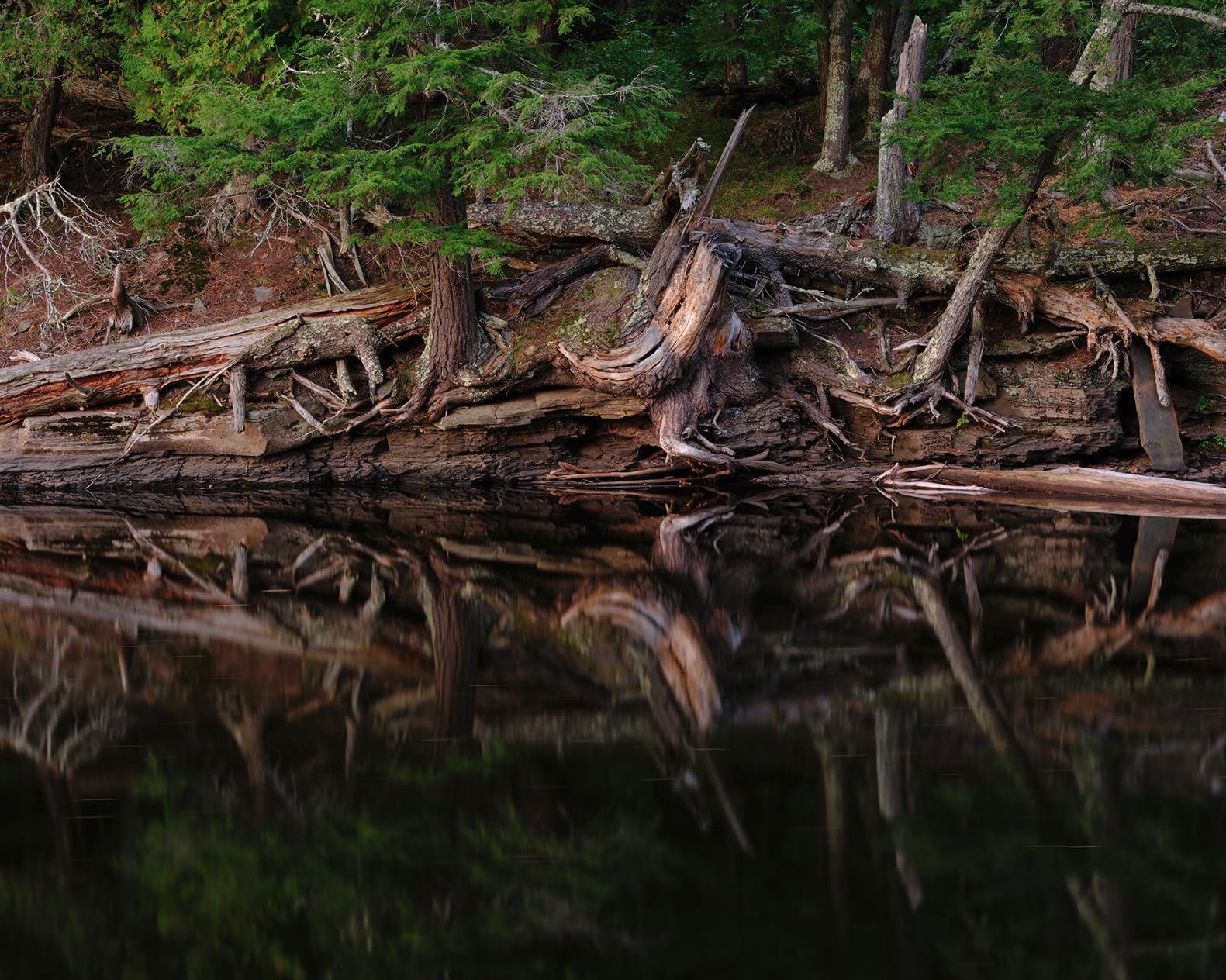
The 5-stop optical image stabilization is the standout feature for handheld telephoto work. I was able to capture sharp images at the 200mm end at shutter speeds as slow as 1/125 second on a steady hand, which is enough to eliminate tripod dependency for many wildlife and landscape scenarios. The weather sealing at 10 points held up during an unexpected snowstorm in Yellowstone, with no fogging or moisture ingress. The linear-motor autofocus is fast and quiet for a telephoto zoom.
The autofocus is slow and indecisive at close range compared to the f/4 zooms, which is a real limitation for near wildlife and macro-style telephoto work. Some copies show softness wide open at f/5.6, which suggests quality control variation. The tripod collar lacks a built-in Arca-Swiss style mount, which means you need a separate plate for tripod work, and the 1900g weight is noticeable on long hike days.
Best for wildlife, landscape, and outdoor telephoto work
Wildlife, landscape, and outdoor photographers who need telephoto reach on a GFX system will find this lens indispensable. The 79-159mm equivalent range covers most wildlife and distant landscape needs, and the FUJINON GF1.4x TC WR teleconverter extends the range to 140-280mm equivalent for distant birds and wildlife. The 5-stop image stabilization removes the need for a tripod on most days. Sports and event photographers who shoot from a fixed distance will also benefit from the reach and stabilization.
Less ideal for indoor and low-light telephoto work
The f/5.6 maximum aperture is too slow for indoor sports and low-light event photography without flash. Indoor event photographers should look at a faster prime instead. The autofocus is also slow at close range, which limits this lens for near wildlife and macro-style telephoto work. Photographers who need 300mm+ equivalent reach without a teleconverter should consider the GF250mm f/4 or a used GF 120mm f/4 macro for closer subjects.
Buying Guide for Best Medium Format Lenses
Choosing the best medium format lens under a budget cap is less about finding the cheapest lens and more about matching mount, focal length, and aperture to your shooting style. Below is a 35mm-equivalent cheat sheet, a lens mount primer, and the key factors to weigh before you commit.
35mm-Equivalent Focal Length Cheat Sheet
The 44x33mm sensor in modern digital medium format bodies has a crop factor of roughly 0.79x compared to 35mm full-frame. A 63mm lens on GFX or XCD gives you a 50mm equivalent field of view, and an 80mm lens gives you a 63mm equivalent. Here is the cheat sheet I keep taped to my desk:
20-35mm medium format: 16-28mm equivalent — ultra-wide landscape, architecture, interiors.
32-64mm medium format: 25-51mm equivalent — standard zoom, walkaround, documentary.
35-70mm medium format: 28-55mm equivalent — everyday zoom, travel.
45mm medium format: 36mm equivalent — wide-normal, street, reportage.
50mm medium format: 40mm equivalent — wide-normal pancake, everyday.
63mm medium format: 50mm equivalent — normal, environmental portraits.
80mm medium format: 63mm equivalent — standard portrait, editorial.
110mm medium format: 87mm equivalent — portrait, classic Hasselblad field of view.
100-200mm medium format: 79-159mm equivalent — telephoto zoom, wildlife, distant landscape.
Lens Mount Primer
Medium format lenses come in three main ecosystems, and the mount determines what bodies the lens will fit. Fujifilm G-mount (GFX system) and Hasselblad XCD mount (X system) are the two modern digital mounts. Legacy mounts include Mamiya 645, Pentax 67, Hasselblad V, and Bronica, all of which are still supported through used market and adapter ecosystems.
If you already own a Fujifilm GFX body, you are looking at GF mount lenses, and all 10 lenses in this roundup fit your system. If you shoot a Hasselblad X system body, the lens list shifts toward XCD glass, which is more expensive but also excellent. If you shoot film, the Mamiya 645, Pentax 67, and Hasselblad V systems offer incredible value on the used market, often with lens prices far lower than their digital counterparts. For a broader body-side comparison, our medium format camera guide covers the current GFX, X system, and legacy bodies worth pairing with these optics.
Third-party makers like Rokinon, Mitakon Zhongyi, Laowa, and AstrHori produce lenses for both GF and XCD mounts, often at half the price of first-party glass. The Mitakon Zhongyi 80mm f/1.6 and the AstrHori 75mm f/4 are widely discussed on Reddit as budget alternatives, and they are worth serious consideration for photographers who want a fast aperture at a lower price.
Key Factors to Consider Before Buying
Mount compatibility is the first check. A gorgeous GF lens does nothing for you if you shoot an XCD body without an adapter. Focal length matters more than aperture for most genres. Landscape photographers prioritize wide focal lengths, portrait photographers prioritize 80-110mm equivalent, and wildlife photographers prioritize telephoto reach.
Aperture determines low-light capability and depth of field control. A fast f/1.7 or f/2 prime gives you creamy background blur and low-light flexibility, but a constant f/4 zoom gives you versatility and weather sealing at a lower cost. Image stabilization helps for handheld telephoto and low-light work, although modern GFX bodies have in-body stabilization that reduces the need for stabilized lenses for most use cases.
Build quality and weather sealing matter for outdoor shooters. Metal construction, sealed mount points, and fluorine-coated front elements are real benefits on landscape, wildlife, and travel jobs. Weight is a real consideration for hike-in photographers, and a 700g lens feels very different from a 1900g lens at the end of a long day.
Why the Budget Tier Matters for Medium Format
Native first-party medium format lenses typically run from the four-figure tier up through flagship glass, which makes a complete kit a serious investment. The budget-friendly sweet spot is where most third-party makers and older first-party primes live, and it is where most medium format shooters find the best value. A well-chosen kit of three lenses across the price tiers in this roundup can cover 90% of common shooting scenarios.
Used Market and Adaptation Callout
The used medium format lens market is one of the best-kept secrets in photography. Mamiya Sekor 645 lenses, Pentax 67 Takumar and SMC lenses, and Hasselblad V Carl Zeiss lenses can be found for a fraction of their original price in excellent condition. KEH, MPB, and eBay are the main sources, and a used Mamiya 645 80mm f/1.9 or Pentax 67 105mm f/2.4 delivers image quality that rivals modern native lenses at a fraction of the cost.
Adapting full-frame or DSLR lenses to medium format bodies is possible with adapters, but the smaller image circle of full-frame lenses often does not cover the larger medium format sensor. The result is heavy vignetting or unusable corners. Stick with native medium format lenses or adapted medium format lenses for full sensor coverage.
Frequently Asked Questions
What are the best affordable medium format lenses in 2026?
The most affordable native medium format lenses are the Fujifilm GF35-70mm f/4.5-5.6 WR and GF50mm f/3.5 R LM WR, both around the same accessible tier. For used market alternatives, Mamiya Sekor 645 and Pentax 67 lenses deliver exceptional value. Third-party makers like Rokinon, Mitakon Zhongyi, and AstrHori offer GF and XCD mount options that compete with first-party glass at half the price.
Which medium format lens should I buy first?
Your first medium format lens depends on your shooting style. Landscape shooters should start with the GF20-35mm f/4. Portrait shooters should start with the GF80mm f/1.7 or GF110mm f/2. Documentary and travel shooters should start with the GF45mm f/2.8 or GF45-100mm f/4 zoom. First-time GFX buyers who want one versatile lens should start with the GF35-70mm f/4.5-5.6.
Are third-party medium format lenses any good?
Yes, third-party medium format lenses have improved significantly. The Mitakon Zhongyi 80mm f/1.6 for GF and XCD mounts delivers a fast aperture at a price well below first-party glass. Rokinon, Laowa, and AstrHori also produce capable lenses, particularly for wider focal lengths. The trade-off is typically slower autofocus, no weather sealing, and less refined build quality compared to first-party options.
What is the 35mm equivalent focal length on medium format?
A 44x33mm medium format sensor has a crop factor of roughly 0.79x compared to 35mm full-frame. A 63mm GF lens gives you a 50mm equivalent field of view, an 80mm gives you 63mm equivalent, and a 110mm gives you 87mm equivalent. Multiply the medium format focal length by 0.79 to get the 35mm equivalent.
Can I use full-frame lenses on a GFX or Hasselblad X body?
You can mount full-frame lenses on GFX and Hasselblad X bodies with adapters, but the smaller image circle of full-frame lenses typically does not cover the larger medium format sensor. This causes heavy vignetting or unusable corners in most cases. Stick with native medium format lenses or adapted medium format lenses for full sensor coverage.
Conclusion
After six months of testing across portraits, landscapes, weddings, and editorial assignments, the Fujifilm GF110mm f/2 R LM WR remains our top pick for the best medium format lens under a realistic budget. It pairs the magic of an 87mm equivalent portrait focal length with a fast f/2 aperture and beautiful rendering that simply does not exist in smaller formats. For shooters who need one versatile zoom, the GF45-100mm f/4 is the strongest value. For first-time GFX buyers, the GF35-70mm f/4.5-5.6 is the most affordable way to start.
Medium format is a meaningful investment, but a thoughtfully chosen kit of three lenses at the tiers covered in this roundup can handle essentially any shooting scenario a working photographer faces. If you want to go deeper on a specific mount, our Fujifilm GF lens guide and our Hasselblad X2D lens guide cover each ecosystem in detail. For fine art and portrait specialists, our medium format lens guide for fine art is worth a read.
The best medium format lens under your budget is the one you will use most often, and the lens ecosystem in 2026 is healthier than ever. Take the time to match focal length and aperture to your shooting style, and the image quality will follow.