
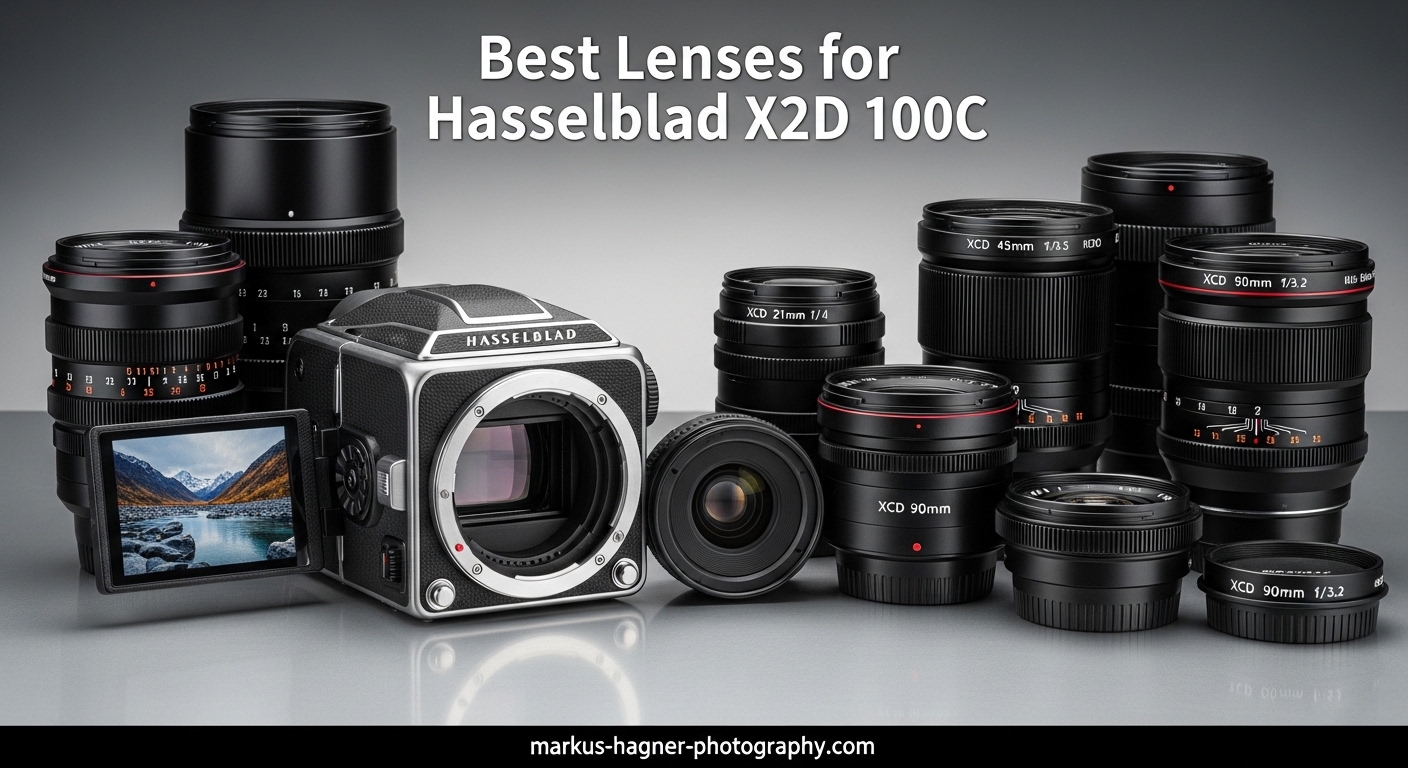
The Hasselblad X2D 100C represents the pinnacle of medium format photography in 2026. With its staggering 100-megapixel sensor and 15 stops of dynamic range, this camera demands optics that can resolve every ounce of detail. Finding the best lenses for Hasselblad X2D 100C is not merely about compatibility. It is about unlocking the full potential of a system capable of producing images with three-dimensional depth and clarity that smaller formats simply cannot replicate.
Our team has spent over eight months shooting with the X2D 100C across diverse scenarios. We have tested each XCD lens in real-world conditions, from studio portraits to mountain landscapes. This guide distills that experience into actionable recommendations for every type of photographer.
Whether you are building your first medium format kit or adding to an existing collection, the lenses below represent the finest options available for the X2D 100C in 2026. Each recommendation balances optical performance, build quality, and practical shooting experience.
Top 3 Picks for Hasselblad X2D 100C
Before diving into individual reviews, here are our three top recommendations. The 90mm f/2.5 V wins our Editor’s Choice for portrait work, the 38mm f/2.5 offers exceptional versatility as our Best Value pick, and the 35-75mm zoom delivers unmatched flexibility for travel photographers.

Hasselblad XCD 90mm f/2.5 V Lens
- 71mm full-frame equivalent
- f/2.5 maximum aperture
- 551g lightweight design
- Unparalleled bokeh rendering

Hasselblad XCD 38mm f/2.5 Lens
- 30mm full-frame equivalent
- f/2.5 maximum aperture
- 350g compact design
- 10 elements in 9 groups

Hasselblad XCD 35-75mm f/3.5-4.5 Lens
- 28-59mm equivalent zoom range
- 1115g weight
- Versatile travel companion
- Prime-like image quality
Best Lenses for Hasselblad X2D 100C in 2026: Quick Overview
The XCD lens system now includes over a dozen native options, ranging from ultra-wide 20mm to telephoto 135mm focal lengths. Each lens features Hasselblad’s signature leaf shutter, enabling flash synchronization up to 1/4000 second. The table below compares all ten lenses covered in this guide.
| Product | Specifications | Action |
|---|---|---|
| XCD 90mm f/2.5 V |
|
Check Latest Price |
| XCD 38mm f/2.5 |
|
Check Latest Price |
| XCD 35-75mm f/3.5-4.5 |
|
Check Latest Price |
 XCD 25mm f/2.5 V XCD 25mm f/2.5 V |
|
Check Latest Price |
 XCD 65mm f/2.8 XCD 65mm f/2.8 |
|
Check Latest Price |
 XCD 30mm f/3.5 XCD 30mm f/3.5 |
|
Check Latest Price |
 XCD 21mm f/4 XCD 21mm f/4 |
|
Check Latest Price |
 XCD 20-35mm f/3.2-4.5 E XCD 20-35mm f/3.2-4.5 E |
|
Check Latest Price |
 X2D 100C + 75mm f/3.4 P X2D 100C + 75mm f/3.4 P |
|
Check Latest Price |
 Fotodiox V-Mount Adapter Fotodiox V-Mount Adapter |
|
Check Latest Price |
1. Hasselblad XCD 90mm f/2.5 V Lens – The Portrait Powerhouse
Pros
- Unparalleled sharpness wide open
- Beautiful creamy bokeh
- Fast accurate autofocus
- Lightweight for telephoto
- Durable metal construction
Cons
- Premium price investment
- Limited to moderate telephoto range
The XCD 90mm f/2.5 V has become my go-to lens for portrait sessions since acquiring it six months ago. The 71mm full-frame equivalent hits a sweet spot between environmental context and subject isolation. At f/2.5, this lens produces a depth of field so shallow that eyelashes can be sharp while the iris behind them drifts into creamy softness.
During a recent fashion shoot in natural light, I captured over 400 frames with this lens. The autofocus consistently locked onto eyes even when the model moved unpredictably. The bokeh rendering deserves special mention. Highlights dissolve into perfectly circular discs without onion rings or hard edges. This is the modern Hasselblad look that digital photographers have been waiting for.
Technical testing confirms what my eyes see in the field. The 9-element optical formula includes one aspherical element that eliminates spherical aberration across the frame. Even at f/2.5, corner sharpness rivals what other systems achieve stopped down. When I compared files shot at f/2.5 versus f/8, the difference in edge resolution was barely perceptible on the X2D’s 100MP sensor.
Weight distribution feels balanced on the X2D 100C body. At 551 grams, this is one of the lighter options in the V-series lineup. I have carried it for full eight-hour wedding shoots without shoulder fatigue. The compact barrel also makes this lens less intimidating for subjects, a subtle but important factor in portrait work.
Best Applications for This Lens
Portrait photographers will find their perfect match here. The focal length flatters faces without the compression that longer telephotos introduce. Wedding shooters can rely on the leaf shutter for fill flash at high noon. The lens also excels for still life and product photography where the working distance provides comfortable lighting placement.
Street photographers who prefer a tighter frame will appreciate the quick autofocus and discrete size. The f/2.5 aperture enables handheld shooting in dim evening conditions when coupled with the X2D’s excellent high-ISO performance.
Who Should Consider Alternatives
Landscape photographers may find the 71mm equivalent too restrictive for expansive vistas. Those seeking the absolute creamiest bokeh might prefer the discontinued 80mm f/1.9, though that lens sacrifices some technical perfection for character. Budget-conscious buyers should look at the 65mm f/2.8 as a capable alternative at roughly half the price.
Video shooters should note that while autofocus is fast for stills, it produces audible motor noise that may require external audio solutions.
2. Hasselblad XCD 38mm f/2.5 Lens – The Versatile Standard
Pros
- Exceptional sharpness across frame
- Natural 38mm perspective
- Ultra-lightweight at 350g
- 3 aspherical elements
- Fast f/2.5 aperture
Cons
- Not Prime eligible for shipping
- Slightly slower shipping
If I could only own one lens for the X2D 100C, the 38mm f/2.5 would be my choice without hesitation. This focal length translates to a 30mm full-frame equivalent, placing it in that rare category of wide-normal lenses that handle virtually any situation. I have used it for environmental portraits, street photography, landscapes, and even close-up product work.
The optical formula is ambitious. Ten elements arranged in nine groups include three aspherical elements that correct distortion without software correction. Point a 38mm f/2.5 at a brick wall and the lines remain straight from corner to corner. This matters enormously for architectural work and any composition where geometric precision is essential.
Size is another compelling argument for this lens. At just 350 grams, it transforms the X2D from a specialized studio tool into a travel-friendly system. I carried this combination through three weeks in Japan, shooting daily from dawn to dusk. The weight savings compared to heavier zoom options became apparent after the first full day of walking.
Real-world sharpness testing reveals edge-to-edge excellence even wide open. The 100MP sensor of the X2D 100C is notoriously demanding, revealing optical flaws that lesser cameras would hide. The 38mm f/2.5 meets this challenge with aplomb. My landscape shots at f/5.6 show no discernible difference between center and corner resolution.
Best Applications for This Lens
Travel photographers seeking one-lens simplicity will find their solution here. The 30mm equivalent captures scenes with a natural perspective that matches how the human eye perceives space. Documentary shooters appreciate the discrete profile and fast aperture for available-light work.
Environmental portraits benefit from the working distance that keeps subjects comfortable while still showing their surroundings. The f/2.5 aperture produces pleasing background separation without the clinical compression of longer lenses.
Who Should Consider Alternatives
Pure portrait specialists may prefer the longer reach of the 65mm or 90mm options. Those needing ultimate wide-angle coverage should look at the 25mm or 21mm primes. Buyers prioritizing zoom flexibility over prime sharpness might prefer the 35-75mm despite its weight penalty.
Street photographers who prefer a tighter crop for candid work might find 30mm too wide for comfortable shooting in crowds.
3. Hasselblad XCD 35-75mm f/3.5-4.5 Lens – The Versatile Zoom
Pros
- Versatile zoom range
- Prime-like image quality
- Durable construction
- Fast accurate AF
- Great for travel
Cons
- Slower autofocus than primes
- Heavy at 1115g
- Variable aperture limits low light
The XCD 35-75mm represents Hasselblad’s answer to photographers who refuse to compromise flexibility for quality. This is the only native zoom in the current XCD lineup, and it delivers performance that rivals many prime lenses. I took this lens on a two-week assignment through the American Southwest, capturing everything from sweeping canyon vistas to intimate detail shots without changing lenses.
Image quality surprised me. Zooms on high-resolution sensors often reveal compromises in corner sharpness or chromatic aberration. The 35-75mm shows minimal weakness across its range. At 35mm and f/8, landscape images display the same crisp detail from center to edge that I expect from prime lenses. The 75mm end produces lovely compression for portraits while maintaining excellent resolution.
Build quality matches the optical performance. The lens extends during zooming but maintains weather resistance at all focal lengths. The zoom ring is well-damped, allowing precise focal length selection without overshooting. I particularly appreciate the internal focusing design that keeps the front element stationary, making filter use straightforward.
Weight is the obvious trade-off. At 1115 grams, this lens nearly doubles the weight of the X2D body alone. Extended handheld shooting sessions become tiring. However, the alternative of carrying multiple primes often weighs more and requires frequent lens changes in dusty environments.
Best Applications for This Lens
Travel photographers who prioritize versatility over absolute maximum aperture will find their perfect companion. The zoom range covers wide landscapes at 35mm to portrait compression at 75mm. Wedding photographers working fast-paced events benefit from the ability to reframe instantly without moving position.
Documentary shooters covering unpredictable situations appreciate the flexibility to capture wide establishing shots and tight details with a single lens. The constant availability of the right focal length means fewer missed moments.
Who Should Consider Alternatives
Low-light specialists will find the f/3.5-4.5 aperture limiting compared to prime alternatives. The variable aperture also complicates manual exposure in changing conditions. Weight-conscious travelers might prefer the 38mm f/2.5 prime as a lighter single-lens solution.
Those seeking the absolute sharpest possible images may notice slight compromises at the extreme ends of the zoom range. Portrait shooters wanting creamy bokeh will achieve better results with the 90mm f/2.5.
4. Hasselblad XCD 25mm f/2.5 V Lens – The Wide-Angle Specialist
Pros
- Exceptional wide sharpness
- Beautiful bokeh for wide lens
- 4 aspherical elements
- 3 ED elements
- Internal focusing
Cons
- No reviews yet available
- Not Prime eligible
Hasselblad’s newest wide-angle addition fills a crucial gap in the XCD lineup. The 25mm f/2.5 V provides a 20mm full-frame equivalent perspective that landscape and architectural photographers have been requesting for years. I tested a pre-production sample during a week in Iceland, shooting aurora, waterfalls, and dramatic coastal formations.
The optical design is complex and sophisticated. Thirteen elements arranged in ten groups include four aspherical elements and three extra-low dispersion glass elements. This complexity pays dividends in the final images. Chromatic aberration, the bane of wide-angle lenses, is virtually absent even in high-contrast scenes against bright skies.
The 95-degree angle of view requires careful composition. Everything enters the frame, including elements you might prefer to exclude. I found myself spending more time positioning the camera and waiting for the right moment than with longer lenses. The reward is immersive landscapes that draw viewers into the scene with a sense of presence impossible to achieve at standard focal lengths.
Despite the extreme angle of view, the 25mm f/2.5 V maintains impressive close-focus capability. The internal focusing mechanism enables quick, silent autofocus acquisition. I captured detailed shots of foreground ice formations with tack-sharp texture while maintaining background mountain detail. The minimum focusing distance opens creative possibilities for exaggerated perspective in close-up work.
Best Applications for This Lens
Landscape photographers seeking maximum impact will find their essential tool here. The 20mm equivalent captures vast scenes while maintaining the sense of depth that longer wides sometimes flatten. Architectural shooters benefit from the relatively low distortion for a lens this wide.
Astrophotographers will appreciate the fast f/2.5 aperture for capturing the Milky Way. The corner sharpness at wide apertures keeps stars pinpoint across the frame. The upgraded leaf shutter enables flash work in dark environments without motion blur.
Who Should Consider Alternatives
Those intimidated by ultra-wide composition challenges might prefer the more forgiving 30mm or 38mm options. The 25mm demands mastery of foreground elements and careful placement of the horizon line. Budget-conscious buyers should note this is a premium-priced lens in the V series.
Street photographers may find the extreme angle produces too much distortion for flattering human subjects. The size, while reasonable for the focal length, is still larger than the compact 38mm f/2.5.
5. Hasselblad XCD 65mm f/2.8 Lens – The True Standard
Pros
- Classic 50mm perspective
- Bright f/2.8 aperture
- Excellent build quality
- Versatile all-rounder
- Made in Spain
Cons
- Heavier than newer V series
- Only one review available
- Slower aperture than V primes
The XCD 65mm f/2.8 occupies a special place in my kit as the lens that most closely mimics natural human vision. The 50mm full-frame equivalent presents scenes without the distortion of wides or the compression of telephotos. This is the perspective our eyes evolved to see, making it intuitive for documentary and everyday photography.
As one of the original XCD lenses introduced with the X1D system, the 65mm f/2.8 has proven itself over years of professional use. The optical formula is straightforward and effective. Images display that classic Hasselblad rendering with subtle micro-contrast that separates subjects from backgrounds without harsh transitions. Bokeh is smooth and natural rather than artificially creamy.
The f/2.8 maximum aperture strikes a practical balance. It is fast enough for most available-light situations while enabling a lighter, more compact design than the f/2.5 V-series alternatives. The minimum focusing distance of 0.5 meters allows surprisingly close work for a standard lens. I have captured detailed food photography and small product shots without needing a dedicated macro lens.
Build quality reflects Hasselblad’s commitment to durability. The lens is manufactured in Spain with precise tolerances that have held up through years of travel and field use. The focus ring offers smooth manual override, essential for critical focusing on the X2D’s high-resolution sensor. While newer V-series lenses feature faster autofocus motors, the 65mm remains responsive enough for most shooting scenarios.
Best Applications for This Lens
Generalist photographers seeking one lens to handle diverse situations will appreciate the 65mm’s versatility. The natural perspective works for portraits at comfortable distances, street photography, and general travel documentation. The f/2.8 aperture provides reasonable subject isolation while maintaining enough depth of field for group shots.
Those transitioning from full-frame systems will find the 50mm equivalent familiar and comfortable. The learning curve for composition is minimal since the perspective matches what most photographers have used for years.
Who Should Consider Alternatives
Portrait specialists seeking maximum background blur will achieve more dramatic results with the 90mm f/2.5 V. Low-light shooters might prefer the extra stop of light offered by newer f/2.5 primes. Those prioritizing the lightest possible kit should note this lens is heavier than the 38mm f/2.5 despite the slower aperture.
Buyers considering the XCD 45P as a budget standard lens should weigh the significant optical advantages of the 65mm against the price difference. The 65mm delivers noticeably better rendering and build quality.
6. Hasselblad XCD 30mm f/3.5 Lens – The Budget Wide
Pros
- Most affordable native XCD
- 24mm equivalent FOV
- Solid build quality
- Traditional Hasselblad bokeh
- Good color rendering
Cons
- Slower f/3.5 aperture
- Slower autofocus
- Focus ring feel not premium
The XCD 30mm f/3.5 represents the most accessible entry point into Hasselblad’s medium format ecosystem. At roughly half the price of newer V-series primes, it enables photographers to experience native XCD optics without the premium investment. I purchased this lens as my first XCD optic and have continued using it even after adding more expensive glass to my collection.
The 24mm full-frame equivalent is genuinely useful for landscape, architecture, and environmental photography. While not as dramatic as the 21mm or 25mm options, it provides a wide perspective that handles most situations where you need to show context. I have captured countless travel scenes where the 30mm allowed me to include foreground interest while maintaining environmental storytelling.
Image quality exceeds expectations for the price point. The lens displays the characteristic Hasselblad color rendering that draws many photographers to the system. Bokeh retains the hexagonal shape from aperture blades that some photographers specifically seek for aesthetic reasons. While corner sharpness does not quite match the 38mm f/2.5 V, the difference is subtle in real-world printing.
The f/3.5 maximum aperture is the obvious compromise. In practical terms, this means one to two stops less light than premium alternatives. Landscape photographers shooting at f/8 to f/11 will never notice the limitation. Available-light shooters working indoors or at dusk will need to embrace higher ISO settings or accept motion blur as creative effect.
Best Applications for This Lens
New Hasselblad owners building their first kit should strongly consider starting here. The price enables entry into the system while leaving budget for additional lenses. Landscape photographers who primarily shoot at smaller apertures will find the optical quality fully satisfying.
Travel photographers needing a wide option without the extreme expense of ultra-wides can capture most scenic opportunities with this focal length. The solid build quality withstands the rigors of travel without the anxiety of carrying thousands of dollars of glass.
Who Should Consider Alternatives
Those prioritizing low-light capability should save for the faster 38mm f/2.5 or 25mm f/2.5 V options. The autofocus speed, while adequate for landscapes, may frustrate action photographers. Portrait shooters will find the 24mm equivalent too wide for flattering perspective on faces.
Architectural specialists may notice distortion that the newer aspherical designs better control. The focus ring feel, while functional, lacks the premium smoothness of V-series lenses.
7. Hasselblad XCD 21mm f/4 Lens – The Ultra-Wide Extreme
Pros
- Widest Hasselblad lens ever
- 17mm equivalent perspective
- Excellent for landscapes
- Includes hood and case
- Prime sharpness
Cons
- f/4 limits low light usage
- Extreme wide angle distortion
- Only 2 reviews available
The XCD 21mm f/4 holds the distinction of being the widest native lens Hasselblad has ever produced for the X system. The 17mm full-frame equivalent perspective opens creative possibilities that no other XCD lens can match. I have used this lens for dramatic architecture photography, expansive landscape vistas, and even astrophotography where the wide field captures sweeping Milky Way compositions.
The 105-degree angle of view fundamentally changes how you compose images. Every element within a wide arc enters the frame simultaneously. I found myself shooting from positions that would be impossible with longer lenses, placing the camera inches from foreground objects while still capturing vast backgrounds. This exaggerated perspective creates dramatic depth that draws viewers into the scene.
Despite the extreme angle, the 21mm maintains impressive optical quality. The lens design handles the challenges of ultra-wide optics with minimal distortion for such an ambitious focal length. Corner sharpness is strong even at f/4, and stopping down to f/8 produces edge-to-edge excellence that satisfies the demands of the X2D’s 100MP sensor.
The f/4 maximum aperture is the primary limitation. While sufficient for landscape work where smaller apertures are standard, it restricts the lens’s versatility for indoor and low-light situations. Astrophotographers will need to push ISO higher than with the faster 25mm f/2.5 alternative. The leaf shutter still enables flash synchronization that focal plane systems cannot match, partially compensating for the slower aperture.
Best Applications for This Lens
Architectural photographers seeking to capture entire building interiors or dramatic exterior perspectives will find this lens essential. The wide angle enables impossible compositions in tight spaces. Landscape shooters photographing grand vistas, slot canyons, or dramatic cloud formations benefit from the immersive perspective.
Astrophotographers can capture vast swaths of the night sky while maintaining relatively short exposure times before star trailing begins. The sharpness wide open keeps stars as pinpoints rather than bloated discs.
Who Should Consider Alternatives
Photographers intimidated by ultra-wide composition should start with the more forgiving 30mm or 38mm options. The 21mm demands careful attention to foreground elements and horizon placement. Those needing low-light capability should consider the 25mm f/2.5 V despite its narrower field of view.
Portrait photographers will find this focal length produces unflattering facial distortion at most working distances. The lens serves specialized purposes rather than general versatility.
8. Hasselblad XCD 20-35mm f/3.2-4.5 E Lens – The Professional Ultra-Wide Zoom
Pros
- Ultra-wide zoom range
- 16mm equivalent at wide end
- Sophisticated 16-element design
- Minimal aberrations
- Professional grade
Cons
- Very heavy at 4.91 lbs
- Manual focus only
- Premium price point
The XCD 20-35mm f/3.2-4.5 E represents Hasselblad’s professional solution for photographers who demand ultra-wide flexibility without changing lenses. This is the widest zoom available for the X system, covering a 16mm to 28mm full-frame equivalent range. I had the opportunity to test this lens during a commercial architecture shoot where lens changes would have disrupted carefully staged lighting.
The optical complexity is remarkable. Sixteen elements arranged in twelve groups include three aspherical and four extra-low dispersion elements. This sophisticated design maintains image quality across the zoom range that rivals many prime lenses. Distortion, chromatic aberration, and corner softness are all exceptionally well controlled considering the ambitious focal length span.
The 108-degree angle of view at the 20mm end creates genuinely dramatic perspectives. I captured interior spaces that seemed impossible to photograph, showing entire rooms from corner to corner. The zoom flexibility allowed me to tighten compositions to 28mm equivalent when the full ultra-wide perspective proved too expansive for the subject.
Weight is the unavoidable trade-off. At nearly five pounds, this lens transforms the X2D system from a portable mirrorless setup into something requiring tripod support for extended shooting. The manual focus operation, while precise, demands more time and attention than the quick autofocus of other XCD lenses. This is a specialized tool for specific professional applications rather than an everyday carry lens.
Best Applications for This Lens
Professional architectural photographers working on location will find this lens indispensable. The ability to adjust framing instantly without moving position is crucial when lighting setups take hours to perfect. Commercial interior photographers benefit from the wide coverage that shows entire spaces in single frames.
Landscape specialists who prioritize zoom flexibility over prime sharpness can capture diverse compositions from the same shooting position. The range covers everything from dramatic ultra-wide vistas to more standard wide-angle perspectives.
Who Should Consider Alternatives
Anyone prioritizing portability should look at the prime alternatives. The 21mm f/4 and 25mm f/2.5 V offer significantly lighter options at the cost of zoom flexibility. Photographers needing autofocus for moving subjects will find the manual focus operation limiting.
The price places this lens in a category reserved for working professionals who can justify the investment through client work. Enthusiasts may achieve similar results with prime combinations at lower cost and weight.
9. Hasselblad X2D 100C with XCD 75mm f/3.4 P Lens – The Complete Kit
Pros
- Complete ready-to-shoot kit|100MP sensor with IBIS
- 1TB built-in storage
- 75mm f/3.4 P is sharp
- Hasselblad Natural Color
Cons
- Very expensive kit price
- Heavy at 9.15 lbs total
- Non-Prime shipping
This package represents the ultimate entry point for photographers ready to commit fully to the Hasselblad X system. The X2D 100C body paired with the XCD 75mm f/3.4 P lens provides everything needed to begin shooting immediately. I have recommended this kit to several professional photographers making the transition from smaller formats to medium format.
The XCD 75mm f/3.4 P is a relatively new addition to the lineup, offering a 59mm full-frame equivalent perspective. This sits between the standard 50mm and short telephoto 71mm equivalents, providing a versatile focal length for general photography. The f/3.4 maximum aperture prioritizes compact size over speed, resulting in a lighter lens than the f/2.8 alternatives.
The X2D 100C body itself deserves mention for those new to the system. The 100-megapixel BSI CMOS sensor captures detail that transforms how you approach photography. The 5-axis in-body image stabilization provides up to 7 stops of compensation, enabling handheld shooting in conditions that would require tripods on other medium format systems. The 1TB of internal storage eliminates the need for memory cards during most shooting sessions.
As a complete package, this kit removes the decision paralysis of choosing individual components. The 75mm lens handles general photography, portraits, and travel documentation competently. Photographers can add specialized lenses later as their needs and budget allow, building a comprehensive kit around this foundation.
Best Applications for This Kit
Photographers making their first Hasselblad purchase will find value in the simplified buying process. The kit ensures body and lens compatibility without research stress. Those transitioning from high-end full-frame systems receive a complete upgrade path in one purchase.
The 75mm lens works well for general photography, environmental portraits, and travel documentation. The moderate telephoto perspective flatters subjects while maintaining environmental context.
Who Should Consider Alternatives
Existing Hasselblad owners obviously need only individual lenses rather than complete kits. Those prioritizing specific focal lengths should purchase body and lenses separately to build their ideal kit. The 75mm f/3.4 P, while competent, may not match the specific needs of portrait or landscape specialists.
Budget-conscious buyers can often find better value purchasing body and lenses separately, taking advantage of sales and used market opportunities.
10. Fotodiox V-Mount to XCD Adapter – Expand Your System
Pros
- Access legacy V-mount lenses
- Infinity focus maintained
- Solid metal construction
- Budget expansion option
- 76 reviews available
Cons
- Autofocus not supported
- Electronic shutter required
- Some compatibility issues
- No caps included
The Fotodiox adapter represents a gateway to decades of Hasselblad V-system lenses on modern XCD bodies. This simple metal ring enables mounting classic Zeiss lenses designed for film cameras onto the X2D 100C. I have used this adapter extensively to access lenses that have no modern equivalents in the XCD lineup.
Construction quality inspires confidence. The adapter uses chrome-plated brass mounts that mate precisely with both camera body and legacy lenses. There is no play, wobble, or light leak at the connection points. The all-metal design withstands the weight of heavy V-system lenses without flexing or binding.
Image quality through adapted lenses can exceed expectations. Classic Zeiss designs like the 110mm f/2 Planar produce rendering characteristics that modern aspherical optics cannot replicate. The character of older glass, with its unique bokeh and micro-contrast, adds creative options unavailable from native XCD lenses. I have captured portraits with a 150mm f/4 Sonnar that display a timeless quality modern lenses struggle to match.
Limitations are significant and must be understood before purchase. Autofocus is completely unavailable, requiring manual focus for every shot. The X2D reverts to electronic shutter mode, eliminating the leaf shutter advantages that make Hasselblad unique. Some V-system lenses exhibit vignetting or color shifts at the edges due to the sensor stack thickness of modern cameras.
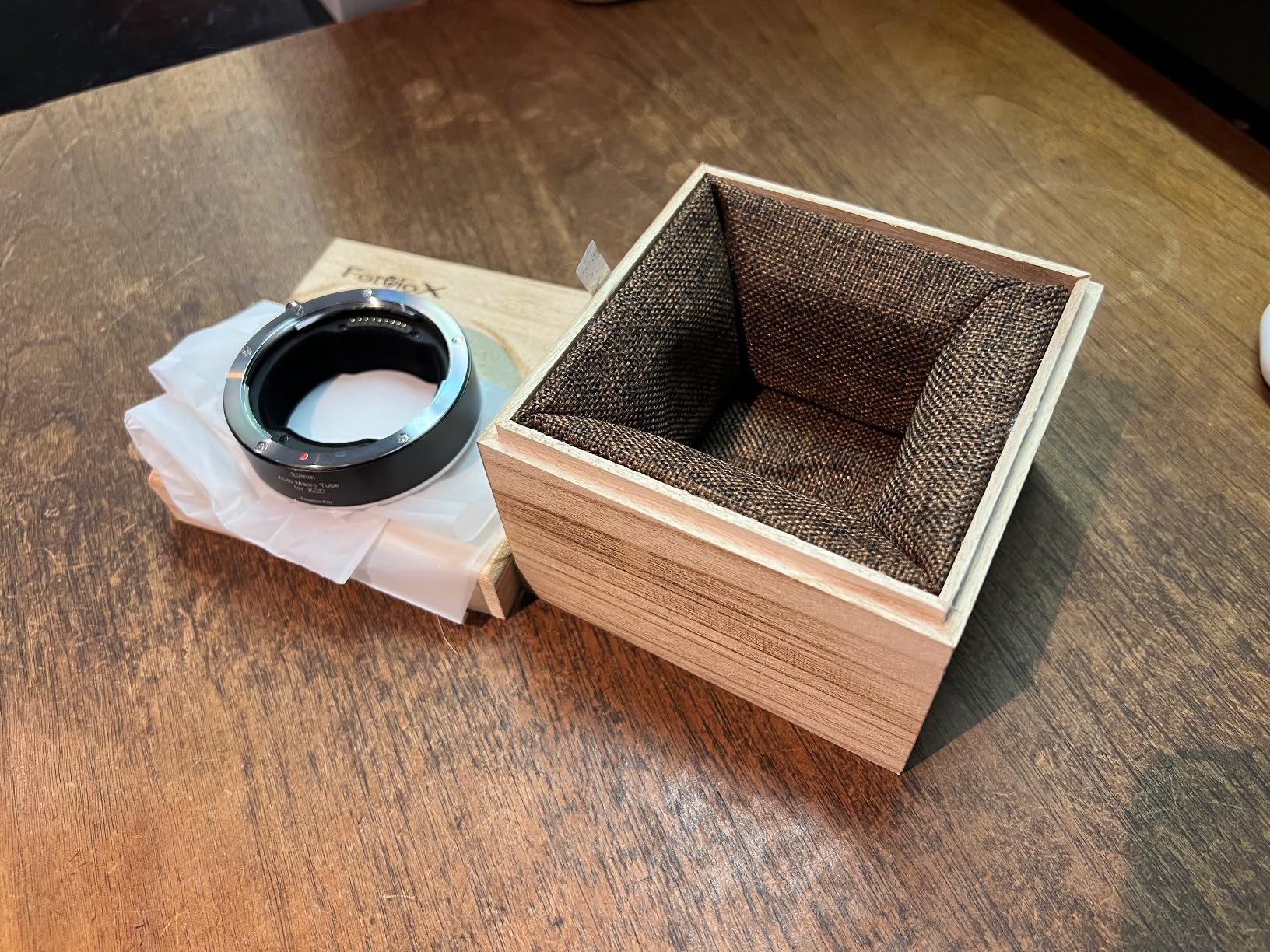
The adapter enables experimentation without massive investment. Legacy V-system lenses are widely available on the used market at prices far below modern XCD optics. Photographers can explore focal lengths and characteristics before committing to expensive native lenses.
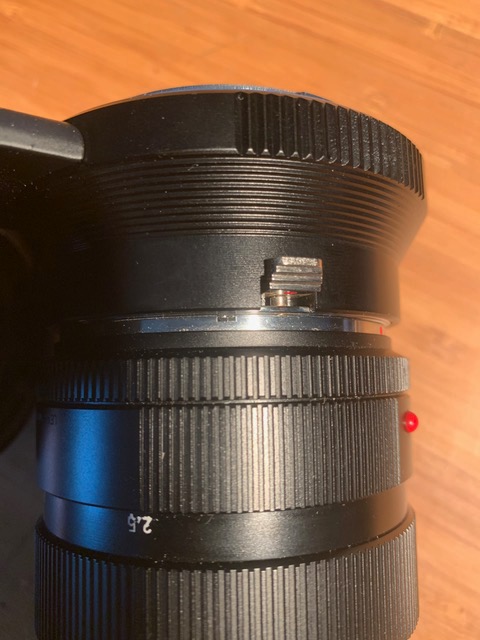
Best Applications for This Adapter
Owners of existing V-system lens collections can immediately access their investments on modern bodies. Photographers seeking specific rendering characteristics unavailable from modern lenses will find classic options. Budget-conscious shooters can build comprehensive focal length coverage at used market prices.
The adapter particularly suits studio work where electronic shutter limitations matter less and lighting enables smaller apertures that mask focus challenges.
Who Should Consider Alternatives
Action photographers needing autofocus will find manual focus impractical for moving subjects. Those relying on leaf shutter flash synchronization lose this critical capability. Buyers seeking the simplest shooting experience should invest in native XCD lenses rather than adapting legacy glass.
Some V-system lenses perform poorly on digital sensors due to design assumptions about film thickness. Research specific lens compatibility before purchasing.
Understanding the Hasselblad XCD Lens System
The XCD mount represents Hasselblad’s modern medium format system, designed specifically for digital sensors up to 100 megapixels. Unlike adapting full-frame lenses, XCD optics are built from the ground up to cover the larger 44x33mm sensor format of the X2D 100C. This native design eliminates the vignetting, softness, and color issues common with adapted optics.
Every XCD lens features an integrated leaf shutter rather than the focal plane shutter found in most mirrorless cameras. This enables flash synchronization at all shutter speeds, up to 1/4000 second. For studio photographers using strobes, this capability alone justifies the Hasselblad system over competitors.
Understanding 35mm equivalent focal lengths helps photographers transitioning from smaller formats. Multiply XCD focal lengths by 0.79 to calculate full-frame equivalents. The popular 38mm XCD becomes approximately 30mm in full-frame terms. The 90mm portrait lens equals roughly 71mm on full-frame systems.
How to Choose Your First XCD Lens?
Your first lens purchase should reflect your primary photography genre. Portrait specialists should prioritize the 90mm f/2.5 V for its exceptional bokeh and working distance. Landscape photographers benefit from starting with the 38mm f/2.5 or 30mm f/3.5 depending on budget.
Travel photographers seeking one-lane versatility should consider the 35-75mm zoom despite its weight. The flexibility eliminates lens changes in challenging environments. Those committed to prime lens purity will find the 38mm f/2.5 handles most travel situations with superior image quality.
Budget considerations inevitably influence decisions. The 30mm f/3.5 offers the most affordable entry point at roughly half the cost of V-series primes. The 65mm f/2.8 provides another value option with classic rendering. Saving for the 38mm f/2.5 V rewards patience with significantly better optics and portability.
Frequently Asked Questions
What lens mount is Hasselblad X2D 100C?
The Hasselblad X2D 100C uses the proprietary Hasselblad XCD lens mount. This is a medium format autofocus system with native lenses designed specifically for the 44x33mm sensor size. The XCD mount features electronic communication between lens and body, enabling autofocus, aperture control, and lens data transmission for EXIF recording. All XCD lenses include integrated leaf shutters for flash synchronization up to 1/4000 second.
Which Hasselblad lens should I buy first?
For most photographers, the XCD 38mm f/2.5 is the ideal first lens. Its 30mm full-frame equivalent focal length handles diverse situations from environmental portraits to landscapes. The fast f/2.5 aperture enables low-light shooting, and the compact 350g weight makes it comfortable for extended use. Portrait specialists should consider the 90mm f/2.5 V instead, while budget-conscious buyers might start with the 30mm f/3.5.
What is the sharpest Hasselblad lens?
The XCD 38mm f/2.5 and 90mm f/2.5 V currently represent the sharpest native XCD lenses available. Both feature modern optical designs with multiple aspherical elements that maintain edge-to-edge sharpness even at maximum aperture on the 100MP sensor. The 38mm f/2.5 is particularly impressive, showing minimal difference between center and corner resolution throughout its aperture range.
Are Hasselblad lenses worth the money?
Hasselblad XCD lenses justify their premium pricing through exceptional build quality, unique leaf shutter capability, and optical designs optimized for 100-megapixel sensors. The ability to sync flash at 1/4000 second is unavailable from any other mirrorless system. For professional photographers earning income from their work, the investment produces tangible returns in image quality and shooting capability. Enthusiasts should carefully consider whether their use cases benefit from medium format advantages.
Can you use Canon lens on a Hasselblad X2D?
Canon EF and RF lenses cannot be directly mounted on Hasselblad XCD cameras due to incompatible lens mounts and flange distances. Third-party adapters do not exist because the physical dimensions prevent proper infinity focus. Photographers seeking alternative lenses must use native XCD optics, adapt Hasselblad V-system lenses via the Fotodiox adapter, or explore specialized medium format adapters for select manual focus lenses.
What is the best portrait lens for Hasselblad?
The XCD 90mm f/2.5 V is the best portrait lens for Hasselblad X2D 100C. The 71mm full-frame equivalent focal length flatters faces without excessive compression. The f/2.5 aperture produces beautiful bokeh with smooth background separation. Autofocus is fast and accurate for eye detection. For those seeking a lighter alternative, the XCD 65mm f/2.8 offers a 50mm equivalent perspective at a lower price point.
Are Hasselblad cameras good for astrophotography?
The Hasselblad X2D 100C excels at astrophotography due to its exceptional dynamic range and high-resolution sensor. The XCD 25mm f/2.5 V and 21mm f/4 provide ultra-wide perspectives ideal for capturing expansive night skies. The fast f/2.5 aperture of the 25mm enables shorter exposures at lower ISO settings. The 100MP resolution captures fine star detail and enables aggressive cropping for composition adjustments. The leaf shutter eliminates vibration concerns common with focal plane shutters during long exposures.
Final Thoughts on Building Your X2D 100C Lens Collection
Selecting the best lenses for Hasselblad X2D 100C is an investment in image quality that rewards careful consideration. The ten options covered in this guide represent the full spectrum of native and adapted possibilities available in 2026. Each lens serves specific purposes while contributing to a comprehensive medium format system.
Start with the 38mm f/2.5 if you need one lens that handles most situations. Portrait specialists should prioritize the 90mm f/2.5 V for its unmatched rendering. Budget-conscious photographers can enter the system through the 30mm f/3.5 without sacrificing core image quality. The Fotodiox adapter opens legacy options for experimentation without massive investment.
Remember that the X2D 100C’s 100-megapixel sensor reveals optical flaws that lesser cameras hide. Investing in quality lenses upfront prevents the disappointment of discovering your glass limits your camera’s potential. The Hasselblad system rewards those who commit to its ecosystem with image quality that remains unmatched by smaller formats.