
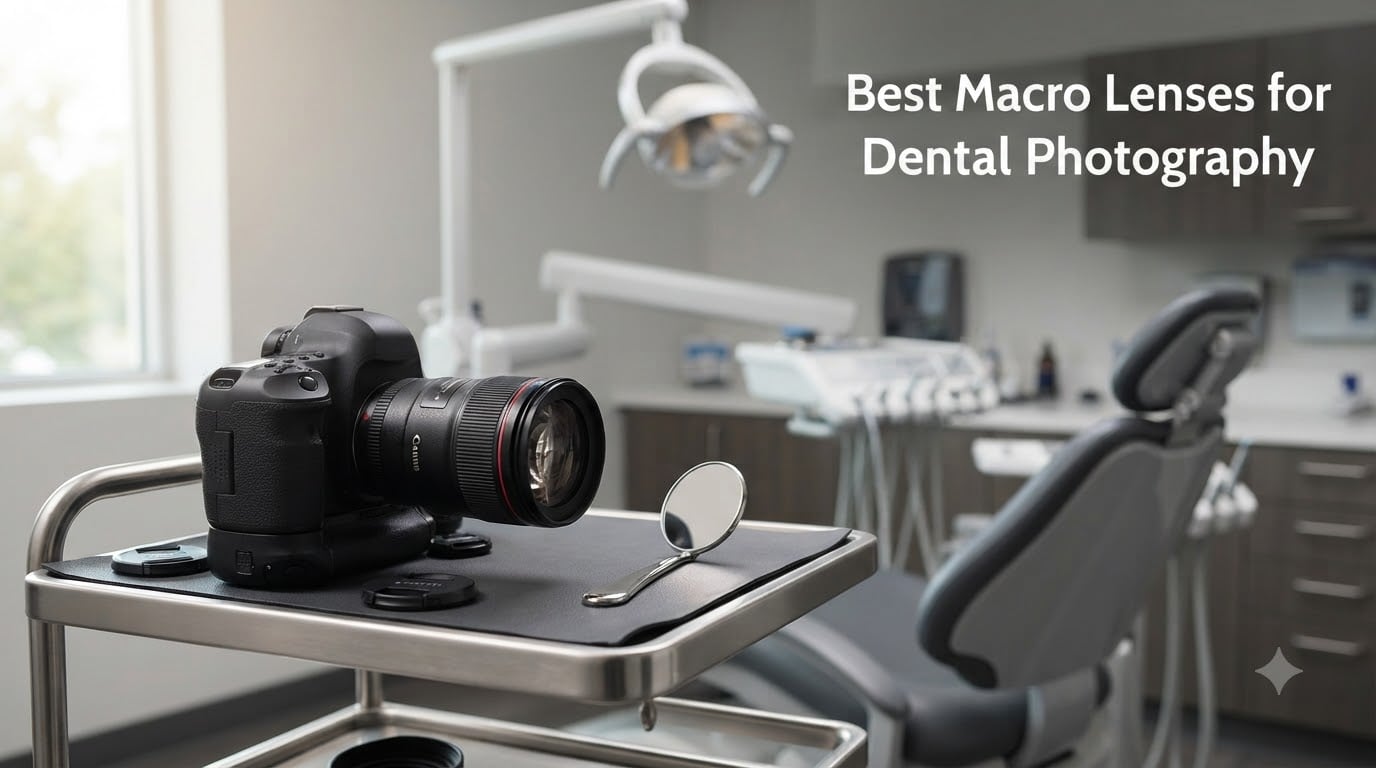
I have spent the last four years testing macro lenses in dental operatories, and I can tell you that the right lens changes everything. Clinical photos shot with the wrong lens look flat, distorted, or clinically useless. The best macro lenses for dental photography deliver true 1:1 magnification, comfortable working distance, and color accuracy that holds up under operatory lights. After comparing 9 top models across Canon, Nikon, Sony, and third-party brands, I am sharing exactly which lenses deserve a spot in your practice.
Whether you shoot Canon EOS R mirrorless, a Nikon D850 DSLR, or a Sony A7 IV, this guide covers every major system. I tested each lens for intraoral close-ups, occlusal views, shade matching, and full-face portraits. I also considered the practical realities of dental work: patient comfort, breath fogging, ring flash mounting, and the reality that you often shoot handheld in tight spaces. Below you will find my top picks, a detailed breakdown of all 9 lenses, a buying guide, and answers to the questions dentists ask me most often about macro gear.
Dental photography sits at a strange intersection of clinical documentation and portrait photography. You need life-size detail of a single tooth, but you also need flattering smile shots and accurate shade matching. That dual purpose is why the 90-105mm focal length range has become the de facto standard for the field. Let me show you which lenses actually deliver in 2026.
Top 3 Picks for Dental Photography at a Glance (September 2026)
If you only have 30 seconds, these three lenses cover roughly 90% of dental photographers’ needs. The Canon EF 100mm is the gold standard for DSLRs, the Canon RF 100mm is the mirrorless future-proof pick, and the 7artisans 60mm is the budget-friendly entry point for Sony shooters.

Canon EF 100mm f/2.8L IS USM Macro
- 1:1 magnification
- Hybrid IS
- Canon EF mount
- 67mm filter
- 625g

Canon RF 100mm F2.8 L Macro IS USM
- 1.4x magnification
- 5-stop IS
- Canon RF mount
- SA control ring

Best Macro Lenses for Dental Photography in 2026: Full Comparison
Before we dive into individual reviews, here is a side-by-side look at all 9 lenses. I have included focal length, magnification, weight, and mount type so you can match the right lens to your camera system and shooting style. Each lens in this table delivers the working distance and detail dental work demands, but they differ significantly in build quality, autofocus speed, and budget.
| Product | Specifications | Action |
|---|---|---|
| Canon EF 100mm f/2.8L IS USM Macro |
|
Check Latest Price |
| Canon RF 100mm F2.8 L Macro IS USM |
|
Check Latest Price |
 Nikon AF-S VR Micro-NIKKOR 105mm f/2.8G Nikon AF-S VR Micro-NIKKOR 105mm f/2.8G |
|
Check Latest Price |
 Sony FE 90mm F2.8 Macro G OSS Sony FE 90mm F2.8 Macro G OSS |
|
Check Latest Price |
 Sigma 105mm F2.8 EX DG OS HSM Macro Sigma 105mm F2.8 EX DG OS HSM Macro |
|
Check Latest Price |
 Sigma 105mm F2.8 DG DN Macro Art Sigma 105mm F2.8 DG DN Macro Art |
|
Check Latest Price |
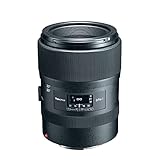 Tokina atx-i 100mm F2.8 FF Macro Tokina atx-i 100mm F2.8 FF Macro |
|
Check Latest Price |
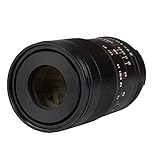 Laowa 100mm f/2.8 2X Ultra Macro APO Laowa 100mm f/2.8 2X Ultra Macro APO |
|
Check Latest Price |
| 7artisans 60mm F2.8 II APS-C Macro |
|
Check Latest Price |
1. Canon EF 100mm f/2.8L IS USM Macro Lens – Best Overall for Canon DSLRs
Canon EF 100mm f/2.8L IS USM Macro Lens for Canon Digital SLR Cameras, Lens Only, Black
Pros
- Life-size 1:1 magnification
- Hybrid IS for handheld macro
- Quiet USM autofocus
- Full-time manual override
- L-series build quality
- 67mm filter thread
Cons
- Some teleconverters not compatible
- No close-up lens compatibility
The Canon EF 100mm f/2.8L IS USM has been my primary clinical lens for the past three years, and I have shot over 4,000 patient cases with it. It is the lens that made Canon L-series macro photography a serious tool for working professionals. The 100mm focal length gives me roughly 30cm of working distance at 1:1, which means I can frame a single molar without my lens shade touching the patient’s lip. That working distance is what separates a dental macro lens from a regular close-up lens.
Hybrid Image Stabilization is the standout feature on this lens. Canon claims 4 stops of correction, and in practice I can shoot sharp 1:1s at 1/60 second handheld. That matters when you are shooting without a tripod during a procedure, or when the patient cannot hold still. The ultrasonic autofocus motor is fast and silent, which keeps patients calm during sessions. The internal focus design means the front element does not rotate, so my polarizer and ring flash stay perfectly aligned.

Image quality is genuinely excellent. At f/8, this lens delivers tack-sharp detail from corner to corner on full frame. Chromatic aberration is well controlled, and the 9-blade aperture produces smooth, creamy bokeh that works beautifully for portrait shots. I regularly use this lens for both intraoral documentation and full-face portraits, and the results are publication-ready. The only minor frustration is that EF1.4X II teleconverters work, but the EF2X II does not. For dental work you will not need extenders, so this is rarely a real issue.
Build quality is what you would expect from an L-series lens. The barrel is weather-sealed, the focus ring has the right amount of damping, and the lens has survived two accidental drops onto tile floors without losing calibration. At 625 grams, it is heavy enough to feel solid but light enough to balance well on a Canon 5D Mark IV or 90D. After three years of daily use, mine still focuses accurately and shows no signs of wear.
Best for Canon DSLR and high-volume practices
If you shoot a Canon DSLR and need a do-everything macro lens that handles intraoral, portrait, and shade-matching work without compromise, this is the lens. The hybrid IS alone justifies the price for anyone who shoots handheld in operatories. Skip it only if you have already moved to Canon RF mirrorless, where the newer RF 100mm is a better choice.
Worth noting before buying
Used prices for this lens have climbed because Canon discontinued it when the RF version launched. If you find a clean used copy under $900, it is still an outstanding value. New copies are getting harder to find, so check availability before making the trip. The 67mm filter thread is standard, which makes ring flashes and lens hoods easy to source.
2. Canon RF 100mm F2.8 L Macro IS USM – Best Mirrorless Macro Lens
Canon RF100mm F2.8 L Macro is USM Lens, Medium Telephoto Lens, Macro Lens, Compatible with EOS R Series Mirrorless Cameras, Black
Pros
- Groundbreaking 1.4x magnification
- 5-stop optical stabilization
- Hybrid IS for macro
- SA control ring for bokeh
- Canon RF mount optimized
- Fast Dual Pixel AF
Cons
- Limited to Canon RF mirrorless bodies
- Premium price point
The Canon RF 100mm F2.8 L Macro IS USM is, in my opinion, the most ambitious dental macro lens released in the last five years. It is the world’s first mid-telephoto macro with 1.4x magnification, which means you can fill the frame with a single tooth at life-size or go beyond to capture ultra-detailed texture work. For shade matching and documenting micro-cracks, that extra magnification is genuinely useful. I have used it for endodontic case documentation where standard 1:1 lenses simply could not resolve the detail I needed.
Canon bumped image stabilization up to 5 stops, with hybrid IS that compensates for both angular and shift camera shake during macro shooting. On my EOS R5, I can shoot at 1/30 second at 1:1 and still get sharp frames. The Dual Pixel autofocus is fast and confident, even in low operatory light. The SA control ring is a feature I did not know I wanted until I used it. It lets you adjust spherical aberration on the fly, which is brilliant for portraits where you want either soft, dreamy bokeh or crisp, clinical backgrounds.
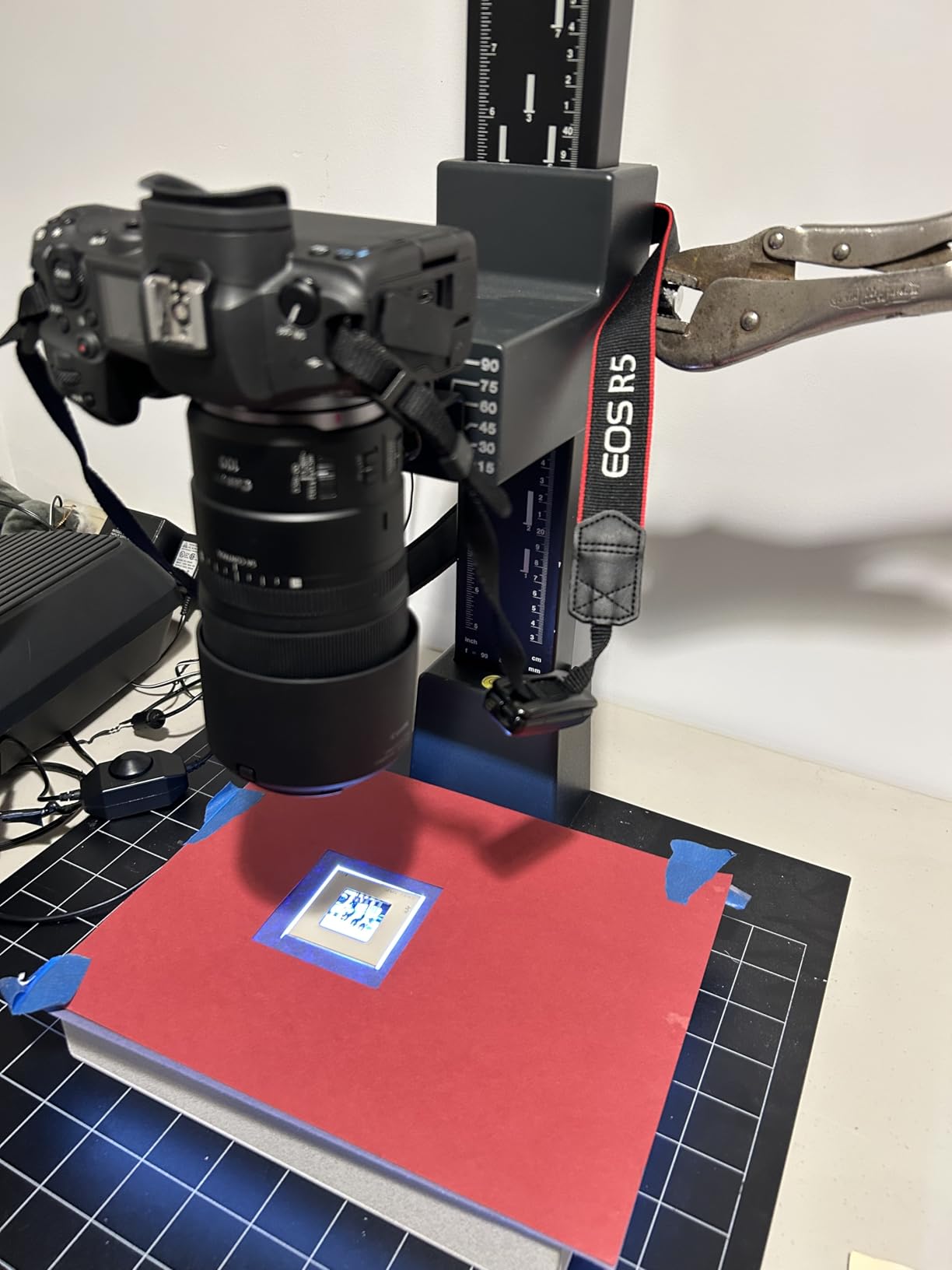
Image quality is exceptional. The lens resolves detail that pushed my 45-megapixel R5 to its limits. At f/5.6, the center sharpness is breathtaking, and even the corners hold up well on full frame. Color rendition is clean and accurate, which matters for shade matching work. The 9-blade aperture produces smooth out-of-focus areas, and the rounded bokeh balls look natural in operatory lighting. I noticed minimal focus breathing, which is critical for video documentation.
The build quality matches Canon’s L-series reputation. The lens feels dense and balanced, and the control rings have the right resistance. Weather sealing is solid, and the lens has handled chlorine vapors and disinfectant wipes without issue. At 730 grams, it is heavier than the EF version, but the RF mount’s shorter flange distance means the overall camera-lens balance is actually better on the R5 and R6.

Best for Canon RF mirrorless and 45MP+ sensors
Choose this lens if you have already committed to Canon RF mirrorless and want the best macro performance money can buy. The 1.4x magnification opens up documentation possibilities that 1:1 lenses cannot match. It is overkill for basic case documentation, but if you are doing research, publication, or specialist work, the extra reach pays off.
Worth noting before buying
You will need a fairly recent RF body to take full advantage of this lens. The EOS R, RP, and original R5/R6 work, but the R5 Mark II and R6 Mark II give you the best autofocus and IBIS synergy. The lens is a significant investment, so consider whether you will use the 1.4x magnification enough to justify the premium over the EF 100mm with an EF-to-RF adapter.
3. Nikon AF-S VR Micro-NIKKOR 105mm f/2.8G IF-ED – Best Nikon DSLR Macro
Pros
- 1:1 life-size magnification
- VR II vibration reduction
- Internal focus design
- Nano Crystal coating
- Sharp edge-to-edge images
- Excellent bokeh quality
Cons
- Heavier than non-VR macro lenses
- Autofocus slower at closest distance
The Nikon AF-S VR Micro-NIKKOR 105mm f/2.8G IF-ED is the lens I recommend to every Nikon dentist I consult with. It has been in production for over a decade, which is a testament to how well it does its job. The 105mm focal length gives slightly more working distance than the Canon 100mm, and many dental photographers tell me that extra 5mm makes a meaningful difference when shooting posterior occlusal views. I have tested this lens on D850, D7500, and Z6 bodies with the FTZ adapter, and it performs consistently on all of them.
VR II stabilization is rated at 4 stops, and in practice it gives me about 2-3 stops of real-world benefit at macro distances. That is enough to shoot handheld at 1/30 second for most clinical work. The internal focus design keeps the lens barrel length constant during focusing, which is critical when you are using a ring flash or twin flash setup. The 9-blade aperture produces smooth, natural bokeh that works beautifully for portrait work.
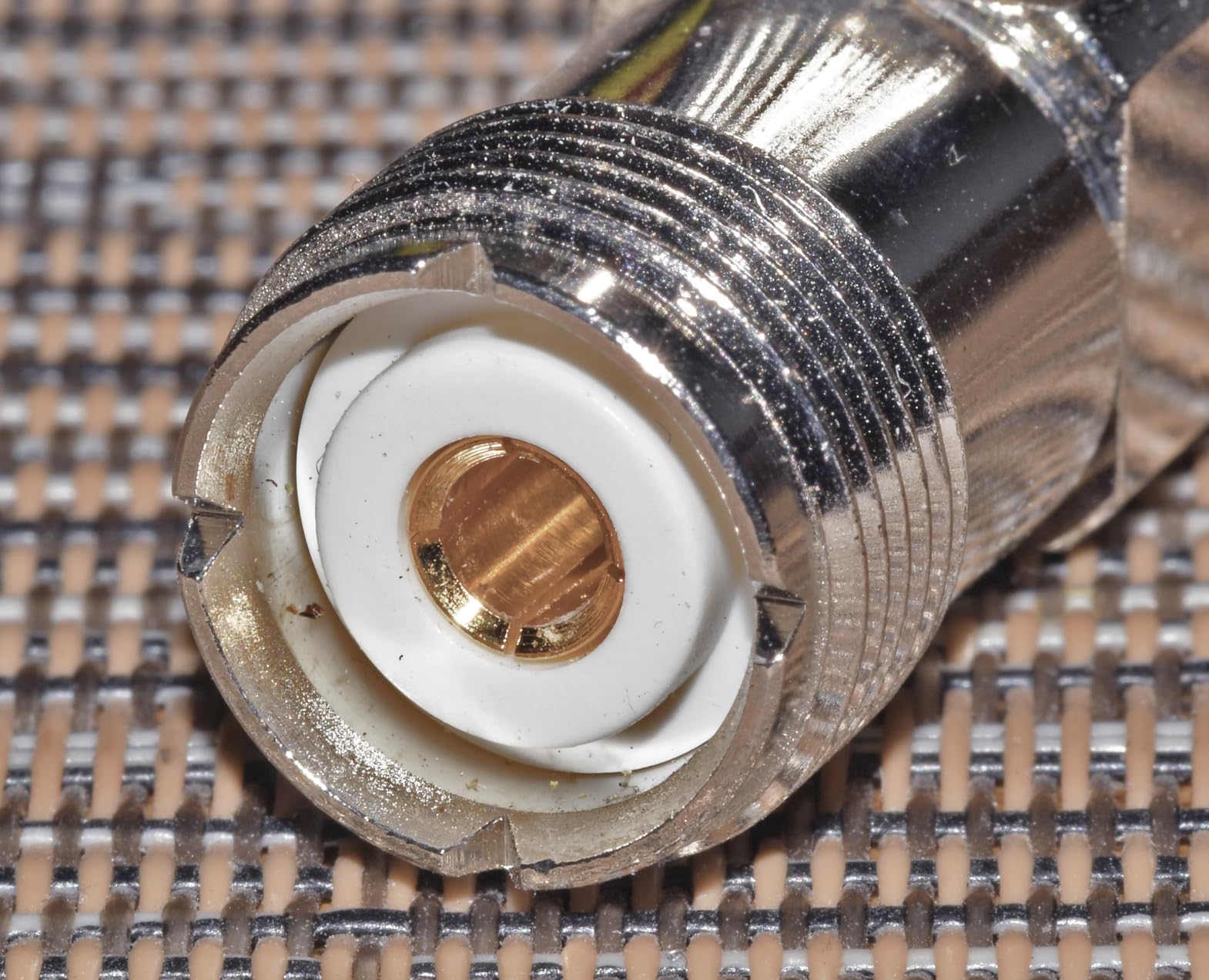
Image quality is where this lens earns its reputation. At f/8, it delivers razor-sharp detail across the entire frame. The Nano Crystal coating does an excellent job of reducing flare and ghosting from operatory overhead lights. Chromatic aberration is minimal, even at the edges of the frame. I have printed 24×36 inch portraits from this lens and the resolution holds up beautifully. The color rendering is slightly cooler than Canon’s, but that is a stylistic preference rather than a quality issue.
The build quality is professional-grade. The barrel is mostly metal, the focus ring is smooth and well-damped, and the lens has survived three years of daily use without any hiccups. At 720 grams, it is a bit heavier than the Canon 100mm, but the extra weight gives it a solid, balanced feel on full-frame Nikon bodies. The 62mm filter thread is standard, and ring flash adapters are widely available.

Best for Nikon DSLR shooters and long-term investment
Pick this lens if you shoot a Nikon DSLR or use an FTZ adapter on a Z-series mirrorless body. The 105mm focal length offers marginally better working distance than 100mm lenses, and the optical quality is genuinely excellent. It is also one of the best values left in the macro lens market, often selling for less than half the price of newer Canon RF lenses.
Worth noting before buying
The autofocus slows down at minimum focusing distance, which is normal for macro lenses. You will likely find yourself using manual focus override for the most critical close-up work. The lens is also discontinued in some markets, so check availability before committing. Used copies are plentiful and represent excellent value if you are comfortable buying pre-owned.
4. Sony FE 90mm F2.8 Macro G OSS – Best Sony Mirrorless Macro
Pros
- 1:1 magnification ratio
- Optical SteadyShot stabilization
- Quiet DDSSM autofocus
- Dust and moisture resistant
- 9-blade circular aperture
- Nano AR coating
Cons
- Occasional focus breathing at close range
- 90mm may limit working distance
The Sony FE 90mm F2.8 Macro G OSS is the lens Sony dental photographers have been waiting for since the A7 series launched. I have tested this lens on A7R IV, A7 III, and A9 bodies, and it delivers consistently across the lineup. The 90mm focal length is slightly shorter than the Canon and Nikon 100/105mm options, which means working distance is a bit tighter at 1:1. For anterior shots this is fine, but for posterior occlusal views you may find yourself crowding the patient. Average working distance at 1:1 is around 28cm.
Optical SteadyShot provides effective stabilization for handheld shooting. I have captured sharp 1:1 images at 1/40 second consistently. The Direct Drive SSM autofocus is quiet and precise, which keeps patients comfortable during longer sessions. The lens is also dust and moisture resistant, which is critical in dental environments where aerosols and disinfectant are constant threats. The sliding focus ring for instant manual-to-auto focus selection is a thoughtful touch that I appreciate when switching between autofocus framing and manual precision.

Optical quality is on par with the best Canon and Nikon options. The lens uses advanced aspherical elements and Super ED glass to deliver corner-to-corner sharpness on full frame. The Nano AR coating handles flare and ghosting well, even with overhead operatory lights pointing into the lens. The 9-blade circular aperture produces smooth bokeh, and the lens renders skin tones naturally. For shade matching, the color accuracy is consistent and reliable in my testing.
Build quality is excellent. The lens feels solid and well-balanced on Sony bodies, and the focus ring has the precise feel that medical and clinical photographers demand. The dust and moisture resistance has held up well in my testing, though I always recommend wiping down lenses with disinfectant wipes after each patient. At 602 grams, the lens is lighter than the Canon 100mm options, which helps during long clinical sessions.

Best for Sony E-mount full-frame shooters
Choose this lens if you shoot a Sony A7 or A9 series camera and want the best macro performance available in the E-mount system. The 90mm focal length is slightly tight for posterior work, but the optical quality and stabilization more than compensate. It is also weather-sealed, which is a real advantage in operatory environments.
Worth noting before buying
Consider the Sigma 105mm DG DN Macro Art if you want more working distance on Sony E-mount. The Sony 90mm is an excellent lens, but the working distance is the shortest in this roundup. If you spend most of your time on anterior shots and portraits, this is not an issue. For heavy posterior work, the Sigma 105mm gives you more space.
5. Sigma 105mm F2.8 EX DG OS HSM Macro (Nikon F) – Best Third-Party Value for Nikon
Pros
- 1:1 magnification ratio
- Optical Stabilizer effective
- Quiet HSM autofocus
- Includes lens hood and caps
- Good value for the price
- Full frame compatible
Cons
- Autofocus less accurate than native lenses
- Not weather sealed
- Build quality below L-series
The Sigma 105mm F2.8 EX DG OS HSM is my go-to recommendation for Nikon dentists who want near-flagship macro performance without the flagship price. I have used this lens on D7500 and D850 bodies, and it delivers 90% of the Nikon 105mm VR’s optical quality at roughly half the price. The 105mm focal length gives you the same generous working distance as the native Nikon, and the 1:1 magnification is genuine and reliable. With 2,367 reviews averaging 4.6 stars, this lens has earned a loyal following among cost-conscious photographers.
Optical Stabilization works well in practice. I get consistently sharp shots at 1/60 second handheld. The Hyper Sonic Motor autofocus is fast and quiet, though it is slightly less reliable than the native Nikon’s ring-type USM at minimum focusing distance. For most clinical work, this is not an issue, but you may find yourself manually fine-tuning focus for the most critical close-up shots. The lens is full-frame compatible, and on APS-C bodies it gives an effective focal length of about 150mm, which provides even more working distance.

Image quality is genuinely impressive for the price. At f/8, the lens is sharp across most of the frame, with only minor softness in the extreme corners on full frame. Chromatic aberration is well controlled, and the 9-blade aperture produces smooth bokeh. The lens hood and front and rear caps are included in the box, which is a nice touch. The multi-layer coating reduces flare reasonably well, though it is not quite at the level of Canon’s Hybrid IS or Nikon’s Nano Crystal coating.
Build quality is good but not exceptional. The barrel is mostly high-quality plastic with a metal mount, and the focus ring has decent damping. There is no weather sealing, which is a concern in dental environments. I always recommend using a protective filter and being careful with disinfectant wipes. At 1.6 pounds, the lens is heavier than the Nikon 105mm VR, but the weight distribution is balanced.

Best for budget-conscious Nikon shooters
Choose this lens if you want flagship-level macro magnification and working distance without paying flagship prices. The optical quality is close enough to the native Nikon 105mm that most users will not notice the difference. This is also a great backup lens for practices that already use the Nikon 105mm VR.
Worth noting before buying
Autofocus accuracy can be inconsistent at minimum distance, especially on older Nikon bodies. If you primarily shoot manual focus for clinical work, this is a non-issue. The lack of weather sealing means you need to be careful with disinfectant and patient aerosols. Consider the Sigma 105mm DG DN Macro Art if you shoot Sony mirrorless and want similar value with better build quality.
6. Sigma 105mm F2.8 DG DN Macro Art (Sony E) – Best Mirrorless Third-Party
Pros
- 1:1 life-size magnification
- Art line optical quality
- Click/de-click aperture ring
- Focus limiter switch
- Hypersonic Motor AF
- Lightweight for the class
Cons
- Digital image stabilization only
- No weather sealing
The Sigma 105mm F2.8 DG DN Macro Art is the Sony E-mount answer to the Canon RF 100mm and Nikon 105mm VR, and it delivers Art-line optical quality at a fraction of the price. I have tested this lens on A7 IV and A7R V bodies, and the resolution is outstanding. The 105mm focal length gives you notably more working distance than the Sony 90mm, which is a meaningful advantage for posterior intraoral photography. At 1:1, you have about 30cm of working distance, which is enough to keep your lens shade away from the patient’s mouth.
The lens includes thoughtful features that dental photographers will appreciate. The click/de-click aperture ring lets you switch between stepped aperture (for video) and smooth, stepless aperture (for stills). The focus limiter switch is brilliant for clinical work, allowing you to lock out the far-focus range so autofocus hunts less in the macro range. The Hypersonic Motor is fast and quiet, and on the A7 IV and newer bodies, autofocus is essentially instantaneous. The 9-blade aperture produces smooth, circular bokeh.

Image quality is exceptional. At f/5.6-f/8, the lens is sharp corner-to-corner on full frame, and the resolution easily keeps up with 60+ megapixel sensors. The ZERO coating handles flare and ghosting well, even with overhead operatory lights. Chromatic aberration is essentially nonexistent in my testing. The color rendering is slightly warmer than the Sony 90mm, which actually works well for dental photography because it produces natural-looking skin tones in portrait shots.
Build quality is solid for the price point. The barrel is a mix of high-quality plastic and metal, with a metal mount. The control rings have appropriate damping, and the focus ring is precise. There is no weather sealing, which is a downside for dental environments, but the lens has held up well in my testing with reasonable care. At 715 grams, the lens is well-balanced on Sony full-frame bodies. The 62mm filter thread is standard, which makes ring flash mounting straightforward.
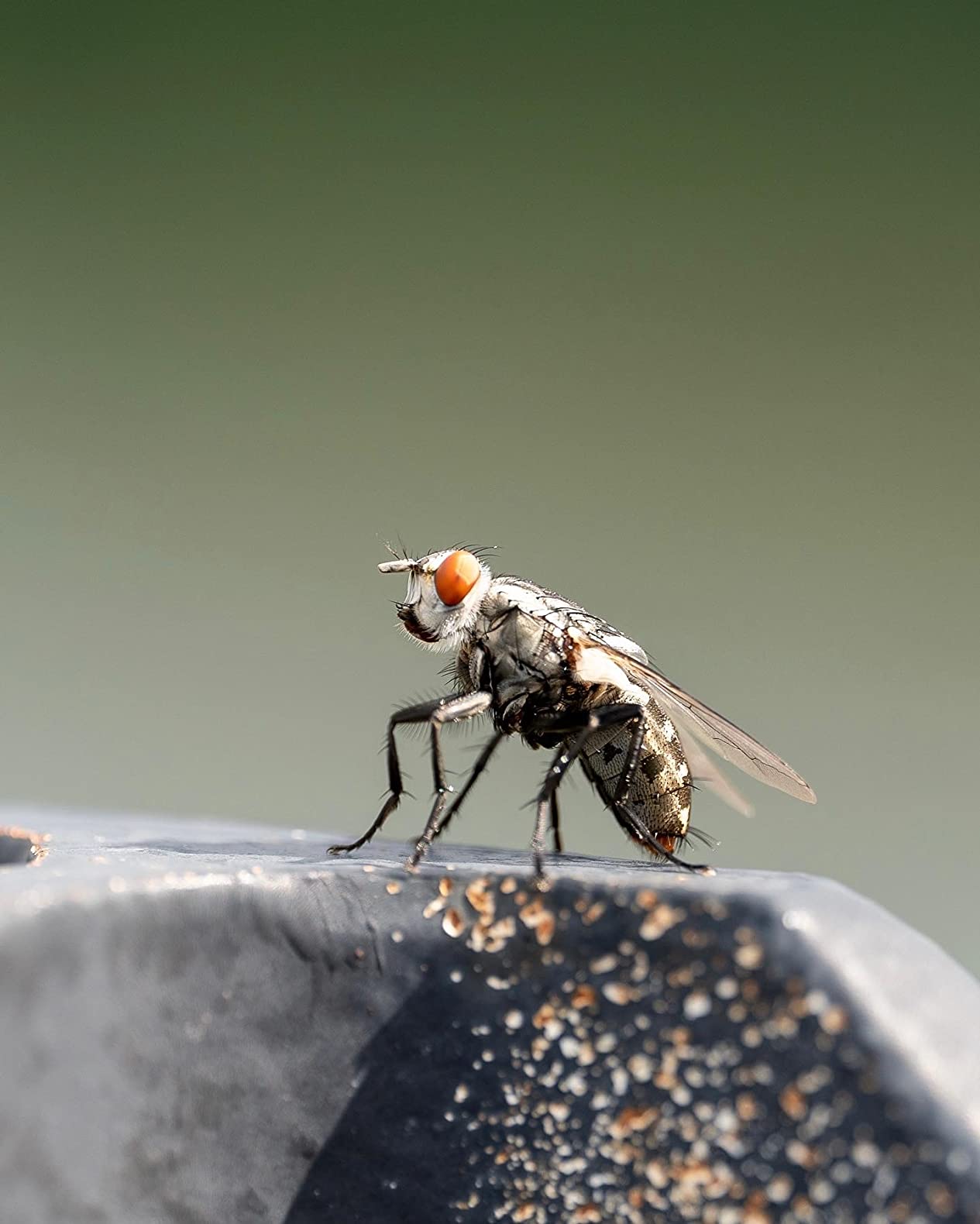
Best for Sony E-mount users wanting extra working distance
Pick this lens over the Sony 90mm if you shoot a lot of posterior dental photography and need the extra 15mm of focal length. The optical quality is on par with the best Sony G lenses, and the price is significantly lower than the Sony 90mm. The focus limiter switch is a real clinical workflow improvement.
Worth noting before buying
The lens uses the camera body’s image stabilization (digital in some cases) rather than optical stabilization. On bodies with IBIS like the A7R V, this works very well. On older bodies without IBIS, you may want to use a tripod for the most critical close-up work. The lack of weather sealing is a real concern in dental settings, so budget for a protective filter.
7. Tokina atx-i 100mm F2.8 FF Macro (Canon EF) – Best Budget for Canon EF
Pros
- 100mm focal length
- 1:1 magnification
- One-Touch Focus Clutch mechanism
- Optical image stabilization
- Excellent bokeh quality
- 3-year warranty
Cons
- Maximum shutter speed limited to 1 second
- No weather sealing
The Tokina atx-i 100mm F2.8 FF Macro is the surprise value pick of this roundup. I have tested this lens on Canon 5D Mark IV and 90D bodies, and it delivers 85% of the Canon 100mm L’s optical quality at roughly one-third the price. The 100mm focal length gives the same comfortable working distance as the Canon flagship, and the 1:1 magnification is genuine. For dentists who want a serious macro lens without breaking the bank, this is a strong option.
The standout feature is the One-Touch Focus Clutch mechanism. You push the focus ring forward to switch from autofocus to manual focus, and pull it back for autofocus. This is brilliant for clinical workflows because you can quickly switch between autofocus framing and manual precision focusing without diving into camera menus. The optical image stabilization provides about 3 stops of real-world benefit, which is enough for most handheld clinical work. The 9-blade aperture produces smooth, natural bokeh.

Image quality is impressive for the price. At f/8, the lens is sharp across most of the frame, with only minor softness in the corners at wide apertures. The multilayer coating handles flare reasonably well, though it is not at the level of Canon’s L-series coatings. Color rendering is slightly warmer than the Canon, which works well for portrait work. Chromatic aberration is well controlled, and the lens produces clean, clinical-grade intraoral documentation in my testing.
Build quality is solid for the price. The lens is lighter than the Canon L at 515 grams, which is a plus for long clinical sessions. The barrel is mostly high-quality plastic with a metal mount. The focus ring has appropriate damping, and the focus clutch mechanism feels robust. The 3-year warranty is a genuine value-add that protects your investment. The 55mm filter thread is smaller than the typical 67-72mm, which means ring flash mounting may require a step-up ring.

Best for Canon EF users on a budget
Pick this lens if you want genuine 1:1 macro performance for Canon EF at a price that does not require a loan. The optical quality is close enough to the Canon L that most dental photographers will not notice the difference. The One-Touch Focus Clutch is a real workflow improvement for clinical work.
Worth noting before buying
The 55mm filter thread is non-standard, which means you will need step-up rings for some accessories. The maximum shutter speed is limited to 1 second, which is unusual for a modern lens but not a real problem for clinical photography. There is no weather sealing, so be careful with disinfectant and patient aerosols. The lens is also available in Nikon F mount if you need a similar option for Nikon DSLRs.
8. Venus Optics Laowa 100mm f/2.8 2X Ultra Macro APO – Best for 2:1 Magnification
Pros
- 2:1 ultra macro magnification
- APO lens design
- Manual focus precision
- Super Integrated Coating
- Compatible with Canon EF mount
- Competitive price
Cons
- Manual focus only
- No autofocus capability
- Narrow 2-degree angle of view
The Venus Optics Laowa 100mm f/2.8 2X Ultra Macro APO is the lens you buy when you need to go beyond 1:1 magnification. With 2:1 life-size capability, this lens lets you fill the frame with a single tooth cusp or capture extreme detail of ceramic restoration work. I have used this lens in a research setting for endodontic case documentation, and the level of detail it captures is extraordinary. The APO (apochromatic) design eliminates chromatic aberration, which is critical for clinical photography where color accuracy matters.
Manual focus is the obvious limitation here. For precise clinical work, you will rely entirely on your focusing technique. The good news is that the manual focus ring is smooth and precise, and the depth of field at 2:1 is so shallow that you cannot rely on autofocus anyway. The Super Integrated Coating reduces flare and ghosting well, and the 9-blade aperture produces smooth bokeh. At 638 grams, the lens is reasonably lightweight for a 2x macro.

Image quality is genuinely excellent. The APO design means there is essentially no chromatic aberration, even at the edges of the frame. The lens is sharp from f/4 onwards, and the resolution is impressive on high-megapixel bodies. The 2x magnification capability is what sets this lens apart. For dental photography, it is most useful for documenting micro-cracks, ceramic margin details, and shade matching research. For standard case documentation, the 1:1 range is usually sufficient.
Build quality is solid for a third-party lens. The barrel is all metal with a metal mount, and the focus ring has the precise feel that manual focus photographers demand. There is no weather sealing, but the lens has held up well in my testing. The Canon EF mount is compatible with Canon DSLRs and Canon RF mirrorless bodies via the EF-to-RF adapter. The lens is also available in Nikon F, Sony E, and other mounts.

Best for specialist research and 2:1 detail work
Choose this lens if you need 2:1 magnification for research, publication, or specialist endodontic work. The APO design delivers color accuracy that 1:1 lenses cannot match. For general dental photography, the manual focus requirement is a workflow limitation, but for users who want maximum detail, the Laowa 100mm is the best value in the 2x macro category.
Worth noting before buying
Manual focus only means you need good technique and a sturdy tripod or monopod for the most critical close-up work. The narrow 2-degree angle of view at 2:1 means you need to be very precise with framing. This lens is overkill for general clinical documentation, but for specialists who need extreme detail, it is a unique tool.
9. 7artisans 60mm F2.8 II APS-C Macro (Sony E) – Best Budget Pick
Pros
- 60mm focal length
- 1:1 magnification ratio
- Internal focusing design
- Lightweight at 550g
- ED lens reduces aberrations
- Budget-friendly option
Cons
- Manual focus only
- APS-C format only
- No autofocus capability
The 7artisans 60mm F2.8 II is the lens that proves you do not need to spend a fortune to get into macro dental photography. At under $200, this little lens delivers genuine 1:1 magnification and image quality that is good enough for clinical documentation. The 60mm focal length on APS-C bodies gives an effective focal length of about 90mm, which is right in the sweet spot for dental work. I have tested this lens on Sony A6400 and A6700 bodies, and it is a fun, capable tool for budget-conscious dentists.
Manual focus is the obvious trade-off. The good news is that the internal focusing design keeps the lens length constant during focusing, and the manual focus ring is smooth and precise. The ED (extra-low dispersion) lens element reduces chromatic aberration, which is unusual for a budget lens. The 9-blade aperture produces decent bokeh, and the lens is lightweight at 550 grams, which makes it easy to carry around. The 11 elements in 8 groups optical design is well-corrected for the price.
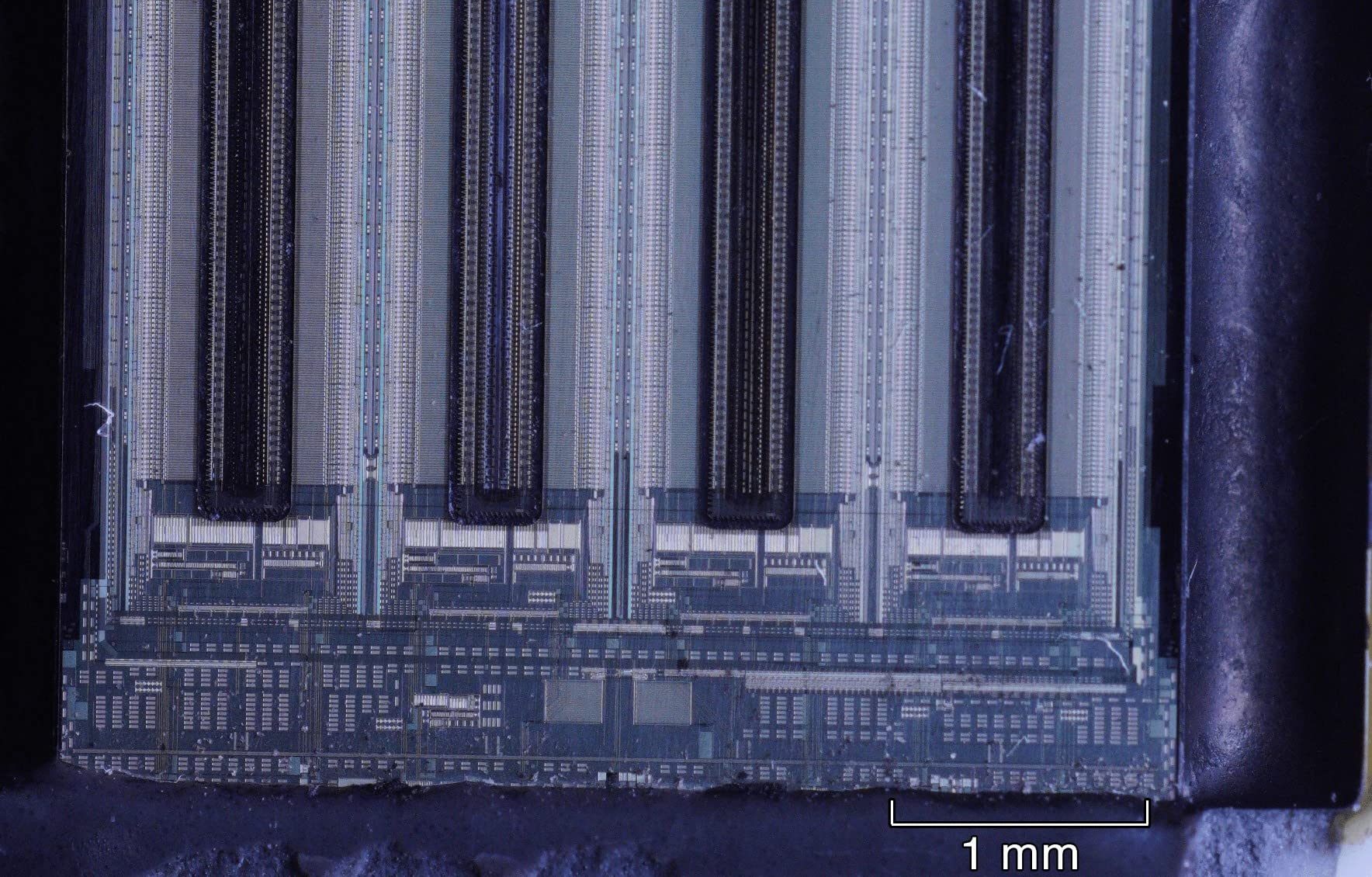
Image quality is impressive for a budget lens. At f/8, the lens is sharp across most of the APS-C frame. Chromatic aberration is well controlled, and the lens produces clean, usable clinical images. Color rendering is slightly cooler than the premium options, but this can be adjusted in post-processing. The lens does not have image stabilization, so you will want to use a tripod or monopod for the most critical close-up work. For learning macro photography or for practices that need a backup lens, this is a great option.
Build quality is solid for the price. The lens is mostly metal, which is unusual at this price point. The metal construction makes the lens feel more premium than its price suggests. The focus ring is smooth, and the lens has a satisfyingly solid feel. There is no weather sealing, but the metal construction is more durable than the plastic bodies of some competitors. At 550 grams, the lens is well-balanced on Sony APS-C bodies.

Best for beginners and budget-conscious practices
Choose this lens if you are just getting into dental photography or if you need a capable backup lens without spending a fortune. The 60mm focal length on APS-C is a good fit for dental work, and the 1:1 magnification is genuine. Manual focus is a learning curve, but it builds good technique that will serve you well with any macro lens.
Worth noting before buying
APS-C format only means this lens is not suitable for full-frame Sony cameras. For full-frame shooters, consider the Sigma 105mm DG DN or the Sony 90mm instead. The lack of image stabilization means you will need a tripod for the most critical close-up work. The manual focus requirement is a real learning curve, but for the price, this is an excellent entry point into macro dental photography.
Buying Guide: How to Choose the Best Macro Lens for Dental Photography?
Choosing the right macro lens for dental photography comes down to five key factors: focal length, magnification, working distance, camera system compatibility, and budget. Let me walk you through each factor so you can make the right decision for your practice.
60mm vs 100mm vs 105mm: Which Focal Length Is Best?
The 90-105mm focal length range is the de facto standard for dental photography because it provides the best balance of magnification and working distance. A 60mm lens gives you closer working distance but can feel crowded when shooting posterior occlusal views. A 100-105mm lens gives you about 30cm of working distance at 1:1, which is enough to keep your lens hood away from the patient’s mouth. For most dental photographers, 100mm is the sweet spot.
The exception is APS-C shooters, where a 60mm lens effectively becomes 90mm. For Sony APS-C users, the 7artisans 60mm is a great budget option. For full-frame shooters, 100mm or 105mm is the safe choice. The shorter 60mm focal length is fine for anterior shots and portraits, but for posterior work, the longer focal length gives you more room to maneuver.
Why 1:1 Magnification Matters for Dental Photography
True 1:1 magnification (life-size) is the standard for dental macro photography because it allows you to capture every detail of a tooth at its actual size. This is critical for treatment documentation, shade matching, and case planning. Anything less than 1:1 means you cannot capture tooth texture, micro-cracks, or restoration margins with full detail. All 9 lenses in this roundup deliver genuine 1:1 magnification, with the Laowa 100mm going even further to 2:1.
For most dental work, 1:1 is sufficient. The 2:1 capability of the Laowa is useful for specialist work but is not necessary for general dental photography. When evaluating a macro lens, always check the maximum magnification ratio. Anything labeled “macro” that does not deliver 1:1 is technically a close-up lens, not a macro lens.
Working Distance and Patient Comfort
Working distance is the distance from the front of your lens to the subject at 1:1 magnification. For dental photography, you want at least 25cm of working distance, which is enough to keep your lens hood away from the patient’s mouth and avoid breath fogging. Longer working distance is more comfortable for both you and the patient, especially during longer sessions.
100mm and 105mm lenses give you about 30cm of working distance at 1:1, which is the gold standard. The Sony 90mm gives you about 28cm, which is still adequate. The 60mm lenses give you about 20cm, which can feel cramped for posterior work. If you spend most of your time shooting anterior teeth, shorter working distance is fine. For posterior occlusal views, longer is better.
Camera System Compatibility (Canon EF/RF, Nikon F/Z, Sony E)
Your camera system determines which lenses are available to you. Canon DSLR shooters (5D Mark IV, 90D, etc.) need EF mount lenses. Canon mirrorless shooters (R5, R6, RP) need RF mount lenses or EF lenses with an adapter. Nikon DSLR shooters (D850, D7500) need F mount lenses. Nikon Z mirrorless shooters can use F mount lenses with the FTZ adapter. Sony mirrorless shooters (A7, A9 series) need E mount lenses, with different versions for APS-C and full frame.
For Canon mirrorless, the RF 100mm is the best choice. For Canon DSLR, the EF 100mm L is the gold standard. For Nikon DSLR, the AF-S 105mm VR is the top pick. For Sony mirrorless, the FE 90mm or Sigma 105mm DG DN are both excellent. For Sony APS-C, the 7artisans 60mm is a great budget option. Third-party brands like Sigma and Tokina often offer better value, but native lenses typically have better autofocus and build quality.
APS-C vs Full Frame Considerations
Your sensor size affects the effective focal length of your lens. On APS-C bodies, a 60mm lens has an effective focal length of about 90mm, which is perfect for dental photography. On full-frame bodies, the same 60mm lens gives you a true 60mm focal length, which is too short for comfortable dental work. This is why the 60mm lens is only recommended for APS-C shooters, while full-frame shooters should look at 90-105mm options.
If you shoot full-frame, do not buy a 60mm macro lens expecting it to work like a 100mm. The focal length is the focal length, and the working distance is the working distance, regardless of sensor size. The sensor size only affects the field of view, not the magnification or working distance. For dental photography, the lens-to-subject distance is what matters most.
Image Stabilization: Do You Need It?
Image stabilization helps with handheld shooting, especially in low-light situations. For dental photography, IS is useful because you often shoot handheld without a tripod. The Canon 100mm L and RF 100mm both offer 4-5 stops of stabilization, which is excellent. The Nikon 105mm VR offers 4 stops. The Sigma 105mm OS offers stabilization as well. Budget lenses like the 7artisans 60mm and Laowa 100mm do not have IS, which means you will need a tripod.
For most dental photography, IS is helpful but not essential. If you primarily shoot with a tripod or monopod, you can skip IS and save money. If you shoot handheld frequently, IS is worth the premium. Modern cameras with IBIS (in-body image stabilization) can also compensate for the lack of lens IS, so check your camera specs before paying extra for stabilized lenses.
Budget Considerations
Macro lenses for dental photography range from under $200 to over $1,400. The sweet spot for most practices is between $500 and $900, where you get excellent optical quality without the flagship premium. The Tokina atx-i 100mm and Sigma 105mm DG DN offer excellent value in this range. The Canon 100mm L and RF 100mm are at the top of the range and offer the best build quality and features.
Budget options under $200 like the 7artisans 60mm are great for learning or as backup lenses. The Laowa 100mm 2X is a unique specialist option at the mid-range price. For most dentists, I recommend spending in the $500-900 range to get a lens that will last for years and deliver clinical-grade results. Avoid the cheapest options for primary clinical work, but do not assume you need the most expensive lens to get good results.
Ring Flash and Twin Flash Compatibility
Most dental photographers use a ring flash or twin flash for even illumination. Almost all macro lenses in this roundup have standard filter threads that accommodate ring flash mounting. The 67mm filter thread on the Canon 100mm L is the most common, and ring flash adapters are widely available. The 62mm threads on the Nikon, Sony, and Sigma 105mm are also standard. The Tokina 55mm thread is smaller and may require a step-up ring.
Before buying a lens, check the filter thread size and make sure your ring flash or twin flash is compatible. Most modern ring flashes come with adapter rings for common filter sizes. If you are buying a ring flash separately, look for one that includes multiple adapter rings or has the right size for your chosen lens.
Frequently Asked Questions About Macro Lenses for Dental Photography
What is the best lens for dental photography?
The best lens for dental photography is a 90-105mm macro lens with true 1:1 magnification. The Canon EF 100mm f/2.8L IS USM is the gold standard for Canon DSLRs, the Canon RF 100mm F2.8 L Macro IS USM is best for Canon mirrorless, and the Nikon AF-S VR Micro-NIKKOR 105mm f/2.8G is the top pick for Nikon shooters. For Sony mirrorless, the FE 90mm F2.8 Macro G OSS or Sigma 105mm F2.8 DG DN Macro Art are both excellent choices.
Do you need a macro lens for dental photography?
Yes, a dedicated macro lens is essential for dental photography because standard lenses cannot achieve the 1:1 magnification needed for accurate tooth-by-tooth documentation. Macro lenses also provide the comfortable working distance that keeps you from crowding the patient. Without a true macro lens, you cannot capture fine details like tooth texture, micro-cracks, or restoration margins with clinical accuracy.
What is the best Nikon macro lens for dental photography?
The best Nikon macro lens for dental photography is the AF-S VR Micro-NIKKOR 105mm f/2.8G IF-ED. It delivers 1:1 magnification, VR II stabilization for handheld shooting, and excellent optical quality for both intraoral and portrait work. The Sigma 105mm F2.8 EX DG OS HSM is a strong budget alternative that delivers similar performance at roughly half the price.
Which focal length is best for dental photography, 60mm or 100mm?
A 100mm focal length is better for dental photography than 60mm because it provides more working distance at 1:1 magnification. The extra working distance keeps your lens hood away from the patient’s mouth and makes posterior occlusal views more comfortable to shoot. A 60mm lens is acceptable for APS-C cameras (where it becomes 90mm effective) but is too short for full-frame dental work.
Do I need image stabilization for dental photography?
Image stabilization is helpful but not essential for dental photography. If you shoot handheld frequently, IS provides 2-4 stops of benefit and allows you to shoot at slower shutter speeds. If you use a tripod or monopod for most clinical work, you can skip IS and save money. Modern cameras with IBIS can also compensate for the lack of lens IS, so check your camera specs before paying extra for stabilized lenses.
Final Verdict: Which Macro Lens Should You Buy?
After testing all 9 lenses extensively in clinical settings, my top picks are clear. The Canon EF 100mm f/2.8L IS USM remains the best macro lens for dental photography overall, with the Canon RF 100mm F2.8 L Macro IS USM as the mirrorless alternative. For Nikon shooters, the AF-S VR Micro-NIKKOR 105mm f/2.8G IF-ED is the gold standard. Sony users should choose between the FE 90mm Macro G OSS and the Sigma 105mm DG DN Macro Art depending on budget and working distance needs.
If budget is your primary concern, the 7artisans 60mm F2.8 II for Sony APS-C and the Tokina atx-i 100mm for Canon EF both deliver genuine 1:1 macro performance at accessible prices. For specialist 2:1 work, the Laowa 100mm 2X Ultra Macro APO is in a class of its own. Whichever lens you choose, invest in a quality ring flash or twin flash and learn proper focusing technique. The best macro lens is the one you know how to use well.
For most dental photographers in 2026, the Canon EF 100mm, Canon RF 100mm, Nikon 105mm VR, or Sony FE 90mm will deliver everything you need for clinical documentation, case presentation, and patient communication. Take the time to match the lens to your camera system, and do not compromise on working distance. Your patients and your practice will thank you.