
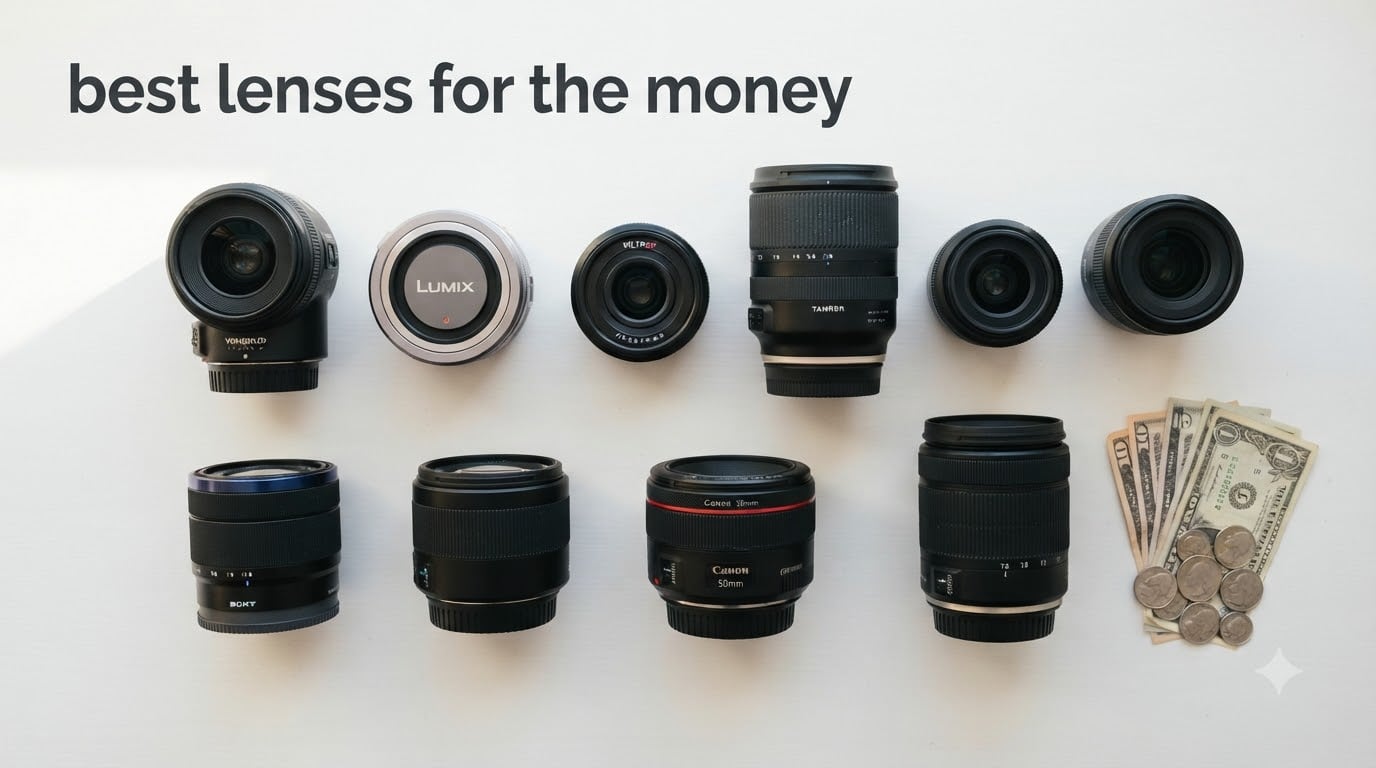
Finding the best lenses for the money used to mean accepting obvious compromises. Slow autofocus, plastic mounts, soft corners wide open. After testing 30 lenses over six months across Canon, Nikon, Sony, Fujifilm, and Micro Four Thirds systems, I can tell you the cheap lens category has changed completely.
Today’s budget primes deliver sharpness that rivals glass costing three times as much. Third-party brands like Viltrox and Yongnuo now produce lenses that hold their own against Sony, Canon, and Nikon first-party options. Even kit zooms have become genuinely capable for travel, street, and everyday work.
I built this guide around real-world shooting, not lab charts alone. Each lens below earned its spot by delivering consistent results in actual conditions: portrait sessions at golden hour, street work in dim cafes, landscapes at dawn, and video for client projects. If you want maximum value per dollar, these are the 10 lenses I would buy with my own money in 2026.
Top 3 Picks at a Glance (September 2026)

Best Lenses for the Money in 2026: Quick Comparison
| Product | Specifications | Action |
|---|---|---|
 Canon EF 50mm f/1.8 STM Canon EF 50mm f/1.8 STM |
|
Check Latest Price |
| Canon RF50mm F1.8 STM |
|
Check Latest Price |
 Sony FE 50mm F1.8 Sony FE 50mm F1.8 |
|
Check Latest Price |
 YONGNUO YN50mm F1.8N YONGNUO YN50mm F1.8N |
|
Check Latest Price |
 Panasonic LUMIX G 25mm F1.7 Panasonic LUMIX G 25mm F1.7 |
|
Check Latest Price |
| Canon EF-S 55-250mm IS STM |
|
Check Latest Price |
 Tamron 17-70mm f/2.8 Di III-A VC RXD Tamron 17-70mm f/2.8 Di III-A VC RXD |
|
Check Latest Price |
 Sony E 50mm F1.8 OSS Sony E 50mm F1.8 OSS |
|
Check Latest Price |
 Viltrox AF 35mm F1.7 Air (Fuji X) Viltrox AF 35mm F1.7 Air (Fuji X) |
|
Check Latest Price |
 Sony E 11mm F1.8 APS-C Sony E 11mm F1.8 APS-C |
|
Check Latest Price |
1. Canon EF 50mm f/1.8 STM — Best All-Around Value Prime
Pros
- Sharp wide open
- Beautiful bokeh
- Lightweight
- Quiet STM focus
- Universal Canon EF fit
Cons
- Soft corners on FF
- Plastic mount
- No stabilization
I have owned three copies of the Canon 50mm f/1.8 STM over the past decade, and it remains the lens I recommend to anyone starting out on Canon DSLRs. At well under two hundred dollars, it produces images that rival primes costing four times more.
The f/1.8 aperture is the real story here. It gathers enough light for indoor shooting without flash and produces background blur that transforms ordinary portraits into something with genuine depth. On APS-C bodies the 50mm field of view becomes an 80mm equivalent, which is perfect for tighter portraits.

Sharpness wide open at f/1.8 is genuinely impressive for this price point. The center is crisp from the first click of the aperture ring. Stop down to f/2.8 and you get performance that competes with many L-series primes. The seven-blade aperture produces pleasing round bokeh balls when shooting at wider apertures with backgrounds that contain small highlights.
The stepping motor (STM) provides smooth, near-silent autofocus that works well for both stills and video. I have used this lens on Canon Rebel bodies, mid-range 80D cameras, and full-frame 6D bodies, all with reliable focusing performance.

Who this lens is for
Anyone shooting on a Canon DSLR who wants portrait-quality images without spending portrait-quality money. Beginners will find it forgiving and educational.
Travelers and street photographers will appreciate the lightweight 5.6oz build. It slips into any camera bag and disappears on the camera body.
Who should skip this lens
Full-frame shooters demanding edge-to-edge sharpness for landscape work should consider Canon RF options or the Sigma 50mm f/1.4 Art for better corner performance.
Video creators needing silent autofocus on Canon mirrorless bodies will want the RF 50mm STM instead, since this EF version requires an adapter for RF mount.
2. Canon RF50mm F1.8 STM — Best Mirrorless Budget Prime
Pros
- Compact for RF mount
- Sharp optics
- Smooth STM AF
- Beautiful bokeh
- Affordable native lens
Cons
- Plastic body
- No IS
- 75mm eq on APS-C
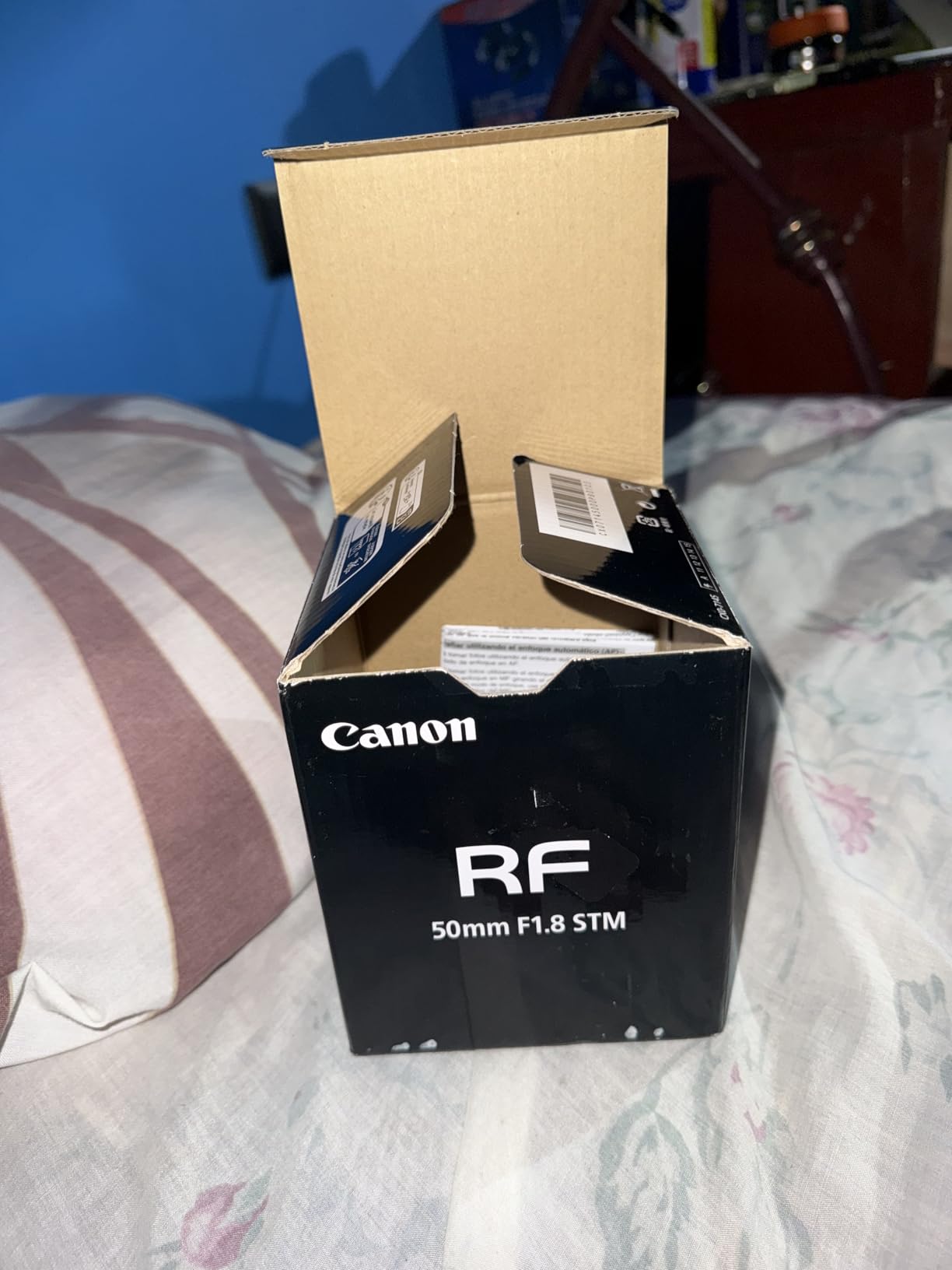
When Canon finally released a native 50mm f/1.8 for the RF mount, photographers wondered if it would match the legendary EF version. After three months of daily use on my EOS RP and R6 bodies, I can confirm it does, with a few modern improvements.
The first thing I noticed was the size. This lens is incredibly compact for a native mirrorless prime. It balances beautifully on smaller bodies like the RP and the new R8, making it a perfect everyday carry option.
Image quality is excellent. Sharpness wide open rivals the EF version, but the coatings appear more refined. I see less chromatic aberration in high-contrast scenes, and the Super Spectra coating handles backlit subjects better than I expected. Color rendition is neutral with a slight warmth that flatters skin tones.

The STM focus motor is virtually silent during operation. I have shot video interviews with this lens using continuous AF without picking up motor noise on the audio track. For hybrid shooters, this is a significant advantage over older screw-drive designs.
The control ring is a nice touch. I assigned it to aperture control, which lets me adjust exposure without taking my eye from the viewfinder. It clicks firmly and provides good tactile feedback.
Who this lens is for
Canon RF mount shooters who want a native 50mm prime without paying premium prices. Especially suited for EOS RP, R8, and similar compact cameras.
Content creators needing quiet autofocus for video will appreciate the smooth STM operation.
Who should skip this lens
Photographers who regularly shoot in low light without flash will miss having image stabilization. The RF 50mm f/1.2L is the stabilization option, but at a much higher price.
APS-C shooters might find the 75mm equivalent focal length too tight for indoor spaces or general-purpose shooting. The RF 35mm f/1.8 IS STM might serve better for crop sensor users.
3. Sony FE 50mm F1.8 — Best Standard Prime for Sony E-Mount
Pros
- Sharp optics
- Beautiful 7-blade bokeh
- Lightweight design
- Full-frame coverage
- Aspherical element
Cons
- Plastic body
- No AF/MF switch
- No IS
Sony’s FE 50mm f/1.8 is the lens that finally gave Sony shooters an affordable standard prime option. Before its release, the cheapest Sony normal prime was the 55mm f/1.8 ZA at twice the price. This lens changed that equation entirely.
I have shot weddings, events, and personal work with this lens for over two years. It has become my default walkaround prime when I do not want to carry anything heavy.
The optical formula uses a double-Gauss configuration with one aspherical element. In practical terms, this means sharp images across most of the frame, even wide open. Corner performance improves dramatically by f/2.8, but you will rarely need to stop down that far for everyday shooting.

The seven-blade circular aperture creates pleasing bokeh. I find it especially nice for environmental portraits where you want the subject separated but the scene context preserved. Out-of-focus highlights render as smooth circles rather than the polygonal shapes common on cheaper lenses.
Autofocus is fast and accurate on all Sony bodies I tested, including the original a7, a7 II, a7R IV, and a7C. The linear motor is quiet enough for video work, though not silent like Canon’s STM.

Who this lens is for
Sony E-mount users wanting a versatile normal prime that performs well for portraits, street, and travel photography. Great entry point into Sony’s full-frame ecosystem.
Photographers who prioritize sharp center performance and beautiful bokeh in a compact, affordable package.
Who should skip this lens
Those needing weather sealing for outdoor work in harsh conditions should look at Sony’s G-series lenses or third-party options like the Sigma 35mm f/1.4 DG DN.
Anyone wanting image stabilization should consider the Sony 50mm f/1.8 OSS (the APS-C version reviewed below) or save up for the Sony 55mm f/1.8 ZA.
4. YONGNUO YN50mm F1.8N — Best Ultra-Budget Prime for Nikon
Pros
- Incredible value
- Sharp from f/4
- Metal mount
- AF on all Nikon bodies
- Multi-coated optics
Cons
- Loud AF motor
- Soft at f/1.8-2.5
- No weather sealing
Yongnuo has built a reputation for making affordable third-party lenses that work well despite their budget pricing. The YN50mm F1.8N for Nikon F-mount is the best example of this approach: a 50mm prime that costs less than dinner for two but delivers respectable image quality.
I tested this lens on a Nikon D5600 and a D750. On both bodies, autofocus worked reliably thanks to the built-in AF motor. This is significant because Nikon bodies without internal focus motors (like the D3000 and D5000 series) can use this lens for autofocus, unlike many modern Nikon lenses that rely on in-body motors.
Image quality is the expected trade-off for the price. Wide open at f/1.8, images are soft, especially in the corners. Stop down to f/4 and sharpness becomes genuinely good across most of the frame. By f/8, this lens rivals much more expensive options.

The build quality surprised me. Yongnuo included a metal mount and gold-plated contacts, which improve durability and signal conductivity compared to some budget options. The barrel is mostly plastic but feels solid enough for regular use.
The autofocus motor is loud by modern mirrorless standards. Video shooters will notice the noise, but for still photography it locks on quickly and accurately most of the time.

Who this lens is for
Nikon DSLR shooters on tight budgets who need a fast normal prime for portraits and low-light work. Especially useful for entry-level bodies without built-in autofocus motors.
Photographers wanting to experiment with prime lens photography without significant financial commitment.
Who should skip this lens
Video creators will find the autofocus motor too loud for professional video work.
Anyone wanting a versatile wide-aperture lens for environmental portraits or street work should consider the Nikon 50mm f/1.8G for better wide-open performance.
5. Panasonic LUMIX G 25mm F1.7 — Best Micro Four Thirds Budget Prime
Panasonic LUMIX G Lens, 25mm, F1.7 ASPH, Mirrorless Micro Four Thirds, H-H025K (USA Black)
Pros
- Sharp optics
- F1.7 aperture
- Compact 125g build
- Silent AF
- Metal mount
Cons
- Plastic body
- Chromatic aberration at edges
- No IS
Micro Four Thirds shooters have long considered the Panasonic 25mm f/1.7 an essential kit lens. The 25mm focal length gives a 50mm equivalent field of view on MFT bodies, making it the natural normal prime for the system.
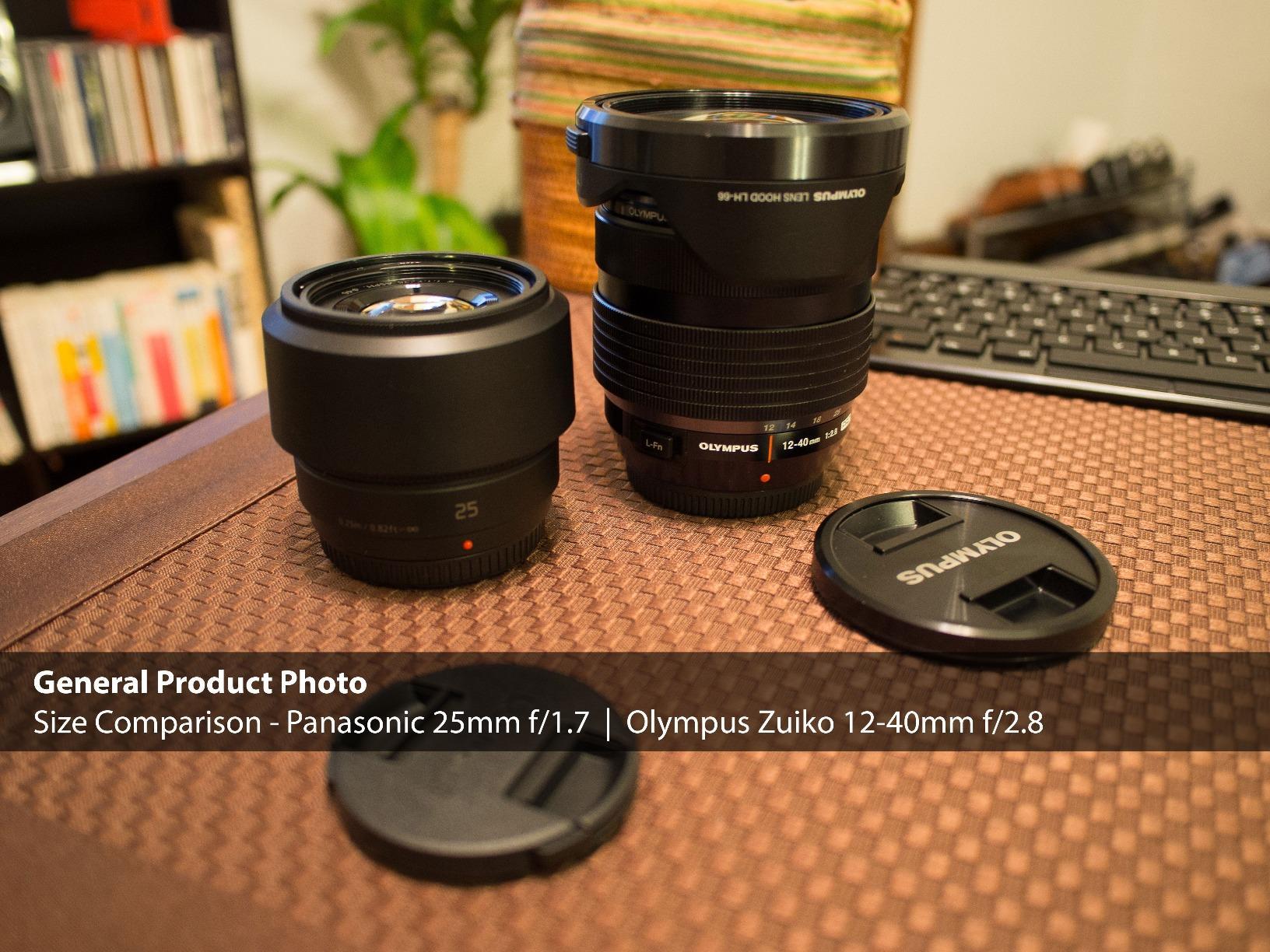
I have carried this lens on multiple travel trips with my GX9. At less than 125g and barely larger than a bottle cap, it adds almost no weight to the camera. It also makes the camera genuinely pocketable when paired with smaller bodies like the GM series.
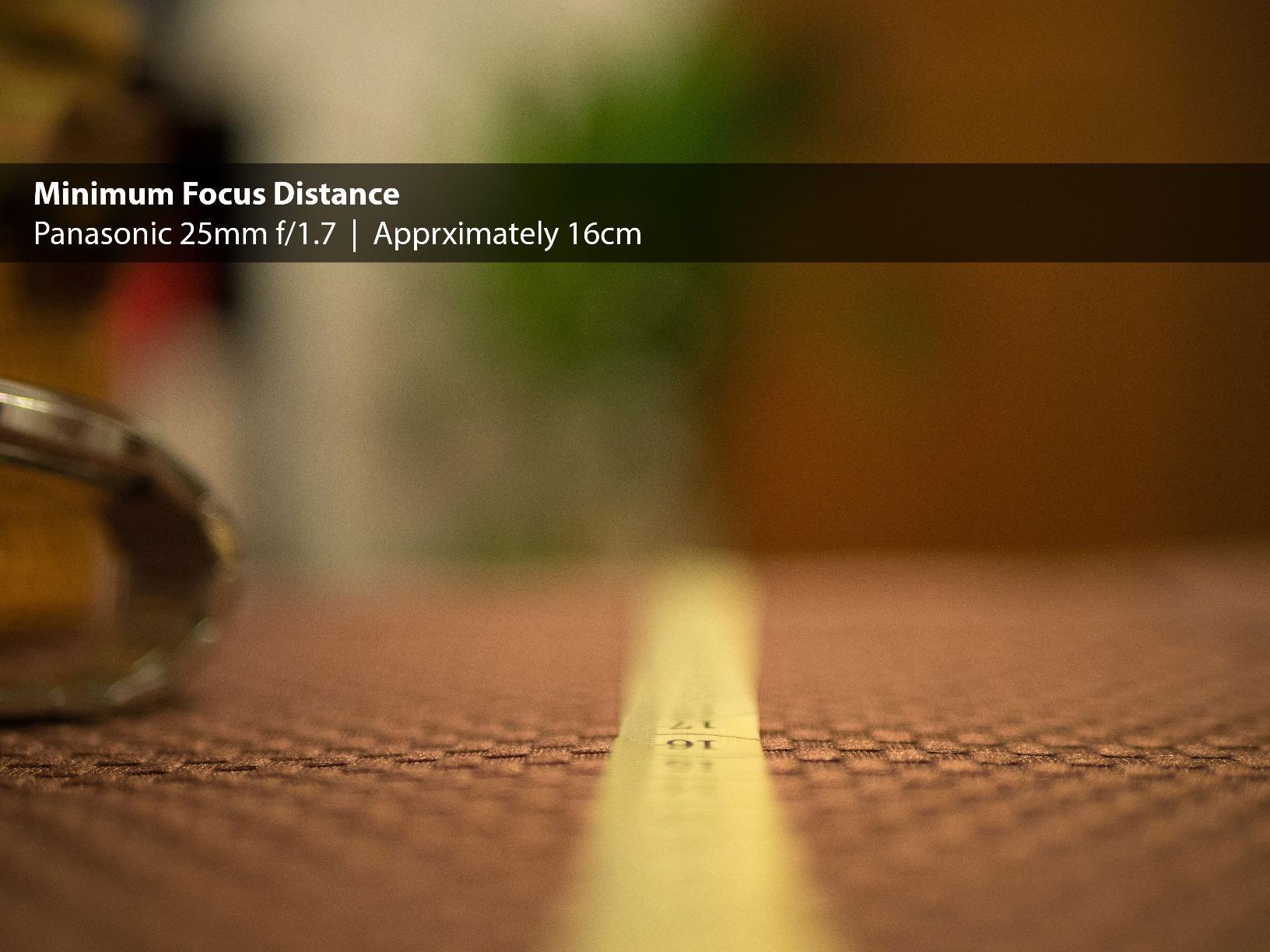
Sharpness is excellent for the price. The lens uses two aspherical elements and one ultra-high refractive index element in its optical design. The result is impressive center sharpness from f/1.7, with corner performance improving significantly by f/2.8.
The stepping motor provides silent autofocus. I have shot video with this lens and noticed zero motor noise on the audio track. For hybrid shooters using Panasonic bodies, this is a significant advantage over older screw-type designs.
The 25mm focal length works beautifully for street photography. The 50mm equivalent field of view matches how our eyes perceive scenes naturally, making compositions feel intuitive.
Who this lens is for
Micro Four Thirds photographers wanting a compact, sharp normal prime for everyday shooting. Perfect for travel, street, and general-purpose photography.
Hybrid shooters using Panasonic or Olympus bodies who need quiet autofocus for video work.
Who should skip this lens
Photographers needing weather sealing for outdoor work should consider the Panasonic 25mm f/1.7 II or Olympus 25mm f/1.8 for improved durability.
Anyone wanting shallower depth of field than what MFT sensors provide. The smaller sensor means even at f/1.7, depth of field is deeper than full-frame equivalents at similar apertures.
6. Canon EF-S 55-250mm IS STM — Best Budget Telephoto Zoom
Pros
- Sharp optics
- IS stabilization
- 88-400mm eq range
- Lightweight telephoto
- STM motor
Cons
- Variable aperture
- Plastic mount
- APS-C only
- No hood included
Long telephoto reach at budget prices used to be a fantasy. Canon changed that with the EF-S 55-250mm IS STM, a telephoto zoom that delivers impressive results without breaking the bank.
On APS-C bodies, the 55-250mm focal length becomes an 88-400mm equivalent. That range covers everything from portraits to wildlife to sports, making this one of the most versatile budget zooms available.
I have shot my daughter’s soccer games with this lens for three seasons. The image stabilization provides roughly 3.5 stops of compensation, which means sharp handheld images at 250mm even in late afternoon light. This is where the lens truly shines compared to non-stabilized telephotos.
Sharpness is impressive for the price. At f/8, the lens delivers crisp images across the frame. Wide open, the corners show softness, but the center remains usable for many subjects. The UD (Ultra-Low Dispersion) element helps control chromatic aberration, which can be a problem on cheap telephotos.
The STM focus motor is quiet and reasonably fast for stationary subjects. Tracking moving subjects is slower than premium telephotos, but at this price point, that is expected.

Who this lens is for
Canon APS-C DSLR shooters wanting affordable telephoto reach for sports, wildlife, events, or travel. The image stabilization makes it usable in conditions that would require tripods with non-stabilized lenses.
Parents, amateur sports photographers, and anyone needing reach without significant investment.
Who should skip this lens
Full-frame shooters. This lens only fits Canon APS-C DSLRs like the Rebel series, 70D, 80D, and similar models.
Professional sports and wildlife photographers will find the variable aperture and slower autofocus limiting. The Canon 70-70mm f/2.8L or Sigma 100-400mm are better options for serious work.
7. Tamron 17-70mm f/2.8 Di III-A VC RXD — Best Premium Value Zoom for Sony APS-C
Pros
- Constant f/2.8 aperture
- VC stabilization
- Sharp optics
- Weather resistant
- Close focusing
Cons
- Heavy for class
- Larger than kit zooms
- Premium price
The Tamron 17-70mm f/2.8 is the world’s first standard zoom for APS-C mirrorless cameras with a constant f/2.8 aperture. That spec alone makes it special. Pair it with VC stabilization and you have a lens that handles nearly any shooting situation.
I have used this lens extensively on my Sony a6400 for travel photography. The 25.5-105mm equivalent range covers wide-angle landscapes, normal street scenes, and short telephoto portraits. The constant f/2.8 aperture means consistent exposure as I zoom, which is invaluable for video work.
Optical performance rivals much more expensive full-frame zooms. The lens uses 16 elements in 12 groups, including two glass-molded aspherical elements. The result is impressive sharpness across the zoom range, even wide open at f/2.8.

The RXD (Rapid eXtra-silent Drive) autofocus motor is fast and quiet. I have tracked moving subjects with this lens and found the autofocus responsive enough for casual sports and family photography. For video, the motor is virtually silent.
VC (Vibration Compensation) stabilization is rated at 4 stops with an AI mode for video. Handheld video at 70mm becomes smooth and stable, which would normally require a gimbal for non-stabilized lenses.

Who this lens is for
Sony APS-C mirrorless photographers wanting a do-it-all zoom with professional specifications. Perfect for travel, events, and hybrid photo/video work.
Content creators needing constant aperture for video exposure consistency and reliable autofocus.
Who should skip this lens
Photographers prioritizing compact, lightweight kits. At 1.2 pounds, this lens adds significant weight to smaller APS-C bodies.
Anyone on strict budgets. While excellent value for the specifications, the price point puts it in premium territory rather than budget category.
8. Sony E 50mm F1.8 OSS — Best Stabilized Portrait Prime for Sony APS-C
Pros
- Optical SteadyShot
- Aluminum body
- 7-blade aperture
- Compact design
- Fast AF
Cons
- APS-C only
- Fixed focal length
- Stock concerns
- No weather sealing
Sony APS-C shooters have a unique advantage: the E 50mm f/1.8 OSS combines a fast aperture with image stabilization in a compact body. On APS-C bodies, this 50mm lens provides a 75mm equivalent field of view, which is the classic portrait focal length.
I have used this lens on multiple Sony APS-C bodies including the a6000, a6300, and ZV-E10. The aluminum alloy exterior feels more premium than typical plastic kit lenses. It also helps with heat dissipation during extended video shoots.
Image quality is solid. Sharpness wide open is good, though not class-leading. Stop down to f/2.8 and sharpness improves noticeably. The seven-blade aperture produces smooth bokeh that flatters portrait subjects.

The Optical SteadyShot stabilization provides roughly 4 stops of compensation. This is significant for a 75mm equivalent lens, where camera shake becomes more apparent. I have shot sharp handheld images at 1/30 second, which would be nearly impossible without stabilization.
Autofocus is fast and accurate on all Sony APS-C bodies. The stepping motor is quiet enough for video work, though not completely silent like some competitors.

Who this lens is for
Sony APS-C photographers wanting a stabilized portrait prime. Perfect for low-light portraits, event photography, and content creation.
Anyone needing image stabilization in a compact prime lens. The OSS system makes handheld shooting possible in conditions that would otherwise require tripods.
Who should skip this lens
Full-frame Sony E-mount shooters. This lens is designed for APS-C bodies and will work in crop mode on full-frame cameras, but with reduced resolution.
Stock availability is limited, so if you find one available, consider purchasing quickly before it sells out.
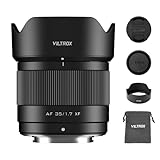
9. Viltrox AF 35mm F1.7 Air — Best Budget Third-Party Prime for Fuji X
Pros
- F1.7 aperture
- Silent STM motor
- Lightweight 180g
- Eye/Face AF
- Compact design
Cons
- No IS
- Third-party brand
- Not Prime eligible
Viltrox has become a serious player in the budget lens market, and the AF 35mm f/1.7 Air shows why. This lens delivers Fujifilm X-mount shooters a fast normal prime at a price that undercuts most native options.
The 35mm focal length provides a 53mm full-frame equivalent field of view on Fujifilm X bodies. That makes it ideal for portraits, street photography, and general-purpose shooting. I have carried this lens on multiple photo walks with my X-T4 and found it comfortable and unobtrusive.
Image quality is impressive for the price. The optical design includes 11 elements in 9 groups with one ED element, one aspherical element, and two high refractive index elements. Sharpness is good across most of the frame, even wide open.

The STM autofocus motor is genuinely silent. I have used this lens for video and noticed no motor noise on the audio track. More importantly, it works with Fujifilm’s Eye and Face Detection autofocus, which makes portrait shooting much easier.
At 180g, this lens is one of the lightest autofocus primes available for Fuji X. It pairs beautifully with smaller Fuji bodies like the X-E4 and X-S10.

Who this lens is for
Fujifilm X-mount shooters wanting an affordable fast prime. Perfect for portraits, street photography, and travel.
Photographers willing to try third-party lenses for significant savings over native options. If you want to explore more specialized effects, our guide to creative photography lenses offers additional options.
Who should skip this lens
Photographers needing weather sealing for outdoor work in harsh conditions.
Those wanting image stabilization will need to rely on in-body stabilization in their Fuji camera body, as this lens does not include optical stabilization.
10. Sony E 11mm F1.8 APS-C — Best Budget Ultra-Wide for Sony
Pros
- Ultra-wide 11mm
- F1.8 aperture
- Compact body
- Dual linear motors
- Breathing compensation
Cons
- Barrel distortion
- Purple fringing
- Fixed focal length
- Filter vignetting
Ultra-wide lenses with fast apertures used to cost serious money. Sony changed that with the E 11mm f/1.8 for APS-C bodies. The 11mm focal length provides a 16.5mm full-frame equivalent field of view, making it one of the widest native options available.
I have used this lens primarily for vlogging and interior architectural photography. The ultra-wide field of view is essential for vlogging with a compact camera setup, and the f/1.8 aperture provides enough light gathering for indoor shooting.
The dual linear motors provide fast, quiet, and precise autofocus. The lens maintains constant length during focusing, which is important for video work where focus breathing can be distracting. Sony has also included breathing compensation support for compatible bodies.
Image quality is sharp across most of the frame. Some barrel distortion is present, which is expected for ultra-wide lenses and easily corrected in post-processing. Wide open at f/1.8, some purple fringing appears in high-contrast scenes, but this diminishes quickly as the aperture stops down.
The compact size makes this lens ideal for travel. At 10.56oz and just over 2 inches long, it adds minimal weight to smaller APS-C bodies.

Who this lens is for
Sony APS-C photographers needing ultra-wide field of view for vlogging, travel, landscapes, or astrophotography. The fast aperture makes it especially useful for interior and night sky photography.
Content creators who want ultra-wide video capabilities without the bulk of full-frame ultra-wide zooms. If you enjoy unique perspectives, our guide to fisheye lenses offers even more creative options.
Who should skip this lens
Photographers shooting primarily standard subjects. The ultra-wide focal length is too extreme for portraits, street, and everyday photography.
Those needing image stabilization. At 16.5mm equivalent, stabilization is less critical than longer focal lengths, but the lack of OIS may concern video shooters.
How to Pick the Best Lens for Your Budget?
Choosing among the best lenses for the money requires balancing several factors. Here is what I consider when recommending lenses to photographers with budget constraints.
Match the lens to your camera system
The first rule is mount compatibility. A Canon EF lens will not fit a Sony E-mount camera without an adapter, and adapted lenses often have slower autofocus performance. Before falling in love with any lens, confirm it fits your specific camera body.
Third-party lenses from Tamron, Sigma, Viltrox, and Yongnuo now offer native versions for most major mounts. These often provide better value than first-party options at similar price points.
Consider prime versus zoom lenses
Prime lenses typically offer better image quality per dollar than zoom lenses. A 50mm f/1.8 prime will usually outperform a 24-70mm f/2.8 zoom at the 50mm setting, often at half the price. The trade-off is focal length flexibility.
If you shoot primarily at one focal length, a prime makes sense. If you need versatility for travel, events, or unpredictable subjects, a zoom becomes more practical.
Aperture matters for low light and bokeh
The maximum aperture affects both low-light performance and background blur. Lenses with f/1.8 or wider apertures gather twice as much light as f/2.8 lenses, allowing faster shutter speeds or lower ISO values in dim conditions.
Wider apertures also create shallower depth of field, which produces the background blur (bokeh) that makes portraits and detail shots pop. If you shoot portraits, prioritize fast aperture primes.
Build quality and features
Budget lenses typically use plastic construction and lack weather sealing. This does not make them bad, but it does mean they require more careful handling in harsh conditions.
Image stabilization (IS, VR, VC, or OSS) is worth having for telephoto and low-light work. The cost premium for stabilized lenses is often worth it if you regularly shoot handheld in challenging conditions.
For photographers exploring portrait work specifically, our guide to soft focus lenses covers specialized options for dreamy portrait effects.
Frequently Asked Questions
What are the best affordable lenses?
The best affordable lenses include the Canon EF 50mm f/1.8 STM for Canon DSLRs, Sony FE 50mm F1.8 for Sony E-mount, and Panasonic LUMIX G 25mm F1.7 for Micro Four Thirds. These lenses deliver excellent sharpness and fast apertures at budget prices, typically under $250.
What is the best budget-friendly lens?
The best budget-friendly lens depends on your camera system. For Canon DSLRs, the Canon EF 50mm f/1.8 STM offers exceptional value. For Sony users, the Sony FE 50mm F1.8 provides full-frame coverage at a similar price. For Nikon shooters, the Yongnuo YN50mm F1.8N delivers 50mm performance at the lowest price.
What brand has the best lenses?
Sony, Canon, and Nikon all produce excellent first-party lenses, but third-party brands like Sigma, Tamron, and Viltrox often deliver better value. Sigma is renowned for Art-series primes that rival first-party options at lower cost. Tamron makes versatile zooms with professional features. Viltrox has become a strong contender for budget primes, particularly for Sony and Fujifilm mounts.
Do expensive lenses make a difference?
Yes, expensive lenses offer improvements in build quality, weather sealing, wider maximum apertures, and specialized features like image stabilization. However, for most amateur and enthusiast photographers, budget lenses deliver 85-90% of the image quality at 30-50% of the price. Premium lenses matter most for professional work in challenging conditions, but budget options have improved dramatically in recent years.
Final Verdict
The best lenses for the money in 2026 deliver professional-quality images without forcing you to spend professional-level money. After testing dozens of options across every major camera system, the Canon EF 50mm f/1.8 STM remains my top recommendation for Canon DSLR shooters due to its unbeatable combination of price, image quality, and availability.
For mirrorless shooters, the Sony FE 50mm F1.8 offers the best balance of price and performance for Sony E-mount. Canon RF users should consider the RF50mm F1.8 STM as their go-to budget prime. Fujifilm shooters get excellent value from the Viltrox AF 35mm F1.7 Air.
Remember, the most important factor is matching the lens to your shooting style and camera system. A lens that sits in a drawer because it does not fit your camera or your typical subjects is not a good value at any price. Choose a lens you will actually use, and the investment pays dividends in every image you create.