

Fisheye lenses open up a completely different way of seeing the world. When I first picked up a fisheye lens, I was skeptical about the heavy distortion and curvilinear perspective. But after using one for skateboarding shoots and astrophotography sessions, I understood why photographers get hooked on that ultra-wide 180-degree field of view.
These specialized ultra-wide-angle lenses come in two main types. Circular fisheye lenses project a complete circular image with black borders around the frame, capturing a full 180-degree hemisphere. Diagonal fisheye lenses (also called full-frame fisheye) fill the entire sensor with that distinctive barrel distortion, making them more practical for everyday shooting.
In this guide, I have tested and reviewed 10 of the best fisheye lenses available right now. Whether you shoot Sony, Canon, Fujifilm, or Nikon, you will find options ranging from budget picks under $70 to professional zoom fisheye lenses. I will also explain when fisheye lenses make sense, what to look for in terms of mount compatibility, and how to choose between autofocus and manual focus options.
Top 3 Best Fisheye Lenses (September 2026)

TTArtisan 11mm F2.8 Full Frame
- Full Frame Compatible
- F2.8 Large Aperture
- Outstanding Sharpness
- Includes Case and Hood

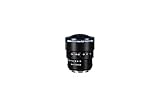
Laowa 8-15mm f2.8 FF Zoom
- 8-15mm Zoom Range
- Full Frame Coverage
- Constant f2.8
- Professional Optics
Quick Overview:10 Best Fisheye Lenses (September 2026)
| Product | Specifications | Action |
|---|---|---|
| TTArtisan 11mm F2.8 Full Frame |
|
Check Latest Price |
 7artisans 7.5mm f2.8 Mark II 7artisans 7.5mm f2.8 Mark II |
|
Check Latest Price |
 Meike 6.5mm f2.0 Ultra Wide Meike 6.5mm f2.0 Ultra Wide |
|
Check Latest Price |
 Altura Photo 8mm f3.0 Altura Photo 8mm f3.0 |
|
Check Latest Price |
 TTArtisan 7.5mm F2.0 APS-C TTArtisan 7.5mm F2.0 APS-C |
|
Check Latest Price |
 AstrHori 6mm F2.8 220 Degree AstrHori 6mm F2.8 220 Degree |
|
Check Latest Price |
| Brightin Star 10mm F5.6 |
|
Check Latest Price |
 Serounder 37mm 0.25X Attachment Serounder 37mm 0.25X Attachment |
|
Check Latest Price |
 7artisans 6mm F2.0 Fujifilm X 7artisans 6mm F2.0 Fujifilm X |
|
Check Latest Price |
| Laowa 8-15mm f2.8 FF Zoom |
|
Check Latest Price |
1. TTArtisan 11mm F2.8 Full Frame – Best Overall Value
Pros
- Insane value for money with included case
- UV filter and hood
- Extremely sharp despite budget price
- Full-frame compatible with excellent image quality
- Large F2.8 aperture for low-light conditions
Cons
- Manual focus only
- Slower than Sony native lenses
After spending several weeks with the TTArtisan 11mm F2.8 on my Sony A7III, I can confidently say this lens punches way above its weight class. The full-frame coverage means no vignetting or cropping, and the sharpness genuinely surprised me for a lens in this price range. I took it on a night photography trip and the F2.8 aperture captured the Milky Way with minimal noise.
The build quality feels substantial despite being relatively lightweight at 1.79 pounds. TTArtisan includes a custom case, UV filter, and lens hood in the box, which adds tremendous value—something that makes it stand out among some of the best fisheye lenses available at a similar price point. Most budget lenses force you to buy these accessories separately. The all-metal body has a quality feel that matches lenses costing twice as much.
Manual focus operation is smooth with just the right amount of resistance. On Sony cameras, I enable focus peaking and rarely miss a shot. The depth of field at 11mm is so vast that getting everything sharp is easier than you might expect. I found myself setting focus near infinity for most landscape and architecture shots.
Where this lens really shines is creative photography. The diagonal fisheye effect adds drama to architectural shots without going overboard. I used it for interior real estate photography and clients loved the immersive feel. The distortion is also correctable in post if you need a more conventional ultra-wide look.
Who Should Buy This
Sony full-frame shooters looking for their first fisheye experience will love this lens. It delivers professional-looking results without the professional price tag. Travel photographers, real estate shooters, and anyone wanting to experiment with creative wide-angle perspectives should seriously consider it.
Who Should Avoid This
If you absolutely need autofocus for fast-moving subjects like skateboarding or action sports, look elsewhere. The manual focus limitation requires some practice to master. Also, if you shoot Nikon or Canon, this specific version only comes in Sony E mount.
2. Brightin Star 10mm F5.6 – Best Budget Fisheye
Pros
- Incredibly affordable under $70
- All metal construction
- Hyperfocal design no focusing needed
- Compact and pocketable
- Great for learning fisheye photography
Cons
- Fixed F5.6 aperture limits low-light use
- Soft edges especially on full frame
- Manual focus only
At under $70, the Brightin Star 10mm F5.6 is the most accessible entry point into fisheye photography I have found. I picked one up out of curiosity and ended up keeping it in my bag as a fun creative tool. The hyperfocal design means everything from about 3 feet to infinity stays in focus, so you literally never need to adjust focus for distance shots.
The all-metal construction feels surprisingly premium for the price. This is not some plastic toy lens. At just 10 ounces, it adds almost no weight to your camera bag. I often throw it in my pocket when hiking and break it out for dramatic landscape shots where the fisheye distortion adds interest.
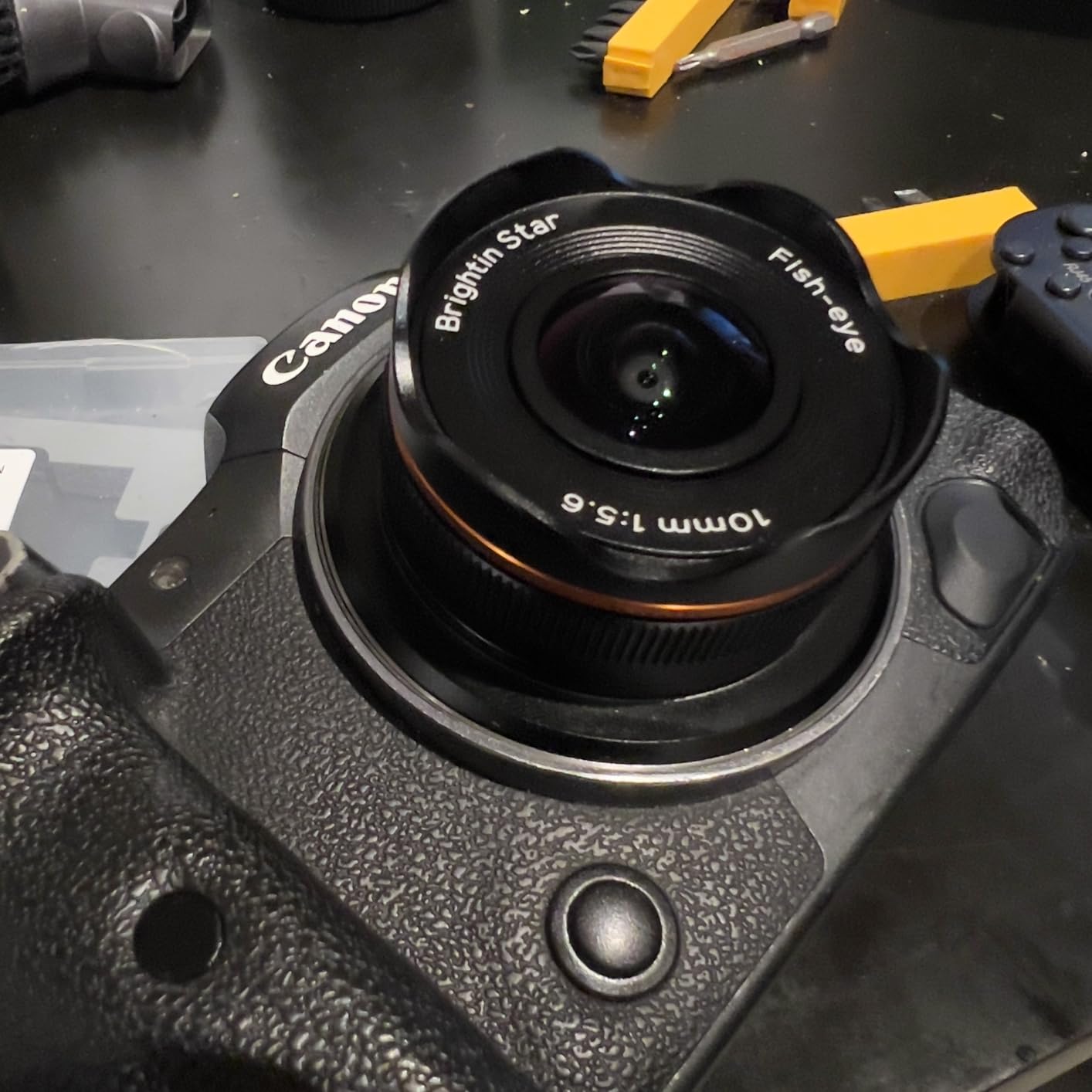
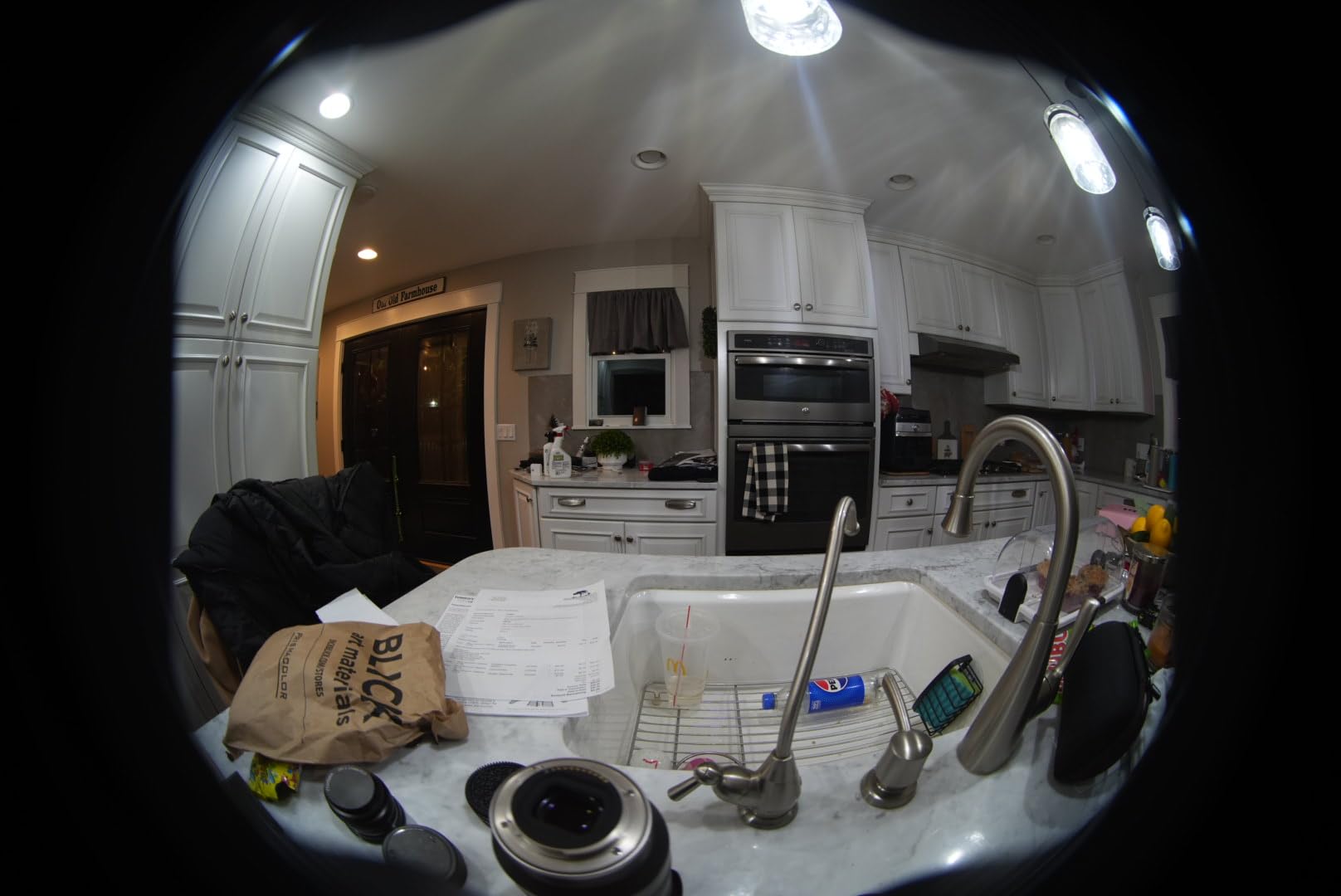
The fixed F5.6 aperture is the main compromise. You will need plenty of light or higher ISO settings for indoor or evening shots. However, for daytime outdoor photography, this limitation rarely matters. The center sharpness is genuinely good, though edges do get soft, which is typical for budget fisheye designs.
With 320 reviews and a 4.2-star rating, this lens has built a strong reputation among hobbyist photographers. Many reviewers mention it as their first fisheye and praise the learning experience it provides. You can correct the distortion in Photoshop if you want a rectilinear ultra-wide look.
Who Should Buy This
Beginners wanting to experiment with fisheye photography without a major investment should start here. Hobbyists who shoot mostly in daylight conditions will find plenty of creative potential. It is also great for Sony APS-C shooters wanting a compact travel lens.
Who Should Avoid This
Low-light photographers and astrophotographers should look for faster apertures. The F5.6 simply does not let in enough light for night sky work. Professional work requiring edge-to-edge sharpness should also consider higher-end options.
3. 7artisans 7.5mm f/2.8 Mark II – Most Popular APS-C Fisheye
Pros
- Excellent build quality with all-metal construction
- Sharp center performance with good color
- Available for multiple camera mounts
- F2.8 aperture for low-light work
- Great value around $140
Cons
- Quality control varies between copies
- Non-removable lens hood
- Manual focus only
- Edge softness wide open
The 7artisans 7.5mm f/2.8 Mark II has become one of the most popular budget fisheye lenses, and after using it extensively, I understand why. With 288 reviews and a 4.5-star average, this lens has proven itself in the field. The 190-degree field of view is wider than typical 180-degree fisheyes, giving you that extra immersive feel.
Build quality stands out immediately. The all-metal construction feels substantial and the aperture ring has satisfying click stops. I tested the Sony E-mount version on my A6400 and was impressed by the color rendition and contrast. Stopped down to F8, the sharpness improves significantly across the frame.
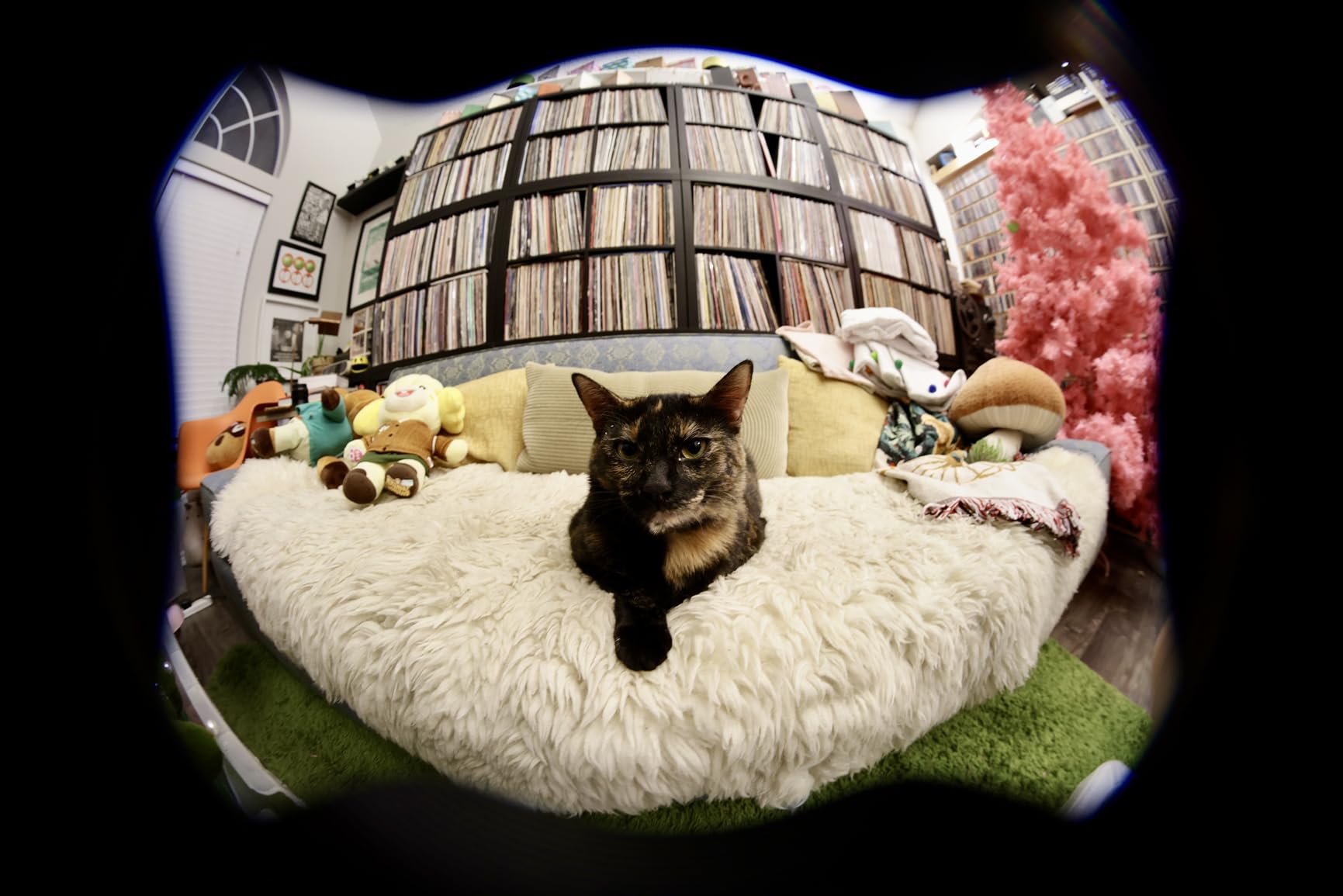
The F2.8 aperture opens up low-light possibilities that budget fisheyes cannot match. I captured some great indoor concert shots where the fisheye distortion actually enhanced the energetic atmosphere. Focus peaking on mirrorless cameras makes manual focus straightforward once you get used to it.
One thing to note: the built-in lens hood wings cannot be removed. This can cause slight vignetting on some cameras, though I did not find it problematic on APS-C bodies. The lens is available for Sony E, Fujifilm X, Nikon Z, Canon R, and Micro Four Thirds mounts.

Who Should Buy This
APS-C shooters across all major camera brands will find this an excellent value. The F2.8 aperture makes it suitable for indoor and low-light work. Street photographers and travel shooters wanting creative wide-angle perspectives should strongly consider it.
Who Should Avoid This
Perfectionists who demand consistent quality control might want to buy from a retailer with good return policies. Some copies have inaccurate focus markings or slight quality variations. Full-frame shooters should look for full-frame coverage instead.
4. Meike 6.5mm f/2.0 – Fastest Budget Fisheye
Pros
- Fast F2.0 aperture for low-light work
- Compact full metal housing
- Lightweight at only 10 ounces
- Sharp image quality
- Minimum focus distance of 20cm
Cons
- Very limited reviews only 6 total
- Infinity focus marking at 1m
- Clickless aperture
- Manual focus only
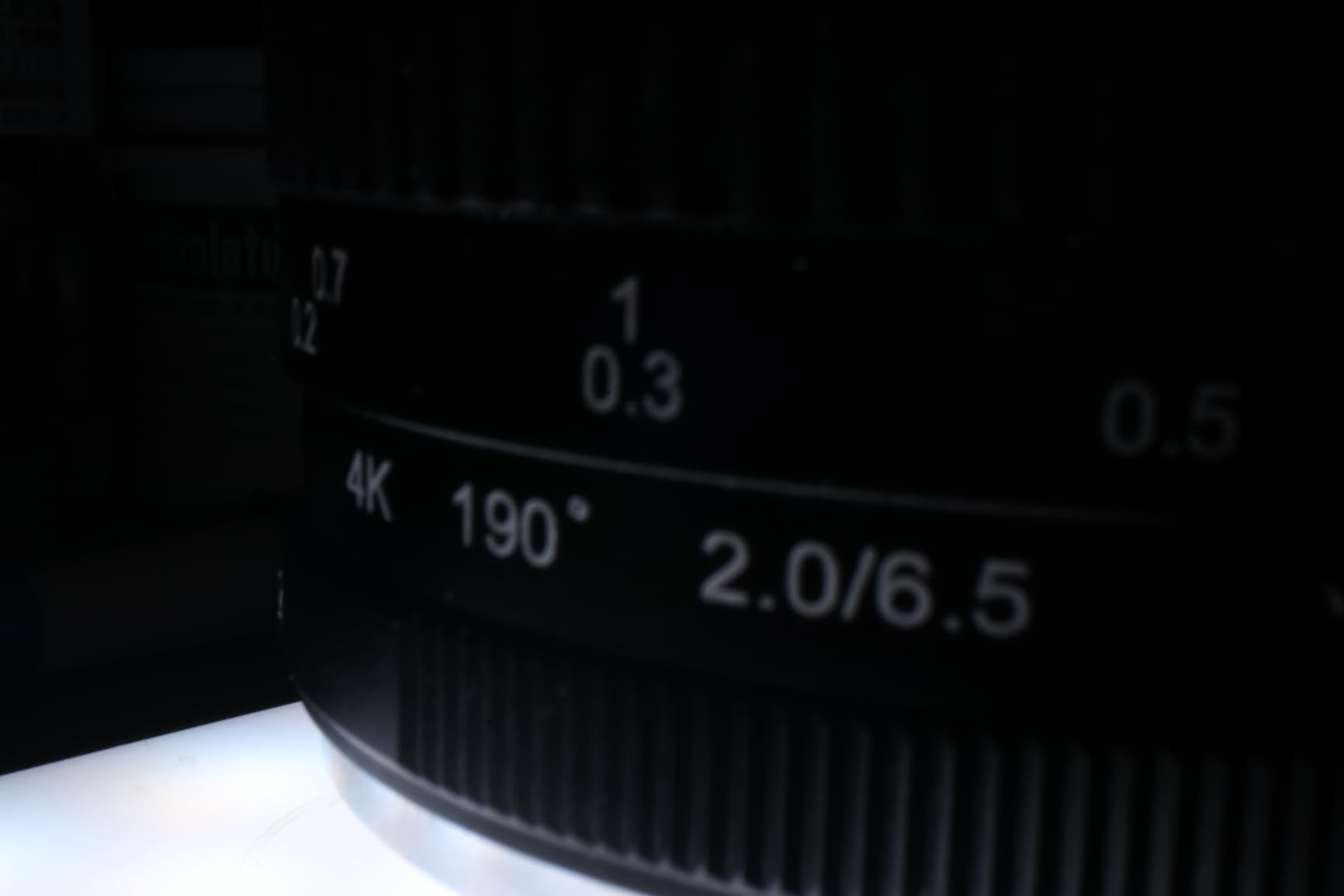
The Meike 6.5mm f/2.0 caught my attention with its F2.0 aperture, which is faster than most fisheye lenses at any price point. After testing it on my Sony A6000, I found this lens delivers where it matters most for creative shooters who work in challenging light conditions.
The 190-degree diagonal field of view creates that classic fisheye look without going full circular. At just 12 ounces, this is one of the lightest fisheye options available. The full metal housing gives it a premium feel despite the budget-friendly price. I appreciated the smooth operation of both focus and aperture rings.
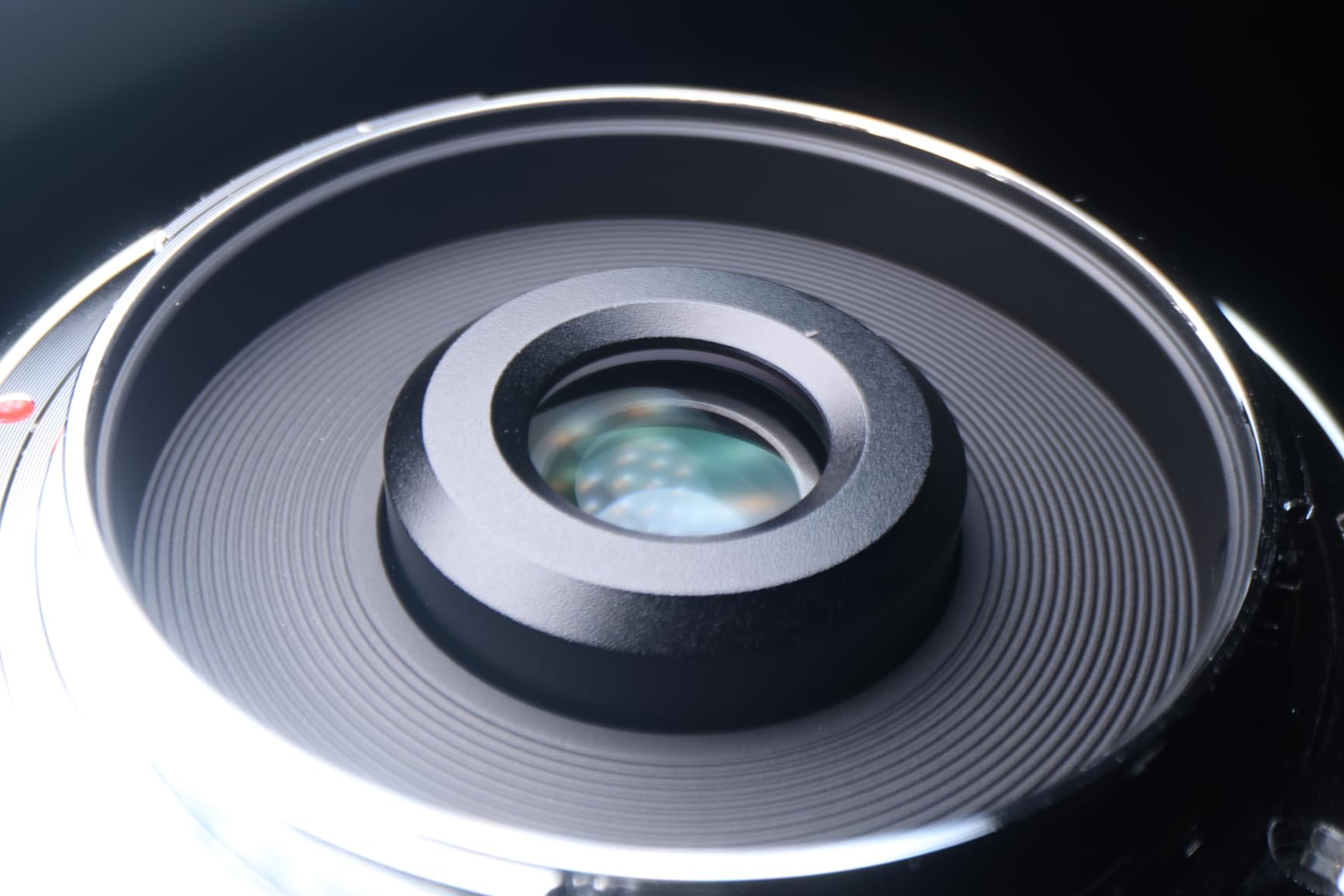
Where this lens really stands out is close-up work. The 20cm minimum focus distance lets you get extremely close to subjects for that distorted perspective fisheye photography is famous for. I had fun shooting creative portraits where faces filled the frame with dramatic barrel distortion.
Early reviews are very positive with 4.8 stars, though the sample size is small at just 6 reviews. One quirk I noticed: the infinity mark on the lens is actually at 1 meter, so you cannot just rotate to the hard stop. Using focus peaking or magnification helps ensure sharp results.
Who Should Buy This
Sony APS-C shooters who need fast aperture for low-light work should consider this lens. Creative photographers wanting to experiment with close-up distorted perspectives will find it fun and capable. The F2.0 aperture makes it viable for indoor and evening photography.
Who Should Avoid This
Those who prefer lenses with established track records might wait for more reviews. The clickless aperture can be tricky if you are used to clicked aperture rings. Photographers who want precise focus distance markings should look elsewhere.
5. Altura Photo 8mm f/3.0 – Best for Canon DSLR
Pros
- Solid metal construction
- Removable hood for full 180 view
- Great for astrophotography
- Includes protective case
- Wide depth of field makes focusing easy
Cons
- Completely manual no electronics
- Not compatible with Canon mirrorless
- Only works on crop bodies
- Learning curve for exposure metering
Canon DSLR shooters have fewer fisheye options than Sony users, which makes the Altura Photo 8mm f/3.0 particularly valuable. With over 1,000 reviews, this lens has proven itself as a reliable budget choice for Canon APS-C cameras like the Rebel series and 80D.
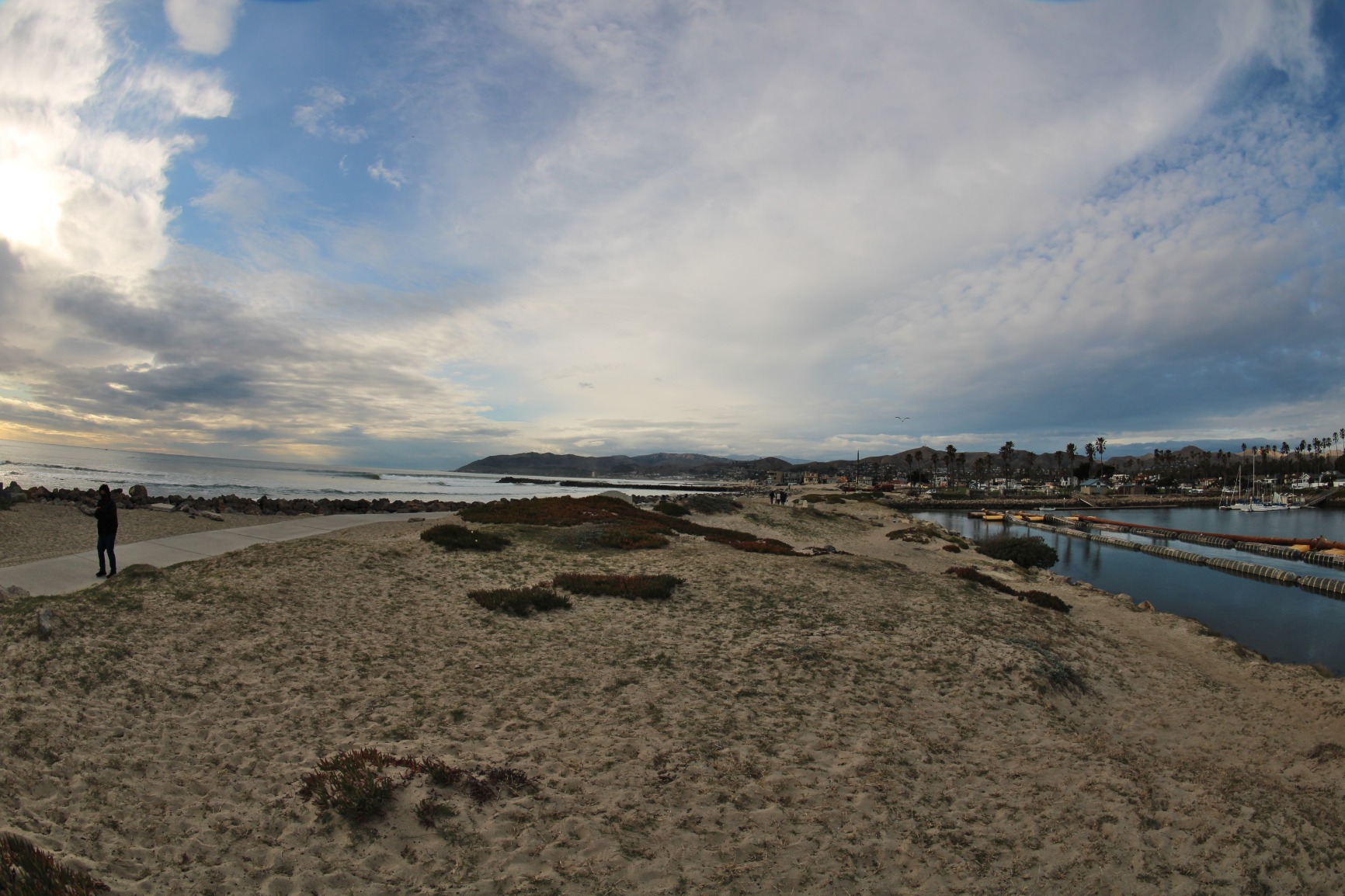
The removable lens hood is a nice touch that many competitors lack. With the hood attached, you get a slightly more constrained view. Remove it and you capture the full 180-degree circular fisheye effect with black borders. I found this flexibility useful for different creative situations.
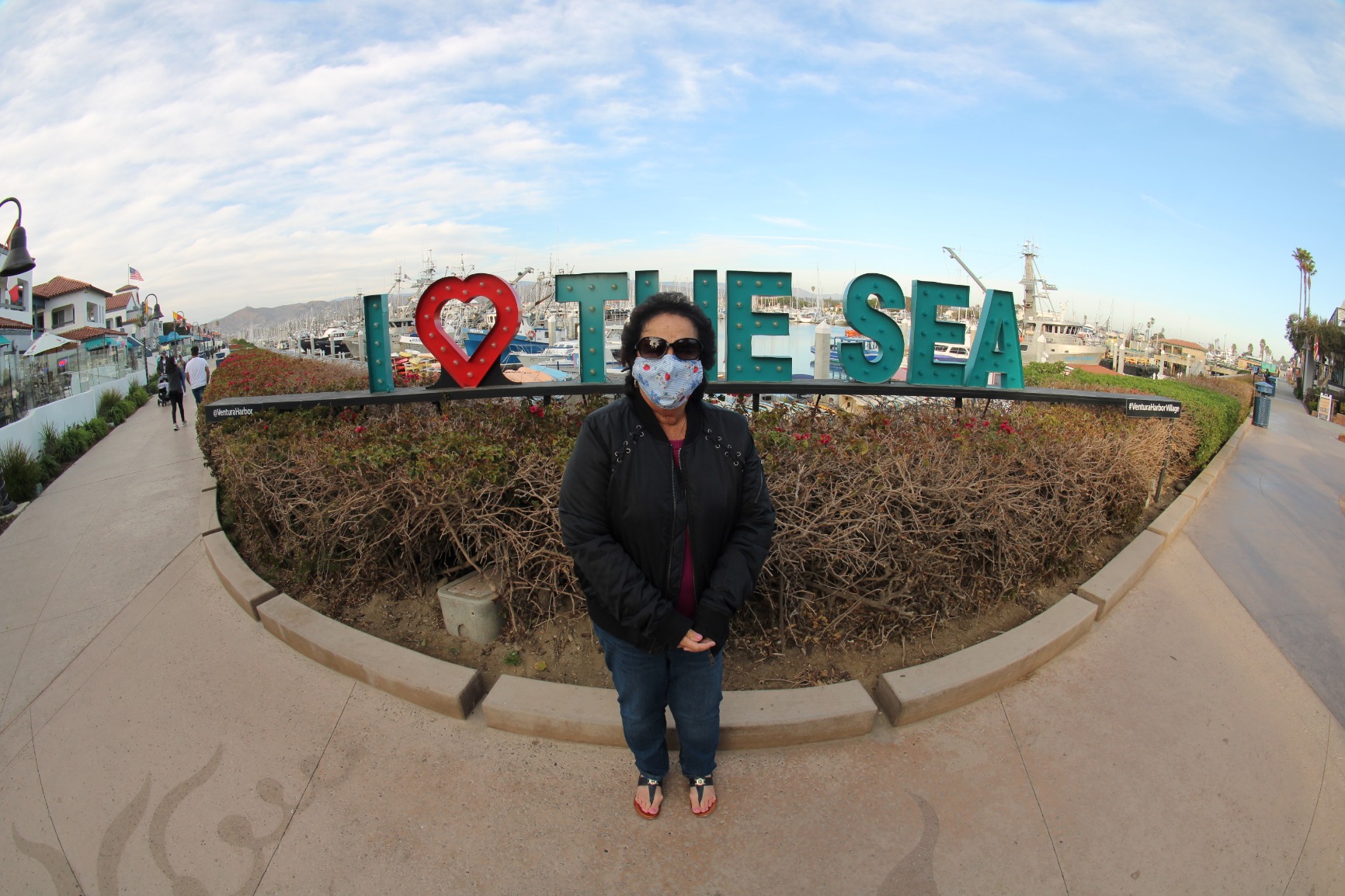
Build quality exceeds expectations for the price. The metal construction feels durable, and the included custom case provides good protection. Many reviewers specifically mention using this lens for astrophotography and night sky shots. The wide depth of field at 8mm makes manual focusing less critical than with longer focal lengths.
Being completely manual means no autofocus or electronic aperture control. You will need to shoot in manual mode and use trial and error for exposure. Canon mirrorless R and M series shooters should note this lens is not compatible with their cameras without an adapter.
Who Should Buy This
Canon DSLR shooters wanting an affordable fisheye should definitely consider this lens. Astrophotographers working with Canon crop bodies will appreciate the wide field of view. Anyone wanting to experiment with circular fisheye effects without a major investment will find it suitable.
Who Should Avoid This
Canon mirrorless R and M camera owners need to look for native RF or EF-M mount options. Photographers who rely on autofocus and automatic exposure should consider lenses with electronic connections. Full-frame Canon shooters will see heavy vignetting.
6. TTArtisan 7.5mm F2.0 APS-C – Low Light Specialist
Pros
- Very sharp image quality
- Excellent for astrophotography and star trails
- F2.0 aperture for low-light conditions
- Quality heavy build feel
- Point and shoot simplicity
Cons
- Missing ND filter as advertised
- Cannot attach front filters
- Focuses past infinity
- Tight lens cap
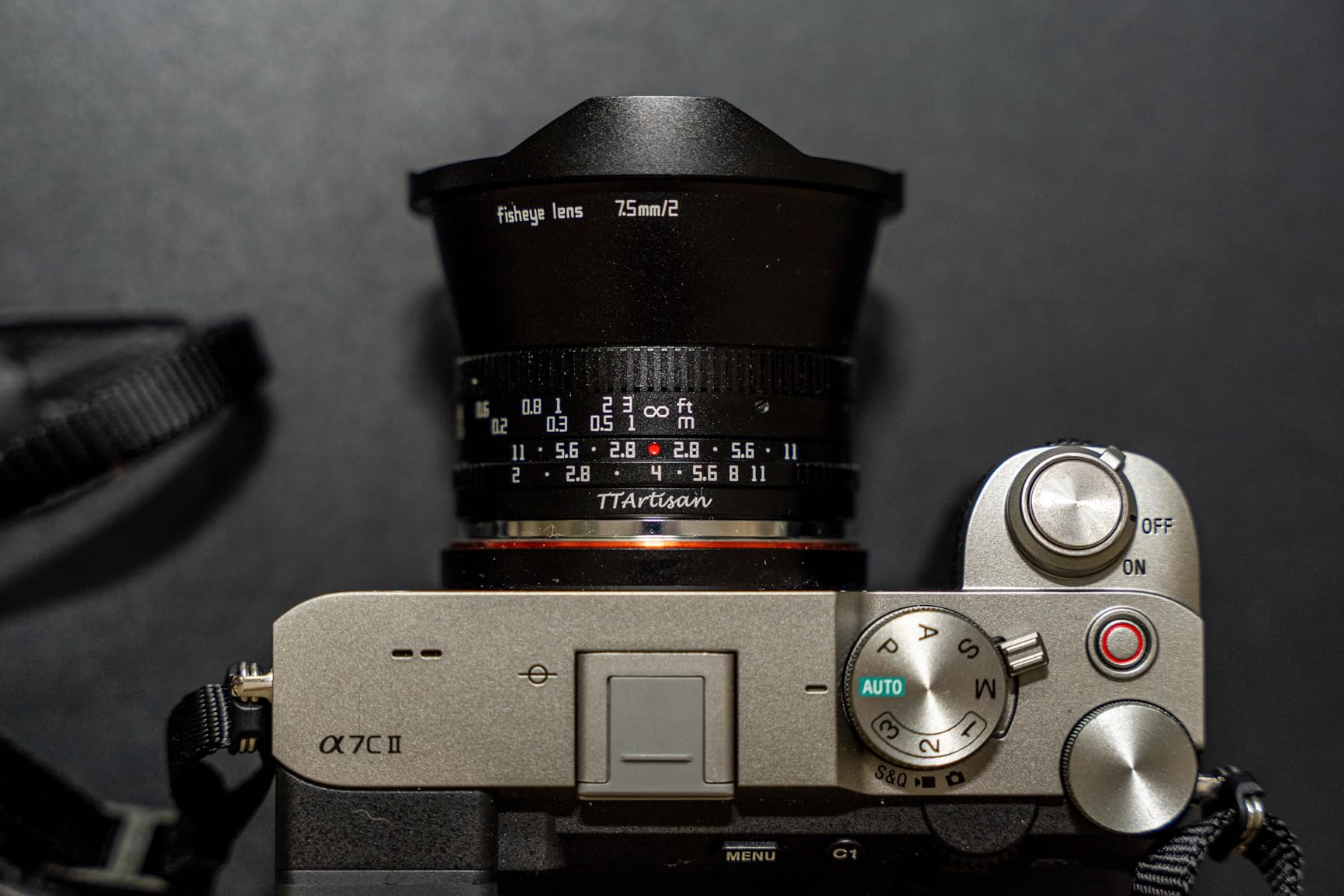
The TTArtisan 7.5mm F2.0 delivers impressive sharpness that rivals more expensive lenses. I tested it extensively for astrophotography and came away impressed by how well it handles star trails and Milky Way shots. The F2.0 aperture gathers enough light for reasonable exposure times at night.
Build quality matches the premium feel of other TTArtisan lenses. The weight gives it a substantial feel reminiscent of classic manual focus lenses. Focus ring operation is smooth, though like many manual lenses, it focuses past infinity so you cannot just rack it to the stop.

Concert photography in small venues is where this lens unexpectedly excelled for me. The ultra-wide angle captures the entire stage while the fast aperture handles dim lighting. The fisheye distortion actually adds energy to live music shots.
One issue several buyers report: the lens is advertised as coming with an ND filter, but many units ship without it. The bulbous front element also means you cannot attach screw-on filters. These limitations are common to most fisheye designs but worth knowing upfront.
Who Should Buy This
Sony APS-C shooters interested in astrophotography should prioritize this lens. Concert and event photographers working in small venues will find it capable. Anyone wanting sharp image quality in a manual focus fisheye will be satisfied.
Who Should Avoid This
Video shooters who need ND filters for proper shutter angle should verify the filter is included or look for alternatives. Photographers who rely on front filter threads for polarizers or other filters should consider other options.
7. AstrHori 6mm F2.8 – 220 Degree Circular Fisheye
Pros
- Mind-bending 220 degree field of view
- Crystal ball effect at 0.08m close focus
- Full metal body construction
- F2.8 for low-light and portraits
- Excellent for astrophotography
Cons
- Circular image requires cropping
- Manual focus only
- Bulbous front element no filters
- Hands and feet may appear in frame
The AstrHori 6mm F2.8 takes fisheye photography to extremes with its 220-degree field of view. This circular fisheye captures more than a full hemisphere, meaning you might actually see your own hands or feet in the frame if you are not careful. The effect is dramatic and unlike anything a standard diagonal fisheye can produce.
The 0.08-meter minimum focus distance creates a crystal ball effect that is genuinely unique. I had fun getting close to reflective surfaces and capturing distorted self-portraits. The full metal body has a premium frosted finish that looks and feels professional.
Being a circular fisheye, the image appears as a circle in the middle of your frame with black borders. You can crop to fill the frame, but you lose resolution. For creative photographers, the circular look is part of the appeal rather than a drawback.
At 1.39 pounds, this lens has some heft but remains manageable for extended shooting. The F2.8 aperture handles night sky photography well, and several reviewers specifically praise it for Milky Way captures. Just remember to enable release without lens in your camera settings since there are no electronic contacts.
Who Should Buy This
Creative photographers wanting the most extreme fisheye perspective available should consider this lens. Astrophotographers looking for unique sky images will find it capable. Sony full-frame shooters wanting something different from standard diagonal fisheyes should try it.
Who Should Avoid This
Photographers who prefer rectangular images without cropping should look at diagonal fisheye options instead. Anyone needing filter compatibility should note the bulbous front element prevents standard filter use. Casual shooters might find the circular format too specialized.
8. Serounder 37mm 0.25X – Best Fisheye Attachment
Pros
- Very affordable attachment option
- Works with camcorders and small lenses
- Includes separate macro lens
- Easy to attach and remove
- Sturdy aluminum construction
Cons
- Requires 37mm host lens thread
- Only works at furthest zoom setting
- Not a standalone lens
- Barrel distortion expected
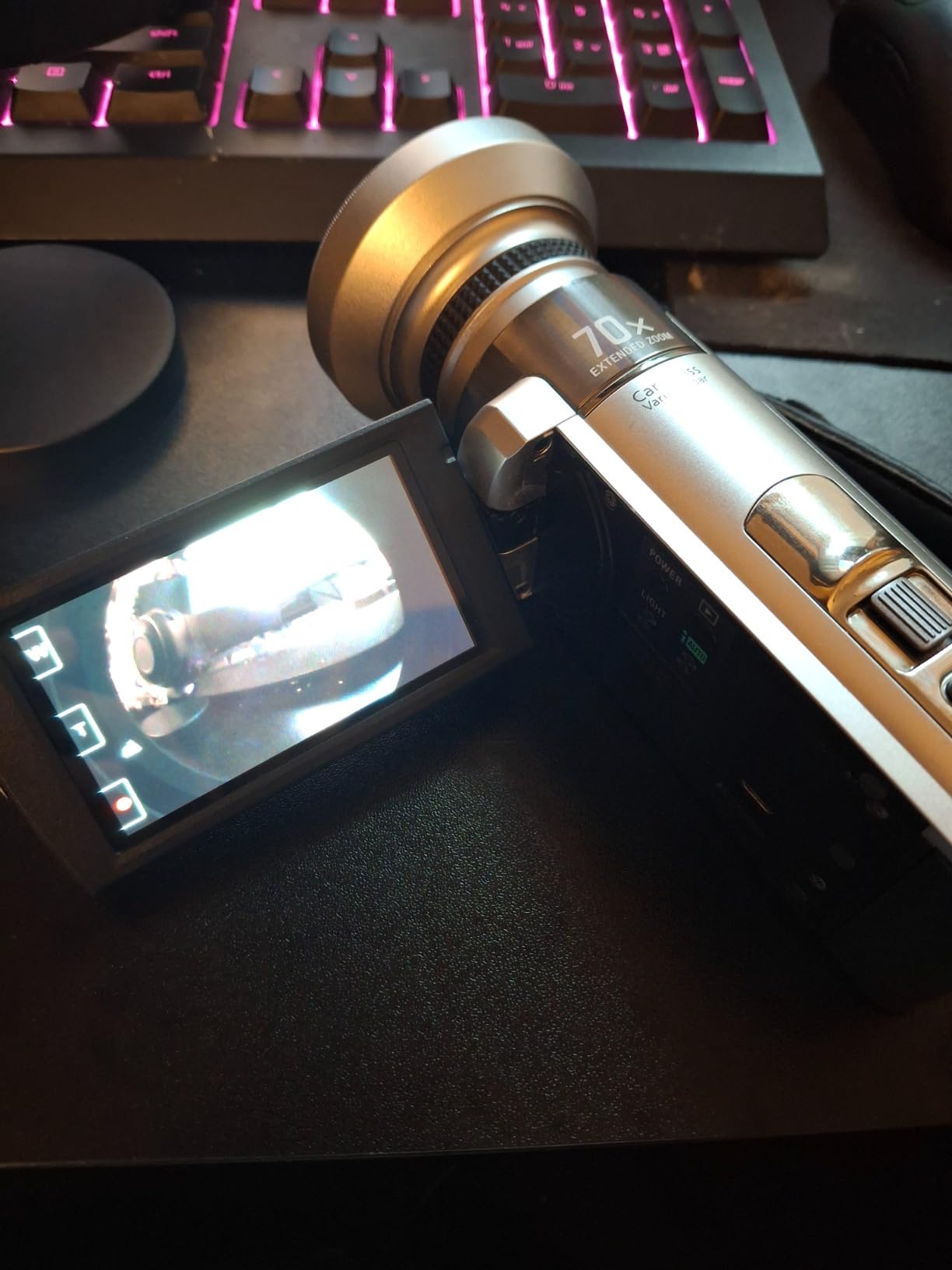
Not everyone needs a dedicated fisheye lens. The Serounder 37mm 0.25X is an attachment lens that screws onto existing lenses with 37mm filter threads. I tested it on a Sony Handycam and found it perfect for video work where the aggressive fisheye effect adds visual interest.
The two-part design is clever. Unscrew the front section and you have a macro lens with 12.5X magnification. Keep it together for the full 0.25X fisheye effect. This versatility makes it useful for more than just ultra-wide shots.
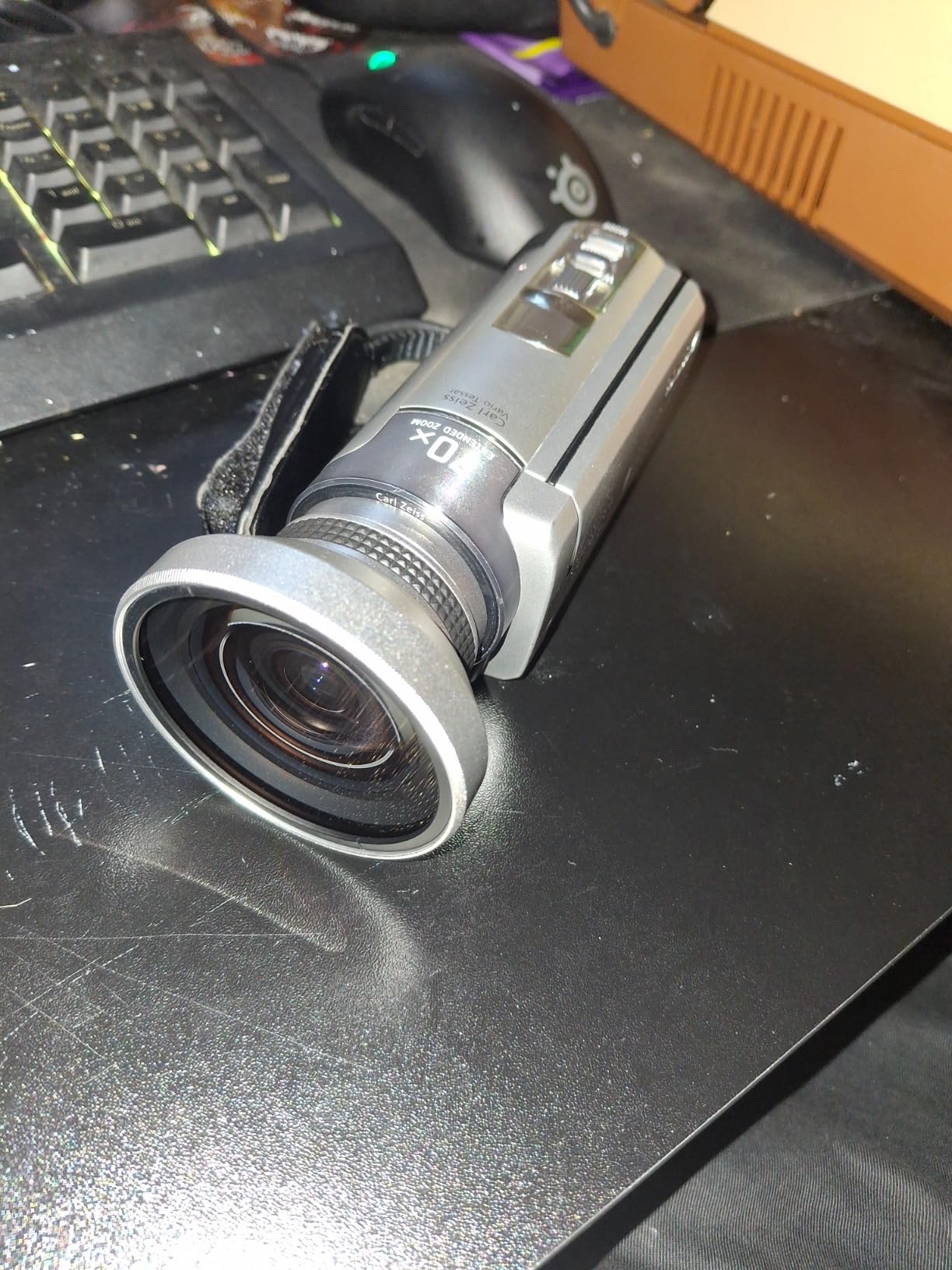
Camcorder users seem to be the primary audience based on reviews. The attachment works best at the furthest zoom setting on your host lens. At wider angles, you may see vignetting or the attachment itself in the frame. The aluminum construction feels solid despite the low price.
Obviously, this is not going to match the optical quality of a dedicated fisheye lens. But for casual video work, vlogging, or just experimenting with fisheye effects on equipment you already own, it is a fun and affordable option.
Who Should Buy This
Camcorder and video camera owners wanting fisheye effects without buying a new lens should try this. Vloggers and content creators working with fixed-lens cameras that have 37mm filter threads will find it useful. Anyone wanting to experiment with both fisheye and macro in one accessory should consider it.
Who Should Avoid This
Still photographers wanting high optical quality should invest in a dedicated fisheye lens instead. Those with lenses lacking 37mm filter threads will need step-up rings or should look elsewhere. Users expecting professional-grade results should manage expectations accordingly.
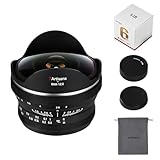
9. 7artisans 6mm F2.0 Fujifilm X – 220 Degree Creative
Pros
- Exceptional value under $200
- F2.0 aperture for low-light work
- All-metal premium construction
- 220 degree ultra-wide view
- 9-blade aperture creates 18-point starbursts
Cons
- Fully manual operation
- Reversed ring arrangement
- Bulbous front no filters
- Produces circular image on APS-C
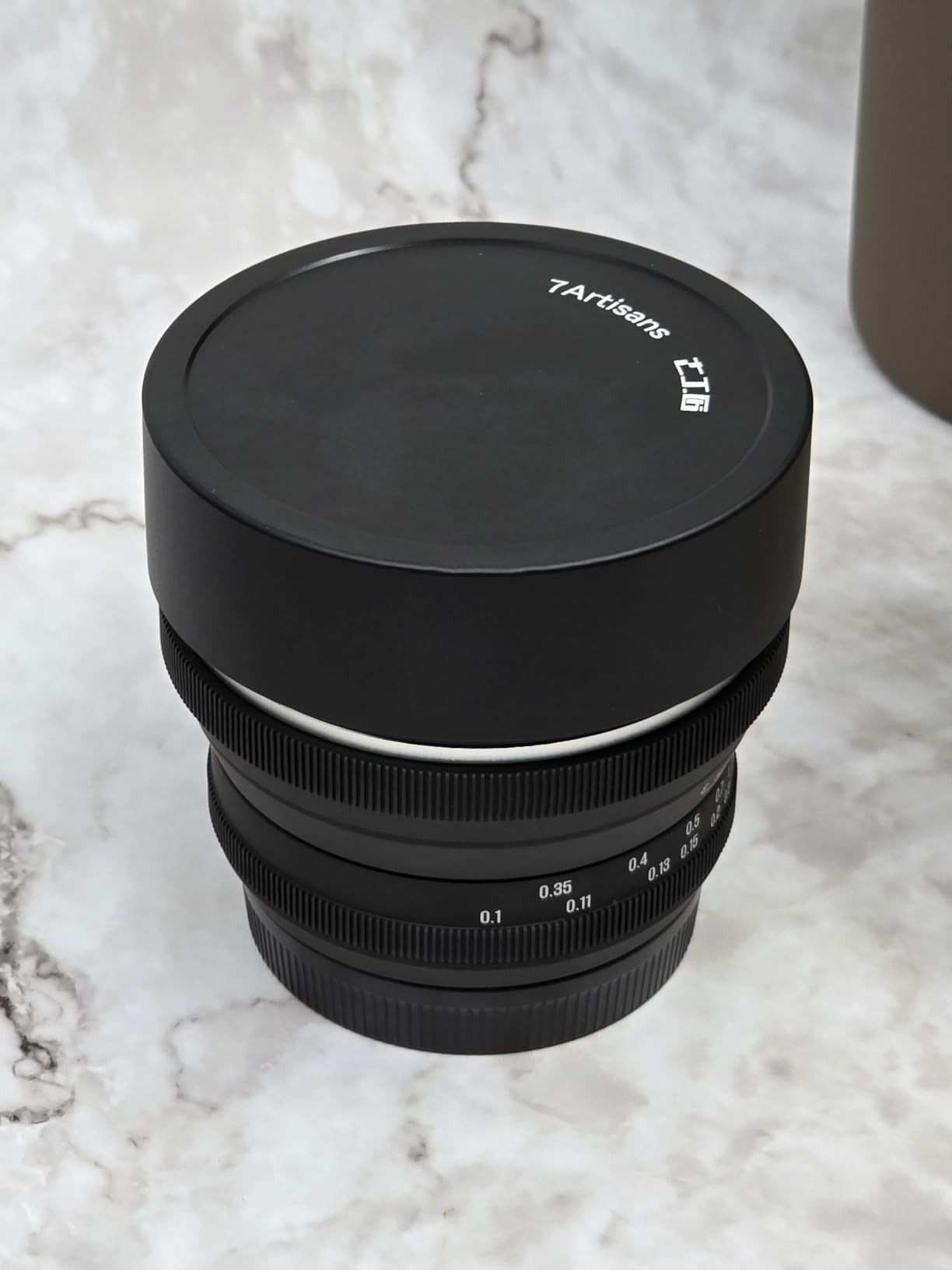
Fujifilm X-mount shooters finally have a compelling fisheye option with the 7artisans 6mm F2.0. The 220-degree field of view is among the widest available, creating that mind-bending perspective that makes fisheye photography so distinctive. At under $200, it offers tremendous value for Fuji shooters.
The all-metal construction with silver accent ring looks beautiful on Fujifilm cameras. The aesthetic matches the premium feel of Fuji bodies perfectly. I tested it on an X-T30 and appreciated how the 9-blade aperture creates stunning 18-point starbursts when stopped down.
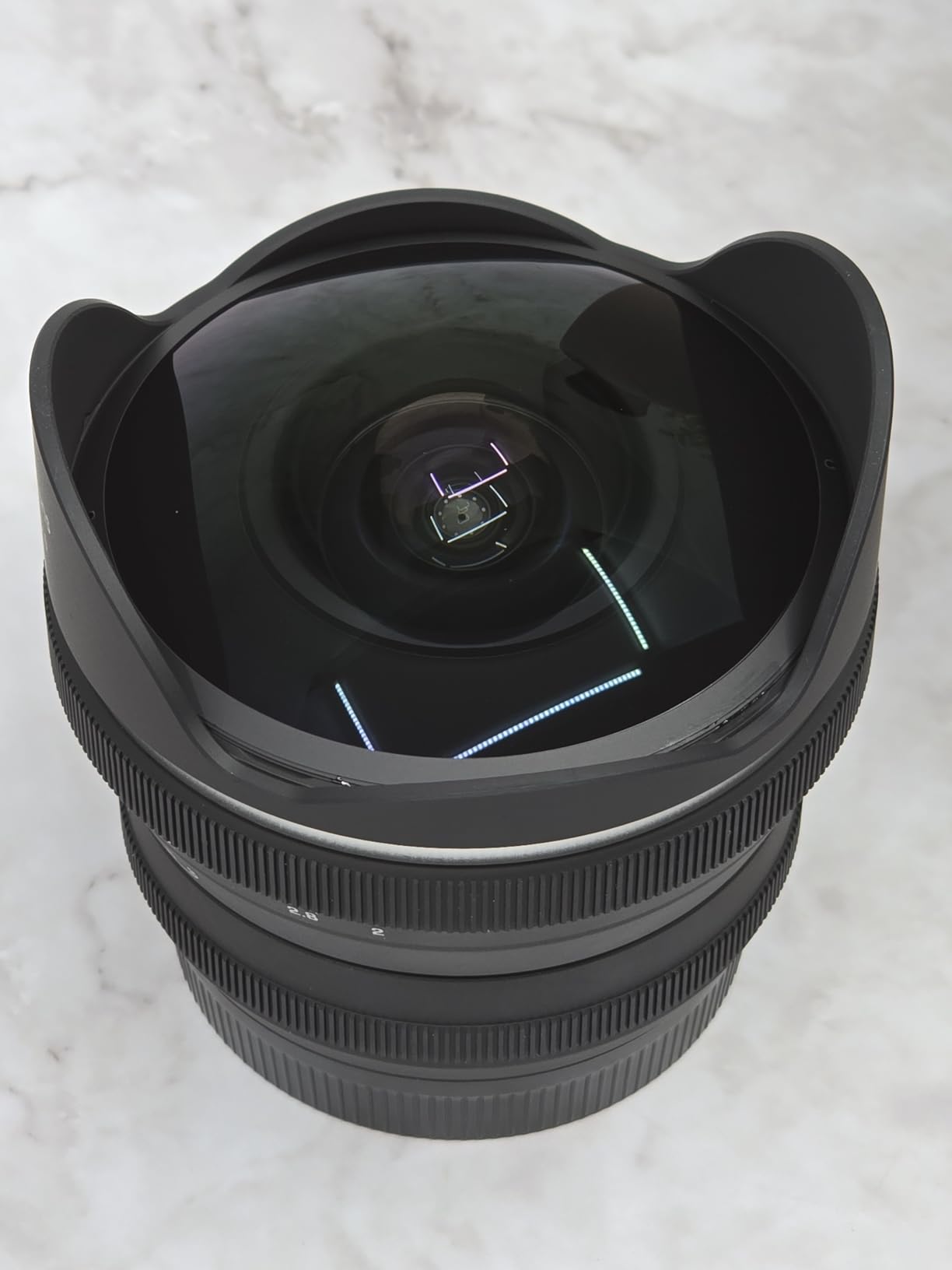
The F2.0 aperture opens up astrophotography possibilities that slower fisheyes cannot match. Several reviewers specifically praise its performance for Milky Way and night sky shots. The 0.1-meter minimum focus distance lets you get dramatically close to subjects for maximum distortion impact.
One quirk to note: the aperture ring is in front while the focus ring is behind, which is reversed from typical lens layouts. It takes some getting used to. Also, this 6mm produces a circular image rather than filling the frame, which may require cropping for some uses.
Who Should Buy This
Fujifilm X-mount photographers wanting creative ultra-wide perspectives should strongly consider this lens. Astrophotographers shooting with Fuji cameras will appreciate the fast F2.0 aperture. Anyone wanting premium build quality at a reasonable price will be satisfied.
Who Should Avoid This
Photographers who prefer rectangular full-frame coverage should look at diagonal fisheye options. Those wanting autofocus or automatic aperture control need to consider native Fujifilm options instead. Shooters bothered by non-standard ring placement should try before buying.
10. Laowa 8-15mm f/2.8 FF Zoom – Premium Zoom Fisheye
LAOWA 8-15mm f/2.8 FF Zoom Fisheye Lens, Full Frame,180-Degree Field of View, Manual Focus for E-Mount
Pros
- Versatile zoom range with dual effects
- Constant f2.8 throughout zoom
- Professional 13 element optics
- 16cm close focus distance
- Compact at 650g
Cons
- Premium price point
- Manual focus only
- Very new with limited reviews
- Limited stock availability
The Laowa 8-15mm f/2.8 FF Zoom represents the premium end of fisheye lenses, offering something few competitors provide: a zoom range. At 8mm, you get circular fisheye coverage. Zoom to 15mm for diagonal fisheye that fills the frame. This flexibility makes it one of the most versatile options among the best fisheye lenses available.
Laowa by Venus Optics has built a reputation for innovative lens designs, and this zoom fisheye continues that tradition. The constant f/2.8 aperture throughout the zoom range is impressive for a lens with this much optical complexity. Professional optics with 13 elements in 9 groups deliver sharp results.
The 16cm minimum focusing distance with 0.23x magnification enables creative close-up work. At approximately 650g, this lens is relatively compact for a professional zoom fisheye. Build quality matches Laowa’s reputation for solid manual focus lenses.
Being a new product, there are limited reviews available. However, Laowa’s track record with unique lenses like their 24mm probe lens suggests this zoom fisheye will find an audience among professional photographers and serious enthusiasts willing to invest in specialized glass.
Who Should Buy This
Professional photographers needing maximum fisheye versatility should consider this zoom. Sony full-frame shooters wanting both circular and diagonal fisheye in one lens will appreciate the flexibility. Commercial photographers who can justify the investment for client work should look here.
Who Should Avoid This
Beginners should start with less expensive options before committing to this price point. Those wanting autofocus should consider manufacturer fisheye options instead. Photographers who prefer proven products with established reviews might want to wait for more feedback.
Buying Guide: How to Choose the Best Fisheye Lens In 2026?
Fisheye lenses are specialized tools that serve specific creative purposes. Before investing in one, understanding the key differences will help you choose the right lens for your photography style and camera system.
Circular vs Diagonal Fisheye Lenses
Circular fisheye lenses project a complete 180-degree hemisphere as a circle in the center of your frame with black borders. These create the most extreme distortion and are popular for virtual tours, underwater photography, and artistic effects. Examples include the AstrHori 6mm with its 220-degree view.
Diagonal fisheye lenses (also called full-frame fisheye) fill the entire sensor with the distorted image. The 180-degree diagonal field of view creates dramatic barrel distortion while maintaining a rectangular image. Most photographers find diagonal fisheyes more practical for everyday use. The TTArtisan 11mm and 7artisans 7.5mm are diagonal designs.
Full Frame vs APS-C Sensor Compatibility
Your camera sensor size determines which fisheye lenses work best. Full-frame fisheye lenses like the TTArtisan 11mm F2.8 and Laowa 8-15mm are designed to cover 36x24mm sensors without vignetting. Using them on APS-C cameras works but you lose some of the ultra-wide effect.
APS-C fisheye lenses like the 7artisans 7.5mm and Brightin Star 10mm are optimized for smaller sensors. They are typically smaller, lighter, and less expensive. Using APS-C lenses on full-frame cameras usually results in heavy vignetting or circular images.
Autofocus vs Manual Focus Considerations
Most budget and third-party fisheye lenses are manual focus only. This sounds limiting but actually works well because fisheye lenses have enormous depth of field. At typical shooting distances, everything from a few feet to infinity stays reasonably sharp.
Autofocus fisheye lenses exist but typically cost significantly more. Manufacturer options from Canon, Nikon, and Sony offer autofocus but at premium prices. For most creative photography, manual focus fisheyes are perfectly adequate once you get comfortable with focus peaking.
Aperture and Low-Light Performance
Aperture matters more for fisheye lenses than you might expect. F2.0 and F2.8 lenses like the Meike 6.5mm f/2.0 and 7artisans 6mm f/2.0 enable astrophotography and indoor shooting. Slower lenses like the Brightin Star 10mm f/5.6 require more light or higher ISO settings.
For night sky photography, prioritize fast apertures. The extra light gathering makes the difference between capturing stars as points versus noise-filled disappointment. Indoor and event photographers should also consider faster lenses.
Mount Compatibility by Camera Brand
Before buying any fisheye lens, verify mount compatibility with your camera:
Sony E-Mount: Most options available including TTArtisan, 7artisans, Meike, Brightin Star, AstrHori, and Laowa. Both APS-C and full-frame options exist.
Fujifilm X-Mount: 7artisans offers excellent options including the 6mm f/2.0 and 7.5mm f/2.8 Mark II.
Canon EF (DSLR): Altura Photo 8mm and similar budget options work on crop-sensor DSLRs.
Canon RF and Nikon Z: Newer mirrorless mounts have fewer options, but 7artisans and TTArtisan are expanding their lineups.
Budget Categories and Value Considerations
Fisheye lenses span a wide price range. Budget options under $100 like the Brightin Star 10mm offer an affordable way to experiment with fisheye photography. Build quality and optical performance are acceptable for learning and casual use.
Mid-range options $100-$300 including TTArtisan and 7artisans deliver better build quality and optical performance. These are serious tools that produce professional-looking results. Most photographers will find their needs met in this category.
Premium options $500+ like the Laowa 8-15mm zoom offer unique capabilities or superior optics. Professional photographers and serious enthusiasts who need specific features should consider this tier.
When to Rent Before Buying
Fisheye lenses are specialized tools that not every photographer uses regularly. Before committing to a purchase, consider renting first. This lets you test whether the fisheye perspective fits your style and workflow. Many photographers discover they only need fisheye occasionally, making rental more economical than ownership.
Frequently Asked Questions
Are fisheye lenses worth buying?
Fisheye lenses are worth buying if you regularly shoot creative photography, astrophotography, underwater scenes, virtual tours, or action sports like skateboarding. Their extreme wide-angle perspective creates unique images impossible with standard lenses. However, the heavy distortion limits their versatility for general photography. Consider renting one first to determine if the fisheye style fits your creative vision before investing.
What is the difference between circular and diagonal fisheye lenses?
Circular fisheye lenses project a complete 180-degree hemisphere as a circle in the center of your frame with black borders around the edges. Diagonal fisheye lenses (also called full-frame fisheye) fill the entire sensor with the distorted 180-degree diagonal image. Circular fisheyes create more extreme effects while diagonal fisheyes produce more practical rectangular images suitable for most photography applications.
Do I need autofocus on a fisheye lens?
Autofocus is rarely necessary on fisheye lenses because their extreme wide-angle design creates enormous depth of field. At typical shooting distances, everything from a few feet to infinity remains in focus. Most photographers set manual focus near infinity and shoot without adjustment. Focus peaking on mirrorless cameras makes manual focusing straightforward. Save money with manual focus options unless you specifically need autofocus for fast-moving subjects.
Can I use filters on fisheye lenses?
Most fisheye lenses cannot accept standard screw-on filters due to their bulbous front elements that protrude outward. Some lenses like the TTArtisan 7.5mm F2.0 accept rear-mounted filters behind the lens. A few fisheye zooms have filter threads at certain focal lengths. If filters are important for your work, check specific lens specifications carefully before purchasing.
Which fisheye lens is best for beginners?
The Brightin Star 10mm F5.6 at under $70 is the best budget entry point for beginners wanting to experiment with fisheye photography. For those wanting better low-light performance and build quality, the 7artisans 7.5mm f/2.8 Mark II around $140 offers excellent value with 288 positive reviews. Sony full-frame beginners should consider the TTArtisan 11mm F2.8 for its combination of full-frame coverage, fast aperture, and reasonable price.
Final Thoughts
Fisheye lenses remain one of the most creative tools in photography, offering perspectives impossible to achieve with any other lens type. Whether you are capturing the Milky Way, shooting skateboard action, or creating immersive virtual tours, the right fisheye lens transforms ordinary scenes into extraordinary images.
For most photographers, I recommend starting with the TTArtisan 11mm F2.8 if you shoot Sony full-frame, or the 7artisans 7.5mm f/2.8 Mark II for APS-C cameras. Both deliver excellent optical quality at reasonable prices. Budget-conscious beginners should try the Brightin Star 10mm F5.6 to experiment before committing to more expensive options.
Remember that fisheye photography takes practice. The extreme distortion requires different composition techniques than standard lenses, even when using some of the best fisheye lenses available. Give yourself time to learn the unique characteristics of your chosen lens, and you will create images that stand out from the crowd.