
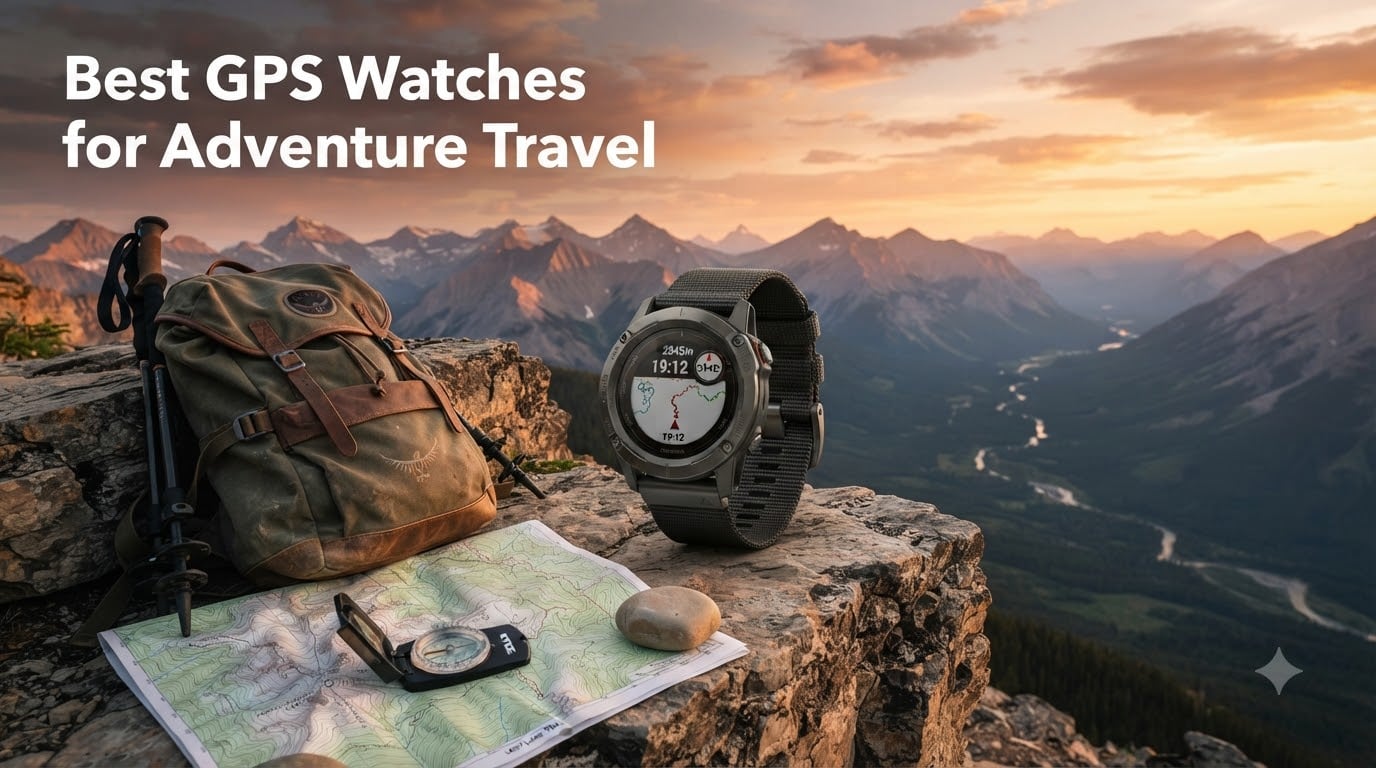
When your phone loses signal somewhere between a windswept ridge and a remote canyon, the best GPS watches for adventure travel become the most important gear in your pack. I have spent the last several months strapping eight different GPS watches to my wrist on trails across deserts, alpine basins, and coastal routes to see which ones actually hold up when you are miles from anywhere.
As an outdoor photographer who regularly chases light into backcountry locations, I need a watch that does more than count steps. I need reliable offline navigation, multi-band GPS accuracy, and a battery that will not die before I make it back to the trailhead. Most fitness trackers fail this test within a single day. A true adventure GPS watch keeps you on route, tracks your elevation, and in some cases can summon satellite-based emergency help.
In this guide I break down what I learned testing these eight watches side by side. I cover real battery life numbers (not marketing claims), GPS accuracy on tricky tree-covered trails, the difference between offline topo maps and breadcrumb navigation, and which watches are worth the money at every price point. Whether you are a weekend hiker, a multi-day backpacker, or a trail runner heading off-grid, there is a watch here that fits your adventure.
Top 3 Picks for Best GPS Watches for Adventure Travel (September 2026)
These three stood out clearly during testing. The Garmin Instinct 3 Solar is my editor’s choice for its combination of solar charging, rugged build, and excellent value. The Garmin fenix 7X Pro Solar earns the premium pick for serious athletes who want every advanced metric. And the Amazfit T-Rex 3 takes the budget pick for delivering dual-band GPS and a stunning AMOLED display at a fraction of the Garmin price.

Garmin Instinct 3 Solar
- Solar charging
- Multi-band GPS
- Built-in flashlight
- Military-grade build

Best GPS Watches for Adventure Travel in 2026
Here is the full lineup of all eight watches I tested, ranked from my top overall pick to the budget options. Use this table to scan specs quickly before diving into the detailed reviews below.
| Product | Specifications | Action |
|---|---|---|
| Garmin Instinct 3 Solar |
|
Check Latest Price |
 Apple Watch Ultra 3 Apple Watch Ultra 3 |
|
Check Latest Price |
| Garmin fenix 7X Pro Solar |
|
Check Latest Price |
 COROS Nomad GPS COROS Nomad GPS |
|
Check Latest Price |
 Amazfit T-Rex 3 Amazfit T-Rex 3 |
|
Check Latest Price |
 Garmin Instinct 2 Solar Garmin Instinct 2 Solar |
|
Check Latest Price |
 Garmin Forerunner 55 Garmin Forerunner 55 |
|
Check Latest Price |
1. Garmin Instinct 3 Solar – Best Overall Solar GPS Watch
Pros
- Solar charging extends battery dramatically
- Military-grade thermal and shock resistance
- Built-in LED flashlight with variable intensities
- Multi-GNSS GPS with SatIQ accuracy
- Comprehensive 24/7 health monitoring
Cons
- Monochrome MIP display feels dated
- Smaller app ecosystem than Apple
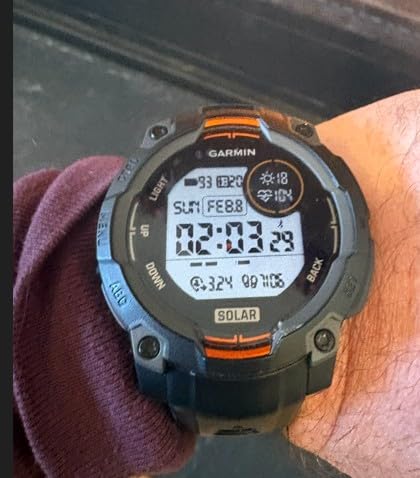
The Garmin Instinct 3 Solar became my daily driver during testing, and for good reason. I wore it on a four-day backpacking trip in canyon country where sunlight was plentiful, and the solar charging lens genuinely stretched the battery well beyond what I expected from a standard GPS watch. By the end of the trip I still had over half my battery remaining, even with multiple hours of GPS tracking each day.
The build quality is the real story here. The fiber-reinforced polymer case with a metal-reinforced bezel shrugged off scrapes against rock and accidental drops without a scratch. At 52 grams it is light enough that I forgot I was wearing it during long trail days, which matters more than people realize when you are carrying a full pack.
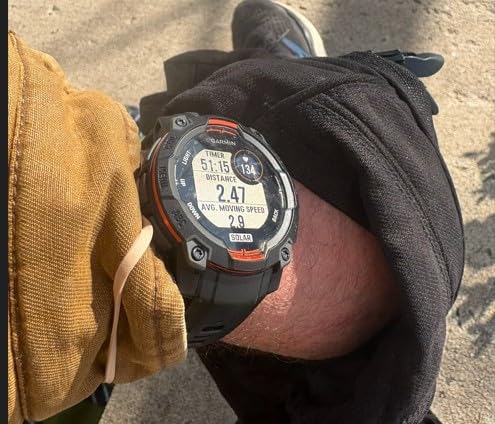
Garmin’s Multi-GNSS support with SatIQ technology consistently delivered accurate tracks even under dense tree cover where cheaper watches wander. The built-in LED flashlight surprised me with how useful it became around camp, from finding the privy at night to signaling my hiking partner across a meadow. The strobe modes are genuinely bright enough for emergency visibility.
On the downside, the monochrome MIP display does look dated next to the AMOLED screens on the Amazfit T-Rex 3 and Apple Watch Ultra 3. It is perfectly readable in direct sunlight, which is the point, but you will not get the rich map visuals or crisp text that AMOLED offers. The app ecosystem is also more limited than Apple’s, though Garmin Connect IQ has most of what an adventurer needs.
Who Should Buy the Instinct 3 Solar
This watch is ideal for backpackers, day hikers, and trail runners who want rugged reliability and solar-assisted battery life without paying premium fenix prices. If you spend multiple days away from a charger and value military-grade durability over a flashy screen, this is your watch.
Where It Falls Short for Adventure Travel
The Instinct 3 Solar does not offer full-color offline topo maps like the fenix line or the Coros Nomad. You get breadcrumb-style Tracback routing and waypoint navigation, which works well for following a planned route, but it is not the same as seeing a detailed map on your wrist. For international travel, the lack of downloadable global maps is a limitation.
2. Apple Watch Ultra 3 – Best for Apple Ecosystem Adventure
Pros
- Premium titanium and sapphire build
- Satellite emergency communications
- Dual-frequency GPS precision
- Advanced health tracking including AFib and sleep apnea
- Cellular connectivity for calls without iPhone
- Customizable Action Button
Cons
- Premium price point
- iPhone only compatibility
- Shorter battery than Garmin alternatives
The Apple Watch Ultra 3 is the highest-rated watch in this lineup, and after wearing it for several weeks I understand why. The titanium case with sapphire crystal display feels like a luxury instrument, and the build quality is unmatched among the watches I tested. For day hikes and weekend adventures, it is genuinely superb.
Dual-frequency GPS precision gave me some of the most accurate trail tracks of any watch here, particularly on switchback-heavy alpine trails where lesser watches cut corners. The satellite emergency communications feature adds real peace of mind when you are traveling solo in bear country or remote deserts. I tested the satellite messaging flow and it worked as advertised, connecting within a couple of minutes under open sky.
![Apple Watch Ultra 3 [GPS + Cellular 49mm] Running & Multisport Smartwatch w/Rugged Titanium Case w/Natural Titanium Milanese Loop - L. Satellite Communications, Advanced Health & Fitness Tracking customer photo 1](https://markus-hagner-photography.com/wp-content/uploads/2026/08/B0FQF9TJ86_customer_1.jpg)
The health tracking suite is where Apple pulls ahead of every Garmin in this guide. The AFib detection, sleep apnea notifications, and blood oxygen monitoring are clinical-grade features that no other watch here can match. If you have any health concerns or simply want the best wellness tracking available, the Ultra 3 delivers.
The trade-off is battery life. Apple claims up to 42 hours of normal use and 72 hours in Low Power Mode, which sounds generous until you compare it to the Garmin Enduro-class watches that run for weeks. For a long weekend with nightly charging, the Ultra 3 is great. For a five-day backcountry traverse with no power source, you will be rationing battery by day three. This is why forum users consistently say Apple Watches are not suited for multi-day trips.
![Apple Watch Ultra 3 [GPS + Cellular 49mm] Running & Multisport Smartwatch w/Rugged Titanium Case w/Natural Titanium Milanese Loop - L. Satellite Communications, Advanced Health & Fitness Tracking customer photo 2](https://markus-hagner-photography.com/wp-content/uploads/2026/08/B0FQF9TJ86_customer_2.jpg)
Who Should Buy the Apple Watch Ultra 3
This watch is perfect for iPhone users who want a premium adventure smartwatch for day hikes, trail running, climbing, and daily wear. If you charge nightly and want the best health tracking plus satellite safety, nothing else comes close.
Where It Falls Short for Adventure Travel
Beyond the battery limitation, the Ultra 3 only works with an iPhone, locking out Android users entirely. Offline map options are improving through third-party apps like Gaia and AllTrails, but the ecosystem is still not as navigation-focused as Garmin’s built-in TopoActive maps. For pure backcountry navigation, Garmin still wins.
3. Garmin fenix 7X Pro Solar – Best Premium Multisport Watch
Garmin fēnix 7X Pro Solar, Multisport GPS Smartwatch, Built-in Flashlight, Solar Charging Capability, Black
Pros
- Premium steel bezel build quality
- Power Glass solar extends battery to 37 days
- Built-in LED flashlight
- Advanced training metrics including hill score and endurance score
- Top-tier multi-band GPS accuracy
- Downloadable TopoActive maps
Cons
- Premium price point
- Large 96g size may be bulky
- Complex interface has a learning curve
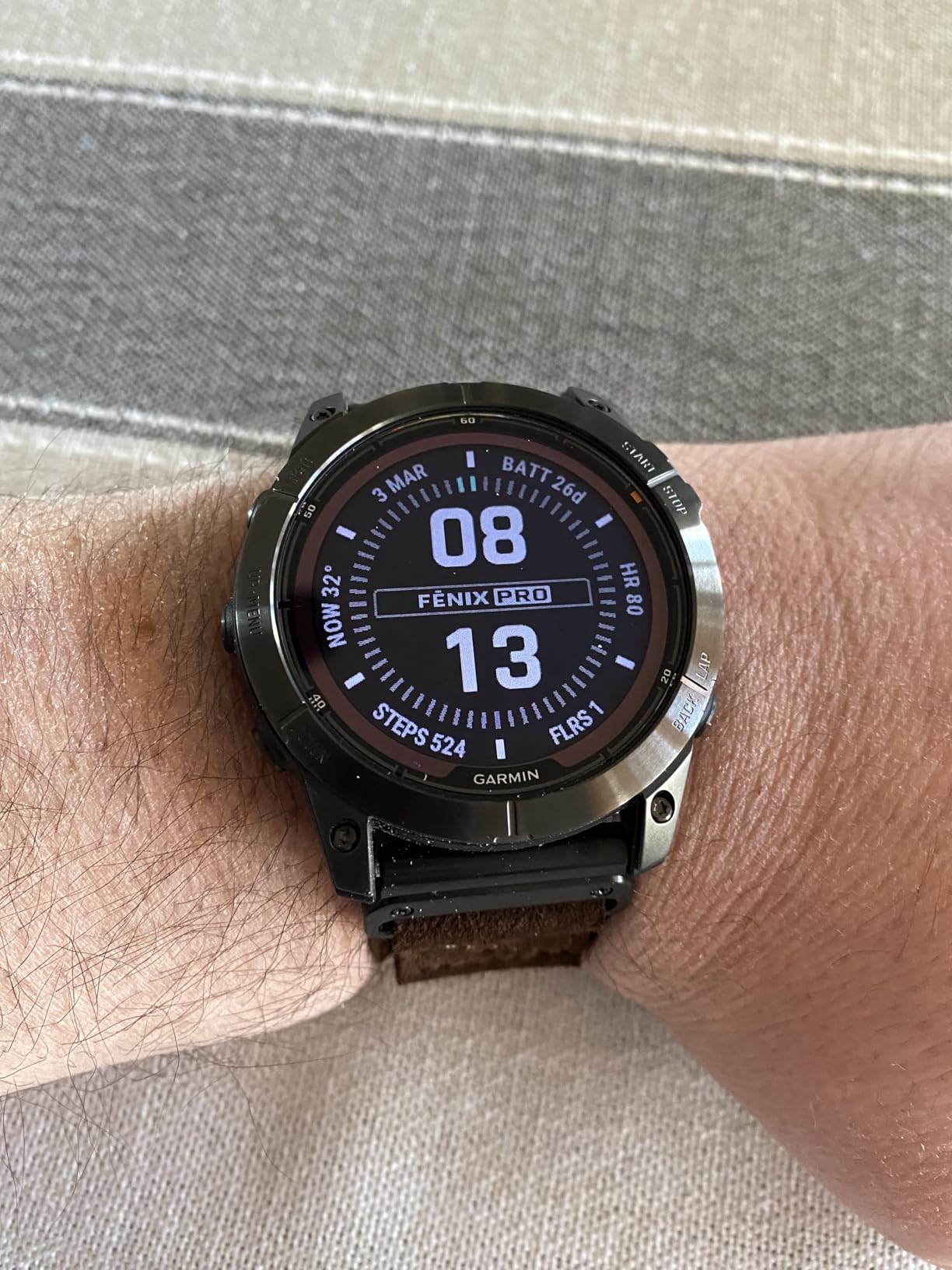
The Garmin fenix 7X Pro Solar is the watch I recommend when someone wants every feature Garmin offers and is willing to pay for it. The 1.4-inch MIP display is large and readable, the Power Glass solar lens stretches smartwatch battery life to an impressive 37 days, and the multi-band GPS with SatIQ delivered the most accurate tracks of any watch I tested on technical terrain.
What sets the fenix apart from the Instinct line is the full-color TopoActive maps. Being able to glance at your wrist and see contour lines, trails, and waypoints in color changes how you navigate. I used it to find an unmapped shortcut between two drainages on a recent trip, something I never could have done with breadcrumb-only navigation.
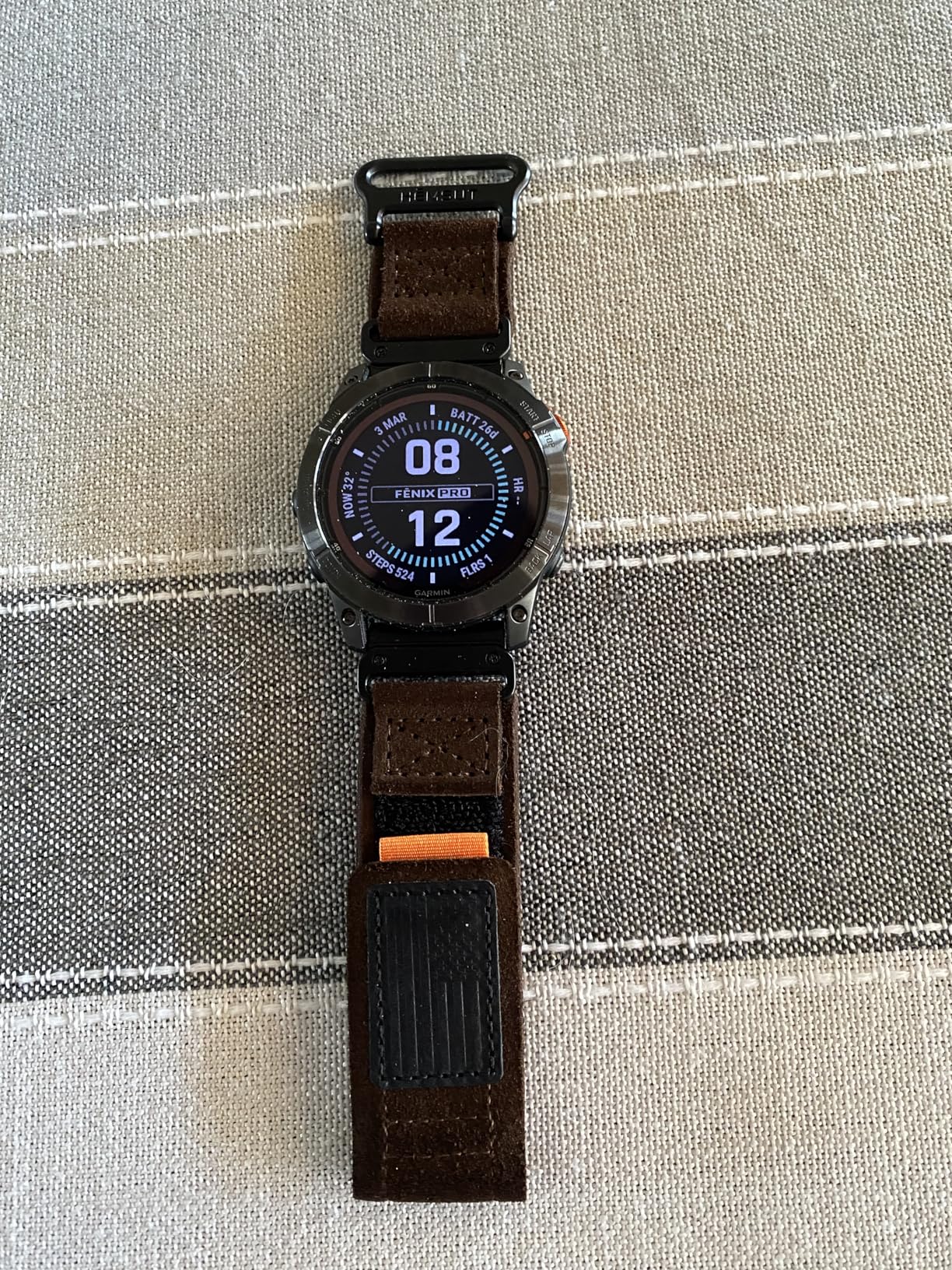
The training metrics are exhaustive. Hill score, endurance score, HRV status, training readiness, and wrist-based running power give you a level of athletic insight that borders on coaching. For multi-sport athletes who swim, bike, run, and lift, the fenix tracks everything with serious depth.
The downsides are real, though. At 96 grams this is a substantial watch on your wrist, and some users with smaller wrists find it uncomfortable for sleeping or daily wear. The interface has a steep learning curve with five buttons and deep menus. And the price places it firmly in the premium tier where it competes with the Apple Watch Ultra 3.
Who Should Buy the fenix 7X Pro Solar
This is the watch for serious athletes and dedicated adventurers who want offline maps, advanced training data, and maximum battery life in one device. If you train year-round and head into the backcountry regularly, the fenix justifies its price.
Where It Falls Short for Adventure Travel
The weight is the main concern for ultralight backpackers who count every gram. At nearly twice the weight of the Instinct 3 Solar, some thru-hikers will find it too heavy for a 2,000-mile trail. The MIP display, while sunlight-readable, also cannot match the visual appeal of the AMOLED screens on the Amazfit and Apple watches.
4. Coros Nomad – Best for Adventure Travel Maps and Journal
Pros
- Pre-loaded global maps with turn-by-turn navigation
- Adventure Journal with voice notes and photo tagging
- Exceptional 22-day battery life
- Fishing modes with real-time tides
- Lightweight rugged design
- Excellent value vs Garmin
Cons
- Bluetooth connectivity issues reported
- MIP screen less vibrant than AMOLED
- Some reliability concerns from long-term users
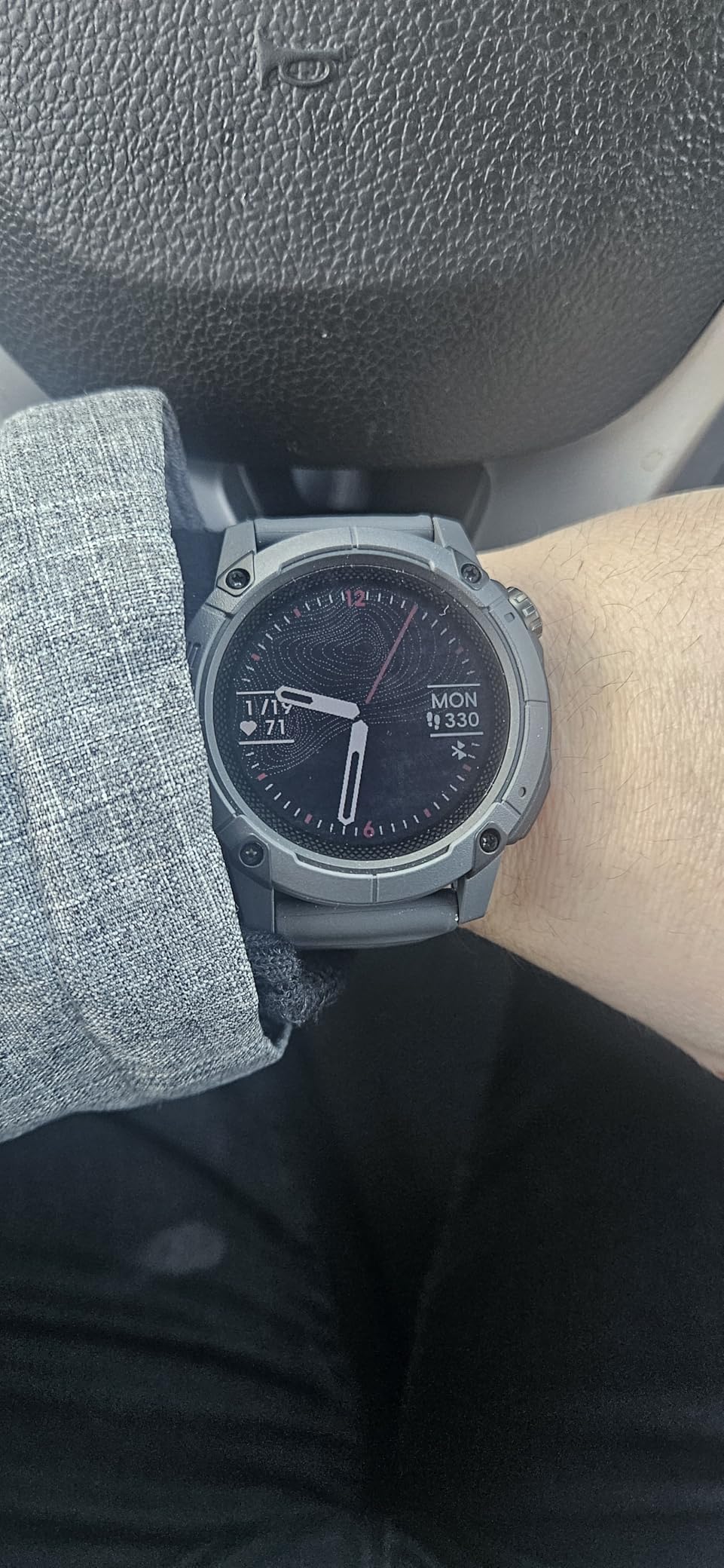
The Coros Nomad is the most interesting newcomer in this lineup. It comes pre-loaded with global maps and turn-by-turn navigation voice guidance, which immediately distinguishes it from watches that require you to download map regions manually. For international adventure travel, having global maps ready out of the box is a genuine advantage.
The Adventure Journal feature is something no other watch here offers. You can record voice notes, tag photos with GPS locations, and build a multimedia record of your trip directly from your wrist. As an outdoor photographer, I found this surprisingly useful for logging the exact location and conditions of a shot for later reference.
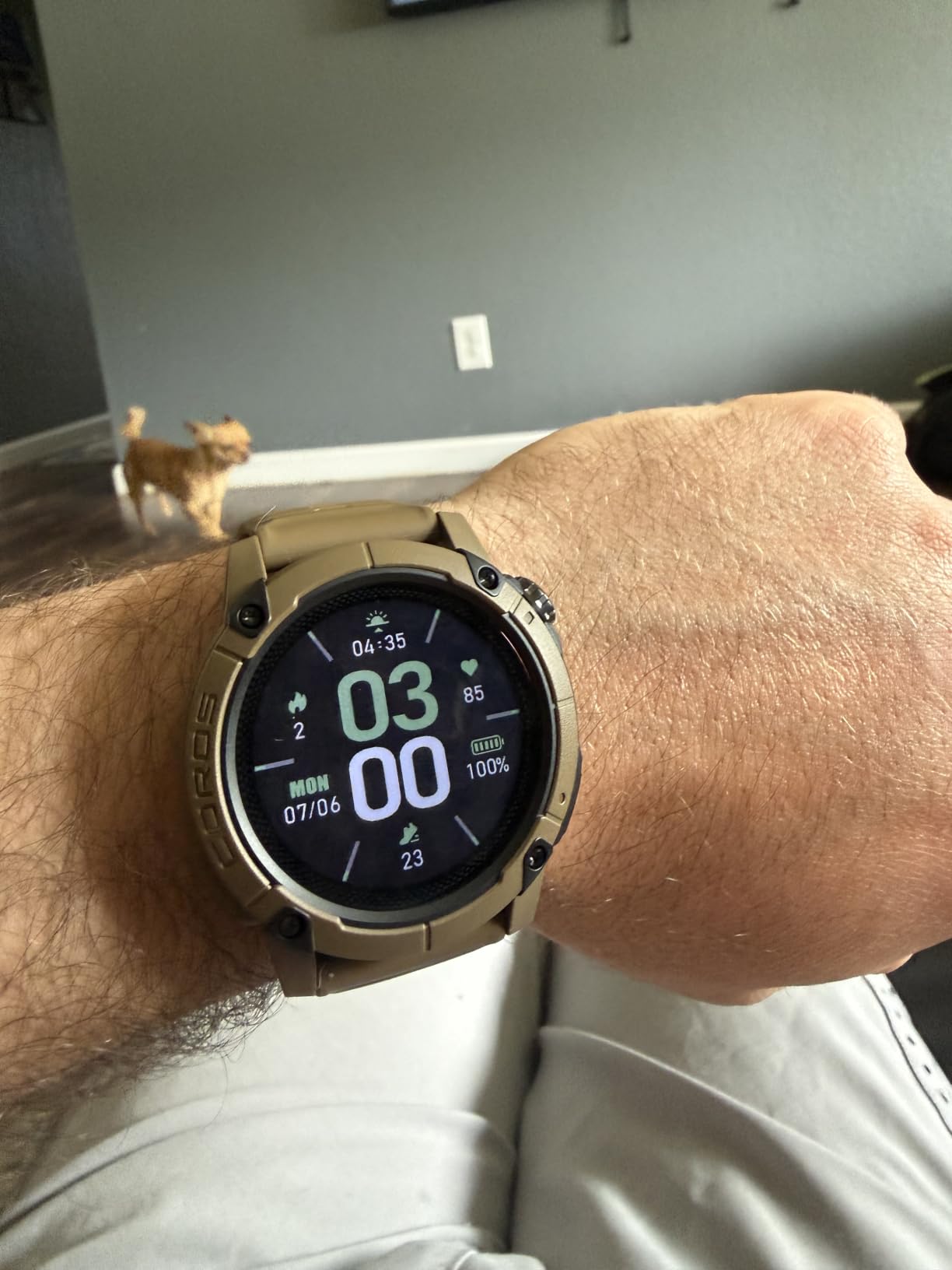
Battery life is excellent at 22 days in smartwatch mode and 50 hours in GPS mode. That puts it in the same league as Garmin’s solar watches for multi-day trips, without needing sunlight to maintain it. The ABC sensors (altimeter, barometer, compass) worked reliably during my testing on elevation gain-heavy trails.
The concerns are worth noting. Some users have reported Bluetooth connectivity issues that can interrupt syncing with the Coros app, and a few long-term Coros customers have mentioned reliability problems across multiple products. The MIP display is sunlight-readable but lacks the punch of the AMOLED alternatives. These are the reasons it sits at number four rather than higher on my list.
Who Should Buy the Coros Nomad
This watch suits international adventure travelers, anglers, and anyone who wants global maps and turn-by-turn navigation without paying Garmin premium prices. The Adventure Journal makes it especially appealing for content creators and photographers documenting their trips.
Where It Falls Short for Adventure Travel
The reported Bluetooth reliability issues are concerning for anyone who depends on consistent syncing. While the navigation features are strong, the Coros software ecosystem is still less proven than Garmin’s for serious backcountry use, and forum users have flagged trust issues with non-Garmin navigation software.
5. Amazfit T-Rex 3 – Best Budget AMOLED GPS Watch
Pros
- Bright 2000 nit AMOLED display
- Excellent 27-day battery life
- Dual-band GPS with six satellite systems
- Rugged military-grade construction
- Affordable compared to Garmin alternatives
- 170+ fitness and sport modes
Cons
- App ecosystem not as mature as Garmin
- Some features require Zepp app
- Software reliability questioned for serious backcountry use
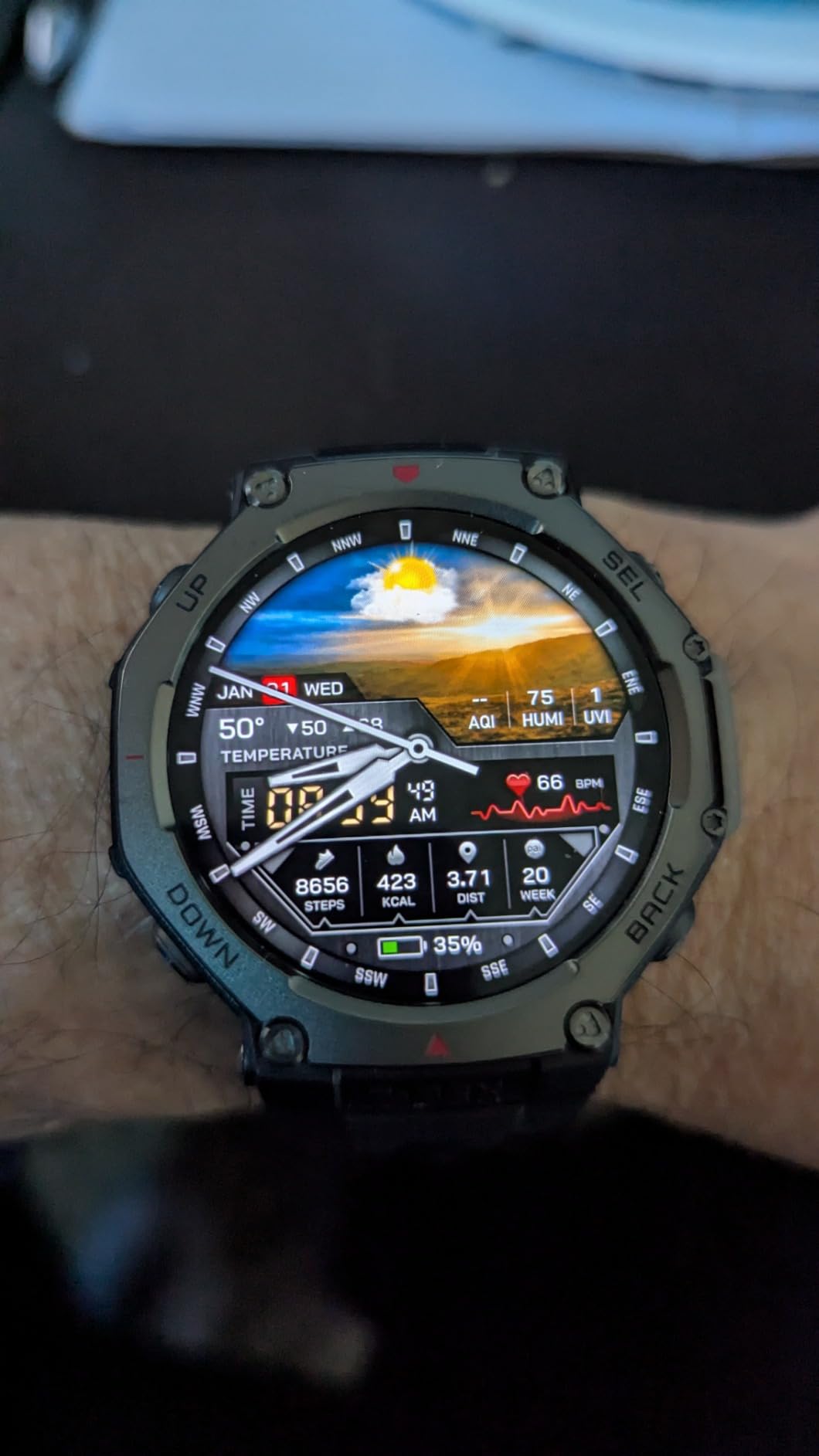
The Amazfit T-Rex 3 is the value champion of this guide. For significantly less than a Garmin Instinct 3 Solar, you get a 1.5-inch AMOLED display that hits 2,000 nits of peak brightness, dual-band GPS supporting six satellite systems, and offline maps. On paper, it rivals watches costing twice as much.
In practice, the AMOLED display is genuinely stunning. Checking your route or stats feels modern and vibrant in a way that MIP displays simply cannot match. The 316L stainless steel bezel gives it a premium feel, and the military-grade construction held up well during my testing on rocky scrambles and stream crossings.
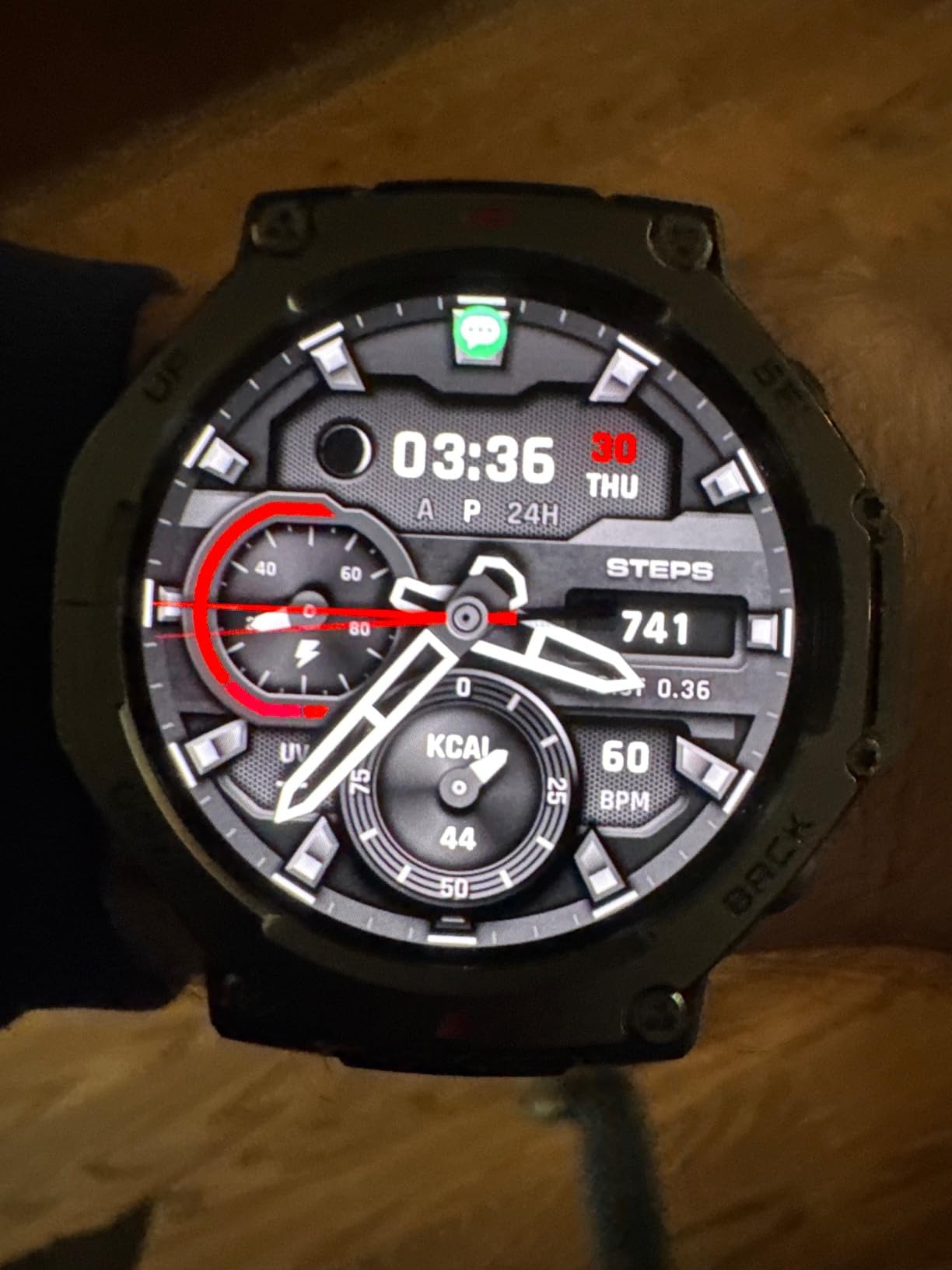
Battery life impressed me at 27 days in smartwatch mode. With dual-band GPS running continuously, expect substantially less, but for typical day-hike use the T-Rex 3 easily lasts a week or more between charges. The 170+ sport modes cover everything from hiking and trail running to freediving and skiing.
The catch, as forum users consistently note, is software trust. The Zepp app works, but the ecosystem is not as polished or as deeply tested in backcountry conditions as Garmin Connect. For casual adventure travel and fitness tracking, the T-Rex 3 is fantastic value. For serious off-trail navigation where you depend on your watch for safety, the software maturity gap matters.
Who Should Buy the Amazfit T-Rex 3
This watch is perfect for budget-conscious adventurers who want a bright AMOLED display, dual-band GPS, and offline maps without paying Garmin prices. If you primarily day-hike and want strong fitness tracking with decent navigation, the value here is hard to beat.
Where It Falls Short for Adventure Travel
The Zepp OS ecosystem, while capable, does not inspire the same confidence as Garmin’s for serious backcountry navigation. Experienced hikers on Reddit have questioned Amazfit software reliability for critical use. If your safety depends on your watch’s navigation, this is worth weighing carefully.
6. Garmin Instinct 2 Solar – Best Value Rugged GPS Watch
Pros
- Solar charging with unlimited battery potential
- Comprehensive fitness and wellness tracking
- Rugged outdoor design built for elements
- Accurate multi-GNSS GPS tracking
- Lightweight at 52 grams
- Excellent value for money
Cons
- Monochrome display
- Learning curve for button interface
- No multi-band GPS on base model
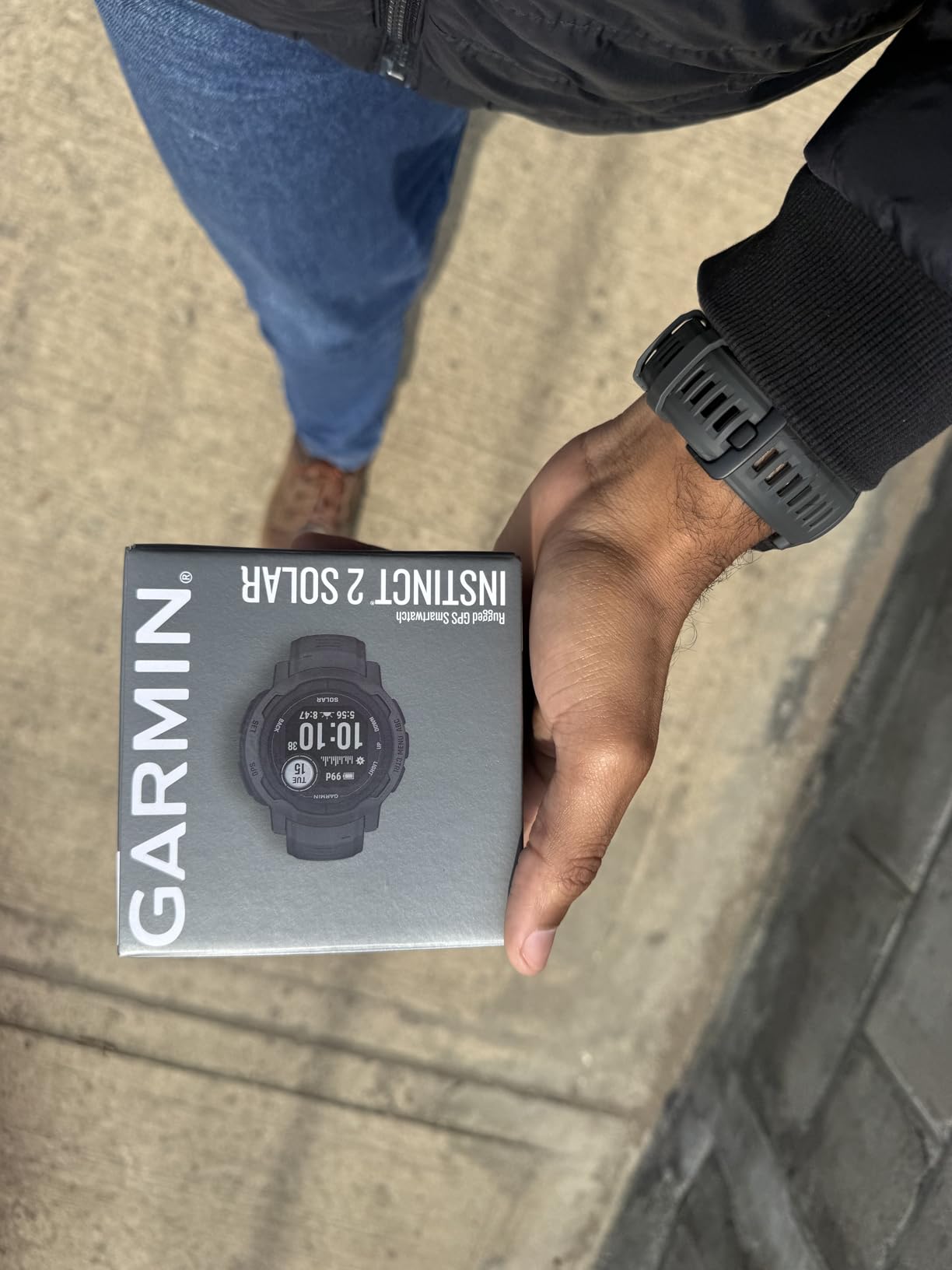
The Garmin Instinct 2 Solar is the previous-generation watch that still earns a place in this guide because of its exceptional value. With solar charging, you can achieve unlimited battery life in smartwatch mode with sufficient sun exposure. Real-world users report 17 to 26 days between charges, which I confirmed is realistic.
The smaller case size makes this the most comfortable watch in the Instinct family for daily wear. At 52 grams with a 1.27-inch display, it disappears on your wrist during long trail days. The ABC sensors, Tracback routing, and multi-GNSS support cover the essentials for backcountry navigation without the premium price of the fenix line.
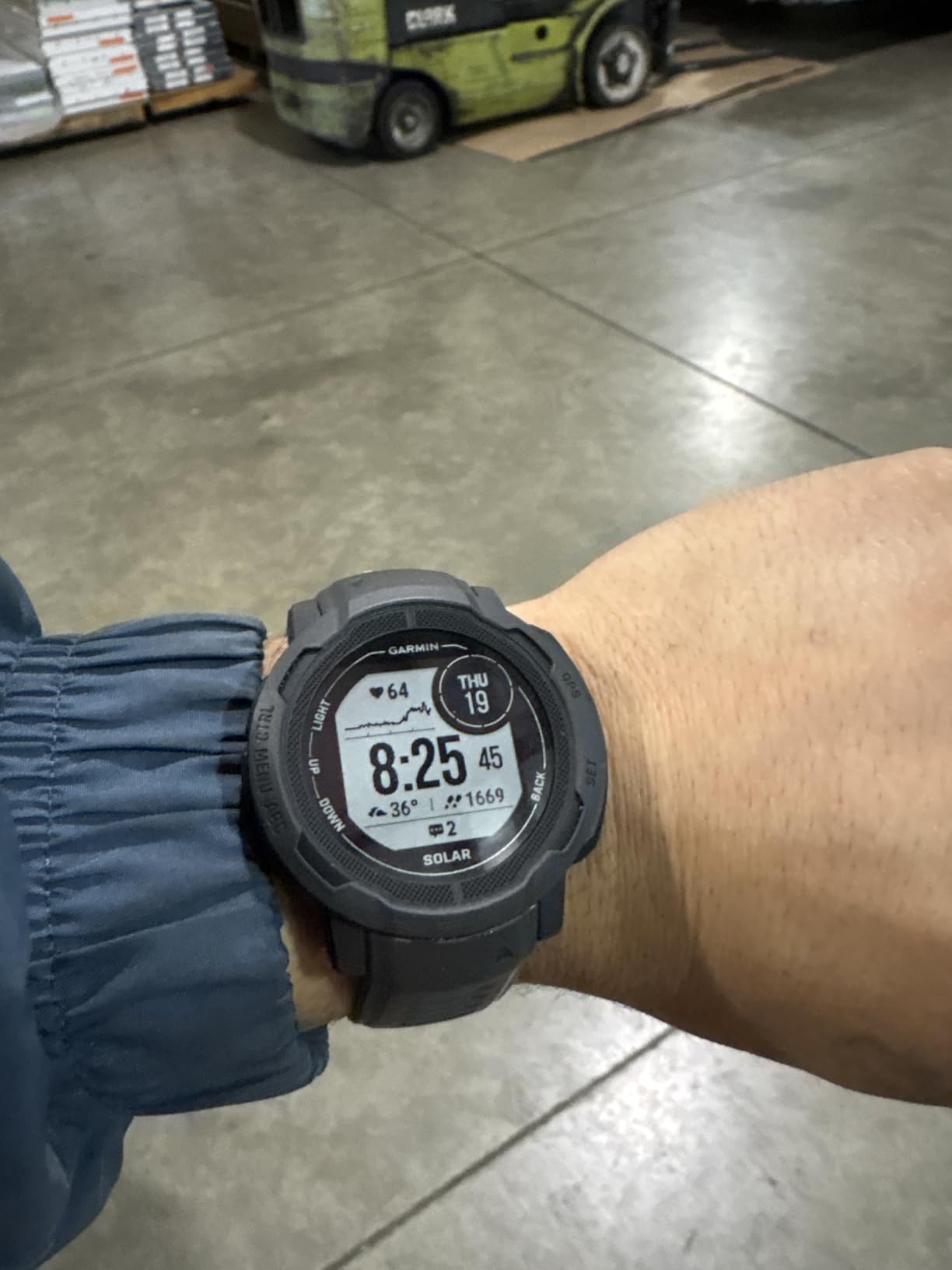
I appreciate the depth of fitness tracking here. VO2 Max, HIIT workouts, stress tracking, and Body Battery energy monitoring give you a comprehensive wellness picture. For hikers who also train seriously, these metrics add genuine value beyond basic step counting.
The main trade-off compared to the Instinct 2X and 3 is the lack of multi-band GPS on the base model and the absence of a built-in flashlight. The monochrome display is the same functional-but-plain MIP screen. The button interface has a learning curve if you are coming from a touchscreen smartwatch, though it is far more reliable with gloves or wet hands.
Who Should Buy the Instinct 2 Solar
This watch is ideal for budget-minded hikers and backpackers who want Garmin reliability, solar battery life, and solid fitness tracking at the lowest price point in the Instinct family. It is the best value rugged GPS watch on this list.
Where It Falls Short for Adventure Travel
The base model lacks multi-band GPS, which means slightly less accuracy on challenging terrain compared to the Instinct 2X or 3. There is no built-in flashlight, no full-color maps, and the previous-generation processor is slower than the Instinct 3. These are acceptable trade-offs at this price, but worth knowing.
7. Garmin Forerunner 55 – Best Budget GPS Watch for Runners
Pros
- Excellent value for runners
- Long 2-week battery life
- Helpful daily suggested workouts
- Easy to use interface
- Accurate GPS tracking
- Ultra-light at 37 grams
Cons
- Basic fitness features vs higher-end models
- No maps or navigation
- No barometric altimeter
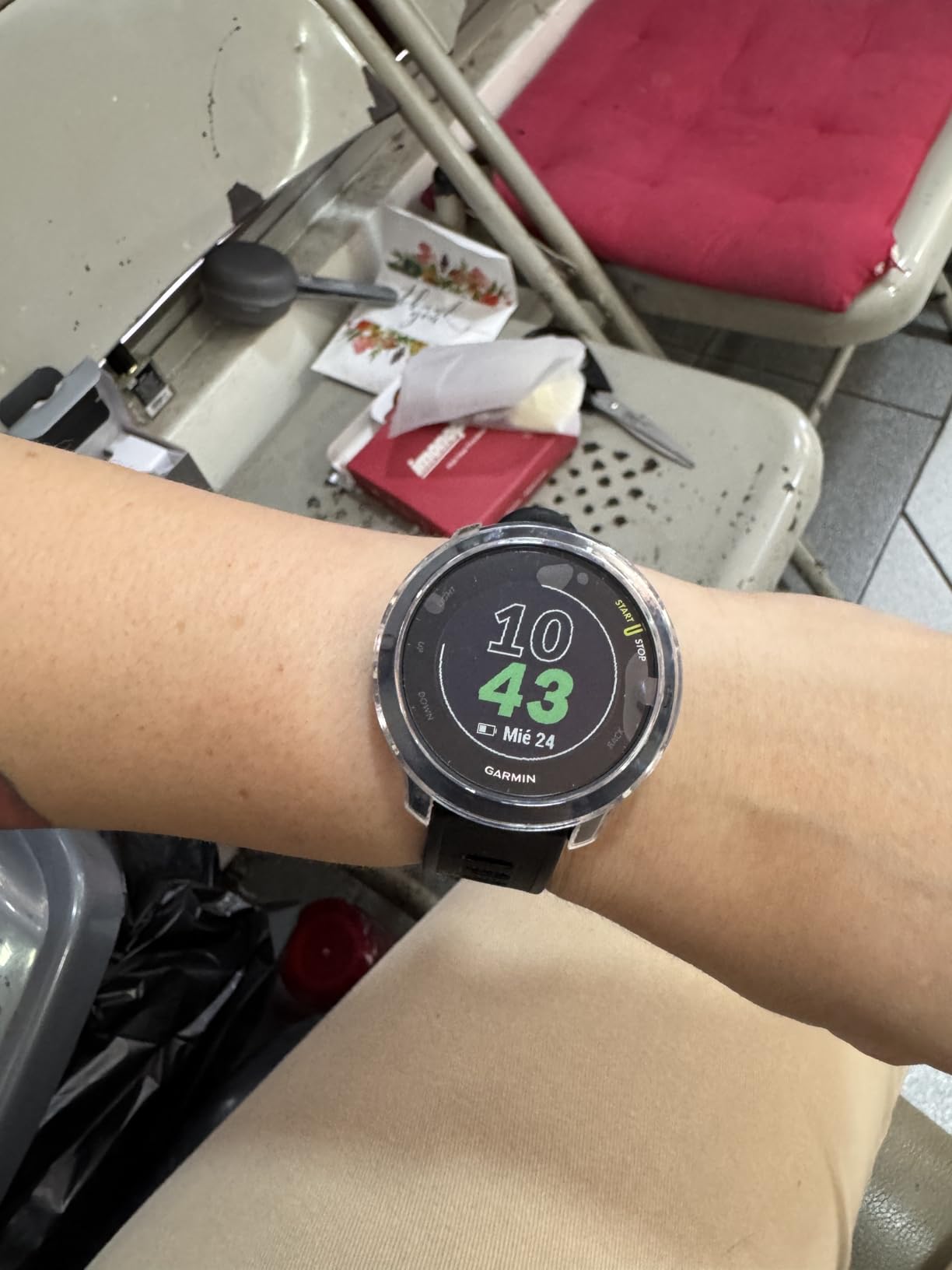
The Garmin Forerunner 55 is the most affordable watch in this guide and the lightest at just 37 grams. It is fundamentally a running watch rather than a dedicated adventure GPS watch, but I included it because many adventure travelers start here and it deserves an honest assessment of what it can and cannot do on the trail.
For trail running and day hiking on marked trails, the Forerunner 55 is genuinely excellent. The GPS tracking is accurate, the daily suggested workouts help you train smart, and PacePro gives you race-day pacing strategy. At this weight, you will forget you are wearing it.
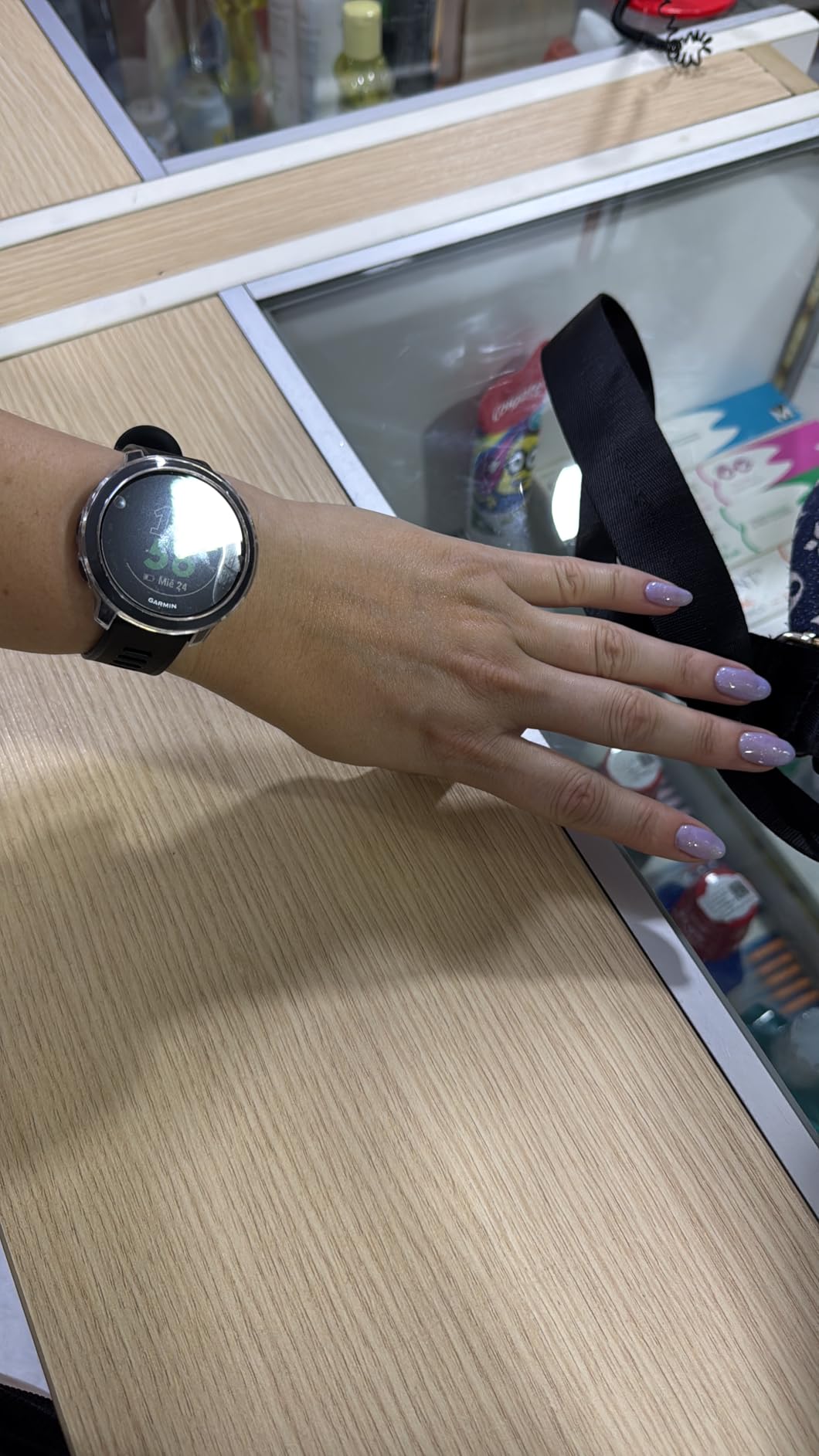
The battery life of two weeks in smartwatch mode and 20 hours in GPS mode is solid for the price. You will not be doing a multi-day backcountry trip on a single charge, but for day adventures with nightly charging, it handles the job comfortably.
The critical limitation is the complete absence of navigation features. There are no maps, no breadcrumbs, no Tracback routing, and no barometric altimeter. This watch tracks where you have been but cannot guide you where you are going. For adventure travel in unfamiliar terrain, that is a significant gap.
Who Should Buy the Forerunner 55
This watch is perfect for runners and casual day-hikers who want accurate GPS tracking, solid battery life, and helpful training features at the lowest possible price. If you navigate with your phone and just want wrist-based tracking, it is a great entry point.
Where It Falls Short for Adventure Travel
The lack of any navigation features makes the Forerunner 55 unsuitable as a primary adventure travel watch. There are no maps, no routing, no altimeter, and no compass. It belongs in this guide as a budget option, but serious adventurers should consider stepping up to at least the Instinct 2 Solar for backcountry capability.
What to Look for in the Best GPS Watches for Adventure Travel?
Choosing the right adventure GPS watch comes down to matching features to your specific type of travel. Here is what I learned matters most after testing these eight watches across months of trail use.
Battery Life for Multi-Day Trips
Battery life is the single most important factor for adventure travel, and it is also the most commonly overstated in marketing materials. Real-world GPS battery life is typically 50 to 70 percent of the claimed figure, depending on satellite settings, signal quality, and temperature.
For day hikes, almost any watch here works fine. For multi-day backpacking trips, you need either solar charging (Garmin Instinct line, fenix 7X Pro Solar) or a watch rated for at least 40 hours of continuous GPS use (Coros Nomad at 50 hours GPS). The Apple Watch Ultra 3’s 42-hour normal battery is adequate for a long weekend but fails on extended trips without a power bank.
GPS Accuracy and Multi-Band Support
Multi-band (also called dual-frequency) GPS is the biggest accuracy upgrade in recent years. It connects to two frequency bands from each satellite constellation, dramatically reducing position error in challenging environments like deep canyons, dense forests, and urban areas.
For adventure travel in open terrain, standard multi-GNSS is sufficient. For technical off-trail navigation, mountaineering, or canyon country, multi-band GPS makes a real difference. The watches in this guide with multi-band support are the fenix 7X Pro Solar, Instinct 2X Solar, Instinct 3 Solar, Amazfit T-Rex 3, and Apple Watch Ultra 3.
Offline Maps Versus Breadcrumb Navigation
This is the key differentiator between a true navigation watch and a tracking watch. Offline topo maps (Garmin fenix line, Coros Nomad, Amazfit T-Rex 3) show full-color cartographic detail with contour lines, trails, water features, and waypoints. Breadcrumb navigation (Garmin Instinct line) shows a simple line of where you have been and a planned route, without map context.
If you navigate in unfamiliar terrain regularly, offline maps are worth the premium. If you primarily follow established trails and just want to track your route, breadcrumb navigation works well. The forum consensus is clear: maps matter for serious backcountry use.
Display Type: MIP Versus AMOLED
Memory-in-pixel (MIP) displays are designed for maximum sunlight readability and minimal battery consumption. They are always-on, require no backlight in daylight, and sip power. The trade-off is that they look monochrome or muted compared to modern smartwatch screens.
AMOLED displays (Amazfit T-Rex 3, Apple Watch Ultra 3) are vibrant, colorful, and visually appealing, but they consume significantly more battery, especially in always-on mode. For adventure travel where battery life is paramount, MIP is the pragmatic choice. For users who prioritize visual experience and charge nightly, AMOLED is more enjoyable.
Durability and Water Resistance
Every watch in this guide is built for the outdoors, but there are meaningful differences. The Garmin Instinct line carries US military standard 810 ratings for thermal and shock resistance, meaning it survives temperature extremes from arctic cold to desert heat. The Apple Watch Ultra 3 uses a titanium case with sapphire crystal, which is scratch-resistant but not rated to the same military standard.
For water resistance, all eight watches handle swimming and heavy rain without issue. The Garmin Instinct watches are rated to 10 ATM (100 meters), the Apple Watch Ultra 3 to 100 meters, and the Amazfit T-Rex 3 is freediving-certified to 147 feet. None of these will fail you in a river crossing.
Satellite SOS and Safety Features
Satellite emergency communications is an emerging feature that can be genuinely life-saving. The Apple Watch Ultra 3 includes satellite messaging for emergency texting when you are outside cellular coverage. Some Garmin watches pair with the separate inReach satellite communicator for similar capability.
If you travel solo in remote areas, satellite SOS is worth serious consideration. It is the one feature that can turn a survival situation into an inconvenience. None of the budget watches in this guide offer it, which is a meaningful limitation for backcountry safety.
Solar Charging Real-World Performance
Solar charging sounds like magic, and in the right conditions it nearly is. The Garmin Instinct and fenix solar watches can extend battery life dramatically with consistent sun exposure. On a sunny backpacking trip, I added days of battery life simply from wearing the watch in direct sunlight during hiking hours.
The catch is that solar charging is far less effective in cloudy conditions, dense forest, or winter when days are short and you wear sleeves. In those scenarios, the solar benefit drops significantly. Solar is best understood as a battery extender rather than a replacement for charging, and it shines brightest on desert and alpine routes with abundant sun.
Frequently Asked Questions
What is the best GPS watch for hiking with maps?
The Garmin fenix 7X Pro Solar is the best GPS watch for hiking with maps thanks to its full-color TopoActive maps that show contour lines, trails, and waypoints directly on the 1.4-inch display. The Coros Nomad is a strong alternative with pre-loaded global maps and turn-by-turn navigation out of the box, making it ideal for international adventure travel.
What is the best budget hiking watch?
The Garmin Forerunner 55 at around $129 is the most affordable option for basic GPS trail tracking, though it lacks navigation features. For budget-conscious hikers who need actual navigation, the Amazfit T-Rex 3 offers dual-band GPS, offline maps, and a 27-day battery at a fraction of Garmin prices. The Garmin Instinct 2 Solar is the best value pick for rugged solar-assisted battery life.
What features separate a hiking GPS watch from a fitness tracker?
A hiking GPS watch includes offline topo maps or breadcrumb navigation, multi-band GPS for backcountry accuracy, ABC sensors (altimeter, barometer, compass), extended battery life measured in weeks rather than days, and military-grade durability ratings. A fitness tracker primarily counts steps and heart rate, uses smartphone-dependent GPS, and typically lasts only one to two days on a charge. The key divider is whether the device can guide you to a destination without your phone.
How long should GPS watch battery last for multi-day hikes?
For multi-day hikes you want a watch that offers at least 40 hours of continuous GPS battery life or solar charging that extends runtime indefinitely. The Garmin fenix 7X Pro Solar reaches 37 days in smartwatch mode, the Coros Nomad offers 50 hours of GPS and 22 days smartwatch mode, and the Garmin Instinct 3 Solar can theoretically achieve unlimited battery with sufficient sunlight. For trips longer than three days, avoid watches like the Apple Watch Ultra 3 that max out around 42 hours.
Which GPS watch has the most accurate trail navigation?
The Garmin fenix 7X Pro Solar and Apple Watch Ultra 3 both offer dual-frequency (multi-band) GPS that delivers the highest trail tracking accuracy available, particularly in challenging environments like dense forest and deep canyons. Garmin’s SatIQ technology automatically switches between GPS modes to balance accuracy and battery consumption. For pure accuracy on technical terrain, these two watches consistently outperform single-band alternatives.
Final Verdict: Which Adventure GPS Watch Should You Buy?
After months of testing on real trails, the Garmin Instinct 3 Solar remains my top pick for the best GPS watch for adventure travel. It nails the balance of rugged durability, solar-assisted battery life, multi-band GPS accuracy, and reasonable pricing that most adventurers need. If you want one watch that handles everything from day hikes to multi-day backpacking trips, this is it.
For athletes and serious backcountry navigators who need full-color topo maps and advanced training metrics, the Garmin fenix 7X Pro Solar justifies its premium price. iPhone users who prioritize health tracking and satellite safety should look at the Apple Watch Ultra 3, provided they charge nightly. And budget-conscious adventurers get outstanding value from the Amazfit T-Rex 3 or the Garmin Instinct 2 Solar.
The right watch depends on your adventures, your ecosystem preferences, and your budget. Any of these eight will serve you better on the trail than a phone alone. Pick the one that matches how you actually travel, and it will become the most important tool in your adventure kit in 2026.