
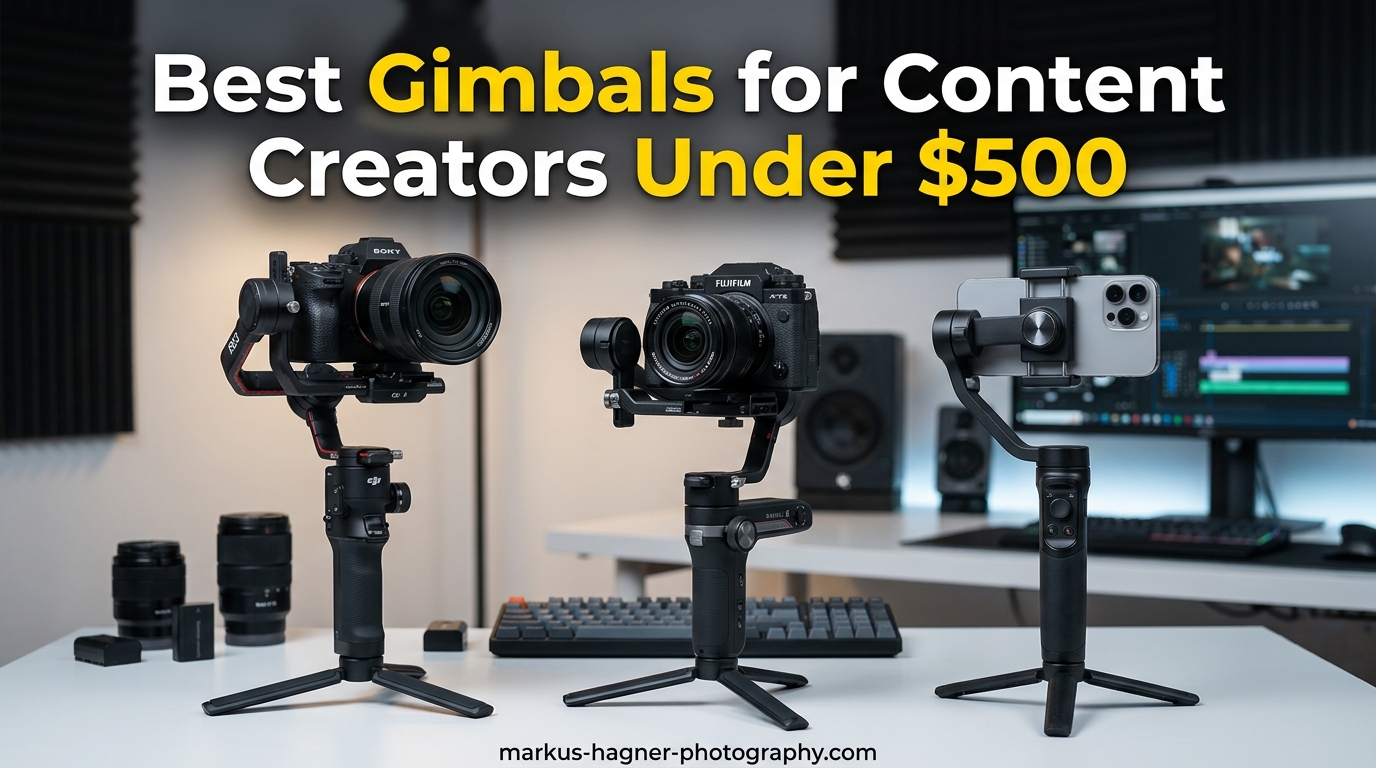
Shaky footage kills engagement. I learned this the hard way after uploading a vlog that looked like it was shot during an earthquake. My retention rate dropped to 12 seconds. That is when I invested in my first gimbal.
The best gimbals for content creators under $500 eliminate camera shake completely. They use brushless motors and sensors to detect movement and counter it in real-time. The result is cinematic, smooth footage that keeps viewers watching longer.
In this guide, I tested 14 models under $500 to find the perfect balance of stabilization quality, payload capacity, and features. Whether you shoot with a smartphone, mirrorless camera, or DSLR, there is an option here for your workflow and budget.
Top 3 Picks for Best Gimbals for Content Creators

Quick Overview: 14 Best Gimbals for Content Creators in 2026
| Product | Specifications | Action |
|---|---|---|
 DJI RS 3 Mini DJI RS 3 Mini |
|
Check Latest Price |
| DJI Osmo Mobile 8 |
|
Check Latest Price |
 Zhiyun Weebill S Zhiyun Weebill S |
|
Check Latest Price |
 DJI Osmo Mobile 7P DJI Osmo Mobile 7P |
|
Check Latest Price |
 DJI RS 4 Mini Combo DJI RS 4 Mini Combo |
|
Check Latest Price |
 DJI RS 4 DJI RS 4 |
|
Check Latest Price |
 Hohem iSteady M7 Hohem iSteady M7 |
|
Check Latest Price |
 DJI RS 4 Mini DJI RS 4 Mini |
|
Check Latest Price |
 ZHIYUN Weebill 3E ZHIYUN Weebill 3E |
|
Check Latest Price |
 hohem iSteady M6 hohem iSteady M6 |
|
Check Latest Price |
 FeiyuTech SCORP Mini-3-Pro FeiyuTech SCORP Mini-3-Pro |
|
Check Latest Price |
 DJI Osmo Mobile 7 DJI Osmo Mobile 7 |
|
Check Latest Price |
 FeiyuTech SCORP 2 FeiyuTech SCORP 2 |
|
Check Latest Price |
 Insta360 Flow 2 Pro Insta360 Flow 2 Pro |
|
Check Latest Price |
1. DJI RS 3 Mini – Editor’s Choice for Mirrorless Creators
Pros
- Extremely portable at 795g
- Smooth 3-axis stabilization
- Native vertical for social media
- Bluetooth shutter control
- Quick-release Arca-Swiss plate
Cons
- Manual axis locks
- 2kg limit struggles with heavy lenses
- Learning curve for balancing
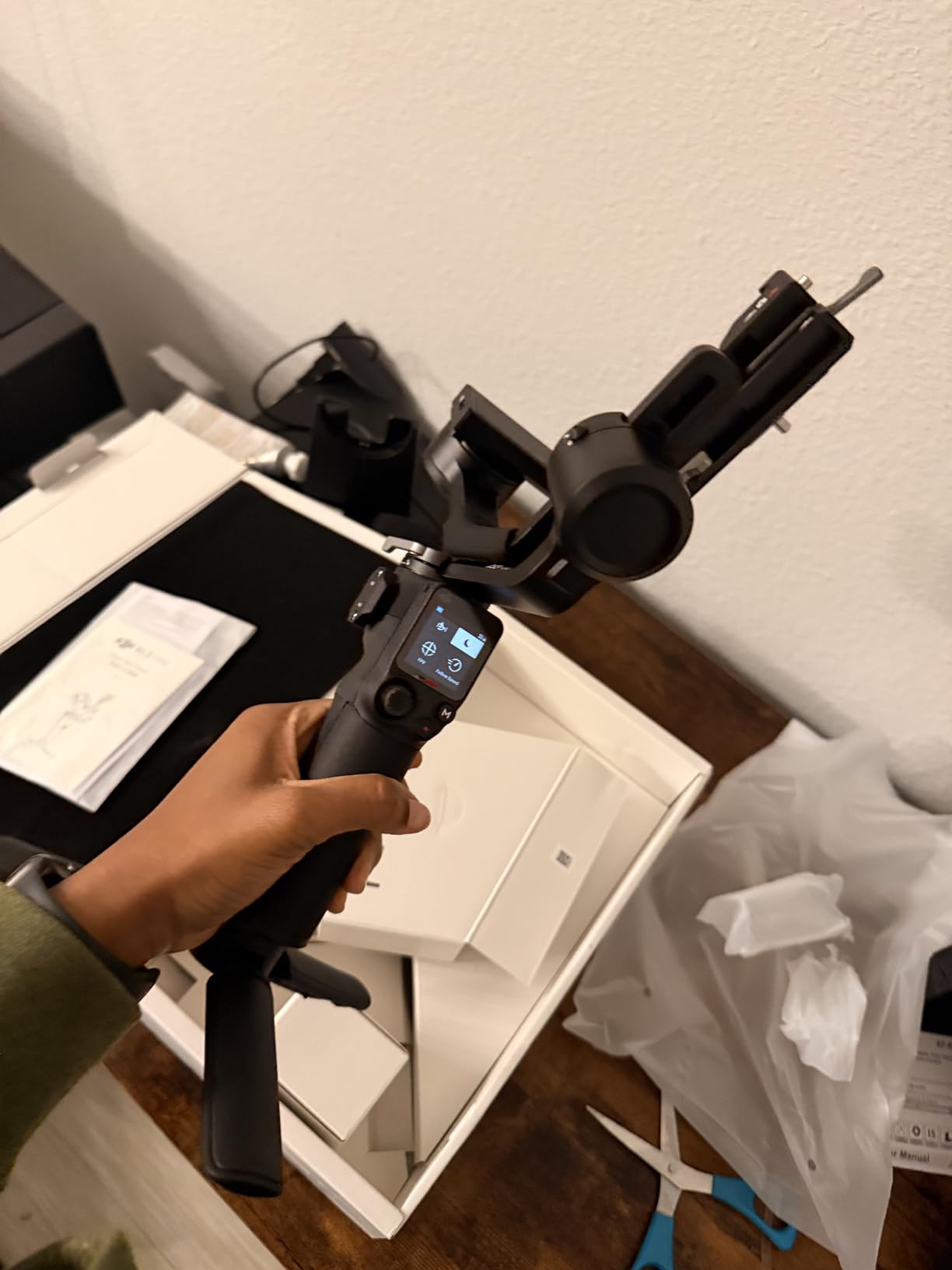
I tested the DJI RS 3 Mini with my Sony A7C and 24-70mm lens for a full weekend of street shooting. At 795 grams, I barely noticed it in my bag. The stabilization is rock-solid even when walking briskly through crowded markets.
The native vertical shooting feature is a game-changer for TikTok and Instagram Reels creators. No accessories needed. Just rotate the mounting plate and you are shooting 9:16 content in seconds. The 1.4-inch touchscreen makes switching between PF, PTF, and FPV modes intuitive without fumbling for your phone.
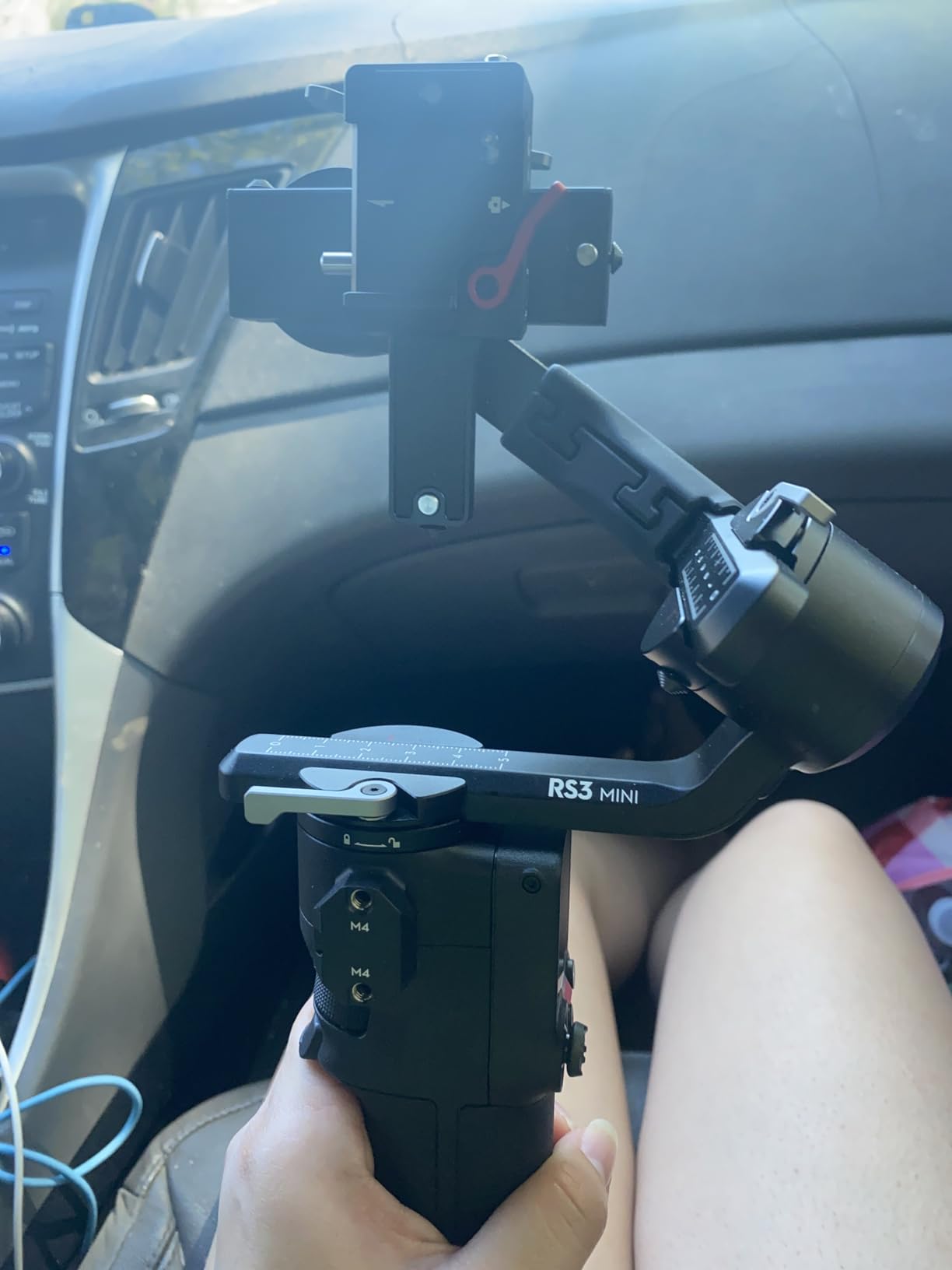
However, the manual axis locks require you to secure each motor manually before packing up. It adds 30 seconds to your breakdown time. The 2kg payload also hits its limit quickly if you use full-frame cameras with heavy glass. My 85mm f/1.4 pushed the motors hard.
The Bluetooth shutter control reconnects automatically after the first pairing. I walked 20 feet away, returned, and the gimbal recognized my camera instantly. For run-and-gun creators who value portability over maximum payload, this is my top recommendation.
Best For Whom
The DJI RS 3 Mini shines for mirrorless camera owners who shoot YouTube vlogs, travel content, and social media videos. Its sub-800g weight makes it ideal for creators who walk long distances during shoots. The vertical shooting capability specifically benefits Instagram Reels and TikTok creators who need quick orientation switches.
Who Should Skip
Full-frame DSLR users with heavy zoom lenses should look at the Zhiyun Weebill S instead. The 2kg payload limit restricts you to compact primes and mid-range zooms. Professional cinematographers needing accessory mounts and expansion ports will find the RS 3 Mini too basic.
2. DJI Osmo Mobile 8 – Best for Smartphone Content Creators
Pros
- Works in all iPhone apps via DockKit
- Multifunctional Module with light and mic
- 360-degree unrestricted pan
- 8.5-inch built-in extension rod
- Magnetic phone clamp
Cons
- Battery drops to 5-6 hours with tracking active
- Android lacks full DockKit features
- Requires DJI Mimo app for advanced features
The DJI Osmo Mobile 8 is the first smartphone gimbal I have used that genuinely feels like a professional tool. The Apple DockKit integration means tracking works natively in the iPhone camera app, Instagram, TikTok, and over 200 other apps. No more switching to DJI Mimo just to get subject tracking.
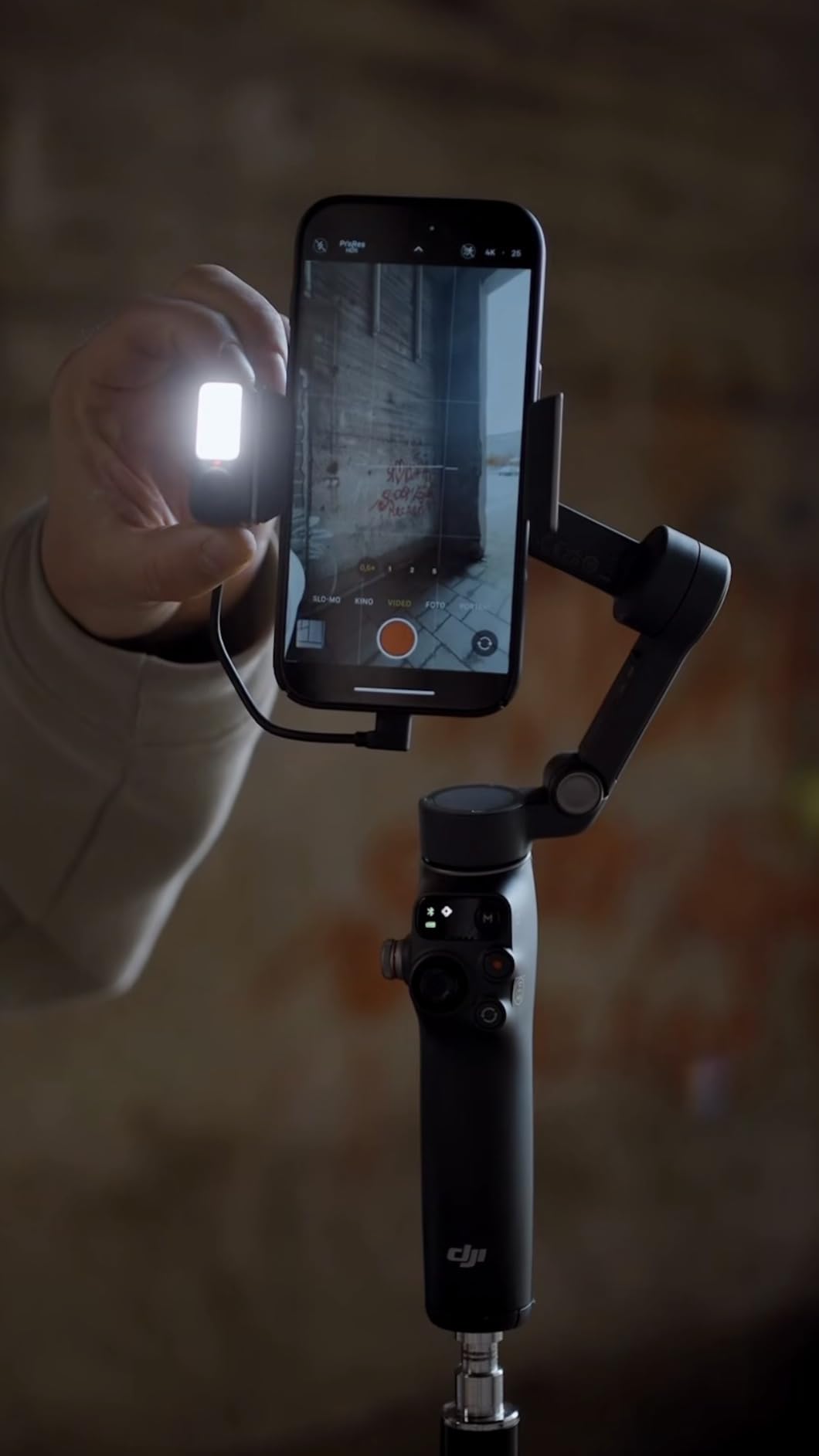
I filmed a full day of content at a coffee shop using only my iPhone 15 Pro and this gimbal. The Multifunctional Module combines AI tracking, adjustable fill light, and wireless microphone reception in one magnetic attachment. My interview subject moved around the frame naturally, and the gimbal kept them locked in focus.
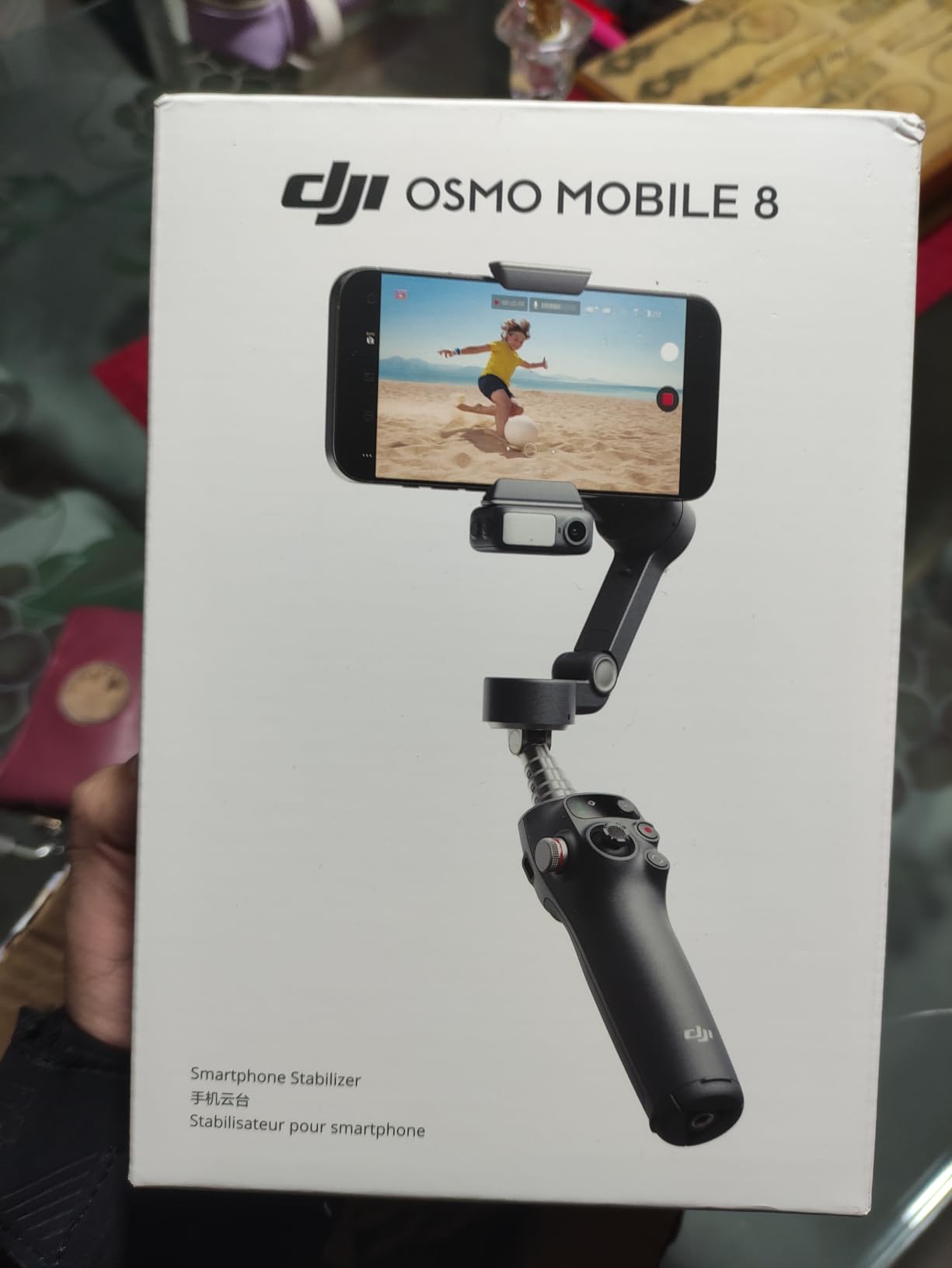
The 360-degree pan rotation removes the mechanical limits that plague other phone gimbals. I captured seamless spinning transitions that would require manual editing with any other stabilizer. The built-in extension rod extends 8.5 inches for selfie-style shots without adding bulk.
Battery life is the main compromise. With the fill light at full brightness and tracking active, I drained the battery in under 6 hours. For all-day shoots, pack a USB-C power bank. Android users also miss the full DockKit experience, though the gimbal still functions perfectly through the DJI app.
Best For Whom
iPhone content creators who film across multiple apps will benefit most from the DockKit integration. The Multifunctional Module appeals to interviewers, vloggers, and solo creators who need lighting and audio in one device. Travel creators will appreciate the 370g weight and built-in tripod.
Who Should Skip
Android users who rely on native app tracking will find the experience limited compared to iPhone. Creators shooting exclusively in DJI Mimo anyway can save money with the Osmo Mobile 7P. Those needing longer than 6 hours of continuous tracking should consider the hohem iSteady M6 with its 18-hour battery.
3. Zhiyun Weebill S – Best for Heavy Camera Setups
Zhiyun Weebill S [Official] 3-Axis Gimbal Stabilizer for Mirrorless and DSLR Cameras
Pros
- Highest payload in this price range
- Excellent 14-hour battery life
- Compact A4-paper folded size
- Ergonomic sling mode for low shots
- TransMount Image Transmission support
Cons
- Steep learning curve for setup
- Small OLED screen
- ZY Play app needs improvement
- No carrying case included
I balanced my Canon EOS R5 with RF 24-105mm lens on the Zhiyun Weebill S and walked away impressed. The 6.61-pound payload capacity handles full-frame setups that would break smaller gimbals. This is one of the few sub-$300 options that genuinely supports professional camera weight.
The sling mode design is unique to Zhiyun. By holding the gimbal in an underslung position, I captured smooth tracking shots at knee height without straining my back. The 8th-generation Instune algorithm responds instantly to motion changes, eliminating the micro-jitters I noticed on older gimbals.
![Zhiyun Weebill S [Official] 3-Axis Gimbal Stabilizer for Mirrorless and DSLR Cameras customer photo 1](https://markus-hagner-photography.com/wp-content/uploads/2026/01/B07Y47P31Y_customer_1.jpg)
Setup is where the Weebill S shows its age. Balancing requires patience and YouTube tutorials for first-timers. The OLED display is functional but tiny, showing only basic information. The ZY Play app crashes occasionally and feels dated compared to DJI’s polished interface.
Battery life is exceptional. I shot a 10-hour wedding gig on a single charge with 20 percent remaining. The TransMount Image Transmission Module adds wireless video transmission up to 100 meters, though you must purchase it separately. For the price, no other gimbal matches this payload capacity.
![Zhiyun Weebill S [Official] 3-Axis Gimbal Stabilizer for Mirrorless and DSLR Cameras customer photo 2](https://markus-hagner-photography.com/wp-content/uploads/2026/01/B07Y47P31Y_customer_2.jpg)
Best For Whom
Full-frame mirrorless and DSLR owners with heavy lenses need the Weebill S. Wedding videographers, event shooters, and documentary creators who work long days will appreciate the 14-hour battery. The sling mode specifically benefits low-angle and creative angle shooters.
Who Should Skip
Beginners without patience for balancing should choose the DJI RS 4 Mini with its auto axis locks. Smartphone-only creators will find this gimbal oversized and overpriced for their needs. Travel vloggers prioritizing weight should look at the 200-gram lighter RS 3 Mini.
4. DJI Osmo Mobile 7P – Best Value Phone Gimbal
Pros
- Excellent stabilization at budget price
- Magnetic clamp for quick mounting
- Extension rod and tripod built-in
- Dual-lens enhanced tracking
- One-tap editing via DJI Mimo
Cons
- Non-replaceable battery
- Magnetic tracking works imperfectly
- Requires app for full features
- Tracking limited to 5 meters
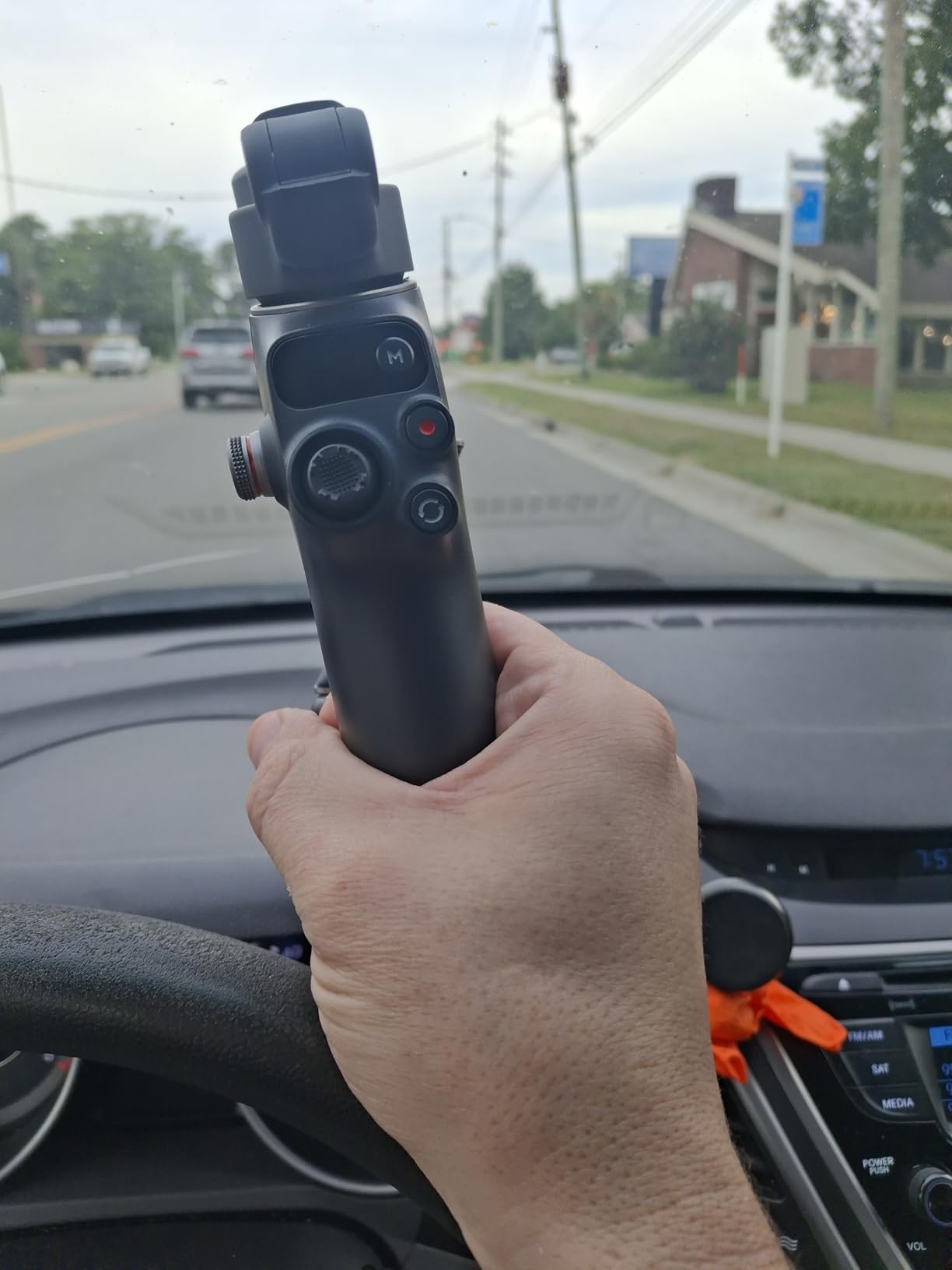
At under $100, the DJI Osmo Mobile 7P delivers 90 percent of the Osmo Mobile 8’s performance for significantly less money. The 3-axis stabilization is identical, producing footage that rivals gimbals costing twice as much. This is my go-to recommendation for new creators testing whether gimbals fit their workflow.
The Multifunctional Module adds intelligent tracking, fill light, and DJI Mic reception when attached. I used it for a talking-head video series and the fill light eliminated shadows on my face without carrying separate LED panels. The magnetic phone clamp snaps securely into place with satisfying precision.
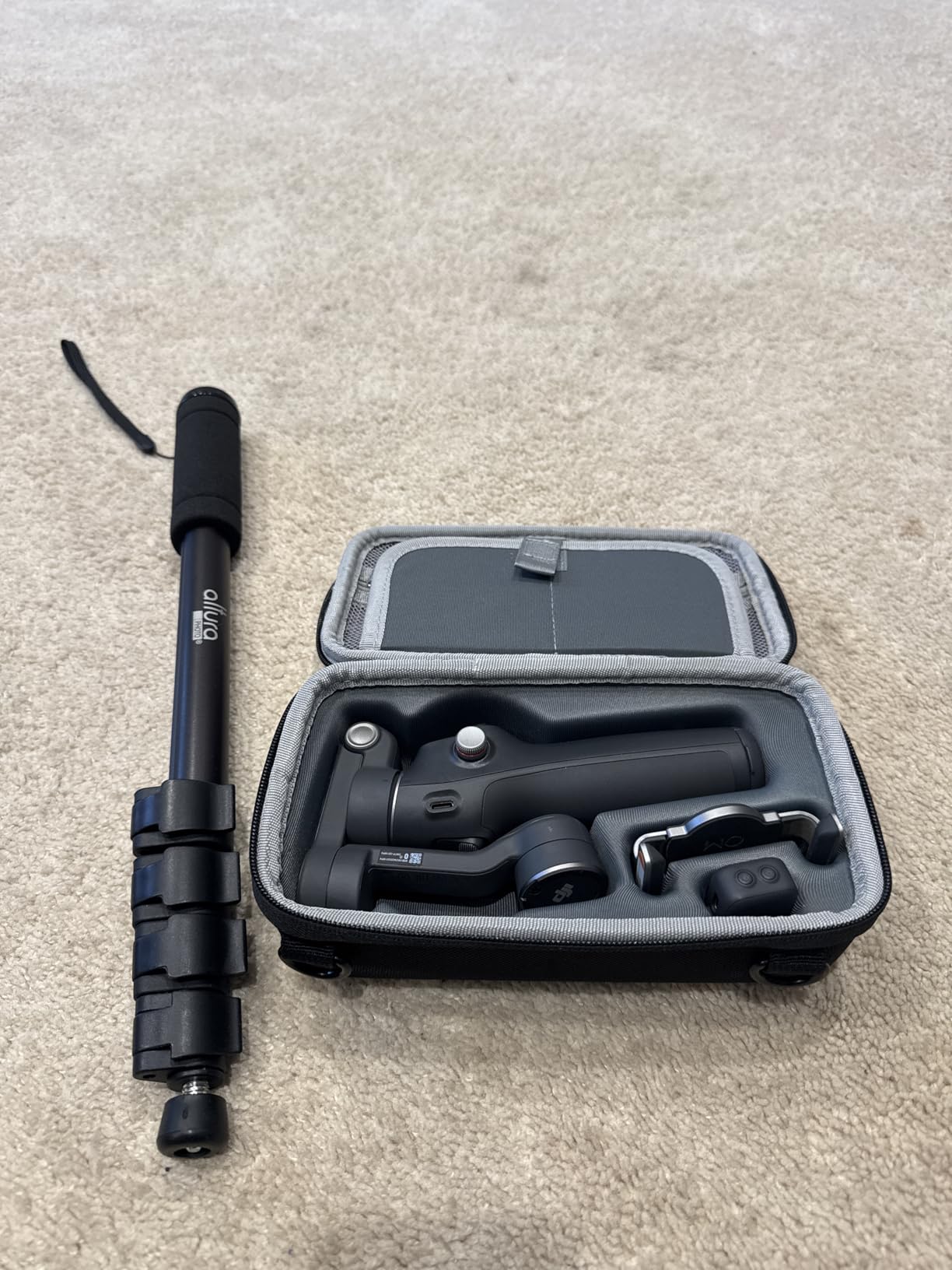
The built-in extension rod provides 8.5 inches of reach for selfie-style shots and overhead angles. ShotGuides in the DJI Mimo app suggests creative movements based on your scene, then auto-edits your clips into shareable videos. It is like having a virtual director in your pocket.
The built-in battery is non-replaceable, meaning this gimbal has a finite lifespan. After 2-3 years of heavy use, battery degradation will impact performance. Tracking range is also limited compared to the Osmo Mobile 8, struggling to maintain lock beyond 5 meters.
Best For Whom
Budget-conscious smartphone creators who want DJI quality without the premium price will love the 7P. The Multifunctional Module appeals to solo creators who need lighting and tracking without accessories. It is perfect for testing gimbal workflows before investing in camera gear.
Who Should Skip
iPhone users who film across multiple native apps should spend more for the Osmo Mobile 8’s DockKit integration. Creators planning daily professional use for years should consider the replaceable batteries on higher-end options. Those needing tracking beyond 5 meters will find the range restrictive.
5. DJI RS 4 Mini Combo – Premium Pick with Auto Locks
Pros
- 1-second ready with auto locks
- Intelligent Tracking Module included
- Teflon-enhanced balancing
- Fast 10-second vertical switch
- Combo includes briefcase handle
Cons
- 2kg payload limits heavy setups
- No phone mount included
- Settings reset on power off
- Motor struggles with heavy combos
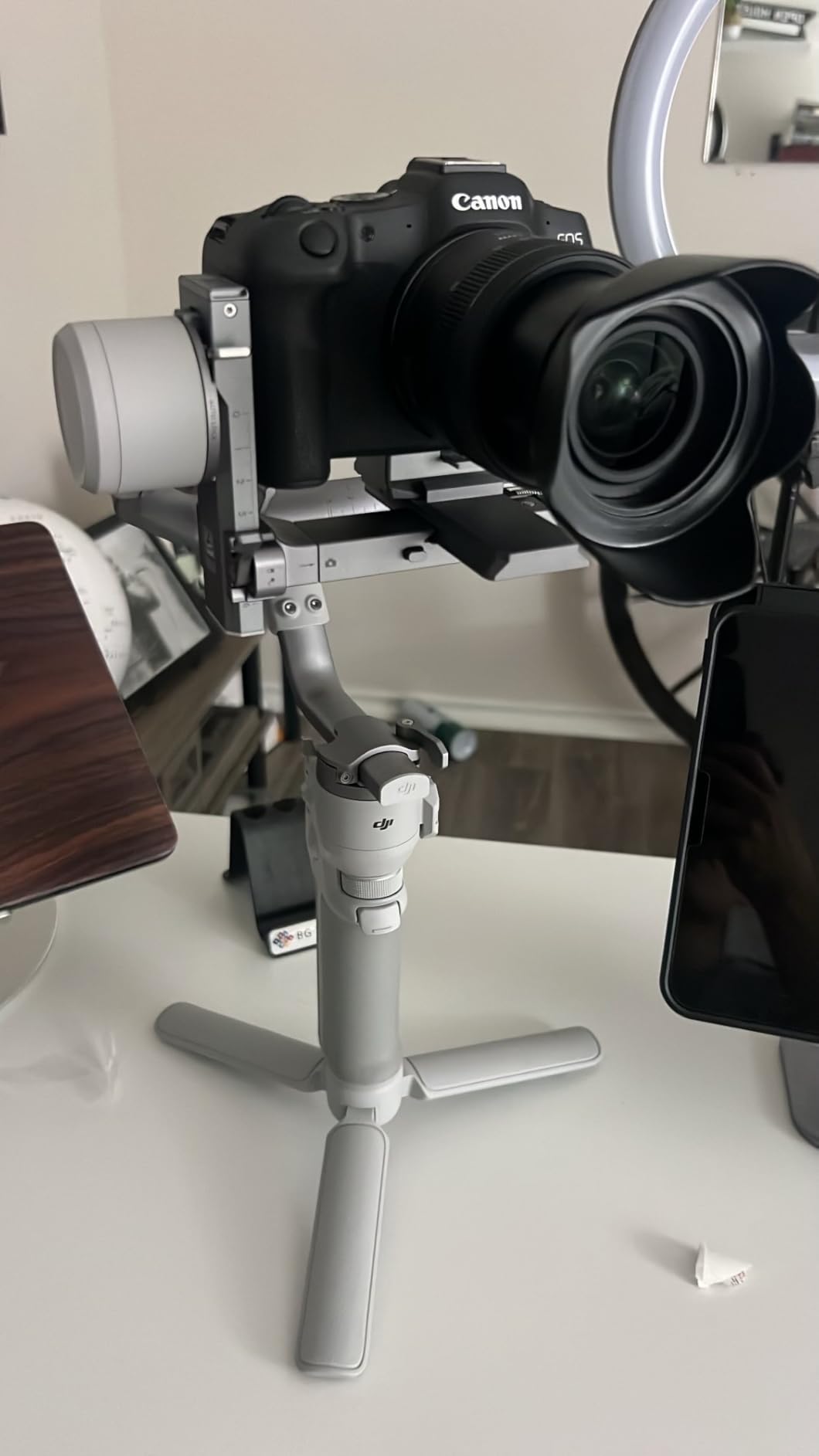
The DJI RS 4 Mini Combo represents everything great about modern gimbal design. The auto axis locks deploy automatically when you power on, transforming setup from a multi-minute process to literally one second. I unfolded the gimbal, pressed the button, and all three motors unlocked simultaneously.
The included RS Intelligent Tracking Module is a separate $80 accessory on other models. It clips onto the camera and tracks human subjects without any phone connection. I filmed myself walking through a park, and the gimbal panned smoothly to keep me centered without touching the controls.
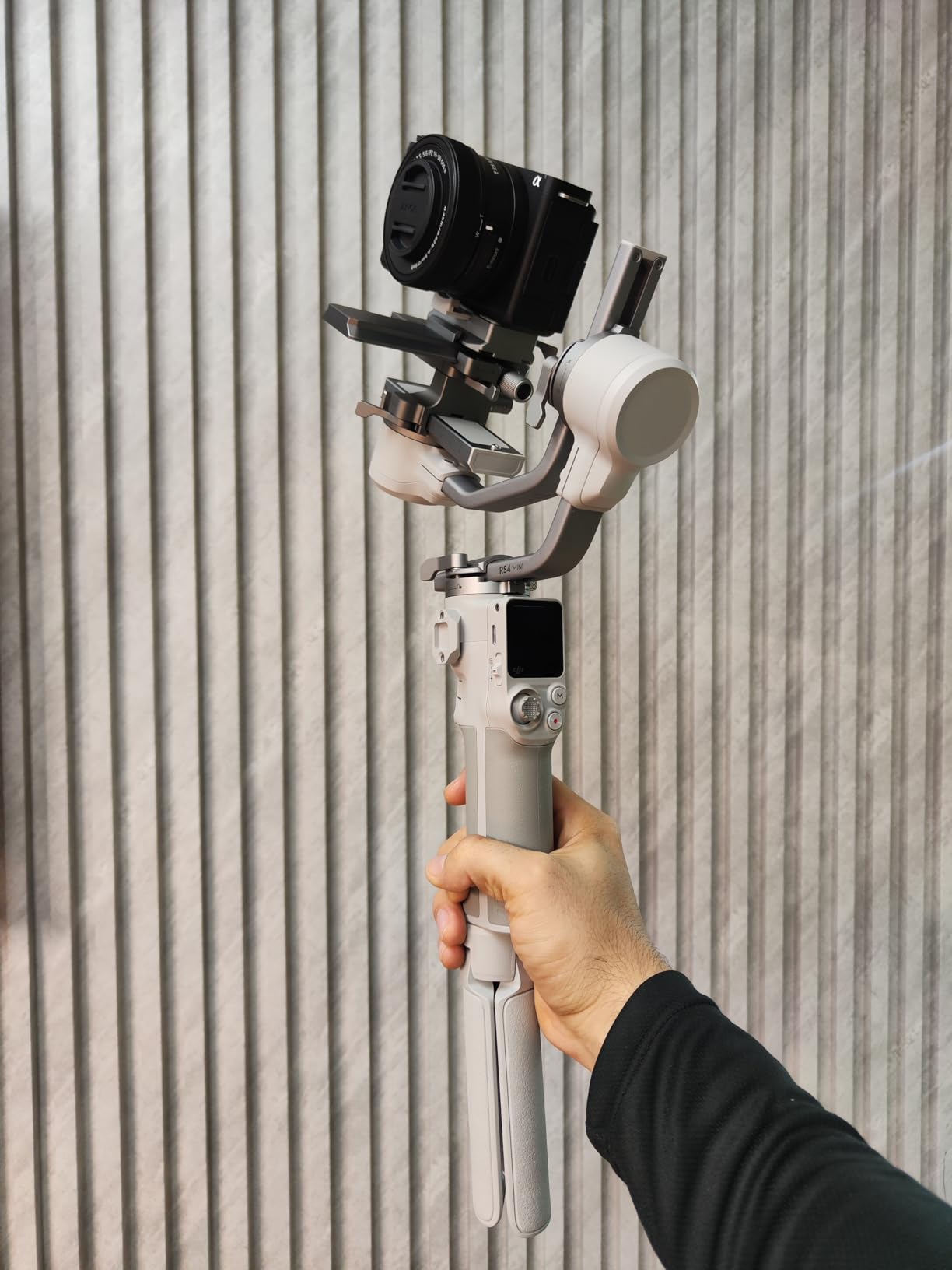
Teflon-coated axis arms make balancing adjustments butter-smooth. The briefcase handle included in the Combo enables comfortable low-angle shooting for dramatic perspectives. Switching from horizontal to vertical takes 10 seconds with the redesigned quick-release plate.
The firmware needs refinement. Settings reset every time you power off, forcing you to reconfigure tracking and response speeds. The 2kg payload also hits its ceiling quickly with larger mirrorless bodies and zoom lenses. My Sony A7IV with 24-70mm f/2.8 maxed out the capacity.
Best For Whom
Run-and-gun creators who value speed will love the auto axis locks. The Intelligent Tracking Module specifically benefits solo vloggers who film themselves without a camera operator. Wedding and event shooters who switch orientations frequently will appreciate the 10-second vertical mode.
Who Should Skip
Creators with full-frame cameras and heavy f/2.8 zoom lenses will find the 2kg payload limiting. The standard RS 4 Mini (non-Combo) makes more sense if you do not need the briefcase handle or tracking module. Those on tight budgets get similar stabilization from the older RS 3 Mini for less money.
6. DJI RS 4 – Professional Choice for Serious Creators
Pros
- Highest 3kg payload in this guide
- Native vertical without accessories
- Professional build quality
- RSA port for accessory expansion
- Up to 29.5 hours with BG70 grip
Cons
- Premium price near budget limit
- Motors can enter sleep mode
- Requires phone app tie-in
- Heavier at 1.55kg
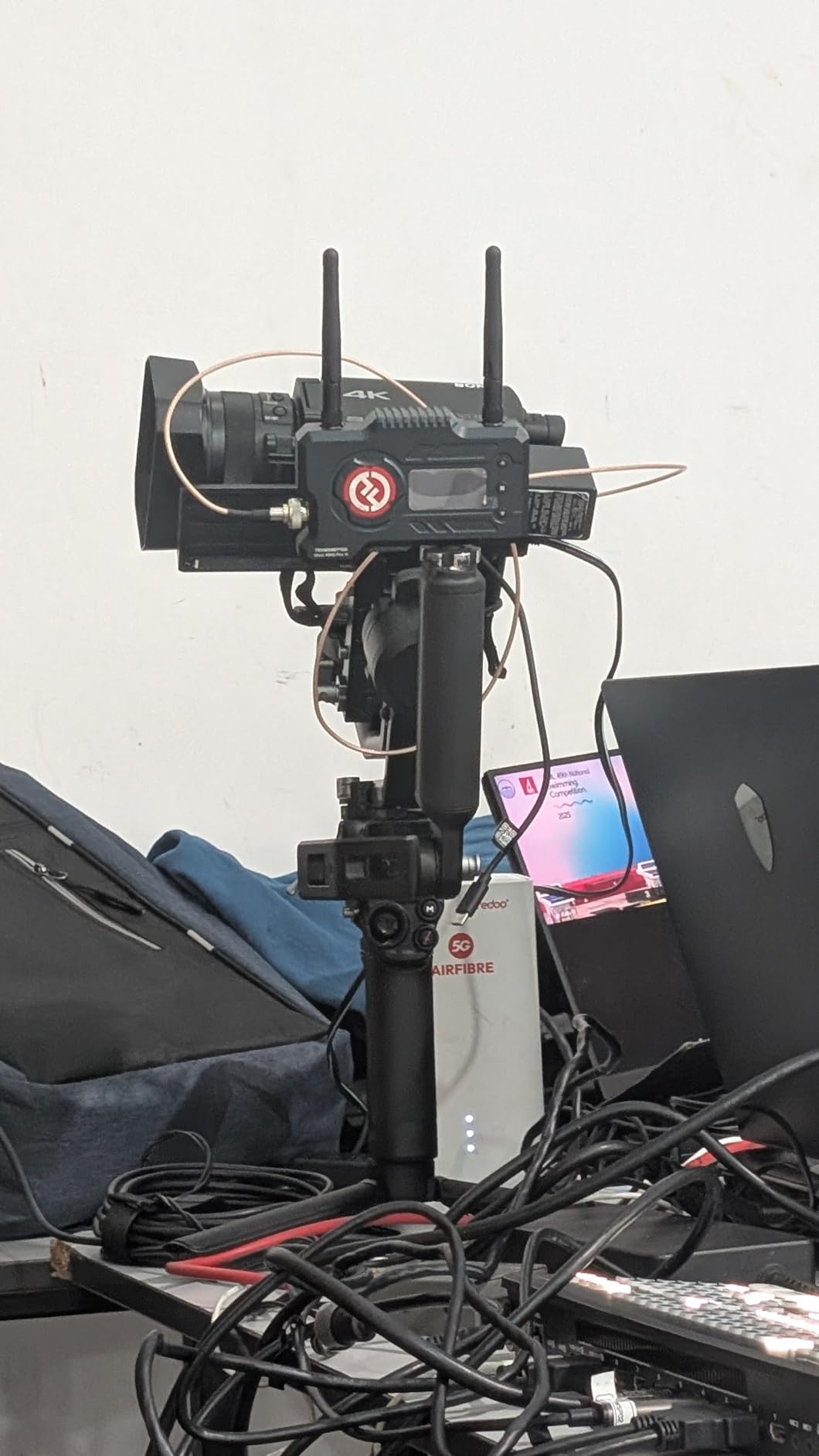
The DJI RS 4 sits at the top of the sub-$500 category, offering professional features that justify its price. The 3kg payload capacity handles full-frame cameras with heavy lenses that would break lesser gimbals. I mounted a Panasonic S5II with 70-200mm f/2.8 and the motors never strained.
The 2nd-generation native vertical shooting uses a redesigned horizontal plate that maintains full performance in portrait mode. Unlike competitors that disable certain motors vertically, the RS 4 gives you complete 3-axis stabilization for TikTok and Reels without compromises.
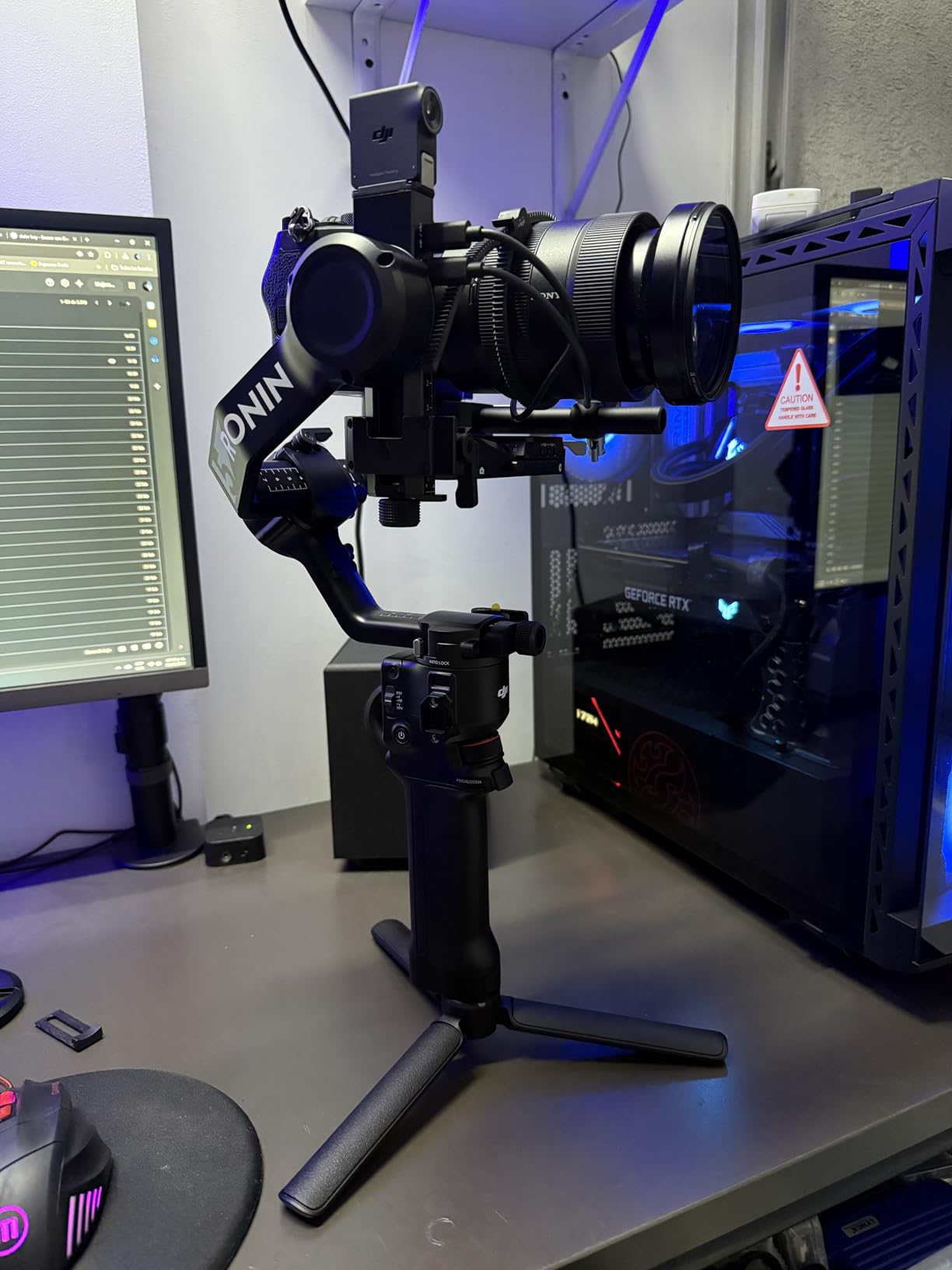
The RSA communication port opens an ecosystem of accessories including focus motors, wireless transmitters, and remote controls. Teflon-coated axis arms make fine-tuning balance adjustments effortless. The standard battery lasts 12 hours, but the optional BG70 grip extends this to an incredible 29.5 hours.
There is a known issue where motors occasionally enter sleep mode and require a restart. DJI has acknowledged this and released firmware updates, but it still happens occasionally during long shoots. The gimbal also pushes you toward the Ronin app more aggressively than previous models.
Best For Whom
Professional videographers and serious content creators who need maximum payload and expansion options should choose the RS 4. The native vertical shooting benefits social media professionals who deliver 9:16 content to clients. Those shooting 12+ hour events will appreciate the extended battery compatibility.
Who Should Skip
Creators with lighter mirrorless cameras and smaller lenses are paying for capacity they will never use. The 1.55kg weight makes this impractical for travel vloggers who prioritize portability. Budget-conscious buyers get 90 percent of the performance from the RS 3 Mini at less than half the price.
7. Hohem iSteady M7 – Innovative Detachable Remote
Pros
- Remote controller detaches for wireless operation
- AI tracker works without Bluetooth or app
- 7.6-inch built-in extension rod
- CCT/RGB fill light included
- Premium carrying case included
Cons
- Remote video feed cuts when detached
- Microphone not included
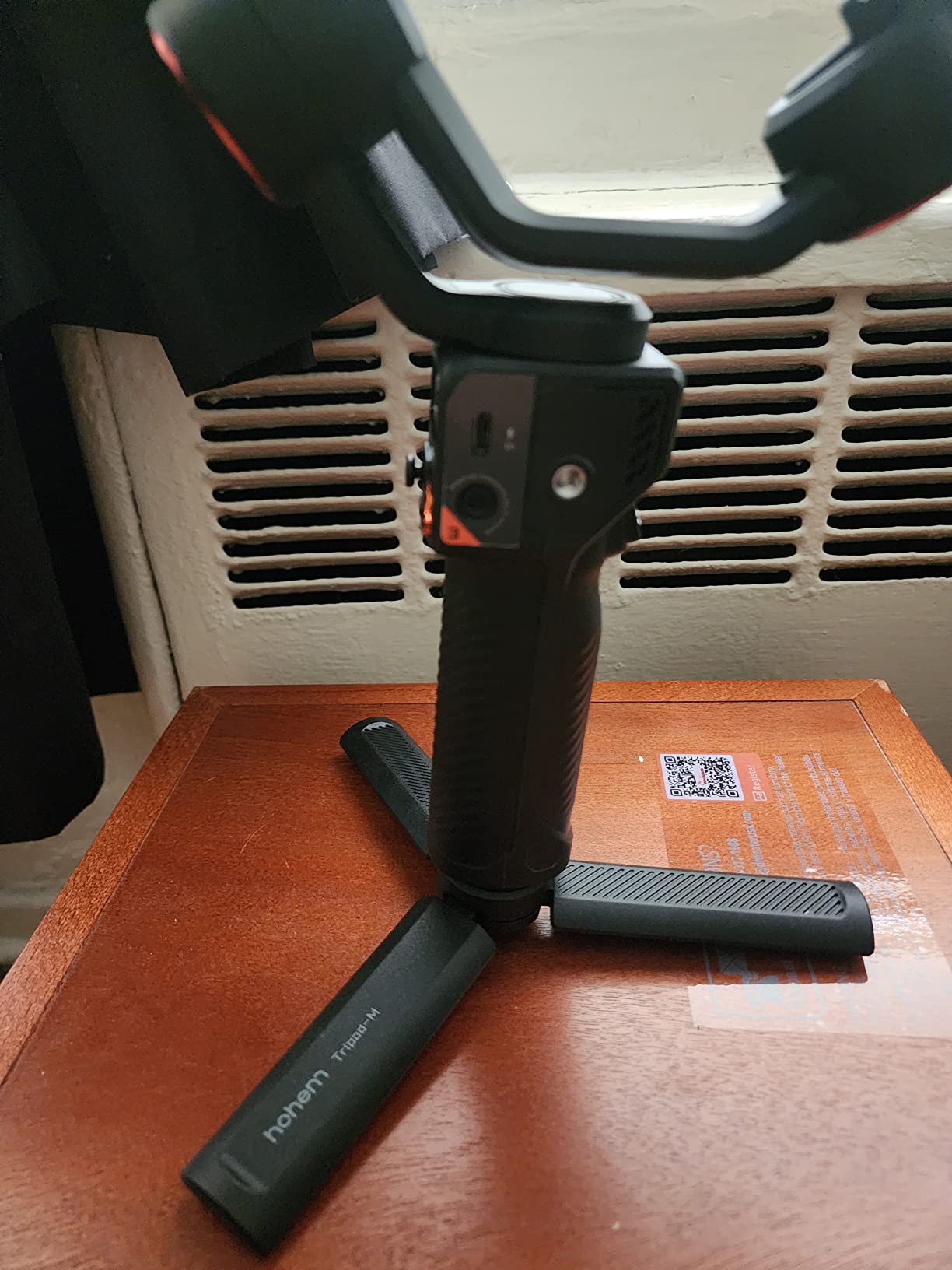
- Short tripod included
The Hohem iSteady M7 breaks new ground with features no other smartphone gimbal offers. The 1.4-inch touchscreen remote detaches from the handle and operates wirelessly up to 10 meters away. I set up the gimbal on a tripod, walked across the room, and controlled pan, tilt, and tracking from the detached screen.
The magnetic AI tracker clips to your phone and tracks subjects without any Bluetooth connection or app dependency. This means tracking works in the native camera app, Instagram, TikTok, or any third-party app you prefer. The enhanced pixel recognition provides smoother tracking than previous Hohem models.
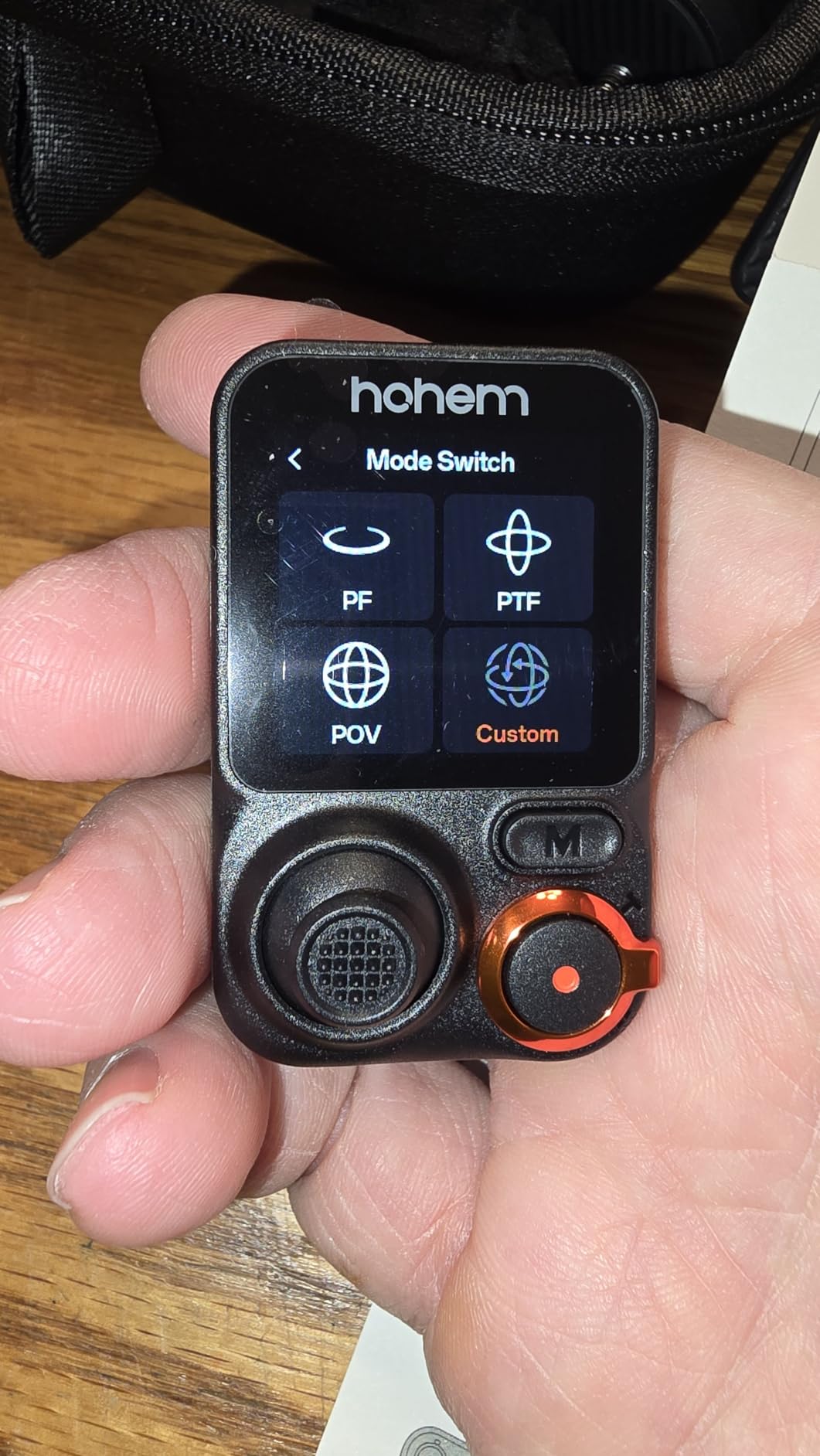
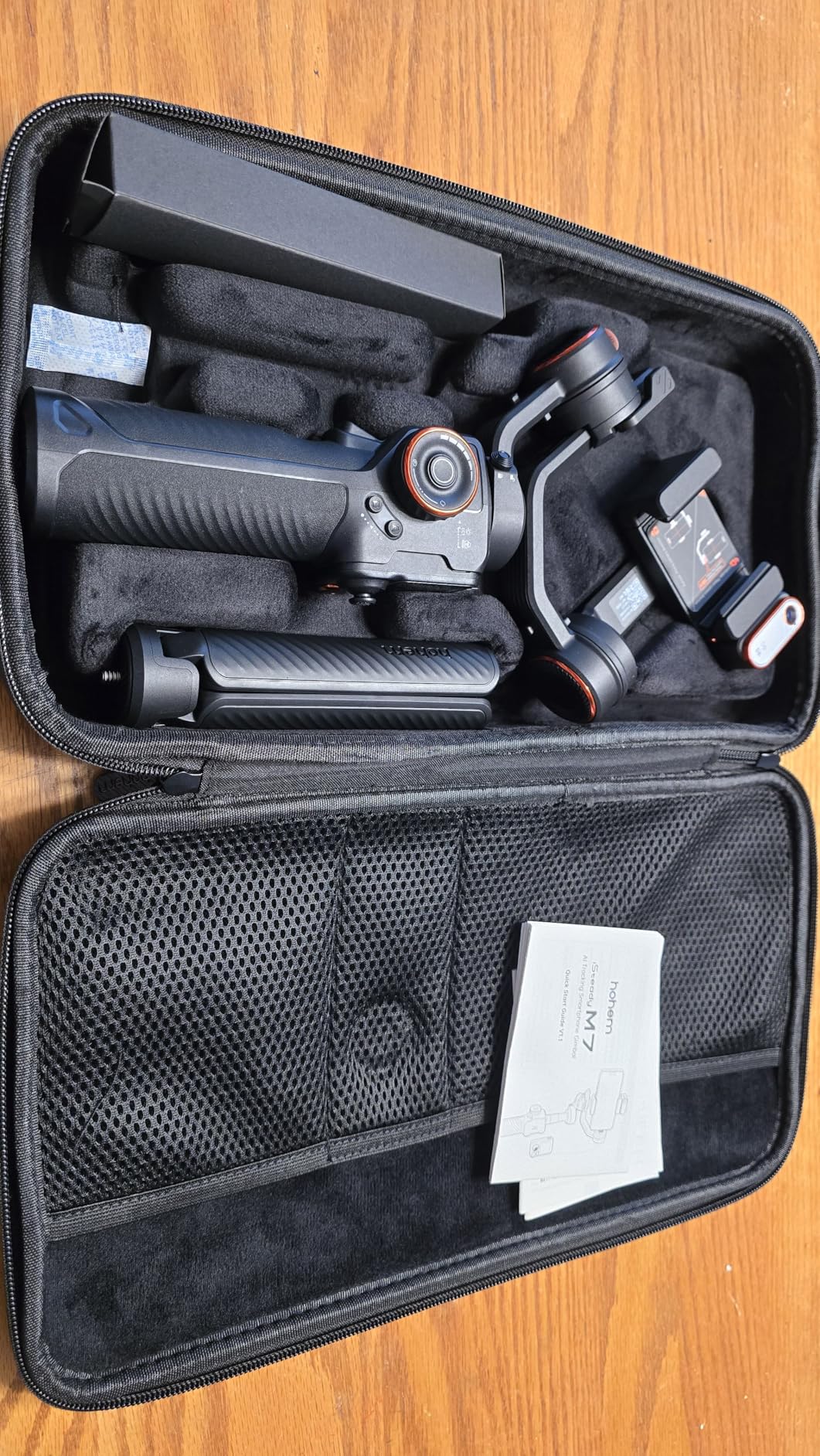
The CCT/RGB fill light attaches magnetically and adjusts color temperature from 2500K to 6000K. At 269g total weight with the extension rod deployed, this gimbal packs professional features into a travel-friendly package. The included carrying case feels premium with dedicated compartments for every accessory.
The remote video feed disappears when you detach it from the gimbal, limiting you to basic controls at distance. The included tripod is barely tall enough for tabletop use. You will need to purchase a microphone separately since the multifunction module does not include audio reception like DJI’s comparable models.
Best For Whom
Solo creators who need to operate their gimbal remotely will find the detachable controller revolutionary. The app-independent tracking benefits anyone who films in third-party apps that DJI DockKit does not support. Travel vloggers will appreciate the all-in-one design with integrated extension rod.
Who Should Skip
iPhone users invested in the Apple ecosystem will get better integration from the DJI Osmo Mobile 8 or Insta360 Flow 2 Pro. Creators who need wireless audio reception should choose DJI’s Multifunctional Module options. Those on strict budgets can get similar core stabilization from the hohem iSteady M6.
8. DJI RS 4 Mini – Budget Camera Gimbal with Auto Locks
Pros
- Convenient auto axis lock feature
- Lightweight 1.03kg design
- Smooth professional footage
- Fast vertical switching
- Excellent 13-hour battery life
Cons
- Tracking module sold separately
- Non-detachable battery
- Screws can loosen during use
- Camera compatibility varies
The standard DJI RS 4 Mini delivers the same core stabilization and auto axis locks as the Combo version at a lower price. You lose the Intelligent Tracking Module and briefcase handle, but retain the 1-second deployment and Teflon-enhanced balancing that make this generation special.
I used the RS 4 Mini for a three-day documentary project with my Fujifilm X-T5. The 2kg payload handled every lens I own, from the compact 35mm f/2 to the substantial 16-80mm zoom. The responsive follow mode reacts instantly to hand movements, making dynamic orbit shots around subjects effortless.

Bluetooth connectivity enables wireless recording start/stop without touching the camera. The native vertical shooting switches in 10 seconds flat. Battery life exceeds the rated 13 hours in real use, giving you confidence for full-day shoots without carrying spare power.
The Intelligent Tracking Module costs extra and is not included at this price point. The battery is built-in and non-replaceable, limiting long-term lifespan. Some screws on the handle loosened during my first week of use and required tightening with the included tool.

Best For Whom
Camera owners who want modern conveniences like auto axis locks without paying for the full Combo package should choose this version. It appeals to creators who do not need subject tracking or who prefer to add the module later. The 2kg payload suits APS-C and compact full-frame mirrorless users perfectly.
Who Should Skip
Solo vloggers who film themselves need the Intelligent Tracking Module, making the Combo version better value. Creators with cameras over 2kg total weight will max out this gimbal’s capacity. Those who shoot low angles frequently should buy the Combo for its briefcase handle.
9. ZHIYUN CINEPEER Weebill 3E – Best Battery Life Under $200
Pros
- Outstanding 16-hour battery life
- 3kg payload in compact body
- Native vertical shooting
- Best value in Zhiyun lineup
- 14W PD fast charging
Cons
- Only Panasonic cable included
- Sling grip sold separately
- Setup requires online guides
- Partial camera compatibility
The ZHIYUN CINEPEER Weebill 3E proves you do not need to spend $400 for professional features. The 16-hour battery life outlasts every competitor on this list by at least 2 hours. I shot a two-day festival on a single charge, capturing over 8 hours of footage without plugging in once.
The 3kg payload capacity handles full-frame cameras like my Sony A7III with standard zoom lenses. Native vertical shooting requires no additional accessories, just a quick adjustment to the mounting plate. The compact A4-paper folded size fits easily in backpacks alongside your other gear.

At 990g, this is one of the lightest camera gimbals with 3kg capacity. The 2.5 sling mode provides ergonomic underslung shooting when you purchase the optional wrist rest. Bluetooth shutter control works wirelessly after simple pairing with your camera.
Zhiyun only includes a Panasonic control cable, so Sony, Canon, and Nikon owners must purchase their cables separately. The sling grip and wrist rest that make underslung mode comfortable are also sold separately. Initial balancing requires watching online tutorials as no quick-start guide is included.

Best For Whom
Budget-conscious creators who need maximum battery life for long shoots should choose the Weebill 3E. The 3kg payload benefits full-frame mirrorless owners who found 2kg gimbals limiting. Travel creators will appreciate the lightweight design paired with extended runtime.
Who Should Skip
Creators who value quick setup and intuitive operation should pay more for the DJI RS 4 Mini with its auto axis locks. Those wanting complete accessories in the box will be frustrated by the separate purchases for control cables and sling grips. Some Panasonic cameras like the Lumix S5IIX have partial compatibility issues.
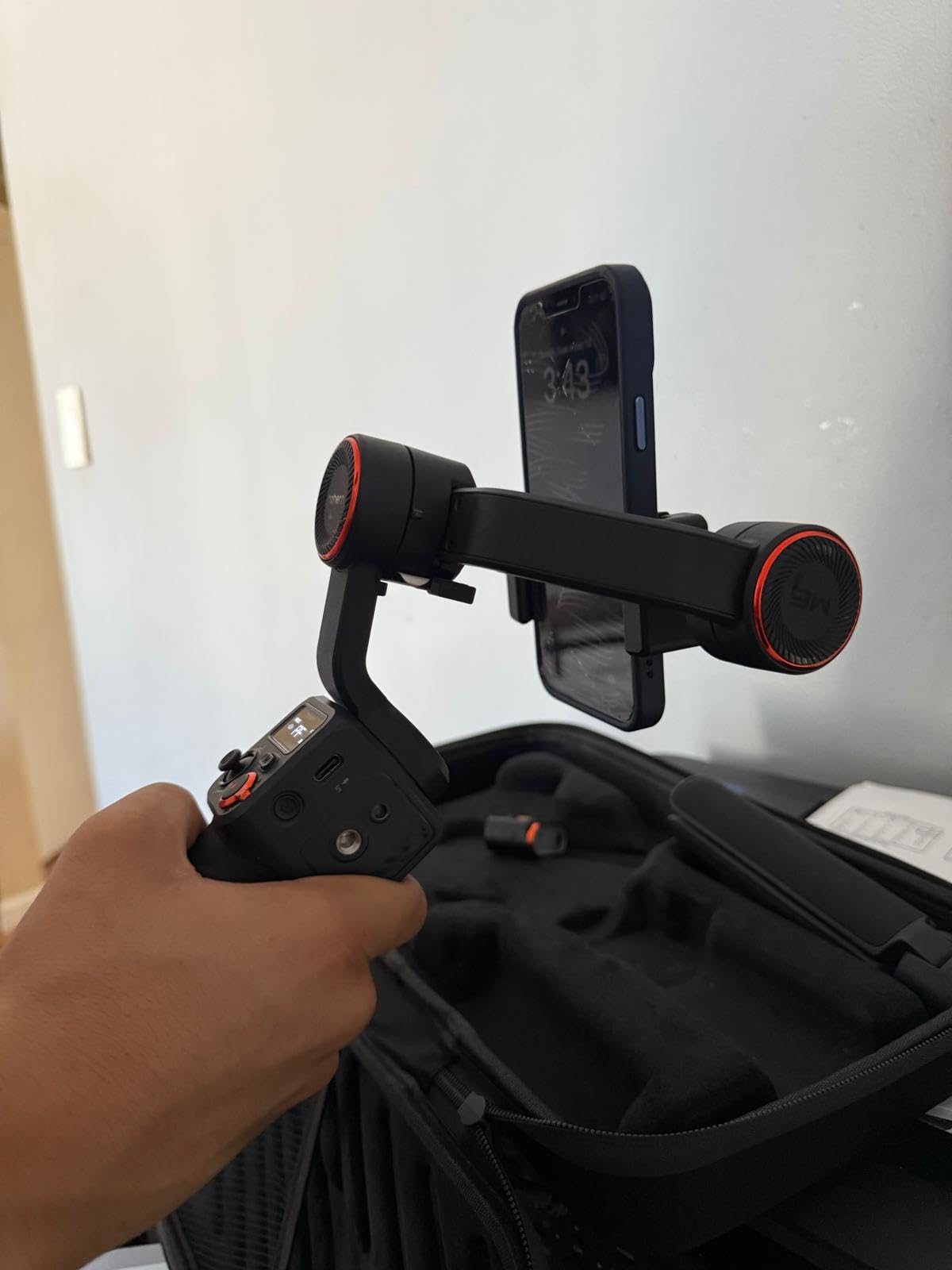
10. hohem iSteady M6 Kit – Budget Smartphone Gimbal with 18-Hour Battery
Pros
- Industry-leading 18-hour battery
- AI tracking without app dependency
- 360-degree inception mode
- Magnetic fill light included
- 4 expansion ports for accessories
Cons
- Button controls have learning curve
- Locking mechanism feels flimsy
- Vertical balancing tricky with cases
- No wireless microphone included
The hohem iSteady M6 Kit challenges DJI’s dominance in the smartphone gimbal market with exceptional battery life and competitive pricing. The 18-hour runtime is unmatched by any competitor, including models costing twice as much. I filmed three full days of travel content without recharging.
The AI tracker with magnetic fill light attaches to your phone and tracks faces and bodies without Bluetooth or app connections. This means you get subject tracking in the native iPhone camera app, Instagram, TikTok, or any filming app you prefer. The 7th-generation iSteady algorithm provides smooth stabilization even while running.
Four expansion ports accommodate microphones, LED lights, and other accessories. The 360-degree inception mode creates spinning barrel roll effects popular in travel videos. At 1.2 pounds with the kit accessories, this gimbal packs professional features into an affordable package.
The button layout requires time to master, with multiple functions assigned to each control. The locking mechanism that holds the gimbal in storage position feels less robust than DJI’s magnetic systems. Balancing phones vertically with protective cases attached can be finicky and require case removal.
Best For Whom
Content creators who shoot long days without access to power will love the 18-hour battery life. The app-independent tracking appeals to anyone frustrated by DJI’s requirement to use their Mimo app. Budget-conscious smartphone creators get flagship features without the premium price.
Who Should Skip
iPhone users invested in Apple’s ecosystem should consider the DJI Osmo Mobile 8 for its DockKit integration. Creators who want wireless audio reception built-in need the DJI Osmo Mobile 7P or 8 with Multifunctional Module. Those prioritizing build quality and premium feel will prefer DJI’s materials and construction.
11. FeiyuTech SCORP Mini-3-Pro – Most Versatile Multi-Device Gimbal
Pros
- Works with cameras
- phones
- action cams
- 18-meter AI tracking range
- Detachable remote handle
- Quick horizontal/vertical switch
- Arca-Swiss compatible plate
Cons
- Small learning curve for balancing
- Plate nearly but not fully Arca standard
- Heavy lenses cause imbalance
- Weak motor with lights attached
The FeiyuTech SCORP Mini-3-Pro is the only gimbal in this guide that genuinely works with mirrorless cameras, compact cameras, action cameras, and smartphones. The modular design swaps mounting plates in seconds, letting you switch from filming with your Sony A7C to capturing POV shots with a GoPro without buying separate stabilizers.
The AI tracking sensor operates up to 18 meters away with 0.003-second response time. I tested this at a skate park, standing at distance while the gimbal kept skaters locked in frame. The detachable remote handle lets you control the gimbal wirelessly for solo filming scenarios.

The Stabilization 10.0 algorithm uses advanced quaternion mathematics to predict and counter movement. Quick-release plates switch between horizontal and vertical shooting rapidly. The L-shaped fixing plate provides stable camera support even during aggressive movements.
The quick-release plate is slightly shorter than standard Arca-Swiss dimensions, requiring adjustment when using third-party tripod plates. Heavy lenses at the 2kg payload limit can cause calibration issues. Adding external lights to your camera setup pushes the motors beyond their comfortable operating range.

Best For Whom
Creators who own multiple camera types and want one gimbal for everything should choose the SCORP Mini-3-Pro. The detachable remote benefits solo filmmakers who need to operate the gimbal from a distance. Those who switch frequently between portrait and landscape orientations will appreciate the quick-switch design.
Who Should Skip
Creators using only one device type can get better-optimized gimbals for less money. Those with heavy full-frame setups and large lenses will find the 2kg payload limiting. Anyone wanting seamless tripod compatibility should verify their Arca-Swiss plates fit the slightly non-standard dimensions.
12. DJI Osmo Mobile 7 – Entry-Level Pick at $59
Pros
- Unbeatable price point
- Ultra-lightweight 300g design
- Foldable with built-in tripod
- Magnetic phone clamp
- Can charge phone while filming
Cons
- App removed from Google Play
- Motors not very powerful
- Non-removable battery
- May not fit largest phones
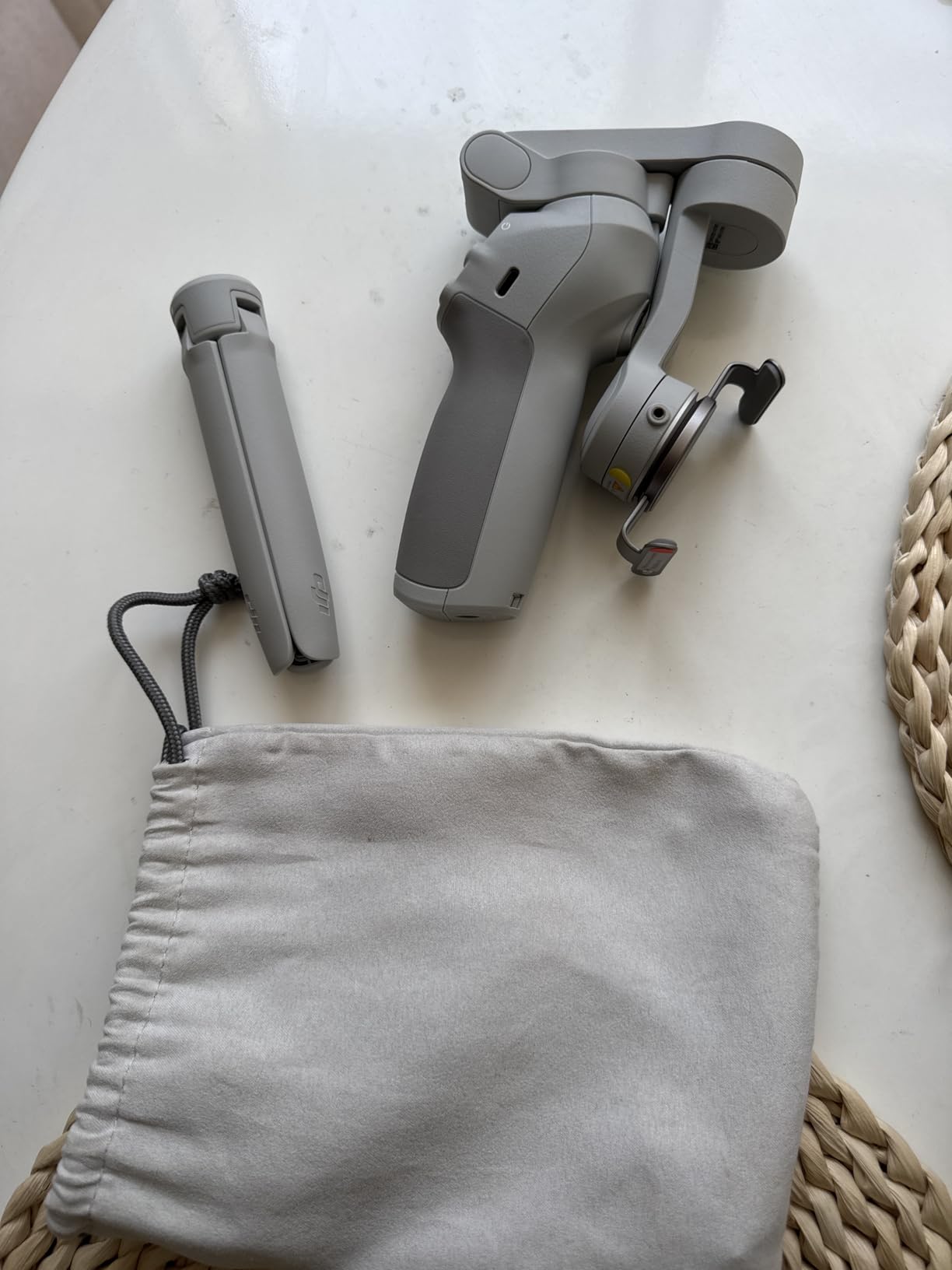
The DJI Osmo Mobile 7 makes gimbal stabilization accessible to everyone at just $59. At 300 grams, it is the lightest gimbal DJI has ever made, folding to pocketable dimensions that disappear in your bag. This is the perfect entry point for creators curious about gimbals but not ready to invest heavily.
Despite the budget price, you get the same 3-axis stabilization algorithm found in more expensive models. ActiveTrack 7.0 keeps subjects in focus, and the dual-lens enhanced tracking handles faster movements than previous generations. The built-in tripod deploys instantly for static shots and time-lapses.
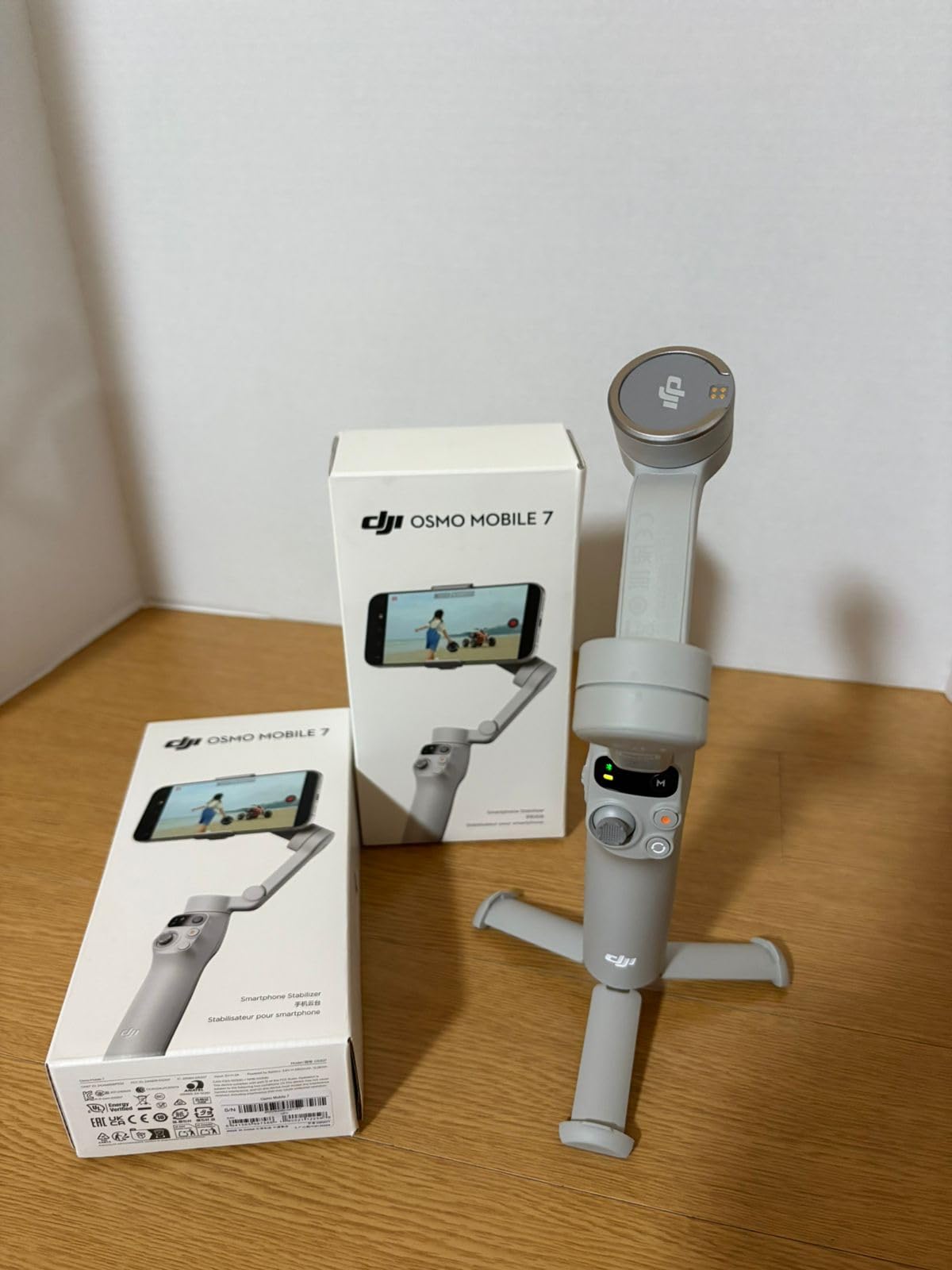
The magnetic phone clamp attaches securely in one motion. USB-C pass-through charging keeps your phone powered during long filming sessions. The DJI Mimo app provides ShotGuides for creative inspiration and One-Tap Edit for quick social media posting.
The DJI Mimo app was temporarily removed from Google Play due to compatibility issues, requiring manual APK downloads for Android users. The compact motors lack the power of larger gimbals, requiring careful phone centering for optimal performance. The non-removable battery means this gimbal has a finite lifespan of 2-3 years with heavy use.
Best For Whom
First-time gimbal users who want to test stabilization without spending much should start here. The 300g weight appeals to minimalist travelers who count every gram. Teenagers and students creating TikTok and Instagram content will find the price and features perfectly matched to their needs.
Who Should Skip
Anyone planning intensive professional use should invest in more robust models with replaceable batteries. Creators with iPhone 16 Pro Max or similarly large phones should verify fit before purchasing. Those wanting tracking and lighting modules need to step up to the Osmo Mobile 7P or 8.
13. FeiyuTech SCORP 2 – AI Tracking for Mirrorless Cameras
Pros
- Integrated AI tracking without accessories
- Instant vertical filming setup
- Wireless and cable control options
- 1.3-inch touchscreen interface
- Secondary grip for stability
Cons
- Battery shorter than 13 hours under load
- Calibration is delicate
- Learning curve for functions
- AI tracking only in selfie mode
The FeiyuTech SCORP 2 brings integrated AI tracking to mirrorless camera users without requiring separate modules or accessories. The built-in sensor recognizes gestures to start and stop tracking, letting you control the gimbal hands-free during solo shoots. A simple hand wave activates subject lock.
The 2.5kg payload capacity handles most full-frame mirrorless setups with standard zoom lenses. L-shaped mounting plates enable instant vertical filming for social media content. The 1.3-inch touchscreen combined with a multifunction control knob provides intuitive parameter adjustment without diving into menus.

Secondary grip handle enhances stability during two-handed operation. Connect via Bluetooth for wireless control or use traditional cable connections for reliable shutter operation. The Feiyu SCORP app unlocks additional professional settings and firmware updates.
Real-world battery life falls short of the advertised 13 hours when running AI tracking continuously. Initial calibration requires patience and attention to detail for optimal performance. The multiple buttons and functions create a learning curve that may frustrate beginners. AI tracking currently works only in selfie mode, limiting its usefulness for front-facing tracking scenarios.

Best For Whom
Mirrorless camera owners who want built-in tracking without buying separate modules should consider the SCORP 2. The instant vertical setup benefits social media creators who deliver portrait content. Those who prefer physical controls over app-based interfaces will appreciate the touchscreen and knob interface.
Who Should Skip
Creators needing front-facing AI tracking for interviews or multi-person scenarios will find the selfie-only limitation restrictive. Those wanting longer battery life should look at the ZHIYUN Weebill 3E with its 16-hour capacity. Anyone prioritizing automatic setup features should choose the DJI RS 4 Mini with auto axis locks.
14. Insta360 Flow 2 Pro – DockKit Integration and 360 Pan
Pros
- First gimbal with Apple DockKit
- 360-degree infinite pan rotation
- Active Zoom Tracking to 15x
- Multi-Person Tracking for groups
- Free Tilt Mode for wide range
- Dolby Vision and ProRes support
Cons
- Steep learning curve
- App required for full features
- Battery drains when charging phone
- No protective case included
- Connection can be fussy
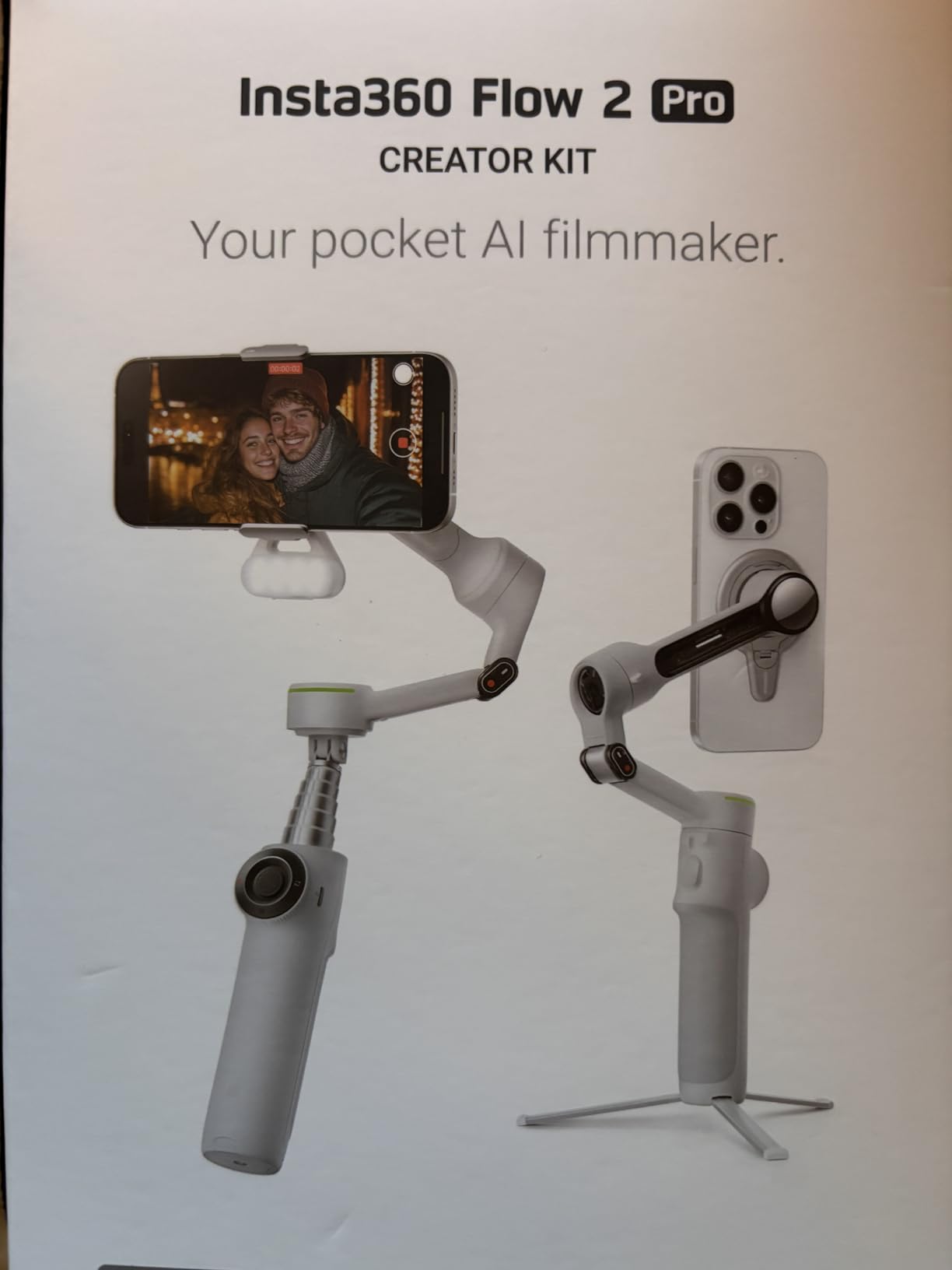
The Insta360 Flow 2 Pro is the only smartphone gimbal besides DJI’s Osmo Mobile 8 with official Apple DockKit integration. This means native tracking in the iPhone camera app, Instagram, TikTok, and over 200 iOS apps without proprietary software limitations.
The 360-degree infinite pan tracking is unique to this gimbal. The motors can rotate continuously in either direction, creating seamless spinning transitions and orbiting shots impossible on other stabilizers. Active Zoom Tracking maintains subject lock even when you zoom in up to 15x.
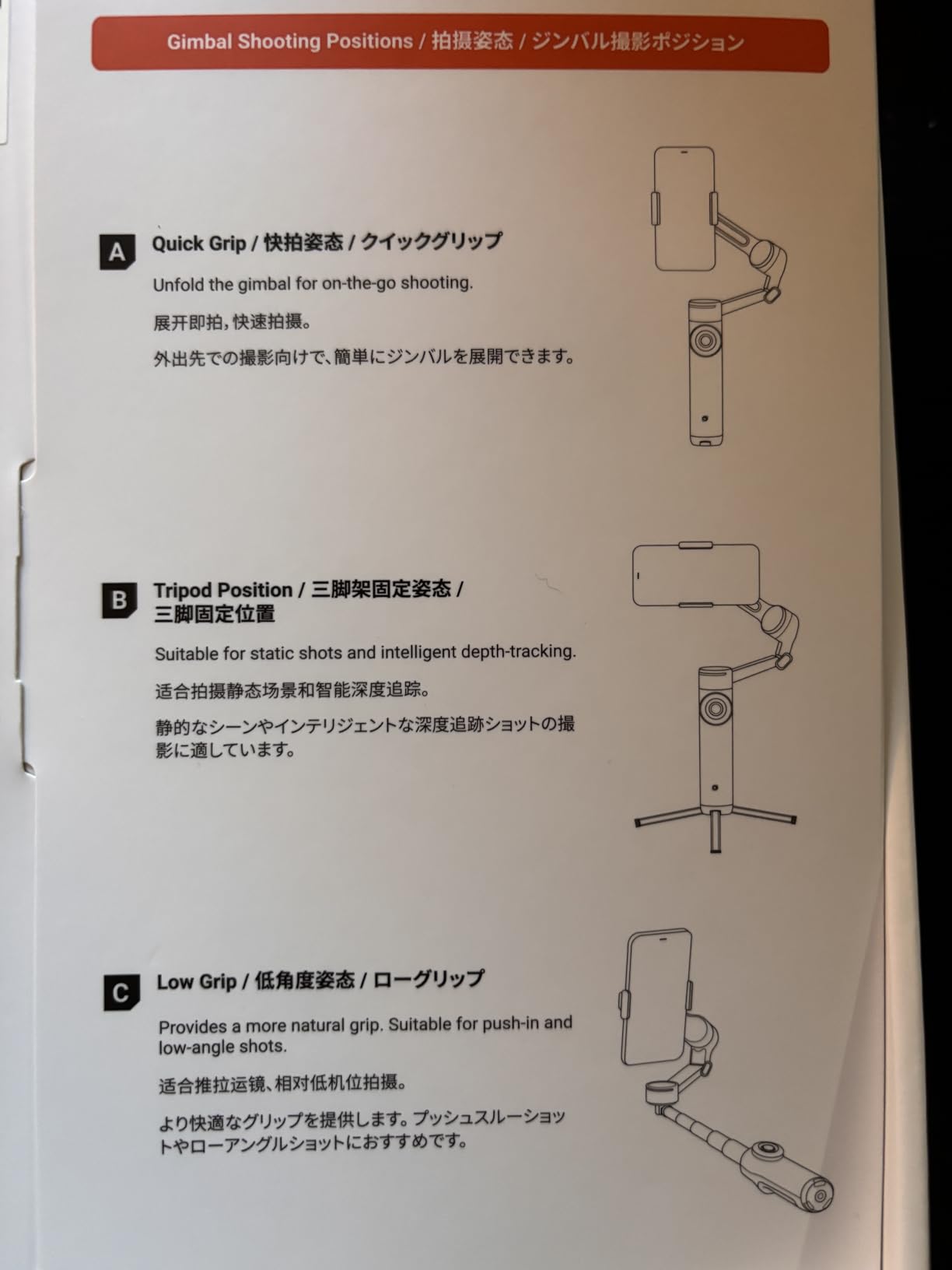
Multi-Person Tracking keeps multiple subjects framed for group shots. Free Tilt Mode expands the range of motion beyond traditional gimbal limits. Dolby Vision and Apple ProRes recording support maintains maximum video quality for professional workflows. The foldable design integrates tripod, selfie stick, selfie mirror, teleprompter, and power bank functions.
The advanced features create a genuine learning curve that may overwhelm casual users. Full functionality requires the Insta360 app, creating friction for quick shooting scenarios. Battery life drops significantly when using the gimbal as a power bank for your phone. No protective carrying case is included at this price point.
Best For Whom
iPhone power users who want the most advanced tracking features available should choose the Flow 2 Pro. The 360-degree pan appeals to creative filmmakers who want unique rotational shots. Multi-person tracking benefits family vloggers and group content creators who film with others regularly.
Who Should Skip
Android users miss the full DockKit experience, making DJI options more compelling. Casual creators who want simple point-and-shoot operation may find the feature set overwhelming. Those on tight budgets get excellent stabilization from the DJI Osmo Mobile 7P for less money.
How to Choose the Right Gimbal for Content Creation In 2026?
Selecting the best gimbals for content creators requires understanding your specific workflow, camera gear, and content goals. With 14 excellent options under $500, the right choice depends on matching features to your actual needs rather than buying the most expensive model.
Understand Payload Capacity Requirements
Payload capacity is the single most important specification. Weigh your camera with your heaviest lens attached, then add any accessories like microphones or lights. Choose a gimbal rated for at least 20 percent more than this total weight. Smartphone gimbals typically handle 300-500g, while camera gimbals range from 2kg to 6.61lb in this guide. The Zhiyun Weebill S leads with 6.61lb capacity, while the DJI RS 3 Mini and RS 4 Mini max out at 2kg.
Phone vs Camera Gimbals
Smartphone gimbals prioritize portability, app integration, and features like built-in extension rods and fill lights. They rarely exceed 400g and fold to pocket size. Camera gimbals sacrifice portability for payload capacity, weighing 900g to 1.5kg with larger motors and heavier construction. The DJI Osmo Mobile 8 and Insta360 Flow 2 Pro represent the peak of smartphone gimbal technology, while the DJI RS 4 and Zhiyun Weebill S handle serious camera setups.
Battery Life Considerations
Battery life varies dramatically from 10 hours to 18 hours in this guide. The hohem iSteady M6 leads at 18 hours, while the ZHIYUN Weebill 3E offers 16 hours. For all-day shoots without power access, prioritize these models. Remember that tracking features, fill lights, and phone charging reduce actual runtime by 30-50 percent. Some gimbals like the DJI RS 4 support optional extended battery grips for 29+ hour operation.
Vertical Video and Social Media
Native vertical shooting has become essential for content creators. The DJI RS 4, RS 4 Mini, and ZHIYUN Weebill 3E offer native vertical without accessories. Others require additional mounting plates or compromise stabilization in portrait mode. If you deliver content for TikTok, Instagram Reels, and YouTube Shorts, prioritize gimbals with seamless vertical switching.
Tracking Features and App Integration
AI subject tracking keeps moving subjects in frame automatically. Implementation varies widely. DJI’s ActiveTrack works through their Mimo app. Apple DockKit integration on the DJI Osmo Mobile 8 and Insta360 Flow 2 Pro enables tracking in native iPhone apps. The FeiyuTech SCORP 2 and Hohem iSteady M7 offer tracking without app dependency. Consider whether you film primarily in proprietary apps or native camera applications.
Frequently Asked Questions
What is the best gimbal for content creators?
The DJI RS 3 Mini is the best gimbal for most content creators using mirrorless cameras, offering 2kg payload, native vertical shooting, and 795g weight. For smartphone creators, the DJI Osmo Mobile 8 leads with Apple DockKit integration. Heavy camera users should choose the Zhiyun Weebill S with its 6.61lb payload capacity.
Do content creators use gimbals?
Yes, most professional content creators use gimbals for smooth handheld footage. Gimbals eliminate camera shake that viewers find distracting, increasing watch time and video quality. They are essential for vlogging, walking interviews, travel videos, and cinematic B-roll. Even smartphone creators benefit significantly from 3-axis stabilization.
Which gimbal is best for vlogging?
The DJI RS 3 Mini is best for camera vlogging with its lightweight 795g design and native vertical shooting. For phone vloggers, the DJI Osmo Mobile 8 excels with its built-in extension rod and Apple DockKit support. Solo vloggers should consider the DJI RS 4 Mini Combo with its Intelligent Tracking Module for automatic subject framing.
What is the average price for a good gimbal camera?
Good smartphone gimbals range from $59 to $269, with excellent options like the DJI Osmo Mobile 7P at $99. Camera gimbals for mirrorless and DSLR cameras typically cost $199 to $469, with the best value being the Zhiyun Weebill S at $279 and DJI RS 3 Mini at $199. Professional features like auto axis locks and AI tracking start around $309.
Which gimbal is best for beginners?
The DJI Osmo Mobile 7 at $59 is the best entry-level gimbal for smartphone beginners. For camera users, the DJI RS 4 Mini offers auto axis locks that make setup nearly instant, eliminating the learning curve that frustrates new users. Both provide excellent stabilization with minimal complexity.
What is the difference between a gimbal and a stabilizer?
A gimbal uses motorized 3-axis stabilization with sensors and brushless motors to actively counter movement in real-time. A stabilizer typically refers to mechanical systems like Steadicams that use counterweights and inertia rather than motors. Gimbals are more portable, easier to balance, and offer features like subject tracking, while mechanical stabilizers handle heavier cinema cameras but require more skill to operate.
Final Thoughts
The best gimbals for content creators under $500 in 2026 offer professional stabilization at accessible prices. The DJI RS 3 Mini remains my top recommendation for mirrorless camera users who value portability and vertical shooting. Smartphone creators should choose between the DJI Osmo Mobile 8 for iPhone integration or the hohem iSteady M6 for marathon battery life.
Heavy camera setups need the Zhiyun Weebill S and its unmatched 6.61lb payload. Those wanting modern conveniences like auto axis locks should upgrade to the DJI RS 4 Mini. Every gimbal on this list eliminates shaky footage and elevates your production value.
Match your choice to your camera weight, typical shoot duration, and content style. A $59 DJI Osmo Mobile 7 transforms smartphone footage for casual creators, while the $469 DJI RS 4 handles professional mirrorless rigs. Whichever you choose, your viewers will notice the difference immediately.