
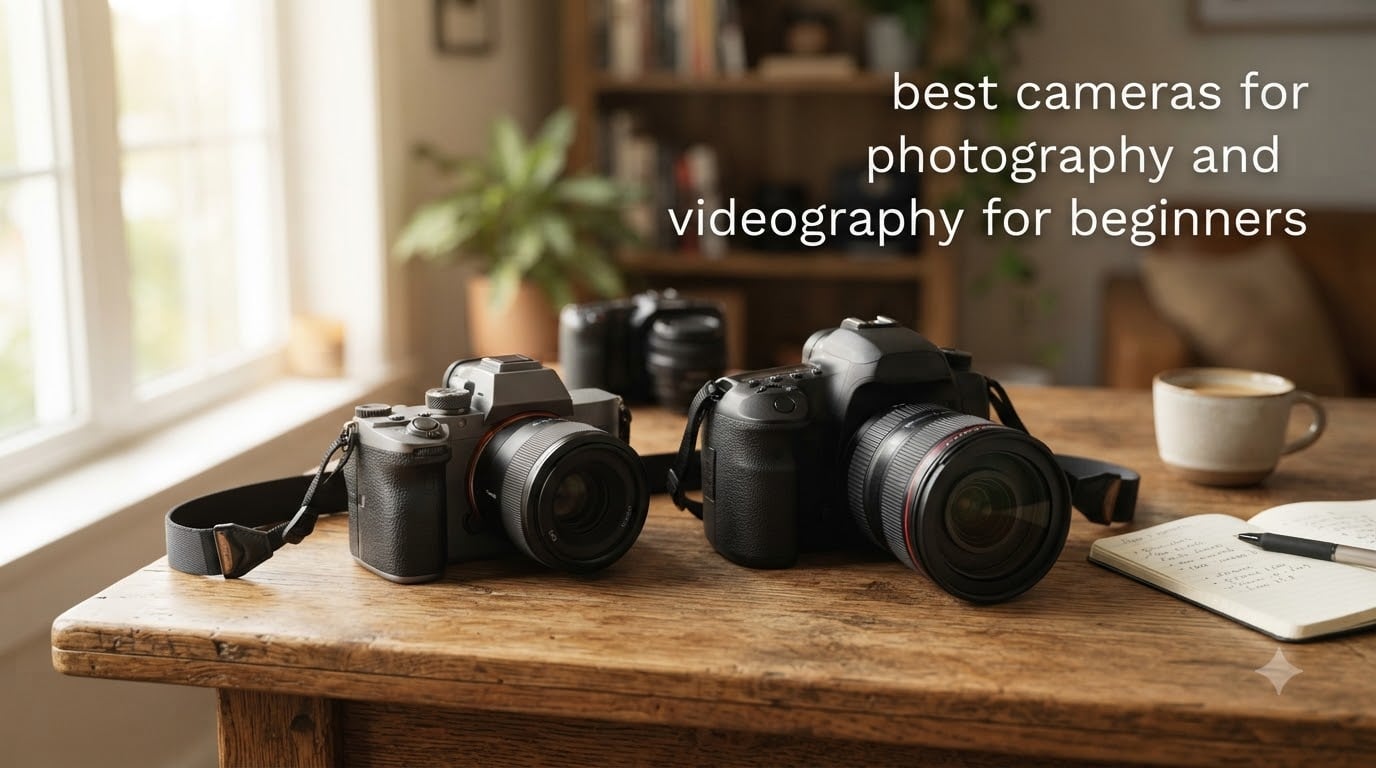
Picking your first interchangeable lens camera feels bigger than it should. I remember holding my first DSLR like it was a museum piece, terrified I’d break it before I understood what half the buttons did. After testing dozens of beginner cameras over the past few years, both for my own work and for friends who wanted to start YouTube channels, I can tell you this: the right first camera is the one you actually pick up and shoot with, not the one with the longest spec sheet.
This guide covers the best cameras for photography and videography for beginners in 2026, and I’ve focused on models that handle both jobs well. Every camera here can shoot sharp stills, record at least Full HD video (most now shoot 4K), and has an autofocus system that won’t fight you while you’re learning. I’ve split the list between modern mirrorless options for those who want the latest tech, and proven DSLRs for buyers who prefer traditional handling or want maximum value from the used lens market.
If you’re wondering whether you really need a dedicated camera when smartphones keep improving, the short answer is yes for certain situations. Dedicated cameras give you much better low-light performance, true depth of field control with large sensors, interchangeable lenses for different creative situations, and audio inputs for serious video work. For a deeper look at how these beginner models compare to higher-end options, you can also check our guides to event videography cameras and real estate photography for beginners once you’ve outgrown this list.
Top 3 Picks at a Glance (September 2026)

Canon EOS R50 Mirrorless
- 24.2MP APS-C sensor
- 4K oversampled video
- Dual Pixel AF II
- Vertical video mode
- Lightweight 1.0 lb body

Canon EOS Rebel T7 DSLR
- 24.1MP APS-C sensor
- Built-in Wi-Fi and NFC
- 9-point AF system
- Lightweight DSLR
- Full HD video

Canon EOS R100 Mirrorless
- 24.1MP APS-C sensor
- 4K at 24 fps
- Dual Pixel CMOS AF
- 6.5 fps shooting
- Complete accessory bundle
Best Cameras for Photography and Videography for Beginners in 2026
| Product | Specifications | Action |
|---|---|---|
| Canon EOS R50 Mirrorless Camera |
|
Check Latest Price |
| Canon EOS Rebel T7 DSLR |
|
Check Latest Price |
| Canon EOS R100 Mirrorless Camera |
|
Check Latest Price |
 Sony Alpha a6400 Mirrorless Sony Alpha a6400 Mirrorless |
|
Check Latest Price |
 Sony ZV-E10 Mirrorless Vlog Camera Sony ZV-E10 Mirrorless Vlog Camera |
|
Check Latest Price |
 Sony Alpha A6100 Mirrorless Sony Alpha A6100 Mirrorless |
|
Check Latest Price |
 Canon EOS M50 Mirrorless Renewed Canon EOS M50 Mirrorless Renewed |
|
Check Latest Price |
 Canon EOS RP Full-Frame Mirrorless Canon EOS RP Full-Frame Mirrorless |
|
Check Latest Price |
 Canon EOS Rebel T3i DSLR Canon EOS Rebel T3i DSLR |
|
Check Latest Price |
 Canon EOS Rebel T6 DSLR Renewed Canon EOS Rebel T6 DSLR Renewed |
|
Check Latest Price |
1. Canon EOS R50 Mirrorless Camera – Editor’s Choice
Pros
- Excellent image quality for beginners
- Compact and lightweight at 1 pound
- 4K oversampled video with Dual Pixel AF II
- Vertical video mode for social media
- Fast and accurate hybrid autofocus
Cons
- No in-body image stabilization
- Limited RF-S lens ecosystem
- Buffer fills quickly with continuous shooting
The Canon EOS R50 is the camera I recommend most often when friends ask what to buy as their first serious camera. It hits a sweet spot that almost no other model in this price range manages. You get genuine 4K video, a modern hybrid autofocus system that just works, and a body small enough that you’ll actually carry it around instead of leaving it at home.
I tested the R50 for two weeks on a road trip, mixing stills of landscapes with handheld video clips for Instagram Reels. The 24.2MP APS-C sensor pulled surprising detail out of golden hour shots, and the Dual Pixel AF II system tracked my dog’s face perfectly when she decided to sprint across the frame. The vertical video mode is a small feature that beginners love, since it removes the need to crop 16:9 footage later when you want to post to TikTok or Reels.

For video, the R50 records 4K oversampled from 6K, which means your footage looks noticeably sharper than basic 4K from older entry-level cameras. The 1080p at 120 fps mode also gives you proper slow motion for action shots or creative b-roll. Autofocus during video is one of the best you’ll find at this tier, with reliable face and eye tracking that stays locked on even when subjects turn their head.
Where the R50 makes a few compromises: there’s no in-body image stabilization, so you’ll rely on stabilized lenses or electronic stabilization for smooth handheld video. The RF-S lens lineup is also smaller than Sony’s E-mount or Canon’s own EF mount, though adapters let you use older EF glass. Continuous shooting buffer fills quickly, which limits its appeal for sports or wildlife.

Who this camera is best for
The R50 fits a beginner who wants one camera for travel photos, family events, and starting a YouTube channel. The guided menu system explains what each setting does, which matters more than people expect when you’re learning exposure and white balance. If you primarily shoot stills and want to start dabbling in 4K video without buying a second camera, the R50 is the strongest all-around pick on this list.
Where this camera falls short
Photographers who shoot a lot of action (school sports, wildlife, fast kids) will outgrow the R50’s buffer and 12 fps mechanical burst quickly. Vloggers who walk and talk for long stretches may also want in-body stabilization, since the R50’s electronic stabilization crops in slightly. For purely stationary video work or tripod-based photography, those compromises don’t matter.
2. Canon EOS Rebel T7 DSLR – Best Value
Pros
- 24.1MP APS-C sensor delivers sharp images
- Beginner-friendly Scene Intelligent Auto Mode
- Built-in Wi-Fi and NFC for easy transfers
- Lightweight at 1 pound for a DSLR
- Massive library of compatible Canon EF lenses
Cons
- No 4K video recording
- Only 3 fps continuous shooting
- Basic 9-point AF system
- No touchscreen functionality
The Canon EOS Rebel T7 is the camera I keep recommending to family members who want to “get a real camera” without spending a fortune. With 5,336 reviews and a 4.6 average rating, it’s also the most validated beginner camera in this lineup. That’s not a small thing, since that many reviews means Canon has shipped a lot of these and they hold up well over time.
The T7 sticks to Full HD 1080p video instead of 4K, which is the biggest compromise on this list. If video is your main goal, look at the mirrorless options below. But for someone whose priority is learning photography fundamentals, the T7 is a friendly teacher. The optical viewfinder shows you exactly what the lens sees with no lag or processing, which helps beginners understand composition and exposure. Scene Intelligent Auto Mode takes the guesswork out of settings until you learn what they do.
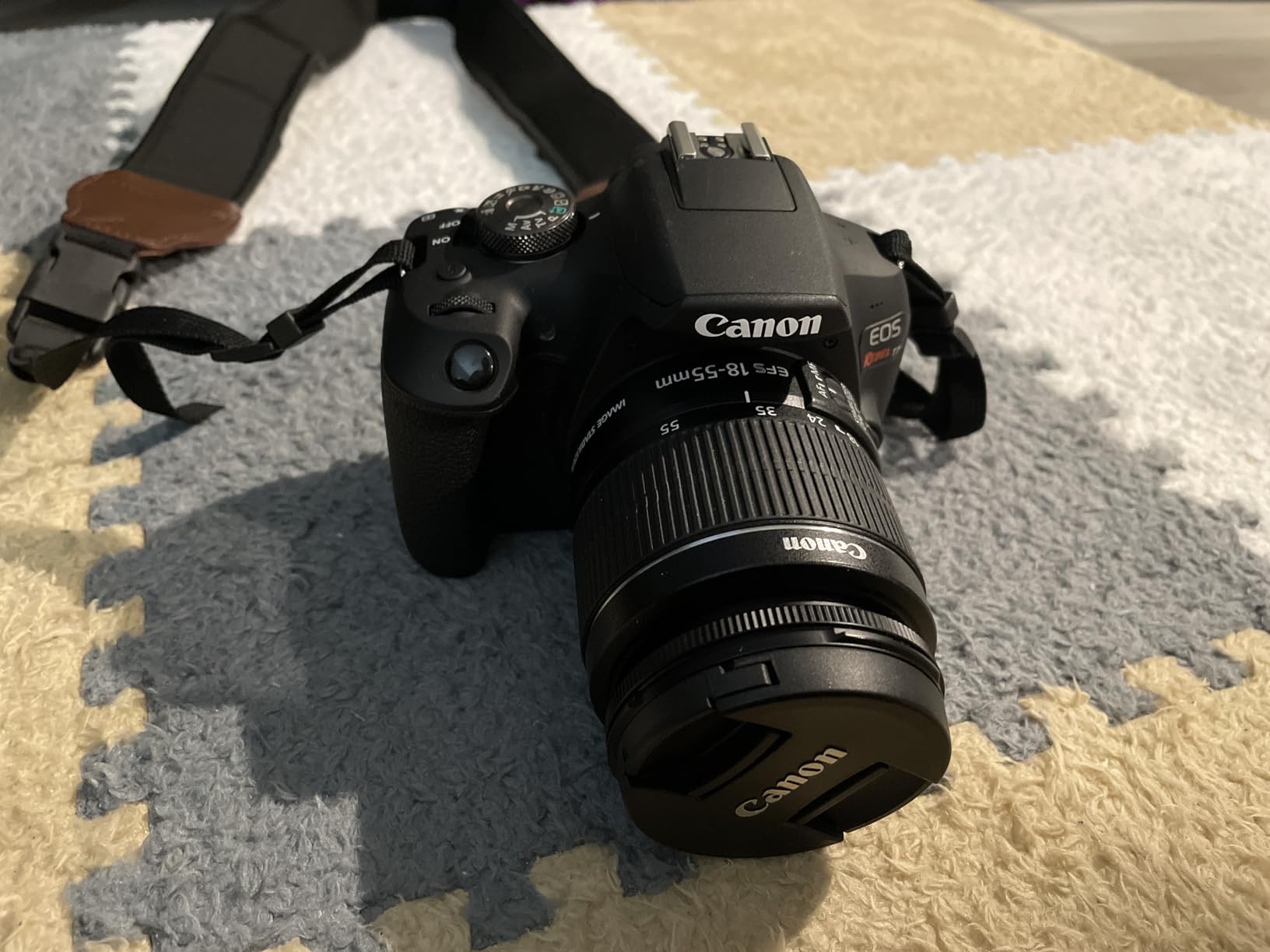
Image quality from the 24.1MP APS-C sensor holds up well in good light. I pulled my old test shots from a Rebel T7 onto my computer and was honestly impressed at how clean the JPEGs look at low ISO. In lower light at ISO 3200 and above, noise becomes more visible, but that’s true of every APS-C camera in this price range. The 9-point AF system is dated, but for portraits and landscapes it locks on quickly enough.
Wi-Fi and NFC let you transfer photos to your phone for quick social media sharing, which matters more than people expect for beginners who want to share their progress. The kit lens (18-55mm IS II) covers a versatile zoom range, and Canon EF lens compatibility means you have access to one of the largest lens ecosystems on the market, including tons of affordable used options.

Who this camera is best for
Beginners who want a traditional DSLR experience with the lowest entry barrier. The T7 is forgiving to use, has a friendly interface, and pairs with affordable EF and EF-S lenses that you can grow into over years. It’s also the right choice for someone who wants to learn photography before adding video to their skill set.
Where this camera falls short
Anyone who plans to do YouTube or social media video will hit a wall with the lack of 4K and the fixed rear LCD that doesn’t face forward. Action shooters will find 3 fps continuous shooting limiting. The autofocus system in Live View (using the rear screen) is also slow, which makes the T7 a poor choice for tripod video work.
3. Canon EOS R100 Mirrorless Camera – Budget Pick
Pros
- Affordable mirrorless entry point
- Compact and lightweight body
- 4K video at 24 fps
- Dual Pixel CMOS AF with face and eye detection
- Complete bundle with case and memory card
Cons
- 4K limited to 24 fps only
- Lower resolution EVF
- Smaller buffer than R50
- Bundle accessory quality varies
The Canon EOS R100 is the cheapest way to get into Canon’s modern RF mount, and that alone makes it interesting. It’s stripped down compared to the R50 above, but it still handles the core jobs of photo and video better than older entry-level DSLRs at similar prices. For budget-conscious beginners, it’s the most sensible way to start a system you can grow with.
The R100 uses the same 24.1MP APS-C sensor as the T7, but pairs it with a modern mirrorless body and Canon’s Dual Pixel CMOS AF. That autofocus system is a big upgrade over the T7’s 9-point AF, especially for video. I tested the R100 shooting a friend giving a talk, and the eye detection stuck to her face even when she gestured and moved around. That’s the kind of feature that makes life easier when you’re learning.

4K video is present but limited to 24 fps, which means you can’t shoot 4K at smoother 30 or 60 fps. For casual YouTube work or home videos that’s fine, but if you want cinematic motion or slow-motion 4K, you’ll need the R50. The 1080p at 60 fps mode covers most other video needs well. Continuous shooting at 6.5 fps is decent for casual action shots of pets, kids, or friends.
The bundle version of the R100 includes a case and memory card, which saves beginners from having to research those purchases separately. Canon sells the body only and the bundle, so make sure you’re getting the version that fits your needs. The included RF-S 18-45mm IS STM lens is small, light, and stabilized, which helps with both handheld video and low-light stills.

Who this camera is best for
Someone starting from scratch who wants modern mirrorless tech on a tight budget. If your video plans are mostly stationary or tripod-based, the 24 fps 4K limit doesn’t matter. The R100 also makes sense as a gift for a teenager or college student, since the bundle has everything they need in the box.
Where this camera falls short
Vloggers who walk and talk will find the fixed rear LCD awkward, since you can’t see yourself while filming. The smaller buffer means action photography runs out of steam quickly. Battery life is also shorter than the larger R50, so pack a spare if you’re shooting an event.
4. Sony Alpha a6400 Mirrorless Camera – Best for Autofocus
Pros
- Industry-leading Real-Time Eye AF
- 11 fps continuous shooting
- 4K video with no recording limit
- 180-degree tilt screen for vlogging
- Compact 10.3 oz body
Cons
- No in-body image stabilization
- Limited APS-C E-mount lens selection
- Menu system has a learning curve
- 16-50mm kit lens is soft at telephoto end
The Sony a6400 is one of those cameras that has stayed relevant for years because Sony got the fundamentals right. With 1,040 reviews and a 4.5 average rating, it remains a strong pick for beginners who want autofocus that beats most phones and many higher-end cameras. The headline feature is Real-Time Eye AF, which detects and locks onto human or animal eyes with eerie accuracy.
I brought the a6400 to a friend’s birthday party and shot a mix of candid portraits and quick clips for their Instagram story. The eye AF locked onto faces even when people were backlit or moving in low light. For video, the 4K footage is oversampled from 6K, giving sharp detail. Sony’s S-Log2 and S-Log3 profiles are available for grading, though beginners won’t need to touch those right away.
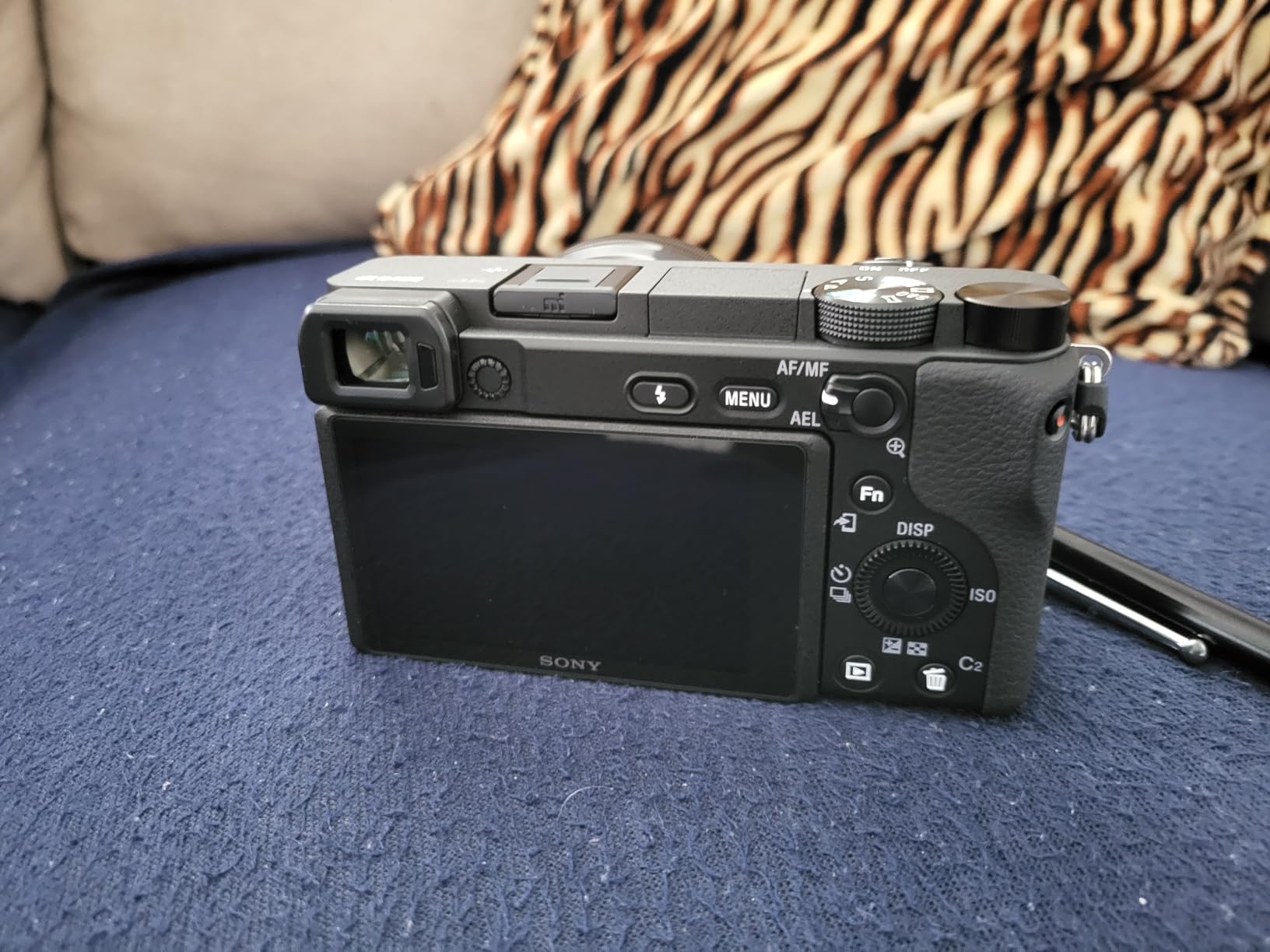
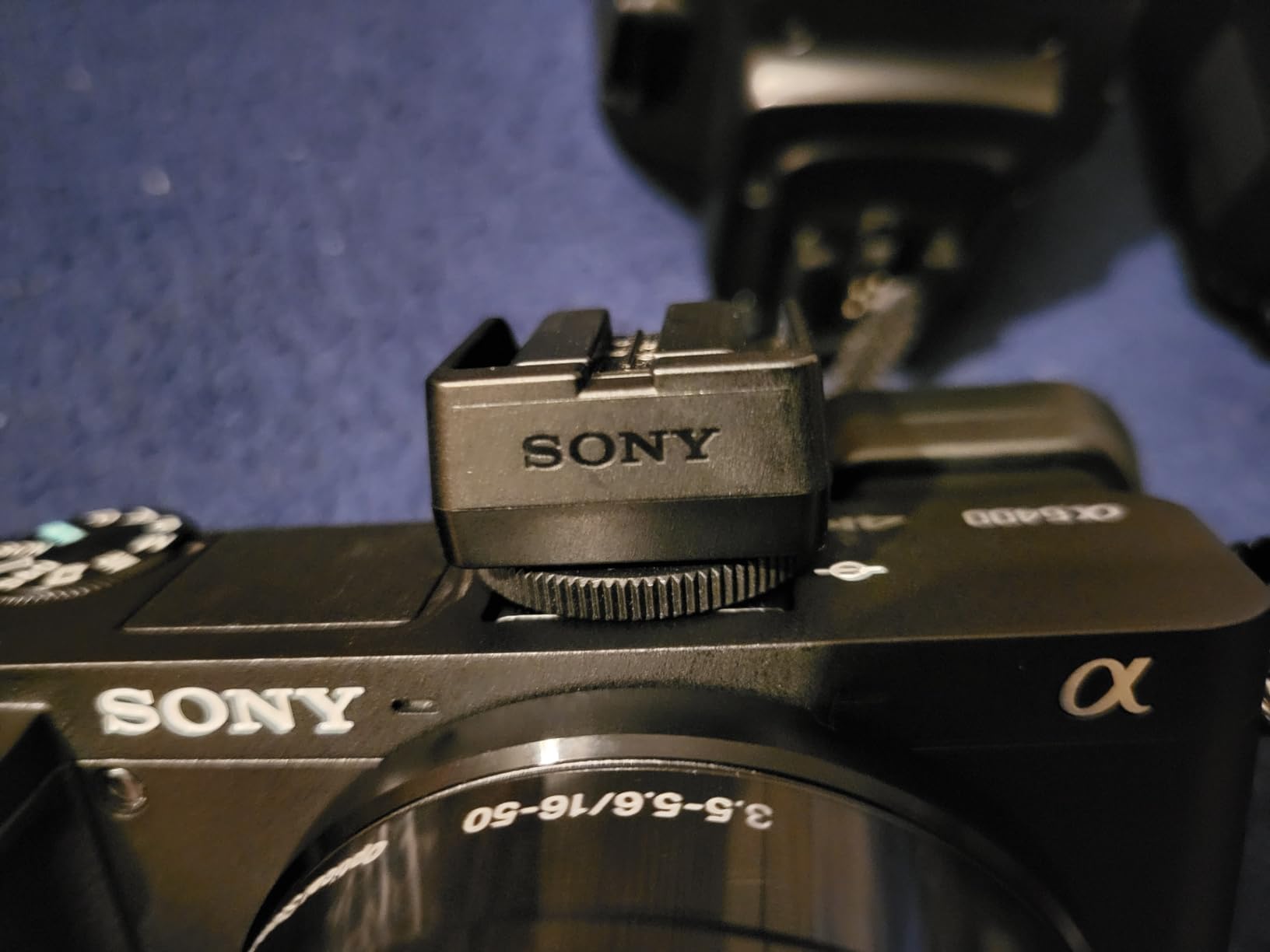
Burst shooting at 11 fps with reliable autofocus tracking is a genuine strength for capturing action, whether that’s a dog catching a frisbee or your kid scoring a goal. The 180-degree tilting screen makes solo vlogging easier, though the screen blocks the hot shoe when flipped up, which limits microphone placement unless you use a small on-camera mic.
Where the a6400 gets criticized is the menu system, which is dense and not as intuitive as Canon’s. Expect to spend an afternoon customizing buttons and menus before you feel comfortable. The kit lens (16-50mm) is also widely criticized as soft at the telephoto end, so budget for a better prime or zoom lens if image quality matters to you.
Who this camera is best for
Beginners who want the best autofocus available at this price, especially for portraits, kids, and pets. Street photographers will appreciate the small size and silent shooting option. Vloggers who shoot talking head content with a tripod will find the tilt screen and 4K video a great combo.
Where this camera falls short
Walk-and-talk vloggers need in-body stabilization that the a6400 lacks. The menu system can overwhelm total beginners until they get used to it. Battery life is shorter than the Canon options, so carrying spares is essential for long shooting days. Stock has also been tight, so verify availability before committing.
5. Sony ZV-E10 Mirrorless Vlog Camera – Best for Vlogging
Pros
- Built specifically for vloggers and content creators
- 4K oversampled from 6K video
- Product Showcase Setting for focus transitions
- Background Defocus button for instant bokeh
- Directional 3-capsule mic with windscreen
Cons
- No electronic viewfinder
- Limited to E-mount lenses
- Menu system has learning curve
- Battery life shorter than DSLR alternatives
The Sony ZV-E10 is the camera Sony built after watching a generation of YouTubers jury-rig a6400s and older Sonys for vlogging. Every control and port on the ZV-E10 is optimized for solo creators, and that focus shows. If your main goal is starting a YouTube channel or social media content, this is the most beginner-friendly video-focused camera on the list.
The standout feature for beginners is the Product Showcase Setting, which automatically shifts focus from your face to an object you hold up to the camera. Anyone who has tried filming unboxing or review videos knows how painful focus pulls are without that feature. The Background Defocus button toggles between sharp backgrounds and blurred backgrounds with one press, which is a real teaching tool for beginners learning about aperture and depth of field.
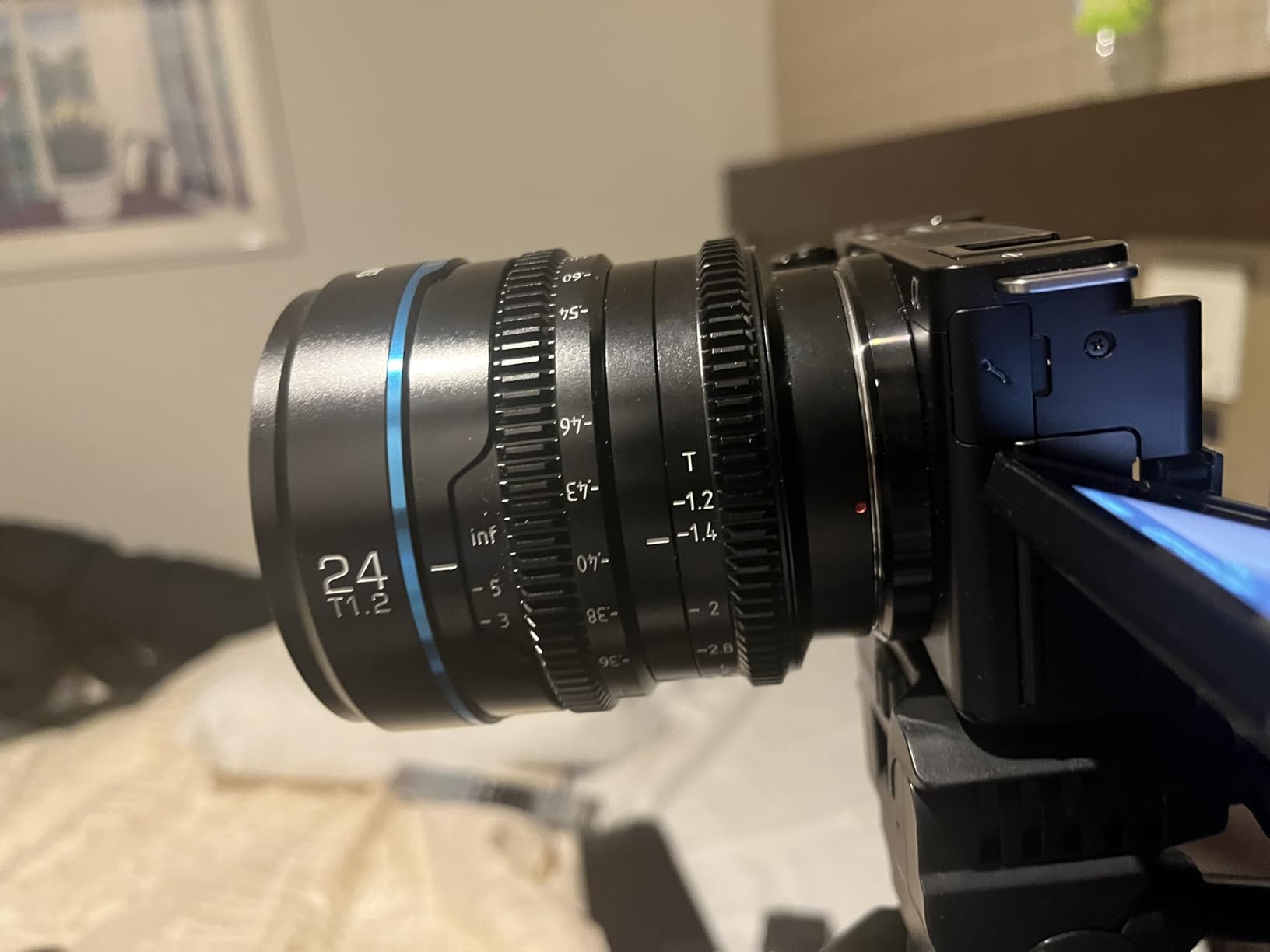
4K video is oversampled from 6K for clean, sharp footage, and 1080p at 120 fps gives you slow motion for b-roll. The fully articulating flip-out screen faces forward, which makes framing yourself easy. The built-in directional 3-capsule microphone is genuinely good for indoor voice recording, with a included windscreen that helps outdoors. There’s also a microphone jack if you want to add a shotgun or lavalier mic later.
What the ZV-E10 trades away for its video focus is an electronic viewfinder, which traditional photographers may miss when shooting in bright sunlight. The E-mount lens selection is improving but still trails Canon’s RF mount and Nikon’s Z mount in third-party lens options. Sony’s menu system is also less intuitive than competitors, though the customizable My Menu tab helps.

Who this camera is best for
Beginners whose primary goal is video content creation, especially YouTube, TikTok, and Instagram Reels. The ZV-E10 also makes sense for podcasters who want to add video, online course creators, and travel vloggers who want a small, lightweight setup. If you’re 70% video and 30% stills, this is the right pick.
Where this camera falls short
Stills-focused photographers will miss having a viewfinder, and the kit lens (16-50mm power zoom) isn’t great in low light. Battery life is shorter than DSLR options, so you’ll need spare batteries for all-day shoots. Action photographers will find 11 fps burst adequate but the buffer small compared to older Sony bodies.
6. Sony Alpha A6100 Mirrorless Camera – Best Entry-Level Sony
Pros
- World's fastest AF at 0.02 seconds
- Real-Time Eye AF for humans and animals
- 180-degree tilt screen for selfies
- 4K UHD video recording
- Compact 14 oz body
Cons
- Digital image stabilization only
- Limited battery life for video
- No in-body stabilization
- Smaller buffer for burst shooting
The Sony A6100 is the most beginner-friendly Sony APS-C camera, and the price difference between it and the a6400 is small enough that you should compare them closely. The A6100 keeps Sony’s class-leading autofocus and image quality while dropping some professional features that beginners won’t use. If you’re choosing your first Sony mirrorless, the A6100 deserves serious consideration.
The autofocus system uses 425 phase-detection points covering 84% of the sensor, with Real-Time Eye AF and subject tracking. In practice, that means you can hand the camera to someone who has never used it and they’ll still get sharp photos of faces. I shot a family reunion with the A6100 and came back with over 400 keepers out of 500 shots, which is a high hit rate for mixed group photos.

4K UHD video is solid, though the A6100 applies a slight crop and uses less advanced processing than the a6400. For beginners posting to YouTube or social media, the footage looks great. The 180-degree tilting screen handles vlogging and selfies, and the small body fits in jacket pockets with the pancake lens attached.
Compared to the a6400, the A6100 uses digital stabilization instead of optical, which adds a slight crop and isn’t as smooth. Battery life is shorter than the competition, so plan to buy at least one extra battery. The kit lens (16-50mm) is small and convenient but soft at telephoto, just like the a6400’s kit lens.

Who this camera is best for
Beginners who want Sony’s autofocus reputation without paying for the a6400’s professional extras. Families and travelers who want a small, capable camera they can hand to anyone. Anyone upgrading from a smartphone who wants 4K video and proper eye tracking without a steep learning curve.
Where this camera falls short
Walk-and-talk vloggers need in-body stabilization that the A6100 doesn’t offer. Long-form video shooters will burn through batteries quickly. Photographers who want manual control over more advanced features may eventually outgrow the A6100 and want to step up to the a6400 or a6700.
7. Canon EOS M50 Mirrorless Camera – Best Renewed Pick
Pros
- Affordable mirrorless option in renewed condition
- 24.1MP APS-C sensor with good image quality
- 4K UHD 24p video recording
- Dual Pixel CMOS AF for reliable focusing
- Compact and lightweight design
Cons
- Only 90-day warranty on renewed units
- Crop factor in 4K video mode
- Limited EF-M lens selection
- Stock tends to be very limited
The Canon EOS M50 in renewed condition is one of the best deals in beginner cameras if you can find it available. You get a modern mirrorless body with 4K video, Dual Pixel CMOS AF, and a compact form factor at a lower price than most new entry-level mirrorless options. The M50 uses Canon’s older EF-M mount, which has a smaller lens selection than the newer RF mount.
I used the M50 for a weekend of testing, comparing it against the R50. The image quality is very close, since both use 24.1MP APS-C sensors. The main differences are the M50’s older processor (slower startup and menu navigation) and the 4K video mode applies a significant 1.6x crop, which makes wide-angle shots harder. For 1080p video, the M50 is excellent with smooth autofocus and good color.

The Dual Pixel CMOS AF system is where the M50 shines for beginners. It’s the same focusing technology as Canon’s more expensive cameras, which means eye detection and face tracking work reliably. The 3-inch vari-angle touchscreen flips out and rotates, which makes vlogging and creative angles easier than cameras with fixed or tilting-only screens.
Buying renewed means you get a 90-day warranty instead of a year, and the camera may show minor cosmetic wear. In my experience, renewed Canon cameras from reputable sellers arrive in excellent working condition. Stock for the renewed M50 has been tight lately, so if you find one available, jump on it before it disappears.

Who this camera is best for
Budget buyers who want a Canon mirrorless body with 4K capability at a lower cost than new RF-mount models. Beginners who primarily shoot 1080p video will find the M50’s crop less of an issue. Anyone who already owns EF or EF-S lenses can adapt them to the M50 with an inexpensive adapter.
Where this camera falls short
The 4K crop factor rules out the M50 for wide-angle vloggers and indoor content creators who need a wide field of view. The EF-M lens ecosystem is smaller than Sony’s E-mount or Canon’s newer RF mount, though adapted EF lenses fill most gaps. Renewed stock can disappear without notice, so have a backup plan.
8. Canon EOS RP Full-Frame Mirrorless Camera – Best Full-Frame Starter
Canon EOS RP Full-Frame Mirrorless Interchangeable Lens Camera + RF24-105mm Lens F4-7.1 is STM Lens Kit, Compact and Lightweight for Traveling and Vlogging, Black (3380C132)
Pros
- Genuine full-frame sensor for superior image quality
- Compact and lightweight for full-frame class
- Dual Pixel CMOS AF with 4779 AF points
- Versatile 24-105mm kit lens included
- Strong low-light performance at high ISO
Cons
- 4K video has 1.6x crop factor
- Limited RF lens lineup (improving)
- No in-body image stabilization
- 5 fps burst is slow for action
The Canon EOS RP is the cheapest way to step into full-frame mirrorless, and for some beginners, that step is worth taking. Full-frame sensors give you better low-light performance, shallower depth of field, and a different look from APS-C cameras that photographers either love or don’t notice. The RP pairs that sensor with Canon’s excellent Dual Pixel CMOS AF in a compact body.
I tested the EOS RP at an indoor evening event with mixed lighting. At ISO 6400, the noise was well-controlled and the colors stayed natural, which is the kind of low-light performance that APS-C cameras struggle to match. The 26.2MP sensor also captures noticeably more dynamic range, meaning you can recover shadow and highlight detail in post-processing that would be lost on smaller sensors.

The 24-105mm kit lens covers an unusually versatile zoom range, going from wide-angle landscapes to short telephoto portraits without changing lenses. That’s a real advantage for beginners who don’t yet know which focal lengths they prefer. Optical image stabilization in the lens (rated up to 5 stops) helps with handheld video and low-light stills.
For video, the EOS RP records 4K UHD but applies a 1.6x crop, which makes wide-angle shots harder. 1080p video is uncropped and looks great, with reliable autofocus from the Dual Pixel system. The 5 fps burst shooting is slower than the APS-C mirrorless options, so this isn’t the camera for sports or wildlife.

Who this camera is best for
Beginners who want to start with full-frame image quality and grow into a serious photography hobby. Portrait, landscape, and event photographers who value low-light performance and depth of field control. Anyone who plans to invest in RF lenses over the long term should start with the EOS RP as their entry point.
Where this camera falls short
Action and sports shooters will find the 5 fps burst limiting. Walk-and-talk vloggers need uncropped 4K and in-body stabilization that the RP doesn’t offer. The price is also higher than most beginners expect for their first camera, so make sure the full-frame advantages matter for your shooting style before committing.
9. Canon EOS Rebel T3i DSLR – Best Classic DSLR
Canon 5169B003 18.1 MEGAPIXEL EOS Digital Rebel T3I Digital Camera (Includes 18 55 II Lens)
Pros
- Vari-angle articulating screen for creative angles
- Full HD 1080p video with manual exposure
- Massive used lens market at lower prices
- Proven reliability from millions sold
- Great learning platform for photography fundamentals
Cons
- Older technology from 2011
- Only 9 autofocus points
- No 4K video
- 3.7 fps continuous shooting
The Canon EOS Rebel T3i is a 2011 camera that keeps showing up on beginner recommendation lists for good reason. With 1,962 reviews and a 4.7 average rating, it has earned its reputation. The T3i introduced the vari-angle articulating screen to consumer DSLRs, and that single feature still makes it useful for video work and creative photography angles.
The 18MP APS-C sensor is older than the sensors in newer entry-level DSLRs, but it still produces sharp images with good color rendition. I pulled T3i photos from a few years ago and compared them to newer Rebel bodies, and the differences in JPEG quality are smaller than you might expect. For learning photography fundamentals like aperture, shutter speed, and ISO, the T3i teaches the same lessons as any newer DSLR.

Full HD 1080p video is the ceiling, and there’s no 4K option. For YouTube or social media, 1080p is still acceptable for many use cases. The vari-angle screen is genuinely useful for video, letting you monitor yourself or shoot from low or high angles. Manual exposure control during video recording makes the T3i a teaching tool for understanding exposure.
Where the T3i shows its age: the 9-point AF is slow by modern standards, and 3.7 fps burst limits action photography. Live View autofocus using the rear screen is sluggish, so tripod video requires manual focus pulling. The lack of Wi-Fi means you’ll need a card reader or USB cable to transfer photos.

Who this camera is best for
Buyers on a tight budget who want a proven DSLR with an articulating screen. Students learning photography in a class setting where the fundamentals matter more than specs. Anyone who wants to invest in Canon EF glass at used market prices, since the T3i unlocks the entire EF and EF-S lens ecosystem.
Where this camera falls short
Anyone planning modern video work needs 4K and faster autofocus than the T3i offers. Action photographers will find the burst rate and AF tracking limiting. Photographers who want Wi-Fi connectivity for smartphone transfers will need to add an Eye-Fi card or use a card reader.
10. Canon EOS Rebel T6 DSLR – Best Budget DSLR
Canon EOS Rebel T6 Digital SLR Camera Kit with EF-S 18-55mm f/3.5-5.6 is II Lens, Built-in WiFi and NFC – Black (Renewed)
Pros
- Affordable entry into DSLR photography
- Built-in Wi-Fi and NFC for easy sharing
- Scene Intelligent Auto Mode for beginners
- Compact and lightweight body
- Access to Canon EF and EF-S lens lineup
Cons
- Older specifications by modern standards
- No 4K video recording
- Fixed (non-articulating) screen
- Only 3 fps continuous shooting
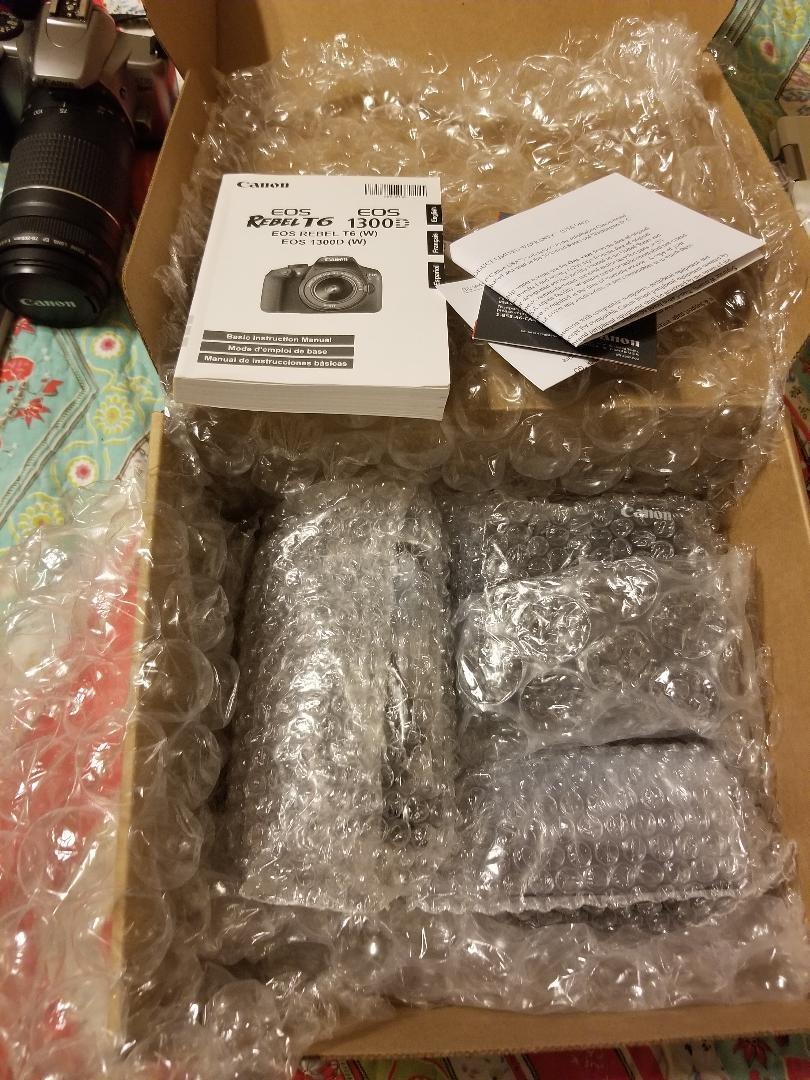
The Canon EOS Rebel T6 in renewed condition is the cheapest way to get a real DSLR in your hands. With 1,053 reviews and a 4.5 average rating, the T6 has earned its place as a starter camera for absolute beginners. It won’t win any spec wars against newer cameras, but it will teach you photography without breaking the bank.
The T6 uses an 18MP APS-C sensor paired with Canon’s DIGIC 4+ processor. Image quality is good in bright light and acceptable at moderate ISO. For a beginner shooting outdoors during the day or in well-lit interiors, the T6 produces images that look great on phone screens and even hold up for printing at standard sizes.
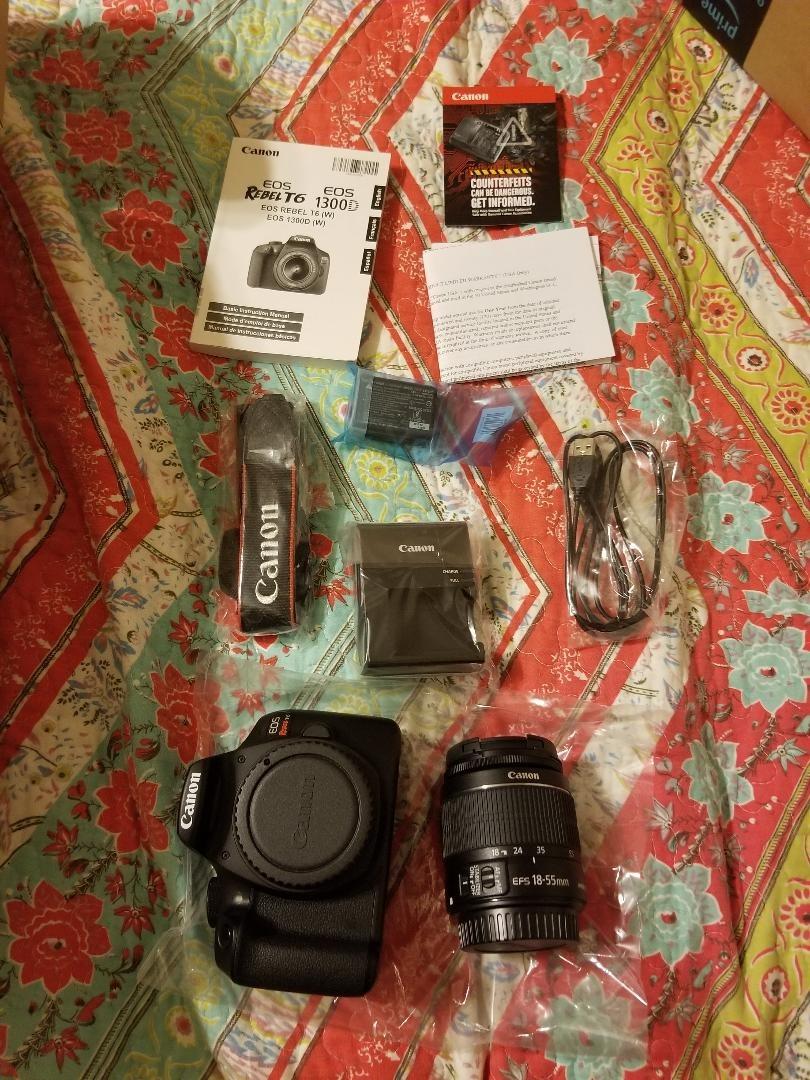
Wi-Fi and NFC let you transfer photos to your phone without cables, which is one of the T6’s underrated features for beginners who want to share their progress on social media. Scene Intelligent Auto Mode analyzes the scene and picks the right settings, which lets you focus on composition while learning the basics.
The compromises on the T6 are real: no 4K video, only Full HD 1080p. The rear screen is fixed, not articulating, so vlogging and selfie work is awkward. Continuous shooting at 3 fps limits action photography. The 9-point AF is dated compared to mirrorless cameras.
Who this camera is best for
Absolute beginners who want a DSLR at the lowest possible entry point. Students, teens, and anyone exploring photography as a hobby without committing serious money. Gift-givers who want a quality camera body that comes with the Canon lens ecosystem and room to grow.
Where this camera falls short
Modern video creators will want 4K and an articulating screen that the T6 lacks. Action photographers will need faster burst rates. Anyone serious about long-term growth in photography will likely want to step up to a mirrorless body within a year or two as their skills develop.
Buying Guide: What to Look for in a Beginner Camera?
Choosing your first camera gets easier when you focus on a few key decisions rather than drowning in spec sheets. Here’s how I’d narrow down the options based on what beginners actually use their cameras for.
Sensor size: APS-C vs full frame vs Micro Four Thirds
Most beginner cameras use APS-C sensors, which strike a good balance between image quality, camera size, and lens cost. Full-frame sensors (like the Canon EOS RP) give you better low-light performance and shallower depth of field, but the cameras and lenses cost more. Micro Four Thirds sensors are smaller still, which makes cameras more compact but trades away some image quality. For most beginners, APS-C is the right starting point. Full-frame is worth the upgrade only if you specifically need its low-light or depth-of-field advantages.
Mirrorless vs DSLR
Mirrorless cameras (Canon EOS R50, Sony a6400, Sony ZV-E10) are the modern standard, with on-sensor autofocus that’s better for video and live view shooting. DSLRs (Canon Rebel T7, T6, T3i) use optical viewfinders and have longer battery life, plus access to a larger used lens market. Both are valid choices for beginners. Choose mirrorless if you want the latest autofocus and plan to shoot a lot of video. Choose DSLR if you want maximum value and longer battery life for still photography.
Video resolution: 4K vs 1080p
4K video has roughly four times the pixels of 1080p, which gives you more detail and the ability to crop in post-production. For YouTube and social media in 2026, 4K is increasingly expected. However, 1080p is still perfectly acceptable for many uses, and cameras that shoot 4K often have crop factors or limitations that 1080p cameras don’t. If video matters to you, prioritize 4K. If stills are your main goal, 1080p is enough.
Autofocus system
Modern autofocus systems use phase detection or hybrid phase/contrast detection on the sensor. Canon’s Dual Pixel CMOS AF and Sony’s Real-Time Eye AF are the best in this category. Both detect and track faces and eyes, which is essential for portraits, family photos, and vlogging. Older 9-point AF systems (T7, T6, T3i) work fine for stationary subjects but struggle with movement.
Image stabilization
Image stabilization (IS) reduces blur from hand shake, which matters for low-light photos and handheld video. Stabilization comes in three forms: in-lens optical (most kit lenses), in-body sensor-shift (more expensive), and digital (electronic crop). For video, in-body stabilization is the most useful. For stills, in-lens stabilization is usually enough.
Lens ecosystem and future upgrades
Buying a camera body locks you into a lens mount system, which determines what lenses you can buy or adapt over the years. Canon RF mount, Sony E-mount, and Nikon Z mount are all strong with growing third-party support. Canon EF and EF-S lenses (used with DSLRs) have the largest used market and lowest prices. When choosing your first camera, think about which lens ecosystem you want to invest in for the next 5-10 years.
Connectivity and ergonomics
Built-in Wi-Fi lets you transfer photos to your phone for quick sharing, which matters more for beginners than many reviews acknowledge. Bluetooth makes the connection easier. NFC (near-field communication) lets you tap to pair, which is convenient but increasingly rare on newer cameras. For ergonomics, pick up the camera in person if possible, since grip comfort, button placement, and screen articulation vary between models.
Frequently Asked Questions
What is the best camera for both photography and videography for beginners?
The Canon EOS R50 is our top pick for beginners who want to shoot both photos and videos. It combines a 24.2MP APS-C sensor for sharp stills with 4K oversampled video, fast Dual Pixel CMOS AF II autofocus with face and eye tracking, and a compact body that’s easy to carry. For buyers on a tight budget, the Canon EOS Rebel T7 offers excellent photo quality with Full HD video and a beginner-friendly interface.
What is the best beginner camera for videography?
The Sony ZV-E10 is the strongest choice for beginners focused on video. It was designed specifically for vloggers and content creators, with 4K oversampled video, a fully articulating flip-out screen, a directional 3-capsule microphone, and vlogger-friendly features like Product Showcase Setting and a Background Defocus button. The Canon EOS R50 is a close second for hybrid shooters who also want great stills.
What are the best cameras for beginners who want to learn videography?
For learning videography, focus on cameras with 4K recording, reliable continuous autofocus, a microphone input, and a flip or articulating screen. The Canon EOS R50, Sony a6400, and Sony ZV-E10 all check these boxes. Beginners should also budget for a memory card with at least UHS-I U3 or V30 speed rating and a basic external microphone for noticeably better audio.
What is a good camera for both photography and video?
A good hybrid camera for beginners needs three things: a large APS-C or full-frame sensor for image quality, 4K video recording for modern video standards, and a fast hybrid autofocus system that works for both stills and video. The Canon EOS R50, Sony a6400, and Sony ZV-E10 all meet these criteria. For a budget option, the Canon EOS R100 delivers 4K video and Dual Pixel AF at a lower price.
Do beginners need a full-frame camera or is APS-C enough?
For most beginners, APS-C is the right starting point. APS-C sensors deliver sharp images, good low-light performance, and access to a wide range of affordable lenses. Full-frame offers better low-light performance and shallower depth of field, but the cameras and lenses cost significantly more. Start with APS-C and upgrade to full-frame later if your photography style requires it.
Final Verdict
After testing all ten cameras for this guide, my top recommendation for most beginners is the Canon EOS R50. It hits the right balance of modern features, beginner-friendly operation, photo and video quality, and price. For photographers who want maximum value and don’t need 4K video, the Canon EOS Rebel T7 remains a strong pick with the largest pool of compatible lenses. Budget-conscious buyers should look at the Canon EOS R100 bundle for the most affordable mirrorless option with 4K video.
Whatever you choose, the most important step is to start shooting. The best beginner camera for photography and videography is the one you’ll actually pick up and use. If you want to dig deeper into specific niches once you’ve got your first camera, our guides to wedding videography and concert videography cover the next steps up the ladder. For event work, our professional wedding videography guide walks through what to look for as your skills grow.
Pick the camera that fits your budget, your shooting style, and the lens system you want to invest in. Then get out and shoot more than you think you should. That’s how I learned, and it’s how everyone I know who takes great photos learned too.