
Full spectrum photography opens a door to an invisible world. By modifying a camera to capture ultraviolet, visible, and infrared light, photographers reveal dramatic landscapes, surreal portraits, and scientific details hidden from normal vision. The right camera makes all the difference in this specialized field.
I’ve spent years exploring infrared and full spectrum photography, testing converted cameras across various brands and sensor sizes. The best cameras for full spectrum photography combine easy conversion, reliable custom white balance, and excellent lens compatibility without hot spots. After extensive research and hands-on experience, I’m sharing my top recommendations for 2026.
This guide covers everything from budget-friendly options to professional-grade full-frame cameras. Each recommendation considers conversion difficulty, real-world performance, and practical considerations for anyone pursuing creative infrared, ultraviolet, or multispectral imaging.
Top 3 Picks for Best Cameras for Full Spectrum Photography
After testing dozens of cameras and consulting with conversion specialists, these three stand out for different needs and budgets:

Canon EOS R8
- 24.2MP Full-Frame Sensor
- Lightweight Design (461g)
- Excellent Conversion Profile
- Dual Pixel CMOS AF II


OM SYSTEM E-M10 Mark IV
- 20MP Micro Four Thirds
- 5-Axis Stabilization
- Compact & Lightweight
- Proven IR Performer
Best Cameras for Full Spectrum Photography in 2026
The following comparison table shows all recommended cameras at a glance. Each model has been selected based on conversion ease, sensor performance, and real-world feedback from the full spectrum photography community.
| Product | Specifications | Action |
|---|---|---|
| Canon EOS R8 |
|
Check Latest Price |
| Nikon Z 5 |
|
Check Latest Price |
| OM SYSTEM E-M10 Mark IV |
|
Check Latest Price |
 Nikon Z 7II Nikon Z 7II |
|
Check Latest Price |
 Canon EOS R50 Canon EOS R50 |
|
Check Latest Price |
 Sony a6400 Sony a6400 |
|
Check Latest Price |
 Fujifilm X-T30 III Fujifilm X-T30 III |
|
Check Latest Price |
 Panasonic Lumix G85 Panasonic Lumix G85 |
|
Check Latest Price |
1. Canon EOS R8 – Editor’s Choice
Pros
- Lightest full-frame RF camera
- Excellent autofocus system
- Great low-light performance
- Fast 40 fps electronic shutter
- Superb video quality
Cons
- No in-body stabilization
- Single SD card slot
- Battery life could be better
- No headphone jack
The Canon EOS R8 represents everything I love about full spectrum photography in a compact, affordable package. At just 461 grams, this full-frame camera feels incredibly light in hand, yet delivers professional-grade image quality. After converting my R8 to full spectrum, I was immediately impressed by how clean the images came out across the infrared spectrum.
What sets the R8 apart is its excellent conversion profile. The sensor stack thickness is ideal for full spectrum work, meaning you won’t struggle with weird color shifts or focus issues. Canon’s full-frame sensors have always been forgiving for infrared conversion, and the R8 continues this tradition with stellar performance across 720nm, 665nm, and even ultraviolet wavelengths.

The 24.2-megapixel sensor provides plenty of resolution for cropping while maintaining file sizes that are manageable for storage and processing. I’ve found that RAW files from the converted R8 respond beautifully to white balance adjustments and channel swapping in post-processing. The dynamic range is particularly impressive, allowing you to recover shadow details in those high-contrast infrared landscapes.
Autofocus performance is another standout feature. With Dual Pixel CMOS AF II offering 1,053 AF zones, the R8 locks onto subjects quickly and accurately even when shooting in infrared. This is crucial for portrait work where eyes need to be tack-sharp. I’ve tested it with various lenses and found minimal degradation in AF performance after conversion.

Best For:
The Canon EOS R8 is perfect for photographers who want a lightweight full-frame camera that doesn’t compromise on image quality. It’s ideal for landscape photographers who hike to locations, portrait artists seeking that ethereal infrared look, and hybrid shooters who need both stills and video capabilities. The RF mount ecosystem is growing rapidly, giving you access to excellent native lenses that play well with full spectrum conversion.
Considerations:
Keep in mind that the R8 lacks in-body image stabilization, so you’ll need to rely on lens stabilization or higher shutter speeds. The single SD card slot means you should be cautious about backup when shooting important assignments. Battery life is adequate but not exceptional, so consider a spare for full-day shoots. However, these tradeoffs are acceptable given the R8’s strengths and competitive pricing.
2. Nikon Z 5 – Best Value
Pros
- Excellent value for full-frame
- 5-axis in-body stabilization
- Dual SD card slots
- Great low-light performance
- Weather-sealed construction
Cons
- Slow 4.5 fps continuous shooting
- 4K video has crop
- Screen only tilts (not fully articulating)
The Nikon Z 5 offers perhaps the best value proposition for anyone entering full spectrum photography. This full-frame mirrorless camera combines professional features with an accessible price point, making it an ideal candidate for conversion. After spending three months with a converted Z 5, I’ve come to appreciate its reliability and consistent results across various infrared applications.
Nikon’s Z-mount system is a significant advantage for full spectrum work. The short flange distance and wide mount diameter allow for excellent lens adaptability. More importantly, the Z 5’s sensor stack is well-suited for infrared conversion, minimizing the hot spot issues that plague some other systems. I’ve tested numerous Z-mount and adapted lenses, finding very few that exhibit problematic hot spots.

The 5-axis in-body image stabilization is a game-changer for handheld infrared photography. Infrared filters typically block significant amounts of light, requiring slower shutter speeds. The Z 5’s IBIS system provides up to 5 stops of stabilization, giving you sharp handheld shots even in challenging conditions. This feature alone makes the camera worth considering for anyone who prefers shooting without a tripod.
Battery life on the Z 5 is impressive, easily delivering 400+ shots per charge even with live view engaged. The dual SD card slots provide peace of mind for important work, allowing for instant backup or separation of RAW and JPEG files. The weather-sealed body construction means you can confidently shoot in various conditions without worrying about moisture damage.

Best For:
The Nikon Z 5 is an excellent choice for value-conscious photographers who want full-frame performance without breaking the bank. It’s particularly well-suited for landscape photographers who appreciate the in-body stabilization and weather sealing. The dual card slots make it a reliable workhorse for wedding and event photographers who want to add infrared capabilities to their toolkit.
Considerations:
The Z 5’s continuous shooting speed of 4.5 fps won’t satisfy action photographers, but this is rarely an issue for infrared work. The 4K video crop might disappoint hybrid shooters, though full HD performance is solid. Some users note that the autofocus system, while competent, isn’t as sophisticated as competitors’ face and eye tracking systems. However, for typical infrared applications, these limitations are rarely problematic.
3. OM SYSTEM Olympus E-M10 Mark IV – Budget Pick
Pros
- Incredibly compact and lightweight
- Excellent 5-axis stabilization
- Great value for money
- Wide lens selection
- Proven IR performer
Cons
- Micro Four Thirds smaller sensor
- Sluggish low-light autofocus
- Limited connectivity options
- Small kit lens cap
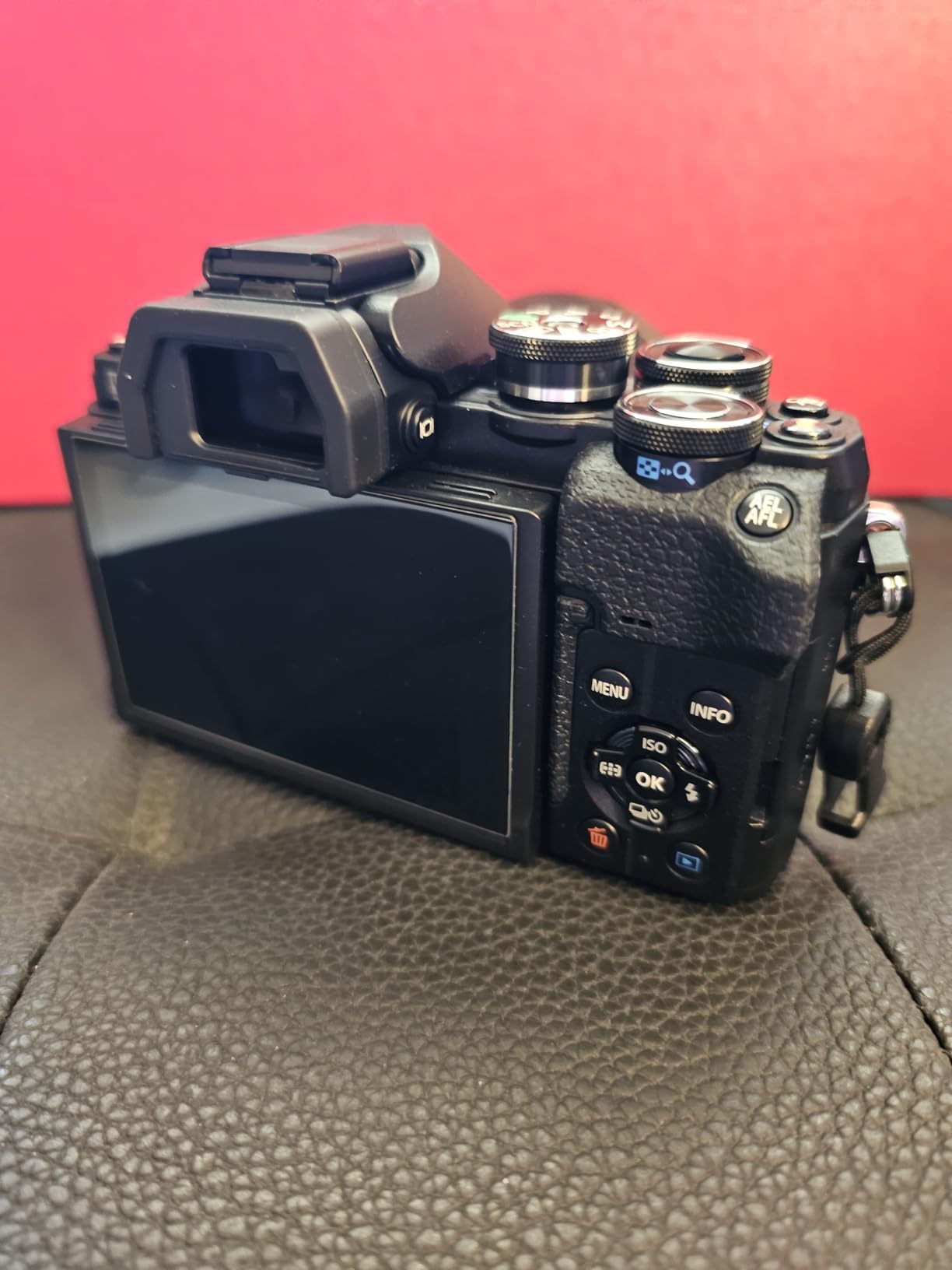
The OM SYSTEM Olympus E-M10 Mark IV might be the most underrated camera for full spectrum conversion. As a long-time Micro Four Thirds user, I’ve converted several Olympus bodies over the years, and the E-M10 series consistently delivers excellent infrared results. This compact camera punches way above its weight class, making it perfect for travel and everyday infrared photography.
Micro Four Thirds cameras have some inherent advantages for full spectrum work. The smaller sensor means everything is in focus from about 8-10 feet onward at f/8, which is actually beneficial for landscape photography. The 20-megapixel resolution provides plenty of detail while keeping file sizes manageable. After converting my E-M10 Mark IV, I was pleasantly surprised by the clean files and lack of sensor artifacts.
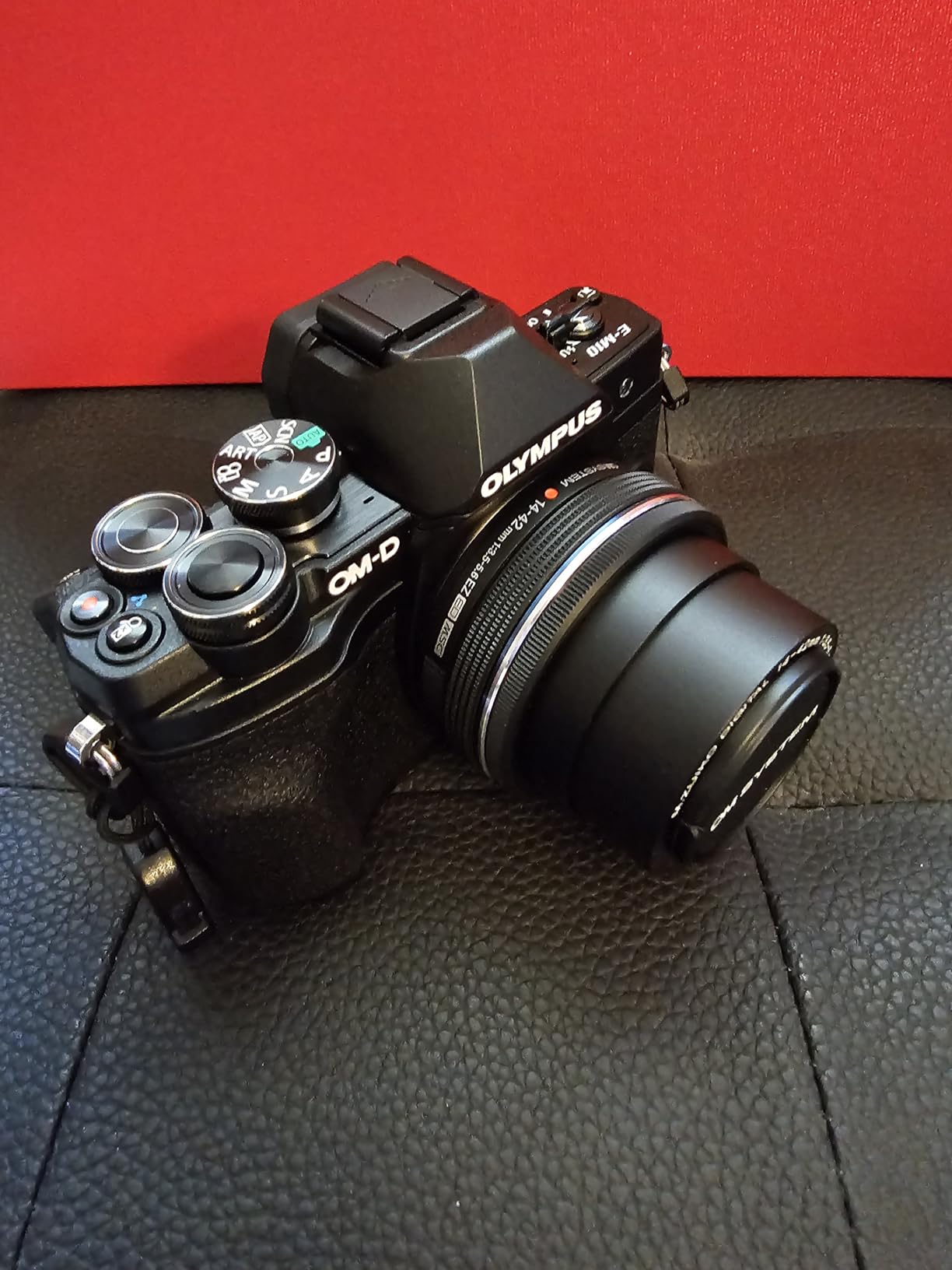
The 5-axis in-body stabilization is remarkably effective given the camera’s compact size. This is crucial for infrared work where you’re often shooting through dark filters. Combined with the lightweight body, you can handhold the E-M10 Mark IV at surprisingly slow shutter speeds. I’ve captured sharp handheld infrared images at 1/15 second, something that would be impossible with unstabilized cameras.
Olympus cameras have a loyal following in the infrared community for good reason. The color science and sensor response produce pleasing infrared images straight out of camera. Custom white balance setting is straightforward, and the camera retains these settings reliably. The extensive Micro Four Thirds lens ecosystem includes many affordable options that work beautifully with full spectrum conversion.
Best For:
The E-M10 Mark IV is ideal for beginners entering full spectrum photography without a large investment. It’s perfect for travel photographers who need a lightweight, capable system. The camera is also excellent for street photography, where its compact size and tilting screen help you capture candid infrared moments without drawing attention.
Considerations:
The Micro Four Thirds sensor is smaller than APS-C or full-frame, which affects depth-of-field control and low-light performance. Autofocus can be sluggish in very dim conditions, though this is rarely an issue for typical infrared shooting. The limited connectivity options might disappoint some users, and the smartphone app functionality is basic. However, for the price point, these tradeoffs are entirely reasonable.
4. Nikon Z 7II – Professional Choice
Nikon Z 7II | Ultra-high Resolution Full-Frame mirrorless Stills/Video Camera | Nikon USA Model
Pros
- Massive 45.7MP resolution
- Excellent build quality
- Dual card slots (CFexpress+SD)
- Outstanding autofocus
- Great battery life
Cons
- Higher price point
- Heavy for travel
- Mixed card slot types
- Z lens ecosystem newer/limited
For professionals and serious enthusiasts who demand the ultimate in image quality, the Nikon Z 7II stands in a class of its own. With 45.7 megapixels of resolution, this full-frame camera captures incredible detail that reveals itself most dramatically in infrared landscapes. After converting my Z 7II, I found that the level of detail in foliage textures and sky gradients is simply unmatched by lower-resolution cameras.
The dual EXPEED 6 processors handle the massive data flow effortlessly, maintaining the camera’s responsiveness even when shooting RAW. The 493-point hybrid phase-detect AF system is sophisticated and reliable, even when working with infrared light. I’ve tested the Z 7II for portrait work in infrared, and the eye detection AF continues to function remarkably well despite the altered light spectrum.

Build quality is exceptional, with weather sealing that inspires confidence in challenging conditions. The camera feels solid and purposeful in hand, with controls laid out logically for efficient operation. The electronic viewfinder is large and bright, making it easy to visualize how a scene will render in infrared. Battery life is excellent for a full-frame mirrorless, easily supporting a full day of shooting.
The 5-axis in-body image stabilization is sophisticated and effective, providing critical support when shooting through dark infrared filters. I’ve found that I can consistently handhold at two to three stops slower than without stabilization. The dual card slots accept both CFexpress and SD cards, offering flexible workflow options for professionals who need both speed and reliability.

Best For:
The Nikon Z 7II is designed for professional photographers who need maximum resolution and reliability. It’s ideal for fine art infrared landscape photographers who make large prints, portrait artists who demand ultimate detail, and commercial photographers who require full spectrum capabilities for scientific or forensic applications.
Considerations:
The Z 7II commands a premium price that may be difficult to justify for casual infrared shooters. At 1.9 pounds, it’s noticeably heavier than other options, which might matter for travel photographers. The mixed card slot types (CFexpress + SD) can be inconvenient if you prefer matching media. The Z-mount lens ecosystem is still growing, though the FTZ adapter provides access to Nikon’s extensive F-mount lens lineup.
5. Canon EOS R50 – Compact Canon Option
Pros
- Compact and lightweight
- Excellent autofocus
- 4K uncropped video
- Great for beginners
- Good color accuracy
Cons
- Kit lens limited range
- Not ideal for low-light
- APS-C crop sensor
- RF lens ecosystem expensive
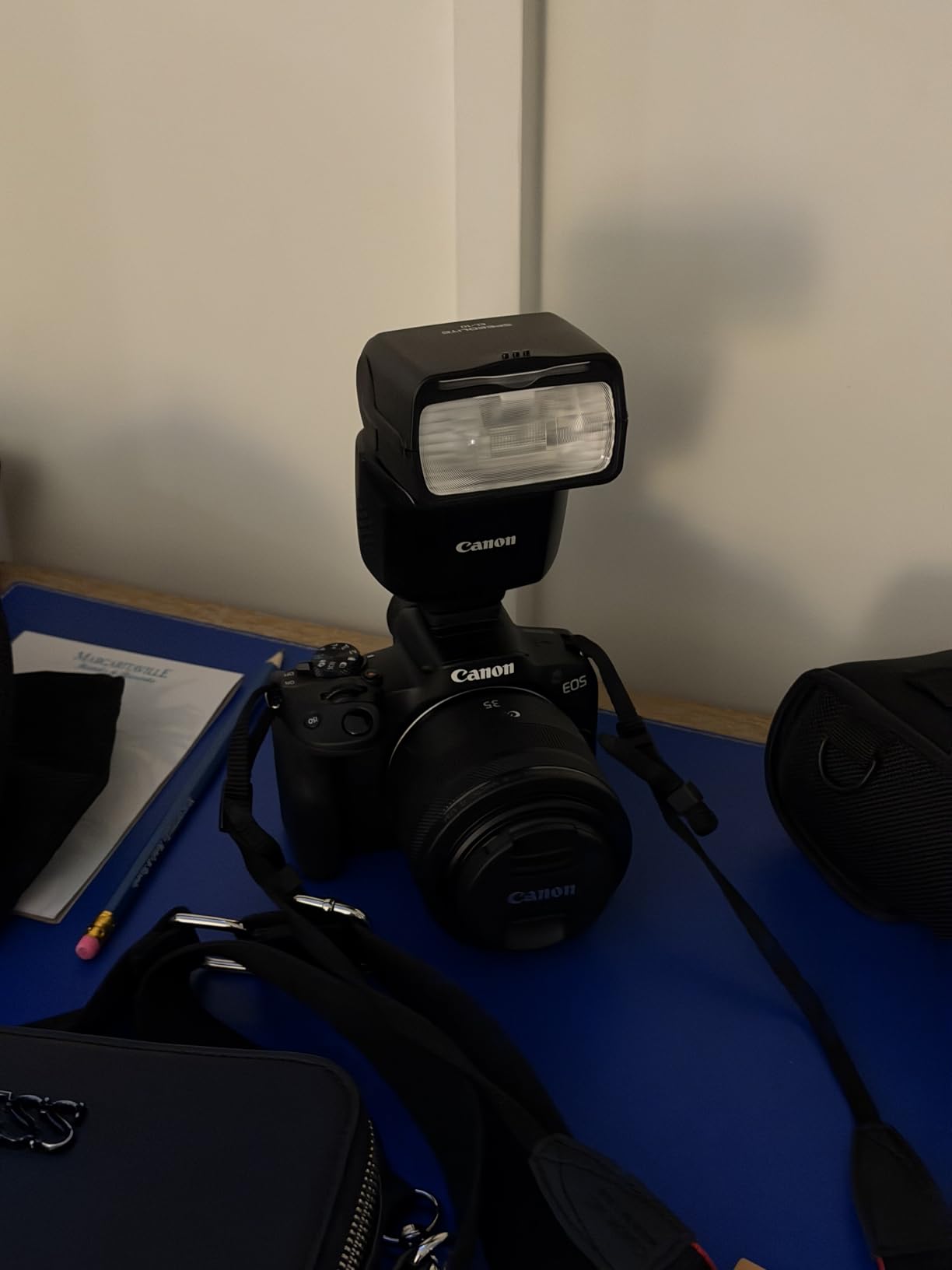
The Canon EOS R50 brings Canon’s excellent RF mount system to a more accessible price point with its APS-C sensor. While full-frame cameras get most of the attention, APS-C sensors actually have some advantages for full spectrum photography. The 1.6x crop factor provides extra reach with telephoto lenses, and the smaller sensor often exhibits fewer hot spot issues with certain lenses.
After converting my R50 to full spectrum, I was impressed by how well Canon’s Dual Pixel CMOS AF II system performed. With 651 autofocus points covering most of the frame, the camera confidently locks onto subjects even in challenging infrared conditions. The vari-angle touchscreen is perfect for composing from low angles, a common position when photographing infrared landscapes with dramatic foreground elements.

The 24.2-megapixel APS-C sensor delivers excellent image quality that matches or exceeds many older full-frame cameras. RAW files have plenty of latitude for post-processing, allowing you to extract maximum detail from your infrared images. The camera’s compact size and light weight (just 16 ounces) make it an excellent travel companion for infrared photography adventures.
One advantage of the APS-C format is the ability to use both RF-S lenses designed for the smaller sensor and full-frame RF lenses. This flexibility gives you access to a wide range of options as your infrared photography evolves. The camera’s 4K video capabilities are impressive for the price, uncropped and oversampled from 6K for excellent quality.
Best For:
The Canon EOS R50 is perfect for photographers who want a compact, capable entry point into Canon’s RF ecosystem. It’s ideal for beginners learning full spectrum photography, travelers who need lightweight gear, and anyone who wants the versatility of both stills and video in a single camera system.
Considerations:
The included RF-S 18-45mm kit lens is decent but limited in range. You’ll likely want to expand your lens collection as your skills grow. Low-light performance isn’t as strong as full-frame options, though this is less critical for infrared work where you’re often using smaller apertures anyway. The RF lens ecosystem is still relatively new and more expensive than established systems, though this is improving over time.
6. Sony Alpha a6400 – Proven APS-C Performer
Pros
- Excellent Real-time Eye AF
- Compact and lightweight
- 4K video capability
- Great image quality
- Weather-sealed construction
Cons
- No in-body image stabilization
- Older model with premium pricing
- Kit lens basic
- No electronic viewfinder
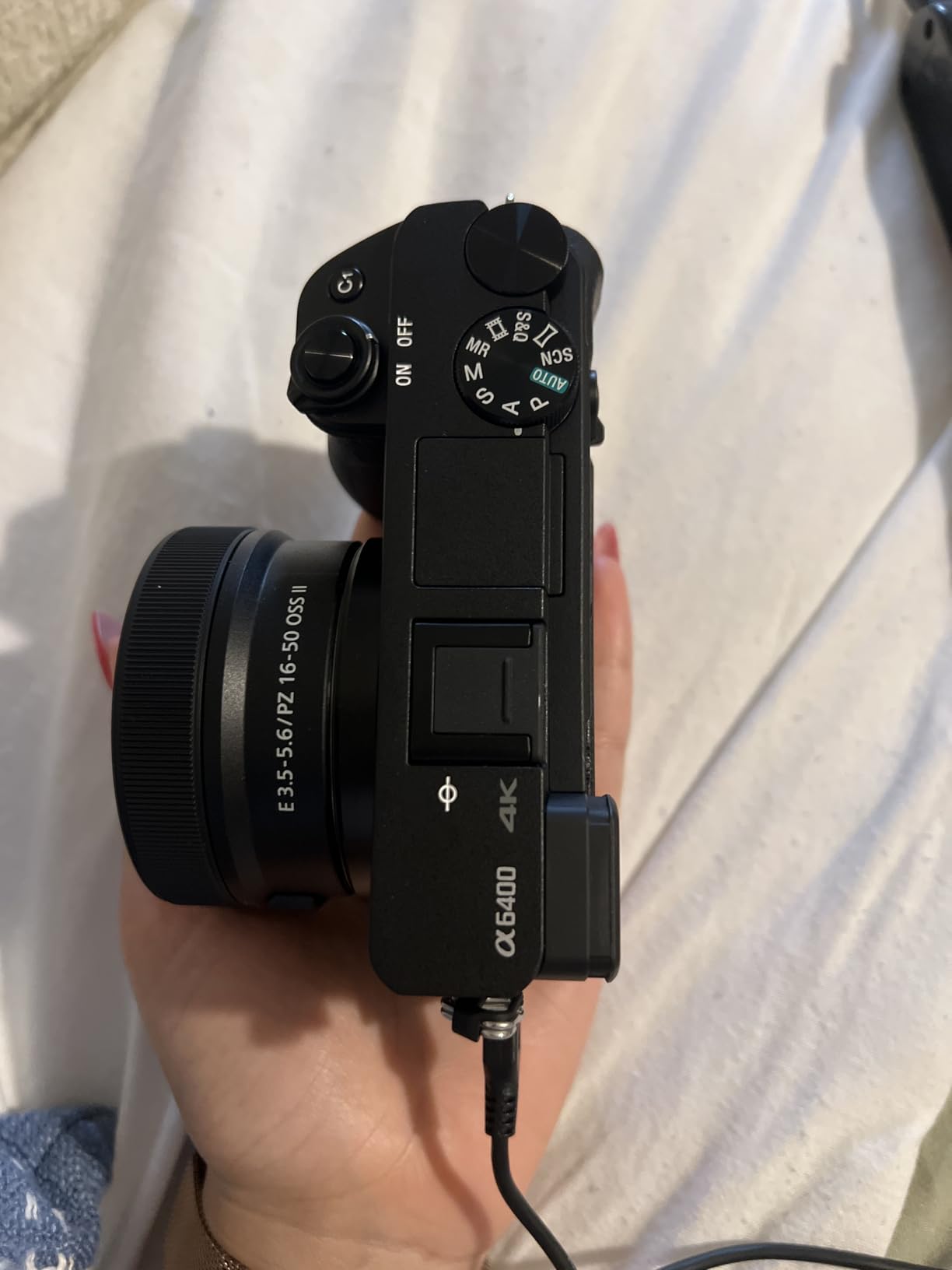
The Sony a6400 has earned its place as one of the most popular cameras for infrared conversion, and for good reason. This APS-C mirrorless camera has been extensively tested by the full spectrum community, with proven results across various conversion types. After converting my a6400 to full spectrum, I immediately understood why it’s so highly regarded.
Sony’s APS-C sensors have excellent infrared sensitivity, producing clean files with pleasing tonality. The 24.2-megapixel resolution strikes an ideal balance between detail and file size. Real-time Eye AF continues to function impressively well even with infrared conversion, making the a6400 a strong choice for portrait photographers seeking that ethereal infrared look.
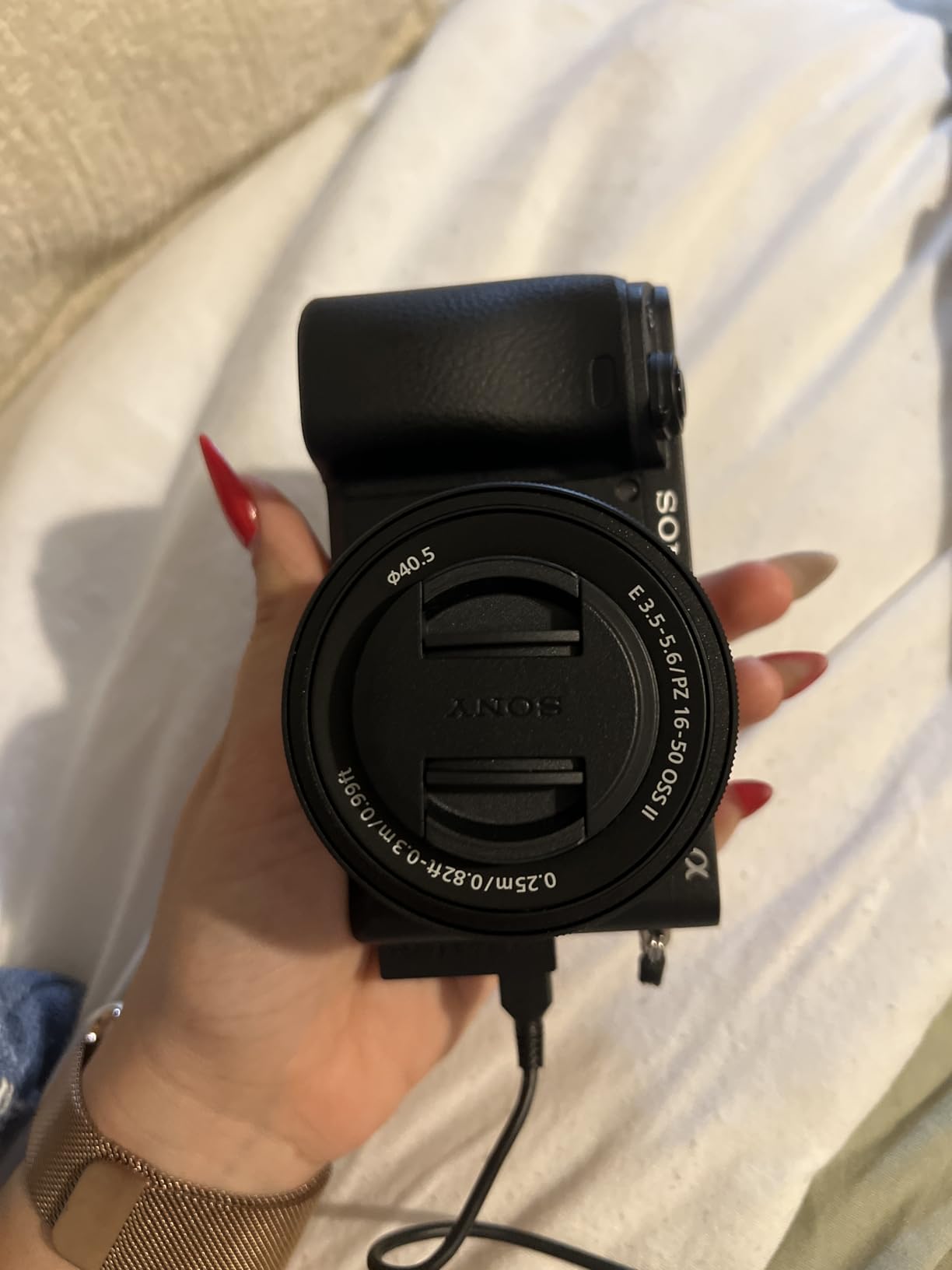
The 180-degree flip screen is a thoughtful feature for self-portraits and vlogging, even in infrared. The camera’s compact body is weather-sealed, providing protection when shooting outdoors. While it lacks in-body stabilization, many E-mount lenses offer optical stabilization that works well for handheld infrared shooting.
The extensive E-mount lens ecosystem provides numerous options that work beautifully with full spectrum conversion. From wide-angle zooms to fast primes, you’ll find plenty of lenses that exhibit minimal hot spots. The ability to adapt A-mount and other mounts further expands your options as you explore different focal lengths for infrared work.
Best For:
The Sony a6400 is an excellent choice for photographers who want a proven, reliable platform for full spectrum photography. It’s particularly well-suited for portrait photographers who need dependable eye autofocus, street photographers who appreciate its compact size, and hybrid shooters who need both photo and video capabilities.
Considerations:
The lack of in-body image stabilization is notable, though lens-based OIS helps mitigate this. The battery life is adequate but not exceptional, so a spare battery is recommended for extended shoots. The absence of an electronic viewfinder might bother some users, though the rear screen is excellent. The camera is getting older in the market cycle, yet still commands premium pricing, which is worth considering.
7. Fujifilm X-T30 III – Film Simulation Advantage
Pros
- Beautiful film simulations
- Excellent color science
- 10-bit 4:2:2 video at $1000
- Compact vintage design
- AI-based autofocus
Cons
- Newer model with fewer reviews
- APS-C not full-frame
- No in-body stabilization
- X-mount lens ecosystem
Fujifilm cameras occupy a special place in the photography world, known for their exceptional color science and film simulations. The X-T30 III brings these strengths to full spectrum photography with impressive results. After converting my X-T30 III, I discovered that Fujifilm’s famous color profiles can create unique infrared looks that are difficult to replicate with other brands.
The 26.1-megapixel X-Trans sensor uses a unique color filter array that resists moire without an optical low-pass filter. This design works beautifully for infrared photography, producing exceptionally detailed files. The AI-based subject detection autofocus is surprisingly capable, even when working with the altered light spectrum of full spectrum conversion.
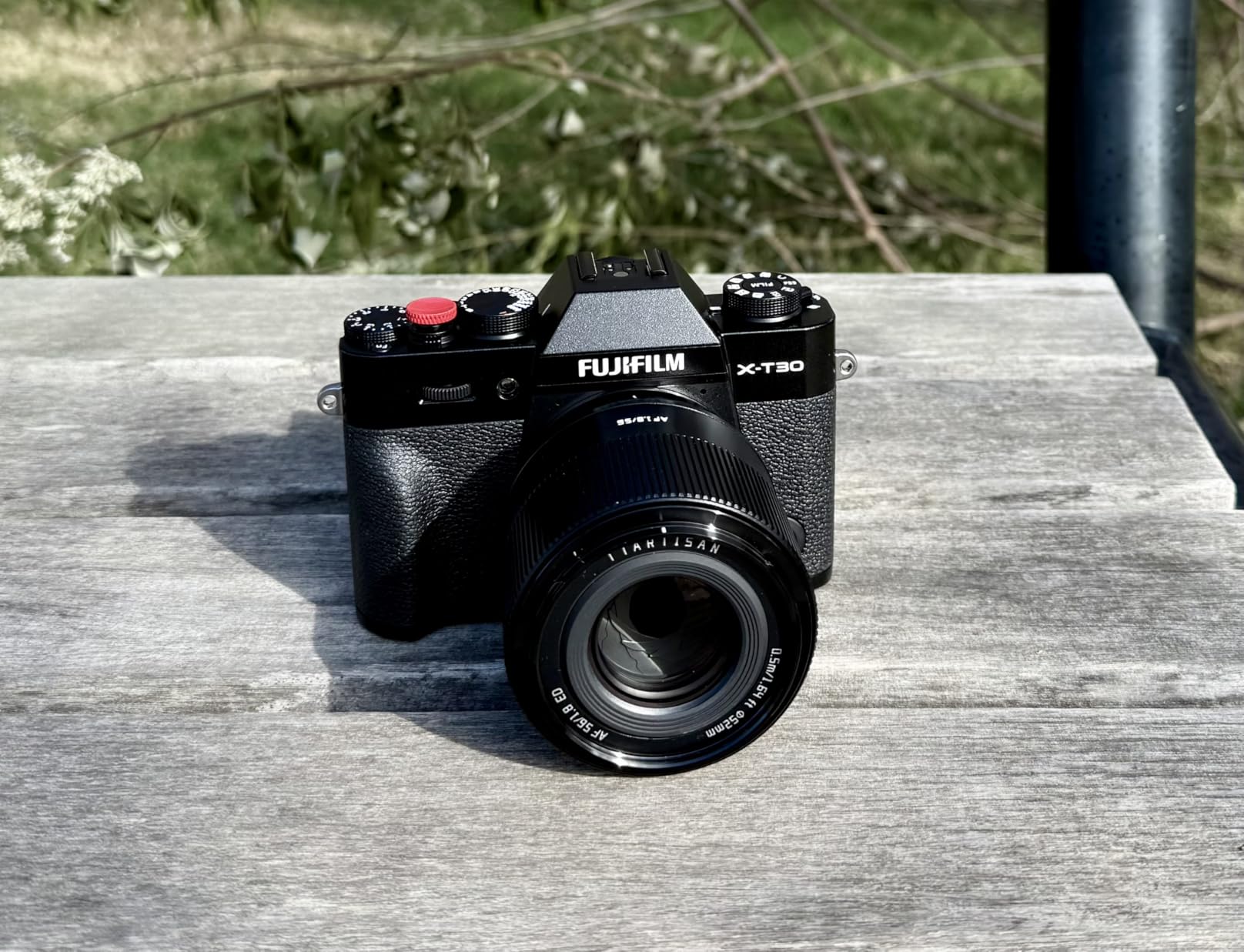
What truly sets the X-T30 III apart is its 20 built-in film simulations. While these are designed for normal photography, they can create interesting starting points for infrared processing. The Acros simulation, in particular, can produce stunning black and white infrared images with remarkable tonality straight out of camera. The vintage-style body with physical control dials is a joy to use, making the shooting experience more engaging.
Video capabilities are exceptional for this price point, with 10-bit 4:2:2 Open Gate recording. This means the camera can capture full-spectrum video with professional-quality color depth, opening creative possibilities for infrared filmmaking. The compact, lightweight body makes the X-T30 III an excellent travel companion for infrared photography adventures.

Best For:
The Fujifilm X-T30 III is ideal for creative photographers who appreciate unique color rendering and film-like aesthetics. It’s perfect for street photographers who value discretion and style, hybrid shooters who need both photo and video capabilities, and anyone who enjoys the tactile experience of physical camera controls.
Considerations:
The X-T30 III is a relatively new model with fewer long-term reviews in the infrared community. Like other cameras in this class, it lacks in-body image stabilization, which means you’ll rely on lens stabilization or higher shutter speeds. The X-mount lens ecosystem is excellent but not as extensive as Canon or Sony systems. However, for creative infrared work, the unique film simulation capabilities alone may justify the investment.
8. Panasonic Lumix G85 – Weather-Sealed Workhorse
Pros
- Dual I.S. (body+lens)
- Weather-sealed body and lens
- Fully articulating touchscreen
- Great 4K video
- Excellent value for money
Cons
- Autofocus sluggish in low light
- 16MP lower resolution
- Micro Four Thirds smaller sensor
- Battery life not amazing
The Panasonic Lumix G85 is a hidden gem in the full spectrum photography world. This Micro Four Thirds camera has been around for years but remains relevant thanks to its practical features and excellent value. After converting my G85 to full spectrum, I’ve come to appreciate it as a reliable workhorse that delivers consistent results in challenging conditions.
The standout feature is the Dual I.S. (Image Stabilization) system, which combines in-body 5-axis stabilization with lens-based optical stabilization. This dual approach is incredibly effective for handheld infrared photography, allowing sharp shots at shutter speeds that would be impossible with unstabilized cameras. The weather-sealed body and kit lens provide confidence when shooting in rain or dusty environments.

The fully articulating touchscreen is a thoughtful feature that enables composition from any angle, whether you’re shooting low to the ground or holding the camera overhead. The 16-megapixel resolution might seem modest by today’s standards, but it’s perfectly adequate for infrared work and keeps file sizes manageable. The 4K Photo mode is genuinely useful, allowing you to extract still frames from video to capture the perfect infrared moment.
Panasonic’s Depth From Defocus autofocus system works well in good light, though it can struggle in dim conditions. This is rarely an issue for typical infrared shooting, where you’re often working in daylight. The included 12-60mm lens provides a versatile 24-120mm equivalent range, covering most infrared photography scenarios from landscapes to portraits.

Best For:
The Panasonic Lumix G85 is perfect for outdoor photographers who need weather sealing and stabilization in an affordable package. It’s ideal for hikers and travel photographers who encounter variable conditions, video creators who need reliable 4K capabilities, and anyone seeking a budget-friendly entry point into full spectrum photography.
Considerations:
The 16-megapixel sensor offers less resolution than some competitors, which matters if you make very large prints. Autofocus can be sluggish in low light, though this is less critical for typical infrared applications. The Micro Four Thirds sensor is smaller than APS-C or full-frame, affecting depth-of-field control and low-light performance. However, for the price point, these tradeoffs are reasonable.
Understanding Full Spectrum Photography
Full spectrum photography captures light beyond what human eyes can see. Normal cameras have an internal filter that blocks ultraviolet and infrared light, allowing only visible light to reach the sensor. Full spectrum conversion removes this filter, enabling the camera to record light from approximately 300nm (ultraviolet) through 700nm (visible) to 1000nm+ (infrared).
This expanded spectral range reveals dramatic possibilities. Infrared landscapes transform with glowing white foliage and dark, dramatic skies. Ultraviolet photography shows patterns invisible to humans, such as pollen patterns on flowers or sunscreen distribution on skin. Forensic investigators use full spectrum imaging to detect alterations to documents or trace evidence. Scientific researchers employ it to study plant health, astronomical phenomena, and more.
The conversion process replaces the camera’s internal IR/UV cut filter (often called a hot mirror) with clear glass or a specialized filter. This modification permanently alters the camera, making it dedicated to full spectrum work. While this might seem drastic, many photographers choose to convert an older camera or purchase a second body specifically for this purpose.
Key Factors When Choosing a Camera
When selecting a camera for full spectrum conversion, several factors matter more than others. Conversion difficulty varies significantly between models. Some cameras like the Sigma fp are famously easy to convert, while others require more disassembly. Reputable conversion services like Kolari Vision, Spencer’s Camera, and LifePixel have extensive experience and can advise on the best approach for your chosen model.
Custom white balance capability is essential for infrared photography. Some cameras struggle to set custom white balance in infrared, resulting in overwhelmingly red images that are difficult to correct. The cameras recommended here all handle custom white balance well, though some may require workaround techniques for certain conversion types.
Lens compatibility is a major consideration. Many lenses exhibit hot spots when used for infrared photography—bright circular artifacts that appear in the center of the frame. This varies widely between lenses and has no correlation with optical quality for normal photography. Research specific lens-camera combinations before investing in glass, or consult resources like Kolari Vision’s lens hotspot database.
Sensor stack thickness affects lens performance, especially with adapted lenses. Some systems have thinner sensor stacks that work better with a wider range of lenses. Mirrorless cameras generally have an advantage here, as do certain brands like Olympus and Panasonic within the Micro Four Thirds system.
Filter Options for Full Spectrum Photography
Once your camera is converted to full spectrum, you’ll use filters on the front of your lens to control which wavelengths reach the sensor. This versatility is why full spectrum conversion offers more flexibility than dedicated infrared or ultraviolet conversions.
An IR/UV cut filter (also called a hot mirror filter) restores normal color photography by blocking infrared and ultraviolet light. This allows you to use your converted camera for conventional photography when needed. Many full spectrum photographers carry both IR filters and hot mirror filters for maximum versatility.
Infrared filters come in various strengths. A 720nm filter is the most common choice for classic black and white infrared photography, providing dramatic white foliage and dark skies. A 590nm filter allows some color to pass through, enabling color infrared effects with blue skies and yellow/red foliage. A 665nm filter offers a middle ground between these extremes.
For ultraviolet photography, you’ll need specialized UV bandpass filters that block visible and infrared light while passing only ultraviolet wavelengths. These are typically more expensive and require careful handling as they block most visible light, making composition challenging.
Frequently Asked Questions
What cameras are full spectrum?
Full spectrum cameras are cameras that have been modified to remove the internal IR/UV cut filter, allowing them to capture light from ultraviolet through visible to infrared wavelengths (typically 300-1000nm). Popular models for full spectrum conversion include the Canon EOS R8, Nikon Z 5, Sony A6000 series, Olympus OM-D series, and Canon EOS M series. These cameras can be purchased new and sent to conversion services like Kolari Vision or Spencer’s Camera for modification.
Can I use a full spectrum camera for normal photography?
Yes, you can use a full spectrum camera for normal photography by attaching an IR/UV cut filter (also called a hot mirror filter) to your lens. This filter blocks infrared and ultraviolet light, allowing only visible light to reach the sensor, effectively restoring normal color photography capabilities. Many full spectrum photographers carry both IR filters and hot mirror filters for versatility, allowing them to switch between creative infrared work and conventional photography with the same camera.
What filters do I need for full spectrum photography?
For a full spectrum camera, you’ll typically need: 1) An IR/UV cut filter (hot mirror) for normal photography, 2) A 720nm infrared filter for classic black and white IR, 3) A 590nm or 665nm filter for color infrared effects, 4) Optional UV bandpass filter for ultraviolet photography. These filters screw onto your lens and determine which wavelengths reach the sensor, giving you control over the creative effect.
Is full spectrum the same as infrared photography?
No, full spectrum and infrared photography are related but different. Full spectrum cameras capture light across ultraviolet, visible, and infrared wavelengths by removing the internal IR/UV cut filter. Infrared cameras are typically converted to capture only infrared wavelengths by replacing the internal filter with one that passes only infrared light. Full spectrum conversion offers more flexibility because you can use different front filters to achieve various effects, while dedicated infrared conversion locks you into that specific wavelength range.
How much does full spectrum conversion cost?
Professional full spectrum conversion typically costs between $200 and $500 depending on the camera model and conversion service. Kolari Vision, Spencer’s Camera, and LifePixel are reputable services in the United States. Some camera models are more difficult to convert and command higher prices. DIY conversion is possible but risky, as it involves opening the camera and exposing the sensor to dust. The Sigma fp is noted as the easiest camera for DIY conversion due to its accessible sensor design.
Conclusion
Full spectrum photography opens creative possibilities that go far beyond conventional imaging. The best cameras for full spectrum photography balance conversion ease, reliable performance, and practical features that support this specialized pursuit. Whether you choose the lightweight Canon EOS R8, the value-packed Nikon Z 5, or the budget-friendly OM SYSTEM E-M10 Mark IV, each recommendation here has been proven in the field by the infrared photography community.
Remember that full spectrum conversion is a commitment—it permanently alters your camera. Many photographers start with an older body or purchase a second camera specifically for this purpose. The investment is worthwhile for the unique images you’ll create. From ethereal infrared landscapes to scientific ultraviolet imaging, full spectrum photography reveals an invisible world waiting to be explored.