
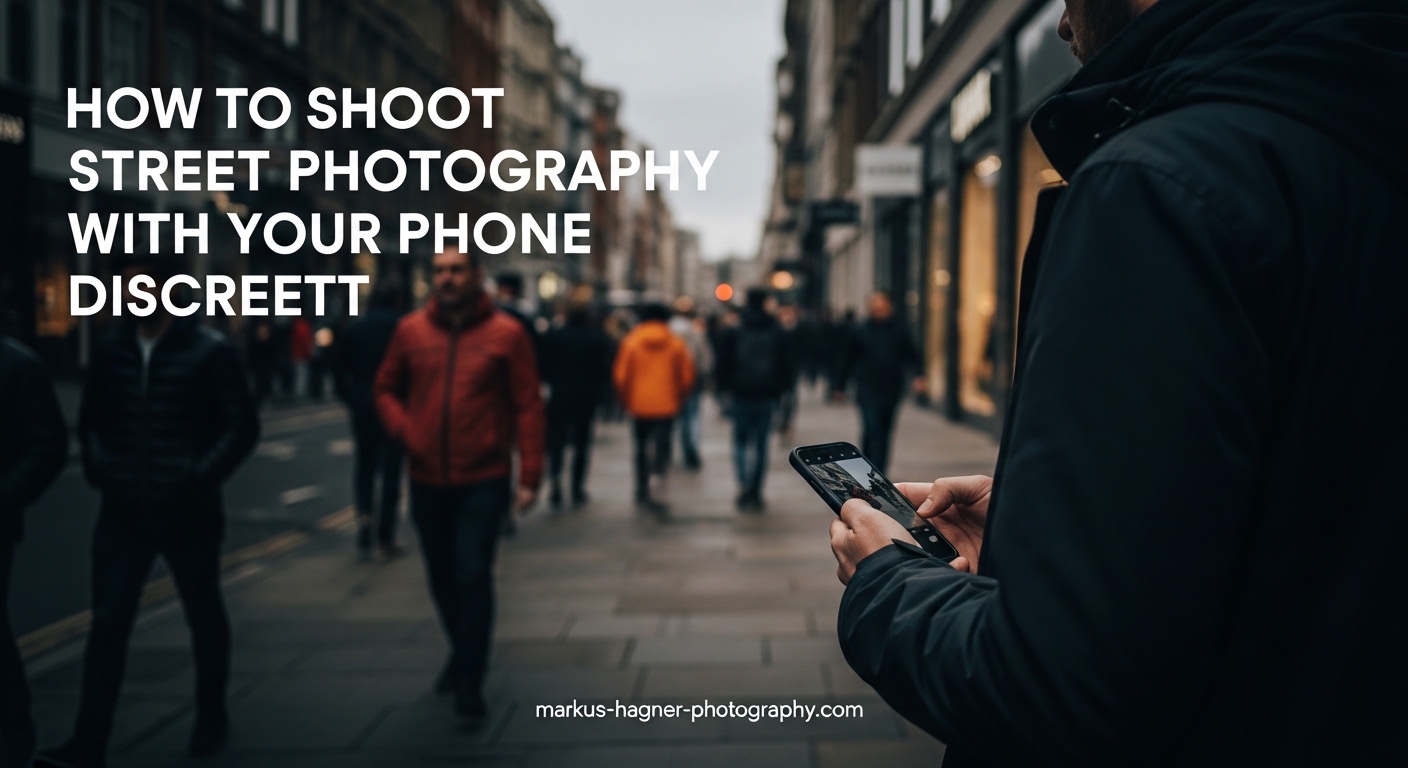
Street photography has always been about capturing raw, unfiltered moments of everyday life. But there’s something uniquely powerful about doing it with your phone. It’s less intrusive, always in your pocket, and the subjects you photograph often don’t see you as a “photographer” — you’re just another person checking their phone. Over the years, I’ve developed techniques that help me stay invisible while getting incredible shots. In this guide, I’ll share everything I’ve learned about shooting street photography with your phone and staying discreet.
This guide covers mental preparation, camera settings, body language, and specific shooting techniques that work. Whether you’re new to street photography or looking to sharpen your discreet shooting skills, these tips will help you capture authentic moments without disturbing the scene.
Why Use Your Phone for Street Photography?
The phone has become a legitimate street photography tool, and here’s why I love using mine. First, people don’t view you as a threat when you’re holding a phone. They’re used to everyone having one, so your camera stays invisible in plain sight.
Second, modern smartphone cameras are remarkably capable. The computational photography in today’s iPhones and Android devices handles challenging light situations better than many dedicated cameras. I can pull my phone out, capture a moment, and put it back in my pocket in seconds — faster than any camera bag workflow.
Third, the silent operation is crucial. Unlike a DSLR with its mechanical shutter click, phones can shoot completely silently. This single feature opens up possibilities that weren’t available to street photographers a decade ago. When I’m at a busy intersection or café, my phone lets me document life without interrupting it.
Essential Mental Preparation and Confidence
The biggest barrier to street photography isn’t technical — it’s psychological. Most beginners feel awkward pointing a camera at strangers, and that discomfort shows in their body language. I’ve been there, and it took time to build real confidence.
Here’s what changed everything for me: I stopped thinking of myself as “sneaking” photos. You’re not doing anything wrong — street photography in public spaces is legal in most places. Own that presence. Walk with purpose, stand where you belong, and don’t apologize for being there.
From Reddit discussions I’ve read, the most common fear is looking “creepy.” The solution is simple: don’t hide. Don’t skulk behind corners or pretend to look at something else while snapping photos. That behavior actually draws more attention than simply holding your phone openly. When you appear confident and natural, people accept you as part of the environment.
I also remind myself that I’m documenting human experience — something worth preserving. That genuine respect for your subjects comes through in your work, and it helps shake off any lingering awkwardness.
Camera Settings for Discreet Shooting
Your phone settings can make or break your discreet street photography workflow. The goal is instant access and silent capture. Let me walk you through what works for me.
Silent Mode — This is non-negotiable. Make sure your phone is on silent, but also check that your camera app doesn’t have a shutter sound. On iPhone, you can mute the camera sound entirely. On Android, it varies by manufacturer, but most allow silent shooting in manual modes.
Volume Button Shutter — Most phones let you use the volume buttons to trigger the shutter. This is revolutionary for hip shooting. You hold the phone at waist level, frame using your screen, and press volume down to shoot. The physical button gives you better stability than tapping the screen.
Burst Mode — When something is happening fast, burst mode catches multiple frames. Street photography is about the “decisive moment,” and burst mode increases your odds of hitting that perfect fraction of a second. On iPhone, you just hold down the shutter. On Android, it’s usually a matter of selecting burst in your camera app.
Focus and Exposure Lock — Tap and hold on your phone screen to lock focus and exposure. This prevents the camera from hunting or adjusting when you raise the phone, which wastes precious seconds and can alert subjects.
Quick Launch — Set up your phone so you can launch the camera from sleep with one or two actions. On iPhone, swipe left from the lock screen. On Android, double-tap the power button or use a gesture. Every millisecond counts when a great moment unfolds in front of you.
Body Language and Blending In Techniques
Your body language communicates before your camera ever comes up. I’ve watched subjects notice me before I even raised my phone, simply because my posture was wrong. Here’s how to blend in.
Dress Like a Tourist or Commuter — What you wear matters more than you’d think. Avoid looking like a “professional photographer” with camera vests or technical gear. Casual, slightly rumpled clothing reads as local or tourist — both acceptable. I often wear jeans, a plain t-shirt, and a jacket that lets me hide the phone in my hand.
Act Preoccupied — This is the classic technique that works every time. Look at your phone frequently, check messages, glance at maps. When you spot a moment, you’re not “aiming a camera” — you’re raising your phone to check something. The transition is seamless, and by the time they realize what’s happening, you’ve already captured the shot.
Use the Environment — Lean against walls, sit at café tables, wait at crosswalks. When you’re stationary and engaged with something (a menu, a map, your own thoughts), people ignore you. The best street photographers become furniture in the urban landscape.
Walk With Purpose — People who look lost or uncertain attract attention. Walk like you know where you’re going. Even if you’re wandering aimlessly looking for shots, carry yourself like you have a destination.
Shooting Techniques for Staying Unnoticed
Now let’s get into the actual shooting methods that keep your subjects unaware. These techniques take practice but become second nature quickly.
Hip Shooting — This is the bread and butter of discreet street photography. Hold your phone at waist level with the screen facing you. Look down at the screen to compose, then press the volume button to shoot. You never raise the phone to your eye, so there’s nothing for subjects to react to.
Practice this at home first. Hold your phone naturally at waist height, look at the screen, and try to compose balanced images. The angle is different from eye-level shooting — you need to account for the perspective. Once you’re comfortable, take it to the streets.
The Decoy Technique — Pretend to photograph something else entirely. Look at a building, raise your phone as if taking a picture of architecture, then pivot smoothly to capture the real subject. By the time they register what’s happening, you’ve got the shot.
Zone Focusing — Instead of relying on autofocus (which can be slow and loud on some phones), pre-set your focus distance. Estimate where your subject will be — say, 3 meters away — tap on the screen at that distance, and lock focus. When someone enters that zone, just shoot. No waiting for focus to lock.
The Wait and Observe — Sometimes patience beats technique. Find an interesting spot — a corner, a bench, a café outdoor area — and wait. Observe the flow of people. When you anticipate a moment developing, raise your phone casually and capture it. You become a journalist waiting for the story to unfold.
Types of Discreet Shots That Work Best (2026)
Not every street photo requires a direct confrontation with your subject. Some of the most powerful images come from moments where the subject is completely unaware. Here are the approaches that work best for discreet shooting.
Silhouettes — Backlit scenes create striking silhouettes. Position yourself so the light is behind your subject, and expose for the background. Your subject becomes a shape, unrecognizable but emotionally powerful. This technique solves the “identifiability” problem entirely — no one can complain about being photographed when they’re just a shadow.
Backs of Heads — There’s something intriguing about seeing the world from behind. A person’s posture, their interaction with the environment, their clothing — all tell a story without showing their face. This is one of the safest approaches and often produces beautiful, mysterious images.
Reflections — Windows, puddles, mirrors, and sunglasses all reflect the world while hiding the photographer. You can photograph people through reflections in shop windows or capture street scenes in rain puddles. The reflection becomes both subject and shield.
Wide Environmental Shots — Instead of isolating individuals, pull back and capture the broader scene. These images tell stories about places, cultures, and moments in time. When people are small within the frame, they’re less likely to feel singled out.
Shadows and Light — Play with the dramatic light and dark patterns in urban environments. Shadows can anonymize subjects while creating visually striking compositions. A person walking through a shaft of light becomes abstract art.
Phone-Specific Tips for Street Photography
Let me get specific about iPhone and Android settings, since they handle things slightly differently.
iPhone Users — Use the native camera app for quickest access. Enable “HDR” for better dynamic range in challenging light. For ProRAW, only use it when you need maximum editing flexibility — it slows down processing. Turn off “View Full HDR” so you see what the actual capture looks like, not just the screen representation.
Android Users — Samsung, Google Pixel, and other flagships all have excellent camera apps. The Samsung Pro mode gives you full manual control over ISO, shutter speed, and focus. Google’s Night Sight is incredible for low-light street work. Explore your manufacturer’s specific features — they often include helpful street photography modes.
Third-Party Camera Apps — If you want more control, consider apps like ProCam or VSCO. These give you manual controls, silent shooting options, and better raw handling. However, the native camera app is faster, so only switch if you need specific features.
Volume Button Mastery — Make sure volume button shutter is enabled in your settings. This is your secret weapon for hip shooting. Some phones also let you use the volume buttons for burst mode — check your settings.
Night Street Photography with Your Phone
Night brings different challenges and opportunities for discreet street photography. The darkness actually helps you stay invisible, and the artificial lighting creates dramatic possibilities.
Night Mode — Modern phone night modes are remarkable. They capture more light than your eyes can see. However, night mode requires the phone to be steady for 1-3 seconds. That’s tricky for moving street scenes. Use night mode for stationary subjects or hold very steady. For moving subjects at night, stick to regular mode and accept some motion blur — it can actually add to the mood.
Find the Light — Street lights, neon signs, and car headlights become your light sources. Look for pools of light at night — they’re your compositions. Position yourself where people walk through lit areas.
Higher ISO Tolerance — Phones handle high ISO reasonably well thanks to computational photography. Don’t be afraid to push ISO to 1600 or even 3200. The noise reduction in post-processing can clean up images that would have been unusable on older cameras.
When and How to Ask Permission In 2026?
Sometimes, despite your best discreet techniques, you want to photograph someone directly. Maybe they’ve noticed you, maybe you want a portrait, maybe the moment calls for it. Here’s how to handle it ethically.
When to Ask — If someone clearly notices you and looks uncomfortable, acknowledge them. A smile and a nod often defuse the situation. If you want a more deliberate portrait, always ask. Street photography gives you legal rights, but ethics matter.
How to Ask — Be direct but friendly. “May I take your portrait?” works better than lengthy explanations. Most people say yes when approached with confidence and respect. If they say no, thank them and move on — don’t argue or linger.
Legal Considerations — In most public spaces, you have the legal right to photograph anyone. However, this varies by location. Private property has different rules. Some countries are more restrictive than others. Know the laws in your area, and always err on the side of respect. The goal is capturing authentic moments, not creating conflict.
Remember that ethical street photography isn’t about what’s technically allowed — it’s about treating your subjects with dignity. Even when you have the legal right to photograph someone, consider whether they might prefer not to be. Sometimes the ethical choice produces better art anyway.
Frequently Asked Questions
How to be discreet in street photography?
Master body language, use silent phone settings, shoot from hip, dress casually, and practice confident presence. The key is not hiding but appearing like you belong in the scene.
What is the 20 60 20 rule in photography?
This rule suggests 20% of your photos will be great, 60% will be usable, and 20% will be unusable. In street photography, this means shooting frequently and being selective during editing.
Can you do street photography with a phone?
Absolutely. Modern smartphones offer excellent cameras with quick access, silent operation, and less threatening presence than large cameras. Many professional street photographers use phones as their primary tool.
How are street photographers invisible?
They blend in through confident body language, appropriate clothing, and by appearing preoccupied with their phone. They also use techniques like shooting from hip, using reflections, and capturing silhouettes.
Final Thoughts on Discreet Street Photography
Street photography with your phone opens up possibilities that didn’t exist a decade ago. The camera in your pocket is more capable than the professional equipment from just twenty years ago, and the ability to shoot silently changes everything.
Start with the techniques in this guide. Practice hip shooting until it becomes natural. Work on your body language so confidence replaces awkwardness. Master your phone settings so you’re always ready. Then get out there and shoot — a lot.
As with any skill, street photography improves through practice. Your first attempts might feel uncomfortable, and that’s completely normal. Every photographer who’s mastered discreet shooting has been where you are now. The key is to keep shooting, keep learning, and trust the process.
The streets are full of stories waiting to be told. Your phone is ready. Now go capture them.