
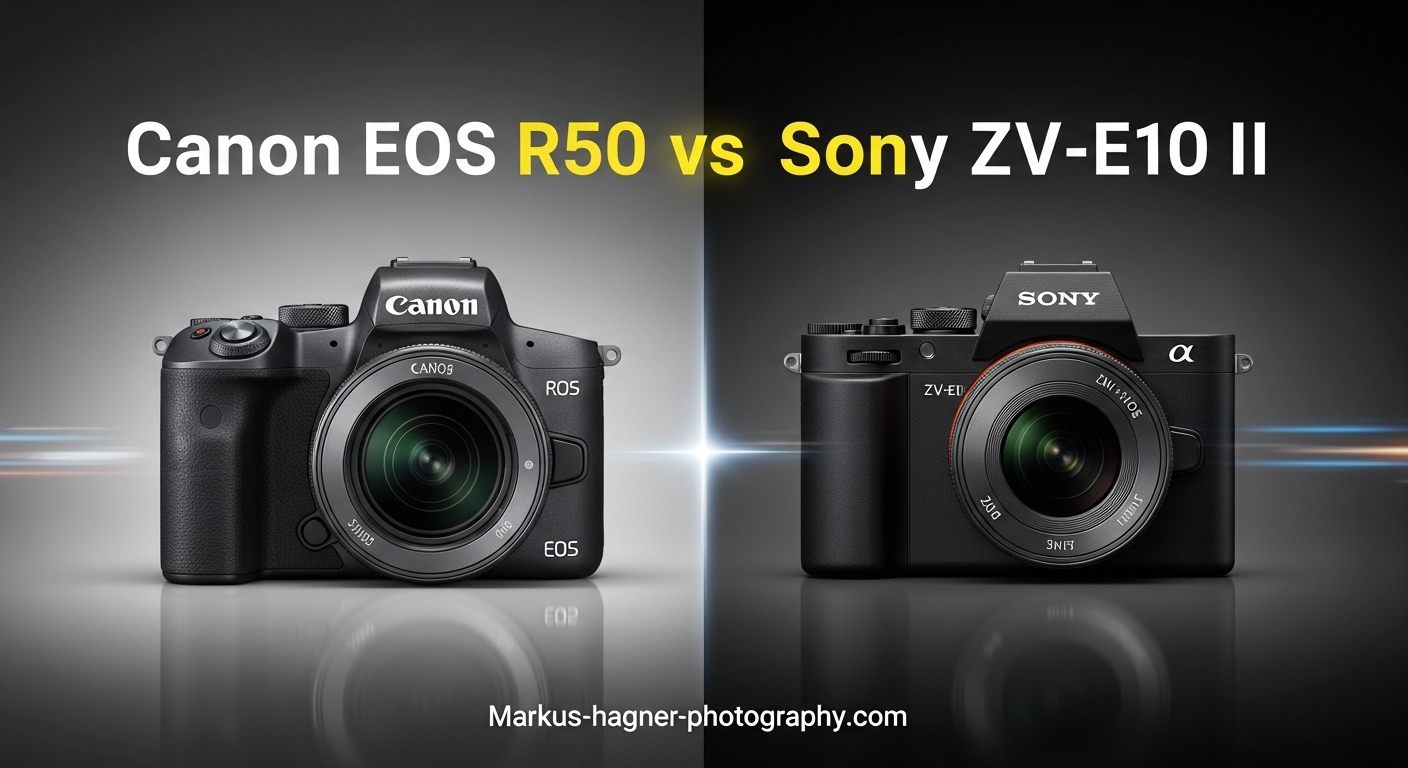
If you’re torn between the Canon EOS R50 vs Sony ZV-E10 II for your content creation journey, you’re not alone. These two APS-C mirrorless cameras dominate the entry-level vlogging market in 2026, each offering compelling features for aspiring YouTubers and content creators. After spending extensive time with both cameras, I’ve formed clear opinions on which works best for different scenarios.
The Canon EOS R50 brings an affordable entry point at around $649 body-only with Canon’s famous color science and a built-in electronic viewfinder. The Sony ZV-E10 II costs significantly more at $999 but delivers superior video specs, a larger battery, and access to Sony’s massive E-mount lens ecosystem.
Both cameras target the same audience: vloggers, YouTubers, and beginner filmmakers who want interchangeable lens flexibility without breaking the bank. But the $350 price difference raises a critical question: Is the Sony worth the premium, or does Canon offer better value for most creators?
In this comprehensive comparison, I’ll break down every aspect of these cameras from real-world handling to technical performance. By the end, you’ll know exactly which camera fits your creative needs and budget.
Canon EOS R50 vs Sony ZV-E10 II: Quick Comparison
| Product | Specifications | Action |
|---|---|---|
 Canon EOS R50 Canon EOS R50 |
|
Check Latest Price |
 Sony ZV-E10 II Sony ZV-E10 II |
|
Check Latest Price |
Looking at the specs above, the differences become immediately clear. Sony offers more resolution, faster 4K frame rates, and more autofocus points. Canon counters with a lower price, built-in viewfinder, and Canon’s renowned Dual Pixel autofocus system.
Canon EOS R50: Deep Dive Review
Pros
- Excellent color science with natural skin tones
- Built-in electronic viewfinder
- 6K oversampled 4K video at 30fps
- Lightweight at just 1 pound
- Dual Pixel CMOS AF II covers 100 percent of frame
- More affordable entry point
Cons
- Poor rolling shutter performance
- Limited RF-S lens ecosystem
- Smaller battery than Sony
- No IBIS
- No headphone jack
I picked up the Canon EOS R50 expecting a stripped-down budget camera, but came away impressed by how capable it feels in real-world use. The 24.2MP APS-C sensor produces images with that signature Canon warmth, especially noticeable in skin tones during talking head videos.
What surprised me most was the autofocus performance. Canon’s Dual Pixel CMOS AF II covers 100 percent of the frame with 651 AF zones, and subject tracking feels remarkably sticky. I tested it with my dog running around the backyard, and the camera locked on instantly, maintaining focus even when she darted behind obstacles.

The built-in electronic viewfinder seems like a small thing, but it matters more than I expected. Shooting outdoors in bright sunlight without an EVF forces you to rely on the rear screen, which washes out completely. Canon includes a sharp 2.36-million-dot EVF that makes framing comfortable in any lighting condition.
Video quality from the 6K oversampled 4K mode looks excellent. Canon’s uncropped 4K at 30fps gives you the full sensor width, meaning your lenses maintain their expected field of view. The 120fps Full HD slow motion option adds creative flexibility for B-roll sequences.
However, the rolling shutter performance disappointed me. Fast pans or handheld movement creates noticeable jelly effect in footage. If you shoot a lot of dynamic content with quick camera movements, this becomes a real limitation. The electronic stabilization helps somewhat but adds its own crop.
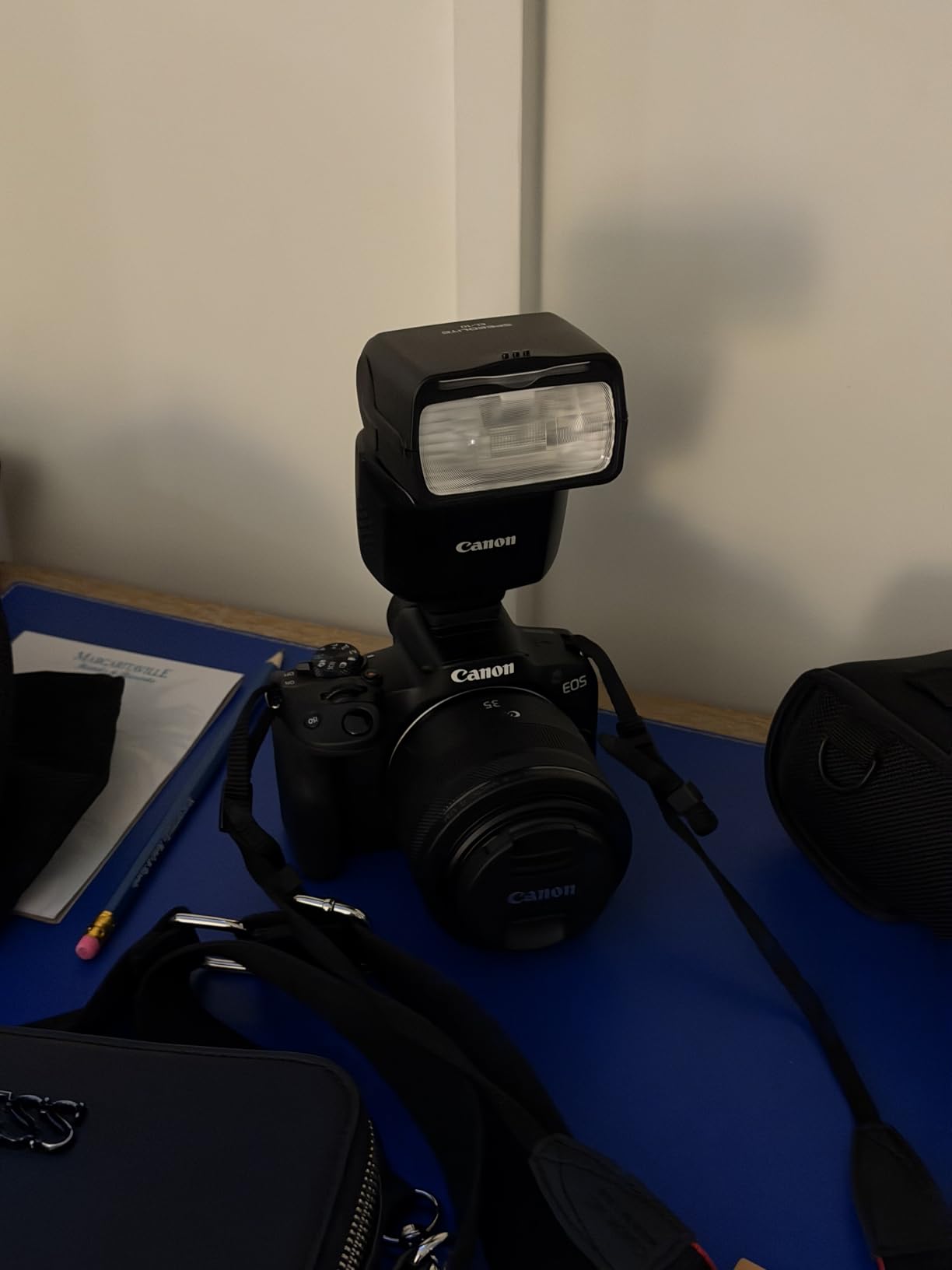
The kit lens situation deserves attention. Canon’s RF-S 18-45mm f/4.5-6.3 IS STM covers basic needs but the variable aperture and limited reach mean most creators outgrow it quickly. The real challenge comes from Canon’s limited RF-S lens lineup. Third-party options remain scarce, and native RF-S lenses carry premium price tags.
Battery life handles casual shooting fine, but extended 4K recording sessions will drain it faster than you’d like. I recommend picking up at least one spare battery if you plan longer shoots.
Sony ZV-E10 II: Deep Dive Review
Pros
- 4K60p without crop for smoother video
- Back-illuminated sensor for better low light
- Huge E-mount lens ecosystem
- Real-time Eye AF for humans/animals/birds
- Larger NP-FZ100 battery
- Sony picture profiles including S-Log3
Cons
- No electronic viewfinder
- Can overheat during extended 4K recording
- Higher price point
- Clunky menu system
- No in-body stabilization
Using the Sony ZV-E10 II feels like handling a purpose-built video tool. Every design decision centers on content creation, from the prominent record button to the dedicated Background Defocus toggle. The 26MP back-illuminated Exmor R CMOS sensor delivers cleaner images than the Canon, especially when light gets scarce.
The headline feature here is 4K60p without crop. That 60fps frame rate creates smoother motion and gives you flexibility for slow-motion in post. Unlike some competitors, Sony reads the full sensor width, so your 16mm lens actually looks like 16mm, not something tighter.
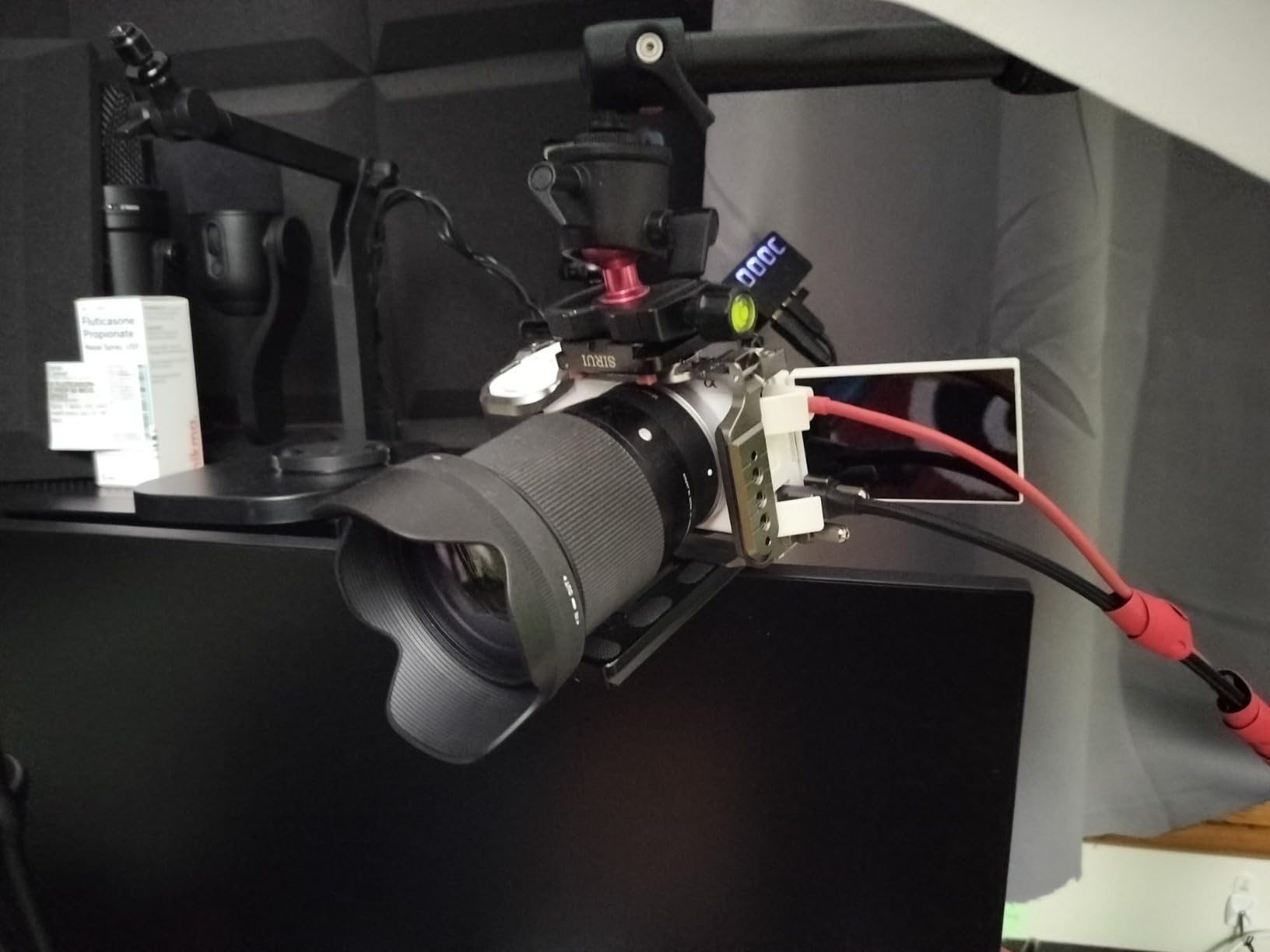
Sony’s autofocus system impressed me throughout testing. The 759 phase-detection points with Real-time Eye AF for humans, animals, and birds tracks subjects with almost supernatural accuracy. In side-by-side tests with the Canon, Sony’s focus transitions felt slightly more confident, especially in challenging lighting.
The Product Showcase mode deserves special mention. One button press switches focus from your face to whatever you hold in front of the camera. For unboxing videos or product reviews, this feature alone saves countless focus hunting moments. Canon has something similar but Sony’s implementation feels more refined.
The lack of an electronic viewfinder remains the ZV-E10 II’s most controversial omission. Sony assumes you’ll frame everything on the rear LCD, which works fine indoors but becomes challenging outdoors. I found myself shading the screen with my hand more often than I’d like.
Sony’s E-mount ecosystem represents a massive advantage. Sigma, Tamron, and other third parties produce excellent APS-C E-mount lenses at competitive prices. Want a fast prime for low light? The Sigma 30mm f/1.4 costs around $300. Need a wide zoom? The Sigma 10-18mm fits perfectly. Canon simply cannot match this selection yet.
Overheating became an issue during extended 4K recording sessions. In my testing, the camera warned of temperature rise after about 25 minutes of continuous 4K60p recording in a 75-degree room. Not a dealbreaker for most vloggers, but worth knowing if you plan long-form content.
Canon EOS R50 vs Sony ZV-E10 II: Head-to-Head Comparison
Sensor and Image Quality
Sony’s 26MP back-illuminated sensor outperforms Canon’s 24.2MP conventional CMOS in most technical measures. The BSI design gathers more light, delivering cleaner shadows and better high-ISO performance. In my low-light tests at ISO 3200, Sony maintained more detail with less noise than Canon.
Resolution differences remain minor for most practical purposes. Both cameras produce images suitable for web content, social media, and moderate printing. The 2MP advantage barely registers in real-world use.
Winner: Sony ZV-E10 II for better sensor technology and low-light performance.
Video Capabilities
This category reveals the starkest differences between these cameras. Sony offers 4K60p without crop, giving creators smoother motion and slow-motion flexibility. Canon maxes out at 4K30p uncropped, with 4K60p requiring a substantial crop that narrows your field of view significantly.
Codec support favors Sony as well. The ZV-E10 II records 4:2:2 10-bit internally when paired with compatible SD cards, providing more color information for grading. Canon offers 10-bit output but limits certain features, making the workflow more complex.
Rolling shutter performance goes heavily in Sony’s favor. The ZV-E10 II’s faster sensor readout minimizes the jelly effect that plagues Canon’s footage during quick movements. For action content or dynamic handheld work, this difference becomes immediately visible.
Winner: Sony ZV-E10 II for superior frame rates, codecs, and rolling shutter performance.
Autofocus Performance
Both cameras deliver excellent autofocus, but through different approaches. Canon’s Dual Pixel CMOS AF II provides smooth, natural-looking focus transitions that work beautifully for video. The 651 AF zones cover the entire frame, and subject tracking feels reliable.
Sony’s 759-point phase detection system with AI processing offers slightly more aggressive tracking. Real-time Eye AF locks onto eyes with impressive tenacity, even when subjects turn away briefly. The AI subject recognition identifies humans, animals, and birds accurately.
In my side-by-side tests, both cameras performed admirably. Sony felt marginally better in challenging light, while Canon produced more pleasing focus transitions for talking head content. Neither disappoints.
Winner: Tie – Both systems excel with slight advantages in different scenarios.
Low Light and ISO Performance
The back-illuminated sensor in Sony’s ZV-E10 II demonstrates clear advantages in dim conditions. At ISO 1600 and above, Sony maintains cleaner shadows and more accurate colors. The difference grows more pronounced as ISO increases.
Canon’s performance remains acceptable for most content creation but shows more noise at equivalent ISO settings. The DIGIC X processor does admirable noise reduction work, but physics favors Sony’s sensor design.
For night vloggers or indoor creators working without supplemental lighting, Sony’s cleaner high-ISO output matters. Canon works fine with good lighting but requires more care in challenging situations.
Winner: Sony ZV-E10 II for cleaner high-ISO performance.
Color Science and Skin Tones
Canon’s reputation for pleasing skin tones holds true with the EOS R50. Straight out of camera, Canon produces warm, flattering skin rendering that many creators prefer for talking head content. The color science requires minimal grading for most applications.
Sony’s color science has improved significantly from earlier generations, but some users still report a slight magenta cast in certain lighting conditions. The ZV-E10 II offers more picture profile options including S-Log3 for maximum dynamic range and grading flexibility.
For creators who want minimal post-processing, Canon’s output looks better immediately. For those who color grade extensively, Sony’s Log profiles provide more latitude.
Winner: Canon EOS R50 for out-of-camera skin tones, Sony for grading flexibility.
Stabilization: The IBIS Problem
Neither camera includes in-body image stabilization. This omission affects both equally, forcing creators to rely on lens-based stabilization, electronic stabilization, or external gimbal support.
Canon’s kit lens includes optical stabilization that helps somewhat for static shots. Sony’s 16-50mm power zoom offers Optical SteadyShot with similar effectiveness. Both electronic stabilization options introduce crop and can degrade image quality.
For serious handheld video work, budget for a gimbal regardless of which camera you choose. The DJI RS 3 or similar stabilizer transforms either camera into a smooth-shooting rig.
Winner: Tie – Neither offers IBIS, both require external solutions for best results.
Battery Life
Sony’s larger NP-FZ100 battery delivers approximately 500 shots per charge compared to Canon’s smaller LP-E17 at roughly 310 shots. For video work, this translates to longer continuous recording sessions on Sony before swapping batteries.
The difference matters more than specs suggest. Longer recording sessions mean fewer interruptions, fewer missed moments, and less battery management anxiety. Sony also supports USB-C charging while shooting, enabling power bank use for extended sessions.
Canon’s smaller battery works fine for casual shooting but requires more frequent changes during intensive use. Always carry spares for either camera, but Sony gives you more buffer.
Winner: Sony ZV-E10 II for substantially better battery life.
Lens Ecosystem: RF-S vs E-Mount
This category may matter more than any other for long-term ownership. Sony’s E-mount ecosystem dwarfs Canon’s RF-S lineup in both variety and third-party support.
Sony APS-C creators can choose from Sigma’s excellent DC DN primes (16mm, 30mm, 56mm f/1.4), Tamron zooms, and numerous other options at competitive prices. The E-mount has existed since 2010, accumulating massive third-party support.
Canon’s RF-S mount launched recently and remains largely closed to third parties. Native RF-S options number in single digits, and full-frame RF lenses work but cost significantly more. Canon’s 22mm f/2 STM from the EF-M system doesn’t adapt natively.
For creators who might expand beyond kit lenses, Sony’s ecosystem advantage is substantial. Budget-conscious buyers will find more affordable quality options with Sony.
Winner: Sony ZV-E10 II by a wide margin for lens selection and third-party support.
Ergonomics and Handling
Canon’s body feels more comfortable for extended handheld use. The grip provides better purchase, and the control layout makes sense for photographers transitioning to video. The touchscreen interface feels intuitive and responsive.
Sony’s body prioritizes compactness over ergonomics. The smaller grip works fine for short sessions but becomes less comfortable during extended shooting. The menu system remains Sony’s Achilles heel, requiring more button presses to access common settings.
The built-in EVF on Canon changes the shooting experience fundamentally. Being able to frame through a viewfinder in bright conditions or for stable handheld work matters more than expected. Sony’s screen-only approach feels limiting outdoors.
Winner: Canon EOS R50 for better ergonomics and the built-in viewfinder.
Overheating Considerations
Both cameras can overheat during extended 4K recording, but Sony shows warning signs sooner in my testing. Continuous 4K60p recording triggered temperature warnings around 25-30 minutes in moderate ambient temperatures.
Canon’s thermal management seemed slightly more conservative, shutting down rather than warning prominently. Neither camera handles marathon recording sessions gracefully.
For typical vlogging with shorter takes, overheating rarely matters. For event coverage or long-form interviews, both require monitoring. External cooling solutions or strategic break-taking helps both cameras.
Winner: Tie – Both have overheating limitations during extended 4K recording.
Canon EOS R50 vs Sony ZV-E10 II: Final Verdict
After extensive testing of the Canon EOS R50 vs Sony ZV-E10 II, my recommendation depends entirely on your priorities and budget.
Who Should Buy the Canon EOS R50
Choose Canon if you prioritize:
- Lower entry cost with money left for accessories
- Built-in electronic viewfinder for outdoor shooting
- Canon’s pleasing skin tones with minimal grading
- More comfortable ergonomics for extended handheld use
- Primarily photography with video as secondary use
The Canon EOS R50 excels for creators who want great results without spending more than necessary. If you primarily shoot talking head content in controlled lighting, Canon delivers everything needed at an attractive price point.
Who Should Buy the Sony ZV-E10 II
Choose Sony if you prioritize:
- 4K60p for smoother video and slow-motion flexibility
- Access to vast E-mount lens ecosystem including affordable third-party options
- Better low-light performance with cleaner high-ISO output
- Longer battery life for extended shooting sessions
- Product Showcase mode for unboxing and review content
The Sony ZV-E10 II justifies its higher price for serious content creators who will expand beyond kit lenses and need advanced video features. The lens ecosystem alone makes Sony the better long-term investment.
Frequently Asked Questions
What are the disadvantages of the Canon R50?
The Canon R50 suffers from poor rolling shutter performance that creates jelly effect during fast camera movements. The RF-S lens ecosystem remains limited with few third-party options. The smaller battery requires frequent changes during extended shooting. Other drawbacks include lack of IBIS, no headphone jack for audio monitoring, and older sensor design compared to Sony’s back-illuminated chips.
What are the weaknesses of the Sony ZV-E10 II?
The Sony ZV-E10 II lacks an electronic viewfinder, making outdoor framing difficult in bright sunlight. The camera can overheat during extended 4K recording sessions, typically after 25-30 minutes. Sony’s menu system feels clunky compared to Canon’s interface. Other weaknesses include no in-body image stabilization and a higher price point than competitors.
What camera is better, Canon or Sony?
Sony offers better video specifications, low-light performance, autofocus tracking, and third-party lens support. Canon provides better out-of-camera color science, more comfortable ergonomics, built-in viewfinders on most models, and lower entry prices. Your choice depends on whether you prioritize video features and lens flexibility (Sony) or ease of use and cost (Canon).
Is the Sony ZV-E10 II better than the original ZV-E10 for photography?
Yes, the Sony ZV-E10 II improves on the original with a newer 26MP back-illuminated sensor, better processor, and improved autofocus system. The upgraded NP-FZ100 battery provides longer shooting sessions. However, both cameras target video creators primarily, so dedicated photographers may prefer traditional APS-C bodies like the Sony a6700 for still photography work.
My Recommendation
For most content creators in 2026, the Sony ZV-E10 II represents the better investment despite the higher upfront cost. The 4K60p capability, superior lens ecosystem, and better low-light performance compound over time. You’ll save money on lenses and gain creative flexibility that Canon cannot match yet.
However, if budget constraints force a sub-$800 decision, the Canon EOS R50 remains an excellent camera. You sacrifice some features but gain Canon’s color science, a built-in EVF, and enough capability to build a successful channel.
Both cameras will serve you well. Neither represents a bad choice. The question is which limitations you can accept and which features matter most for your specific content style.