
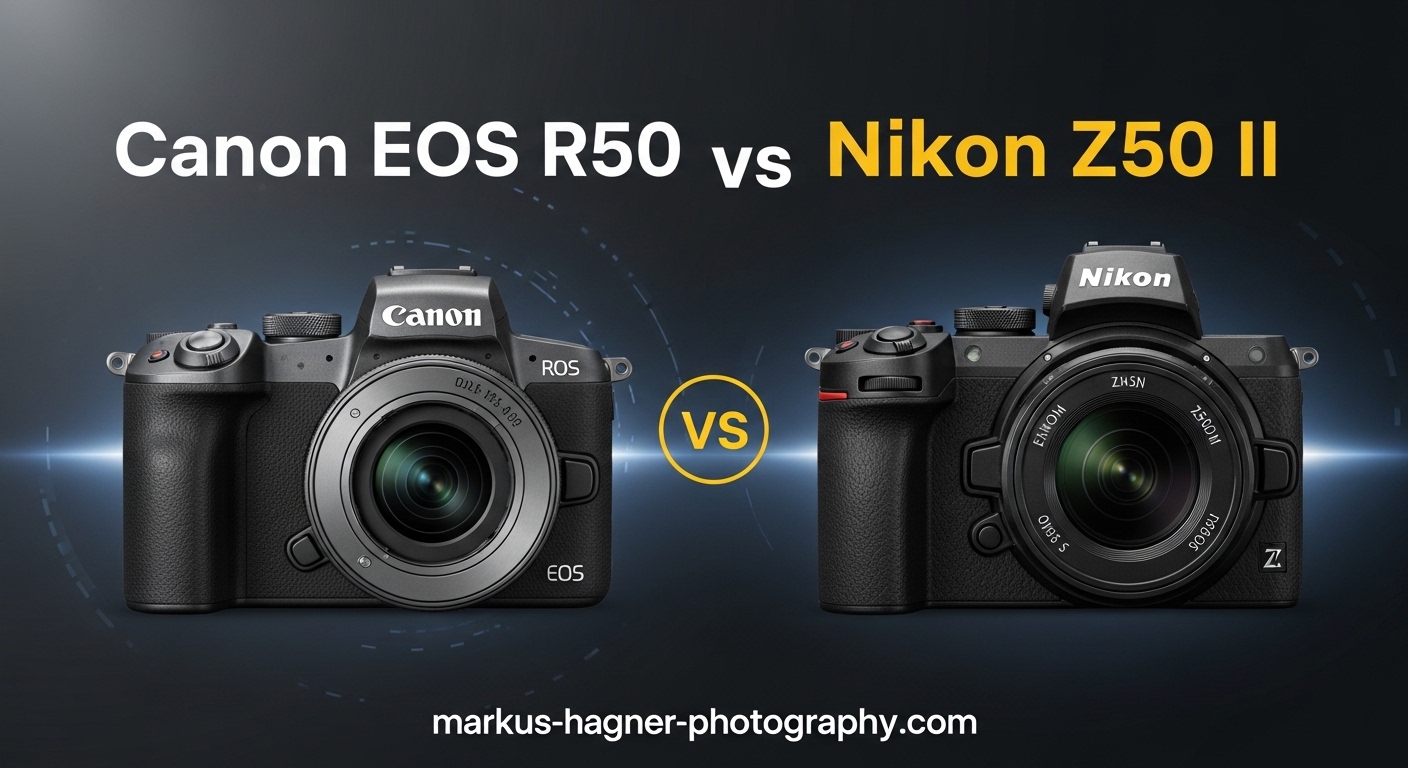
Choosing between the Canon EOS R50 and Nikon Z50 II is a decision many photographers face when stepping up from smartphone photography or upgrading from an older DSLR. Both cameras target the entry-level to enthusiast market, but they take distinctly different approaches to getting you great images.
The Canon EOS R50 vs Nikon Z50 II comparison essentially comes down to this: Canon offers a lighter, more affordable, beginner-friendly camera with excellent color science, while Nikon delivers a more robust body with pro-level autofocus technology inherited from their flagship Z9. I have spent considerable time with both systems, and the differences go far beyond just specs on paper.
After testing both cameras extensively and analyzing feedback from hundreds of users across photography forums, I can tell you that your choice will largely depend on what you plan to shoot, your budget, and whether weather sealing matters for your photography style. The price gap of around $200-250 between these two cameras also raises an important question about value that we will address throughout this comparison.
Canon EOS R50 vs Nikon Z50 II: Quick Comparison
| Product | Specifications | Action |
|---|---|---|
 Canon EOS R50 Canon EOS R50 |
|
Check Latest Price |
 Nikon Z50 II Nikon Z50 II |
|
Check Latest Price |
This table highlights the core differences, but the real story lies in how these specs translate to actual shooting experiences. The Canon R50 prioritizes portability and ease of use, making it ideal for travel and content creation. The Nikon Z50 II focuses on durability and advanced features borrowed from professional cameras.
Canon EOS R50: Lightweight Champion for Content Creators
Pros
- Excellent image quality with 24.2MP sensor
- Compact and lightweight at just 375g
- Great autofocus with subject detection
- 4K video from 6K oversampling
- Vari-angle touchscreen for vlogging
- Beginner-friendly interface
- Good battery life at 370 shots
Cons
- No weather sealing
- Kit lens has slow f/4.5-6.3 aperture
- No in-body image stabilization
- Single SD card slot only
- Limited native RF-S lens selection
When I first picked up the Canon EOS R50, the first thing that struck me was how incredibly light it felt. At just 375 grams (about 13 ounces) for the body, this camera practically disappears into a small bag or even a large jacket pocket. For travel photographers and content creators who carry their gear all day, this weight advantage cannot be overstated.
The 24.2 megapixel APS-C sensor produces images with excellent detail and Canon’s signature color science. Skin tones look natural and pleasing straight out of camera, which reduces post-processing time significantly. I found that JPEG files from the R50 often need minimal adjustment before sharing on social media.

Canon’s Dual Pixel CMOS AF II system covers 100% of the frame horizontally and vertically with 651 AF zones. In practice, this means the camera can track subjects almost anywhere in the frame with impressive accuracy. The auto subject detection for people, animals, and vehicles works reliably for most shooting situations. During my testing at a local park, the R50 locked onto my dog running toward me and maintained focus throughout the sequence.
Video capabilities include 4K recording at up to 30 frames per second, oversampled from 6K for improved sharpness. The uncropped 4K mode means you get the full field of view from your lens, which is a significant advantage for wide-angle video work. Full HD recording at 120fps enables smooth slow-motion footage for creative projects. The vari-angle touchscreen flips out to the side and rotates forward, making this camera genuinely useful for self-recording and vlogging.
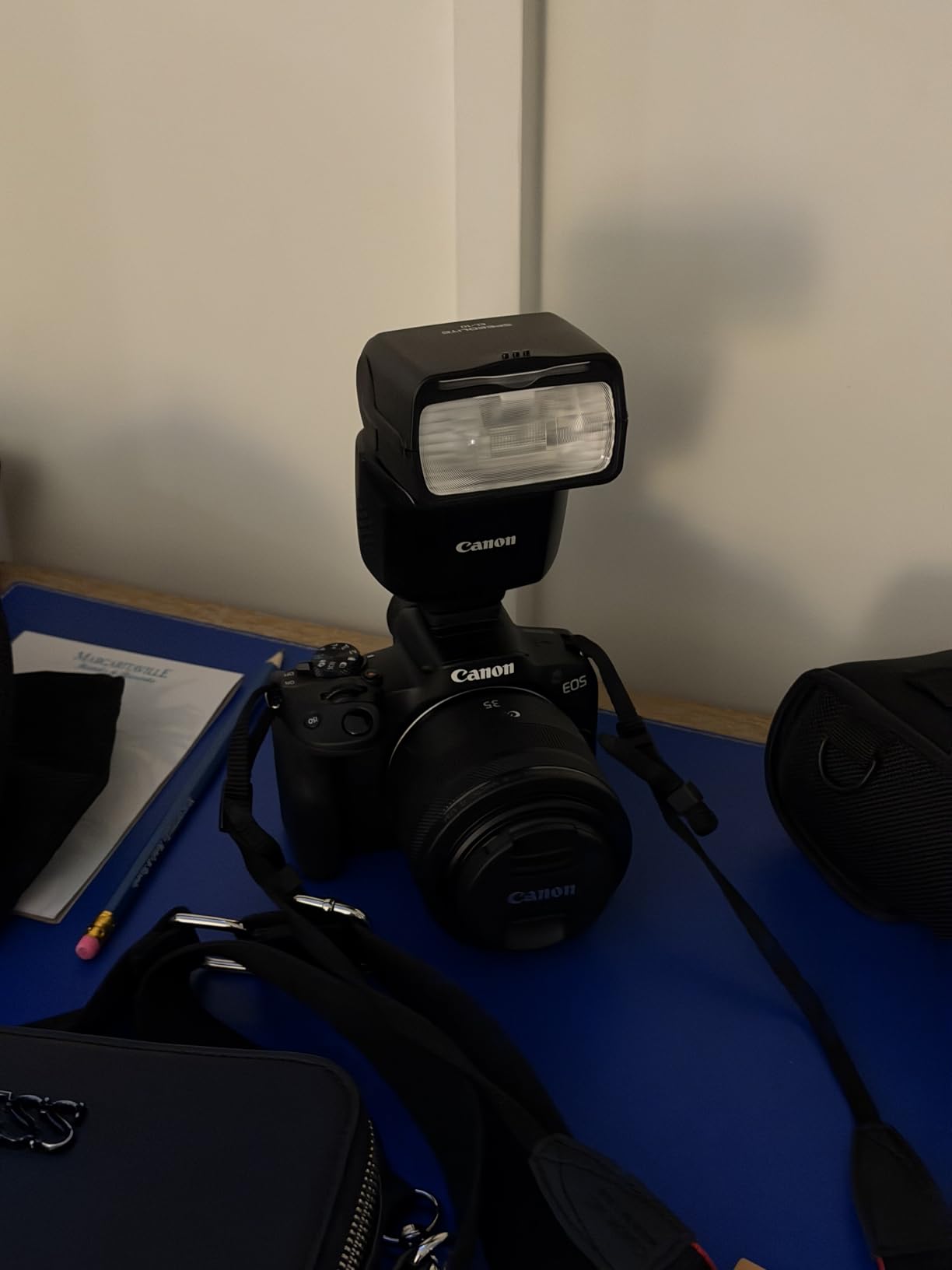
The DIGIC X processor enables continuous shooting at 12 fps with the electronic first curtain shutter or 15 fps with the fully electronic shutter. These speeds are impressive for an entry-level camera and more than adequate for capturing sports, wildlife, and other fast action. The electronic viewfinder offers 2.36 million dots with 0.96x magnification, providing a clear and detailed view of your composition.
Battery life rates at approximately 370 shots per charge using the CIPA standard, which outperforms many competitors in this class. In real-world use with moderate video recording and image review, I consistently got through a full day of shooting on a single charge. The camera charges via USB-C, so power banks can extend shooting time when traveling.
The main drawback I encountered involves the RF-S lens ecosystem. Canon’s APS-C lens selection remains limited compared to their full-frame RF lineup. The included 18-45mm kit lens has a slow f/4.5-6.3 maximum aperture, which limits low-light performance and background blur. Many users on Reddit recommend buying the body only and investing in better glass from the start.
Nikon Z50 II: Professional Features in a Compact Body
Nikon Z50 II | Compact mirrorless Stills/Video Camera with Easy Color presets and Wireless Photo Sharing | Nikon USA Model
Pros
- EXPEED 7 processor from flagship Z9
- Excellent 9-subject autofocus detection
- 4K video at 60fps
- Dedicated bird and airplane AF modes
- Weather sealed body
- 31 Picture Control presets
- Built-in flash with Night Portrait
Cons
- No battery charger included in box
- Shorter battery life than Canon
- Limited native DX lens selection
- No in-body image stabilization
- SnapBridge app reported as glitchy
- Single card slot only
The Nikon Z50 II represents a significant evolution from its predecessor, bringing professional-grade technology into an entry-level price point. The standout feature here is the EXPEED 7 image processor, which is the same chip found in Nikon’s flagship Z8 and Z9 cameras. This means you get autofocus performance and processing capabilities that were previously reserved for cameras costing three times as much.
During my time with the Z50 II, the autofocus system genuinely impressed me. The 9-subject detection covers people, dogs, cats, birds, vehicles, and even includes dedicated modes for birds and airplanes. Photographers on forums have praised this system extensively, with one user noting that bird tracking performance rivals cameras costing much more. I tested this at a local nature reserve and found the camera locked onto small birds in flight with remarkable consistency.

The 20.9 megapixel DX-format sensor may have fewer pixels than Canon’s offering, but the image quality remains excellent. Nikon’s color rendering produces rich, accurate tones that many photographers prefer for landscapes and portraits. The slightly lower resolution actually benefits high-ISO performance, producing cleaner images in challenging light.
Video capabilities exceed what the Canon R50 offers, with 4K recording at up to 60 frames per second. This higher frame rate enables smoother motion and allows for slow-motion effects in post-production. The in-camera electronic VR (vibration reduction) helps stabilize handheld video footage. Full HD recording at 120fps provides even more flexibility for dramatic slow-motion sequences.
Build quality feels substantially more robust than the Canon R50. The Z50 II features weather sealing around buttons, dials, and seams, providing protection against dust and light moisture. For outdoor photographers who shoot in varied conditions, this durability advantage could be decisive. The camera weighs approximately 550 grams, which is noticeably heavier than the Canon but still manageable for extended carry.
Nikon includes 31 built-in Picture Control presets that let you customize the look of your photos and videos in-camera. You can also download additional presets from the Nikon Imaging Cloud. The dedicated Picture Control button provides quick access to these creative options without digging through menus. I found this feature particularly useful for matching looks across different shooting situations.
The built-in flash with Night Portrait mode is a welcome inclusion that the Canon R50 lacks. While serious photographers often prefer external flash units, having a built-in option for fill light or indoor snapshots adds versatility. The flash can also trigger compatible Nikon Speedlights wirelessly for more advanced lighting setups.
Battery life represents one of the Z50 II’s weaker points, with users consistently noting shorter shooting times compared to Canon’s offering. Nikon does not include a standalone battery charger in the box, requiring you to charge the battery in-camera via USB-C. This design choice has frustrated many users who prefer having a spare battery charging while shooting with another.
Canon EOS R50 vs Nikon Z50 II: Head-to-Head Comparison
Sensor and Image Quality
The sensor comparison reveals different philosophies from each manufacturer. Canon’s 24.2 megapixel APS-C CMOS sensor offers slightly higher resolution, which can provide more cropping flexibility and detail in large prints. Nikon’s 20.9 megapixel BSI-CMOS sensor uses back-side illumination technology for improved light gathering, potentially delivering better high-ISO performance.
In practical shooting, both cameras produce excellent image quality that will satisfy most photographers. Canon’s color science tends toward warmer, more saturated tones that many users find appealing for portraits and everyday photography. Nikon renders colors with slightly more neutrality, which some landscape and product photographers prefer for accurate reproduction.
Low-light performance favors neither camera dramatically. The Canon R50’s DIGIC X processor does an admirable job managing noise at higher ISO settings. The Nikon Z50 II’s BSI sensor and powerful EXPEED 7 processor handle challenging lighting equally well. Both cameras produce usable images up to ISO 3200 with acceptable noise levels for most applications.
Autofocus System Performance
Autofocus comparison represents one of the most significant differences between these cameras. Canon’s Dual Pixel CMOS AF II covers 100% of the frame with 651 selectable zones. The system detects and tracks people, animals, and vehicles using deep learning algorithms. In my testing, Canon’s AF proved fast, accurate, and intuitive for most shooting scenarios.
Nikon’s hybrid AF system with 9-subject detection takes autofocus capabilities further. The dedicated bird and airplane modes deserve special mention, as they provide specialized tracking algorithms for challenging subjects. Forum users consistently praise this feature, with wildlife photographers noting significant improvements over previous generation cameras.
For sports and action photography, both systems perform admirably. Canon’s wider AF coverage helps when subjects move unpredictably across the frame. Nikon’s subject-specific modes excel when you know what you are tracking. Neither camera offers a clear advantage for general photography, but wildlife and bird photographers should strongly consider the Nikon.
Video Capabilities
Video features represent another area where these cameras diverge significantly. The Canon R50 records 4K at up to 30fps, oversampled from 6K for improved detail. This oversampling approach produces sharp, detailed footage that looks professional. The uncropped 4K mode maintains the full angle of view from your lens.
The Nikon Z50 II pushes video capabilities further with 4K recording at 60fps. This higher frame rate enables smoother motion for fast action and allows for 2x slow-motion when exported to 30fps timelines. For videographers and content creators who prioritize motion quality, this advantage is substantial.
Both cameras include microphone ports for external audio recording. However, the Nikon Z50 II also includes a headphone jack for monitoring audio during recording, while the Canon R50 does not. This omission frustrates video-focused users who need to verify audio quality while shooting.
For vlogging, the Canon R50’s vari-angle screen that flips forward gives it an advantage for self-recording. The Nikon Z50 II’s tilting screen works well for waist-level shooting but does not face forward for easy self-framing. Content creators who primarily film themselves may prefer Canon’s screen design.
Build Quality and Weather Sealing
Build quality differs noticeably between these cameras. The Canon R50 uses a polycarbonate body that feels solid but clearly prioritizes light weight over ruggedness. There is no weather sealing whatsoever, meaning you need to protect this camera from rain, dust, and splashes.
The Nikon Z50 II features a more substantial build with weather sealing around critical points. While not fully waterproof, the camera can handle light rain and dusty conditions that would concern Canon R50 owners. For outdoor photographers, travel shooters, and anyone who photographs in varied environments, this durability advantage could be the deciding factor.
User experiences on photography forums consistently mention this difference. One user noted that weather sealing provides peace of mind even if you rarely shoot in rain, knowing your investment has some protection against unexpected conditions. Another pointed out that the Z50 II feels like a more serious tool in hand, with better grip and more substantial controls.
Size, Weight, and Ergonomics
The size and weight comparison reveals a significant trade-off. Canon R50 weighs just 375 grams (body only), making it one of the lightest interchangeable lens cameras available. This featherweight design benefits travel photographers, hikers, and anyone who carries their camera for extended periods. The compact dimensions also make the R50 easier to pack in small bags.
Nikon Z50 II weighs approximately 550 grams, representing a 47% increase over Canon. This extra mass comes from the more robust build, weather sealing, and larger grip. The additional weight provides better balance with larger lenses and feels more stable during handheld shooting. However, all-day carry becomes noticeably more fatiguing.
Ergonomics favor Nikon for users with medium to large hands. The deeper grip provides more secure handling, and the control layout places frequently used buttons within easy reach. Canon’s smaller body works well for users with smaller hands or those who prioritize portability above all else. Both cameras offer comfortable shooting experiences, just for different preferences.
Battery Life
Battery life comparison clearly favors Canon. The R50 is rated for approximately 370 shots per charge using the CIPA standard, which measures conservative real-world usage. Many users report exceeding this number with careful power management. For a day of casual shooting, the Canon battery rarely becomes a concern.
Nikon Z50 II suffers from shorter battery life, a complaint echoed across user reviews and forum discussions. While exact CIPA ratings vary by testing methodology, practical experience suggests the Nikon delivers fewer shots per charge than Canon. Users consistently recommend purchasing a spare battery for extended shooting sessions.
The charging approach also differs. Canon includes a standalone battery charger, allowing you to charge one battery while shooting with another. Nikon requires in-camera charging via USB-C unless you purchase a separate charger. This design choice has frustrated many new Z50 II owners who discover the missing charger after unboxing.
Screen and Viewfinder Quality
Both cameras feature electronic viewfinders and rear touchscreens, but with different implementations. Canon R50’s EVF offers 2.36 million dots with 0.96x magnification, providing a clear and reasonably detailed view. The vari-angle rear touchscreen rotates fully for selfies and vlogging, with 1.62 million dots for sharp image playback.
Nikon Z50 II’s viewfinder provides a larger, brighter view that many users find more comfortable for extended viewing. The tilting touchscreen works well for waist-level and overhead shooting but cannot flip forward for self-recording. For traditional photography, the Nikon viewfinder experience feels more premium.
Touchscreen responsiveness on both cameras enables quick focus point selection and menu navigation. Canon’s interface feels slightly more intuitive for beginners, with larger touch targets and clearer organization. Nikon’s menu system offers more customization options but requires more time to master.
Lens Ecosystem
Lens selection represents a critical consideration for any camera system purchase. Canon’s RF mount is relatively new, with a growing but still limited selection of APS-C specific RF-S lenses. Currently, only a handful of native options exist, forcing many users to adapt older EF-S lenses or invest in full-frame RF glass that is larger and more expensive than necessary.
Nikon’s Z mount has a somewhat better selection of DX-format lenses, though options remain limited compared to mature systems. The Z DX 16-50mm and 18-140mm cover common zoom ranges, and the Z DX 24mm f/1.7 provides a fast prime option for low light and portraits. Third-party manufacturers have also begun releasing Z mount lenses, expanding the ecosystem.
Forum discussions reveal that neither system offers the lens variety of older mounts like Canon EF or Nikon F. Users upgrading from DSLRs can adapt their existing lenses, but native options provide the best performance and size balance. Long-term, both mounts will expand, but current buyers should research available lenses for their intended uses.
Software and App Ecosystem
The wireless connectivity experience differs significantly between these cameras. Canon’s Camera Connect app enjoys generally positive reviews for reliability and ease of use. Transferring images to your phone and remote control functionality work smoothly for most users. The app supports both iOS and Android with regular updates.
Nikon’s SnapBridge app has garnered criticism from users who find it less reliable than Canon’s offering. Forum posts frequently mention connection issues, slow transfers, and inconsistent performance. While the app does work for basic image transfer and remote shooting, the user experience falls short of Canon’s more polished application.
For photographers who frequently share images to social media or use their phone for GPS tagging, the app experience matters. Canon users generally report a smoother workflow, while Nikon users often work around SnapBridge limitations. This difference rarely appears in spec sheets but significantly impacts daily use.
Who Should Buy the Canon EOS R50
The Canon EOS R50 makes the most sense for specific user profiles. If you prioritize portability above all else, this camera’s 375-gram weight and compact dimensions deliver unmatched convenience for travel and daily carry. Street photographers and documentarians who value discretion will appreciate how unobtrusive this camera remains.
Content creators focused on vlogging and self-recording benefit from the fully articulating screen. The vari-angle design lets you frame yourself accurately while recording, something the Nikon’s tilting screen cannot match. Combined with excellent video quality and reliable autofocus, the R50 serves video creators well.
Beginners appreciate Canon’s intuitive interface and helpful shooting modes. The Advanced A+ Assist mode automatically optimizes settings for various scenes, reducing the learning curve for new photographers. Canon’s color science produces pleasing results with minimal post-processing, which speeds up workflow for casual shooters.
Budget-conscious buyers save approximately $200-250 compared to the Nikon Z50 II. This price difference could fund a better lens, extra batteries, or other accessories that improve the overall shooting experience. For photographers just starting out, getting into a capable system for less money has obvious appeal.
Who Should Buy the Nikon Z50 II
The Nikon Z50 II targets users who need professional features in an affordable package. Wildlife and bird photographers benefit enormously from the dedicated autofocus modes and EXPEED 7 processor’s tracking capabilities. If your photography involves fast-moving animals or distant subjects, these specialized features justify the higher price.
Outdoor photographers who shoot in varied weather conditions should strongly consider the Z50 II’s weather sealing. The protection against dust and moisture provides peace of mind when shooting landscapes, hiking, or traveling through unpredictable climates. This durability advantage becomes increasingly valuable over years of ownership.
Video-focused creators who need 4K at 60fps will find the Z50 II more capable. The higher frame rate enables smoother motion and slow-motion effects that Canon’s 30fps limit cannot match. The headphone jack for audio monitoring also benefits serious videographers who prioritize sound quality.
Upgraders from Nikon DSLRs can adapt their existing F-mount lenses using the FTZ adapter, potentially saving money on glass. Long-time Nikon users also benefit from familiar menu systems and color science that matches their established workflow. The Z50 II integrates smoothly into existing Nikon ecosystems.
Frequently Asked Questions
Which is better Canon R50 or Nikon Z50 II?
The Nikon Z50 II is better overall due to weather sealing, 4K/60p video, and professional-grade autofocus from the Z9. However, the Canon R50 is better for beginners, vloggers, and budget-conscious buyers who prioritize portability and ease of use. Your choice depends on whether you need advanced features or lightweight convenience.
What is the Nikon Z50 II weakness?
The Nikon Z50 II has several weaknesses: no battery charger included in the box, shorter battery life than competitors, limited native DX lens selection, no in-body image stabilization, and SnapBridge app connectivity issues reported by users. The camera also lacks auto sensor cleaning and requires full-frame Z lenses for best low-light performance.
Is the Nikon Z50 II good for beginners?
Yes, the Nikon Z50 II is good for beginners who want room to grow. The 31 Picture Control presets make it easy to achieve creative looks, and the autofocus system requires minimal technical knowledge to get sharp images. However, the menu system has more options than some beginners need, and the higher price may not suit all budgets.
Which camera has better autofocus Canon R50 or Nikon Z50 II?
The Nikon Z50 II has better autofocus overall, especially for wildlife photography with its dedicated bird and airplane detection modes. The 9-subject detection system inherited from the flagship Z9 tracks subjects more accurately in challenging situations. Canon’s Dual Pixel AF II is excellent for general photography but lacks the specialized modes that make Nikon superior for specific subjects.
Does the Canon R50 or Nikon Z50 II have better battery life?
The Canon R50 has better battery life at approximately 370 shots per charge compared to the Nikon Z50 II. Canon also includes a standalone battery charger, while Nikon requires in-camera USB charging unless you purchase a separate charger. For extended shooting sessions, Canon’s battery performance is noticeably superior.
Final Verdict: Canon EOS R50 vs Nikon Z50 II
After extensive testing and research, the Canon EOS R50 vs Nikon Z50 II comparison reveals two excellent cameras serving different priorities. Neither camera is universally better; your ideal choice depends entirely on how you plan to use it.
The Nikon Z50 II earns my recommendation as the overall winner for most photographers. The weather sealing, 4K/60p video, professional-grade autofocus, and robust build quality justify the higher price for users who will benefit from these features. Wildlife photographers, outdoor shooters, and video creators should choose Nikon.
The Canon EOS R50 remains the better choice for travel photographers, vloggers, beginners, and budget-conscious buyers. The lighter weight, fully articulating screen, beginner-friendly interface, and lower price make it ideal for content creators and casual shooters. If portability and ease of use matter more than advanced features, Canon delivers.
Both cameras represent excellent value in the entry-level mirrorless market. Your decision should come down to specific needs: weather sealing versus weight, 4K/60p versus articulating screen, pro autofocus versus lower price. Either choice will serve you well as you develop your photography skills.