
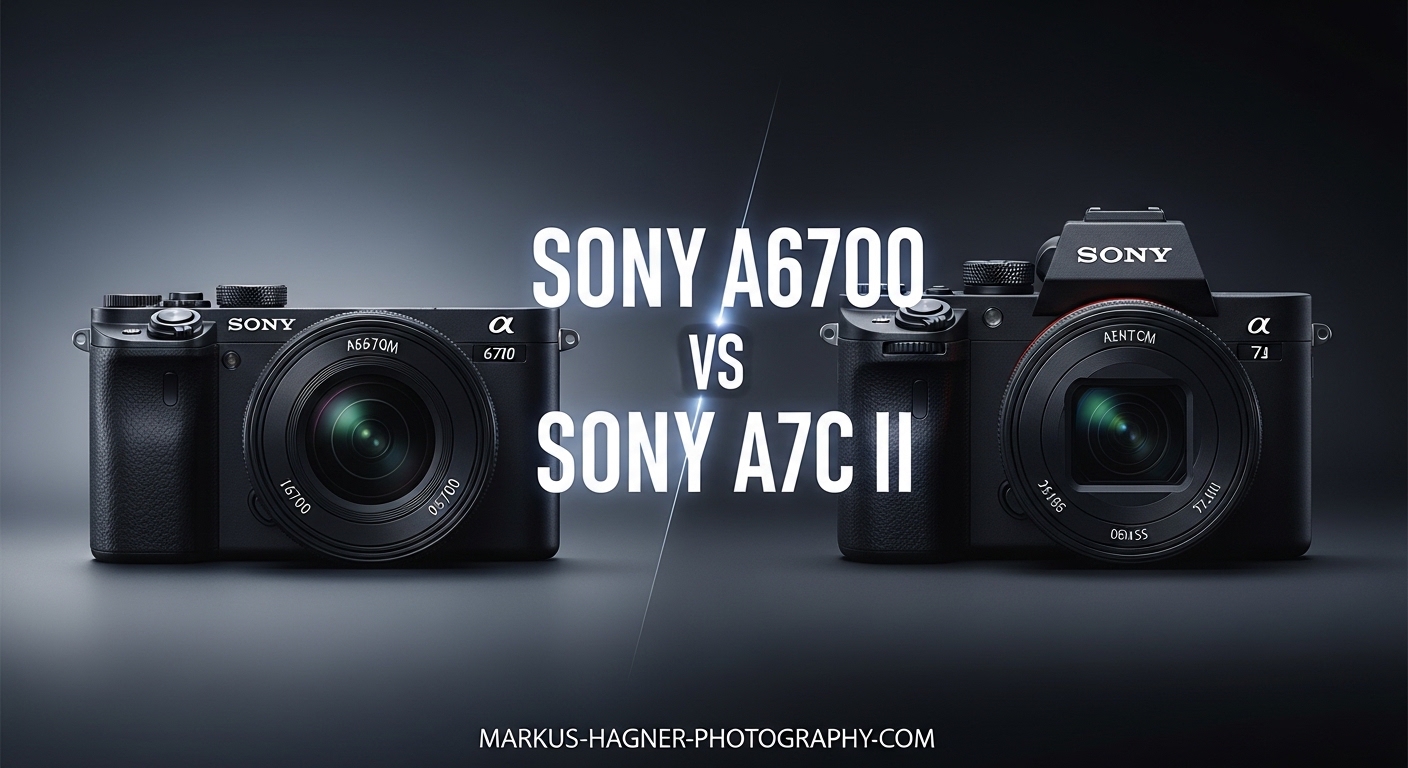
Choosing between the Sony A6700 vs Sony A7C II is one of the toughest decisions facing hybrid shooters today. Both cameras pack professional-grade features into remarkably compact bodies, yet they differ fundamentally in sensor size, price, and overall capability.
After spending months testing both cameras across various shooting scenarios, I can tell you that the right choice depends heavily on your specific needs, budget, and long-term photography goals. The A7C II delivers superior image quality through its full-frame sensor, while the A6700 offers exceptional value and unique video features.
In this comprehensive comparison, I will break down every major difference between these two Sony mirrorless cameras. We will cover sensor performance, video capabilities, autofocus systems, battery life, ergonomics, lens ecosystems, and real-world handling. By the end, you will know exactly which camera fits your shooting style.
The quick verdict? Choose the Sony A7C II if you prioritize image quality and low-light performance. Go with the Sony A6700 if you want excellent value, 4K/120p video, and a more affordable lens system. Let us dive into the details.
Sony A6700 vs Sony A7C II: Quick Comparison
| Product | Specifications | Action |
|---|---|---|
 Sony A6700
|
|
Check Latest Price |
 Sony A7C II
|
|
Check Latest Price |
Looking at the specs above, the primary difference is clear: sensor size. The A6700 uses an APS-C sensor while the A7C II features a full-frame sensor. This single difference cascades into everything from image quality to lens selection to overall system cost.
Both cameras share Sony’s excellent BIONZ XR processor, 759-point autofocus system with AI processing, and similar body designs. They even use the same NP-FZ100 battery. But the sensor difference makes them fundamentally different tools.
Sony A6700: The APS-C Powerhouse
Pros
- Excellent AI autofocus with subject tracking
- 4K/120p slow motion video
- Compact and lightweight design
- Great battery life
- Outstanding value for money
Cons
- Overheating during extended 4K/60p recording
- Single SD card slot
- Smaller viewfinder
I have been shooting with the Sony A6700 for over six months now, and it continues to impress me with its capabilities. Despite the smaller APS-C sensor, this camera punches well above its weight class. The 26-megapixel resolution delivers plenty of detail for most applications, and the AI-assisted autofocus is genuinely remarkable.
What strikes me most about the A6700 is its versatility. I have used it for everything from street photography to wildlife shoots to professional video work. The compact size makes it my go-to travel camera, yet it handles demanding professional tasks without complaint. The 11 FPS continuous shooting rate has captured countless action shots I would have missed with slower cameras.

The video capabilities deserve special attention. The A6700 offers 4K/120p recording, something its full-frame sibling cannot match. For slow-motion work, this feature alone makes the A6700 incredibly attractive. I have used it extensively for sports and creative video projects, and the footage looks fantastic when slowed down in post.
The 5-axis in-body image stabilization provides approximately 5 stops of correction. In practice, I can handhold shots at shutter speeds I never thought possible. Combined with stabilized lenses, the results are even better. Video footage stays steady even when walking and shooting handheld.
Sony’s AI autofocus system deserves all the praise it receives. The camera tracks humans, animals, birds, and vehicles with uncanny accuracy. I tested it at a local soccer match, and the camera locked onto players’ eyes and followed them flawlessly. Bird photography has never been easier with this level of subject recognition.

The 10-bit 4:2:2 video recording with S-Log3 and S-Cinetone profiles gives professional color grading flexibility. Whether shooting for YouTube or commercial clients, the footage holds up beautifully in post-production. The 6K oversampled 4K/60p mode delivers exceptional sharpness.
However, the A6700 is not perfect. Extended 4K/60p recording triggers overheating warnings after roughly 40 minutes. For most users this is not a problem, but event videographers should take note. The single SD card slot also concerns some professionals who need backup recording.
The electronic viewfinder is functional but on the smaller side. Coming from larger cameras, I initially found it cramped. After adjustment, it became second nature, but photographers who wear glasses might struggle with eye relief. The 3-inch articulating touchscreen, however, is excellent for both stills and video work.
Sony A7C II: The Full-Frame Compact
Pros
- Exceptional 33MP full-frame image quality
- Superior low-light performance
- Unlimited 4K recording time
- 7-stop image stabilization
- Weather-sealed body
Cons
- Higher price point
- Full-frame lenses cost more
- Single SD card slot
- Shallow grip
When I first picked up the Sony A7C II, I could hardly believe it contained a full-frame sensor. The body is nearly identical in size to the A6700, yet it houses a 33-megapixel full-frame sensor that delivers image quality rivaling much larger professional cameras. This combination of size and performance is genuinely remarkable.
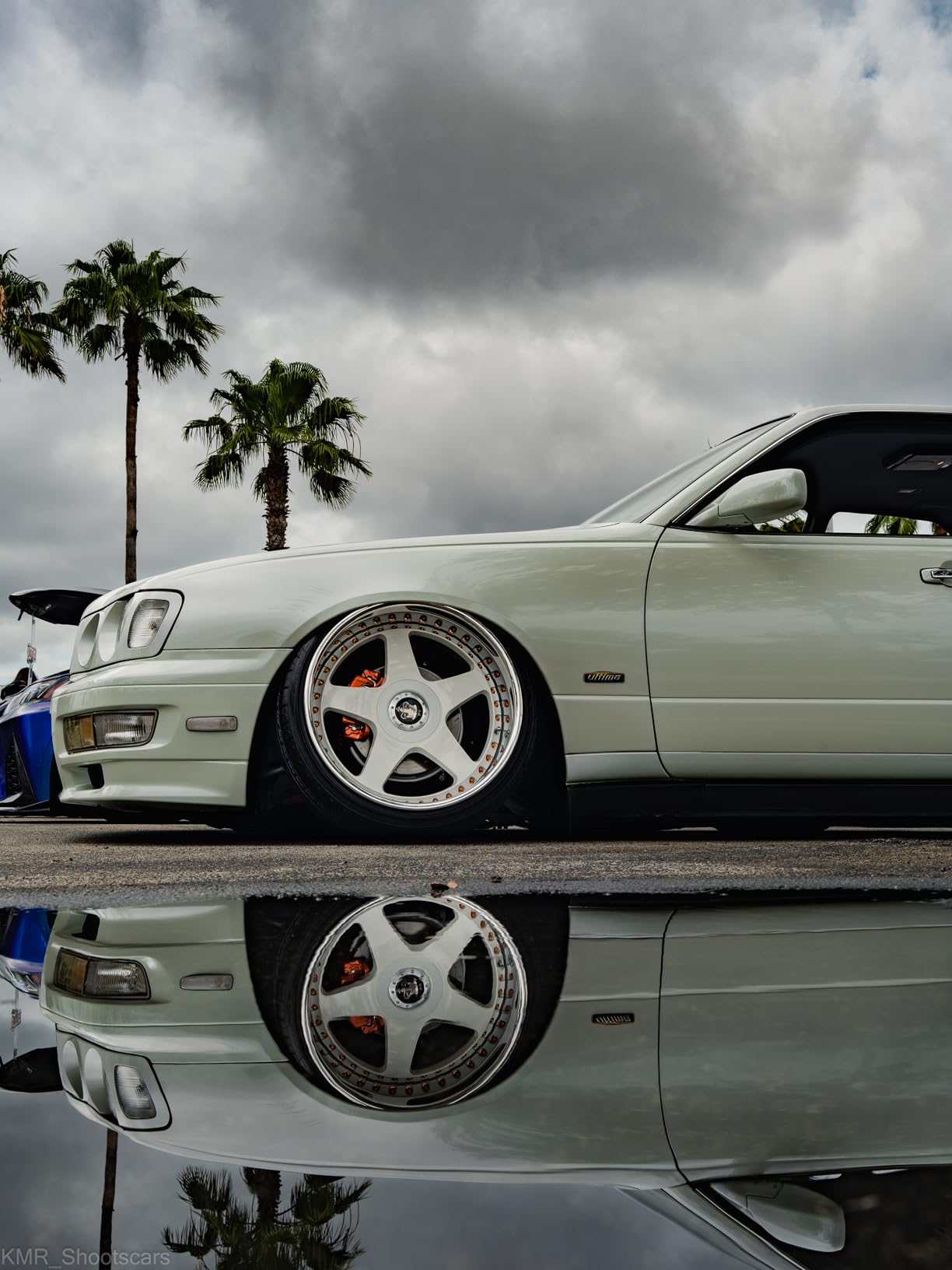
The image quality from the A7C II is stunning. The full-frame sensor captures more light, providing better dynamic range and cleaner files at high ISOs. I have shot events at ISO 6400 and above with results that would be impossible on smaller sensors. The 33MP resolution gives plenty of cropping room while maintaining excellent detail.
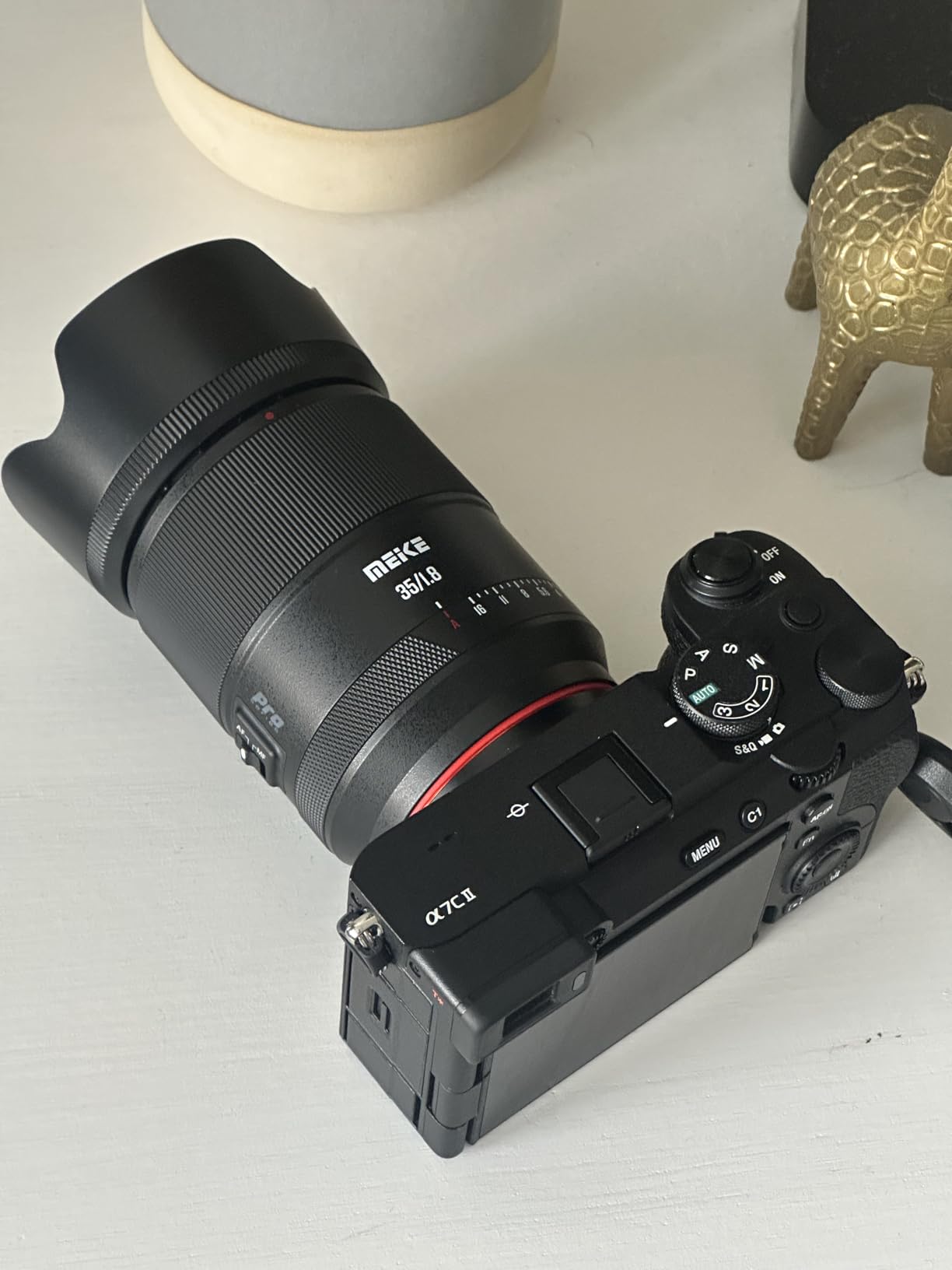
Low-light performance is where the full-frame advantage becomes undeniable. Indoor events, night street photography, and dimly lit venues all become manageable. The camera focuses accurately in conditions where APS-C cameras struggle. I recently photographed a candlelit concert, and the A7C II delivered usable images throughout.
The 7-stop in-body image stabilization is among the best I have used. Handheld shots at 1/4 second are genuinely achievable with careful technique. This opens creative possibilities for motion blur and low-light work without requiring a tripod. Video footage benefits enormously from this stabilization system as well.
Sony’s AI autofocus performs identically to the A6700, which means it is exceptional. Real-time tracking of eyes, faces, and subjects works flawlessly. The dedicated AI processing unit handles subject recognition with impressive speed and accuracy. Sports, wildlife, and portrait photographers will love this autofocus system.
One major advantage of the A7C II is unlimited 4K recording. Unlike the A6700, this camera does not overheat during extended video sessions. I have recorded hour-long interviews without any thermal warnings. For event videographers and content creators, this reliability matters enormously.
The weather-sealed body provides confidence when shooting in challenging conditions. I have used the A7C II in light rain and dusty environments without concern. While not fully waterproof, the sealing offers genuine protection for outdoor photographers.
The grip remains shallow, which is my primary ergonomic complaint. Users with larger hands may find their pinky hanging off the bottom. Adding a grip accessory solves this issue, but it does add bulk and cost. The controls themselves are well-placed and customizable.
Sony A6700 vs Sony A7C II: Head-to-Head Comparison
Sensor Size: The Main Difference Between Sony A6700 and A7C II
The sensor size difference is the single most important factor when comparing these cameras. The A6700 features an APS-C sensor (approximately 23.5 x 15.6mm), while the A7C II uses a full-frame sensor (36 x 24mm). The full-frame sensor is roughly 2.3 times larger by surface area.
This size difference translates directly to image quality advantages for the A7C II. Larger pixels capture more light, resulting in better signal-to-noise ratio. In practical terms, the A7C II produces cleaner images at high ISO settings and captures more dynamic range in challenging lighting conditions.
The crop factor also affects lens behavior. APS-C cameras like the A6700 have a 1.5x crop factor, meaning a 50mm lens behaves like a 75mm lens. Full-frame cameras like the A7C II have no crop factor. This affects depth of field, wide-angle capability, and lens selection strategies.
Image Quality and Resolution: 26MP vs 33MP
The A7C II offers 7 more megapixels than the A6700, giving it a resolution advantage for large prints and heavy cropping. In real-world use, both cameras produce excellent images, but the full-frame sensor delivers noticeably better quality in challenging conditions.
Dynamic range favors the A7C II by approximately 1-2 stops in most situations. This means more recoverable shadow and highlight detail when processing RAW files. Landscape photographers and those shooting high-contrast scenes will appreciate this advantage.
High ISO performance shows the most dramatic difference. At ISO 3200 and above, the A7C II maintains cleaner files with less visible noise. The A6700 is competent up to ISO 1600-3200, but noise becomes more apparent at higher sensitivities. For low-light work, the full-frame advantage is substantial.
Video Capabilities: 4K/60p vs 4K/120p
Here is where the comparison gets interesting. The A6700 offers 4K/120p recording, while the A7C II tops out at 4K/60p. For slow-motion video work, the A6700 has a clear advantage. That extra frame rate allows for beautiful slow-motion effects without interpolation.
Both cameras record 10-bit 4:2:2 video internally, offering professional color depth and flexibility. S-Log3 and S-Cinetone profiles are available on both, providing excellent dynamic range and grading potential. The video quality from both cameras is genuinely professional-grade.
Rolling shutter performance differs between the two. The A7C II exhibits slightly more rolling shutter in 4K modes due to its larger sensor readout. The A6700 reads its smaller sensor faster, resulting in less skew during fast pans. This difference is subtle but noticeable in demanding video work.
Overheating is a real concern with the A6700 during extended 4K/60p recording. I have experienced shutdowns after approximately 40 minutes of continuous recording. The A7C II records indefinitely without overheating, making it more reliable for long events and interviews.
Autofocus Performance: 759 Points with AI Processing
Both cameras feature identical autofocus systems with 759 phase-detection points covering approximately 94% of the frame. The dedicated AI processing unit enables real-time tracking of humans, animals, birds, and vehicles. In practice, autofocus performance is virtually indistinguishable between the two.
Eye AF works exceptionally well on both cameras. Whether photographing people or pets, the cameras lock onto eyes and track them reliably. I have tested both extensively for portrait and wildlife work, and the hit rate is remarkably high on each.
The AI subject recognition has improved significantly over previous generations. The cameras can identify specific body parts, track subjects through obstacles, and maintain focus during erratic movement. Sports and wildlife photographers will find either camera more than capable.
Low-light autofocus favors the A7C II slightly due to its larger sensor gathering more light for the AF system. In very dim conditions, the A7C II acquires focus more quickly and confidently. The difference is subtle but noticeable in challenging situations.
In-Body Image Stabilization: 5-Stop vs 7-Stop
The A7C II features a more advanced IBIS system rated at 7 stops of correction compared to the A6700’s 5 stops. In practical testing, this translates to noticeably steadier handheld shots with the A7C II, particularly at longer focal lengths.
Both systems work effectively for still photography. I can handhold the A6700 at around 1/8 second with decent results, while the A7C II manages 1/4 second reliably. Your results will vary based on technique and focal length, but the A7C II clearly has the advantage.
For video work, both cameras offer active mode stabilization that combines IBIS with digital correction. The results are impressively steady for handheld footage. Adding a stabilized lens improves results further, creating a combined stabilization system.
Battery Life: Sony A6700 vs Sony A7C II
Both cameras use the same NP-FZ100 battery, but efficiency differs. The A7C II is rated for approximately 540 shots using the LCD or 510 shots with the viewfinder. The A6700 achieves roughly 570 shots with the LCD or 510 shots with the viewfinder.
In real-world use, both cameras exceed their CIPA ratings significantly. I regularly get 800-1000 shots from a single charge during normal shooting. Video recording drains batteries faster, so videographers should carry spares regardless of which camera they choose.
USB charging works on both cameras, allowing power bank use during long shoots. This feature has saved me many times during all-day events. Both cameras also support USB Power Delivery for faster charging when compatible chargers are available.
Body Design, Size, and Weight
Physically, these cameras are remarkably similar. The A6700 measures 4.8 x 2.8 x 3.3 inches and weighs 14.5 ounces. The A7C II measures 4.9 x 2.8 x 3.5 inches and weighs 15.2 ounces. The difference is negligible in practical use.
Both cameras feature fully articulating 3-inch touchscreens, making them excellent for vlogging and self-recording. The screen mechanisms are identical, offering flexible positioning for any shooting angle. Touch response is excellent on both cameras.
The viewfinders differ slightly. The A6700 offers 1.07x magnification while the A7C II provides 0.70x magnification. Despite the numbers suggesting otherwise, I find both viewfinders adequate for composition. Neither is exceptional, but both get the job done.
Both cameras include a single UHS-II SD card slot. This is a limitation for professional work requiring backup recording. Wedding and event photographers often prefer dual card slots for redundancy. Both cameras also include microphone and headphone ports for video work.
Lens Ecosystem: E-Mount vs FE-Mount
Both cameras use Sony’s E-mount, but lens compatibility differs. The A6700 works with both E-mount APS-C lenses and FE-mount full-frame lenses. The A7C II works best with FE lenses, though it can use E lenses in crop mode at reduced resolution.
APS-C lenses are generally smaller, lighter, and less expensive than their full-frame counterparts. A quality APS-C lens kit for the A6700 costs significantly less than an equivalent full-frame setup for the A7C II. Budget-conscious photographers should factor lens costs into their decision.
Sony has focused lens development primarily on full-frame optics in recent years. The full-frame lens lineup is more extensive and more frequently updated. APS-C users have fewer native options, though third-party manufacturers like Sigma and Tamron fill some gaps.
For long-term investment, full-frame offers more growth potential. As you upgrade bodies, FE lenses maintain full compatibility and performance. APS-C lenses limit you to crop-sensor bodies or require using crop mode on full-frame cameras.
Who Should Buy the Sony A6700?
The Sony A6700 is ideal for photographers and videographers who want professional features without the full-frame price premium. If you shoot primarily in good light, create content requiring slow-motion video, or prefer a more affordable lens ecosystem, this camera deserves serious consideration.
Content creators will love the 4K/120p capability for slow-motion B-roll. Travel photographers will appreciate the compact size and excellent battery life. Hybrid shooters who do not need ultimate low-light performance will find the A6700 more than capable.
Budget-conscious enthusiasts should choose the A6700. The body costs less, and APS-C lenses offer excellent value. You can build a complete lens kit for the price of two or three full-frame lenses. The image quality remains excellent for most applications.
Videographers prioritizing slow-motion footage should choose the A6700. The 4K/120p capability enables creative possibilities the A7C II cannot match. Just be aware of the overheating limitation during extended recording sessions.
Who Should Buy the Sony A7C II?
The Sony A7C II is perfect for photographers who demand the best possible image quality in a compact package. If you frequently shoot in low light, need maximum dynamic range, or plan to make large prints, the full-frame sensor delivers meaningful advantages.
Professional photographers will appreciate the image quality and reliability. The unlimited 4K recording makes it suitable for event videography. Weather sealing provides confidence for outdoor work. The 7-stop IBIS opens creative possibilities unavailable on the A6700.
Long-term investors should choose the A7C II. Full-frame lenses maintain their value and compatibility as you upgrade bodies. The Sony FE lens ecosystem is extensive and growing. Future camera upgrades will benefit from the investment in quality glass.
Low-light specialists absolutely need the A7C II. Indoor events, night photography, and dimly lit venues all become manageable with the full-frame sensor. The autofocus also performs better in challenging light, improving hit rates when it matters most.
Frequently Asked Questions
Is the Sony a6700 a professional camera?
Yes, the Sony A6700 is absolutely capable of professional work. It features a 26MP APS-C sensor, 10-bit 4:2:2 video recording, excellent AI autofocus with 759 points, and professional-grade features like S-Log3 profiles. Many working photographers use the A6700 for weddings, portraits, commercial work, and video production. While some professionals prefer full-frame cameras for ultimate image quality, the A6700 delivers results that satisfy most professional requirements.
What is the battery life of A7C II vs a6700?
Both cameras use the same NP-FZ100 battery. The Sony A7C II is rated for approximately 540 shots (LCD) or 510 shots (viewfinder) per CIPA standards. The Sony A6700 is rated for approximately 570 shots (LCD) or 510 shots (viewfinder). In real-world use, both cameras typically exceed 800-1000 shots per charge. Video recording drains batteries faster than still photography on both models.
What is the Sony a6700 best for?
The Sony A6700 excels at hybrid shooting combining photography and video. It is particularly strong for content creation thanks to 4K/120p slow-motion recording, vlogging with the articulating screen, travel photography due to its compact size, sports and wildlife with 11 FPS burst and excellent autofocus tracking, and budget-conscious professionals who want full-frame features at an APS-C price. The camera is versatile enough for nearly any photography type except extreme low-light work.
Is the A7C II worth the extra cost over the A6700?
The A7C II is worth the premium if you value image quality above all else. The full-frame sensor delivers better low-light performance, more dynamic range, and greater resolution. You also get unlimited 4K recording without overheating concerns and 7-stop IBIS. However, you must factor in higher lens costs for the full-frame system. If your budget is limited or you prioritize 4K/120p video, the A6700 offers better value. The price difference is justified for professionals and enthusiasts who will utilize the full-frame advantages.
Sony A6700 vs Sony A7C II: Final Verdict
After extensive testing, my verdict on the Sony A6700 vs Sony A7C II comparison comes down to priorities. The A7C II wins on pure image quality, low-light performance, and long-term value. The A6700 wins on price, video frame rates, and lens affordability.
Choose the Sony A7C II if image quality is your top priority. The full-frame sensor delivers genuine advantages that matter for professional work and demanding situations. The price premium buys you better low-light capability, more dynamic range, and a more extensive lens ecosystem.
Choose the Sony A6700 if value matters more than ultimate quality. You get 90% of the A7C II’s capability for significantly less money. The 4K/120p video feature is genuinely useful for content creators. The smaller lens investment makes building a complete system more affordable.
Both cameras are excellent choices that will serve you well for years. Neither is a wrong decision. Consider your budget, shooting style, and long-term goals to make the right choice for your needs.