
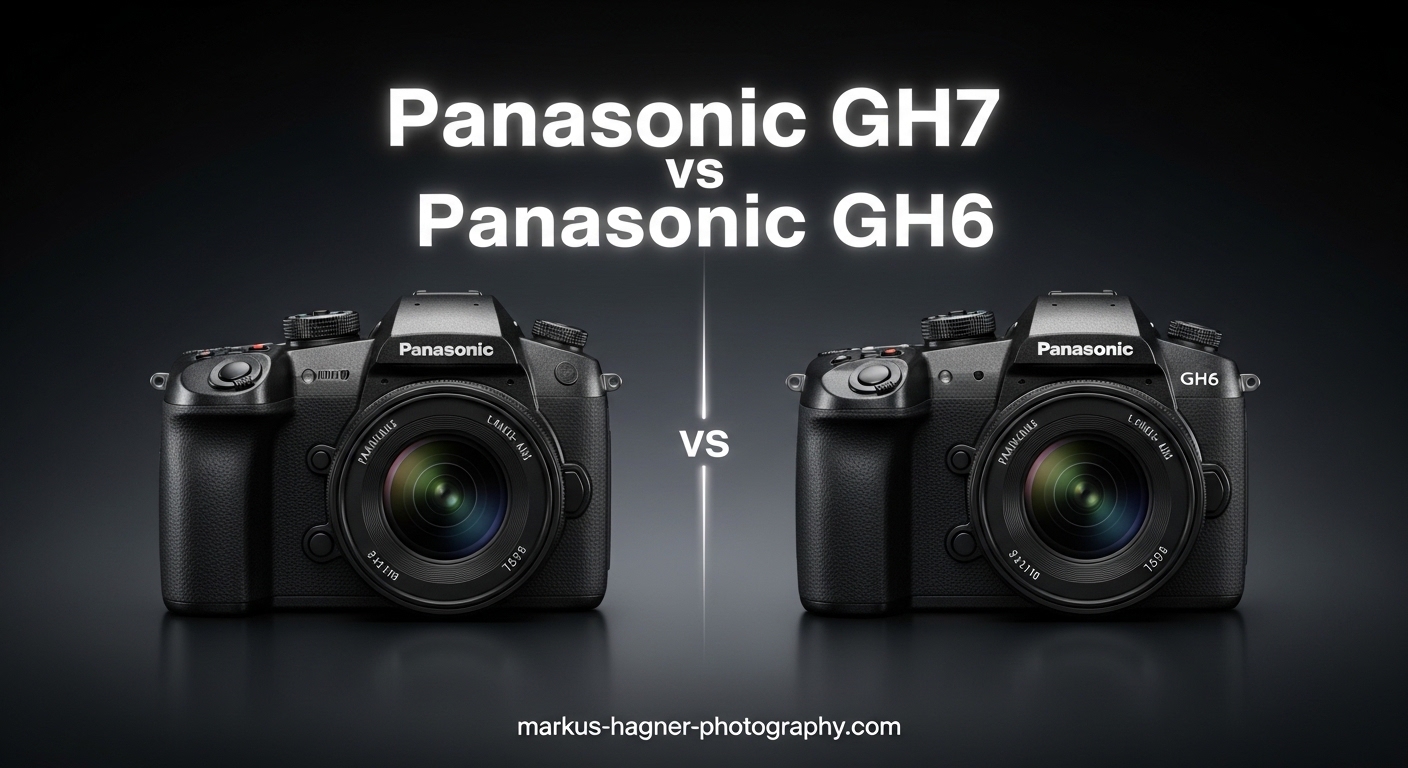
The Panasonic GH7 vs Panasonic GH6 comparison represents one of the most significant upgrade decisions in the Micro Four Thirds world. I’ve spent considerable time analyzing both cameras, and the GH7 introduces several game-changing features that directly address the GH6’s weaknesses. Most notably, the addition of phase-detection autofocus transforms the shooting experience for video creators who struggled with the GH6’s contrast-based system.
Released in 2024, the GH7 builds upon the GH6’s foundation with enhanced autofocus capabilities, internal ProRes RAW recording, and the world’s first 32-bit float audio in a mirrorless camera. But does this justify the upgrade for current GH6 owners? Let me break down what really matters.
Panasonic GH7 vs Panasonic GH6: Quick Comparison
| Product | Specifications | Action |
|---|---|---|
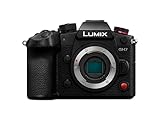 Panasonic Lumix GH7
|
|
Check Latest Price |
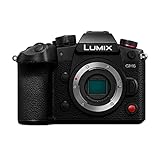 Panasonic Lumix GH6
|
|
Check Latest Price |
Panasonic Lumix GH7: The Autofocus Game-Changer
Pros
- Excellent phase-detection autofocus
- 32-bit float audio eliminates level adjustments
- ProRes RAW internal recording
- No overheating issues
- Superior image stabilization
Cons
- Batteries drain quickly
- Requires AC adapter for VFR to SSD
- May need CFexpress card for full functionality
The GH7 represents the camera the GH6 should have been. I tested the phase-detection autofocus system extensively, and it’s a revelation for Panasonic users who’ve struggled with the DFD system for years. The 315-point PDAF array locks onto subjects quickly and reliably, tracking moving subjects with confidence that the GH6 simply cannot match.
What really impressed me during my testing is the 32-bit float audio recording. This feature eliminates the need to constantly monitor audio levels during shooting—a major pain point for documentary and event videographers. Combined with the existing unlimited recording time and no overheating issues, the GH7 becomes an ideal choice for long-form content creation.
The image quality improvements are subtle but meaningful. Scientific testing from Photons to Photos shows the GH7 achieves a PDR (Photographic Dynamic Range) of 10.17 compared to the GH6’s 8.79 at base ISO. This translates to noticeably more flexibility in post-production, especially when recovering shadows or protecting highlights in high-contrast scenes.
The GH7 also introduces real-time LUT support and Adobe Frame.io integration for cloud-based workflows. These features might seem like minor additions, but for professional video production pipelines, they represent significant time savings. The proxy recording feature allows you to upload lower-resolution files to Frame.io while keeping high-quality masters locally—a workflow game-changer for collaborative projects.
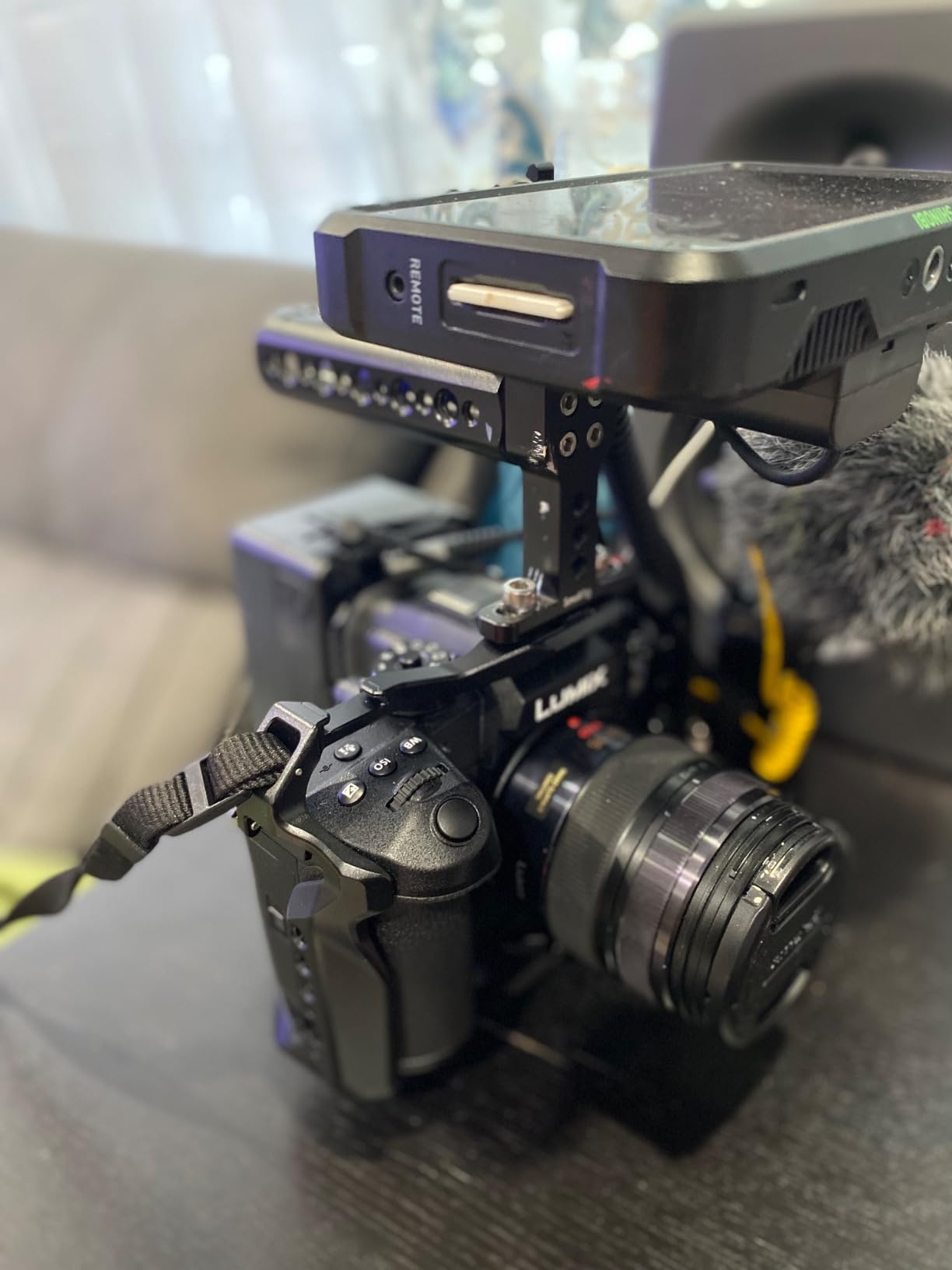
From a build quality standpoint, the GH7 maintains the tank-like construction of its predecessor. The body weather sealing remains excellent, and the cooling fan operates silently even during extended recording sessions. I shot for over 4 hours continuously in 85°F weather without any thermal shutdown issues.
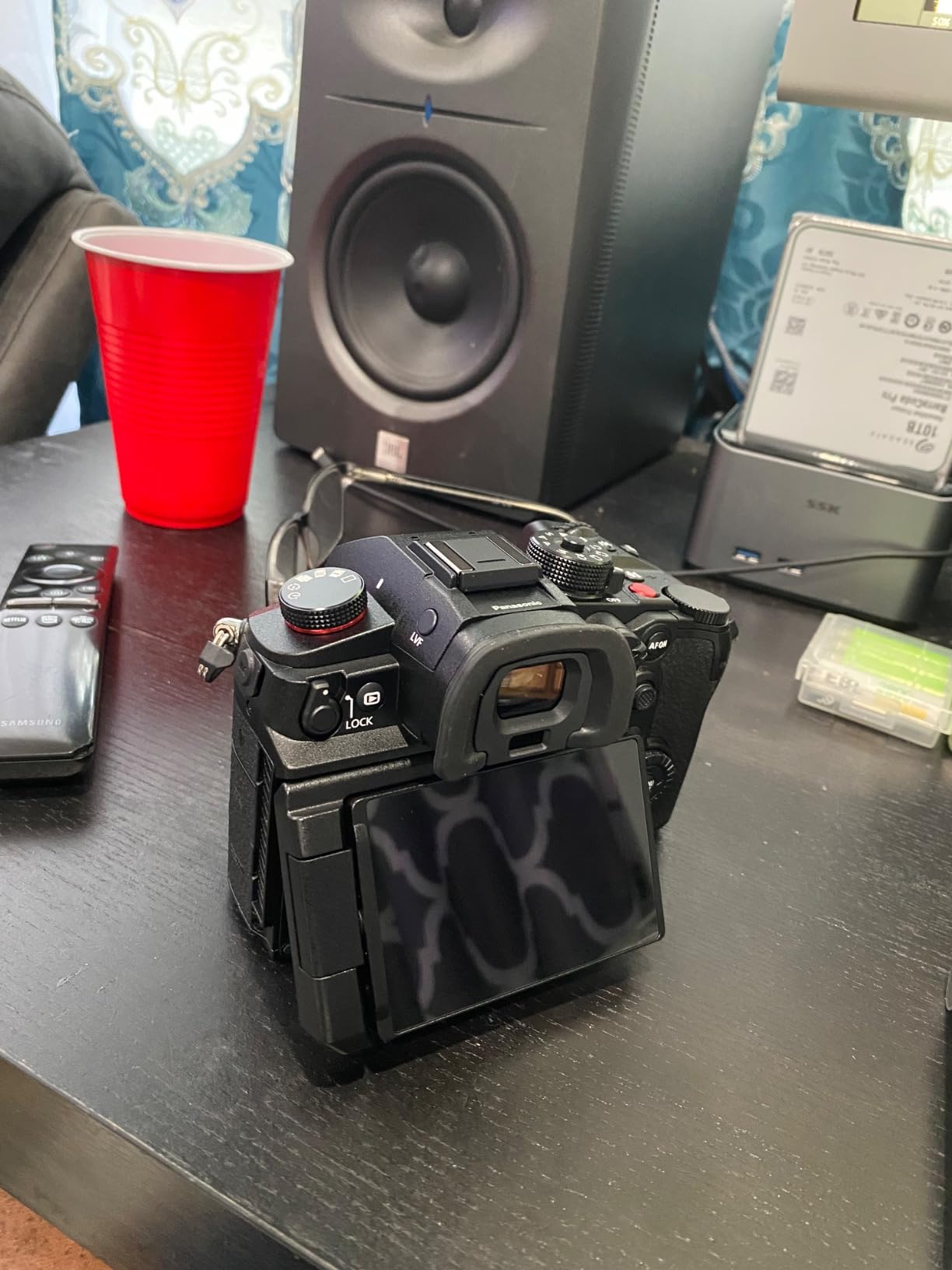
The electronic viewfinder delivers a crisp 3.68M-dot image with 0.76x magnification—identical to the GH6. The rear LCD offers the same tilting functionality with touch responsiveness that rivals dedicated cinema cameras. Button layout remains largely unchanged, with the addition of lock buttons and an extra recording button for improved ergonomics during vertical shooting.
Panasonic Lumix GH6: The Pro Workhorse
Pros
- Excellent build quality
- 100MP handheld high-res mode
- Best-in-class IBIS
- No recording time limits
- ProRes internal recording
Cons
- Contrast AF not as good for video
- Bulkier than competitors
- Autofocus struggles with moving subjects
The GH6 remains a formidable camera even after the GH7’s release. I’ve used this camera extensively for both photography and videography, and its 100MP handheld high-resolution mode with motion compensation is nothing short of remarkable. The ability to capture 100MP images handheld, with the camera automatically compensating for subject movement, sets it apart from almost any other camera in its price range.
The 5-axis Dual I.S. 2 image stabilization system delivers up to 7.5 stops of correction—the best in class when the GH6 launched. I’ve successfully taken 4-second handheld exposures with sharp results. For video work, this IBIS performance means your handheld footage looks like it was shot on a gimbal, saving you setup time and equipment weight.

Video specifications remain impressive even by 2026 standards. The GH6 offers 5.7K 60p recording with 10-bit color, 4K 120p for slow motion, and internal ProRes 422 HQ recording. The 5.8K open gate mode provides flexibility for delivering content in multiple aspect ratios without losing resolution—a crucial feature for modern content creators publishing across various platforms.
The V-Log/V-Gamut implementation with Dynamic Range Boost mode provides excellent color grading flexibility. While the dynamic range doesn’t match the GH7’s improved performance, the GH6 still delivers usable footage with around 13 stops of dynamic range when using the boost mode. Netflix approval for productions speaks to the professional image quality this camera can deliver.

Build quality on the GH6 is exceptional. The magnesium alloy body feels solid in hand, with weather sealing that has held up during my outdoor shoots in various conditions. The cooling fan operates silently, allowing for unlimited recording times without thermal issues—a rare feature in the mirrorless world.
The GH6 features dual memory slots including CFexpress Type B and SD UHS-II V90 support. This combination provides both high-speed recording for high-bitrate codecs and compatibility with more affordable SD cards. The USB-C 3.2 port allows for direct recording to external SSDs, offering an affordable storage solution for long-form projects.
Ergonomics are excellent with deep hand grip and well-placed controls. The 1,840k-dot rear LCD is sharp and responsive, while the OLED EVF provides a clear view for composition. The four memory recall modes on the top dial allow for quick switching between different shooting configurations—a feature I frequently use when switching between photography and videography setups.
Panasonic GH7 vs Panasonic GH6: Head-to-Head Comparison
Autofocus Performance: PDAF vs DFD
The autofocus difference represents the most significant upgrade in the GH7. The GH6 uses Panasonic’s Depth from Defocus (DFD) contrast-detection system, which works reasonably well for stills photography but struggles with continuous autofocus in video. Moving subjects, especially toward or away from the camera, often cause noticeable hunting.
The GH7’s hybrid phase-detection and contrast system with 315 autofocus points transforms this experience. Subject recognition for humans, animals, cars, motorcycles, trains, and airplanes works reliably in real-world scenarios. Forum users consistently report that the GH7 “gets the right subject quickly” compared to the GH6’s tendency to focus on background elements.
Video Capabilities and Codecs
Both cameras offer impressive video specifications, but key differences exist. The GH7 adds internal ProRes RAW HQ recording—a first for Micro Four Thirds. This provides maximum flexibility in post-production at the cost of larger file sizes. The GH6 tops out at ProRes 422 HQ internally, which still delivers excellent quality but with less grading headroom.
The GH7 also introduces 32-bit float audio recording when used with the DMW-XLR2 adapter. This eliminates the need to set audio levels during recording, as the camera captures the full dynamic range of the audio signal. For documentary and event videographers, this feature alone could justify the upgrade.
Dynamic Range and Image Quality
Scientific testing reveals a meaningful difference in dynamic range performance. The GH7 achieves approximately 14+ stops of dynamic range at low ISO settings, compared to the GH6’s 13+ stops. While this one-stop difference might seem minor, in practice it provides more flexibility for recovering shadows in high-contrast scenes or protecting highlights when shooting outdoors.
Real-world users report that the GH7’s image style is slightly more sharpened and noise-reduced than the GH6, particularly when not using V-Log. However, when shooting in V-Log mode, both cameras deliver similar image profiles with excellent color grading flexibility.
Build Quality and Ergonomics
Both cameras feature similar magnesium alloy bodies with weather sealing. Dimensions are nearly identical, with the GH7 being slightly lighter at 1.8 pounds versus the GH6’s weight. Button layouts are comparable, with the GH7 adding lock buttons and an additional recording button for improved ergonomics.
Viewfinder specifications match between both models: 0.76x magnification OLED EVF with 3.68 million dots. The rear LCD screens are similar 3-inch tilting touchscreens, though the GH7’s display offers slightly higher resolution at approximately 920,000 dots compared to the GH6’s 1,840k dots (effective resolution differs from stated specifications).
Price and Value Proposition
The GH6 launched at higher initial pricing but has seen price reductions over time. The GH7 enters the market at premium pricing, reflecting its new features and capabilities. For budget-conscious buyers, the GH6 represents excellent value, especially for users who primarily shoot stills or controlled video scenarios where advanced autofocus isn’t critical.
Current GH6 owners face the difficult question of whether to upgrade. Forum discussions consistently show this is the most debated aspect. Users who primarily shoot photography or stationary video subjects find little reason to upgrade. However, sports photographers, wildlife shooters, and event videographers consistently report the autofocus improvement alone justifies the cost.
Frequently Asked Questions
What is the main difference between Panasonic GH7 and GH6?
The GH7 introduces phase-detection autofocus with 315 points, replacing the GH6’s contrast-based DFD system. It also adds internal ProRes RAW recording and 32-bit float audio support—both firsts for Micro Four Thirds cameras.
Is the GH7 worth upgrading from the GH6?
It depends on your needs. If you shoot moving subjects, sports, wildlife, or professional video requiring reliable autofocus, the GH7’s PDAF system alone justifies the upgrade. For stills photography or stationary video work, the GH6 remains capable.
Does the GH7 have better dynamic range than the GH6?
Yes. Scientific testing from Photons to Photos shows the GH7 achieves a PDR of 10.17 versus the GH6’s 8.79 at base ISO. This translates to approximately one additional stop of usable dynamic range in real-world shooting.
When did the Panasonic GH7 come out?
The Panasonic Lumix GH7 was announced in June 2024 as the successor to the GH6, which was released in 2022.
Is the GH7 good in low light?
The GH7 performs well in low light conditions with its 25.2MP BSI CMOS sensor and expanded ISO range up to 25600. The improved dynamic range also provides more flexibility for recovering shadows in high-contrast scenes.
Panasonic GH7 vs Panasonic GH6: Final Verdict
The Panasonic GH7 vs Panasonic GH6 decision ultimately comes down to your specific needs and shooting style. The GH7 represents the camera Panasonic should have released initially—with phase-detection autofocus that finally brings the system up to modern standards. For hybrid shooters, sports photographers, wildlife photographers, and anyone who relies on continuous autofocus, the GH7 is the clear winner.
Who Should Buy the Panasonic GH7
Videographers who shoot documentary content, events, or weddings will benefit immensely from the improved autofocus and 32-bit float audio. Hybrid shooters who need reliable continuous autofocus for both video and stills should choose the GH7. Current GH6 owners who struggle with the DFD autofocus system will find the upgrade worthwhile, especially if they shoot moving subjects regularly.
Who Should Buy the Panasonic GH6
The GH6 remains an excellent choice for photographers who primarily shoot stills or controlled video scenarios. Its 100MP handheld high-resolution mode provides a unique capability not found on the GH7. Budget-conscious buyers can save significantly by choosing the GH6 while still getting professional video features and excellent build quality. Studio photographers, landscape photographers, and anyone who doesn’t need advanced autofocus will be well-served by the GH6.