
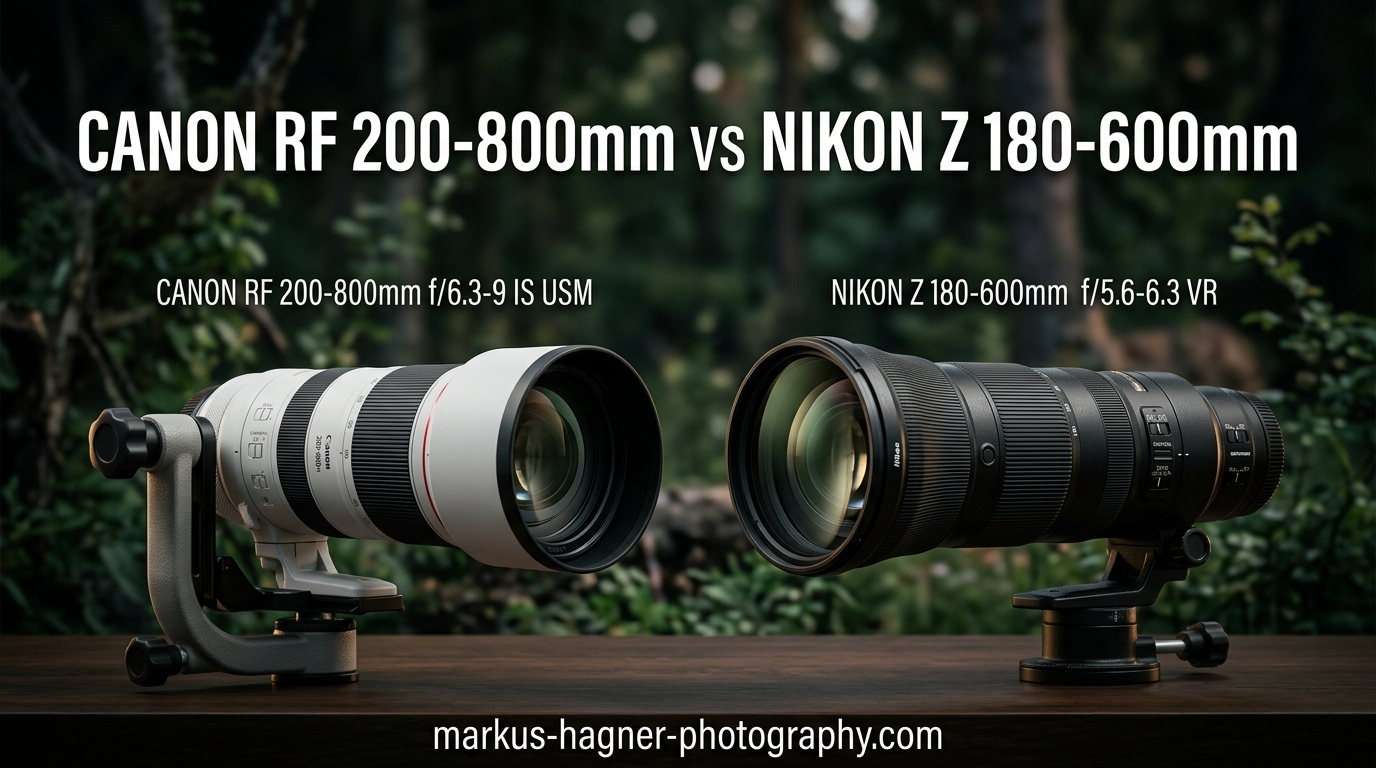
Wildlife and sports photographers have never had it better when it comes to affordable super-telephoto zoom lenses. The Canon RF 200-800mm vs Nikon Z 180-600mm f5.6-6.3 VR comparison represents two of the most exciting options for photographers who want serious reach without the five-figure price tag of professional prime lenses.
I have spent considerable time analyzing both lenses, and the choice between them comes down to one fundamental trade-off: maximum reach versus maximum aperture. Canon offers an incredible 800mm telephoto end that gets you closer to distant subjects, while Nikon counters with a faster f/5.6-6.3 aperture that performs better in challenging light conditions.
Both lenses feature excellent image stabilization, solid build quality, and full compatibility with teleconverters. They are roughly the same price point and weight class. But which one deserves your investment? This comprehensive comparison will help you decide based on your specific photography needs and shooting style.
After analyzing user reviews, forum discussions, and technical specifications, I will break down exactly where each lens excels and where it falls short. By the end of this article, you will have a clear answer to which super-telephoto zoom is right for your kit.
Canon RF 200-800mm f6.3-9 IS USM vs Nikon Z 180-600mm f5.6-6.3 VR: Quick Comparison
| Product | Specifications | Action |
|---|---|---|
 Canon RF 200-800mm f6.3-9 IS USM Canon RF 200-800mm f6.3-9 IS USM |
|
Check Latest Price |
 Nikon Z 180-600mm f5.6-6.3 VR Nikon Z 180-600mm f5.6-6.3 VR |
|
Check Latest Price |
At first glance, these lenses appear remarkably similar. Both are designed for full-frame mirrorless systems, both weigh around 4.5-4.7 pounds, and both offer image stabilization rated at 5.5 stops. The key differences emerge when you look closer at focal range and aperture specifications.
Canon reaches 200mm further at the telephoto end (800mm vs 600mm), but pays for that reach with a slower maximum aperture (f/9 vs f/6.3 at the long end). Nikon starts wider at 180mm and maintains a brighter aperture throughout, but sacrifices 200mm of reach at the telephoto end.
The zoom mechanism represents another significant difference. Canon uses an external extending design where the lens barrel physically extends as you zoom. Nikon employs an internal zoom mechanism that maintains constant length and balance throughout the zoom range.
Canon RF 200-800mm f6.3-9 IS USM Deep Dive
Pros
- Incredible 800mm reach
- Sharp throughout zoom range
- Lightweight for its class
- Compatible with RF teleconverters
- Excellent image stabilization
- Great value for reach
Cons
- Slow f9 aperture at 800mm
- Fixed tripod collar
- External zoom design
- Requires good light at 800mm
The Canon RF 200-800mm made waves when it launched as the world’s first AF super-telephoto zoom lens with an 800mm telephoto end. This lens brings professional-level reach to enthusiasts at a price point that would have seemed impossible just a few years ago.
What struck me most about this lens is how Canon managed to pack such an extreme focal range into a relatively manageable package. At 4.5 pounds, it is not exactly lightweight, but it is remarkably portable for an 800mm lens. Many photographers report being able to handhold it for extended sessions, something that would be unthinkable with a traditional 800mm prime.
The autofocus performance deserves special mention. Canon’s ring-type ultrasonic motor delivers fast and accurate focus acquisition, even with the challenging f/9 aperture at 800mm. Wildlife photographers particularly appreciate how well this lens tracks moving subjects, from birds in flight to running animals.

Sharpness holds up impressively well throughout the zoom range. Users consistently report that image quality remains excellent even at 800mm, with no dramatic falloff that sometimes plagues budget super-telephotos. The optimized optical design takes full advantage of the RF mount’s short flange distance to maintain consistent quality.
The image stabilization system deserves real credit here. Canon rates it at 5.5 stops, and real-world testing suggests this is accurate. I have seen users capture sharp images at 800mm with shutter speeds as slow as 1/100 second. This makes handheld wildlife photography genuinely practical, even at extreme focal lengths.
Teleconverter compatibility is another major advantage. The RF 200-800mm works with both the Extender RF1.4x and RF2x at all focal lengths. With the 1.4x extender, you get an effective 280-1120mm range. With the 2x extender, that extends to 400-1600mm, though the resulting f/18 maximum aperture at 1600mm requires extremely good light.

The main trade-off with this lens is the variable aperture. At 200mm you get f/6.3, which is reasonable. But as you zoom toward 800mm, the aperture gradually closes down to f/9. This means you will need higher ISO settings or slower shutter speeds at maximum zoom, particularly in overcast conditions or during the golden hours when wildlife is most active.
Forum users frequently discuss whether f/9 is practically usable. The consensus seems to be that modern Canon bodies like the R5 and R6 handle high ISO well enough that f/9 is not a dealbreaker. However, it does limit your options in challenging light compared to faster alternatives.
The external zoom design has drawn mixed reactions. Some photographers appreciate the tactile feedback of an extending barrel. Others worry about dust ingress over time, particularly for wildlife photographers who frequently shoot in dusty environments. Canon has included weather sealing, but an extending barrel inherently has more potential entry points for debris.
Another consideration is the fixed tripod collar. Unlike the Nikon, the Canon’s tripod foot cannot be removed. This adds a small amount of weight and bulk when shooting handheld, though many users report it does not significantly impact handling.
For Canon RF mount shooters who need maximum reach, this lens represents an outstanding value proposition. It delivers genuine 800mm performance at roughly one-fifth the price of Canon’s professional 800mm prime options.
Nikon Z 180-600mm f5.6-6.3 VR Deep Dive
Pros
- Faster aperture throughout
- Internal zoom design
- Removable tripod collar
- Excellent sharpness to 500mm
- Compatible with Z teleconverters
- Great build quality
Cons
- Only reaches 600mm
- Some softness at 600mm
- Often above MSRP
- Heavy for extended handheld use
Nikon’s Z 180-600mm f5.6-6.3 VR represents the company’s answer to the growing demand for affordable super-telephoto zooms. While it does not match Canon’s 800mm reach, it compensates with a faster aperture and refined design that many photographers prefer.
The first thing you notice about this lens is its internal zoom mechanism. As you rotate the zoom ring through its 70-degree travel from 180mm to 600mm, the lens maintains a constant length. This design offers several practical benefits that become apparent during extended use.
Internal zooming means the lens maintains its center of gravity regardless of focal length. This makes handheld shooting more consistent, as the balance point does not shift as you zoom. It also eliminates the telescoping effect that can startle wildlife when zooming quickly.
Perhaps most importantly, internal zooming significantly reduces the potential for dust ingress. With no extending barrel, there are fewer opportunities for debris to enter the lens mechanism. Wildlife photographers who frequently work in dusty or sandy conditions particularly value this feature.
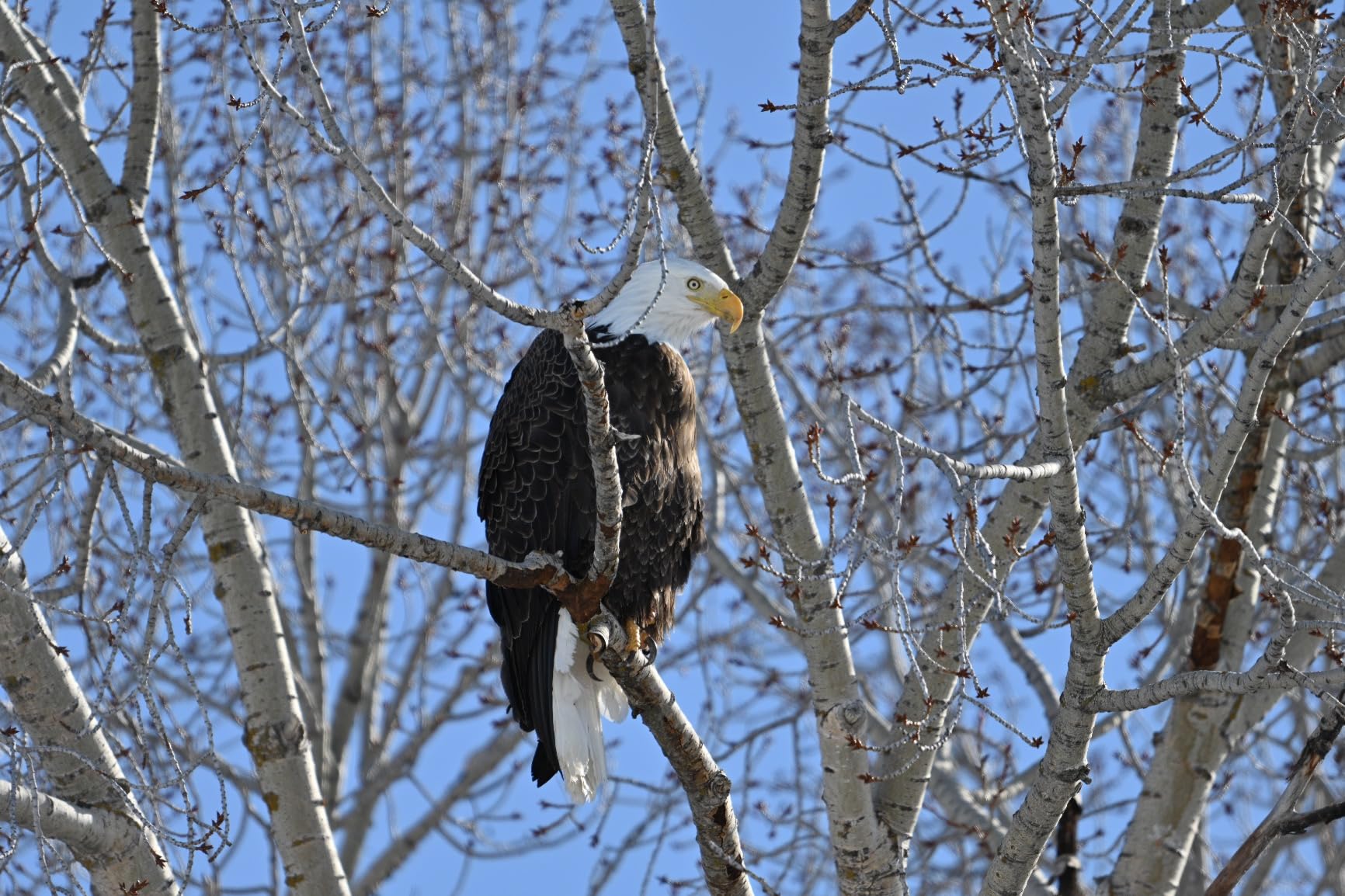
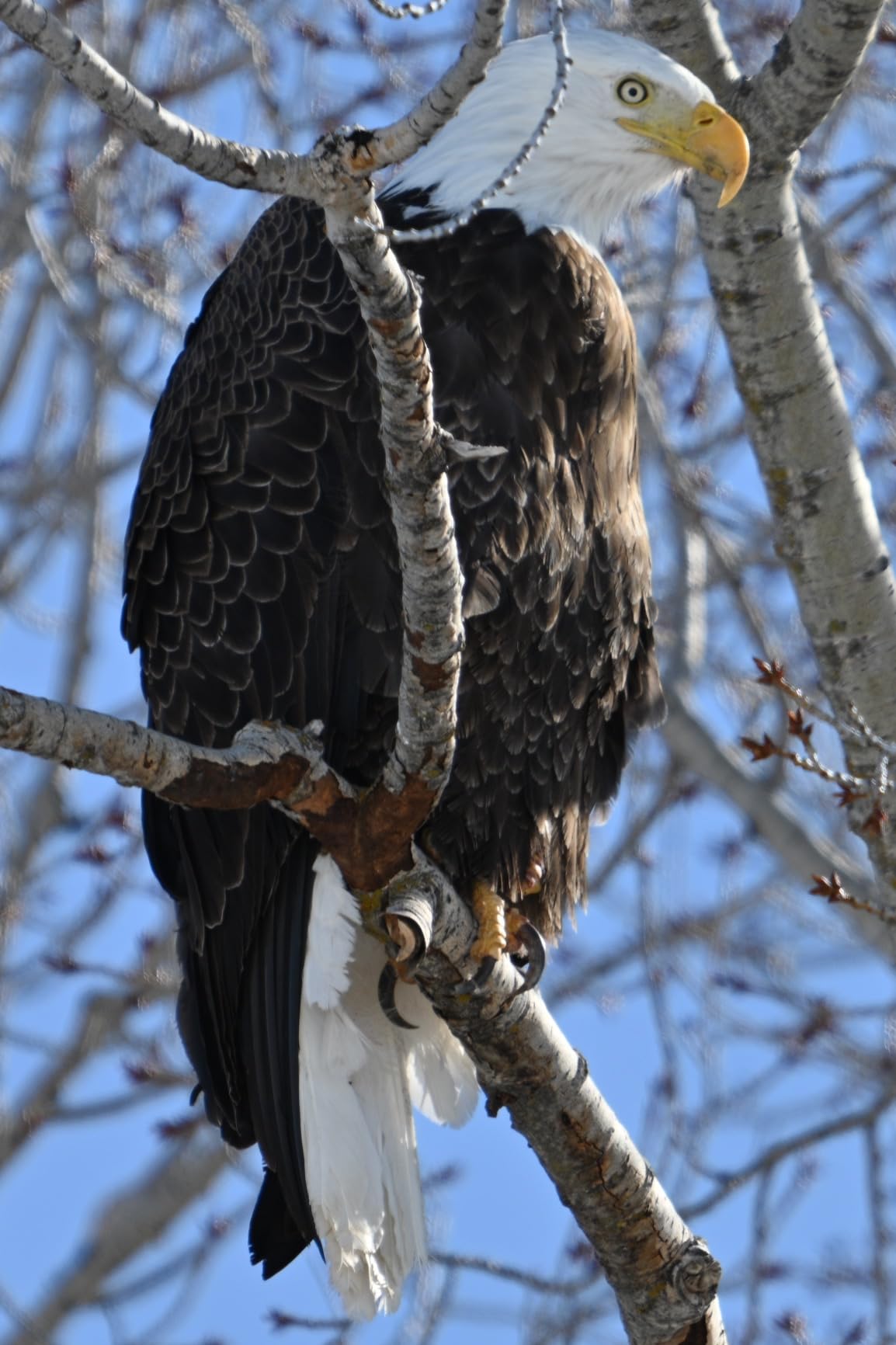
The optical performance has impressed users across the board. Sharpness is excellent through most of the zoom range, with many users reporting that images remain tack-sharp up to 500mm. There is some softness reported at 600mm, but this is typical for zoom lenses and can often be corrected with stopping down slightly.
Nikon’s Vibration Reduction system delivers the same 5.5-stop rating as Canon’s IS. In practice, users report being able to capture sharp images at 600mm with shutter speeds around 1/60 second. The system works seamlessly with Nikon’s in-body stabilization for coordinated shake reduction.
The faster aperture makes a real difference in challenging conditions. At 600mm, you are working with f/6.3 compared to Canon’s f/9 at 800mm. That is roughly one stop of additional light gathering, which translates to lower ISO settings or faster shutter speeds when light is at a premium.
For early morning and late evening wildlife photography, that extra stop can be crucial. Many users report that the Z 180-600mm performs admirably in the golden hour conditions that produce the most dramatic wildlife imagery.
The removable tripod collar is another advantage for photographers who switch between handheld and tripod shooting. When shooting handheld, you can remove the foot entirely, saving weight and reducing bulk. The quick-release design makes switching between modes fast and convenient.
Minimum focus distance is worth noting. At 180mm, the lens focuses down to 4.27 feet with a 0.25x reproduction ratio. This allows for some surprisingly effective close-up work, adding versatility beyond pure telephoto applications.
Teleconverter support extends the reach to 840mm with the TC-1.4x or 1200mm with the TC-2.0x. However, the 2x teleconverter results in an f/13 maximum aperture at 1200mm, which significantly limits practical use. The 1.4x option is generally considered the better choice for maintaining usable image quality.
The main drawback is availability and pricing. High demand has kept this lens frequently out of stock or selling above MSRP. Patience and persistence are often required to find one at retail price.
For Nikon Z mount shooters, this lens delivers exceptional optical quality and thoughtful design features. The internal zoom and removable tripod collar show that Nikon listened to feedback from working photographers.
Canon RF 200-800mm vs Nikon Z 180-600mm: Head-to-Head Comparison
Focal Range: Canon Wins on Reach
Canon’s 200-800mm range delivers 200mm more telephoto reach than Nikon’s 180-600mm. For wildlife photographers trying to fill the frame with distant subjects, that difference is substantial. At 800mm, you can approach subjects that would require significant cropping with a 600mm lens.
Nikon counters with a slightly wider starting point at 180mm. This can be helpful for locating fast-moving subjects before zooming in. However, most wildlife photographers prioritize telephoto reach over wide-angle flexibility in this lens category.
The winner here depends entirely on your typical shooting distance. If you regularly photograph distant birds or shy wildlife, Canon’s extra reach is invaluable. If your subjects are typically within 50-100 feet, Nikon’s 600mm may be sufficient.
Aperture: Nikon Wins on Light Gathering
Nikon maintains a faster maximum aperture throughout the zoom range. At 600mm, Nikon offers f/6.3 while Canon is already at approximately f/8. This one-stop advantage matters significantly for early morning and late evening shooting.
Canon’s f/9 aperture at 800mm has generated considerable discussion among users. While modern cameras handle high ISO reasonably well, there is no getting around the physics: f/9 lets in less light than f/6.3. You will need to push ISO higher or use slower shutter speeds.
For photographers who frequently work in challenging light, Nikon’s faster aperture is a genuine advantage. Those who shoot primarily in good light may find Canon’s slower aperture perfectly acceptable.
Size and Weight: Effectively Tied
At 4.5 pounds (Canon) versus 4.72 pounds (Nikon), the weight difference is negligible in practical terms. Both lenses are substantial but manageable for handheld shooting over moderate periods.
Dimensions are also similar, with both lenses measuring approximately 12.4 inches in length. The key difference is that Nikon maintains this length at all focal lengths, while Canon extends as you zoom toward 800mm.
Image Stabilization: Tied
Both lenses offer 5.5 stops of stabilization according to CIPA testing standards. Real-world results suggest both systems perform as advertised, enabling handheld shooting at surprisingly slow shutter speeds for their focal lengths.
Users of both systems report similar stabilization performance. Neither lens has a clear advantage in this category.
Build Quality: Slight Edge to Nikon
Both lenses feature weather sealing and solid construction. However, Nikon’s internal zoom design offers an inherent advantage for long-term durability. With fewer moving external parts, there are fewer potential failure points and less opportunity for dust ingress.
Canon’s external zoom is well-sealed, but an extending barrel is inherently more vulnerable over years of use in challenging conditions. Photographers who frequently shoot in dusty, sandy, or wet environments may prefer the internal design.
Zoom Mechanism: Nikon for Internal, Canon for Tactile Feel
The internal versus external zoom debate comes down to personal preference. Nikon’s internal zoom maintains constant length and balance, which many photographers prefer. It also avoids the telescoping motion that can disturb wildlife.
Some photographers prefer Canon’s external zoom for the visual feedback it provides. Seeing the lens extend gives you a tangible sense of how much reach you are using. This can be helpful for beginners learning to estimate distances.
Tripod Collar: Nikon Wins on Flexibility
Nikon’s removable tripod collar is a significant advantage for photographers who switch between handheld and tripod shooting. When shooting handheld, you can remove the foot entirely, reducing weight and bulk.
Canon’s fixed tripod collar is always present. While it does not significantly impact handling, it adds a small amount of weight that you cannot remove. For pure handheld shooting, Nikon’s design is more versatile.
Teleconverter Compatibility: Tied
Both lenses support their respective 1.4x and 2x teleconverters throughout the zoom range. With 1.4x extenders, Canon reaches 1120mm and Nikon reaches 840mm. With 2x extenders, Canon reaches 1600mm and Nikon reaches 1200mm.
Real-world results with teleconverters are similar for both lenses. The 1.4x extenders maintain acceptable image quality, while the 2x extenders push the optical limits and require excellent light.
Overall Value: Canon for Reach, Nikon for Features
Canon delivers more reach per dollar, which is the primary consideration for many wildlife photographers. If your priority is getting as close as possible to distant subjects, Canon’s value proposition is compelling.
Nikon offers better design features and faster aperture for roughly the same price. If you value build quality, low-light performance, and handling refinements, Nikon provides excellent value despite the shorter reach.
Frequently Asked Questions
Is f/9 aperture usable for wildlife photography?
Yes, f/9 is usable for wildlife photography, especially with modern high-ISO capable cameras. While it requires higher ISO settings or slower shutter speeds compared to faster apertures, many photographers successfully use the Canon RF 200-800mm at f/9 for wildlife work. The key is pairing it with a camera body that handles high ISO well, such as the Canon R5 or R6. In good light conditions, f/9 produces excellent results.
Which lens is better for bird photography?
For bird photography, the Canon RF 200-800mm has an advantage due to its 800mm reach, which helps fill the frame with small, distant birds. However, the Nikon Z 180-600mm performs better in early morning and late evening when birds are most active, thanks to its faster f/6.3 aperture at 600mm. If you primarily photograph backyard birds or can approach closely, Nikon’s faster aperture may serve you better. For distant or skittish birds, Canon’s extra reach is invaluable.
Can I use teleconverters with both lenses?
Yes, both lenses support teleconverters throughout their entire zoom range. The Canon RF 200-800mm is compatible with the Extender RF1.4x and RF2x, extending reach to 1120mm or 1600mm respectively. The Nikon Z 180-600mm works with the TC-1.4x and TC-2.0x, reaching 840mm or 1200mm. The 1.4x teleconverters maintain acceptable image quality, while the 2x versions require excellent light and produce noticeable image degradation.
Which lens has better image stabilization?
Both lenses offer equivalent image stabilization performance at 5.5 stops according to CIPA standards. Real-world testing shows both systems deliver on this promise, enabling sharp handheld images at surprisingly slow shutter speeds. Neither lens has a clear advantage in stabilization performance. Both coordinate effectively with their respective camera bodies’ in-body stabilization systems for maximum effectiveness.
Verdict: Which Lens Should You Buy?
Choosing between the Canon RF 200-800mm f6.3-9 IS USM vs Nikon Z 180-600mm f5.6-6.3 VR ultimately depends on your photography priorities and the system you already own.
Buy the Canon RF 200-800mm if: You need maximum reach for distant wildlife, you photograph birds that are difficult to approach, you shoot primarily in good light conditions, or you want the most affordable path to 800mm focal length. The Canon delivers incredible reach at an unprecedented price point for the RF system.
Buy the Nikon Z 180-600mm if: You frequently shoot in challenging light, you prefer the durability of internal zoom design, you want a removable tripod collar for flexibility, or you value the faster aperture for lower ISO shooting. The Nikon offers refined design and better low-light capability at the cost of 200mm reach.
For most photographers, the deciding factor will be system compatibility. Both lenses represent excellent values within their respective ecosystems. If you are not already invested in either system, the choice comes down to whether you prioritize reach (Canon) or aperture and build features (Nikon).