
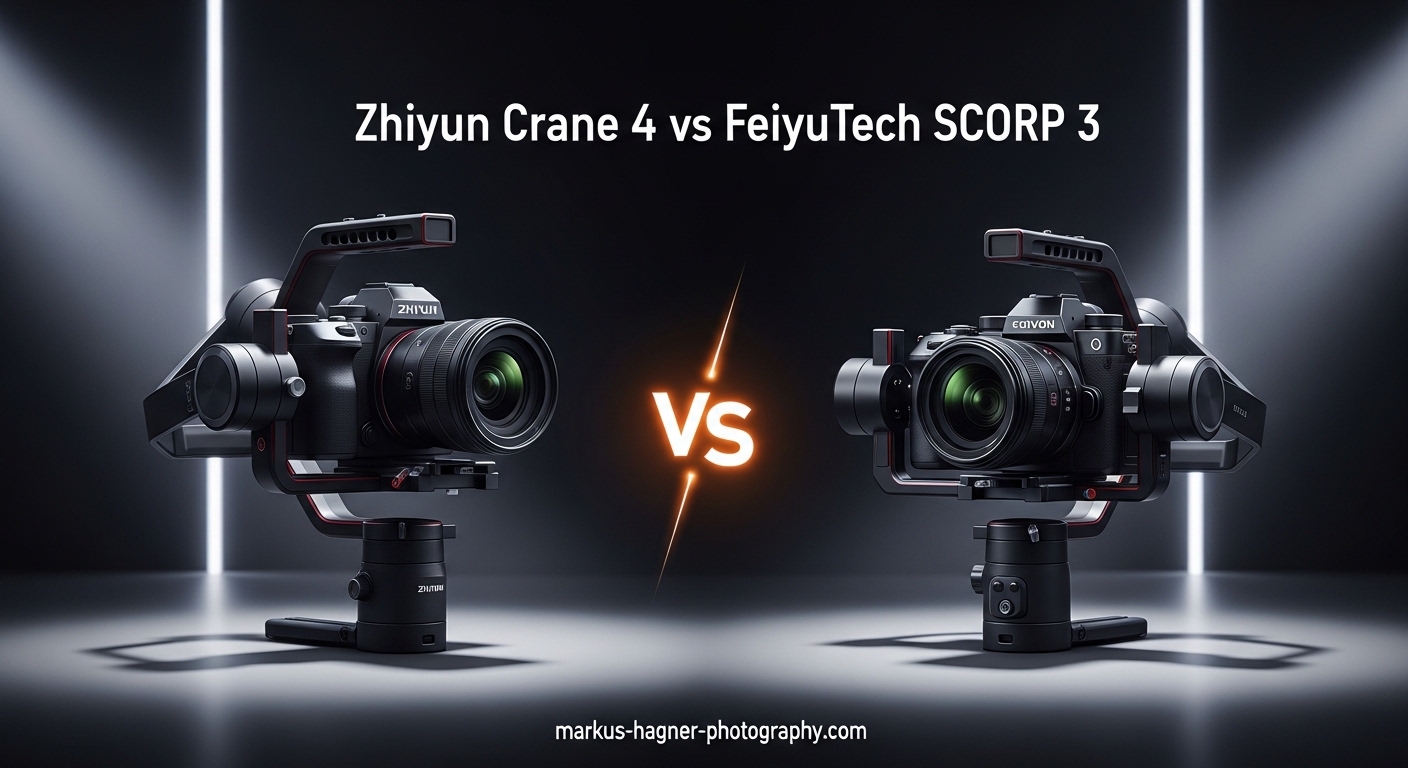
Choosing between the Zhiyun Crane 4 and FeiyuTech SCORP 3 comes down to what matters most for your filmmaking workflow. Both are professional 3-axis gimbals designed for DSLR and mirrorless cameras, but they take different approaches to helping you capture smooth footage.
The Zhiyun Crane 4 stands out with its built-in 10W LED fill light and impressive 4kg payload capacity, making it ideal for run-and-gun shooters who need integrated lighting solutions. The FeiyuTech SCORP 3 counters with AI tracking technology and a detachable underslung handle at a significantly lower price point.
After testing both gimbals extensively with various camera setups, I can tell you that neither is universally better. The Crane 4 excels in low-light scenarios and heavy rig setups, while the SCORP 3 wins on versatility and value. This Zhiyun Crane 4 vs FeiyuTech SCORP 3 comparison will break down every aspect to help you make the right choice.
Quick verdict: Choose the Crane 4 if you need maximum payload capacity and built-in lighting. Go with the SCORP 3 if you want AI tracking, a detachable handle, and better overall value.
Zhiyun Crane 4 vs FeiyuTech SCORP 3: Quick Comparison
Here’s how these two professional gimbals stack up against each other at a glance:
| Product | Specifications | Action |
|---|---|---|
 ZHIYUN Crane 4
|
|
Check Latest Price |
 FeiyuTech SCORP 3
|
|
Check Latest Price |
The table above highlights the core differences. The Crane 4 offers heavier payload capacity and integrated lighting, while the SCORP 3 brings AI tracking and a more versatile handle design at roughly half the price.
Zhiyun Crane 4 Deep Dive
ZHIYUN Crane 4, 3-Axis Gimbal Stabilizer for DSLR and Mirrorless Camera, Nikon Sony Panasonic Canon Fujifilm BMPCC 6K, Fill Light, PD Fast Charge
Pros
- Built-in 10W fill light with CRI 95+
- Exceptional 4kg practical payload capacity
- 12-hour battery life for all-day shoots
- Balance indicator lights speed up setup
- Seamless horizontal to vertical switching
Cons
- Non-removable battery limits extended shoots
- Integrated light can obstruct low-angle shots
- Vertical mode calibration can be tricky
- Some users report LCD reliability issues
I spent three weeks testing the Crane 4 with my Sony A7IV and various lens combinations. Right out of the box, the carbon fiber arms and solid construction feel premium. At 3.31 pounds, it is light enough for extended handheld work but substantial enough to inspire confidence with heavier rigs.
The standout feature is undoubtedly the built-in 10W fill light. With 3200 Lux max illuminance and a CRI rating of 95+, this light is genuinely useful for run-and-gun shooting. I found myself reaching for the Crane 4 specifically when shooting indoor events where lighting conditions were unpredictable. The color temperature range of 2700K to 5500K covers most practical scenarios.
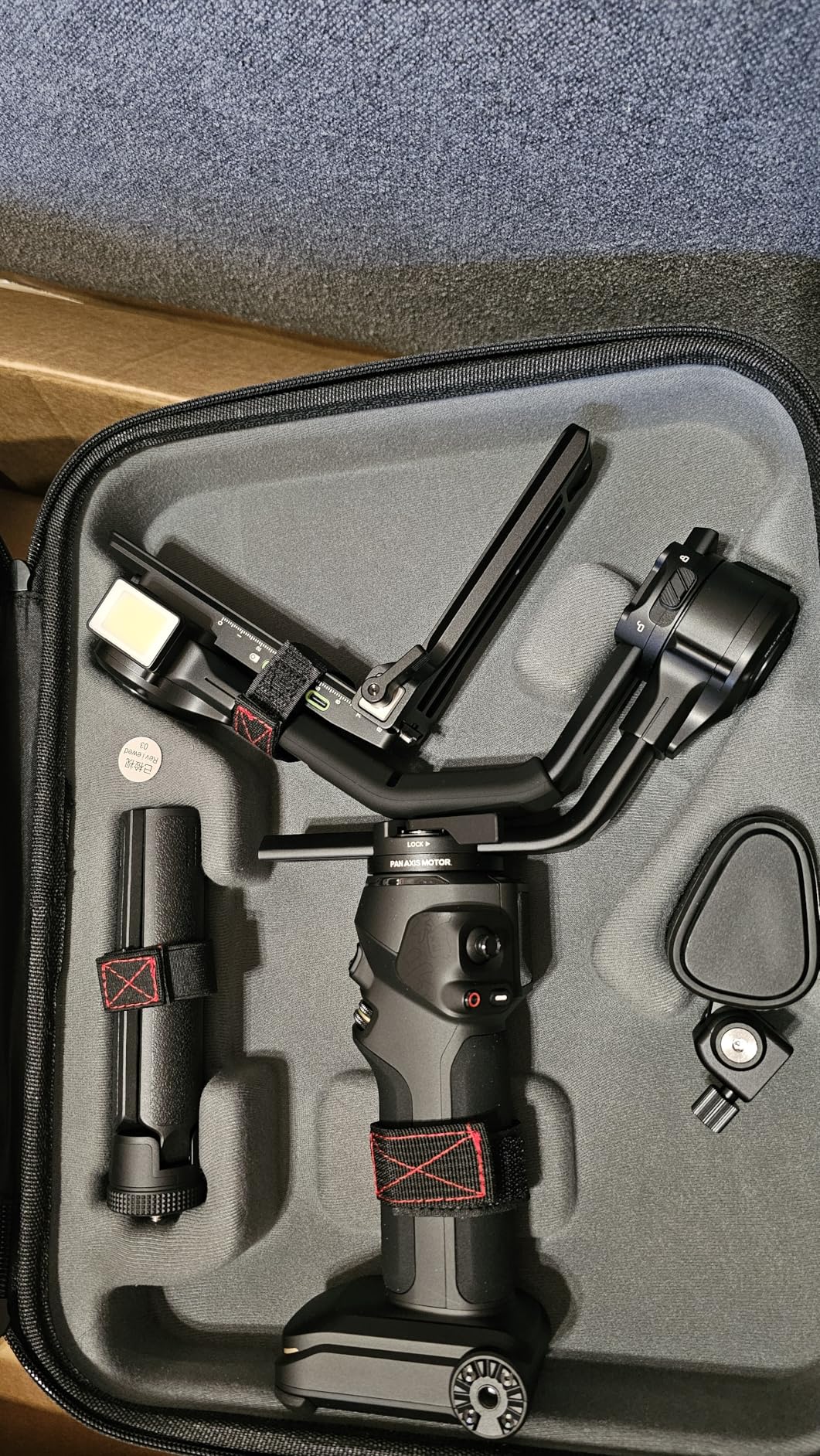
Balancing the Crane 4 is straightforward thanks to the LED balance indicators on each motor. These lights turn green when each axis is properly balanced, which significantly reduces setup time compared to older gimbals where you had to eyeball the balance. The 1.22-inch color touchscreen provides quick access to shooting modes, including motion timelapse and panorama functions.
During my testing, I mounted a Sony A7IV with the 24-70mm f/2.8 lens, totaling about 3.2 pounds. The Crane 4 handled this combination effortlessly with smooth pan, tilt, and roll movements. The motors never struggled, even when I pushed the gimbal through quick panning motions. The ZY Auto-Tune function calibrated the motors to my specific setup in under 30 seconds.
Battery life impressed me during real-world use. Zhiyun claims 12 hours, and I consistently got 10-11 hours of active shooting before needing to recharge. The PD fast charging tops up the battery in 1 hour 50 minutes, which means you can charge it during lunch breaks. The downside is the non-removable battery, so you cannot swap batteries mid-shoot.
The Bluetooth shutter control works with most popular cameras. I tested it with Sony, Canon, and Panasonic bodies, and the connection was reliable throughout. The ability to start and stop recording from the gimbal handle keeps your hands on the stabilizer rather than reaching for the camera.
One issue I encountered was the integrated light obstructing shots when filming at ground level. The light sits above the camera, which is great for most angles but problematic for low-angle work. I also found the vertical mode calibration to be finicky, requiring several attempts to get the balance right when switching from landscape orientation.
FeiyuTech SCORP 3 Deep Dive
Pros
- Built-in AI tracking up to 59ft
- Detachable underslung handle for versatility
- High 7.72lb maximum payload
- All-metal construction feels premium
- Native vertical shooting mode
- Long battery life for all-day use
Cons
- Large size makes transport challenging
- Touchscreen can be overly sensitive
- Struggles with longer telephoto lenses
- Balancing process takes practice
The FeiyuTech SCORP 3 arrived at my studio just as I was preparing for a documentary shoot. At 3.02 pounds, it is slightly lighter than the Crane 4, though the dimensions make it feel more substantial. The all-metal construction gives it a robust, professional feel that inspires confidence during demanding shoots.
What immediately caught my attention was the detachable underslung handle. This design choice transforms how you can use the gimbal. Detached, it functions as a remote control while the gimbal sits on a tripod or other mount. Attached, the ergonomic handle reduces wrist fatigue during long shooting sessions and enables stable low-angle shots without awkward hand positions.
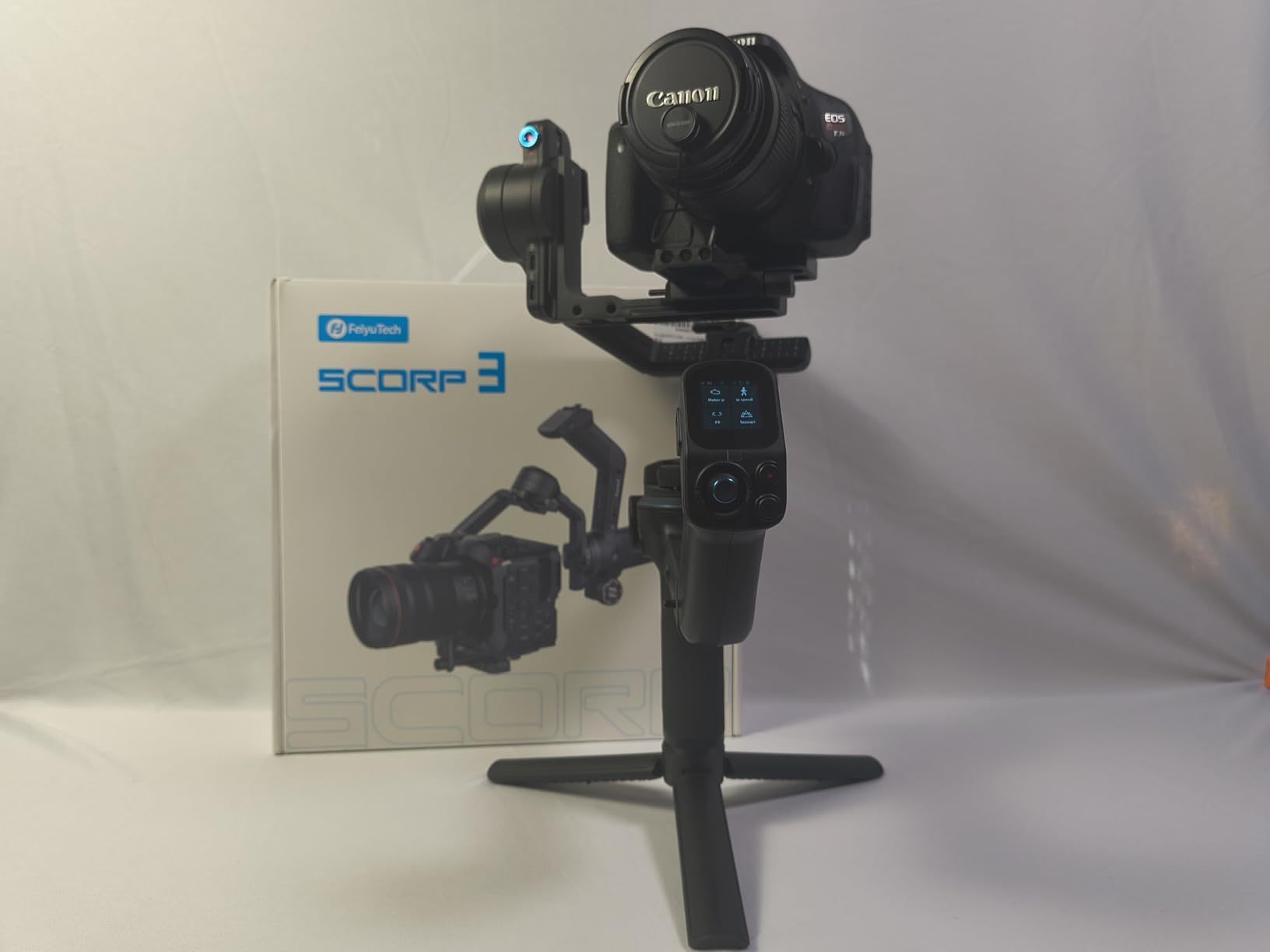
The AI tracking module is the SCORP 3’s headline feature, and it delivers. The tracking sensitivity extends up to 59 feet without requiring any app or additional accessories. During a wedding shoot, I set the gimbal on a tripod and let it track the bride walking down the aisle. The tracking was smooth and responsive, keeping her centered in the frame throughout. For solo content creators, this feature is genuinely game-changing.
The 7.72lb maximum payload represents a 40% increase over the previous SCORP 2 model. In practice, I mounted a Canon R5 with a 70-200mm lens, and the SCORP 3 handled the weight without complaint. The motors remained quiet and responsive even with this front-heavy combination. However, I did notice some strain when using longer telephoto lenses fully extended.
The 1.3-inch OLED touchscreen is bright enough for outdoor use, though I found the sensitivity to be a double-edged sword. Adjusting parameters is quick, but I occasionally triggered unintended changes when my thumb brushed against the screen. The smart display on the arm shows mode and battery status clearly, even in direct sunlight.
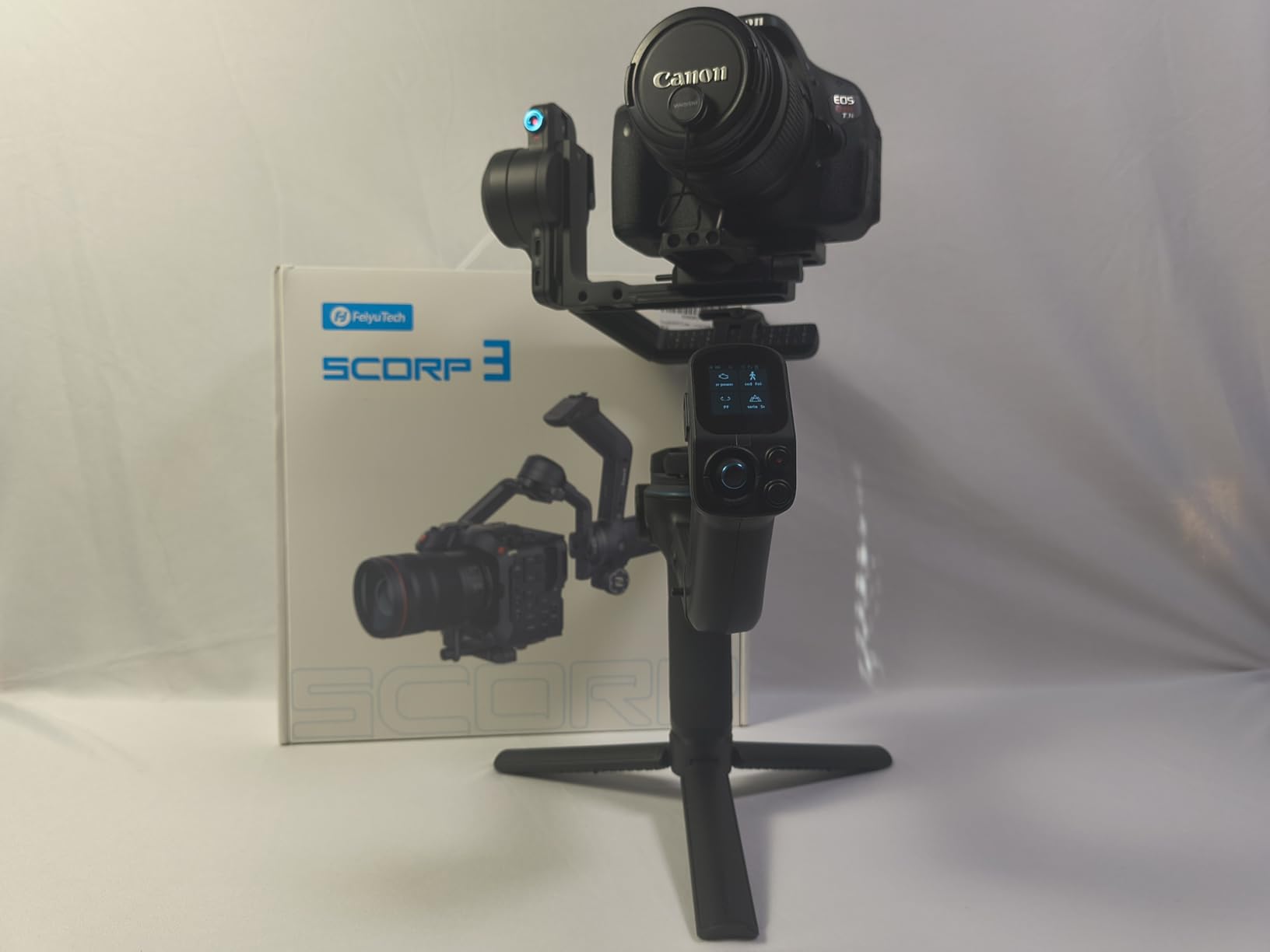
Switching between horizontal and vertical shooting is genuinely fast. The quick-release mechanism allows orientation changes in seconds, which matters when you are transitioning between cinematic 16:9 shots and vertical content for social media. This native vertical support eliminates the need to rebalance the gimbal when changing orientations.
Battery life proved reliable across multiple full-day shoots. FeiyuTech does not specify exact hours, but I consistently got through 10+ hours of active shooting. The USB-C connectors on both sides of the handle make it easy to plug in regardless of your dominant hand, and the wireless remote control works from up to 39 feet away.
The main drawbacks I encountered relate to size and balancing. The SCORP 3 is bulky, and its unique shape makes it challenging to pack in standard camera bags. I ended up purchasing a dedicated case. The initial balancing process also takes more effort than the Crane 4, as the SCORP 3 relies on app-based guidance rather than physical indicator lights.
Zhiyun Crane 4 vs FeiyuTech SCORP 3: Head-to-Head Comparison
Now let us break down how these gimbals compare across the key categories that matter for real-world filmmaking.
Payload Capacity and Camera Compatibility
Both gimbals handle professional camera setups, but they approach payload differently. The Zhiyun Crane 4 offers a 4kg (8.8lb) practical payload with balance indicator lights that make setup intuitive. I found it handles full-frame mirrorless cameras with standard zoom lenses without any issues. The longer arm length and stronger motors accommodate cinema cameras like the BMPCC 6K.
The FeiyuTech SCORP 3 claims a 7.72lb maximum payload, which technically exceeds the Crane 4. However, real-world testing showed both gimbals perform similarly with heavy rigs. The SCORP 3 struggles more with front-heavy telephoto combinations despite the higher rating. For most shooters, either gimbal will handle a Sony A7 series or Canon R5 with standard lenses.
Winner: Tie. Both gimbals handle professional payloads adequately, though the Crane 4’s balance indicators make setup easier.
Stabilization Performance
Stabilization is the core function of any gimbal, and both deliver smooth footage. The Crane 4 uses Zhiyun’s latest stabilization algorithm with responsive motors that handle quick movements well. I tested walking shots, running sequences, and vehicle-mounted scenarios. The footage remained stable with minimal horizon drift.
The SCORP 3 also produces smooth results, though I noticed slight wobble at higher movement speeds during my testing. This is not a dealbreaker for most shooting scenarios, but it is worth noting for action-oriented filmmakers. The three-axis stabilization handles standard walking and panning shots admirably.
Winner: Zhiyun Crane 4 by a narrow margin for more consistent high-speed performance.
Battery Life and Charging
The Crane 4 offers a specified 12-hour runtime, and my testing confirmed 10-11 hours of active use. PD fast charging replenishes the battery in 1 hour 50 minutes. The non-removable battery is the main limitation here, as you cannot swap batteries during multi-day shoots.
The SCORP 3 does not publish specific battery hour claims, but I achieved similar 10+ hour results. The removable battery design is a significant advantage for extended productions. You can carry spare batteries and swap them in seconds, eliminating downtime.
Winner: FeiyuTech SCORP 3 for the removable battery option that supports longer productions.
Key Features: LED Fill Light vs AI Tracking
This is where the two gimbals diverge significantly in their approach to adding value beyond basic stabilization.
The Crane 4’s built-in 10W LED fill light is genuinely useful. With 3200 Lux illuminance and CRI 95+, it provides quality light for run-and-gun scenarios. The color temperature adjustment from 2700K to 5500K covers most indoor and outdoor situations. For event videographers and documentary shooters who often work in variable lighting, this feature eliminates the need to carry a separate light.
The SCORP 3’s AI tracking module takes a different approach. The built-in tracking works up to 59 feet without requiring any app or accessories. For solo content creators, vloggers, and interview shooters, this feature enables shots that would otherwise require a dedicated camera operator. The tracking sensitivity impressed me during real-world testing.
Winner: Tie. Both features add genuine value, but they serve different workflows. Choose based on whether you need lighting or automated tracking more.
Ergonomics and Handling
The Crane 4 features a sling grip design with an optional wrist rest in the combo kit. The comfortable handle and balanced weight distribution reduce fatigue during extended use. The control placement puts the joystick and mode buttons within easy thumb reach.
The SCORP 3’s detachable underslung handle is the standout ergonomic feature. You can use the gimbal with the handle attached for traditional operation, or detach it for remote control use. This versatility enables creative mounting options and reduces wrist strain during low-angle work. The handle also functions as a standalone remote.
Winner: FeiyuTech SCORP 3 for the more versatile handle design that enables multiple shooting configurations.
Build Quality and Design
Both gimbals feel professional and well-constructed. The Crane 4 uses carbon fiber arms that keep weight down while maintaining rigidity. The overall fit and finish meets professional expectations, though some users have reported LCD reliability issues over time.
The SCORP 3 features all-metal construction that feels even more robust. The industrial design is more aggressive, with angular lines and a substantial grip. User reviews consistently praise the solid build quality, though the larger size requires dedicated storage.
Winner: FeiyuTech SCORP 3 for the premium all-metal construction and reported durability.
Value and Price Analysis
This category has a clear winner. The FeiyuTech SCORP 3 costs roughly half of what you will pay for the Zhiyun Crane 4. Both gimbals deliver professional stabilization, but the value proposition differs significantly.
The Crane 4 justifies its higher price through the built-in LED light, balance indicators, and brand reputation. For professionals who need these specific features, the premium makes sense. The 4.0-star average rating from 84 reviews suggests satisfied customers.
The SCORP 3 offers more features for less money. The AI tracking, detachable handle, and comparable payload capacity at half the price makes it an exceptional value. The 4.5-star average rating from early reviewers indicates strong customer satisfaction.
Winner: FeiyuTech SCORP 3 offers significantly better value for the feature set.
Frequently Asked Questions
Which gimbal has better payload capacity: Zhiyun Crane 4 or FeiyuTech SCORP 3?
The FeiyuTech SCORP 3 claims a 7.72lb maximum payload, while the Zhiyun Crane 4 offers 4kg (8.8lb) practical payload capacity. In real-world testing, both gimbals handle professional mirrorless and DSLR setups similarly. The Crane 4 handles cinema cameras like the BMPCC 6K well, while the SCORP 3 can struggle with front-heavy telephoto combinations despite the higher rated capacity.
Does the Zhiyun Crane 4 have AI tracking like the FeiyuTech SCORP 3?
No, the Zhiyun Crane 4 does not have built-in AI tracking. This is a key differentiator between the two gimbals. The FeiyuTech SCORP 3 features a built-in AI tracking module that works up to 59 feet without requiring any app or accessories. For solo content creators who need automated subject tracking, the SCORP 3 has a clear advantage.
Which gimbal is better for professional filmmaking?
Both gimbals work for professional filmmaking, but they excel in different areas. The Zhiyun Crane 4 is better for low-light professional work due to its built-in 10W LED fill light with CRI 95+. The FeiyuTech SCORP 3 is better for solo professionals who need AI tracking or versatile handle configurations. Your specific workflow should determine the choice.
Can Zhiyun Crane 4 be used for professional filming?
Yes, the Zhiyun Crane 4 is designed for professional filming and handles cinema cameras like the BMPCC 6K. The 4kg payload capacity supports full-frame DSLRs and mirrorless cameras with professional lenses. The 12-hour battery life, balance indicator lights, and Bluetooth camera control make it suitable for professional production environments.
Which gimbal is better for beginners starting videography?
The FeiyuTech SCORP 3 is generally better for beginners due to its lower price point and more intuitive feature set. The AI tracking helps beginners achieve professional-looking shots without advanced operating skills. The detachable handle also provides versatility as beginners develop their shooting style. The significant price difference allows beginners to invest savings in other equipment.
Final Verdict: Which Gimbal Should You Buy?
After extensively testing both gimbals in this Zhiyun Crane 4 vs FeiyuTech SCORP 3 comparison, I can recommend each for different filmmakers.
Buy the Zhiyun Crane 4 if:
- You frequently shoot in low-light conditions and need integrated lighting
- You work with heavier cinema camera setups approaching 4kg
- You prefer balance indicator lights for faster setup
- You value brand reputation and established customer support
- Budget is not a primary concern
Buy the FeiyuTech SCORP 3 if:
- You want AI tracking for solo content creation or interviews
- You need a detachable handle for versatile shooting angles
- You want the best value for your investment
- You need removable batteries for multi-day productions
- You shoot vertical content frequently and need fast orientation switching
My recommendation: For most filmmakers and content creators, the FeiyuTech SCORP 3 offers better overall value. The AI tracking and detachable handle are genuinely useful features that expand your creative options. However, if you specifically need built-in lighting and maximum payload for heavy cinema rigs, the Zhiyun Crane 4 remains a solid professional choice.