
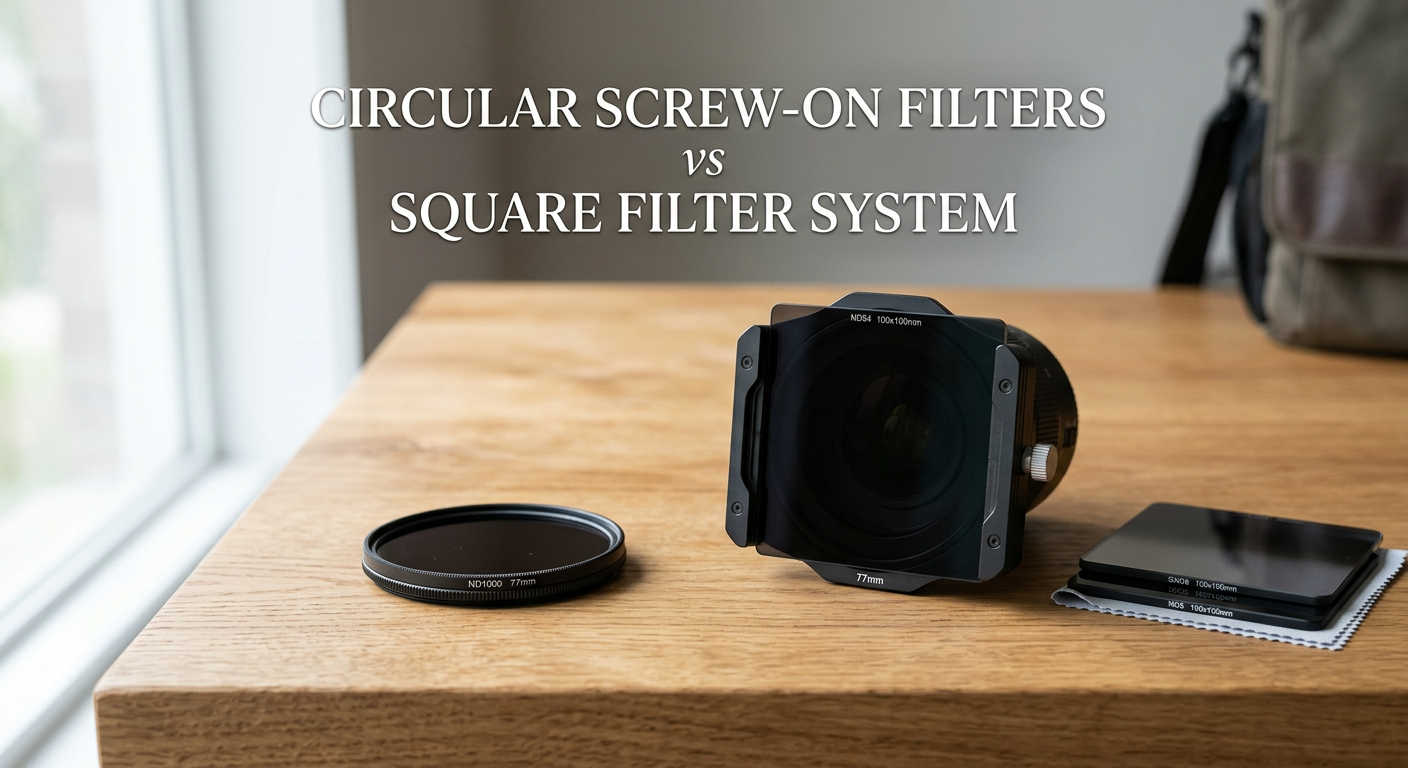
Choosing between circular screw-on filters vs square filter system is one of those decisions that fundamentally shapes your entire photography workflow. I’ve spent over a decade shooting with both systems across landscapes, portraits, travel photography, and video production. Each approach has distinct advantages that become obvious once you understand how they fit different shooting styles.
Circular screw-on filters attach directly to your lens filter thread, threading onto the front element like a lens cap. Square filter systems work differently: an adapter ring screws onto your lens, then a filter holder clips onto that ring, allowing rectangular filters to slide into designated slots. That fundamental mechanical difference affects everything from how much gear you carry to what creative techniques become available.
Our team tested both approaches extensively across multiple shooting scenarios to help you make an informed decision. We used the K&F CONCEPT 67mm Variable ND Filter as our primary circular filter example and the K&F CONCEPT X PRO Square Filter Holder System Kit for the square system comparison. Both represent solid choices in their respective categories.
For most photographers starting their filter journey, circular filters offer the simplicity and portability that makes them easy to integrate into existing workflows. But if you’re serious about landscape photography or need the creative control that graduated neutral density filters provide, square systems become not just beneficial but essential. The right choice depends entirely on what you photograph and how you work.
Circular Screw-On Filters vs Square Filter System: Quick Comparison
| Product | Specifications | Action |
|---|---|---|
 K&F CONCEPT 67mm Variable ND Filter K&F CONCEPT 67mm Variable ND Filter |
|
Check Latest Price |
 K&F CONCEPT X PRO Square Filter System Kit K&F CONCEPT X PRO Square Filter System Kit |
|
Check Latest Price |
The table above highlights the core differences at a glance. The circular variable ND prioritizes portability and simplicity, while the square system kit offers comprehensive creative control with multiple filters and adapter rings included.
K&F CONCEPT 67mm Variable ND Filter (Circular Screw-On System)
Pros
- Excellent value for price
- Slim 7.4mm design
- 8-layer multi-coating
- No color shift at lower settings
- Easy to attach and remove
Cons
- No ND stop indicators
- X effect at maximum setting
- Requires larger lens cap
I’ve used this K&F CONCEPT variable ND filter on countless shoots over the past several years. What immediately stands out is how straightforward screw-on filters make your entire workflow. You simply twist it onto your lens thread and start shooting. There are no adapter rings to fumble with, no filter holders to align, and no additional hardware to manage.
The 1-9 stop range covers most situations I encounter in the field. For long exposure waterfall work, I typically dial in 6-7 stops to achieve that silky water effect without pushing the filter too hard. For video work at wider apertures outdoors, 2-3 stops gives me the shutter speed control I need to maintain the 180-degree shutter rule. The 360-degree rotation makes fine adjustments intuitive once you develop a feel for it.

What I appreciate most about circular filters like this one is portability. I can slip several different filters into a small filter wallet and barely notice the added weight in my bag. When I’m hiking to a remote waterfall location or traveling light through airports, that compact footprint genuinely matters. The 7.4mm slim profile also means I rarely deal with vignetting on my standard zoom lenses, even at their widest focal lengths.
The AGC optical glass with 8-layer multi-coatings delivers solid optical quality for the price point. I’ve shot alongside photographers using filters costing three times as much, and the results hold up surprisingly well in most lighting conditions. You won’t find the ugly color casts that plague cheap uncoated filters, which is critical for professional work.
However, there are meaningful trade-offs inherent to the screw-on design philosophy. If you have lenses with different filter thread sizes in your kit, you’ll need separate filters for each diameter or invest in step-up rings. I eventually standardized on 67mm and 77mm threads across most of my lenses specifically to minimize this frustration.

The variable ND design works well for most applications, but push it to maximum strength and you’ll encounter the dreaded X pattern common to all variable ND filters regardless of brand. I’ve learned through experience to stay below 7 stops for any critical work where image quality matters. The lack of marked stop indicators also means you’re estimating your exposure reduction rather than knowing precisely, which takes practice to master.
One practical consideration: the filter requires a slightly larger lens cap when attached. The 67mm filter needs a 72mm cap to cover properly. This catches many photographers off guard when they first start using screw-on filters regularly.
For anyone wondering what the practical difference is between circular and square filters in real-world use, screw-on filters like this represent the straightforward, no-fuss approach. They work reliably. They’re compact enough to carry anywhere. They’re affordable enough to build a complete kit without breaking your budget. But they have inherent limitations that become apparent as your photography skills and creative ambitions evolve.
K&F CONCEPT X PRO Square Filter Holder System Kit
Pros
- Award-winning design
- 36-layer nano coating
- No vignetting on wide angles
- Complete kit with holders
- Quick filter changes in field
Cons
- Bulky to carry
- Higher cost
- Limited stock availability
- Holder can spin on adapter
Stepping up to a square filter system like the K&F CONCEPT X PRO fundamentally changed how I approach landscape photography. This system earned both IF and Red Dot design awards, and after using it extensively across dozens of shoots, I understand exactly why it received such recognition. The creative versatility is simply unmatched by any screw-on solution I’ve tried.
The comprehensive kit includes everything you need to start serious landscape work: a precision filter holder, 95mm circular polarizer, ND1000 10-stop filter for extreme long exposures, plus ND8 and ND64 filters for moderate light reduction. Four adapter rings cover the most common thread sizes photographers encounter: 67mm, 72mm, 77mm, and 82mm. That single set of filters works across every lens in your bag that falls within those sizes.
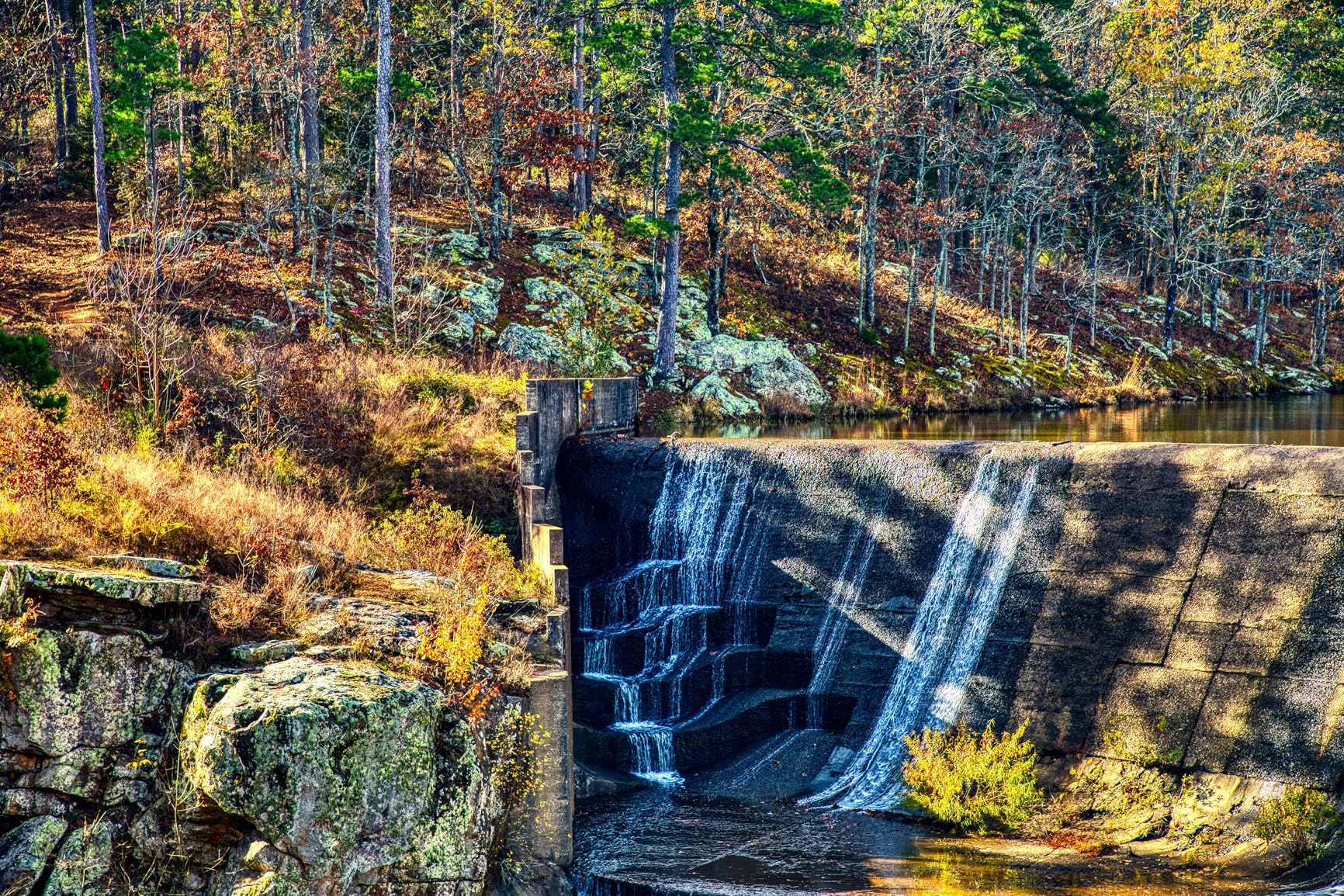
Where square filter systems truly shine is with graduated neutral density filters. The ability to position a graduated filter precisely where you need it in the frame is something screw-on graduated filters simply cannot replicate. When you’re photographing a bright sky above a shadowed canyon, being able to slide the graduation to match the exact horizon line transforms your results. For landscape photographers dealing with high-contrast scenes, this capability alone justifies the square system investment.
The 36-layer nanometer coatings on these filters deliver exceptional optical quality that matches professional expectations. Water, oil, and scratches bead right off the surface thanks to the hydrophobic coating technology. I’ve shot in pouring rain and coastal spray without worrying about damaging my investment or compromising image quality. The Japanese optical glass transmits clean, color-accurate images with minimal light loss.
Quick filter changes define the professional experience with this system. When light conditions shift rapidly during golden hour, I can swap ND filters in seconds without unscrewing anything from my lens. The holder accepts filters from multiple angles, and the thoughtful tabbed design keeps fingerprints off the glass during changes. This speed advantage matters enormously when you’re racing against changing light.
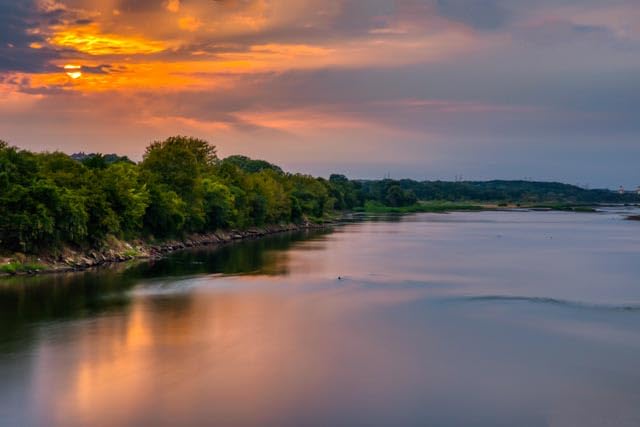
The rear-mounted CPL design deserves special mention because it solves a real problem. Unlike front-mounted polarizers on some competing systems, this positioning allows convenient polarizer adjustment even with ND filters stacked in front of it. I frequently use the polarizer and ND1000 together for long exposures with enhanced color saturation and reduced reflections simultaneously.
However, the square filter system demands more from your kit bag. The holder, adapter rings, multiple filters, and protective cases take up considerably more space than circular equivalents. When I’m backpacking into remote wilderness or shooting travel photography with carry-on luggage only, I sometimes leave the square system at home in favor of screw-on simplicity.
The learning curve is noticeably steeper than circular filters. Setting up the holder correctly, aligning graduated filters precisely, and managing potential light leaks all require practice to master. Cheap filter holders can introduce light leak issues that ruin long exposures, though this K&F CONCEPT system avoids those problems with quality construction. Why professionals use square filters becomes obvious once you need that level of precise control over your graduated filter positioning.
One minor frustration: the holder grip can feel too tight on square filters initially, making insertion and removal stiffer than expected. This improves with use as the mechanism breaks in, but expect some resistance during your first few shoots with the system.
Head-to-Head Comparison: Circular vs Square Filters
Let me break down exactly how these two systems compare across the factors that matter most to working photographers making this decision.
Portability and Storage
Circular screw-on filters win decisively for portability. A variable ND filter like the K&F CONCEPT 67mm weighs just 3.5 ounces and fits easily in a jacket pocket. The entire square filter system kit weighs over 2 pounds and requires a dedicated bag compartment or padded case.
For travel photographers or anyone hiking significant distances to locations, that weight difference compounds quickly. I can carry five different circular filters for less total weight than one square filter system setup. When every ounce matters on a long trek, this becomes a genuine consideration.
Cost Analysis Over Time
Initial purchase cost heavily favors circular filters. The K&F CONCEPT variable ND costs a fraction of the complete square system kit. However, you need to consider the long-term economics carefully as your lens collection grows.
If you own three lenses with different thread sizes, perhaps 67mm, 77mm, and 82mm, buying quality circular filters for each diameter adds up surprisingly fast. The square system’s single set of filters with multiple inexpensive adapter rings becomes more economical as your lens collection expands. Professional photographers with extensive lens kits often find the square system more cost-effective over time.
Premium square filters also hold their resale value better than budget circular options. High-end brands like Lee and Nisi command strong used prices, while inexpensive circular filters depreciate rapidly once they leave the store.
Versatility and Creative Options
Square filter systems dominate versatility by a wide margin. Graduated ND filters, reverse graduated filters for sunrise and sunset, and clean filter stacking all work more effectively with square systems. The ability to slide filters up and down for precise horizon placement is absolutely essential for serious landscape work.
Circular filters excel at simplicity rather than versatility. A circular polarizer only works as a circular filter, there’s no square equivalent that makes sense. Variable ND filters offer convenient all-in-one light control that works well for most situations. For portrait, street, and general photography, circular filters provide everything most photographers need.
Ease of Use and Learning Curve
Circular screw-on filters require essentially zero learning curve. Twist them onto your lens thread, adjust rotation if needed for polarizers or variable NDs, and shoot. The process becomes automatic after just a few outings with the equipment.
Square systems demand more technique and practice. Attaching the holder correctly without cross-threading, positioning graduated filters precisely where needed, and managing potential light leaks all require hands-on experience to master. The investment in learning pays off with greater creative control, but expect a steeper initial learning curve.
Vignetting on Wide-Angle Lenses
Both systems handle wide-angle lenses differently, and this matters significantly for landscape photographers. The slim 7.4mm profile of quality circular filters like the K&F CONCEPT minimizes vignetting on lenses down to approximately 24mm full-frame equivalent.
Quality square systems like the K&F CONCEPT X PRO use ultra-slim frames and large 100mm widths specifically designed to avoid vignetting on ultra-wide lenses. The generous dimensions cover most wide-angle lenses without corner darkening, even at 16mm on full-frame cameras.
Filter Stacking Possibilities
Stacking multiple circular filters often causes vignetting and can introduce image quality issues including loss of sharpness and increased flare. Each filter adds physical thickness to your lens front element, and the cumulative effect becomes problematic quickly.
Square filter holders typically offer 2-3 slots, allowing clean stacking of ND and graduated filters simultaneously while keeping filters parallel and properly spaced. This matters enormously for complex landscape scenes where you need both ND and GND filters working together.
Lens Thread Compatibility
Circular filters require matching your specific lens thread size exactly, or using step-up rings to adapt larger filters to smaller threads. Step-up rings work but add thickness and inconvenience when switching between lenses.
Square systems shine here. One set of filters works across all your lenses with simple adapter ring changes. The adapter rings cost far less than duplicate filters, making the square system increasingly attractive as your lens collection grows.
Use Case Recommendations
Landscape Photography
Serious landscape photographers should choose square filter systems without hesitation. The ability to use graduated ND filters with precise horizon placement transforms how you handle challenging sunrise and sunset conditions. Long exposure work for silky water effects and moving cloud drama benefits enormously from the 10-stop ND filters included in quality square kits.
The K&F CONCEPT X PRO system gives you everything needed for serious landscape work in one comprehensive package. The combined polarizer and ND capability handles the most challenging light conditions you’ll encounter in the field.
Portrait and Street Photography
Circular screw-on filters suit portrait and street photography far better than square systems. You rarely need graduated filters for these genres, and the bulk of a square holder becomes a liability when working quickly in urban environments.
A quality circular polarizer and perhaps a variable ND for video capability make up the essential kit for portrait and street work. Portability matters enormously when you’re moving through crowded spaces or shooting on location with clients watching.
Travel Photography
Travel photographers face a genuine choice that depends on their shooting priorities. If landscapes dominate your travel photography destinations, the square system’s creative options often justify the extra weight and bulk. For general travel photography mixing architecture, street scenes, food, and occasional landscapes, circular filters keep your kit manageable while traveling light.
Consider your typical travel style carefully. I travel with circular filters when flying carry-on only but pack the full square system for dedicated landscape trips where weight restrictions allow checked luggage.
Video Production
Video shooters need variable ND filters for exposure control at cinematic shutter speeds. The continuous adjustment capability of a quality variable ND like the K&F CONCEPT simply cannot be replicated efficiently with fixed square ND filters.
Some videographers use square systems with variable ND adapters mounted in the holder, but the added bulk rarely justifies itself unless you specifically need graduated filters for certain shots. Most video work benefits from the simplicity and quick adjustment of circular variable NDs.
Wildlife and Sports Photography
Fast-moving wildlife and sports subjects rarely allow time for careful filter adjustments. A circular polarizer left on your lens works well for wildlife photography, reducing glare and enhancing natural colors. The quick attachment and removal of screw-on filters suits the reactive, fast-paced nature of wildlife and sports photography.
Square systems simply slow you down too much when split-second timing determines whether you capture the shot or miss it entirely.
Modern Alternative: Magnetic Filter Systems
A newer option gaining popularity combines advantages from both traditional approaches. Magnetic filter systems use a magnetic adapter ring that screws onto your lens, then filters attach magnetically rather than threading on. This offers the quick-change capability of square systems with much of the compactness of circular filters.
The magnetic attachment means you can swap filters in seconds without fumbling with threads. The filters themselves remain circular and compact. However, you’re still limited to one filter size per adapter ring, and graduated filters don’t work with magnetic systems.
For photographers who want faster filter changes than threading allows but don’t need graduated filter capability, magnetic systems offer an attractive middle ground. Brands like Kase and NiSi have developed excellent magnetic filter lines that merit consideration.
Frequently Asked Questions
What is the difference between circular and square filters?
Circular screw-on filters attach directly to your lens filter thread and are sized for specific lens diameters. Square filters use a holder system with adapter rings, allowing one set of filters to work across multiple lens sizes. Circular filters are more portable, while square systems offer greater versatility with graduated filters and precise positioning control.
What is the difference between screw in filters and square filters?
Screw-in filters twist directly onto the front of your lens using the filter thread. Square filters require an adapter ring screwed onto your lens, then a holder clips onto the adapter, allowing rectangular filters to slide into slots. Screw-in filters are simpler and more compact; square systems enable graduated filter positioning and easier filter stacking.
Do you really need a CPL?
A circular polarizing filter (CPL) is essential for landscape and outdoor photography. It reduces reflections from water, glass, and foliage while deepening blue skies and increasing overall color saturation and contrast. For portrait and indoor photography, a CPL is less critical but still useful for controlling reflections. Most outdoor photographers find a CPL one of their most frequently used filters.
When should I use a circular polarizing filter?
Use a circular polarizing filter when photographing landscapes with sky and water, shooting through glass or water to reduce reflections, capturing foliage in forests to cut leaf glare, or when you want to deepen blue skies and enhance cloud definition. Avoid CPLs for wide panoramas where uneven polarization creates sky banding, or when shooting ultra-wide at high altitudes where extreme polarization looks unnatural.
Final Verdict: Circular Screw-On Filters vs Square Filter System
After years of shooting with both systems across countless situations, here’s my straightforward recommendation based on what you actually photograph.
Choose circular screw-on filters if you shoot portraits, street photography, travel lightly with carry-on luggage, or primarily need a circular polarizer and basic ND capability for your work. The K&F CONCEPT 67mm Variable ND Filter delivers excellent optical quality at an accessible price point that makes sense for most photographers not specializing in landscapes.
Choose a square filter system if you’re serious about landscape photography, need graduated ND filters for high-contrast scenes, shoot long exposures frequently, or want one filter system to work seamlessly across multiple different lens sizes in your kit. The K&F CONCEPT X PRO Square Filter Holder System Kit provides professional-grade versatility that grows with your skills.
Many dedicated photographers, including myself, eventually own both systems for different purposes. Circular filters serve everyday shooting and travel needs. Square systems come out for dedicated landscape sessions and creative long exposure work. Using the right tool for each situation maximizes both your results and your enjoyment of the craft.
For beginners wondering whether screw-on filters are better than square filters, the answer depends entirely on what you photograph and how you work. Start with quality circular filters in your most common thread size. Expand to a square system when you encounter specific situations that demand its unique capabilities. The circular screw on filters vs square filter system debate ultimately resolves itself through your own shooting experience.