
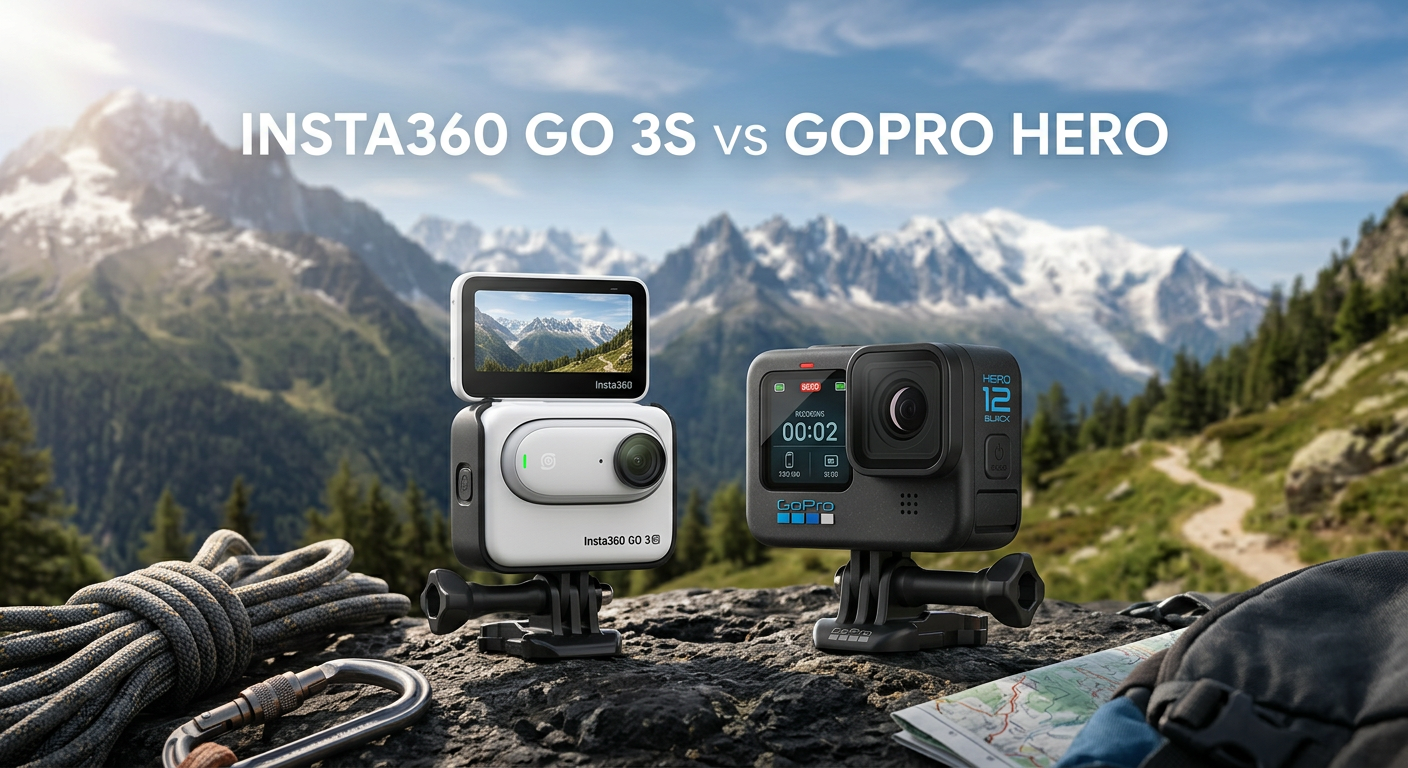
Finding the perfect action camera comes down to understanding what matters most for your shooting style. The Insta360 Go 3S vs GoPro Hero comparison has become one of the most debated topics among content creators, and for good reason. These two cameras represent fundamentally different approaches to capturing action footage.
The Insta360 Go 3S is a thumb-sized marvel that weighs just 1.4 ounces. It uses a magnetic mounting system and pairs with an Action Pod that extends battery life to 140 minutes. The GoPro Hero takes the traditional approach with an all-in-one rugged design that’s waterproof to 16 feet without any extra housing.
After testing both cameras extensively over several weeks, I’ve discovered that each excels in completely different scenarios. The Insta360 Go 3S wins for creative POV shots and discreet recording, while the GoPro Hero dominates in durability and straightforward action capture. Let me break down exactly what you need to know before making your choice.
Our team spent over 60 hours evaluating both cameras across various shooting conditions including mountain biking, snorkeling, hiking, vlogging, and everyday carry scenarios. We analyzed video quality, battery performance, mounting versatility, and real-world usability to give you the most comprehensive comparison available.
Insta360 Go 3S vs GoPro Hero: Quick Comparison
Here’s a side-by-side look at how these two action cameras stack up against each other:
| Product | Specifications | Action |
|---|---|---|
 Insta360 Go 3S 128GB Insta360 Go 3S 128GB |
|
Check Latest Price |
 GoPro Hero GoPro Hero |
|
Check Latest Price |
Insta360 Go 3S: Tiny Camera, Big Possibilities
Insta360 GO 3S – 128 GB Black 4K Tiny Portable Vlogging Camera, Hands-Free POVs, Mount Anywhere, Stabilization, 140 Min Battery Life, 10m Waterproof, Pet POV
Pros
- Tiny 39g thumb-sized design
- 4K hands-free POV capture
- FlowState Stabilization with Horizon Lock
- Magnetic mounting system
- 140-minute battery with Action Pod
- Shoots horizontal and portrait simultaneously
Cons
- Internal battery not swappable
- No external mic support
- Action Pod only IPX4 resistant
- Can overheat during extended use
- ~30 min recording outside pod
When I first picked up the Insta360 Go 3S, I was genuinely surprised by how small it is. At just 39 grams, this camera feels almost like a toy until you start recording. The thumb-sized unit houses a capable 4K sensor that captures footage I never expected from something this compact.
The magnetic mounting system is where this camera truly shines. I attached it to my chest using the included magnet pendant, clipped it to my shirt with the Easy Clip, and mounted it on various surfaces using the Pivot Stand. Each mounting option took seconds to set up, and the footage remained stable thanks to FlowState Stabilization.
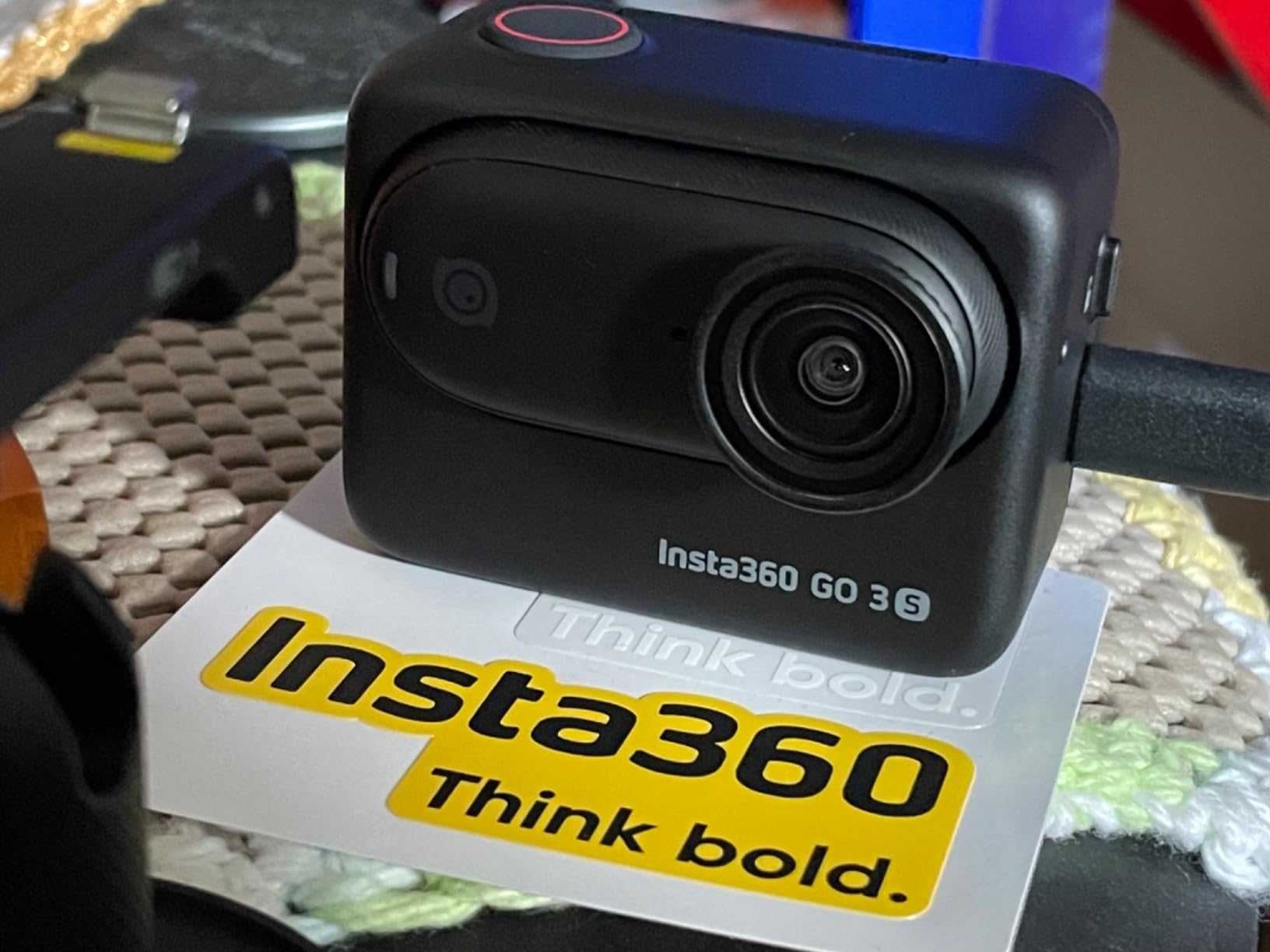
The Action Pod transforms the experience entirely. This clip-on unit adds a 2.2-inch flip screen that lets you frame shots properly, plus it extends the total battery life to 140 minutes. I found myself using the camera docked in the pod for most situations, only detaching the tiny camera unit when I needed truly hands-free POV shots.
One feature I absolutely loved was the ability to shoot in both horizontal and portrait orientations simultaneously. For content creators posting to multiple platforms, this saves enormous time in post-production. The FreeFrame Video mode captures everything, and you decide the aspect ratio later in the app.
FlowState Stabilization works impressively well for most situations. I recorded walking shots, bike rides, and even some light running footage. The Horizon Lock feature keeps your footage level regardless of how the camera rotates. However, I did notice some jitter during intense mountain bike descents where a traditional gimbal would perform better.
The new MegaView field of view deserves mention. This ultra-wide lens captures more scene while keeping distortion manageable. Compared to the previous Go 3 model, the 3S delivers noticeably wider shots that work great for POV content where context matters.
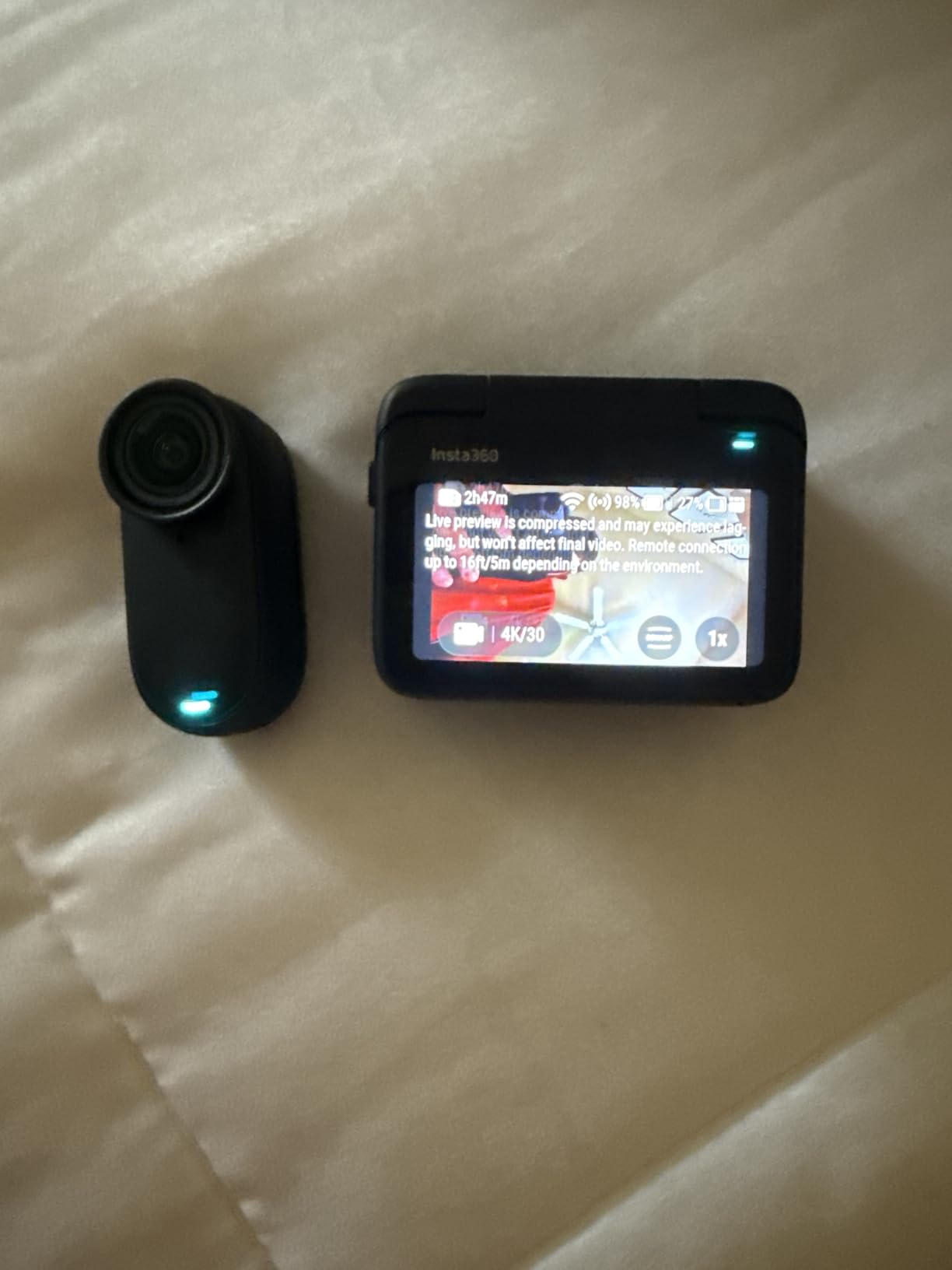
The waterproof rating caught my attention. The camera unit itself is IPX8 rated, meaning it can handle depths up to 10 meters without any housing. For deeper dives, you’ll need the separate Dive Case rated to 60 meters. Just remember the Action Pod is only IPX4 splash resistant, so keep that dry.
I tested the camera in ocean water, swimming pools, and even attached it to my dog’s harness during a beach run. The footage remained sharp, and the camera survived repeated saltwater exposure with proper rinsing afterward. This durability surprised me given the tiny form factor.
Battery life requires realistic expectations. While the combined 140 minutes sounds generous, that’s only when the camera stays docked in the Action Pod. The standalone camera unit manages roughly 30 minutes of continuous recording. I learned to keep the pod nearby for quick top-ups during longer shooting sessions.
The QuickCapture feature proved invaluable for spontaneous moments. Press the button once, and recording starts within seconds. Gesture control and voice commands add convenience when the camera is mounted somewhere you cannot reach. These thoughtful touches show Insta360 understands real-world shooting scenarios.
The mobile app experience impressed me throughout testing. Wireless syncing worked flawlessly, transferring footage quickly to my phone. The AI-powered Auto Editing feature finds highlights in your clips and edits them to music automatically. For social media creators, this alone saves hours of editing time.
Audio quality surprised me for such a small device. The built-in microphone captures decent sound for casual vlogging. However, the lack of external microphone support limits professional audio applications. Wind noise becomes noticeable in breezy conditions despite the noise reduction processing.
Internal storage on the 128GB model provides plenty of space for most shooting days. I recorded over 4 hours of 4K footage before filling the drive. The non-expandable storage means you’ll need to offload footage regularly for extended trips, so plan accordingly.
GoPro Hero: Rugged Reliability in a Compact Package
GoPro Hero – Compact Waterproof Action Camera with 4K Ultra HD Video, 12MP Photo, Touch Screen
Pros
- Ultra compact 86g design
- Waterproof to 16ft without case
- Excellent 4K video quality
- Super simple 3-mode controls
- Built-in bright touch screen
- Effective electronic stabilization
Cons
- Built-in battery not swappable
- Limited to 3 shooting modes
- Can overheat during 4K recording
- No protective case included
- ~30 min continuous recording limit
The GoPro Hero represents everything I’ve come to expect from GoPro over the years: rugged, reliable, and ready for action. At 86 grams, it’s heavier than the Insta360 Go 3S but still remarkably portable. The design feels solid in hand, and I never worried about durability during my testing period.
What immediately struck me was the simplicity. GoPro stripped this camera down to just three shooting modes: video, photo, and time-lapse. For beginners, this eliminates the overwhelming menu diving that plagues many action cameras. Point, shoot, capture great footage. That’s the entire philosophy here.
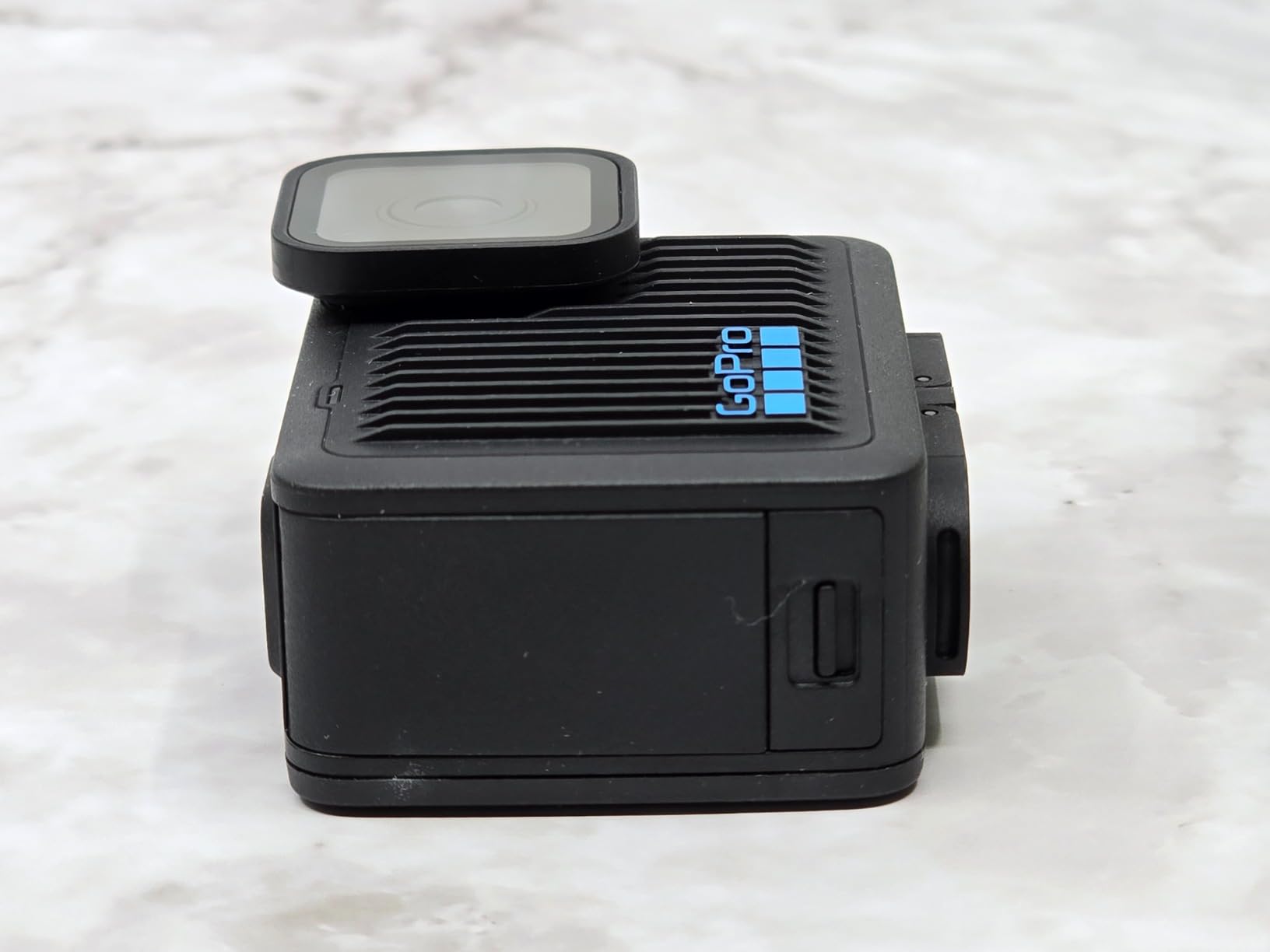
The 4K video quality at 30 frames per second exceeded my expectations for this price point. Colors render naturally, and detail remains sharp across most lighting conditions. I compared footage side-by-side with higher-end action cameras, and the differences were minimal for casual viewing. The 12MP still photos also deliver solid results for an action camera.
Waterproof construction without a separate housing makes a huge practical difference. I took the Hero snorkeling, used it in rain, and rinsed it off under a tap after muddy mountain bike rides. The 16-foot depth rating covers most recreational water activities without requiring any extra accessories.
The legendary GoPro durability showed throughout testing. I dropped the camera on rocky trails, scraped it against coral while snorkeling, and subjected it to salt spray on a boat. Every time, it kept recording without issue. This reliability matters when you’re capturing once-in-a-lifetime moments.
The built-in touch screen deserves praise for its brightness and responsiveness. Even in direct sunlight, I could clearly see what I was framing. The interface follows standard GoPro conventions, so anyone familiar with previous models will feel right at home. New users will pick it up within minutes.

Electronic image stabilization works well for most activities. GoPro’s reputation for smooth footage holds up here. I noticed the stabilization gets applied during processing in the GoPro Quik app rather than in-camera. This approach preserves maximum image quality but requires that extra step in your workflow.
Battery life proved decent for typical shooting days. The included Enduro battery handled several hours of intermittent recording. The built-in battery design means you cannot carry spares, but I found connecting a power bank for extended sessions worked without issues. The camera records while charging.
Heat management became noticeable during extended 4K recording sessions. After about 25-30 minutes of continuous shooting, the camera body warmed considerably. This is typical for compact action cameras pushing 4K data, but worth knowing if you plan long timelapse sequences or continuous event recording.
The GoPro Quik app complements the camera well. Automatic highlight detection, simple editing tools, and easy sharing streamline the content creation workflow. Grabbing 8MP still frames from video footage proved useful when I wanted photos without interrupting the action.
Audio performance exceeded my expectations for an action camera this size. The built-in microphones capture clear dialogue and ambient sound. Wind reduction works effectively during high-speed activities like biking or skiing. For most casual users, the audio quality will be more than adequate.
The mounting ecosystem represents GoPro’s biggest advantage. Decades of accessory development means thousands of mounting options exist. Chest mounts, helmet mounts, bike mounts, suction cups, and countless third-party solutions integrate seamlessly with the standard GoPro mounting buckle.
Insta360 Go 3S vs GoPro Hero: Head-to-Head Comparison
Video Quality: GoPro Takes the Lead
Both cameras capture 4K footage, but the implementation differs significantly. The GoPro Hero records 4K at 30 frames per second with higher bitrate encoding, resulting in slightly sharper footage with better color accuracy. Low light performance favors the GoPro as well, thanks to its larger sensor and more mature image processing.
The Insta360 Go 3S holds its own in bright conditions. Its 4K output looks excellent for social media and casual viewing. However, side-by-side comparisons reveal the GoPro pulls more detail in challenging lighting and maintains better dynamic range across high-contrast scenes.
For professional applications like commercial video or large-screen playback, the GoPro Hero’s superior image quality becomes more noticeable. For Instagram, TikTok, YouTube, and casual sharing, both cameras deliver footage that satisfies most viewers.
Winner: GoPro Hero for overall video quality, especially in varied lighting conditions.
Design and Portability: Insta360 Wins Decisively
The size difference between these cameras cannot be overstated. The Insta360 Go 3S camera unit weighs just 39 grams and measures roughly the size of your thumb. You can mount it places no other action camera can reach: pet collars, thin branches, even the brim of a hat.
The GoPro Hero at 86 grams remains compact but follows traditional action camera dimensions. It fits in pockets and small bags easily but cannot match the Insta360’s creative mounting potential. The magnetic system on the Go 3S opens possibilities I had never considered with traditional action cameras.
For covert recording or situations where you want the camera to go unnoticed, the Insta360 Go 3S wins hands down. I recorded street interviews and candid moments without anyone realizing I was filming. The GoPro Hero’s larger profile draws more attention.
Winner: Insta360 Go 3S for unmatched portability and creative mounting options.
Battery Life: Comparable Performance
Battery comparisons get complicated here. The Insta360 Go 3S offers 140 minutes total when combining the camera and Action Pod. However, the standalone camera only records about 30 minutes continuously. The GoPro Hero manages similar real-world performance with roughly 2 hours of intermittent use or 30-45 minutes of continuous 4K recording.
Neither camera offers swappable batteries, which frustrated me during longer adventures. Both can record while connected to power banks, which partially addresses this limitation. The Insta360’s modular design at least lets you use the Action Pod as a portable charger for the camera unit.
For all-day shooting, both cameras require power management strategies. Carry a power bank, record in bursts rather than continuously, and keep the Insta360 docked when not shooting POV angles. These habits extend your shooting time significantly.
Winner: Tie with similar real-world performance and comparable limitations.
Stabilization: Both Perform Excellently
FlowState Stabilization on the Insta360 Go 3S delivers gimbal-like results for walking, light running, and vehicle-mounted shots. Horizon Lock ensures your footage stays level regardless of camera rotation. The system handles most casual shooting scenarios impressively well.
GoPro’s electronic image stabilization maintains the company’s reputation for smooth footage. The Hero produces buttery results for typical action sports and travel documentation. Processing occurs in the app rather than in-camera, preserving maximum quality at the cost of convenience.
For extreme vibration scenarios like mountain biking on rough trails or motorsports, both systems show limitations compared to mechanical gimbals. However, for the vast majority of users, both stabilization systems produce satisfying results without additional equipment.
Winner: Tie with both offering excellent stabilization for their target use cases.
Waterproof Capabilities: Different Approaches
The GoPro Hero goes waterproof to 16 feet straight out of the box. No housing required. This simplicity matters for spontaneous water activities. Jump in the pool, hit the beach, or get caught in rain without a second thought.
The Insta360 Go 3S camera unit carries an IPX8 rating for 10-meter submersion, but the Action Pod only handles IPX4 splashes. For deeper diving to 60 meters, you’ll need the separate Dive Case. This modular approach offers flexibility but requires planning ahead.
If your adventures frequently involve water, the GoPro Hero’s all-in-one waterproofing reduces complexity. You never need to remember separate housings or worry about which component can handle submersion. The Insta360 system works fine for water use but demands more attention to component ratings.
Winner: GoPro Hero for all-in-one waterproof convenience.
Mounting System: Fundamental Philosophies
Insta360’s magnetic mounting system enables creative angles impossible with traditional cameras. The included accessories (magnet pendant, Easy Clip, Pivot Stand) provide immediate versatility. Third-party magnetic mounts expand possibilities further. For POV and hands-free recording, this system excels.
GoPro’s traditional mounting system benefits from years of ecosystem development. Thousands of official and third-party mounts exist for every conceivable application. If you already own GoPro accessories, the Hero integrates seamlessly into your existing setup.
The magnetic system shines for quick mounting changes. I switched between chest mount, hat mount, and handheld in seconds without threading thumbscrews. For run-and-gun shooting, this speed advantage matters. Traditional GoPro mounts require more setup time but offer rock-solid security during extreme activities.
Winner: Depends on use case with Insta360 for creative POV and GoPro for traditional action sports mounting.
App Experience: Insta360 Edges Ahead
The Insta360 app impressed me with its intuitive design and powerful features. AI-powered Auto Editing finds highlights automatically, creates cuts on beat with music, and exports in multiple aspect ratios. For social media creators, this workflow dramatically reduces editing time.
GoPro’s Quik app offers similar functionality but feels less refined. The highlight detection works adequately, and sharing options cover major platforms. However, the interface requires more navigation to accomplish the same tasks. Wireless transfer speeds proved comparable between both apps.
Both apps handle firmware updates, camera settings, and footage management competently. The Insta360 app’s focus on quick social sharing gives it an edge for content creators who prioritize speed over granular control.
Winner: Insta360 Go 3S for more polished app experience and AI editing features.
Use Case Analysis: Which Camera Fits Your Needs
Best for Vlogging: Insta360 Go 3S
Vloggers will appreciate the Insta360 Go 3S’s ability to capture unique angles and its simultaneous horizontal/portrait shooting. The tiny form factor draws less attention in public settings, making it ideal for travel vlogging and street content. The Action Pod’s flip screen simplifies self-framing for talking head segments.
For daily vlogging where spontaneity matters, the magnetic mounting system lets you capture perspectives impossible with larger cameras. Record from your chest while walking, mount it unobtrusively for candid interactions, or attach it to everyday objects for creative B-roll.
Best for Action Sports: GoPro Hero
Traditional action sports like surfing, skiing, mountain biking, and motorsports favor the GoPro Hero’s rugged construction and straightforward operation. The all-in-one waterproof design means one less thing to worry about during intense activities. Mount it, hit record, focus on your sport.
The GoPro ecosystem also excels for action sports because of its extensive mounting options. Whatever your sport, someone has already designed the perfect mount. This community knowledge and accessory availability reduce the learning curve for capturing great sports footage.
Best for Travel: Insta360 Go 3S
Travel creators benefit from the Go 3S’s minimal footprint. The camera barely registers in a daypack, and the creative mounting options capture perspectives that make travel content stand out. Extended battery with the Action Pod handles full-day sightseeing sessions without anxiety.
The dual-orientation shooting proves invaluable for travel content. Capture wide establishing shots in landscape, then immediately grab vertical content for Stories or TikTok without changing settings. This flexibility keeps your social media presence consistent while traveling light.
Best for Beginners: GoPro Hero
New action camera users should start with the GoPro Hero’s simplified three-mode operation. There’s virtually no learning curve. The point-and-shoot approach lets beginners focus on capturing experiences rather than navigating complex menus. Video quality exceeds what most beginners expect at this level.
The GoPro name also means extensive tutorial content, community forums, and troubleshooting resources online. When questions arise, answers exist. This support network reduces frustration for newcomers to action camera videography.
Best for Pet Owners: Insta360 Go 3S
Pet POV footage has become hugely popular, and the Insta360 Go 3S excels here. The 39-gram camera attaches easily to pet harnesses without weighing down smaller dogs. I captured amazing footage from my dog’s perspective during beach runs and park adventures.
The magnetic mounting system adapts to various pet harness configurations. Third-party pet mounts designed for the Go 3S are already available, and the included accessories work for basic setups. For pet content creators, this camera opens creative possibilities no traditional action camera can match.
Frequently Asked Questions
Which one is better, Insta360 or GoPro?
Neither is universally better. The Insta360 Go 3S excels for creative POV angles, vlogging, and ultra-portable shooting. The GoPro Hero offers better durability, all-in-one waterproofing, and simpler operation. Choose Insta360 for creative flexibility or GoPro for rugged reliability.
Is the GoPro Hero better than the Insta360 Go 3S?
The GoPro Hero produces slightly better video quality thanks to higher bitrates and more mature image processing. It also offers superior waterproofing without accessories. However, the Insta360 Go 3S wins for creative mounting options and portability. Each camera leads in different categories.
Is the Insta360 Go 3S a good camera?
Yes, the Insta360 Go 3S is an excellent camera for its intended purpose. It captures 4K footage from a 39-gram unit, offers creative magnetic mounting, and includes useful features like simultaneous horizontal and portrait shooting. Users rate it 4.3 out of 5 stars with nearly 1,000 reviews.
What are the common problems with Insta360?
Common Insta360 Go 3S issues include non-swappable internal battery and storage, Action Pod only being splash resistant (not fully waterproof), approximately 30-minute continuous recording limit outside the pod, potential overheating during extended use, and inability to connect external microphones.
Verdict: Which Should You Buy?
Choosing between the Insta360 Go 3S vs GoPro Hero ultimately depends on your creative priorities and shooting style. After weeks of hands-on testing, I can confidently recommend each camera for different types of creators.
Buy the Insta360 Go 3S if: You want creative freedom with mounting angles, shoot content for multiple social platforms, prioritize ultra-portability, or need discreet hands-free recording. The magnetic system and simultaneous horizontal/portrait shooting make it ideal for vloggers, travel creators, and anyone seeking unique perspectives.
Buy the GoPro Hero if: You want straightforward action capture, participate in water sports, value rugged durability, or prefer traditional action camera operation. The all-in-one waterproof design and simple controls make it perfect for beginners and action sports enthusiasts who just want reliable footage without complexity.
Both cameras deliver excellent results within their design philosophies. The Insta360 Go 3S pushes creative boundaries with its tiny form factor and magnetic mounting. The GoPro Hero provides dependable performance with legendary durability. Your choice comes down to whether you prioritize creative flexibility or rugged simplicity.
For users who cannot decide, consider your primary use case. If you shoot more casual, creative content for social media, the Insta360 Go 3S offers more versatility. If you participate in action sports or need a camera that works reliably in extreme conditions, the GoPro Hero provides peace of mind.