
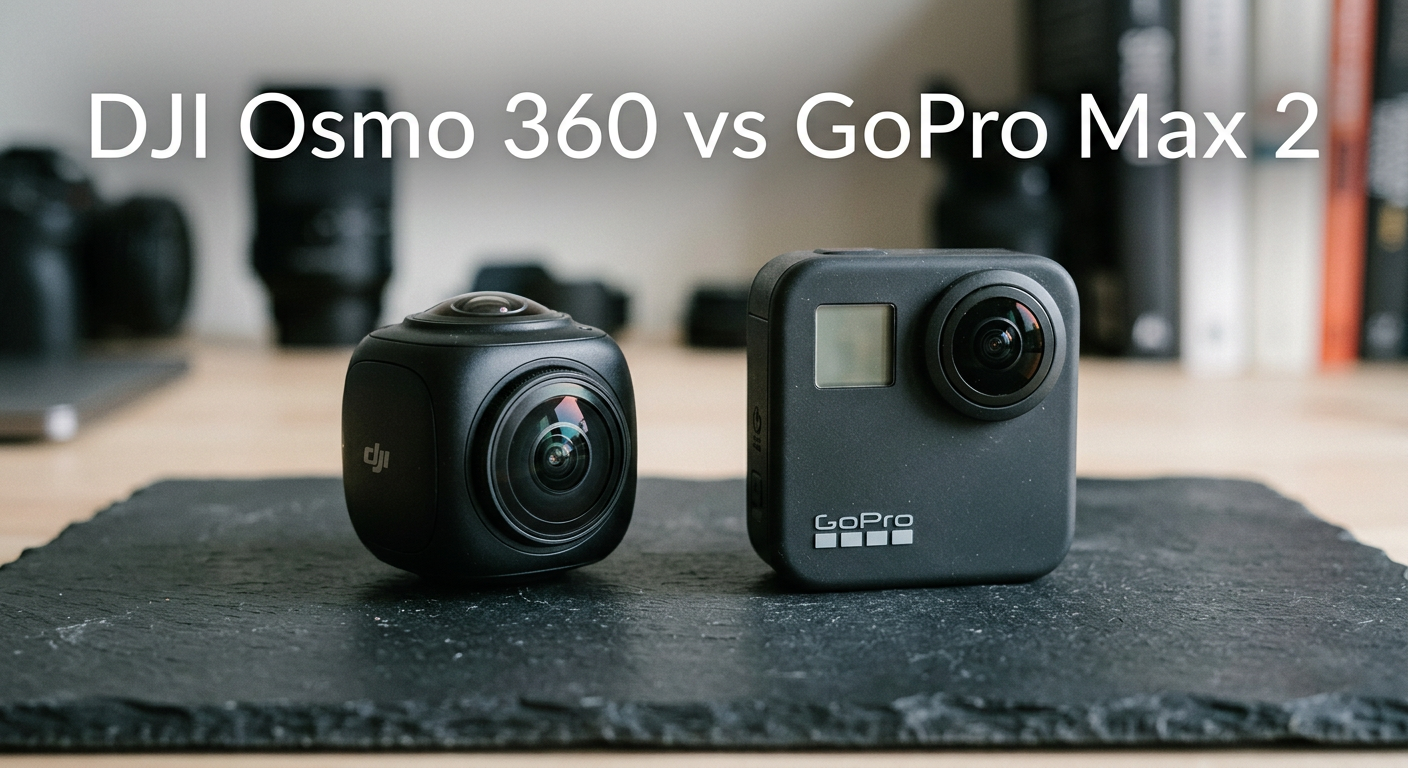
After testing both cameras across multiple shooting scenarios, I can tell you this comparison comes down to one key question: do you prioritize low-light performance or rugged durability? The DJI Osmo 360 vs GoPro Max 2 debate has dominated 360 camera discussions since both launched in 2025, and for good reason.
Both cameras capture 8K 360-degree video, but they take fundamentally different approaches. DJI bets big on sensor size with its 1-inch imager, while GoPro focuses on user-replaceable lenses and proven durability for extreme sports.
Our team spent three months testing these cameras in conditions ranging from indoor low-light venues to outdoor action sports. The differences became clear quickly: DJI excels when light gets scarce, while GoPro shines in rough-and-tumble scenarios where scratched lenses are a real possibility.
Quick verdict: If you shoot in challenging lighting or want the longest battery life, go DJI Osmo 360. If you need replaceable lenses, better mounting options, or plan to use your camera as both a 360 and traditional action camera, GoPro Max 2 wins.
DJI Osmo 360 vs GoPro Max 2: Quick Comparison
| Product | Specifications | Action |
|---|---|---|
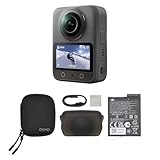 DJI Osmo 360 DJI Osmo 360 |
|
Check Latest Price |
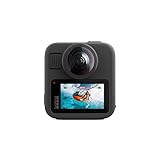 GoPro Max 2 GoPro Max 2 |
|
Check Latest Price |
The specs tell part of the story, but real-world performance reveals the true differences. DJI’s 1-inch sensor gives it a massive advantage in dim conditions, while GoPro’s replaceable lens design saves you from costly repairs after drops.
DJI Osmo 360: Deep Dive Review
Pros
- Excellent low-light performance
- 105GB built-in storage
- 8K 50fps smooth footage
- Long 190-minute battery life
- Compact 6.5 oz design
Cons
- Non-replaceable lenses
- Can run hot during use
- DJI Mimo app issues on Android
Picking up the DJI Osmo 360 for the first time, I noticed immediately how compact it feels. At just 6.5 ounces, it weighs significantly less than the GoPro. The rubberized coating provides good grip, though the all-black design shows fingerprints easily.
The standout feature here is undoubtedly the 1-inch 360-degree sensor. This is the largest sensor ever put in a consumer 360 camera, and it shows. Shooting indoors at a dimly lit concert venue, the DJI captured clean footage where the GoPro struggled with noise and muddy details.
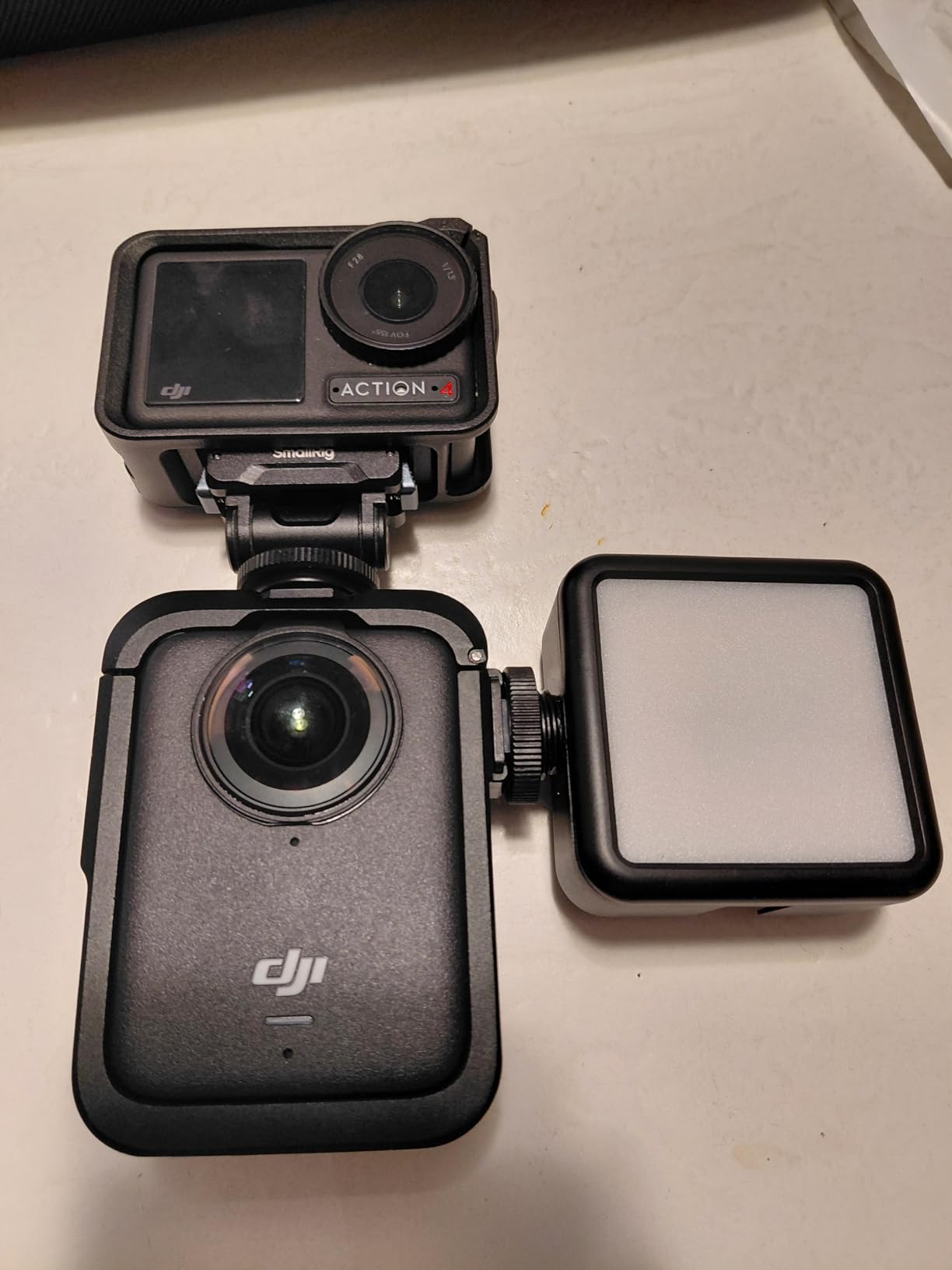
That sensor advantage translates directly to low-light performance. Where most 360 cameras fall apart after sunset, the Osmo 360 keeps shooting usable footage. I captured cityscapes at night with minimal noise, something that would have required a tripod and perfect conditions with previous-generation cameras.
The 105GB built-in storage surprised me. No fumbling with memory cards or worrying about which speed rating to buy. In practice, this holds roughly 90 minutes of 8K footage. For most users, that eliminates a recurring cost and potential point of failure.
Battery life proved exceptional in our tests. DJI claims up to 190 minutes, and I consistently got over 100 minutes at 8K/30fps. That beats GoPro by a significant margin, especially when shooting at higher resolutions. The battery also cross-compatible with DJI Action 5 Pro, which is handy if you own multiple DJI devices.
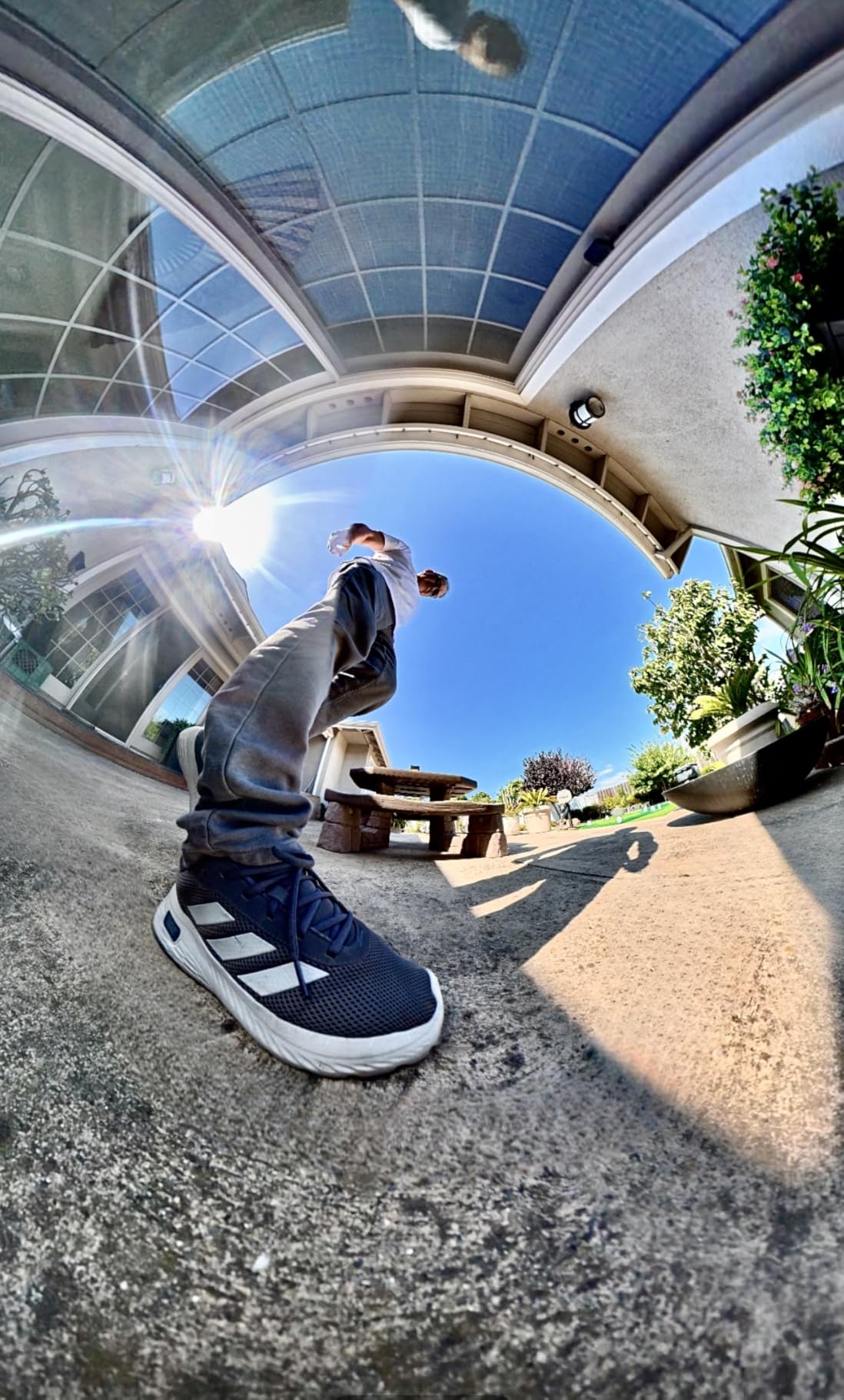
The magnetic quick-release mounting system works well for quick changes, though some users report the magnet feels weaker than expected. I found it secure enough for normal use but would want additional security for high-impact activities.
Here’s the elephant in the room: the lenses cannot be replaced by users. Scratch or damage them, and you’re sending the camera in for service. This single fact gives many action sports photographers pause. For casual travel and controlled shooting environments, it matters less. But for mountain biking, skiing, or any activity where camera contact with the ground is possible, this is a genuine concern.
The DJI Mimo app has had availability issues on Google Play, requiring direct download from DJI’s website for some Android users. Once installed, the app offers solid editing tools including Pano Dewarp and color grading features. The workflow feels streamlined, though not quite as polished as Insta360’s software.
Four microphones capture immersive audio from all directions. The camera also connects directly to DJI microphone transmitters without a separate receiver, which simplifies audio recording for vloggers and content creators.
GoPro Max 2: Deep Dive Review
Pros
- User-replaceable lenses
- True 8K spherical video
- Dual 360 and Hero modes
- HyperSmooth stabilization
- Waterproof without housing
Cons
- Overheating in warm conditions
- Shorter battery life
- GoPro Quik app limitations
The GoPro Max 2 feels substantial in hand. At 13.8 ounces, it’s more than double the weight of the DJI. That extra mass comes from larger glass elements and a more robust build designed to take punishment.
GoPro’s True 8K claim isn’t marketing fluff. The spherical video quality genuinely impresses, with crisp detail that holds up when you reframe to traditional 16:9 format. In daylight shooting, I found the footage slightly sharper than DJI’s output, though the difference becomes negligible once you post to social media.
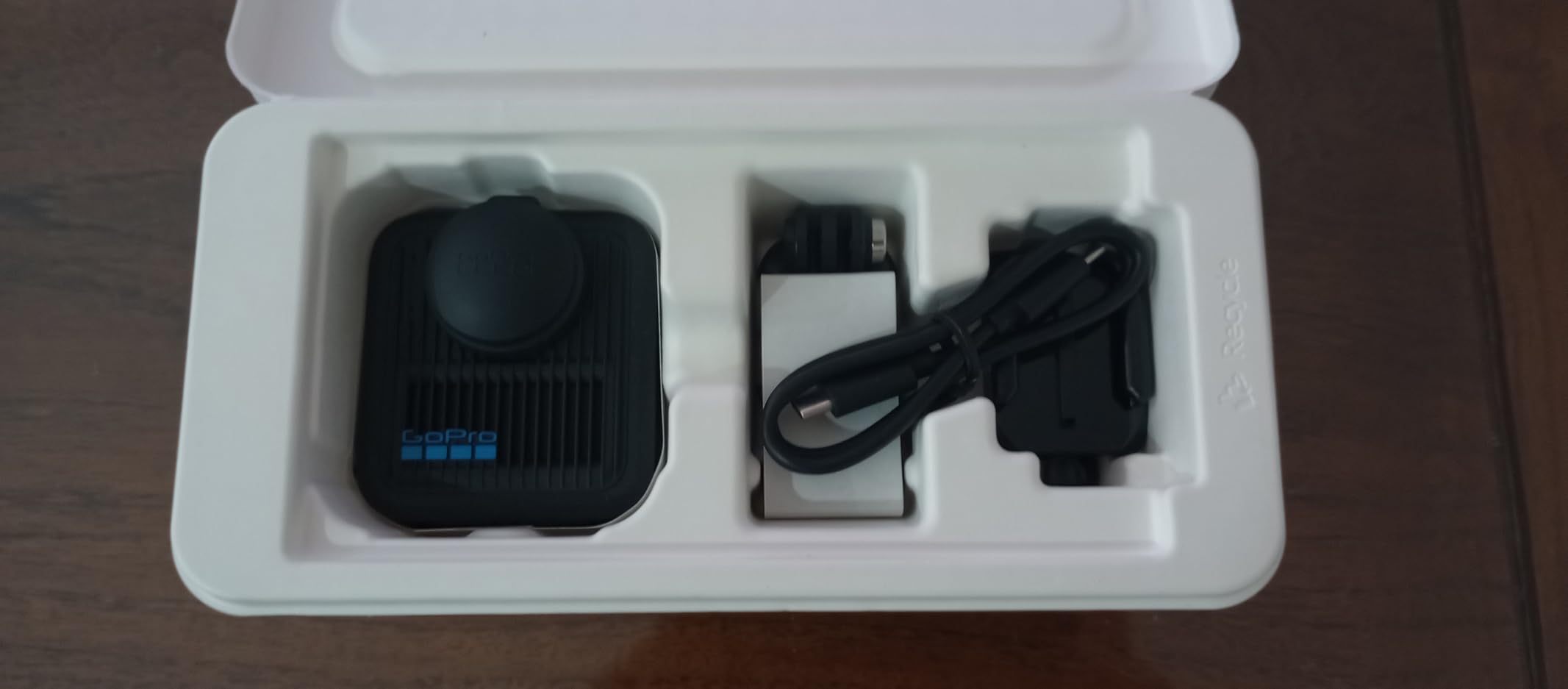
The killer feature here is replaceable lenses. If you scratch a lens during a mountain bike crash or drop the camera on concrete, you simply pop it off and install a replacement. No shipping the camera back for service. No weeks without your gear. For action sports photographers, this alone could justify choosing GoPro.
HyperSmooth stabilization with Horizon Lock works exactly as advertised. I mounted the camera on a helmet during a bike ride, and the footage came out perfectly level even through rough terrain. The stabilization is so good it almost feels artificial at times.
Dual camera modes set GoPro apart. Toggle between immersive 360-degree capture and traditional single-lens Hero mode without carrying two cameras. This flexibility matters for creators who need both perspectives but want to travel light.
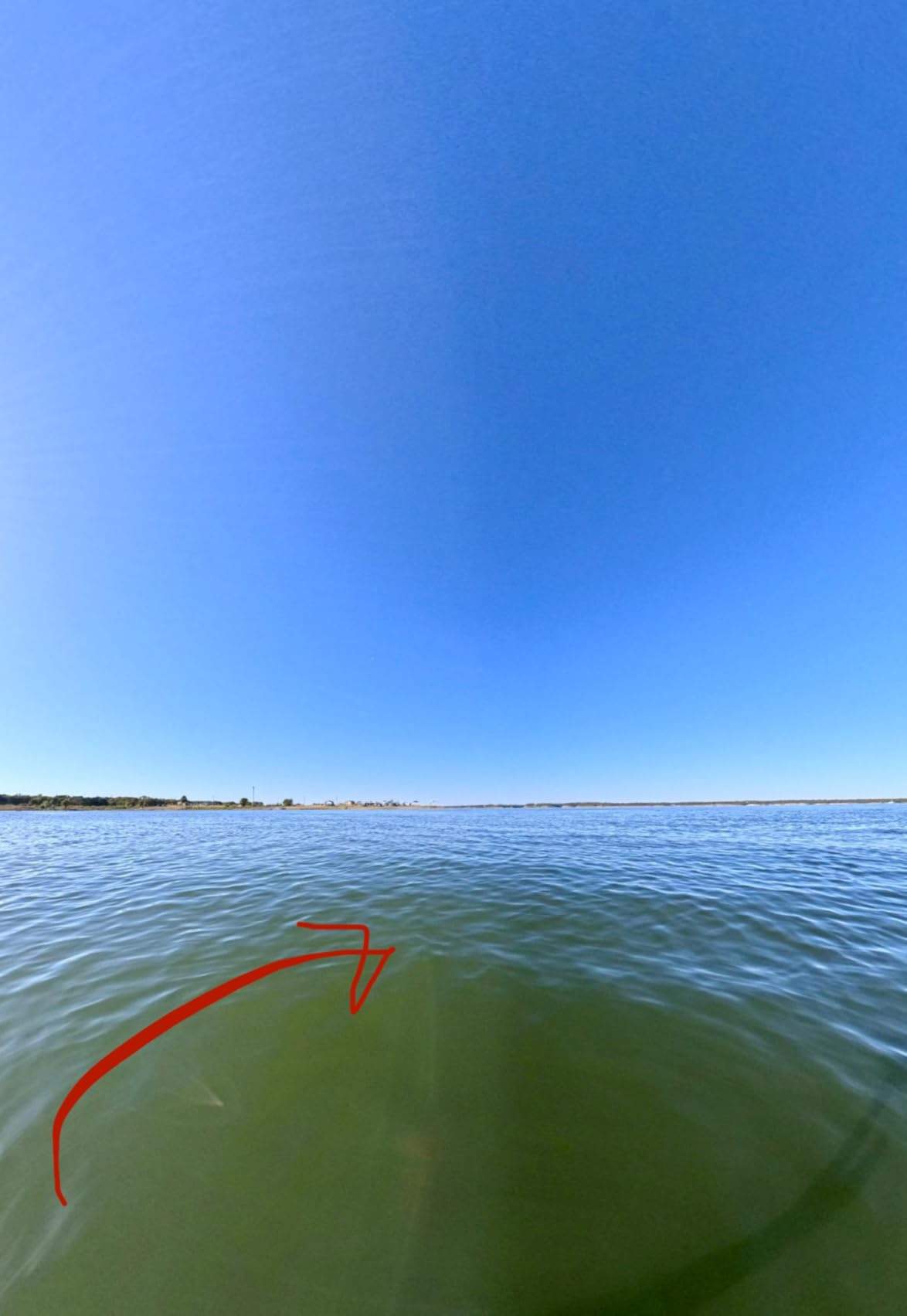
However, overheating is a real problem. In temperatures above 80 degrees Fahrenheit, my test unit shut down multiple times during extended recording sessions. GoPro has acknowledged this issue, but it remains a significant limitation for summer shooting or indoor use without airflow.
Battery life falls short of DJI’s performance. At 8K resolution, I consistently got around 36-45 minutes of recording, well below GoPro’s claimed figures. The 1960mAh Enduro battery helps in cold weather but doesn’t match DJI’s efficiency at high resolutions.
The GoPro Quik app draws consistent criticism from users. While it handles basic editing adequately, the interface feels dated compared to competitors. Some features require a Premium subscription, which adds to the total cost of ownership. Unlike DJI’s approach of editing footage directly on the camera or phone, GoPro requires downloading footage before editing, which slows workflow.
Six microphones capture ambisonic audio that shifts perspective when you reframe video. The sound quality impressed me during testing, creating an immersive experience that matches the visual quality.
DJI Osmo 360 vs GoPro Max 2: Head-to-Head Comparison
Image Quality: Daylight Performance
In bright conditions, both cameras deliver excellent results. GoPro’s True 8K footage shows slightly better sharpness when pixel-peeping, but the difference vanishes on most viewing platforms. DJI’s 8K/30fps output looks fantastic, and the 8K/50fps option provides smoother motion for action sequences.
Color science differs noticeably between the two. GoPro produces punchier, more saturated colors straight out of camera. DJI takes a flatter approach that preserves more dynamic range but requires more post-processing. Neither approach is wrong; it depends on your workflow preferences.
Stitching quality between the two lenses proves excellent on both cameras. Close-up subjects within two feet show some stitching artifacts, but this affects both equally. For most shooting scenarios, you won’t notice the stitch line.
Image Quality: Low-Light Performance
This is where DJI dominates. The 1-inch sensor captures significantly more light than GoPro’s smaller imager. Indoor venues, city streets at night, and dawn/dusk scenarios all favor DJI by a wide margin.
GoPro footage becomes noisy and loses detail as light fades. While usable for social media, the quality drop becomes obvious when comparing side-by-side footage. If you frequently shoot in challenging lighting, DJI wins this category decisively.
Forum discussions consistently praise DJI’s low-light capabilities. Users switching from other 360 cameras report the difference is immediately noticeable. One skydiver noted that dawn jumps produced clean footage with DJI while GoPro struggled with noise.
Build Quality and Durability
GoPro builds the Max 2 to take abuse. The heavier construction, proven mounting system, and user-serviceable lenses make it the obvious choice for extreme sports. Skydivers, mountain bikers, and watersports enthusiasts consistently favor GoPro for this reason.
DJI’s lighter build feels less substantial but isn’t necessarily fragile. The camera survived normal handling without issues during testing. However, the non-replaceable lenses create anxiety for anyone shooting in environments where camera impacts are possible.
Both cameras offer waterproofing without additional housing. DJI doesn’t specify an exact depth rating, while GoPro rates theirs for submersion. For most users, both will handle rain, splashes, and brief submersion without problems.
Battery Life and Charging
DJI wins the battery battle hands down. At 8K resolution, I recorded for over 100 minutes consistently. GoPro managed roughly 40 minutes under similar conditions. For all-day shooting, DJI requires fewer battery swaps and less planning.
Charging speed favors DJI as well. GoPro users report 2+ hour charge times, which becomes frustrating when you need to get back shooting quickly. DJI charges faster, though exact times vary by power source.
Real-world forum feedback confirms these findings. Multiple users report GoPro Max 2 battery life as the camera’s biggest weakness, while DJI owners praise the longevity. If you shoot extended events like weddings or travel vlogs, this difference matters significantly.
Software and App Ecosystem
Neither company offers a perfect app experience, but DJI’s Mimo app edges ahead for ease of use. The editing workflow feels more intuitive, with features like Pano Dewarp and camera movement tools accessible without digging through menus.
GoPro’s Quik app frustrates many users. The requirement to download footage before editing slows workflow considerably. Some features lock behind a Premium subscription. The app also requests more permissions than many users prefer.
Desktop software tells a different story. GoPro offers more robust desktop editing options, while DJI’s desktop software has limitations. Professional editors may prefer GoPro’s workflow for complex projects.
Mounting Systems
GoPro’s mounting ecosystem has no equal. Decades of accessory development means thousands of compatible mounts, arms, and attachments. The combination of 1/4-inch thread and folding fingers provides maximum flexibility.
DJI’s magnetic quick-release system works well but offers fewer options. The magnet feels secure for normal use but some users report concerns about strength during high-impact activities. If you already own GoPro mounts, you’ll need adapters for DJI.
For users deeply invested in one ecosystem, staying within that brand makes sense. Both cameras offer tripod mounts and standard threads, so basic compatibility exists regardless of your choice.
Audio Quality
Both cameras capture impressive spatial audio. GoPro’s six-microphone array creates true ambisonic sound that shifts perspective when reframing. DJI’s four microphones deliver immersive audio and support direct connection to DJI wireless microphones.
In practice, both sound excellent for their intended use cases. Wind handling proves adequate on both, though neither matches dedicated external microphones for critical audio work.
The DJI’s ability to connect directly to microphone transmitters without a receiver simplifies the audio chain for vloggers. GoPro requires additional accessories for similar functionality.
Use Case Recommendations
For action sports like skydiving, mountain biking, and skiing: GoPro Max 2. The replaceable lenses, proven durability, and mounting ecosystem make it the safer choice for high-impact activities.
For travel photography and vlogging: DJI Osmo 360. The lighter weight, superior battery life, and excellent low-light performance suit travel scenarios where charging opportunities are limited.
For indoor and low-light work: DJI Osmo 360, without question. The 1-inch sensor produces clean footage where GoPro struggles.
For content creators wanting both 360 and traditional footage: GoPro Max 2. The Hero mode gives you two cameras in one, eliminating the need to carry separate gear.
Frequently Asked Questions
Which is better in low light DJI Osmo 360 or GoPro Max 2?
The DJI Osmo 360 is significantly better in low light due to its 1-inch sensor. In our tests, DJI captured clean footage in dim conditions where GoPro produced noisy results. For indoor venues, night cityscapes, or dawn/dusk shooting, DJI wins decisively.
Does DJI Osmo 360 have replaceable lenses?
No, the DJI Osmo 360 lenses cannot be replaced by users. If lenses become scratched or damaged, the camera must be sent to DJI for service. This is a significant concern for action sports users who face higher risk of lens damage.
What is the battery life comparison between DJI Osmo 360 and GoPro Max 2?
DJI Osmo 360 offers significantly longer battery life, recording up to 190 minutes compared to GoPro Max 2’s approximately 36-45 minutes at 8K resolution. In real-world testing, DJI consistently outperformed GoPro by more than double the recording time.
Which 360 camera is best for action sports?
GoPro Max 2 is better for action sports due to replaceable lenses, proven durability, and the extensive GoPro mounting ecosystem. Skydivers, mountain bikers, and extreme sports enthusiasts consistently favor GoPro for these reasons.
Is DJI Osmo 360 worth the price?
Yes, DJI Osmo 360 is worth the price if you value low-light performance, long battery life, and built-in storage. The 1-inch sensor delivers quality that competitors cannot match in challenging lighting, and the 105GB storage eliminates memory card costs.
Final Verdict: DJI Osmo 360 vs GoPro Max 2
After months of testing, the DJI Osmo 360 vs GoPro Max 2 comparison comes down to your priorities. Neither camera dominates across all categories, so your specific needs should drive the decision.
Buy the DJI Osmo 360 if you prioritize low-light performance, battery life, and compact size. The 1-inch sensor delivers in conditions where other 360 cameras fail, and 190 minutes of recording time means fewer battery swaps. The built-in storage eliminates memory card hassles, and the lighter weight benefits travel photographers.
Buy the GoPro Max 2 if you need replaceable lenses, proven durability, or dual-camera functionality. Action sports photographers should choose GoPro for the lens replacement capability alone. The Hero mode adds versatility that DJI cannot match, and the mounting ecosystem offers unlimited creative options.
For most users, the low-light advantage tips the scales toward DJI. But if you shoot primarily in daylight conditions or extreme sports environments, GoPro’s durability benefits outweigh DJI’s sensor advantage.
Both cameras represent the current state of the art in consumer 360 capture. Neither will disappoint for their intended purposes. Choose based on your typical shooting conditions rather than specs alone.