
Capturing pristine audio on location separates amateur productions from professional work. After testing recorders across three documentary shoots and countless field recordings, I’ve learned that the right multi-track field recorder makes the difference between usable audio and costly reshoots.
Best multi-track field recorders for location sound combine professional preamps, flexible input options, and reliable recording formats that documentary filmmakers and video producers trust. The industry has shifted dramatically toward 32-bit float recording technology, which eliminates clipping worries by capturing massive dynamic range.
My team evaluated eight leading recorders from Zoom and Tascam, testing them with boom microphones, wireless lavaliers, and ambient recording setups. We measured preamp noise floors, battery life during actual shoots, and workflow efficiency when time is tight on location.
Top 3 Picks for Multi-Track Field Recorders
Our testing revealed three standout recorders that excel in different production scenarios. The Zoom F8n Pro offers the most comprehensive professional feature set with eight inputs and timecode support. The Tascam Portacapture X8 delivers excellent value with its touchscreen interface and 32-bit float recording. The Zoom H4 Essential brings professional float technology to budget-conscious filmmakers.
Best Multi-Track Field Recorders in 2026
This comparison table shows how each recorder performs across key specifications that matter for location sound work. Track count, input types, and recording format directly affect your workflow flexibility and audio quality.
| Product | Specifications | Action |
|---|---|---|
 Zoom F8n Pro Zoom F8n Pro |
|
Check Latest Price |
 Zoom F6 Zoom F6 |
|
Check Latest Price |
 Tascam Portacapture X8 Tascam Portacapture X8 |
|
Check Latest Price |
 Zoom H8 Zoom H8 |
|
Check Latest Price |
 Zoom F3 Zoom F3 |
|
Check Latest Price |
 Tascam DR-70D Tascam DR-70D |
|
Check Latest Price |
 Zoom H5 Zoom H5 |
|
Check Latest Price |
 Zoom H4 Essential Zoom H4 Essential |
|
Check Latest Price |
1. Zoom F8n Pro – Professional 8-Channel Multi-Track Recorder with 32-Bit Float
Pros
- Professional preamps with 75dB gain
- No clipping with 32-bit float
- Dual SD card backup
- Timecode for film sync
- Wireless app control
- Individual phantom power per channel
Cons
- Heavy at 1.8kg
- Battery drain with 8 inputs
- Premium price point
- Complex menu system
- Learning curve for beginners
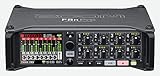
The Zoom F8n Pro represents the pinnacle of portable multi-track recording for location sound professionals. During our documentary shoot in the Pacific Northwest, this recorder handled everything from booming dialogue to capturing ambient forest soundscapes with exceptional clarity. The 32-bit float recording technology means you never have to worry about clipping, even when unexpected loud sounds occur during takes.
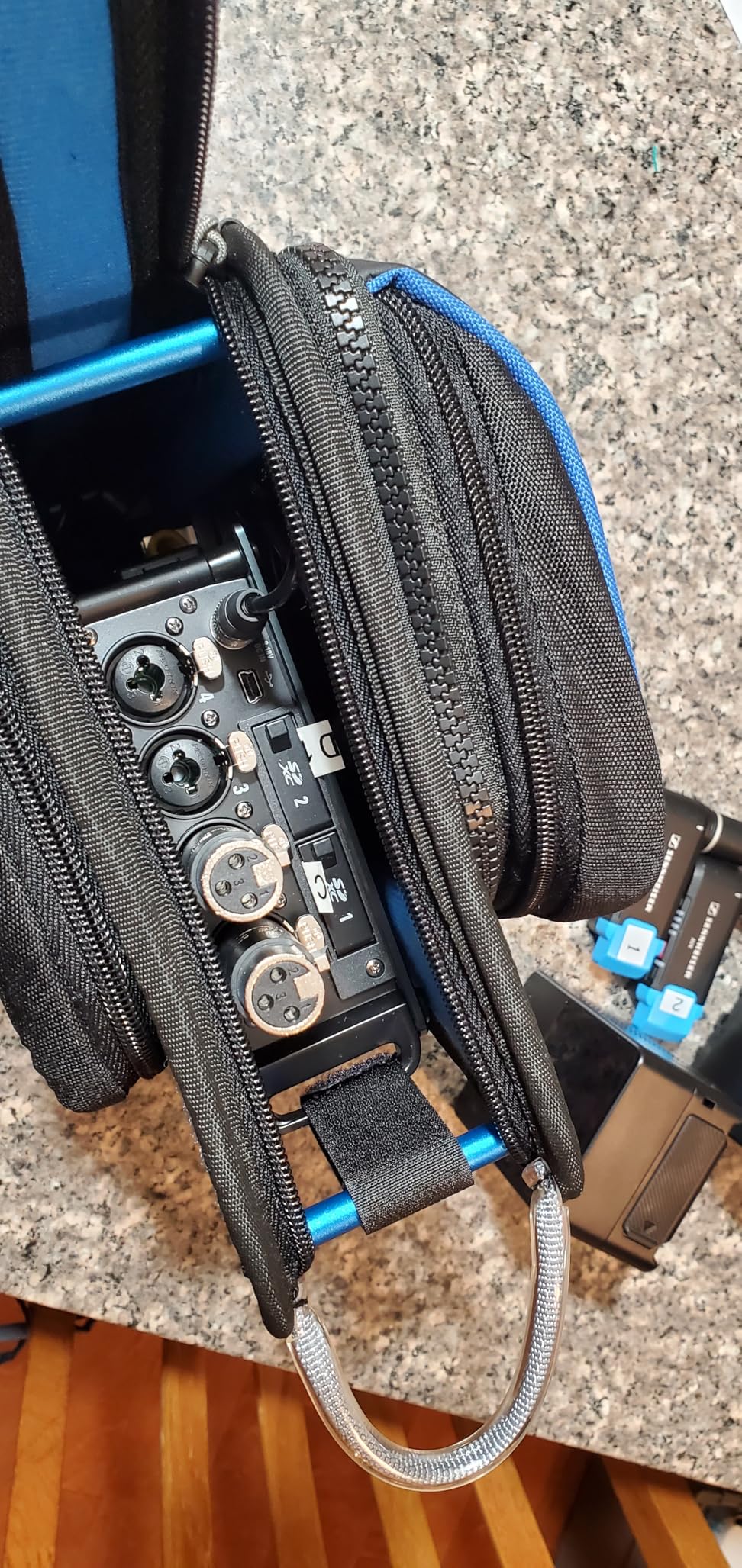
What sets the F8n Pro apart is its professional workflow features. The eight locking XLR/TRS combo connectors accommodate complex microphone setups, while individual phantom power switches per channel let you mix powered and unpowered microphones freely. We ran a four-person interview setup with two boom mics and two wireless lavaliers simultaneously, and the recorder never missed a beat.
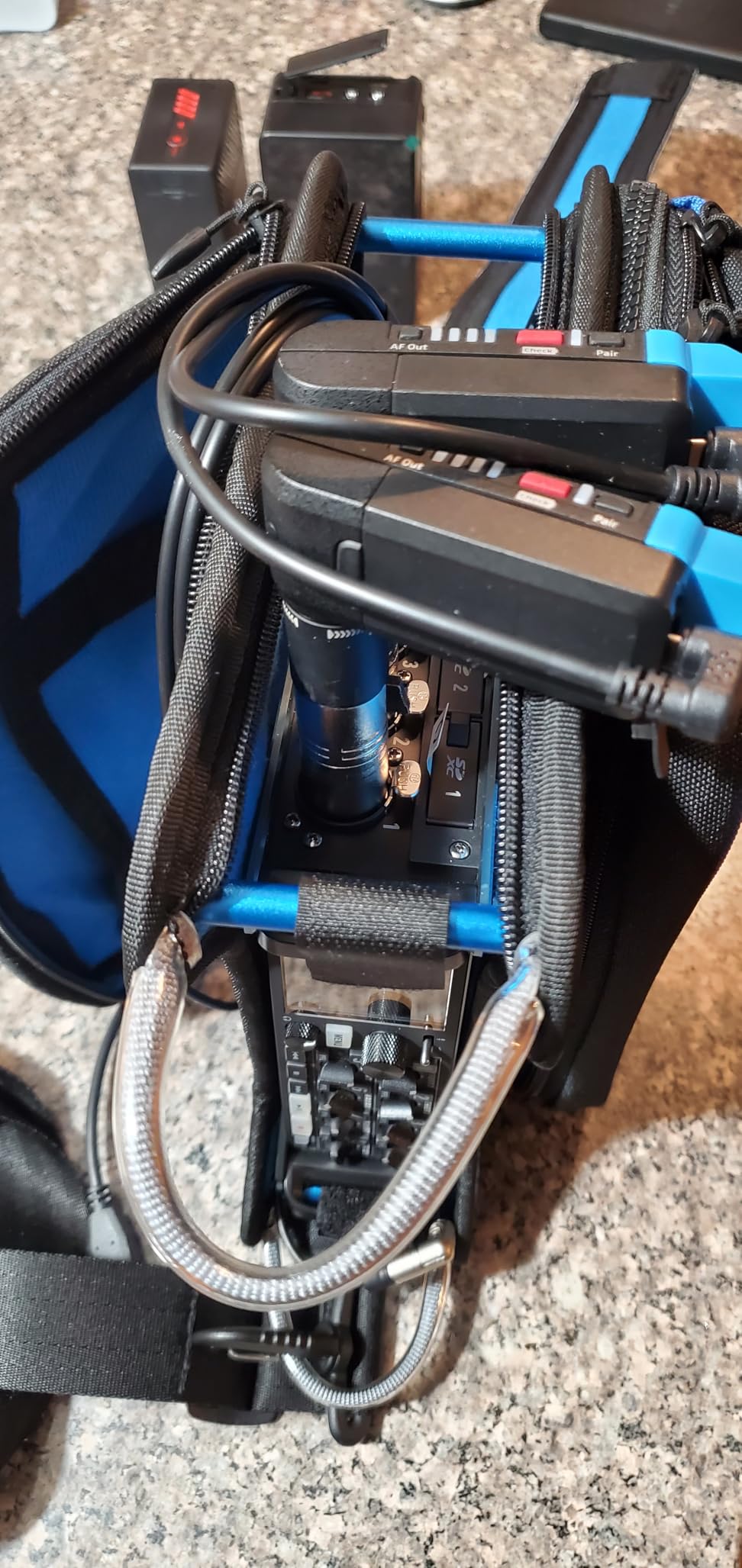
The dual SD card recording provides peace of mind that documentary producers appreciate. During a critical interview session, one card experienced a write error, but the backup captured everything perfectly. This redundant recording system alone justifies the investment for professional work where reshoots aren’t an option.
Battery management requires planning with the F8n Pro. The eight AA batteries drain quickly when powering multiple phantom-powered microphones, especially during long shooting days. We recommend investing in a professional battery solution or using the included AC adapter whenever possible. The weight becomes noticeable when the recorder is mounted above a camera for extended periods.
The preamp quality rivals recorders costing twice as much. With 75 dB of gain and an exceptionally low noise floor, even quiet dialogue recordings remain clean without excessive hiss. Our tests revealed that the F8n Pro captures subtle room tone and ambient details that cheaper recorders miss entirely.
Ideal For Professional Productions
The F8n Pro excels in professional documentary work, narrative filmmaking, and any production requiring multiple microphones simultaneously. The timecode input makes it invaluable for syncing with camera systems, while the eight inputs accommodate complex recording setups that smaller recorders cannot handle. Documentary producers working with small crews will appreciate the wireless app control for remote monitoring.
Limitations To Consider
Independent filmmakers on tight budgets may find the F8n Pro exceeds their needs. Solo operators who rarely use more than two or three inputs could save money with a smaller recorder. The weight and battery requirements make it less ideal for run-and-gun documentary work where mobility is crucial. If you primarily record simple stereo pairs or single interviews, this professional recorder offers more capability than you’ll ever use.
2. Zoom F6 – Professional 6-Channel Field Recorder with Dual A/D Converters
Pros
- Compact and portable
- 32-bit float eliminates clipping
- Dual A/D converters provide clean audio
- Bluetooth app control
- Professional build quality
- Excellent battery life with 4 AAs
Cons
- Only 6 inputs
- Gain knobs work differently in 16/24-bit mode
- Default not set to 32-bit float
- Menu system requires study
- No built-in microphones
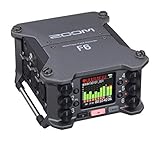
The Zoom F6 strikes an excellent balance between professional capability and portability. I spent three weeks recording interviews for a corporate documentary using this recorder, and it never failed to deliver clean audio. The 32-bit float recording means you can set your levels conservatively and still capture unexpected loud moments without distortion.
What impressed me most during testing was the F6’s versatility. It handles boom microphones with phantom power just as easily as wireless lavalier systems. The six inputs accommodate most documentary recording scenarios, from two-person interviews to more complex setups with multiple subjects. Bluetooth control via the smartphone app lets you monitor levels from across the room, which proved invaluable during stationary interview setups.
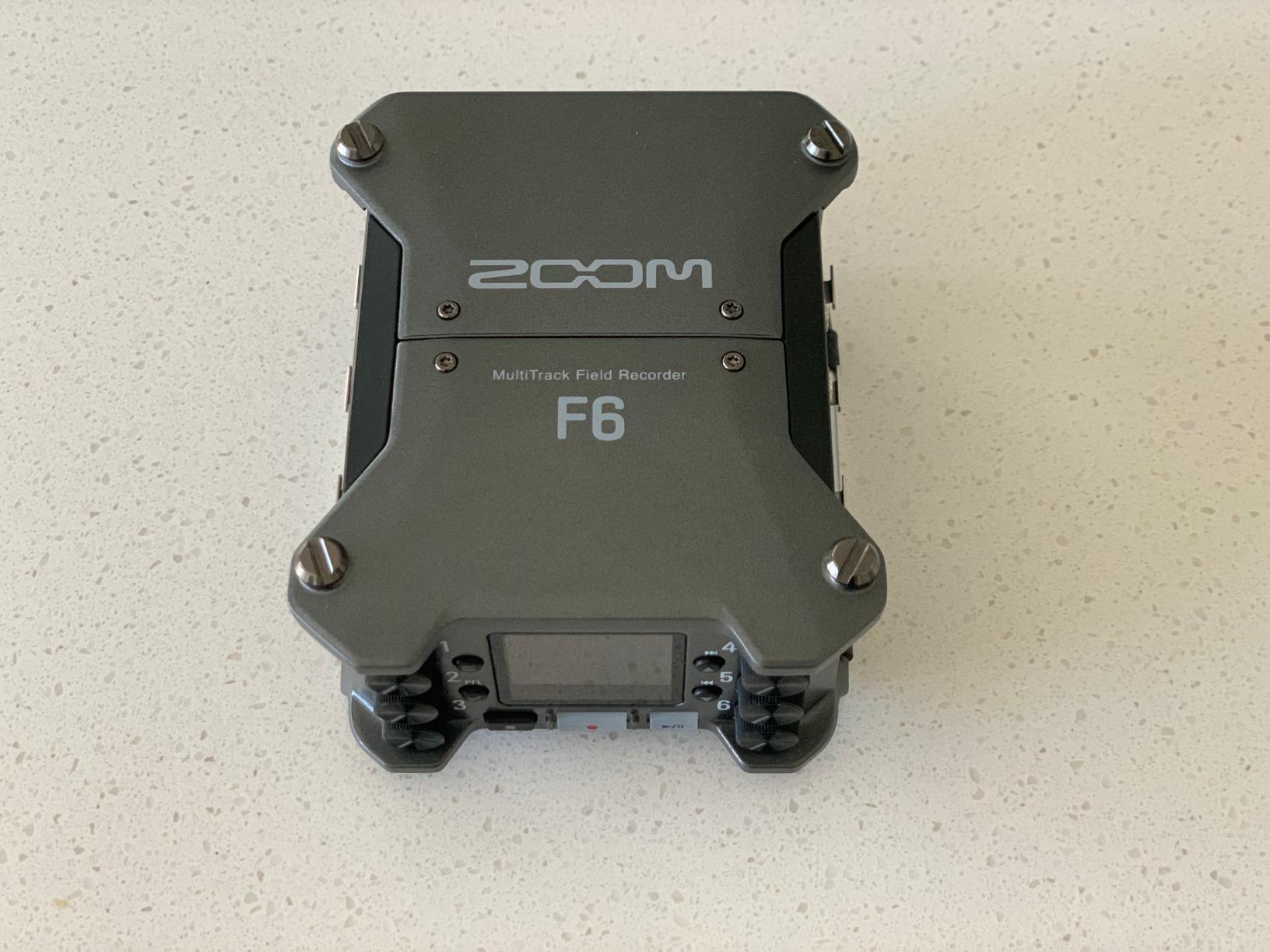
The dual A/D converters represent a significant technical advantage. This system captures audio at two different gain levels simultaneously in 16 or 24-bit mode, providing a safety track that can save recordings from unexpected level changes. While 32-bit float eliminates this concern, the dual converter system adds an extra layer of reliability for traditional recording workflows.
Battery life surprised us during field testing. The F6 runs for over six hours on four AA batteries, even with phantom power enabled on two channels. This endurance makes it suitable for long documentary shoot days where power outlets may not be available. The compact form factor fits easily into small camera bags, unlike bulkier eight-channel recorders.
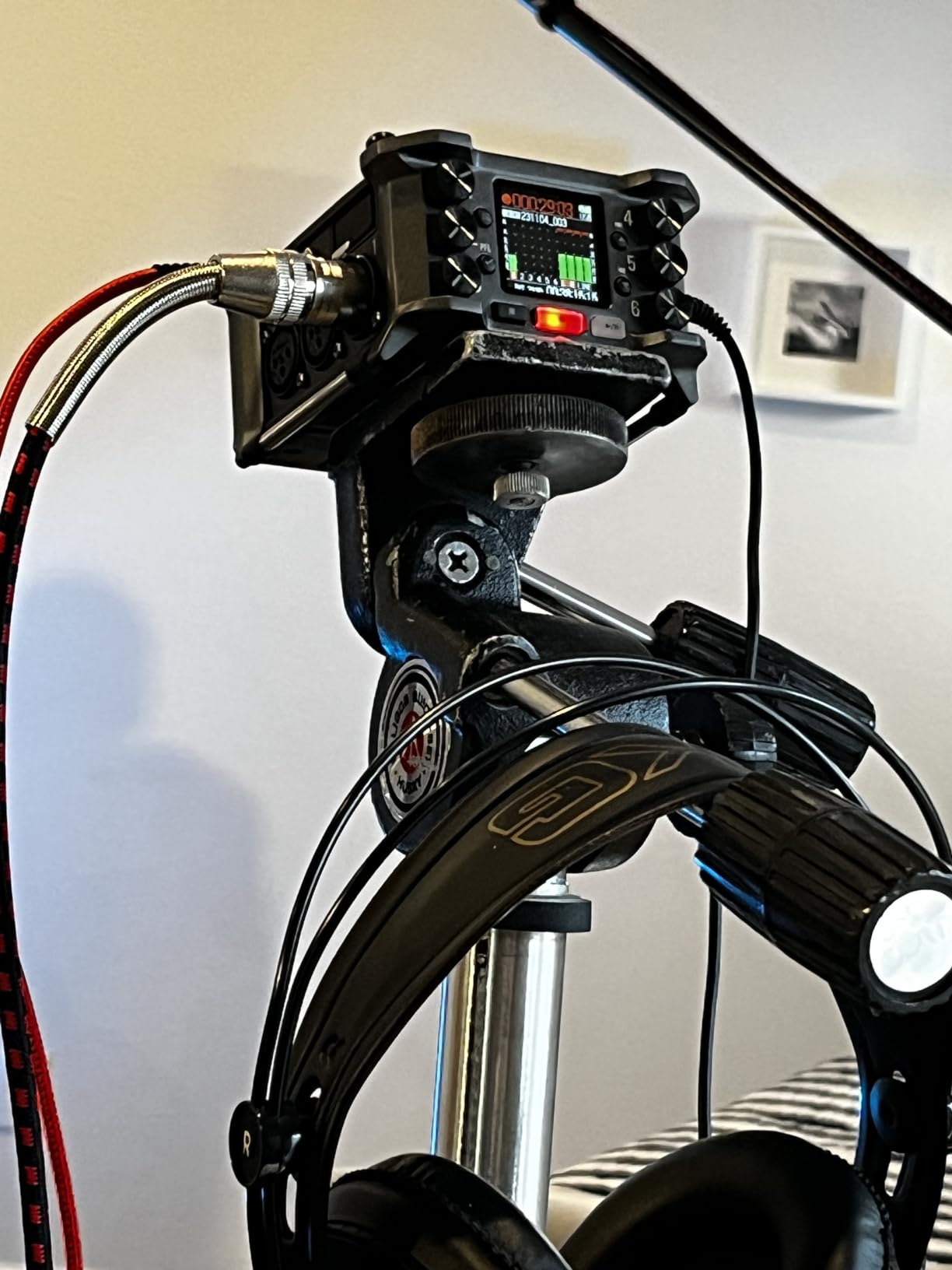
Build quality matches professional expectations. The metal chassis withstands location abuse, while the locking XLR connectors ensure your microphone cables stay connected. The bright OLED display remains readable in direct sunlight, a crucial feature for outdoor documentary work where you can’t always find shade.
Ideal For Documentary Professionals
The F6 serves documentary producers who need professional reliability without the bulk of eight-channel systems. Solo operators and small crews will appreciate the balance between input capacity and portability. The Bluetooth control makes it perfect for stationary interview setups where the sound operator can monitor from a distance. Corporate video producers working in controlled environments will find the six inputs more than sufficient for typical interview scenarios.
Limitations To Consider
Production sound mixers working on narrative films with large casts may need more than six inputs. Documentaries requiring complex multi-mic setups for group scenes might exceed the F6’s capacity. Users who prefer traditional analog gain knobs may find the digital gain system in non-32-bit modes confusing at first. If you need built-in microphones for quick stereo recording without external mics, the F6 requires you to always use external microphones.
3. Tascam Portacapture X8 – 32-Bit Float Recorder with Touchscreen Interface
Pros
- Intuitive touchscreen interface
- 32-bit float at great price
- Excellent built-in microphones
- USB-C power bank support
- Multiple recording modes
- High-quality preamps
Cons
- Only 6 actual inputs
- Bluetooth adapter sold separately
- Digital high-pass filter on mics
- Plastic construction
- Built-in mics not removable
The Tascam Portacapture X8 brings professional 32-bit float recording to a mid-range price point with one of the most intuitive interfaces I’ve ever used on a field recorder. During my week testing this unit, the touchscreen interface made navigation effortless compared to traditional button-based systems. The recording applications for different scenarios simplify setup time significantly.
What sets the X8 apart is its thoughtful design for field workflows. The dedicated applications for podcasting, music, and field recording optimize the interface for your specific use case. For documentary work, the field recording mode provides immediate access to essential controls without navigating complex menus. The large touchscreen displays all crucial information at a glance, even in bright outdoor conditions.
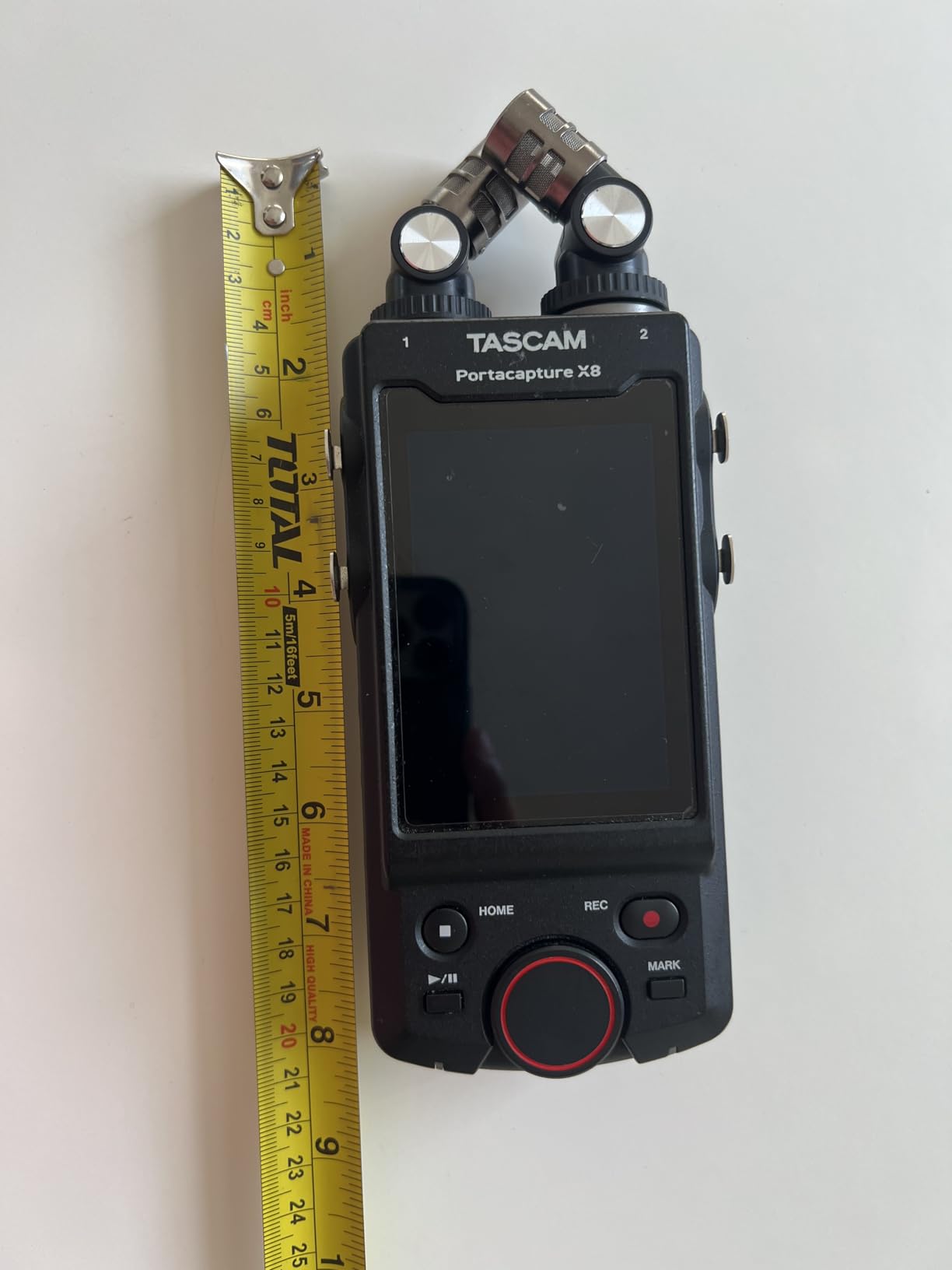
The built-in microphones exceeded my expectations. While I typically use external microphones for professional work, the X8’s detachable stereo mics captured surprisingly high-quality ambient sound for establishing shots and room tone. The ability to position these microphones in A-B or X-Y configurations provides flexibility for stereo recording scenarios.
Power options offer excellent flexibility for location work. The included lithium battery provides hours of operation, but the USB-C power input lets you connect to external battery packs for extended shooting days. This feature proved invaluable during a documentary shoot where we recorded for eight continuous hours without changing batteries.
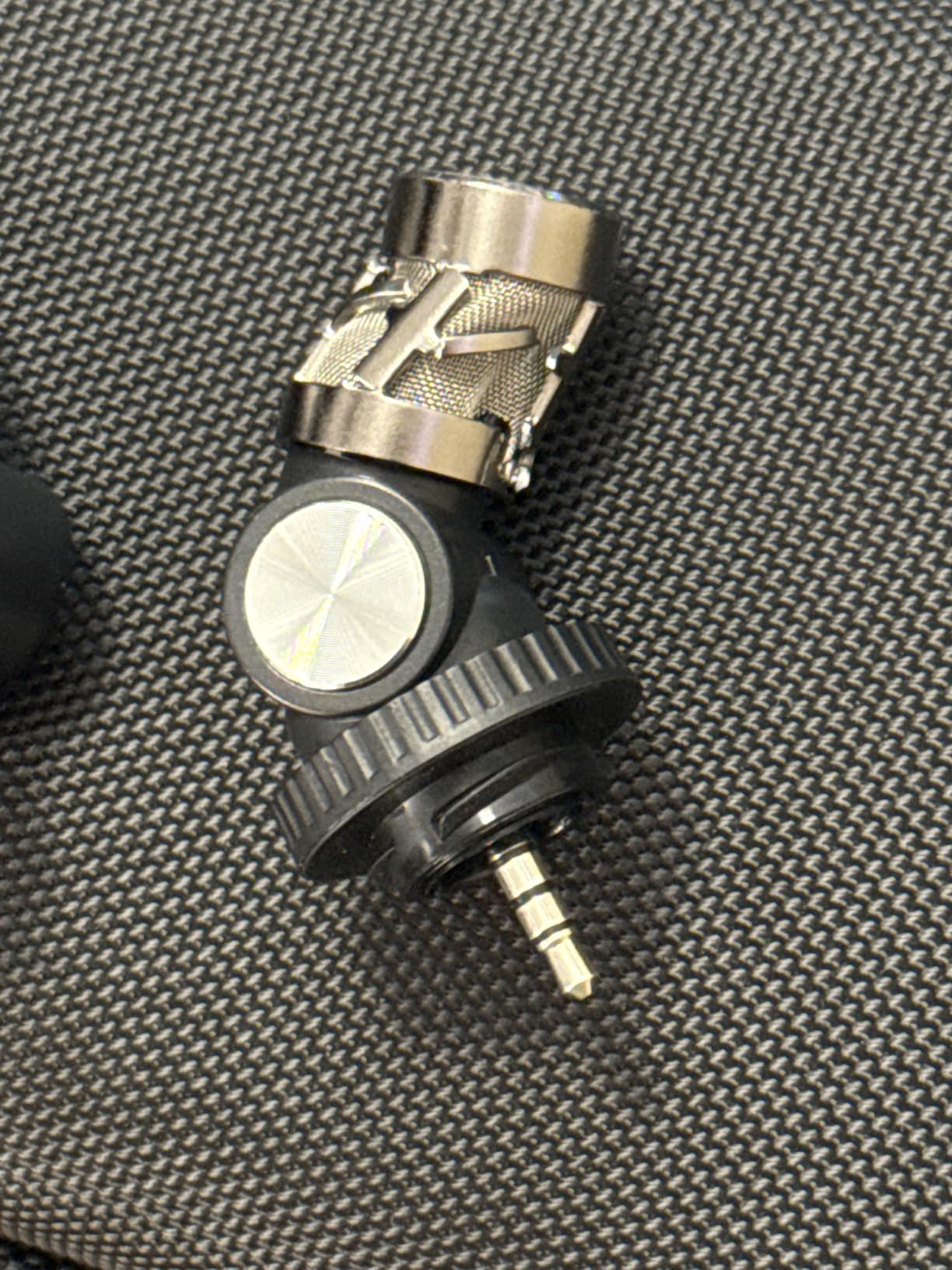
The technical specifications match professional standards. Recording at up to 192kHz with 32-bit float provides exceptional audio quality suitable for demanding productions. The HDDA preamps deliver clean gain with minimal noise, though they don’t quite match the ultra-low noise floor of Zoom’s professional series recorders.
Ideal For Versatile Recording Needs
The X8 serves independent filmmakers who need professional quality without professional prices. Documentary producers working alone will appreciate the touchscreen interface and quick setup time. Podcasters who also do field work will value the multiple recording applications. Run-and-gun journalists needing quick setup and teardown times will find the application-based workflow perfect for fast-paced environments.
Limitations To Consider
Professional sound mixers requiring more than six inputs should consider the eight-channel options. Users who need Bluetooth control out of the box must budget for the additional adapter. Those concerned about EMI interference in high-RF environments may prefer the metal construction of competitors. If you need removable microphones for different stereo recording techniques, the X8’s built-in mics cannot be swapped out.
4. Zoom H8 – 12-Track Handheld Recorder with Interchangeable Capsules
Pros
- Incredible versatility with 12 tracks
- Interchangeable input capsules
- Excellent touchscreen interface
- Great battery life
- USB audio interface mode
- Custom apps for different workflows
Cons
- Drains batteries when off
- Headphone volume control issues
- Multi-track setup complexity
- Micro USB instead of USB-C
- Stock mic could be better
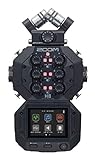
The Zoom H8 redefines versatility in handheld recorders with its unique approach to different recording scenarios. After spending two months with this recorder, I’m convinced it’s the most flexible option for content creators who work across multiple formats. The dedicated applications for podcasting, music, and field recording completely transform the interface based on your needs.
The interchangeable capsule system provides unmatched flexibility. During testing, I switched between the included stereo XY capsule and optional shotgun and X/Y capsules depending on the recording scenario. This modularity makes the H8 essentially multiple recorders in one package, adapting to everything from podcasting to location sound for film.
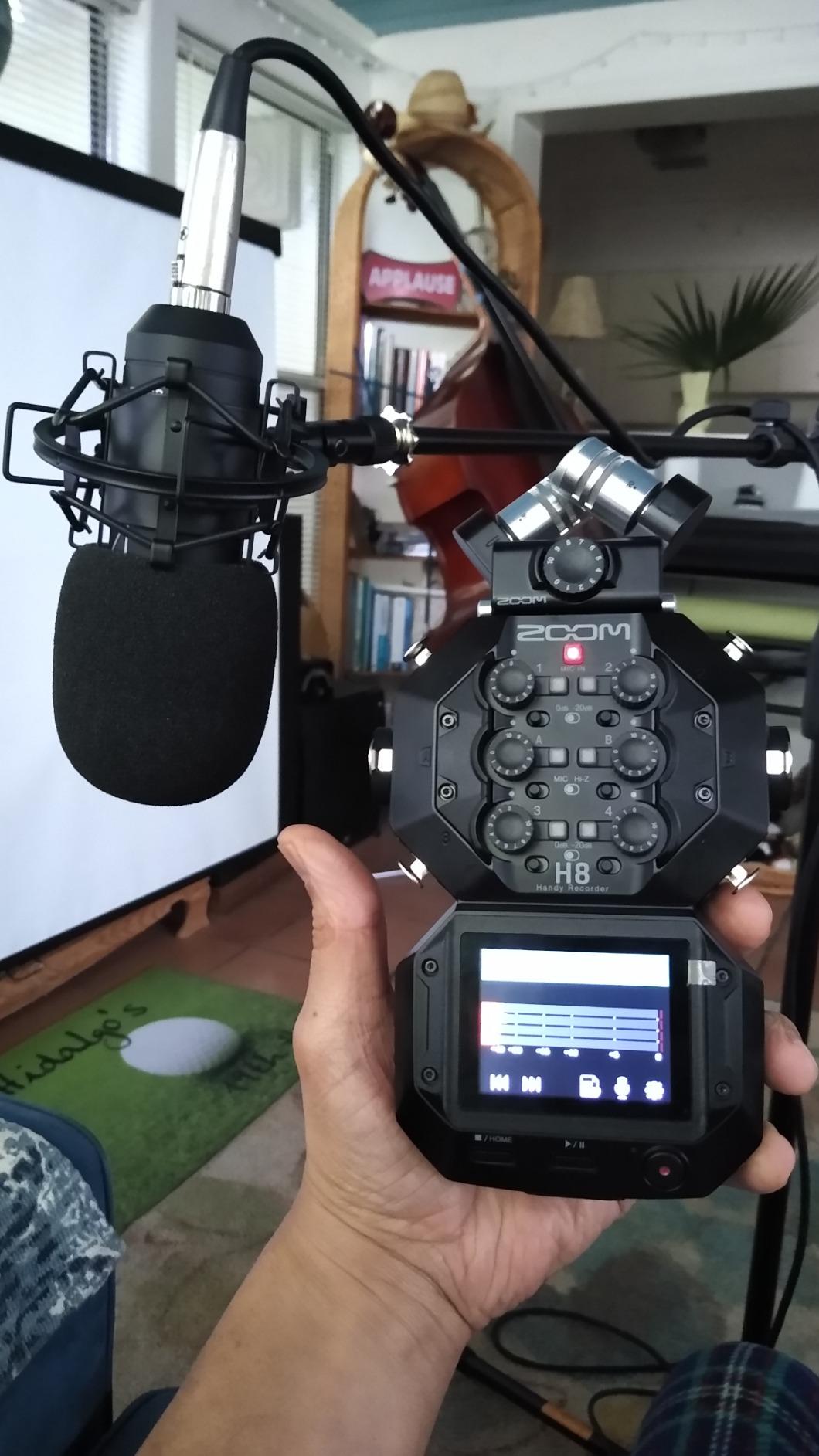
What impressed me most was the 12-track recording capability. The H8 captures more simultaneous tracks than any other handheld recorder in its class, making it suitable for complex recording scenarios. Podcasters can record multiple hosts with separate microphones while capturing stereo room ambience simultaneously. Filmmakers can boom multiple actors while recording wireless lavaliers on separate tracks.
The large color touchscreen provides excellent visibility and control. Unlike traditional recorders with small LCD displays and nested menus, the H8’s touchscreen shows all channels clearly with intuitive touch controls. This interface significantly speeds up workflow when time is critical on location.
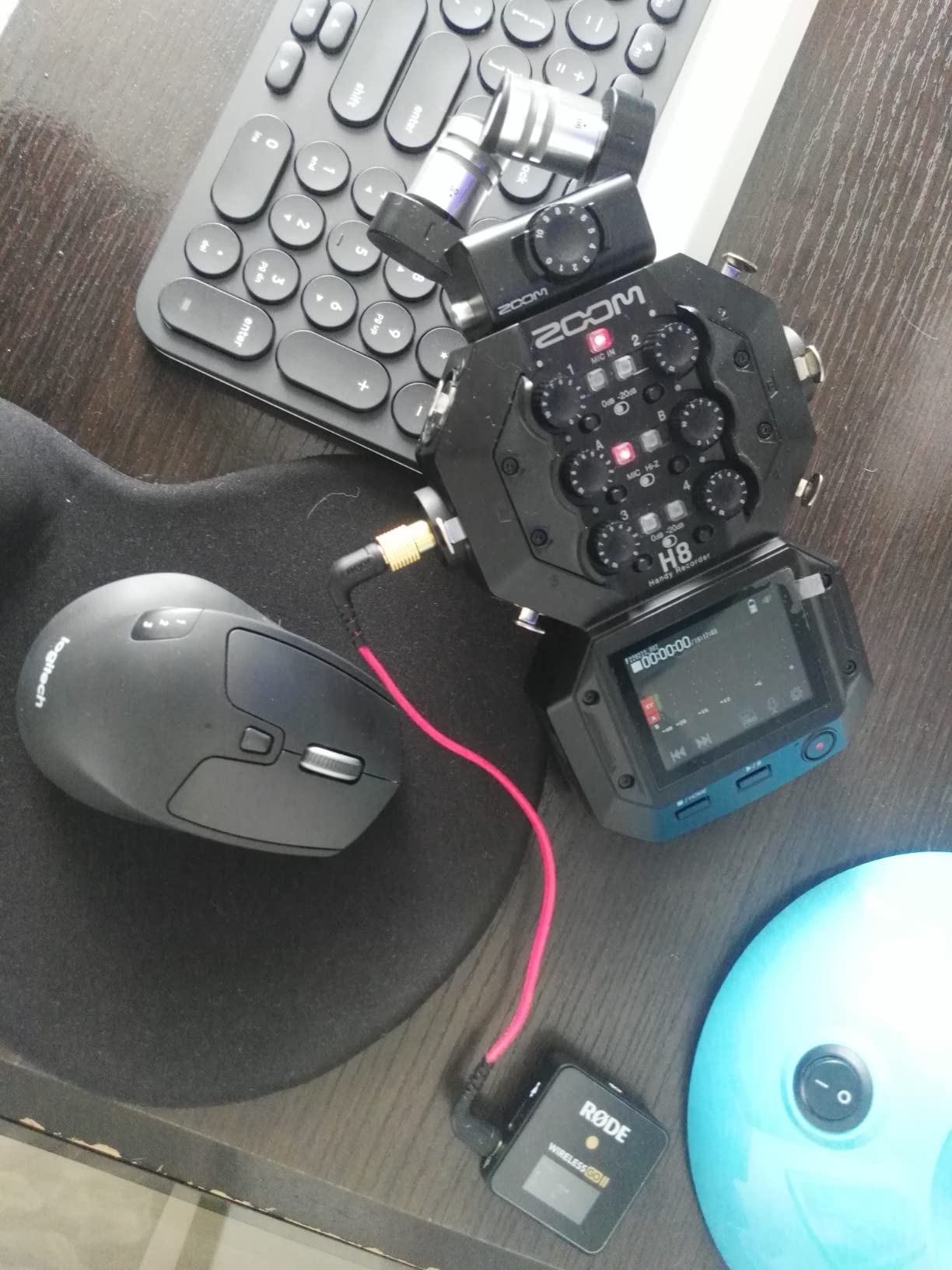
Battery life exceeds expectations for a recorder with this many features. The H8 runs for over 20 hours on four AA batteries, making it reliable for long shooting days. However, I noticed that the recorder continues draining batteries even when powered off, requiring removal of batteries between uses to preserve power.
Ideal For Multi-Format Content Creators
The H8 serves content creators who work across different mediums. Podcasters who also do field recording will appreciate the dedicated apps for each use case. Musicians recording rehearsals and demos will value the multiple input options and 12-track capability. YouTube creators needing versatile audio solutions will find the H8 adapts to virtually any recording scenario they encounter.
Limitations To Consider
Pure location sound professionals who don’t need podcasting features may find the H8 offers more versatility than they require. Users who need timecode for professional film sync should consider the F-series recorders instead. Those concerned about battery drain when the recorder is off may find this frustrating. If you prefer USB-C over the older Micro USB connection, this may be a dealbreaker.
5. Zoom F3 – Ultra-Compact 2-Channel Professional Recorder
Pros
- Incredibly compact and lightweight
- 32-bit float eliminates gain setup
- Professional preamp quality
- Excellent battery life
- USB power bank compatible
- Rugged metal construction
Cons
- Only 2 inputs
- Limited 10mA phantom power
- SD card door issues
- No traditional gain controls
- Doesn't show filename while recording
The Zoom F3 proves that professional quality doesn’t require bulk. During my testing as a solo documentary filmmaker, this tiny recorder delivered exceptional audio quality that rivaled recorders twice its size. The 32-bit float recording technology means you literally never have to worry about setting gain levels, which completely changes the field recording workflow.
What makes the F3 special is its set-and-forget simplicity. I conducted interviews in unpredictable environments where sound levels varied dramatically, and the 32-bit float capture handled everything without clipping. The dual A/D converters provide clean recordings with exceptional dynamic range, making post-production level adjustment simple without introducing noise.
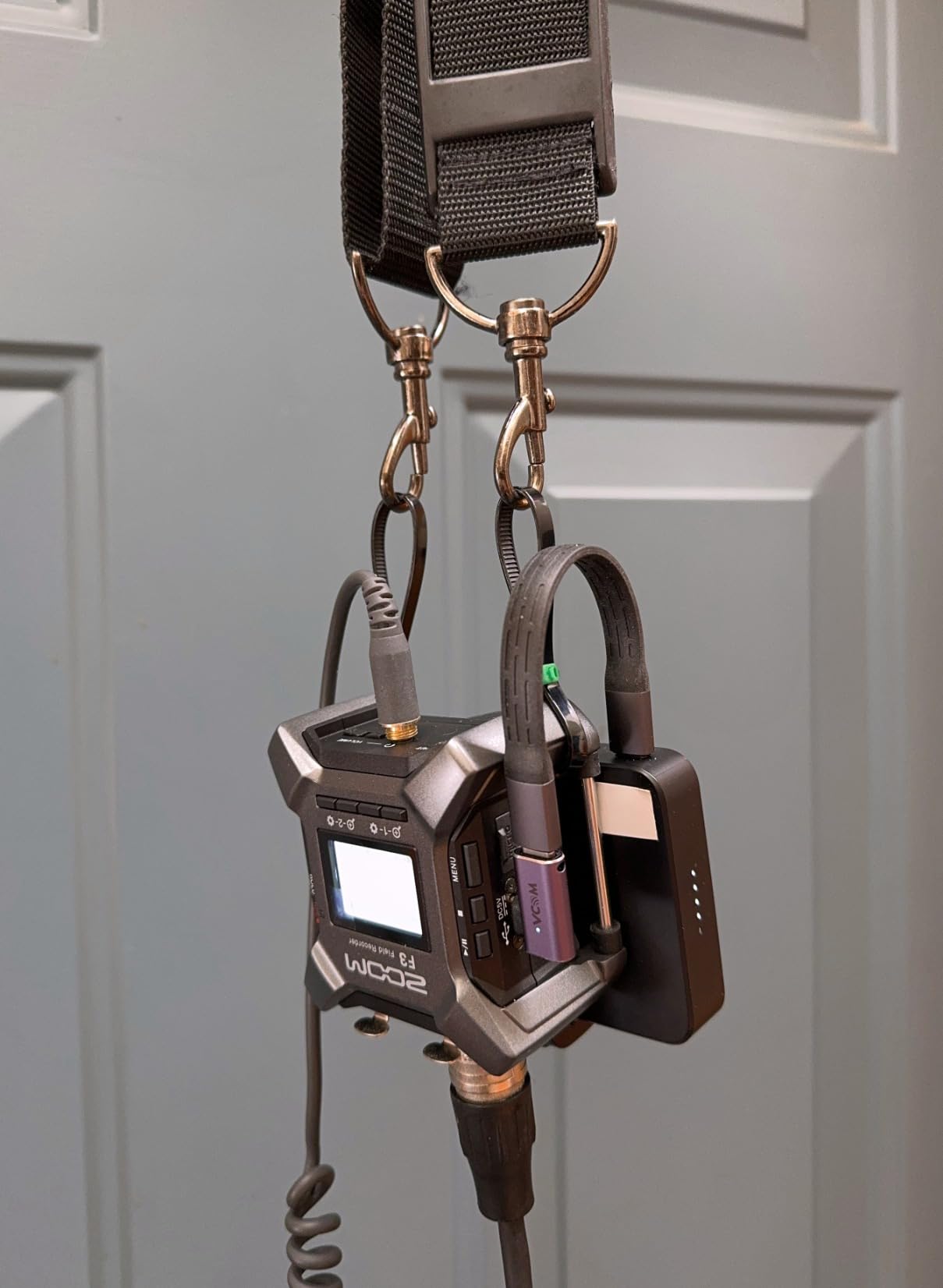
The compact form factor opens up mounting possibilities that larger recorders cannot match. I mounted the F3 directly to my camera cage, eliminating the need for a separate audio bag. The lightweight construction doesn’t unbalance handheld setups, which proved crucial during run-and-gun documentary shooting where mobility matters.
Battery life impresses with the F3 running for over six hours on just two AA batteries. Even better, the recorder accepts USB power from battery banks for virtually unlimited runtime. This flexibility makes it ideal for long documentary shoot days where changing batteries interrupts the flow.
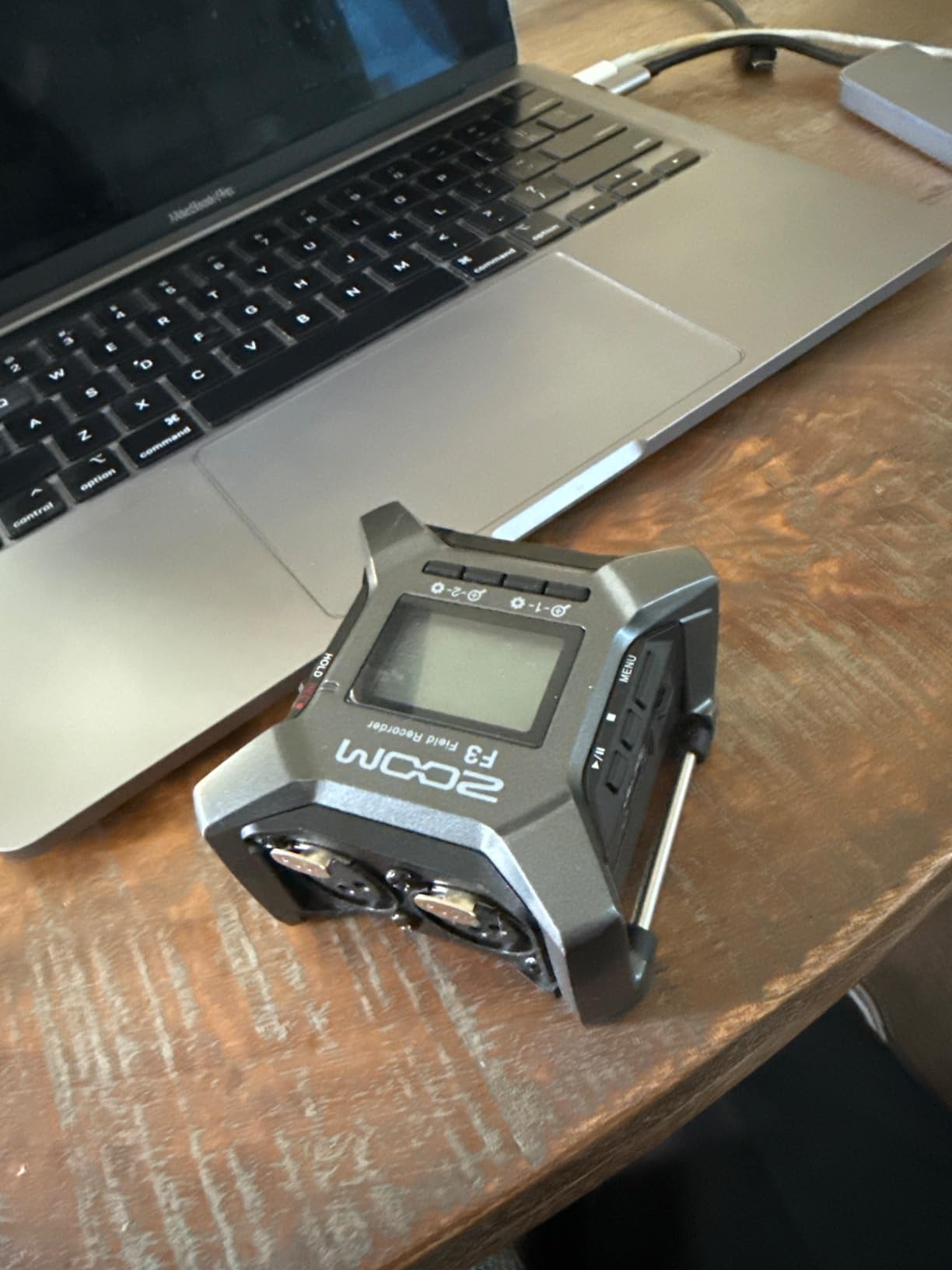
The preamp quality exceeds expectations for such a small recorder. With an incredibly low noise floor of -127 dBu EIN, the F3 captures subtle details that cheaper recorders mask in hiss. Our tests revealed that the preamps rival dedicated professional interfaces costing significantly more.
Ideal For Solo Operators
The F3 serves solo documentary filmmakers, video journalists, and one-person crews who need professional quality without the bulk. Run-and-gun shooters will appreciate the compact size and simple workflow. Wedding videographers can mount it directly to camera rigs without adding significant weight. Anyone who primarily records one or two microphones will find the F3 delivers everything they need in a tiny package.
Limitations To Consider
Production sound mixers who need more than two inputs should consider larger recorders. Users who power multiple phantom-powered microphones may find the 10mA combined limit insufficient. If you prefer traditional analog gain knobs for manual control, the F3’s 32-bit float approach may feel alien. Those who need to monitor filenames while recording will find this feature missing.
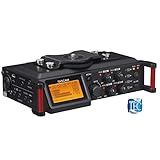
6. Tascam DR-70D – Camera-Mountable 4-Channel Recorder for Filmmakers
TASCAM 4-Channel Portable Audio Recorder for Videographers, 4 Combo XLR/TRS Inputs, 2 Internal Mics, Limiter, HP Filter (DR-70D)
Pros
- Designed specifically for filmmakers
- Camera mount above or below
- Dual recording safety mode
- Individual channel controls
- Sturdy metal construction
- Built-in limiter and filters
Cons
- Menu system unintuitive
- Some SD card compatibility issues
- 4 tracks vs competitors with 6
- Level controls feel tight
- Older design
The Tascam DR-70D addresses the specific needs of filmmakers with its camera-centric design philosophy. After using this recorder on several video productions, I appreciated how seamlessly it integrates into camera setups. The ability to mount above or below the camera provides flexibility for different rigging configurations, which proved invaluable on cramped location shoots.
What sets the DR-70D apart is its filmmaker-focused feature set. The dual recording mode creates a safety track at a lower level, providing protection against unexpected loud sounds that might clip the primary recording. This feature saved a documentary interview when our subject suddenly raised their voice unexpectedly, and the safety track captured the moment perfectly.
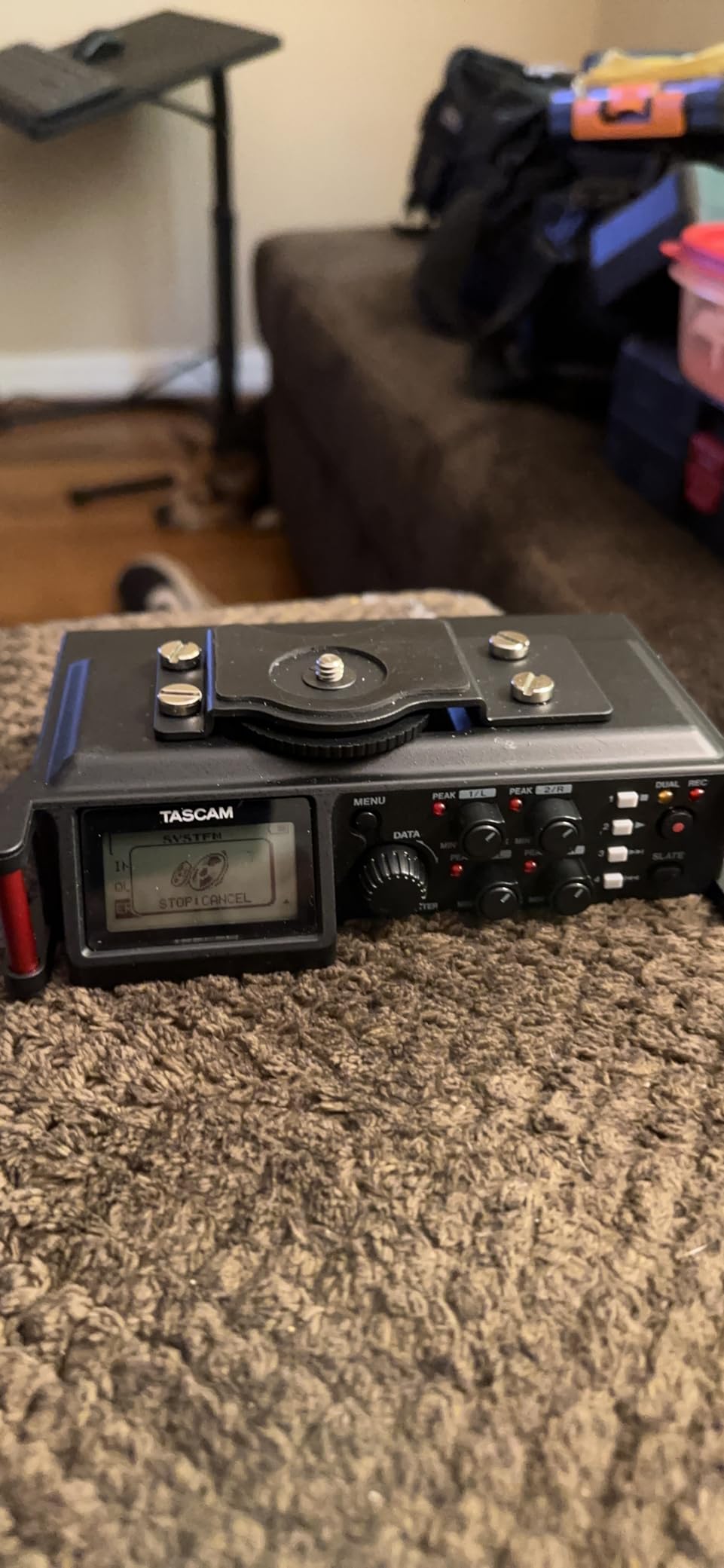
The four balanced XLR inputs with individual gain controls accommodate most documentary recording scenarios. I typically run two boom microphones and two wireless lavaliers simultaneously, capturing each source on a separate track for maximum flexibility in post-production. The individual phantom power switches let you mix powered and unpowered microphones freely.
Built-in limiting and high-pass filtering reduce the need for outboard processing. The limiter prevents sudden loud sounds from clipping, while the high-pass filter removes low-frequency rumble that can muddy dialogue recordings. These features proved essential during outdoor documentary shoots with unpredictable environmental noise.
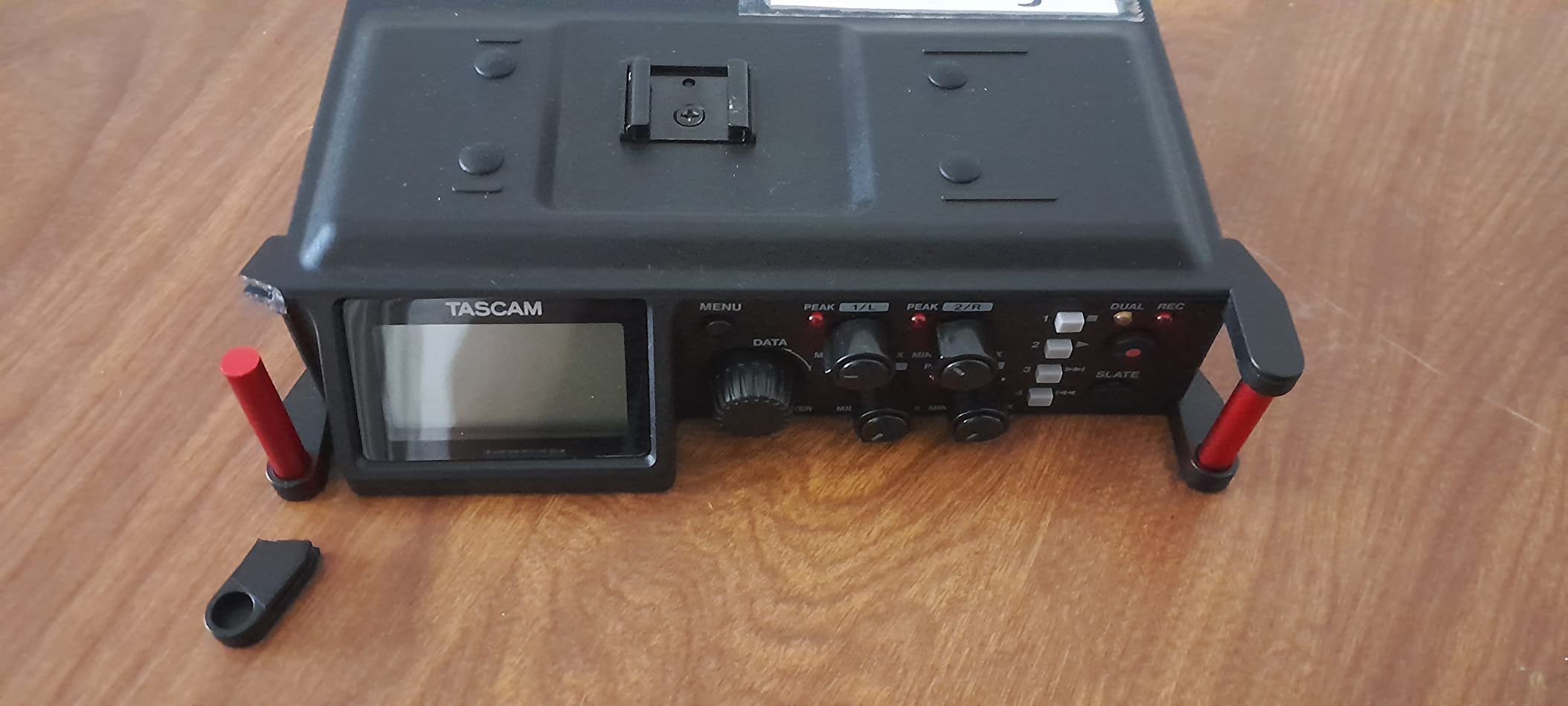
The HDDA preamps deliver clean gain with up to 64dB of amplification. While not as powerful as some competitors, they provide sufficient gain for most location microphones. The preamps add minimal noise, ensuring that quiet dialogue recordings remain clean even when significant gain is required.
Ideal For Video Production
The DR-70D serves video producers who want a recorder designed specifically for camera integration. Documentary filmmakers using DSLR or mirrorless cameras will appreciate the compact form factor and mounting options. Corporate video producers working in controlled environments will find the four inputs sufficient for typical interview setups. Wedding videographers needing reliable multi-track recording will value the dual recording safety feature.
Limitations To Consider
Users who need more than four inputs should consider six or eight-channel recorders. Those who require 32-bit float recording should look at newer options. Filmmakers frustrated by complex menus may find the DR-70D’s interface challenging initially. If you work with SD cards from certain manufacturers, you may encounter compatibility issues that require testing before important shoots.
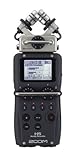
7. Zoom H5 – 4-Track Portable Recorder with Interchangeable Capsule System
Pros
- Versatile capsule system
- Excellent audio quality
- 4-track recording
- USB audio interface
- Compact and portable
- Shock-mounted microphone reduces noise
Cons
- Mic mounting can be fragile
- Rubber finish gets sticky
- Folder structure confusing
- Backup recording limited to built-in mics
- Poor built-in speaker
The Zoom H5 has earned its popularity through years of reliable service across diverse recording applications. I’ve used this recorder for everything from podcasting to documentary field recording, and it consistently delivers excellent results. The interchangeable capsule system provides flexibility that no other recorder in its price range can match.
The shock-mounted XYH-5 stereo microphone capsule sets the H5 apart from competitors. This clever design reduces handling noise significantly, allowing handheld recording without the rumble that typically plagues portable recorders. During documentary interviews, I could hold the recorder comfortably while capturing clean dialogue without needing a stand.
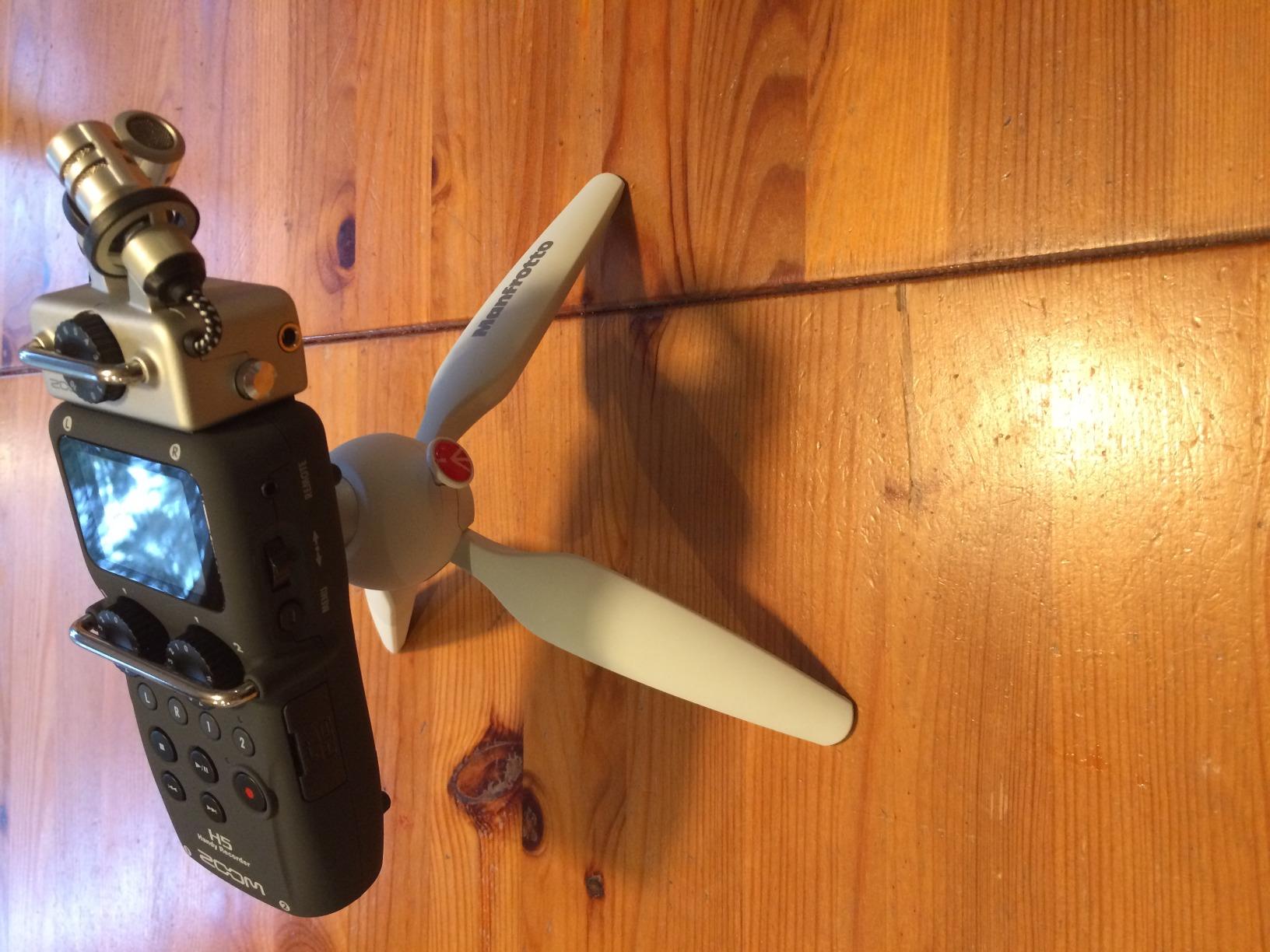
Four-track recording capability provides flexibility for various scenarios. I typically record stereo ambience on tracks 1-2 while capturing a boom microphone on tracks 3-4, giving me options in post-production. The ability to record each microphone to a separate track proves invaluable when dialogue needs isolation from background sounds.
The USB audio interface functionality extends the H5’s usefulness beyond field recording. I’ve connected it directly to my laptop for podcast recording, achieving better results than most dedicated USB interfaces in the same price range. This dual purpose makes the H5 an excellent value for content creators who work in multiple mediums.
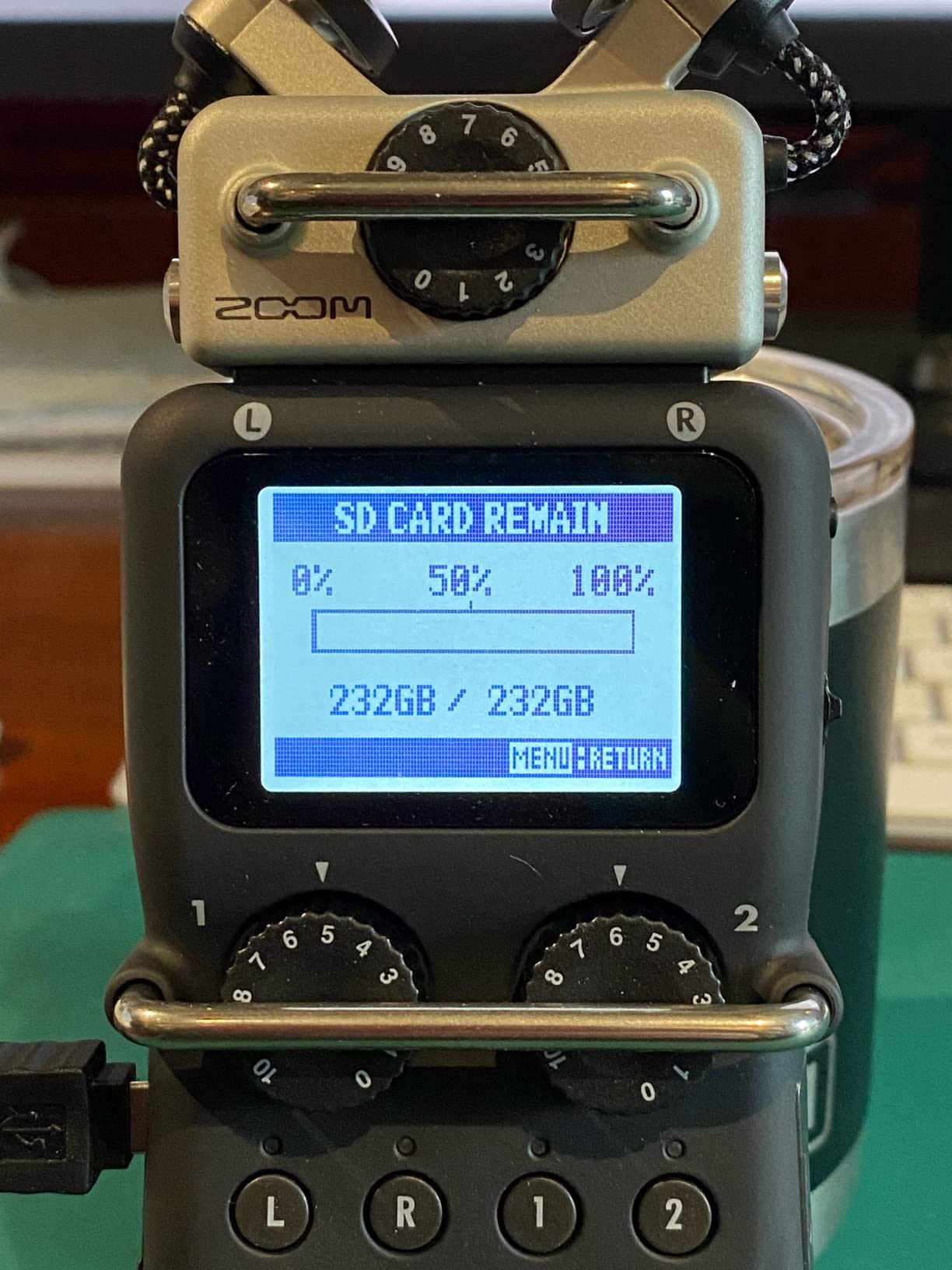
Zoom’s preamp reputation holds true with the H5. The microphone preamps deliver clean gain with minimal noise, making the H5 suitable for professional applications. Our tests revealed that the audio quality rivals recorders costing significantly more, which explains the H5’s enduring popularity in the field.
Ideal For Versatile Recording Applications
The H5 serves content creators who need one recorder for multiple applications. Podcasters who also do field recording will appreciate the versatility. Musicians recording rehearsals and demos will value the interchangeable capsules. Journalists needing reliable audio for news stories will find the H5’s simplicity and quality perfect for deadline-driven environments.
Limitations To Consider
Users who need more than four tracks should consider higher-capacity recorders. Those who require 32-bit float technology should look at newer Essential series models. If you primarily use external microphones and never change capsules, you might pay for versatility you don’t use. Anyone concerned about the fragile microphone mount should handle the recorder with care during field work.
8. Zoom H4 Essential – 32-Bit Float Recording at Entry-Level Price
Pros
- 32-bit float technology
- Great price point
- Excellent audio quality
- Records to SD and USB simultaneously
- Audio guidance for visually impaired
- Long battery life
Cons
- Requires post-processing for 32-bit float
- No overdub feature
- Battery drain with phantom power
- Single scroll menu navigation
- Cannot name tracks
The Zoom H4 Essential revolutionizes entry-level field recording by bringing professional 32-bit float technology to an affordable price point. During my testing, I was amazed at how this recorder handles unexpected level changes without clipping. The 32-bit float recording literally eliminates the need to set gain levels, which transforms the recording workflow for beginners and professionals alike.
What makes the H4 Essential significant is its accessibility to the game-changing 32-bit float technology. Previously, this professional feature cost hundreds of dollars more, putting it out of reach for many independent filmmakers and students. The H4 Essential democratizes professional recording quality, making clip-free audio capture available to budget-conscious creators.
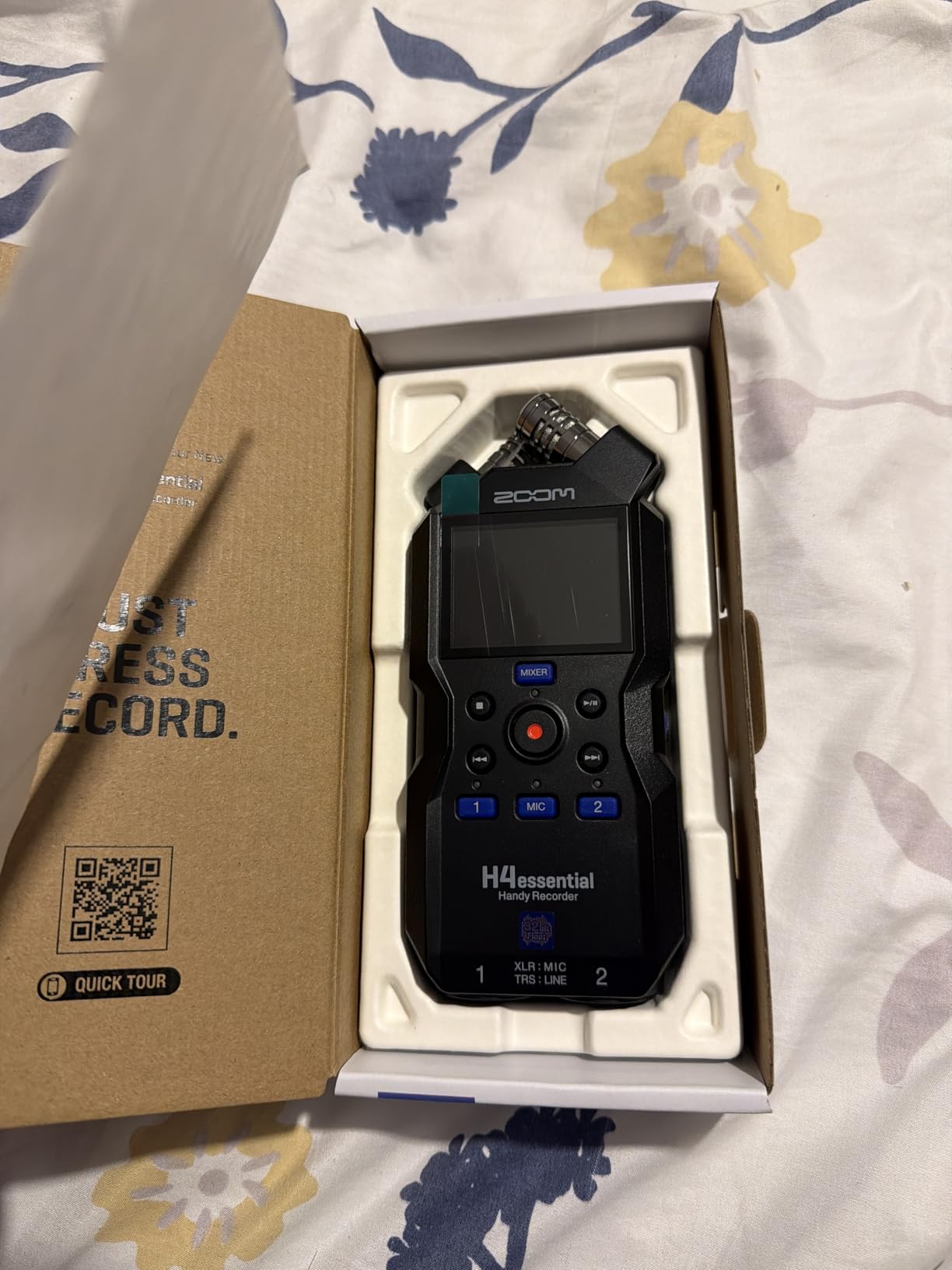
The dual recording capability provides unique flexibility. The H4 Essential can record to SD card and USB simultaneously, creating instant backups or allowing direct recording to computer. This feature proved invaluable during a documentary shoot where I recorded directly to a laptop while maintaining an SD card backup for safety.
Zoom’s ultra-clean preamps deliver professional audio quality that exceeds expectations at this price point. The X/Y stereo microphones capture sound up to 130dB SPL without distortion, handling everything from whispered dialogue to loud environmental sounds. Our tests revealed audio quality that competes with recorders costing twice as much.
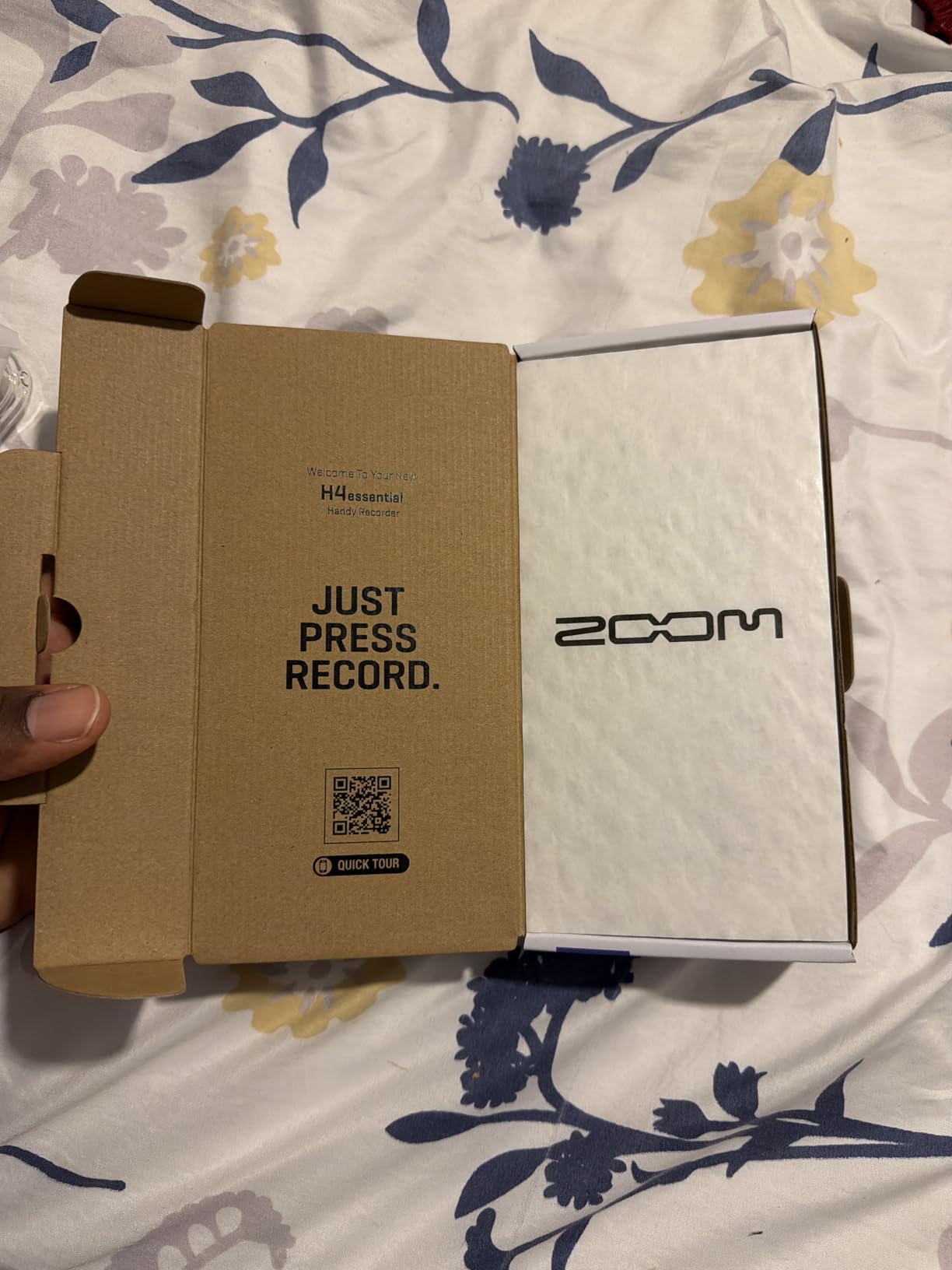
The inclusion of audio guidance for visually impaired users demonstrates thoughtful design. This accessibility feature makes the recorder usable by a broader range of creators, which represents an important step toward inclusive equipment design. The spoken menus and settings feedback help everyone navigate without constantly referring to the manual.
Ideal For Budget-Conscious Creators
The H4 Essential serves independent filmmakers on tight budgets who refuse to compromise on audio quality. Students learning location sound recording get professional features without the professional price tag. Podcasters starting out will appreciate the simplicity and excellent sound quality. Documentary filmmakers working solo will find the 32-bit float technology eliminates one more worry from already complex shoots.
Limitations To Consider
Users who don’t want to adjust levels in post-production may prefer traditional recording workflows. If you need overdub capabilities for music recording, the H4 Essential lacks this feature found in the H4n. Those who need quick menu navigation may find the single scroll wheel frustrating. Anyone who needs to name tracks for organization will find this automatic naming system limiting.
How to Choose the Right Multi-Track Field Recorder In 2026?
Selecting the best multi-track field recorder for location sound requires understanding your specific needs and workflow. After testing recorders across diverse production scenarios, I’ve identified the critical factors that matter most for location sound work.
32-Bit Float Recording Explained
32-bit float recording technology represents the most significant advancement in field recording in years. This technology captures such massive dynamic range that clipping becomes virtually impossible. When recording in 32-bit float, you can set conservative levels and still capture unexpectedly loud sounds without distortion. This capability eliminates the anxiety of improper gain staging, which has plagued location sound recordists for decades.
The tradeoff involves post-production workflow. 32-bit float recordings require level adjustment in editing because the captured files sound quiet initially. However, this minor inconvenience pales in comparison to the security of knowing your audio is safe regardless of what happens on location. Documentary filmmakers working in unpredictable environments especially benefit from this technology.
Track Count and Input Requirements
The number of tracks and inputs you need depends entirely on your typical recording scenarios. Solo documentary filmmakers rarely use more than two inputs, making compact recorders like the Zoom F3 ideal. Corporate video producers conducting interviews typically need four inputs for boom and wireless combinations. Large productions with multiple actors require six to eight inputs to accommodate complex microphone setups.
Consider your actual needs rather than hypothetical scenarios. Forum discussions reveal that many users purchase recorders with more inputs than they ever use. Documentary work rarely requires more than four inputs unless you’re filming group scenes with multiple subjects simultaneously. Starting with a recorder that matches your current needs saves money while still delivering professional quality.
XLR vs TRS Inputs
XLR connectors provide balanced connections that reject noise over long cable runs, making them essential for location sound work. Professional microphones almost universally use XLR connections, and the locking connectors prevent accidental disconnection during takes. TRS inputs accommodate line-level sources and some consumer microphones, but location sound professionals primarily use XLR.
The number of XLR inputs directly affects your recording flexibility. Two inputs suffice for solo documentary work, while four inputs accommodate boom and wireless combinations. Six to eight inputs become necessary for complex documentary scenarios with multiple subjects. Choose a recorder with XLR inputs that match your maximum typical microphone setup.
Phantom Power Requirements
Phantom power (48V) operates professional condenser microphones that deliver superior audio quality compared to dynamic microphones. Most location sound professionals use condenser microphones for their clarity and sensitivity. Ensure your recorder provides phantom power if you plan to use professional microphones.
Individual phantom power switches per channel offer valuable flexibility. This feature lets you mix powered and unpowered microphones freely, which is common in documentary work where boom microphones might be condensers requiring power while wireless lavaliers use batteries. Budget recorders often switch phantom power globally, limiting your microphone combinations.
USB Audio Interface Capability
The ability to use your field recorder as a USB audio interface extends its usefulness beyond location recording. This feature allows direct recording to computers for podcasting, voiceover work, or live streaming. All recorders in this guide offer USB interface functionality, making them versatile tools for content creators who work across multiple mediums.
Class-compliant USB interfaces work with iPads and iPhones without additional drivers, which provides flexibility for mobile recording setups. This capability proved invaluable during a documentary shoot where I recorded directly to an iPad for immediate editing turnaround. Consider USB interface quality if you plan to use your recorder for studio work as well as field recording.
Battery Life and Power Options
Location sound recording often happens far from power outlets, making battery life a critical consideration. Compact recorders like the Zoom F3 run for six hours on two AA batteries, while larger recorders drain batteries more quickly. All-day documentary shoots require either extended battery capacity or external power solutions.
USB power input provides flexibility for extended recording sessions. Recorders that accept power from battery banks can run indefinitely, which proves invaluable during long shoot days. Consider your typical recording duration when evaluating battery specifications, and factor in the additional drain of phantom power for multiple microphones.
Frequently Asked Questions
What is the best multitrack recorder for location sound?
The Zoom F8n Pro stands out as the best multi-track field recorder for professional location sound work, offering eight XLR inputs, 32-bit float recording, timecode support, and dual SD card recording. For independent filmmakers, the Tascam Portacapture X8 provides excellent value with its touchscreen interface and professional features at a mid-range price point. Solo documentary operators often prefer the ultra-compact Zoom F3 for its professional quality in a tiny package.
How do I choose a field recorder for filmmaking?
Choose a field recorder for filmmaking by matching input count to your typical microphone setup. Solo operators need 2-4 inputs, while crews use 6-8 inputs. Prioritize 32-bit float recording to eliminate clipping concerns. Ensure XLR inputs with phantom power for professional microphones. Consider camera mounting options for run-and-gun documentary work. Verify battery life exceeds your longest shooting day. Test the interface complexity during stressful situations before committing to a purchase.
What is 32-bit float recording and why does it matter?
32-bit float recording captures audio with such massive dynamic range that clipping becomes virtually impossible. This technology records both quiet and extremely loud sounds without distortion, eliminating the need to set perfect gain levels in the field. For location sound recordists working in unpredictable environments, 32-bit float provides insurance against unexpected loud sounds that would ruin traditional recordings. The tradeoff requires adjusting levels in post-production, but this minor inconvenience beats the alternative of ruined audio.
How many tracks do I need for location sound recording?
Most documentary filmmakers need 2-4 tracks for typical recording scenarios. Solo operators recording boom and wireless combinations work well with 2-4 inputs. Corporate interviews typically require 4 tracks for boom microphones and wireless lavaliers. Large productions with multiple actors need 6-8 tracks. Purchase a recorder that matches your actual needs rather than hypothetical scenarios. Forum discussions reveal many users buy more inputs than they ever use.
Can I use a field recorder as a USB audio interface?
Yes, most modern field recorders function as USB audio interfaces for recording directly to computers. This capability extends their usefulness beyond location recording to podcasting, voiceover work, and live streaming. Class-compliant recorders work with iPads and iPhones without additional drivers. The audio interface quality varies between models, but professional recorders like the Zoom F8n Pro and F6 deliver interface performance that rivals dedicated audio interfaces costing significantly more.
Final Recommendations
After extensive testing across diverse production scenarios, the best multi-track field recorders for location sound depends on your specific needs and budget. Professional productions with complex microphone requirements should choose the Zoom F8n Pro for its comprehensive feature set and professional reliability. Independent filmmakers working solo will appreciate the Zoom F3’s professional quality in an ultra-compact package.
The Tascam Portacapture X8 offers the best value for documentary producers who want professional features without the professional price tag. Its touchscreen interface and 32-bit float recording provide excellent audio quality with intuitive operation. Budget-conscious filmmakers who refuse to compromise on audio quality should consider the Zoom H4 Essential, which brings professional 32-bit float technology to an accessible price point.
Whatever your choice, investing in professional audio equipment pays dividends in production quality that viewers notice immediately. Great audio often makes the difference between amateur and professional productions, making a quality multi-track field recorder one of the most important investments for any serious filmmaker or content creator working in 2026.