
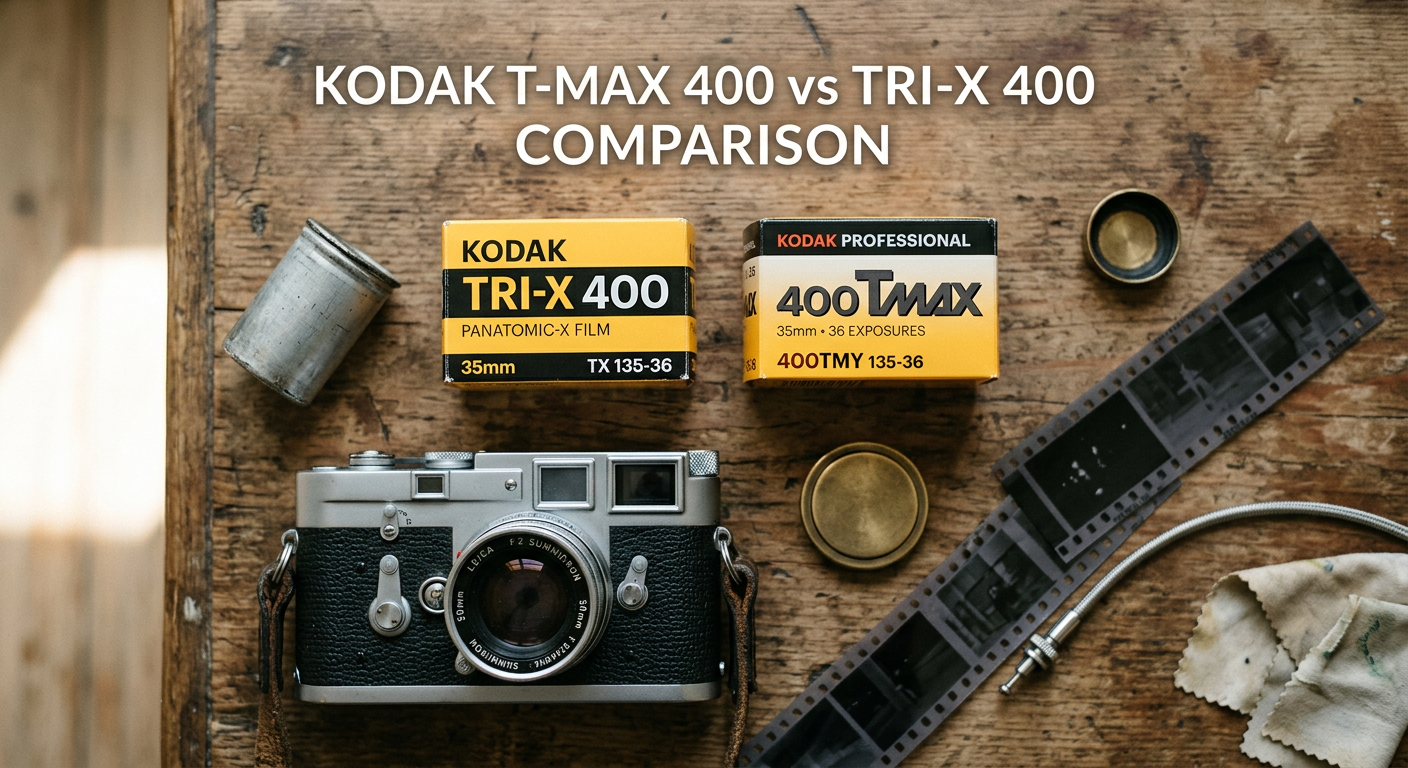
Walk into any film photography forum, and you will find passionate debates about Kodak T-Max 400 vs Kodak Tri-X 400. These two ISO 400 black and white films have been battling for supremacy for decades, and photographers have strong opinions about which one deserves a spot in their camera bag.
Both films come from Kodak, but they represent completely different approaches to black and white photography. Tri-X 400 uses traditional cubic-grain emulsion that delivers that classic, gritty look beloved by street photographers since 1954. T-Max 400 uses modern T-Grain technology for finer grain and exceptional sharpness that appeals to fine art and landscape photographers.
I have shot hundreds of rolls of both films over the years, and here is what I have learned: there is no wrong choice between these two. The right film depends entirely on the look you want to achieve and the type of photography you enjoy. This comprehensive comparison will help you understand the real differences so you can make an informed decision for your own work.
Quick verdict: Choose Tri-X 400 if you want classic character and forgiving exposure latitude. Go with T-Max 400 if you prioritize fine grain, maximum sharpness, and a clean, modern aesthetic.
Kodak T-Max 400 vs Kodak Tri-X 400: Quick Comparison
| Product | Specifications | Action |
|---|---|---|
 Kodak Tri-X 400 (400TX) Kodak Tri-X 400 (400TX) |
|
Check Latest Price |
 Kodak T-Max 400 Kodak T-Max 400 |
|
Check Latest Price |
The table above shows the key differences at a glance. Tri-X offers traditional grain structure with classic character, while T-Max delivers modern technology with cleaner results. Let me break down what these differences mean in real-world shooting.
Kodak Tri-X 400: The Classic Choice
Pros
- Legendary classic grain structure
- Forgiving exposure latitude
- Pushes to EI 3200+
- Handles abuse well
- 50+ years of proven performance
Cons
- More visible grain than T-Max
- Expired film gets blotchy
- Higher price for students
Tri-X 400 holds a special place in photography history. Kodak introduced this film in 1954, and it quickly became the go-to choice for photojournalists, street photographers, and documentary photographers. The legend of Tri-X grew through iconic images from photographers like Sebastiao Salgado, Don McCullin, and countless others who trusted this film in demanding situations.
What makes Tri-X special is its cubic-grain emulsion. Traditional silver halide crystals form in round, cubic shapes that scatter light in distinctive ways. This creates the classic grain structure that gives Tri-X its recognizable character. The grain is visible but smooth, adding texture rather than distraction to images.

I find Tri-X incredibly forgiving in the field. The exposure latitude is exceptional, meaning you can miss your exposure by a stop or two and still get usable results. This makes Tri-X an excellent choice for cameras without accurate light meters or for situations where lighting changes rapidly. Many photographers rate Tri-X at EI 200-250 for shadow detail or push it to EI 800-1600 for low light work.
The contrast rendering of Tri-X tends toward the dramatic side. Mid-tones compress slightly, while blacks go deep and highlights can block up quickly. This creates punchy, impactful images that work beautifully for street photography and documentary work. For portraits, Tri-X adds character and grit that can elevate environmental portraits.
Push processing Tri-X is where this film truly shines. I have pushed Tri-X to EI 3200 and even 6400 with acceptable results. The grain increases substantially, but the character remains intact. Many photographers actually prefer the pushed look, embracing the increased grain as part of the aesthetic.
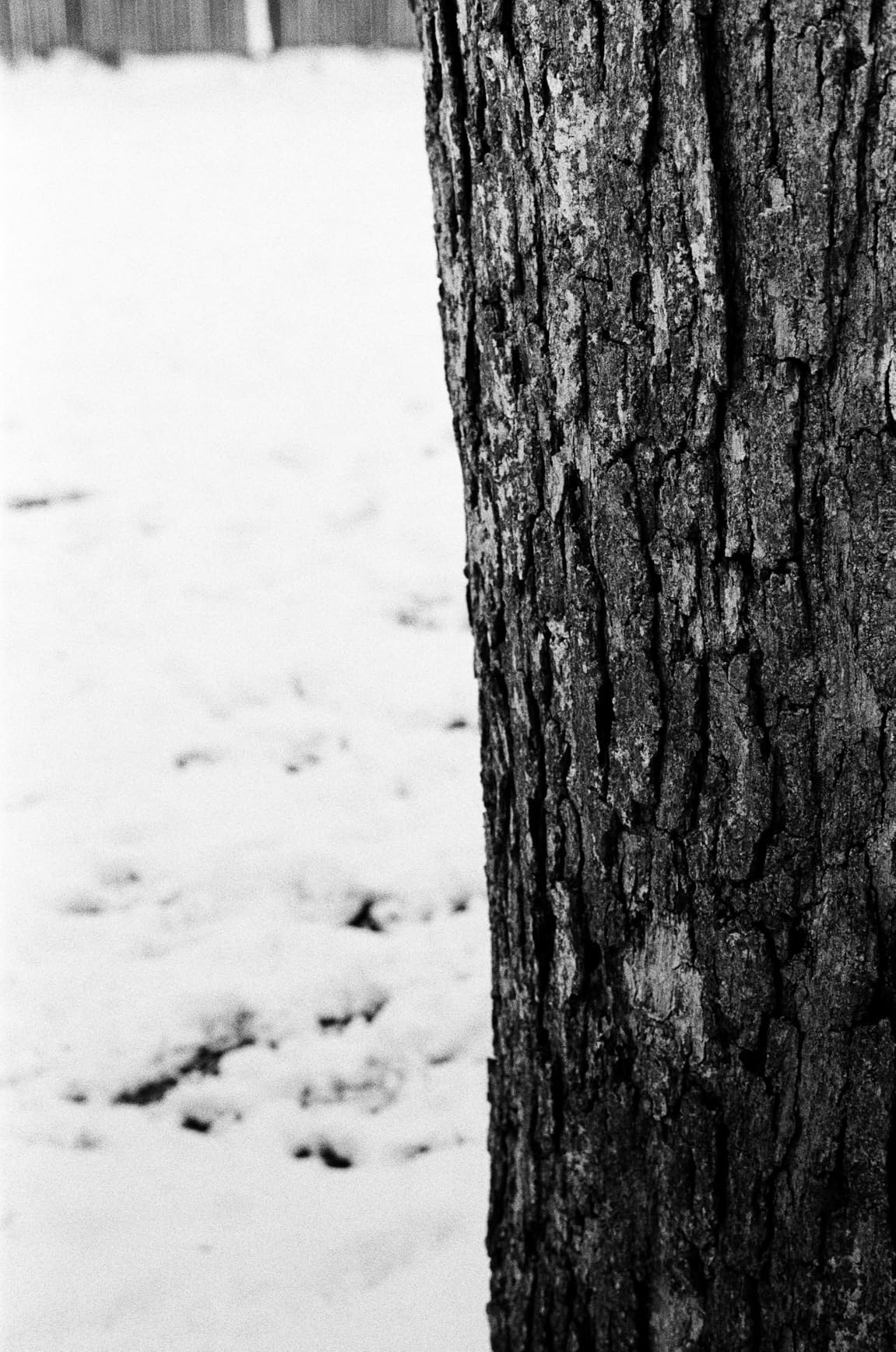
Development flexibility is another Tri-X advantage. This film responds beautifully to a wide range of developers, from classic D-76 to Rodinal. Each developer brings out different characteristics, allowing photographers to fine-tune their results. Kodak D-76 delivers normal contrast and good shadow detail, while Rodinal increases acutance and grain visibility.
For beginners, Tri-X offers a gentle learning curve. The forgiveness of this film means mistakes are less punishing, and the classic aesthetic looks good even with imperfect technique. With over 900 reviews on Amazon and a 4.5-star rating, the community consensus confirms what experienced photographers have known for decades: Tri-X is a reliable workhorse.
The main drawbacks are the visible grain (which some photographers actually prefer) and the fact that expired Tri-X can develop blotchy, uneven results. Fresh film is essential for consistent results.
Kodak T-Max 400: The Modern Alternative
Pros
- World's sharpest 400-speed B&W film
- Finest grain at ISO 400
- Push to EI 1600
- Clean modern aesthetic
- Exceptional shadow detail
Cons
- Less forgiving than Tri-X
- Can look too clinical
- Limited availability
- Higher price point
Kodak developed T-Max 400 as a modern alternative to traditional black and white films. The key innovation is T-Grain technology, which uses tabular (flat) silver halide crystals instead of the traditional cubic shape. These flat crystals pack more efficiently, allowing for finer grain and better light absorption at the same ISO rating.
The result is what Kodak claims is the world’s sharpest 400-speed black and white film. I have to agree with this assessment. T-Max 400 delivers exceptional detail and acutance that makes images pop with clarity. The grain is so fine that it becomes nearly invisible at normal print sizes, giving T-Max a clean, modern look that differs markedly from Tri-X.
T-Max excels at maintaining subject detail in prints at higher degrees of magnification than conventional films. If you plan to make large prints or crop heavily, T-Max preserves detail that would be lost in the grain structure of traditional emulsions. This makes T-Max particularly well-suited for landscape photography, architectural work, and any situation where fine detail matters.
The tonal rendering of T-Max is more linear than Tri-X. Instead of the dramatic contrast curve, T-Max delivers smooth tonal transitions from shadows to highlights. Shadow detail opens up beautifully, and highlights retain information longer before blocking up. This wider dynamic range gives photographers more flexibility in post-processing, whether scanning or darkroom printing.
Push processing T-Max works well up to EI 1600, though not quite as gracefully as Tri-X at extreme speeds. The fine grain stays relatively clean even when pushed, maintaining sharpness where Tri-X would become noticeably grainier. For most photographers, the push capability of T-Max is more than sufficient for low-light situations.
The main criticism of T-Max is that it can look too perfect. Some photographers find the clean, sharp aesthetic clinical compared to the character-rich output of Tri-X. If you are seeking that classic black and white look with visible grain and dramatic contrast, T-Max may feel sterile by comparison.
T-Max does demand more precise exposure than Tri-X. The exposure latitude is narrower, so metering errors are more visible in the final results. This makes T-Max less forgiving for beginners or situations with rapidly changing light.
With a 4.8-star rating on Amazon, users consistently praise the sharpness and fine grain. The main complaints focus on limited availability and higher pricing compared to some alternatives.
Kodak T-Max 400 vs Kodak Tri-X 400: Head-to-Head Comparison
Grain Structure
The fundamental difference between these films comes down to grain technology. Tri-X uses traditional cubic-grain emulsion with round silver halide crystals. These crystals scatter light as they absorb it, creating the visible grain pattern that gives Tri-X its character. The grain is smooth and organic, adding texture without appearing harsh.
T-Max uses T-Grain technology with tabular (flat) crystals. These flat crystals pack together more efficiently and absorb light more directly. The result is significantly finer grain that appears nearly invisible at normal viewing distances. For large prints or heavy cropping, T-Max maintains detail where Tri-X grain becomes more apparent.
Winner: T-Max 400 for fine grain and technical image quality. Tri-X wins for photographers who want visible grain as part of their aesthetic.
Contrast and Tonal Range
Tri-X renders with higher inherent contrast. The tonal curve compresses mid-tones while delivering deep blacks and bright highlights. This creates punchy, dramatic images that work beautifully for street photography and documentary work. The contrast can be managed through exposure and development, but the default character leans toward the dramatic.
T-Max delivers a more linear tonal response with smoother transitions between tones. Shadow detail opens up more, and highlights retain information longer. This wider tonal range gives photographers more flexibility in post-processing and works well for scenes with challenging lighting ratios.
Winner: Tie – Tri-X for dramatic impact, T-Max for tonal flexibility and shadow detail.
Sharpness and Detail
Kodak positions T-Max 400 as the world’s sharpest 400-speed black and white film, and real-world testing supports this claim. The fine grain structure allows for exceptional acutance and detail resolution. Edge definition is crisp, and fine textures render with clarity.
Tri-X is no slouch in the sharpness department, but the visible grain structure can obscure fine detail at higher magnifications. Many photographers find this acceptable or even desirable, as the grain adds to the classic character of the images.
Winner: T-Max 400 for pure technical sharpness and detail retention.
Push Processing Capability
Both films push well, but they behave differently. Tri-X gains character when pushed, with grain increasing and contrast building. Many photographers push Tri-X to EI 1600 or even 3200, embracing the increased grain as part of the aesthetic. The film maintains usable results even at extreme speeds.
T-Max pushes cleanly to EI 1600 while maintaining its fine grain structure. The grain does increase, but not as dramatically as Tri-X. Beyond EI 1600, T-Max starts to struggle more than Tri-X. For most low-light situations, either film performs admirably when pushed.
Winner: Tri-X 400 for extreme push processing, T-Max for cleaner results at moderate push.
Exposure Latitude
Tri-X is legendary for its exposure latitude. This film handles overexposure and underexposure with remarkable grace. Rating it anywhere from EI 200 to EI 800 at box speed produces usable results. This forgiveness makes Tri-X excellent for cameras with questionable meters or rapidly changing lighting conditions.
T-Max has narrower exposure latitude. The film responds best when exposed accurately at box speed or slightly overexposed. Metering errors show more clearly in the final results, making T-Max less forgiving of mistakes.
Winner: Tri-X 400 for exposure forgiveness and latitude.
Price and Availability
Both films command premium pricing compared to color negative films. Tri-X typically costs slightly less than T-Max, though prices fluctuate based on availability. Tri-X benefits from broader distribution and is generally easier to find in stock at major retailers.
T-Max can suffer from availability issues, with stock shortages occurring periodically. Both films are available in 35mm, 120 medium format, and sheet film sizes, though availability varies by format.
Winner: Tri-X 400 for slightly better pricing and availability.
Can You Develop Tri-X and T-Max Together?
This is one of the most common questions in film photography forums. The short answer: technically yes, but with compromises.
Both films can be developed in common developers like D-76 or X-Tol, but their development times differ. Tri-X typically requires 6-7 minutes in D-76 (1:1), while T-Max needs 7-8 minutes. Developing them together means choosing a time that works for both, which means one film will not receive optimal development.
If you develop together, use a time between the two recommendations. Tri-X will be slightly underdeveloped (less contrast, lower effective speed), and T-Max will be slightly overdeveloped (more contrast, potentially blocked highlights). For critical work, develop separately.
Verdict: Which Film Should You Choose?
The Kodak T-Max 400 vs Kodak Tri-X 400 debate ultimately comes down to aesthetic preference and shooting style. Neither film is objectively better; they simply serve different purposes.
Choose Kodak Tri-X 400 If:
You want classic black and white character with visible grain and dramatic contrast. Tri-X excels for street photography, documentary work, environmental portraits, and any situation where you want images with soul and grit. The forgiving exposure latitude makes Tri-X perfect for cameras without accurate meters or for beginners learning black and white photography. If you enjoy pushing film to extreme speeds or want a film that has been battle-tested by photojournalists for over 60 years, Tri-X is your answer.
Choose Kodak T-Max 400 If:
You prioritize technical image quality with the finest grain and maximum sharpness available at ISO 400. T-Max works beautifully for landscapes, architectural photography, fine art work, and any situation where detail preservation matters. The clean, modern aesthetic suits photographers who want a clinical, precise look rather than classic character. If you make large prints, crop heavily, or need smooth tonal transitions and wide dynamic range, T-Max delivers.
My Recommendation
For most photographers starting their black and white journey, I recommend Tri-X 400 first. The forgiveness and classic aesthetic make it easier to learn with, and the results consistently look good even with imperfect technique. Once you master Tri-X, try T-Max to see if the cleaner, sharper look suits your vision better.
Many experienced photographers keep both films in their bags. I shoot Tri-X for street work and documentary projects where character matters, and T-Max for landscapes and fine art work where technical quality takes priority. The best approach is to experiment with both and develop your own preference based on the results you achieve.
Frequently Asked Questions
What is the difference between T-Max and Tri-X 400?
The main difference lies in grain technology. Tri-X 400 uses traditional cubic-grain emulsion with round silver halide crystals that create visible, classic grain structure. T-Max 400 uses T-Grain technology with tabular (flat) crystals that pack more efficiently, resulting in finer grain and higher sharpness. Tri-X delivers classic character with dramatic contrast, while T-Max provides a cleaner, more modern aesthetic with smoother tonal transitions.
Is Kodak T-Max discontinued?
No, Kodak T-Max 400 is still in production and readily available. However, Kodak T-Max P3200 was discontinued and later reintroduced, which sometimes causes confusion. T-Max 400 remains one of Kodak’s flagship black and white films alongside Tri-X 400.
When did Kodak Tri-X 400 come out?
Kodak introduced Tri-X 400 in 35mm and 120 formats in 1954, though earlier versions of Tri-X film date back to 1940. The film quickly became the standard for photojournalists and street photographers, a position it has maintained for over 70 years.
Which film has more grain: Tri-X or T-Max?
Tri-X 400 has more visible grain due to its traditional cubic-grain emulsion. The grain is smooth and organic, adding character to images rather than appearing harsh. T-Max 400 has significantly finer grain thanks to T-Grain technology, making grain nearly invisible at normal print sizes. Photographers seeking classic grain character should choose Tri-X, while those wanting the cleanest results should choose T-Max.
Can you develop T-Max and Tri-X together?
Technically yes, but with compromises. Both films can be developed in common developers like D-76 or X-Tol, but their development times differ (Tri-X: 6-7 minutes, T-Max: 7-8 minutes). Developing together means choosing a middle time, which results in one film being slightly underdeveloped and the other slightly overdeveloped. For critical work, develop each film separately at its optimal time.