
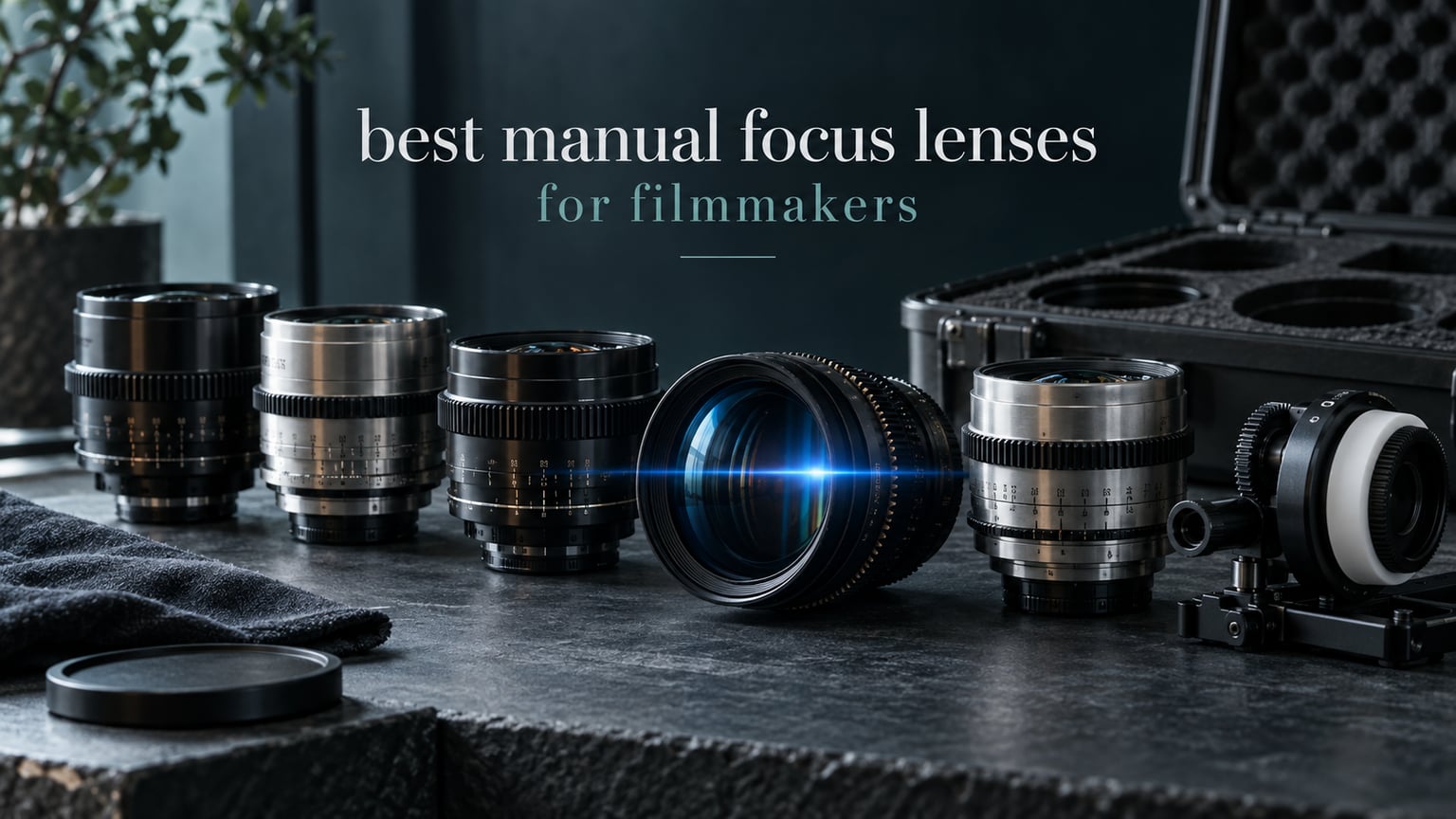
The best manual focus lenses for filmmakers are the ones that put focus decisions in your hands instead of a motor’s. A manual focus lens has no internal focusing motor at all. The only way to change focus is to rotate the focus ring by hand, which gives you continuous, repeatable control over a rack focus and lets you use fast, characterful glass that autofocus lenses simply cannot match. Twelve picks follow, plus the technique that decides whether manual glass works for you.
Here is the short version of why this matters. Cinema is not about keeping a static subject sharp. It is about deciding exactly when attention moves, and that decision happens at a specific rate you control. A geared focus ring turns that decision into a repeatable physical movement, which is the whole reason most cine primes ship without autofocus.
I have shot narrative work, documentary interviews and music videos on these glass types over the last several years, and the pattern holds: the lenses that earn a permanent place in a bag are the ones with even gearing, clear markings and a rendering you can live with in a grade. The ones that get sold after two months are the ones with stiff helicoids or a look that fights your footage.
If you are still building a kit for video work specifically, my guide to manual focus lenses for cinematic video goes deeper on look and flare. For general-purpose glass, the 12 best manual focus lenses roundup covers stills use in more depth, and the astrophotography roundup covers long-focus manual glass. This article stays on filmmaking.
Top 3 Picks for Best Manual Focus Lenses for Filmmakers in October

Meike 16mm T2.2 M43 Cine Prime
- 16mm T2.2 for Micro Four Thirds
- 32mm full frame equivalent
- Minimal focus breathing
- 0.8 MOD gears for follow focus

Rokinon 35mm T1.5 Cine DS Canon EF
- 35mm T1.5 full frame coverage
- 12 inch minimum focus
- Color matched DS series
- De-clicked aperture ring
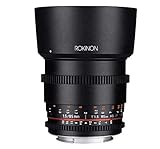
Rokinon 85mm T1.5 Cine DS Canon EF
- 85mm T1.5 full frame prime
- Clickless aperture
- Color matched DS series
- 8 blade iris bokeh
The Meike 16mm takes the top slot because it pairs the highest rating in the roundup with the largest review count at that rating, and it covers a focal length most kits are missing. On a Micro Four Thirds body it frames like a 32mm full frame lens, and 32mm is the working distance for most documentary and narrative coverage.
The Rokinon 35mm and 85mm form the pair most filmmakers reach for first, because both sit in the Cine DS line with matched gear positions and matched color. If your body takes Canon EF, buying both keeps your follow focus marks consistent across the set.
All 12 Best Manual Focus Lenses for Filmmakers in 2026
| Product | Specifications | Action |
|---|---|---|
| Meike 16mm T2.2 M43 Cine Prime |
|
Check Latest Price |
| Rokinon 35mm T1.5 Cine DS Canon EF |
|
Check Latest Price |
| Rokinon 85mm T1.5 Cine DS Canon EF |
|
Check Latest Price |
 Zeiss Loxia 35mm f/2 Sony E Zeiss Loxia 35mm f/2 Sony E |
|
Check Latest Price |
 Sirui Night Walker 35mm T1.2 Sony E Sirui Night Walker 35mm T1.2 Sony E |
|
Check Latest Price |
 Sirui 50mm 1.33x Anamorphic Sony E Sirui 50mm 1.33x Anamorphic Sony E |
|
Check Latest Price |
 Sirui 35mm 1.33x Anamorphic M43 Sirui 35mm 1.33x Anamorphic M43 |
|
Check Latest Price |
 Meike 35mm T2.2 M43 Mini Prime Meike 35mm T2.2 M43 Mini Prime |
|
Check Latest Price |
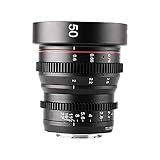 Meike 50mm T2.2 M43 Mini Prime Meike 50mm T2.2 M43 Mini Prime |
|
Check Latest Price |
 TTArtisan 35mm f/1.4 Canon RF TTArtisan 35mm f/1.4 Canon RF |
|
Check Latest Price |
 TTArtisan 50mm f/2 Nikon Z TTArtisan 50mm f/2 Nikon Z |
|
Check Latest Price |
 7artisans 35mm T2.0 L-Mount 7artisans 35mm T2.0 L-Mount |
|
Check Latest Price |
Every lens below is fully manual. Where a listing gives an f-stop rather than a T-stop, I have kept the manufacturer’s own figure rather than converting it, because the conversion is not linear and a guessed number would be worse than the printed one.
1. Meike 16mm T2.2 for Micro Four Thirds – The Wide Angle Gap Filler
Pros
- Sharp from corner to corner
- Minimal focus breathing for smooth pulls
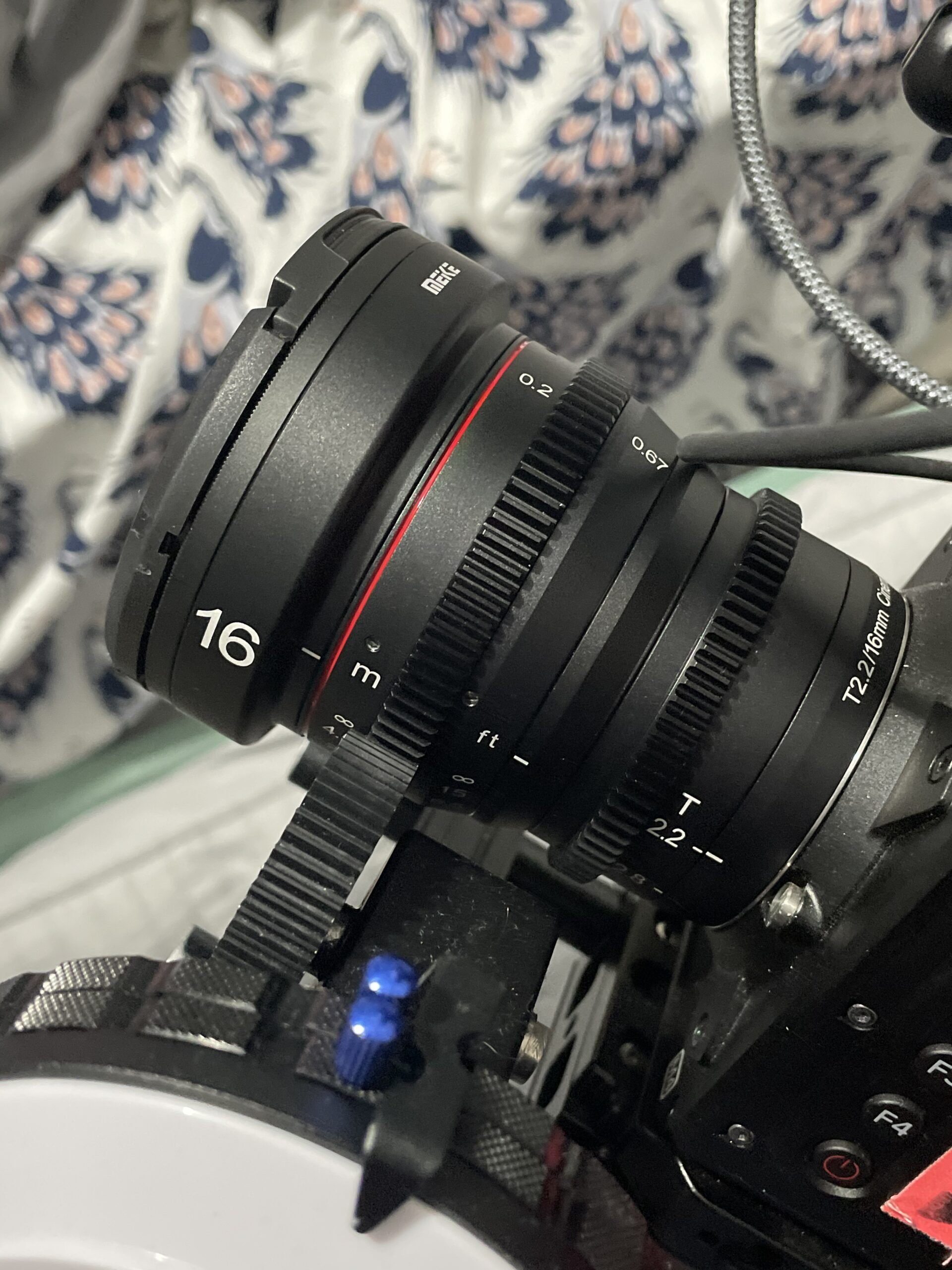
- All metal build with 0.8 MOD gears
- Matches other Meike cine primes
- 0.6 kg with a 61 degree field of view
Cons
- Fixed T2.2 aperture
- Needs a camera setting change to release without lens
- No stabilization
Wide angles are where most small kits are weakest, and the Meike 16mm fixes that without a body change. On Micro Four Thirds it delivers a 32mm full frame equivalent field of view, which is the framing you get inside a small room, in a car, or following someone through a doorway.
The 61 degree angle of view is the number to sit with. It is wide enough to hold two people in a tight interior and tight enough that edges do not turn into a funhouse effect. T2.2 is not a fast T-stop, but on this sensor size the exposure math is generous.
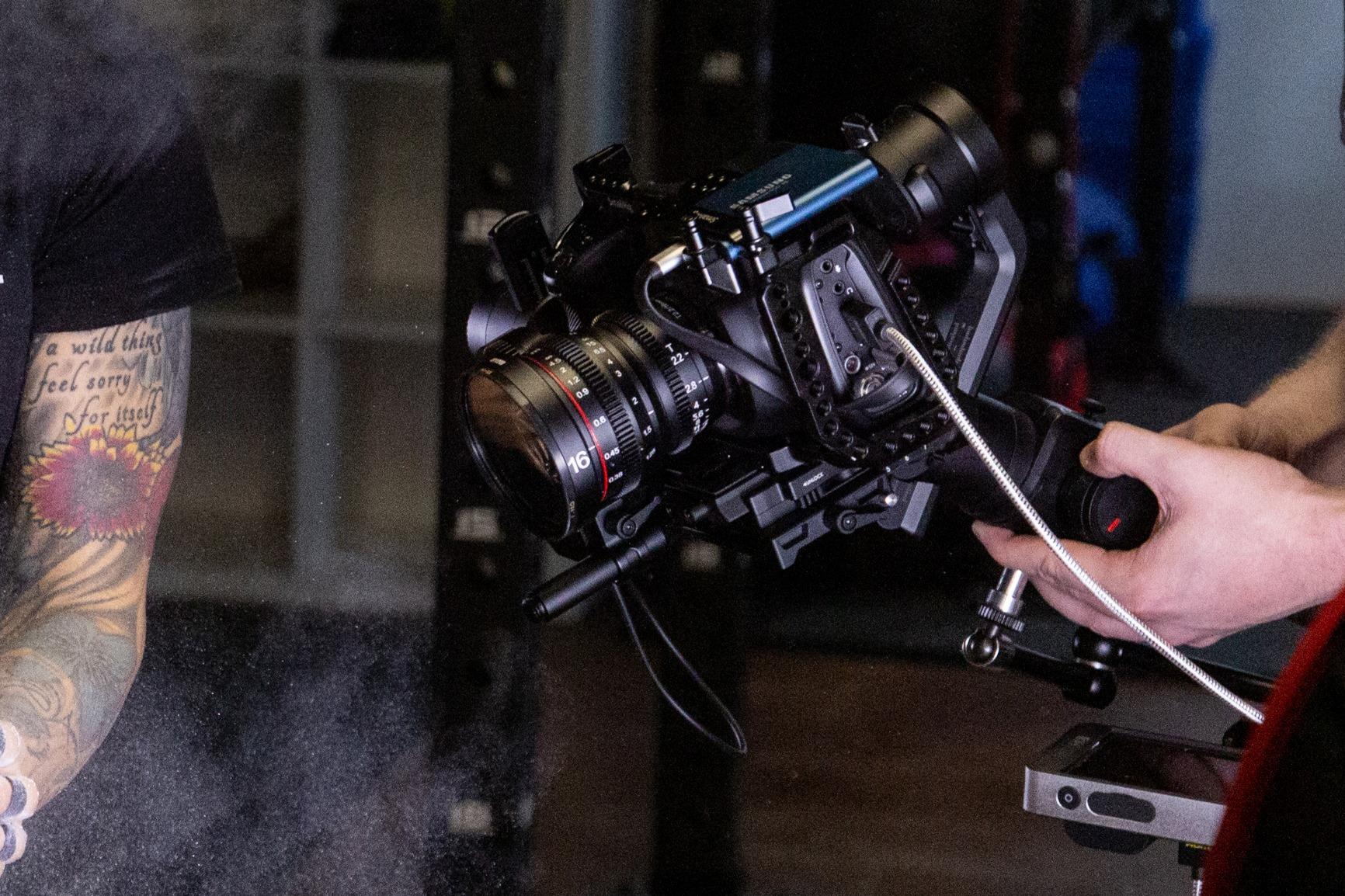
Reviewers single out minimal focus breathing as the headline feature here, and on a lens this wide it matters more than usual. Breathing shows up as a change in field of view during a pull, and a wide lens exaggerates that shift. This one holds steady enough that you can rack from foreground to background without the frame pumping.
The 13 elements in 10 groups produce round, smooth bokeh rather than the polygonal highlights you get from a low blade count. Reviewers repeatedly describe corner-to-corner sharpness, which is the practical difference between a lens you can put on a wide shot and one you cannot.
How it performs on a focused pull
The focus throw is geared at 0.8 MOD, the cinema standard, so it drops straight onto most follow focus units without shimming. That consistency is what lets you mark your distances once and reuse them across lenses in the same series.
You will need to set your camera to release without lens, or to manual exposure mode, because the lens passes no electronic contacts. It is a thirty-second change per body and worth making before a shoot day rather than during one.
Where it will frustrate you
The T2.2 aperture is fixed. There is no iris ring, which means no exposure control through the lens and no ability to change depth of field creatively mid-shot. If you grade for contrast, that constraint is easier to live with than it sounds.
It also carries no stabilization, so stabilized glass and stabilized bodies are your only options on a moving platform. On a gimbal with the camera balanced properly, that is rarely the deciding factor.
2. Rokinon 35mm T1.5 Cine DS for Canon EF – The All-Rounder
Pros
- Smooth consistent focus pulls
- Color matched across the DS series
- Sharp from T2.0 onward
- Great low light performance
- Double sided aperture markings
Cons
- Soft wide open at T1.5
- Heavy for a 35mm
- Infinity mark sits just before the hard stop
There is a reason the 35mm keeps appearing at the top of filmmaker shortlists. It handles a two-shot, a walk-and-talk and a wide establishing insert without changing lenses, and at T1.5 it sees into evening interiors that stop other glass down.
The Cine DS line uses one gear position across the whole range, so the focus ring and iris ring sit in the same physical spot on every lens you own from this series. That is the difference between a matched set and a bag of glass, and it is why I keep coming back to this line for narrative work.
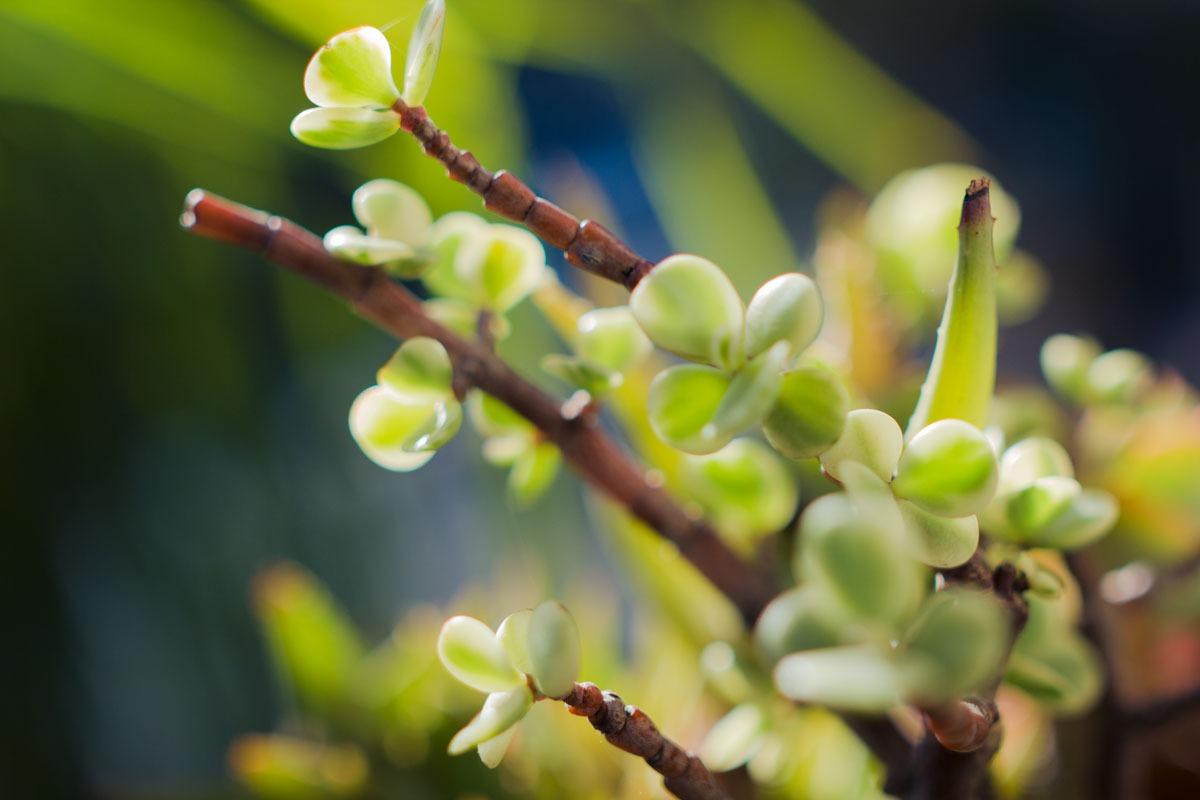
Reviewers note that the sharpest results start around T2.0 rather than at the T1.5 wide-open extreme. That is normal for fast cine primes and worth planning for. Shoot your most demanding interior work at T2.0 and keep T1.5 in reserve for the moments you need the extra stop.
The 12 inch minimum focus distance is genuinely useful for a 35mm. You can get close to a subject without a separate macro lens, which matters for detail inserts, product work and food.
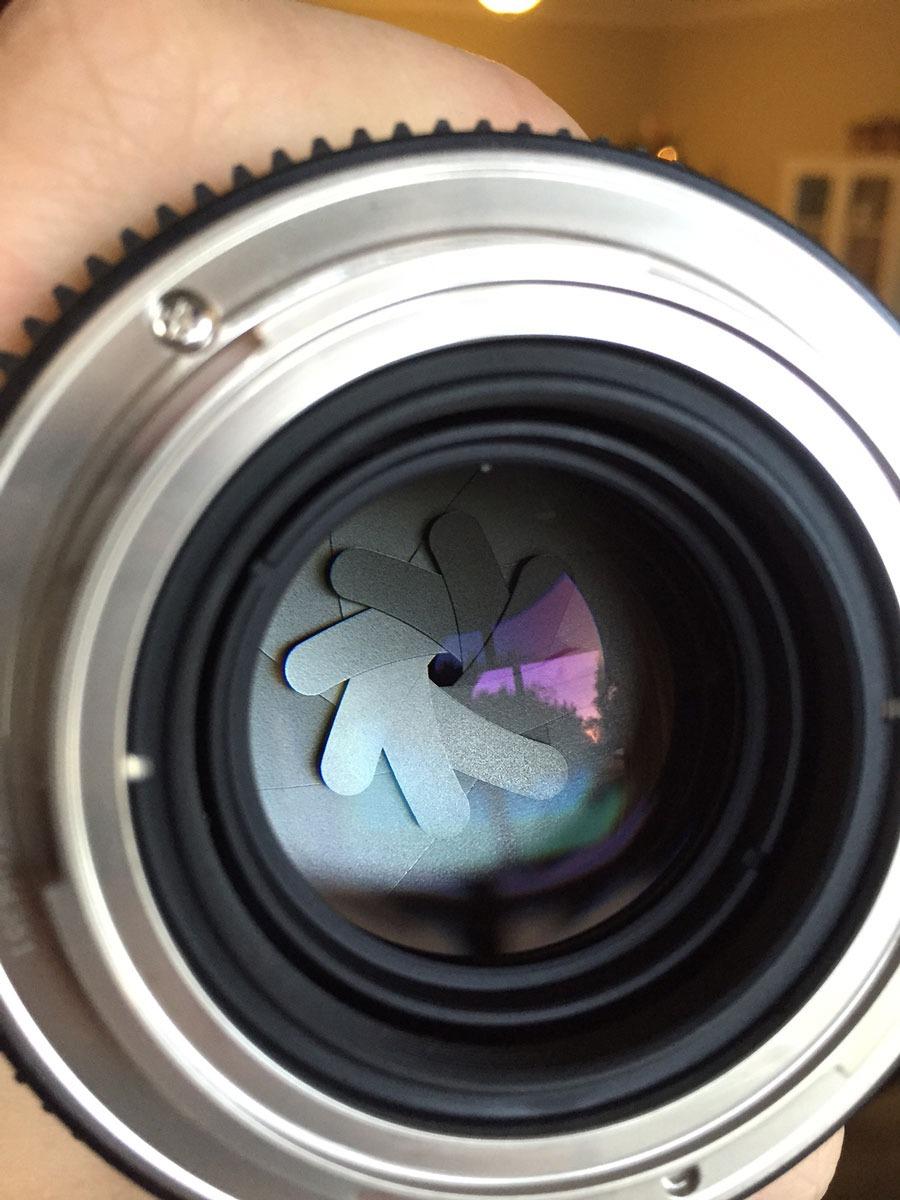
How it performs on a focused pull
The de-clicked aperture ring lets you make exposure changes mid-shot without a visible jump, which removes one of the two biggest sources of amateur-looking footage. Pair it with a follow focus and the two hardest moves in manual filmmaking become smooth.
Color matching is the quieter win. If you shoot 35mm, 50mm and 85mm from the DS line together, you can cut between focal lengths without a grade shift, which saves real time in the edit.
Where it will frustrate you
At 1.6 lbs it is heavy for a 35mm, and on a long handheld or steadicam day you will feel it. Balance it forward on a gimbal and the problem mostly disappears.
Be aware that the infinity mark sits slightly before the physical stop. Glance past it and you lose sharpness without noticing. Check the actual stop rather than trusting the printed dot, especially on a body with a shallow infinity focus.
3. Rokinon 85mm T1.5 Cine DS for Canon EF – Compression and Low Light
Pros
- Excellent image quality for the tier
- Color matched with other DS lenses
- Strong low light performance at T1.5
- Smooth focus and aperture rings
- 8 blade iris bokeh
Cons
- No electronic contacts
- Sharpest around T2.0 rather than wide open
- Heavy over long handheld days
An 85mm changes the feel of an interview more than any other focal length. The compression flattens facial features, separates a subject from a busy background and makes a handheld shot look steadier than it was.
It is a long lens for run and gun work, and the one I would still buy first for documentary. Interview framing, cutaways, and anything shot from a fixed position across a room all benefit from the compression. Just not two people in a small space.

The 28.3 degree full frame angle of view tells you how tight this is. A head-and-shoulders interview is comfortable, a full body is a step back, and a wide group is out of reach. Know that before the blocking meeting rather than after.
At 1.3 lbs it is the lighter of the two long Rokinons here, and the T1.5 aperture gives it real low light reach. Reviewers describe strong results in available light, which is exactly where documentary work happens.

How it performs on a focused pull
Long lenses make focus critical because depth of field is thin at that focal length. The gearing here is smooth enough that a slow rack from subject to background reads as intentional rather than hesitant.
Because the DS series shares gear positions with the 35mm, your marked distances carry straight over. A follow focus marked for one lens works on the other, which saves a full setup pass on a multi-camera day.
Where it will frustrate you
The 3.6 ft minimum focus is tighter than the 50mm anamorphic’s 0.85 m but far short of the Sirui Night Walker at 0.4 m. For a lens people expect to be intimate with, that changes which close shots you can plan without a different lens.
There are no electronic contacts, so no aperture data reaches the body. That is fine on a manual exposure workflow and a nuisance on a hybrid body you also use for stills.
4. Zeiss Loxia 35mm f/2 for Sony E – The Reference Manual Prime
Pros
- Smooth extended focus throw
- De-clickable aperture with tool included
- Transmits aperture data to the body
- Weather sealed mount with rubber gasket
- Distortion free rendering
Cons
- Highest outlay in the roundup
- Tight mount with no grip area
- Corner sharpness needs stopping down
The Loxia is the lens I hand to someone who already knows what they are doing. Everything about it is deliberate: an all metal barrel, a long extended focus throw, a clickless aperture that can be de-clicked with the supplied tool, and a rendering that stays out of the way of your grade.
It also does something the cheaper manual primes here do not. It transmits aperture data to the body, so it works in aperture priority and records correctly in metadata. On a hybrid body that shoots stills and video, that removes a genuine annoyance.

The 0.3m minimum focus distance is excellent for a full frame 35mm, and the 54.06 degree angle of view is close to neutral. The 340g weight is real for a lens this size but nothing like the cine primes in this list.
Build quality is the story here. Reviewers describe a precision feel that no budget lens in this roundup matches, along with a focus ring frequently called the smoothest in its class.

How it performs on a focused pull
The extended throw means small hand movements produce tiny focus shifts, which is exactly what you want on a long lens with thin depth of field. It also means a rack takes longer, so plan marks rather than reacting.
The de-clickable aperture ring, operated with the included tool, gives you continuous exposure control without losing the click stops for stills work. Very few lenses in this price class offer both.
Where it will frustrate you
The outlay here is the highest in the roundup, and that gap buys feel and finish rather than measurable sharpness. If your budget is the constraint, this is the one to stretch last.
The mount is tight with no grip area, which makes lens changes slow and occasionally frustrating. Corner sharpness also wants stopping down to f/4 or narrower before the edges fully resolve.
5. Sirui Night Walker 35mm T1.2 for Sony E – The Low Light Specialist
SIRUI Night Walker 35mm S35 Manual Focus Cine Lens, T1.2 Large Aperture Lens for E Mount Cameras, FX30, ZVE-10, A6500, A6600 (MS35E-B, Black)
Pros
- Exceptional T1.2 for night work
- Sharp wide open with minimal breathing
- Round bokeh from 12 blades
- Lightweight cine build at about 500g
- Weather sealed mount
Cons
- Super 35 and APS-C coverage only
- Limited focal length options in the series
- Slight corner softening at full aperture
T1.2 is a genuinely different category of aperture. It is a stop and a half faster than a T2.1, and on a night exterior that is the difference between working with available light and lighting the scene.
This lens covers APS-C and Super 35, so it is built for the Sony bodies that record with a cropped area anyway. If you shoot full frame video and need edge-to-edge coverage, this is not the lens for that body.
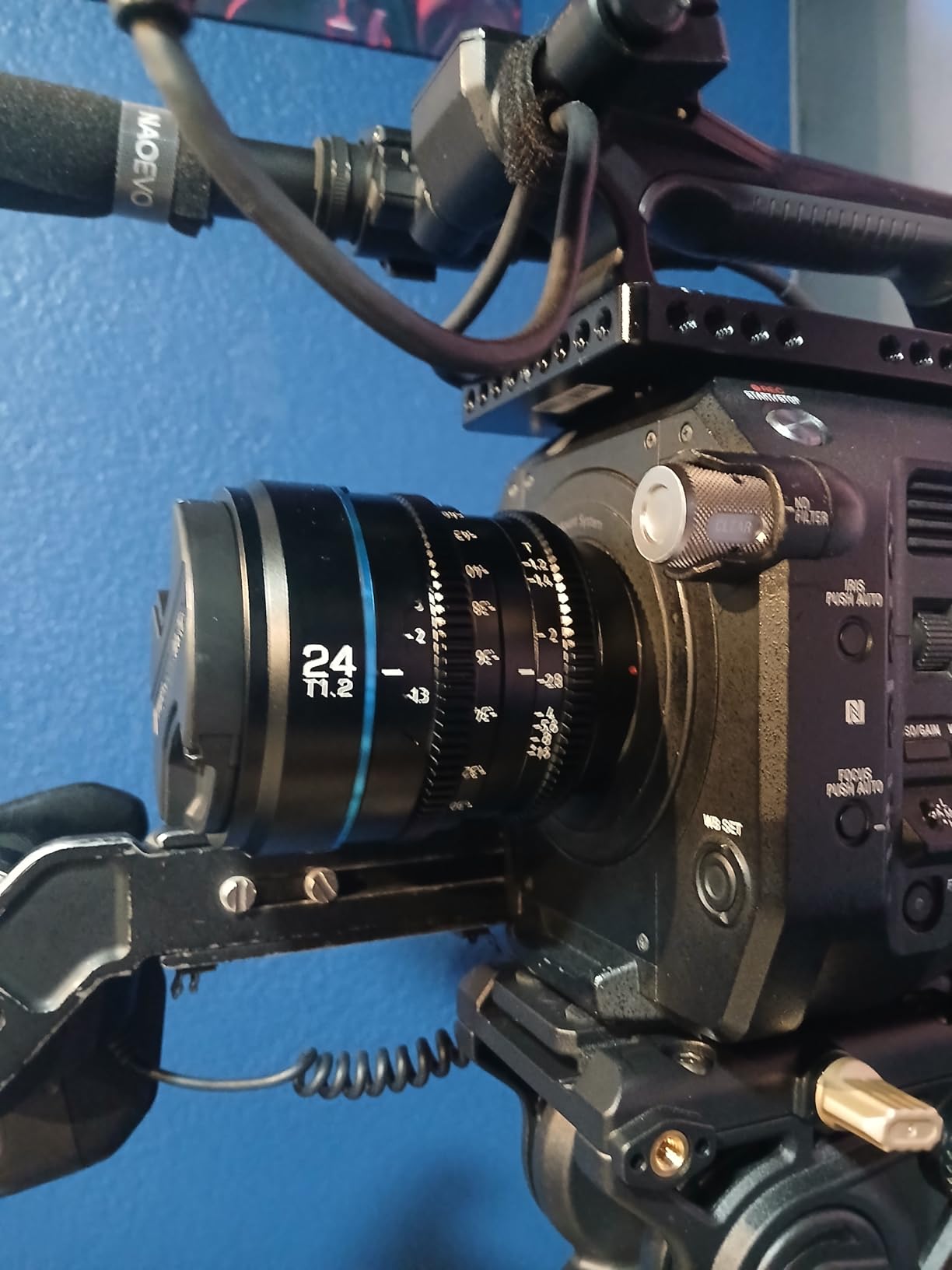
The 270 degree focus rotation is the longest throw among the fast Sony E options here, and that is a feature. At 500g the lens is light for a T1.2 prime, so a long throw on a light body is a good trade for precision.
Reviewers highlight the 12 blade aperture for round bokeh, and the 0.4m minimum focus means the lens goes closer than most 35mm primes manage. That combination suits intimate night work and close-up coverage.
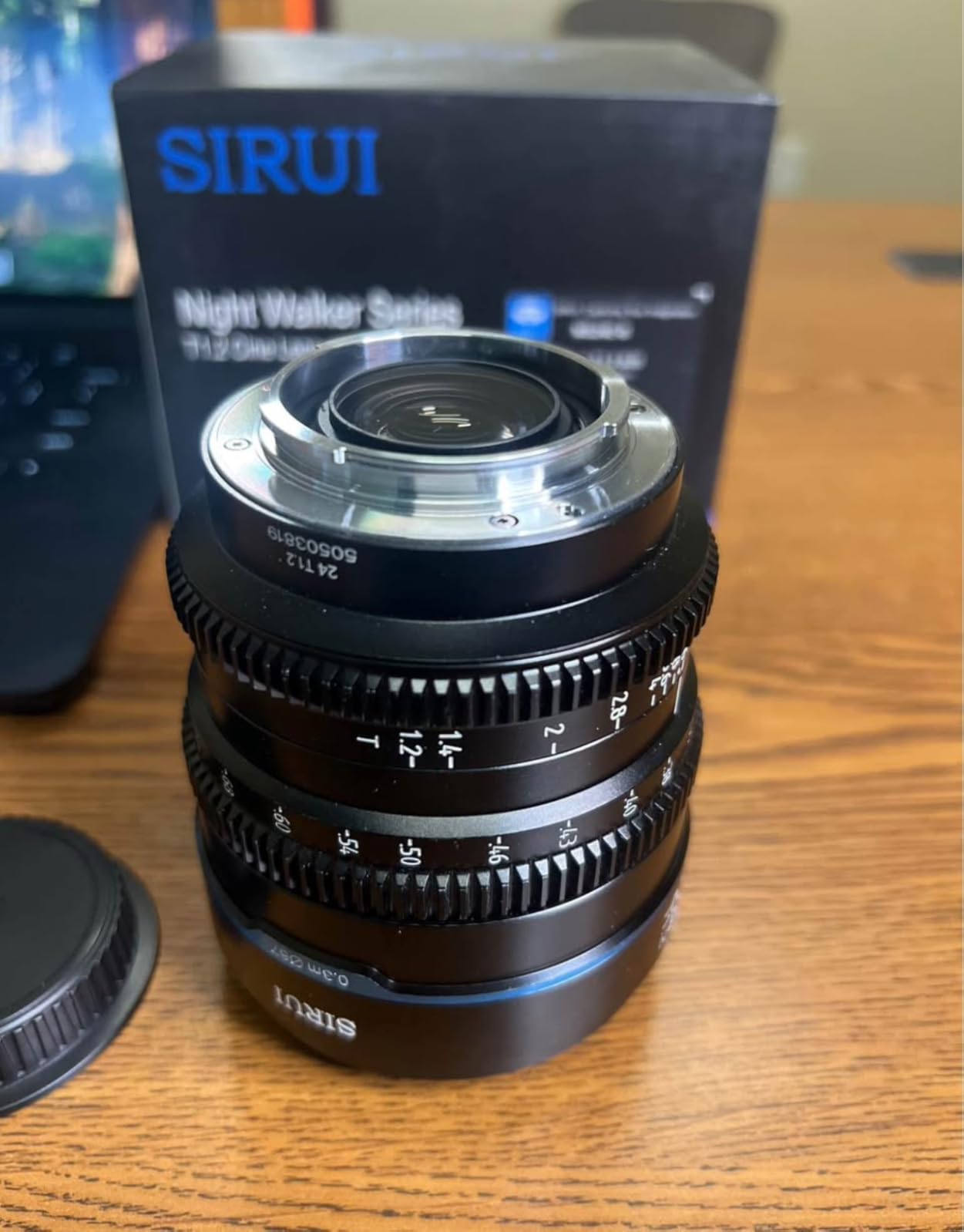
How it performs on a focused pull
Minimal focus breathing on a lens this fast is more valuable than the headline number suggests. When you rack at T1.2 with a thin plane of focus, any breathing shows up as a visible frame change in the middle of the move.
The 77.6 mm focus ring diameter gives you real purchase even with gloves on, which matters on a night shoot where your hands are cold and the focus action has to stay smooth.
Where it will frustrate you
The coverage limit is the main constraint. Super 35 and APS-C only means corners fall off on a full frame sensor, and there is no full frame version in this listing to switch to.
The focal length range in the series is limited too, so matching it with a second lens from the same line may mean a different aperture and a slightly different rendering. Plan for a matched look across a set rather than an identical set.
6. Sirui 50mm 1.33x Anamorphic for Sony E – Oval Bokeh and Blue Flare
Pros
- Distinctive cinematic anamorphic rendering
- Blue horizontal flares
- All aluminum construction
- Smooth focus and aperture rings
- Useful close focus for an anamorphic
Cons
- Soft wide open at f/1.8
- 0.85 m minimum focus
- Long focus rotation that can shake the frame
Anamorphic glass is a look, not a specification. The 1.33x squeeze widens the horizontal field of view by roughly a third, and the same optics that produce the wider frame also produce oval bokeh and horizontal flare streaks.
On an APS-C Sony body, a 50mm anamorphic frames like a wider spherical lens would. That is a useful trick: the same physical lens gives you two different looks depending on whether you shoot it on a cropped sensor or in a 16:9 crop.
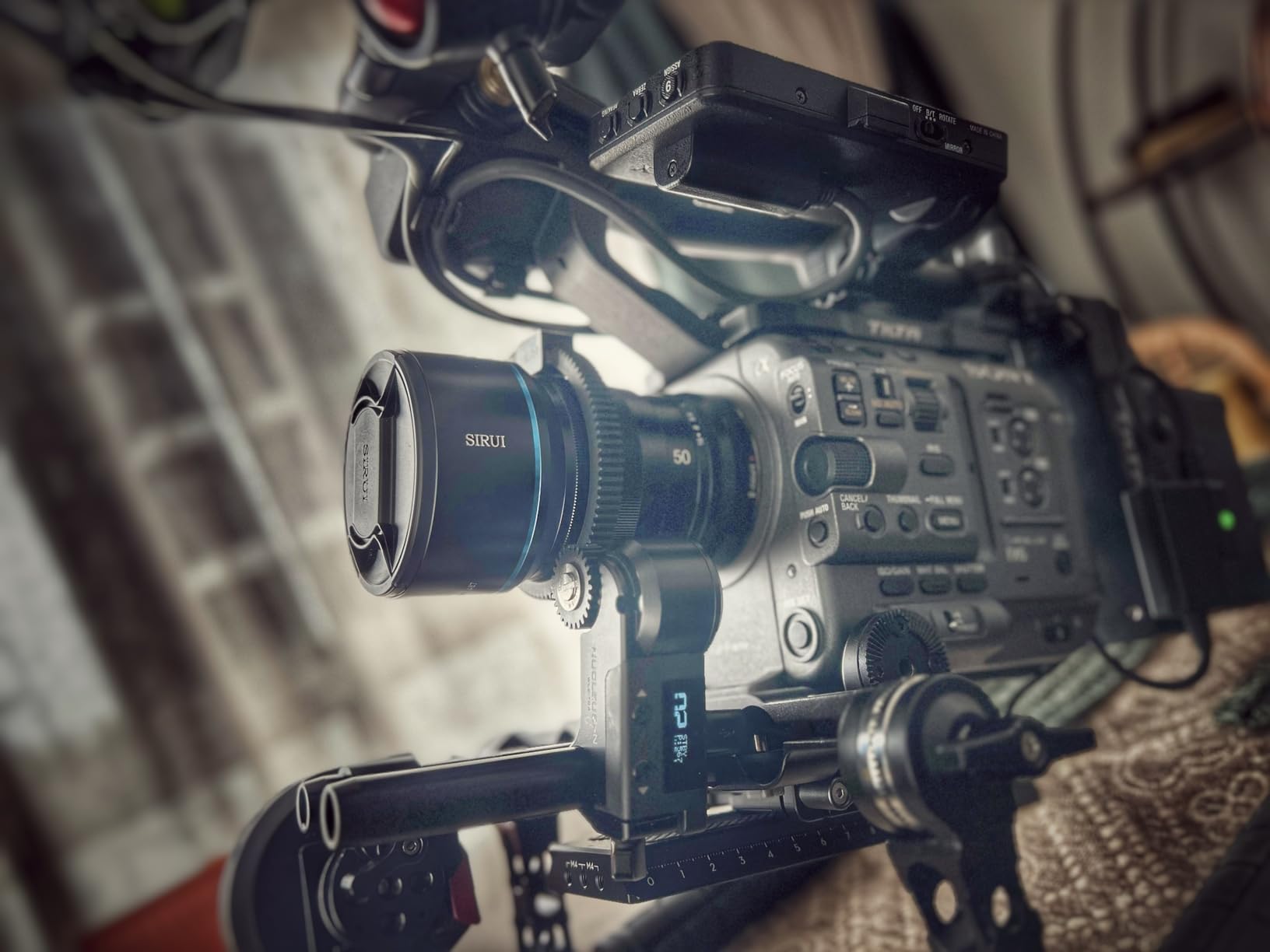
The German Schott glass elements and multi-layer coating are the spec worth knowing about, because coating quality is what decides whether highlights flare in a controlled way or blow out into a mess. Reviewers describe the blue flares as the defining feature rather than a defect.
At 560g it is not a light lens, but the size is modest for an anamorphic. The 106.6 mm length and 68.2 mm diameter fit a small rig without needing a filter stage larger than a standard one.

How it performs on a focused pull
The 143.6 degree focus rotation is the trap here. A full half-circle of hand movement for an infinity-to-close pull makes fine adjustment harder than it needs to be, and beginners often introduce visible shake at the end of a rack.
Mount it on a follow focus and the long throw becomes an advantage, because the geared hand replaces your fingertips. This is a lens that rewards a support rig more than most.
Where it will frustrate you
It is soft wide open at f/1.8. For a lens this characterful that is a fair trade, but if you need a razor sharp night exterior you will be stopping down and giving up two stops.
Close focus stops at about 0.85 m, so tight close-ups are out of reach. The oval bokeh also means any out-of-focus face becomes an ellipse, which some clients read as a mistake.
7. Sirui 35mm 1.33x Anamorphic for Micro Four Thirds – Wide Anamorphic Entry
SIRUI 35mm Anamorphic Lens F1.8 1.33X APS-C Cinema Lens for M4/3 Mount(SR-35M)
Pros
- Strong anamorphic flares and oval bokeh
- Solid tank-like construction
- Sharp once stopped down to f/2.8
- Compact for an anamorphic lens
- Gear rings fit a follow focus
Cons
- 1 meter minimum focus limits close work
- Squeeze reads subtler on Micro Four Thirds
- One report of aperture blade failure
This is a straightforward route into an anamorphic look on a Micro Four Thirds body, and for music videos, title sequences and stylized commercial work the 2.4:1 framing without cropping is the whole point.
The 46 degree angle of view is wider than the Sirui anamorphic on Sony E, so it covers interiors and small rooms that a 35mm struggles with. On M43 the effective field of view is wider still, which is why the squeeze reads as more subtle than on full frame.
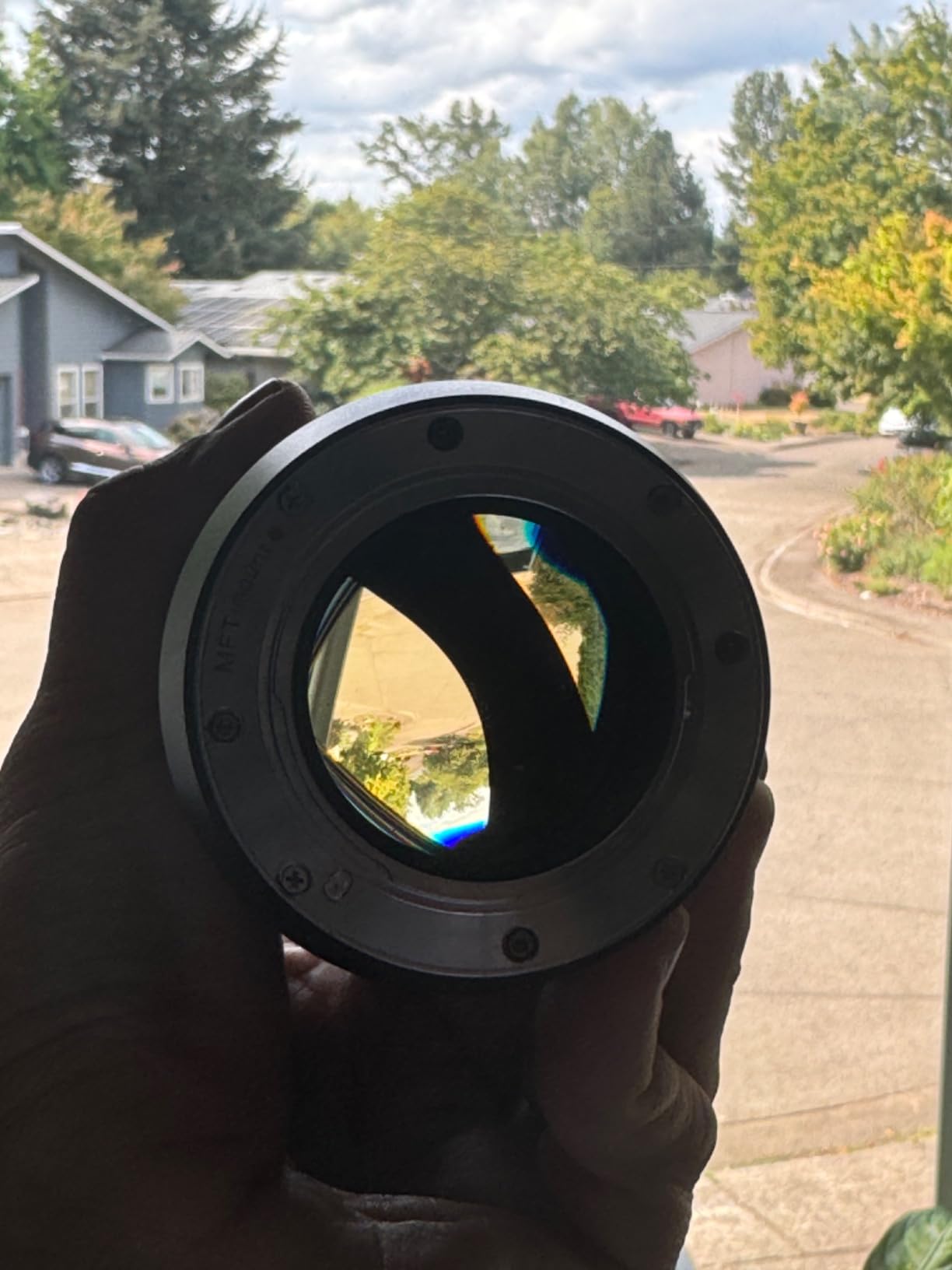
Stopping down to f/2.8 is where reviewers report the image resolving properly. Wide open it is soft, and the blue flare coating does its work in a fairly obvious way, so this is a look lens rather than a low light one.
The heavy metal construction is the first thing you notice on a matte box. At 1.6 lbs on a small M43 body it is a noticeable weight, and the balance point sits further forward than on a spherical prime of the same class.
How it performs on a focused pull
Lens data lists optical stabilization on this model. In practice stabilization does nothing for a manual focus lens during a focus pull, so treat it as a body feature rather than a lens benefit here.
The gear rings are the part that matters for filmmaking, and they are present and functional. A follow focus fits without an adapter, which puts this lens in the same workflow as the spherical primes in this roundup.
Where it will frustrate you
The 1 meter minimum focus is the hardest limit. Anamorphic glass is already limited close, and one meter removes the tight framing options a spherical 35mm gives you.
One reviewer reports aperture blade failure after a few months of use, and a separate mention of stiff mounting on some Blackmagic bodies. If you shoot on a compact cinema camera, test the fit before you build a rig around it.
8. Meike 35mm T2.2 for Micro Four Thirds – The Matched M43 Standard
Meike 35mm T2.2 Mini Manual Focus Wide-Angle Cinema Lens for M43 Micro Four Thirds MFT Mount Cameras BMPCC 4K ZCAM E2
Pros
- Zero focus breathing across the throw
- Round bokeh at every aperture
- All metal construction
- Well placed gear rings
- Matched to the Meike 16mm
Cons
- Fixed T2.2 aperture
- One report of soft focus on a GH5
- Heavy for a Micro Four Thirds body
If you own a Micro Four Thirds body and want one lens to carry a whole shoot, look here first. At 35mm on M43 it gives a 70mm equivalent field of view, which sits in a genuinely useful place between documentary wide and interview tight.
The mechanism that makes it work is focus breathing, and reviewers describe it as zero. Across the full focus travel the frame does not change size, so a rack from a foreground object to a face in the background is a clean move with no accompanying zoom effect.
That also makes it a forgiving manual focus lens to learn on. New operators worry most about the frame moving while they focus, and on this lens that variable is removed entirely.
How it performs on a focused pull
The 0.8 MOD gear rings sit close to the barrel where your hand expects them, and the gearing is smooth enough that a follow focus does not introduce backlash. For a small kit, that mechanical consistency matters more than any optical specification.
Round bokeh holds even when stopped down, which is unusual for a lens in this class and useful when you want the background to separate without going fully soft.
Where it will frustrate you
The fixed T2.2 aperture means no exposure control through the lens at all. On a bright exterior you will need neutral density filtration rather than an iris ring, and forgetting that is a common first-day mistake.
There is one report of soft focus on a GH5, so if you shoot that body specifically, verify sharpness on your own copy early. At 579g it is also heavier than a native M43 prime should be, which adds bulk to a small rig.
9. Meike 50mm T2.2 for Micro Four Thirds – Compression on a Small Sensor
Meike 50mm T2.2 Mini Manual Focus Wide-Angle Cinema Lens for M43 Micro Four Thirds MFT Mount Cameras BMPCC 4K Z CAM E2
Pros
- Sharpness that rivals costlier cine glass
- Sharp from center to corners
- Low chromatic aberration
- Minimal focus breathing
- Compact mini prime design
Cons
- Fixed T2.2 aperture
- 100mm equivalent is long for many M43 uses
- No published weight figure
A 50mm on Micro Four Thirds is a portrait lens by design. The 100mm equivalent field of view gives you the compression and background separation that full frame photographers reach a 100mm for, from a lens half the physical size.
Reviewers describe the sharpness as exceptional for the class, and several compare it favourably to lenses costing several times more. The 9 elements in 7 groups and low chromatic aberration figure support that.
The 24.8 degree angle of view is very tight. This is a close-up and interview lens, not a coverage lens, and pairing it with the Meike 16mm gives you a working range from wide interior to tight portrait.
How it performs on a focused pull
Minimal focus breathing on a lens this tight is what keeps a rack from looking like a zoom. When depth of field is this thin, breathing is the difference between a smooth transition and a visible frame change.
Smooth manual aperture adjustment is listed, though the T2.2 figure is fixed on this listing. Confirm the mechanism on the lens in hand, because the two Meike M43 primes are not described identically.
Where it will frustrate you
The 100mm equivalent is long for a lot of M43 work. In a small room it will not cover two people, and on a run and gun where you cannot control the space, that is a real limitation.
Fixed aperture applies here too, and no weight figure is published, which makes it harder to plan a gimbal balance before the lens arrives. Measure it when it turns up.
10. TTArtisan 35mm f/1.4 for Canon RF – Learning Manual Focus Cheaply
TTArtisan 35mm F1.4 APS-C Manual Focus Lens Compatible with Canon RF Mount Cameras R7, R10 APS-C Model EOS R, RP, R5, R6 (Black)
Pros
- Very low outlay for a fast manual prime
- Extremely light at 180g
- Sharp through the center
- Click aperture with good tactile feel
- A good training lens for manual focus
Cons
- Focus ring stiffness reported by some
- Vignetting and corner softness on full frame
- Focus ring direction runs opposite convention
This is the lens to buy if you have never pulled focus manually and want to find out whether you enjoy it before committing money. It is inexpensive, light enough to hand to anyone, and fast enough that you can shoot wide open and see what depth of field really does.
The Sonnar design in 7 elements and 6 groups keeps the center sharp, and at 180g it disappears on the front of the camera. On an APS-C Canon RF body such as the R7 or R10 it sits comfortably in the 35 to 56mm equivalent range, which is where most video work happens.
Reviewers note it works on full frame RF bodies in crop mode as well, which extends its usefulness if you later move to a bigger sensor. Reviewers also flag a stiff focus ring on some copies, so check the feel before a shoot day rather than on it.

How it performs on a focused pull
There is no 0.8 MOD gearing, so a follow focus is not an option here. That is fine for practice and it is the main reason to treat this as a training lens rather than a set lens.
Click aperture stops give you a defined feel for each full stop, which helps you learn the exposure scale. Nothing in the handling is fancy, but nothing fights you either.

Where it will frustrate you
Focus ring stiffness is reported by some users, and a stiff ring is the fastest way to make new operators hate manual focus. Loosen the ring only if you are comfortable doing so, or return the lens.
On a full frame sensor you will see vignetting and corner softness wide open, and the focus ring turns in the opposite direction to the convention most follow focus users expect. It also passes no aperture data, so no EXIF is recorded.
11. TTArtisan 50mm f/2 for Nikon Z – The Nifty Fifty in Metal
Pros
- Very low outlay for a manual prime
- Solid all metal body
- Compact nifty fifty proportions
- Smooth focus with good damping
- Characterful bokeh for portraits
Cons
- Vignetting on full frame bodies
- Corner softness wide open
- Focus and aperture rings run opposite convention
A 50mm is the most borrowed focal length in photography and the easiest to live with on video. It gives you a natural perspective, a modest amount of compression and enough speed to hold a shallow background without a light.
This one is built for the Nikon Z mount and sized for the Zf and Zfc in particular, where a full frame manual lens in a small metal body suits the camera’s whole idea. Reviewers point out that vignetting is minimal on those bodies and more noticeable on the Z5 and Z6.
At 200g with an anodized metal body it feels far more substantial than the price suggests. That is the pitch: a metal manual prime for a body where the whole point is handling.

The 10 blade iris gives reasonably round highlights, and the 45 degree angle of view is the classic normal perspective. Focus damping is described as good, which for a manual lens matters as much as optics.
Multiple finishes and mounts are available for the same design, so if your body is not a Z, the equivalent version exists for Sony E, L and Fujifilm X. That makes it a safer recommendation than a mount-specific one.

How it performs on a focused pull
There is no gear ring, so this is a fingers-on-focus lens. The damping is good enough to make a slow rack feel smooth, and at 200g there is very little weight shift as you turn the ring.
The 43mm filter thread is smaller than the cine primes in this roundup, so your ND and polariser setup is separate from the one you use on cine glass. Worth knowing before a shoot.
Where it will frustrate you
Vignetting on full frame bodies is the consistent complaint, most visible wide open on the Z5 and Z6. Corner softness follows from that, and both improve as you stop down.
Focus and aperture rings run opposite to the usual convention, and flare resistance is limited. If you plan to shoot into light, a hood and a careful angle are part of the workflow.
12. 7artisans 35mm T2.0 for Leica L – Full Frame Cine on L-Mount
7artisans 35mm T2.0 Cine Lens for L-Mount Camera Lens,Full Frame Large Aperture Camera Lens for Sigma FP, for Panasonic S1 S1H S5, Leica SL SL2
Pros
- 0.8 MOD focus and iris gears
- Full frame coverage on L mount bodies
- Pronounced bokeh even stopped down
- Compact cine design
- Dual focus scale in metres and feet
Cons
- Lens caps work loose
- Only offered in L mount
- Small number of owner reports so far
L-mount gives you the least crowded full frame option available, and this lens fills it properly. A 35mm T2.0 with cinema-standard gearing is the single most useful lens you can put on a Panasonic S1H or a Sigma fp.
The 0.8 MOD gear rings are the reason to choose it over a cheaper stills prime. It fits a follow focus without modification, which turns a manual lens into a usable piece of a matched set.
Reviewers mention pronounced bokeh that holds even at f/8, and good results on the S5, the S1H and the Blackmagic Cinema Camera 6K. Coverage is full frame, so there is no crop penalty on those bodies.
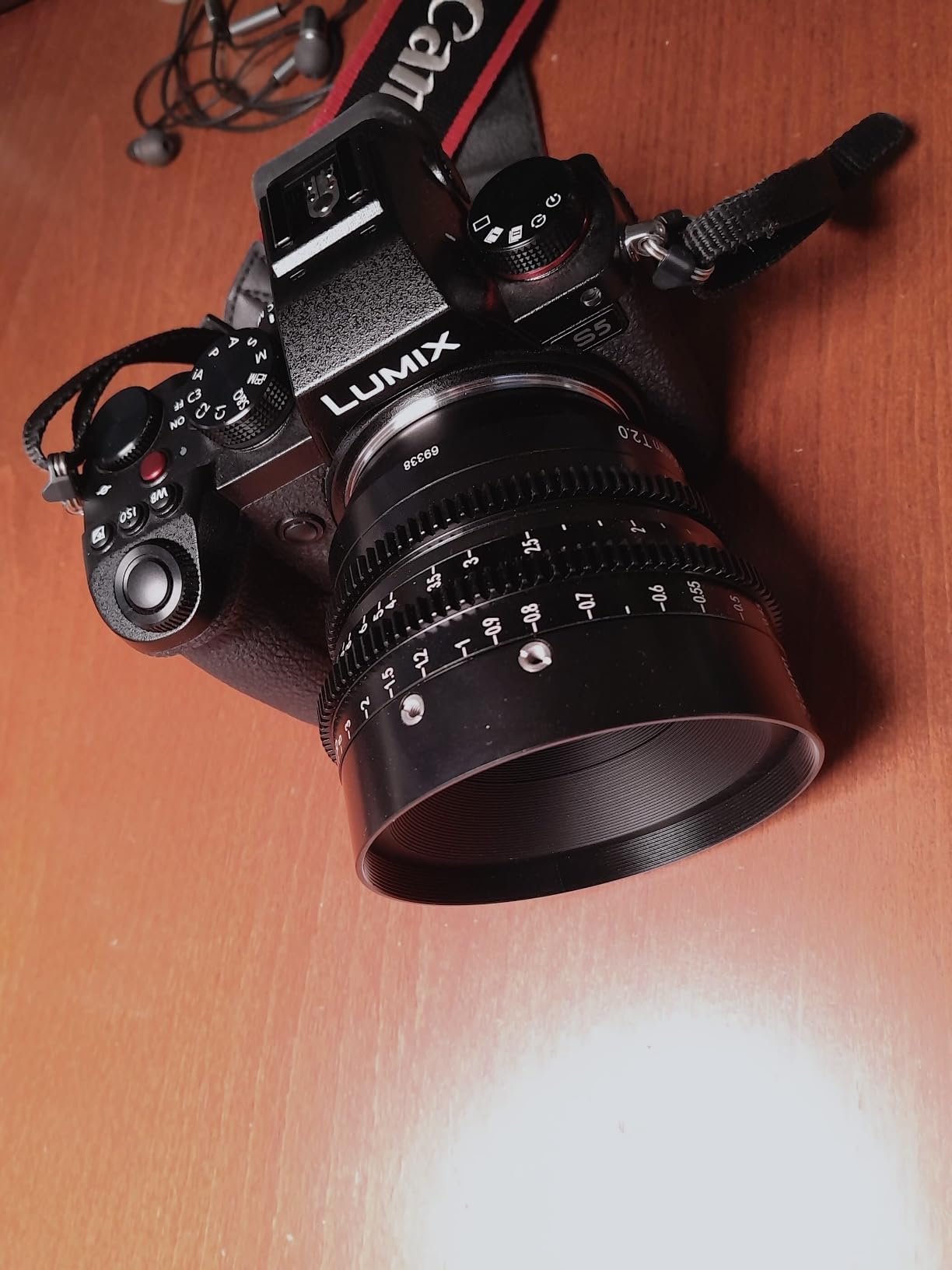
The 11 inch minimum focus distance is genuinely short for a full frame 35mm cine prime, which means tight working distance is available without a separate close-focus ring. The dual focus scale carries both metres and feet for crews working in either.
Being 9 elements in 7 groups with a 10 blade aperture, it is a straightforward design with no exotic glass. The rendering is described as smooth rather than characterful, which suits footage you plan to grade heavily.

How it performs on a focused pull
With 0.8 MOD gearing and a dual scale, this is the easiest lens in the roundup to hand to a focus puller. Mark the scale, set the stop, and the move becomes mechanical.
Because the mount is L, the whole Sigma fp, Panasonic S and Leica SL range shares the adapter-free experience. If you change body within that family, this lens comes with you.
Where it will frustrate you
The lens caps work loose in a bag, which sounds trivial until the front element picks up dust on a location day. A proper clip-on or screw-in cap solves it for very little.
Owner reports are few compared with the other lenses here, so you are buying on design reputation rather than a long record of field notes. That risk is lower with an L mount lens than with an unproven fast prime at a faster stop.
How to Pull Focus Solo: 7 Steps
Manual focus is not hard because it is imprecise. It is hard because beginners try to focus in real time instead of setting up the move in advance. These seven steps are the difference between a shaky rack and one you can repeat.
Turn on your camera’s peaking or focus magnification before you shoot. Outdoors on a bright set, naked-eye manual focus is close to impossible, and this is the fix that costs nothing.
Mark your near and far focus points on the lens itself with a grease pencil or tape before the take. Marks beat scales because they sit where your subject actually is, not where the scale says infinity is.
Set the aperture and exposure first, then focus. Changing one after the other is the most common cause of a missed take.
Find the subject’s face or nearest edge and settle the focus there before you begin the move. A rack has to start from a known point to end on a known point.
Rotate the ring slowly and continuously from one mark to the other. Do not hunt back and forth, because a stutter reads as hesitation on screen.
Use a follow focus when the lens has 0.8 MOD gearing. The geared hand replaces fingertips and gives you consistent pressure across the whole throw.
Take a practice pass with the lens capped or before the shot matters, and learn the distance in rotation rather than in seconds.
If you shoot hybrid bodies, the manual focus lenses on this site cover stills applications, and the Thypoch manual focus lens guide covers a specific reissue range worth knowing about. For video, the cinematic video roundup compares the anamorphic and spherical entries side by side.
Buying Guide: Mounts, T-Stops and Used Glass
T-stop versus f-stop, and why the number matters
A T-stop accounts for light actually lost inside the lens. T1.5 transmits less light than f/1.5, and the difference grows as apertures get faster and as the front element gets larger. For stills the gap barely matters, because you can simply expose longer.
For video it matters constantly. You are often metering for skin tones and holding the exposure, so every stop you lose is a stop of noise you have to grade out later. A T1.5 lens that reads half a stop under its f-stop equivalent is simply the more honest spec of the two.
Focus throw and what rotation degrees mean
Focus throw is how far the ring turns from infinity to minimum focus. A short throw, roughly 90 to 120 degrees, is precise but slow to rack. A long throw of 270 degrees or more gives fine control at infinity and is genuinely useful on a long lens with thin depth of field.
Gearing is the related detail. 0.8 MOD is the cinema standard, and a lens with that gearing drops onto a follow focus without shims. A lens without gear rings is a fingers-only lens, which is fine for stills and awkward for a one-person crew.
Parfocal, and why zoom lenses drift
A parfocal lens holds focus through a zoom range. Most stills zooms are not parfocal, which is the complaint older MFT shooters raise about focus drifting while zooming in manual.
Single prime lenses make this irrelevant, which is one of the quiet arguments for primes in manual work. If you need a zoom for run and gun, look for a cine zoom with matched focus gear positions across its range.
Flange distance and adapted glass
Flange distance is the gap between the mount and the sensor. When a lens has a larger flange distance than the body it is adapted to, the adapter must sit further back and the image loses field of view, which acts like a focal reducer.
Camera forums repeatedly warn about cheap adapter correction elements, which add ghosting, softness and vignetting that no amount of grading removes. The common advice is to spend your money on the lens rather than the adapter, and to buy a plain adapter with no optics in the path.
Modern hybrid bodies have wide mount throats and short register distances, which means almost any adapted vintage lens can be mounted physically. Physically mounting is not the same as being a good pairing optically, so treat adaptation as a second choice rather than the plan.
A used lens inspection checklist
Vintage and adapted glass is the value route into manual focus, and buyers on photography forums warn repeatedly about the same failures. Before you commit, check for fungus by shining a light through the glass at an angle, and look for haze, which appears as a flat, low-contrast look in every frame rather than a spot.
Open the aperture fully and rotate the ring. Oil on the aperture blades leaves a visible smear that makes exposure vary as you stop down, and it does not clean up with a cloth. Push the focus ring to both ends and feel for a gritty or sticky helicoid, which means a service is due.
Look through the front element at a bright light and check for balsam separation, where the cement between elements has separated into a hazy film. Sellers who mislabel lenses are a repeated warning, so confirm the exact model number and mount before paying.
A tactic that shows up often in forum buying threads is to buy an obscure lens attached to a cheap body, then separate them. You get a complete working lens for less than a bare lens with a broken helicoid would cost.
Building a starter set on a fixed budget
Start with one lens at a normal-to-wide focal length and learn it completely. Add a long lens second for interviews, and add a third wide only when you are shooting in constrained spaces often enough to need it.
For Micro Four Thirds, the Meike 16mm and Meike 35mm pair covers everything from interiors to portraits with matched gearing. For Canon EF or Sony E bodies, the Rokinon Cine DS line at 35mm and 85mm covers the same ground with matched color.
If budget is genuinely tight, one manual prime plus a rented lens for the odd long night beats two cheap lenses you never learn properly. Depth of skill with one lens beats collection breadth with two.
Frequently Asked Questions
What lens do most filmmakers use?
A 35mm is the most widely used focal length in filmmaking because it covers a two-shot, a single and a wide establishing insert without changing lenses. Documentaries add a 24mm or wider for interiors, and interviews add an 85mm for compression. Manual focus filmmakers usually build sets around three focal lengths rather than one zoom, since primes keep focus marks consistent and match color more closely across a cut.
What lens is best for cinematic video?
For most solo filmmakers, a fast full frame manual prime in the 35mm range is the most useful single lens. A 35mm T1.5 gives you shallow depth of field, low light reach and coverage for most narrative and documentary work. If your body is Micro Four Thirds, a 35mm on that sensor gives a 70mm equivalent, so pick a shorter focal length there to get the same framing.
Is manual focus better than autofocus?
For video, manual focus gives more control rather than better results. Autofocus is faster for static subjects and tracking, but it cannot execute a deliberate rack to a specific mark at a specific rate. Manual glass also reaches faster apertures at far lower cost, which is why budget filmmakers choose it. Autofocus wins for run and gun on a moving subject; manual wins for anything with a designed focus move.
Are manual focus lenses hard to use?
The first few takes are awkward, then it becomes mechanical. The hard part for beginners is focusing in real time instead of setting the move up first. Turn on peaking or magnification, mark near and far focus points on the barrel, set aperture before focus, and take a practice pass before the shot matters. Most operators report being comfortable within a few days of deliberate practice.
What size lens is best for documentary filmmaking?
A 24mm to 35mm equivalent is the usual documentary range because it covers small rooms, vehicles and handheld follow shots where you cannot control the space. Wider than 24mm starts to exaggerate near subjects, and a 50mm equivalent or longer needs space you rarely have. Many documentary shooters carry one wide-to-normal zoom and a 50mm for interviews.
What lens is good for a medium shot?
A 40mm to 50mm full frame equivalent gives a natural medium shot with mild compression, so faces look natural rather than flattened. On Micro Four Thirds that means a 20mm to 25mm lens, and on an APS-C body roughly a 24mm to 30mm. A 50mm equivalent is a good starting point for interviews, and 85mm is the reach for tight singles in a large room.
Is a 50mm lens good for videography?
Yes. A 50mm full frame equivalent is one of the easiest focal lengths to live with on video because it gives a natural perspective, mild compression and enough speed at f/2 to separate a subject from a background. It struggles only in small spaces and with two-person shots. The manual 50mm picks in this roundup, such as the TTArtisan for Nikon Z, are light enough for handheld work all day.
Is a 35mm lens good for filming?
A 35mm is the most versatile focal length for filming. It handles a two-shot, a walk-and-talk, a wide establishing insert and a handheld follow shot from the same position. In manual focus, a 35mm also pulls comfortably because depth of field is wide enough to forgive small focus errors, which makes it a good first cine prime to learn on. Watch for softness wide open on the fastest versions.
The Best Manual Focus Lens for Your Work in 2026
If you shoot on Micro Four Thirds, the Meike 16mm T2.2 is the lens I would start with, because it fills the wide angle gap most small kits have while keeping gearing matched with the 35mm. For Canon EF and Sony E shooters who want a narrative look with matched color, the Rokinon Cine DS 35mm and 85mm remain a strong pairing in this class.
Buy one lens and learn it before you buy a second. Whichever you choose, the seven focus steps above are what turn a manual focus lens from a novelty into a tool, and that skill transfers to every lens you own afterward.