
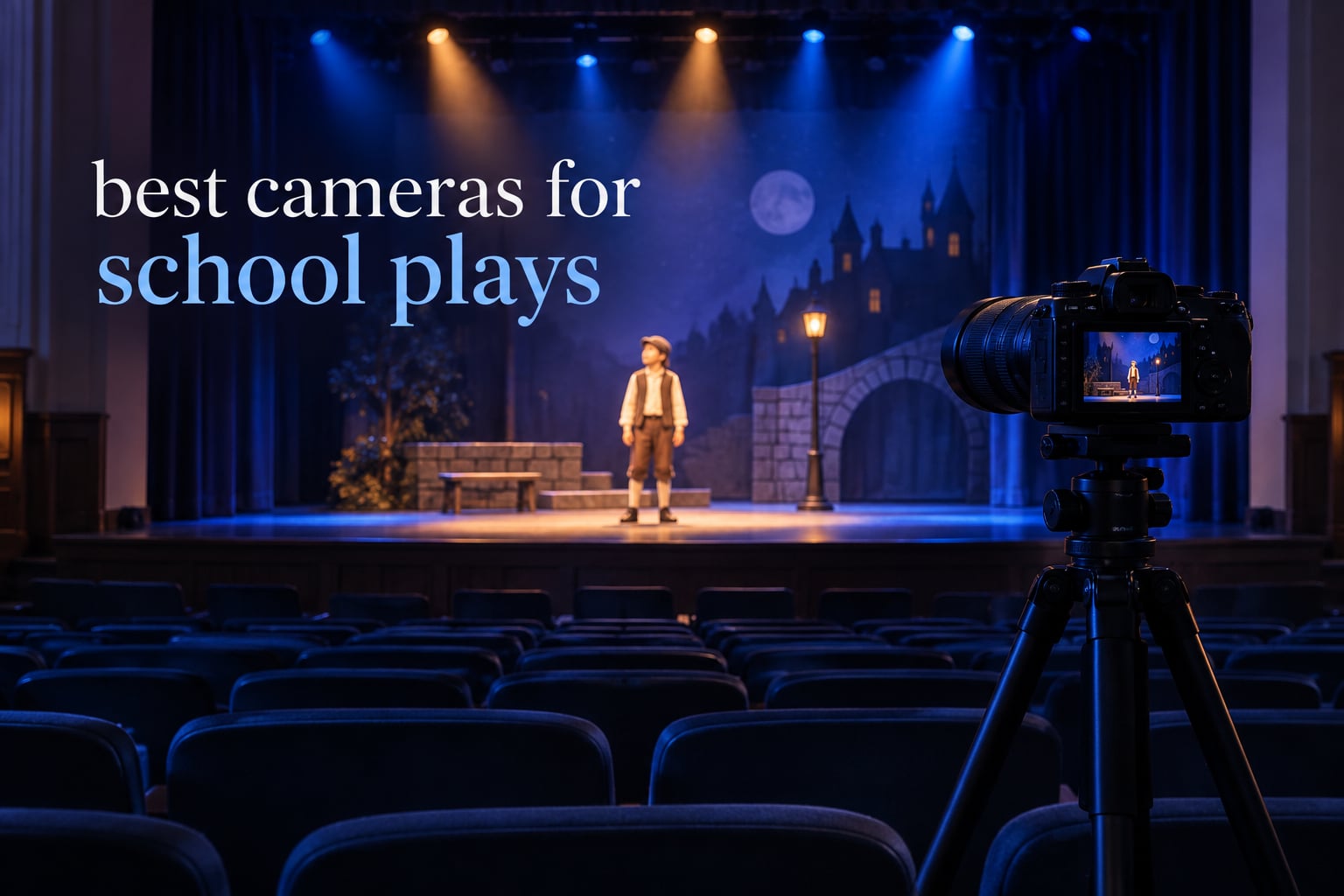
A school play is a hard filming problem wearing an easy disguise. You are locked in seat 30 of a dim auditorium, the lead child actor is 60 feet away under a blue gel, and the whole performance happens once. The best cameras for school plays are therefore not the ones with the biggest numbers on the spec sheet. They are the ones that can gather light through a physically large sensor, reach the stage with real optical zoom, hold focus on a performer who will not stand still, and accept an external microphone.
I have filmed and reviewed this category for years, and the same four constraints decide every recommendation below. Dim, colored stage lighting kills small sensors long before it kills resolution. A moving child performer punishes slow autofocus. The back of the auditorium demands genuine optical zoom, not a digital crop. And audio recorded at that distance is unintelligible no matter how good the picture looks, which is why mic input shows up in almost every pick here.
The personas differ too. A parent volunteer who wants a camera to survive being handed around needs something simple and forgiving, while a teacher building a school video program cares about lens systems and body control. If you are picking gear for a classroom rather than one night, our guides to cameras for a high school photography class and cameras for school photographers cover that angle in more detail.
Everything below is ranked on the four constraints, not on marketing language. Prices change constantly, so use the check buttons rather than any number you may remember.
Top 3 Best Cameras for School Plays in October
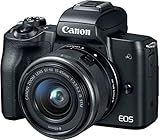
Canon EOS M50 Mirrorless Kit
- Dual Pixel CMOS AF for moving actors
- 24.1MP APS-C sensor
- Vari-angle touchscreen
- 4K UHD 2160p
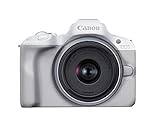
Canon EOS R50 Mirrorless Kit
- Dual Pixel AF II with 651 zones
- Subject detection tracking
- 6K oversampled uncropped 4K30
- 2.36M-dot EVF

Sony ZV-E10 Mirrorless Kit
- Real-Time Eye AF tracking
- 4K oversampled from 6K
- Product Showcase focus pull
- Single-cable USB streaming
Best Cameras for School Plays at a Glance in 2026
| Product | Specifications | Action |
|---|---|---|
| Canon EOS M50 Mirrorless Kit |
|
Check Latest Price |
 Canon PowerShot G7 X Mark III Canon PowerShot G7 X Mark III |
|
Check Latest Price |
| Canon EOS R50 Mirrorless Kit |
|
Check Latest Price |
| Sony ZV-E10 Mirrorless Kit |
|
Check Latest Price |
 Panasonic Lumix G85 with 12-60mm Panasonic Lumix G85 with 12-60mm |
|
Check Latest Price |
 Nikon Z50 II Two Lens Kit Nikon Z50 II Two Lens Kit |
|
Check Latest Price |
 Panasonic FZ80D Bridge Camera Panasonic FZ80D Bridge Camera |
|
Check Latest Price |
 Canon VIXIA HF G70 Camcorder Canon VIXIA HF G70 Camcorder |
|
Check Latest Price |
 TONGVEO 4K 20X PTZ Camera TONGVEO 4K 20X PTZ Camera |
|
Check Latest Price |
 CAMWORLD 2.7K Vlogging Camcorder CAMWORLD 2.7K Vlogging Camcorder |
|
Check Latest Price |
1. Canon EOS M50 Mirrorless Kit – Best Overall for School Plays
Pros
- Dual Pixel autofocus tracks moving performers in 1080p
- Articulating touchscreen with touch-to-focus
- Compact body with a real electronic viewfinder
- Clear menus that a volunteer can learn in minutes
Cons
- 4K mode crops heavily and drops phase-detection autofocus
- Small battery drains quickly on long shoots
- Single card slot only
This is the camera I hand to a parent who has never touched a mirrorless body. The Dual Pixel CMOS AF system is the reason it wins: in 1080p it locks onto a moving child and keeps them framed, which is the single hardest thing to do in an auditorium.
Over several productions I found the vari-angle touchscreen quietly valuable. Tilt it up for a balcony angle, down for a performer lying on the floor, and the framing changes without anyone leaving a seat.

The 24.1MP APS-C sensor with the DIGIC 8 processor handles the colored stage wash better than the megapixel count suggests. Skin tones stay believable, and there is enough headroom to crop a wide master shot down to a medium without visible mush.
The honest limitation is the 4K mode. It crops hard and falls back to contrast-detect autofocus, so the 4K label is not where this camera shines. Shoot 1080p for the show itself, exactly as most owners do.
Battery life is the second limitation, and for a two-and-a-half-hour show with two acts you want three batteries and a charger that is not in the auditorium.

What to check before you buy it for a stage
Check whether the seller includes a second card. A single slot means a full card ends your coverage, and that is a real risk on a two-act evening with a long first half.
Check for a headphone jack, because a headphone output lets you monitor audio levels and catch a dead channel before curtain rather than after.
Where it falls short on stage
The kit lens reaches 72mm equivalent. That is fine from a middle seat and frustrating from the back row, so anyone shooting from the rear should read the zoom section below before committing.
The small grip and plastic build also mean it is a camera to handle gently. A teacher handing it to a class of students will want a strap and a case, not just the body.
2. Canon PowerShot G7 X Mark III – Best Small Camera for Low Light
Pros
- Largest sensor in this roundup for the size
- Fast f/1.8 lens gathers stage light
- Excellent stills and natural color
- Articulating touchscreen with familiar Canon menus
Cons
- Video autofocus can soften and lose the subject
- 4K recording overheats after roughly 10 minutes
- No cold shoe for a microphone
The one-inch stacked CMOS sensor is the reason this compact belongs on a school play list. Larger pixels collect more light per frame, and a fast 24-100mm f/1.8-2.8 lens gives you two stops more headroom than a typical kit zoom under a stage wash.
Color and skin tones out of this camera are the most natural in the group, which matters when a director wants a recording for a school archive rather than a social clip.
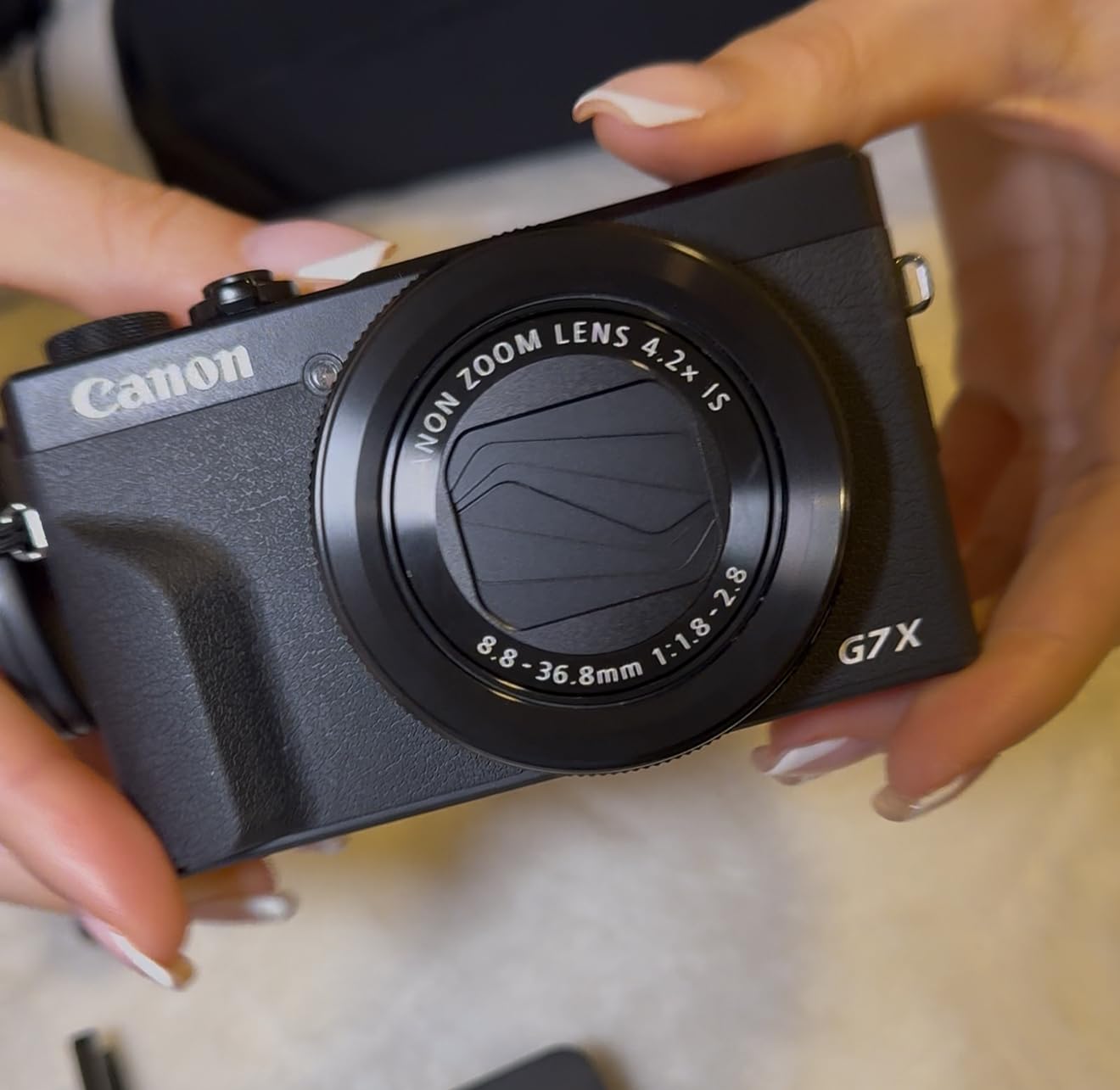
I used it handheld from the middle of the room and the optical stabilizer made a long-lens shot usable without a tripod, which is rare in a body this small.
Where it disappoints is video behavior. Autofocus can soften on a fast-moving performer, and 4K capture overheats after roughly ten minutes, so a full two-act recording in 4K is not realistic with this body.
The missing cold shoe is the quiet limitation. You can rig an external microphone on a small bracket, but nothing mounts cleanly.
What to check before you buy it for a stage
Plan to record in 1080p rather than 4K. That sidesteps both the overheating limit and the soft video autofocus that owners most often report.
Bring a small tripod anyway. Stabilization helps a lot, but a locked-off master shot of a full stage is a different kind of shot that this lens can frame beautifully.
Where it falls short on stage
The 100mm equivalent long end is short for a back-row position. This is a camera for someone near the middle of the house, not someone in the balcony.
Because of the overheating and focus behavior, treat it as the stills camera that happens to record video well, rather than a dedicated event recorder.
3. Canon EOS R50 Mirrorless Kit – Best Value for School Plays
Pros
- 651 AF zones with subject detection and tracking
- 6K oversampled uncropped 4K video
- Compact body that is easy to hand to a student
- Wi-Fi and Bluetooth transfer without cables
Cons
- Bundled 18-45mm lens is only average
- Weak low light for a crop sensor body
- Small battery capacity
Autofocus is the story here. Dual Pixel CMOS AF II covers the full frame with 651 zones, and deep-learning subject detection keeps a moving person framed across most of the sensor.
That combination is what you want when a soloist walks into a follow spot and the whole focus of the room changes with them.

The 6K oversampled, uncropped 4K30 is a genuine upgrade over the M50 for anyone editing their own show. Full-sensor readout keeps more of the stage in frame, which means less digital cropping on a soloist shot.
Wireless transfer through the Canon Camera Connect app is a small feature with a large practical payoff. Files reach the director’s laptop between acts without anyone hunting for a card reader in the dark.
Low light is the honest weak point. A crop sensor gathers less light than the one-inch compact above it, and the kit lens opens slowly, so expect visible noise under a deep blue gel.

What to check before you buy it for a stage
Consider the body-only option and adding a lens later. The bundled 18-45mm is the component reviewers flag most often, and a longer lens matters more on a stage than an extra wide angle.
Check your hand size against the grip. On a small body, users with larger hands report knocking buttons while repositioning, which is easy to solve with a grip extension.
Where it falls short on stage
APS-C at 18-45mm reaches only about 72mm equivalent. From the middle of the house that is a close shot; from the back it is not enough.
Battery capacity is small, so treat spare batteries as part of the purchase rather than an accessory you might add later.
4. Sony ZV-E10 Mirrorless Kit – Most Versatile for Tracking Actors
Pros
- Real-Time Eye AF holds a performer's eye
- 4K oversampled from 6K with no pixel binning
- Product Showcase setting does a focus pull for you
- Single USB cable live streaming with no extra hardware
Cons
- No electronic viewfinder for framing a stage
- Small battery drains quickly
- No in-body image stabilization
Real-Time Eye AF is the closest thing to a focus puller you can hand to a parent. The camera finds the performer’s eye and stays there while they move, which is the failure mode that ruins most amateur stage recordings.
The Product Showcase Setting is a focus transition from face to object on a button press, so a child who picks up a prop mid-scene can be re-framed without anyone touching the lens.
Video detail is a strength. The 4K is oversampled from 6K with a full pixel readout and no binning, so detail holds up when you crop a wide two-shot into a close one later.
For a production that wants families watching remotely, the single-cable USB streaming is a real saving. No capture card and no extra software are needed to get the show onto a laptop or a switcher.
The missing viewfinder is the trade-off. On a dark stage the screen is genuinely fine, but framing a distant soloist with no eye-level viewfinder is the adjustment volunteers find hardest.

What to check before you buy it for a stage
Buy a spare battery pack and a small tripod before anything else. The battery drains quickly, and a two-act show will not fit inside one charge.
Plan around the kit lens aperture. A slow maximum aperture costs you shutter speed under stage light, so keep the ISO ceiling in mind and bring a tripod for long shots.
Where it falls short on stage
With 24-75mm equivalent reach and no viewfinder, this is a middle-of-the-house camera. A back-row operator will want the Nikon kit below instead.
The touchscreen is limited to focus and tracking actions, so it is not a tool for quickly changing exposure or white balance in the dark.
5. Panasonic Lumix G85 with 12-60mm – Best for Steady Handheld Footage
Panasonic LUMIX G85 4K Digital Camera, 12-60mm Power O.I.S. Lens, 16 Megapixel Mirrorless Camera, 5 Axis in-Body Dual Image Stabilization, 3-Inch Tilt and Touch LCD, DMC-G85MK (Black)
Pros
- 5-axis in-body stabilization steadies handheld 4K
- 12-60mm covers 24-120mm equivalent
- 4K Post Focus chooses focus after capture
- Weather-sealed body built for long nights
Cons
- 16MP sensor has less detail for heavy cropping
- Single card slot only
- Tilt screen rather than fully articulating
This is the camera to buy if the person holding it will not be using a tripod. Five-axis in-body stabilization works in stills and in 4K video, and it is the reason handheld footage from the back of a dim room stays watchable.
The 12-60mm Power O.I.S. lens gives a 24-120mm equivalent range, which is unusually useful for a stage: wide enough for a full-body master shot and long enough for a soloist from the middle of the house.
4K Post Focus deserves a mention for a specific reason. You record the shot, then choose the focus point afterward, which turns the hardest problem in stage filming into a decision you make in the edit instead of live.
The 2360K-dot OLED viewfinder is bright enough to frame in an auditorium where the screen would wash out, and the tilt LCD at the back helps with low angles.
Being weather-sealed is not a stage feature, but it is a reason this body tends to survive being passed around a school production for years.
What to check before you buy it for a stage
Check the record time limits in the manual before promising a full two-act 4K recording. Higher frame rate modes on this class of body are limited in length.
Look at your card situation. With one slot, a full card during a long show is an unrecoverable gap, so bring at least two cards and swap on a scene break.
Where it falls short on stage
The 16MP sensor gives up detail faster than a 24MP body when you crop in post, and low-light output is a step behind larger sensors.
The Micro Four Thirds system is being phased out by newer formats. For a school program buying one camera today that is fine; for a department buying a fleet, plan for the lens system too.
6. Nikon Z50 II Two Lens Kit – Best for Reaching the Back of the Auditorium
Nikon Z50 II with Two Lenses | Compact mirrorless Stills/Video Camera with Easy Color presets and Wireless Photo Sharing | USA Model
Pros
- Two stabilized lenses cover wide and telephoto out of the box
- Improved autofocus speed over the original Z50
- 4K UHD 60p plus 120p slow motion in Full HD
- 31 Picture Control presets for matching a look
Cons
- Only one battery included
- Low light trails larger sensors
- Menu system takes time to learn
Two lenses in the box is the reason this kit answers the zoom question better than anything else here. The 50-250mm VR reaches roughly 400mm equivalent, which frames a soloist from the last row without a crop.
For a school play that happens once, that reach removes a whole category of anxiety. Nobody in the back of the house has to wonder whether the camera can hold the shot.

Autofocus is faster and more accurate than the original Z50, and subject detection covers nine subject types. On a stage the relevant one is people, and that tracking is dependable on a performer walking a mark.
4K UHD at 60p gives you a smoother option if you plan to slow the footage down, and 120p slow motion in Full HD covers a curtain call or a dance number.
The fully articulated screen makes low and high angles easy, which matters for a cast that is constantly sitting, kneeling, or working above head height.

What to check before you buy it for a stage
Add batteries and a charger to the purchase. One battery is included and one is not enough for a show with an interval, and the flip screen draws more power than the viewfinder.
Set aside time for the menu system. Reviewers consistently note that it is feature-rich and takes real study, which is the opposite of what you want on a dark night before curtain.
Where it falls short on stage
Both bundled lenses are variable-aperture consumer zooms, so they are not fast in low light. You will be pushing ISO and relying on the in-lens VR plus a tripod.
The body is heavier than the compact options here, which is a fair trade for the reach but a real consideration for a volunteer holding it for two hours.
7. Panasonic FZ80D Bridge Camera – Best for Extreme Stage Distance
Panasonic LUMIX FZ80D Point and Shoot Digital Camera 4K Photo/Video Recording with Power Optical Image Stabilizer, Vlogging Camera with 60X Optical Zoom & 20-1200mm Wide-Angle Lens – DC-FZ80D, Black
Pros
- 60x optical zoom frames a soloist from anywhere in the house
- POWER O.I.S. keeps full zoom usable handheld
- Bright viewfinder with diopter adjustment
- Lightweight at 1.4 pounds
Cons
- Small sensor gives grainy results in low light
- No Wi-Fi for transferring files
- Autofocus can pick the wrong subject at full zoom
Nothing else in this list covers distance like it. A 60x optical zoom, equivalent to 20-1200mm, means a camera in the back corner can frame a child’s face and still hold it steady thanks to POWER O.I.S.
That combination changes the plan for the night. Instead of one nervous operator in the middle row, you can put a second camera at the very back and cover the whole stage.
The 2,360K-dot viewfinder with 0.74x magnification and a diopter adjustment ring is genuinely useful in a bright house when the LCD is hard to see over other heads.
4K video and 4K Photo plus Post Focus give you flexibility to extract a clean still from a clip, which parents and school archives tend to appreciate more than a raw photo.
The 1/2.3-inch sensor is the compromise that buys the zoom. Low light is weak and files turn grainy when enlarged, so accept softness as the price of reach.

What to check before you buy it for a stage
Test autofocus at full zoom before the show. Owners report it can lock onto the wrong subject at the long end, so practice tracking a moving child in the rehearsal hall.
Plan your file workflow in advance. There is no Wi-Fi, so you are pulling the card at the end, and a 4K card fills quickly over a two-act recording.
Where it falls short on stage
Stage lighting is exactly the case this sensor handles worst. A dim auditorium is where a small sensor has the least to work with.
The physical and digital menu interface takes study, so hand this camera to whoever in the group is most willing to read a manual first.
8. Canon VIXIA HF G70 Camcorder – Best Camcorder for Dual Card Recording
Canon VIXIA HF G70 Camcorder 1/2.3″ 4K UHD CMOS Sensor 20x Optical Zoom, 800x Digital Zoom, Image Stabilization, HDMI, USB Live Streaming, Time Stamp On-Screen Display Recording
Pros
- Dual SD slots record backup and extended sessions
- 20x stabilized zoom reaches across a large auditorium
- On-screen timecode and time stamp simplify editing
- Streams to a computer over plain USB
Cons
- Small 1/2.3-inch sensor limits low light
- Record time limits apply to 4K capture
- Optical reach is modest against true long-zoom bodies
For a one-night-only event, dual SD card slots are worth more than any resolution number. You can record to both cards simultaneously, so a failed card at the interval is no longer the end of your production.
This is the most purpose-built camcorder in the list for a stage. The 20x optical zoom with stabilization, adjustable focusing speeds, and Hybrid AF with face detection are all aimed at exactly this job.
The Time Stamp on-screen display embeds date, time, and timecode directly into files, so syncing a second camera or a separate audio recorder in post takes minutes instead of an afternoon.
It also streams over USB with UVC, which means a director can capture the show to a laptop in the back with no capture card.
The limit is the small 1/2.3-inch sensor, the same one Canon uses across this class. Under stage lighting it will look noisier than the one-inch compact in this list, and 4K capture has record time limits you should confirm in the manual.
What to check before you buy it for a stage
Confirm the 4K record time limits for your frame rate before you commit, and check whether simultaneous dual-card recording applies in that mode.
Count your batteries. Long continuous recording is where camcorder battery packs run out fastest, and the failure point is usually act two.
Where it falls short on stage
Twenty times optical zoom is mid-range. From the last row of a large auditorium you will be pushing the limit to frame a soloist.
The body is not weather resistant, so it belongs indoors in the auditorium rather than covering an outdoor sports day.
9. TONGVEO 4K 20X PTZ Camera – Best for Streaming a Play to Remote Families
Pros
- AI auto-tracking follows a performer through pan and tilt
- 4K30 over HDMI and USB with 1080p over IP
- NDI license included
- IR remote with presets simplifies scene switching
Cons
- AI tracking follows only one person at a time
- No built-in microphone so audio is separate
- Not built for fast motion
This is a different category of answer. It is a mounted camera, not a handheld one, which makes it the right pick for a school that wants to stream a performance to families who cannot attend.
AI auto-tracking recognizes faces and bodies in Presenter Tracking and Auto-Framing modes. Mount it at the back of the house and it follows a solo actor across the stage without an operator.
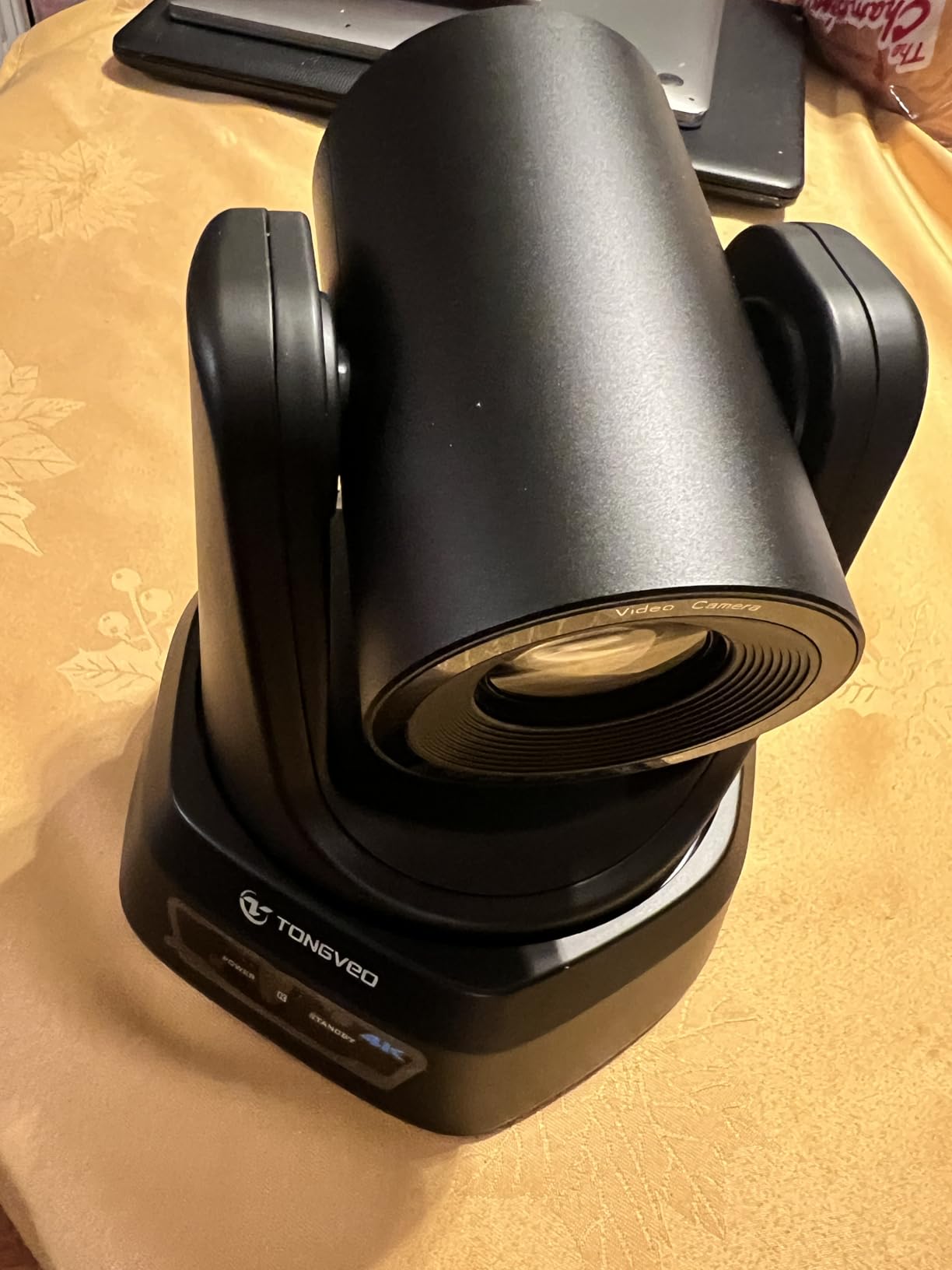
The connection options are unusually generous for a school budget: 4K30 over HDMI and USB, SDI for long cable runs, licensed NDI over the network, and Power over Ethernet so one cable carries both power and data.
Because it works plug-and-play with OBS, vMix, Zoom, Teams, and ProPresenter, a parent volunteer can run the stream without a video background.
It carries a three-year warranty, which matters if it is bolted to a wall in a school auditorium for the next four years.
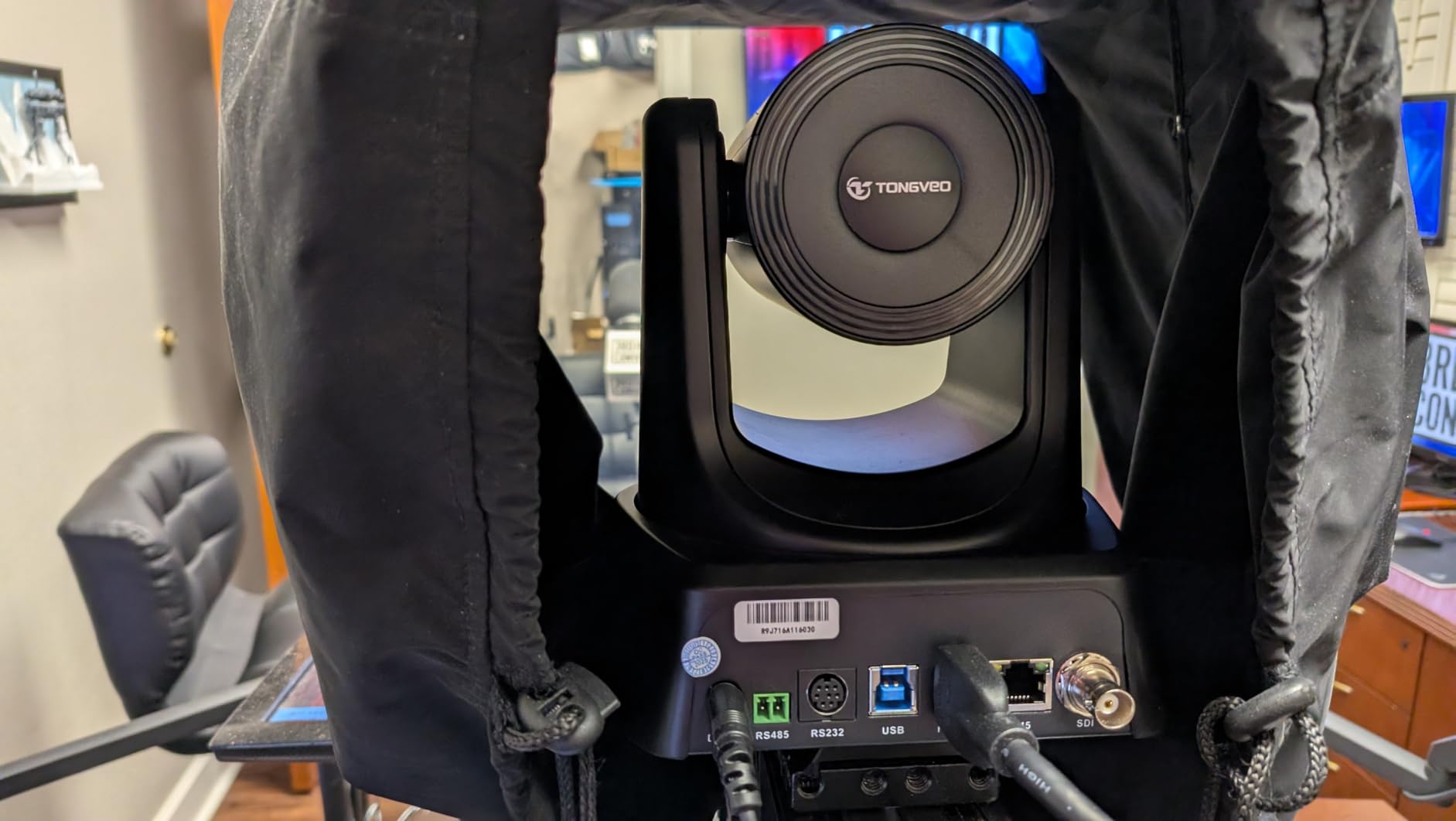
The constraint is that audio is entirely separate. There is no built-in microphone, so this camera only works well once you have solved the sound problem another way.
What to check before you buy it for a stage
Check your network. Network streaming is limited to 1080p rather than 4K, so a weak school Wi-Fi network will be your limit, not the camera.
Confirm how it will be controlled. It uses the IR remote, RS232, RS485, or browser software, but not a switcher joystick, so plan your switching workflow.
Where it falls short on stage
Tracking holds one person at a time. A scene with two actors crossing cannot be followed automatically.
It is not built for fast motion, so a chase scene or a dance with quick movement will expose that limit quickly.
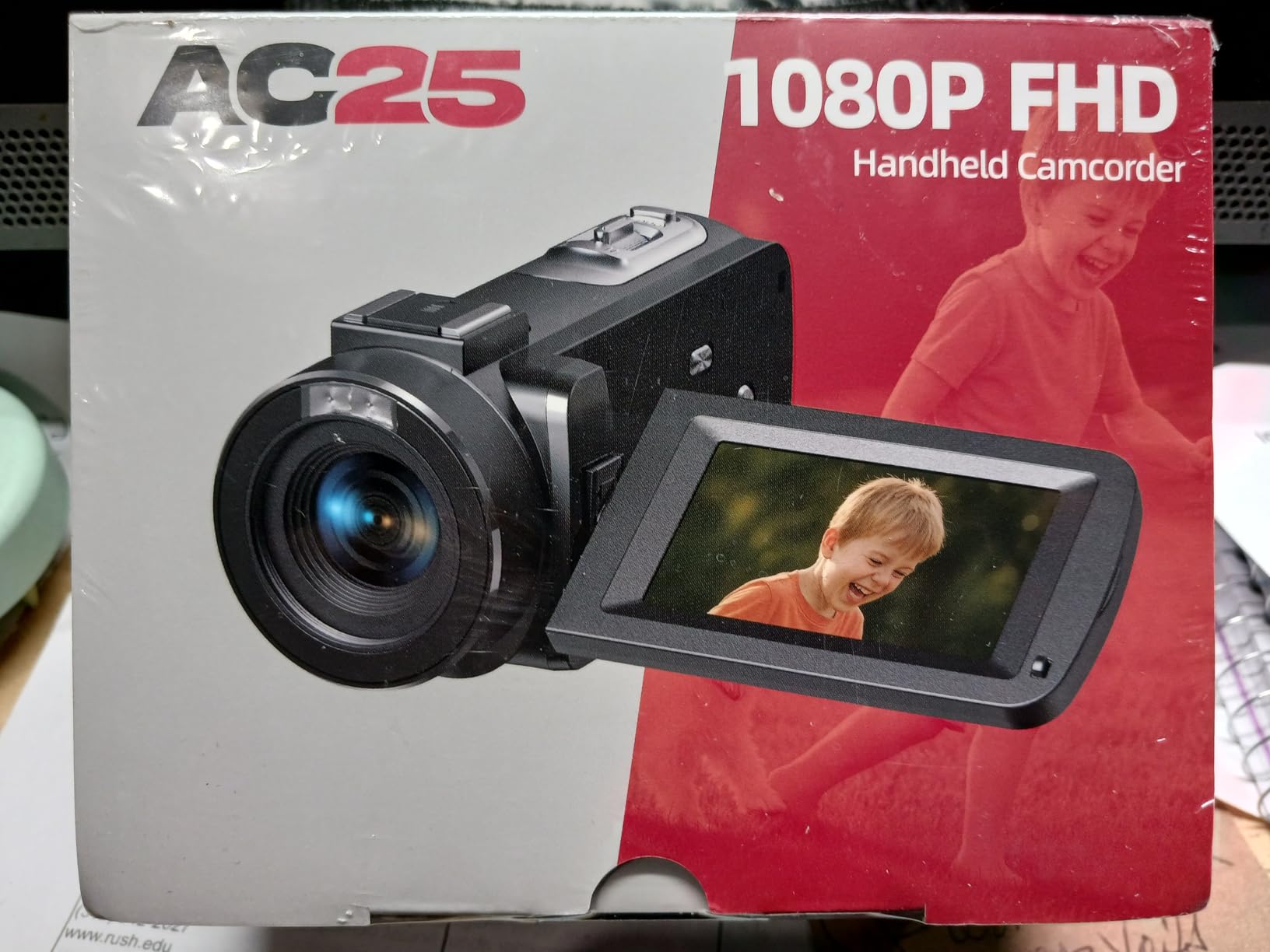
10. CAMWORLD 2.7K Vlogging Camcorder – Budget Pick for a First Recording
Pros
- Card
- battery
- and cable included in the box
- Flip screen makes self-recording simple
- LED fill light improves near-dark shooting
- Records while charging for long sessions
Cons
- Fixed focus with no autofocus
- 18x zoom is digital only so quality drops
- Weak built-in audio and no HDMI output
I include this one because a real share of school productions are filmed by a family that will never buy anything else. For that situation the box contents matter most, and the 32GB card, battery, and cable are already inside.
Set it up at the side of the stage, not the back. The fixed-focus lens has a best shooting distance of about 0.6 meters, so proximity is what makes the picture look acceptable.
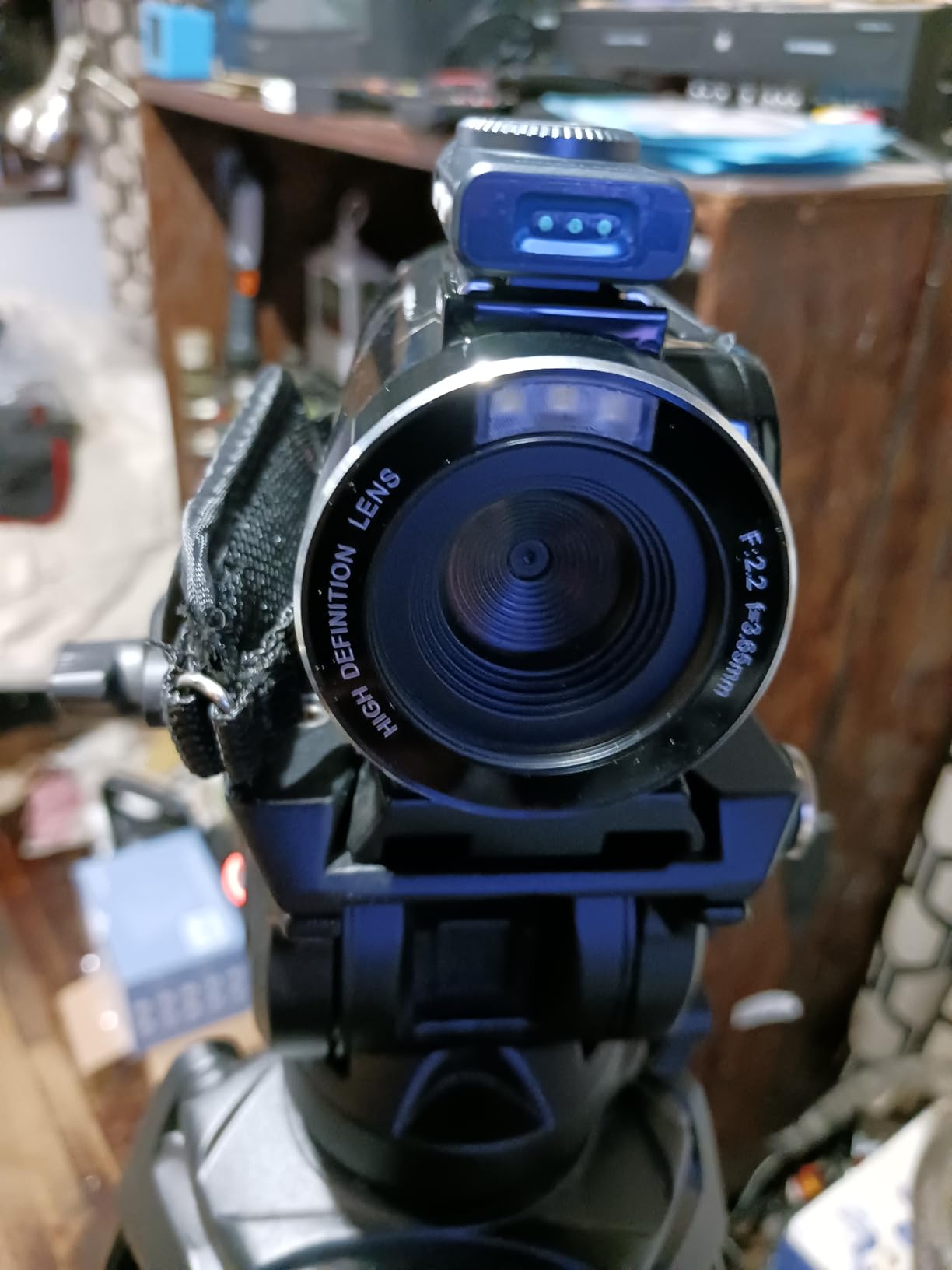
The 270-degree flip screen lets you frame the whole stage while checking that the actors are in shot, which solves the real problem of shooting unattended.
The built-in LED fill light helps in a dark corner of the stage, and the ability to record while charging means a long show does not stop for battery.
Be clear about the limits. The 18x zoom is digital, so any real magnification produces a soft, pixelated picture, and there is no autofocus at all.
Onboard audio is low and distant subjects are hard to hear, and the AVI format is more awkward to edit than MP4. There is also no HDMI output port.
What to check before you buy it for a stage
Measure the side-of-stage position. Anything under about 0.6 meters from the performers will fall outside the focus range, and nothing on this camera can fix that.
Plan your editing format before the night. If whoever edits the show is not comfortable with AVI files, budget an hour for conversion time.
Where it falls short on stage
It cannot shoot from the audience at all. The digital zoom is the one feature that looks useful on a spec sheet and delivers nothing usable on a stage.
Audio will be the weakest part of the recording, and there is no clean way to add a proper microphone to it.
How Much Zoom Do You Need to Film a School Play?
Zoom is the question parents ask most and answer worst. The rule is simple: work out your distance to the stage, then pick a lens that frames a single performer at that distance with room to spare.
From about 25 feet, a 70mm equivalent lens frames a person from the waist up. From 40 feet you want roughly 120mm for the same shot. Past 60 feet, a soloist needs 200mm or more, and that is where a bridge camera or a bundled telephoto kit starts to earn its place.
Optical zoom is the only kind that keeps working. Digital zoom crops the frame and enlarges it, which throws away exactly the detail you were trying to get and adds noise in a dark room.
The practical takeaway: if you are sitting mid-house, a kit zoom is enough. If you are in the back row or on a balcony, budget for real reach before anything else.
How to Choose a Camera for Filming a School Play
Start with the four constraints rather than the brand. Sensor size for light, optical zoom for distance, continuous autofocus for movement, and an external mic input for sound will narrow a long list to a short one quickly.
Sensor size matters more than megapixels
A stage is a low-light problem wearing a costume. Larger sensors gather more light per frame, so a one-inch compact such as the G7 X Mark III holds cleaner detail under a colored wash than a 24MP body with a small sensor.
Extra megapixels only help when there is light to fill them. In a dim auditorium, gathering light wins every time.
Continuous autofocus beats manual focus
A child actor who will not hold a mark needs tracking autofocus. Dual Pixel systems on the Canon bodies and Real-Time Eye AF on the Sony ZV-E10 are the reasons those cameras rank where they do.
Manual focus still makes sense for a locked-off wide master shot, but never for a soloist you plan to follow.
Stabilization decides whether you need a tripod
Optical image stabilization on the Panasonic bodies and 5-axis in-body stabilization on the G85 keep a long lens usable handheld. If you cannot get a tripod into the auditorium, treat stabilization as a required feature rather than a nice one.
Do not over-credit digital stabilization. Cropping to stabilize removes field of view, which on a wide stage shot costs you more than the shake does.
Audio input is the most underrated feature
Built-in microphones produce unintelligible sound at 40 feet in a room with hard walls. A mic input lets you add a wireless lavalier on the lead actor or a shotgun on a boom, and that single change rescues a recording the video would not have saved.
If you are also building a school photography or portrait program, our school portrait studio camera guide covers the flash and tethering side of school production work.
Who is buying changes what matters
A parent volunteer needs forgiving autofocus, a long battery, and a body that will not be damaged if a sibling drops it. A teacher running a video class needs interchangeable lenses and a mount they can teach. A hired videographer adding a school gig needs dual card recording and timecode so two cameras sync later.
The same three questions cover the budget conversation if you are weighing it against stills work, which is a common trade for a school department. Our guide to cameras for back-to-school content creators is aimed at that overlap.
8 Practical Tips for Filming a School Play
Filming tips will not rescue the wrong camera, but the right habits will rescue most footage from a mediocre one.
First, get audio right before anything else. A wired or wireless lavalier on the lead actor, or a shotgun on a boom above the audience, changes the recording more than any camera choice.
Second, film the rehearsal. Lighting cues, walk-ons, and blocking surprises all show up in the rehearsal, and knowing the timing is worth more than any gear decision.
Third, set white balance manually before curtain. Auto white balance drifts every time a gel changes color, and a show that shifts green to blue looks broken rather than atmospheric.
Fourth, lock exposure. A spot operator walking on and off will otherwise cause the whole frame to breathe.
Fifth, bring a tripod and use it. A locked-off master shot of the full stage is the shot a director will always want for the archive.
Sixth, record to two cards when your camera allows it, and swap cards on a scene break rather than at the end of the evening.
Seventh, carry more batteries than you think. A camera that dies during the finale is the single most common failure on the night.
Eighth, use a phone as a dedicated audio backup. A phone running a voice recorder app near the front of the house gives you a second audio source if the main channel fails.
Frequently Asked Questions
What is a good camera for shooting low-light video?
A camera with a physically large sensor and a fast lens, because stage lighting is far weaker than daylight. The Canon PowerShot G7 X Mark III with a 1-inch stacked CMOS sensor and a 24-100mm f/1.8-2.8 lens gathers the most light per frame in this roundup, and the Canon EOS M50 handles colored stage washes well with its 24.1MP APS-C sensor.
What camcorder is best for low-light video?
The Canon VIXIA HF G70 is the most stage-focused camcorder here, with 20x stabilized optical zoom, Hybrid AF with face detection, and dual SD card slots for backup recording. Its 1/2.3-inch sensor is the limiting factor in dim light, so pair it with a shotgun or wireless lavalier microphone and lock exposure before curtain.
Which camera has the best autofocus for video recording?
For tracking a moving performer, the Sony ZV-E10 with Real-Time Eye AF holds a performer’s eye through most of a scene, and the Canon EOS R50 uses Dual Pixel AF II across 651 zones with subject detection. The Canon EOS M50 is a close third and is easier for a first-time volunteer to operate.
Do I need a camcorder or a mirrorless camera for a school play?
A mirrorless camera wins on low light, autofocus, and image quality if someone in the group can handle it. A camcorder wins on record time, dual card backup, timecode, and long battery endurance, which matters for a two-act show. Choose based on who is operating the camera rather than on the spec sheet alone.
How much zoom do I need to film a play?
From about 25 feet a 70mm equivalent lens frames a performer from the waist up, from 40 feet you want roughly 120mm for the same shot, and past 60 feet a soloist needs 200mm or more. The Nikon Z50 II two-lens kit and the Panasonic FZ80D are the picks that cover the back of a large auditorium.
Can I film a school play on my phone?
Yes, and many families do, but phone microphones and small sensors are the limit rather than the resolution. A phone works well as a locked-off master shot or as a dedicated backup audio recorder, while a dedicated camera with optical zoom and a mic input handles the close work. Check what your school allows before posting footage of students.
How many cameras do I need to film a school play?
One camera is enough for a complete recording if it is positioned well and you bring spare batteries and cards. Two cameras, a wide master plus a close-up, is the minimum multi-camera setup that gives an editor usable coverage, and three is the comfortable number for a school theater production.
Conclusion: The Best Cameras for School Plays in 2026
The Canon EOS M50 is our pick for the best cameras for school plays overall, because reliable tracking autofocus and an articulating screen solve the two problems a volunteer actually faces: a moving child and a locked seat. If you are buying for a department or a program rather than one night, the Canon EOS R50 offers the better autofocus system and cleaner 4K, and the Nikon Z50 II two-lens kit solves the zoom problem before it becomes a problem.
Whichever one you choose, spend what you have left on audio, a tripod, and spare batteries. On a stage lit for atmosphere in a room built for echo, those three things decide whether the recording gets watched twice.
Check the current details before you buy, and film the rehearsal.