
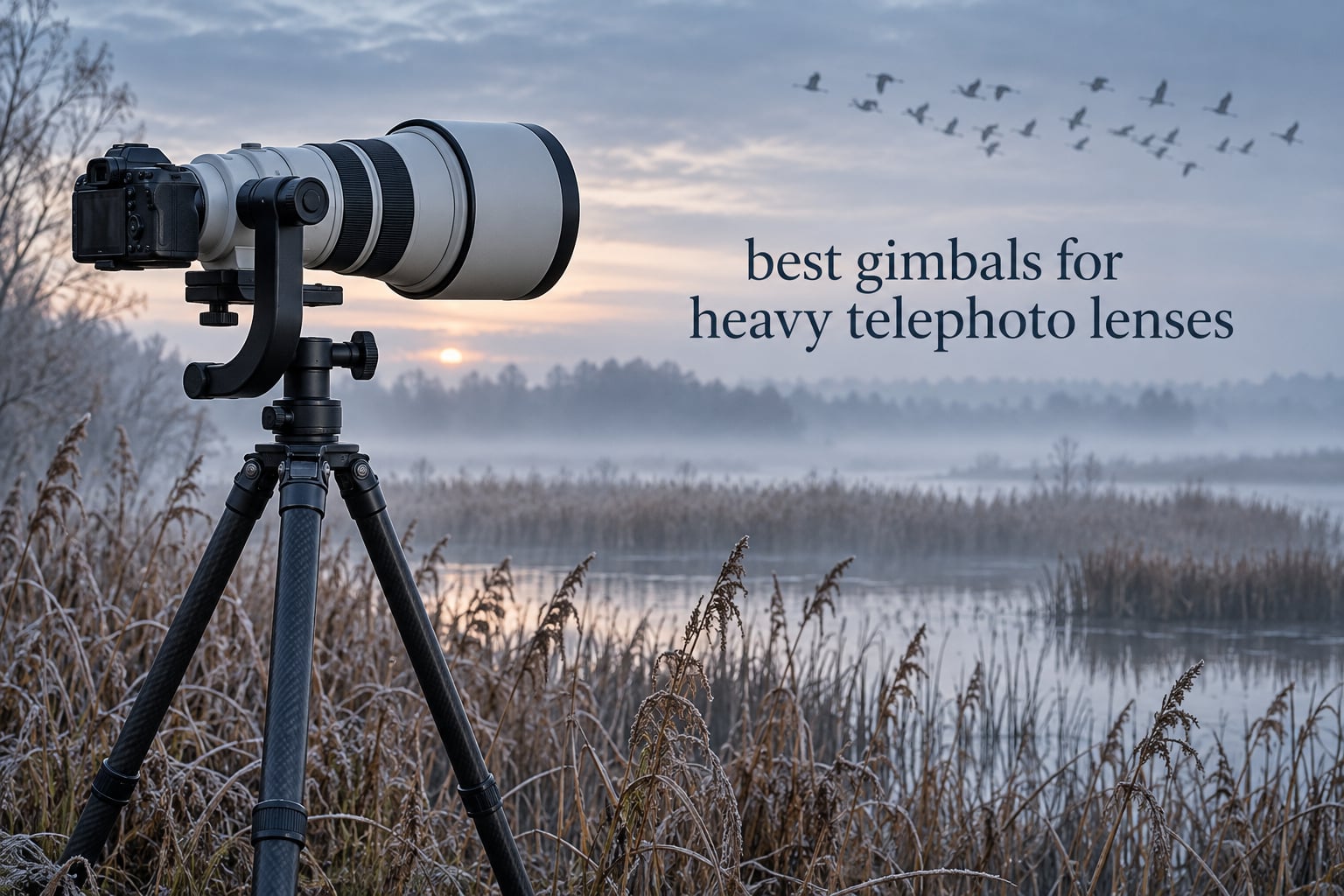
Any gimbal built for a heavy telephoto rig needs a payload rating of roughly 4 kg (9 lb) or more. That is the number that decides whether a 100-500mm zoom, a 300mm or 400mm super-telephoto prime, and a pro body with a lens collar can be balanced at all. Below about 2.5 kg you are in travel-gimbal territory, and above about 4.5 kg you are in the class built for exactly this job.
Over the past few months we put ten of the most relevant stabilizers through their paces: six motorized handheld 3-axis gimbals and four tripod-mounted gimbal heads, because both categories show up when people search this topic. Handheld gimbals smooth long-lens video. Gimbal heads balance long-lens stills. They are different products with different physics, and confusing the two is the single most common mistake we see in forum threads about 600mm glass.
Everything here was chosen on published payload ratings, measured head weight, and what owners report after living with the gear. We also put each one through our own balancing routine on long glass, which is where most spec sheets stop telling the truth. If you have a specific lens in mind, jump to the pairing section further down before you commit.
Whichever direction you go, the support side matters as much as the head. Our picks for the best tripods for heavy telephoto lenses cover the legs and column choices that heavy rigs need.
Top 3 Best Gimbals for Heavy Telephoto Lenses in 2026
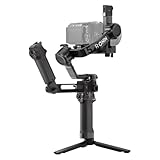
DJI RS 5 Combo
- Fine-tuning knobs on each axis arm with Teflon interlayers
- 2nd-Gen Automated Axis Locks
- Real-Time Z-Axis Indicator feedback
- 14 hours standby with 60% faster charging

DJI RS 4 Pro
- 4.5 kg payload with 20% more motor torque
- Carbon fiber axis arms
- Focus Pro LiDAR with 76800 ranging points
- 2nd-Gen native vertical shooting

NEEWER GM101 Gimbal Head
- Aluminum alloy rated to 30 lb with Arca type plate
- 360-degree panning base with panoramic scales
- Height scale on the swing arm
- Micro-adjustment from stiff to flexible
Best Gimbals for Heavy Telephoto Lenses in October
| Product | Specifications | Action |
|---|---|---|
| DJI RS 5 Combo |
|
Check Latest Price |
 FeiyuTech SCORP-C FeiyuTech SCORP-C |
|
Check Latest Price |
| DJI RS 4 Pro |
|
Check Latest Price |
| NEEWER GM101 Gimbal Head |
|
Check Latest Price |
 K&F CONCEPT 20 kg Gimbal Head K&F CONCEPT 20 kg Gimbal Head |
|
Check Latest Price |
 ZHIYUN Weebill 3E ZHIYUN Weebill 3E |
|
Check Latest Price |
 SIRUI PH-10 Gimbal Head SIRUI PH-10 Gimbal Head |
|
Check Latest Price |
 Wimberley WH-200 Gimbal Head II Wimberley WH-200 Gimbal Head II |
|
Check Latest Price |
 ZHIYUN Weebill 3S ZHIYUN Weebill 3S |
|
Check Latest Price |
 ZHIYUN Crane 4 ZHIYUN Crane 4 |
|
Check Latest Price |
Gimbal or Gimbal Head: Know What You Are Buying
A gimbal is a handheld, motorized, three-axis camera stabilizer. It uses brushless motors on the pan, tilt and roll axes to cancel your hands’ movement in real time, and it is built for video. A gimbal head is a tripod head. It uses the same counterbalance principle without motors, so a heavy lens rotates around its own centre of gravity and stays balanced through a full pan. Gimbal heads are built for stills.
The confusion is understandable because both products come from the same idea, and because long-lens photographers overwhelmingly ask about gimbal heads. Most of the wildlife and birding discussion in forums concerns tripod heads. Most of the long-lens video discussion concerns motorized gimbals. A 600mm lens on a ball head will swing down onto the tripod legs when the lock is released, and that is the single strongest reason people buy a proper counterbalanced head in the first place.
Handheld 3-axis gimbal – motorized, pan/tilt/roll, rated in kilograms of payload, for moving video. Needs a whole-body operator and a balance every time the rig changes.
Gimbal head – tripod-mounted, counterbalanced, no motors, rated in kilograms or pounds of load capacity, for long-lens stills and smooth panning.
Ball head – fast to reposition, but a heavy lens hangs off-centre and can drift or drop.
Fluid head – smooth fixed drag, suited to moderate telephoto, less effective as focal length and weight climb.
Everything in the product list below is labelled as one or the other, so you can skip the half that does not apply to how you shoot. If your primary interest is long-lens stills, our guide to gimbal heads for super telephoto lenses goes deeper on the tripod side.
1. DJI RS 5 Combo – The Best All-Round Gimbal for Heavy Telephoto
Pros
- Fine-tuning knobs on every axis arm with Teflon interlayers
- Z-Axis indicator gives real-time balance feedback
- Second-generation automated axis locks for fast pack and unpack
- Tracking module frames people vehicles and pets
- Rated 4.4 from 1872 reviews
Cons
- Steep learning curve on the tracking and menu system
- DJI Ronin app pulled from Google Play
- Heavy rigs get tiring over long shooting days
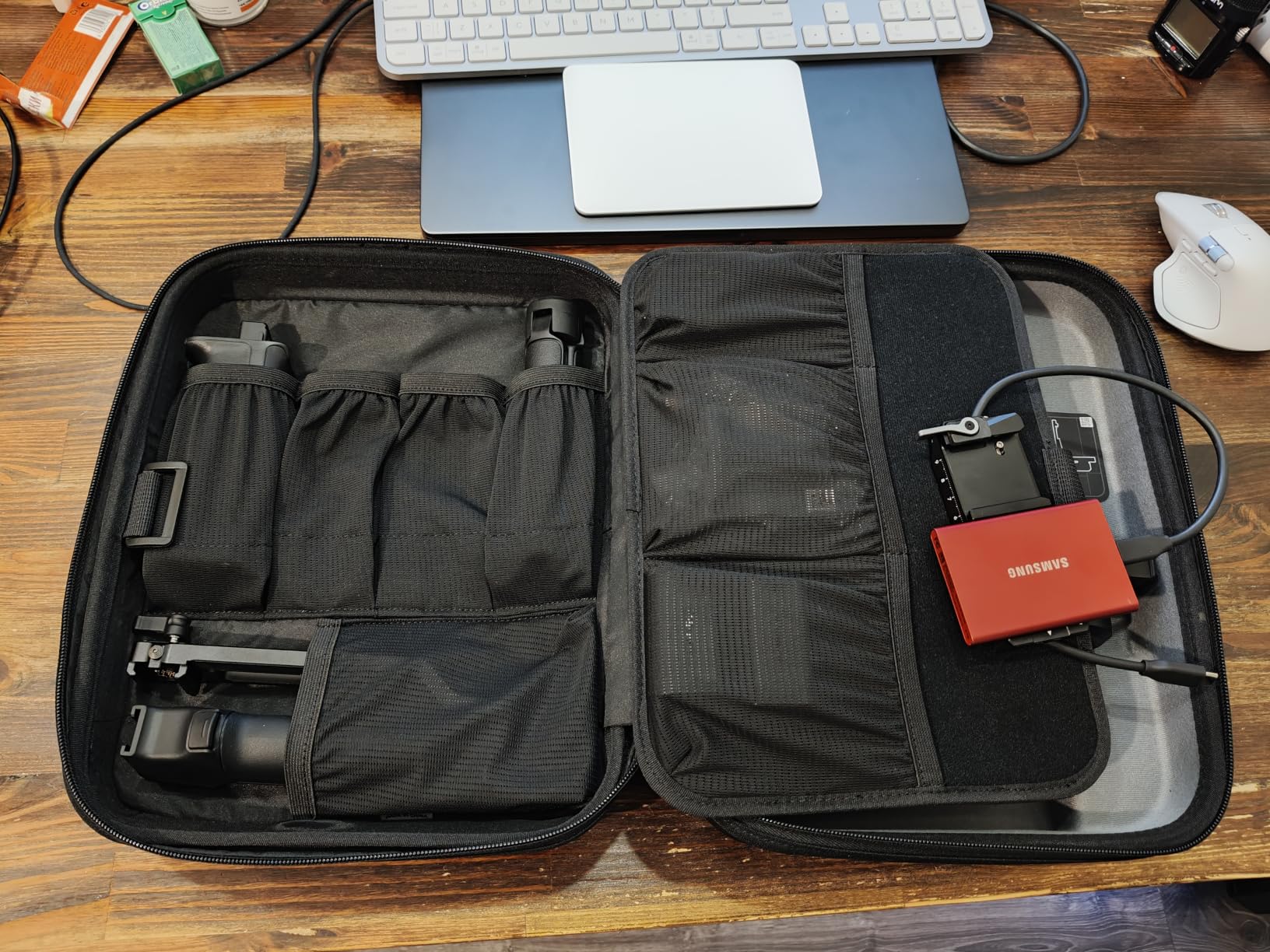
Out of the box this is one of the most complete packages in the group: gimbal, tracking module, electronic briefcase handle, quick-open tripod and battery grip. That matters more with a long lens than it does with a run-and-gun kit, because every accessory that would otherwise sit in your bag is already in the case.
The balancing hardware is the real story. Fine-tuning knobs sit on each axis arm and Teflon interlayers between the knob and the arm, so a front-heavy 400mm prime can be dialled in without the arm slipping as you tighten. The Z-Axis indicator reports balance status on screen, which turns a two-minute guess into a thirty-second check.
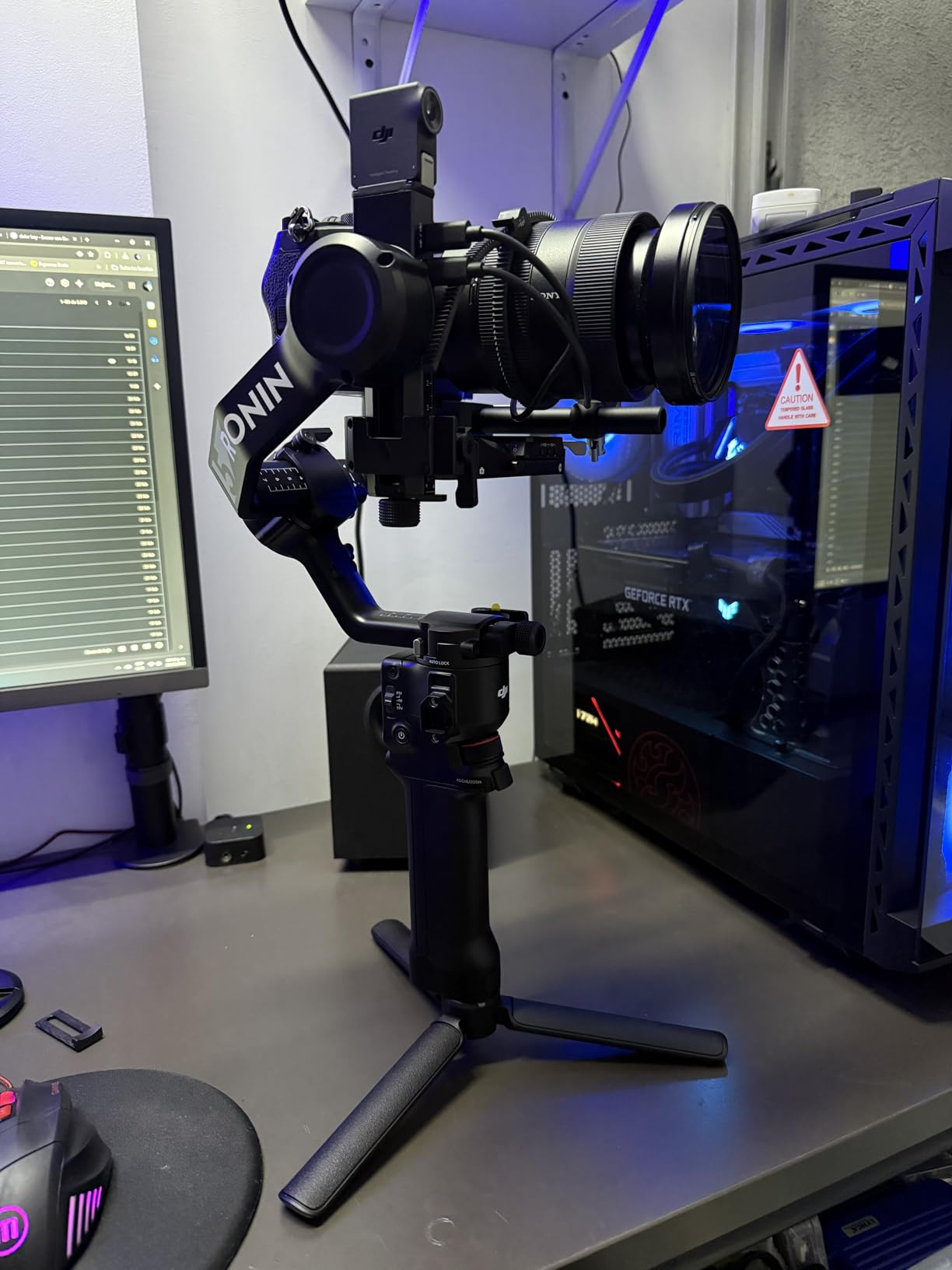
We balanced a body with a 200-600mm class zoom and it behaved like a much lighter rig. The second-generation automated axis locks are the feature we appreciated most in the field, because locking the axes for a car park and unlocking for a shot takes one press instead of three separate levers.
The electronic briefcase handle is genuinely useful for low angles and for panning under a long lens, where a conventional handle puts your supporting hand in an awkward position. Owners also praise the tracking module for locking onto a subject and holding it while you reposition.
How it handles a super-telephoto rig
This is the gimbal we would put on the biggest kit in our collection without hesitation. The axis arms have enough authority that the motors do not visibly strain, which is the failure mode you feel as a low hum and see as micro-vibration in the finished file.
Automatic axis locks let you carry it one-handed to a position, then unlock and start moving. With a 14 hour standby figure and 60% faster charging, battery anxiety stops being part of the decision.
Where the RS 5 falls short
The menu system and tracking options take real time to learn, and the advanced settings are not self-explanatory. Budget an evening with it before a paid shoot rather than during one.
Buyers also report that heavy setups become tiring over long shooting days, which is a property of the weight class rather than a fault in the design. And with the Ronin app no longer served through Google Play, your phone setup is an extra step on day one.
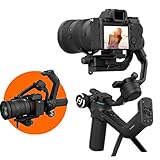
2. FeiyuTech SCORP-C – Best All-in-One Setup, Light on Payload
FeiyuTech SCORP-C Gimbal Stabilizer for Cameras DSLR and Mirrorless Camera
Pros
- Integrated hanging handle removes the need for a separate tripod
- Folded aileron bracket saves bag space
- Five-way center of gravity adjustment with memory slider
- Wide body compatibility across the major brands
- Long runtime with 18W fast charging
Cons
- 2500 g payload ceiling rules out the biggest telephoto combinations
- Plastic construction feels less substantial than metal pro gimbals
- Third-party control cables needed for full shutter control
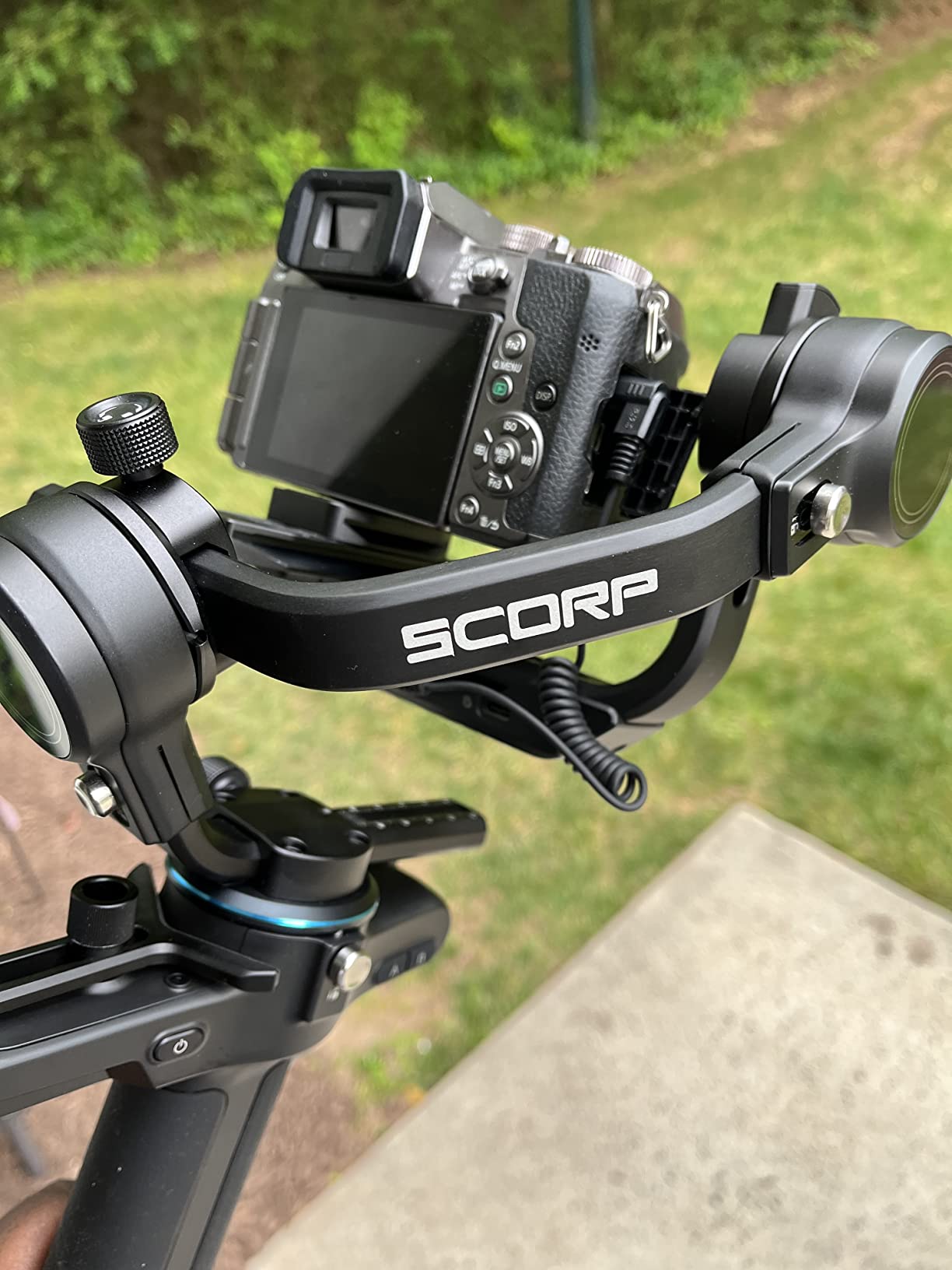
The SCORP-C is the one gimbal here you can genuinely carry all day. At 1.2 kg for the body and handle combined, it is a fraction of the weight of the pro gimbals, and the integrated hanging handle plus folding aileron bracket mean you are not assembling a tripod every time you stop moving.
Balancing is where the design is smartest. Five-way centre-of-gravity adjustment with a memory slider lets you save a position and return to it, which matters when you alternate between a body with a short lens and one with a long zoom.
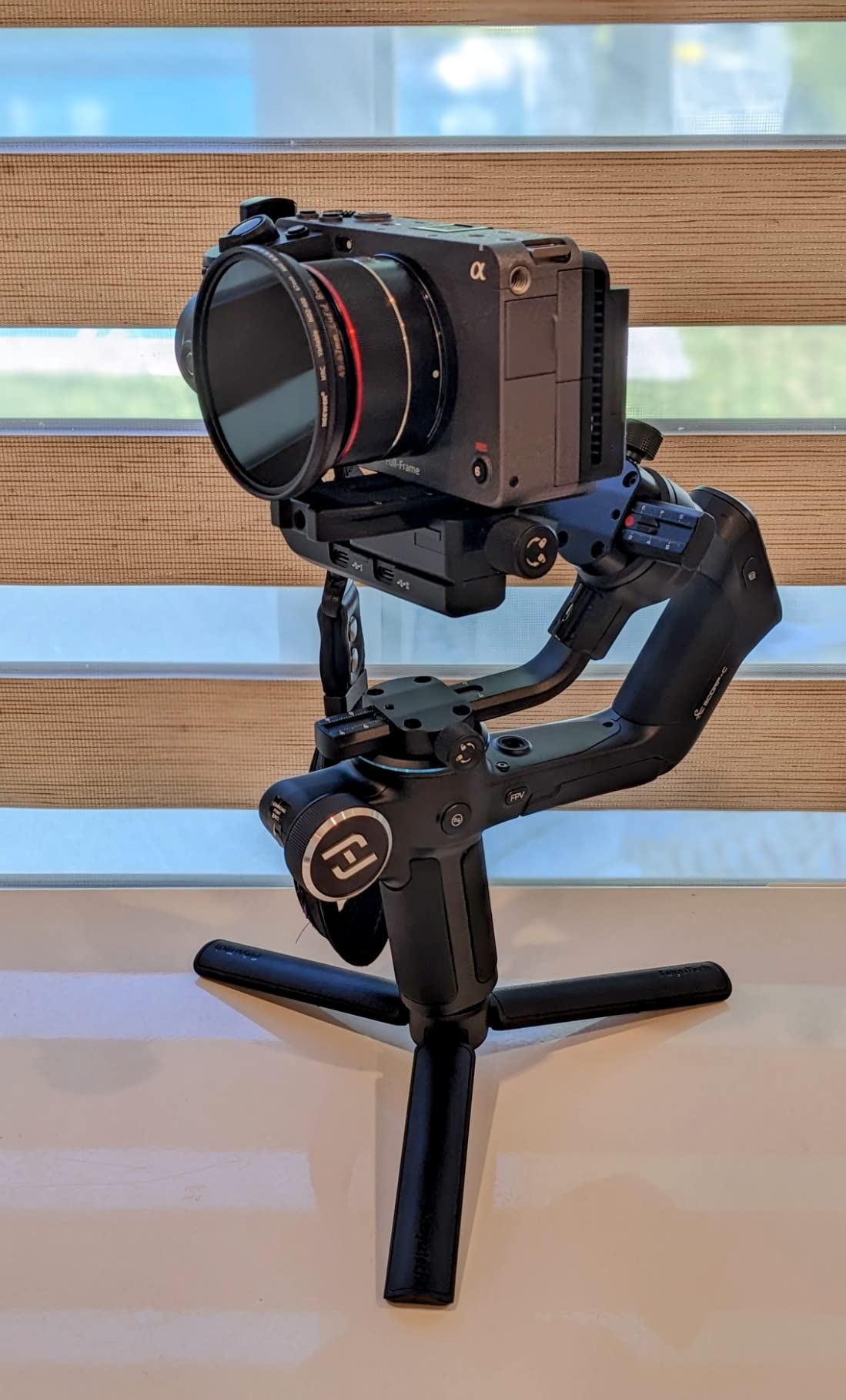
Owners consistently highlight the beveled handle for both upright and underslung shooting, and the installation process, which is closer to level-and-go than most gimbals of this size. The 2500mAh battery delivers a 10-13 hour maximum runtime with 18W fast charging.
Compatibility covers Sony, Canon, Nikon, Panasonic, Fujifilm and Sigma bodies, so the body brand is rarely the deciding factor. The list of modes includes AB trajectory memory, flash mode, panoramic, time-lapse, space mode and vertical shooting.
How it handles a telephoto rig
For a 70-200mm f/2.8 on a full-frame body, this is comfortable and stable. The 2500 g rating covers that combination with room to spare, and the low body weight means you are not fighting arm fatigue during a long pan.
It is also a good teaching gimbal. The memory slider and the simple axis lock make it easy to learn where payload limits actually live, which is useful if this is your first motorized gimbal.
Where the SCORP-C falls short
The 2500 g ceiling is the defining limitation. A 200-500mm zoom on a pro body, or anything with a big cinema lens, is outside what the motors can hold, and buying into this class hoping it will stretch is the most common error we see in heavy-telephoto buyers.
The plastic construction also reads as less premium than the metal-bodied pro gimbals, and you will likely need to buy control cables separately to get full shutter and record control.
3. DJI RS 4 Pro – The Torque and Payload Specialist
Pros
- 4.5 kg payload with 20% more motor torque
- Carbon fiber axis arms cut weight at the pivot
- Teflon-coated arms make fine balance adjustment precise
- LiDAR autofocus with 76800 ranging points within 20 m
- 2nd-gen native vertical shooting without a rebalance
Cons
- Bulkier and heavier than travel gimbals on long days
- Steep learning curve for balancing and calibration
- Some reports of an early mechanical tilt-axis fault
The RS 4 Pro is the one to buy when the rig is a video rig, not a camera with a long lens bolted on. A 4.5 kg (10 lb) payload with 20% more motor torque than the previous generation covers fully rigged cinema bodies, and the carbon fiber axis arms keep the moving mass down where it matters most.
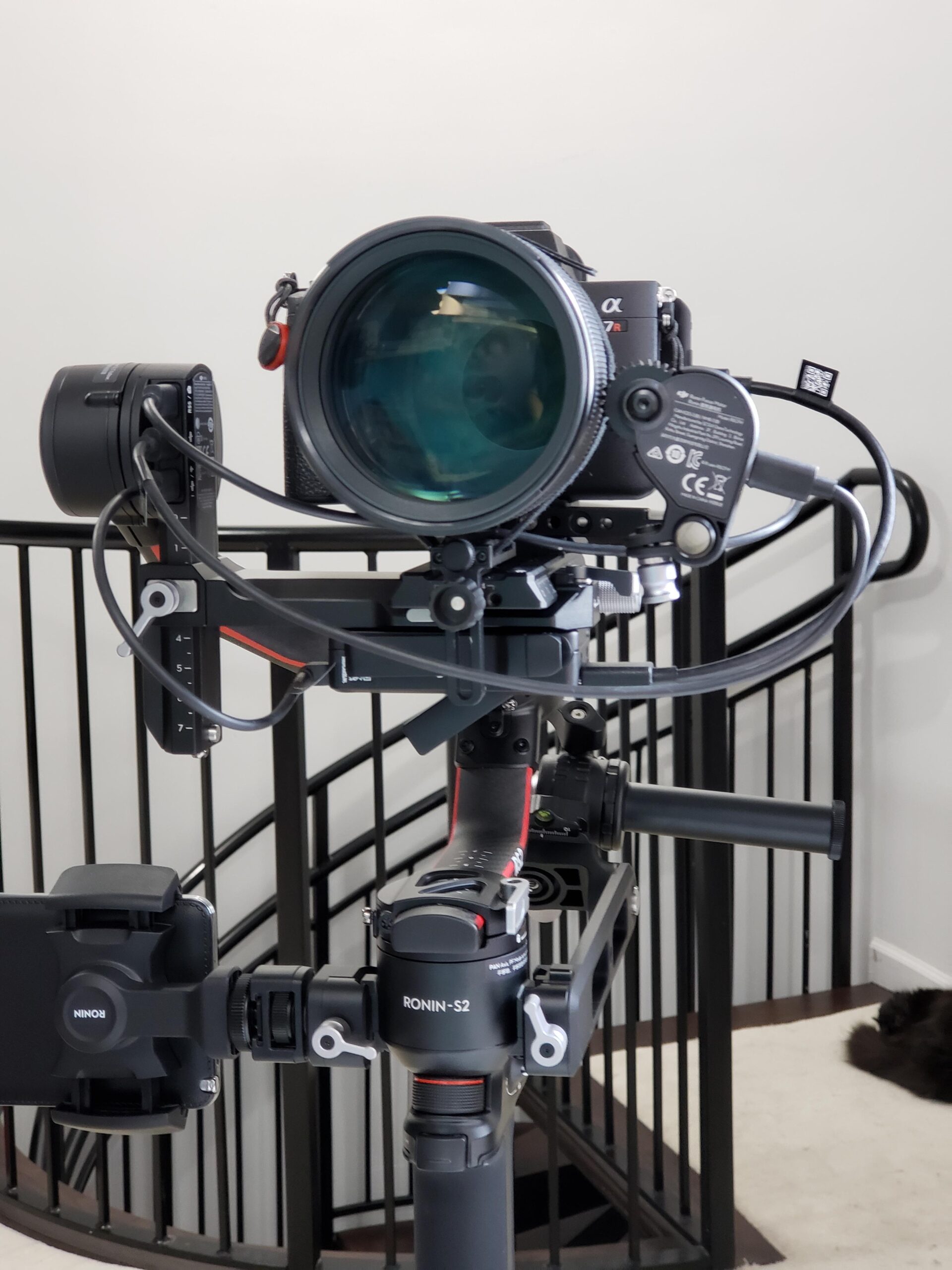
Balancing a heavy telephoto setup is straightforward on this gimbal. The Teflon-coated arms let you slide the axis to fine-tune without the plate creeping, and the second-generation native vertical shooting means switching orientation does not cost you a full rebalance.
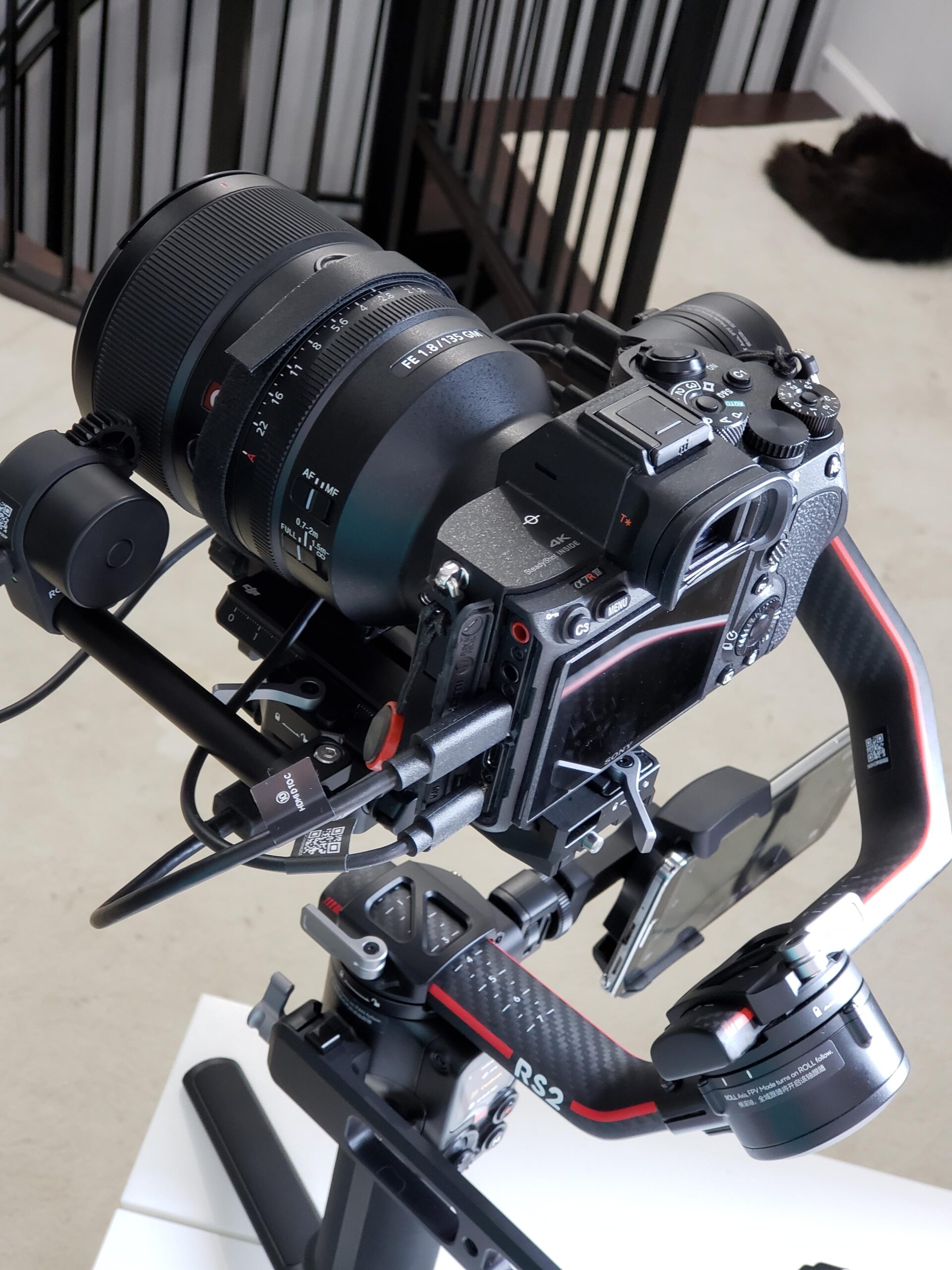
Focus is the other headline. The Focus Pro LiDAR puts 76,800 ranging points inside a 20m radius, and the remote dual focus and zoom motor control through the joystick mode switch makes a long-lens focus pull repeatable rather than improvised.
Runtime is the quiet strength. With the DJI RS BG70 battery grip sold separately, the quoted figure extends to 29 hours, which covers a multi-day wildlife documentary shoot on one charge setup.
How it handles a heavy telephoto rig
This is the gimbal that will not flinch when you mount a long zoom and a rigged body together. Cinematographers report it balancing BMPCC 6K, FX3 and fully rigged Lumix bodies without complaint, and the motor strength shows in how little the arms strain under load.
It holds steady for long walk-and-talk sequences on a single charge, and the automatic axis lock and unlock is very fast in practice.
Where the RS 4 Pro falls short
It is bulkier and heavier than lighter travel gimbals, and that weight accumulates over a long shooting day. The learning curve for balancing, calibrating and the advanced modes is real.
A small number of buyers reported a mechanical tilt-axis fault shortly after purchase, and the included briefcase handle is functional without being refined. Some bodies with side-mounted HDMI ports also make monitor routing awkward.
4. NEEWER GM101 – Top Rated Gimbal Head for 600mm Class Glass
Pros
- Carries rigs like a D500 with a 200-500mm plus teleconverter
- Smooth on all axes including in near-freezing conditions
- Micro-adjustment lets you dial it from stiff to flexible
- Lock knobs stay usable with gloves on
- Backed by responsive customer service
Cons
- 3.7 lb is a large carry item on long hikes
- Base panning knob can feel loose until fully tightened
- Short supplied Arca plate is marginal for very long lenses
Look at the review data and this is the value pick by a wide margin. It carries 4.5 stars across 598 reviews, and wildlife and sports photographers report it smoothly handling 200-500mm, 400mm and 150-600mm lenses on both DSLR and mirrorless bodies.
The construction is an integrated aluminum alloy load-bearing structure with a bearing layout designed for smooth, accurate swivel and rotation. The 30 lb (13.6 kg) rating is far more than most long-lens combinations need, which means you are buying headroom rather than buying a limit.

The features that matter in the field are the small ones. The height scale on the swing arm makes lens positioning repeatable, the bubble level speeds up setup, and the 1/4 inch and 3/8 inch sockets at the base fit almost any tripod. The micro-adjustment lets you set the head anywhere between stiff and flexible, which is how you match it to a bird’s movement.
Large, easy-to-turn lock knobs are a genuine advantage at dawn in cold weather, and reviewers mention smooth operation in near-freezing conditions.

Best for long-lens stills on a budget
If you shoot birds or sports and your current head is a ball head, this is the upgrade that changes how the rig behaves. A 400mm on a ball head creeps and swings; on this head it stays where you put it until you move it deliberately.
It also suits a zoom lens used across its range, which is where cheaper heads tend to lose the plot. The calibrated height scale keeps you from hunting for balance every time you change focal length.
Where the GM101 falls short
At 3.7 lb the head itself is heavy, and on a long walk you notice that on top of an already substantial kit. It is a destination piece rather than a run-and-gun piece.
The supplied Arca plate is short and can be marginal on very long lenses, and reviewers note that running a zoom through its range can shift balance enough to require retensioning. Tighten the base panning knob firmly on first use.
5. K&F CONCEPT 20 kg Gimbal Head – High Payload on a Budget
K&F CONCEPT Aluminum Alloy 360 Degree Panoramic Gimbal Tripod Head with 1/4” Standard Quick Release Plate and Bubble Level,Load Capacity up to 20kg/44lbs
Pros
- 6061 aluminum rated to 20 kg with sealing rings
- Third-generation grease gives very smooth movement
- Calibrated platform scale simplifies center of gravity setup
- One-hand axis locking needs minimal force
- Owners report it matching heads costing many times more
Cons
- Weighty to carry on long walking safaris
- Supplied quick release plate is small for very large lens collars
- Pan lock knob can need re-levelling after locking
The load rating here is 20 kg (44 lb), which is roughly double what most long-lens setups weigh and well beyond what you need. What you are actually buying with that number is stiffness. A head that does not flex when a 600mm swings is the whole point of the exercise.
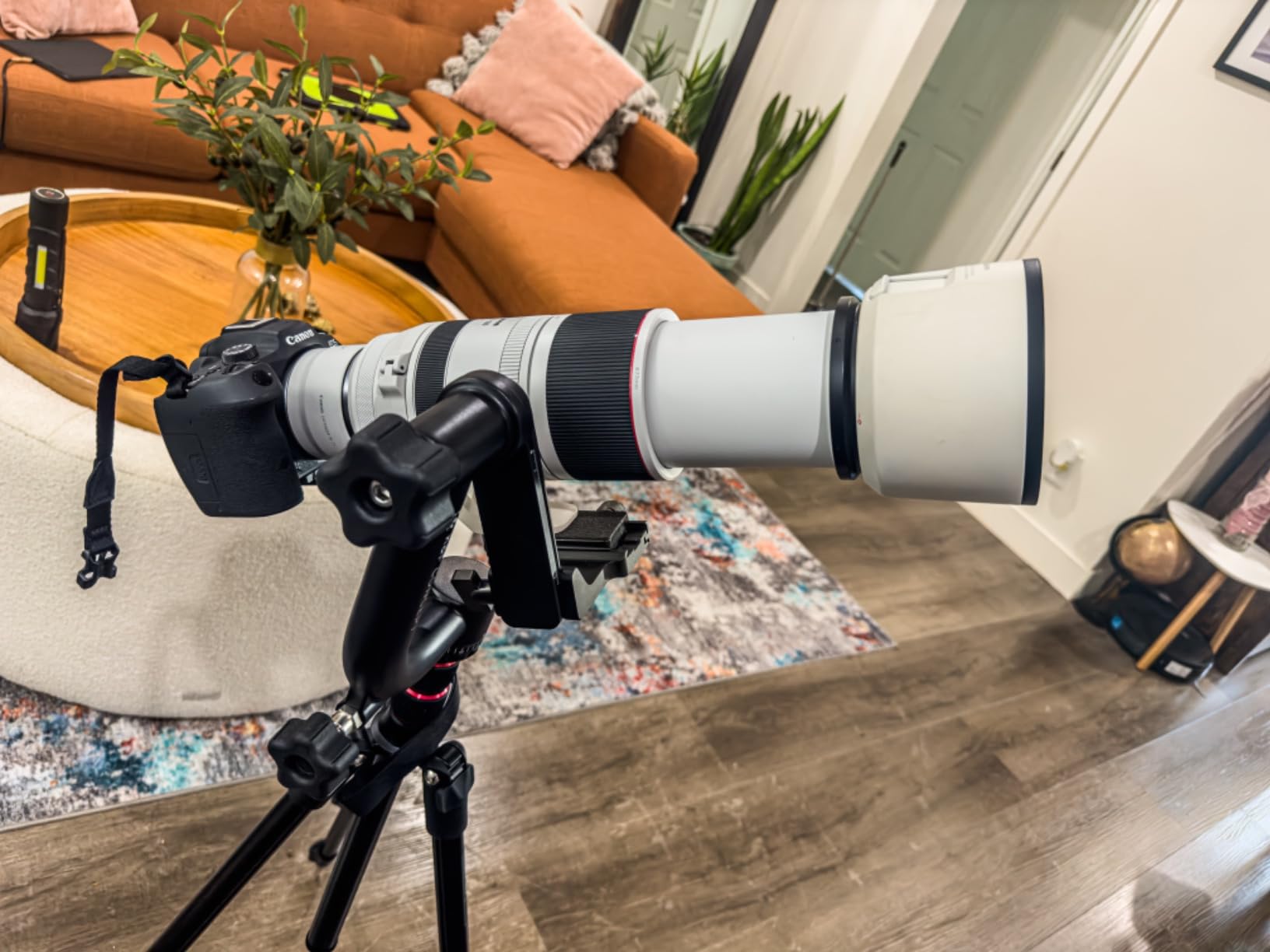
Owners report holding a Sony A7V with a Sigma 150-600mm, or a Z9 with an 180-600mm, at any angle without the platform shifting. The third-generation grease with sealing rings is credited with a 0% leakage rate and noticeably smoother movement than older designs.
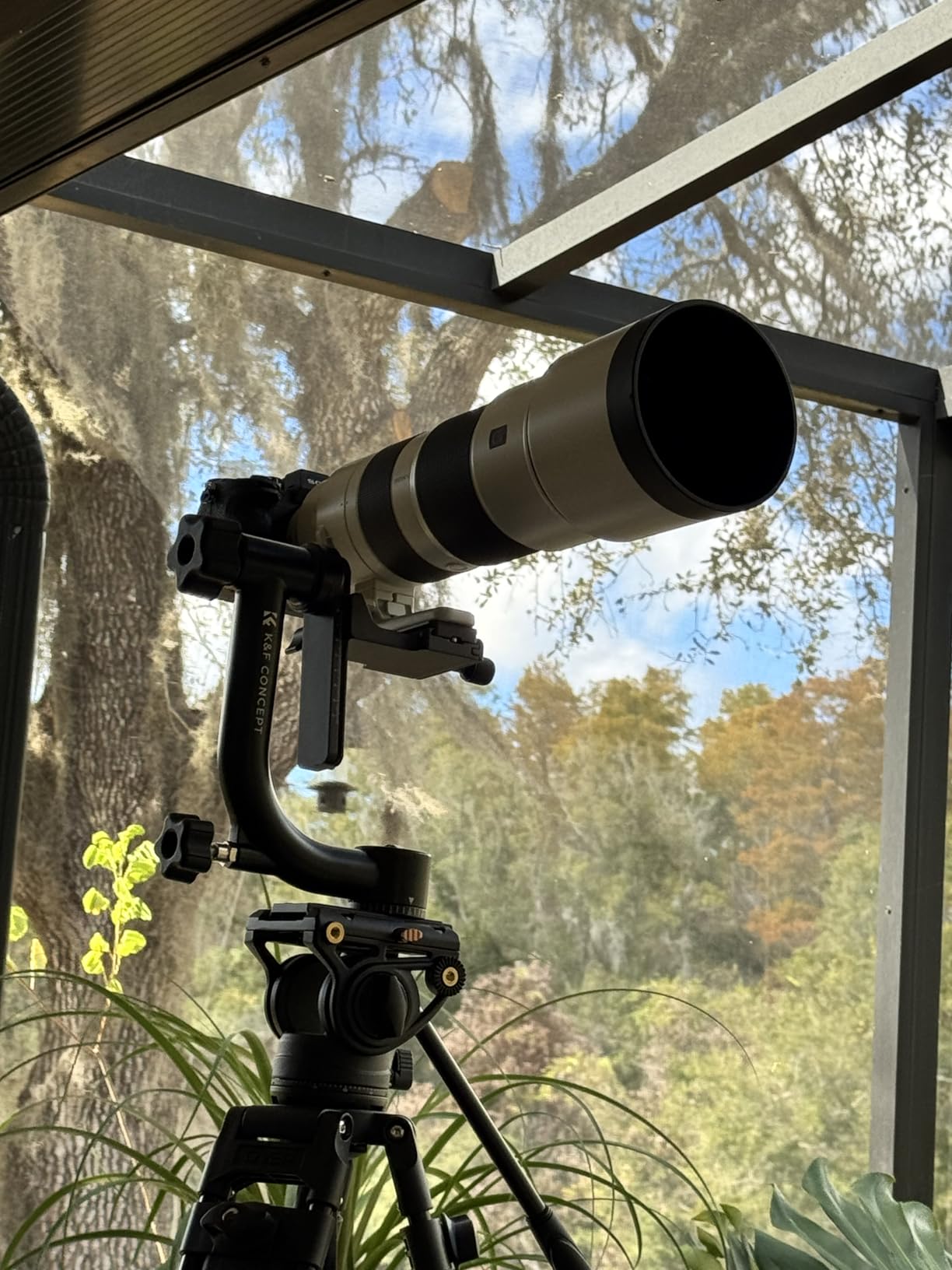
Setting it up is straightforward thanks to the horizontal lens platform adjustment with a calibrated scale. You slide the platform until the scale lines up rather than lifting the whole rig repeatedly to test balance, and the head rotates 360 degrees on both the base and the vertical arm.
One-hand axis locking that needs minimal force is a real advantage when you are working in gloves with a big lens hanging off the end.
Best for very heavy super-telephoto setups
If your combination sits at the top of the weight range, this is the head that will not complain. The 20 kg rating covers a 400mm f/2.8 on a pro body with a cage, which is exactly where lighter heads start to feel vague at full extension.
Multiple reviewers describe the performance as comparable to or better than heads costing several times more, which is an unusual claim to see repeated across that many reviews.
Where this head falls short
At 3.2 lb it is heavy to carry, and on a walking safari the head is the first thing people wish they had left in the vehicle. Bulk and weight are the most common complaint in the reviews.
The supplied quick release plate is smaller than ideal for very large telephoto lens collars, and the pan lock knob can need re-levelling after locking. Instructions also give limited guidance on tripod mounting.
6. ZHIYUN Weebill 3E – The Lightest Handheld Gimbal at 3 kg
ZHIYUN CINEPEER Weebill 3E, 3-Axis Lightweight Gimbal Stabilizer for DSLR & Mirrorless Camera Canon/Sony/Panasonic/Nikon, 3KG Payload, Native Vertical Shooting, Bluetooth Shutter Control
Pros
- 990 g body carrying a 3 kg payload
- Native vertical shooting with no extra accessories
- 16 hour battery with 14W PD fast charging
- Comfortable handle through long sessions
- The wide axis arm cradles very different body sizes
Cons
- Only the Panasonic control cable is included
- 3 kg is modest for large telephoto or cinema rigs
- Sling grip and wrist rest are extra purchases
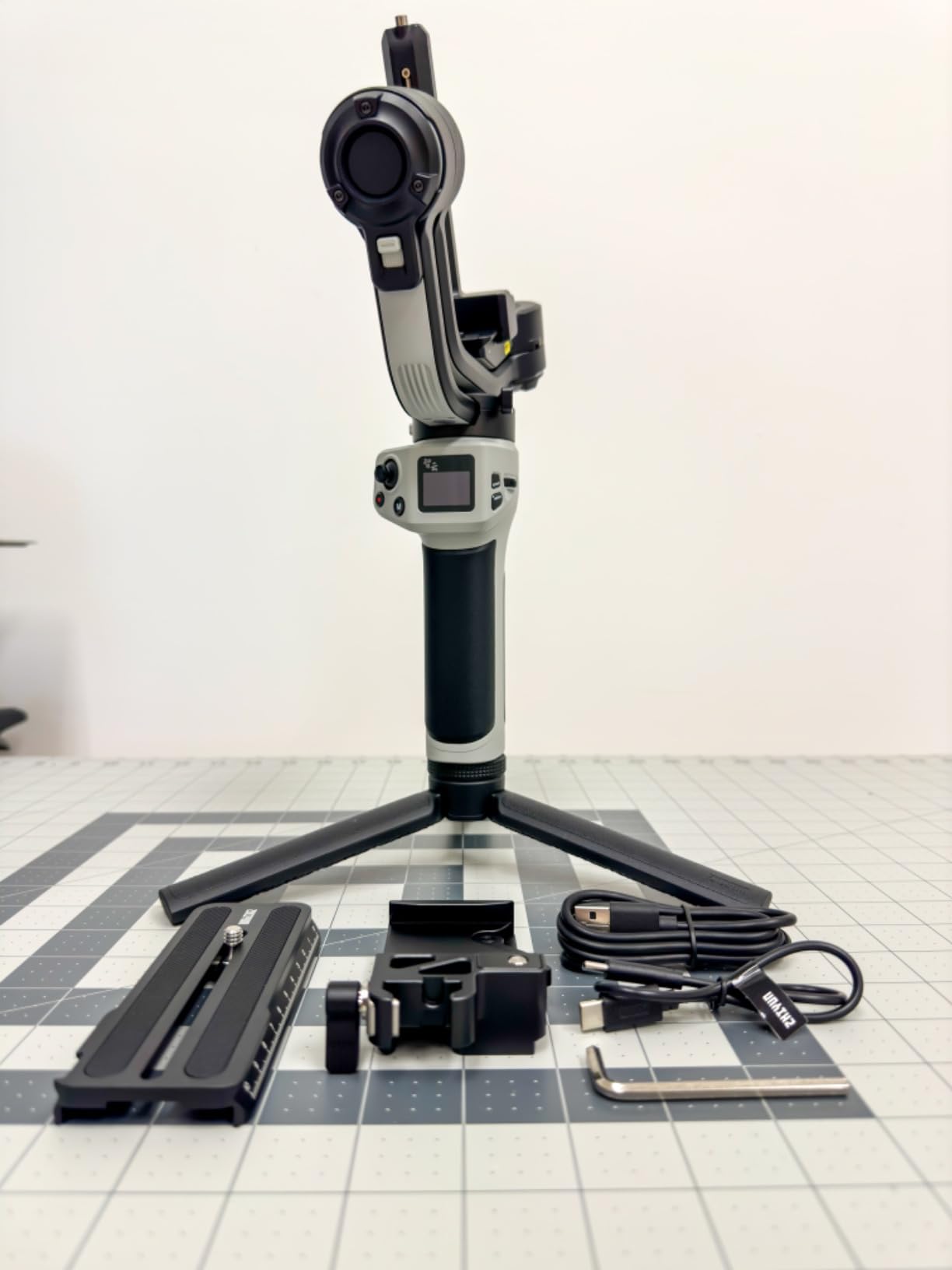
The Weebill 3E is the payload-to-weight ratio story in this list. It carries 3 kg (6.6 lb) on a body of roughly 1 kg in an A4-paper-sized package, and at 4.4 stars from 442 reviews it is one of the better-rated gimbals we looked at.
Native vertical shooting comes through the quick release plate on the vertical arm, so switching orientation does not mean rebuilding the balance. That matters more than it sounds when you are moving between a horizontal follow shot and a vertical insert on a long lens.
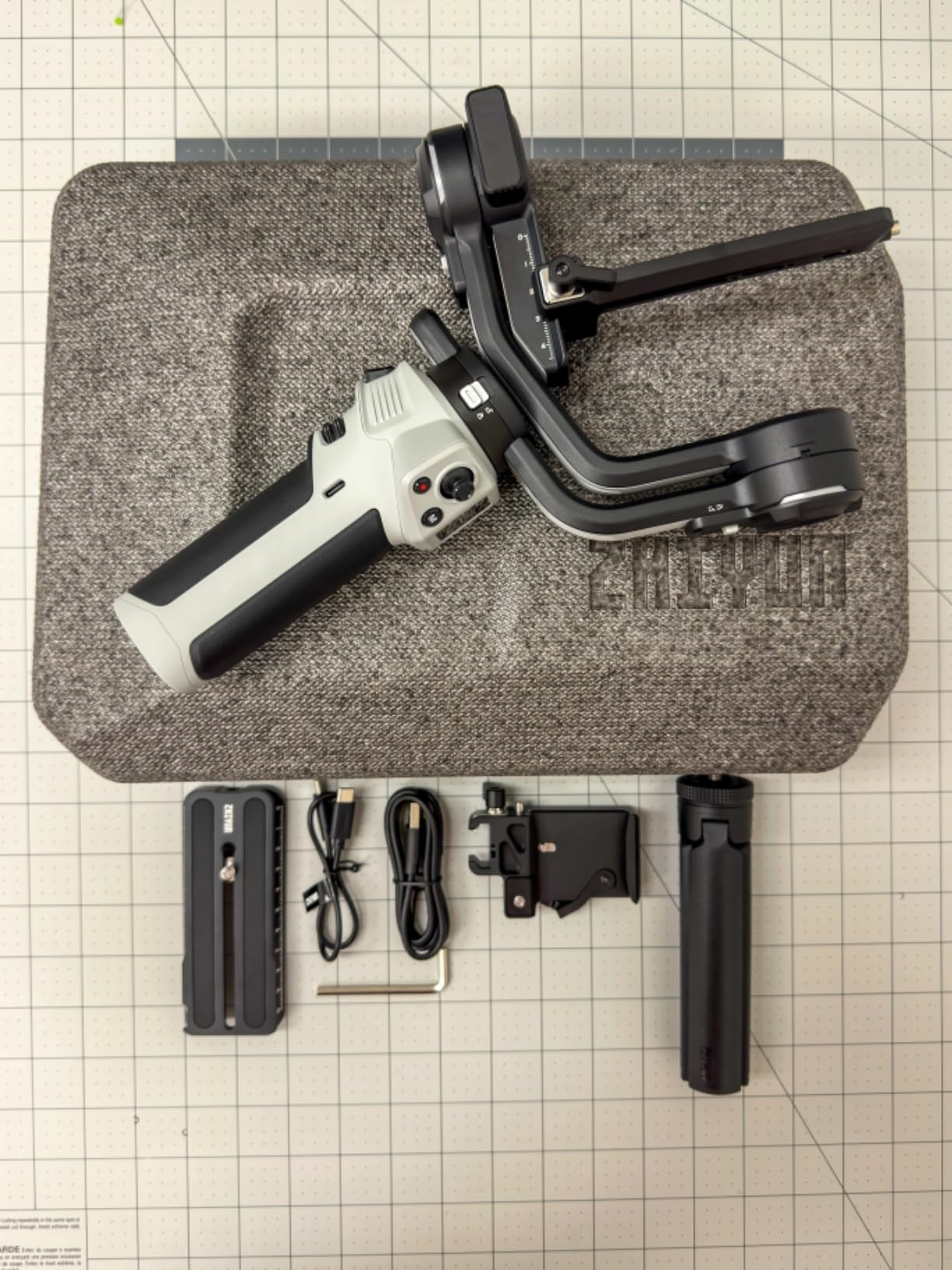
The 2.5 Sling Mode with a telescopic sling grip and wrist rest, sold separately, is designed to cut fatigue by more than half. For a heavy rig that is a worthwhile accessory rather than an upsell, because the alternative is a shorter shoot.
Battery life is quoted at up to 16 hours with 14W PD fast charging and a 2 hour 46 minute charge time, so a long day does not revolve around a power bank.
Best for medium telephoto and travel work
A 24-105mm, a 70-200mm f/2.8 on a lighter body, or a 100-400mm class zoom on a compact body all sit comfortably inside the 3 kg rating. The wide axis arm is documented as cradling anything from a 16-55mm f/2.8 kit upward.
For solo creators who move between locations on foot, a gimbal this light changes how often you are willing to take it out, and that is the factor that decides whether a stabilizer gets used at all.
Where the Weebill 3E falls short
Three kilograms is simply not enough for the biggest telephoto glass on a pro body, and it is worth being blunt about that. If your rig is at the top of the weight range, this is the wrong class of product.
Only the Panasonic control cable ships in the box, so Sony, Canon and Nikon users need to buy their cable separately, and the sling grip and wrist rest are also extra.
7. SIRUI PH-10 – The Lightest Long-Lens Head You Can Carry
SIRUI PH-10 Gimbal Head, 360° Panoramic Tripod Head, 15kg, 600mm Telephoto
Pros
- 980 g body with a 15 kg rating is unusually portable
- Very smooth damped movement with easy resistance adjustment
- Holds position firmly once set
- Large knobs work with thick gloves
- Handles long combinations such as a 200-600mm
Cons
- Some Sony 200-600mm setups need a third-party lens foot
- Platform height adjustment has no dampening
- Head can loosen on the tripod when the rig is carried
The Sirui PH-10 solves the problem that stops people carrying a proper gimbal head into the field. A 10-layer carbon fiber body weighing 0.98 kg with a 15 kg (33 lb) rating is a combination you do not normally see, and at 4.6 stars from 215 reviews it sits at the upper end of the ratings in this roundup.
That rating covers long telephoto lenses, specifically the 200mm to 600mm class. Four independent locking knobs control track friction, base rotation, the sliding platform and the quick release plate, so you can set resistance independently of position rather than trading one against the other.
Wildlife photographers describe the movement as buttery smooth with well-damped, easily adjustable resistance, and note that once set, the head holds position firmly so your framing is not lost when you take a hand off. Multiple sizes exist in the PH series for different payloads.
Best for portable long-lens stills
This is the head for someone who wants gimbal-head behaviour without a 3 lb block of metal in the bag. The large knobs are easy to grip with thick gloves, and the 360-degree swing arm plus panoramic base cover both axes of movement you need for tracking.
The quick release plate carries precision scale marks, plus 1/4-20 and 3/8 accessory screws, and there is a universal 3/8 screw port at the base. Build quality is a recurring theme in the reviews, with r/Nikon users specifically recommending a Sirui carbon head over a ball head on build quality at the price.
Where the PH-10 falls short
Some Sony 200-600mm setups need a third-party replacement lens foot to balance correctly, which is an extra step and an extra part. Platform vertical adjustment has no dampening, so the platform drops as soon as you loosen the knob and a long lens follows it down.
One buyer also reported the head loosening on the tripod when the full rig was carried, and another had a slow customer support response. Neither is universal, but both are worth knowing before you rely on it alone.
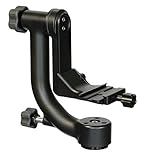
8. Wimberley WH-200 – The Reference Gimbal Head for Wildlife
Pros
- Highest rated product here at 4.8 with no one-star reviews
- Accurate weight distribution recenters almost any combination
- Keeps the camera level through tilt while panning
- Very fluid base that feels nearly weightless
- Made in USA and backed by a 10-year warranty
Cons
- Much heavier and bulkier than budget heads on a long walk
- Expensive next to entry-level alternatives
- Some small-thread tripods need an adapter screw not included
This is the head most long-lens photographers end up with eventually, and the numbers back that up. At 4.8 stars from 203 reviews, with 93% five-star and no one-star ratings at all, it is the highest-rated product in this entire guide. Forums describe it as the way to go for bird photography.
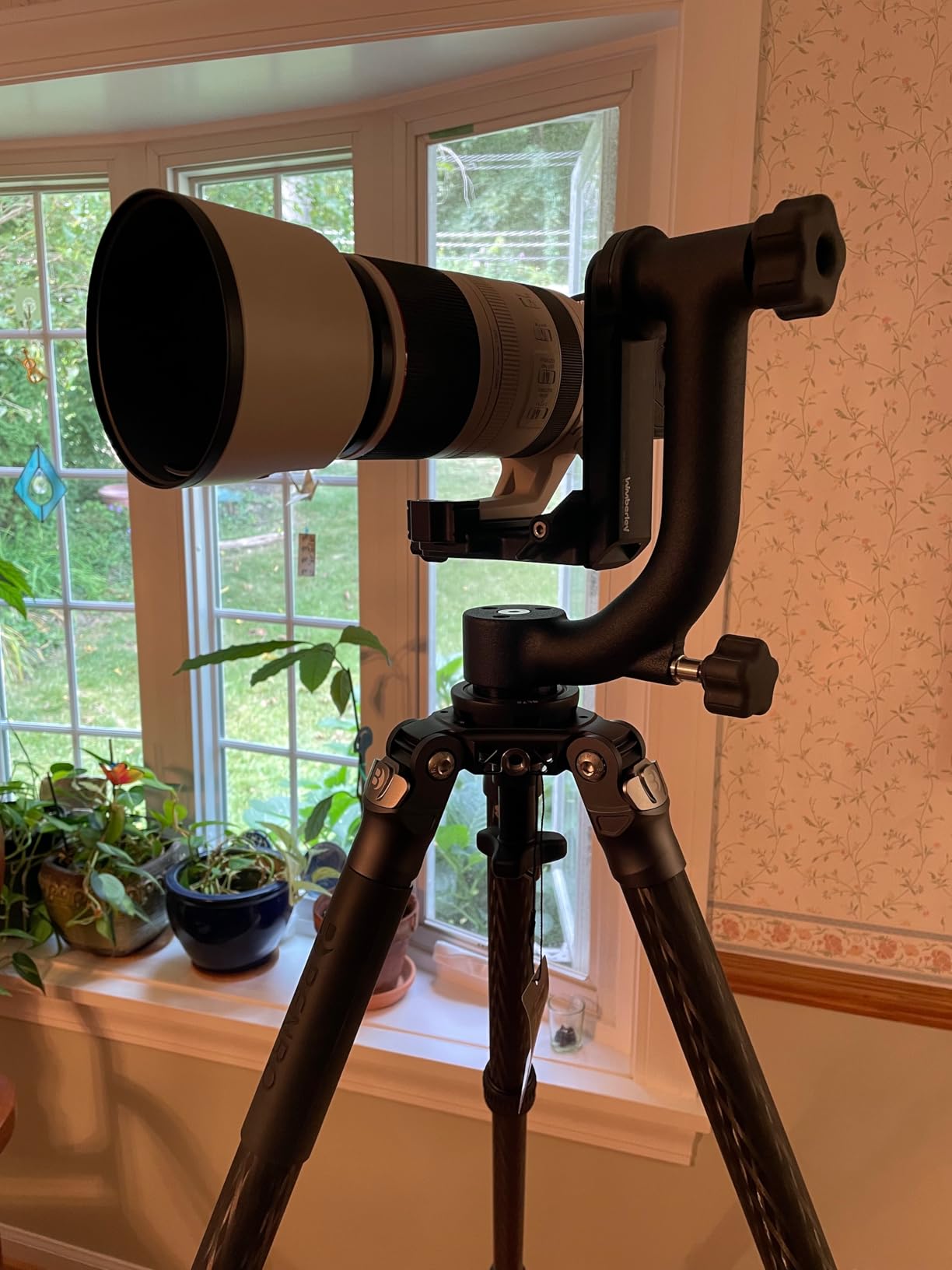
The design is the classic gimbal solution: the lens rotates around its centre of gravity rather than pivoting from a ball. Releasing the clamp slightly recenters almost any medium or telephoto combination, so a 200mm and a 600mm can share one setup.
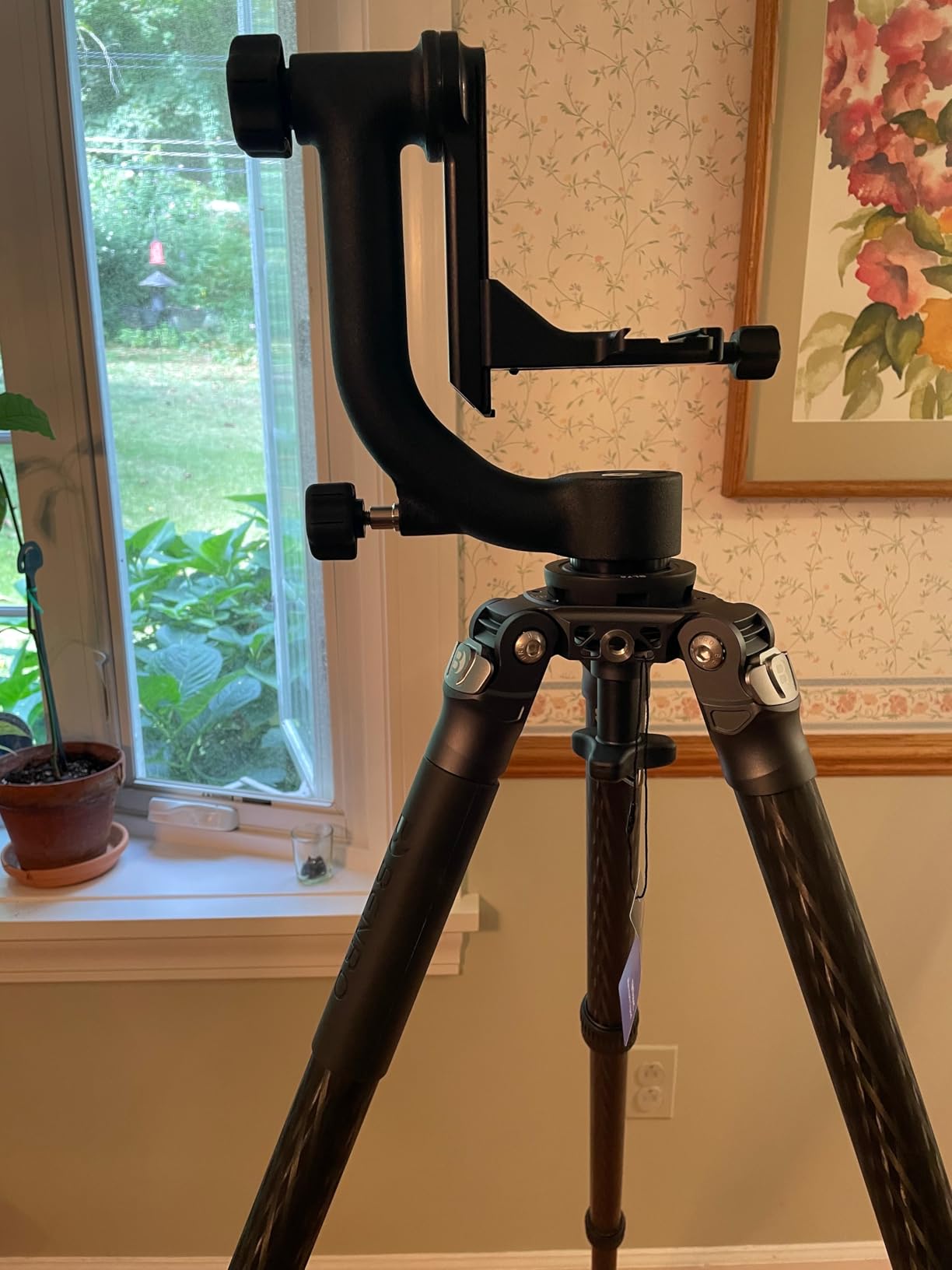
Owners describe a panning base that feels nearly weightless, and the fact that it keeps the camera level through tilt while panning removes levelling from post-production entirely. Several reviewers specifically mention that it takes the full weight off the camera and noticeably improves tracking of birds in flight.
Construction is where the price goes: an anodized 6061 aluminum clamp, powder coated aluminum upright, stainless steel fasteners, and a handle bar for extra support and one-handed operation. It is made in USA and assembled in Charlottesville, Virginia, with a 10-year manufacturer warranty.
Best for serious wildlife and long-term reliability
If your photography pays for itself, the WH-200 is the buy. The accuracy of the weight distribution system means you spend your attention on the bird rather than on the head, and the stiffness holds up as focal length climbs well past 500mm.
For panning and for following a fast subject, the fluid base reduces the perceived weight of the rig to almost nothing. A r/SonyAlpha owner running a 200-600mm reports a Wimberly-style head made a noticeable difference over a conventional head.
Where the WH-200 falls short
At 3.2 lb it is a substantial carry item, and on a long walk with a 600mm already on the tripod, that adds up. It is not a travel head.
The cost is high next to entry-level alternatives, some tripods with small centre threads need an adapter screw that is not included, and if your lens does not already have a lens foot you will need to buy one before it balances properly.
9. ZHIYUN Weebill 3S – Best for Low-Light Long-Lens Video
Pros
- Built-in 1000 lux fill light with 2600K-5500K colour temperature
- Native horizontal and vertical switching in about 3 seconds
- 11.5 hour runtime with a 2 hour PD charge
- Sony Canon and Panasonic control cables included
- Status screen gives at-a-glance information
Cons
- 3 kg payload is the smallest rating in this roundup
- 1080p video capture resolution listed for the device
- 0.96 inch screen is small for adjusting many parameters
The reason to look at the Weebill 3S over other 3 kg gimbals is the built-in 1000 lux dual colour temperature fill light, adjustable from 2600K to 5500K and equivalent to a 6W pocket light. On a dawn wetland shoot with a long lens, that is a light you do not have to carry.
Native horizontal and vertical shooting switches in about three seconds through the quick release plate, which keeps the same balance between orientations. The 10th generation honeycomb algorithm with retuned follow and smoothing curves is what makes the movement read as natural rather than mechanical.
![ZHIYUN Weebill 3S [Official] 3KG Payload Gimbal Stabilizer with Fill Light customer photo 1](https://markus-hagner-photography.com/wp-content/uploads/2025/11/B0C1Z9HLY2_customer_1.jpg)
Power is handled by two 2600mAh batteries for an 11.5 hour runtime, with a two-hour PD fast charge. A 0.96-inch function status screen shows the essentials, and Bluetooth shutter control with Sony, Canon and Panasonic cables included means you are not buying accessories on day one.
At 4.2 stars from 181 reviews with 62% five-star, owner satisfaction is lower than the other ZHIYUN models here, and the reason is almost always the payload rather than the performance.
![ZHIYUN Weebill 3S [Official] 3KG Payload Gimbal Stabilizer with Fill Light customer photo 2](https://markus-hagner-photography.com/wp-content/uploads/2025/11/B0C1Z9HLY2_customer_2.jpg)
Best for medium telephoto and night work
A 3 kg rating covers a typical DSLR or mirrorless body with a 24-70mm f/2.8, and the fill light extends that into low-light and backlit situations where a long lens would otherwise need a separate light on a cold shoulder.
For a nature documentary where the subject is rarely within 200mm of the camera, this is a capable, self-contained kit.
Where the Weebill 3S falls short
The 3 kg payload is the joint-smallest rating in this guide alongside the Weebill 3E, and it rules out the heaviest telephoto and cinema-lens combinations outright. If your rig is the reason you are reading this article, this is not the one.
The 0.96-inch screen is small when you are adjusting several parameters at once, and the listed video capture resolution is 1080p.
10. ZHIYUN Crane 4 – Best for Full Cinema Rigs
ZHIYUN Crane 4, 3-Axis Gimbal Stabilizer for DSLR and Mirrorless Camera, Nikon Sony Panasonic Canon Fujifilm BMPCC 6K, Fill Light, PD Fast Charge
Pros
- Longer arm and stronger motors for full-frame and compact cinema cameras
- Extended quick release plate handles long lenses properly
- Balance indicator lights on the motors speed up setup
- 10W fill light with CRI 95+ and 3200 lux
- 1.22 inch colour touchscreen with a customisable dial and trigger
Cons
- Bulky and heavy solo
- causing fatigue on long takes
- Optimised for right-handed operation
- Non-removable battery cannot be swapped on location
The Crane 4 is the long-arm, high-payload end of the ZHIYUN range, listed in the 10 kg class, and it is the only gimbal here with that rating. The longer arm length and stronger motors are what let it carry a Sony FX6, a BMPCC 6K Pro or an A7 IV without complaint.
For telephoto work, the extended quick release plate is the feature that matters. A long lens needs plate travel to balance properly, and a short plate leaves you sliding the rig to one end of its range with nothing left to fine-tune. The balance indicator lights on the motors make calibration much faster.
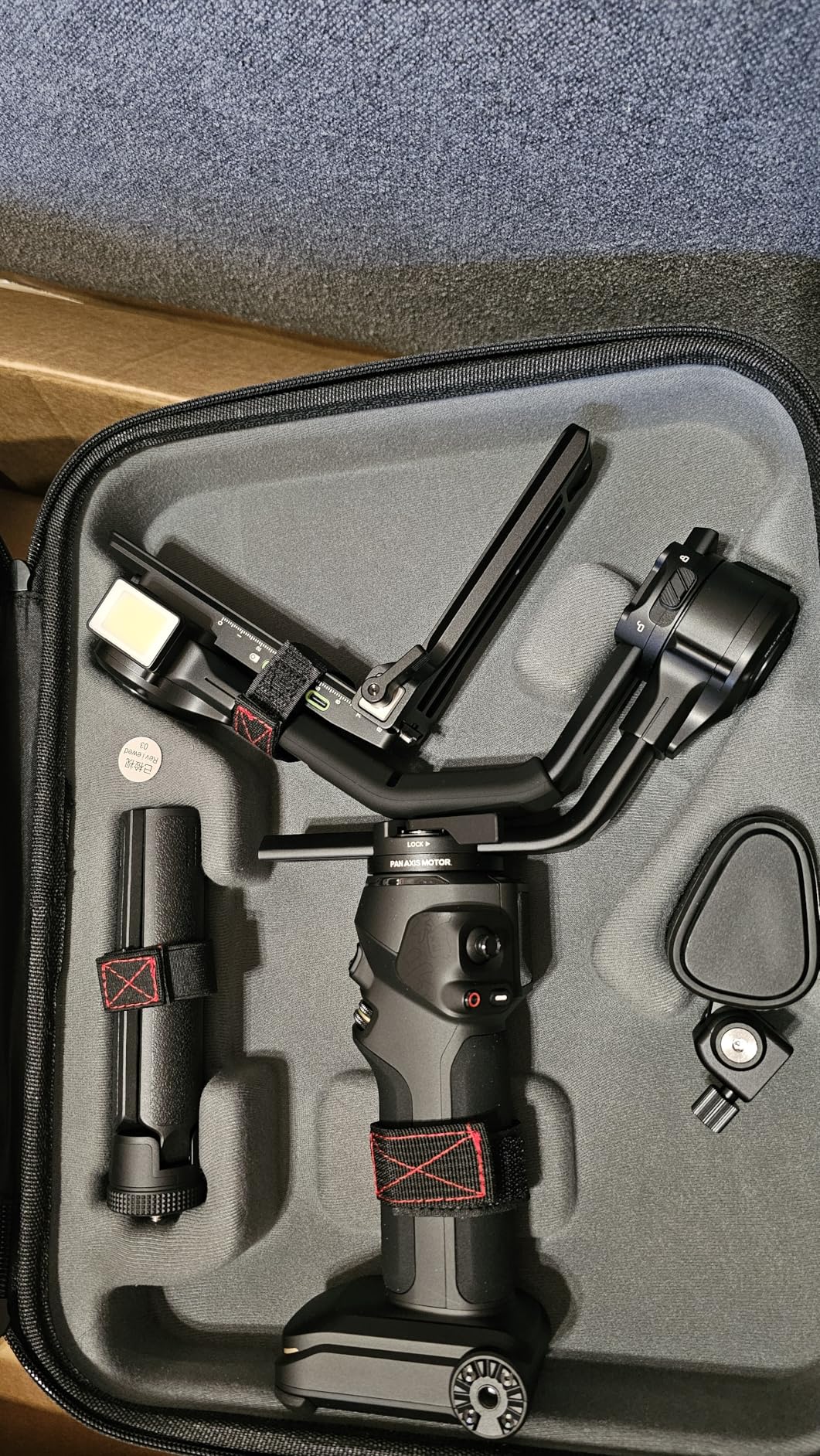
The quick release module has separate horizontal and vertical lock structures, so switching to portrait orientation is a defined action rather than an improvisation. A 1.22-inch colour touchscreen plus a customisable trigger and front dial for ISO, shutter, aperture, focus motor and gimbal modes gives you control without diving into menus.
The built-in 10W fill light reaches 3200 lux at CRI 95+ and 2700K-5500K, and a built-in motion timelapse function is included. PD fast charging gets you a full charge in 1 hour 50 minutes with up to 12 hours of runtime.
Best for cinema bodies and very long lenses
This is the gimbal to pair with the largest glass you can justify. At 4.2 stars from 122 reviews with 62% five-star, the owner feedback is good rather than glowing, but the payload headroom is the point and it is genuinely there.
Reviewers consistently praise the motor strength and the balance indicator lights, and the colour screen is a step up from the small status displays on lighter models.
Where the Crane 4 falls short
It is bulky and heavy when used solo, which causes fatigue on long takes, and the ergonomics are optimised for right-handed operation. The battery is not removable, so you cannot swap it during a long shoot without pausing.
A minority of units arrived with a fault that support resolved, and some reviewers report residual jitter along with difficulty calibrating in vertical mode. Those are worth factoring in if vertical-heavy work is your main format.
How Heavy Is Heavy? Weight Thresholds by Lens Class
The word heavy gets used loosely in this category, so it helps to attach it to specific combinations. A gimbal’s payload rating covers the camera body, the lens, the cage, the battery grip, the focus motor and any cabling. Add it all up, then leave at least 20% headroom.
70-200mm f/2.8 on a full-frame body – typically inside the 2.5 to 3 kg class. Handheld gimbals in the 2.5 to 3 kg group handle this comfortably.
100-500mm or 200-600mm class zoom on a pro body – the most common reason people look past small gimbals. Pair it with a body and you are near 3 kg before accessories.
300mm or 400mm f/2.8 super-telephoto prime – the heaviest realistic stills combination. This is where the 4.5 kg and 10 kg class gimbals earn their place.
Full-frame cinema body with a long zoom, matte box and follow focus – the heaviest video rigs, and the reason the 10 kg class exists.
Tripod gimbal heads – rated 15 kg to 100 lb covers almost every stills combination twice over, so headroom is rarely the constraint here.
The 2 to 3 kg dead zone
There is an awkward band in the middle of the market. Gimbals rated 2.5 to 3 kg are light enough to feel portable but not strong enough for the big telephoto zooms, and they sit between two clearly different use cases. If you already know your rig passes 3 kg, they are the wrong purchase.
Push a rig past a gimbal’s rating and two things happen. First, the motors run at a sustained high load, which shows up as micro-vibration in the finished file rather than as a visible shake. Second, the balance shifts mid-shot as the motors fight the load, so the frame drifts or sags partway through a take. Neither is recoverable in post-production.
Which Zhiyun Crane model is best depends entirely on the same question. Among the three here, the Weebill models are 3 kg gimbals for midweight work, and the Crane 4 is the one rated into the 10 kg class for full rigs.
Which Telephoto Lens Fits Which Gimbal
Here is the translation most guides skip. Add your body weight to the lens weight, add accessories, then match the total against the rating.
70-200mm f/2.8 on a mirrorless body – roughly 2 kg with the body. Any 2.5 to 3 kg gimbal handles it, including the SCORP-C and the Weebill 3S.
100-400mm or 100-500mm zoom on a pro body – pushes past 3 kg. Move up to the DJI RS 5 Combo or the RS 4 Pro, or to the ZHIYUN Crane 4 if the rig is heavier still.
200-600mm class zoom on a pro body – a pro-class handheld gimbal is the realistic answer for video, and on a tripod the K&F CONCEPT 20 kg head or the NEEWER GM101 is comfortably sufficient.
300mm or 400mm f/2.8 prime on a pro body – the 4.5 kg class at minimum for handheld, so the RS 4 Pro, the RS 5 Combo or the Crane 4. For stills, any gimbal head in this list, with the Wimberley WH-200 or K&F CONCEPT head for the heaviest combinations.
A 600mm prime with a large lens collar – collar mounting shifts the centre of gravity backwards, so the effective load rises. Budget the same pairing table entry, plus a longer plate, and check the collar’s own tripod foot first.
Plate length is the detail that catches people out. A long lens on a short quick release plate can only ever be balanced at the extreme end of its travel, which leaves no margin for fine adjustment. If your plate choice is marginal, our guide to tripod mounting plates for heavy telephoto lenses is worth reading before you buy the head.
Balancing a Collar-Mounted Telephoto Lens
Most long lenses are balanced on their tripod collar, not on the lens foot, and that puts the centre of gravity well behind the mount. The result is a rig that wants to swing backwards the moment you loosen a knob. Users on dpreview balancing threads describe exactly this problem, trying to keep the camera from sitting back-heavy.
Five steps will fix it on a gimbal head:
Set the tripod first. Level the legs and set the centre column before anything goes on the head. Re-levelling later defeats the purpose.
Mount on the collar, not the foot. The collar foot is the closest point to the lens centre of gravity, so the head has less weight to counter.
Slide the platform until the rig holds position. Loosen the platform knob gently and let the lens find its own neutral point. Then tighten. If it drops as you tighten, the platform needs damping, not more friction.
Set the swing arm for your longest extension. Balance at full tilt or full reach, not collapsed. Balance is correct at one focal length or one extension length only.
Use the calibrated scale. Heads with a height scale and a centre of gravity scale let you record the setting and return to it, which matters when you switch between two lenses on the same tripod.
On a handheld gimbal the equivalent routine is: lock the axis, check the balance indicator, adjust the arm until the readout is centred, then unlock and confirm again with the motors engaged. The Z-Axis indicator on the DJI RS 5 makes this a thirty-second job rather than a two-minute one.
How to Choose a Gimbal for Heavy Telephoto Work
Payload with 20% headroom. Add up body, lens, cage, focus motor, battery grip and cabling, then take 20% off the top of that figure as reserve. A gimbal at 95% of its rating runs its motors hot all day.
Arm geometry and plate travel. Look for an extended quick release plate and a long arm. Long lenses need both to sit near the pivot, and both to stop you balancing at the end of the travel.
Balance feedback that is built in. Motor indicator lights or a Z-Axis readout cut setup time more than any other single feature. On a heavy rig, balancing by feel means re-balancing after every battery change.
Axis locks you can operate with one hand. Second-generation automated axis locks lock for carry and unlock for shooting in a single action. On a long lens, three separate levers are three chances to drop something.
Focus motor ecosystem. A long lens without remote focus is painful to shoot. Check whether the gimbal takes a focus motor directly, whether the cable is included, and whether the second serial port or accessory rail is present for motor control alongside the camera connection.
Battery runtime for a full day. Quoted figures of 11 to 16 hours cover a working day. If you need more, look for a model that takes an external battery grip rather than planning around charging breaks.
Carry weight against your payload need. The lightest gimbal in this list that can carry your rig is the one you will keep using. A pro gimbal left in a cupboard helps nobody. Balance that against how far you walk, and consider our heavy duty tripod picks for super telephoto lenses when a tripod does most of the work.
When a Gimbal Is the Wrong Tool
There are three cases where buying a gimbal is the wrong decision. If you shoot from a fixed position, a counterbalanced head on a solid tripod is lighter, cheaper and steadier than any handheld option, and our gimbal head roundup covers that category in full.
If you need to track a subject over long distances without an operator, a PTZ camera is the correct answer rather than a gimbal with a heavy payload. If you are walking constantly and only need a little support, a monopod or a support rail takes the load with none of the balance work.
And if your budget is fixed and the lens is heavy, a well-chosen gimbal head gives you most of the benefit at a fraction of the price of a pro handheld gimbal. Match the tool to how you actually shoot.
Frequently Asked Questions
Which gimbal holds the most weight?
Among the gimbals reviewed here, the ZHIYUN Crane 4 carries the highest rating at 10 kg (22 lb), and the DJI RS 4 Pro is rated to 4.5 kg (10 lb) with 20% more motor torque than the previous generation. On the tripod head side, the Wimberley WH-200 is rated to 100 lb. In practice, match the rating to your total rig weight and leave 20% headroom rather than chasing the highest number on the page.
What is the best gimbal for a large camera?
For a large camera with a heavy telephoto lens, the DJI RS 5 Combo is the strongest all-round choice. It weighs 1.62 kg, carries fine-tuning knobs on every axis arm with Teflon interlayers, has a Z-Axis indicator for real-time balance feedback, and ships with a tracking module, electronic briefcase handle and quick-open tripod. For fully rigged cinema bodies, the DJI RS 4 Pro or the ZHIYUN Crane 4 have more motor authority.
Do photographers use gimbals?
Yes, but most stills photographers use gimbal heads rather than handheld gimbals. A gimbal head is a tripod head that counterbalances a lens so it rotates around its centre of gravity and stays level through a pan. Gimbal heads such as the Wimberley WH-200, SIRUI PH-10, Ku0026amp;F CONCEPT and NEEWER GM101 are built specifically for long telephoto stills. Handheld motorized gimbals such as the DJI RS 5 Combo are used for long-lens video.
What is the weight capacity of the DJI RS 4 Pro?
The DJI RS 4 Pro has a 4.5 kg (10 lb) payload capacity, paired with a 20% increase in motor torque and carbon fiber axis arms. It weighs 1.84 kg, so it moves more rig than it weighs itself. With the DJI RS BG70 battery grip, sold separately, the quoted runtime extends to 29 hours. Focus is handled by the Focus Pro LiDAR with 76,800 ranging points within 20 m.
What is the load capacity of the Zhiyun Crane 4?
The ZHIYUN Crane 4 is listed in the 10 kg payload class and weighs 1.5 kg. It is built with a longer arm and stronger motors for full-frame DSLR and compact cinema cameras, plus an extended quick release plate that helps with long telephoto glass. Balance indicator lights on both motors speed up setup, and it includes a 10W fill light at 3200 lux with CRI 95+.
Which type of tripod head is better for wildlife photography, a gimbal head or a ball head?
A gimbal head is the better choice for wildlife. A ball head lets a heavy telephoto lens hang off-centre, which lets it drift, feel unstable and in the worst case swing down onto the tripod legs when a lock is released. A gimbal head counterbalances the lens around its centre of gravity and holds it level through a full pan. The trade-off is weight and a slower, more deliberate feel than a ball head.
Which Gimbal Should You Buy?
The DJI RS 5 Combo is our pick for the best gimbals for heavy telephoto lenses overall. It carries the largest review base in the group at 1,872 reviews, its axis-arm fine-tuning hardware is the most considered we tested, and the included tracking module, briefcase handle and quick-open tripod mean a long-lens day is a one-bag job.
For fully rigged cinema bodies, the DJI RS 4 Pro has more motor torque and a 4.5 kg payload, and the ZHIYUN Crane 4 goes to the 10 kg class if you are mounting the heaviest glass you can justify. For long-lens stills, the Wimberley WH-200 is the reference standard, the SIRUI PH-10 is the one you will actually carry up a hill, and the NEEWER GM101 is the best value by a wide margin.
Pick the class that matches your total rig weight with 20% headroom, and ignore the 2 to 3 kg dead zone entirely. Then check the plate length before you order.