
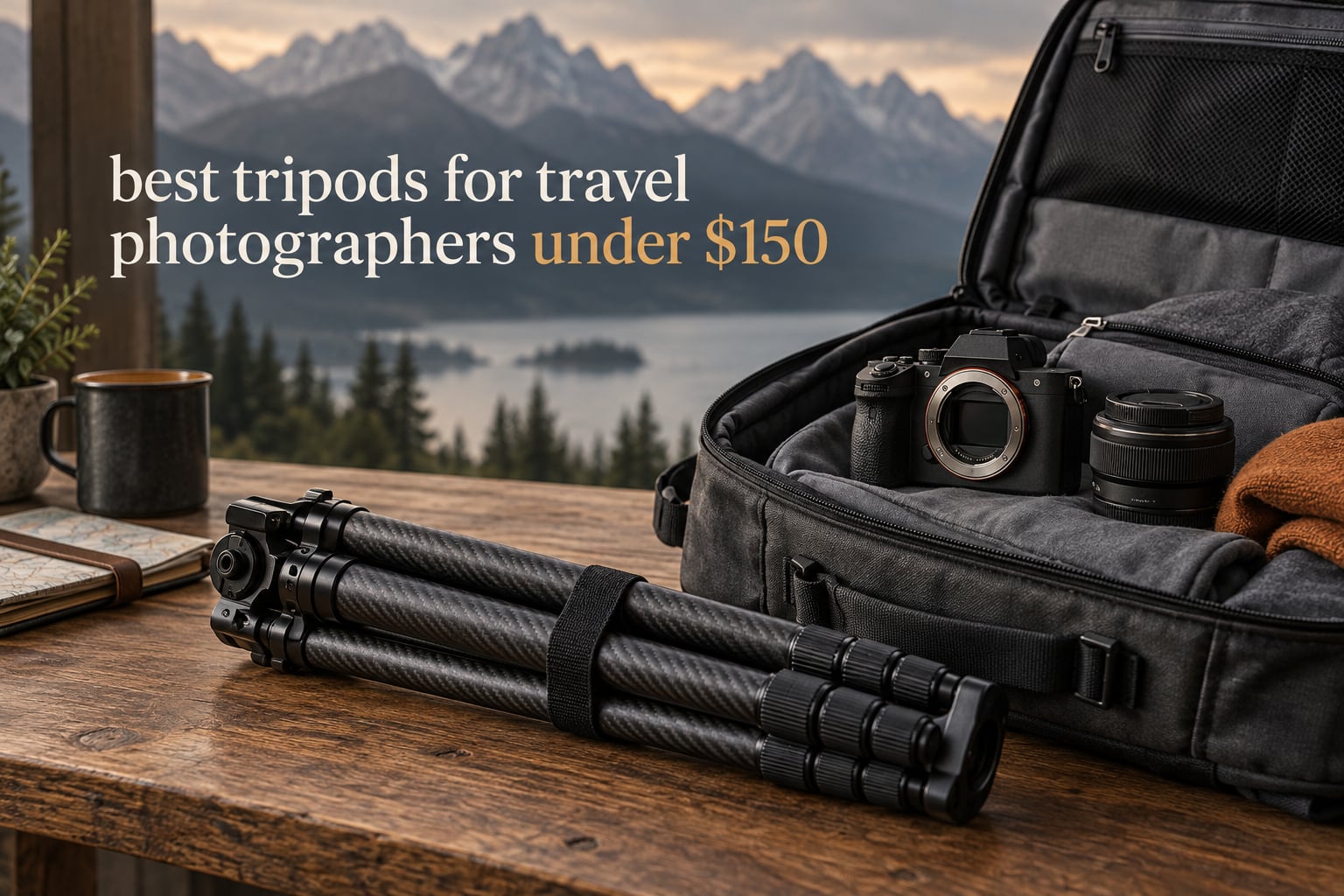
The best tripod for travel photographers under 150 dollars right now is the K&F CONCEPT 64 inch Lightweight Aluminum Travel Tripod. It folds to 15.5 inches, weighs 2.53 lb with its 36mm ball head, carries a 17.6 lb load rating, and it is the one tripod in this budget tier that a mirrorless or full-frame body with a standard zoom can ride on for years without the head or the legs feeling disposable.
That is the short answer. The other eleven tripods below are worth your money for specific reasons, and I will tell you which ones and which ones to skip.
Every pick in this guide sits at or below the 150 dollar ceiling. That ceiling is the whole point: the tripods that dominate most travel roundups are 500 to 700 dollar flagships, and at that price you are paying for a brand name rather than for a better travel tool. Under 150 dollars the shelf is dense, competitive, and quietly capable.
I have shot on budget tripods for a long time, and the recurring question in every forum thread I have read is the same one you are probably typing: is a tripod this cheap going to feel like junk? Here is the honest answer. Under 150 dollars you get a tripod that handles a mirrorless body and a light zoom with no drama, gets most full-frame kits into long exposures, and packs to laptop length. What you give up is refinement. Heads are simpler, locks are basic, and the heavier the glass you hang off it, the more you feel the cost. Nothing in this list will wobble apart in a hotel room, and nothing in this list will hold a 400mm f/2.8 the way a 2000 dollar Gitzo would.
Specs in this guide come from manufacturer listings and from what reviewers report when they put these tripods on a scale. Where brands disagree, I say so. Load ratings in particular are not standardised between manufacturers, so a 17.6 lb number on one tripod and a 26.5 lb number on another do not mean the second one is sturdier, only that whoever wrote the listing felt bolder. I use ratings as a relative guide within each product and lean on build details, tube diameter, and section count for the real comparison.
One more thing before we start. If your tripod budget were open-ended, I would point you at our guide to the best travel tripods for photographers, which covers the carbon flagships. This article is the hard-capped version for people packing light and flying often.
Top 3 Best Travel Tripods Under 150 Dollars in October
Three tripods earned the top of this list. Each one solves a different problem, and the ordering below reflects overall balance rather than raw capability.

K&F CONCEPT 64 inch Aluminum
- Folds to 15.5 inches
- 2.53 lb with ball head
- 17.6 lb load
- 4 leg sections


The K&F CONCEPT wins this list because nothing else in the tier combines a real 36mm ball head, one-handed flip locks on all four sections, an invertible center column, and a 15.5 inch folded length for this little money. The NEEWER TP17B is the only pick that gives you genuine carbon fiber stiffness and monopod conversion without leaving the budget. The Amazon Basics tripod is the answer to a different question entirely, which is whether you need a tripod at all, or just something to prop a compact camera or a phone on for a week of travel.
All 12 Travel Tripods Compared in 2026
The full field, in the order it appears below. Ratings and review counts are the current Amazon figures, and the table is the fastest way to see how the tier divides by material, folded length, and load rating.
| Product | Specifications | Action |
|---|---|---|
| K&F CONCEPT 64 inch Lightweight Aluminum Travel Tripod |
|
Check Latest Price |
| Amazon Basics 50 inch Lightweight Portable Tripod |
|
Check Latest Price |
 K&F CONCEPT 75 inch Aluminum Tripod K&F CONCEPT 75 inch Aluminum Tripod |
|
Check Latest Price |
| NEEWER TP17B Carbon Fiber Travel Tripod |
|
Check Latest Price |
 SmallRig CT-10 Aluminum Tripod and Monopod SmallRig CT-10 Aluminum Tripod and Monopod |
|
Check Latest Price |
 NEEWER TP14B Compact Travel Tripod Monopod NEEWER TP14B Compact Travel Tripod Monopod |
|
Check Latest Price |
 GEEKOTO Carbon Fiber Tripod with 1/4 inch Plate GEEKOTO Carbon Fiber Tripod with 1/4 inch Plate |
|
Check Latest Price |
 SIRUI Traveler X Carbon Fiber Tripod SIRUI Traveler X Carbon Fiber Tripod |
|
Check Latest Price |
 SIRUI AM-5C Carbon Fiber Travel Tripod SIRUI AM-5C Carbon Fiber Travel Tripod |
|
Check Latest Price |
 SIRUI AM-203 Aluminum Mini Travel Tripod SIRUI AM-203 Aluminum Mini Travel Tripod |
|
Check Latest Price |
 Fotopro X-go Carbon E2 Travel Tripod Fotopro X-go Carbon E2 Travel Tripod |
|
Check Latest Price |
 CAMBOFOTO 68 inch Aluminum Travel Tripod CAMBOFOTO 68 inch Aluminum Travel Tripod |
|
Check Latest Price |
Two patterns jump out. The carbon fiber options all cluster between 1.9 and 3.2 lb, and they are the only ones in the tier that fold under 15 inches. The aluminum options are heavier but taller and, in two cases here, rated to carry more than twice what the carbon legs claim.
1. K&F CONCEPT 64 inch Lightweight Aluminum Travel Tripod
Pros
- 36mm ball head with 360 degree panning dial
- Invertible center column for low-angle work
- One-handed flip locks on all four sections
- Phone holder and Arca-compatible 1/4 inch thread included
- Fits most carry-on bags at 15.5 inches
Cons
- Aluminum build is heavier than carbon fiber rivals
- Not water resistant for beach or river work
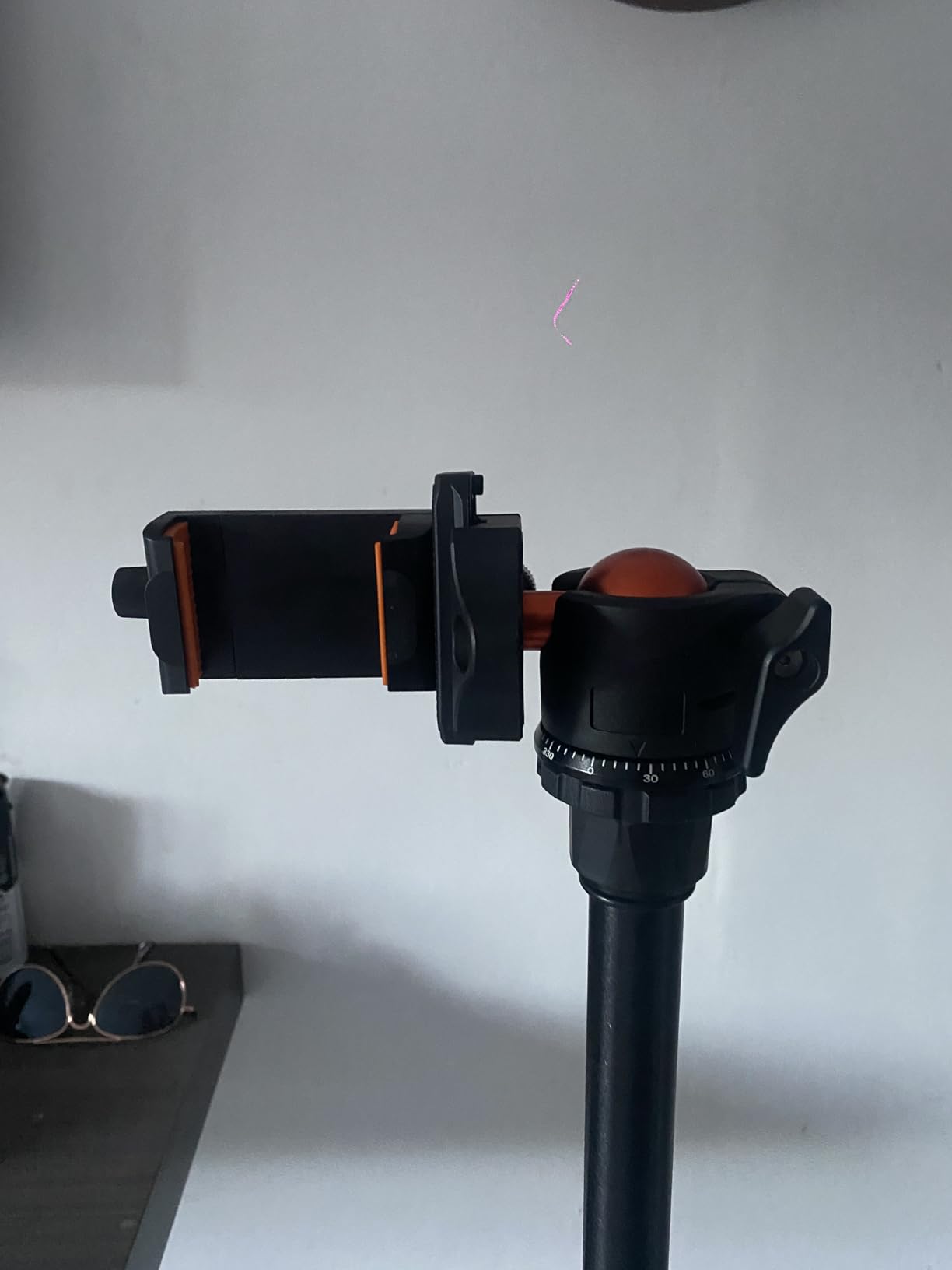
This is the tripod I hand people when they ask me for one. The K&F CONCEPT K234A0 with the BH-28L head is the rare budget tripod where the head is the good part. Thirty-six millimetres of ball, a 360 degree panning dial, and enough friction to hold a body in a stiff sea breeze without drifting.
Weighing 2.53 lb with the head and folding to 15.5 inches, it disappears into a normal daypack or the side pocket of a carry-on. Four leg sections with one-handed flip locks means I can go from packed to shooting in the time it takes to set the camera down, which matters far more than the spec sheet when the light is going.
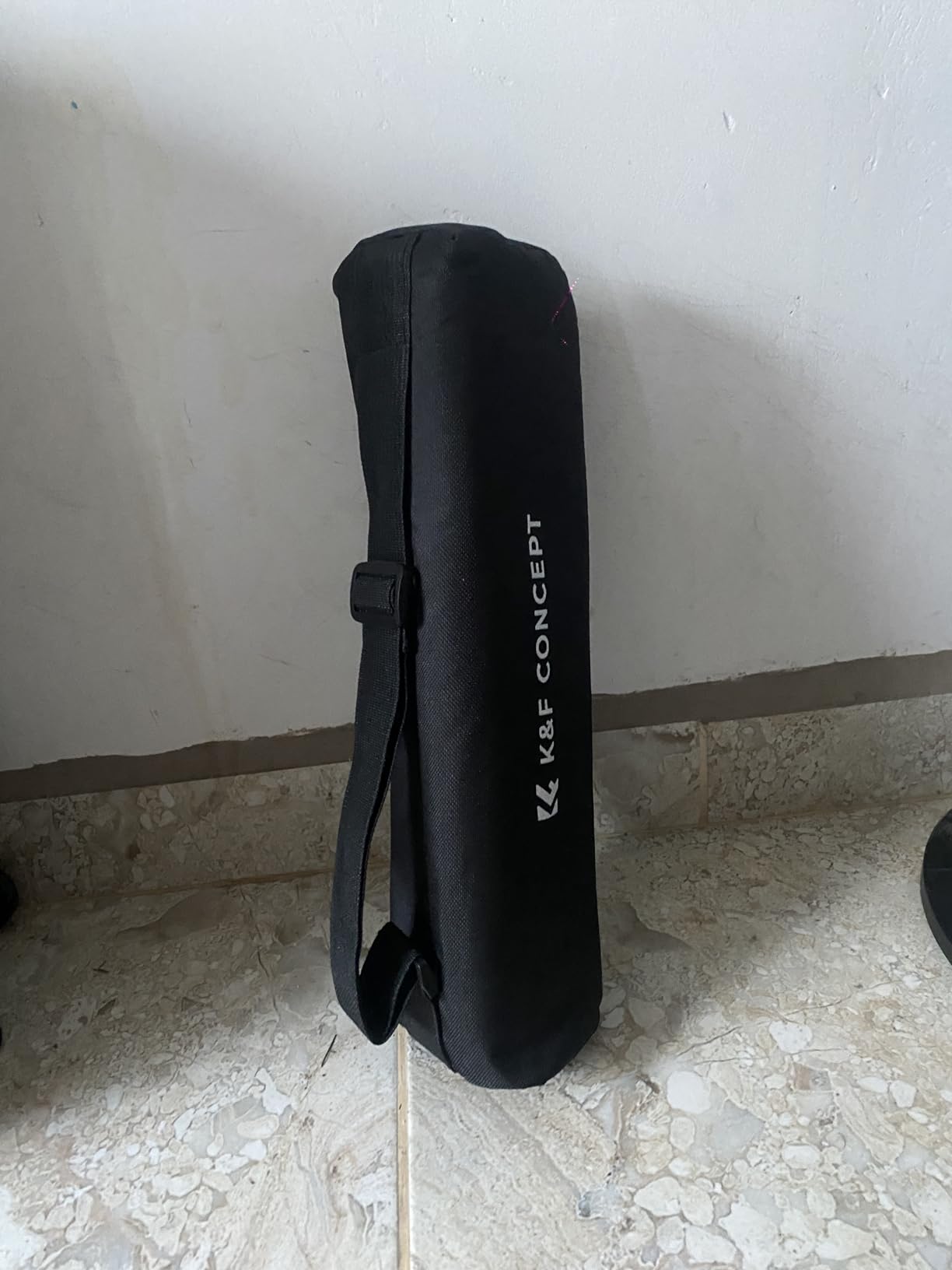
The 20.4 to 64.1 inch range is genuinely useful. Maximum height lands near eye level for a standing landscape or portrait shot without the center column cranked up, which is where most tripods get their wobble back. Invert the column and you drop to a few inches for stream shots and product work.
The load rating of 17.6 lb is the highest real number on this list relative to its tube diameter, and it maps neatly onto a full-frame body with a 24-70 or a mirrorless body with a short telephoto. Buyers report that it stays rigid well past what a travel kit weighs, which is exactly what you want to hear from a tripod you are going to trust at 5 am on a cold morning.
Who this tripod suits
If you shoot stills and light video, carry one body, and want a tripod that can also be a light stand for a flash or a reflector, this is the one. The 1/4 inch thread works with most Arca-Swiss quick release plates, so if you already own plates for a bigger tripod you can bring your own and stop swapping heads.
It is also the safest travel pick for anyone who has been burned by a plastic ball head. A metal ball, a real lock, and a panning dial cost more, and at this tier there is simply nothing better in the category.
Where it falls short
Aluminum is aluminum. At 2.53 lb you are carrying roughly half a pound more than the carbon options in this list, and over a ten-day trip that adds up to something you feel. Vibration damping is also not the job carbon does, so for very long exposures on windy ridges I reach for a carbon leg set instead.
The head, while metal, is a budget ball head. Forum readers repeatedly flag head quality, not leg quality, as the deciding factor at this price, and that is the part to inspect first when your tripod arrives.
2. Amazon Basics 50 inch Lightweight Portable Tripod
Pros
- Lightest full-size option here at 1.4 lb
- Quick-release plate makes body swaps fast
- Carry bag with handle and strap
- Rotating rubber feet grip uneven ground
- Runs for 16.1 to 50 inches
Cons
- Rated to only 4.4 lb so it is for light gear
- Pan-and-tilt head drifts under heavier setups
- Center column adds wobble when extended
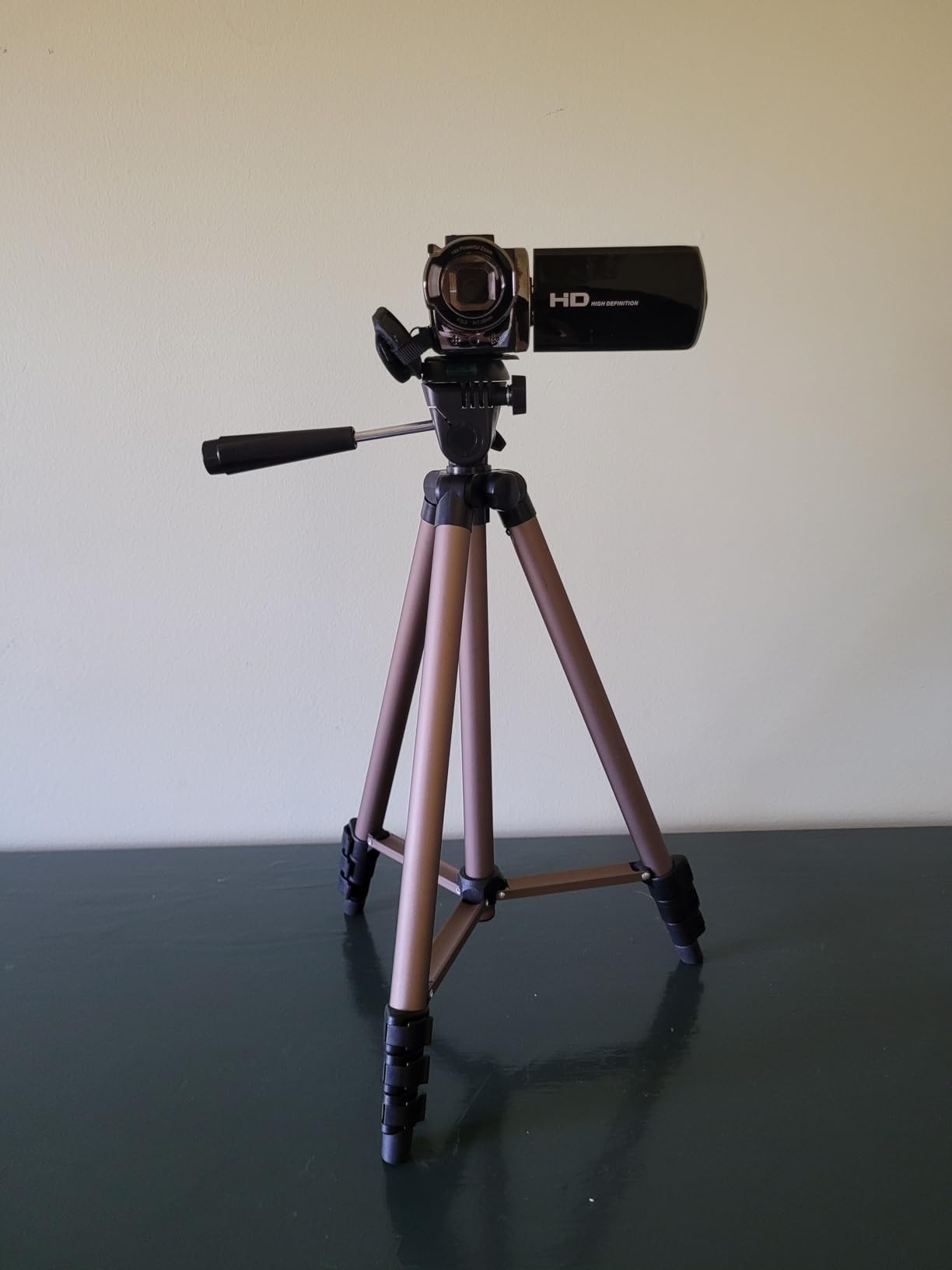
Let me be straight about what this is. The Amazon Basics 50 inch tripod is not a serious camera support for a full-frame body and a telephoto. It is a 1.4 lb folding stand for a compact camera, a webcam, a flash, a microphone, a phone, or a point-and-shoot, and for those jobs it is unbeatable on weight and unbeatable on simplicity.
With a review count north of 190k and an average sitting at 4.5, this is the most thoroughly examined product in the entire category. That matters in a way that is easy to overlook: the failure modes of cheap gear are well documented here, and the pattern across reviews is consistent, which is why I can tell you exactly where the limits are.
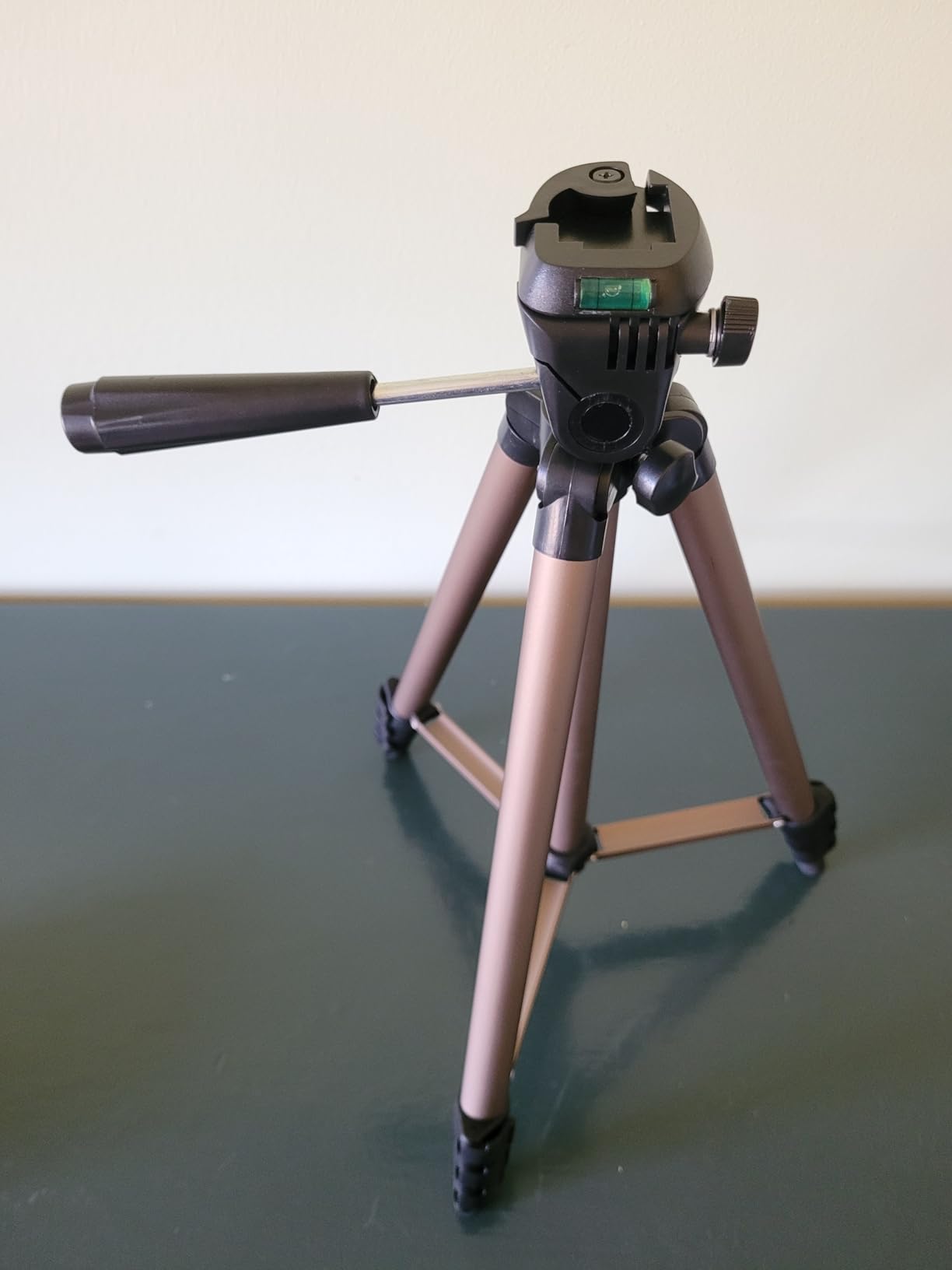
The 16.9 inch fold and the included zippered bag mean this thing lives in a jacket pocket until you need it. The lever locks on three sections open one-handed, the 3-way head tilts and swivels into portrait or landscape, and the quick-release plate makes swapping between a camera and a light genuinely fast.
The limit is 4.4 lb total, and reviewers are consistent about that ceiling. Beyond a lightweight body and a kit lens, the center column and the pan-and-tilt head introduce drift, and the frame will visibly move at longer exposures.
Who this tripod suits
Anyone who does not own a mirrorless camera yet. Also anyone who wants a second, permanently bagged tripod for a lightweight body, or a travel kit where the tripod’s job is to hold a phone for a time-lapse while you walk away from it.
It also works as a light stand. Ring flashes, small LED panels, microphones, and GoPro mounts all sit on it comfortably within that 4.4 lb ceiling.
Where it falls short
The head is the weak link, not the legs. A pan-and-tilt head needs a hand to keep it level, and that hand pressure translates into movement in your long exposures, which is the entire reason to own a tripod.
Do not pair it with a DSLR and a kit zoom and expect a sharp frame at f/8 and a half second. Reviewers using it that way report softness, and the fix is the tripod, not the glass.
3. K&F CONCEPT 75 inch Aluminum Tripod
Pros
- Reaches 75 inches
- rare at this tier
- Pentagonal tube design feels more solid than typical budget tripods
- Weight hook adds real stability at full height
- Includes Bluetooth remote and two plates
- Foam grips on the upper sections help in cold
Cons
- Pan head is not fluid so smooth pans need technique
- Leg clasps are plastic
- Quick release plate is not Arca-Swiss standard
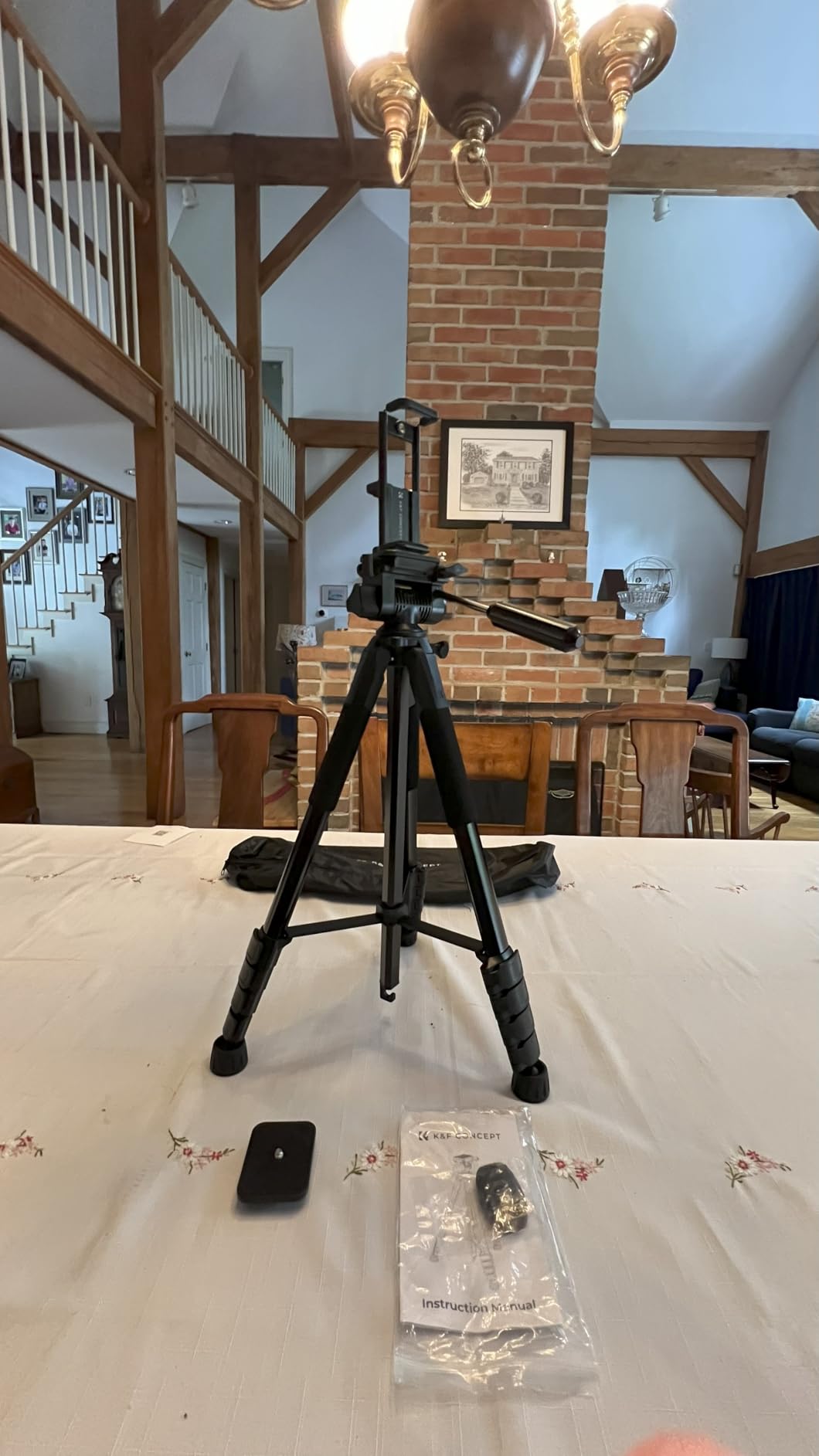
Reach is the pitch here. Five sections take this K&F CONCEPT to 75 inches, which means you can put the camera above a crowd, above a table at a restaurant, or overhead for a flat-lay without extending a center column and doubling your vibration problems.
The pentagonal tube design is the detail that surprised me most. It resists torsional twist better than the round tubes on tripods costing considerably more, and reviewers describe it as feeling far more solid than the sub-40 dollar norm. The 2.6 lb weight is a fair trade for that rigidity.
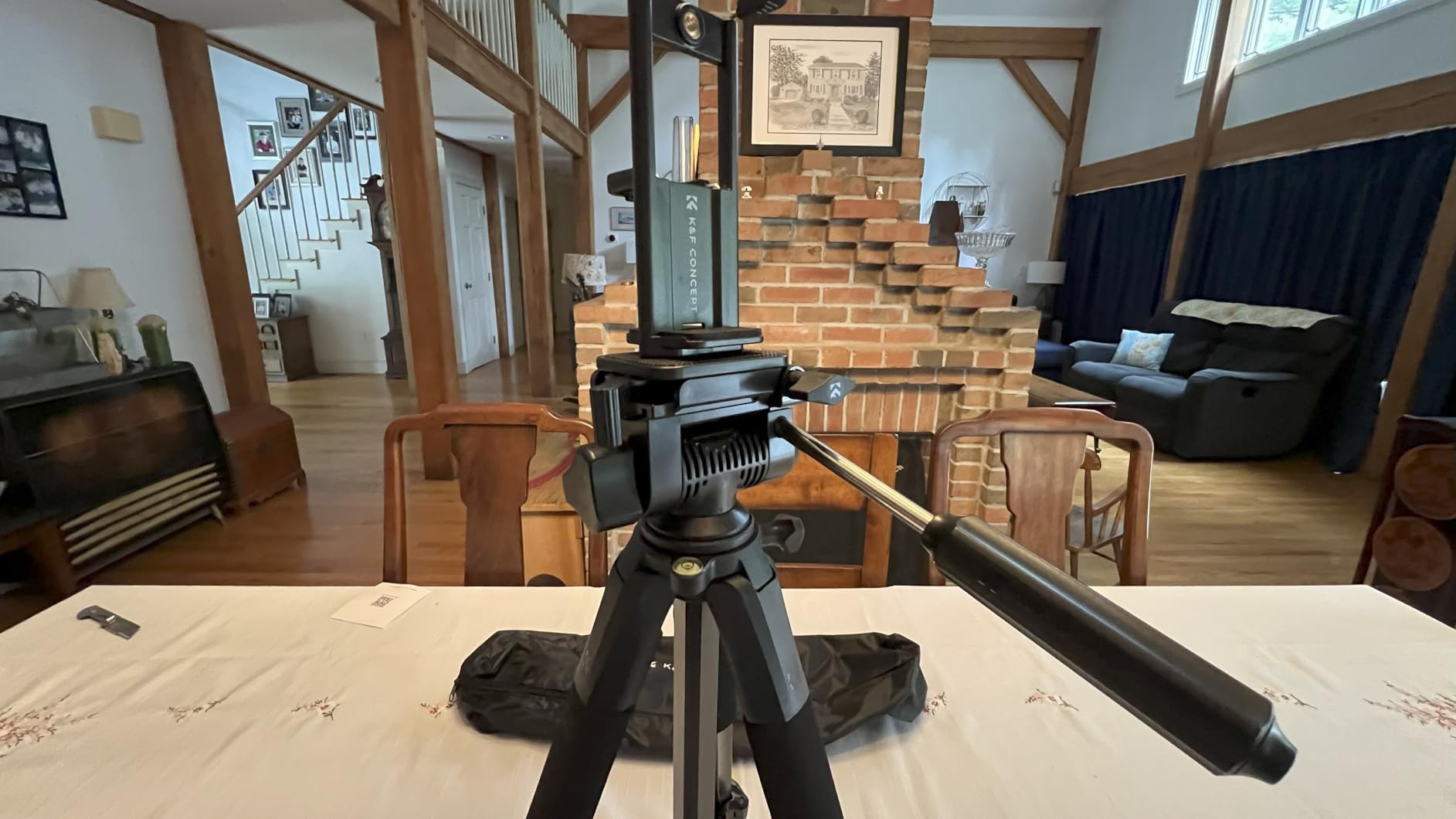
At 20 inches folded it is not a laptop-length pack, so it earns its place in a checked bag or a large daypack rather than a carry-on. The upside is the accessory package: a two-in-one phone and tablet holder, two quick release plates, a Bluetooth remote with a 472 inch range, and a carry bag.
Reviewers also single out the foam grips on the upper leg sections. In cold weather, bare aluminum tubes are miserable to handle, and foam is a small thing that pays off at altitude in winter.
Who this tripod suits
Travelers doing interiors, food photography, overhead shots, and event work where a tall tripod beats a light one. It is also a reasonable first tripod for someone whose main kit is a mid-weight body and a kit zoom, since the 75 inch reach keeps you out of awkward crouched positions all day.
Switching to a real ball head later is easy because the 1/4 inch screw is universal. That is the upgrade path here, and it costs little.
Where it falls short
The head is a 360 degree pan head, not a fluid video head, so smooth video pans depend on your hand technique. There is also some vibration at full extension unless you hang weight from the hook under the center column, which is a workaround that works far better than it has any right to.
The quick release plate is not Arca-Swiss standard. If you own other tripods, you will be carrying two plates, and the plastic leg clasps are the part most likely to feel cheap over time.
4. NEEWER Basics TP17B Carbon Fiber Travel Tripod
Pros
- Genuine carbon fiber stiffness at a budget price
- Converts to a monopod by unscrewing one leg
- Arca quick release plate included at this level
- Well-padded carry bag with strap
- Handles heavy bodies and longer zooms
Cons
- Some wobble appears at full extension with the column up
- Occasional ball head wander with heavier video bodies
- Heavier than rival carbon options in the same class
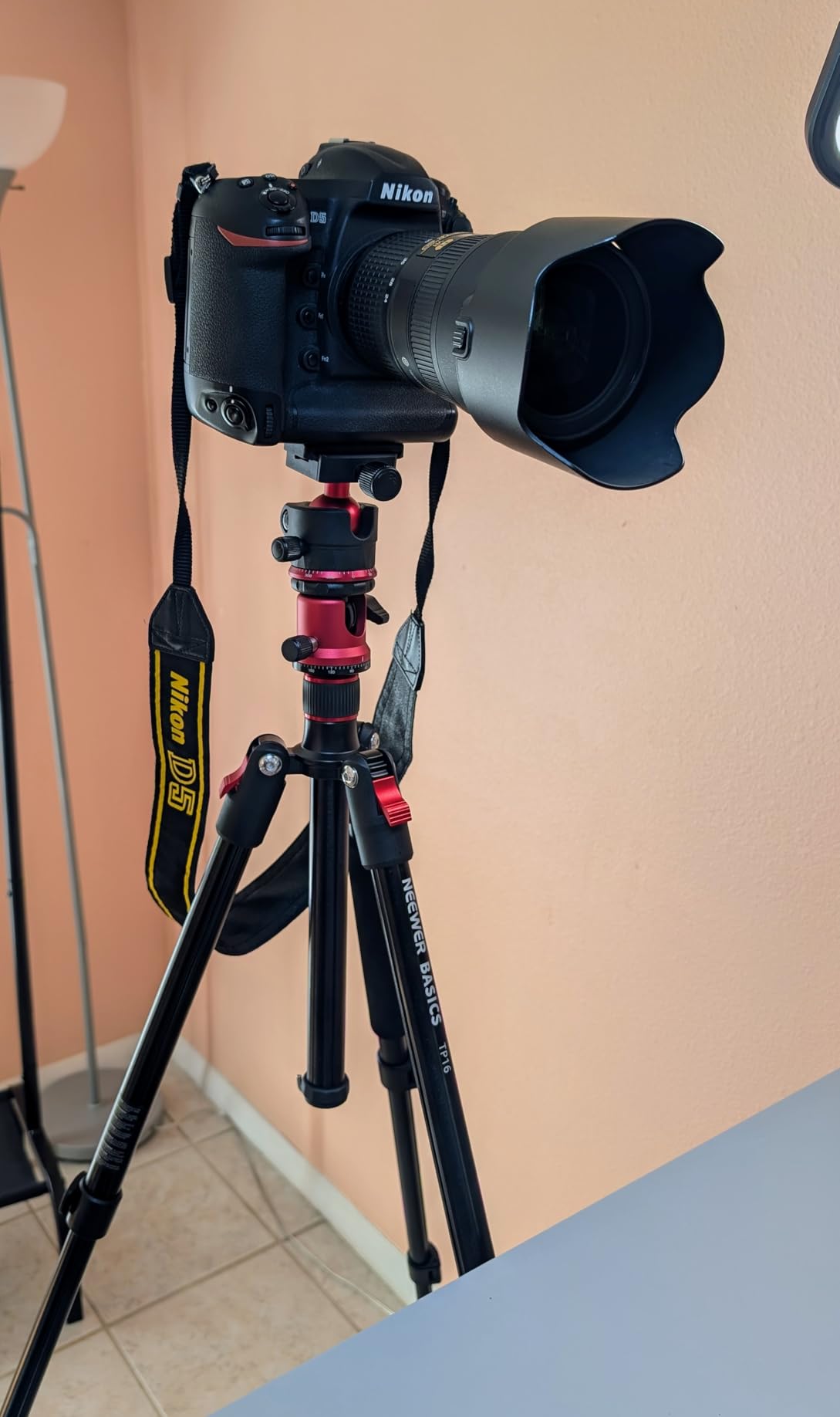
Carbon fiber under 150 dollars used to be a genuine rarity, and the NEEWER TP17B is the reason that is no longer true. Three-section 3K twill legs, a 16.3 inch fold, and a 13.2 lb load rating for 3.2 lb of total weight is a combination that used to live well above this budget.
The head is a 360 degree ball with 90 degree tilt, a bubble level, and an Arca-type plate in the box. That last detail matters more than it sounds. On a lot of budget tripods the plate is a separate purchase, and owners report paying nearly as much for the plate as for a cheap tripod.
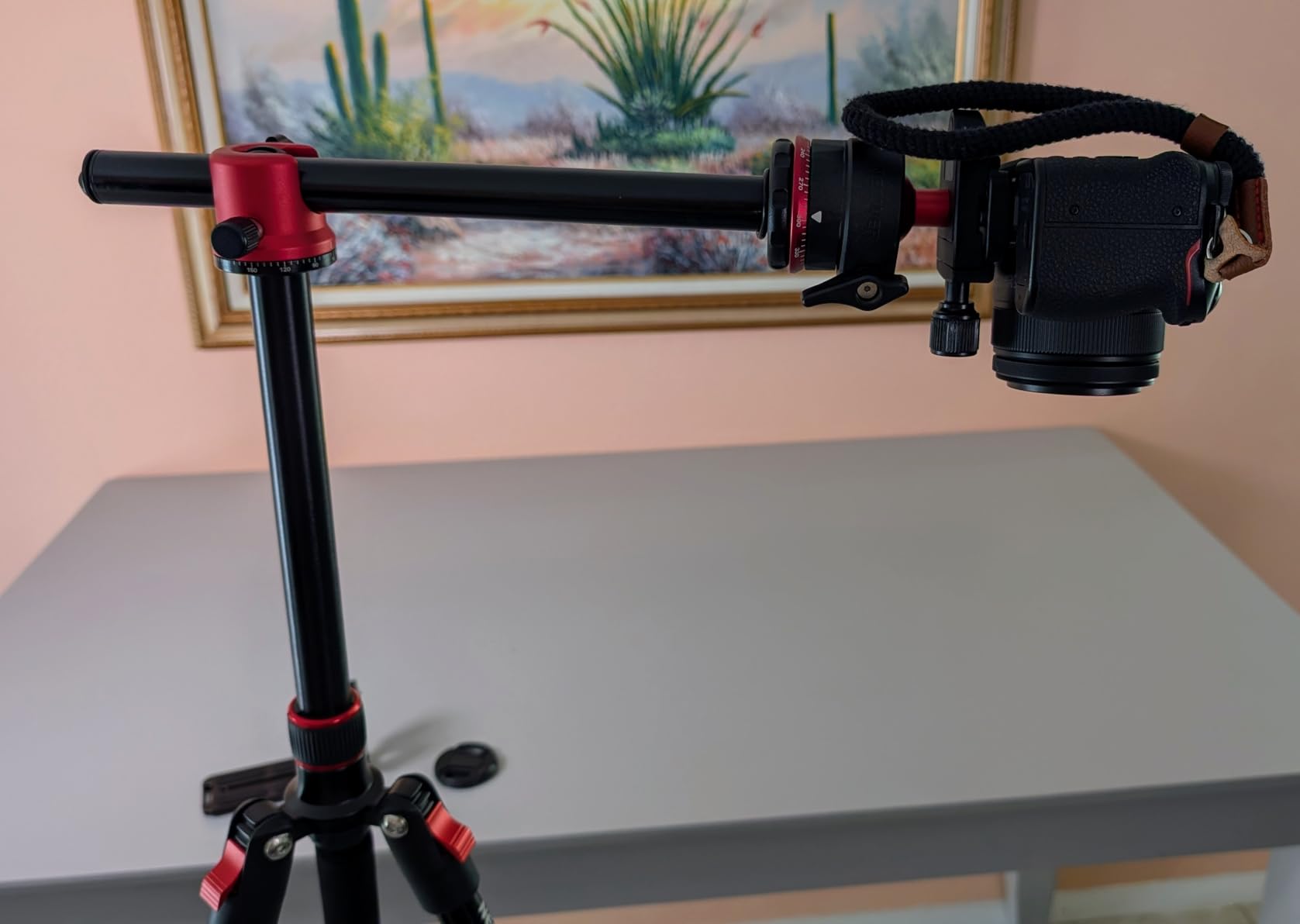
The monopod conversion is the feature I use most. Unscrew one leg, add the others, and you have a 63.8 inch support for a single body, which is the right tool for a narrow trail, a beach, or a crowded street where three legs are a liability.
Height runs from 21.3 to 47.2 inches, with the two-section column reaching 63.8 inches or inverting for macro. Three selectable leg angles let you work on stairs and uneven ground without a pocket full of shims.
Who this tripod suits
Travelers carrying a heavier body than most budget tripods want to accept, and anyone who plans to grow into a larger kit. Reviewers report load-testing well past the stated rating, which is a good sign for a body plus a 70-200.
It is also the pick for people who need one object to do two jobs. Tripod on stable ground, monopod on everything else, no second purchase required.
Where it falls short
Thin carbon legs do flex at full extension with the column raised, and a minority of owners report the ball head wandering or creeping under heavy video bodies. Both are head-and-setup problems rather than leg problems, and both are managed by keeping the column down and hanging weight from the hook when the wind picks up.
At 3.2 lb it is the heaviest carbon tripod here, so it is not the choice if the goal is the lightest possible kit. Our guide to carbon fiber tripods covers lighter carbon builds if weight is your binding constraint.
5. SmallRig CT-10 Aluminum Tripod and Monopod
Pros
- Widest height range here at 16 to 71 inches
- 36mm metal ball head rotates 360 degrees
- Includes Arca-Swiss plates and spike feet
- Three threaded holes take arms phones and monitors
- Inverting center column for low-angle work
Cons
- Lower leg sections are thin at full extension
- Some movement in wind without weight on the hook
- Monopod conversion takes several fiddly steps
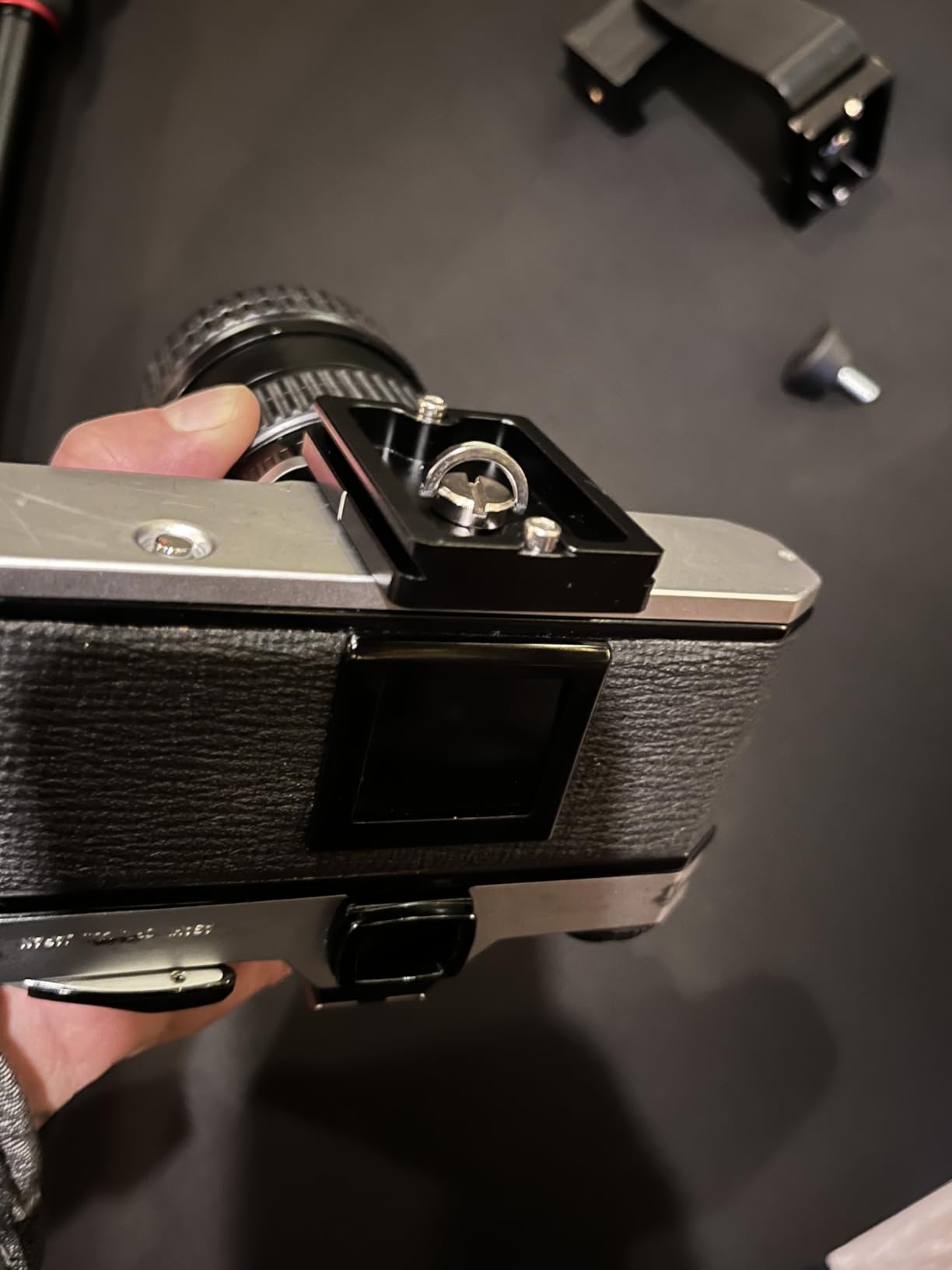
The SmallRig CT-10 is built for rigs. That is not a criticism, it is the design brief. Three 1/4 inch threaded holes on the leg brackets accept magic arms, phones, monitors, and lights, which makes it the easiest tripod in this list to turn into a small video rig without a separate cage.
It is also the tallest full-size option here, spanning 16 to 71 inches on four sections, with a 36mm metal ball head. Rated to 33 lb vertical and 11 lb in tilt, it is the highest number in the group, and while those ratings are not comparable across brands, the magnesium aluminum alloy build reads substantial.
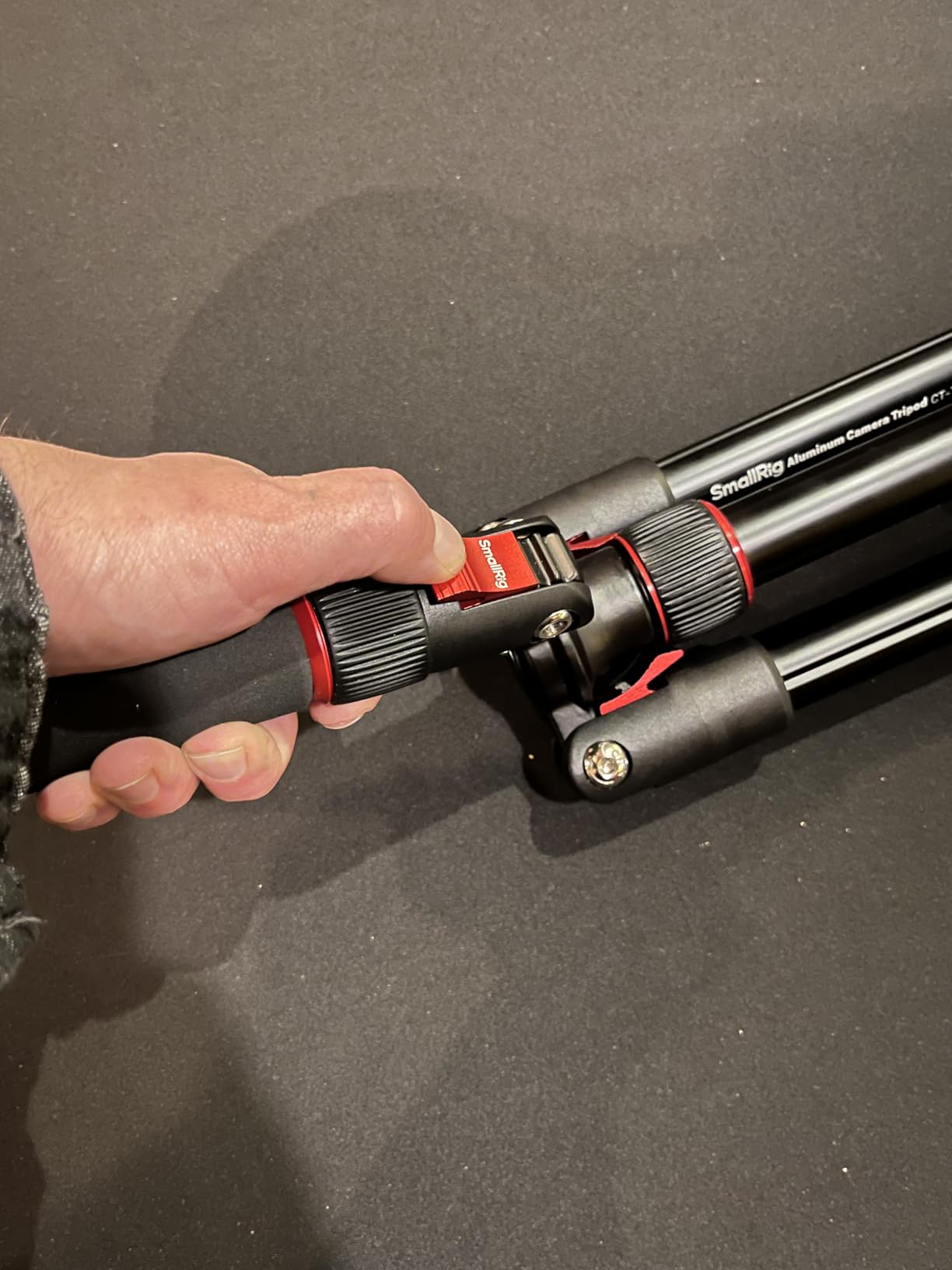
It converts to a monopod for hiking and travel, and the center column inverts for macro and low-angle work. The rubber and spike feet that come in the box cover everything from hotel carpet to a hardpan trail edge.
It is 3.4 lb, which is the heavy end of travel tripods, and the 16.9 inch fold is respectable rather than exceptional. This is a tripod for someone who shoots video and stills with the same body and wants the rigging options.
Who this tripod suits
Anyone shooting video on a trip, especially run-and-gun work where you need to attach a monitor or a microphone and reconfigure quickly. The threaded leg holes are the reason, and no other sub-150 tripod here has them.
It is also a good choice for someone whose kit leans heavier than most, since the alloy construction and the wide height range give you room to grow.
Where it falls short
The lower leg sections are thin. Several owners report that at full extension with a high-end body and lens the legs are not robust enough, which is the exact complaint forum readers raise about budget tripods in general. Wind movement without weight on the hook is also reported.
Monopod conversion involves several fiddly steps, and a small number of buyers report weak leg lock and case zipper durability after a couple of months. Check both before a long trip.
6. NEEWER Basics TP14B Compact Travel Tripod Monopod
Pros
- Converts to a monopod in seconds
- 360 degree leveling scale on the ball head
- Arca-type plate works with Sony Canon and Nikon gear
- Inverting column for macro
- Phone holder included
Cons
- Aluminum build is heavier than carbon options at this weight
- Newer listing with a smaller pool of owner reports
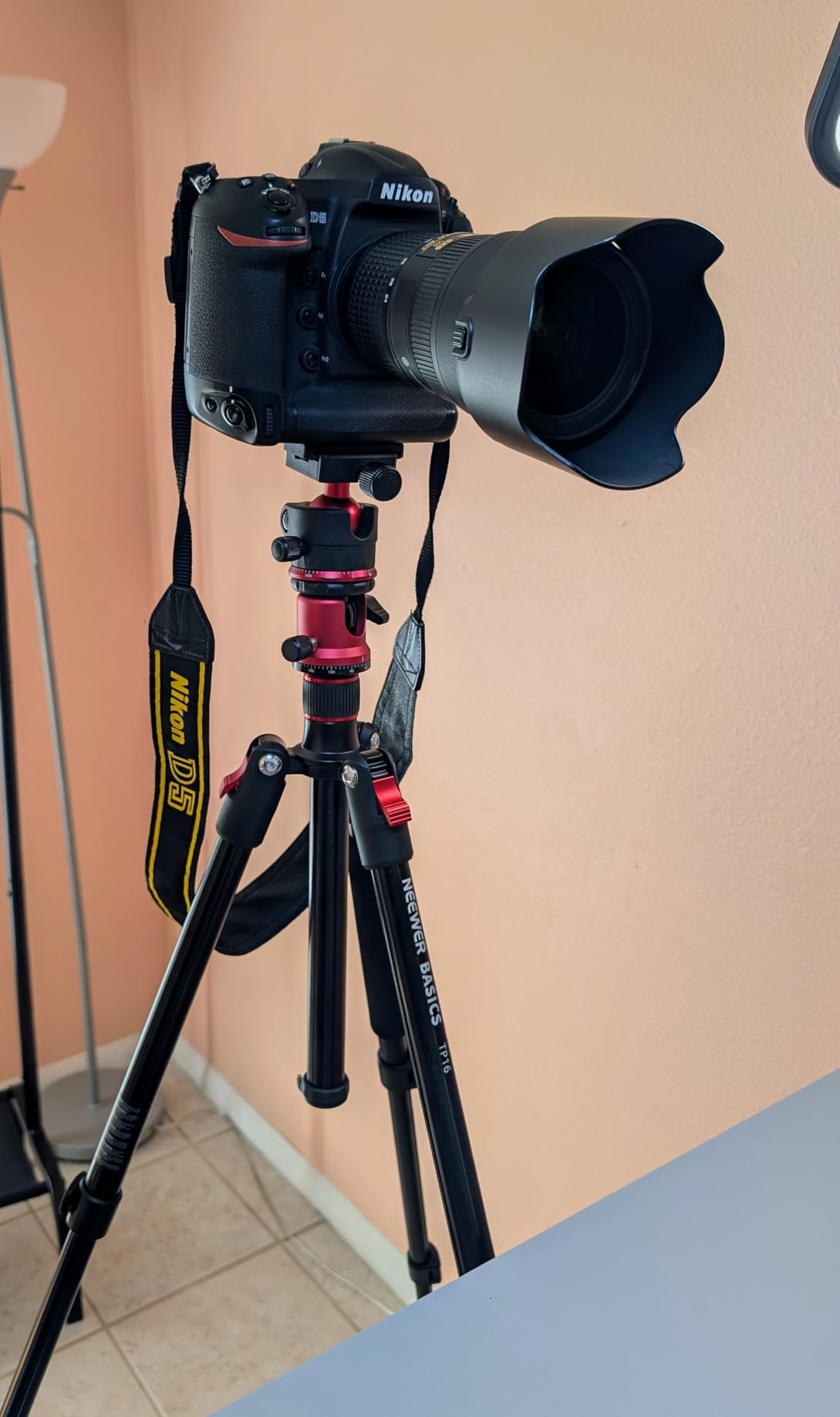
The TP14B is the aluminum sibling of the carbon TP17B, and it makes the same case with a lighter head and a lower cost. Two and nine tenths of a pound, folds to 17 inches, converts to a monopod, and carries 13.2 lb.
The ball head is the reason to look here. A 360 degree leveling scale is a detail you normally find on heads costing several times as much, and it makes setting a level horizon on a ball head fast instead of guesswork.
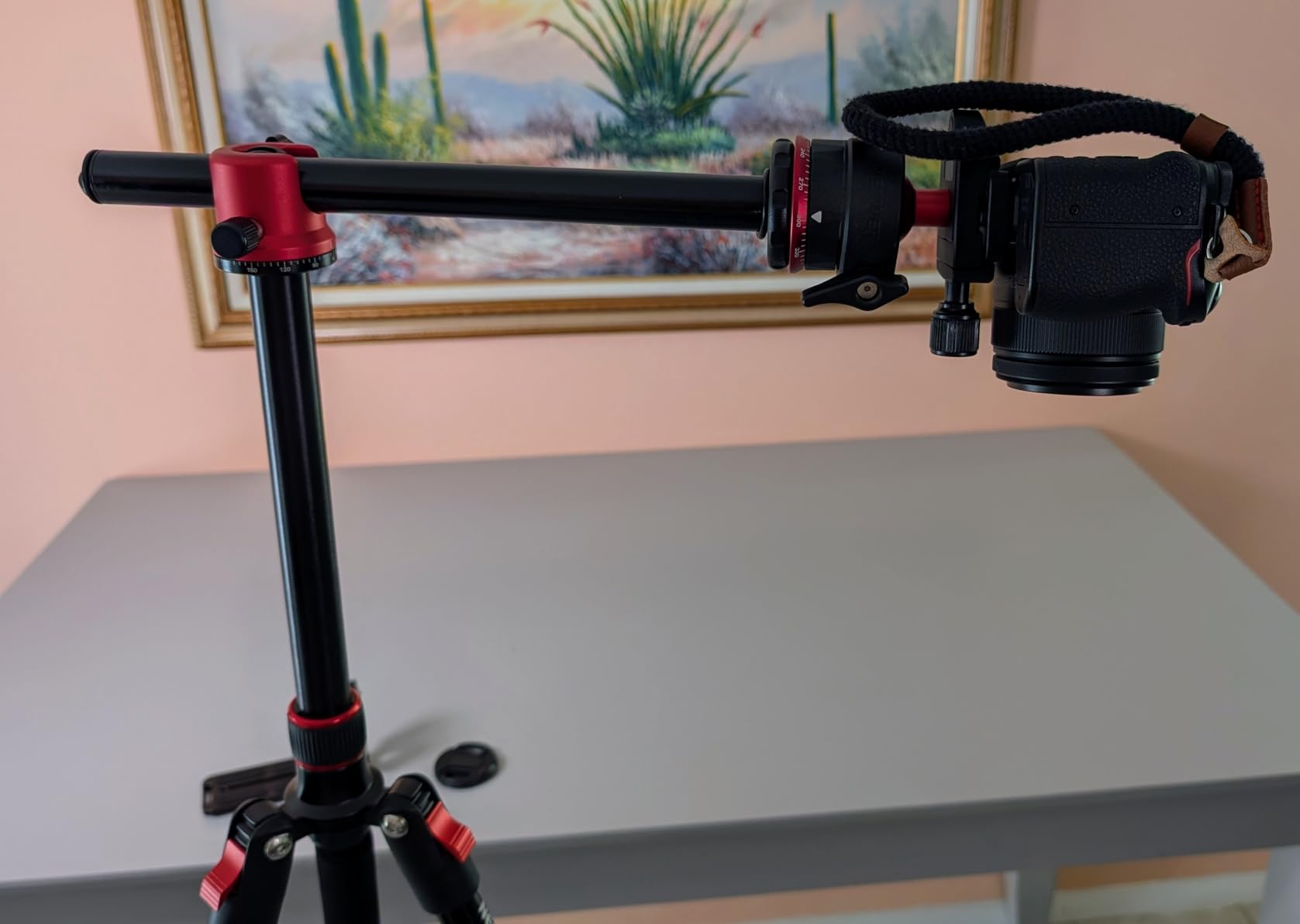
Height runs 22.8 to 52 inches with a two-section column reaching 72 inches, inverting for macro work. Three leg angle settings, a weight hook, non-slip feet, and an included phone holder round out a package that is generous for the tier.
With a 227-review base, this is the least proven product in the list, and I would rather say that than pretend otherwise. The rating is high, but the long-term reports simply have not accumulated yet.
Who this tripod suits
Travelers who work on narrow trails, crowded streets, and uneven ground where a three-legged base is more of an obstacle than a help. If you shoot handheld-style compositions and want the option of a single support, the monopod conversion is the argument.
It suits people with a mixed-brand kit too, since the Arca-type plate is compatible with the major camera mounts.
Where it falls short
Aluminum at 2.9 lb is a pound or more heavier than the carbon options, and it does not damp the way carbon does on long exposures. If you are chasing sharpness on a two-second shutter, that difference is real.
Given the thinner review history, I would inspect the head and the locks carefully on arrival. Ball head failure is the most common complaint in this tier across all brands, and the fix is cheap now and expensive later.
7. GEEKOTO Carbon Fiber Tripod with 1/4 inch Quick Release Plate
Pros
- Generous carbon fiber load rating for the tier
- Monopod or hiking pole conversion in about a minute
- Quick release plate swaps cameras in seconds
- Center column hook for hanging a sandbag
- Three leg angle settings with a two-level safety lock
Cons
- Ball head has no friction control option
- Smartphone mounts are not included
- Three twist locks are slower than flip locks in grit
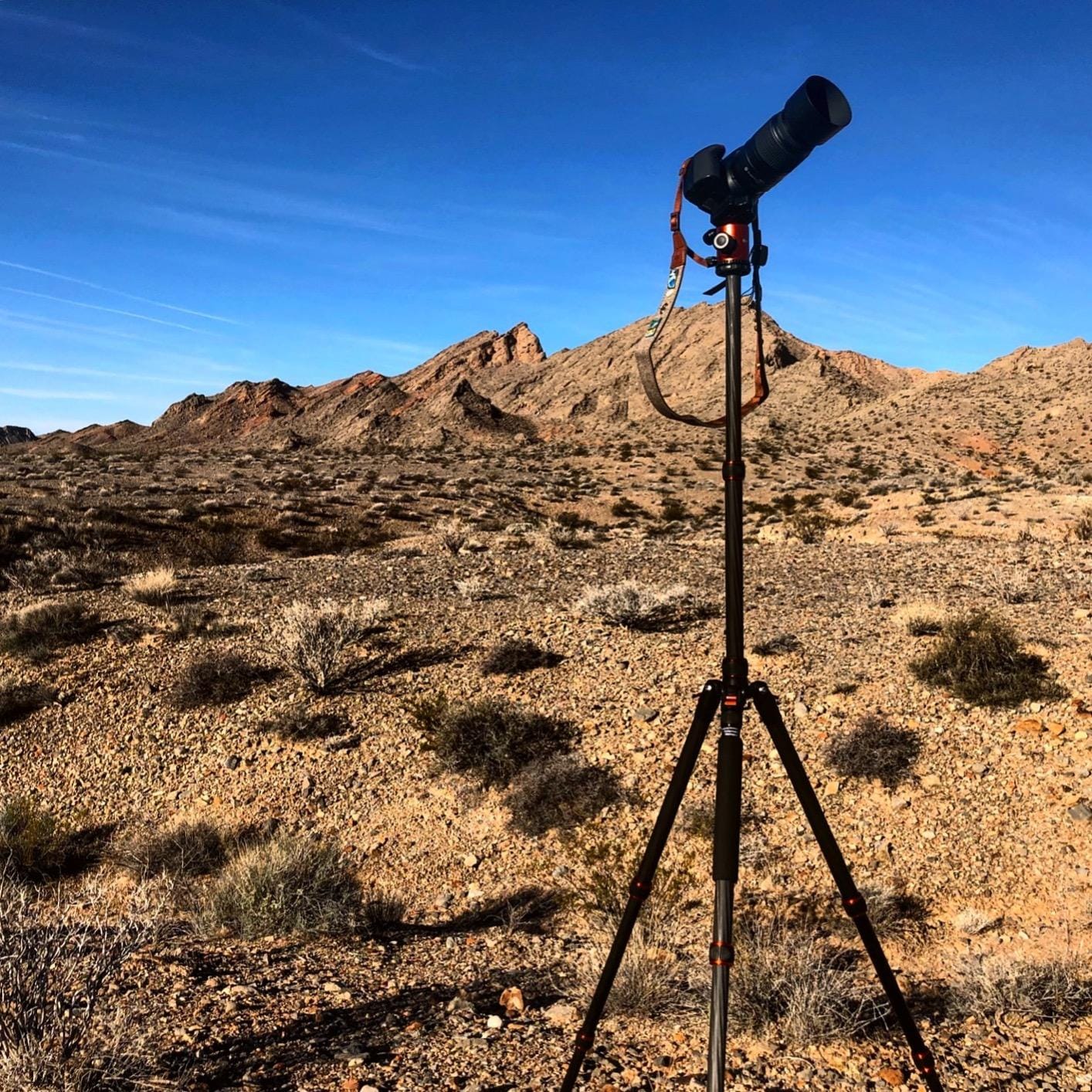
The GEEKOTO CT25Pro is the one to buy if you are carrying more glass than a budget tripod usually forgives. A 26.5 lb load rating on carbon fiber legs, an inverting center column, and a hook under the column for hanging a sandbag in wind.
The quick release plate is the plain 1/4 inch type rather than a full Arca-Swiss clamp, and it swaps bodies in about two seconds. That is enough for a working photographer changing lenses and settings between setups, even if it does not give you the vertical drop of a proper Arca plate.
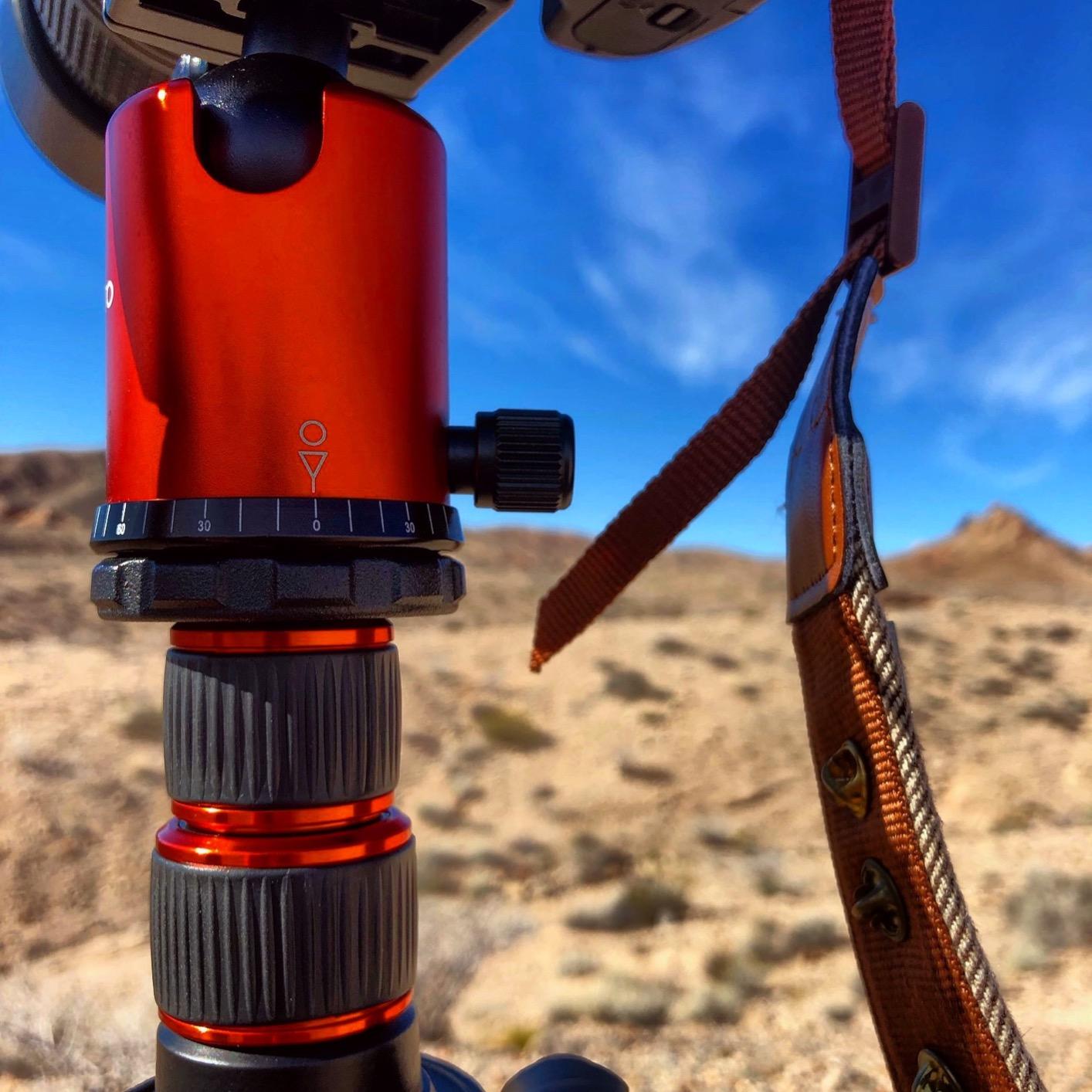
Three twist-lock sections take it from 15.75 to 65 inches, and it folds to 20.8 by 5.3 by 4.9 inches. Converting it to a monopod or a hiking pole takes about a minute, which makes it a two-in-one for anyone hiking in.
Three leg angle settings plus a two-level safety lock let you work on stairs, grass, and tight interior spaces without a center column obstructing the frame.
Who this tripod suits
Travelers with a full-frame body and a 70-200, or anyone whose kit is over 6 lb. Among the carbon options here, this has the most generous stated load rating and the construction to back the claim up in a way that a mirrorless-only user would never notice.
It also suits anyone who wants a single stick that becomes a walking pole on a long approach, then a tripod at the overlook.
Where it falls short
The ball head has no friction control, which is a real limitation for video and for anyone using a long lens on a monopod where you want to pan smoothly with one finger. The damping knob helps, but it is not the same thing.
Smartphone mounts are listed as compatible but not included, and three twist locks are more fiddly than one flip lock per section. In sandy or gritty conditions, twist locks are the ones that seize, which is a complaint forum readers raise repeatedly about cheaper clamp-style and twist-style hardware.
8. SIRUI Traveler X Carbon Fiber Tripod
Pros
- Genuinely ultralight at roughly 950 g
- Single lever sets all five sections in about two seconds
- Reverse-folding pack length under 14 inches
- Two-section reversible center column
- Drops to roughly 825 g without the head
Cons
- The bundled AT-10 fluid head binds and has almost no vertical pan range
- No way to flip the head for portrait orientation without an L-bracket
- Legs cannot be shortened individually for levelling
The tripod part of the SIRUI Traveler X is one of the best platforms in this guide. The head that comes with it is the least good. Nearly every negative review of this product targets the AT-10 fluid head, so that is where your decision should go.
Two and one tenth of a pound, folding to 13.9 inches on reverse-folding legs, with a single lever that extends or retracts all five sections in about two seconds. Backpackers who have used four separate twist locks describe that one-lever system as the reason they stopped dreading tripod setup.
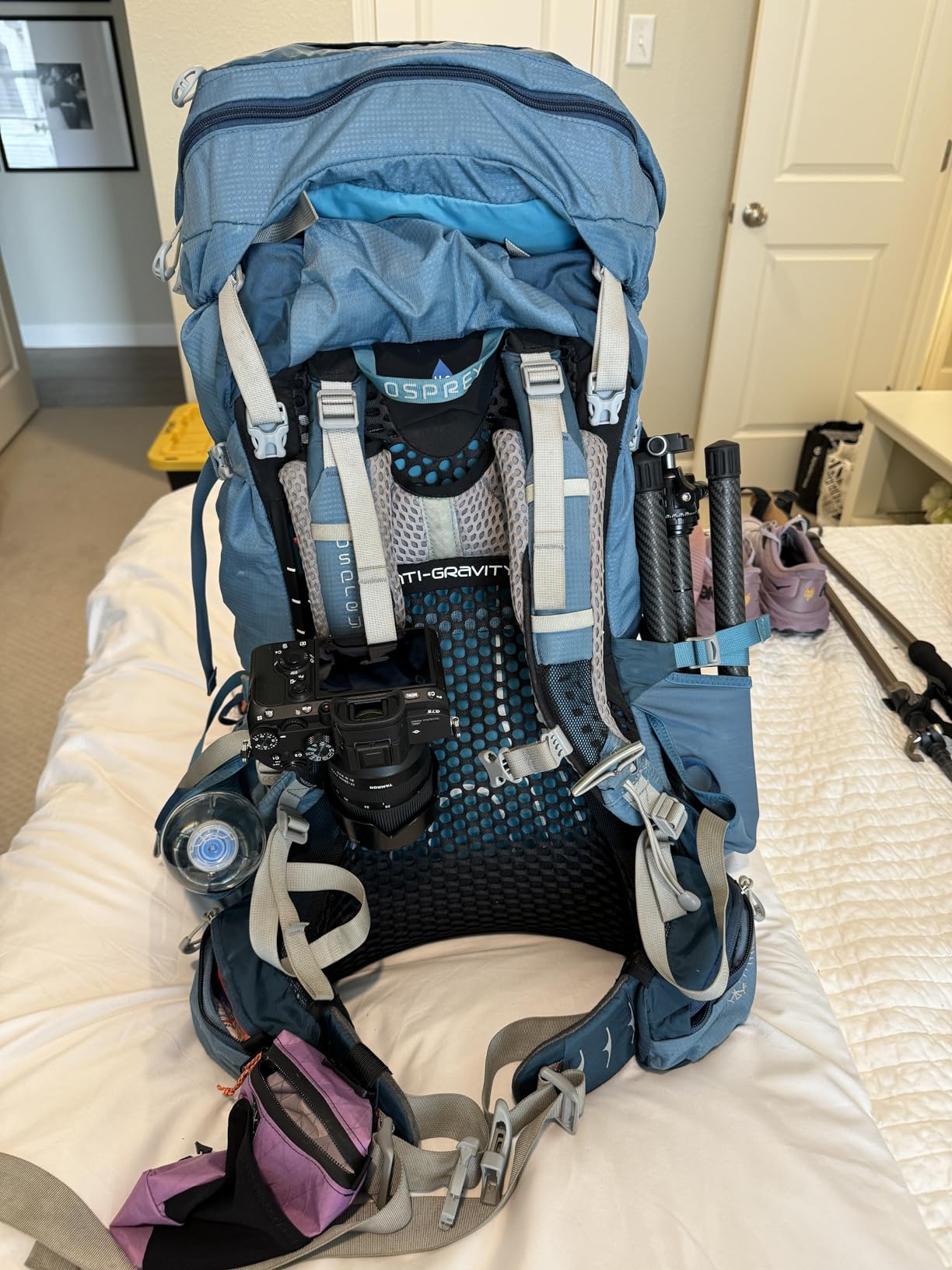
Strip the head and shorten the column, as several owners do, and the whole thing drops to roughly 825 g. That is the lightest complete solution here, and it beats the 1.9 lb AM-5C once you add a head you actually want to use.
The Arca-Swiss plate with anti-twist pins is a genuine premium detail, and the hook under the center column takes a bag or a sandbag when the wind builds.
Who this tripod suits
Backpackers and fast hikers who count every hundred grams. At this weight, with a 13.9 inch pack length, it disappears into a pack in a way nothing else on this list does.
It also suits anyone willing to swap the head. Put a small ball head on it and the problems mostly disappear, which is exactly what many buyers have done.
Where it falls short
The AT-10 fluid head binds, ratchets, and has almost no vertical pan range, and the head tightening screw sits too close to the adapter for some Fujifilm bodies. There is no way to flip the head for portrait orientation without an L-bracket.
Leg sections cannot be shortened individually for levelling, so uneven ground means lifting a leg awkwardly. The advertised 5 to 10 kg rating is optimistic in practice, and one owner reported internal leg parts failing after around 20 months. A six year warranty is listed, so keep the receipt.
9. SIRUI AM-5C Carbon Fiber Travel Tripod
Pros
- Lightest full-size carbon option here at 1.9 lb
- Folds to 13.4 inches for carry-on and daypack
- Two-section removable column gives a wide working range
- 360 degree panoramic BG40 ball head
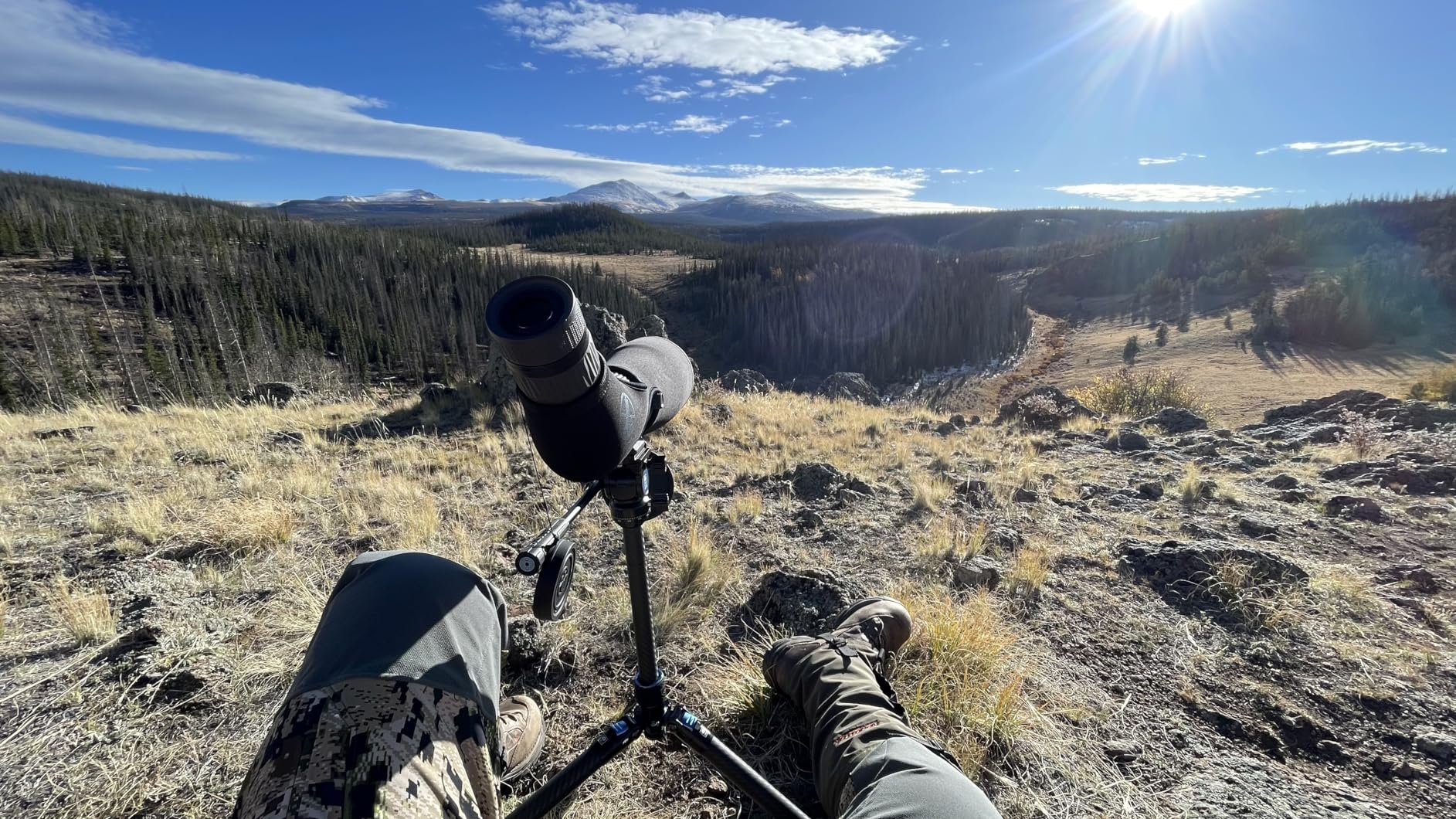
- Also popular for spotting scopes and binoculars
Cons
- Center column does not reverse for macro on this setup
- Some owners cannot get the legs tight enough to stop movement
- Not stiff enough for long telephoto or windy long exposures
The AM-5C is the shortest and lightest full-height tripod in this guide. At 1.9 lb and 13.4 inches folded, it is the easiest to argue past airline carry-on scrutiny, and it is the one I would pack when the trip is about the photos rather than the kit.
Five carbon sections with flip locks and non-slip rubber feet, a two-section removable center column, and a working range from 6.3 to 54.1 inches. The BG40 ball head pans a full 360 degrees and is the reason several owners bought it in the first place.
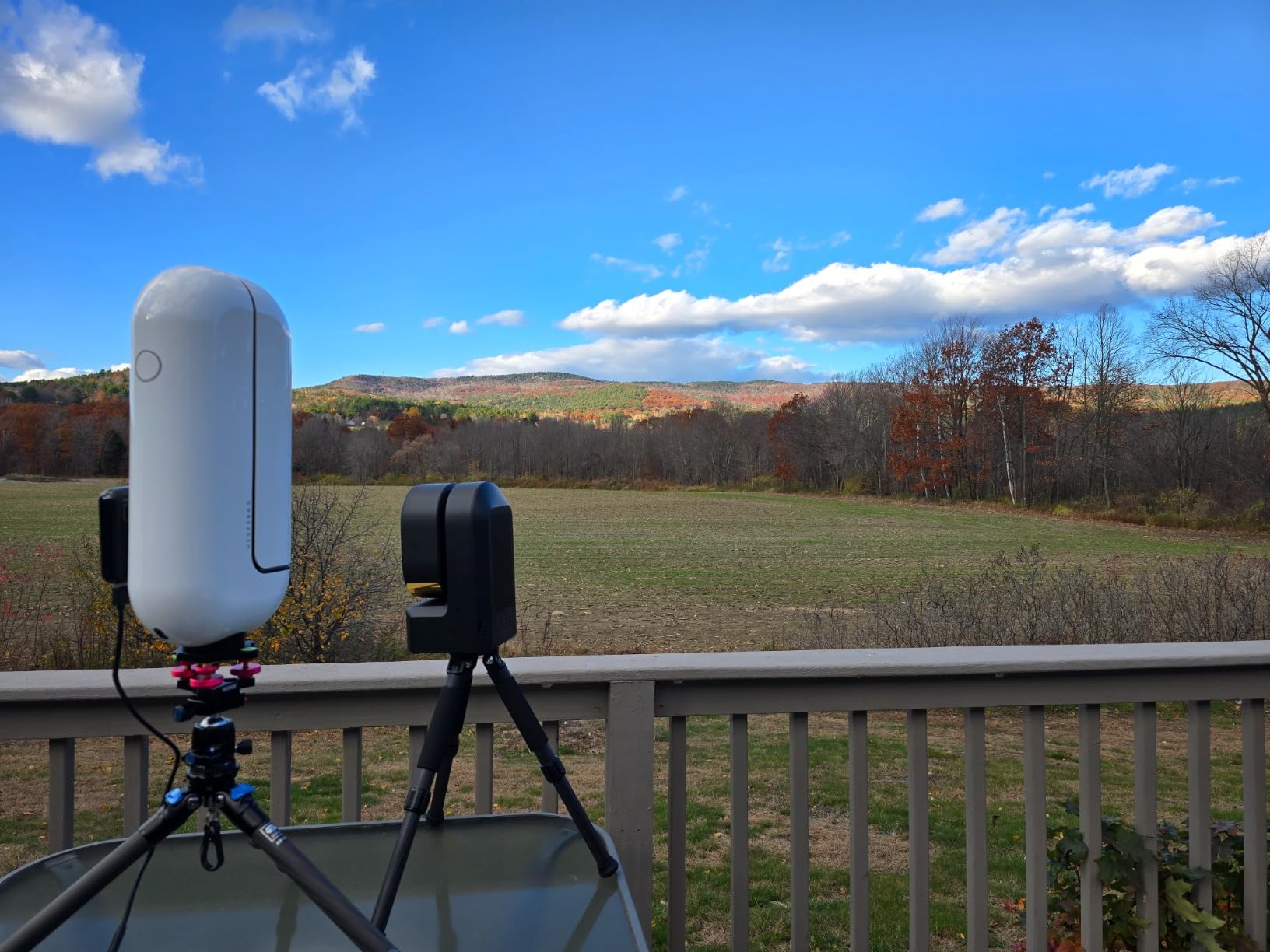
The 6 kg load rating lines up with a mirrorless body and a travel zoom without strain. Owners also use it for spotting scopes and binoculars, which tells you something useful about the stiffness of the top section under moderate load.
It is the sort of tripod that changes what you shoot. Once it fits in the bag, long exposures and self-portraits stop being things you skip and start being things you plan for.
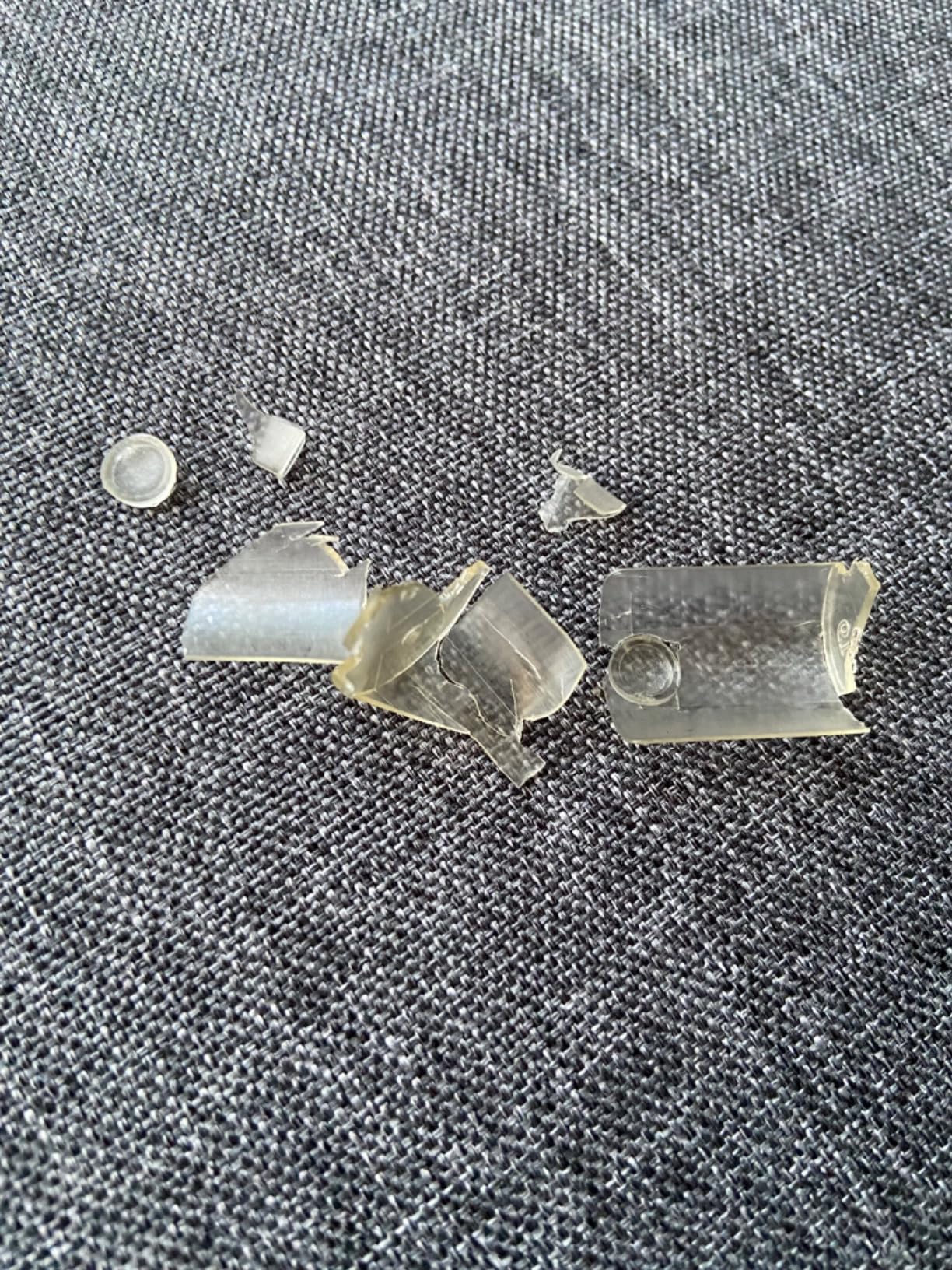
Who this tripod suits
Fly-only travelers, carry-on-only photographers, and anyone whose camera kit already fills the bag. At 13.4 inches it is short enough to sit beside a laptop rather than in a checked case.
It is also right for mirrorless kits in the 2 to 4 lb range, which is where the vast majority of travel photography happens.
Where it falls short
The center column does not reverse for macro on this configuration, which is a genuine gap for anyone doing stream, tabletop, or product work. Some buyers also report difficulty getting the legs tight enough to stop movement, and one describes it as flimsy.
It is not stiff enough for a DSLR with a long telephoto, and not stiff enough for multi-second exposures in wind. The folded circumference can also be wider than a dedicated tripod sleeve. A five year manufacturer warranty is listed, which is unusually long at this price.
10. SIRUI AM-203 Aluminum Mini Travel Tripod
Pros
- Smallest folded length here at 11.4 inches
- Highest average rating in the group
- Head rating of 10 kg far exceeds what a mini needs
- B-00K ball head gives smooth 360 degree panoramas
- Rubber feet and metal spikes both included
Cons
- 17 inch maximum height is far too short for standing shots
- Only three leg sections so a narrow height range
- Complements rather than replaces a full-height tripod
The AM-203 is a tabletop tripod, and the only thing wrong with it is that people try to use it as a full-height tripod. At 1.7 lb and 11.4 inches folded, it is the smallest support in this guide and the one that goes into a jacket pocket.
The head is the standout. The B-00K ball head with a standard Arca-Swiss plate gives genuinely smooth 360 degree panoramas, and it is rated to 10 kg, far beyond what a 17 inch tall tripod can reasonably carry. The tripod body itself is rated to 15 kg.
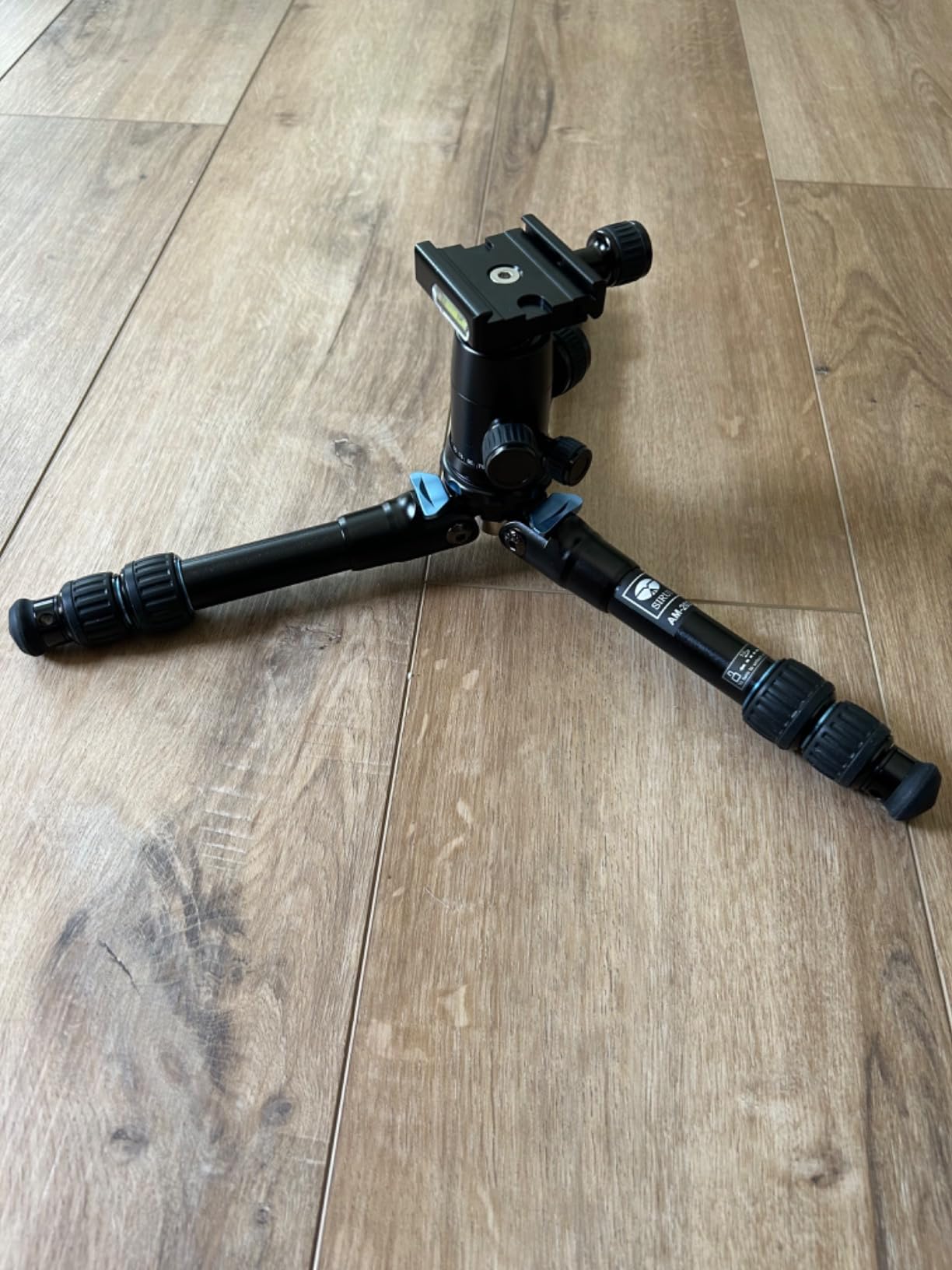
Three legs lay the platform flat to near ground level, which is what makes it good for food, product, and stream work. Rubber feet and metal spikes are both in the box, and the mounting screw converts from 3/8 to 1/4 inch if you ever want to swap the head.
Reviewers consistently describe it as the highest satisfaction pick in the assortment, with a large share of five-star ratings. At this size and this rating, the complaints are mostly about people wanting more height than it has.
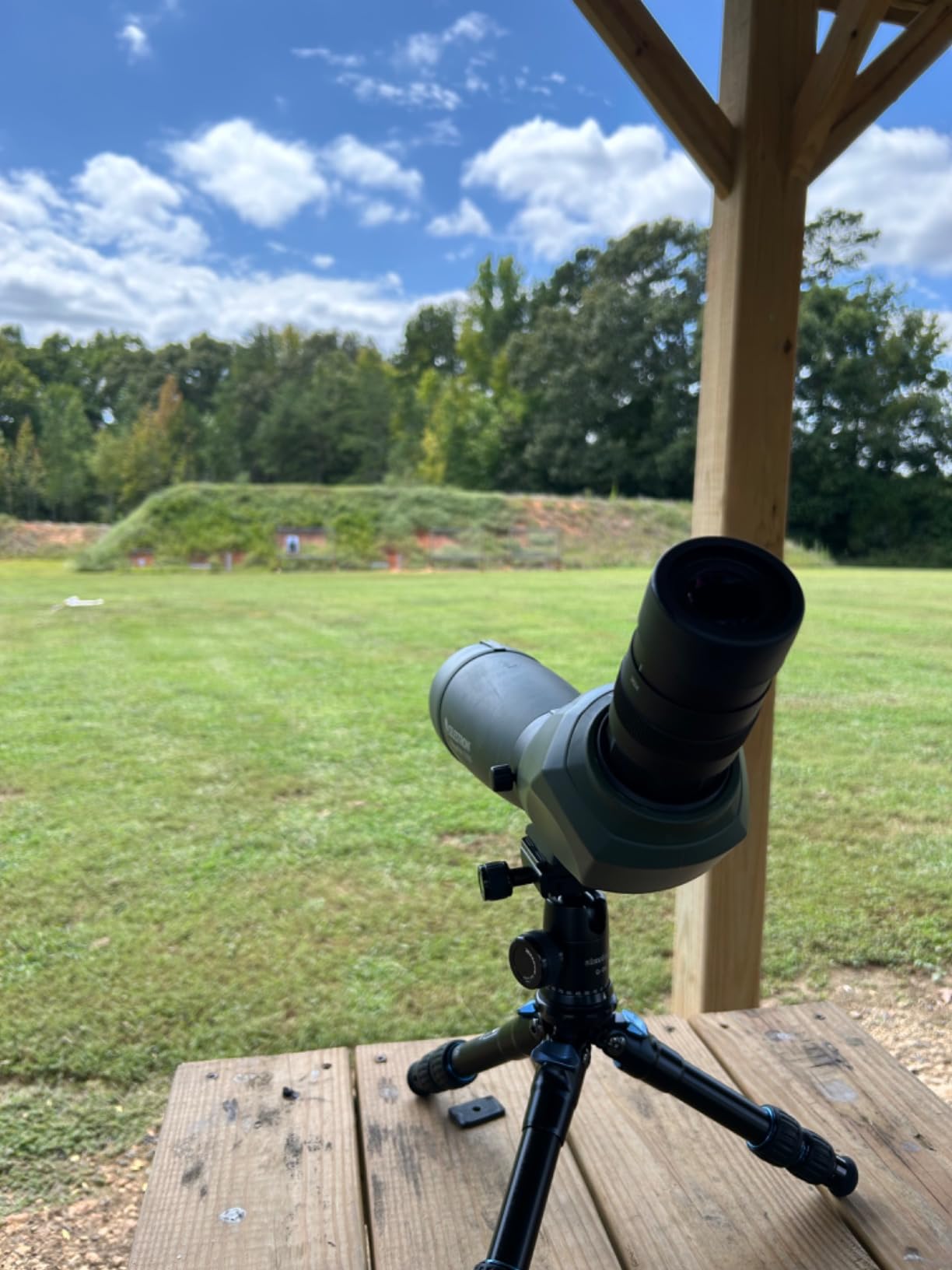
Who this tripod suits
Anyone doing food, product, tabletop, or macro work on the road, and anyone who wants a second support for a phone or a small camera during long exposures. Restaurants, hotel rooms, and cafes are exactly the environments it was made for.
It is also a good travel companion to a full-height tripod, because it goes in a jacket pocket while the larger one stays in the bag.
Where it falls short
Seventeen inches of maximum height is the entire constraint. You cannot shoot a standing portrait, a crowd, or a distant subject with it, and the three-section legs give you almost no height range to work with.
Do not buy it instead of a travel tripod. Buy it as the second tripod.
11. Fotopro X-go Carbon E2 Travel Tripod
Fotopro 60″ Carbon Fiber Camera Travel Tripod, Detachable Monopod for DSLR
Pros
- 17.6 lb rated load on 0.86 inch carbon tubes at 2.16 lb
- Monopod conversion plus a reversible center column
- Arca-Swiss plate included with a 25mm ball head
- Popular for astrophotography and long scenic work
- Folds to 14.2 inches for backpacking
Cons
- Monopod conversion screws and base plate can work loose
- Not rigid enough for very long exposures in a breeze
- Small knob-adjusted ball head that some want to replace
What strikes me about the Fotopro X-go Carbon E2 is the ratio. Twenty-two millimeter carbon tubes, 2.16 lb total, and an 8 kg load rating, with a 14.2 inch fold. That is more load per pound than anything else in this list.
It is also the most genuinely multi-purpose of the carbon options. Five sections run from 13.38 to 59.8 inches with three leg angle adjustments, a reversible center column for low-angle work, and conversion to a monopod at 42.7 inches, or 61 inches with the center column attached.
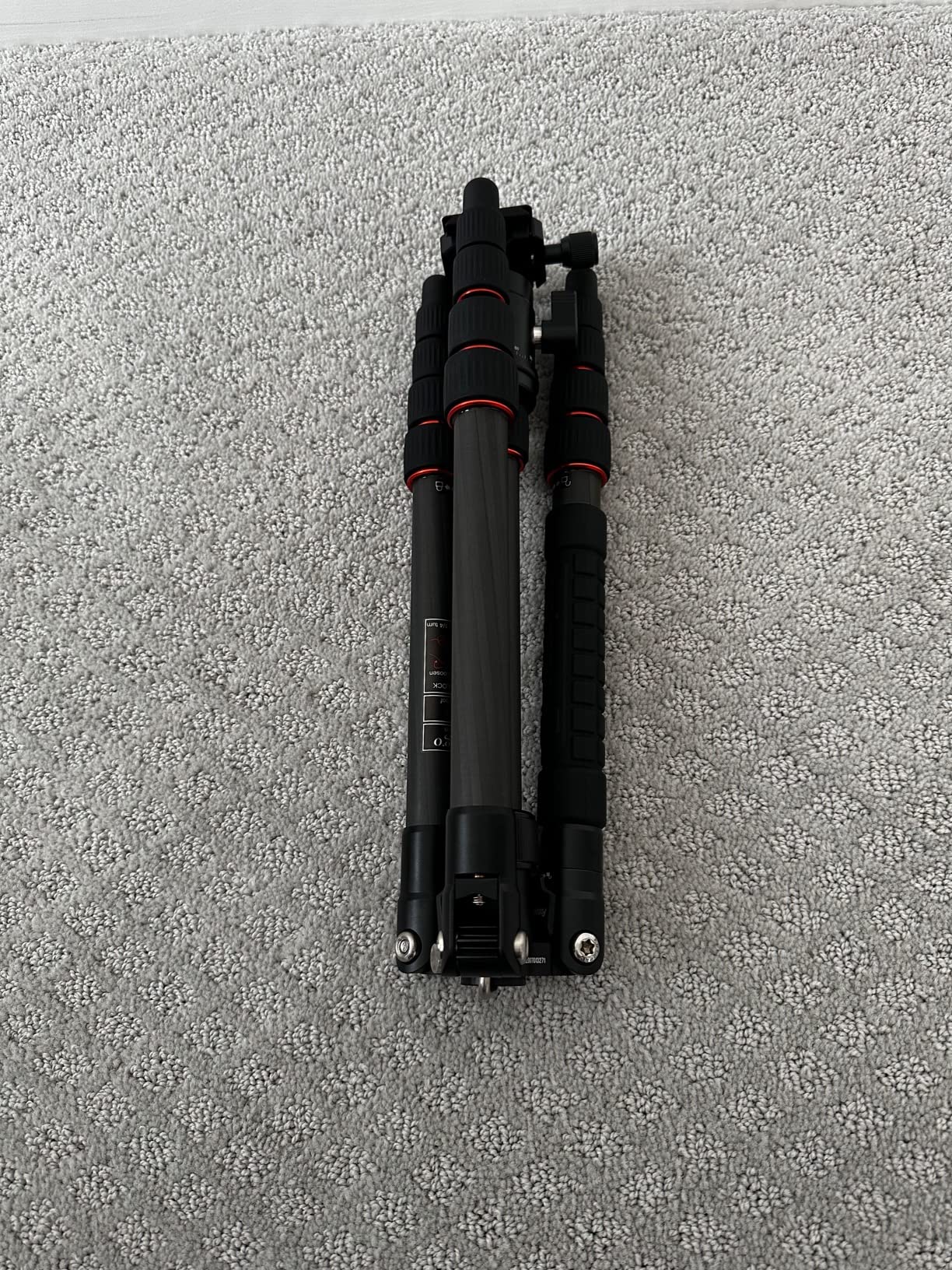
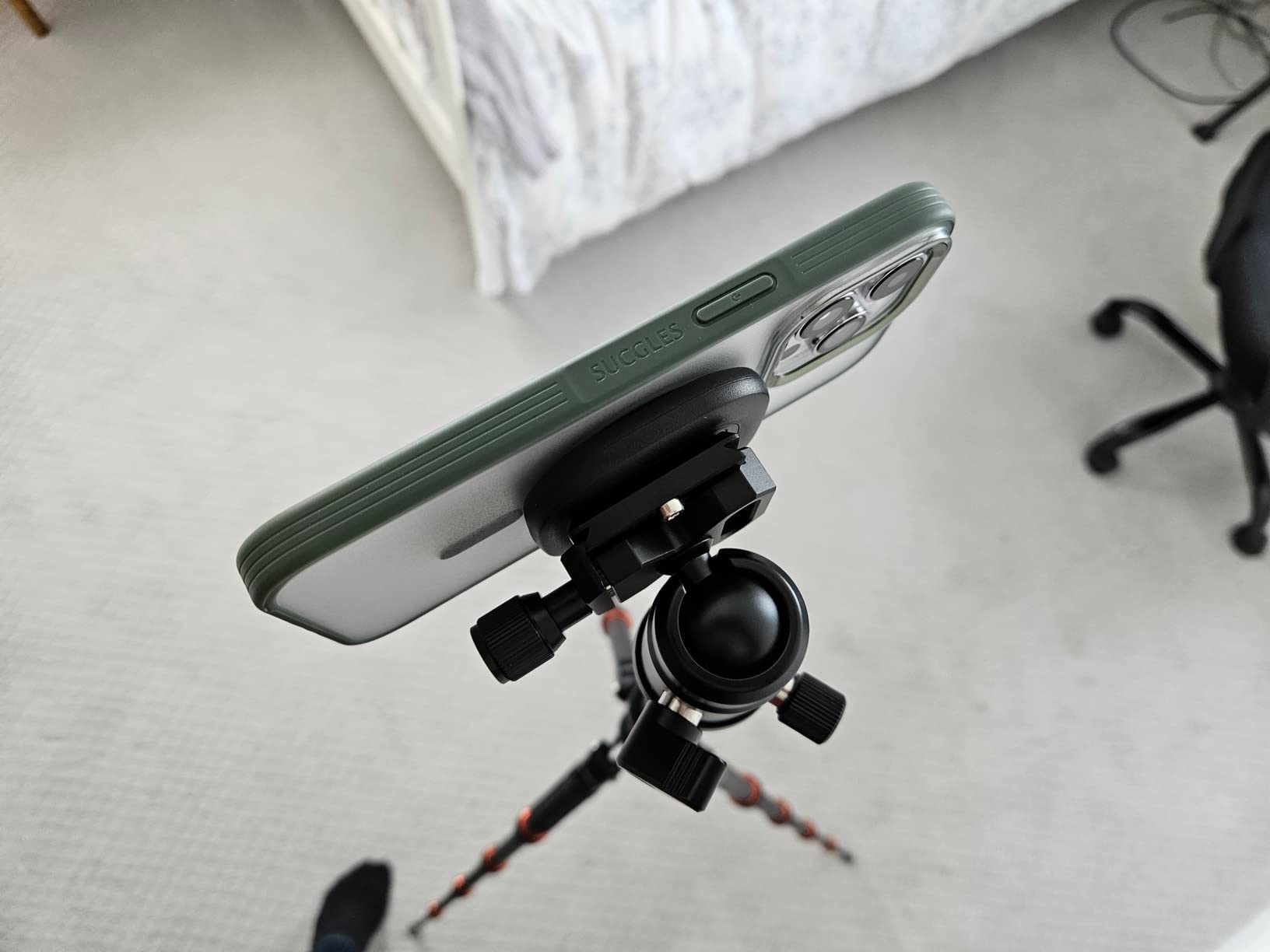
The 25mm metal ball head pans through 360 degrees on a panning base with an Arca-Swiss plate included, and the non-slip feet plus a weight hook add stability. Owners use it for astrophotography, where the combination of low weight and a decent load rating is exactly the pairing you want.
At 80 reviews this is the second least proven product here, so treat the durability feedback as early data rather than settled history.
Who this tripod suits
Astrophotographers and anyone shooting long exposures on a star field or on water, because a rigid tripod at 2 lb is a tripod you will actually carry to the dark site. The load rating also suits a full-frame body with a moderate telephoto.
It also fits travelers who want a tripod and a monopod without buying both, and who will use the reversible column for ground-level work.
Where it falls short
The monopod conversion is the weak point. Multiple owners report the screw points loosening during use and the base plate working loose regardless of how tightly it is tightened, so check every screw before a long exposure.
It is not rigid enough for very long exposures in even a light breeze, and not heavy duty enough for a medium format body with a large zoom. The 25mm ball head is small, and some owners recommend replacing it with a fluid video head for moving work.
12. CAMBOFOTO 68 inch Aluminum Travel Tripod
CAMBOFOTO 68″ Travel Tripod for Camera Phone Camcorder, Ball Head, Aluminum
Pros
- Metal ball head with dual tilt and pan knobs
- Two built-in bubble levels for accurate levelling
- Weight hook and hexagonal legs help in wind
- Leg locks tested to 50000 plus open and close cycles
- Phone holder fits most phones
Cons
- Only three leg sections so a 21 inch folded length
- 8.8 lb max load limits it to lighter bodies and optics
- One owner reported a leg lock that stopped working
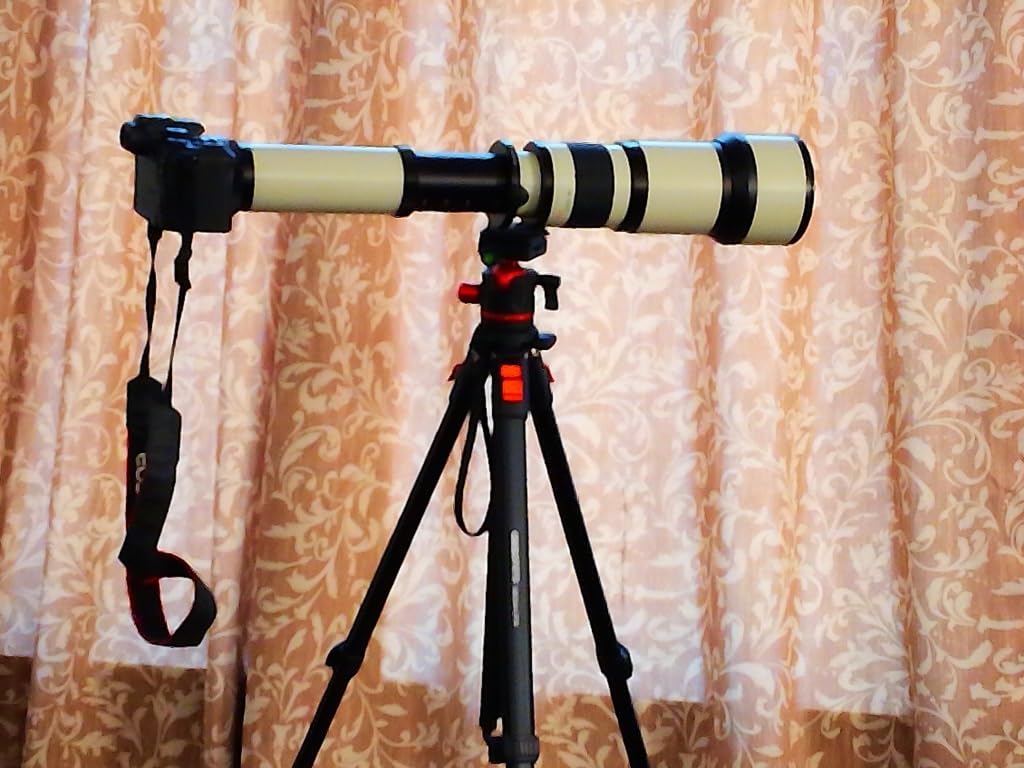
The CAMBOFOTO is the odd one out in this list, and that is exactly why it is here. It is not built for cameras first. It is built for someone who also needs to put a spotting scope, a pair of binoculars, or a telescope on something steady at the end of a long walk.
The metal ball head with dual tilt and pan knobs feels more substantial than the price suggests, and there are two built-in bubble levels, one on the tripod base and one on the head. Two levels is a small thing that makes setting up on a slope genuinely fast rather than a guessing game.
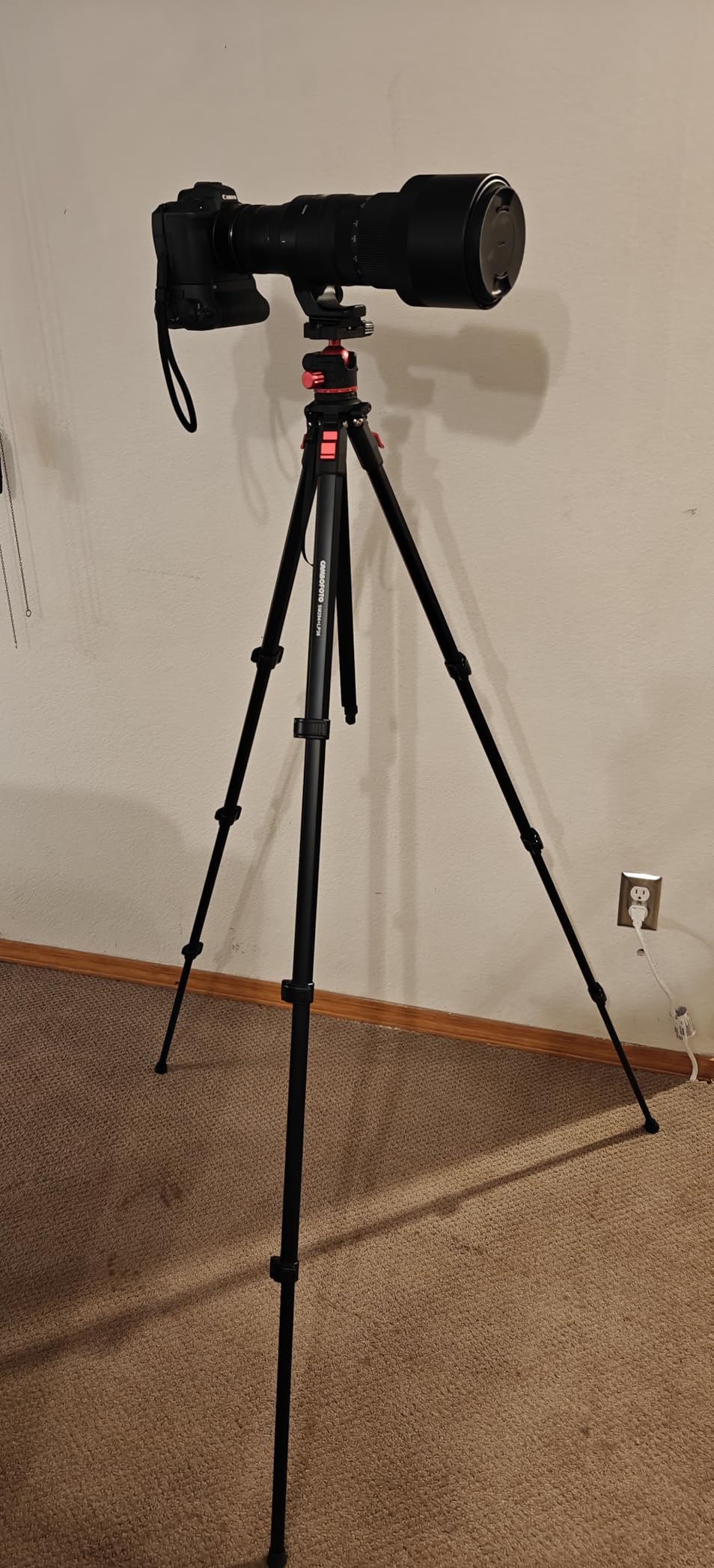
The hexagonal leg design and triangular center column add rigidity over conventional round tubes, and the weight hook under the column is there for wind. Height runs from 18.5 to 68 inches, and the inverting center column handles ground-level macro work.
Leg locks rated to 50,000 plus open and close cycles with a scratch-resistant epoxy coating is the kind of durability claim that is either marketing or genuinely reassuring, and owners of this unit describe it as holding up.
Who this tripod suits
Birders, hunters, anglers, and anyone who carries binoculars or a compact spotting scope and wants the same support for glass and for a camera. The 1/4 inch screw accepts Sony, Canon, and Nikon DSLRs, camcorders, spotting scopes, telescopes, and binoculars.
The phone holder fits devices 2.5 to 3.3 inches wide, which covers current iPhone and Android models for anyone shooting video on a budget.
Where it falls short
Three leg sections means a 21.2 inch folded length, the longest in this guide, and it will not pass a strict carry-on size check. The 8.8 lb max load also puts it at the bottom of the field, limiting it to lighter bodies and optics.
One owner reported a leg lock that stopped working, which is the failure mode worth checking on arrival. With 77 reviews, the long-term track record here is still thin.
How to Choose a Travel Tripod in This Budget Tier
Seven things actually decide whether a budget tripod works for you. Everything else on a spec sheet is marketing weight. Here is how I weigh them, in the order I weigh them.
Weight and folded length
The two numbers that decide whether you will actually bring the tripod. A tripod you leave in a hotel room is a tripod you did not buy. My rule: under 4 lb packed, and under 16 inches folded if you are flying.
The fold length is the harder constraint and the one people get wrong. It is not the diameter of the bundle that matters at the security gate, it is the length. In this list, the SIRUI AM-5C at 13.4 inches, the Traveler X at 13.9 inches, and the AM-203 at 11.4 inches clear that bar comfortably, while the CAMBOFOTO at 21.2 inches and the K&F CONCEPT 75 inch at 20 inches do not.
A tripod also travels badly if it has no bag. Ten of the twelve here ship with a carry case or a bag, and the two that lean hardest on weight are the two that include one.
Load capacity and the two-times rule
Load ratings are manufacturer-stated and not standardised. You cannot compare a 26.5 lb rating on one tripod to a 17.6 lb rating on another and conclude anything. What you can do is apply headroom inside a single pick.
The rule: rated load should be at least twice your heaviest body plus lens combination. A mirrorless body with a compact zoom is usually 3 lb, so anything rated at 6 lb or more is comfortable. A full-frame body with a 70-200 is around 5 lb, so you want 10 lb or above. A full-frame with a 100-400 pushes 7 lb, so you want 14 lb or more.
The reason for double headroom is not the static weight. It is the moment you twist the zoom ring, or the gust that hits the wide leg stance, or the leg you flex while making a last-second adjustment. Tripods fail at the joints long before they fail at the load limit, and headroom is what keeps that force away from the limit.
Reading the list with that rule: the 4.4 lb Amazon Basics rating suits a compact and nothing more. The SIRUI AM-203, despite its 10 kg head rating, is limited by height rather than load. The genuinely strong candidates for a heavy kit are the GEEKOTO at 26.5 lb, the SmallRig CT-10 at 33 lb vertical, and the K&F CONCEPT 64 inch at 17.6 lb.
Carbon fiber, aluminum, or something else
Carbon fiber is roughly a third lighter than aluminum for the same stiffness, and it damps vibration better, which matters when you are shooting at a shutter speed long enough to see it. Aluminum is heavier, cheaper, and more forgiving of a knock.
In this list, carbon options run 1.9 to 3.4 lb and aluminum options run 1.4 to 3.4 lb. The overlap is wide enough that material is not automatically the deciding factor, which is unusual and useful to know.
Look at tube diameter before you look at the material label. The Fotopro achieves 17.6 lb on 0.86 inch tubes, the GEEKOTO carries 26.5 lb, and the SmallRig carries 33 lb on alloy. Thin tubes with a bold rating tell you the rating is aspirational.
Twist locks versus flip locks
Flip locks open and close with one motion and are faster in daylight, which is why most of this list uses them. Twist locks are cheaper, and they are easier to fine-tune, and they are what you find on the lighter carbon builds.
The failure mode is the same for both. Grit in a clamp is the number one complaint forum readers raise about budget tripods, and cold makes it worse because moisture in the mechanism freezes. The maintenance routine is short: blow the locks out with compressed air after a beach day, and wipe them before you pack.
Owners of the SIRUI Traveler X specifically praise its single lever for setting all five sections in one motion, which removes four of the failure points entirely. That is worth more than it sounds.
Ball heads and Arca-type plates
A ball head is the most common failure point at this price, and forum readers raise head breakage and ball heads that will not hold weight as a recurring complaint across budget carbon and premium carbon alike. Judge the head first when your tripod arrives.
Arca-Swiss compatibility matters more than most guides admit. If your plate fits Arca, you can move any camera between any tripod in seconds. If it does not, every body change means a plate change, and you will lose that habit within a week. The K&F CONCEPT 75 inch and the Amazon Basics both use non-standard plates, and that is a real, if minor, daily friction.
A leveling scale on the ball head, as on the NEEWER TP14B, is worth more to a working photographer than any other head feature at this price. It turns a thirty-second adjustment into a five-second one.
Working height and the center column
Maximum height is the number that decides whether you will work standing or crouching all day. Roughly 55 to 65 inches is the comfortable range for a standing landscape or portrait. Below 50 inches you will be kneeling.
Treat center-column height separately. A tripod rated to 65 inches that needs the column extended to reach 65 is a worse tripod than one that reaches 65 without it. The SmallRig CT-10 reaches 71 inches on legs alone, which is a genuine differentiator for tall work. For taller setups generally, our tall tripod guide goes deeper.
An inverting center column is worth paying attention to. It gets you to ground level without a low-angle bubble level or a beanbag, and it is what makes tabletop and stream work possible.
Carry-on and airline practicality
Tripods are permitted in carry-on in most jurisdictions, but length is enforced at the gate. Under 16 inches folded, you will rarely be asked anything. Over 18 inches, expect a conversation and expect a gate-check that you watch your tripod walk out the door without.
Practical advice from people who fly with tripods: split the tripod from the head and pack the poles across the middle of the bag, check the bag for blade adapters, and photograph your tripod before you fly so that an argument at the gate ends in a way you can win.
One more thing nobody mentions. Plan your maintenance, not just your purchase. Grit in locks, worn rubber feet, a loose quick release plate, and legs that slowly creep are the four things that actually fail after travel wear, and all four are preventable with a ten-minute check between trips.
Carbon Fiber vs Aluminum Under 150 Dollars
Short answer: at this price, aluminum is fine for almost everyone, and carbon is worth it if you are either walking a long way or shooting long exposures. The interesting part is that the price gap has narrowed to the point where a carbon tripod here costs less than double the best aluminum one, and both fit under the ceiling.
On stiffness, the carbon options here use tubes between 0.86 and 0.98 inch diameter and still reach load ratings of 13 to 26.5 lb. The aluminum options use thicker tubes and reach 17.6 to 33 lb, so on raw numbers aluminum wins on load. Carbon wins on weight per unit of stiffness and on vibration damping, and the damping is what you feel at a two-second shutter speed in a light wind.
On cold weather, aluminum is warmer to handle and does not go brittle. Carbon can be uncomfortably cold to the touch, which is why the K&F CONCEPT 75 inch has foam grips on its upper sections. On maintenance, carbon is less likely to corrode and more likely to be quietly replaced if a section delaminates, while aluminum dents visibly and tells you it happened.
The catch nobody mentions: budget carbon is where the marketing adjectives are thickest, because the material name carries a premium it has not earned at this price. Compare tube diameter and section count between two carbon tripods, not the words on the box.
If you shoot stills, carry one body, and are not walking twenty miles a day, the aluminum picks on this list are the smarter buy and the K&F CONCEPT 64 inch is the proof. If you are a backpacker or a night shooter, the carbon NEEWER TP17B and the SIRUI AM-5C are worth the difference.
Frequently Asked Questions
What is the best affordable tripod for travel?
The Ku0026amp;F CONCEPT 64 inch Lightweight Aluminum Travel Tripod is the best affordable travel tripod in this price tier. It folds to 15.5 inches, weighs 2.53 lb with its 36mm ball head, carries a 17.6 lb load rating, and uses one-handed flip locks on all four leg sections. It suits a mirrorless body or a full-frame body with a standard zoom.
What is the best carbon fiber tripod for travel under $150?
The NEEWER Basics TP17B is the best carbon fiber travel tripod under 150 dollars. It is 3.2 lb, folds to 16.3 inches, supports up to 13.2 lb, includes an Arca-type quick release plate, and converts to a monopod by unscrewing one leg. The SIRUI AM-5C is lighter at 1.9 lb and folds shorter at 13.4 inches.
Are carbon fiber tripods worth it for travel photography?
Worth it in two cases: if you are walking a long way with the tripod, since carbon is roughly a third lighter than aluminum, and if you shoot multi-second exposures, since carbon dampers vibration better. For stills with one body and a standard zoom, a good aluminum tripod in this tier is the smarter buy and costs less.
How much load capacity do I need for a telephoto lens?
Use the two-times rule: choose a rated load at least double your heaviest body plus lens combination. A full-frame body with a 100-400mm zoom is close to 7 lb, so you want a tripod rated at 14 lb or more. Load ratings are not standardised between brands, so compare headroom within a single pick rather than across brands.
Are twist locks or flip locks better for a travel tripod?
Flip locks are faster in daylight and are what most of the tripods in this price tier use. Twist locks are cheaper, easier to fine-tune, and are common on lighter carbon builds. Neither locks out grit automatically, so blow them out with compressed air after a beach or dusty day and wipe them before packing.
What size tripod fits in carry-on luggage?
Aim for under 16 inches folded and under 4 lb. In this guide the SIRUI AM-203 at 11.4 inches, the AM-5C at 13.4 inches, and the Traveler X at 13.9 inches clear that comfortably. Tripods longer than 18 inches can invite a gate conversation, and gate agents do not always explain the reasoning.
The Best Travel Tripod Under 150 Dollars for Your Kit
Start with the K&F CONCEPT 64 inch if you want one tripod that does everything a travel photographer asks of it. Real ball head, 15.5 inch fold, invertible column, one-handed locks, and enough load rating for a full-frame body with a standard zoom. It is the reason this list has an answer rather than a compromise.
If you are carrying more glass than a mirrorless kit, go to the GEEKOTO CT25Pro for carbon legs and a generous 26.5 lb rating, or the SmallRig CT-10 if you also shoot video and want threaded holes for arms and monitors. If you are carrying less than you think, the Amazon Basics tripod will do for a compact or a phone, and the SIRUI AM-203 is the tabletop pick for food and product work.
For the cheapest path to real carbon fiber, take the NEEWER TP17B and use the monopod conversion on narrow trails. For the lightest thing that reaches standing height, take the SIRUI AM-5C at 1.9 lb and 13.4 inches folded. For the lowest weight of all, the SIRUI Traveler X wins on the tripod platform, but swap the bundled fluid head for a small ball head first.
Whatever you pick, check the head and the leg locks the day it arrives, and re-check them after every trip. That ten-minute habit is what separates a tripod that lasts a decade from one that ends up in a closet by year three. For the wider picture once your budget is not the constraint, our guide to tripods under 300 dollars for taller setups is the natural next read.