
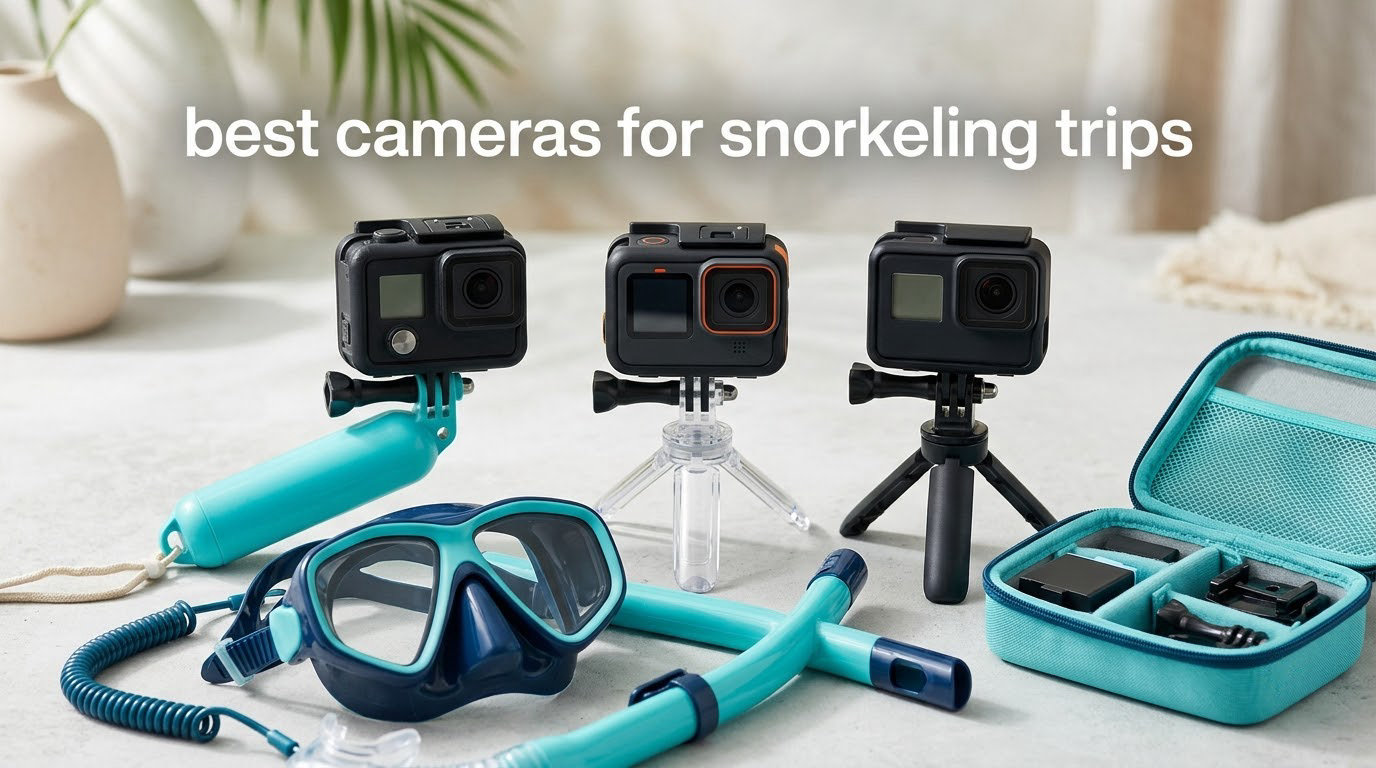
Every snorkel trip ends the same way: you surface, pull the mask up, and check the footage. Half the time it is a blue-green smear with a diver’s elbow in it. The difference between that and footage you actually keep comes down to three things, in this order: a depth rating you never have to think about, controls you can hit with a gloved hand, and an image pipeline that holds colour in dim water. Our pick for 2026 is the DJI Osmo Action 4, because it is the only body in this test group that is sealed to 18 meters bare, with a 1/1.3-inch sensor behind a 155-degree lens and a battery that comfortably outlasts a full session.
I have spent seasons photographing reefs, turtles and kelp forests with this class of camera, and the failure I see most often is not a drowned body. It is a drowned body that was opened while it was still wet, or a camera that floated away because nobody attached a tether. The picks below are the best cameras for snorkeling trips we could justify on those terms, and every specification in this guide comes from the manufacturer listing and the owner feedback attached to it, not from a spec sheet we invented at a desk.
One principle runs through all ten choices, and it is worth stating before the list: a depth rating is not a quality score. A body rated to 40 meters tells you nothing about whether its colours look natural, whether it can focus on a butterflyfish at arm’s length, or whether the screen is readable at two meters. What a depth rating does tell you is whether the camera survives the trip. Judge it on that, then judge the picture separately.
If you want the shorter version, we have covered the same ground in our guides to the best underwater cameras for snorkeling and the best action cameras for snorkeling, with extra depth here on housings, zoom and post-dive care.
Top 3 Best Cameras for Snorkeling Trips in 2026
Three bodies cover almost every snorkel trip. The DJI Osmo Action 4 wins on sensor size and bare-camera depth. The AKASO EK7000 wins on the fact that you can replace it without thinking about it. The AKASO Brave 4 wins on dual screens at a similar tier.
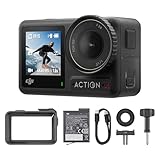
DJI Osmo Action 4
- Waterproof to 18m without a housing
- 1/1.3-inch sensor
- 4K120 at 155 degrees
- Pre-Rec and 10-bit D-Log M


AKASO Brave 4
- 4K30 and 20MP photos
- 40m waterproof housing
- Dual screens
- 170 degree view presets
The Osmo Action 4 is the only pick here rated to 18 meters without a housing, which removes an entire category of failure. The EK7000 and Brave 4 rely on included cases rated to 131 feet, and both bundle two batteries, which matters more than most buyers expect on a boat with limited charging.
Best Cameras for Snorkeling Trips at a Glance in September
Ten picks, one line each. The category label tells you what kind of camera it is, so you can rule categories in or out quickly before you read a single review.
Best overall, no housing needed: DJI Osmo Action 4, sealed to 18 meters with a 1/1.3-inch sensor.
Best value, cheapest way to start: AKASO EK7000, 4K30 with a 131-foot case and two batteries in the box.
Best budget twin: AKASO Brave 4, dual screens and a 40-meter case for a similar outlay.
Best for 360 reframing: Insta360 X3, 5.7K 360 capture you crop in software.
Best for the highest 360 resolution: Insta360 X5, 8K30 360 with replaceable lenses.
Best for HDR stills: GoPro HERO12 Black, 5.3K60 HDR video and 27MP HDR photos.
Best for optical zoom: KODAK PIXPRO WPZ2, a sealed body with a genuine 4x optical range.
Best for dim and overcast water: Insta360 Ace Pro 2, 1/1.3-inch 8K sensor with a low-light mode.
Best previous-generation buy: GoPro HERO11 Black, 5.3K60 at a lower outlay than current models.
Best floating camera for kids: YISENCE 4K 16FT, floats, includes a card, and is hard to lose.
| Product | Specifications | Action |
|---|---|---|
| DJI Osmo Action 4 |
|
Check Latest Price |
| AKASO EK7000 |
|
Check Latest Price |
| AKASO Brave 4 |
|
Check Latest Price |
 Insta360 X3 Insta360 X3 |
|
Check Latest Price |
 Insta360 X5 Insta360 X5 |
|
Check Latest Price |
 GoPro HERO12 Black GoPro HERO12 Black |
|
Check Latest Price |
 KODAK PIXPRO WPZ2 KODAK PIXPRO WPZ2 |
|
Check Latest Price |
 Insta360 Ace Pro 2 Dual Battery Insta360 Ace Pro 2 Dual Battery |
|
Check Latest Price |
 GoPro HERO11 Black GoPro HERO11 Black |
|
Check Latest Price |
 YISENCE 4K Underwater Camera 16FT YISENCE 4K Underwater Camera 16FT |
|
Check Latest Price |
How We Chose and What We Checked
Page one for this query is almost entirely user-generated: forum threads, cruise boards and a couple of Reddit threads with hundreds of comments. That tells us something useful. People are not asking for a lab comparison, they are asking whether a specific body will survive a specific trip and whether the footage will look right. So we weighted depth rating, seal design and post-dive handling above raw resolution.
For each camera we read the manufacturer listing first and then the owner reviews, and we kept the two separate. The listing tells you the depth rating, the sensor size, the frame rates and what is in the box. Reviews tell you what actually happens after three months of sand and salt. Reviewer numbers are the honest limitation here: nobody can verify a seal condition or a battery’s remaining capacity from a written review, so treat every durability claim as a pattern rather than a proof.
We also insist on naming the exact model. Snorkeling forums are full of confusion between near-identically named variants and bundles, and the difference between two versions of the same camera is often the battery count in the box. Where a pick is a previous-generation model, we name its successor. And we do not publish prices, because listing prices change daily and the buttons below are the only accurate reference.
As an Amazon Associate we earn from qualifying purchases, which does not change the order below.
1. DJI Osmo Action 4 – The One You Do Not Need a Housing For
Pros
- Sealed to 18m bare
- so there is no housing to flood
- 1/1.3-inch sensor holds colour and noise in dim water
- 4K120 at a 155 degree field of view
- 10-bit D-Log M gives real grading latitude
- Pre-Rec catches surprises around coral heads
Cons
- Essential Combo bundles only one battery
- No charging while recording
- Full feature access requires the DJI Mimo app
- Screen is hard to read in direct sun
This is the camera I hand to a snorkeler who has flooded something before. At 18 meters without a housing, the Osmo Action 4 removes the single most common way these trips go wrong, which is a latch closed on a wet body or a case left slightly ajar on a boat bench. You rinse it and you put it away. That simplicity is worth more than any spec line.
The 1/1.3-inch sensor with 2.4 micrometre pixels is the reason the footage holds up. Snorkeling happens at depths where light drops fast, and larger pixels mean you can keep shooting without the camera stacking noise into the shadows under a ledge. Reviewers consistently single out low-light performance and the automatic white balance, which is tuned to correct colour underwater rather than leaving you to fix it later.
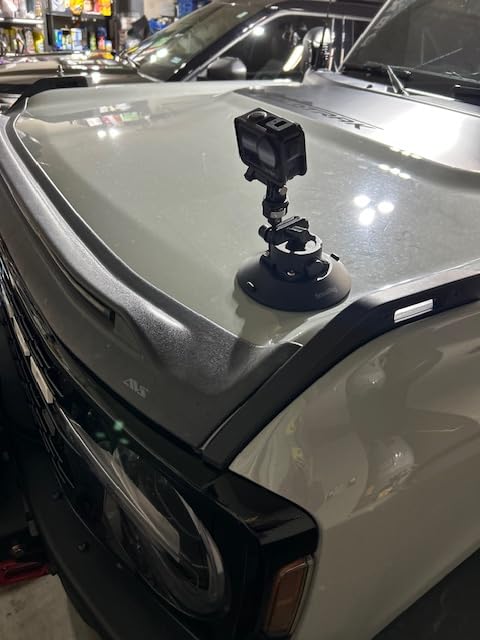
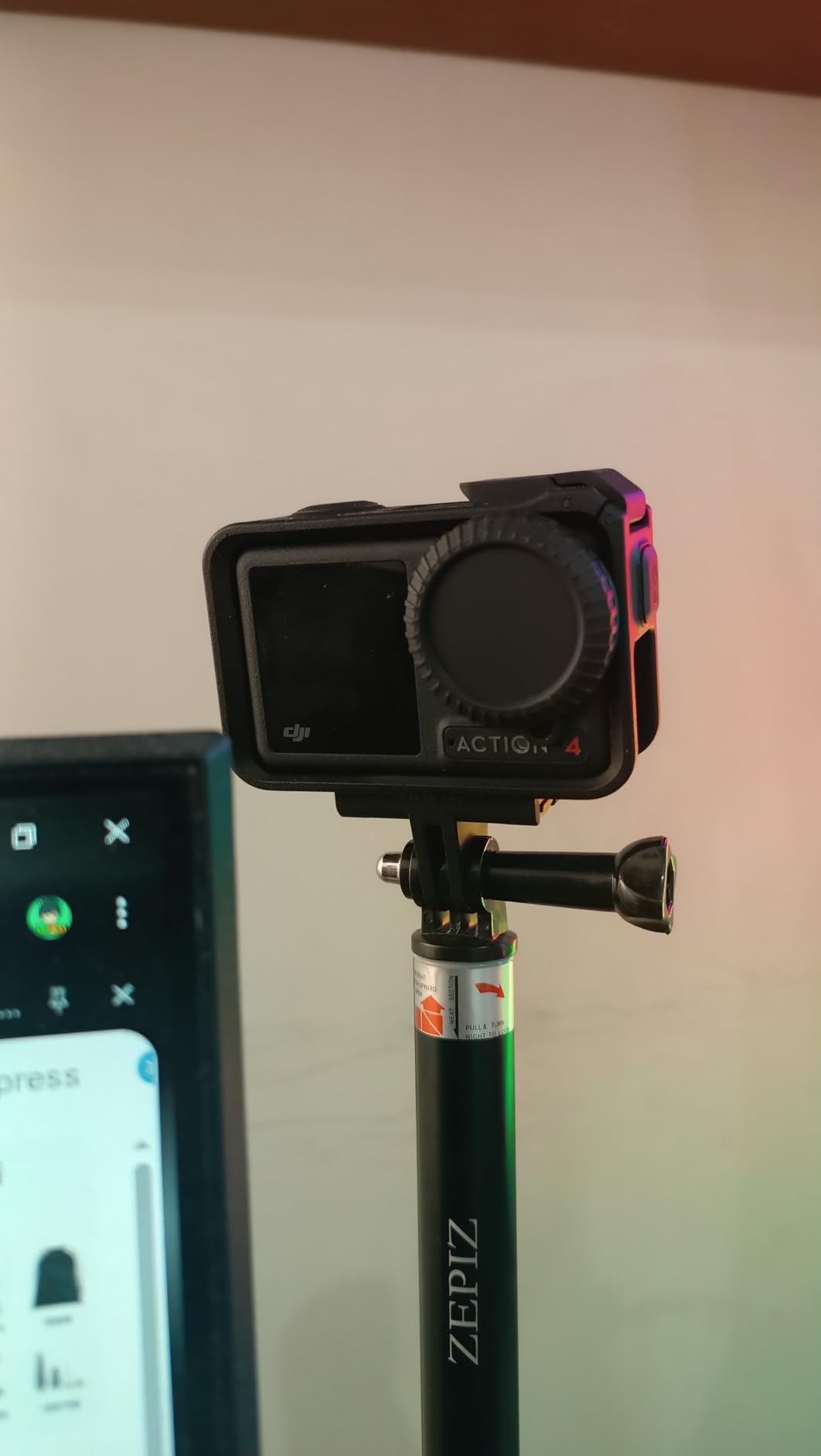
Two capture modes matter here. 4K at 120 frames per second with a 155-degree field of view is where the slow-motion reef clips come from, and 10-bit D-Log M is where the colour grading comes from if you edit seriously. RockSteady, RockSteady+ and HorizonBalancing cover three levels of stabilization, and the magnetic quick-release makes switching between mask, hand and vertical framings a matter of seconds rather than fumbling.
Pre-Rec deserves a mention because it changes how you shoot wildlife. It buffers footage before you press record, so a turtle that surfaces in front of you is already captured. On a trip where you are swimming, breathing and managing buoyancy, that buffer is more useful than another stabilization mode.
Who the Osmo Action 4 Suits
It suits the snorkeler who wants a single device for both video and stills and would rather never assemble a housing. Dual full-colour touchscreens on both sides mean you can frame yourself, your buddy or a reef without guessing.
It also suits anyone heading into colder water, because the 1770mAh battery is rated to work down to minus 20 degrees for up to 150 minutes. Kelp forests and temperate reefs reward the same sensor advantage as tropical water, because light is scarcer there too.
Where It Falls Short
The Essential Combo bundles a single battery, so plan for spares before a multi-day trip. Reviewers also report no option to charge while recording, which matters on a liveaboard where charging happens at odd hours.
Screen glare in bright sun is a recurring complaint, and the full feature set is locked behind the DJI Mimo app. If you need the camera to work entirely offline with physical controls, this is not the body for you.
2. AKASO EK7000 – The One You Can Buy Twice
Pros
- Lowest entry cost in this group with full 4K30 capture
- 131ft case included so no separate housing to buy
- Two lithium polymer batteries and a dual charger in the box
- Digital EIS keeps paddling footage usable
- Wrist remote for hands-free start and stop
Cons
- microSD card not included
- Screen is difficult to read underwater
- Battery door is fiddly and fragile
- Muffled on-board audio
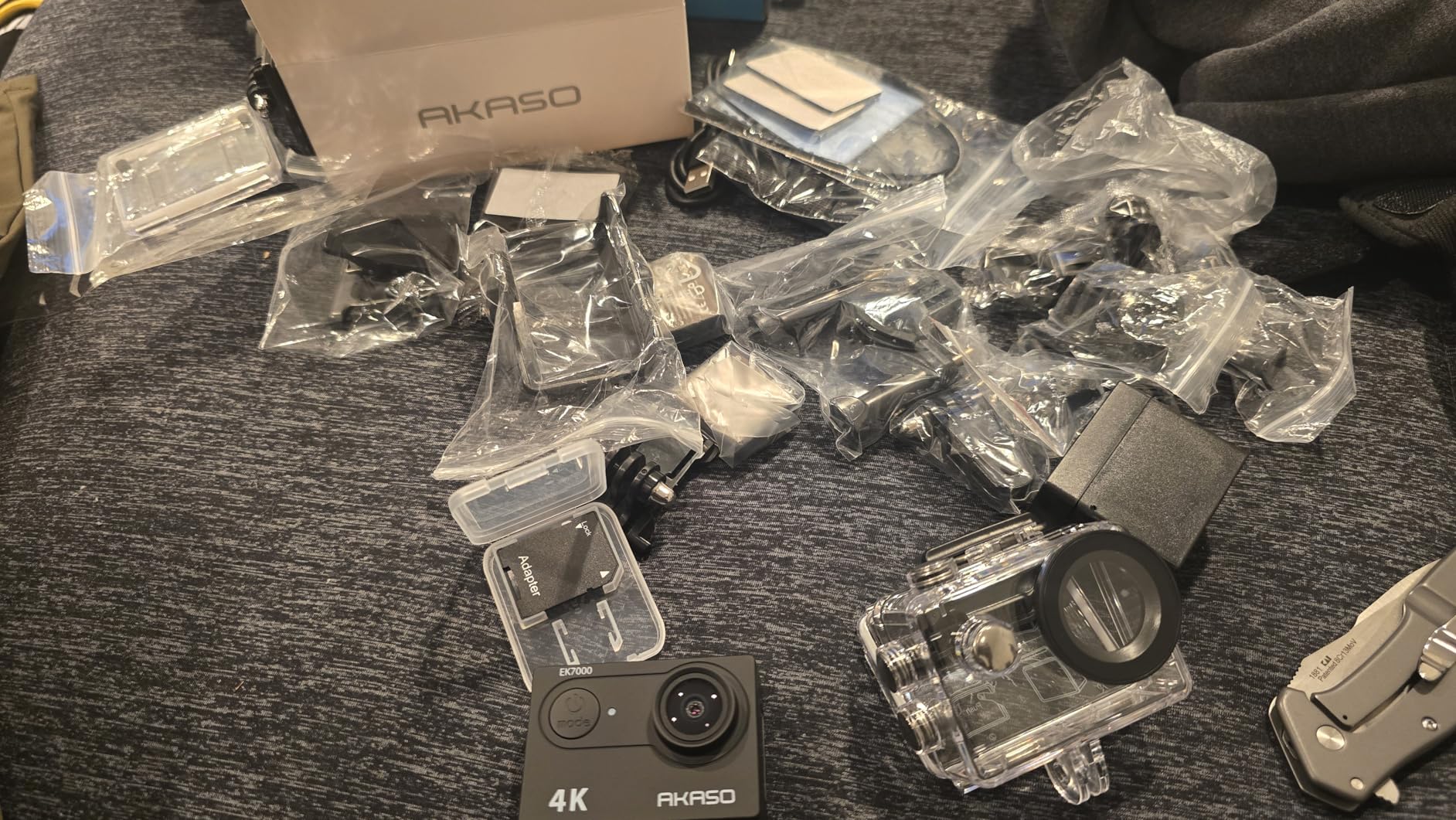
There is a specific kind of snorkeler this camera is right for, and it is the person on their first trip who does not want to think about gear. The EK7000 arrives with a 131-foot waterproof case, two batteries, a dual charger, a handlebar mount, a tripod and helmet mounts. There is nothing else to buy except a memory card, and even that is a five-minute errand.
Capture is 4K at 30 frames per second with 20 megapixel stills, and electronic image stabilization handles the constant small movement of a snorkeler’s head. Reviewers describe the footage as crisp for the tier and frequently compare it favourably to older GoPro bodies, which tells you where the value sits in this market.
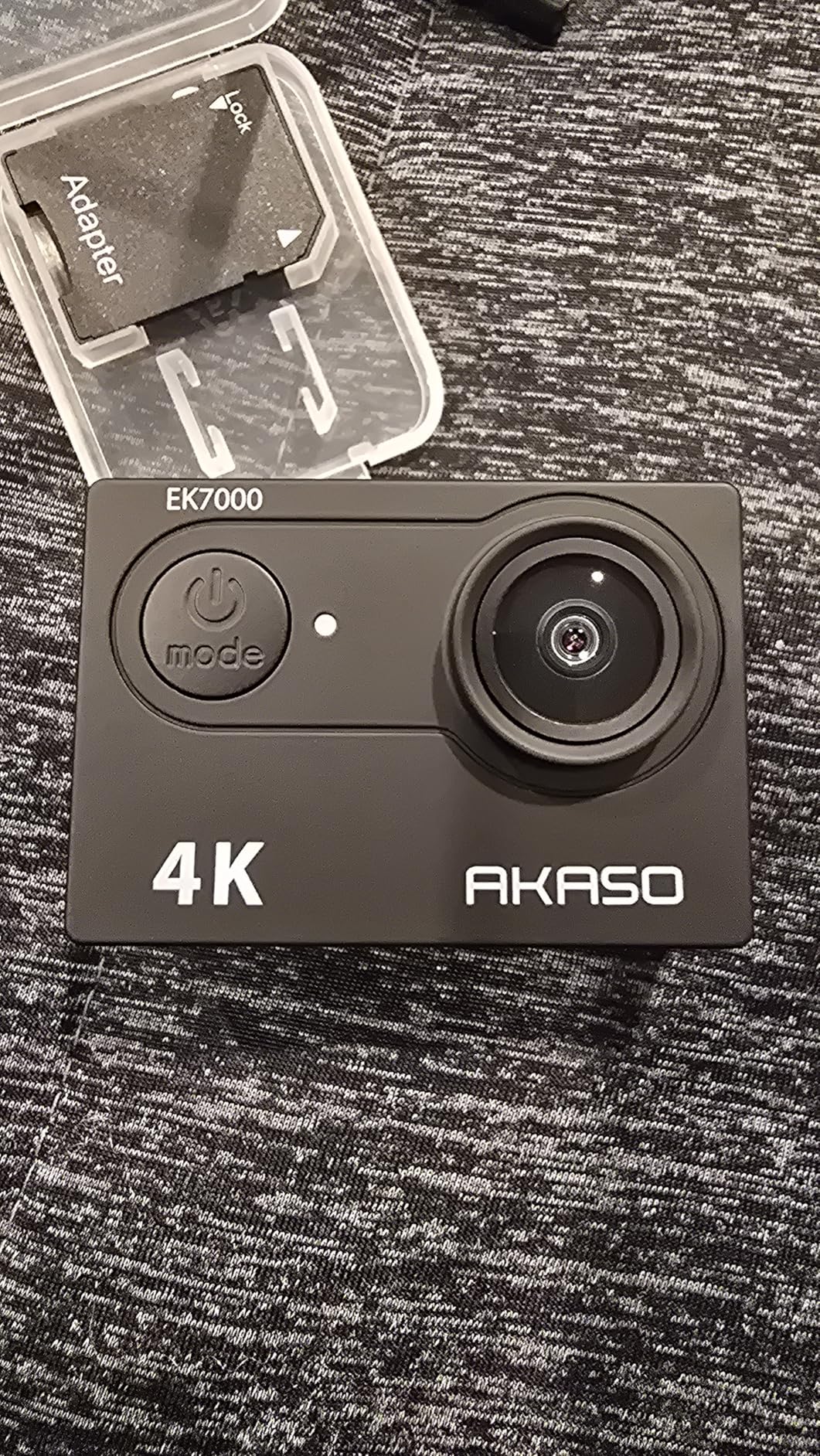
The wrist remote is more useful underwater than it looks on paper. You start and stop recording with a button on your arm instead of touching the body, which keeps your mask, your hands and your balance undisturbed. It is not waterproof, so it goes on after you surface, but it still solves the awkwardness of reaching for a button mid-breath.
At 4.4 stars across a very large review count, this is the most thoroughly owner-tested body in the group. That matters for a camera whose main job is to survive being dropped, rinsed and forgotten in a bag for a week.
Where the EK7000 Fits
It fits families, first-timers and anyone who will lose a camera at least once. The weight listed in the specifications is 2 ounces for the body, and the whole kit disappears into a dive pouch. A camera this small is genuinely recoverable if something goes wrong, unlike a phone.
It also fits the cruise shore excursion, where the camera lives in a locker between stops. Small, sealed, cheap to replace and quick to rinse is exactly the profile for that trip.
Where It Falls Short
Resolution marketing outruns the sensor. Owners describe stills that turn grainy as soon as the light drops under a reef overhang, which is the normal state of affairs at depth. Treat the 4K label as video capability rather than a stills promise.
The screen is hard to read underwater, the battery door is fiddly and reported as fragile, and the app-based control is unreliable on long recordings. If you care about composing shots, the AKASO Brave 4 below has a better screen situation for a similar outlay.
3. AKASO Brave 4 – Dual Screens and a 40-Metre Case
Pros
- 131ft case rated to 40m with dependable sealing
- Two screens let you frame yourself and the reef
- Four view-angle presets from 70 to 170 degrees
- Gyro-based stabilization smooths snorkel chop
- HDMI output plus Wi-Fi for review on a boat
Cons
- Menu system and manual are awkward
- 5x digital zoom adds little detail
- Weak close-up focusing
- Wi-Fi and remote pairing can be confusing
The Brave 4 sits in the same tier as the EK7000 and solves two of its weaknesses. It has a second, front-facing 0.96-inch screen, which means you can frame a selfie or a group shot without turning the camera around and guessing. And its view-angle system gives you four presets from 70 to 170 degrees, so you can narrow the field when a wide lens makes a reef look small and distant.
The waterproof case is rated to 40 meters, deeper than you will ever snorkel, and owners report it holding up on dive trips with no seal complaints. That reliability, more than any resolution claim, is why this body keeps showing up in scuba and snorkel forum recommendations as a budget setup.

Two 1050mAh batteries rated at roughly 90 minutes each, plus a dual USB charger, mean a full day of intermittent snorkelling is realistic without a power bank. The 155-degree and wider options handle open reef, while the 70-degree preset suits a turtle that will not come closer.
Video is 4K at 30 frames per second, with 1080p at 60 available, and stills are 20 megapixels. The f2.0 aperture is a genuine advantage underwater compared with the f2.8 openings typical at this price.

Best for Snorkelers Who Film Themselves
The dual-screen design makes this the pick if your footage is going on social media. You can see the frame, check your position relative to the water line and keep the horizon level without a second person holding the camera.
Reviewers also praise underwater colour retention for this tier, which is unusual in a body that ships without dedicated underwater colour modes. Automatic correction is doing more work here than the branding suggests.
Limits to Know Before You Buy
The menu system and the printed manual are both weak, so budget an evening with the controls before you fly. Wi-Fi and wrist remote pairing is reported as confusing, and it does not matter underwater anyway, since radio signals die within centimetres of the surface.
Close-up focusing is the real limitation. Digital zoom at 5x adds no detail, and a fish at arm’s length will not be crisp. If your priority is a subject that fills the frame, the KODAK PIXPRO WPZ2 further down is the camera with a real optical answer.
4. Insta360 X3 – 360 Degrees So You Can Reframe Later
Pros
- 360 capture lets you choose the framing after the dive
- 2.29-inch touchscreen is the most usable here
- FlowState and Horizon Lock keep footage level
- Waterproof to 10m and used successfully in the ocean
- Four-mic array with wind noise cancellation
Cons
- 360 files need desktop rendering for 360 viewing
- Per-lens resolution is lower than the 5.7K figure implies
- Some units reported water resistance issues
- Can overheat in direct sun
The X3 solves a specific snorkelling problem: you cannot be behind the turtle. A 360 body records in every direction at once, so a subject that swims past behind you is already in the file, and you decide in the app which view to keep. For family trips and reef passes where things happen faster than you can react, that changes what you come home with.
It is also a conventional action camera. Shoot single-lens at 4K30 or super-wide at 2.7K60 and you get a normal, flat, easy-to-edit clip with FlowState stabilization and Horizon Lock keeping it steady and level.
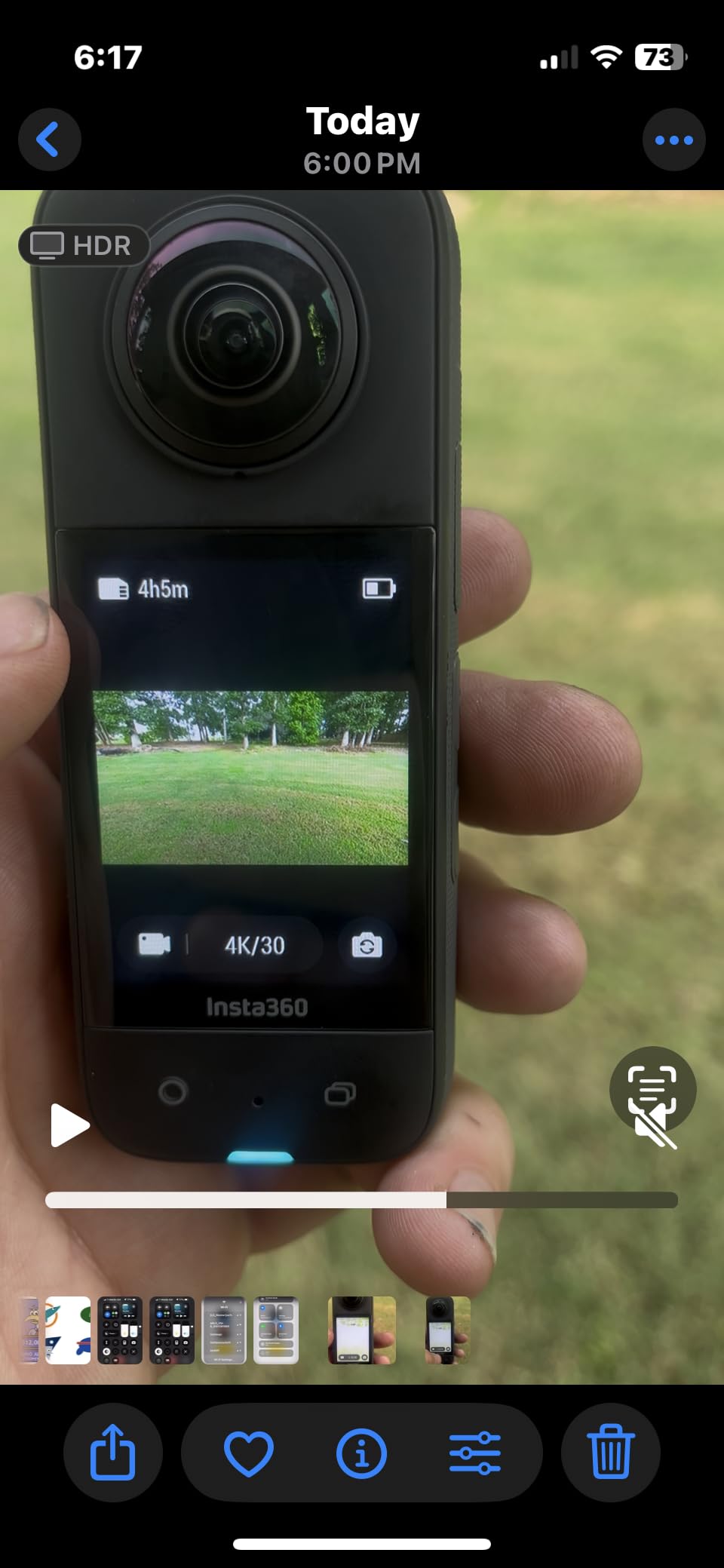
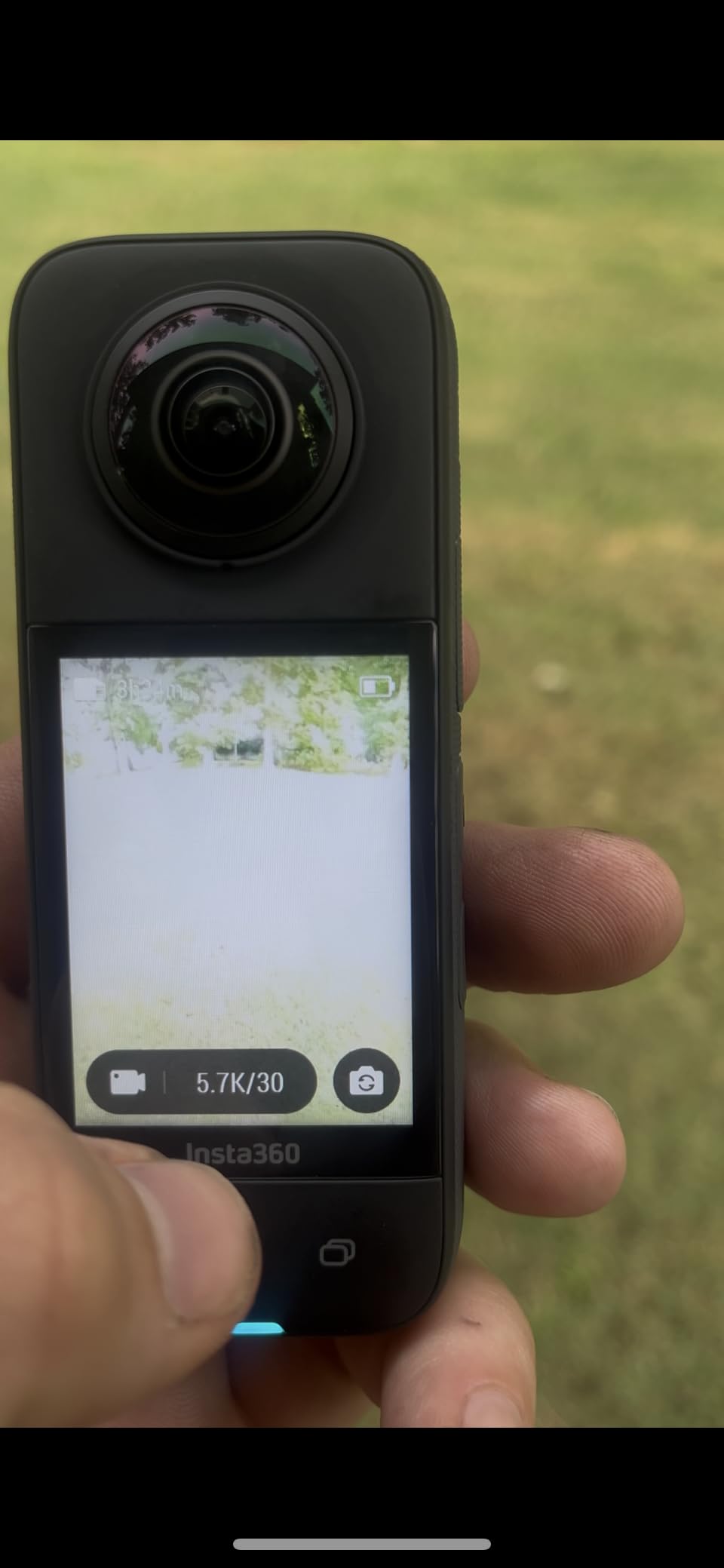
The 2.29-inch touchscreen is the most responsive in this group, and it matters because settings changes underwater go through gloves. Owners use the phone app to reframe, apply effects and produce a flat video without opening a desktop, which is what makes the format practical rather than a hobby.
Waterproof to 10 meters without a case, the X3 has been used successfully in pools and open ocean according to owner feedback. That is a 10-meter rating, which covers surface snorkelling with margin, but it is not the 18 meters the Osmo Action 4 offers.
Who Should Buy a 360 Camera
Buy one if your footage is for other people rather than for you. Group snorkels, kids, and reef passes where you want a second angle all benefit from capturing everything and cropping later. The X3 is also the light, easier-to-mount option here compared with the X5.
Skip one if you edit on a phone and want the file to play immediately. 360 files need rendering through the desktop app before true 360 viewing on many platforms, and reviewers note the editing burden clearly.
Limitations Worth Knowing
The headline resolution is split across the sphere, so a reframed view carries a fraction of the total pixels. Shoot single-lens if you need detail on one subject. Some units also reported water resistance problems, and direct sun with no airflow can overheat it, so keep it out of a hot dashboard between excursions.
5. Insta360 X5 – 8K 360 With Replaceable Lenses
Pros
- Sharpest 360 output in this group
- Replaceable lenses protect a scratched dome
- Triple AI chip improves low light and night footage
- Up to 208 minutes of battery
- InstaFrame produces flat shareable video without a desktop
Cons
- Heaviest and bulkiest body here
- 360 files still involve extra export steps
- Lenses scratch easily despite the replaceable system
- microSD card not included
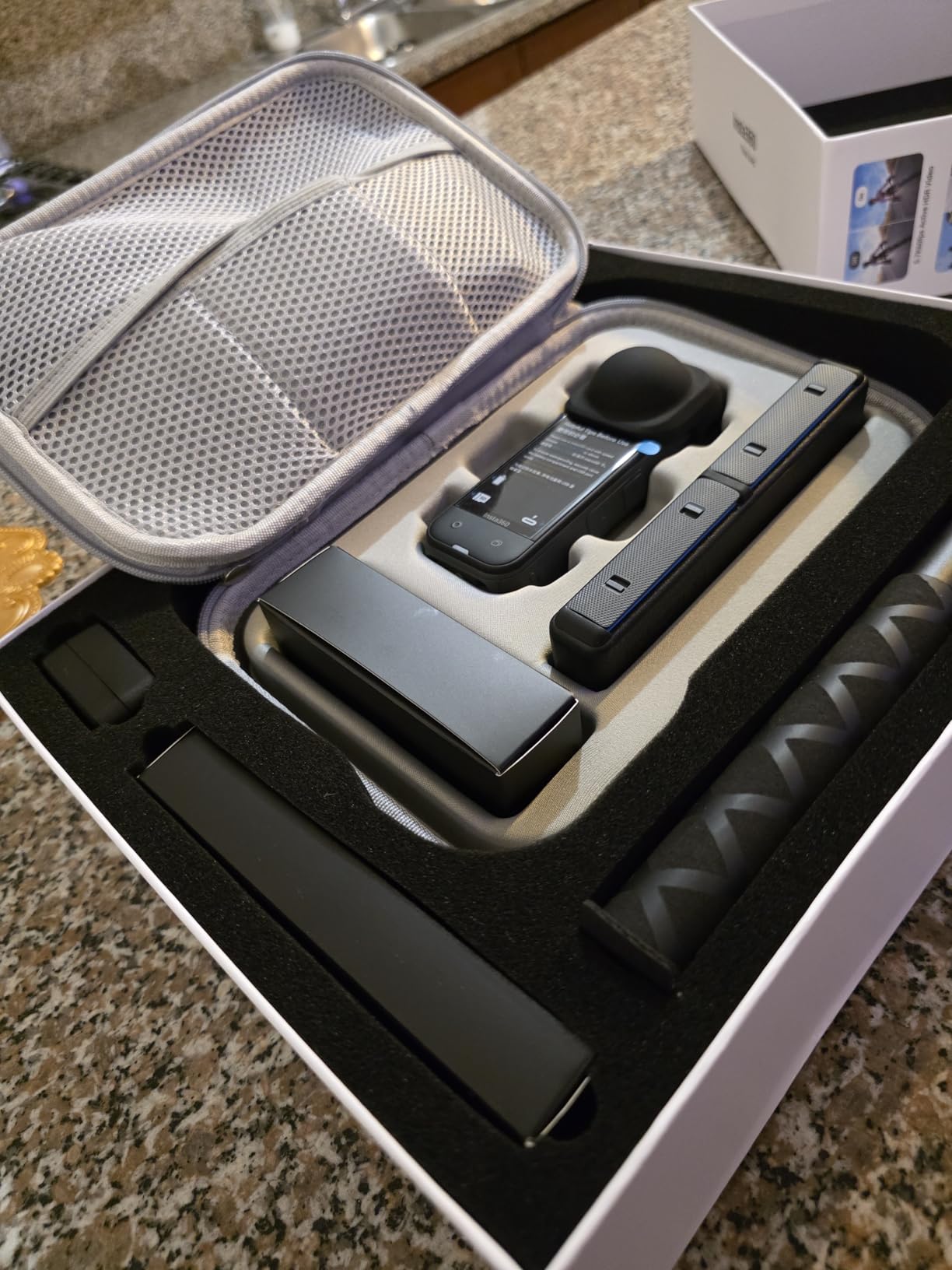
The X5 is the camera to buy if 360 is the point rather than a curiosity. Dual 1/1.28-inch sensors shoot 8K at 30 frames per second across the full sphere, which is a real step up from stitching together two lower-resolution halves, and the image is noticeably cleaner when you crop into it.
The replaceable lens design is the sleeper feature for snorkelers. A dome port takes hits from reef, boat gear and sand, and when it does scratch you replace two lenses rather than the camera. On a body you will take into salt water repeatedly, that is a meaningful difference in lifetime cost.
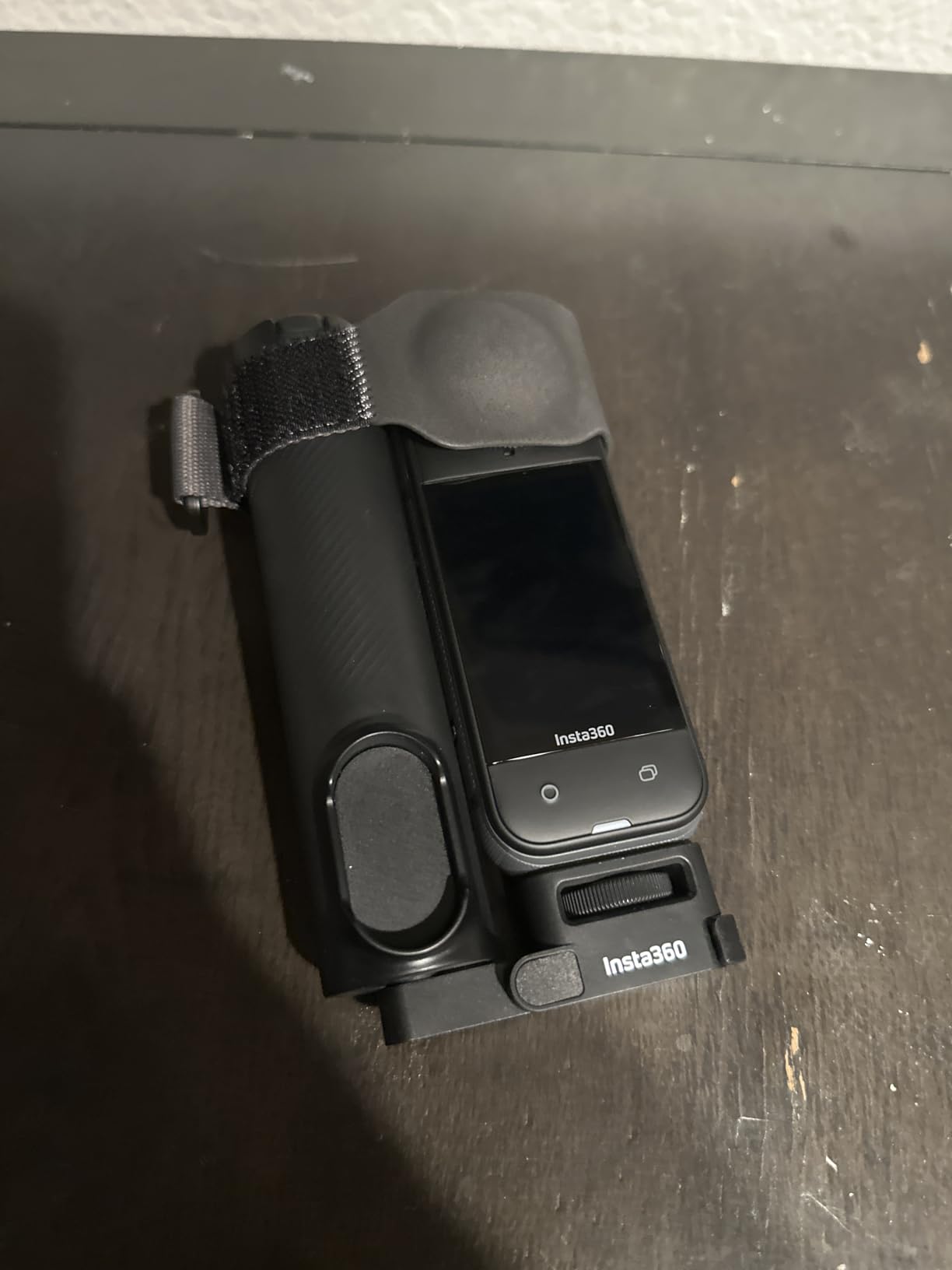
Battery life of up to 208 minutes removes the charging anxiety that shapes so many action camera trips. A boat day with three snorkel stops and a 360 camera that records continuously is simply not possible on a body that gives you an hour, and owners upgrading from earlier X-series models single this out as the reason.
The triple AI chip improves noise reduction and low-light processing, and the four-mic array with a built-in wind guard gives you usable audio on surface footage where wind noise is otherwise brutal.
Best for Long, Multi-Site Trips
Pick the X5 when you are away from charging for days, or when you shoot long continuous 360 passes over a reef. The 8K capture and the low-light processing make it the strongest option for dim water, twilight surface swims and indoor pool shoots.
InstaFrame mode is worth a test before you commit. It outputs a ready-to-share flat video with automatic framing, which removes most of the export friction that makes 360 formats frustrating.
Where the Weight Shows Up
At 0.5 kilograms it is the heaviest body in this guide, and reviewers note it is awkward to mount bare on a mask or chest. On a multi-day trip where you are swimming hard, that bulk is felt at the end of the day.
MicroSD storage is not included, and heavy editing still leans on a phone or computer. The lenses also scratch easily even with the replaceable system, so treat a spare lens as part of the kit rather than an upgrade.
6. GoPro HERO12 Black – HDR Where Bright Meets Dark
GoPro HERO12 Black – Waterproof Action Camera with 5.3K60 Ultra HD Video, 27MP Photos, HDR, 1/1.9″ Image Sensor, Live Streaming, Webcam, Stabilization
Pros
- HDR in both 5.3K video and 27MP stills
- Waterproof to 10m with no housing
- Water-repelling lens cover fights flare
- HyperSmooth 6.0 with AutoBoost steadies paddling
- Frame grabs up to 24.7MP from video
Cons
- Roughly 64 minutes of battery life
- Only one Enduro battery and one mount in the box
- Small rear screen for a camera at this price
- 10m rating is shallower than the Osmo Action 4
- microSD card not included
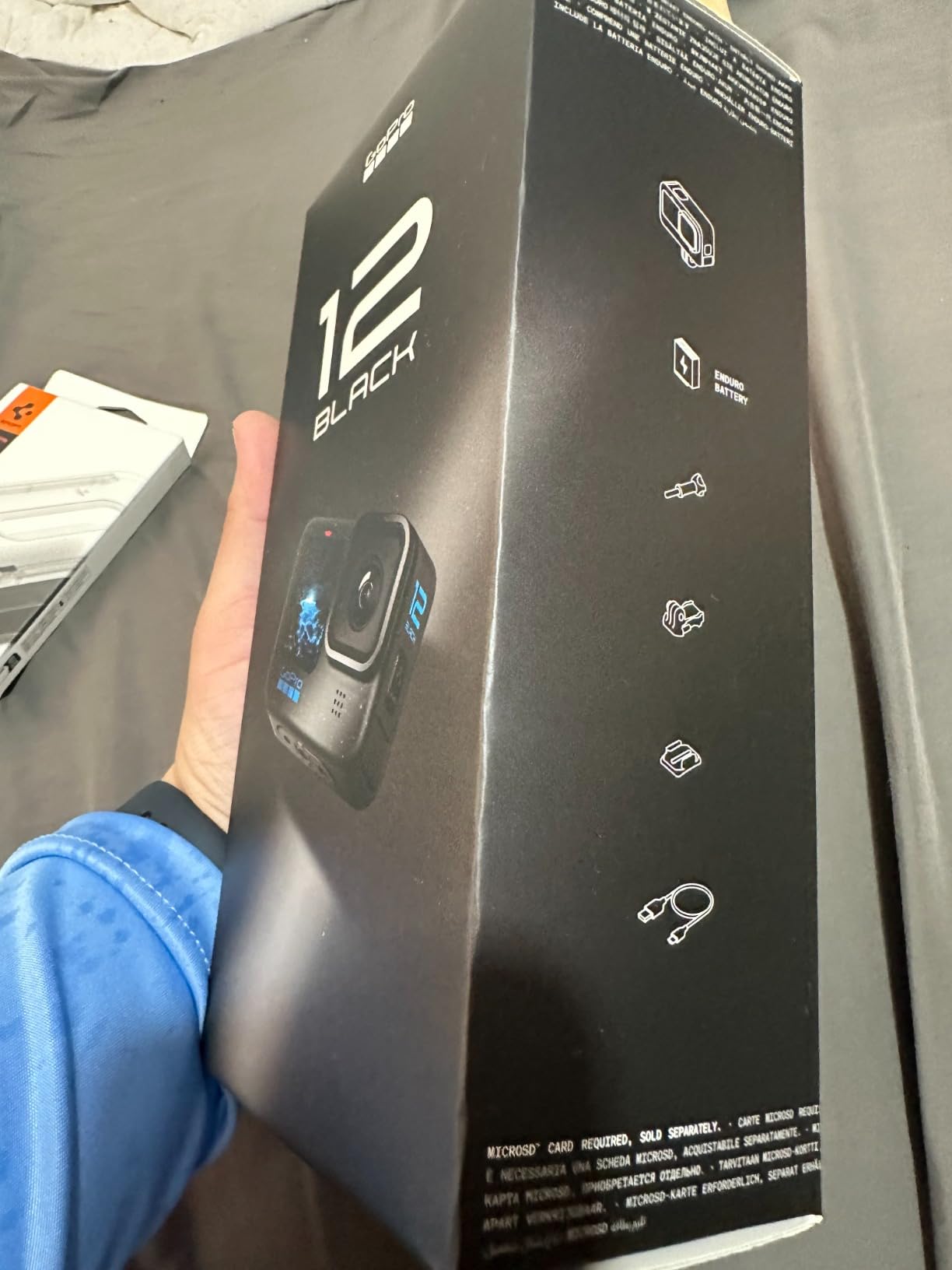
Snorkeling is a high-contrast environment. The surface is bright, the reef two meters down is dim, and a turtle moves between the two in seconds. The HERO12 Black applies high dynamic range to both its 5.3K video and its 27 megapixel stills, and that is the reason it holds detail on a pale sand bottom that a flatter image profile would blow out.
HyperSmooth 6.0 with AutoBoost is the other half of the case. Snorkelers are never still, and AutoBoost applies stabilization and reframing automatically as the camera detects movement, so a long swim produces footage you can actually watch.
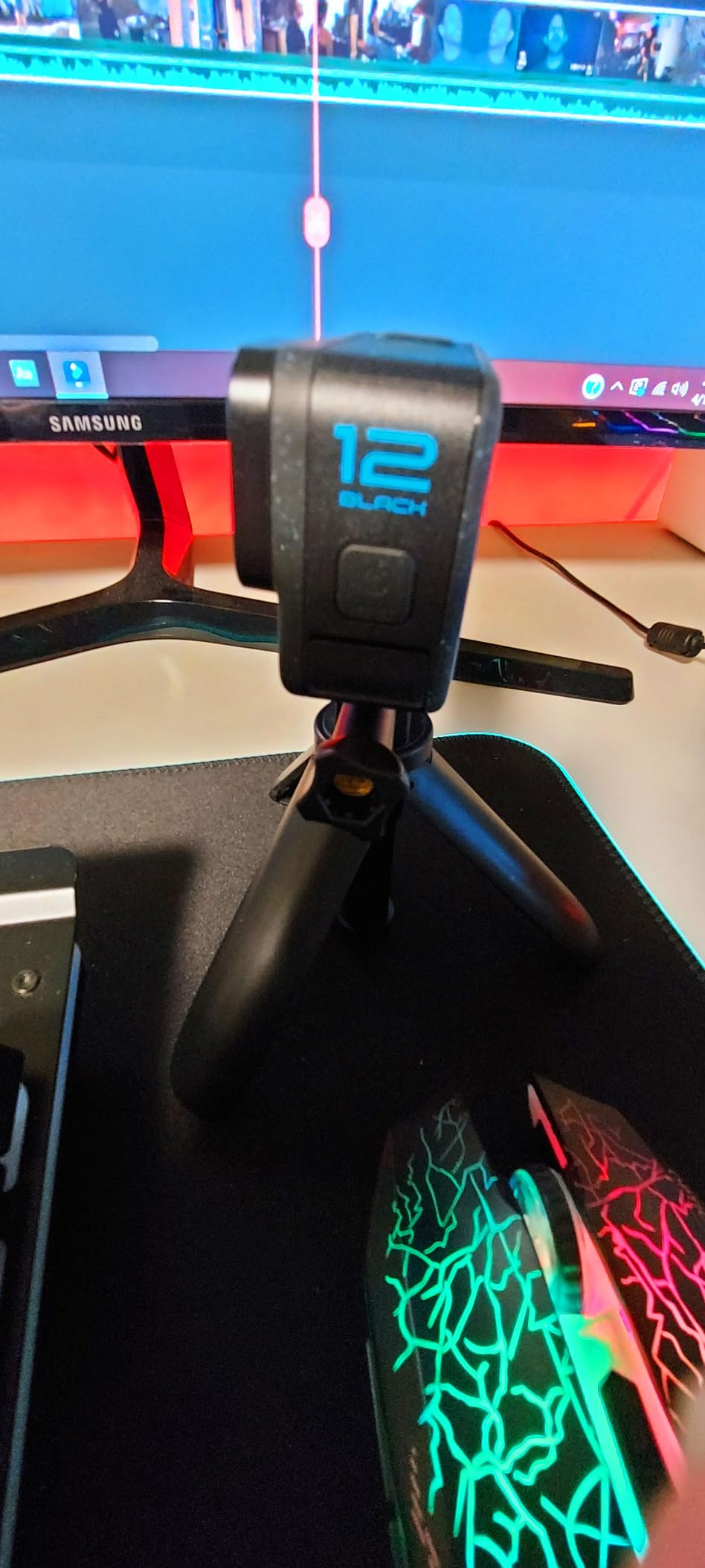
5.3K gives 91 percent more resolution than 4K, and the 1/1.9-inch sensor with a water-repelling lens cover addresses the flare that turns half of all reef footage into a white haze when the sun is behind the subject. The body is sealed to 33 feet, needs no housing, and tolerates the sand and mud that come with shore entries.
Frame grabs let you pull a still of up to 24.7 megapixels out of a video, which is the practical way to get a sharp image of something that would not hold still for a photograph.
Best for Photographers Who Shoot Video
This is the pick for anyone who thinks of themselves as a photographer first. HDR stills, 27 megapixels of still resolution and a rugged sealed body make it a credible stills camera that also records 5.3K60.
It also works as a webcam and for live streaming, which matters if you want to film a trip briefing or a post-dive recap for everyone back on the boat.
The Endurance Problem
Battery life is the shortest in this group at roughly 64 minutes, and the box contains one Enduro battery and one mount. On a full day of snorkelling you will be swapping batteries, which is manageable with spares and almost unmanageable without them.
Its 10-meter waterproof rating is also shallower than the Osmo Action 4, and the rear screen is small next to rivals with flip touchscreens. If your trip involves repeated deep stops or heavy use of the screen to frame, weigh those trade-offs carefully.
7. KODAK PIXPRO WPZ2 – The Only Real Optical Zoom Here
Pros
- Sealed body with no housing to assemble
- 4x genuine optical zoom for distant subjects
- 16MP backside-illuminated sensor handles low light better
- Wi-Fi transfer is far easier than a cable
- Light enough for a wetsuit pocket
Cons
- Small bundled battery drains fast and slows response
- Sluggish shutter and menu system
- Screen hard to read underwater
- Some units rejected compatible microSD cards
- Low-light and cloudy-day shots come out muted
Every other body in this guide frames with a fixed wide lens and asks you to move closer. The WPZ2 has a real 4x optical range, equivalent to 27 to 108 millimetres, which means a turtle 15 metres away can fill the frame without you swimming off your buddy to chase it. For wildlife that does not want to be approached, that changes the whole approach to the trip.
The sealed body is rated to 15 meters and also survives a two metre drop and is dustproof, with no housing to assemble. It also has a dedicated underwater shooting mode, plus exposure modes up to manual, which is unusual at this level and gives you some control over a colour cast.
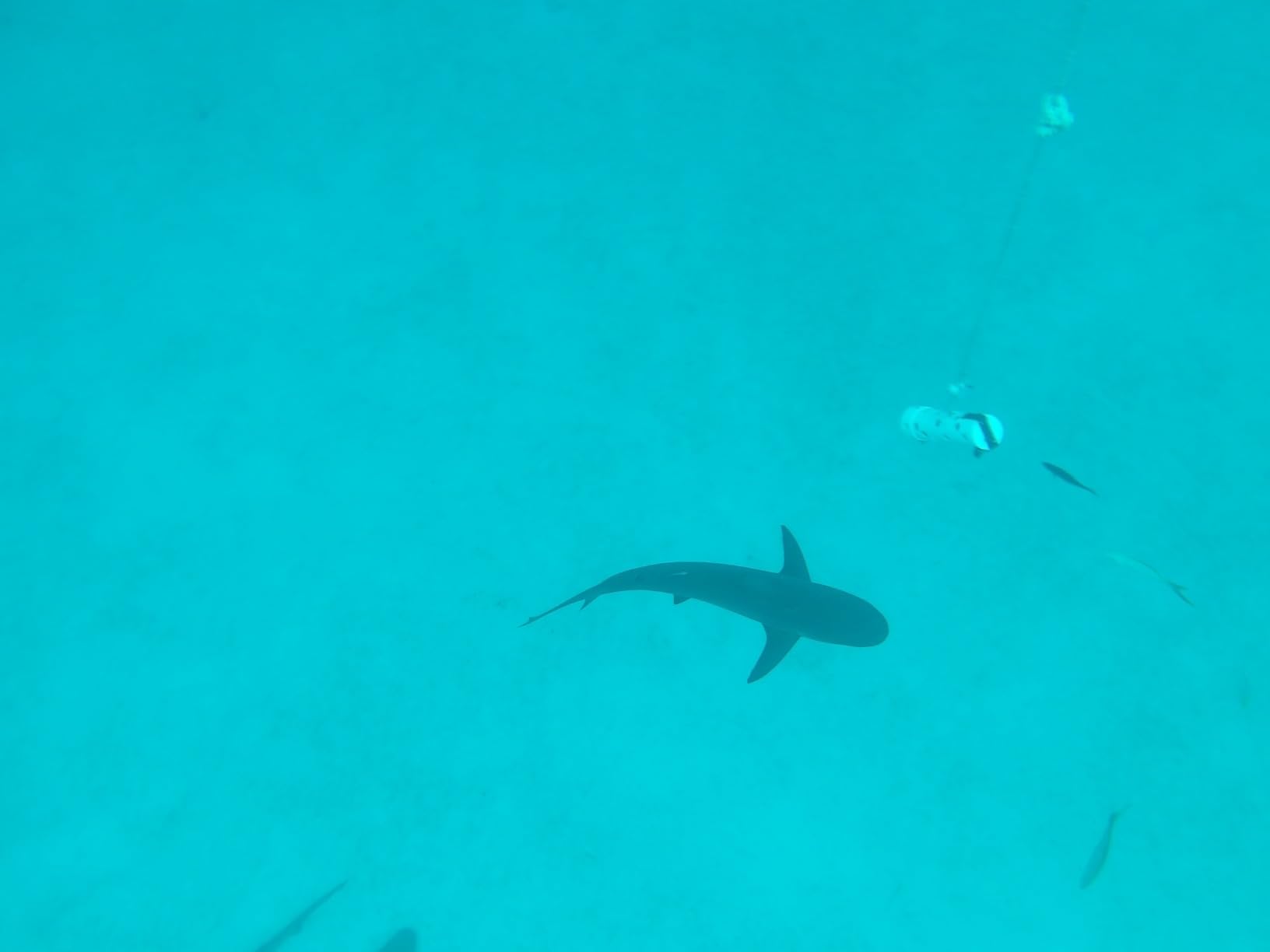
The 16-megapixel backside-illuminated sensor is a real step above the entry-level sensors in cheaper action cameras, and reviewers note that underwater autofocus performs well in bright, clear water. Built-in Wi-Fi moves shots to your phone without a cable, which is the difference between editing a snorkel trip and abandoning the footage in a memory card.
Reviewers also report that a larger third-party battery transforms the camera, which tells you where the real weakness is. The 800mAh battery in the box is the limiting part of an otherwise capable sealed body.

Best for Wildlife You Must Keep Your Distance From
Approach-distance ethics and camera capability are the same problem. Wildlife guidance is clear that you should maintain distance and let animals choose to approach, so a body that can frame a subject from where you are already floating is the ethical choice as well as the practical one.
It also suits anyone who prefers stills to video, and anyone carrying a camera on a cruise excursion who wants point-and-shoot simplicity with a real shutter button.
Where It Struggles
The bundled battery drains fast, and the slow shutter response means the camera feels sluggish in the water even when the autofocus is keeping up. Murky water and overcast days produce muted results, which is the honest limit of a sealed compact at this sensor size.
Some owners also had microSD compatibility problems with cards sold as compatible, and the 2.7-inch screen is difficult to read underwater or in direct sun. Test the card before you leave home.
8. Insta360 Ace Pro 2 Dual Battery – Best for Dim Water
Insta360 Ace Pro 2 Dual Battery Bundle – 8K Waterproof Action Camera Co-Engineered with Leica, 1/1.3″ Sensor, Dual AI Chip, Leading Low Light, Superior Audio
Pros
- 8K30 and 4K60 Active HDR from a large sensor
- 13.5 stops of dynamic range
- Leica Summarit lens and colour profiles
- PureVideo rescues dim scenes with AI noise reduction
- Dual battery bundle suits multi-day trips
Cons
- Premium price tier for this class
- Modest per-charge endurance at high resolutions
- Editing depends on the Insta360 app ecosystem
- No 360 capture
- Fewer official mounts than GoPro
Dim water is where entry-level cameras fall apart and where this one is strongest. The 1/1.3-inch sensor delivers 8K at 30 frames per second and 4K at 60 with Active HDR, and the 2.4 micrometre equivalent pixel size with 13.5 stops of dynamic range is the specification that matters when you are filming under an overhang or in a kelp forest.
PureVideo mode applies AI noise reduction and works up to 4K60, which is what rescues a reef at depth on a cloudy afternoon. The Leica Summarit lens and Leica colour profiles give the footage a distinctive, filmic look that reviewers consistently describe as a reason to pick this body over a more generic action camera.
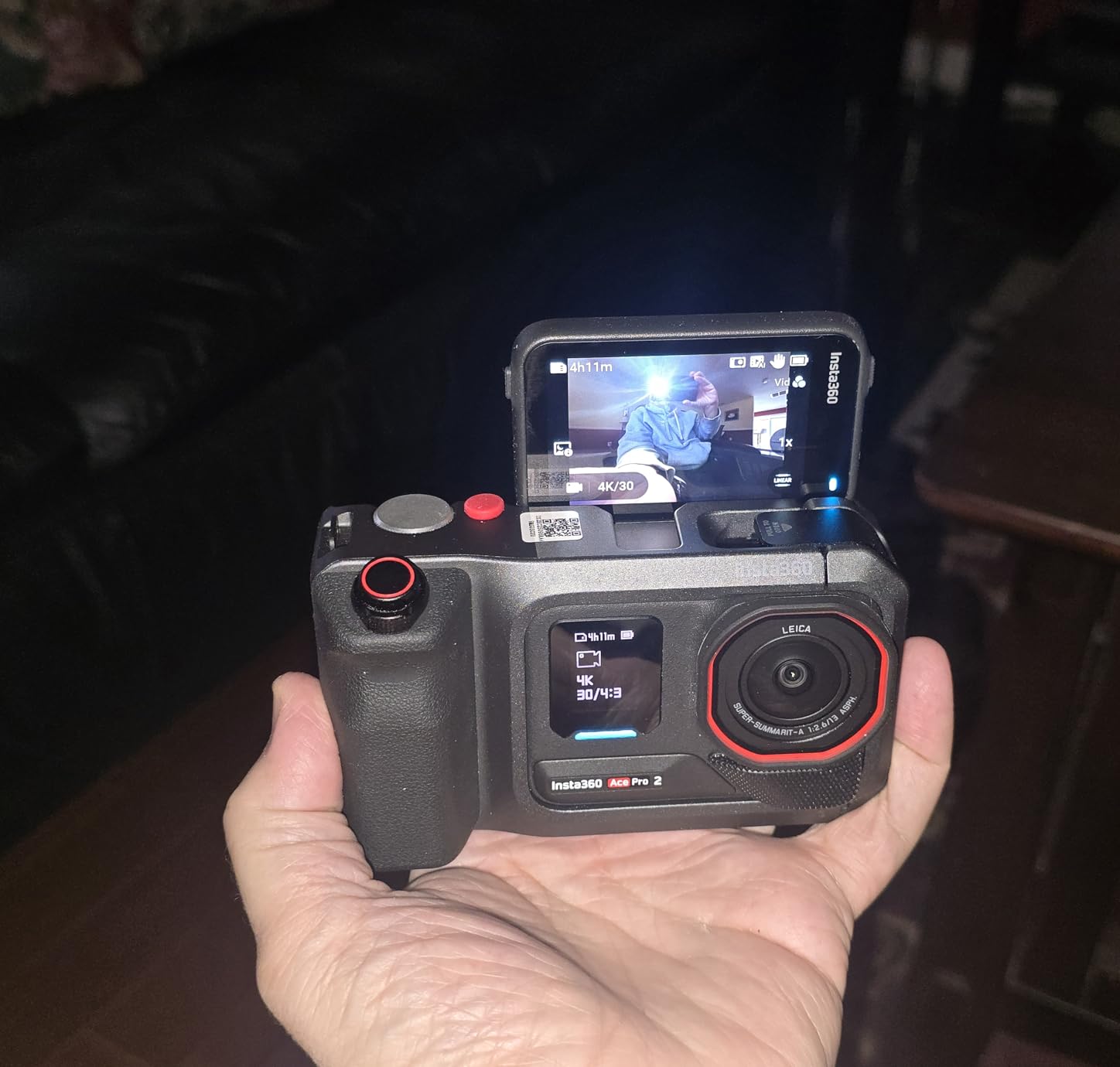
The 2.5-inch flip touchscreen is the practical winner for bright conditions, with 6 percent more brightness and 100 percent more flip durability than the previous generation, and it stays visible in direct sunlight. Being able to frame yourself at arm’s length matters on a snorkel trip where you are often alone with the subject.
This bundle includes two batteries, which removes the most common travel mistake for action cameras. The removable wind guard snaps on and off to reduce wind and surface noise, which is a real fix for the roar you otherwise get on any footage shot at the surface.
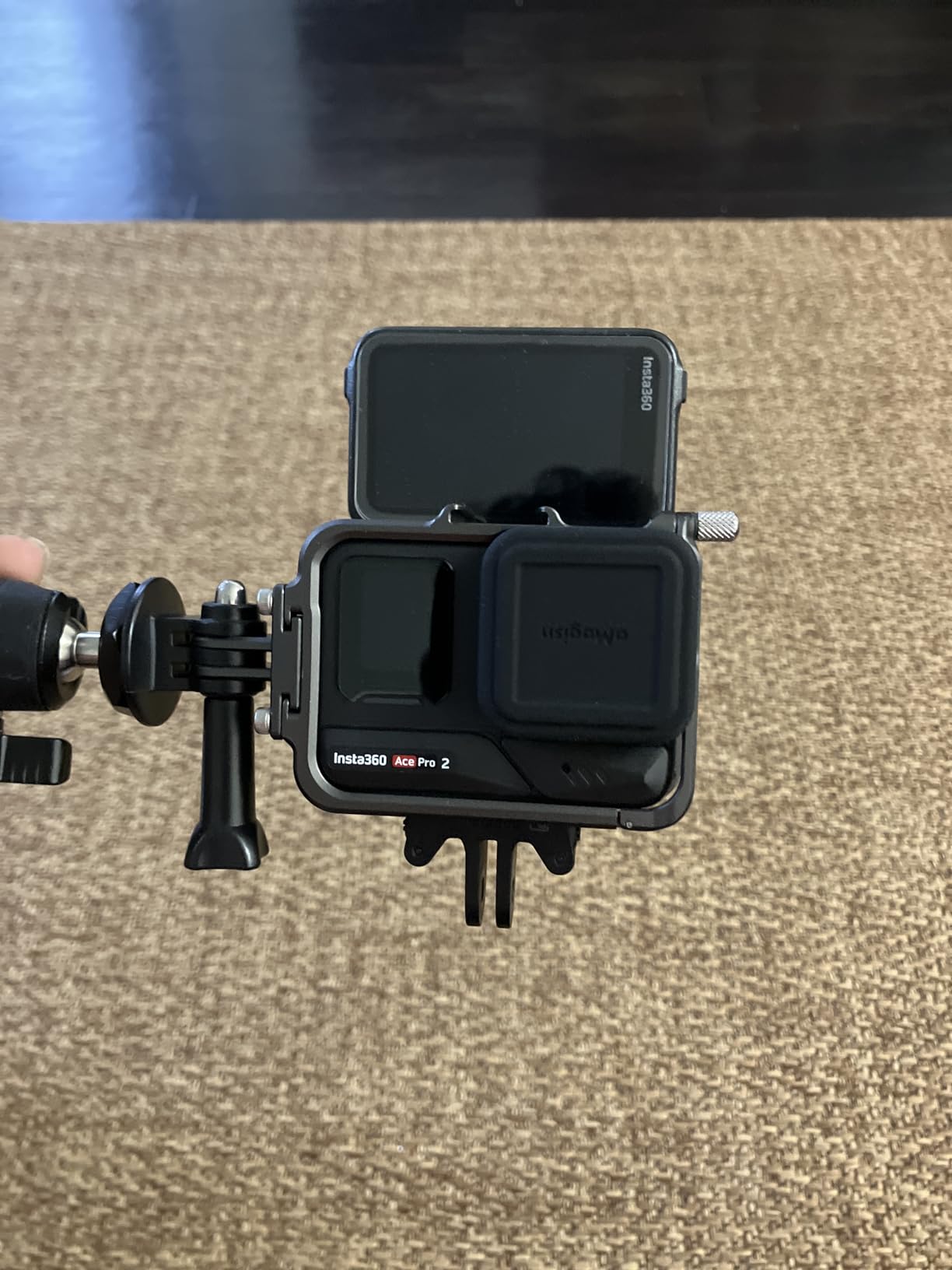
Best for Overcast Days and Late Sessions
Pick it for the trip where light is the problem: temperate seas, kelp, a reef under cloud cover, or an evening session when the sun is low and the water goes dark quickly. Nobody else in this list handles that as well.
It is also rated to minus 4 degrees Fahrenheit, so it is comfortable in cold water where a lithium battery that is marginal in the tropics simply stops working.
Where the Value Argument Gets Hard
This is a premium body, and the price premium over mainstream action cameras is real. At 8K the battery draws enough that per-charge endurance is modest, and the camera leans on the Insta360 app for capture settings and editing.
There is no 360 capture here, unlike the X-series bodies. If you want reframing flexibility rather than the best flat image, look at the X3 instead.
9. GoPro HERO11 Black – The Sensible Previous-Generation Buy
Pros
- 5.3K60 and 27MP stills at a lower outlay than current models
- Water-repelling lens cover reduces flare
- HyperSmooth 5.0 with Horizon Lock and AutoBoost
- Waterproof body needs no housing
- 2.7K240 slow motion for detail invisible at normal speed
Cons
- Superseded by the HERO12 Black
- which adds HDR capture
- One Enduro battery and one mount in the box
- Screen glare makes framing hard in bright sun
- microSD card not included
This is the pick for someone who wants GoPro image quality without paying for the newest body, and the successor is worth naming plainly: the HERO12 Black adds high dynamic range capture to both video and stills, which is a meaningful upgrade on high-contrast reef scenes. If HDR matters to you, buy the HERO12 instead.
Everything else still holds up. 5.3K60 video with 91 percent more resolution than 4K, 27 megapixel stills, a 1/1.9-inch sensor and a water-repelling lens cover that fights the flare which ruins so much shallow-water footage.

HyperSmooth 5.0 with improved Horizon Lock and AutoBoost smooths out snorkel chop, and the expansive field of view captures more of an open reef or a passing school without needing a wide-angle housing. The 2.7K240 slow-motion mode captures motion detail that is invisible at normal frame rates.
Owners report dependable waterproofing and crisp 5.3K60 footage, and they consistently describe it as good value against current flagships. The main complaint is the thin in-box kit.

When a Previous-Generation Body Is the Right Call
Buy it when the saving is meaningful and the missing HDR will not bother you. Surfacing footage of a shallow reef is often evenly lit, and in that situation the difference between HDR and standard capture narrows considerably.
It is also the right body for a used purchase, and forum buyers recommend testing a used action camera carefully before a trip: confirm the lens is unscratched, the latch closes cleanly, every door opens without force, and the battery holds a charge.
What You Give Up
One Enduro battery, one mount, no memory card. Screen glare in bright sun is a recurring complaint and there is no flip touchscreen. And you are buying a model that has been overtaken, so support and accessory availability will eventually narrow.
10. YISENCE 4K 16FT Underwater Camera – The One That Floats
Pros
- Genuinely floats
- so it will not sink out of reach
- Dual screens make group shots and selfies easy
- 32GB microSD included so it works immediately
- Half-press autofocus is simple for children to learn
- Light and pocketable
- USB-C rechargeable
Cons
- Reported seal failures letting water into the battery compartment
- Playback audio effectively inaudible on several units
- Weak flash that blows out shooting into the light
- Screen almost unreadable underwater and buttons unlabelled
- No Wi-Fi or app
- so transfers need a cable
Every camera in this guide can end up on the seabed. This one is designed so that it cannot, because the body floats. For a family trip with children in the water, that single design decision removes the most stressful failure mode, and reviewers mention it as the reason for the recommendation.
It is sealed to 16 feet, which is deeper than surface snorkelling, and it carries 4K video with high-resolution stills, a 2.7-inch front screen and a 2.7-inch rear screen, and a 1250mAh battery rated at about 70 minutes of operation at depth.

Autofocus works by half-pressing the shutter until the focus frame turns green, which is about as simple as underwater focusing gets. That is genuinely useful when the person holding the camera is nine years old, and it is one of the few budget cameras where the control scheme is a feature rather than a compromise.
A 32GB microSD card is included and the card slot supports up to 128GB, so the camera works out of the box with no purchases and no formatting surprises.

Best for Children and Calm Water
It suits warm, shallow, still water, and any trip where the camera will be handed between people. A floating body, a card in the box and a simple focus gesture make it the lowest-friction way to give a child their own camera on a snorkel trip.
It is also a reasonable backup body to bring as a second camera, since losing it costs little compared with losing a flagship.
Honest Limitations
Owner reviews report seal failures that let water into the battery compartment and the screen, along with batteries that drained in minutes or would not charge. That is the reason it sits at the bottom of the ranking despite the floating design.
Playback audio is effectively inaudible on several units, the flash is weak and blows out when shooting into the light, the screen is unreadable underwater, the buttons are unlabelled, and there is no Wi-Fi, so every transfer needs a USB cable. If you want usable sound and simple transfers, spend more.
How to Choose a Waterproof Camera for Snorkeling Trips
Start with the depth rating, then ignore it
Surface snorkelling puts you within 10 meters of the surface, sometimes less. A body rated to 10 meters is enough if you are honest about where you swim. Everything above that is headroom for free diving, a dropped camera or a wreck you were not planning to reach.
What a depth rating guarantees is narrow. It holds with intact seals, a sand-free door, correct assembly and a gasket that has not been pinched. It says nothing about how quickly the camera recovers, and several manufacturers treat seal damage from a dropped camera as damage regardless of the rating. More important than the number is whether the camera has a permanently sealed body with no user-serviced battery door at all. That is the design that survives a forgetful snorkeler, and it is why we rank the sealed-bodies-compact and bare-waterproof-action options at the top.
Decide between the five camera types
Bare waterproof action cameras cover the widest range of trips. The 10 to 18 meter rating on these bodies is enough for almost any snorkel, and the wide lens, stabilization and video-first design suit action. This is where the Osmo Action 4, the GoPro HERO12 and the Insta360 Ace Pro 2 sit.
Rugged compacts with a sealed body put stills first, which matters if you want photographs more than clips. The KODAK PIXPRO WPZ2 is the only body here with a genuine optical zoom, and that is the reason it earns its place despite slower response.
Budget action cameras with an included case are the cheapest reliable route into underwater filming. The AKASO EK7000 and Brave 4 both include a 131-foot case rated to 40 meters, which is deeper than you will ever snorkel.
360 cameras record everything and decide the framing afterwards, which suits group trips and unpredictable wildlife. The cost is file size, editing steps and a bulkier body.
Phone in a rigid housing is the route most often recommended on forums, and it is a genuinely good one for occasional snorkelers. A rigid dive-rated housing plus a phone gives you a large screen, a good sensor and no new body to learn. The catch is risk: nobody drops an unfamiliar compact action camera, and everybody knows exactly how far they can throw a phone. Our deeper guide to best waterproof cameras for snorkeling covers that trade-off in more detail.
Why your wireless app will not work underwater
This is the most repeated question in every snorkel forum, and the answer is physics rather than a fault. Water absorbs radio waves, and it absorbs the 2.4GHz and 5GHz bands that every action camera uses for app control, live preview and file transfer extremely quickly. In practice, wireless features stop working within centimetres of the surface, and they do not come back until the camera is out of the water and has dried.
Recording itself is unaffected. The camera keeps writing to the card exactly as it would on land. So plan the app for the boat deck, not for the reef, and never set a first dive as the moment you need to preview a shot.
Video or stills, and what actually fixes the colours
Decide this before you buy, because it changes the body. Video rewards stabilization, a wide lens and good low light. Stills reward optical zoom, a rear screen you can see through a mask, and RAW if you edit later.
Underwater photos go blue and green because water absorbs red light within the first few metres. Red filters restore it for stills, and most modern bodies apply an automatic white balance correction instead. The other real lever is getting close. Backscatter, haze and colour loss all shrink dramatically when the subject is within a metre or two, and that is an argument for a body you can hold steadily, not a body with a higher resolution number.
If you already own an interchangeable-lens camera, a dedicated dive housing is often the better answer, and forum buyers consistently put more weight on the housing brand than the body. Our underwater compact camera guide covers that route for people who want full manual control.
Wet hands, gloves and screen visibility
Touchscreens are nearly useless underwater with cold hands or neoprene gloves. Check whether the body has physical buttons for record and mode, and whether the record button can start a clip without a menu dive. Dual screens and flip touchscreens help for framing, but only if you can read them in bright surface light, which is a narrower test than a specification sheet suggests.
Battery, storage and heat on a boat
Plan around the body with the shortest runtime, not the best. Snorkelling is intermittent, and the difference between 64 minutes and 150 minutes is the difference between one long session and a full day. Budget for spare batteries, more than one memory card formatted before you leave, and a plan for getting files off the card. Heat is the underrated risk: a body left on a sunlit dashboard or in direct sun with no airflow can overheat, and several owners report exactly that.
For trip-specific packing, our guides to underwater cameras for snorkeling vacations and underwater cameras for snorkeling reviews cover longer itineraries where charging and backup storage are the real constraints.
What total cost actually looks like
Count the accessories before you commit, because this is where budget plans fall apart. A realistic system includes the body, a housing or case if one is not sealed, a floating grip, a wrist or neck tether, a wrist remote, a spare battery or two, one or two memory cards, a charger, and somewhere to store the footage other than the camera. The body is often less than half of that total.
The two rules that prevent almost every loss: attach a tether to your wrist or to the strap of your BCD before you enter the water, not after; and decide how you will keep the camera on your person. A floating handle solves both for most trips. And never attach anything to a child, no matter how good the footage would be, because your attention belongs on them and on the people around them.
Saltwater Rinse and Post-Dive Care Routine
Salt crystallises inside a seal, and crystallised salt is abrasive. This routine takes about five minutes and it is the difference between a camera that works next year and one that floods in the rinse itself.
Keep it wet while you open it. Never open a door or press a button on a body that has just come out of salt water. Rinse first, open second. Opening a wet camera is how the majority of floods actually start.
Rinse in fresh water immediately. Use fresh drinking water if you have it, hold the camera under the stream with every door closed, and work the buttons while it is submerged to clear salt from the seals.
Soak if you cannot get to fresh water. If you are on a remote beach or a liveaboard, soak the sealed body in a bucket of fresh water for 10 to 15 minutes instead.
Dry before you open anything. Wipe the body down, then let it air dry completely with the ports closed. Opening a housing after 30 minutes of air drying is not the same as opening one after 24 hours.
Open, ventilate and inspect the gasket. Check the gasket for grit, hair and a flattened profile, and make sure it sits evenly in its channel. Replace any gasket that looks tired rather than pushing it back in.
Wipe the lens and ports. Salt haze and a single fingerprint on a dome port will cost you more clarity than any setting on the camera. A damp lens cloth is the highest-value accessory in this guide.
Recharge and clear the card. Charge the battery fully before storage so the cell does not sit depleted for weeks, and offload footage to a second drive rather than formatting the card in a hurry.
Check the moisture indicator. If your body has one and it has changed colour, stop using the camera and have the seal checked before it goes back in the water.
One more rule that matters on a boat: if a camera floods, get yourself and your buddy out of the water safely first. The camera is replaceable and your breathing is not. Our guides to waterproof camera choices for snorkeling cover the same ground for readers who want to compare formats before committing.
Frequently Asked Questions
What camera should I get for snorkeling?
Get a waterproof action camera if you want video and stability, and a sealed rugged compact if you want stills and optical zoom. For most trips, a body rated to at least 10 meters with physical record controls and spare batteries is enough. Our top pick for 2026 is the DJI Osmo Action 4, which is sealed to 18 meters without any housing.
What is the best inexpensive underwater camera for snorkeling?
At the entry tier, the AKASO EK7000 is the best inexpensive option: 4K30 video, 20 megapixel stills, a 131-foot waterproof case, two batteries and a dual charger in the box. You only need to add a memory card. Reviews describe stills as grainy in dim light, so treat it as a video camera.
Is a GoPro good for snorkeling?
Yes. The GoPro HERO12 Black is sealed to 33 feet, needs no housing, and its HDR capture for both 5.3K video and 27 megapixel stills preserves detail where the bright surface meets a dim reef. Its weaknesses are endurance at roughly 64 minutes and a single battery in the box, so buy spares.
Do I need a waterproof housing for snorkeling?
Usually not. Any body in this guide rated to at least 10 meters can be used bare for surface snorkelling. You need a housing if you free dive below the rating, if the camera has user-serviced doors you would rather not open in salt water, or if you are using a standard camera without a sealed body.
Why are my underwater photos blue or green?
Water absorbs red light within the first few metres, so colour drains out of the image as distance increases. Moving closer to the subject, using a body with automatic underwater white balance, and adding a red filter for stills are the fixes that work. A higher resolution number does not fix a colour cast.
Why does my camera app disconnect underwater?
Water absorbs the 2.4GHz and 5GHz radio bands that action cameras use for app control and live preview, so wireless features stop working within centimetres of the surface. Recording to the card continues normally. Use the app on the boat deck instead, and let the camera dry before reconnecting.
How do I stop a camera sinking while snorkeling?
Use a floating handle, or a body that floats on its own, and attach a wrist or neck tether before you enter the water rather than after. Keep the camera clipped to your BCD strap between shots. For a child, leave the camera with an adult rather than strapping it to them.
What should I do after snorkeling in salt water?
Rinse the camera in fresh water with all doors closed, work the buttons underwater, then let it air dry completely before opening anything. Check the gasket for grit, wipe the lens and ports, charge the battery fully, and offload your footage. Never open a door on a wet camera.
Is a previous-generation action camera still worth buying?
Often yes. A body such as the GoPro HERO11 Black still delivers 5.3K60 video and 27 megapixel stills with a sealed waterproof body, and costs meaningfully less than current models. Check the saving against what you lose, such as HDR capture, and inspect any used body for scratches, latch wear and battery health before the trip.
Do I need a red filter for snorkeling?
Not with a modern body that applies automatic underwater white balance, which corrects the colour cast in video and stills. A red filter helps most with manual or RAW stills at shallow depth on a bright, sunny day. Bring a video light instead if you are filming deeper or at dusk.
Final Verdict for Snorkeling Trips in 2026
The DJI Osmo Action 4 is our choice for the best cameras for snorkeling trips in 2026. It is the only body in this group that is sealed to 18 meters without a housing, its 1/1.3-inch sensor is the best compromise between size and low-light performance, and Pre-Rec plus dual touchscreens suit a swimmer who cannot stop to fiddle with settings. Buy spare batteries, because the Essential Combo includes one.
Pick the AKASO EK7000 if your trip is one trip and you want the lowest-cost reliable way to come home with footage. Pick the AKASO Brave 4 if you want dual screens at a similar tier. Pick the KODAK PIXPRO WPZ2 if you want stills and a real optical zoom, and the Insta360 X3 or X5 if you would rather record everything and decide the framing later.
Whichever you choose, attach the tether before you enter the water, rinse in fresh water while the doors are still shut, and let the camera dry before you open anything. That routine, more than any specification, is what determines whether you still own the camera on the flight home.