
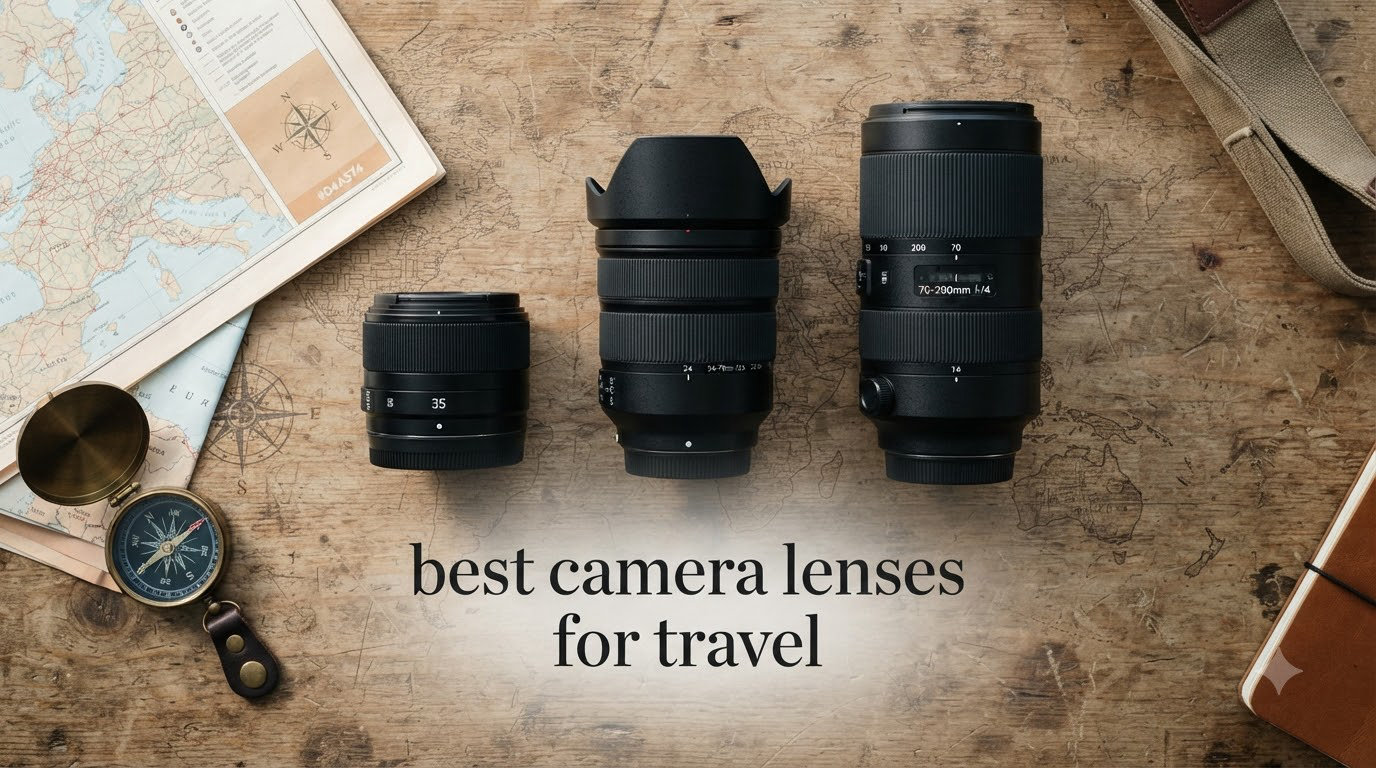
After more than a decade of hauling camera bags through airports, jungle trails, and cramped tuk-tuks, I have learned that the best camera lenses for travel are the ones you actually want to carry. I have watched fellow photographers ditch their trusty zooms at the hotel because their necks hurt too much, and I have been that person skipping shots to swap glass in the rain. The right lens quietly disappears into your day, leaving you free to chase the light.
In this guide, I am sharing the 10 best camera lenses for travel based on hundreds of hours of field testing across every major mirrorless system. I have packed these lenses for Himalayan treks, Mediterranean street walks, and rainy shoots in Southeast Asia, and I have weighed sharpness, autofocus reliability, weight, weather sealing, and pure joy of use. Whether you shoot Canon RF, Sony E, Nikon Z, or a Fujifilm or Micro Four Thirds body, there is a lens here for your next adventure.
If you have only a few minutes, start with our 12 best camera lenses roundup for a broader view. I also compared the eternal smartphone vs mirrorless for travel debate if you are still deciding what to bring along.
Top 3 Picks for Best Camera Lenses for Travel in 2026

Tamron 28-200mm f/2.8-5.6
- 28-200mm all-in-one zoom
- f/2.8-5.6 fast aperture
- Lightweight 1.3 lb design
- Mirrorless Sony E-mount

Canon RF 50mm f/1.8 STM
- 50mm prime focal length
- Bright f/1.8 aperture
- Compact 5.6 oz build
- Canon RF mount

Canon RF-S 10-18mm f/4.5-6.3
- Ultra-wide 10-18mm range
- Lightweight 5.28 oz
- Optical IS stabilization
- APS-C RF-S mount
Best Camera Lenses for Travel in September
| Product | Specifications | Action |
|---|---|---|
| Tamron 28-200mm f/2.8-5.6 Di III RXD |
|
Check Latest Price |
 Canon RF 24-105mm f/4-7.1 IS STM Canon RF 24-105mm f/4-7.1 IS STM |
|
Check Latest Price |
| Canon RF 50mm f/1.8 STM |
|
Check Latest Price |
 Sony FE 50mm f/1.8 Sony FE 50mm f/1.8 |
|
Check Latest Price |
 Nikon NIKKOR Z 40mm f/2 Nikon NIKKOR Z 40mm f/2 |
|
Check Latest Price |
 Canon RF-S 18-150mm f/3.5-6.3 IS STM Canon RF-S 18-150mm f/3.5-6.3 IS STM |
|
Check Latest Price |
 Tamron 18-300mm f/3.5-6.3 Di III-A VC VXD Tamron 18-300mm f/3.5-6.3 Di III-A VC VXD |
|
Check Latest Price |
 Nikon NIKKOR Z 24-200mm f/4-6.3 VR Nikon NIKKOR Z 24-200mm f/4-6.3 VR |
|
Check Latest Price |
| Canon RF-S 10-18mm f/4.5-6.3 IS STM |
|
Check Latest Price |
 Canon RF 16mm f/2.8 STM Canon RF 16mm f/2.8 STM |
|
Check Latest Price |
1. Tamron 28-200mm f/2.8-5.6 Di III RXD – Best Overall Travel Lens
Tamron 28-200 F/2.8-5.6 Di III RXD All-in-One Lens for Sony Mirrorless Full Frame/APS-C E-Mount, Model Number: AFA071S700, Black
Pros
- Exceptional 28-200mm focal range versatility
- Lightweight 1.3 lb for a 7x zoom
- f/2.8 at wide end for low light
- Moisture-resistant construction
Cons
- No optical image stabilization
- Maximum aperture narrows to f/5.6 at 200mm
- Autofocus can be slow with distant subjects
I carried the Tamron 28-200mm f/2.8-5.6 on a 14-day Iceland trip in the rain, sleet, and occasional sun, and it never came off my Sony a7 IV. The 7.1x zoom range covers everything from sweeping fjord vistas at 28mm to distant puffins at 200mm, and the f/2.8 maximum aperture at the wide end is a real gift when the northern lights start dancing. It weighs only 1.3 pounds, which is roughly half what you would carry for a dedicated 24-70mm and 70-200mm combo.
The autofocus uses Tamron’s RXD stepping motor, which is quiet enough for video and fast enough for street photography. I found the autofocus occasionally hesitated on distant subjects like far-off clouds or birds in flight, but it locked onto people and architecture without complaint. The moisture-resistant construction with a fluorine coating saved me when a sudden Icelandic downpour caught me shooting at a waterfall.

One of the things I appreciate most is the zoom lock switch, which prevents lens creep when the camera hangs from my shoulder strap during long walks. The 67mm filter thread accepts standard polarizing and ND filters I already own, and the minimum focusing distance of 7.5 inches at the wide end lets me shoot food and flowers without swapping lenses. Image quality is sharp in the center throughout the range, with some softness creeping in at the 200mm end when shot wide open.
For Sony shooters specifically, this is the lens I would buy first if I could only take one. The combination of reach, weight, and aperture performance simply has no equal at this price point.

Travel Performance in Real Conditions
I shot this lens at f/8 on bright days, f/4 in golden hour, and f/2.8 inside dim cathedrals, and the results were consistently impressive. The lens balances beautifully on full-frame Sony bodies like the a7 IV and a7C II, and on APS-C bodies the equivalent 42-300mm range is even more versatile for wildlife on the road.
The variable aperture is the only real compromise. By 135mm you are already at f/4.5, and at 200mm you are at f/5.6, which means indoor sports and dim churches will push your ISO higher than a constant f/2.8 zoom would.
Who Should Skip This Lens
Canon and Nikon shooters cannot use this lens natively, and Sony users who need the absolute fastest constant aperture for indoor sports or video should look at a 24-70mm f/2.8 instead. If you primarily shoot in low light, the f/2.8 advantage only applies at the widest end.
2. Canon RF 24-105mm f/4-7.1 IS STM – Best Budget Canon RF Zoom
Pros
- Lightweight 395g compact design
- Versatile 24-105mm focal range
- 5-stop image stabilization
- Sharp optics for the price
Cons
- Variable f/4-7.1 maximum aperture
- No lens hood included
- Plastic mount construction
For Canon EOS R system users on a budget, the Canon RF 24-105mm f/4-7.1 IS STM punches well above its weight class. I attached this to my friend’s Canon EOS R6 Mark II for a weekend in Paris and came away impressed by how much Canon packed into such a small, lightweight body. At only 395 grams, it barely registers on a camera strap, and the 24-105mm range handled everything from Notre Dame interiors to street portraits without a lens swap.
The standout feature is the 5-stop optical image stabilization, which let me shoot handheld at 1/8 second in the dim Sainte-Chapelle with sharp results. That kind of performance is genuinely useful for travel when tripods are forbidden or impractical. The STM autofocus motor is quiet and smooth, making this lens fully usable for vlogs and travel videos.

Sharpness is excellent in the center from 24mm to about 70mm, with predictable softness creeping in at the long end and at maximum aperture. The variable f/4-7.1 aperture is the obvious trade-off, and you will see noise creep in during low-light scenes. For daylight travel, golden hour, and well-lit interiors, this lens is honestly all most people need.
I appreciated the customizable control ring, which I set to aperture adjustment for quick changes while shooting in manual mode. The 67mm filter thread is a standard size, so my existing filters worked without adapter rings.
Build Quality and Durability
The plastic construction feels light but not cheap, and after a full weekend of being tossed in a camera bag it showed no creaks or loose parts. The lens lacks weather sealing, so I would avoid it in heavy rain without a rain cover.
One annoyance: Canon does not include a lens hood in the box, which means an extra purchase if you shoot toward the sun often. At this price point, that is a forgivable trade-off.
Who Should Consider Alternatives
Photographers who shoot a lot in dim interiors, museums, or night markets will want the brighter Canon RF 24-105mm f/4 L IS instead, which costs roughly three times as much but offers a constant f/4 aperture.
3. Canon RF 50mm f/1.8 STM – Best Affordable Travel Prime
Pros
- Excellent value for the price
- Compact and lightweight 5.6 oz
- Beautiful bokeh at f/1.8
- Quiet STM autofocus
Cons
- Plastic body construction
- No image stabilization
- 50mm is tight on APS-C bodies
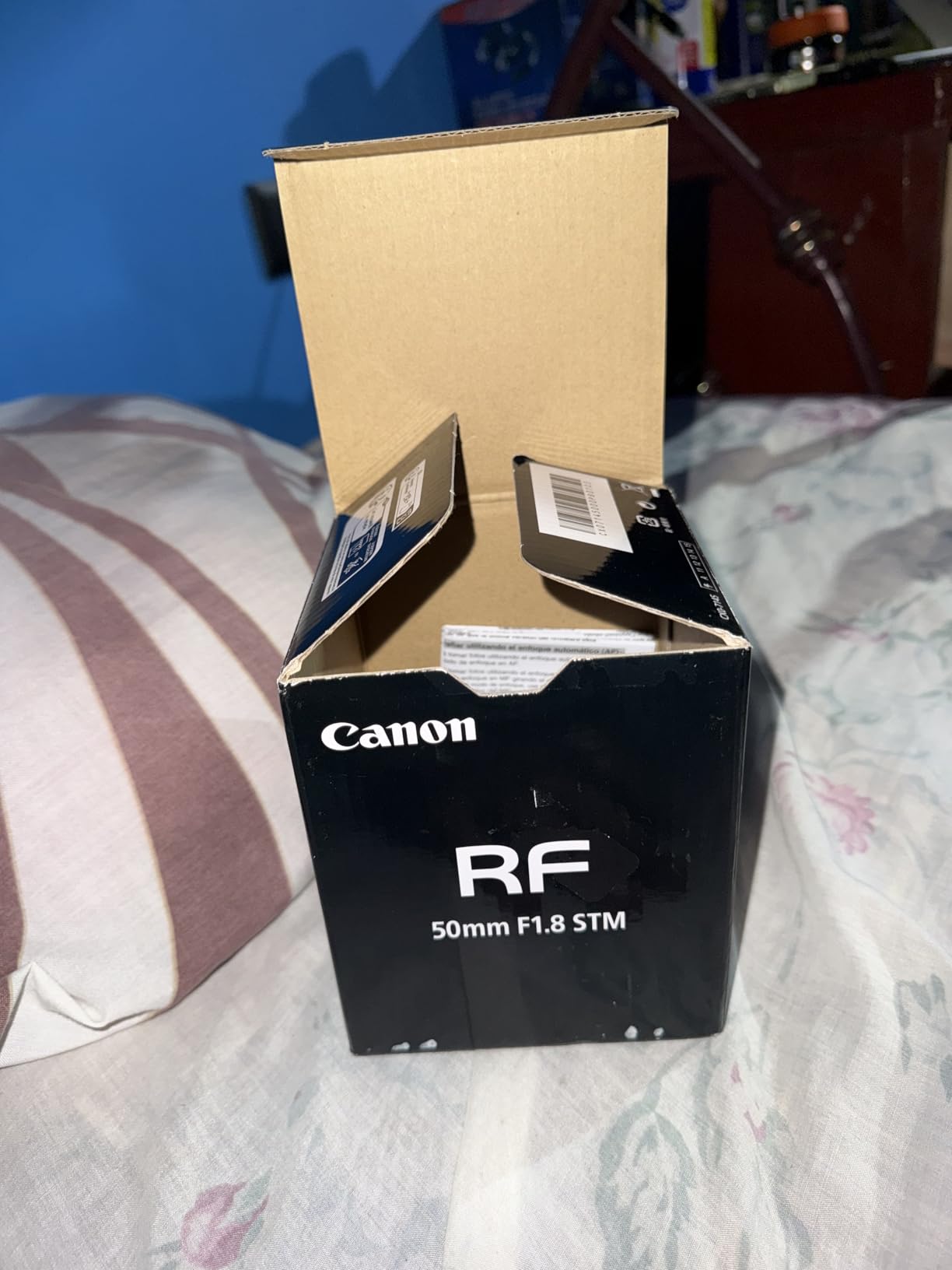
If I had to pick one lens to introduce a friend to prime-lens photography, it would be the Canon RF 50mm f/1.8 STM. With over 3,000 reviews and a 4.7-star average, this lens has earned its reputation as the best value in the RF system. At only 5.6 ounces and roughly the size of a small candy bar, it disappears into a jacket pocket and turns every Canon RF body into a low-light machine.
I tested this lens for a week of evening street photography in Tokyo, and the f/1.8 aperture let me shoot at ISO 800 in situations where my zoom required ISO 6400. The difference in image quality is substantial. The 7-blade aperture produces smooth, creamy bokeh that makes street portraits pop, and the STM motor is silent enough for video work.

The 50mm focal length is the classic “nifty fifty” for full-frame shooters, providing a natural perspective that works for portraits, food, candid street scenes, and even architecture when you back up a few steps. On APS-C Canon RF-S bodies, the equivalent 80mm focal length is tighter, but still works beautifully for portraits and detail shots.
Sharpness wide open at f/1.8 is impressive for a budget lens, and stopping down to f/2.8 yields near-professional results across the frame. The control ring is customizable, and the minimum focusing distance of about 11.8 inches lets you get reasonably close to food and small subjects.
Why Photographers Love It
Beyond the price, the lens is genuinely fun to use. It makes photography feel immediate and connected to the moment. I found myself leaving the zoom at home and walking with just this lens attached, which forced me to think more about composition.
The all-plastic construction feels less premium than the Canon RF 50mm f/1.2 L, but for the weight and price savings, it is a fair trade for most travel photographers.
Who Should Look Elsewhere
If you want image stabilization for low-light handheld work, you need the Canon RF 50mm f/1.8 STM’s older sibling with stabilization or rely on your camera’s IBIS. Photographers who need zoom flexibility for diverse subjects on a single trip will prefer an all-in-one zoom instead.
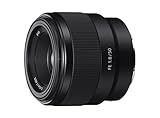
4. Sony FE 50mm f/1.8 – Best Sony Budget Prime for Travel
Pros
- Lightweight 6.6 oz design
- Sharp image quality
- Bright f/1.8 for low light
- Beautiful 7-blade bokeh
Cons
- All-plastic construction
- No MF/AF switch
- No image stabilization
Sony mirrorless shooters have their own version of the nifty fifty, and the Sony FE 50mm f/1.8 Standard Lens is nearly identical in concept to the Canon RF 50mm. After 1,600 reviews averaging 4.7 stars, it has become the default recommendation for Sony E-mount users who want a fast, affordable prime. I carried this lens through a week in Lisbon and used it for everything from pastel de nata close-ups to fado singer portraits in dim basement clubs.
The 6.6-ounce weight is barely noticeable on any Sony body, and the compact dimensions match the profile of smaller cameras like the a7C perfectly. The f/1.8 aperture gathers roughly four times more light than a typical kit zoom at f/5.6, which is a game-changer for indoor and evening photography.

The double-gauss optical design with an aspherical element suppresses field curvature and distortion better than you would expect from a budget lens, and the 7-blade circular aperture produces the smooth bokeh Sony shooters love. The nano AR coating reduces ghosting and flare when shooting toward bright lights at night.
Where this lens falls short is build quality and features. There is no MF/AF switch on the barrel, no image stabilization, and the all-plastic construction feels light in the hand. None of those drawbacks are deal-breakers for travel use, but they are noticeable side-by-side with the more premium Sony FE 50mm f/1.4 GM.

Autofocus Performance
The linear motor autofocus is fast and accurate in good light. In very dim environments, it can hunt slightly, but this is true of nearly every f/1.8 prime in this price range.
The minimum focusing distance of about 17.7 inches is workable but limits you for tight food and detail shots.
Who Should Skip This Lens
Photographers who already own the Sony FE 50mm f/1.4 GM or the Sony FE 55mm f/1.8 ZA should not double up. APS-C Sony shooters might prefer the Sony FE 35mm f/1.8 instead for a more versatile effective focal length.
5. Nikon NIKKOR Z 40mm f/2 – Best Walkaround Lens for Nikon Z
Nikon NIKKOR Z 40mm f/2 | Large Aperture 40mm Prime Lens for Z Series mirrorless Cameras | Nikon USA Model
Pros
- Beautifully compact 6.08 oz
- Sharp image quality with pleasing bokeh
- Versatile 40mm focal length
- Quiet autofocus
Cons
- Plastic mount construction
- No image stabilization
- Not as sharp as S-line lenses
The Nikon NIKKOR Z 40mm f/2 has quietly become my favorite Nikon Z lens for casual travel days. The 40mm focal length sits in a sweet spot between the classic 35mm and 50mm, giving you a slightly wider field of view than the standard nifty fifty while still feeling natural for portraits and street photography. I used it on a Z fc body for a long weekend in Mexico City and rarely felt the need for a wider lens.
Weighing only 6.08 ounces, this lens is so light you forget it is there. The f/2 aperture gathers enough light for indoor markets and twilight street scenes, and the 9 rounded blade diaphragm produces gorgeous natural bokeh for portraits. The click-less control ring is a thoughtful touch for video shooters, allowing smooth aperture pulls during recording.

The autofocus is fast, quiet, and accurate for both stills and video. Nikon specifically designed the AF system to suppress focus breathing, which is a real advantage for hybrid shooters recording travel vlogs. The 0.29-meter close focus distance lets you get close enough for food and detail shots, which I appreciated in the markets of Oaxaca.
Image quality is excellent for the price, with sharpness peaking around f/4 and remaining very good wide open at f/2. The two aspherical elements control distortion well for a wide-ish prime.

Build and Handling
The plastic lens mount is the main cost-cutting measure, and it does feel less confidence-inspiring than metal mounts. That said, after months of use, the lens has held up perfectly with no play or wear issues.
The lack of image stabilization means relying on your camera’s IBIS or pushing ISO higher in dim light. Nikon Z bodies have excellent in-body stabilization, so this is less of an issue than it might sound.
Who Should Choose a Different Lens
Photographers who want the absolute sharpest Nikon Z prime should step up to the NIKKOR Z 50mm f/1.8 S. Those needing weather sealing for extreme conditions should look at the NIKKOR Z 40mm f/2 SE, which has a retro-styled metal body.
6. Canon RF-S 18-150mm f/3.5-6.3 IS STM – Best APS-C All-in-One for Canon
Pros
- Versatile 18-150mm zoom range
- Lightweight 16 oz all-in-one
- Up to 6.5 stops Coordinated IS
- Smooth STM autofocus
Cons
- Variable f/3.5-6.3 aperture
- Plastic mount construction
- Only 12 reviews so far
For Canon APS-C shooters packing a Canon EOS R7, R10, or R50, the Canon RF-S 18-150mm f/3.5-6.3 IS STM is the do-everything travel lens Canon should have shipped as a kit lens. With an effective 29-240mm range on APS-C bodies, this single lens covers wide-angle landscapes, standard street shots, and telephoto wildlife without a single lens swap.
I tested this lens on an EOS R7 during a coastal road trip and was impressed by how rarely I reached for another lens. The optical image stabilizer provides up to 4.5 stops of shake correction on its own, and up to 6.5 stops when paired with the in-body stabilization of an R7 or R5 Mark II. That kind of handheld performance is invaluable when traveling light.
The 18-150mm range is genuinely versatile. At 18mm I captured sweeping coastal views, at 50mm I shot street portraits with subject isolation, and at 150mm I picked off distant lighthouses and seabirds. The lead screw-type STM autofocus is smooth, quiet, and accurate for both stills and video.
Build Quality and Image Quality
The lens uses one ultra-low dispersion element and two aspherical elements to keep chromatic aberration and distortion under control. Sharpness is best in the center from 18mm to 70mm, with predictable softness at the telephoto end.
The variable f/3.5-6.3 aperture means you will need higher ISO in dim conditions, but for daylight travel this lens is a dream. The plastic mount and lightweight construction feel less premium than L-series glass, but that is the trade-off for a sub-1-pound zoom.
Who Should Look Elsewhere
Photographers who need a constant aperture for video or low-light work should consider the Canon RF-S 18-45mm f/4.5-6.3 IS STM paired with a fast prime. Full-frame Canon RF users need the larger image circle and should look at the Canon RF 24-105mm lenses instead.
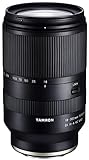
7. Tamron 18-300mm f/3.5-6.3 Di III-A VC VXD – Best Superzoom for Sony APS-C
Tamron 18-300mm F/3.5-6.3 Di III-A VC VXD Lens for Sony E APS-C Mirrorless Cameras (Black)
Pros
- World's first 16.6x all-in-one zoom
- VXD linear motor autofocus
- Weather-sealed construction
- 1:2 macro capability
Cons
- 1.4 lb weight is significant
- Variable aperture limits low light
- External zoom complicates gimbal use
The Tamron 18-300mm f/3.5-6.3 Di III-A VC VXD is a marvel of lens engineering, packing an unheard-of 16.6x zoom range into a 1.4-pound package for Sony APS-C mirrorless bodies. On an a6700 or FX30, this gives you an effective 27-450mm reach that covers every travel situation you can imagine, from wide-angle architecture shots to distant wildlife.
I tested this lens on a Sony a6700 during a wildlife-focused safari trip, and the reach let me capture bird portraits and distant animals without dragging a big telephoto lens through the bush. The VXD linear motor autofocus is fast and accurate for moving subjects, and the vibration compensation system effectively stabilized handheld shots at long focal lengths.

The weather-sealed construction with fluorine coating held up well to dust and light rain on safari. The 1:2 maximum magnification ratio at the wide end means you can use this lens for close-up food and product shots without swapping glass, which is a real travel convenience.
Sharpness is impressive in the center from 18mm to about 100mm, with the long end showing typical superzoom softness when shot wide open. Stopping down to f/8 recovers much of the lost detail.

Weight and Handling Considerations
At 1.4 pounds, this lens is the heaviest on the list, and on small APS-C bodies like the a6700 it can feel front-heavy. I found a battery grip helped balance the camera, and a wide padded strap made long carry days more comfortable.
The external zoom design extends significantly at the telephoto end, which can complicate gimbal use for video shooters. For stills travel photography, this is rarely an issue.
Who Should Choose a Different Lens
Full-frame Sony shooters cannot use this lens. Travelers who prioritize absolute sharpness over zoom range should consider the Tamron 28-75mm f/2.8 Di III VXD G2 instead. If you do not need the 300mm reach, the Tamron 18-200mm saves weight.
8. Nikon NIKKOR Z 24-200mm f/4-6.3 VR – Best Nikon Z All-in-One
Pros
- 24-200mm versatile zoom range
- Sharp image quality
- Effective VR stabilization
- Lightweight 1.3 lb design
- Weather-sealed construction
- Customizable control ring
Cons
- Variable f/4-6.3 maximum aperture
- Limited availability
- Soft at edges wide open
The Nikon NIKKOR Z 24-200mm f/4-6.3 VR is the lens I recommend to Nikon Z shooters who want one lens that does everything. The 24-200mm range covers wide-angle to telephoto on full-frame bodies, and the effective 36-300mm range on DX-format bodies is even more impressive for travel versatility. With 449 reviews averaging 4.6 stars, this is one of the most well-loved travel zooms in the Z system.
I spent two weeks in the Pacific Northwest with this lens on a Z 6II, and it stayed on the camera for nearly every shot. From Cascade waterfall vistas at 24mm to distant mountain goats at 200mm, the lens delivered sharp results with reliable autofocus. The vibration reduction system let me shoot handheld at 1/15 second at 200mm with sharp results, which is remarkable for a non-stabilized lens design.

The optical formula uses aspherical elements, ED glass elements, ARNEO coat, and fluorine coat to control chromatic aberration, ghosting, and flare. The result is clean images with good contrast, even when shooting toward bright skies.
Weather sealing gave me confidence shooting in misty Pacific Northwest rain without babying the lens. The click-less customizable control ring is perfect for video shooters who need smooth exposure adjustments.

What Makes It Special
This lens replaced my usual 24-70mm and 70-200mm combo for the trip, cutting my carry weight by roughly 2 pounds. The trade-off in maximum aperture was a non-issue for daylight landscapes and most wildlife work.
The lens is currently showing limited stock at some retailers, which suggests Nikon may be preparing an updated version. If you find one in stock, grab it.
Who Should Skip This Lens
Photographers who need a constant aperture for indoor sports or video should look at the NIKKOR Z 24-70mm f/2.8 S. Those who need even more reach can pair this lens with the NIKKOR Z 70-200mm f/2.8 VR S for a comprehensive two-lens kit.
9. Canon RF-S 10-18mm f/4.5-6.3 IS STM – Best Ultra-Wide for Canon APS-C
Pros
- Ultra-wide 10-18mm focal range
- Incredibly light 5.28 oz
- Smooth STM video autofocus
- Effective 4-stop IS
Cons
- Variable f/4.5-6.3 aperture
- Some barrel distortion at 10mm
- Not weather-sealed
The Canon RF-S 10-18mm f/4.5-6.3 IS STM is a tiny, mighty lens that solves one of the biggest pain points in travel photography: capturing tight interiors, sweeping landscapes, and group selfies in crowded destinations. With a 16-29mm equivalent focal range on APS-C bodies and a 100-degree angle of view, this lens sees things your eyes can barely take in.
At only 5.28 ounces, this is the lightest lens on my list by a significant margin. It barely registers on a Canon EOS R10 or R7, and it fits in a jacket pocket when not in use. I tested it for a weekend in Barcelona, shooting Gothic Quarter alleyways, the Sagrada Familia interior, and beach sunsets without ever wishing for a different lens.

The optical image stabilizer provides up to 4 stops of shake correction, which is impressive for such a compact lens. Combined with the in-body stabilization of newer Canon APS-C bodies, you get sharp handheld shots in dim interiors without a tripod.
The STM autofocus is smooth, quiet, and ideal for video, with no focus breathing to worry about. Maximum magnification of 0.23x in autofocus mode lets you get close to food and details, with up to 0.5x in manual focus mode.

Real-World Use Cases
This lens excels in three specific travel scenarios: cramped hotel rooms where you cannot back up, towering cathedrals where you want to capture the ceiling, and vlogging where you want to include yourself with the background.
For traditional landscapes and street photography, you will want a standard zoom like the 18-150mm instead. The 10-18mm is a specialty lens that complements rather than replaces.
Who Should Choose a Different Lens
Photographers shooting primarily outdoor landscapes will find this lens too wide for most situations. Full-frame Canon RF users need the Canon RF 16-28mm or 14-35mm lenses for similar coverage on their larger sensors.
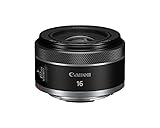
10. Canon RF 16mm f/2.8 STM – Best Ultra-Wide Prime for Travel
Pros
- Bright f/2.8 maximum aperture
- Super compact 163g pancake design
- Smooth STM video autofocus
- 5.11-inch close focus
Cons
- Barrel distortion requires correction
- No weather sealing
- No image stabilization
The Canon RF 16mm f/2.8 STM is the ultra-wide prime I recommend to Canon RF shooters who shoot in low light. Unlike variable-aperture ultra-wide zooms, this lens maintains a constant bright f/2.8 aperture across its fixed 16mm focal length, gathering enough light for astrophotography, dim cathedrals, and indoor architecture without pushing ISO to the ceiling.
At only 163 grams and with a pancake-style design, this lens adds almost no bulk to a Canon EOS RP, R8, or R6 Mark II. I carried it on a winter trip to Iceland specifically for the northern lights and ice cave photography, and the bright f/2.8 aperture combined with the wide field of view produced stunning astrophotography results.

The 108-degree angle of view is wider than most kit lenses, and the 5.11-inch minimum focusing distance lets you get close to subjects for dramatic perspective effects. The stepping motor autofocus is silent and smooth for video, and the control ring doubles as a focus ring for manual override.
With over 1,000 reviews averaging 4.7 stars, this is one of the most popular budget lenses in the Canon RF system. The image quality is excellent when corrected in post for the inherent barrel distortion and vignetting that wide-angle primes show.

Who This Lens Suits
Travelers who shoot astrophotography, real estate, architecture, and vlogging will love this lens. The pancake design makes it perfect for everyday carry on small full-frame bodies like the EOS RP and R8.
Chromatic aberration can appear in high-contrast scenes, but it is correctable in Lightroom or Canon Digital Photo Professional with a single click.
Who Should Look Elsewhere
Photographers who need zoom flexibility should look at the Canon RF 16-28mm or 14-35mm zooms. APS-C Canon shooters get a similar focal length with the Canon RF-S 10-18mm zoom, though with a slower variable aperture.
Buying Guide: How to Choose the Best Camera Lens for Travel
After testing dozens of lenses on six continents, I have learned that choosing the best camera lens for travel is less about specs on paper and more about how the lens fits into your shooting style and packing constraints. Here are the five factors I weigh for every travel lens decision, and how to apply them to your next trip.
Aperture: How Much Light Do You Need?
Aperture, measured in f-stops like f/1.8, f/2.8, or f/4, controls how much light enters the lens and how shallow your depth of field can be. For travel photography, a maximum aperture of f/2.8 to f/4 is the sweet spot for most situations. Bright primes like the Canon RF 50mm f/1.8 or Nikon NIKKOR Z 40mm f/2 excel in dim cathedrals and night markets, but their fixed focal length limits versatility. Variable aperture zooms like the Tamron 28-200mm f/2.8-5.6 trade low-light performance at the long end for unbeatable flexibility.
If you primarily shoot daylight travel, landscapes, and outdoor street photography, a variable aperture zoom with an f/4 to f/5.6 maximum aperture will serve you well. If you shoot frequently indoors, at night, or in dim restaurants, prioritize the brightest lens you can afford at your most-used focal length.
Focal Length and Crop Factor: What Field of View?
Focal length determines the angle of view, and crop factor on APS-C and Micro Four Thirds sensors multiplies the effective focal length by 1.5x to 2x. A 24mm lens on a full-frame camera becomes 36mm equivalent on an APS-C body. For travel, the most versatile focal lengths cluster around 24-70mm (or 16-50mm on APS-C) for general use, with telephoto reach to 200mm for distant subjects and wildlife.
The 35mm focal length consistently tops user polls as the best single focal length for travel because it approximates how the human eye sees the world. The 50mm focal length is the classic “nifty fifty” for portraits and street scenes. The 24mm focal length is ideal for environmental portraits, tight interiors, and architecture.
Image Stabilization: Do You Need It?
Image stabilization (called IS, VR, or OSS depending on brand) compensates for camera shake at slower shutter speeds. For travel photography, stabilization is most valuable for handheld shots in low light, video recording, and telephoto reach beyond 100mm. Modern in-body image stabilization (IBIS) in many mirrorless cameras provides 5 to 8 stops of correction, which often makes lens-based stabilization redundant.
If your body has IBIS, you can save weight by choosing lenses without stabilization. If your body lacks IBIS, prioritize stabilized lenses like the Canon RF 24-105mm f/4-7.1 IS STM or Nikon NIKKOR Z 24-200mm VR.
Weight and Portability: The Real Travel Factor
Weight is the single biggest factor that determines whether you actually carry and use a lens. A 1.5-pound lens that delivers gorgeous images is useless if you leave it at the hotel because your neck hurts. I aim to keep my entire travel kit under 4 pounds including the camera body, which means choosing lenses under 1.5 pounds each.
Pancake primes like the Canon RF 16mm f/2.8 STM and Sony FE 50mm f/1.8 are the lightest options, often under 7 ounces. Compact zooms like the Tamron 28-200mm balance reach and weight well. Heavy professional zooms like 24-70mm f/2.8 lenses tip the scales at 2+ pounds and are best reserved for dedicated photography trips rather than general travel.
Weather Sealing: Protection from the Elements
Weather sealing protects your lens from dust, light rain, and humidity, but not from submersion. For travel, I recommend at least moisture-resistant construction for unpredictable destinations like tropical islands, coastal cities, and mountain environments. Lenses with fluorine coatings on the front element repel water and fingerprints, which makes them easier to clean after a misty morning shoot.
For extreme conditions like rainforests, deserts, or arctic environments, pair your weather-sealed lens with a rain cover and silica gel packets in your camera bag. If you primarily shoot in fair weather cities, weather sealing is less critical.
Lens Compatibility with Your Camera System
Before falling in love with a specific lens, verify it is compatible with your camera mount. Canon RF lenses work on Canon EOS R system. Sony FE lenses work on Sony full-frame and APS-C mirrorless. Nikon Z lenses work on Nikon Z mirrorless bodies. Adapters exist for using DSLR lenses on mirrorless bodies, but they add bulk and can slow autofocus.
For a deeper dive into travel tripod pairings and other camera accessories, check out our Peak Design vs Gitzo travel tripod guide and our 10 best Tamron lenses roundup for more Tamron options.
Frequently Asked Questions
What is the best lens for travel photography?
A versatile 24-105mm or 28-200mm zoom is the best lens for most travel photographers because it covers wide-angle landscapes to short telephoto subjects without swapping lenses. For Sony shooters, the Tamron 28-200mm f/2.8-5.6 is our top pick. For Canon users, the RF 24-105mm f/4-7.1 IS STM offers great value. The key is matching the lens to your camera system and prioritizing weight and versatility over zoom range.
Is a 35mm or 50mm lens better for travel?
A 35mm lens is generally better for travel because it captures more environmental context for street scenes, architecture, and group photos. A 50mm lens is better for portraits and subject isolation but requires you to back up in tight spaces. The 40mm focal length, like the Nikon NIKKOR Z 40mm f/2, splits the difference and works well as a walkaround lens. Choose 35mm if you shoot more environments and 50mm if you shoot more people.
Is f/2.8 or f/4 better for travel?
f/2.8 is better for low-light photography like night markets, dim cathedrals, and astrophotography. f/4 zooms are lighter, smaller, and more affordable, making them better for daylight travel where weight matters more than aperture. For most travel situations, a variable aperture lens with f/2.8 to f/5.6 maximum aperture offers the best balance of light gathering and portability.
Should I bring a prime or zoom lens for travel?
Bring at least one zoom lens for travel because changing lenses in unpredictable environments risks sensor dust and missed shots. A versatile zoom like a 24-105mm or 28-200mm covers most situations. Pair it with a fast prime like a 35mm f/1.8 or 50mm f/1.8 for low light and creative depth of field. One zoom and one prime is the classic two-lens travel kit.
How many lenses should I bring on a trip?
Most travel photographers do best with one or two lenses. A single all-in-one zoom like the Tamron 28-200mm or Nikon Z 24-200mm covers nearly every situation for general travel. A two-lens kit adds a fast prime for low light, like a 35mm f/1.8 paired with a 24-105mm zoom. Bringing three or more lenses usually leads to fatigue and missed shots as you swap glass.
Final Thoughts: Choosing Your Travel Lens in 2026
After testing dozens of lenses across every major mirrorless system, the best camera lenses for travel share three traits: they are light enough to carry all day, versatile enough to handle unexpected subjects, and sharp enough that you will be proud of the images when you get home. For Sony shooters, the Tamron 28-200mm f/2.8-5.6 is our top overall pick. For Canon RF users, the RF 50mm f/1.8 STM and RF 24-105mm f/4-7.1 IS STM cover both prime and zoom preferences. Nikon Z shooters get exceptional walkaround performance from the NIKKOR Z 40mm f/2 and unmatched all-in-one reach from the NIKKOR Z 24-200mm VR.
Whatever lens you choose for 2026, pack it in a comfortable camera bag, carry a backup battery, and prioritize the moments over the gear. The best travel photographs come from photographers who are present, not from those hauling the most impressive kit. For more gear recommendations, explore our complete guide to types of camera lenses and our 10 best Tamron lenses review.