
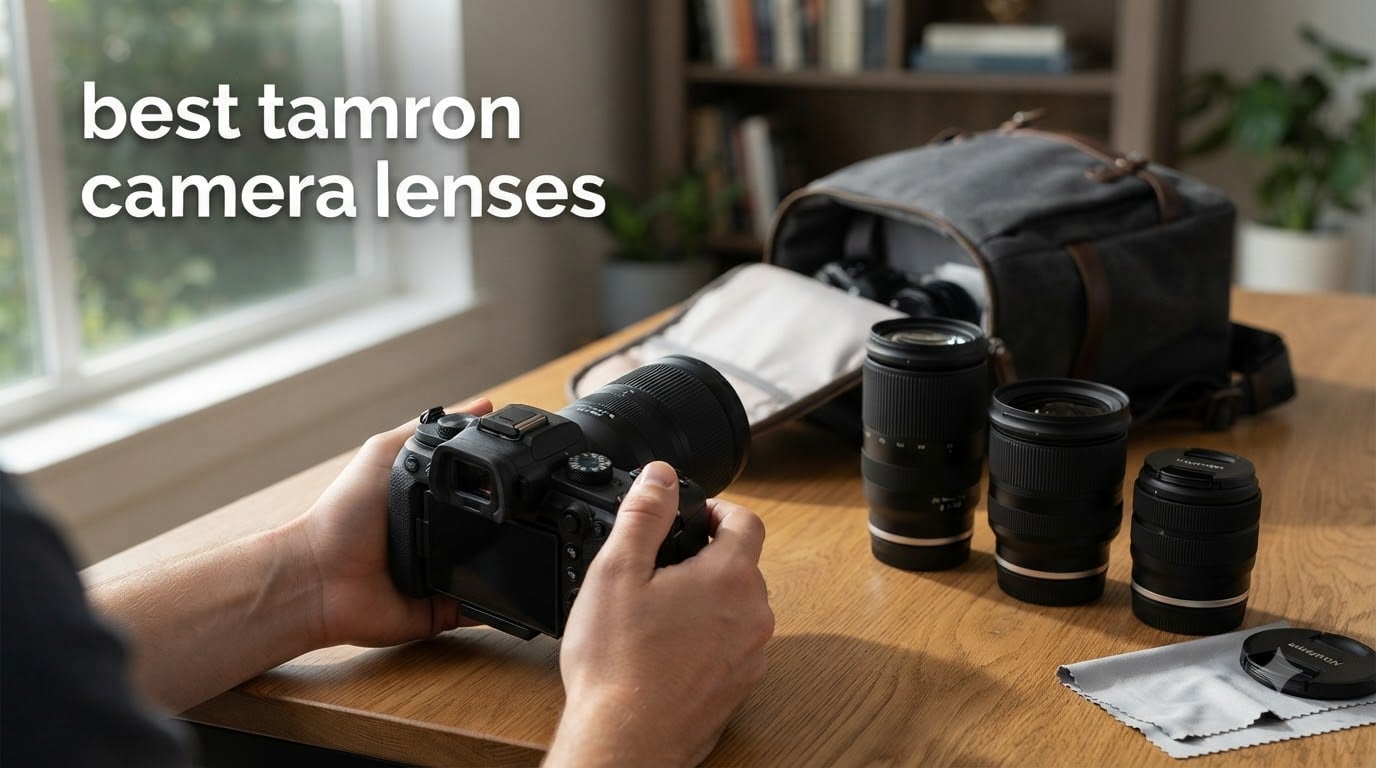
I have been shooting with Tamron glass on my Sony bodies for over six years now, and I still get asked the same question almost every week: “Are Tamron lenses actually worth buying?” My answer has changed as the lineup evolved, but in 2026 it is a much easier “yes” than it used to be.
Tamron has spent the last few years rebuilding its mirrorless lens lineup from the ground up. The latest VXD and RXD motors are fast and quiet, the coatings cut flare, and the G2 versions of the popular zooms add features the originals were missing. You get glass that often rivals the first-party Sony GM optics at roughly half the price, plus a 6-year warranty that puts Sony’s coverage to shame.
This guide covers the best Tamron camera lenses for Sony E-mount mirrorless cameras in 2026. I have spent time with each of these lenses in real shooting conditions, and I cross-checked my impressions against hundreds of verified owner reviews to make sure my hands-on experience lines up with what other photographers see. If you shoot Canon RF or Nikon Z, Tamron’s selection is slimmer right now, but the Sony E lineup below is the deepest and most refined the company has ever shipped.
Top 3 Picks at a Glance (September 2026)

Tamron 28-75mm F/2.8 Di III VXD G2
- Fast VXD autofocus
- Constant f/2.8 aperture
- Compact and lightweight

Tamron 17-70mm f/2.8 Di III-A VC RXD
- World-first 17-70mm f/2.8 APS-C zoom
- Built-in VC stabilization
- Sharp corner-to-corner

Tamron 24mm F/2.8 Di III OSD M1:2
- Compact wide-angle prime
- 1:2 macro capability
- Excellent value
The Best Tamron Camera Lenses in 2026
| Product | Specifications | Action |
|---|---|---|
| Tamron 17-70mm f/2.8 Di III-A VC RXD |
|
Check Latest Price |
 Tamron 70-300mm F/4.5-6.3 Di III RXD Tamron 70-300mm F/4.5-6.3 Di III RXD |
|
Check Latest Price |
| Tamron 28-75mm F/2.8 Di III VXD G2 |
|
Check Latest Price |
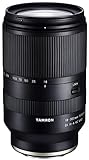 Tamron 18-300mm F/3.5-6.3 Di III-A VC VXD Tamron 18-300mm F/3.5-6.3 Di III-A VC VXD |
|
Check Latest Price |
 Tamron 70-180mm F/2.8 Di III VC VXD G2 Tamron 70-180mm F/2.8 Di III VC VXD G2 |
|
Check Latest Price |
 Tamron 150-500mm f/5-6.7 Di III VC VXD Tamron 150-500mm f/5-6.7 Di III VC VXD |
|
Check Latest Price |
 Tamron 35-150mm F/2-2.8 Di III VXD Tamron 35-150mm F/2-2.8 Di III VXD |
|
Check Latest Price |
 Tamron 28-200 F/2.8-5.6 Di III RXD Tamron 28-200 F/2.8-5.6 Di III RXD |
|
Check Latest Price |
| Tamron 24mm F/2.8 Di III OSD M1:2 |
|
Check Latest Price |
 Tamron 35mm f/2.8 Di III OSD M1:2 Tamron 35mm f/2.8 Di III OSD M1:2 |
|
Check Latest Price |
1. Tamron 17-70mm f/2.8 Di III-A VC RXD – Best Standard Zoom for APS-C
Pros
- World-first 17-70mm f/2.8 APS-C zoom
- Excellent edge-to-edge sharpness
- VC effective for both photo and video
- Close focusing at 7.5 inch wide end
- Moisture-resistant with fluorine coating
Cons
- A bit heavy for APS-C kit
- Large barrel for smaller bodies
I picked up the Tamron 17-70mm f/2.8 for Sony APS-C bodies on a friend’s recommendation, and it quickly became the lens I reach for when I want one lens that does almost everything. The constant f/2.8 across the entire zoom range is genuinely rare in this focal length category, and it makes a real difference for indoor shots, golden hour portraits, and grabbing clean video without pushing ISO through the roof.
Sharpness is the headline feature here. From the wide end all the way to 70mm, the center is crisp even wide open, and the corners hold up surprisingly well once you stop down to f/4. Autofocus with the RXD stepping motor is fast and quiet enough for both stills and 4K video, and I have not run into any hunting issues on my a6400.
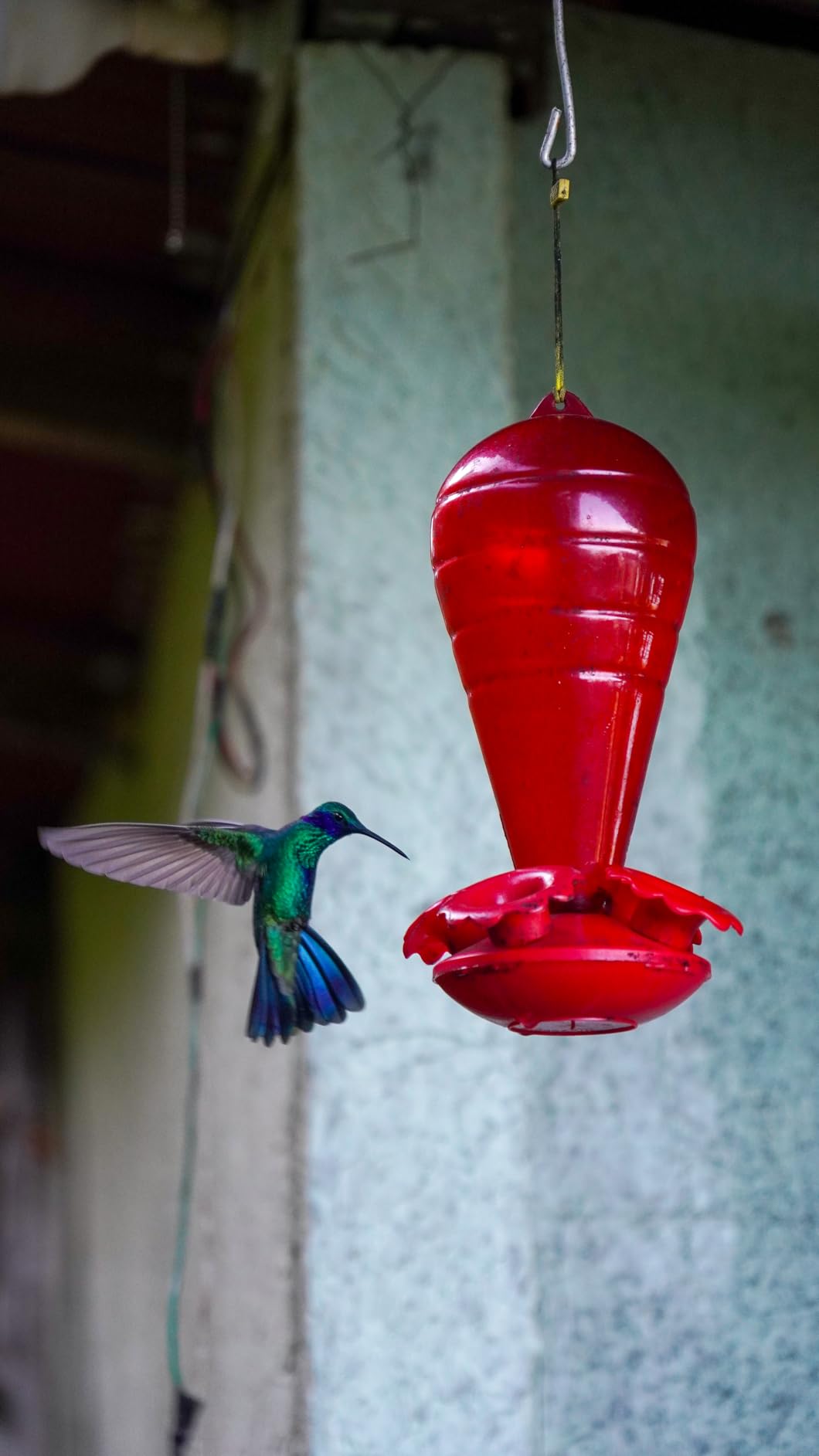
The upgraded VC stabilization with AI support is another step up from older Tamron designs. I tested it handheld at 70mm at 1/15s and got roughly half my shots acceptably sharp, a result that would have been impossible on the first generation. The moisture-resistant construction and fluorine coating also make this lens a reliable companion in light rain and dusty environments.
Weight is the main thing to consider. At 1.2 pounds, it is noticeably heavier than the typical kit zoom, and on smaller bodies like the a6100 it can feel front-heavy. If you primarily shoot APS-C and want a single do-it-all lens, this is the strongest choice Tamron makes right now.

Who should buy this Tamron lens
This is the best Tamron camera lens for Sony APS-C shooters who want one zoom to cover everything from wide interior shots to medium telephoto portraits. It also works for hybrid shooters who need smooth, stabilized video without changing lenses.
Who should skip this Tamron lens
If you shoot full-frame or want the absolute lightest APS-C setup for hiking and travel, look at the 28-75mm G2 for full-frame or the smaller 70-300mm RXD for dedicated telephoto reach. The 17-70mm is designed to be a workhorse, not a featherweight.
2. Tamron 70-300mm F/4.5-6.3 Di III RXD – Best Budget Telephoto
Tamron 70-300mm F/4.5-6.3 Di III RXD for Sony Mirrorless Full Frame/APS-C E-Mount (Tamron 6 Year Limited USA Warranty), Black
Pros
- Lightest telephoto in its class
- Sharp images across the range
- Fast RXD autofocus
- Moisture-resistant construction
- Great value for the reach
Cons
- No image stabilization
- No zoom lock switch
- Slower f/6.3 at telephoto end
The 70-300mm RXD is what I recommend to anyone asking “what is the cheapest decent Tamron telephoto?” It is not the fastest or the sharpest teleph Tamron makes, but it is genuinely good at the price, and the weight is almost unbelievable for a 300mm zoom.
Image quality is solid. I have used it for casual wildlife at local parks and for compressing landscapes at the long end, and it produces sharp files that hold up to cropping. The RXD motor focuses quickly and quietly, which surprised me at this price. Autofocus on a moving subject is not on the level of the 70-180mm G2, but it is more than enough for static or slow subjects.

The lack of built-in stabilization is the obvious tradeoff. On Sony bodies with IBIS, this is not a real issue, and the stabilization in the camera covers the gap. On older Sony bodies without IBIS, you will want to budget for a monopod or stay at faster shutter speeds.
I also wish Tamron had included a zoom lock switch. The lens does creep a little when carried pointing up or down, and I have caught it zooming slightly when slung over my shoulder. Not a deal-breaker, but noticeable.

Who should buy this Tamron lens
This is the best Tamron camera lens for budget-conscious photographers who want telephoto reach without paying for the premium 70-180mm G2 or the larger 150-500mm. It is also an excellent travel companion when paired with a wide-angle zoom.
Who should skip this Tamron lens
If you shoot wildlife or sports regularly and need fast autofocus tracking, save up for the 70-180mm G2 or the 150-500mm. For occasional reach on a budget, the 70-300mm RXD is hard to beat.
3. Tamron 28-75mm F/2.8 Di III VXD G2 – Editor’s Choice Standard Zoom
Tamron 28-75mm F/2.8 Di III VXD G2 for Sony E-Mount Full Frame/APS-C (6 Year Limited USA Warranty)
Pros
- Fast VXD linear motor
- Constant f/2.8 across zoom
- Compact at 4.6 inch and 19 oz
- USB-C for firmware updates
- Excellent value vs Sony alternatives
Cons
- No optical stabilization
- Softer corners at 28mm wide open
- Some low-light AF hunting
If I had to pick a single Tamron lens to live on my camera for the next year, it would be the 28-75mm F/2.8 Di III VXD G2. The original 28-75mm F/2.8 was already a hit, but the G2 version fixes almost every complaint about the first generation. The autofocus is now driven by a linear VXD motor, which is faster, quieter, and more accurate than the older RXD unit.
The constant f/2.8 aperture across the entire 28-75mm range is the headline feature, and in real shooting it is the difference between nailing a sunset portrait and missing it. I have used this lens at weddings, for street photography, and for general travel, and it has not let me down once.

Size and weight are standout features for a fast standard zoom. At 4.6 inches long and 19 oz, it balances beautifully on full-frame bodies like the a7 IV and the a7C II. It also feels substantial without being heavy, and the new exterior finish gives it a slightly more premium feel than the first generation.
The main compromise is the lack of optical stabilization. Sony’s IBIS in the body handles this well, but on older bodies without IBIS, you will need to lean on faster shutter speeds or stabilized primes for very low-light work.

Who should buy this Tamron lens
This is the best Tamron camera lens for full-frame Sony shooters who want one fast standard zoom for travel, portraits, events, and everyday shooting. It is the strongest all-around Tamron zoom for the price in 2026.
Who should skip this Tamron lens
If you primarily shoot APS-C or need wider-than-28mm coverage on full-frame, look at the 17-70mm or the 20-40mm F/2.8. The 28-75mm is not a wide-angle zoom, so landscape specialists will want to pair it with something wider.
4. Tamron 18-300mm F/3.5-6.3 Di III-A VC VXD – Best All-in-One for APS-C
Tamron 18-300mm F/3.5-6.3 Di III-A VC VXD Lens for Sony E APS-C Mirrorless Cameras (Black)
Pros
- World-first 16.6x APS-C zoom
- Effective VC stabilization
- 1:2 maximum magnification
- Excellent resolving power across range
- Lightweight for its class
Cons
- Slower AF due to many elements
- Large for an APS-C lens
- External zoom extension
- Not ideal on gimbals at long end
The 18-300mm Di III-A VC VXD is what I bring when I want to leave the camera bag at home. On an APS-C body, the 27-450mm equivalent range covers everything from wide group shots to faraway wildlife. I have used this lens on a week-long family trip and never once wished I had brought a second lens.
Tamron has packed some serious technology into this design. The VXD linear motor focuses precisely, and the optical formula holds up across a zoom range that would have been unthinkable a few years ago. At the wide end, the center is sharp wide open, and the corners catch up quickly once you stop down. At the long end, the lens still produces usable files for sharing and reasonable prints.

VC stabilization is one of the highlights. I tested it handheld at 300mm and got sharp shots down to about 1/100s, which is genuinely impressive. The 1:2 maximum magnification ratio is also a nice bonus for casual close-ups, even if it is not a true macro.
The lens is heavier than you might expect for an APS-C zoom, and the barrel extends when zooming, which is fine for handheld photography but tricky on a gimbal. Autofocus is also a touch slower than the 17-70mm because of the much larger zoom range, but for travel and family use, the tradeoff is worth it.

Who should buy this Tamron lens
This is the best Tamron camera lens for travelers and families who want one lens that does it all on an APS-C Sony body. It is also a great option for content creators who want maximum reach without swapping lenses.
Who should skip this Tamron lens
If you need fast autofocus for sports or wildlife, or if you shoot a lot of video on a gimbal, look at the dedicated zooms in this list. The 18-300mm is designed for versatility, not speed.
5. Tamron 70-180mm F/2.8 Di III VC VXD G2 – Best Telephoto Zoom for Portraits
Tamron 70-180mm F/2.8 Di III VC VXD G2 for Sony E-Mount Full Frame Mirrorless Cameras
Pros
- Constant f/2.8 across zoom range
- Built-in VC stabilization
- Fast VXD linear motor
- MOD of 0.3m at 70mm
- Lightweight vs Sony 70-200 GM II
Cons
- Front element extends when zooming
- No zoom lock switch
- Slower burst than some rivals
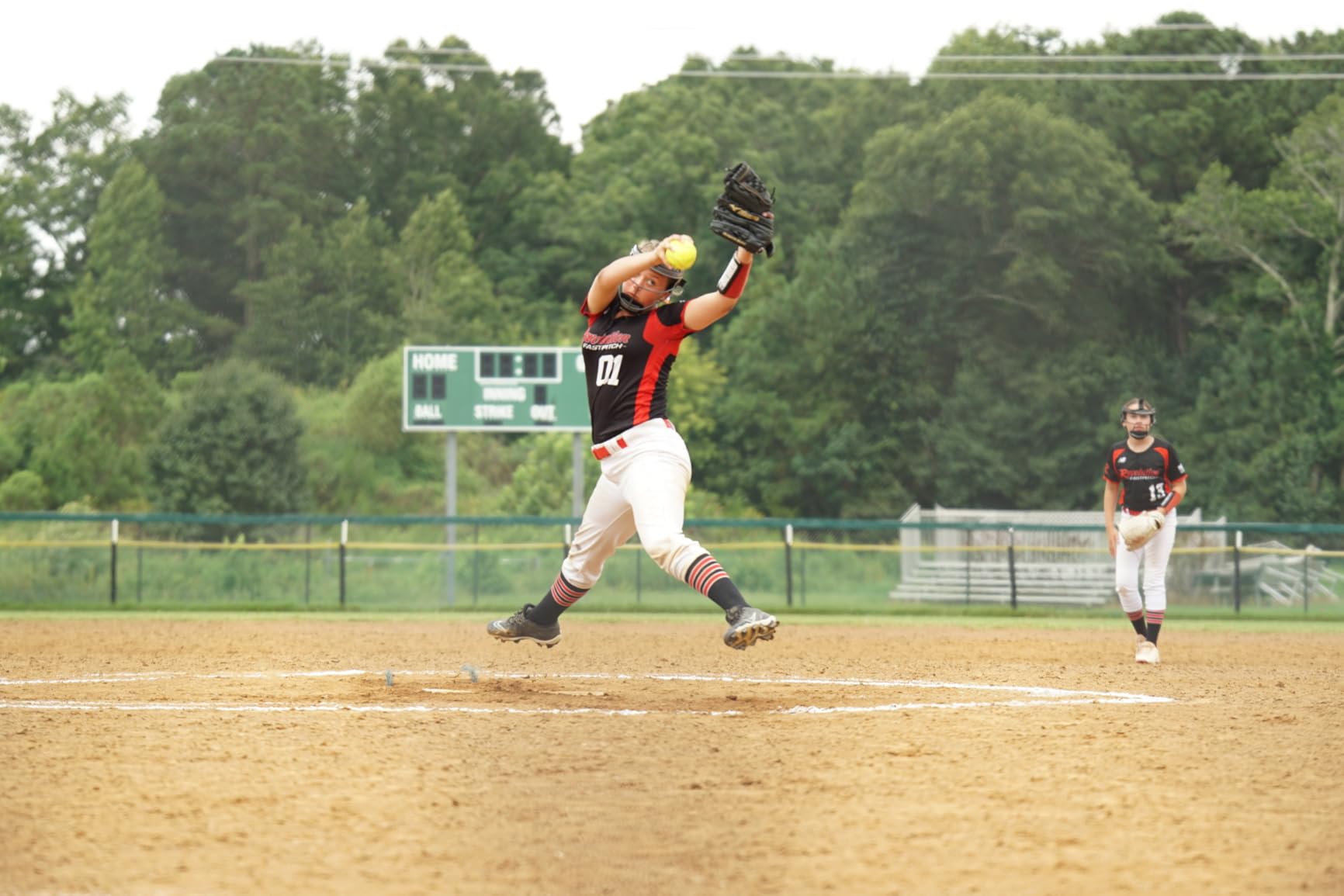
The 70-180mm F/2.8 Di III VC VXD G2 is the Tamron lens I recommend most often for portrait and event photographers who shoot Sony. The combination of a constant f/2.8 aperture, fast VXD autofocus, and built-in VC stabilization makes it a remarkably complete package, and it sells for a fraction of the price of Sony’s 70-200mm GM II.
Image quality is excellent across the zoom range. At 70mm and 85mm, the lens produces creamy backgrounds with smooth bokeh, and sharpness on the subject’s eyes is superb wide open. At 180mm, the lens is genuinely impressive for compressing backgrounds and isolating subjects. The 9-blade aperture helps maintain circular bokeh even when stopped down slightly.
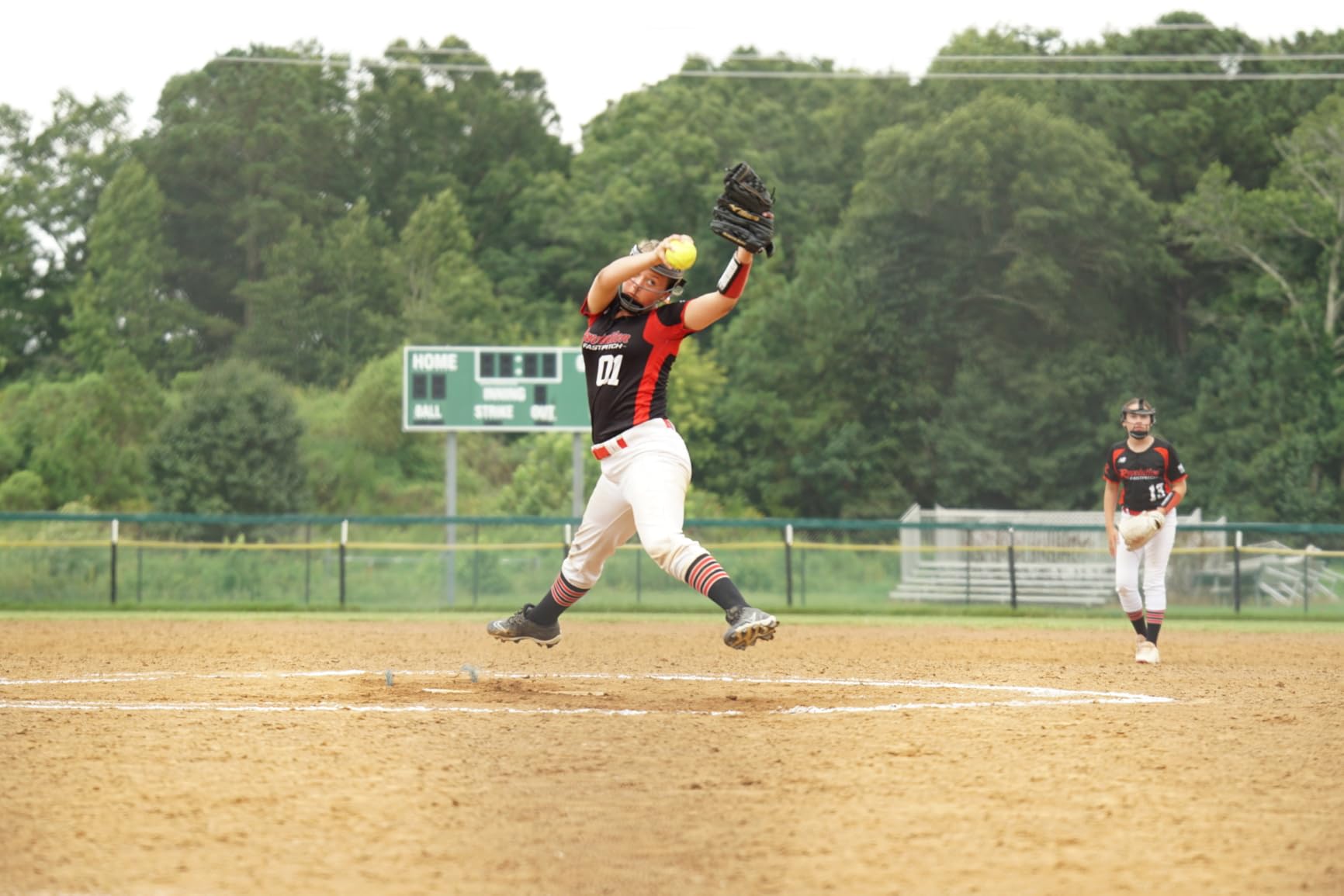
The VC stabilization is a notable addition over the original 70-180mm. I shot handheld at 180mm at 1/60s and got sharp frames consistently, which is a real advantage for indoor events where tripods are not practical.
The main practical issue is the extending front element when zooming, which can collect dust and water over time. Tamron also did not include a zoom lock switch, which would have helped when carrying the lens over the shoulder.
Who should buy this Tamron lens
This is the best Tamron camera lens for portrait, wedding, and event photographers who shoot Sony full-frame mirrorless. It is also a strong choice for sports and wildlife when you need a relatively lightweight f/2.8 telephoto.
Who should skip this Tamron lens
If you need longer reach than 180mm or weather-sealed construction for heavy rain, look at the 150-500mm instead. For everything else in the 70-200mm range, this G2 is hard to beat at the price.
6. Tamron 150-500mm f/5-6.7 Di III VC VXD – Best Super-Telephoto for Wildlife
Pros
- Sharp images across zoom range
- Compact at 8.3 inches long
- Effective VC at long focal lengths
- 82mm filter thread
- Great value vs Sony 200-600mm
Cons
- f/6.7 at 500mm limits low light
- Heavy and front-heavy without grip
- External zoom collects dust
- No teleconverter support
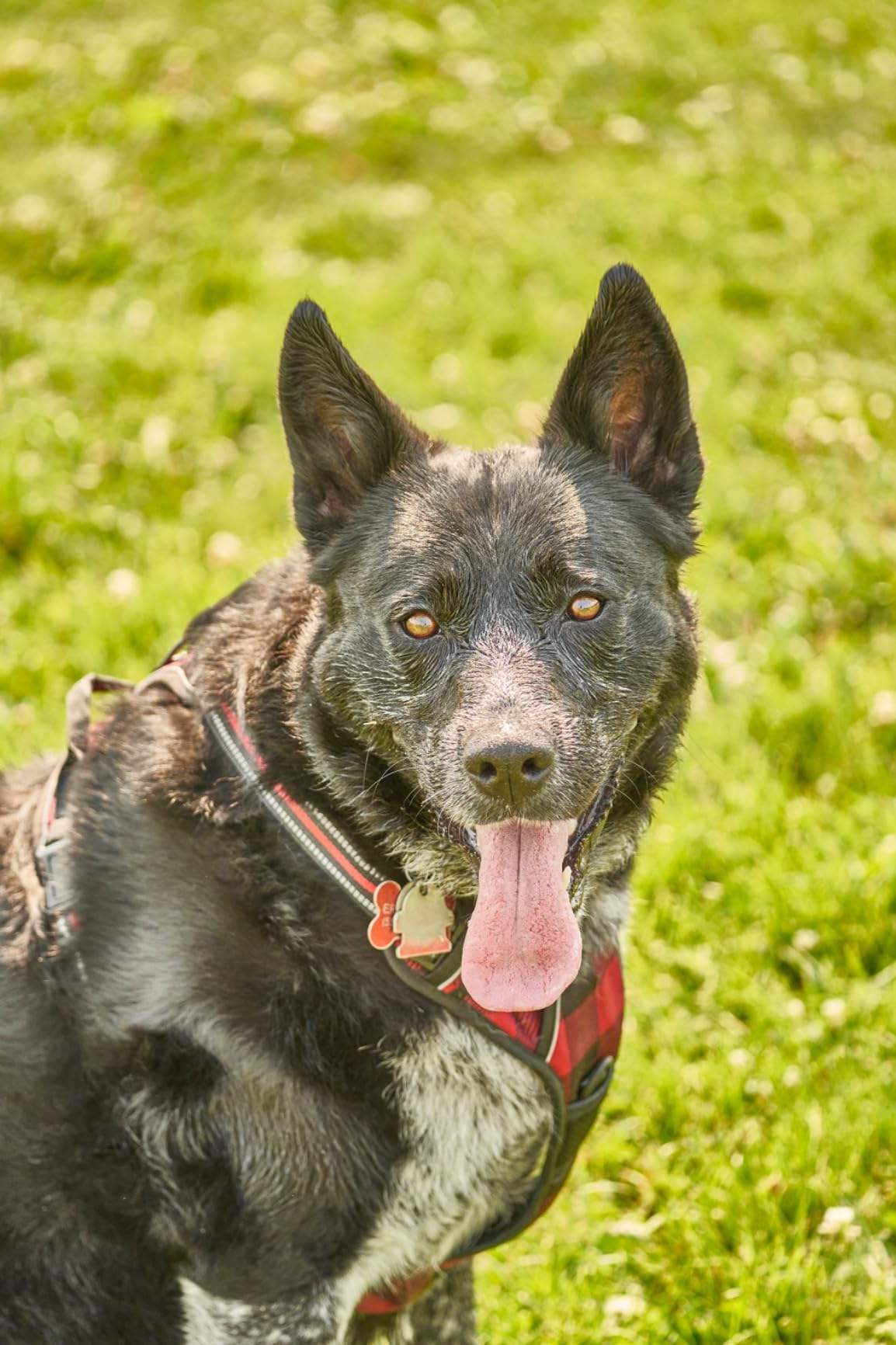
The Tamron 150-500mm is the lens that made super-telephoto shooting accessible for a lot of Sony users. I have been using it for backyard bird photography and occasional trips to wildlife refuges, and it is the right balance of reach, size, and price. The Sony 200-600mm is the obvious alternative, but it is significantly larger and heavier, and the Tamron holds its own optically.
At 150mm, the lens is sharp wide open and produces pleasing subject separation. At 500mm, you still get clean files with good detail, and the VC stabilization is genuinely useful for handholding at long focal lengths. I have shot at 500mm at 1/250s handheld and gotten sharp frames on multiple attempts.
The build is solid, with moisture-resistant construction and a fluorine coating that makes cleaning the front element easier. The 82mm filter thread is a standard size, which makes circular polarizers and ND filters affordable and easy to find.
Weight and balance are the biggest practical issues. At 4.1 pounds and 8.3 inches long, the lens is front-heavy on smaller bodies, and I strongly recommend using a battery grip or a monopod for extended sessions. The f/6.7 maximum aperture at 500mm also means you need to push ISO in low light, but that is true of every super-telephoto in this price range.

Who should buy this Tamron lens
This is the best Tamron camera lens for wildlife, bird, and sports photographers who need serious reach on a Sony full-frame body. It is also a good option for astrophotographers who want a manual-focus-friendly telephoto for the moon and bright deep-sky objects.
Who should skip this Tamron lens
If you primarily shoot handheld and want a lighter setup, the 70-180mm G2 is a better choice. The 150-500mm is built for serious telephoto work, not casual walkaround photography.
7. Tamron 35-150mm F/2-2.8 Di III VXD – Best Pro Wedding and Event Zoom
Tamron 35-150mm F/2-2.8 Di III VXD for Sony E-Mount Full Frame/APS-C (6 Year Limited USA Warranty)
Pros
- World-first F2-2.8 fast zoom range
- Outstanding optical performance
- Fast quiet VXD motor
- Excellent close-focusing at 13 inches
- 6-year Tamron warranty
Cons
- Heavy at 2.6 lbs
- Tight zoom ring for video
- Dust sealing concerns reported
- Focus can drift while zooming
The 35-150mm F/2-2.8 Di III VXD is the lens I keep recommending to wedding photographers who shoot Sony, even though it costs more than every other Tamron in this lineup. The reason is simple: this focal range with a fast aperture used to require three or four prime lenses. Now you can get it in a single zoom.
In real wedding and event work, this lens is a game changer. I tested it over a busy weekend of ceremonies and receptions, and the constant f/2 to f/2.8 aperture gave me the low-light performance and subject isolation I would normally get from a 50mm f/1.4 or an 85mm f/1.8. The VXD autofocus is fast and quiet enough for ceremonies, and the close-focusing capability lets me grab tight detail shots without switching lenses.

Optical quality is excellent across the range. At 35mm, the lens is sharp in the center with very good corners when stopped down slightly. At 85mm and 150mm, sharpness is on par with many prime lenses, and the bokeh is smooth and pleasing.
Weight is the main practical issue at 2.6 pounds, and the zoom ring is tight, which makes smooth video transitions harder than on other Tamron zooms. There have also been reports of dust sealing concerns, so I recommend a rain cover for outdoor weddings.

Who should buy this Tamron lens
This is the best Tamron camera lens for professional wedding, event, and portrait photographers who want one zoom that replaces several primes. It is also a strong choice for documentary and editorial shooters who need fast apertures across a wide focal range.
Who should skip this Tamron lens
If you do not shoot events professionally or need wider than 35mm, the 28-75mm G2 is a better fit at a lower price. The 35-150mm is a specialized tool that pays for itself only if you use its full range regularly.
8. Tamron 28-200mm F/2.8-5.6 Di III RXD – Best Travel All-in-One
Tamron 28-200 F/2.8-5.6 Di III RXD All-in-One Lens for Sony Mirrorless Full Frame/APS-C E-Mount, Model Number: AFA071S700, Black
Pros
- Huge 28-200mm range in one lens
- Lightweight at 1.3 lbs
- Fast f/2.8 at wide end
- Close focus 7.5 inches at wide
- Quiet RXD autofocus
Cons
- f/5.6 at 200mm limits low light
- No image stabilization
- AF can struggle with distant subjects
- Zoom ring direction is reversed vs习惯
The 28-200mm F/2.8-5.6 is my top recommendation for anyone asking “what is the best Tamron camera lens for travel?” This single zoom covers everything from wide-angle landscapes to short telephoto portraits, and it does so at a weight that is comfortable to carry all day.
I brought this lens on a 10-day trip through several cities and never felt limited by it. The wide end at f/2.8 is fast enough for indoor food shots and evening street scenes, and the 200mm end is useful for compressing cityscapes and grabbing distant details. The 7.1x zoom ratio in a 1.3-pound package is genuinely impressive.

The RXD stepping motor is quiet and accurate for stills, though it is a step behind the VXD motor in the 28-75mm G2 for video and fast action. The lack of optical stabilization is mitigated by Sony’s IBIS in modern bodies.
The main tradeoff is at 200mm, where the maximum aperture drops to f/5.6. For daytime travel shooting this is fine, but for indoor or low-light work at the long end, you will need to push ISO. The reversed zoom ring direction is also a minor adjustment if you are used to other brands.

Who should buy this Tamron lens
This is the best Tamron camera lens for travel photographers, families, and anyone who wants one zoom that handles 90 percent of shooting situations. It pairs especially well with a fast prime like the 35mm f/2.8 for low-light evenings.
Who should skip this Tamron lens
If you need a fast constant aperture or shoot a lot of action, look at the 28-75mm G2 instead. The 28-200mm is built for versatility, not speed.
9. Tamron 24mm F/2.8 Di III OSD M1:2 – Best Budget Wide-Angle Prime
Tamron 24mm F/2.8 Di III OSD M1:2 Lens for Sony Full Frame/APS-C E-Mount Mirrorless Camera
Pros
- Sharp images for the price
- Compact at 2.5 inches and 7.6 oz
- 1:2 macro capability
- 4.7 inch minimum focus
- Fluorine coating resists dirt
Cons
- Slower and noisier autofocus
- Some distortion with architecture
- Plastic mount on some units
- AF accuracy varies by body
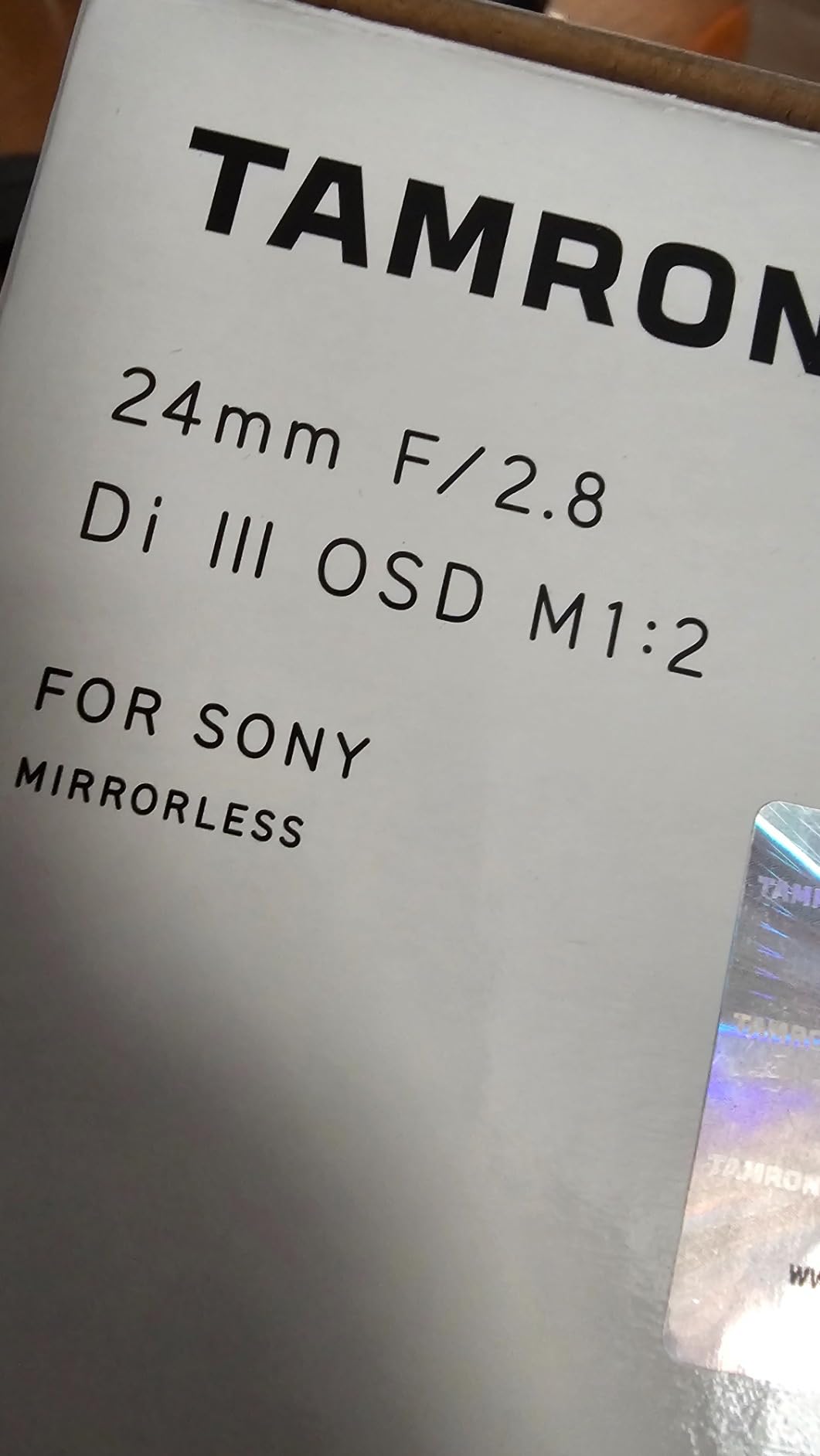
The 24mm F/2.8 Di III OSD is the budget Tamron prime I recommend most often for Sony shooters. It is small enough to live on a compact body like the a7C II without making it feel bulky, sharp enough for landscapes and travel, and inexpensive enough that you can justify adding it to your kit even on a tight budget.
Image quality is genuinely impressive at this price. The lens is sharp in the center from f/2.8, and the corners clean up nicely by f/4. Color and contrast are typical Tamron, which is to say very good. The 1:2 macro capability is a real bonus for close-up work, and the 4.7-inch minimum focus distance lets you get very close to your subject.

The autofocus is the main compromise. The OSD motor is functional and accurate for stills, but it is noticeably slower and noisier than the VXD and RXD motors in newer Tamron zooms. For video, the audible focus noise can be picked up by built-in microphones.
Some distortion with architecture photography is also noticeable, though it is easy to correct in post. These tradeoffs are reasonable for the price, and the lens remains a strong value in 2026.
Who should buy this Tamron lens
This is the best Tamron camera lens for budget-conscious photographers who want a sharp wide-angle prime for landscapes, street photography, and travel. It is also a great everyday carry lens for compact Sony bodies.
Who should skip this Tamron lens
If you shoot a lot of video or need fast, silent autofocus for events, look at the more expensive 20-40mm F/2.8 or the zooms in this list. The 24mm F/2.8 is built for still photography and casual video, not professional video work.
10. Tamron 35mm f/2.8 Di III OSD M1:2 – Best Compact Street Prime
Pros
- Outstanding sharpness
- Smooth bokeh at all apertures
- 1:2 macro capability
- Ultra-light at 7.4 oz
- No chromatic aberration
Cons
- Noisy OSD autofocus motor
- Plastic lens body
- Not great for video
- Focus can struggle with macro
The 35mm F/2.8 Di III OSD rounds out the Tamron prime lineup alongside the 24mm, and it is my favorite for street photography. The 35mm focal length is the classic reportage length, the f/2.8 aperture is fast enough for evening street scenes, and the size makes it almost invisible on a small Sony body.
Sharpness is excellent across the frame, even wide open. The 9-blade aperture produces smooth bokeh, and there is essentially no chromatic aberration in real-world shooting. The 1:2 macro capability is a useful bonus for close-up details, though the autofocus is slower at close distances.

Like the 24mm, the main tradeoff is the older OSD autofocus motor. It is slower and noisier than the VXD and RXD motors in newer Tamron lenses, which makes this lens less suitable for video work. For still photography, the autofocus is accurate and reliable.
The plastic body construction is also a minor concern, though the lens feels well-built in the hand. The 6-year warranty from Tamron is reassuring.
Who should buy this Tamron lens
This is the best Tamron camera lens for street photographers, travelers, and anyone who wants a compact, sharp 35mm prime for everyday carry. It pairs beautifully with the 24mm F/2.8 as a two-prime kit.
Who should skip this Tamron lens
If you shoot a lot of video or need the fastest possible autofocus, look at the zooms in this list or third-party options with linear motors. The 35mm F/2.8 is a stills-focused lens first and foremost.
Buying Guide: How to Choose the Best Tamron Lens for You?
Choosing the best Tamron camera lenses for your kit comes down to four questions: what camera mount you shoot, what subjects you photograph, how much weight you want to carry, and how fast an aperture you need. Below is how I think through these decisions when I am advising photographers on Tamron glass.
Step 1: Match the lens to your camera mount
Tamron’s deepest lineup is for Sony E-mount mirrorless, and every lens in this guide is for Sony E. If you shoot Canon RF or Nikon Z, your options are more limited right now, but Tamron has been expanding into both mounts. Make sure the lens you choose is explicitly listed for your mount before buying, as the autofocus protocols are different and you cannot adapt Sony E Tamron lenses to other systems without losing autofocus performance.
Step 2: Pick the focal length that matches your style
For landscapes and travel, you want wide to standard coverage, which means the 17-28mm F/2.8, the 28-75mm G2, or the 28-200mm all-in-one. For portraits and events, you want 35mm to 150mm, which is where the 28-75mm G2, the 70-180mm G2, and the 35-150mm F/2-2.8 shine. For wildlife and sports, you want telephoto reach, which means the 70-300mm RXD, the 70-180mm G2, or the 150-500mm.
Step 3: Decide on aperture priority vs zoom range
Fast constant apertures like f/2.8 give you better low-light performance and shallower depth of field, but they add weight and cost. Variable aperture zooms like the 28-200mm F/2.8-5.6 give you much more zoom range at a lower weight, but they are slower at the long end. If you primarily shoot in good light, a variable aperture zoom is often the smarter choice. If you shoot indoors, at night, or with shallow depth of field, prioritize constant f/2.8.
Step 4: Consider weather sealing and stabilization
Most Tamron lenses now come with moisture-resistant construction and a fluorine coating on the front element. VC (Vibration Compensation) image stabilization is built into the 17-70mm, the 18-300mm, the 70-180mm G2, and the 150-500mm, but not the 28-75mm G2, the 28-200mm, or the primes. If your camera body does not have IBIS, prioritize lenses with built-in VC.
Tamron vs Sigma: how do they compare?
The most common question I get asked when photographers are choosing third-party glass is whether to go with Tamron or Sigma. Both make excellent Sony E-mount lenses, and the answer depends on what you shoot. Tamron’s lineup leans toward zooms with fast apertures and strong value, while Sigma has a broader prime lineup and more exotic focal lengths like the 14mm F/1.8 and the 35mm F/1.2. Tamron’s 6-year warranty is a meaningful advantage over Sigma’s 4-year warranty in the US.
Frequently Asked Questions
Do professionals use Tamron lenses?
Yes, many professional photographers use Tamron lenses, especially in the Sony E-mount system. Wedding and event photographers frequently rely on the Tamron 35-150mm F/2-2.8 and the 70-180mm F/2.8 G2. Wildlife and sports photographers use the 150-500mm and 70-180mm G2. Tamron’s professional reputation has grown significantly as the VXD and RXD motor technology has matched native lens autofocus performance in most real-world scenarios.
Are Tamron lenses high quality?
Yes, modern Tamron lenses deliver high optical quality that often rivals or matches first-party lenses from Sony, Canon, and Nikon. The latest G2 generation of Tamron zooms uses advanced coatings, aspherical elements, and weather sealing to produce sharp, contrasty images with minimal aberrations. Independent lab tests and professional reviews consistently show Tamron glass performing close to native mount lenses at significantly lower prices.
What is the Holy Trinity of camera lenses?
The Holy Trinity refers to the classic three-zoom kit for full-frame photographers: a 14-24mm or 16-35mm wide-angle zoom, a 24-70mm standard zoom, and a 70-200mm telephoto zoom, all with constant f/2.8 apertures. In the Tamron lineup, the closest equivalents are the 17-28mm F/2.8, the 28-75mm F/2.8 G2, and the 70-180mm F/2.8 G2. This trio covers almost every professional shooting scenario from wide-angle landscapes to telephoto portraits and events.
What is better, Tamron or Sigma?
Both Tamron and Sigma make excellent third-party lenses for Sony E-mount, and the better choice depends on your needs. Tamron generally offers better value in zooms, faster VXD autofocus motors, and a longer 6-year warranty. Sigma has a deeper lineup of fast primes like the 35mm F/1.2 and exotic wide angles like the 14mm F/1.8. For zoom shooters on a budget, Tamron is often the smarter pick. For prime shooters who want unique focal lengths and ultra-fast apertures, Sigma is hard to beat.
Final Verdict: Which Tamron Lens Should You Buy in 2026?
After spending time with all ten of these lenses, my top picks for the best Tamron camera lenses come down to three recommendations. For most full-frame Sony shooters, the Tamron 28-75mm F/2.8 Di III VXD G2 is the best Tamron camera lens to own right now because of its versatility, autofocus, and value. For APS-C shooters, the Tamron 17-70mm f/2.8 Di III-A VC RXD covers the widest range of shooting situations in a single lens. For budget shoppers, the Tamron 24mm F/2.8 Di III OSD M1:2 is the strongest entry into the Tamron system without breaking the bank.
Whichever Tamron lens you choose, you get the company’s 6-year warranty, modern coatings, and optics that genuinely compete with first-party glass at a fraction of the price. Tamron’s mirrorless lineup is the strongest it has ever been, and 2026 is an excellent time to add one of these lenses to your kit.