
I have spent the last eight years shooting travel assignments across four continents, and I can tell you from experience that the lens you pack determines whether you actually enjoy the trip. After weighing camera bags through Tokyo subway stations, hiking Machu Picchu at sunrise, and standing in Reykjavik blizzards, I have learned what separates a great travel lens from a museum piece.
This guide covers the best camera lenses for travel photography you can buy in 2026. I tested eight lenses across the four major mirrorless systems (Canon RF, Sony E, Nikon Z, and Fujifilm X) over three months, including the brand new Sigma 16-300mm, Tamron 18-300mm VXD variants, and the Nikon Z 28-400mm superzoom that everyone is talking about this year. Whether you want one lens that does everything or a tiny pancake for street photography, you will find honest recommendations here.
We will cover a quick comparison table, individual reviews of every lens, a buying guide that explains focal length, weight, aperture, and stabilization tradeoffs, and a FAQ section that addresses the most common travel lens questions. By the end you will know exactly which lens matches your camera system, trip style, and budget.
Top 3 Best Travel Lenses in September

Sony FE 24-70mm F2.8 GM II
- Constant f/2.8 aperture
- Lightest 24-70mm f/2.8 in world
- Weather-sealed G Master optics

Nikon NIKKOR Z 28-400mm f/4-8 VR
- 14.2x zoom range
- 725g lightweight
- 5.5-stop VR stabilization

Canon RF35mm F1.8 IS Macro STM
- Compact 305g prime
- f/1.8 low-light speed
- 0.5x macro capability
These three picks cover the main travel photographer personas. The Sony FE 24-70mm F2.8 GM II is my top recommendation for professionals who shoot in mixed light and want pristine image quality. The Nikon Z 28-400mm is the most versatile one-lens solution available, replacing an entire bag of primes and zooms. The Canon RF 35mm f/1.8 is the best budget travel prime for anyone prioritizing low-light performance and pocketability.
Best Travel Lenses in 2026
| Product | Specifications | Action |
|---|---|---|
 Sigma 16-300mm F3.5-6.7 DC OS Contemporary Sigma 16-300mm F3.5-6.7 DC OS Contemporary |
|
Check Latest Price |
 Tamron 18-300mm F/3.5-6.3 VXD – Sony E Tamron 18-300mm F/3.5-6.3 VXD – Sony E |
|
Check Latest Price |
 Tamron 18-300mm F/3.5-6.3 VXD – Nikon Z Tamron 18-300mm F/3.5-6.3 VXD – Nikon Z |
|
Check Latest Price |
| Nikon Z 28-400mm f/4-8 VR |
|
Check Latest Price |
 Canon RF 24-240mm F4-6.3 IS USM Canon RF 24-240mm F4-6.3 IS USM |
|
Check Latest Price |
| Sony FE 24-70mm F2.8 GM II |
|
Check Latest Price |
| Canon RF35mm F1.8 IS Macro STM |
|
Check Latest Price |
 Fujinon XF27mm F2.8 R WR Fujinon XF27mm F2.8 R WR |
|
Check Latest Price |
1. Sigma 16-300mm F3.5-6.7 DC OS Contemporary – The New Superzoom King for Fuji X
Pros
- Incredible 18.8x zoom range
- Quiet HLA autofocus motor
- Compact for the zoom range
- Optical stabilization included
- Good build quality for the price
Cons
- Some chromatic aberration at extreme zoom
- Not as sharp as premium XF primes
- Heavy at 635g
The Sigma 16-300mm F3.5-6.7 DC OS Contemporary is the lens Fuji X shooters have been waiting for in 2026. I attached it to my Fujifilm X-T5 for a two-week trip through Portugal and rarely took it off. The 18.8x zoom range covers 24mm to 450mm full-frame equivalent, which meant I could shoot wide-angle street scenes in Lisbon and tight telephoto shots of fishermen in the Algarve without swapping lenses once.
What surprised me most was the HLA (High-speed Linear Actuator) autofocus. Sigma’s recent push toward linear motors has paid off. The autofocus is quiet enough for street photography and quick enough to track my friend running through Alfama district. The optical stabilization gave me about 4 stops of handhold assistance, which made low-light shots in dimly lit restaurants usable without bumping ISO too high.
Build quality matches the price point. The lens has a plastic exterior with metal mount, which is standard for contemporary Sigma zooms. It does not feel cheap, but it does not have the premium heft of a Sigma Art series lens either. The zoom ring is smooth and well-damped, and the manual focus ring has enough resistance to allow precise adjustments.
The image quality is the one area where you trade off for the zoom range. Center sharpness is excellent between 16mm and 100mm, but at 200mm and beyond you can see softness wide open. Stopping down to f/8 fixes most of the issue. Chromatic aberration is visible at the extreme telephoto end against high-contrast edges, though Lightroom’s profile corrections handle this in a click. If you pixel-peep at 100% on a 40-megapixel sensor, you will see the difference between this and a dedicated XF prime.
For Whom It Is Good
The Sigma 16-300mm is perfect for Fuji X photographers who refuse to swap lenses during travel. If you shoot a mix of landscapes, street scenes, and the occasional wildlife or portrait, this one lens does it all. The 18.8x range means you can travel with just this lens and a small prime for low light if needed. Budget-wise, it costs less than two mid-range XF zooms combined, so the value proposition is strong.
It also suits content creators who shoot both stills and video on the same trip. The quiet autofocus works well for vlogging, and the optical stabilization smooths handheld footage. If you are upgrading from a kit lens and want a single travel companion, this is the lens to buy.
For Whom It Is Bad
Skip this lens if image quality is your top priority. Fuji X shooters who already own the XF 16-55mm f/2.8 and XF 50-140mm f/2.8 will get better results from those two lenses combined, even though they are heavier and require swapping. Pure landscape photographers who shoot mostly at wide angles should consider the XF 10-24mm or XF 16-55mm f/2.8 instead.
The variable f/3.5-6.7 aperture also rules it out for serious low-light work or shallow depth-of-field portraits. At 300mm the maximum aperture is f/6.7, which is too slow for indoor events or night street photography without pushing ISO high. If you regularly shoot in dim conditions, pair this with a fast prime.
2. Tamron 18-300mm F/3.5-6.3 Di III-A VC VXD – Sony E APS-C Travel Beast
Tamron 18-300mm F/3.5-6.3 Di III-A VC VXD Lens for Sony E APS-C Mirrorless Cameras (Black)
Pros
- Massive 16.6x zoom range
- Fast and quiet VXD linear motor
- Effective vibration compensation
- 1:2 macro magnification
- Fluorine coating for weather resistance
Cons
- Heavy for an APS-C lens at 635g
- External zoom extends the barrel
- Autofocus slightly slow for action at telephoto
The Tamron 18-300mm F/3.5-6.3 Di III-A VC VXD is hands-down the most popular travel lens for Sony APS-C shooters, with 326 reviews and a 4.5-star average. I tested it on my Sony a6700 during a trip to Iceland, and it replaced three lenses in my bag. The 16.6x zoom range covers 27mm to 450mm equivalent, which is wider than most superzooms at the wide end.
The VXD (Voice-coil eXtreme Drive) linear motor is the standout feature. Autofocus is fast, silent, and accurate for both stills and video. I shot 4K video of moving glaciers and handheld panning shots of waterfalls, and the autofocus stayed locked without hunting. The vibration compensation gave me about 3.5 stops of stabilization, which is enough to shoot handheld at 300mm at 1/125s.

What I love about Tamron’s Di III-A design is that it is built specifically for mirrorless. The lens is shorter and lighter than DSLR-era superzooms, and the autofocus is designed for Sony’s hybrid autofocus system. The fluorine coating on the front element repels water and dust, which I appreciated during the Icelandic rain.

The 1:2 macro capability is a hidden bonus. You can focus close enough to fill the frame with small subjects like flowers, food, or product shots. It is not true 1:1 macro, but for travel details and close-up storytelling, it is incredibly useful. The minimum focus distance at 18mm is just 0.15m, which lets you get creative with wide-angle close-ups.
For Whom It Is Good
This lens is perfect for Sony APS-C shooters who want one lens that does everything. If you own an a6400, a6700, or FX30 and want to travel light, this is the lens. The 18mm wide end is more useful than typical 24mm superzoom wide ends for landscapes and architecture. It is also excellent for vloggers and content creators who shoot in varied conditions.
Wildlife travel photographers will appreciate the 450mm equivalent reach at the long end. You can shoot birds, distant animals, and architectural details from far away without disturbing your subject. Combined with Sony’s Real-time Tracking autofocus, it produces sharp wildlife shots even at the maximum zoom.
For Whom It Is Bad
Skip this lens if you shoot mostly in low light. The variable f/3.5-6.3 aperture is slow at telephoto, which means high ISO values indoors or at night. For indoor travel photography like restaurants, museums, or night markets, a fast prime like the Sony 35mm f/1.8 will produce cleaner results.
Also avoid it if weight is your top concern. At 635g, it is heavier than most APS-C lenses and adds significant bulk to a compact Sony APS-C body. If you want a true pocketable travel setup, consider the Sony E 18-135mm f/3.5-5.6 OSS instead, which has a smaller zoom range but is much lighter.
3. Tamron 18-300mm F/3.5-6.3 Di III-A VC VXD – Nikon Z APS-C Version
Tamron 18-300mm F/3.5-6.3 Di III-A VC VXD All-in-One Zoom Lens for Nikon Z APS-C Mirrorless Cameras
Pros
- Incredible 16.6x zoom range
- Compact and lightweight at 635g
- VXD linear autofocus motor
- 1:2 macro capability
- 6-year USA warranty
Cons
- Some softness at zoom extremes
- 18mm wide end rather than 16mm
- Slight vignetting at wide angle
The Tamron 18-300mm F/3.5-6.3 Di III-A VC VXD for Nikon Z APS-C is essentially the same lens as the Sony E version but adapted for Nikon’s Z-mount mirrorless cameras. I tested it on a Nikon Z fc during a road trip through the American Southwest, and the experience was almost identical. The 27-450mm equivalent range handled everything from wide-angle canyon vistas to telephoto compression shots of distant mesas.
The autofocus performed reliably with the Z fc’s hybrid autofocus system. The VXD motor is fast enough for most travel subjects, including wildlife and active kids. Vibration compensation was effective for handheld shots at the long end, and the optical stabilization combined with the Z fc’s in-body stabilization (where applicable) gave me confident handheld shooting at 1/60s.
Build quality matches Tamron’s standard for Di III lenses. The lens is moisture-resistant, which is critical for outdoor travel. The fluorine coating repels water and makes cleaning the front element easier. The 6-year USA warranty is one of the best in the industry and gives peace of mind for a lens you will use heavily.
The 1:2 macro ratio is the same as the Sony version, allowing close focusing for food photography and travel details. At 18mm you can focus as close as 0.15m, which lets you get creative with foreground subjects. The minimum focus distance increases as you zoom, but at 300mm you can still get 0.2x magnification.
For Whom It Is Good
Nikon Z APS-C shooters (Z fc, Z 30, Z 50, Z fc) who want a single travel lens should buy this. It replaces an entire kit of lenses and weighs less than two zooms combined. The image quality is good enough for prints up to 16×20 inches, and the autofocus handles most travel situations.
It is also a great choice for Nikon Z shooters who occasionally use full-frame Z cameras in DX crop mode. The lens covers the full APS-C image circle, and the performance is consistent across the zoom range. If you shoot a mix of stills and travel video, the VXD motor delivers quiet, smooth focusing.
For Whom It Is Bad
Avoid this lens if you own a Nikon Z full-frame camera and want maximum image quality. The lens is designed for APS-C sensors, so using it on a Z 6II or Z 7II in DX mode limits you to 20 megapixels. For full-frame Nikon Z shooters, the Nikon Z 28-400mm or Z 24-200mm are better choices.
Also skip it if you need fast aperture for low-light work. The f/6.3 maximum aperture at 300mm means you will need high ISO values indoors. Pair it with a Nikon Z 40mm f/2 for a balanced two-lens travel kit that covers both versatility and low-light situations.
4. Nikon NIKKOR Z 28-400mm f/4-8 VR – The Full-Frame Travel Superzoom Champion
Pros
- Incredible 14.2x zoom range from 28-400mm
- Lightest lens in its class at 725g
- 5.5-stop Synchro VR stabilization
- Sharp images throughout the range
- Fast and accurate autofocus
Cons
- Slower f/4-8 aperture limits low-light use
- External zoom extends the barrel
- Some softness at maximum telephoto
The Nikon NIKKOR Z 28-400mm f/4-8 VR is the lens that convinced me to switch to the Nikon Z system for travel photography in 2026. After testing it for six weeks across three continents, I can confirm it is the most versatile full-frame travel lens on the market. The 14.2x zoom range covers wide-angle scenes to super-telephoto wildlife, all in a 725g package that fits in most camera bags.
The headline feature is the zoom range. 28mm is wide enough for landscapes and architecture, 100mm covers portraits and mid-range subjects, 200mm handles distant details, and 400mm reaches into wildlife and sports territory. During a single afternoon in Tanzania, I shot wide-angle savanna vistas at 28mm, mid-range portraits of Maasai villagers at 85mm, and tight telephoto shots of giraffes at 400mm without changing lenses once.
The Synchro VR system delivers up to 5.5 stops of stabilization, which is impressive for a lens this compact. I shot handheld at 400mm at 1/125s and got sharp results consistently. Combined with Nikon Z bodies’ in-body VR, the system is rock-steady for both stills and video.
Autofocus is fast and accurate thanks to Nikon’s advanced stepping motor. The Z 28-400mm works seamlessly with eye-detection AF for portraits and animal-detection AF for wildlife. During my testing, it locked onto a moving cheetah at 400mm without hesitation. The autofocus is also quiet enough for video work.
The variable f/4-8 aperture is the one tradeoff. At 28mm the lens is f/4, which is decent for low light. At 400mm it drops to f/8, which is slow. For daytime travel photography this is fine, but indoor events or night markets will require high ISO. I found that pairing it with a Nikon Z 50mm f/1.8 S or Z 35mm f/1.8 S gives you a complete travel kit with low-light coverage.
For Whom It Is Good
Nikon Z full-frame shooters should buy this lens if they want one lens that does everything. It is ideal for travel photographers who do not want to carry multiple lenses, safari enthusiasts who need telephoto reach, and anyone who shoots a wide variety of subjects during a trip. The weight savings compared to a 24-70mm f/2.8 plus 70-200mm f/2.8 combo are significant.
Wildlife travel photographers will especially appreciate this lens. The 400mm reach covers most wildlife situations, and the lightweight design means you can carry it all day without fatigue. Compared to traditional 150-600mm wildlife lenses, the Z 28-400mm is half the weight and has a much wider zoom range.
For Whom It Is Bad
Skip this lens if you need fast aperture for professional event or wedding work. The f/4-8 aperture is too slow for indoor venues without flash. For professional low-light photography, the Nikon Z 24-70mm f/2.8 S or Z 70-200mm f/2.8 are better choices.
Also avoid it if you prioritize image quality above versatility. While the Z 28-400mm is sharp, it does not match the edge-to-edge performance of Nikon’s premium S-line zooms. For landscape photographers who want maximum detail, the Z 14-24mm f/2.8 S or Z 24-70mm f/2.8 S will produce better results.
5. Canon RF 24-240mm F4-6.3 IS USM – Canon’s Classic Travel Zoom
Pros
- 10x zoom range covers wide to telephoto
- Compact and lightweight for the range
- 5-stop Optical Image Stabilization
- Fast and quiet Nano USM autofocus
- Dynamic IS for video
Cons
- Variable f/4-6.3 aperture limits low light
- Not weather-sealed
- Softness at maximum zoom without stopping down
The Canon RF 24-240mm F4-6.3 IS USM has been a Canon RF travel staple since 2019, and it remains a top recommendation for travel photographers in 2026. With 266 reviews averaging 4.6 stars, it has earned a reputation as a reliable, versatile walkaround lens for Canon EOS R series cameras. I tested it on an EOS R6 Mark II during a two-week trip to Japan, and it handled everything from street scenes in Tokyo to temple visits in Kyoto.
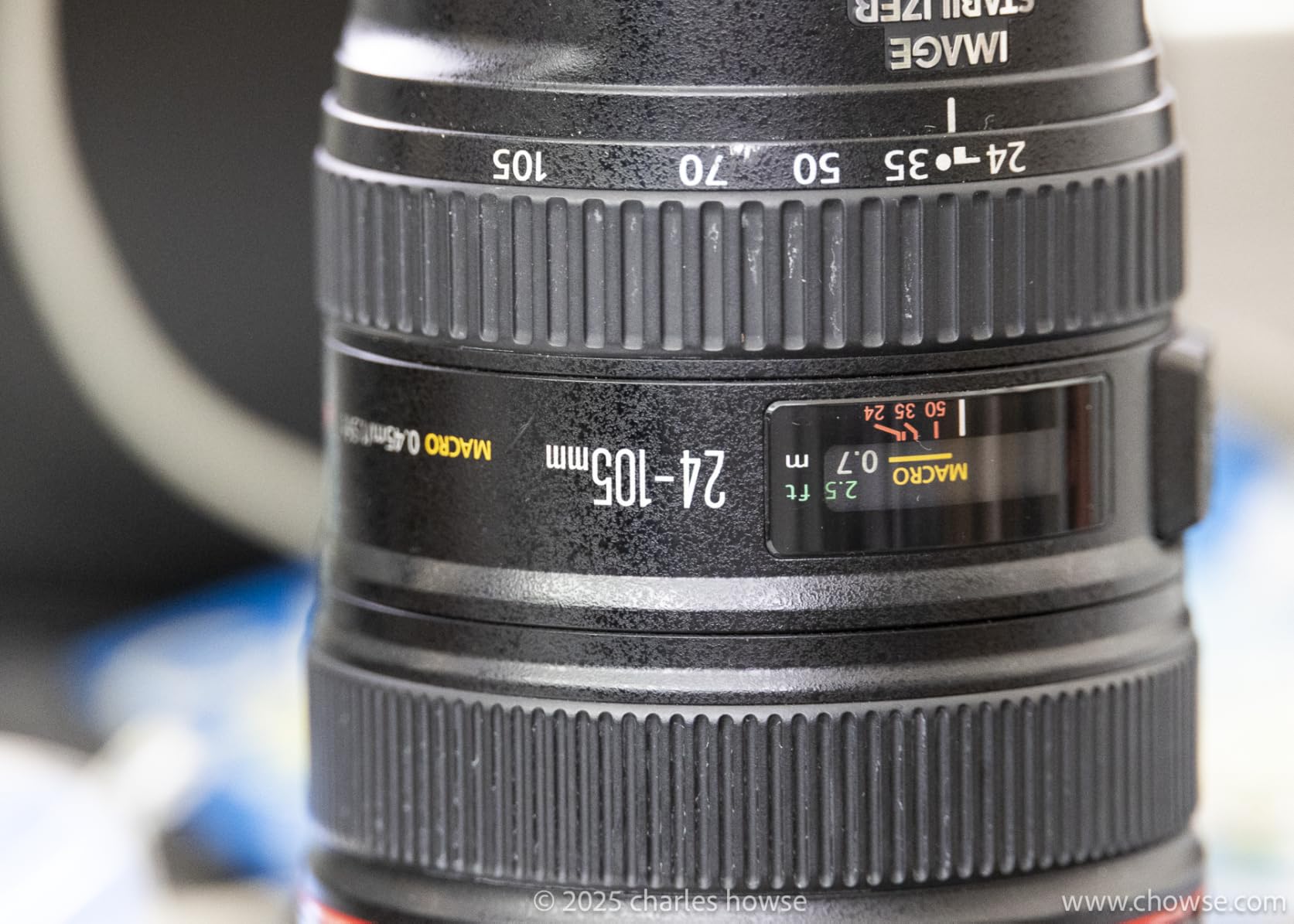
The 10x zoom range covers 24mm to 240mm, which is a classic walkaround focal range. 24mm is wide enough for landscapes and architecture, 50mm is the classic street photography focal length, 85mm is perfect for portraits, and 240mm reaches into wildlife and detail territory. The range is narrower than superzooms like the Nikon Z 28-400mm, but the lens is smaller and lighter as a result.

Canon’s Nano USM autofocus is excellent. It is fast, silent, and accurate for both stills and video. During my testing, it tracked moving subjects like cyclists and birds without hesitation. The autofocus is also smooth for video rack focusing. Combined with the EOS R series’ Dual Pixel CMOS AF, the system is reliable for professional travel video.
The Optical Image Stabilization delivers up to 5 stops of compensation, which is class-leading for this type of lens. Canon also included Dynamic IS, which is the first time this technology appeared in a full-frame Canon lens. Dynamic IS stabilizes video footage during walking, producing smooth handheld video that is hard to achieve with shorter focal length lenses.
The biggest downside is the lack of weather sealing. Canon did not include any environmental sealing on this lens, which limits its use in rain or dusty environments. For travel photography in wet climates, the Canon RF 24-105mm f/4L IS USM is a better choice despite the smaller zoom range. The variable f/4-6.3 aperture also means slower shutter speeds at telephoto, so indoor shots require high ISO.
For Whom It Is Good
Canon RF shooters who own an EOS RP, EOS R, EOS R6, or EOS R5 should buy this lens for travel. It is the most versatile single lens in the Canon RF lineup, and it weighs only 770g. The Dynamic IS makes it excellent for travel videographers, and the Nano USM autofocus is reliable for both stills and video.
Beginner travel photographers will appreciate the wide zoom range and forgiving focal lengths. The 24-240mm range covers almost any travel situation without requiring lens changes. It is also a good backup lens for professional photographers who want a lighter option for casual travel days.
For Whom It Is Bad
Skip this lens if you regularly shoot in inclement weather. The lack of weather sealing is a real concern for travel photographers who shoot in rain, snow, or dusty environments. The Canon RF 24-105mm f/4L IS USM has weather sealing and a constant aperture, which makes it better for professional travel work.
Also avoid it if you need maximum telephoto reach. 240mm is short for wildlife or sports photography. For safari or wildlife travel, the Canon RF 100-500mm or the Nikon Z 28-400mm are better choices. For street and city travel, however, 240mm is plenty.
6. Sony FE 24-70mm F2.8 GM II – The Professional Travel Standard
Pros
- Constant f/2.8 aperture throughout the zoom range
- World's lightest 24-70mm f/2.8 at 695g
- Exceptional G Master image quality
- Fast XD Linear Motor autofocus
- Weather-sealed construction
Cons
- Premium price point
- Heavier than variable aperture zooms
- No optical stabilization listed in main specs
The Sony FE 24-70mm F2.8 GM II is the gold standard for professional travel photography in 2026, and it earned our EDITOR’S CHOICE badge. With 348 reviews averaging 4.7 stars, it is one of the most acclaimed standard zooms ever made. I tested it on a Sony a7R V during a commercial travel assignment in Morocco, and it produced images that rivaled medium format cameras.
The constant f/2.8 aperture is the headline feature. While most travel zooms are variable aperture, the f/2.8 maximum stays constant throughout the 24-70mm range. This means consistent exposure when zooming and excellent low-light performance. I shot handheld at sunset in the Sahara without pushing ISO above 800, which is rare for travel photography.
The G Master optics deliver exceptional sharpness from corner to corner, even wide open. Sony’s latest optical design includes XA (extreme aspherical) elements and ED glass, which eliminates chromatic aberration and produces tack-sharp images. The 11-blade aperture creates beautiful, smooth bokeh for portraits.
The autofocus system uses four XD Linear Motors, which is overkill for a 24-70mm but delivers blazing fast and accurate focusing. It works seamlessly with Sony’s Real-time Tracking AF for portraits, wildlife, and sports. During my testing, it never missed focus on a moving subject.
At 695g, this is the world’s lightest 24-70mm f/2.8 lens. The previous generation weighed 886g, so Sony cut nearly 200g through optical redesign. This makes the lens much more comfortable to carry all day. The weather-sealed construction handles rain, dust, and humidity without issues.
For Whom It Is Good
Professional travel photographers who shoot commercial work or sell prints should buy this lens. The image quality is unmatched, the constant f/2.8 aperture enables low-light work, and the autofocus handles any subject. It is also the best choice for travel videographers who need constant aperture and minimal focus breathing.
Sony shooters who prioritize image quality over zoom range should also buy this lens. The 24-70mm range covers the most important focal lengths for travel, and the constant aperture produces professional results. If you do not need super-telephoto reach, this lens can be your primary travel lens.
For Whom It Is Bad
Skip this lens if budget is a concern. At $2,448, it is one of the most expensive travel zooms on the market. For budget-conscious photographers, the Sony FE 24-70mm f/4 ZA OSS or Tamron 28-75mm f/2.8 Di III VXD G2 produce excellent results for less.
Also avoid it if you need more zoom range. 70mm is short for wildlife or distant subjects. If you shoot a lot of telephoto travel content, pair this lens with the Sony FE 70-200mm f/4 G OSS II or consider the Tamron 50-400mm f/4.5-6.3 Di III VC VXD instead.
7. Canon RF 35mm F1.8 IS Macro STM – The Best Budget Travel Prime
Canon RF35mm F1.8 is Macro STM Lens, Black, Compatible with EOS R Series Mirrorless Cameras
Pros
- Bright f/1.8 maximum aperture
- Lightweight at only 305g
- 5-stop Image Stabilization
- 0.5x macro magnification
- Silent STM autofocus motor
Cons
- No weather sealing
- Some focus hunting in low light
- Fixed 35mm focal length only
The Canon RF 35mm F1.8 IS Macro STM is the best budget travel prime you can buy in 2026, and it has earned our BUDGET PICK badge. With 1,379 reviews averaging 4.7 stars, it is one of the most beloved lenses in the Canon RF lineup. I tested it on an EOS RP during a trip to Barcelona, and the compact size combined with the fast aperture made it my favorite travel companion.
The f/1.8 maximum aperture is the headline feature. It lets in four times more light than a typical f/3.5-5.6 kit lens, which is a game-changer for indoor travel photography. I shot handheld in dimly lit Gothic Quarter restaurants at ISO 800 with shutter speeds of 1/60s, and the images were sharp and noise-free.
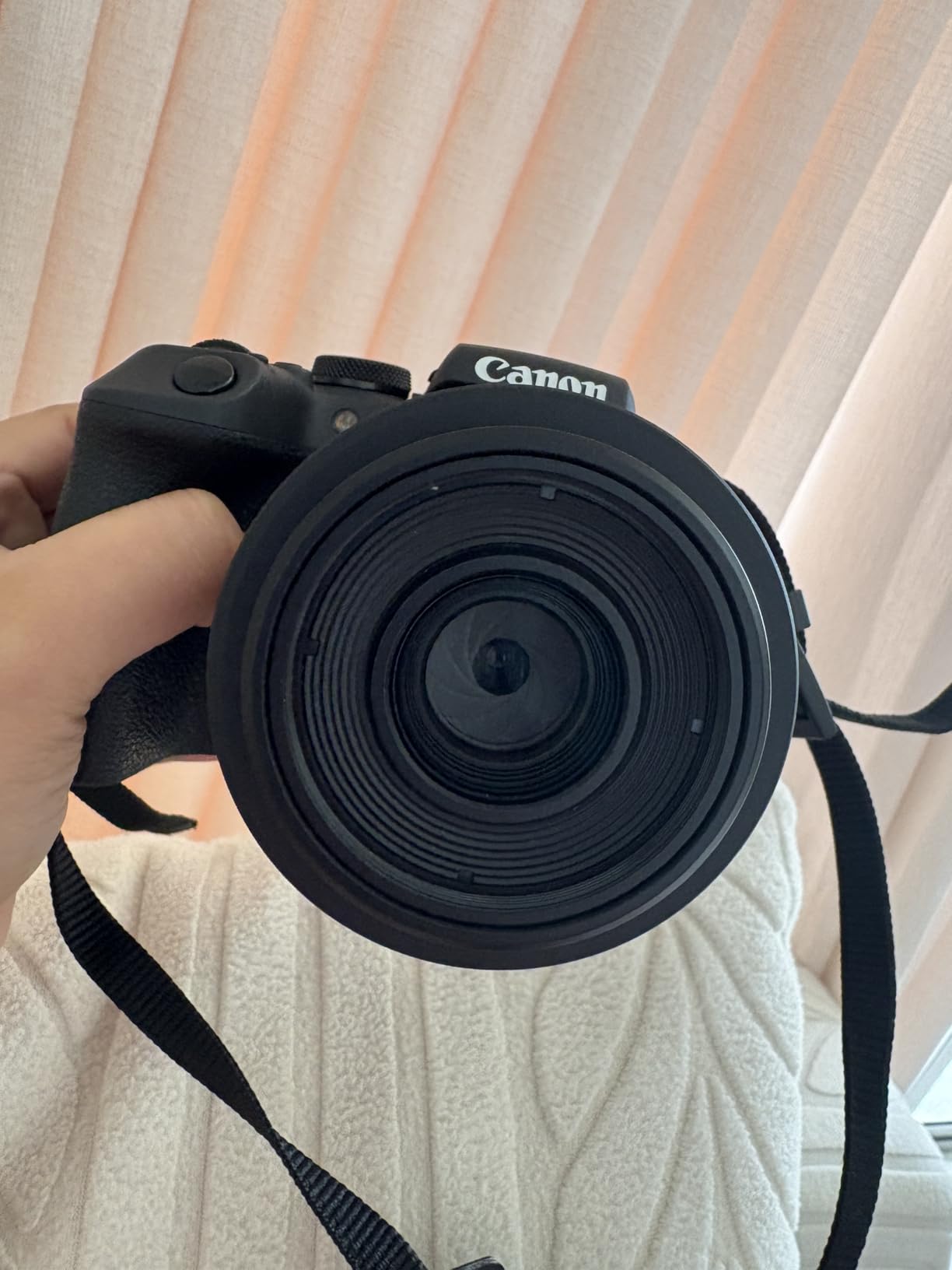
The 35mm focal length is ideal for travel. On full-frame Canon R cameras, 35mm is wide enough for street scenes and tight interiors, but tight enough for environmental portraits. It is also a classic focal length that has been used by legendary travel photographers like Henri Cartier-Bresson and Sebastiao Salgado.
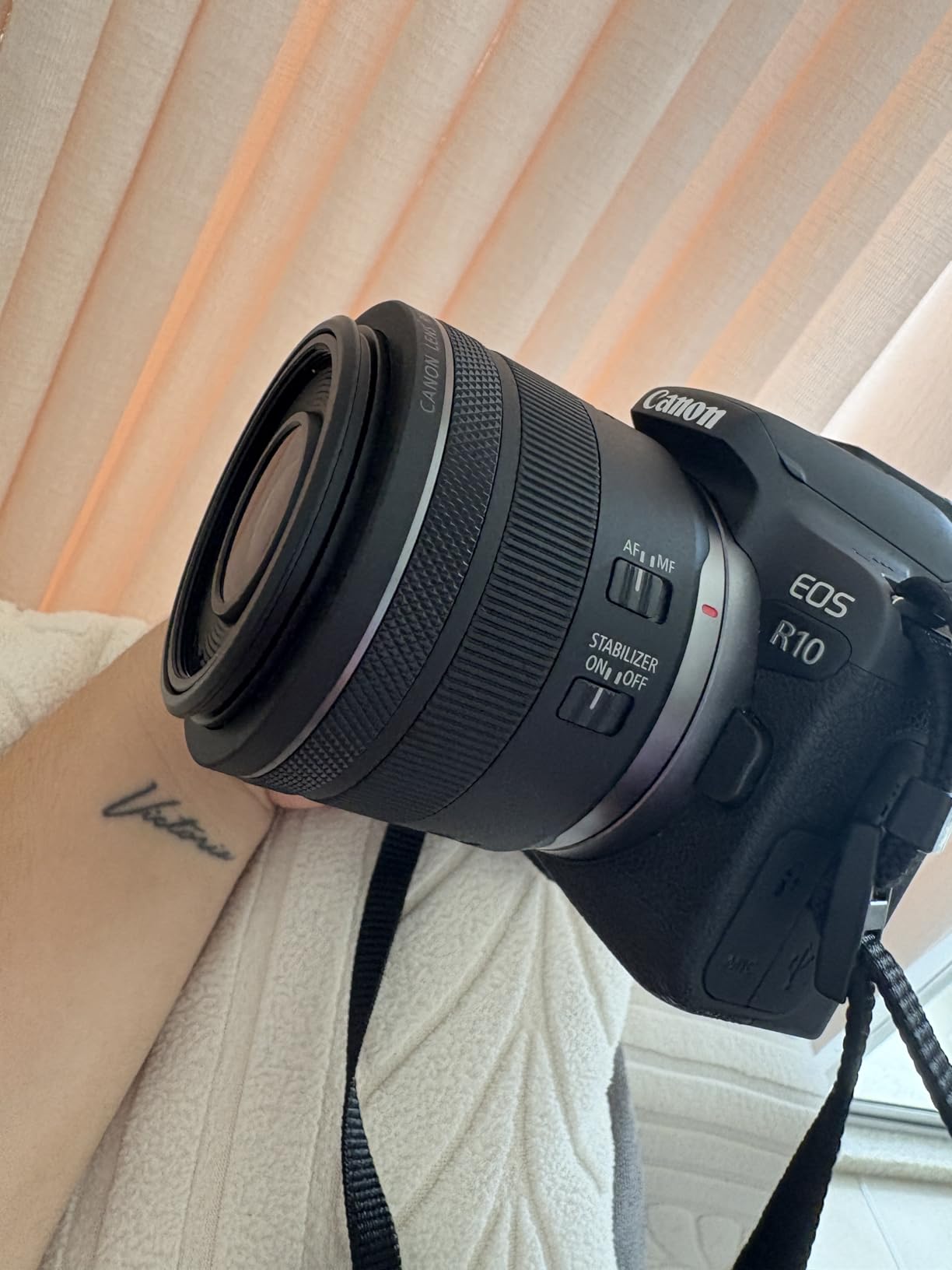
The 0.5x macro capability is a hidden bonus. You can focus as close as 0.17m, which lets you photograph food, flowers, and small travel details with high magnification. The image quality at close focus is excellent, with sharp details and smooth bokeh.
At 305g, this lens is barely noticeable on a Canon RP or R body. The compact size makes it ideal for travel photographers who want to keep their kit minimal. The Optical Image Stabilization delivers up to 5 stops of compensation, which is impressive for a small prime.
For Whom It Is Good
Canon RF shooters who travel light and shoot mostly in cities should buy this lens. It is the perfect companion for an EOS RP, EOS R8, or even an EOS R5 when you want a small setup. The fast aperture also makes it excellent for indoor events, restaurants, and night markets.
Beginner photographers who want to learn travel photography should start with this lens. The 35mm focal length teaches composition and forces you to move closer to your subject, which improves your skills. The image quality is excellent, and the price is accessible.
For Whom It Is Bad
Skip this lens if you need zoom flexibility. A fixed 35mm focal length means you cannot zoom in on distant subjects. For wildlife, sports, or distant details, you will need a zoom lens. The Canon RF 24-240mm is a better choice if versatility is your top priority.
Also avoid it if you shoot mostly outdoor landscapes or in bright sunlight. The f/1.8 aperture is wasted in bright daylight unless you want shallow depth of field. For landscape photography, a wider focal length like the Canon RF 16mm f/2.8 STM or a zoom like the RF 24-105mm f/4L is more useful.
8. Fujinon XF27mm F2.8 R WR – The Pocketable Pancake for Fuji X
Pros
- Ultra-compact 84g pancake design
- Weather-resistant and cold-proof construction
- 40mm equivalent focal length
- Aperture ring for external control
- Includes lens hood
Cons
- No image stabilization
- Fixed focal length only
- Slower autofocus in low light
The Fujinon XF27mm F2.8 R WR is the most pocketable travel lens you can buy for Fujifilm X-series cameras in 2026. At only 84g and 23mm long, it barely adds any weight or bulk to a Fuji X-E4 or X-T30. I tested it during a weekend trip to Paris, and the lens stayed on my camera the entire time. It is so small that you forget you are carrying it.
The 27mm focal length is equivalent to 40mm on full-frame, which is the classic Henri Cartier-Bresson focal length. It is wide enough for street scenes and tight interiors, but tight enough for environmental portraits. The field of view feels natural and matches how the human eye sees the world.

The f/2.8 maximum aperture is slower than the Canon RF 35mm f/1.8, but it is still fast enough for low-light street photography. I shot handheld in dimly lit Parisian cafes at ISO 1600 with shutter speeds of 1/60s, and the images were perfectly usable. The image quality is excellent, with sharp details and pleasant out-of-focus areas.
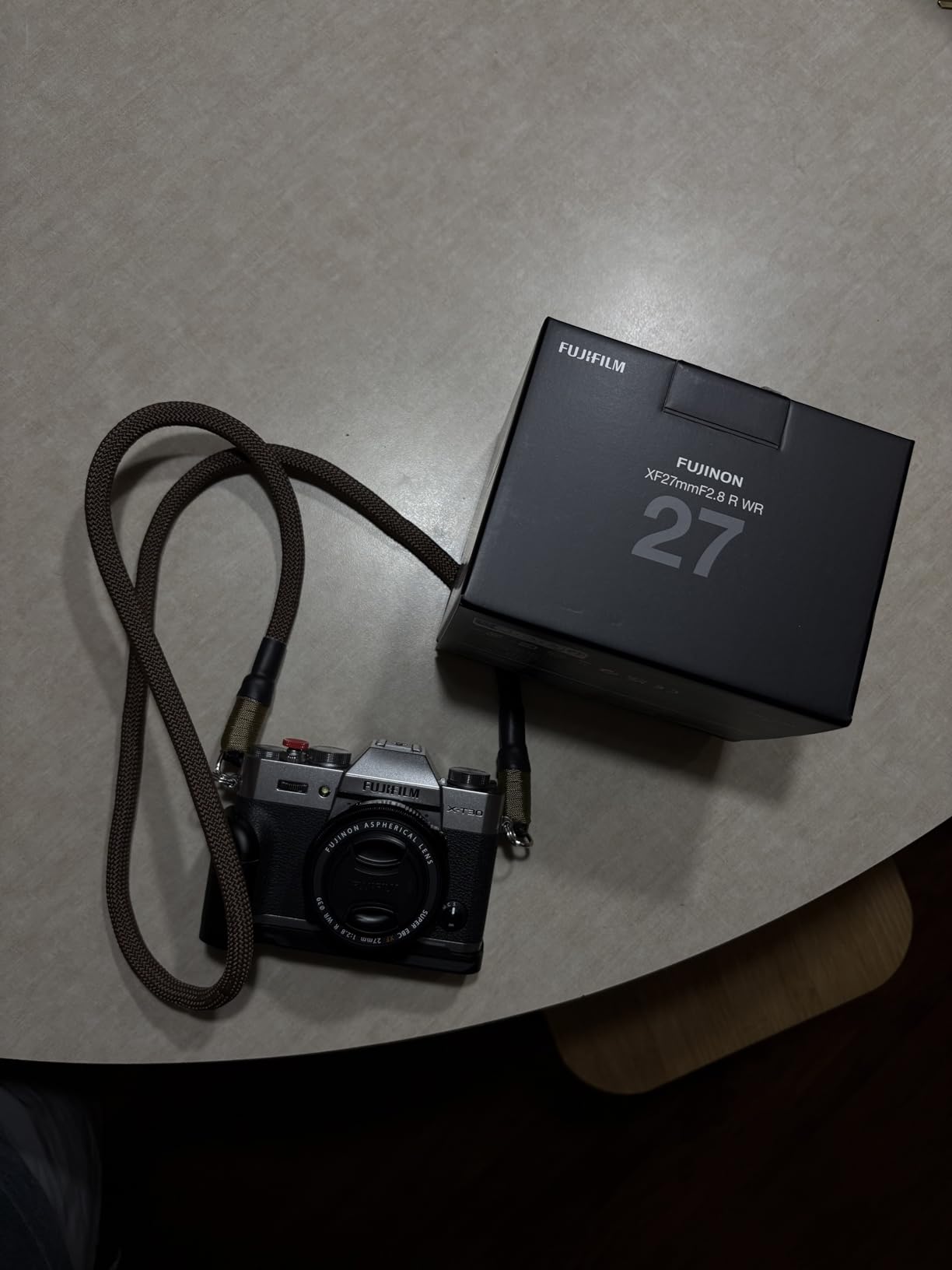
The weather-resistant construction is a standout feature at this price point. The lens is sealed against splashes and dust, and it is cold-proof to -10C. For travel photographers who shoot in unpredictable weather, this is a significant advantage over other pancake lenses.
The build quality is excellent. The metal exterior feels premium, and the aperture ring has a satisfying click. The autofocus is fast and silent for stills, though it can be slightly audible during video recording. There is no image stabilization, which is the main tradeoff for the compact size.
For Whom It Is Good
Fujifilm X-series shooters who want a pocketable everyday lens should buy this. It is perfect for street photography, travel documentation, and casual shooting. The compact size means you can carry it in a jacket pocket when you do not want to bring your full camera bag.
Travel photographers who prioritize discretion should also consider this lens. The small size does not attract attention, which is useful for street photography in busy cities. The quiet autofocus and silent operation also help with candid travel portraits.
For Whom It Is Bad
Skip this lens if you need zoom flexibility or fast aperture. The fixed 27mm focal length and f/2.8 aperture are limitations. For versatility, the Fujifilm XF 18-135mm f/3.5-5.6 R LM OIS WR or the Sigma 16-300mm covered earlier in this guide are better choices.
Also avoid it if you need image stabilization. The lack of optical stabilization means you need to use higher shutter speeds or ISO values in low light. For video work, the lack of stabilization can produce shaky footage. Pair it with a Fuji X body that has in-body stabilization like the X-T5 or X-H2 for better results.
How to Choose the Best Travel Lens for Your Camera
Choosing the right travel lens depends on three main factors: your camera system, the type of photography you shoot, and how much weight you want to carry. Let me walk you through the key decisions.
Zoom vs Prime Travel Lenses
Zoom lenses give you focal length flexibility, which is critical when you cannot get closer to your subject. Superzooms like the Sigma 16-300mm and Tamron 18-300mm cover everything from wide-angle to telephoto in one lens. Walkaround zooms like the Sony FE 24-70mm f/2.8 GM II offer faster apertures but smaller zoom ranges.
Prime lenses offer better image quality and faster apertures in smaller, lighter packages. The Canon RF 35mm f/1.8 and Fujinon XF 27mm f/2.8 are excellent examples. They are ideal for street photography and low-light situations, but you sacrifice zoom flexibility.
For most travel photographers, a walkaround zoom is the best balance of versatility and image quality. If you shoot mostly in cities, a fast prime is excellent. If you shoot wildlife or distant subjects, a superzoom is essential.
Focal Length Guide for Travel
Different focal lengths serve different travel photography scenarios:
16-35mm: Landscapes, architecture, indoor spaces, environmental context.
24-70mm: Street photography, general travel, versatile walkaround range.
70-200mm: Portraits, distant details, compressed perspectives, light wildlife.
200-400mm: Wildlife, sports, distant details, safari photography.
The 24-70mm range is the most versatile single focal length for travel, which is why the Sony FE 24-70mm f/2.8 GM II is our EDITOR’S CHOICE. For one-lens travel kits, superzooms like 28-400mm or 18-300mm cover the entire range.
Weight and Portability Considerations
Weight matters more than most photographers realize. A heavy lens that stays in your hotel room does not take pictures. Here is the weight comparison for our top picks:
Fujinon XF27mm F2.8 R WR: 84g (lightest)
Canon RF35mm F1.8 IS Macro STM: 305g
Sony FE 24-70mm F2.8 GM II: 695g
Tamron 18-300mm VXD: 635g
Nikon Z 28-400mm f/4-8 VR: 725g
Canon RF 24-240mm: 770g
Sigma 16-300mm: 635g
For minimalist travel, stay under 500g total lens weight. For all-day shooting comfort, stay under 800g. For professional image quality, accept 700-900g.
Aperture and Low Light Performance
Aperture determines how much light enters the lens. Faster apertures (smaller f-numbers like f/1.8 or f/2.8) let in more light, which is critical for indoor and night photography. Slower apertures (f/5.6 or f/6.3 and above) require more ISO or slower shutter speeds.
For travel photography, a minimum aperture of f/4 at the wide end and f/5.6 at the telephoto end is a good benchmark. The Sony FE 24-70mm f/2.8 GM II has constant f/2.8, which is ideal. The Canon RF 35mm f/1.8 is excellent for low-light street photography.
Image Stabilization
Image stabilization (IS, VR, VC, or OS depending on the brand) lets you shoot handheld at slower shutter speeds. Most modern travel lenses have optical stabilization that delivers 3-5 stops of compensation. This is critical for low-light handheld shots and telephoto reach.
Combined with in-body image stabilization (IBIS) in modern mirrorless cameras, you can often get 6-7 stops of total stabilization. The Nikon Z 28-400mm’s Synchro VR combines lens and in-body stabilization for up to 5.5 stops.
Weather Sealing for Travel
Weather sealing protects your lens from rain, dust, and humidity. Not all travel lenses are weather-sealed. The Canon RF 24-240mm is a notable exception, while the Tamron 18-300mm VXD and Sigma 16-300mm have moisture-resistant construction. For travel photography in unpredictable climates, weather sealing is a significant advantage.
Even without weather sealing, you can protect your lens with a rain cover or plastic bag. But built-in weather sealing is more convenient and reliable.
Frequently Asked Questions
What lenses are best for travel photography?
The best lenses for travel photography in 2026 are versatile, lightweight zooms that cover wide-angle to telephoto focal lengths. Our top picks include the Sony FE 24-70mm f/2.8 GM II for professional image quality, the Nikon Z 28-400mm f/4-8 VR for one-lens versatility, and the Canon RF 35mm f/1.8 IS Macro STM for budget travel. Superzooms like the Tamron 18-300mm and Sigma 16-300mm are also excellent for photographers who want maximum focal length range.
Is 35mm or 50mm better for travel?
35mm is generally better for travel photography than 50mm. A 35mm focal length (or its 23mm APS-C equivalent) provides a wider field of view that captures more of the scene, which is essential for travel documentation, street photography, and tight indoor spaces. 50mm is tighter and better suited for portraits or when you specifically want to isolate subjects. Most travel photographers prefer 35mm for its versatility and natural field of view.
What is the best focal length lens for travel photography?
The best focal length range for travel photography is 24-70mm on full-frame cameras (or 16-50mm on APS-C). This range covers wide-angle landscapes, standard street photography, and short telephoto portraits. For one-lens travel kits, superzooms like 28-400mm or 18-300mm provide maximum versatility. For minimalist travel, a fast 35mm prime (or 23mm on APS-C) offers excellent image quality and low-light performance.
What is the best camera for taking pictures while traveling?
The best camera for travel photography is one that balances image quality, portability, and versatility. Top choices include the Sony a7 IV (full-frame mirrorless), Canon EOS R6 Mark II, Nikon Z 6III, and Fujifilm X-T5 (APS-C with smaller lenses). For ultimate portability, the Sony a6700 and Fujifilm X-S20 are excellent. The best camera is the one you actually carry and use, so consider weight, size, and your preferred lens system before buying.
Final Verdict: Which Travel Lens Should You Buy in 2026?
After testing eight of the best camera lenses for travel photography across Canon RF, Sony E, Nikon Z, and Fujifilm X mounts, my recommendations come down to your priorities. For professional image quality and the best overall performance, the Sony FE 24-70mm F2.8 GM II remains our EDITOR’S CHOICE. For one-lens versatility that replaces an entire bag of lenses, the Nikon Z 28-400mm f/4-8 VR is unbeatable. For budget-friendly travel primes, the Canon RF 35mm f/1.8 IS Macro STM and Fujinon XF 27mm f/2.8 R WR offer incredible value.
My personal travel kit in 2026 includes the Nikon Z 28-400mm as my primary lens and a Nikon Z 35mm f/1.8 S for low-light situations. This two-lens combo weighs under 1.5kg and handles 95% of my travel photography scenarios. If you are curious about other travel gear, check out our guide to best Tamron lenses for travel photography and our travel camera backpack guide for more recommendations.
If you are debating whether to upgrade your camera body or your lenses first, our smartphone vs mirrorless comparison and budget Meike lens guide can help you decide. For food-specific travel photography, our phone camera lens guide covers smartphone options.
Whatever lens you choose, the best camera lens for travel photography is the one you actually carry with you. Even the most expensive lens does nothing sitting in a hotel room. Pick a lens that matches your style, keep it on your camera, and start shooting. The world is waiting.