
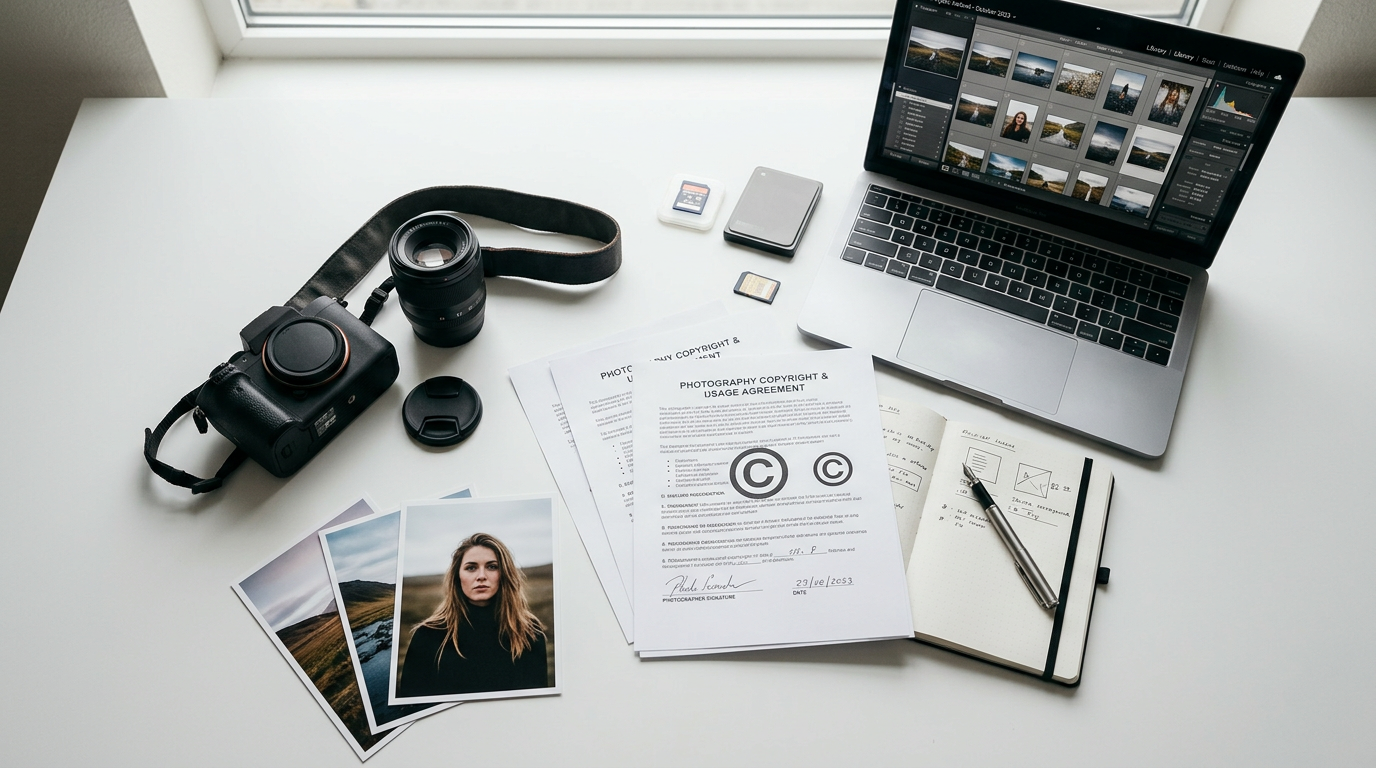
If you hire a photographer for your wedding, family portraits, or corporate headshots, you might assume that paying for the service means you own the resulting photos. This is one of the most common misconceptions in photography. The short answer: in most cases, the photographer owns the copyright to photos they take, not the client who paid for them.
Understanding who owns the copyright to photos the photographer or the client involves navigating intellectual property law. This matters because copyright ownership determines who can legally use, reproduce, sell, or modify the images. Whether you are a client wanting to know your rights or a photographer clarifying your position, this guide breaks down everything you need to know about photography copyright in 2026.
Table of Contents
- Quick Answer: Who Owns the Copyright to Photos
- Understanding Photography Copyright Basics
- Usage Rights vs Copyright: What Clients Actually Receive
- Exceptions: When the Client Owns Copyright Instead
- Common Photography Scenarios and Copyright Implications
- Model Releases and Privacy: Can a Photographer Post Your Photo
- Questions to Ask Your Photographer About Copyright
- Final Thoughts
Quick Answer: Who Owns the Copyright to Photos
By default, the photographer who presses the shutter button owns the copyright to the images they create. This happens automatically the moment the photo is captured. Payment for photography services does not transfer copyright ownership unless specifically agreed upon in a written contract.
Here is what you need to know:
- The photographer is the copyright owner unless a contract states otherwise
- Clients typically receive usage rights, not copyright ownership
- Work for hire agreements are the main exception to this rule
- Copyright transfer requires specific written language in a contract
Understanding Photography Copyright Basics
Copyright is a form of legal protection automatically granted to creators of original works, including photographs. When a photographer takes a picture, they immediately hold the exclusive right to control how that image is used, copied, distributed, and displayed.
What Copyright Actually Means
Copyright gives the creator several exclusive rights. These include the right to reproduce the work, create derivative works based on the original, distribute copies, publicly display the work, and license these rights to others. For photographers, this means they control who can print their photos, post them online, edit them, or use them commercially.
Think of it this way: when you buy a music album, you own the physical copy but not the songs themselves. The artist retains copyright. Photography works similarly. Paying for a photo session covers the service and any agreed-upon usage rights, but not the underlying intellectual property.
When Does Copyright Begin
Copyright protection begins the moment a photograph is created and fixed in a tangible form. For digital photography, this happens when the image is saved to the memory card. No registration is required for copyright to exist, though registering with the US Copyright Office provides additional legal benefits if infringement occurs.
The person who creates the work owns the copyright. In photography, the creator is the person who makes the creative decisions and presses the shutter. This remains true regardless of who owns the camera equipment or who pays for the session.
What Is Not Protected by Copyright
Not everything in photography qualifies for copyright protection. The three main categories not protected include ideas themselves (only the actual expression of ideas), facts and data, and works created by the US government. Additionally, simple shapes, common symbols, and blank forms generally cannot be copyrighted.
This matters because while a specific photograph is protected, the general concept or idea behind it is not. Another photographer can take a similar shot with similar composition, but they cannot directly copy your exact image.
Usage Rights vs Copyright: What Clients Actually Receive
Most clients do not need full copyright ownership. What they actually want and receive are usage rights through a licensing agreement. Understanding this distinction prevents confusion and sets proper expectations for both parties.
Types of Photography Licenses
A license grants permission to use photographs in specific ways without transferring copyright ownership. Licenses can be exclusive or non-exclusive, limited or unlimited, and can specify particular uses such as personal, commercial, or editorial.
Personal use licenses allow clients to print photos for their home, share on social media, and use for non-commercial purposes. This is what most wedding and family portrait clients receive.
Commercial use licenses permit using images for business purposes like advertising, marketing materials, and product packaging. These typically cost more because they generate revenue for the client.
Exclusive licenses mean the photographer agrees not to license the same images to anyone else. The client gets sole usage rights, which commands a premium price.
Non-exclusive licenses allow the photographer to license the same images to multiple parties. This is common in stock photography.
What a Print Release Covers
A print release is a specific type of usage permission that allows clients to make physical prints of their photos. This document typically specifies where images can be printed, in what quantities, and for what purposes. Most print releases are for personal use only and do not grant commercial rights.
Professional labs often require proof of a print release before reproducing professional photographs. This protects them from copyright infringement liability. Your photographer should provide this document along with your digital files.
Exceptions: When the Client Owns Copyright Instead
While the default rule gives photographers copyright ownership, several important exceptions exist. These typically involve employment relationships or specific contractual arrangements.
Work for Hire Agreements
A work for hire arrangement automatically transfers copyright to the client or employer. For this to apply, the agreement must be in writing and signed by both parties before the work begins. The contract must specifically state that the work is created as work for hire.
Work for hire is common in commercial photography, advertising campaigns, and corporate assignments. However, it requires precise legal language. Simply calling something work for hire is not enough. The agreement must meet specific legal requirements under copyright law.
Employee vs Independent Contractor
Employment status significantly impacts copyright ownership. When a photographer is an actual employee taking photos as part of their job duties, the employer automatically owns the copyright. This applies to staff photographers at newspapers, corporations, or studios.
Independent contractors, which includes most freelance photographers, retain copyright unless they sign a work for hire agreement or copyright transfer. The key distinction is control. Employees work under direct supervision with set hours and equipment provided. Independent contractors control their own methods and schedules.
Copyright Transfer and Assignment
Clients can purchase full copyright ownership through a copyright assignment or transfer. This must be done in writing and signed by the photographer. A copyright transfer permanently gives all rights to the client, meaning the original photographer can no longer use the images without permission.
Some photographers offer buyout options for an additional fee. This transfers complete ownership to the client. However, many photographers prefer retaining copyright because it allows them to use images in their portfolio, license them for other purposes, and maintain ongoing income from their work.
Common Photography Scenarios and Copyright Implications
Different types of photography come with different copyright expectations and industry standards. Here is how copyright typically works across common scenarios.
Wedding Photography: Photographers almost always retain copyright. Couples receive personal usage rights allowing them to print, share on social media, and create albums. Some photographers offer buyout options, but this typically costs significantly more than standard packages.
Corporate Headshots: Companies often negotiate broader usage rights or work for hire arrangements since they need images for websites, marketing, and internal communications. Contracts should clearly specify whether copyright transfers or remains with the photographer.
Real Estate Photography: Images are typically licensed for the duration of the listing. Once a property sells, the license expires. This protects photographers from having their work used indefinitely without additional compensation.
Family Portraits: Similar to wedding photography, photographers retain copyright while granting families personal usage rights. Most contracts allow sharing on social media and printing for personal display.
Commercial Product Photography: Businesses usually require either work for hire arrangements or exclusive commercial licenses. Copyright ownership is more commonly transferred in this context due to the commercial nature of the work.
Model Releases and Privacy: Can a Photographer Post Your Photo
Copyright and privacy rights are separate legal concepts. Even though photographers own copyright to images they create, they cannot necessarily use photos of people for any purpose. Model releases govern how a person’s likeness can be used commercially.
A model release is a signed document giving permission to use someone’s image for specific purposes. Without a model release, photographers face restrictions on commercial use of photos featuring recognizable individuals. Editorial use, such as news reporting, generally does not require releases.
When Photographers Need Model Releases
Photographers need model releases when using images for advertising, marketing, portfolio promotion, stock photography sales, or any commercial purpose. Simply having copyright does not override a person’s right to control commercial use of their likeness.
Most professional photography contracts include model release clauses. This allows photographers to use client photos in their portfolio, website, and social media. However, clients can negotiate limitations on this usage, and some photographers offer privacy add-ons that restrict promotional use.
Social Media Considerations
Social media creates unique copyright and privacy challenges. When clients share photos on platforms like Instagram or Facebook, those platforms receive broad usage rights through their terms of service. However, this does not transfer copyright ownership away from the photographer.
Clients should check their contracts before posting. Most personal use licenses include social media sharing. However, commercial accounts or promotional posts may require different licensing. Tagging photographers and giving credit is professional courtesy but does not substitute for proper licensing.
Questions to Ask Your Photographer About Copyright
Before booking a photography session, clarify copyright and usage terms. Here are essential questions to ask:
- Do you retain copyright, or will it be transferred to me?
- What usage rights are included in my package?
- Can I print the photos anywhere, or do I need to order through you?
- Am I allowed to share photos on social media?
- Can I edit or filter the images myself?
- Will you use my photos for portfolio or promotional purposes?
- Can I purchase full copyright if needed?
- What happens if a third party wants to use the photos?
Getting these answers in writing protects both parties. A clear contract prevents misunderstandings and ensures everyone knows their rights and obligations.
Who owns the picture, photographer or client?
By default, the photographer owns the copyright to pictures they take. This occurs automatically when the image is created. The client who pays for photography services receives usage rights through a license but does not automatically own the copyright unless a written contract specifically transfers it.
Do photographers own the rights to their photos?
Yes, photographers own the copyright to their photos unless they sign an agreement transferring those rights. This includes the right to reproduce, distribute, display, and create derivative works from the images. Payment for photography services covers the session and agreed usage rights, not copyright ownership.
What are the three things not protected by copyright?
The three main categories not protected by copyright are: 1) Ideas themselves, only their specific expression is protected, 2) Facts and data, which cannot be owned, and 3) Works created by the US government, which are automatically in the public domain. Simple shapes and common symbols also generally lack copyright protection.
Can a photographer post your photo without permission?
Whether a photographer can post your photo depends on context. For editorial or artistic purposes, they generally can. However, for commercial use like advertising or selling images as stock photography, they typically need a signed model release. Most photography contracts include clauses allowing portfolio and social media use, but clients can negotiate restrictions.
Final Thoughts
Understanding who owns the copyright to photos the photographer or the client comes down to one fundamental principle: copyright belongs to the creator unless specifically transferred in writing. For most clients, this means receiving usage rights rather than full ownership. This arrangement actually benefits both parties when communicated clearly.
Always get copyright and usage terms in writing before your photography session. Whether you need simple personal use rights or full copyright transfer, a clear contract prevents misunderstandings and protects everyone involved. For complex situations or commercial projects, consider consulting an intellectual property attorney to ensure your interests are properly protected.