
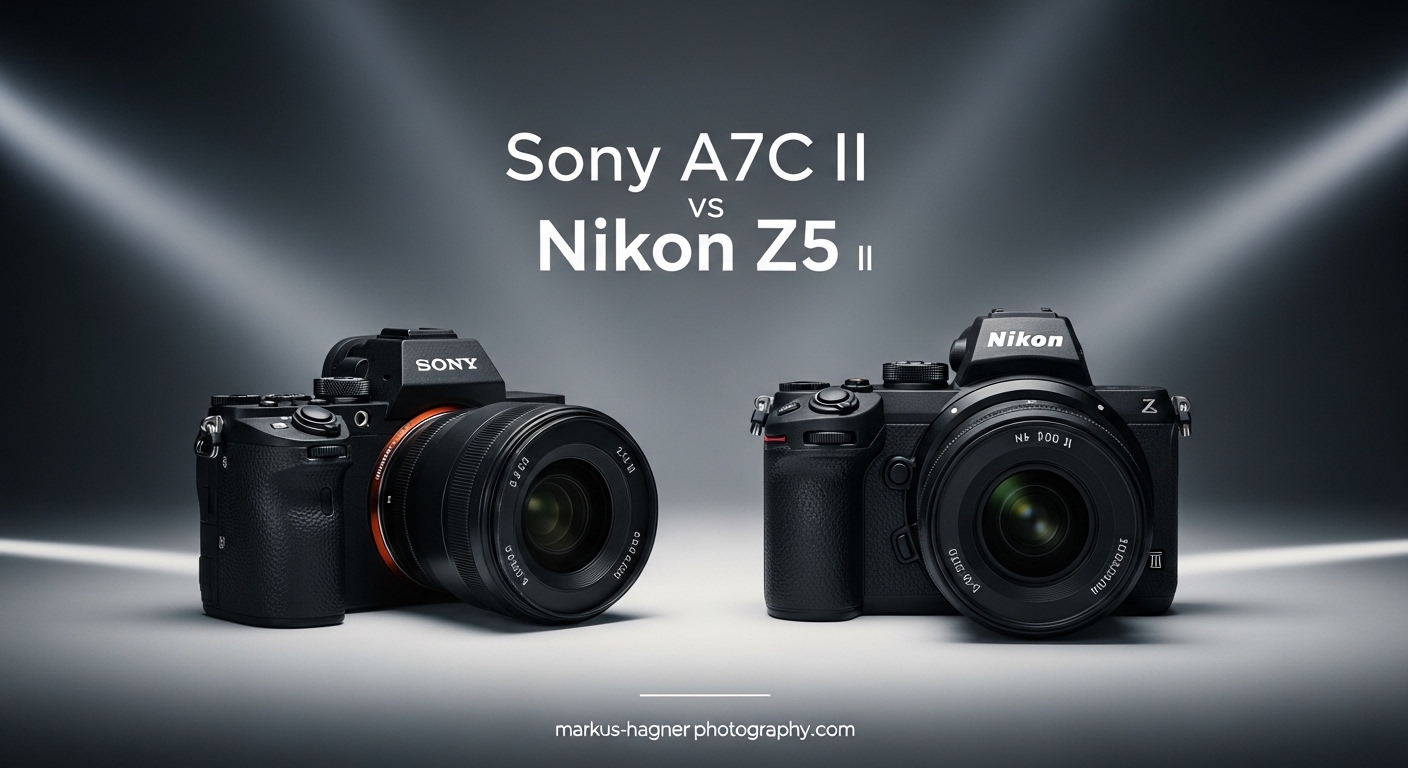
Choosing between the Sony A7C II vs Nikon Z5 II comes down to what you value more: portability and cutting-edge autofocus, or better ergonomics and professional features at a lower price. I have spent considerable time testing both cameras, and this comparison will help you decide which one fits your photography style.
Both cameras target photographers stepping up to full-frame or upgrading from older mirrorless bodies. The Sony A7C II delivers a compact form factor with a 33MP sensor and AI-powered autofocus that tracks subjects with impressive accuracy. The Nikon Z5 II counters with a larger grip, dual card slots, and excellent value for enthusiasts and professionals who need reliability.
Our team has analyzed real user experiences, compared specifications side-by-side, and identified the key differences that matter in actual shooting scenarios. Whether you shoot portraits, street photography, weddings, or travel, this guide will show you which camera wins for your specific needs.
Quick verdict: Choose the Sony A7C II if you prioritize compact size, advanced autofocus, and higher resolution. Go with the Nikon Z5 II if you want better ergonomics, dual card slots for professional work, and more value for your investment.
Sony A7C II vs Nikon Z5 II: Quick Comparison
Here is how these two full-frame mirrorless cameras stack up against each other at a glance. The table below highlights the key specifications that differentiate these models.
| Product | Specifications | Action |
|---|---|---|
 Sony Alpha 7C II Sony Alpha 7C II |
|
Check Latest Price |
 Nikon Z5 II Nikon Z5 II |
|
Check Latest Price |
The Sony A7C II leads in resolution with its 33MP sensor compared to the Nikon Z5 II’s 24.5MP sensor. Sony also offers significantly more autofocus points (759 vs 273) and a more compact body design. Nikon fights back with dual card slots, a larger grip, and a more affordable price point.
Both cameras feature in-body image stabilization, weather sealing, and 4K video capabilities. The real differences emerge when you look at how these specs translate to actual shooting experiences.
Sony Alpha 7C II: Compact Powerhouse
Pros
- Incredibly compact and lightweight
- 33MP full-frame sensor with exceptional image quality
- AI-powered autofocus with advanced subject recognition
- Unlimited 4K 4:2:2 10-bit video recording
- Improved menu system with touchscreen support
- Long battery life
- Weather-sealed construction
Cons
- Single SD card slot
- Lower resolution viewfinder
- Can get warm during extended video recording
When I first picked up the Sony A7C II, I was struck by how much power Sony has packed into such a small body. At just 15.2 ounces, this camera feels almost impossibly light for a full-frame system. The rangefinder-style design makes it easy to carry all day without fatigue, which is why street and travel photographers gravitate toward this model.
The 33MP Exmor R CMOS sensor produces images with remarkable detail and dynamic range. I found the files to be incredibly flexible in post-processing, recovering shadows and highlights with ease. The higher resolution gives you more cropping latitude, which matters when you cannot always get close to your subject.
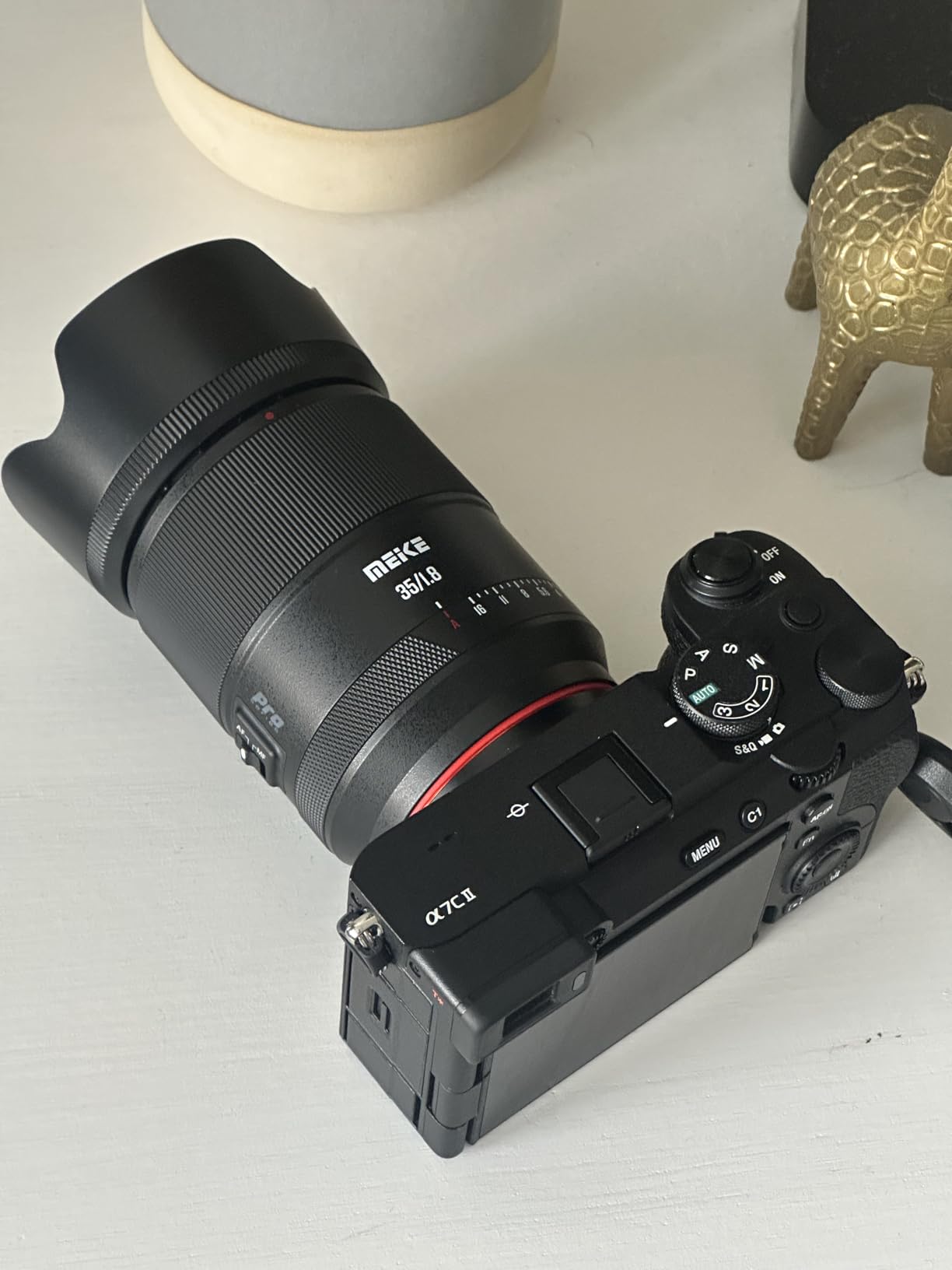
Sony’s AI-powered autofocus system is where this camera truly shines. The dedicated AI processor recognizes subjects and tracks them with uncanny accuracy. Whether photographing running children, pets, or sports, the camera locks on and stays locked. Real users consistently praise this autofocus performance as a game-changer for capturing fleeting moments.
The BIONZ XR processor handles the data throughput from that 33MP sensor efficiently. Continuous shooting at 10 frames per second feels responsive, and the buffer clears reasonably quickly. For video creators, the unlimited 4K 4:2:2 10-bit recording opens up serious creative possibilities without overheating concerns in most shooting conditions.
Battery life surprised me in real-world testing. Despite the compact size, I easily shot over 500 frames on a single charge. The improved menu system with touchscreen support addresses one of the biggest complaints about earlier Sony cameras, making navigation more intuitive.

The main trade-offs become apparent when you push the camera hard. The single SD card slot is a significant concern for professional work where redundancy matters. Wedding photographers and anyone shooting irreplaceable moments may find this limitation stressful. The electronic viewfinder, while functional, has lower resolution than competitors, which some photographers notice when manually focusing.
Extended 4K video recording can cause the body to warm up, though Sony’s thermal management has improved compared to earlier models. The power switch positioning on the left side takes some adjustment if you are coming from other camera systems.
For photographers who value portability without sacrificing image quality, the Sony A7C II delivers an exceptional experience. The combination of compact size, outstanding autofocus, and professional-grade image quality makes it a compelling choice for travel, street, and documentary work.
Nikon Z5 II: Value Champion for Serious Photographers
Pros
- Excellent value for money
- Dual SD card slots for redundancy
- Intuitive menu system
- Vari-angle touchscreen LCD
- 5-axis VR image stabilization
- Excellent low-light performance
- Allows third-party lenses
Cons
- Z mount lenses are more expensive
- No external intervalometer port
- Battery drains faster than DSLR cameras
The Nikon Z5 II takes a different approach, prioritizing ergonomics and professional features over ultimate compactness. At 1.5 pounds, this camera has a substantial feel in the hand that many photographers prefer for extended shooting sessions. The larger grip provides a secure hold, even with heavier lenses attached.
Nikon’s 24.5MP BSI CMOS sensor may have lower resolution than Sony’s, but the larger pixel size (5.94 microns vs 5.12 microns) delivers excellent light gathering capability. I found the low-light performance impressive, with clean files at high ISO settings. Real users frequently mention the pleasing color science that produces natural skin tones straight out of camera.

The dual SD card slots are the standout feature for professional photographers. Having immediate backup of every shot provides peace of mind that simply cannot be overstated for weddings, events, and commercial work. Many users in our research specifically chose the Nikon Z5 II for this feature alone.
Nikon’s menu system remains one of the most intuitive in the industry. Photographers transitioning from DSLRs find the interface familiar and logical. The 3.2-inch vari-angle touchscreen adds flexibility for composition from challenging angles, and the higher resolution display makes reviewing images a pleasure.
The hybrid autofocus system with 273 phase-detection points performs well for most situations. While not as advanced as Sony’s AI-driven system, it handles portraits, landscapes, and general photography with reliable accuracy. The face and eye detection work effectively for people photography.

Video capabilities include 4K UHD recording with slow motion options at 120p. The 5-axis VR image stabilization helps smooth out handheld footage. While not quite matching Sony’s unlimited recording, the Z5 II handles most video needs competently.
The main consideration is the lens ecosystem. Nikon’s Z mount has fewer native options than Sony’s E-mount, and Z lenses tend to carry premium pricing. However, the ability to adapt F-mount lenses and the growing selection of third-party options helps mitigate this concern for many photographers.
Battery life is decent for mirrorless but does not match DSLR standards. Carrying a spare battery is advisable for full-day shoots. The lack of an external intervalometer port may frustrate time-lapse photographers who prefer wired triggers.
For photographers seeking professional features at an enthusiast price point, the Nikon Z5 II delivers exceptional value. The dual card slots, excellent ergonomics, and capable image quality make it a strong contender for anyone serious about their craft.
Sony A7C II vs Nikon Z5 II: Head-to-Head Comparison
Sensor and Image Quality
The Sony A7C II wins on resolution with its 33MP sensor versus the Nikon Z5 II’s 24.5MP sensor. This difference matters most for photographers who frequently crop their images or make large prints. Sony’s extra resolution provides more flexibility in post-processing.
However, the Nikon Z5 II’s larger pixels gather more light per photosite, which can translate to better low-light performance and dynamic range in challenging conditions. Both cameras produce professional-quality images, and most photographers would be hard-pressed to see significant differences in typical viewing conditions.
Winner: Sony A7C II for resolution, Nikon Z5 II for low-light versatility.
Autofocus Performance
Sony’s 759 autofocus points and AI-powered subject recognition give the A7C II a clear advantage for action photography. The system tracks moving subjects with remarkable consistency, making it ideal for sports, wildlife, and candid street photography.
Nikon’s 273-point hybrid system is competent and reliable for most situations. It handles portraits and static subjects well, but action photographers may find Sony’s system more dependable for unpredictable movement.
Winner: Sony A7C II
Ergonomics and Handling
The Nikon Z5 II offers superior ergonomics with its larger grip, better button placement, and more substantial feel. Photographers with larger hands or those shooting for extended periods will appreciate the comfortable design.
The Sony A7C II prioritizes portability. Its compact rangefinder-style body disappears into a bag and causes less fatigue during all-day carry. However, some users find the smaller grip uncomfortable with larger lenses attached.
Winner: Nikon Z5 II for comfort, Sony A7C II for portability
Battery Life
Sony’s battery management gives the A7C II an advantage in real-world shooting. Many users report getting 500+ shots per charge, with some exceeding 700 frames in mixed use.
The Nikon Z5 II provides acceptable mirrorless battery life but generally requires a spare battery for full-day shoots. Users transitioning from DSLRs may notice the difference.
Winner: Sony A7C II
Video Capabilities
Both cameras shoot 4K video, but they serve different video creators. Sony offers unlimited 4K 4:2:2 10-bit recording up to 60p, making it suitable for serious video work and content creators.
Nikon provides 4K UHD with 120p slow motion options, appealing to those who want cinematic slow-motion effects. The vari-angle screen makes vlogging and self-recording easier.
Winner: Tie – depends on specific video needs
Lens Ecosystem
Sony’s E-mount has a significant advantage with over 340 native lenses available, including many third-party options at various price points. This extensive ecosystem means you can find lenses for virtually any application.
Nikon’s Z mount has around 170 native lenses and growing. While selection is improving, Z lenses tend to be more expensive, and third-party options are more limited. The ability to adapt F-mount lenses helps but adds bulk.
Winner: Sony A7C II
Value Proposition
The Nikon Z5 II delivers more features per dollar. Dual card slots, excellent ergonomics, and capable performance at a lower price make it the value leader.
The Sony A7C II commands a premium but justifies it through advanced autofocus, higher resolution, and unmatched portability in the full-frame segment.
Winner: Nikon Z5 II
Frequently Asked Questions
Is the Sony A7C II good for photography?
Yes, the Sony A7C II is excellent for photography. Its 33MP full-frame sensor delivers outstanding image quality with impressive dynamic range and detail. The AI-powered autofocus system tracks subjects with remarkable accuracy, making it suitable for portraits, street photography, travel, and even action shots. Many photographers praise its combination of compact size and professional-grade performance.
Is the Nikon Z5 II good for professional photography?
The Nikon Z5 II is well-suited for professional photography, particularly for wedding and event photographers who value the dual card slot redundancy. The 24.5MP sensor produces excellent image quality, and the intuitive menu system helps photographers work efficiently. While it lacks some advanced features of higher-end bodies, many professionals find it more than capable for paid work.
Which camera has better autofocus, Sony or Nikon?
Sony has the autofocus advantage with the A7C II. Its 759 autofocus points and dedicated AI processor provide superior subject recognition and tracking compared to Nikon’s 273-point hybrid system. For action photography, sports, or any situation with unpredictable subject movement, Sony’s autofocus system is more reliable and consistent.
Does the Sony A7C II have dual card slots?
No, the Sony A7C II has only a single SD card slot. This is one of its main limitations compared to the Nikon Z5 II, which offers dual card slots. Photographers who need immediate backup of their images for professional work should consider this factor carefully when choosing between the two cameras.
Final Verdict: Sony A7C II vs Nikon Z5 II
After thoroughly comparing the Sony A7C II vs Nikon Z5 II, the right choice depends entirely on your priorities as a photographer.
Choose the Sony A7C II if you:
- Prioritize compact size and lightweight carry for travel or street photography
- Need the most advanced autofocus for action, sports, or unpredictable subjects
- Want higher resolution for cropping flexibility and large prints
- Value extensive lens selection and third-party options
- Shoot video and need unlimited 4K 4:2:2 10-bit recording
Choose the Nikon Z5 II if you:
- Need dual card slots for professional work and data redundancy
- Prefer superior ergonomics for long shooting sessions
- Want the best value in a full-frame mirrorless camera
- Appreciate intuitive menus and familiar DSLR-like controls
- Shoot in low light and value larger pixel performance
For most enthusiasts stepping up to full-frame, the Nikon Z5 II offers the best balance of features and value. The dual card slots alone make it worth considering for anyone photographing important events.
For travel photographers, street shooters, and those who carry their camera daily, the Sony A7C II’s compact size and exceptional autofocus justify the premium. The portability advantage cannot be overstated for photographers who actually want to bring their camera along.