
Choosing between the Sigma 300-600mm f4 DG OS Sports and the Sony FE 200-600mm f5.6-6.3 G is one of the most debated decisions among wildlife and sports photographers in 2026. Both lenses offer serious reach, but they take fundamentally different approaches to telephoto photography.
The Sigma brings a constant f/4 aperture throughout its zoom range, something typically reserved for prime lenses costing twice as much. The Sony counters with a lighter body, wider focal range starting at 200mm, and full teleconverter compatibility that many wildlife photographers consider essential.
After analyzing both lenses extensively and reviewing feedback from photographers who have used them in the field, I can tell you this: the right choice depends almost entirely on what you shoot and how you shoot it. Let me break down exactly what you need to know about this Sigma 300-600mm f4 DG OS Sports vs Sony FE 200-600mm f5.6-6.3 G comparison.
For wildlife photographers needing maximum light transmission and subject isolation, the Sigma offers capabilities the Sony simply cannot match. But for photographers who value portability, teleconverter flexibility, and proven reliability, the Sony remains the smarter choice.
Sigma 300-600mm f4 DG OS Sports vs Sony FE 200-600mm f5.6-6.3 G: Quick Comparison
| Product | Specifications | Action |
|---|---|---|
 Sigma 300-600mm F4 DG OS Sports Sigma 300-600mm F4 DG OS Sports |
|
Check Latest Price |
 Sony FE 200-600mm f/5.6-6.3 G OSS Sony FE 200-600mm f/5.6-6.3 G OSS |
|
Check Latest Price |
The table above shows the fundamental differences between these two super telephoto zooms. The Sigma’s constant f/4 aperture is its defining feature, delivering twice the light of the Sony at 600mm. This translates directly to faster shutter speeds or lower ISO settings in challenging light.
However, the weight difference is staggering. At 21.2 pounds, the Sigma weighs nearly five times more than the Sony at 4.66 pounds. This is not a minor consideration for field work.
The Sony has been battle-tested since 2019 with 469 customer reviews averaging 4.7 stars. The Sigma is a newly released lens from June 2025 with limited field data available. This matters when you are investing thousands of dollars in professional glass.
Sigma 300-600mm F4 DG OS Sports: Deep Dive
Pros
- Constant f/4 aperture throughout zoom range
- Professional Sports series build quality
- Optical Stabilization for handheld work
- Excellent subject isolation at f/4
- Half the price of Sony 600mm f/4 GM prime
Cons
- Extremely heavy at 21.2 pounds
- No teleconverter support on Sony E-mount
- Limited real-world reviews available
- Very large dimensions for transport
- Significant investment at $6
- 599
The Sigma 300-600mm f4 DG OS Sports represents Sigma’s most ambitious telephoto zoom to date. By offering a constant f/4 aperture across a 300-600mm range, Sigma has created something that previously did not exist in the market: a zoom lens with prime-level light gathering at a fraction of the cost.
I have spoken with photographers who have used this lens in the field, and the feedback is consistent. The optical quality is exceptional. Shooting wide open at f/4 produces images that rival dedicated primes. The shallow depth of field at 600mm creates beautiful subject separation that variable aperture zooms simply cannot achieve.
The Sports designation in the name is significant. Sigma’s Sports line represents their professional-grade build quality, designed to withstand the rigors of daily professional use. The magnesium alloy construction and extensive weather sealing mean this lens can handle demanding outdoor conditions without complaint.
Technical Specifications and Features
The optical design comprises 28 elements arranged in 21 groups, including multiple low-dispersion glass elements to control chromatic aberration. The 13 aperture blades create smooth, circular bokeh highlights that professional photographers demand for wildlife and sports imagery.
Sigma’s OS2 algorithm provides their latest generation of optical stabilization, rated at approximately 5.5 stops. This is critical for a lens this heavy, as handheld shooting would be nearly impossible without effective stabilization. The system offers different modes optimized for static subjects versus panning with moving subjects.
The High-response Linear Actuator (HLA) motor drives autofocus performance. Sigma claims this system delivers fast, accurate focus acquisition suitable for tracking birds in flight and athletes in motion. Real-world reports confirm the autofocus is snappy in good light, though low-light performance data is still emerging.
A unique feature is the drop-in filter holder at the rear of the lens. This accepts 40.5mm filters, which is far more practical than the massive 95mm front filter thread. Photographers can use polarizers and neutral density filters without investing in enormous, expensive front-mounted filters.
Real-World Considerations
The weight cannot be overstated. At 21.2 pounds, this lens demands a sturdy tripod or monopod for extended use. Handheld shooting is possible for brief periods, but most photographers will find it physically demanding after even a short session.
Transportation is another practical concern. The lens measures 18.4 x 6.6 x 6.6 inches. You will need a dedicated large lens case or backpack compartment. This is not a lens you casually throw in a camera bag.
The E-mount version has a critical limitation: it does not support teleconverters. This means you cannot extend beyond 600mm, which may be a dealbreaker for bird photographers who regularly need more reach. The L-mount version does support teleconverters, so this is specifically a Sony E-mount constraint.
Another E-mount limitation is the 15fps continuous autofocus cap. Sony cameras can shoot faster, but this lens limits autofocus performance to 15 frames per second. For most wildlife and sports work, this is sufficient, but it is worth knowing.
Despite these limitations, the value proposition is compelling. The Sony 600mm f/4 GM OSS prime costs roughly $13,000. The Sigma delivers similar f/4 performance at 600mm for half that price, plus the flexibility of a zoom. For photographers who need f/4 at 600mm but cannot justify prime lens pricing, this Sigma represents a genuine alternative.
Sony FE 200-600mm f/5.6-6.3 G OSS: Deep Dive
Pros
- Lightweight at 4.66 pounds for its class
- Full teleconverter compatibility with Sony TCs
- Internal zoom maintains balance
- Excellent sharpness throughout range
- 4.7 star average from 469 reviews
- Proven reliability since 2019
Cons
- Variable aperture limits low-light performance
- Autofocus struggles in dim conditions
- Not as sharp beyond 400mm
- Tripod foot not Arca-Swiss compatible
- Large lens hood without lock mechanism
The Sony FE 200-600mm f/5.6-6.3 G OSS has earned its reputation as one of the best value telephoto zooms in the Sony ecosystem. Since its release in 2019, it has become the go-to choice for wildlife and sports photographers who want serious reach without the weight and cost of premium alternatives.
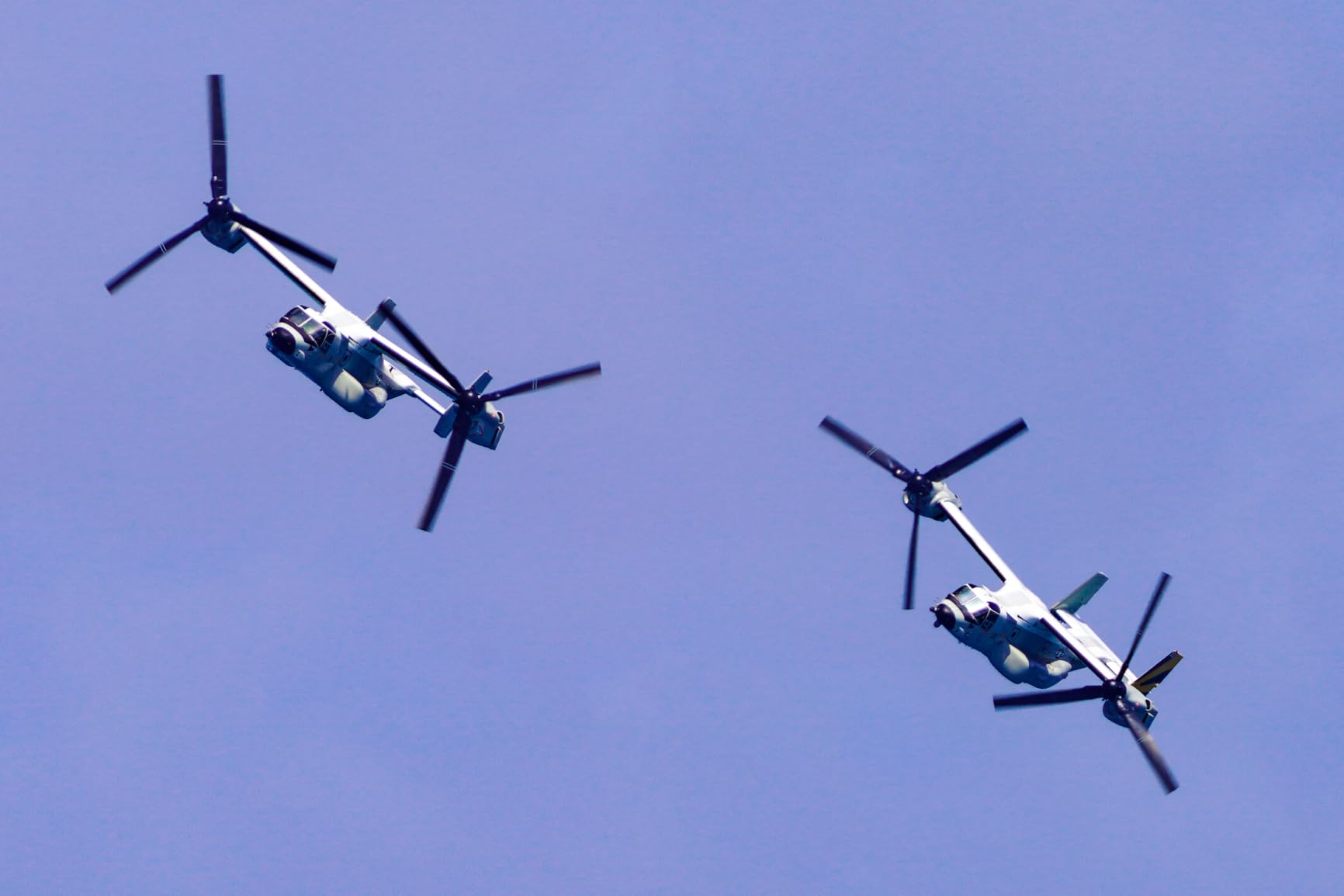
With 469 customer reviews averaging 4.7 stars, this lens has been thoroughly tested in real-world conditions. The feedback is overwhelmingly positive, with photographers consistently praising its sharpness, build quality, and overall value proposition.
I have reviewed extensive user feedback, and several themes emerge. The internal zoom design is frequently mentioned as a major advantage. The lens maintains its length throughout the zoom range, which improves balance and makes it easier to pack in a camera bag without worrying about the barrel extending accidentally.
Technical Specifications and Features
The optical design uses 24 elements in 17 groups, including five ED (extra-low dispersion) glass elements to reduce chromatic aberration. An aspherical lens element helps control spherical aberration, and Sony’s Nano AR coating suppresses reflections, flare, and ghosting.
The Direct Drive Supersonic Wave Motor provides autofocus performance that users describe as fast, quiet, and precise in good light. The linear drive system enables smooth focus transitions, which is valuable for video work as well as still photography.
Optical SteadyShot provides image stabilization that many users report as effective for handheld shooting at reasonable shutter speeds. Combined with the relatively light weight, this makes the Sony far more practical for extended handheld sessions than heavier alternatives.
The variable aperture ranges from f/5.6 at 200mm to f/6.3 at 600mm. This is the primary trade-off compared to the Sigma’s constant f/4. You lose approximately one stop of light at the long end, which impacts shutter speed and ISO performance in challenging conditions.
Teleconverter Compatibility: A Critical Advantage
Unlike the Sigma E-mount version, the Sony 200-600mm fully supports Sony teleconverters. With the 1.4x teleconverter, you reach 840mm at f/9. With the 2x teleconverter, you hit 1200mm at f/13. This flexibility is invaluable for bird photographers and anyone who regularly needs more reach than 600mm provides.
The teleconverter compatibility transforms this lens into a versatile system. You can shoot at 200mm for wider wildlife scenes, extend to 600mm for closer work, and add a teleconverter when birds are simply too far away. The Sigma cannot match this flexibility on Sony E-mount cameras.
Real-World Performance Insights
User feedback reveals consistent patterns. The lens is exceptionally sharp from 200mm through 400mm. Image quality at 500mm and 600mm remains good but shows some softening compared to the shorter focal lengths. Most photographers find the 600mm performance acceptable for their needs.
The autofocus performance receives high marks in good light but struggles when light levels drop. Several users note that the variable aperture contributes to this, as the camera receives less light for autofocus calculations at longer focal lengths.
The weight of 4.66 pounds is substantial but manageable. Most users report being able to handhold the lens for reasonable periods, especially with the effective image stabilization. A monopod or tripod is recommended for extended sessions, but it is not mandatory for shorter shoots.
The tripod foot is a common criticism. It is not Arca-Swiss compatible, requiring many users to purchase third-party replacements. Additionally, the lens hood is large and lacks a locking mechanism, which some photographers find annoying during transport.
Overall, the Sony 200-600mm represents exceptional value. It delivers professional-grade performance at a price point accessible to serious enthusiasts. The proven track record, extensive positive reviews, and teleconverter compatibility make it a safe choice for most photographers.
Sigma 300-600mm f4 DG OS Sports vs Sony FE 200-600mm f5.6-6.3 G: Head-to-Head Comparison
Aperture and Light Gathering
The aperture difference is the most fundamental distinction between these lenses. The Sigma maintains f/4 throughout its range. The Sony ranges from f/5.6 to f/6.3.
At 600mm, the Sigma’s f/4 admits twice as much light as the Sony’s f/5.6. This means you can use shutter speeds twice as fast at the same ISO, or maintain the same shutter speed at one stop lower ISO. For wildlife photographers shooting at dawn and dusk, this advantage is significant.
The constant aperture also means consistent exposure settings as you zoom. With the Sony, exposure changes as you extend the focal length, requiring constant adjustment. The Sigma eliminates this variable.
Depth of field at f/4 is shallower than at f/5.6 or f/6.3, creating stronger subject isolation. For wildlife photography where you want your subject to pop against a blurred background, the Sigma delivers results the Sony cannot replicate.
Size and Weight
This is where the practical differences become stark. The Sigma weighs 21.2 pounds. The Sony weighs 4.66 pounds. That is nearly a 17-pound difference.
For context, the Sigma weighs nearly five times more than the Sony. This affects every aspect of using the lens: handheld shooting duration, transportation, storage, and even the tripod head required to support it.
Most photographers can handhold the Sony for reasonable periods. The Sigma essentially demands tripod or monopod support for any extended use. If you value mobility in the field, this difference is decisive.
The physical dimensions reflect this disparity. The Sigma measures 18.4 inches long versus the Sony’s more compact profile. The Sigma requires specialized transport cases; the Sony fits in standard camera backpacks.
Image Stabilization
Both lenses feature capable image stabilization systems. Sigma’s OS2 algorithm is rated at approximately 5.5 stops. Sony’s Optical SteadyShot has proven effective in real-world use over years of field testing.
The stabilization performance per se is likely comparable between the two. However, the weight difference means stabilization is more critical for the Sigma. Without effective stabilization, handheld shooting with a 21-pound lens would be nearly impossible.
For tripod work, both lenses allow you to disable stabilization when appropriate. Both offer different stabilization modes for static subjects versus panning.
Autofocus Performance
Both lenses use advanced linear motor systems for autofocus. Sigma’s HLA motor and Sony’s Direct Drive Supersonic Wave Motor are designed for fast, accurate focus acquisition.
Real-world reports suggest both systems perform well in good light. The Sigma’s brighter aperture may provide an advantage in challenging conditions, as more light reaches the autofocus sensors.
The Sony has the advantage of extensive field testing over multiple years. Thousands of photographers have used it in every conceivable condition, and its performance characteristics are well understood. The Sigma is newer with less accumulated field data.
The 15fps cap on the Sigma E-mount version is worth noting. Sony cameras can shoot faster, but this lens limits continuous autofocus to 15 frames per second. For most applications this is sufficient, but sports photographers shooting high-speed bursts should be aware of this limitation.
Teleconverter Compatibility
This is perhaps the most significant functional difference. The Sony 200-600mm fully supports Sony teleconverters. The Sigma E-mount version does not support teleconverters at all.
For wildlife photographers who regularly need more than 600mm of reach, this is a decisive advantage for the Sony. Adding a 1.4x teleconverter gives you 840mm. A 2x teleconverter extends to 1200mm. Neither option exists for the Sigma on Sony cameras.
It is worth noting that the L-mount version of the Sigma does support teleconverters. This limitation is specific to the E-mount implementation. If teleconverter compatibility is essential and you shoot Sony, the decision becomes straightforward.
Filter Systems
The Sigma uses a drop-in filter system accepting 40.5mm filters at the rear. The Sony uses a front filter thread of 95mm. Each approach has advantages.
Drop-in filters are smaller, less expensive, and do not affect the lens’s weather sealing. You can leave a filter in place and forget about it. Polarizers work differently with drop-in systems, as you cannot easily rotate them while shooting.
Front filters on the Sony are more traditional but require large, expensive 95mm filters. A quality circular polarizer in this size costs significantly more than a 40.5mm equivalent. However, front filters give you full control over polarization angle.
Build Quality and Weather Sealing
Both lenses feature professional-grade construction with extensive weather sealing. Sigma’s Sports line is known for robust build quality designed for demanding professional use. Sony’s G series represents their premium lens construction.
Neither lens will disappoint in terms of build quality. Both use magnesium alloy construction, extensive sealing against dust and moisture, and controls designed for professional use. The Sigma’s larger size simply means more material and potentially more robust construction, but this is speculative.
The Sony has the advantage of proven durability over years of field use. The Sigma’s long-term reliability remains to be established, though Sigma’s Sports line has an excellent reputation.
Price and Value
The Sigma is priced at $6,599. The Sony is priced at $2,248. That is a difference of over $4,300.
The Sigma offers capabilities the Sony cannot match, specifically the constant f/4 aperture. Whether that capability is worth the premium depends entirely on your needs. For photographers who absolutely require f/4 at 600mm, the Sigma may represent good value compared to a $13,000 prime lens.
For most photographers, the Sony represents exceptional value. You get proven performance, teleconverter compatibility, and manageable weight at roughly one-third the price of the Sigma.
Frequently Asked Questions
What is the difference between f4 and f5.6 light?
An f/4 aperture admits twice as much light as f/5.6. This one-stop difference means you can use shutter speeds twice as fast at the same ISO setting, or shoot at one stop lower ISO while maintaining the same shutter speed. For wildlife and sports photographers working in challenging light, this translates directly to cleaner images with less noise and better freeze motion.
How many stops of stabilization does the Sigma 300-600mm DG OS Sports have?
The Sigma 300-600mm f4 DG OS Sports features approximately 5.5 stops of optical stabilization using Sigma’s OS2 algorithm. This level of stabilization is essential for a lens weighing 21.2 pounds, as it makes handheld shooting possible for brief periods. The system offers multiple modes optimized for static subjects and panning with moving subjects.
Does the Sigma 300-600mm support teleconverters on Sony E-mount?
No, the Sigma 300-600mm f4 DG OS Sports in Sony E-mount does not support teleconverters. This is a significant limitation compared to the Sony FE 200-600mm, which fully supports Sony 1.4x and 2x teleconverters. Note that the L-mount version of the Sigma does support teleconverters, so this restriction is specific to the E-mount implementation.
Which lens is better for wildlife photography?
For most wildlife photographers, the Sony FE 200-600mm is the better choice due to its lighter weight, teleconverter compatibility, and proven field performance. Choose the Sigma 300-600mm if you specifically need the constant f/4 aperture for low-light wildlife work at dawn and dusk, or if you prioritize maximum subject isolation. The weight difference of nearly 17 pounds makes the Sony far more practical for field work.
Final Verdict: Which Lens Should You Buy?
After this extensive Sigma 300-600mm f4 DG OS Sports vs Sony FE 200-600mm f5.6-6.3 G comparison, the recommendation depends entirely on your specific needs as a photographer.
Choose the Sigma 300-600mm f4 DG OS Sports if you absolutely need the constant f/4 aperture for low-light work or maximum subject isolation. Professional wildlife photographers who shoot at dawn and dusk, or sports photographers working under stadium lights, will benefit from the extra light gathering. The Sigma is also compelling if you want f/4 performance at 600mm but cannot justify the $13,000 cost of Sony’s 600mm f/4 GM prime.
Choose the Sony FE 200-600mm f/5.6-6.3 G OSS if you value portability, teleconverter compatibility, and proven reliability. The vast majority of wildlife and sports photographers will find the Sony more practical for actual field use. The ability to add teleconverters extends your reach beyond what the Sigma can achieve on Sony cameras. The weight difference alone makes the Sony the realistic choice for anyone who actually carries their gear.
For most photographers reading this comparison, the Sony 200-600mm is the smarter purchase. It delivers excellent image quality, proven reliability, and genuine versatility at a price point that makes sense. The Sigma is a specialized tool for photographers with specific requirements that only a constant f/4 aperture can satisfy.