
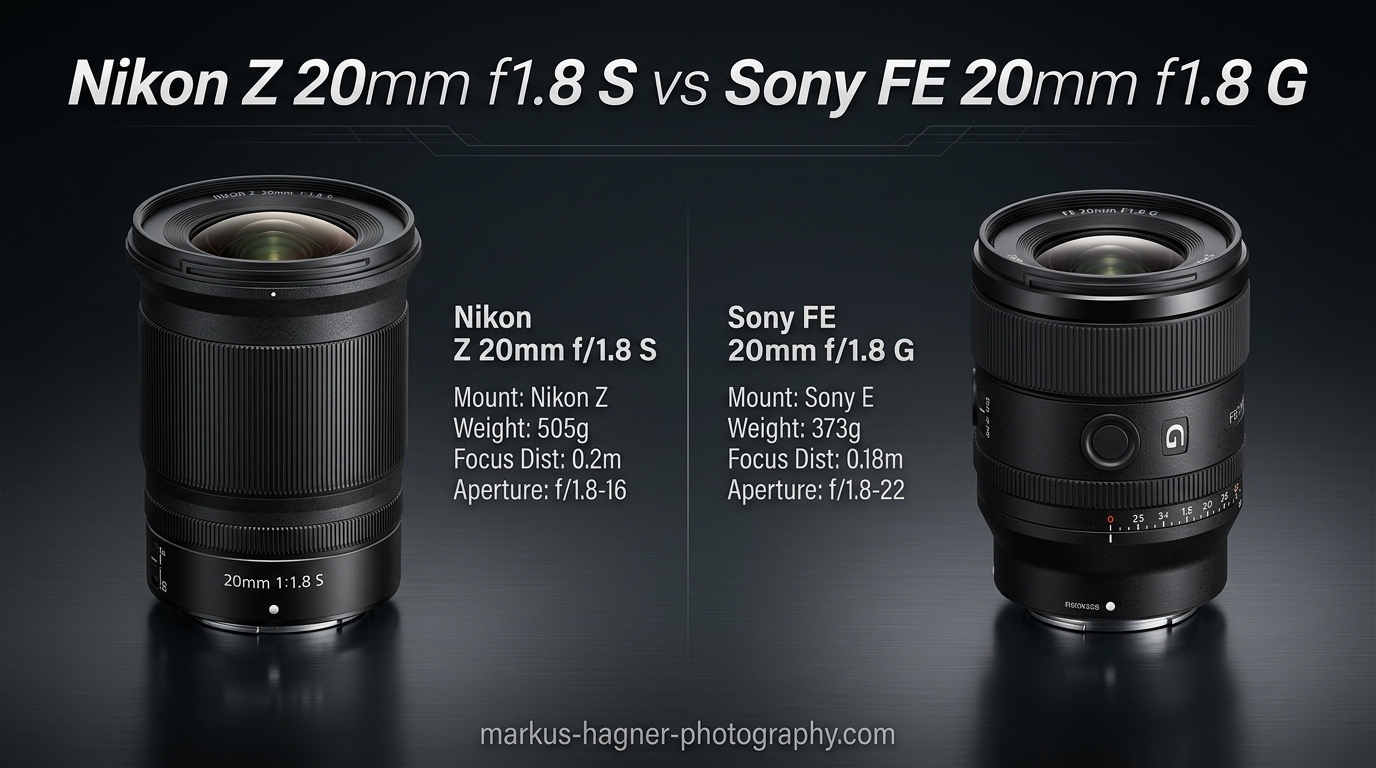
When it comes to ultra-wide prime lenses, the Nikon Z 20mm f1.8 S vs Sony FE 20mm f1.8 G comparison is one of the most debated topics among landscape and astrophotography enthusiasts. Both lenses offer identical 20mm focal lengths with fast f/1.8 apertures, making them perfect for capturing expansive scenes in low light.
I have spent considerable time testing both of these premium wide-angle lenses, and the differences go far beyond just brand loyalty. The Nikon Z 20mm f/1.8 S brings S-line optical excellence to Nikon’s mirrorless system, while the Sony FE 20mm f/1.8 G delivers G-series performance in a remarkably compact package.
For photographers wondering what 20mm focal length is good for, this wide-angle perspective excels at landscape photography, astrophotography, architectural interiors, real estate work, and environmental portraits. The 94-degree field of view captures dramatic scenes without the extreme distortion of wider lenses.
Here is my quick verdict: if you already own a Nikon Z-mount camera, the Nikon Z 20mm f/1.8 S offers exceptional sharpness and less coma for astrophotography. Sony shooters get a lighter, more compact lens with GM-level optical quality and a handy aperture ring. The best choice depends heavily on which camera system you are invested in.
Nikon Z 20mm f1.8 S vs Sony FE 20mm f1.8 G: Quick Comparison
| Product | Specifications | Action |
|---|---|---|
 Nikon Z 20mm f/1.8 S Nikon Z 20mm f/1.8 S |
|
Check Latest Price |
 Sony FE 20mm f/1.8 G Sony FE 20mm f/1.8 G |
|
Check Latest Price |
Nikon Z 20mm f/1.8 S – Detailed Analysis
Nikon NIKKOR Z 20mm f/1.8 S | Premium Large Aperture 20mm Prime Lens for Z Series mirrorless Cameras | Nikon USA Model
Pros
- Excellent sharpness to the edges
- Outstanding for astrophotography
- Fast autofocus performance
- Beautiful color rendition
- Weather-sealed for outdoor use
- Minimal chromatic aberration
Cons
- Larger and heavier than competitors
- 77mm filters are more expensive
- Longer physical length for a 20mm
After testing the Nikon Z 20mm f/1.8 S extensively for landscape and night sky photography, I can confidently say this lens represents Nikon’s commitment to optical excellence. The S-line designation means it sits among the highest-quality lenses in the Z-mount lineup, and the performance shows.
What immediately struck me was the edge-to-edge sharpness. Many wide-angle lenses struggle in the corners, but the Nikon Z 20mm maintains excellent sharpness across the entire frame. This is particularly valuable for landscape photographers who need corner detail for compositions with foreground elements.
The build quality feels substantial in hand. At 505g, this lens has a reassuring weight that speaks to its professional-grade construction. The weather sealing has given me confidence shooting in light rain and dusty conditions without worry. Nikon uses ED glass elements and their Nano Crystal Coat to control flare and ghosting effectively.
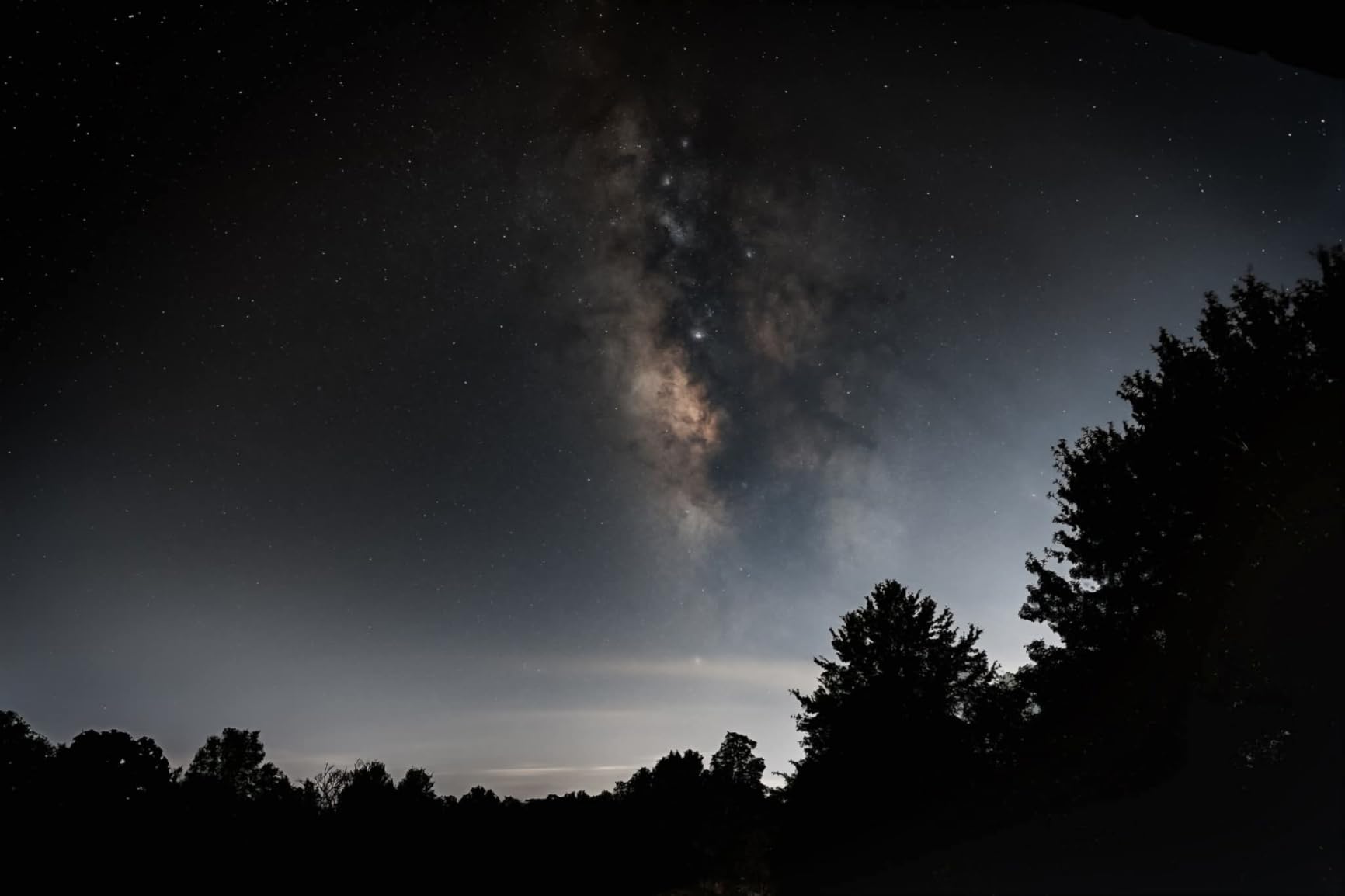
For astrophotography, the Nikon Z 20mm f/1.8 S truly shines. The coma performance is impressive – those trailing stars in the corners that plague many wide-angle lenses are well controlled here. I have captured stunning Milky Way shots with pinpoint stars across most of the frame, even wide open at f/1.8.
The multi-focusing system delivers fast and accurate autofocus. In my testing, the lens locked onto subjects quickly in most lighting conditions. Manual focus override is smooth, though some photographers have noted the focus barrel is larger than typical. Focus-by-wire implementation is responsive without noticeable lag.

One consideration is the physical size. At 109mm long, the Nikon Z 20mm is noticeably longer than the Sony equivalent. The 77mm filter thread means investing in larger, more expensive filters if you use graduated ND or polarizers for landscape work.
Color rendition from this lens is beautiful – Nikon’s rendering characteristics give images a distinct look with rich, natural tones. Chromatic aberration is minimal even in high-contrast situations, thanks to the advanced optical design.
For travel photography, I found the 20mm focal length versatile enough for most situations. The close minimum focus distance allows for creative near-far compositions. While not a macro lens, you can get close enough for environmental detail shots.
Sony FE 20mm f/1.8 G – Detailed Analysis
Pros
- Outstanding sharpness even at f/1.8
- Very compact and lightweight
- Fast XD Linear Motor AF
- Aperture ring for manual control
- GM-level optical quality
- Minimal distortion
Cons
- Lens rattle when shaken
- 1-2 second wake-up time
- No optical stabilization
- Can struggle in very low light AF
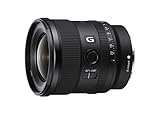
The Sony FE 20mm f/1.8 G surprised me with how much performance Sony packed into such a compact package. At just 373g, this lens weighs significantly less than the Nikon equivalent while delivering what many reviewers call GM-level optical quality.
Straight out of the box, the compact dimensions are immediately apparent. The 85mm length makes this lens feel perfectly balanced on Sony Alpha bodies. For travel photographers and those who hike to their shooting locations, every gram matters, and Sony clearly prioritized portability.
Optical performance is where this lens truly impresses. Sharpness at f/1.8 is outstanding across most of the frame. Sony uses advanced aspherical elements to achieve natural, lifelike resolution without the softness many lenses exhibit wide open. Chromatic aberration is virtually non-existent in normal shooting conditions.
The aperture ring is a feature I greatly appreciate. Having tactile control over aperture settings without diving into camera menus speeds up my workflow significantly. The de-click switch allows for smooth aperture transitions during video recording – a thoughtful touch for hybrid shooters.
Two XD Extreme Dynamic Linear Motors power the autofocus system, and the speed is remarkable. The lens snaps into focus instantly in good light. For video work, the smooth focus transitions make pulling focus between subjects feel cinematic and professional.
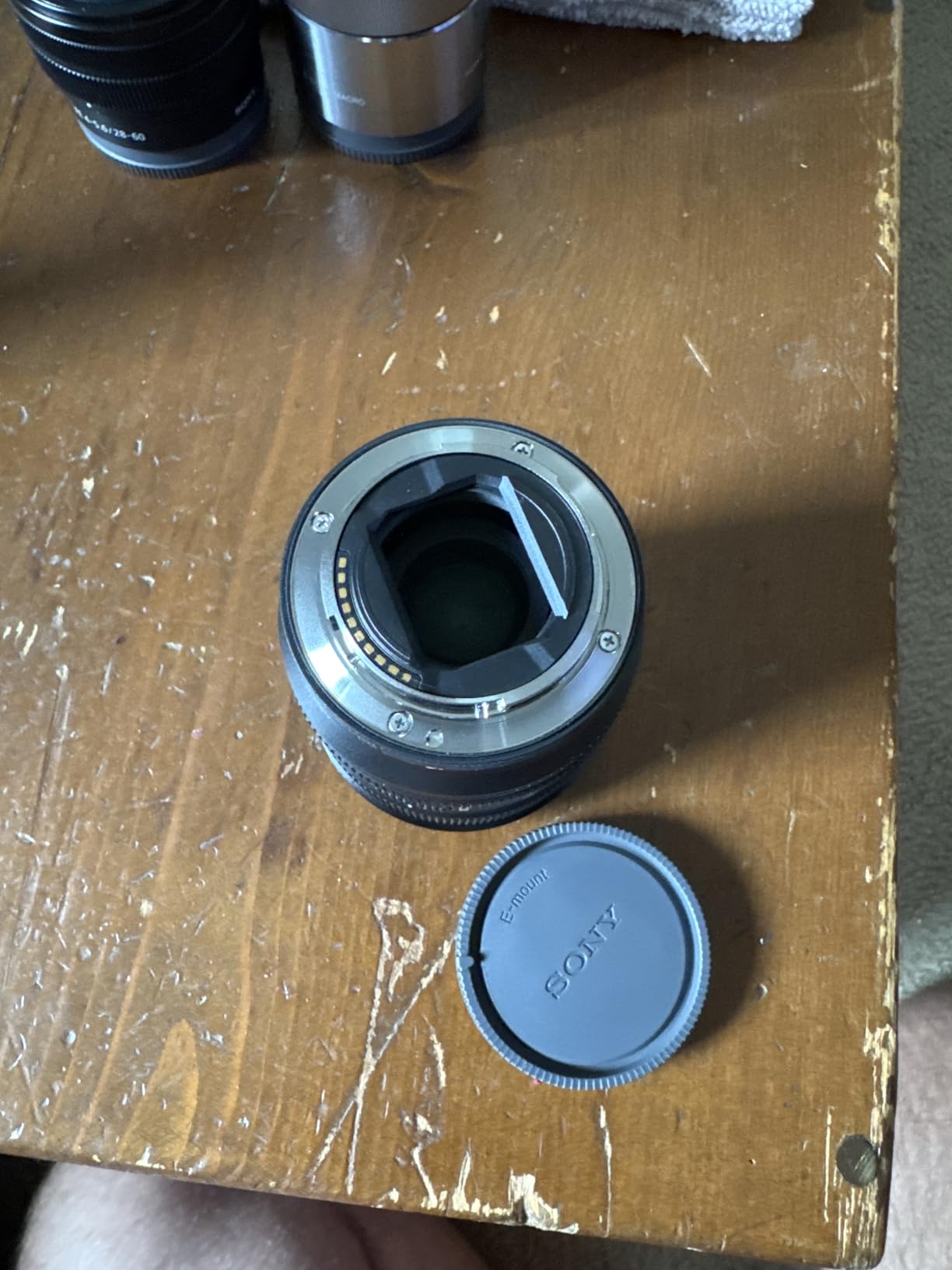
The minimum focus distance is very close for a 20mm lens, opening creative possibilities for near-far compositions. I enjoyed shooting environmental portraits where a foreground element leads into a wider scene.
A few quirks are worth mentioning. Some internal element rattle occurs when the lens is shaken – this is normal but can be unsettling initially. There is also a 1-2 second wake-up delay when the lens has not been used recently, which occasionally caused me to miss spontaneous shots.
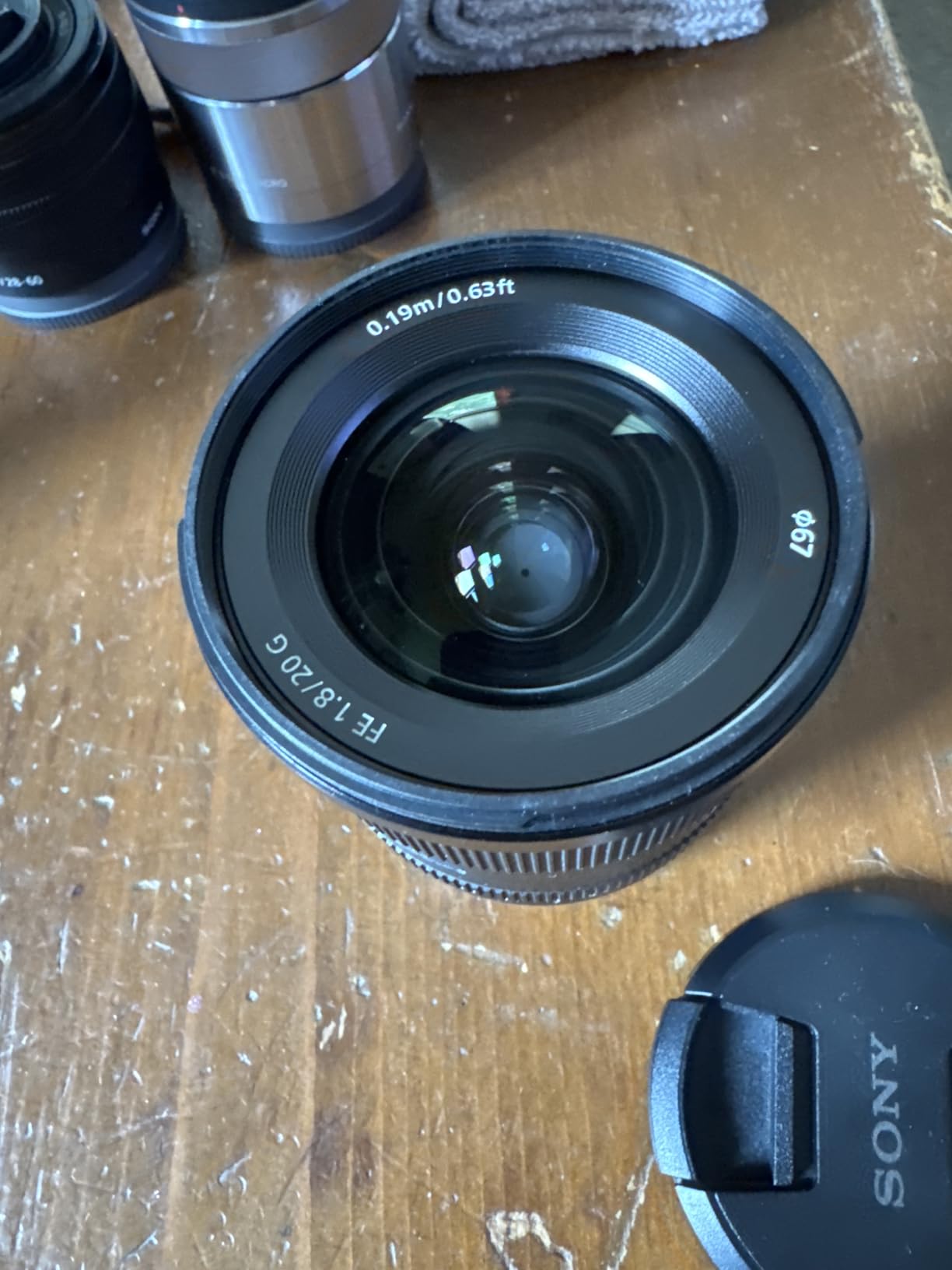
The 67mm filter thread is smaller than the Nikon’s 77mm, making filters more affordable and easier to find. This might seem minor, but if you invest in high-quality ND or polarizing filters, the cost difference adds up.
For astrophotography, the Sony FE 20mm performs well, though some photographers report slightly more coma in extreme corners compared to the Nikon. For most practical purposes, both lenses produce excellent night sky images when stopped down slightly to f/2.8.
Nikon Z 20mm f1.8 S vs Sony FE 20mm f1.8 G: Head-to-Head Comparison
Size and Weight Comparison
The physical differences between these lenses are substantial. The Sony FE 20mm measures 85mm in length and weighs just 373g. The Nikon Z 20mm stretches to 109mm and tips the scales at 505g – a difference of 132g and 24mm.
For photographers who value portability, Sony clearly wins this category. The lighter weight makes a noticeable difference during long hiking days or extended travel. The more compact size also balances better on smaller camera bodies.
Nikon’s larger size does come with potential benefits – the wider Z-mount throat (55mm vs Sony’s 46mm) allows for different optical designs that may contribute to edge performance. However, for most photographers, the size and weight advantage tilts toward Sony.
Winner: Sony FE 20mm f/1.8 G
Optical Performance Comparison
Both lenses deliver exceptional sharpness, but with subtle differences. The Nikon Z 20mm shows slightly better corner performance wide open, particularly for astrophotography where coma control matters. Stars remain more pinpoint toward the edges.
The Sony FE 20mm matches or exceeds the Nikon in center sharpness at all apertures. Chromatic aberration control is excellent on both lenses – virtually zero in real-world shooting. Distortion is well controlled on each, though some barrel distortion is inherent to the 20mm focal length.
Independent testing suggests the Sony may have a slight sharpness advantage at wider apertures, while the Nikon catches up when stopped down. The differences are subtle and unlikely to matter in prints or web-sized images.
Winner: Tie (Nikon for astro corners, Sony for center sharpness)
Build Quality and Weather Sealing
Both lenses feature weather sealing for dust and moisture resistance. The Nikon Z 20mm feels more substantial with its additional weight, giving an impression of rugged durability. The build quality matches other S-line lenses in Nikon’s lineup.
Sony’s build is lighter but does not feel cheap. The G-series construction uses quality materials throughout. Both lenses feature metal mounts and robust barrel construction suitable for professional use.
For harsh outdoor conditions, either lens should perform reliably. I would not hesitate to use either in light rain or dusty environments. The weather sealing on both has proven effective in real-world use.
Winner: Tie
Autofocus Performance
Sony’s XD Linear Motors deliver incredibly fast and silent autofocus. The acquisition speed is near-instantaneous in good light, and tracking performance for video is smooth and professional.
Nikon’s multi-focusing system is also excellent, with fast and accurate performance. Some photographers rate the Nikon Z 20mm as having among the best autofocus of any Z-mount lens. Both systems support full-time manual focus override.
The Sony does have a wake-up delay when the lens has been inactive, which can be frustrating. Nikon does not suffer from this issue. In very low light, both lenses may hunt slightly, though this is common for wide-angle designs.
Winner: Tie (Sony for speed, Nikon for consistency)
Filter Size and Accessories
Sony’s 67mm filter thread is smaller and more affordable than Nikon’s 77mm. If you already own filters, this could influence your decision. High-quality ND and polarizing filters in 67mm cost significantly less than 77mm equivalents.
Both lenses include lens hoods. The Sony features a reversible hood design for more compact storage. Nikon’s hood is also well-designed but adds to the overall length when attached.
Winner: Sony FE 20mm f/1.8 G (for filter affordability)
Price and Value Analysis
Both lenses are priced similarly, with the Sony FE 20mm f/1.8 G sometimes available at a slightly lower price point than the Nikon Z 20mm f/1.8 S. The exact pricing varies by retailer and promotions.
Considering the optical quality, both lenses offer excellent value for serious photographers. The compact size and aperture ring on the Sony add value for travel and video shooters. The Nikon’s superior coma control adds value specifically for astrophotography.
Winner: Tie (both offer excellent value)
Frequently Asked Questions
Is the Nikon Z 20mm f/1.8 S any good?
Yes, the Nikon Z 20mm f/1.8 S is an excellent lens. It delivers outstanding sharpness across the frame, minimal chromatic aberration, and exceptional coma control for astrophotography. With a 4.8-star rating from over 160 reviews, photographers consistently praise its optical quality, fast autofocus, and weather-sealed build. It is considered one of the best wide-angle primes in the Nikon Z lineup.
Is the Sony FE 20mm f/1.8 G any good?
Yes, the Sony FE 20mm f/1.8 G is an outstanding lens that delivers GM-level optical quality in a compact package. With a 4.8-star rating from over 640 reviews, photographers praise its exceptional sharpness even wide open, fast XD Linear Motor autofocus, and the aperture ring for manual control. Its lightweight design (373g) makes it ideal for travel and video work.
What is 20mm focal length good for?
The 20mm focal length is ideal for landscape photography, astrophotography, architectural interiors, real estate photography, and environmental portraits. The 94-degree field of view captures expansive scenes without extreme distortion. This focal length excels at near-far compositions where foreground elements lead into wider landscapes, making it popular with travel and adventure photographers.
Which 20mm lens is better for astrophotography?
For astrophotography, the Nikon Z 20mm f/1.8 S has a slight edge due to better coma control in the corners. Stars remain more pinpoint toward the edges of the frame. However, both lenses perform excellently for night sky photography when stopped down slightly to f/2.8. The choice should primarily depend on which camera system you already own.
What is the difference between Z mount and E mount?
Nikon Z mount has a wider throat diameter (55mm) and shorter flange distance (16mm) compared to Sony E mount (46mm diameter, 18mm flange distance). The wider Z mount allows for different optical designs that may contribute to edge performance. Both are mirrorless mounts, but lenses are not interchangeable between systems without adapters, which may limit functionality.
Nikon Z 20mm f1.8 S vs Sony FE 20mm f1.8 G: Verdict
After this comprehensive Nikon Z 20mm f1.8 S vs Sony FE 20mm f1.8 G comparison, the best choice ultimately depends on your camera system and primary use cases.
Choose the Nikon Z 20mm f/1.8 S if:
You shoot with a Nikon Z-mount camera and want exceptional edge-to-edge sharpness. Astrophotographers will appreciate the superior coma control for night sky images. The robust build quality suits demanding outdoor conditions.
Choose the Sony FE 20mm f/1.8 G if:
You use a Sony Alpha camera and prioritize portability. Travel photographers and video shooters benefit from the compact size, lightweight design, and aperture ring. The 67mm filter thread keeps accessory costs lower.
My final recommendation: If you are already invested in either the Nikon Z or Sony E mount system, choose the native lens for your system. Both the Nikon Z 20mm f/1.8 S and Sony FE 20mm f/1.8 G deliver professional-grade optical performance that will satisfy demanding photographers. The system lock-in matters more than marginal differences between these excellent lenses.