
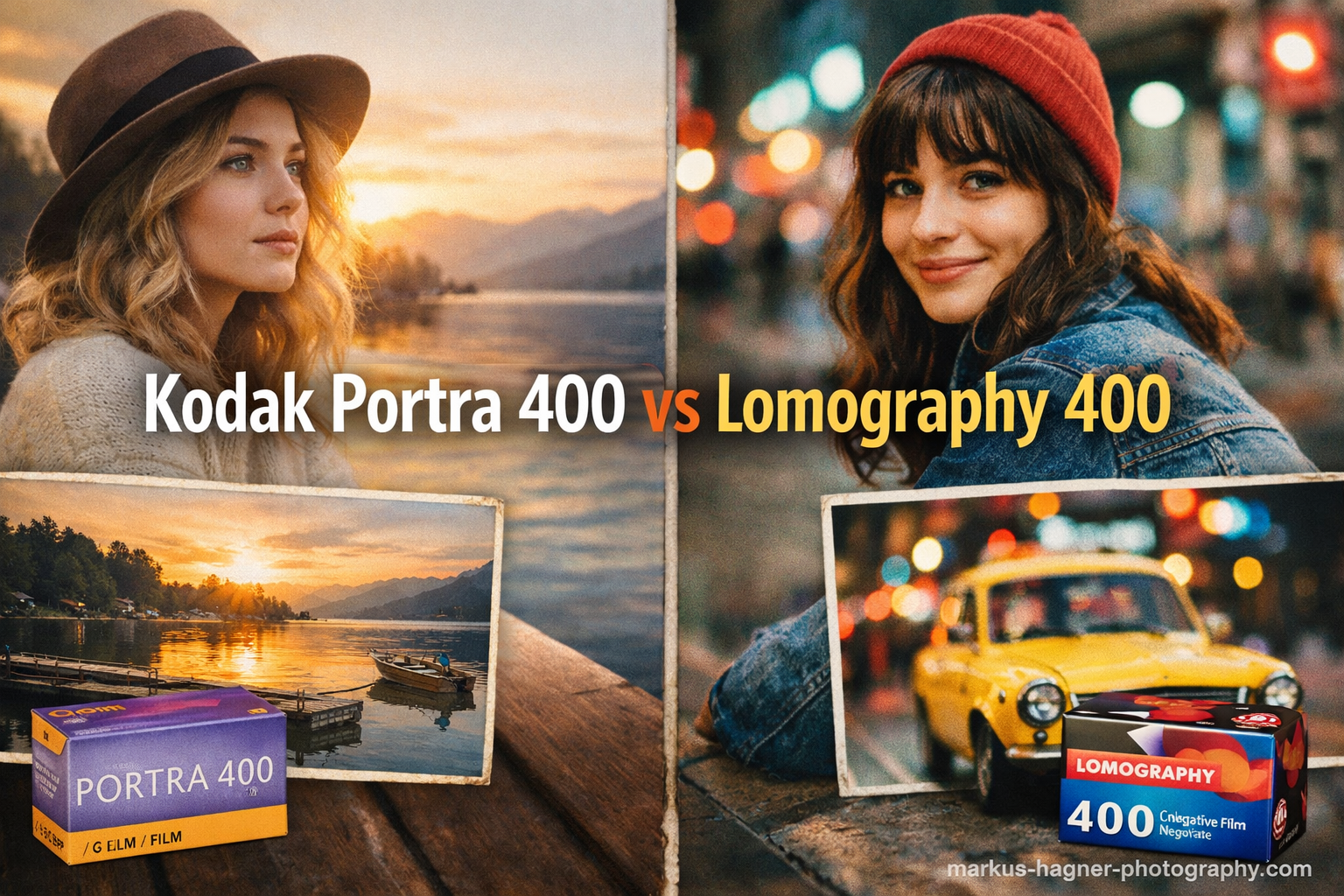
Choosing between Kodak Portra 400 vs Lomography 400 is one of the most common dilemmas facing film photographers in 2026. Both are ISO 400 color negative films, but they produce distinctly different results that suit different shooting styles and budgets.
After shooting dozens of rolls of each stock over the past few years, I have developed strong opinions about when to reach for each one. Portra 400 remains the professional standard with its neutral colors and exceptional skin tones, while Lomography 400 offers a punchier, more saturated look at a significantly lower price point.
In this Kodak Portra 400 vs Lomography Color Negative 400 comparison, I will break down the key differences in color rendering, exposure latitude, grain structure, and value to help you decide which film deserves a spot in your camera bag.
Quick Comparison: Kodak Portra 400 vs Lomography Color Negative 400
Here is a side-by-side look at how these two 400-speed color negative films compare on the features that matter most to photographers.
| Product | Specifications | Action |
|---|---|---|
 Kodak Portra 400
|
|
Check Latest Price |
 Lomography Color Negative 400
|
|
Check Latest Price |
The table above shows the headline differences, but the real story emerges when you examine how each film renders colors, handles difficult lighting, and performs in real-world shooting situations.
Kodak Portra 400: The Professional Standard
Pros
- Exceptionally smooth grain for 400 speed film
- Outstanding skin tones and natural colors
- Excellent dynamic range
- Handles wide variety of lighting situations well
- Forgiving and versatile for different shooting scenarios
Cons
- Expensive compared to other films
- Some units ship without box or expiration date
- Lower contrast may not suit all styles
Kodak Portra 400 has earned its reputation as the go-to color negative film for professional photographers. I have used it extensively for portrait sessions, wedding work, and travel photography, and the results consistently impress me with their natural rendering and forgiving exposure latitude.
The grain structure on Portra 400 is remarkably smooth for a 400-speed emulsion. Even when shooting in challenging light or scanning at high resolution, the grain remains fine and pleasing rather than distracting. This makes it suitable for larger prints and professional deliverables where image quality matters.
What truly sets Portra 400 apart is its color palette. The film renders skin tones with remarkable accuracy, avoiding the orange or magenta casts that plague lesser color films. Colors appear natural and slightly muted, with beautiful pastel tones in highlights and rich but not oversaturated shadows. Blues render clean and true, greens appear natural without shifting yellow, and reds stay controlled without blowing out.
The exposure latitude on Portra 400 is legendary among film photographers. I have intentionally overexposed it by two or three stops and still recovered usable images with minimal color shift. This forgiving nature makes it ideal for fast-paced shooting situations where nailing exposure perfectly is not always possible.
For portrait and wedding photographers, Portra 400 remains the gold standard. The neutral color rendering means less time color-correcting in post, and the consistent results from roll to roll build confidence that your images will turn out as expected.
Lomography Color Negative 400: The Budget-Friendly Alternative
Pros
- Flexible ISO 400 emulsion for various lighting
- Uses standard C-41 processing
- More affordable than Portra
- Higher saturation for creative work
- Warm punchy colors
Cons
- No customer reviews available yet
- Not Prime eligible
- New product with limited track record
- Thinner film base prone to curling
Lomography Color Negative 400 offers a distinctly different aesthetic from Portra while costing significantly less. After shooting multiple rolls through various cameras, I have come to appreciate its character as something between a consumer film and a professional stock.
The most immediate difference you will notice is the color rendering. Lomography 400 produces warmer images with higher saturation and more contrast than Portra. Yellows and oranges appear more pronounced, giving images a sunny, nostalgic feel even when shot in overcast conditions. Blues take on a slightly cyan character that many photographers find appealing for street and landscape work.
Many film enthusiasts speculate that Lomography Color Negative 400 is actually manufactured by Kodak, possibly based on the Ultramax 400 emulsion. While neither company confirms this, the similarities in base characteristics and processing requirements suggest a shared heritage. This would explain why Lomo 400 delivers quality that exceeds typical consumer films.
The grain on Lomography 400 is slightly more visible than Portra, but still acceptable for most applications. It has a different character too, appearing more organic and less refined. For artistic work, this can add to the film’s charm rather than detract from it.
One practical consideration is that Lomography film often comes in 3-packs rather than single rolls. This can be frustrating if you want to try just one roll, but it does lower the per-roll cost for committed shooters. The film base is also thinner than Kodak stocks, which can cause curling issues during scanning.
Kodak Portra 400 vs Lomography Color Negative 400: Head-to-Head Comparison
Color Rendering and Saturation
The most significant difference between these films lies in their color palettes. Understanding these differences will help you choose the right stock for your creative vision.
Portra 400 delivers neutral, natural, and slightly muted colors. Colors appear true to life without artificial enhancement. The film excels at rendering subtle color variations and pastel tones. Blues are clean, greens are accurate, and skin tones remain consistent across different lighting conditions.
Lomography 400 produces warm, saturated, and punchy images. Colors appear more vivid with a distinct yellow-orange bias. The film produces bolder contrast and more dramatic color separation. Blues shift slightly cyan, greens lean warm, and overall images have a more vibrant, less naturalistic appearance.
For portrait work where accurate color matters, Portra wins hands down. For street photography, travel, or any situation where you want more visual impact straight from the scan, Lomography delivers that look without post-processing.
Skin Tone Performance
Skin tone rendering is where Portra 400 truly justifies its premium price. The film has been optimized specifically for portrait photography, and it shows.
Portra renders Caucasian skin with subtle pink undertones, Asian skin with accurate warmth, and darker skin tones with rich detail in shadows. The transition between highlights and midtones on faces remains smooth, avoiding the harsh gradations that plague many color films.
Lomography 400 renders skin tones warmer and more saturated. While not inaccurate, the added warmth and contrast can make skin appear more tanned or golden than reality. Some photographers actually prefer this look for certain styles, but it requires more attention during scanning and editing to achieve natural results.
If you shoot portraits professionally or want accurate skin reproduction with minimal post-work, Portra 400 is the clear winner. For casual portraits or when you want a more stylized look, Lomography can work beautifully.
Exposure Latitude and Underexposure Performance
Exposure latitude refers to how well a film handles overexposure and underexposure. This is critical for photographers shooting in variable light or using cameras with limited metering capabilities.
Portra 400 handles overexposure exceptionally well. Rating it at ISO 200 or even 100 produces excellent results with enhanced shadow detail and no color shift. Underexposing by a stop still yields usable images, though shadows become grainier. This flexibility makes Portra forgiving for beginners and reliable for professionals.
Lomography 400 has decent exposure latitude but is less forgiving than Portra. Overexposing by one stop generally works well, but pushing beyond that can introduce color shifts and increased contrast. Underexposure reveals more grain and loses shadow detail more quickly than Portra.
For situations where exposure might vary, such as event photography or travel, Portra provides more safety margin. Lomography works best when you can meter carefully or shoot in consistent lighting.
Contrast and Dynamic Range
Dynamic range determines how much detail you can capture in both shadows and highlights simultaneously. This characteristic affects how flexible your negatives are during scanning and printing.
Portra 400 offers exceptional dynamic range with its specially designed contrast curve. The film holds highlight detail remarkably well while still extracting information from deep shadows. This balanced contrast makes it ideal for high-contrast scenes like bright sunny days or mixed indoor-outdoor lighting.
Lomography 400 has higher inherent contrast, which creates punchier images but reduces the recoverable dynamic range. Highlights can blow out more quickly, and shadow detail may be lost in high-contrast situations. The trade-off is images that often need less post-processing to achieve a dramatic look.
Grain Structure and Sharpness
Both films are ISO 400 emulsions, but their grain characteristics differ noticeably.
Portra 400 features exceptionally fine grain for its speed. The grain pattern is tight and uniform, scanning smoothly at high resolutions. Sharpness is excellent without appearing artificial. Many photographers find Portra’s grain so fine that it rivals slower films.
Lomography 400 shows slightly more visible grain with a more organic structure. The grain is not unpleasant, but it becomes more apparent in midtones and shadows. Sharpness is good, though slightly lower than Portra. For most applications, the difference is negligible.
Film Base Quality and Scanning Workflow
The physical characteristics of the film base affect your scanning workflow and long-term storage.
Portra 400 uses a thicker, more stable film base that resists curling and handles consistently in scanners. This stability matters particularly for home scanning setups where curled film can cause focus issues or jam in automatic feeders.
Lomography film uses a thinner base that tends to curl more aggressively, especially after development. While not a dealbreaker, this requires extra care during handling and scanning. Some photographers use anti-curling techniques or weighted film holders to manage this issue.
Price and Value Analysis
Price is often the deciding factor when choosing between these films, and the difference is substantial.
Lomography Color Negative 400 typically costs significantly less per roll than Portra 400, often 40-50% less depending on the retailer. For photographers shooting high volumes or working within tight budgets, this savings adds up quickly over time.
Portra 400 commands a premium price that reflects its professional positioning and consistent quality. The higher cost covers not just the emulsion quality but also tighter quality control and batch-to-batch consistency.
The value calculation depends on your use case. For paid professional work where clients expect consistent results, Portra’s reliability justifies its cost. For personal projects, learning, or high-volume shooting where budget matters more than perfection, Lomography offers tremendous value.
Frequently Asked Questions
Is Lomo 400 better than Portra 400?
Neither film is objectively better. Lomography 400 offers higher saturation and warm tones at a lower price, making it great for creative work and everyday shooting. Portra 400 delivers neutral colors, superior skin tones, and exceptional exposure latitude, making it the professional choice for portraits and weddings. Your choice depends on budget and aesthetic preference.
What is the best alternative to Kodak Portra 400?
Lomography Color Negative 400 is one of the best alternatives, offering similar ISO speed with more saturated colors at roughly half the price. Other alternatives include Kodak Gold 200 for sunny conditions, Fujifilm C200 for budget shooting, or Kodak Ultramax 400 if you can find it. For professional work, Portra remains unmatched.
What is Kodak Portra 400 best for?
Kodak Portra 400 excels at portrait photography, wedding photography, and any situation requiring natural skin tones. Its exceptional exposure latitude handles difficult lighting with ease. The film works beautifully in overcast conditions, open shade, and mixed lighting. Professional photographers choose it for its consistency and forgiving nature.
What is Lomography 400 color film?
Lomography Color Negative 400 is an ISO 400 color negative film using standard C-41 processing. It produces images with warm yellow tones, higher saturation, and punchier contrast compared to professional films. Many photographers believe it is manufactured by Kodak, possibly based on Ultramax 400 emulsion. It offers an affordable alternative to Portra with more creative character.
Final Verdict: Who Should Choose Which Film
After extensive shooting with both Kodak Portra 400 vs Lomography 400, my recommendation depends entirely on your priorities and shooting style.
Choose Kodak Portra 400 if:
You shoot portraits or weddings professionally. Accurate skin tones and consistent results matter more than cost. You need maximum exposure latitude for variable lighting. You want fine grain suitable for large prints. You prefer neutral colors that require minimal post-processing.
Choose Lomography Color Negative 400 if:
You want to stretch your film budget further. You enjoy the warmer, more saturated color aesthetic. You shoot street photography, travel, or personal projects. You are learning film photography and want affordable practice stock. You like the character of slightly more visible grain.
My overall verdict: Portra 400 remains the professional standard for good reason, but Lomography 400 is an excellent alternative that delivers 80% of Portra’s quality at roughly half the price. Many photographers, myself included, keep both in our bags. We reach for Portra when the shot matters most and Lomo for everyday adventures.
This Kodak Portra 400 vs Lomography Color Negative 400 comparison should give you the information needed to make an informed choice. Both films have their place in modern film photography, and the best photographers know when to use each one.