
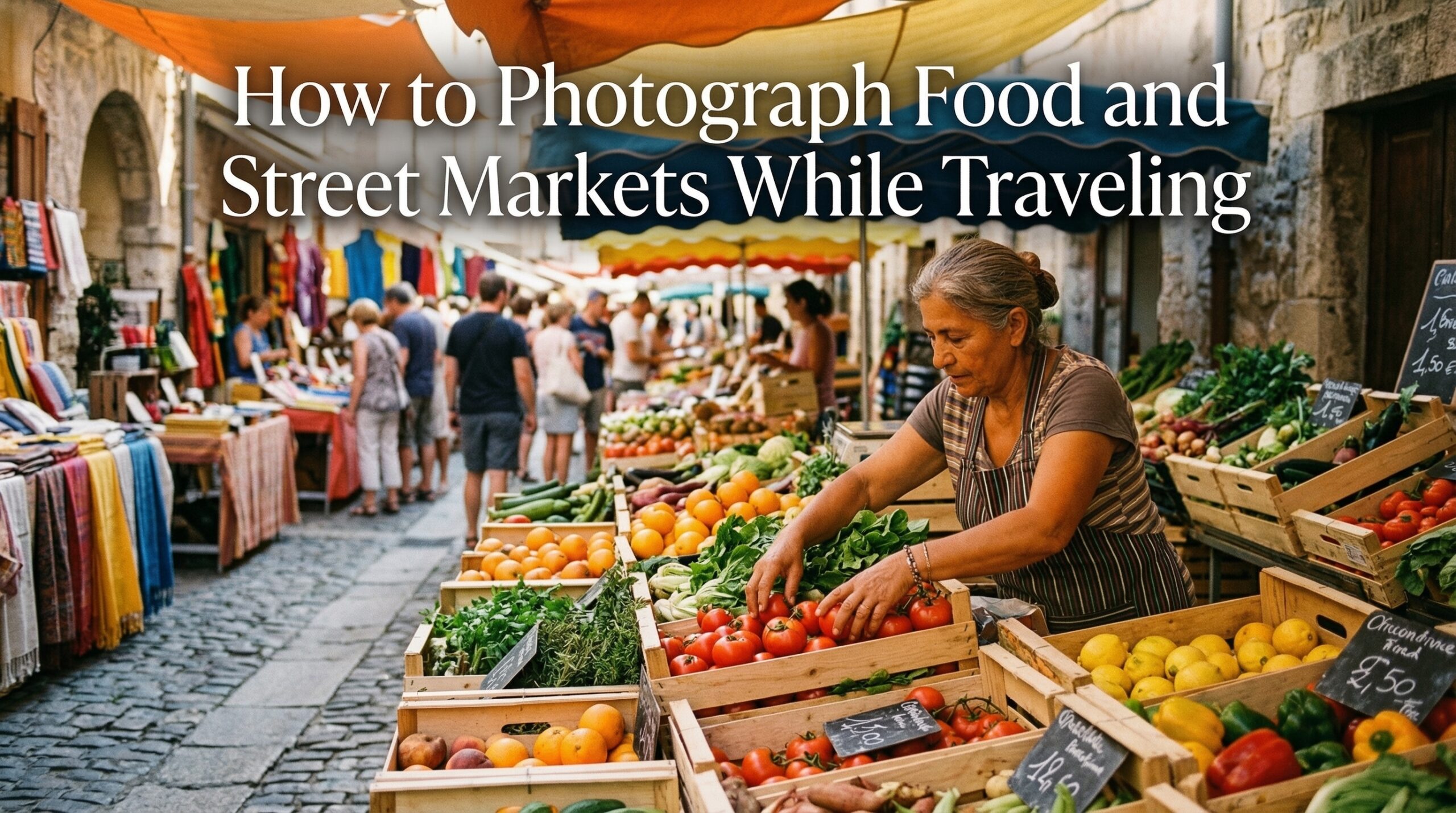
There’s something magical about wandering through a bustling street market in a foreign city. The colors, sounds, and smells create an experience that stays with you long after you return home. Learning how to photograph food and street markets while traveling lets you capture those moments and share them with others.
I’ve spent years photographing markets across Southeast Asia, Europe, and Latin America. Each location taught me something new about capturing authentic moments. The steaming bowls of pho in Hanoi, the vibrant spice towers in Marrakech, and the fresh pasta displays in Bologna all required different approaches.
This guide combines everything I’ve learned about both travel food photography and street market photography. Most resources treat these as separate topics, but they go hand in hand when you’re exploring local cuisine abroad. By the end, you’ll have practical techniques for capturing stunning images in any market or restaurant setting.
Essential Preparation for Market and Food Photography
Success in market and food photography starts before you even raise your camera. The right preparation helps you capture better images while staying comfortable and respectful of your surroundings.
Gear Essentials
You don’t need expensive equipment to get great shots. I’ve captured some of my favorite market photos with a simple mirrorless camera and one versatile lens. That said, certain gear choices make a real difference in challenging market conditions.
For street market photography, a standard zoom lens (24-70mm or equivalent) covers most situations. It lets you capture wide establishing shots and tighter details without changing lenses in dusty or humid conditions. A 50mm or 35mm prime lens is invaluable for food photography because the wide aperture helps in low light and creates beautiful background blur.
Consider these additional items for market shoots:
- A wrist strap or peak design clip keeps your camera secure in crowded spaces
- Lens cleaning cloth for humidity, dust, and food splatters
- Small reflector or white card for bouncing light onto food
- Silica gel packets in your bag for humid climates
- Comfortable, closed-toe shoes for wet market floors
Smartphone users can capture excellent results too. Modern phones handle low light reasonably well and offer computational photography features that simplify exposure. The best camera is always the one you have with you.
Timing and Market Selection
The time of day dramatically affects your results. Early morning offers soft light and fewer crowds. Vendors are setting up, produce is at its freshest, and the golden hour glow makes everything look appealing. I’ve found that arriving 30 minutes before most tourists creates the best shooting conditions.
Research your destination’s market schedule before traveling. Some markets only operate on specific days. Others transform completely between morning and evening. Night markets, for example, offer completely different photographic opportunities than morning produce markets.
Weather matters more than you might expect. Overcast days provide beautiful, diffused light for food photography. Harsh midday sun creates challenging shadows but can work for dramatic market scenes. Rain offers reflections and moody atmosphere, though you’ll need to protect your gear.
How to Photograph Street Markets While Traveling
Street market photography requires a blend of technical skill and social awareness. You’re not just capturing scenes; you’re documenting living, breathing spaces where people work and shop. Here’s how to do it well.
Composition in Crowded Spaces
Markets can feel chaotic, which makes composition challenging but rewarding. The key is finding order within the chaos. Look for repeating patterns, color relationships, and visual anchors that ground your compositions.
Layering creates depth in market photos. Position yourself so foreground elements (produce, baskets, hands) lead into mid-ground subjects (vendors, customers) and background context (stall signs, other stalls). This three-dimensional feel draws viewers into the scene.
Leading lines appear everywhere in markets. Rows of produce, hanging lights, counter edges, and aisles all guide the eye through your frame. Use these natural lines to direct attention toward your main subject.
Background selection matters enormously. A messy background distracts from even the most interesting subject. Move around to find clean backgrounds like colorful walls, fabric displays, or simple awnings. Sometimes taking one step left or right transforms a cluttered shot into a clean one.
Working with Natural Light in Markets
Light in markets varies wildly. Open-air markets have full sun or overcast conditions. Covered markets might have a mix of natural and artificial light. Understanding how to work with each situation expands your creative options.
During golden hour, position subjects so the warm light hits them from the side. Side lighting reveals texture in produce and creates dimension in vendor portraits. This light makes vegetables glow and brings out the character in weathered faces.
Midday sun creates harsh shadows, but you can use this creatively. Look for areas where awnings or tarps create shade. The contrast between sunlit backgrounds and shaded subjects can produce striking images. Alternatively, embrace the harsh light for graphic, high-contrast compositions.
Covered markets often have light filtering through from above. Look for spotlight effects where shafts of light illuminate specific areas. Positioning yourself to capture subjects moving through these light pools creates dramatic images.
Night Market Photography Tips
Night markets present unique challenges that few photography guides address. The combination of darkness, mixed artificial lighting, and crowds requires specific techniques. Here’s what works.
Start by raising your ISO. Modern cameras handle ISO 1600-3200 quite well, and the slightly grainy look actually suits the gritty atmosphere of night markets. Don’t fight the low light; embrace it.
Look for light sources that can illuminate your subjects. Food stalls with bright lights, string bulbs overhead, and neon signs all provide illumination. Position yourself so these lights fall on your subject’s face or the food you’re photographing.
Image stabilization helps enormously. If your lens or camera has stabilization, turn it on. This lets you shoot at slower shutter speeds while maintaining sharpness. I regularly shoot at 1/30 second with stabilization when photographing stationary subjects.
Embrace motion blur for creative effect. Slow shutter speeds capture the bustle of night markets. A 1/15 second exposure with a moving crowd creates dynamic images that convey energy and movement.
Capturing Authentic Vendor Portraits
Some of my favorite market photos are environmental portraits of vendors. These images tell stories about local culture and the people who make markets vibrant. Getting them requires patience and social skills.
Start by making a purchase. Buying something breaks the ice and shows you’re not just another tourist with a camera. While the vendor prepares your order, observe their workspace and look for interesting angles.
Use non-verbal communication to ask for photos. Smile, raise your camera slightly, and wait for a nod. Most vendors appreciate being asked, even without shared language. If someone declines, smile and move on without argument.
Environmental portraits work best when subjects are engaged in their work rather than staring at the camera. Capture the fishmonger scaling fish, the spice vendor measuring portions, or the cook plating dishes. These action shots feel authentic and tell complete stories.
Food Photography Techniques for Travelers
Travel food photography differs from studio work because you can’t control the environment. The restaurant might have terrible lighting, the plate might be chipped, and other diners might be watching. These constraints actually push you toward more creative solutions.
Finding the Best Light for Food
Light makes or breaks food photos. The goal is finding soft, diffused light that reveals texture without harsh shadows. When you enter a restaurant, scan for the best light before sitting down.
Window seats are gold. Ask to sit near a window when possible. North-facing windows provide consistent, soft light throughout the day. If the sun streams directly through, position your food so the light comes from the side or behind.
Outdoor seating often provides ideal conditions. Overcast days give beautiful, even light. Sunny days require finding shade or using your body to cast shadow on the food.
When stuck with artificial light, look for the brightest source and work with it. A single overhead light can work if you position your food carefully. Avoid mixed lighting (daylight plus artificial) when possible, as it creates confusing color casts.
Camera Angles That Make Food Look Delicious
The angle you choose dramatically affects how appetizing food appears. Different dishes benefit from different perspectives. Learning when to use each angle transforms your food photography.
Overhead shots (90 degrees) work beautifully for flat dishes, arranged platters, and table settings. This angle shows the complete meal and its context. It’s especially effective for breakfast spreads, tapas, and dishes with multiple components.
45-degree angles approximate how we actually see food when sitting at a table. This perspective feels natural and works for most dishes. It shows height in layered foods like burgers or stacked pancakes.
Eye-level shots emphasize height and work well for tall foods like layer cakes, milkshakes, or stacked dishes. Get low and close to make these items appear dramatic.
Detail shots focus on textures and small elements. A close-up of steam rising from soup, glistening sauce on meat, or the crumb of fresh bread adds sensory depth to your food story.
Styling and Composition on the Go
You can’t rearrange restaurant food dramatically, but small adjustments make big differences. These subtle styling techniques improve your photos without crossing into obnoxious behavior.
Remove distractions from the frame. Move water glasses, phones, and utensils out of the shot. Ask dining companions to hold their forks for a moment. These quick adjustments take seconds but significantly clean up compositions.
Use simple compositions. One strong subject beats a cluttered frame every time. If your table has multiple dishes, photograph each one separately before capturing the full spread.
Incorporate hands and people occasionally. A hand reaching for food, a chef plating in the background, or a vendor handing over a dish adds human warmth to food images.
Shoot quickly and discretely. Food looks best immediately after serving. The steam fades, sauces settle, and lettuce wilts within minutes. Have your camera ready when the food arrives.
Restaurant Photography Without Being Awkward
Taking photos in restaurants can feel uncomfortable. Other diners might stare, staff might wonder what you’re doing, and the whole experience can feel performative. Here’s how to handle it gracefully.
Be quick. The longer you spend photographing, the more attention you attract. Set up your shot in seconds, take a few frames, and put your camera away. Your food will taste better hot anyway.
Use available light rather than flash. Flash disturbs other diners and flattens food unflatteringly. If the light is truly terrible, embrace the moodiness rather than fighting it.
Avoid standing on chairs or making a scene. If you need a higher angle, hold your camera above your head rather than climbing on furniture. The photo isn’t worth ruining the atmosphere for everyone else.
Thank your server when finished. A genuine compliment about the food and a smile goes a long way. Some restaurants even appreciate being tagged on social media if the photos are flattering.
Technical Camera Settings for Market and Food Photography
Understanding which settings work in different situations frees you to focus on composition and connection. These recommended starting points give you a foundation to build on.
Settings for Market Scenes
Markets demand flexibility. Subjects move, light changes, and you need to react quickly. These settings provide a good starting point.
Shutter speed: 1/250 second minimum for handheld shots with moving subjects. Go faster (1/500 or more) for children or animals in motion. Slower speeds (1/60-1/125) work for stationary vendors or still life scenes.
Aperture: f/5.6 to f/8 for environmental shots where you want most of the scene in focus. f/2.8 to f/4 for portraits where you want subject isolation and background blur.
ISO: Start at 400-800 in daylight. Raise to 1600-3200 in covered markets or overcast conditions. Don’t fear higher ISOs; modern cameras handle noise well, and a grainy shot beats a blurry one.
Focus mode: Continuous autofocus (AF-C) for moving subjects. Single autofocus (AF-S) for stationary scenes. Face/eye detection helps enormously for vendor portraits.
Settings for Food Photography
Food generally stays still, which gives you more control. These settings prioritize image quality and creative depth of field.
Aperture: f/2.8 to f/4 for single dishes with soft backgrounds. f/5.6 to f/8 for table scenes where multiple elements need sharpness.
Shutter speed: 1/60 second minimum handheld. Slower speeds work with stabilization or tripod. Food doesn’t move, so you can use slower speeds than in markets.
ISO: Keep as low as possible for best quality. ISO 100-400 in good light. Raise to 800-1600 only if necessary in dim restaurants.
White balance: Auto works reasonably well, but custom white balance gives most accurate colors. Shoot in RAW to adjust white balance later without quality loss.
Focus: Single point autofocus placed on the most important element. For food, this is usually the front edge or most detailed area. Manual focus can help for precise control.
Ethical Considerations and Cultural Respect
Photography ethics matter enormously when traveling. Your images should honor the people and places you photograph rather than exploiting them. These guidelines help you photograph respectfully.
Asking Permission the Right Way
Permission transforms a photograph from surveillance into collaboration. People generally appreciate being asked, and the resulting images often feel more connected and authentic.
Learn basic phrases in the local language. “Can I take your photo?” takes minutes to learn and opens countless doors. Even clumsy attempts show respect and often make people smile.
Use non-verbal cues when language fails. Point to your camera, gesture toward the person, and wait for a response. A smile and nod means yes. A turned head or raised hand means no.
Show people their photos. After taking a portrait, show the image on your camera’s screen. This simple gesture builds trust and often leads to more photos. Some photographers carry instant cameras to give subjects physical prints.
Respect “no” answers completely. If someone doesn’t want their photo taken, smile and move on without argument. No image is worth making someone uncomfortable.
Cultural Sensitivity in Different Regions
Photography norms vary enormously between cultures. What’s acceptable in one country might be offensive in another. Research your destination before photographing extensively.
Religious sites often have specific rules. Some prohibit photography entirely. Others allow exteriors but not interiors. Many forbid photographing people praying or performing rituals. Always check before shooting.
Certain cultures have strong beliefs about photography. Some indigenous communities believe photographs steal souls. Others restrict photography of certain people or activities. When in doubt, ask.
Consider what story your images tell. Are you photographing poverty as spectacle? Are you exoticizing local people? Think about whether your images respect the dignity of your subjects.
Avoid photographing children without parental permission. This applies everywhere but matters especially in tourist areas where child exploitation is a concern. When parents say yes, photograph children the same way you’d want your own children photographed.
Start Capturing Your Travel Food and Market Stories
Learning how to photograph food and street markets while traveling opens up new ways to experience and remember your journeys. The techniques in this guide give you a foundation, but the real learning happens when you put down this article and pick up your camera.
Start with the basics: find good light, choose interesting subjects, and compose thoughtfully. As these skills become automatic, you can focus on the deeper aspects of travel photography: connecting with people, telling authentic stories, and capturing the spirit of places.
Don’t worry about perfection. Some of my favorite market photos were happy accidents. The vendor who laughed at my terrible language skills. The steam that caught the light just right. The moment when everything aligned without planning.
Every market you visit and every dish you photograph teaches you something new. Pack your camera, stay curious, and let the world’s markets and cuisines inspire your photography.
How do you approach street photography when traveling?
Start by observing before photographing. Walk through markets without your camera first to understand the space and identify interesting subjects. Make eye contact and smile at vendors. Buy something small before asking for photos. Use a standard zoom lens that lets you capture scenes without getting too close. Always ask permission for portraits, and show people their photos afterward to build trust.
What’s your guideline for taking pictures while traveling?
My guideline is simple: photograph to remember, not to impress. Focus on images that capture how places felt rather than just how they looked. Balance photography with presence; put your camera away sometimes and simply experience the moment. Be respectful of local customs and always ask before photographing people. The best travel photos come from genuine engagement with places and people.
How do we feel about taking photos that include locals in street photography?
Including locals in street photography is acceptable when done respectfully. The key is treating people as subjects rather than objects. Ask permission for close-up portraits. For wider scenes, photograph naturally but be prepared to delete images if someone objects. Avoid photographing people in vulnerable situations. Show photos to subjects when possible. Most importantly, consider whether your images respect the dignity of the people in them.
Why is it hard to take interesting pictures when traveling?
Several factors make travel photography challenging. Visual overload overwhelms your ability to find focus. Unfamiliarity with locations means you don’t know the best angles or times. Self-consciousness about photographing in public can hold you back. Technical challenges like harsh light, crowds, and moving subjects require quick adjustments. The solution is slowing down, researching locations, practicing regularly, and letting go of perfectionism.
What is the best advice for capturing better food photos?
Find soft, diffused light near windows or in shade. Shoot immediately after food arrives while it looks fresh. Try multiple angles: overhead for flat dishes, 45 degrees for most meals, and eye-level for tall items. Use a wide aperture (f/2.8-f/4) to blur backgrounds. Remove distractions from the frame. Keep compositions simple with one clear subject. Shoot in RAW for editing flexibility. Most importantly, photograph quickly and enjoy your meal while it’s hot.
What are the best tips for street photography abroad?
Research locations beforehand using Google Maps and local photography blogs. Arrive early to beat crowds and catch morning light. Carry minimal gear to stay mobile and less conspicuous. Use a wrist strap for security in crowded areas. Learn basic phrases in the local language for asking permission. Buy from vendors before photographing them. Be patient and wait for moments to unfold naturally. Stay aware of your surroundings and trust your instincts about safety.