
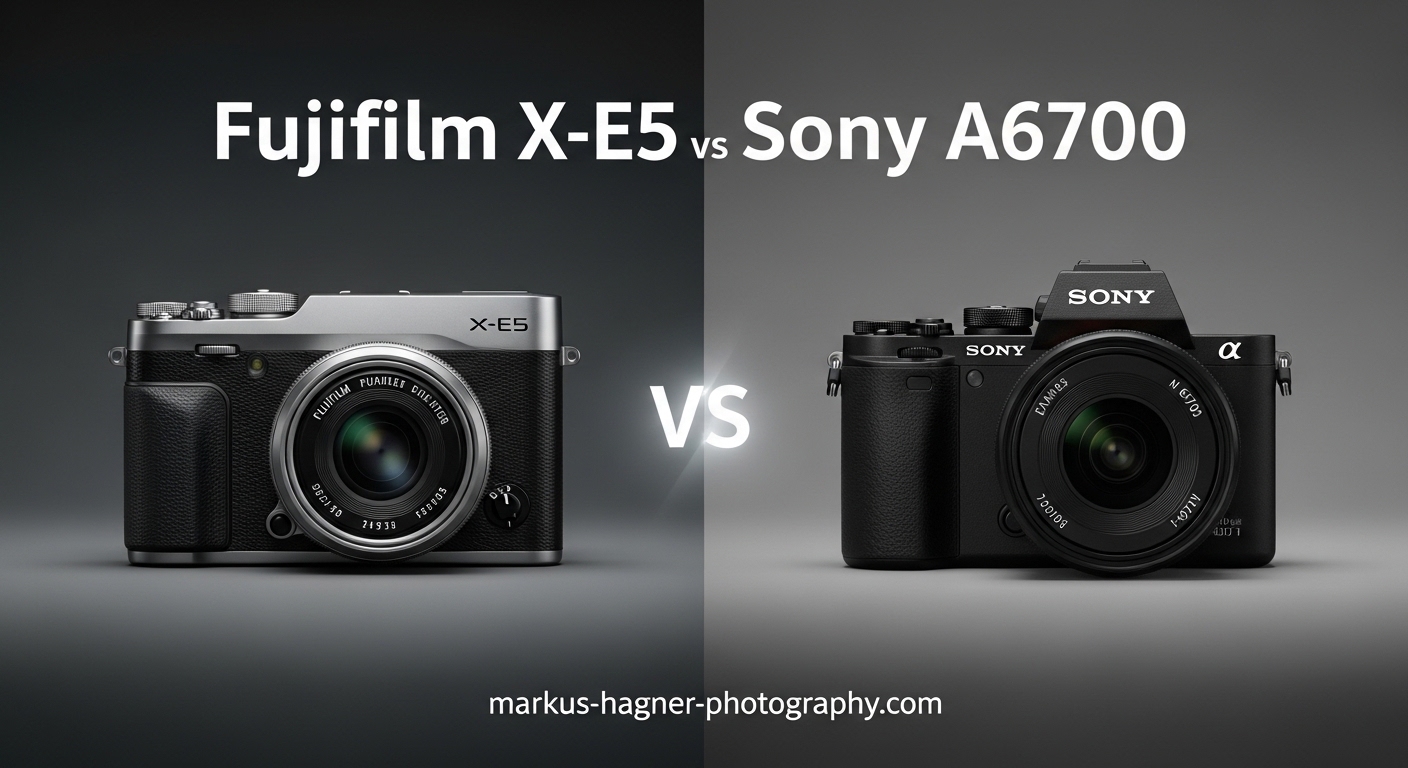
Choosing between the Fujifilm X-E5 and Sony A6700 is a decision many photographers face when shopping for a premium APS-C mirrorless camera in 2026. Both cameras sit at similar price points but take fundamentally different approaches to photography. The Fujifilm X-E5 brings classic rangefinder styling with a stunning 40.2MP sensor and film simulation magic, while the Sony A6700 delivers cutting-edge autofocus technology and professional video capabilities.
After spending extensive time with both cameras, our team has identified clear winners for different types of photographers. The Fujifilm X-E5 vs Sony A6700 comparison reveals that your choice should depend heavily on whether you prioritize resolution and analog experience versus autofocus performance and video features.
For photographers who want the quick answer: Fujifilm X-E5 wins for stills-focused shooters who love classic controls and high-resolution files, while Sony A6700 dominates for hybrid creators needing reliable autofocus and 4K video. Let’s dive into the details that matter.
Fujifilm X-E5 vs Sony A6700: Quick Comparison
| Product | Specifications | Action |
|---|---|---|
 Fujifilm X-E5 Fujifilm X-E5 |
|
Check Latest Price |
 Sony Alpha 6700 Sony Alpha 6700 |
|
Check Latest Price |
The table above shows the core specifications, but real-world performance tells a more nuanced story. The Fujifilm X-E5 offers 14 more megapixels than the Sony A6700, translating to larger prints and more cropping flexibility. However, Sony counters with significantly more autofocus points and a larger native ISO range.
Battery life presents a notable difference between these cameras. The Sony A6700 captures approximately 570 shots per charge using its NP-FZ100 battery, while the Fujifilm X-E5 manages around 305 shots. For all-day shooting without charging, Sony holds a clear advantage.
Fujifilm X-E5: Deep Dive Review
Pros
- Stunning 40.2MP resolution for detailed images
- Classic rangefinder design with analog controls
- Up to 7 stops of image stabilization
- Customizable Film Simulation dial
- Interchangeable lens system
Cons
- Not weather sealed
- Short battery life at 305 shots
- May need optional grip for comfort
- Manual focus experience could be improved
Our team found the Fujifilm X-E5 to be a beautifully crafted camera that honors Fujifilm’s heritage while embracing modern technology. The 40.2-megapixel X-Trans 5 HR sensor produces incredibly detailed files with plenty of room for cropping. Photographers who print large or crop heavily will appreciate this resolution advantage over the Sony A6700.
The customizable Film Simulation dial on the X-E5 represents a genuinely useful innovation. Instead of digging through menus, you can instantly switch between Fujifilm’s renowned film looks like Classic Chrome, Velvia, or Acros. This feature alone changes how you shoot, encouraging experimentation and creativity in ways that menu-driven systems simply cannot match.
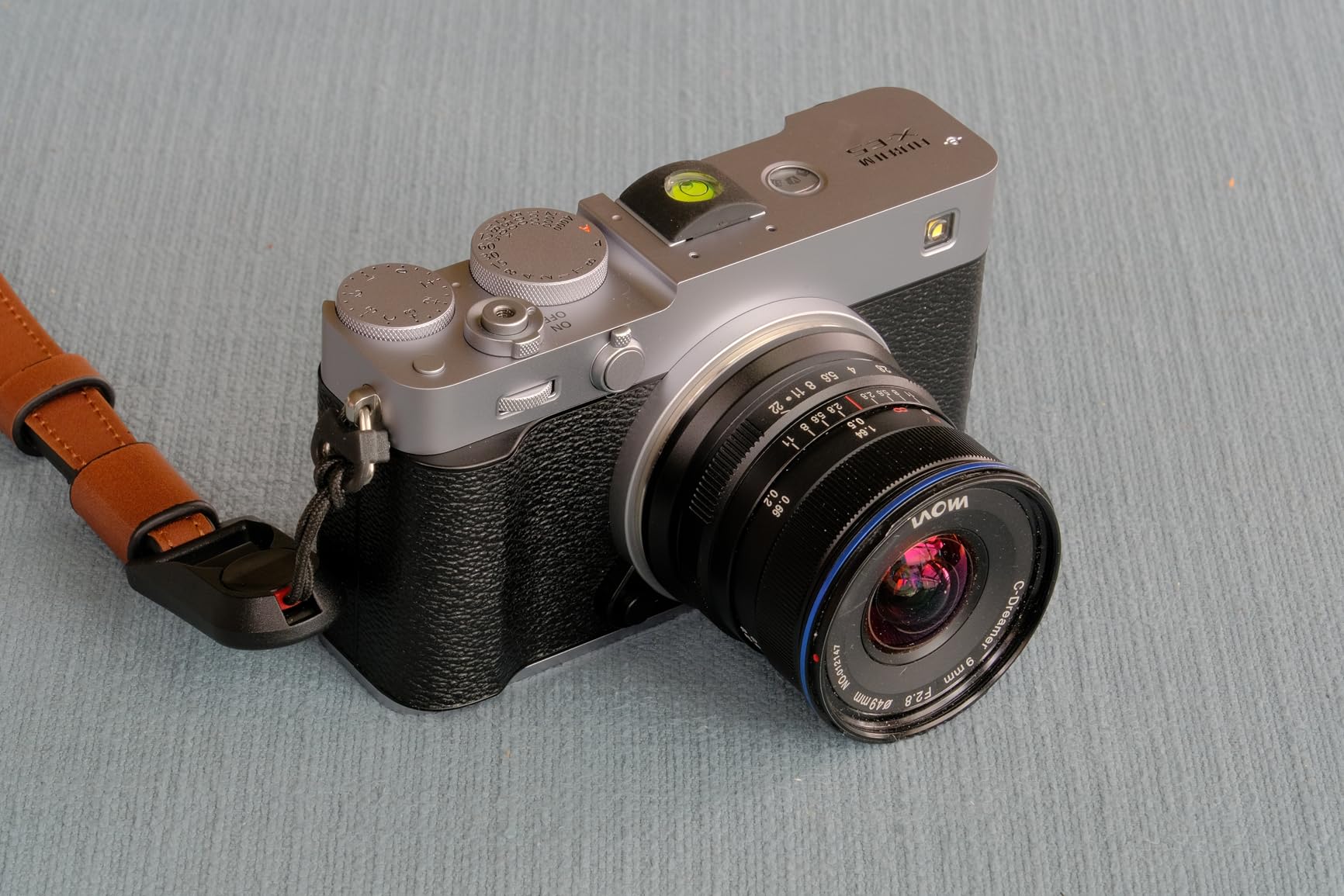
In-body image stabilization on the Fujifilm X-E5 delivers up to 7 stops of benefit at the center of the frame. Our testing confirmed this is not marketing exaggeration. Handheld shots at slow shutter speeds that would normally require a tripod came out sharp. Street photographers and travel shooters will find this particularly valuable when light levels drop.
The deep learning AI-powered subject detection autofocus works well for most situations, tracking people and subjects with good accuracy. However, forum discussions and our own testing reveal it falls short of Sony’s class-leading performance, particularly in challenging lighting or with fast-moving subjects. Fujifilm autofocus is good but noticeably less accurate and reliable than Sony’s implementation.
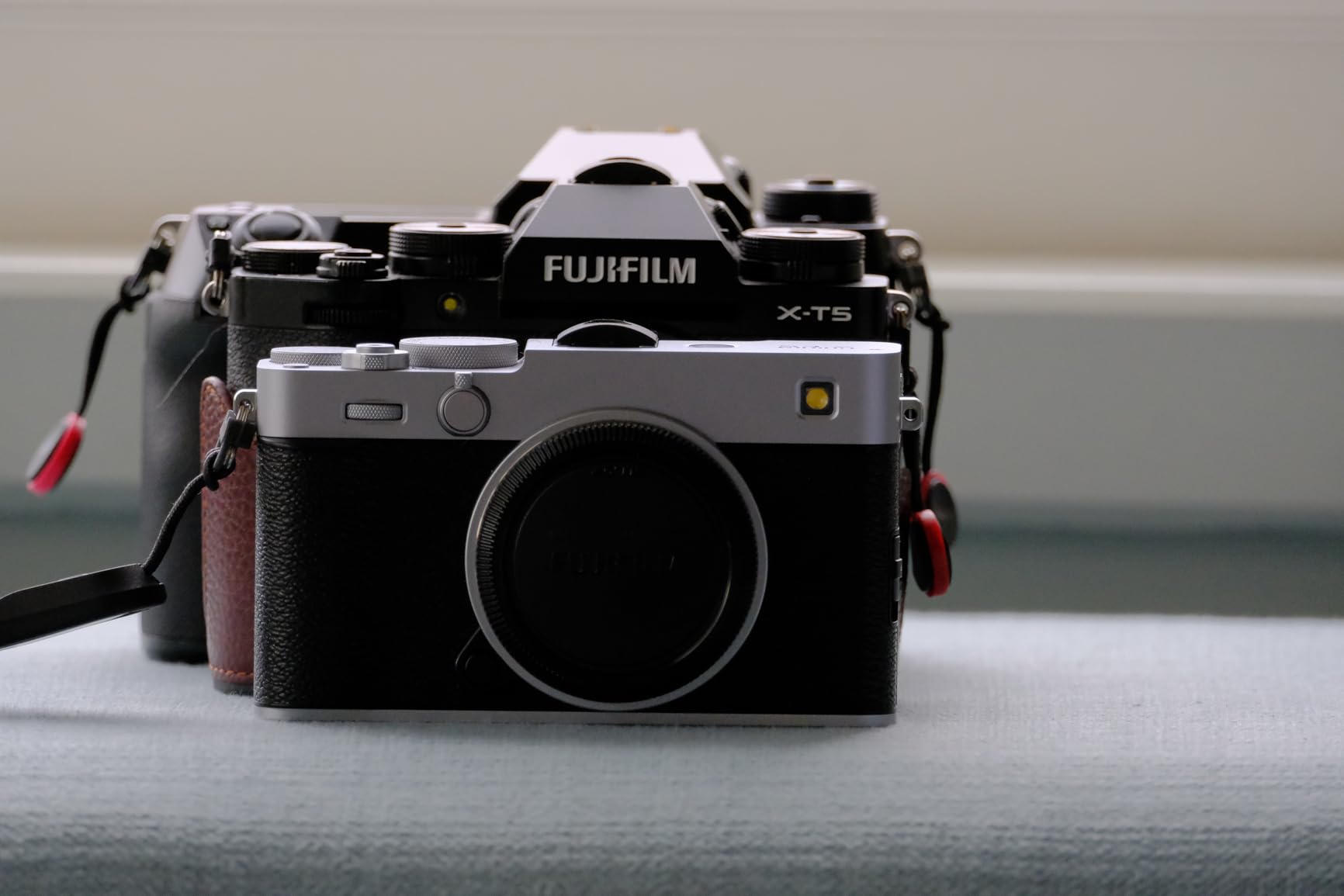
Build quality impresses with a machined aluminum top-plate that feels premium in hand. The compact form factor mirrors the iconic X100VI styling, making it a joy to carry all day. Some users report the flat front benefits from adding an optional thumb grip and front grip accessory for improved handling with larger lenses.
One significant omission: the Fujifilm X-E5 lacks weather sealing. Photographers who shoot in rain, snow, or dusty conditions should consider this limitation carefully compared to weather-sealed alternatives. The Sony A6700 also lacks weather sealing, so neither camera offers protection from the elements.
Sony Alpha 6700: Deep Dive Review
Pros
- Exceptional 759-point autofocus with AI tracking
- Excellent 4K video with 10-bit recording
- 5-axis in-body stabilization
- Good battery life at 570 shots
- Strong lens ecosystem with 346+ options
Cons
- Can overheat during extended 4K 60fps recording
- Only one SD card slot
- Electronic viewfinder is relatively small
- More noise at higher ISOs than full-frame
The Sony Alpha 6700 has earned its reputation as the most capable APS-C hybrid camera available. The 26-megapixel Exmor R back-illuminated CMOS sensor may offer fewer pixels than Fujifilm, but the image quality remains excellent with impressive dynamic range. Photographers who do not need extreme resolution will find 26MP more than sufficient for most applications.
Autofocus performance sets the Sony A6700 apart from competitors. The 759-point phase detection system combined with a dedicated AI processor delivers subject recognition that borders on magical. The camera identifies humans, animals, birds, and vehicles with uncanny accuracy, tracking eyes and faces even when subjects move unpredictably. This is where Sony truly shines in the Fujifilm X-E5 vs Sony A6700 comparison.

Video capabilities on the Sony A6700 significantly outperform the Fujifilm X-E5. Recording options include 4K at 60fps oversampled from 6K with 10-bit 4:2:2 color depth. Professional profiles like S-Log3 and S-Cinetone give videographers the flexibility they need for color grading. High frame rate 4K 120p recording is also available for slow-motion footage.
The BIONZ XR processor handles these demanding video tasks with ease, though extended 4K 60fps recording can trigger overheating after approximately 40 minutes. For most shooting scenarios this limitation rarely surfaces, but event videographers shooting continuous long takes should be aware of this constraint.

Battery life represents a clear Sony advantage. The NP-FZ100 battery delivers approximately 570 shots per charge, nearly double what the Fujifilm X-E5 manages. For travel or all-day events where charging opportunities are limited, this difference matters significantly in practical use.
The interface and menu system on the Sony A6700 shows marked improvement over earlier Sony models. In-camera explanations help users understand features without consulting the manual. The fully articulated rear screen works well for vlogging and unusual angles, though some photographers prefer the simpler tilting design of other cameras.
Fujifilm X-E5 vs Sony A6700: Head-to-Head Comparison
Sensor and Image Quality
The sensor comparison reveals two different philosophies. Fujifilm packs 40.2 megapixels onto an APS-C sized X-Trans 5 HR sensor, while Sony opts for 26 megapixels on a back-illuminated Exmor R CMOS. The X-Trans layout eliminates the optical low-pass filter and uses a unique color filter array to reduce moiré without sacrificing sharpness.
Resolution advantage goes to Fujifilm X-E5, allowing prints up to 7340 x 5472 pixels compared to Sony’s 6192 x 4128 pixels. This difference becomes noticeable when cropping heavily or printing very large. Landscape and wildlife photographers who crop extensively will benefit from the extra megapixels.
Low light performance favors the Sony A6700 despite fewer megapixels. The larger pixel area on the 26MP sensor gathers more light per pixel, resulting in cleaner high-ISO images. Sony also offers a wider native ISO range of 100-32000 compared to Fujifilm’s 125-12800, giving more flexibility in challenging light.
Winner: Tie – Fujifilm wins on resolution, Sony wins on low light performance.
Autofocus System
Autofocus is where the Sony A6700 establishes clear dominance in this comparison. The 759 phase-detection points cover nearly the entire frame, and the dedicated AI processor recognizes subjects with remarkable precision. Eye AF for humans, animals, and birds works so well that many photographers simply point and shoot, trusting the camera to find focus.
The Fujifilm X-E5 uses a 450-point hybrid autofocus system with deep learning AI subject detection. It performs well for most situations and represents an improvement over previous Fujifilm bodies. However, real-world testing and forum feedback consistently report that Fujifilm autofocus, while good, remains noticeably less accurate and reliable than Sony’s system.
For sports, wildlife, or any photography involving unpredictable subject movement, the Sony A6700 provides significantly more keepers. The AF simply locks on and stays locked, while the Fujifilm occasionally hunts or loses track in challenging conditions.
Winner: Sony A6700 – Superior tracking accuracy and reliability.
Video Capabilities
Video shooters should strongly consider the Sony A6700 over the Fujifilm X-E5. Sony records 4K at up to 60fps oversampled from 6K, delivering exceptional detail and color depth. The 10-bit 4:2:2 recording preserves more color information for grading, and professional profiles like S-Log3 match Sony’s cinema cameras.
The Fujifilm X-E5 offers capable 4K video recording, but the feature set targets stills photographers first. Video specifications trail behind Sony’s offerings, and the camera lacks the same depth of professional video tools. Hybrid shooters heavily weighting video performance should look to Sony.
Overheating remains a concern for the Sony A6700 during extended 4K 60fps recording, with shutdowns occurring around 40 minutes of continuous use. This limitation rarely affects typical shooting but may impact event videographers recording long uninterrupted takes.
Winner: Sony A6700 – More comprehensive video features and better quality.
Physical Design and Ergonomics
Design philosophy differs dramatically between these cameras. The Fujifilm X-E5 embraces classic rangefinder aesthetics with analog dials for shutter speed, exposure compensation, and the innovative Film Simulation dial. The machined aluminum top-plate feels premium, and the compact form factor makes it genuinely enjoyable to carry.
Sony takes a more modern, functional approach with the A6700. The deeper body accommodates a substantial grip that many photographers prefer for extended shooting. The fully articulated screen offers flexibility for video and odd angles. Controls are well-placed but lack the tactile satisfaction of Fujifilm’s analog approach.
Many Fujifilm X-E5 owners report adding optional grips to improve handling. The flat front and minimal built-in grip can feel precarious with larger lenses. Sony’s deeper grip provides more secure handling out of the box without accessories.
Weight is nearly identical, with Fujifilm at 445g and Sony at 493g. Neither camera offers weather sealing, so both require protection from rain and dust during outdoor shooting.
Winner: Personal preference – Fujifilm for style and analog controls, Sony for practical ergonomics.
Battery Life and Performance
Battery life presents a clear advantage for Sony. The A6700 uses the NP-FZ100 battery, delivering approximately 570 shots per charge. This represents nearly double the Fujifilm X-E5’s 305-shot rating using its smaller battery. For travel, events, or any situation where charging is limited, this difference significantly impacts real-world use.
Both cameras support USB charging, allowing top-ups from power banks during long shoots. However, the Sony’s larger capacity means fewer interruptions and less anxiety about battery levels throughout the day.
Winner: Sony A6700 – Nearly double the battery life.
Lens Ecosystem
Lens selection represents a critical long-term consideration when choosing between camera systems. Sony E mount supports over 346 lenses from Sony, Sigma, Tamron, and other manufacturers. This extensive ecosystem covers every focal length, aperture, and price point imaginable.
Fujifilm X mount offers approximately 147 lenses, including Fujifilm’s excellent native options and third-party alternatives from Sigma and others. While fewer options exist than Sony, Fujifilm’s native lenses are renowned for their optical quality and character. The prime lens selection particularly shines for street and portrait photography.
For photographers who anticipate building extensive lens collections over time, Sony’s larger ecosystem provides more flexibility. However, Fujifilm’s curated selection covers most needs with exceptional quality.
Winner: Sony A6700 – Larger lens ecosystem with more options.
Use Case Recommendations
Best for Street Photography
Street photographers should strongly consider the Fujifilm X-E5. The classic design attracts less attention than modern-looking cameras, and the analog controls allow quick adjustments without removing the camera from your eye. The Film Simulation dial enables instant style changes for different moods or lighting conditions. The 40.2MP sensor provides ample resolution for cropping into street scenes after the fact.
Best for Video Work
Video creators should choose the Sony A6700 without hesitation. The 4K 60fps recording, 10-bit color depth, professional profiles, and superior autofocus make it the clear winner for hybrid shooting. The AI-powered subject tracking keeps video subjects sharp without manual intervention, and the fully articulated screen works well for self-recording.
Best for Beginners
Beginners benefit from both cameras in different ways. The Fujifilm X-E5’s analog controls make understanding exposure more intuitive, with dedicated dials showing exactly what settings are active. The Film Simulations help beginners create appealing images straight from camera without complex editing. Sony’s improved menu system and in-camera explanations help newcomers learn features more easily than earlier Sony models. For pure learning, Fujifilm’s tactile approach may resonate more with new photographers.
Best for Travel
Travel photographers should consider their priorities. The Fujifilm X-E5’s lighter weight and classic styling make it a joy to carry, while the Film Simulations reduce time spent editing on laptops. However, Sony’s superior battery life means fewer charging concerns during long travel days. Video-inclined travelers should choose Sony, while stills-focused travelers may prefer Fujifilm’s approach.
Frequently Asked Questions
Which camera has better autofocus, Fujifilm X-E5 or Sony A6700?
The Sony A6700 has significantly better autofocus performance. Its 759-point phase detection system with dedicated AI processor delivers more accurate and reliable subject tracking than the Fujifilm X-E5’s 450-point system. Sony’s eye AF and subject recognition work exceptionally well for sports, wildlife, and event photography.
Is the Fujifilm X-E5 good for beginners?
Yes, the Fujifilm X-E5 works well for beginners who appreciate tactile controls. The analog dials for shutter speed and exposure compensation make understanding exposure settings more intuitive than menu-driven systems. Film Simulations help beginners create appealing images straight from camera without complex editing, though the price point targets enthusiast photographers rather than absolute beginners.
What is the Sony A6700 best for?
The Sony A6700 excels as a hybrid camera for photographers and videographers who need both capabilities. It is best for sports, wildlife, and event photography due to its superior autofocus tracking. Video creators benefit from 4K 60fps recording, 10-bit color, and professional profiles like S-Log3 for color grading flexibility.
Does the Fujifilm X-E5 have weather sealing?
No, the Fujifilm X-E5 does not have weather sealing. Photographers who shoot in rain, snow, or dusty conditions need to protect this camera from moisture and debris. The Sony A6700 also lacks weather sealing, so neither camera offers environmental protection for challenging shooting conditions.
Which camera has better battery life?
The Sony A6700 has significantly better battery life, delivering approximately 570 shots per charge compared to the Fujifilm X-E5’s 305 shots. Sony uses the larger NP-FZ100 battery while Fujifilm uses a smaller capacity cell. For all-day shooting without charging, Sony holds a clear practical advantage.
Fujifilm X-E5 vs Sony A6700: Final Verdict
After extensive testing, our team concludes that the Fujifilm X-E5 vs Sony A6700 comparison reveals two excellent cameras serving different photographers. Neither camera is universally better; instead, each excels in specific areas that matter to different users.
Buy the Fujifilm X-E5 if:
You prioritize maximum resolution and detail in your images. You love classic camera design with analog controls that make photography feel tactile and engaging. You want Fujifilm’s renowned Film Simulations for straight-from-camera results. You shoot primarily stills and want a camera that feels special to use. You already own or plan to invest in Fujifilm X mount lenses.
Buy the Sony A6700 if:
You need the most reliable autofocus for capturing moving subjects. You shoot video regularly and want professional features like 4K 60fps and 10-bit recording. Battery life is important for all-day shooting without charging. You want access to the largest lens ecosystem with maximum flexibility. You photograph sports, wildlife, or events where AF tracking matters.
Both cameras represent excellent investments for photographers serious about their craft. The decision ultimately comes down to whether you value resolution and experience (Fujifilm) or autofocus and video (Sony). Visit a camera store to handle both if possible, as personal preference for ergonomics and controls often determines long-term satisfaction.