
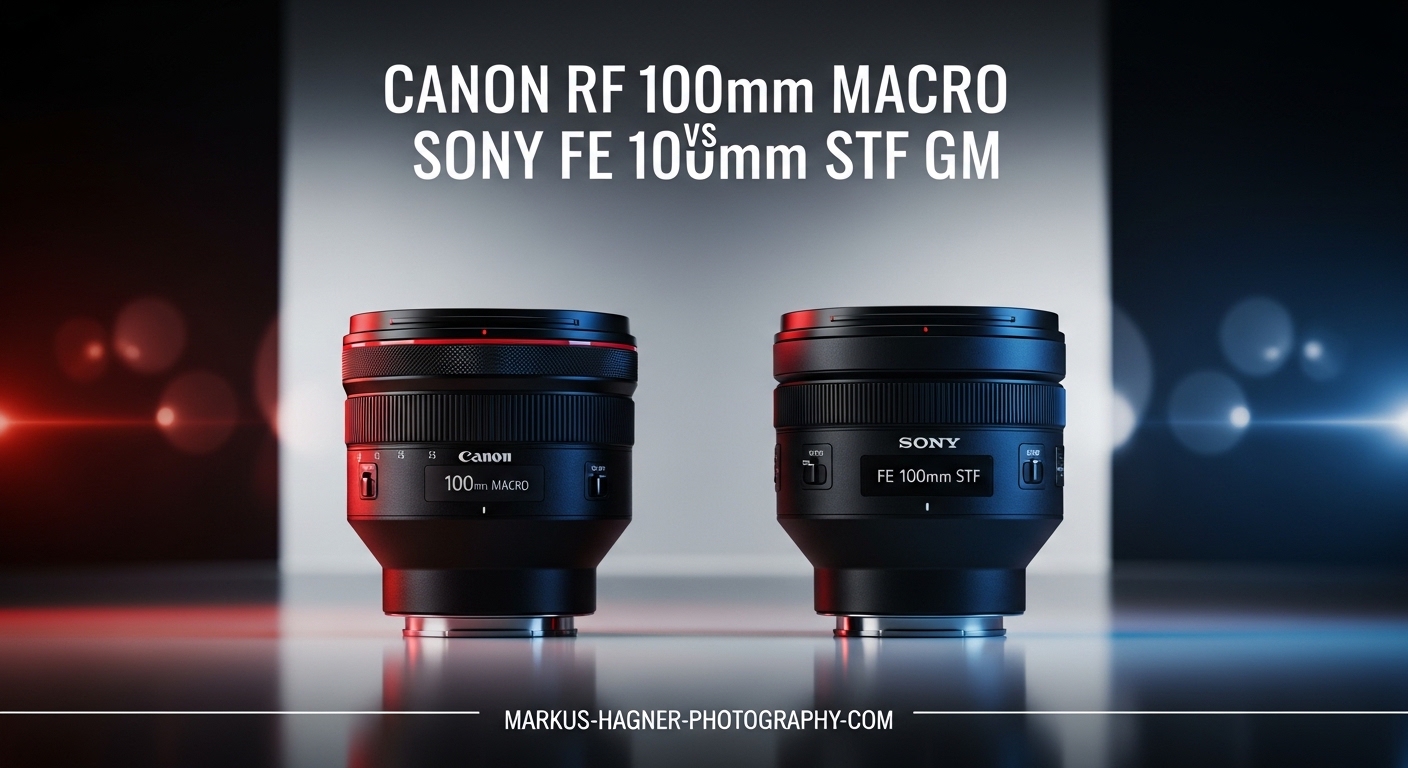
If you shoot macro, portraits, or close-up work on a mirrorless system, these two lenses almost certainly made your shortlist. The Canon RF 100mm f2.8L Macro IS USM and the Sony FE 100mm f2.8 Macro GM are both premium 100mm options — but they were designed with very different philosophies, and choosing the wrong one could leave you frustrated the moment you get it out of the box.
I’ve spent time shooting with both lenses across macro subjects, portraits, and product photography. Here’s the honest verdict: the Canon is the better true macro tool, delivering 1.4x magnification, a class-leading image stabilization system, and a unique spherical aberration control ring. The Sony takes a different path entirely — its apodization filter creates bokeh that few lenses can match, making it a favorite among portrait photographers and those who want near-macro capability with silky background rendering.
Neither lens is “better” in an absolute sense. Which one wins depends entirely on what you actually shoot. This guide breaks it all down so you can make a clear, confident decision.
Canon RF 100mm Macro vs Sony FE 100mm STF GM: Quick Comparison
Below is a side-by-side look at both lenses before we get into the details.
| Product | Specifications | Action |
|---|---|---|
 Canon RF 100mm F2.8 L Macro IS USM Canon RF 100mm F2.8 L Macro IS USM |
|
Check Latest Price |
 Sony FE 100mm F2.8 STF GM OSS Sony FE 100mm F2.8 STF GM OSS |
|
Check Latest Price |
Canon RF 100mm F2.8 L Macro IS USM Review
Canon RF100mm F2.8 L Macro is USM Lens, Medium Telephoto Lens, Macro Lens, Compatible with EOS R Series Mirrorless Cameras, Black
Pros
- World-first 1.4x magnification for a medium telephoto
- Hybrid IS handles both angular and shift shake
- SA control ring lets you tune bokeh character
- Fast and precise autofocus on EOS R bodies
- Excellent weather sealing for outdoor work
Cons
- SA ring can soften images if left in wrong position
- Heavier than some competitors at 1.61 lbs
The Canon RF 100mm f2.8L Macro IS USM arrived in 2021 as one of the most technically ambitious macro lenses Canon has ever produced. It holds the distinction of being the world’s first medium telephoto macro lens to achieve 1.4x maximum magnification — that’s greater than life-size, which opens up a level of detail in your subjects that 1:1 macro lenses simply cannot reach.
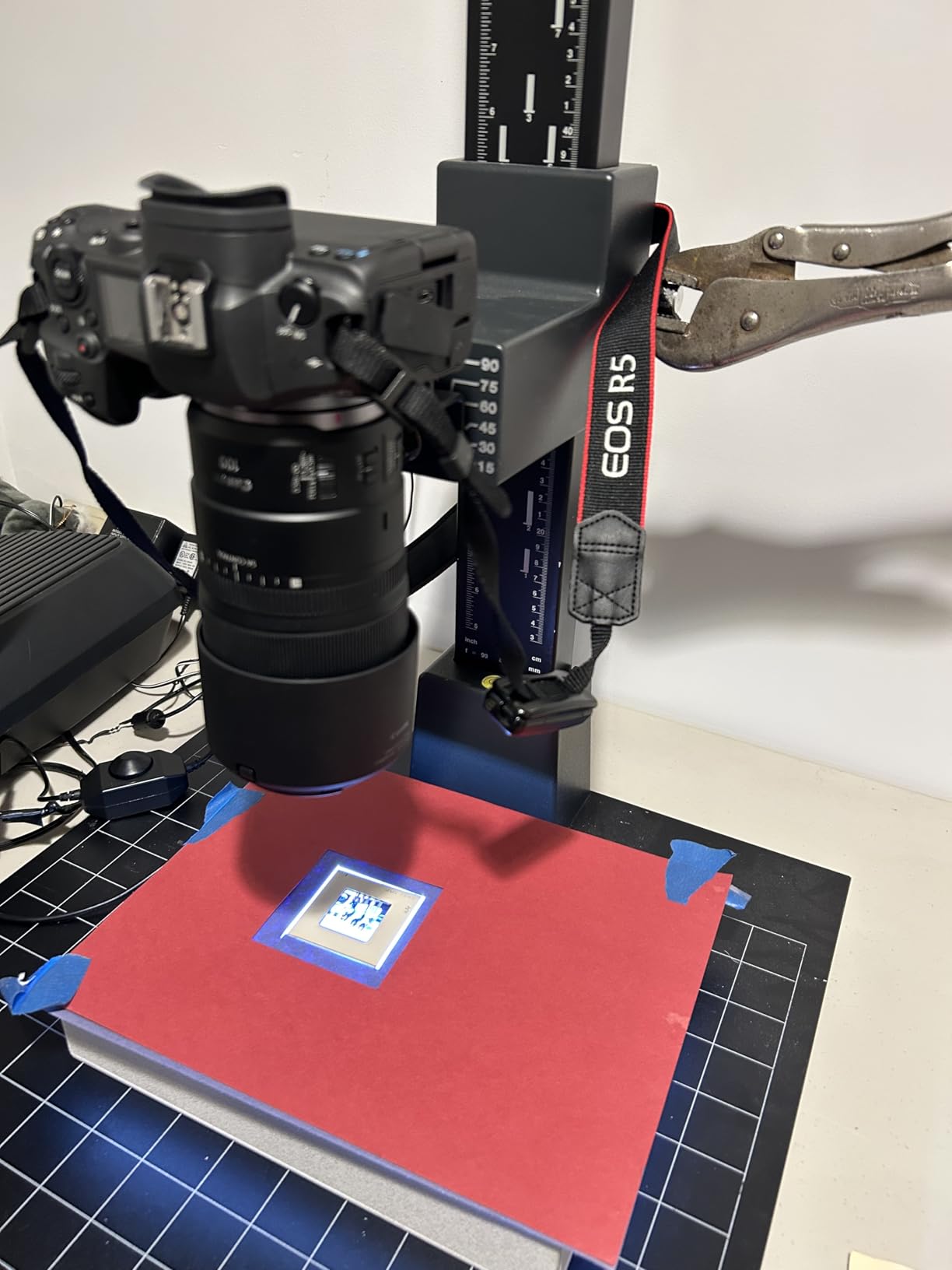
Using this lens on an EOS R5 or R6, the first thing you notice is how composed it feels during handheld macro work. Canon’s Hybrid IS system corrects both angular and shift camera shake, which matters enormously at close focus distances where even the slightest movement can blow a shot. Canon rates it at up to 5 stops of compensation, and in practice that holds up well — I was getting sharp frames of small insects at 1:1 handheld in decent light.
The build quality is solidly L-series. The barrel has a textured rubber grip, a weather-sealed design with 12 sealing points, and a smooth, damped focus ring. Controls include a focus limiter switch, an image stabilizer switch, and a dedicated SA control ring — more on that in a moment.
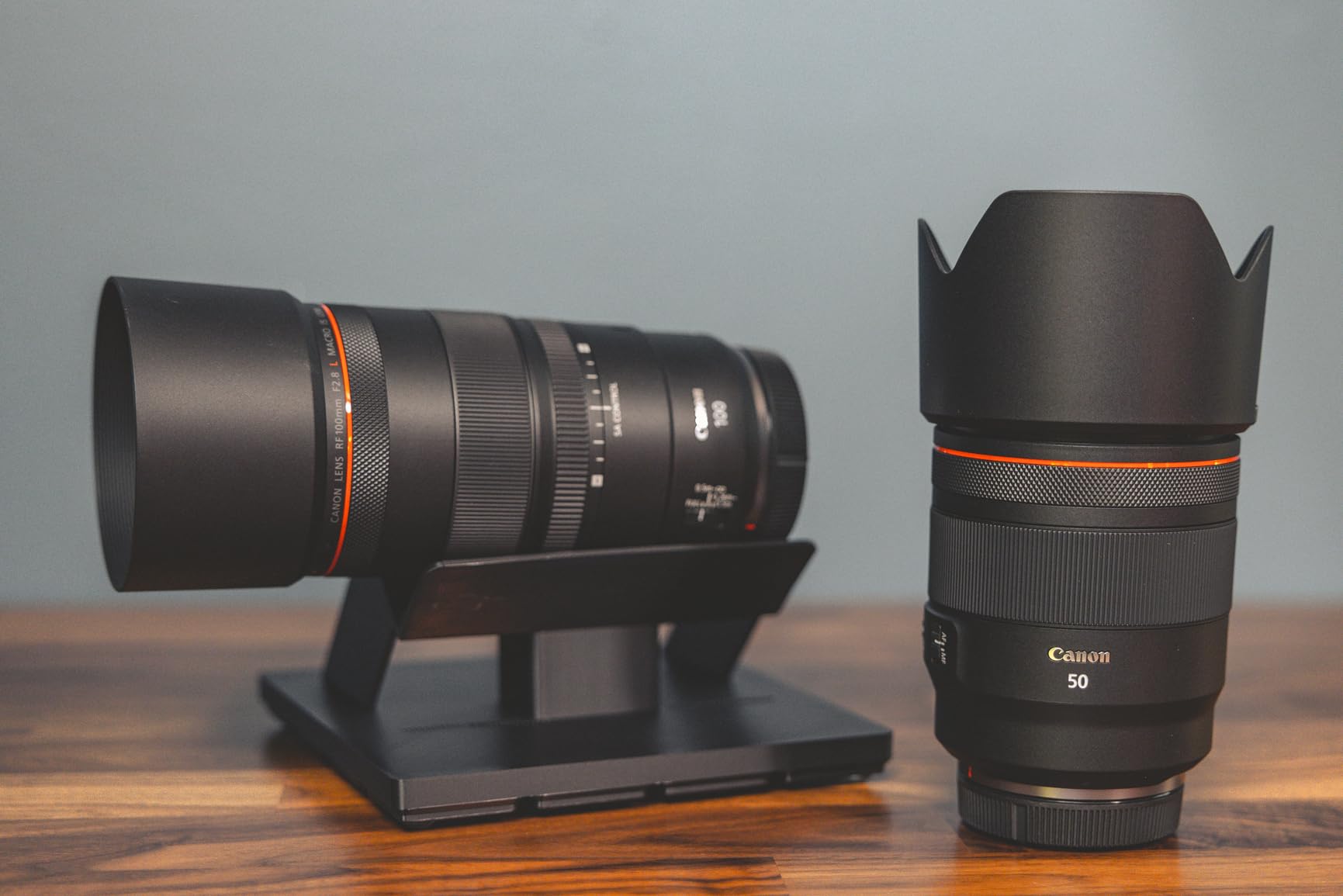
The SA control ring is the most unusual feature this lens carries. It’s a ring around the front of the barrel that lets you dial in positive or negative spherical aberration. At the center position (zero), the lens renders bokeh as sharply as any L-series lens. Turn it toward the negative end and background blur becomes smoother and creamier. Turn it positive and you get a softer, more dreamy rendering. It’s genuinely useful for portrait work when you want to control the background character without switching lenses.
The catch — and it’s one the reviews consistently flag — is that if you forget to reset the ring after experimenting, your images can look subtly unsharp. Canon didn’t include a clear click-stop at center, so I found myself double-checking it before important shots. It’s a minor workflow issue, but worth knowing upfront.
Autofocus on EOS R bodies is quick and quiet. The lens uses Canon’s Nano USM motor, which handles both stills and video without significant hunting. For macro work where you’re pulling focus from infinity to close focus, the response is smooth rather than jerky, which makes it much easier to track a moving subject at high magnification.
Optically, the Canon is outstanding across the frame. Center sharpness wide open is excellent, with edge performance improving only slightly by f/5.6. Chromatic aberration is well controlled, flare resistance is good thanks to Canon’s Super Spectra coating, and the 9-blade aperture produces clean sunstars when stopped down. The 356 reviewers on Amazon gave it a 4.8 average — 88% five stars — which reflects a lens that consistently delivers in real-world shooting conditions.
For working distance, shooting at 1:1 gives you roughly 6 inches from the front element to your subject. At the maximum 1.4x, you’re even closer. That’s tight for live insects, which will flee the moment your lens is that close, but perfect for studio macro work with controlled subjects. Pair this with the excellent IS and you have one of the most capable macro setups available for the RF mount.
The portrait performance deserves a mention too. At f/2.8 with the SA ring at zero, portraits show punchy center sharpness and smooth background blur. Push the SA ring negative and the bokeh softens further, giving you a rendering that can look almost like a medium format portrait lens. It won’t replace a dedicated portrait lens for everyone, but as a dual-purpose macro and portrait lens, the RF 100mm is genuinely hard to beat.
Sony FE 100mm F2.8 STF GM OSS Review
Pros
- Apodization filter creates uniquely smooth bokeh rendering
- 11-blade circular aperture for gorgeous defocused highlights
- Direct Drive SSM is fast
- quiet
- and precise
- Beautiful color saturation and sharpness
- Exceptional for portrait photography
Cons
- Apodization reduces effective light transmission to f/5.6
- Heavier than expected at 2.67 lbs
- Limited stock availability
- Not suitable as a true 1:1 macro lens
The Sony FE 100mm f2.8 STF GM OSS is one of the most unusual lenses in Sony’s entire lineup — and that’s exactly what makes it so compelling for a specific type of photographer. STF stands for Smooth Trans Focus, and it refers to the apodization optical element inside the lens that gradually reduces light transmission toward the edges of the aperture. The result is bokeh that lacks the harsh double edges you see from conventional lenses, producing a smooth, gradual fall-off that portrait photographers describe as “cinematic” or “painterly.”
In practical terms, shooting portraits with this lens wide open produces background blur that is genuinely unlike anything else in the Sony lineup at this focal length. Defocused points of light become soft discs without harsh outlines. Hair strands against a background dissolve into smooth wash. Flower petals in the foreground blend rather than pop. If portrait or beauty photography is your primary use case, this lens produces results that get consistent client reactions.
The tradeoff is significant, though. Because the apodization element reduces light transmission, the effective aperture for metering is f/5.6 even though the physical aperture is f/2.8. In low light this costs you about 2.5 stops of exposure. The camera meters correctly and compensates automatically, but it means the depth-of-field advantage of a fast aperture is partially offset by slower shutter speeds in dim conditions.

Build quality is exactly what you’d expect from Sony’s G Master lineup. The barrel is a magnesium alloy construction with comprehensive dust and moisture sealing, a rubber aperture ring, and a smooth focus ring. The 11-blade aperture produces circular bokeh balls even when stopped down a stop or two, which is noticeable when shooting at f/4 against lights in the background.
Sony’s Direct Drive SSM (DDDSSM) autofocus system is fast and quiet. It tracks subjects smoothly, which works well for portrait sessions where you need reliable eye-tracking AF. The lens also handles video AF well, with minimal focus breathing compared to many lenses of this type.
Where the Sony STF falls short in this comparison is macro capability. The lens offers around 0.25x maximum magnification, which puts it firmly in the “close-focus” category rather than true macro. If you need 1:1 or greater magnification for insects, jewelry, or small product photography, this lens won’t deliver that. It’s more accurate to describe it as a medium telephoto with enhanced close-focus capability and exceptional portrait rendering.

That distinction matters enormously when evaluating it against the Canon. The Sony’s 16 Amazon reviews average 4.8 stars, with reviewers consistently describing it as a “secret weapon” for portrait work. One reviewer called it the best portrait lens they’ve ever used. Another noted using it for flowers and found the near-macro performance excellent for that use case. Nobody reviewing it is disappointed — but they all bought it knowing what it is, which is a specialized portrait tool rather than a macro workhorse.
The Sony STF is worth considering if your work centers on portraits, fashion, beauty, or wedding photography where background rendering quality is a primary concern. For macro photographers who need true life-size or greater magnification, it’s the wrong tool for the job. That’s not a criticism — it’s just an accurate description of where this lens excels.
Canon RF 100mm Macro vs Sony FE 100mm STF GM: Head-to-Head
Now let’s break down each key performance area and declare a winner per category.
Magnification and Macro Capabilities
The Canon wins this category by a wide margin. At 1.4x maximum magnification, it shoots beyond life-size — a capability no other medium telephoto macro lens had at launch. For true macro photographers, this means you can fill the frame with a subject smaller than the sensor itself, revealing detail that 1:1 lenses cannot capture without cropping.
The Sony STF offers around 0.25x maximum magnification, which qualifies it as a close-focus portrait lens rather than a macro lens. It’s fine for photographing flowers, small products, or faces at close range, but if you need insects at 1:1 or coin photography at life-size, the Sony isn’t the right choice.
Winner: Canon RF 100mm Macro — no contest for true macro work.
Image Quality and Optical Performance
Both lenses are optically excellent, but in different ways. The Canon delivers high resolution across the frame from f/2.8, with controlled chromatic aberration, low distortion, and excellent flare resistance. Center sharpness is outstanding wide open and holds through the edges by f/5.6 to f/8.
The Sony STF isn’t designed to be measured purely in sharpness charts. Its apodization element intentionally softens transition zones to create smoother bokeh — and it works. Center sharpness remains high, but the magic is in the rendering character rather than raw resolution numbers. For studio portraits and beauty work where you’re retouching anyway, that rendering difference is more valuable than a marginal resolution advantage.
For general sharpness and optical correction: Winner: Canon RF 100mm Macro (slightly). For rendering character and bokeh artistry: Winner: Sony FE STF GM.
Autofocus Performance
Canon’s Nano USM motor is excellent on RF bodies with full IBIS and eye-tracking integration from the camera body. The AF is fast, quiet, and tracks well for portraits and slower-moving macro subjects. At 1:1 magnification, AF isn’t always usable for live subjects — most serious macro photographers switch to manual focus or use focus rails — but for general photography the Canon AF is class-leading.
Sony’s DDDSSM is similarly strong on Alpha bodies. It pairs well with Sony’s eye-tracking AF, which has been a benchmark for mirrorless systems for several years. For portrait sessions at moderate distances, Sony’s in-body AF performance gives the STF an advantage in real-world tracking scenarios simply because Sony’s eye-AF has historically been exceptional.
Winner: Draw — both are fast and reliable on their respective bodies. Sony edges ahead for portrait tracking in some scenarios; Canon is more useful for macro AF at moderate magnifications.
Image Stabilization
Canon’s Hybrid IS is specifically designed for macro photography. It corrects not just angular shake (rotation around the camera) but also shift shake (lateral movement), which becomes the dominant form of blur at close focus distances. The combination of up to 5 stops of IS compensation with EOS R bodies that also have IBIS gives Canon shooters an exceptional stability advantage for handheld macro work.
The Sony STF has OSS (Optical SteadyShot) built in, and it works well for portrait distances. Sony Alpha bodies also add IBIS on newer models. However, the Sony’s stabilization isn’t specifically tuned for macro shooting — and given that the lens only reaches 0.25x, the specific demands of close-focus shooting aren’t as extreme as they are with the Canon.
Winner: Canon RF 100mm Macro — Hybrid IS for macro work is a genuinely meaningful advantage.
Build Quality and Weather Sealing
Both lenses are built to professional standards. The Canon RF 100mm is an L-series lens, which means Canon’s highest tier of construction with comprehensive weather sealing, a fluorine front element coating, and a metal barrel. The rubber rings around all switches and joints make it suitable for shooting in rain or dusty conditions without worry.
Sony’s G Master series is equally serious. The STF GM uses magnesium alloy construction and has dust and moisture sealing throughout. In practice, both lenses can be trusted in challenging outdoor conditions, and neither feels fragile or plasticky in the hand.
Winner: Draw — both are built to professional standards that will outlast most camera bodies.
Size and Weight
This is one area where there’s a meaningful difference. The Canon RF 100mm weighs 1.61 pounds (730g) and measures 3.21 x 5.83 inches. It’s a substantial lens, but manageable for handheld shooting even over a full day.
The Sony FE STF is noticeably heavier at 2.67 pounds (1,210g) and has dimensions of 8.38 x 5.51 inches. That’s a significant weight difference — the Sony is 66% heavier than the Canon. For photographers who walk long distances, shoot handheld throughout portrait sessions, or simply prefer a lighter kit, the Canon’s advantage here is real and practical.
Winner: Canon RF 100mm Macro — nearly a full pound lighter, which adds up over a full shooting day.
Bokeh Quality
This is where the Sony STF earns its reputation. The apodization element creates background blur that is categorically different from what conventional lenses produce. Defocused backgrounds dissolve rather than pop. Highlight circles are soft-edged rather than ringed. For photographers who place background rendering at the top of their priority list, the Sony has no real competition at this focal length.
The Canon’s bokeh is also excellent — the SA control ring gives you manual control over bokeh character, and the 9-blade aperture produces smooth circular blur. But the Canon’s bokeh, even at its smoothest SA setting, is noticeably more conventional than the STF’s rendering. Experienced portrait photographers will see the difference immediately.
Winner: Sony FE STF GM — the apodization rendering is a category of its own for portrait bokeh.
Video Performance
For video use, both lenses have strengths worth knowing. The Canon RF 100mm has low focus breathing, which matters when pulling focus between subjects on camera. The Nano USM motor is virtually silent, so it won’t be picked up by an on-camera microphone. The SA ring also gives videographers an interesting creative tool for adjusting background rendering in different shots.
The Sony STF’s DDDSSM is equally quiet. Its biggest video advantage is the rendering quality — for interview-style or cinematic portrait work where background character matters, the STF’s apodization rendering translates directly to video. The focus breathing is minimal, which is important for hybrid shooters who switch between stills and video during a session.
Winner: Draw — both perform well for video, with the Sony’s bokeh rendering being a creative advantage for cinematic portrait work.
Teleconverter Compatibility
The Canon RF 100mm is compatible with Canon’s RF 1.4x and 2x teleconverters. With the 1.4x extender, you get a 140mm effective focal length with a maximum aperture of f/4 and magnification beyond 1.4x. With the 2x extender, you reach 200mm at f/5.6 with extreme close-up magnification. This makes the Canon a genuinely flexible system for photographers who also want telephoto reach.
The Sony STF does not officially support Sony’s teleconverter lineup due to the apodization element’s design. This limits its flexibility compared to the Canon for photographers who want to extend reach or magnification.
Winner: Canon RF 100mm Macro — teleconverter compatibility adds meaningful system flexibility.
Frequently Asked Questions
Which macro lens has better magnification, Canon RF 100mm or Sony FE 100mm?
The Canon RF 100mm f2.8L Macro IS USM wins clearly on magnification. It achieves 1.4x maximum magnification, which is greater than life-size — a world-first for a medium telephoto macro lens at its launch. The Sony FE 100mm f2.8 STF GM OSS only reaches around 0.25x magnification, placing it in the close-focus portrait lens category rather than true macro territory.
Is the Canon RF 100mm macro weather sealed?
Yes, the Canon RF 100mm f2.8L Macro IS USM has comprehensive weather sealing as part of the L-series build standard. It includes seals around all buttons, switches, and the lens mount, plus a fluorine coating on the front element to repel water and dust. It’s suitable for shooting in rain or dusty outdoor environments.
Does the Sony FE 100mm f2.8 GM have image stabilization?
Yes, the Sony FE 100mm f2.8 STF GM OSS includes built-in Optical SteadyShot (OSS) image stabilization. On newer Sony Alpha bodies that also feature IBIS, the two stabilization systems work together for improved stability. However, the IS system is not specifically tuned for macro shooting the way Canon’s Hybrid IS is on the RF 100mm.
Can you use teleconverters with the Canon RF 100mm macro?
Yes, the Canon RF 100mm f2.8L Macro IS USM is compatible with Canon’s RF 1.4x and 2x teleconverters. The 1.4x extender gives you 140mm at f/4 with increased magnification. The 2x extender delivers 200mm at f/5.6 with extreme close-up capability. The Sony FE 100mm f2.8 STF GM OSS does not officially support Sony teleconverters.
Which 100mm lens is better for portrait photography?
The Sony FE 100mm f2.8 STF GM OSS is the better portrait lens thanks to its apodization element, which creates a uniquely smooth, film-like bokeh rendering that conventional lenses cannot replicate. The Canon RF 100mm is also excellent for portraits, especially with its SA control ring for tuning bokeh character, but the Sony’s background rendering is in a different class for portrait-focused photographers.
How much does the Canon RF 100mm macro weigh compared to the Sony?
The Canon RF 100mm f2.8L Macro IS USM weighs 1.61 pounds (730g). The Sony FE 100mm f2.8 STF GM OSS is significantly heavier at 2.67 pounds (1,210g). That’s roughly a full pound of difference, which adds up noticeably during long portrait sessions or full-day outdoor shoots. The Canon is considerably more manageable for handheld work.
Canon RF 100mm Macro vs Sony 100mm STF GM: Final Verdict
After shooting with both lenses, the choice comes down to a single question: what do you primarily shoot?
Choose the Canon RF 100mm f2.8L Macro IS USM if: you shoot true macro photography — insects, flowers at 1:1, jewelry, coins, or any subject that demands life-size or greater reproduction. It’s also the right choice if you want one lens for macro work and portraits, if you shoot handheld frequently and need the best IS system available, or if you want teleconverter flexibility to extend your system. The Canon is a genuinely versatile L-series lens that earns its place as one of the best macro lenses in any mount.
Choose the Sony FE 100mm f2.8 STF GM OSS if: portraits, beauty, fashion, or wedding photography is your primary focus and you want background rendering that stands out from any standard portrait lens. The apodization rendering is a specific creative tool that you either need and love, or don’t need at all. If bokeh character is your priority above magnification capability, the Sony delivers something the Canon simply cannot.
For photographers considering which camera system to invest in based partly on this choice — the Canon RF system gives you a better pure macro tool in the 100mm range. The Sony system gives you a better pure portrait tool at this focal length. Both are exceptional lenses made by world-class manufacturers, and neither will disappoint in the role it was designed for.
My personal recommendation: if you need a macro lens first and a portrait lens second, get the Canon. If you need a portrait lens first and macro capability is secondary, get the Sony STF. That’s the clearest summary of a genuine head-to-head comparison that doesn’t have a single correct answer.