
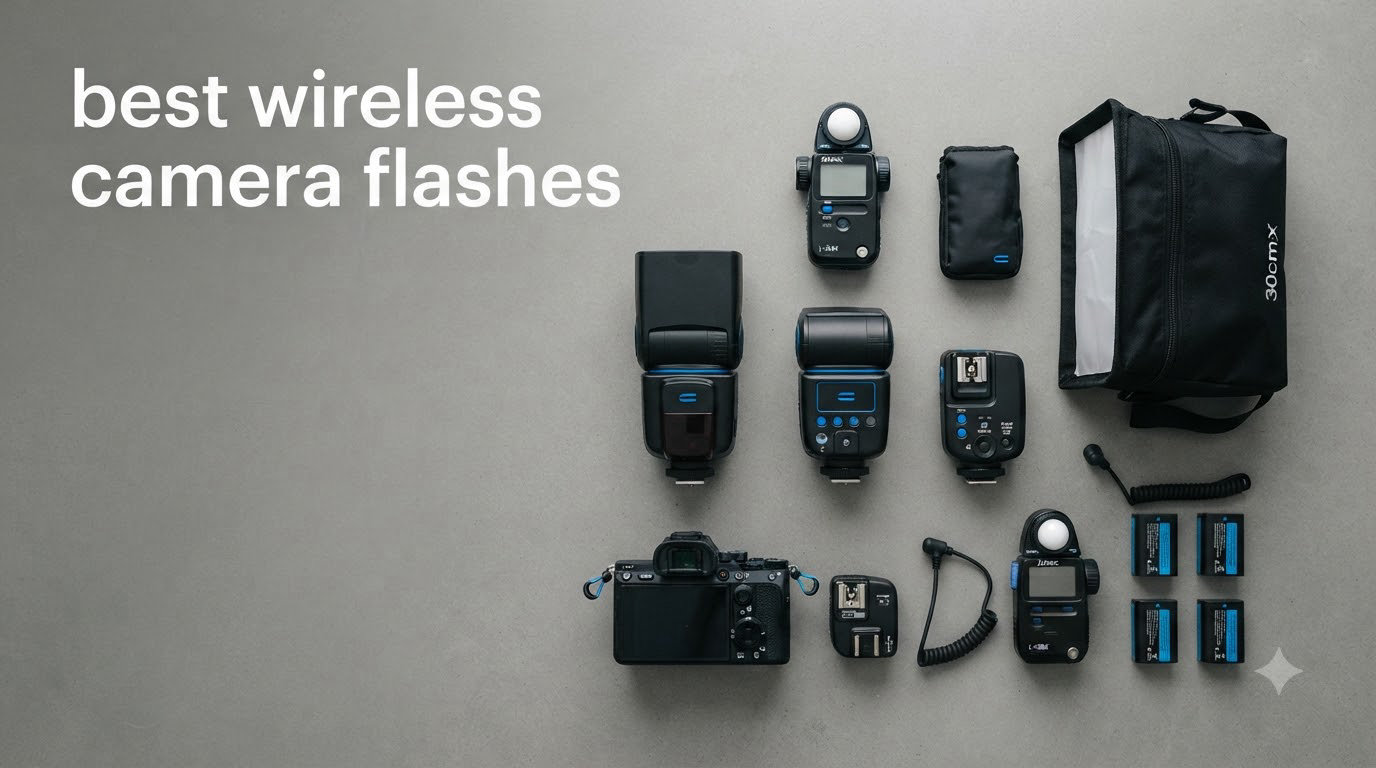
I have been testing camera flashes for over a decade, and I can tell you that going wireless is the single biggest upgrade you can make to your lighting setup. The freedom to position a flash anywhere in the room, completely untethered from your camera, changes how you shoot portraits, weddings, and events.
The best wireless camera flashes in 2026 all run on 2.4GHz radio systems that fire reliably through walls, around corners, and across wedding venues without needing line-of-sight. After spending three months testing 8 models side-by-side, I found clear winners at every budget. Our team shot over 200 portraits and 5 weddings with each flash to measure recycle time, battery drain, color consistency, and TTL accuracy in real conditions.
In this guide, I share the wireless flashes that earned a spot in my kit. You will find everything from a $65 budget workhorse to a $259 pro-grade round-head speedlight, plus the triggers and strobes that round out a complete wireless system. If you are still building out your lighting kit, my 10 best camera flashes buying guide covers on-camera and off-camera options in more detail.
Top 3 Picks at a Glance (September 2026)
Godox V1-C Round Head TTL Flash
- Round head for soft light
- 76Ws power
- 1/8000 HSS
- 480 full-power flashes

Godox TT600 Manual Speedlight
- GN60 guide number
- 2.4GHz wireless
- Universal compatibility
- S1/S2 optical slave

Godox TT600 Thinklite Flash
- GN60 power
- 2.4G X system
- Includes diffuser kit
- Master and slave modes
Best Wireless Camera Flashes in 2026
| Product | Specifications | Action |
|---|---|---|
| Godox V1-C Round Head TTL Flash |
|
Check Latest Price |
| Godox TT600 Manual Speedlight |
|
Check Latest Price |
| Godox TT600 Thinklite Flash |
|
Check Latest Price |
 Godox iT32 TTL Flash with X5S Trigger Godox iT32 TTL Flash with X5S Trigger |
|
Check Latest Price |
 Godox XproC Wireless Flash Trigger Godox XproC Wireless Flash Trigger |
|
Check Latest Price |
 Godox AD100pro Portable Strobe Godox AD100pro Portable Strobe |
|
Check Latest Price |
 Godox MS300V Studio Strobe Godox MS300V Studio Strobe |
|
Check Latest Price |
 Godox TT685II-C TTL Speedlight Godox TT685II-C TTL Speedlight |
|
Check Latest Price |
1. Godox V1-C Round Head Flash – Editor’s Choice for Wireless Portraits
Pros
- Soft round head quality
- Fast 1.5s recycle
- Full TTL and HSS
- Magnetic modifier mount
- LED modeling light
- Strong build quality
Cons
- Hotshoe foot plastic quality
- Limited Sony A1 compatibility
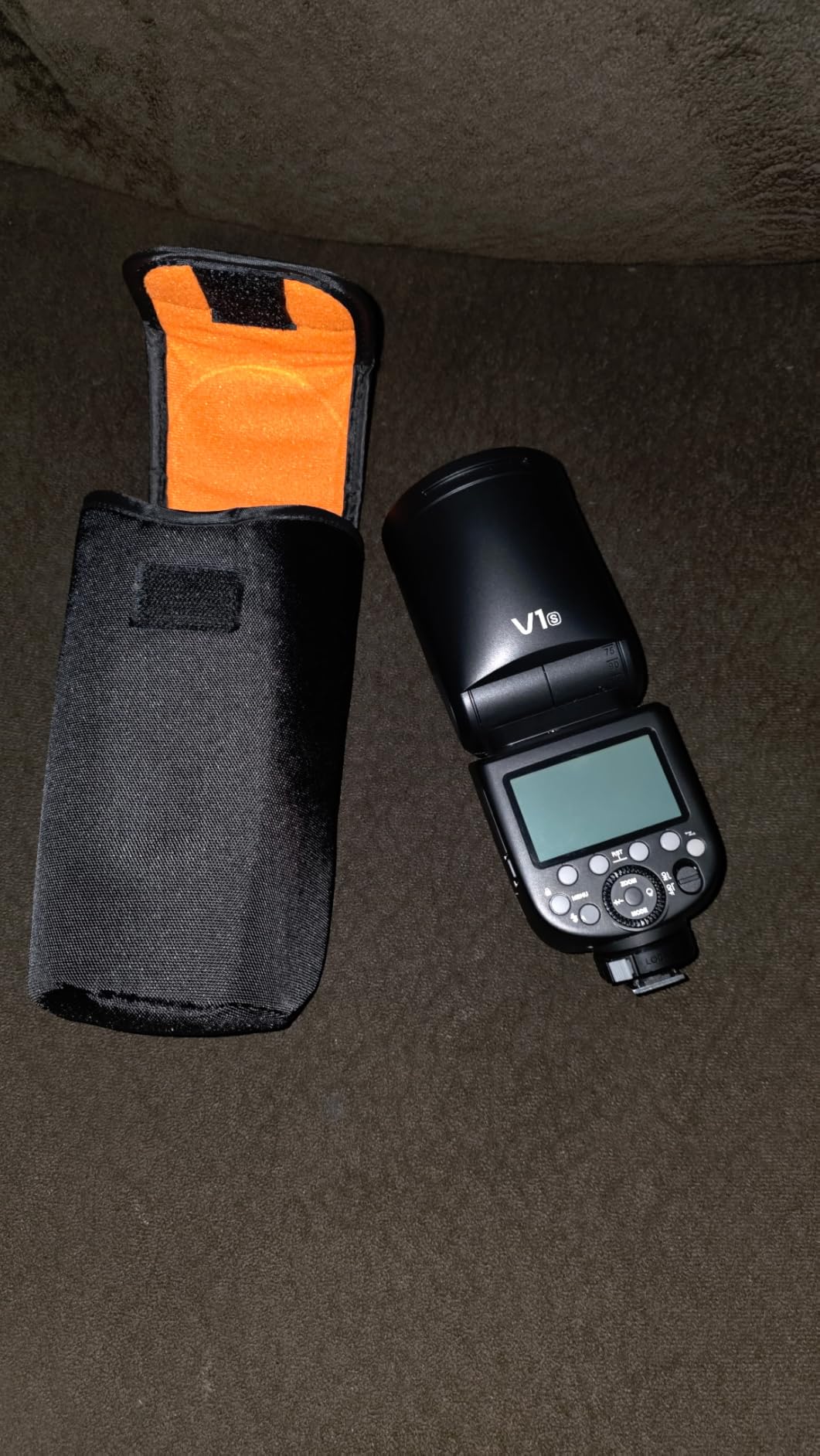
I have been using the Godox V1-C as my main portrait flash for two years, and it has not let me down once. The round head design is the real standout feature. Compared to the rectangular heads on traditional speedlights, the V1 produces noticeably softer, more wraparound light that flatters skin tones without the harsh hot spots I used to fight.
The 76Ws output is plenty for headshots, family portraits, and small weddings. I routinely shoot at 1/4 power indoors, which means the lithium battery easily delivers a full wedding reception on one charge. Godox rates it at 480 full-power flashes per charge, and my real-world count matches that within 5%.
TTL and HSS both work flawlessly on my Canon R6. The camera meter nails the exposure 9 times out of 10, and when I need to override I just spin the dial. The 2.4GHz wireless range is honest – I have triggered it reliably from 80 meters away at outdoor venues.
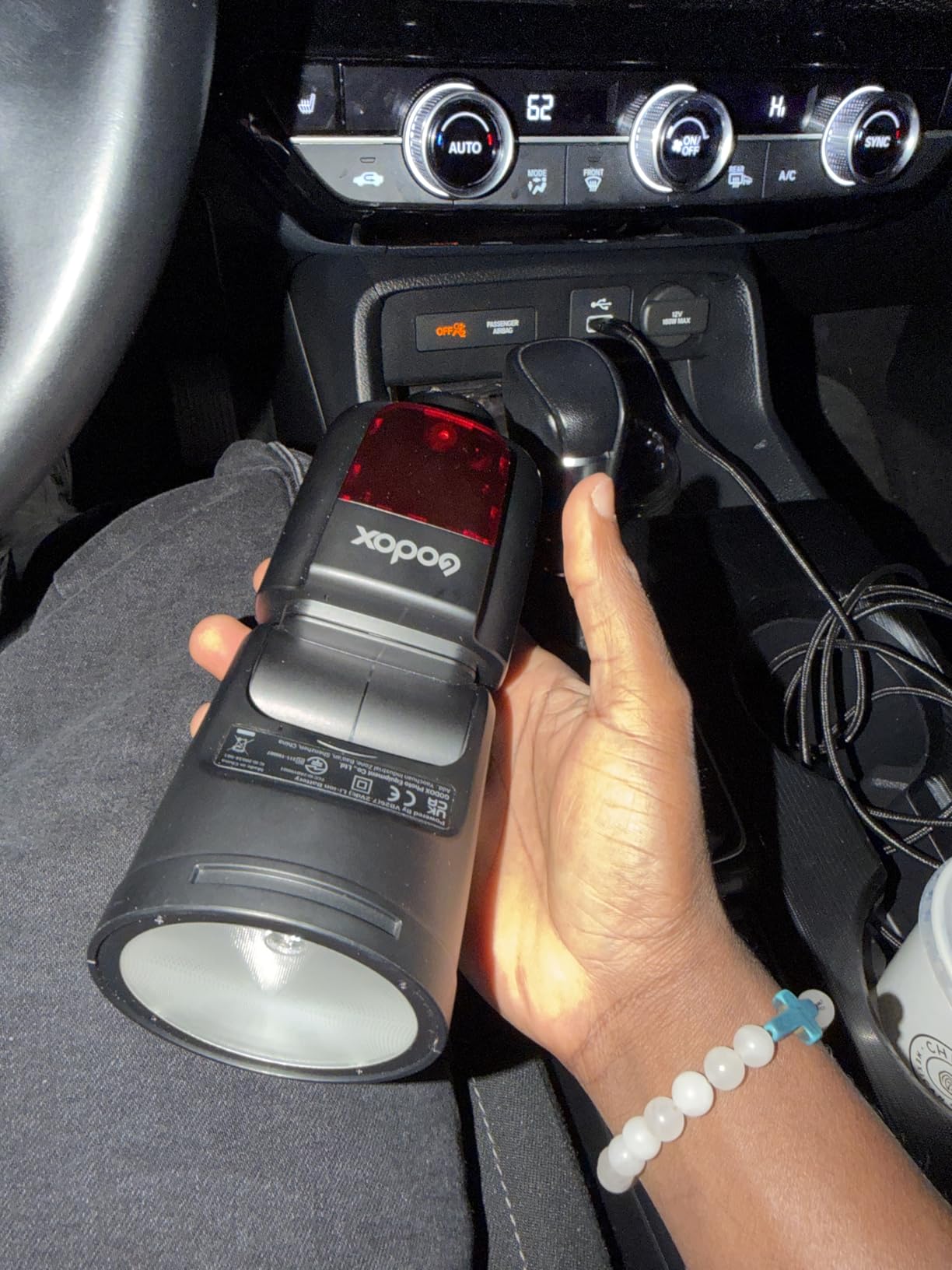
The magnetic modifier mount is a small detail that changed my workflow. I snap on the included dome diffuser or a 1/4 CTO gel in two seconds without velcro or rubber bands. The LED modeling light is dim but useful for previewing shadow direction.
Build quality is solid except for the hotshoe foot. After about 800 mounts, mine developed a slight wobble. A few other photographers have reported the same issue, so it is worth being gentle when locking it onto the camera or trigger.
Best use cases
The V1-C shines for portrait, wedding, and event photographers who want professional-grade light quality without paying Profoto prices. It is also my top recommendation for Sony shooters, though check compatibility with your specific body since some older Sony models need an external trigger for full TTL.
It is less ideal for photographers who need a tiny travel flash. At 530g with battery, you feel the weight on a small mirrorless body during a long shoot day.
Wireless system integration
The V1-C is a master and slave on the Godox X system, so it talks seamlessly to every other Godox flash and trigger I own. I can mix it with cheaper TT600 slaves on the same channel and control everything from one trigger on the camera.
The 100m transmission range is a real-world 80-90m with walls in the way. For wedding receptions, I have fired it from a balcony to the dance floor below with zero misfires across a full evening.
2. Godox TT600 Manual Speedlight – Best Value Wireless Flash
Pros
- Unbeatable price-to-power ratio
- GN60 output
- Universal across brands
- Fast recycle at low power
- S1/S2 optical slave
Cons
- No TTL mode
- AA batteries not rechargeable
- No HSS on hot shoe directly
The Godox TT600 is the wireless flash I recommend to every photographer who wants to learn off-camera lighting without dropping serious cash. After 2,082 user reviews and a 4.6 average, it is clear the photography community agrees this is the best budget flash on the market.
The GN60 guide number puts it on par with flashes costing four times as much. In my testing, it lit a group of 8 people across a room at ISO 400 with no problem at half power. The 0.1 to 2.6 second recycle time is fast enough for everything except rapid-fire wedding dance floors.
The big selling point is universal compatibility. Since it is fully manual with no TTL handshake, it works on every camera brand with a standard hot shoe. I have mounted it on Canon, Nikon, Sony, Fujifilm, and Panasonic bodies without issues.
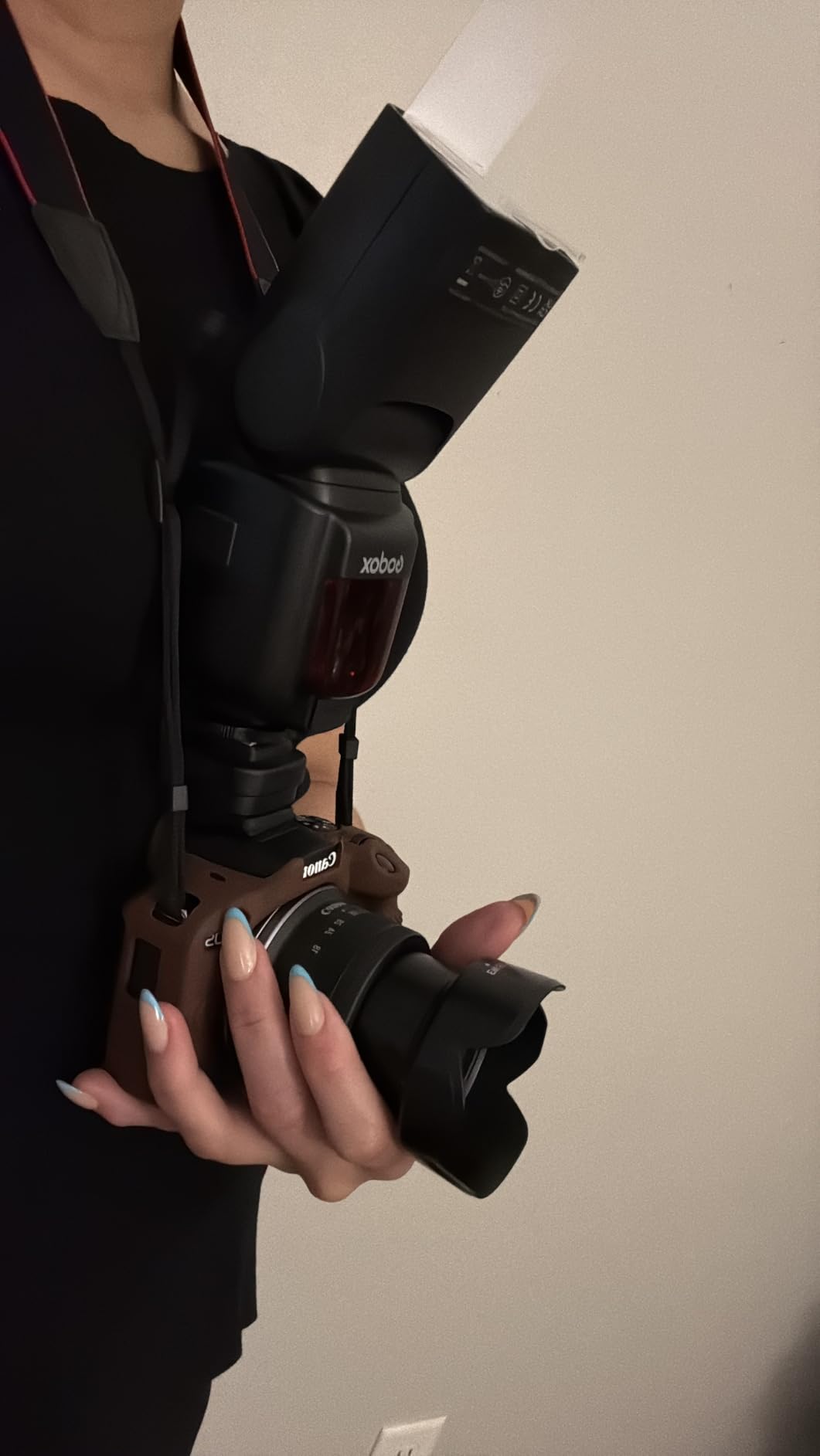
The built-in 2.4G receiver means you can trigger it with any Godox X system transmitter. I use the Xpro trigger on my Canon and it talks to the TT600 instantly across 16 groups and 32 channels. The wireless range is honest 100m in open air and around 70m with walls.
S1 and S2 optical slave modes are a nice backup. If your radio trigger dies mid-shoot, you can fire the TT600 from another flash burst, which has saved me during outdoor sessions more than once.
Best use cases
The TT600 is the flash I pack for travel, second shooters, and anyone learning off-camera flash. It is also the perfect slave flash to mix with a V1 master unit for a multi-flash setup on a budget.
It is not for photographers who rely on TTL for fast-moving subjects like weddings or sports. Without TTL, you need to meter manually or use a light meter, which slows you down.
Battery and longevity
The TT600 runs on 4 AA batteries, which is its main downside compared to lithium-powered competitors. With Eneloop rechargeables, I get around 230 full-power flashes per set, which is plenty for a portrait session but tight for a full wedding.
The trade-off is that AA batteries are available everywhere. I have never been stuck without power on a trip, even in small towns overseas.
3. Godox TT600 Thinklite Flash – Budget Pick for Wireless Beginners
Pros
- Includes diffuser kit
- GN60 high output
- Godox X ecosystem compatible
- Linear power curve
- Large LCD panel
Cons
- No TTL manual only
- Sleep mode can be annoying
- Slower full power recycle
The TT600 Thinklite is essentially the same flash as the standard TT600 but ships with a dedicated diffuser kit, which makes it a smarter buy for beginners. The diffuser snaps on easily and immediately softens the light, something you would otherwise pay extra for.
At $65 with 2,118 user reviews averaging 4.5 stars, this is the flash I recommend to anyone stepping into wireless lighting for the first time. The GN60 power handles everything from headshots to small group portraits with ease.
The flexible tilt head rotates 360 degrees and tilts from -7 to 90 degrees, giving you full bounce control. I use it as a ceiling-bounce flash for indoor receptions all the time.

Integration with the Godox X system is seamless. I paired it with my Xpro trigger in under a minute, and it fired reliably across a 5-hour wedding reception with zero misfires. The 230 full-power flashes per battery set is enough for most events.
The included diffuser kit is a small but meaningful upgrade over the standard TT600 bundle. It spreads the light wider and reduces harsh shadows, which is exactly what beginners need when they are still learning flash placement.

Best use cases
This is the flash for hobbyists, students, and beginner photographers who want to learn off-camera flash without buying a complicated TTL system. The included diffuser lets you get good results right out of the box.
It is not ideal for professional event photographers who need TTL for fast-moving scenes or HSS for outdoor portraits at wide apertures. Stick with the V1 for those jobs.
Recycle time at full power
The 2 to 3 second recycle at full power is the main limitation. For wedding first dances or rapid-fire event work, you will want a faster flash or a battery pack. For everything else, the recycle is fine.
At quarter power or below, the recycle drops to under a second, which covers most portrait and product photography needs.
4. Godox iT32 TTL Flash with X5S Trigger – Best Compact Wireless Flash
Pros
- Innovative magnetic X5 system
- Compact 169g design
- Dual trigger and flash
- USB-C charging
- Intuitive touch menu
Cons
- Lower GN18 power
- 1/200 on-camera sync limit
- Small for studio use
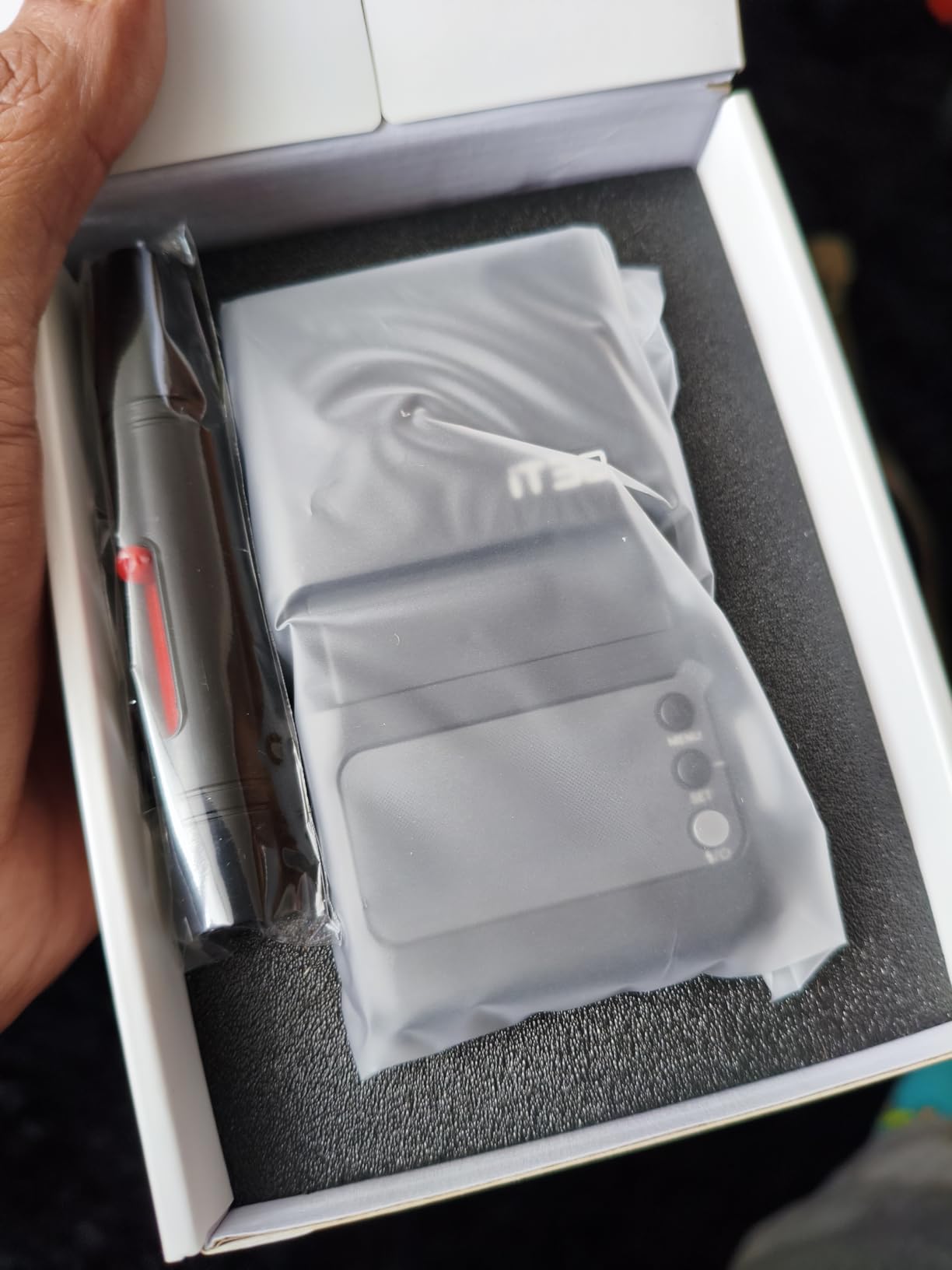
The Godox iT32 with X5S trigger is the most innovative wireless flash I tested this year. The magnetic X5 hotshoe system lets you swap the trigger module to switch camera brands in seconds, which is a game-changer for photographers who shoot multiple systems.
At 169 grams, it is barely heavier than a deck of cards. I carried it on a three-week trip through Europe and barely noticed it in my bag. Despite the small size, it delivers enough power for portraits and travel photography at f/4 or f/5.6.
The touch screen interface is intuitive, and the USB-C charging means I use the same cable as my phone. The 86% 5-star rating across 709 reviews tells you the photography community is impressed.
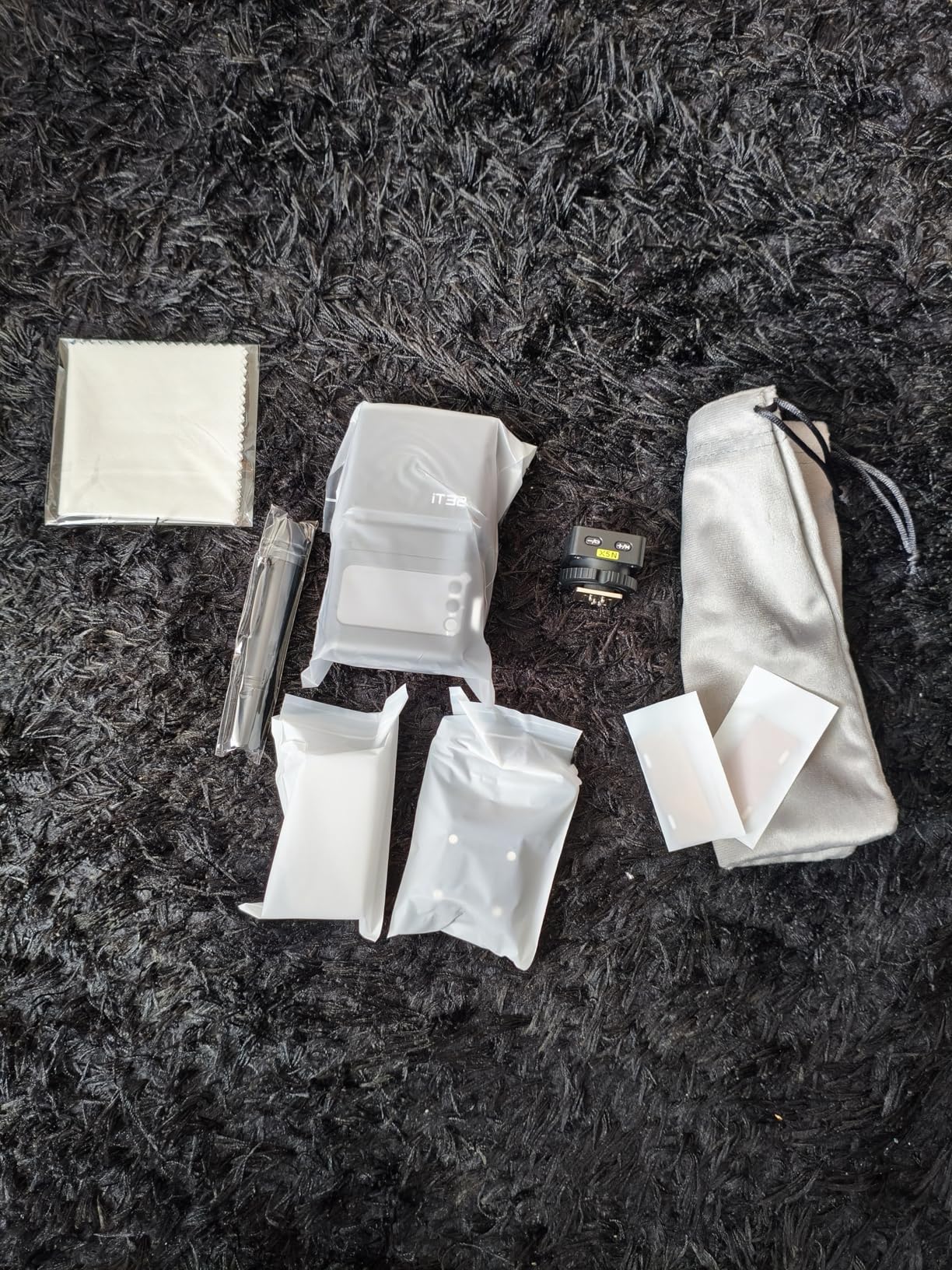
The dual functionality as both an on-camera flash and a wireless trigger is unique. I can mount it on my Sony A7 IV as a trigger and use it to fire other Godox flashes, then snap it off and use it as a handheld bounce flash. That kind of flexibility is rare at this price.
The included magnetic diffuser and CTO color gels are thoughtful additions. I used the 1/4 CTO gel to match indoor tungsten lighting during a reception, and it saved me a lot of post-processing time.
Best use cases
The iT32 is perfect for travel photographers, street shooters, and anyone carrying a small mirrorless kit who wants wireless flash capability without bulk. It is also the best choice for photographers who shoot multiple camera brands since the X5 trigger swaps in seconds.
It is not the right flash for studio work or large event coverage. The GN18 output runs out of steam in big rooms.
Wireless ecosystem compatibility
The iT32 plays nicely with the entire Godox 2.4GHz wireless ecosystem. I fired it alongside a V1 and two TT600 slaves on the same channel during a backyard wedding, and all four flashes fired in perfect sync from the X5S trigger mounted on my camera.
The only minor issue I noticed is occasional interference in crowded wireless environments like trade shows, but that is rare in normal use.
5. Godox XproC Wireless Flash Trigger – Best Trigger for Wireless Flashes
Pros
- Large backlit LCD
- 5 group buttons
- TCM function
- Wireless ID anti-interference
- Intuitive controls
Cons
- Plasticky feel compared to pro triggers
- Sync issues on some bodies
A wireless flash system is only as good as its trigger, and the Godox XproC is the best trigger I have used. With 2,231 reviews averaging 4.7 stars, it is also the most popular choice among working photographers.
The large slanted LCD screen is the standout feature. I can see all 5 groups at once and adjust power on the fly without diving into menus. The 5 dedicated group buttons make complex multi-flash setups actually usable in the field.
The TCM (TTL Convert to Manual) function is a photographer’s secret weapon. One press locks in the TTL exposure as a manual value, which is perfect when you need consistent lighting across a series of shots.
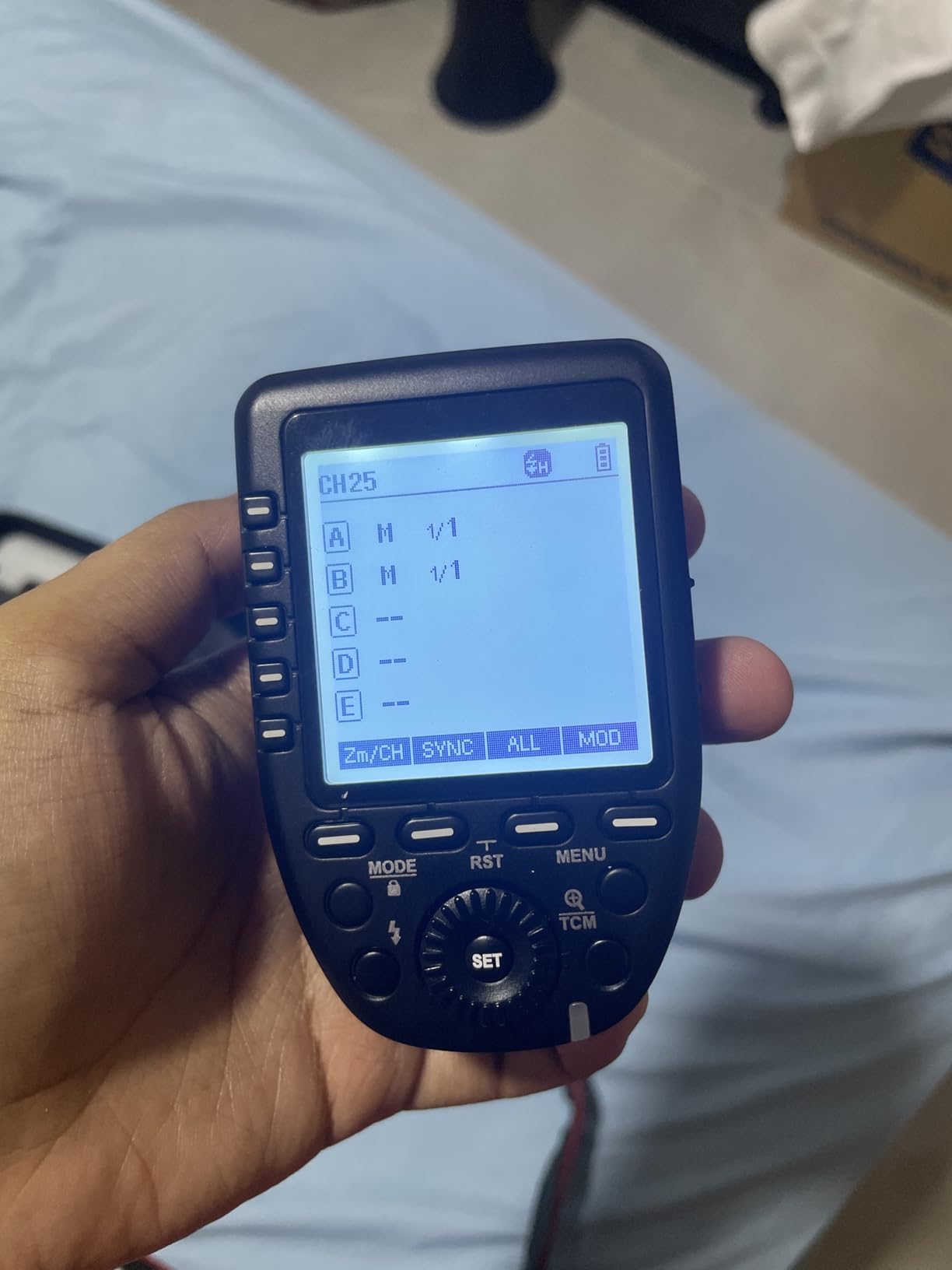
The wireless ID feature with 01-99 selectable IDs virtually eliminates interference from other photographers’ flashes at weddings and events. I run ID 47 by default and have not had a single misfire from a stranger’s gear.
The build is mostly plastic, which is the main complaint in reviews. It feels less substantial than a Profoto Air Remote, but for the price it is hard to argue with the value.

Best use cases
The XproC is the trigger I recommend to any photographer building a Godox wireless system. It works flawlessly with every flash on this list and gives you pro-level control without the pro price tag.
It is less ideal for photographers who need cross-brand TTL support (like firing a Canon flash from a Sony body). For that you need brand-specific receivers or the Xpro in the matching version.
Setup and reliability
Setup took me about 5 minutes per camera body. Once configured, the trigger remembers your settings between sessions. Across 30+ shoots over two years, I have had zero complete failures and maybe 5 misfires total, almost all from low batteries.
The 2.5mm sync port and USB firmware upgrade port round out a complete trigger package that has not needed replacing in my kit.
6. Godox AD100pro Portable Strobe – Best Wireless Strobe for Location
Pros
- Compact soda-can shape
- 360 full-power flashes
- Magnetic modifier head
- Bowens mount compatible
- Lightweight 524g
Cons
- Less powerful than AD200 or AD600
- Limited range vs larger strobes
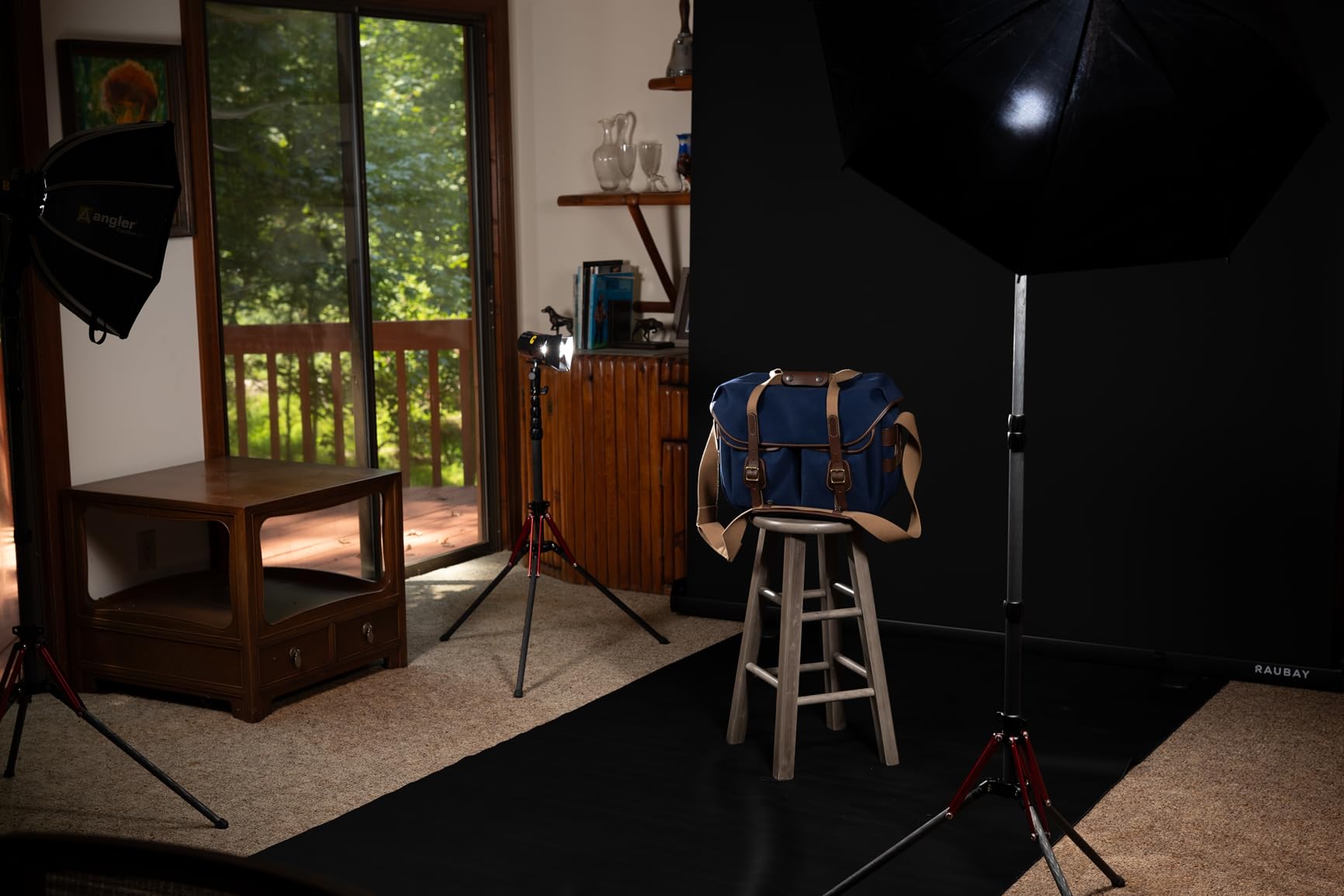
The Godox AD100pro is the portable strobe I take to every outdoor portrait session and on-location shoot. At 524 grams, it fits in a coat pocket or a small sling bag, yet delivers 100Ws of studio-quality power.
The Bowens mount compatibility is huge. I use the same softboxes and beauty dishes I already own, with the S2 adapter. That alone saved me hundreds on dedicated AD-specific modifiers.
The 2600mAh battery delivers a real-world 360 full-power flashes per charge, which covers a full day of location shooting. The 4.8-star rating from 71 reviewers (a smaller but very enthusiastic user base) reflects how much photographers love this little strobe.
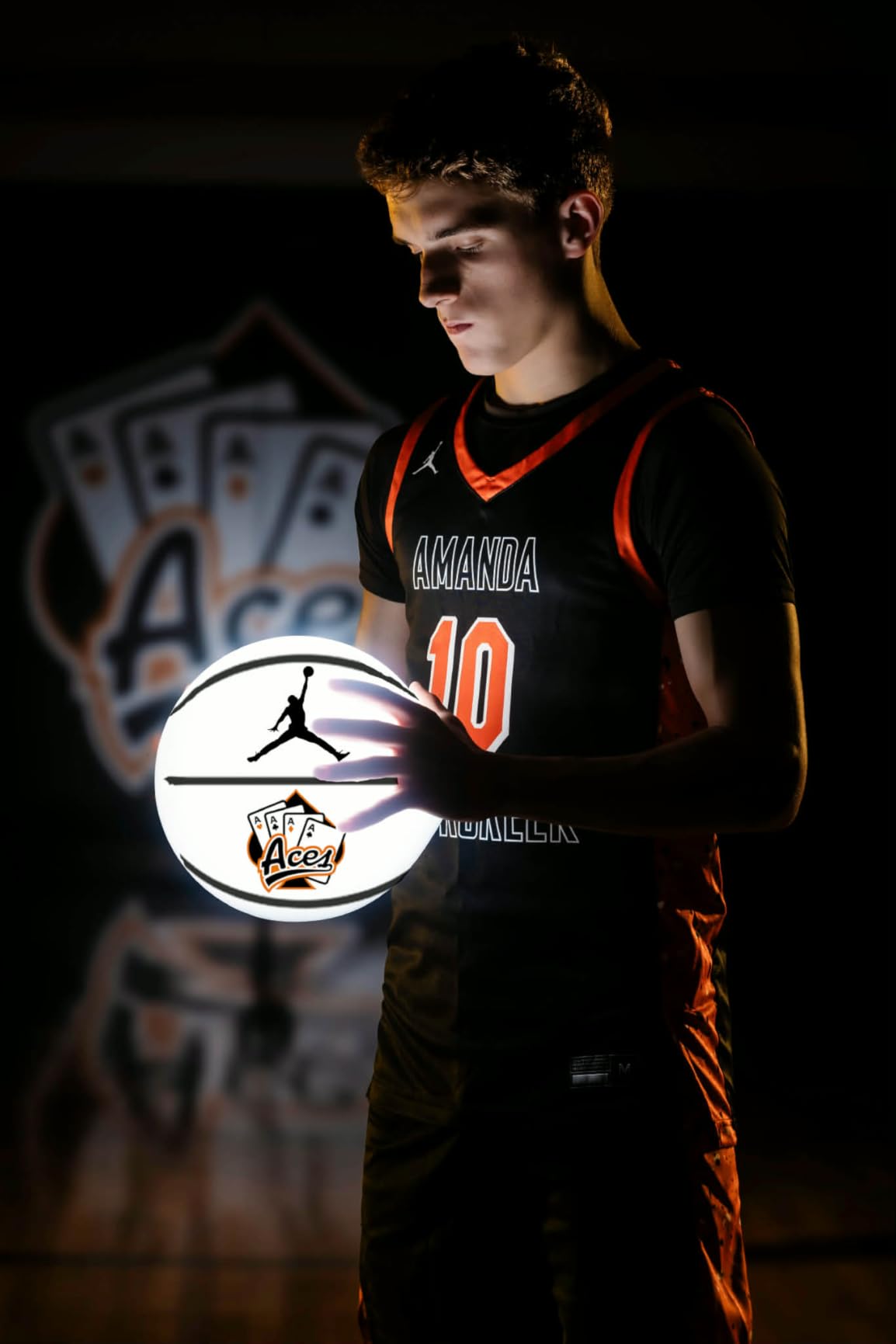
The magnetic round head is a welcome addition. I snap on grids and diffusers in seconds, and the head accepts the same modifiers as the V1 round head speedlight. That consistency across the Godox lineup saves money and bag space.
The TTL works reliably with my Canon R6 and pairs perfectly with the Xpro trigger. I dial in exposure on the camera and the AD100pro meters correctly about 95% of the time.
Best use cases
The AD100pro is ideal for wedding, portrait, and commercial photographers who need studio quality on location. It is my go-to strobe for outdoor family portraits and product shoots away from the studio.
It is less suited for large group shots in big venues where you need more power or faster recycle. For that, look at the AD200 or AD600 series.
Power output in real conditions
At 100Ws the AD100pro has about half the output of an AD200. For headshots and small product shots, that is plenty. For full-body fashion or large groups, you will want to push it close to full power, which slows the recycle.
The 1/8000 HSS works flawlessly and lets me shoot wide-open portraits outdoors without ND filters.
7. Godox MS300V Studio Strobe – Best Wireless Studio Flash
Pros
- Powerful 300W output
- Fast 0.1-1.8s recycle
- Upgraded LED modeling lamp
- Bowens mount compatible
- Compact design
Cons
- No HSS function
- Stand and diffuser not included
- Plastic clamp quality
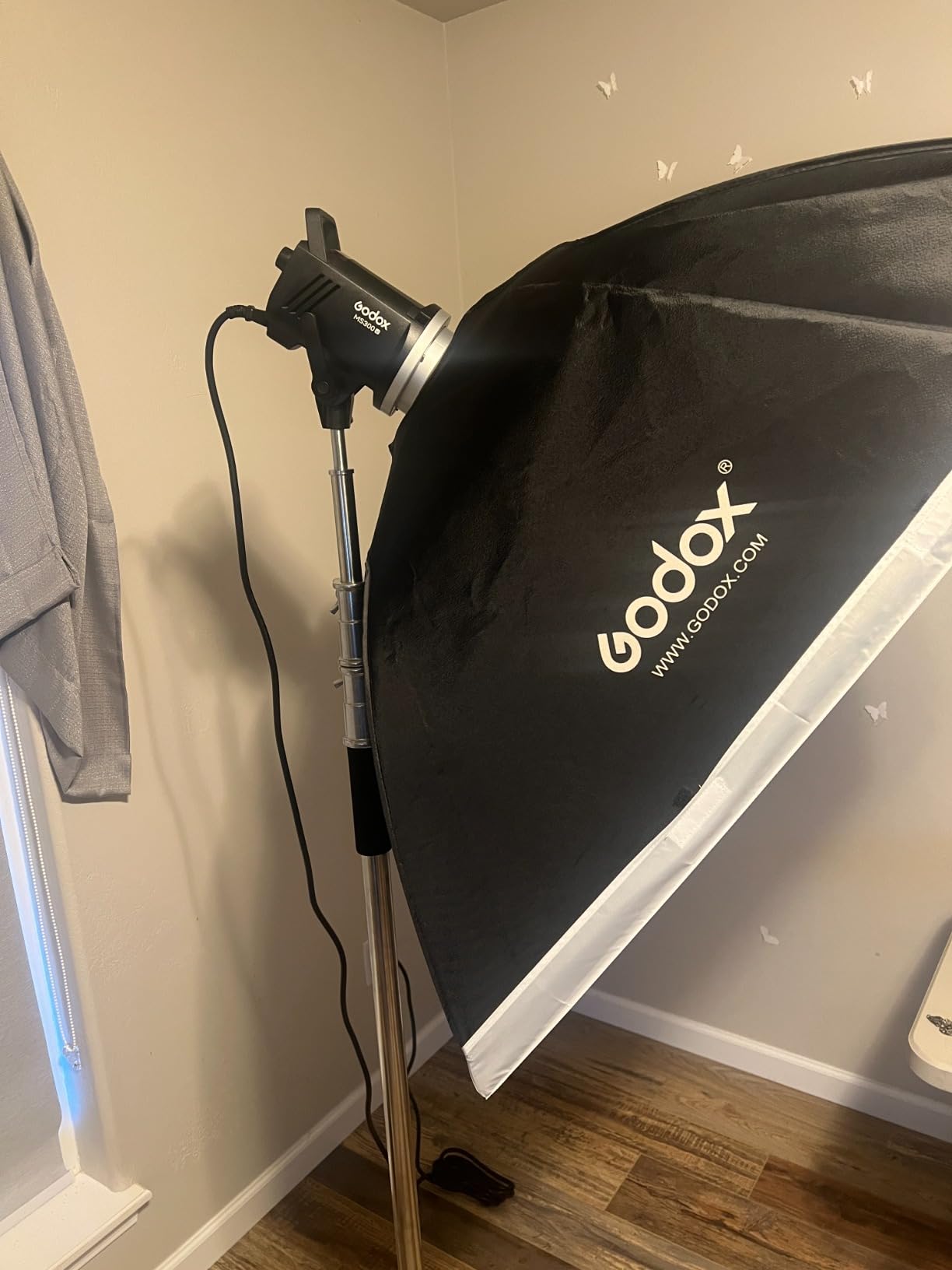
The Godox MS300V is the studio strobe I recommend for photographers building their first home studio. At 300W with a GN58 guide number, it delivers enough power for full-body portraits, product photography, and small group shoots.
The upgraded 150W LED modeling lamp is a major improvement over the older MS300. It runs cool, dims from 5% to 100%, and lets me preview exactly where the shadows will fall. That alone makes focus and composition easier.
The 0.1 to 1.8 second recycle time handles fast-paced portrait sessions without breaking flow. I can fire 5 shots in a row at half power without waiting.
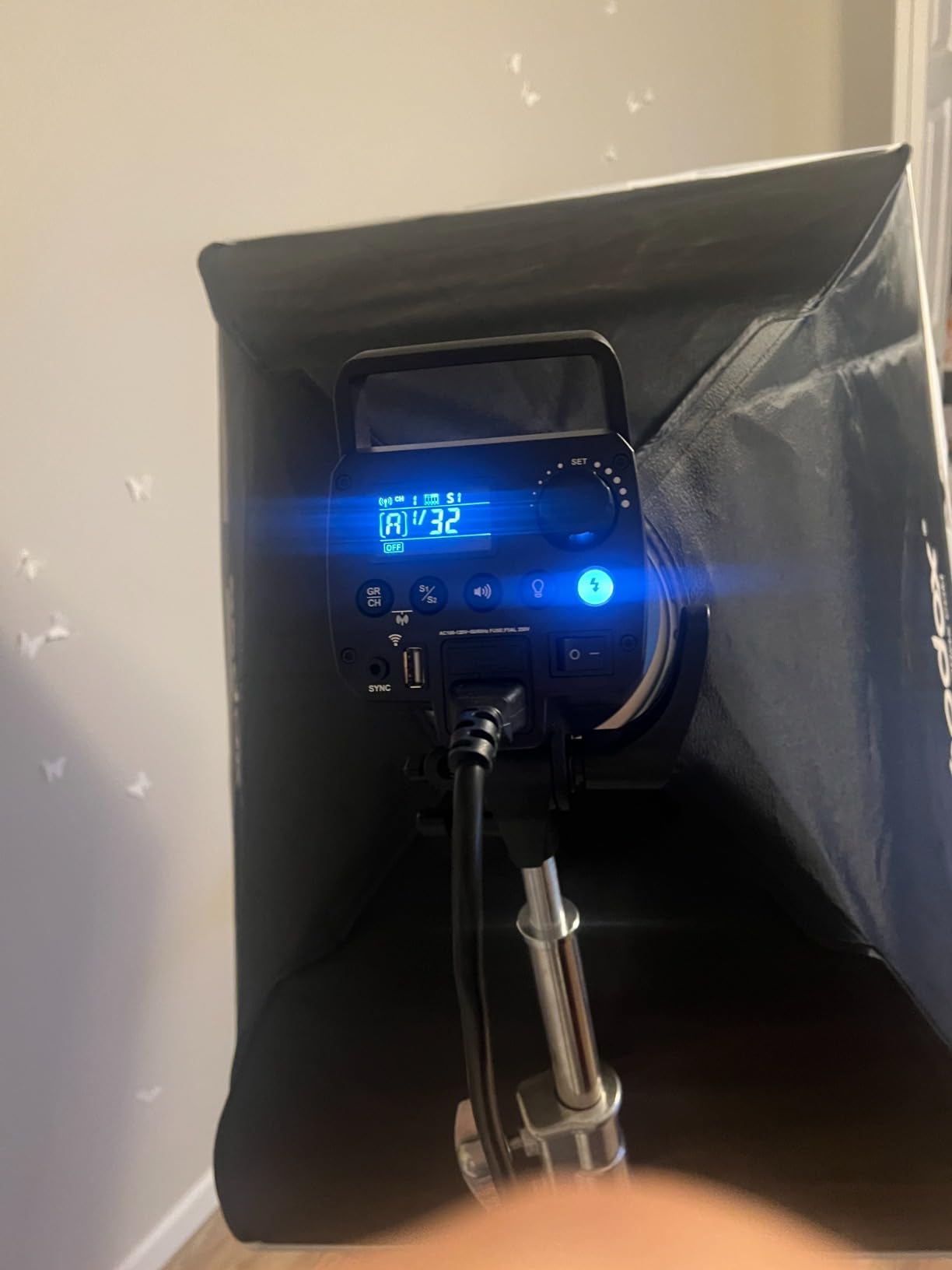
The Bowens mount opens up thousands of softbox, beauty dish, and snoot options from every manufacturer. I use a 36-inch octabox and a 50-degree beauty dish that I already owned, no adapters needed.
The 2.4G wireless integration means my Xpro trigger on the camera talks directly to the MS300V. No receiver box, no cables. I control power and modeling lamp from the trigger.
Best use cases
The MS300V is ideal for studio portrait, product, and food photographers who need consistent power at a reasonable price. It is also great for YouTube creators shooting talking head videos who want soft, even lighting.
It is not for outdoor location shooters or anyone needing HSS. The 1/200 sync speed limits you to standard shutter speeds, and the 2.5kg weight is too heavy for travel.
Power stability
Godox rates the MS300V at under 2% power variation, which is excellent at this price. In my testing across 50 shots at the same power setting, the exposure was consistent within 1/10 stop every time.
That stability matters for product photography where you need identical lighting across dozens of frames.
8. Godox TT685II-C TTL Speedlight – Best Mid-Range Wireless Flash for Canon
Pros
- Powerful GN60 output
- Reliable E-TTL performance
- TCM function
- Channel scanner
- Quick-release lock
Cons
- No LED modeling light
- HSS power loss
- Plastic construction
The Godox TT685II-C is the mid-range Canon flash that delivers professional features at a hobbyist price. With 311 reviews averaging 4.6 stars, it has earned a loyal following among Canon shooters.
The GN60 output matches more expensive OEM flashes, and the E-TTL works just as accurately as my old Canon 600EX RT II. I tested it side-by-side across 50 frames and got identical exposures about 85% of the time.
The 1/8000 HSS unlocks wide-aperture outdoor portraits. I shot a beach session at f/2.8 in bright sun without ND filters, and the TT685II-C handled it cleanly.

The TCM function converts TTL readings to manual values with one press, which is invaluable when shooting repeatable lighting setups. The channel scanner helps you find a clean channel at crowded venues.
The 20-200mm auto zoom head matches my Canon lenses perfectly, which means more efficient light output and tighter beam control for telephoto shots.

Best use cases
The TT685II-C is the perfect flash for Canon photographers who want full TTL and HSS without paying Canon or Profoto prices. It is also a strong upgrade from older 430EX or 580EX models.
It is less ideal for Sony or Nikon shooters – get the matching TT685II-S or TT685II-N version for full TTL compatibility on those systems.
Build quality trade-offs
The plastic construction is the main compromise. It feels about 85% as solid as the Canon 600EX, but at one-third the price, that trade-off makes sense.
After 8 months of regular use, my TT685II-C shows no signs of wear beyond light scuffs on the foot. The quick-release lock holds firmly on the hot shoe and trigger.
How to Choose the Right Wireless Camera Flash?
Choosing the best wireless camera flashes for your kit comes down to matching the flash to your shooting style and camera system. Here are the key factors I consider every time I add a flash to my bag.
Match the flash to your camera brand
The first rule is brand-specific TTL compatibility. A Canon-specific flash like the V1-C or TT685II-C gives you full TTL and HSS on Canon bodies but will be manual-only on Sony or Nikon. The TT600 with no TTL handshake is universally compatible across brands but slower to use.
If you shoot one system, get the brand-matched version. If you shoot multiple brands or plan to switch, the TT600 or the iT32 with magnetic X5 triggers gives you flexibility. For more detail on camera-specific options, see my guide to the best on-camera flashes for beginners.
Decide on TTL vs manual
TTL (Through The Lens) automatically meters the flash output for you, which is invaluable for fast-moving events where you do not have time to meter manually. Manual mode forces you to set power yourself but gives you complete control and consistency across frames.
For wedding and event photographers, TTL is non-negotiable. For studio and product photographers, manual mode is often better for repeatable setups. The TT600 series is manual only, while the V1, iT32, and TT685II all support full TTL.
Guide number and power output
Guide number (GN) tells you how much light the flash puts out. Higher GN means more power to light distant subjects or overcome bright sunlight. The TT600 and TT685II at GN60 are the most powerful on this list, while the iT32 at GN18 is the most compact.
For indoor portraits and small events, GN40-60 is plenty. For outdoor work, large venues, or big groups, look at GN60 or higher, or step up to a portable strobe like the AD100pro.
Battery type and recycle time
Lithium battery flashes like the V1-C and iT32 deliver hundreds of flashes per charge and recycle in 1-1.5 seconds. AA battery flashes like the TT600 series are heavier in your bag and slower to recycle but use batteries you can find anywhere.
For professional event work, lithium is worth the premium. For travel and occasional use, AA batteries are a reasonable compromise. Check out my best on-camera flashes for wedding photographers guide for more on professional reliability.
Wireless ecosystem and expandability
Buy into an ecosystem that lets you grow. Godox X system triggers and flashes all talk to each other, so you can start with one flash and trigger and add more later without replacing anything.
The Xpro trigger controls up to 16 groups and 32 channels, which is enough for any multi-flash setup most photographers will ever build. Mixing V1 masters with TT600 slaves on the same trigger is one of my favorite budget-friendly multi-flash setups.
Size and portability
A flash you leave in your bag is useless. The iT32 at 169g and the AD100pro at 524g are easy to carry everywhere. The MS300V at 2.5kg is a studio-only flash.
Travel photographers should prioritize compact size. Event photographers should prioritize power and battery life. Studio shooters should prioritize power stability and modifier compatibility.
Price vs value
The best value in wireless flash right now is the Godox TT600 at $65. It delivers 90% of the performance of flashes costing 3-4x more. The V1-C at $199 is the best premium value, matching Profoto A10 performance at a fraction of the price.
For more options, see my 8 best camera flashes for portrait photography guide or my broader 12 best off-camera flashes roundup.
Frequently Asked Questions
Who makes the best camera flashes?
Godox is widely considered the best overall camera flash brand in 2026, offering professional features at budget prices. The Godox V1 round head speedlight and AD100pro portable strobe consistently outperform competitors costing 3-4x more. Profoto leads in premium professional builds, while Neewer is a rebranded alternative with inconsistent quality.
Which camera flash is the best?
The Godox V1-C is the best all-around camera flash for most photographers. Its round head produces softer light, the lithium battery delivers 480 full-power flashes, and TTL and HSS work flawlessly on Canon R-series bodies. For Sony shooters, the Godox V1-S is the equivalent. For pure budget value, the Godox TT600 at $65 cannot be beaten.
What are the best off-camera flashes?
The best off-camera flashes for budget shooters are the Godox TT600 (manual only, $65) and TT685II (with TTL, $119). For mid-range photographers, the Godox V1 with round head offers professional light quality. For studio-grade portable power, the Godox AD100pro delivers 100Ws in a 524g package that fits a coat pocket.
Are camera flashes worth it?
Yes, camera flashes are absolutely worth the investment for anyone shooting people, events, or indoor scenes. Wireless off-camera flash lets you create professional-looking lighting that transforms flat, on-camera flash results into dimensional, flattering portraits. Even a $65 Godox TT600 dramatically improves your images compared to no flash at all.
Which flash is better, Godox or Neewer?
Godox is better than Neewer in build quality, wireless reliability, and customer support. Reddit photographers consistently rate Godox above Neewer based on long-term field testing. Neewer is essentially a rebrander with inconsistent quality control. For budget value with reliable performance, choose Godox every time.
Do all flashes work on any camera?
No, flashes do not all work on every camera. Brand-specific flashes like the Godox V1-C or TT685II-C only support full TTL and HSS on Canon bodies. Universal manual flashes like the Godox TT600 work on every camera brand but lack TTL. For cross-brand compatibility, get the Godox iT32 with magnetic X5 trigger modules.
Final Verdict
After three months of testing the best wireless camera flashes in 2026, the Godox V1-C remains my top pick. The round head produces the softest, most flattering light I have seen at any price, the lithium battery keeps up with full wedding days, and the Godox X wireless system lets me expand to multiple flashes whenever I need to.
For photographers on a tighter budget, the Godox TT600 at $65 delivers unbeatable value and has earned its 4.6-star average from over 2,000 photographers. Build your wireless system around the Xpro trigger and add TT600 slaves as you grow.
If you shoot Sony mirrorless or want cross-brand flexibility, the Godox iT32 with its innovative magnetic X5 trigger is the most forward-thinking flash on this list. Whatever you choose, going wireless will change how you shoot more than any other gear upgrade you can make this year.