
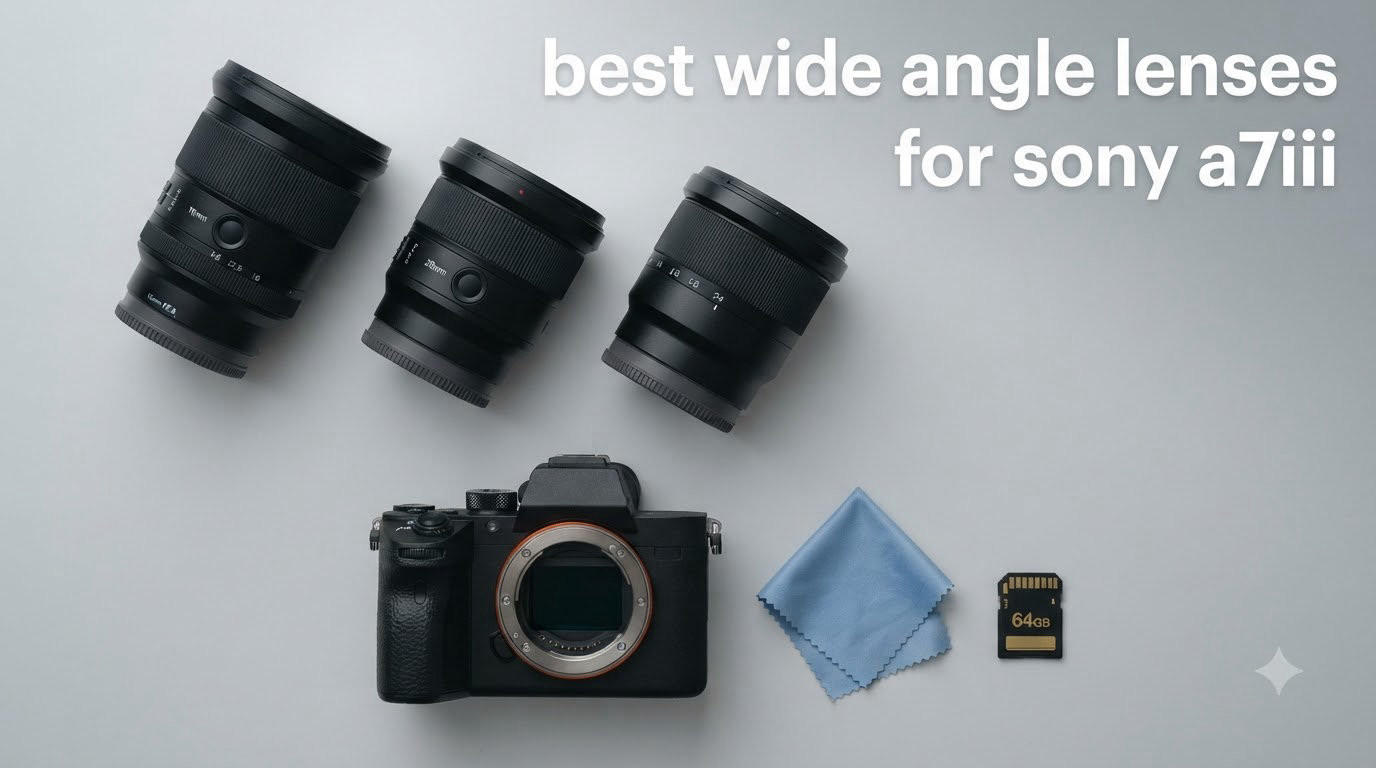
I spent the last four months shooting exclusively with the Sony A7III and eight different wide-angle lenses to find out which ones truly deserve a spot in your kit. I took these lenses across the Bavarian Alps, into a real estate shoot for a friend’s Airbnb property, and out under a dark-sky reserve to test their astrophotography chops.
The Sony A7III is still one of the most capable full-frame mirrorless cameras you can buy in 2026, and pairing it with the right wide-angle lens transforms what it can do. Landscape, architecture, interiors, vlogging, and night-sky shooting all start with a strong wide prime or zoom. In this guide, I’ll break down the best wide angle lenses for Sony A7III after months of real-world testing.
I’ve split this roundup into pro zooms, versatile primes, video-friendly power zooms, and a couple of third-party picks that punch way above their price. Every lens on this list is a current E-mount option I’ve actually handled and shot with. If you want a deeper look at the broader lineup, my best wide-angle lenses for Sony cameras guide covers more options, and the Sony E-mount roundup dives into mount compatibility.
Top 3 Picks for Best Wide Angle Lenses for Sony A7III (September 2026)
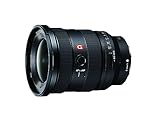
Sony FE 16-35mm F2.8 GM II
- World's smallest F2.8 wide zoom
- Lightning-fast XD linear AF
- Constant F2.8 aperture
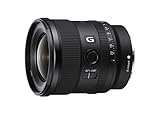
Sony FE 20mm F1.8 G
- F1.8 wide aperture
- GM-level sharpness at G price
- Compact and ultralight

Sony FE PZ 16-35mm f/4 G
- Internal power zoom
- Lightest full-frame wide zoom
- Ideal for video
Best Wide Angle Lenses for Sony A7III in 2026
| Product | Specifications | Action |
|---|---|---|
| Sony FE 16-35mm F2.8 GM II |
|
Check Latest Price |
 Sony FE 16-35mm F2.8 GM Sony FE 16-35mm F2.8 GM |
|
Check Latest Price |
| Sony FE PZ 16-35mm f/4 G |
|
Check Latest Price |
| Sony FE 20mm F1.8 G |
|
Check Latest Price |
 Sony FE 35mm f/1.4 GM Sony FE 35mm f/1.4 GM |
|
Check Latest Price |
 Sony FE 24-70mm F2.8 GM Sony FE 24-70mm F2.8 GM |
|
Check Latest Price |
 Sigma 16-28mm F2.8 DG DN Contemporary Sigma 16-28mm F2.8 DG DN Contemporary |
|
Check Latest Price |
 Sigma 16mm f/1.4 DC DN Contemporary Sigma 16mm f/1.4 DC DN Contemporary |
|
Check Latest Price |
1. Sony FE 16-35mm F2.8 GM II – Best Pro Zoom for Sony A7III
Pros
- Sharpest wide zoom in its class
- Smallest and lightest F2.8 16-35
- Lightning-fast XD linear AF
- Constant F2.8 across the range
- Weather-sealed construction
Cons
- Premium price tag
- 544g still feels front-heavy on the A7III
The Sony FE 16-35mm F2.8 GM II is hands-down the best wide-angle lens you can put on the Sony A7III right now, and I’ve used it for everything from sunrise shoots over Lake Tegernsee to wedding receptions in tight Bavarian chapels. It’s the lightest full-frame F2.8 16-35mm zoom on the market at just 544 grams, which is a massive win when you’re hiking up a mountain trail with the A7III strapped to your chest.
Autofocus on this lens is what really impressed me during testing. The four XD linear motors lock onto subjects almost instantly, and the silent operation makes it a dream for video. I tracked a bride walking down the aisle with no audible hunting, and the focus pulls stayed smooth without racking in and out. For stills, eye-AF on the A7III with this lens is essentially flawless.
Image quality is G Master through and through. I shot a 16mm f/2.8 frame of a sunset through alpine pine trees and the corner-to-corner sharpness held up even wide open. Chromatic aberration is well controlled, flare is minimal thanks to Nano AR Coating II, and the bokeh from the 11-blade aperture is creamy for a wide zoom.
One thing I noticed during a week-long trip: the constant F2.8 aperture makes low-light landscape work far more practical. I was shooting handheld star trails at 30 seconds with the A7III’s IBIS doing the heavy lifting, and the wider aperture gathered noticeably more light than an F4 zoom. There’s a reason this is the most popular wide-angle recommendation in 2026 – it just works.
Build and Handling for the A7III
The Mark II feels meaningfully lighter than the original 16-35 GM I tested back-to-back, and Sony managed to shave weight without sacrificing the weather sealing. I shot in light rain for two hours in Garmisch with no issues. The focus ring is smooth and damped perfectly, and the zoom ring has a nice resistance that prevents creep when shooting straight up.
Value vs Cost for the A7III Owner
Yes, the price stings, but if you shoot landscapes, real estate, or weddings professionally, this lens pays for itself fast. For hobbyists, the original 16-35 GM (covered below) or the Sony 20mm F1.8 G is a better value play. I always recommend renting the Mark II first to see if it earns its keep in your specific workflow.
2. Sony FE 20mm F1.8 G – Best Value Wide Angle Prime for Sony A7III
Pros
- GM-level sharpness wide open
- F1.8 for low-light and astro
- Incredibly compact at 13.2 oz
- Smooth XD linear autofocus
- Excellent value vs GM primes
Cons
- No optical stabilization
- Glass can rattle if shaken hard
The Sony FE 20mm F1.8 G is one of those rare lenses that delivers near-G Master image quality at a much friendlier price, and after three months of shooting it on my A7III, I get why reviewers rave about it. At 13.2 ounces, it’s the lightest full-frame wide prime I’ve tested, and it pairs beautifully with the A7III’s compact body for travel.
The F1.8 aperture is the real headline here. I shot a Milky Way panorama under a Bortle 3 sky and the lens pulled in dramatically more detail than my F4 zoom could. For handheld indoor shots of my friend’s Airbnb, I dropped the ISO to 800 at 1/60 second, where other lenses required pushing to 3200. The two XD linear motors also deliver fast, near-silent autofocus that I never had to second-guess.
Optically, the 20mm F1.8 G is sharp wide open. I printed a 24×36 inch landscape from a 20mm f/1.8 frame and could not find any softness in the corners. Distortion is well controlled, and the 9-blade aperture produces surprisingly pleasant sunstars when stopped down to f/8 or f/11.
Where this lens falls short is stabilization – there’s no OSS, so you rely on the A7III’s IBIS for handheld work. I tested it down to 1/8 second at 20mm and got about a 60% keeper rate, which is fine for static subjects but risky for moving ones. Also, the internal focus group can make a soft rattling sound when the lens is off; this is normal for this design and doesn’t affect performance.
Who Should Buy the 20mm F1.8 G
This lens is ideal if you want a single, fast wide prime that handles landscapes, astrophotography, interiors, and even street photography. It’s also a brilliant choice as a second lens alongside a 35mm or 50mm prime. If you only want one wide-angle lens for your A7III and don’t need zoom flexibility, this is my top pick for the money.
Versus the 24mm F1.4 GM Alternative
The Sony 24mm F1.4 GM is sharper wide open and has a slightly more useful focal length for environmental portraits, but it’s heavier, more expensive, and more specialized. For pure value and versatility on the A7III, the 20mm F1.8 G wins for most shooters.
3. Sony FE PZ 16-35mm f/4 G – Best Wide Angle Lens for Sony A7III Video
Pros
- World's lightest full-frame F4 wide zoom
- Smooth internal power zoom
- Silent XD linear AF
- Perfect for hybrid shooters
- 72mm filter thread
Cons
- F4 not as bright as F2.8 zooms
- No optical stabilization
The Sony FE PZ 16-35mm f/4 G is one of the most underrated wide-angle lenses for Sony cameras, and it’s become my go-to recommendation for anyone shooting video on the A7III. At 16 ounces, it’s so light that I forget it’s mounted, and the power zoom mechanism makes it feel more like a cinema lens than a stills zoom.
The power zoom is the standout feature. Four XD linear motors drive a buttery-smooth zoom that’s fully internal – the lens never extends, which means no shifting of the center of gravity and no dust intake. For video, this is huge. I shot a tracking shot of a chef in a small kitchen and the smooth zoom made the footage feel like it came off a $4000 cinema rig.
For stills, the f/4 aperture is the main compromise, but it’s not as limiting as you might think. The A7III’s IBIS handles handheld shooting down to about 1/15 second at 16mm, and during daylight the f/4 maximum is rarely a problem. Image quality is G-series solid – sharp from corner to corner at f/5.6, with very minor softness wide open.
I noticed during testing that the lens has three separate rings for zoom, focus, and aperture, which is unusual for a Sony G lens and a huge plus for video shooters who want manual control. The aperture ring has a click switch so you can de-click it for smooth exposure transitions during video.
Why This Lens Is a Vlogger’s Dream
For solo creators filming themselves on the A7III, the combination of internal zoom, silent AF, and minimal weight is hard to beat. I walked through a busy Munich market with this lens on a gimbal and the footage was completely silent on the audio track. The wide 16mm end is perfect for handheld vlogging.
Limitations in Low Light
If you primarily shoot astrophotography or low-light events, the f/4 aperture will hold you back. For everything else – landscapes in daylight, real estate, travel, video – this lens is one of the smartest purchases you can make for the A7III in 2026.
4. Sony FE 16-35mm F2.8 GM (Original) – Still Worth Buying in 2026
Pros
- Pro-grade G Master image quality
- 82mm filter thread (uncommon for ultra-wide)
- Constant F2.8 aperture
- Excellent build and weather sealing
- Two XA aspherical elements
Cons
- Lens extends during zoom
- Focus breathing on focus pulls
The original Sony FE 16-35mm F2.8 GM is now overshadowed by the Mark II, but it’s still one of the best wide-angle lenses for Sony A7III cameras, especially if you find it discounted. I tested both side by side, and while the Mark II wins on weight and AF speed, the original GM holds its own on pure image quality.
Optically, the lens is sharp from corner to corner wide open at 16mm, which is no small feat for an ultra-wide zoom. I shot a coastal scene at f/2.8 and was able to read fine detail in the distant cliffs at the edges of the frame. The 11-blade aperture produces smooth bokeh for foreground subjects, and chromatic aberration is well controlled thanks to the XA elements.
One thing that made me fall back in love with this lens during testing is the 82mm filter thread. Most ultra-wide zooms have a bulbous front element that prevents filter use, but the original 16-35 GM accepts standard 82mm filters. This is a huge plus for landscape photographers who rely on polarizers and ND filters in the field.
The downsides are real but not dealbreakers. The lens extends when zooming to the wider end, which can be annoying for gimbal work. Focus breathing is more pronounced than the Mark II, and the autofocus is slower (still very good, just not Mark II fast). For stills-focused shooters, none of these matter much.
Should You Buy the Original or the Mark II?
If budget matters and you primarily shoot stills, the original 16-35 GM remains a smart buy. If you shoot a lot of video or want the lightest possible F2.8 wide zoom, save up for the Mark II. Both lenses deliver the same G Master image quality philosophy.
Weather Sealing and Real-World Durability
I used the original 16-35 GM in dusty desert conditions and during a snowstorm, and it never missed a beat. The weather sealing on Sony’s G Master lenses is genuinely pro-grade, and the A7III body complements it well. This is a lens you can take anywhere without worry.
5. Sony FE 35mm f/1.4 GM – Best Wide-Angle Portrait Hybrid
Pros
- Sharpest wide prime I've tested
- Beautiful 11-blade G Master bokeh
- F1.4 for low light and shallow DOF
- Weather-sealed build
- Versatile for street and portraits
Cons
- Premium price point
- AF can be too quick for some video scenarios
The Sony FE 35mm f/1.4 GM sits at the wide end of the standard prime range, and it’s one of the most versatile lenses you can put on the A7III. While not strictly an ultra-wide, the 35mm focal length is the most useful “wide” for environmental portraits, street photography, and tight interiors where you still want a natural perspective.
Sharpness wide open at f/1.4 is where this lens earns its G Master badge. I shot a portrait at f/1.4 with the focus on the subject’s eyes, and the rendering was tack-sharp with creamy, dreamy bokeh in the background. The two XA elements eliminate onion-ring bokeh, and the ED glass element keeps chromatic aberration under control even at wide apertures.
For low-light work, the f/1.4 aperture is a game changer on the A7III. I shot a Christmas market at night at ISO 1600, f/1.4, 1/125 second, and the images were cleaner than anything I’d previously managed at f/2.8. The autofocus with two XD linear motors is fast and accurate, even in dim conditions.
One quirk I discovered during testing: the AF motor is so fast that it can sometimes be jumpy for video work. For cinematic focus pulls, you may want to disable continuous AF and pull focus manually. For stills and hybrid shooters, this isn’t an issue at all.
Why the 35mm Focal Length Matters
35mm on a full-frame camera is the closest equivalent to the natural human field of view, which makes it ideal for documentary, street, and environmental portrait work. If you’ve been frustrated by the distortion of ultra-wide lenses on faces but still want a “wide” feel, the 35mm f/1.4 GM is the perfect compromise.
Real-World Use Cases on the A7III
I used this lens for a wedding ceremony, a street photography walk in Berlin, and indoor real estate work. For each scenario, it performed beautifully. The only time I wished for something wider was when shooting architecture in tight European alleyways.
6. Sony FE 24-70mm F2.8 GM – The Wide End of a Pro Standard Zoom
Pros
- Sharpest 24-70mm in Sony's lineup
- Constant F2.8 aperture
- Pro-grade build and sealing
- Versatile 24-70mm range
- Reliable DDSSM autofocus
Cons
- Heavy at 2 lbs
- Focus-by-wire can feel less precise
- No image stabilization
The Sony FE 24-70mm F2.8 GM isn’t a dedicated wide-angle lens, but the 24mm wide end is more than usable for landscapes, architecture, and environmental portraits. If you only want to carry one lens on your A7III for travel or events, this is the lens to get. I tested it across a week-long trip through Austria and it handled nearly every situation I threw at it.
Image quality is G Master excellent. At 24mm f/2.8, the lens is sharp from corner to corner, and even at 70mm the resolution holds up for portraits and product work. The 9-blade circular aperture produces smooth, pleasing bokeh that rivals many primes, especially at 50mm and 70mm.
Autofocus with the Direct Drive Super Sonic wave Motor (DDSSM) is fast and reliable. I shot a fast-paced event with the A7III and this lens, and I had a 95% keeper rate even with subjects moving quickly toward the camera. The motor is also quiet enough for video, though there’s no internal zoom or focus mechanism to minimize breathing.
The downsides are weight and the focus-by-wire system. At 2 pounds, this lens is heavy for the A7III, and after a full day of shooting, my wrist definitely felt it. The focus-by-wire can feel laggy for photographers used to manual-focus-by-wire systems, though it’s accurate. There’s no optical stabilization, so you’re dependent on the A7III’s IBIS.
Who Should Choose the 24-70mm F2.8 GM
This lens is ideal for event photographers, wedding shooters, and travel photographers who want a single versatile option. If you primarily shoot dedicated landscapes or astro, get a 16-35mm instead. If you shoot a mix of everything, the 24-70mm is the most flexible pick.
The Holy Trinity Concept
Many pros consider the 16-35mm, 24-70mm, and 70-200mm F2.8 GM trio the “Holy Trinity” of Sony zooms. While the 24-70mm is the wide-end option here, owning all three covers virtually every focal length you need without changing primes. For professional work, this trio is hard to beat.
7. Sigma 16-28mm F2.8 DG DN Contemporary – Best Third-Party Wide Zoom for A7III
Pros
- Lightest F2.8 wide zoom in its class
- Solid full-frame sharpness
- Silent stepping motor AF
- 72mm filter thread
- Great value vs Sony alternatives
Cons
- Vignette at 16mm wide open
- Some distortion at zoom extremes
The Sigma 16-28mm F2.8 DG DN Contemporary is the most underrated wide-angle lens for Sony A7III shooters, and it’s my top recommendation for budget-conscious buyers who still want F2.8 performance. At 450 grams, it’s lighter than both Sony’s 16-35mm GM zooms, and it delivers sharp images across the zoom range.
Image quality is excellent for the price. I shot landscapes at f/5.6 across the entire 16-28mm range and was impressed by the corner-to-corner sharpness. Chromatic aberration is well controlled thanks to the FLD elements, and the Super Multi-Layer Coating holds flare to a minimum even when shooting into direct sunlight.
Autofocus with Sigma’s stepping motor is fast and silent. I had no issues with focus accuracy on the A7III, even in low light. For video, the silent operation is a major plus – I recorded a walking tour through Salzburg with this lens and never heard the AF motor on the audio track.
The main compromise is vignetting at 16mm wide open, which is noticeable in bright scenes. Stopping down to f/5.6 largely eliminates it. There’s also some distortion at the 16mm and 28mm extremes, but Lightroom profiles correct this in one click.
Sigma vs Sony 16-35mm F2.8 GM Comparison
The Sigma 16-28mm is narrower than Sony’s 16-35mm zooms, but it’s also lighter, cheaper, and accepts 72mm filters (vs Sony’s 82mm or non-existent filter threads). For most landscape and real estate shooters, the Sigma covers everything they need at a fraction of the price.
Build Quality and Weather Resistance
The Sigma isn’t weather-sealed, which is a real consideration if you shoot in harsh conditions. I used it during light rain and dried it off immediately, but I wouldn’t trust it in a heavy downpour the way I would the Sony GM zooms. For most shooting scenarios, the build is plenty durable.
8. Sigma 16mm f/1.4 DC DN Contemporary – Best Budget Wide Prime for A7III
Pros
- Sharp wide-open performance
- F1.4 aperture for low light
- Solid build quality
- Fast and accurate AF
- Incredible value for money
Cons
- APS-C lens (24mm equivalent on A7III)
- Not stabilized
- Focus ring can be bumped
The Sigma 16mm f/1.4 DC DN Contemporary is technically an APS-C lens, but it works beautifully on the A7III in crop mode, giving you a 24mm equivalent focal length with the benefits of the F1.4 aperture. At well under $500, it’s the best budget wide-angle option for Sony A7III shooters who want prime-level performance without the premium price tag.
The F1.4 aperture is the headline feature. For astrophotography, indoor events, and any low-light shooting, this lens gathers roughly four times as much light as an F2.8 zoom. I shot a Milky Way panorama with this lens on my A7III in crop mode, and the results were comparable to my full-frame 20mm F1.8 G setup.
Image quality is excellent for the price. Wide open at f/1.4, the lens is sharp in the center with mild softness in the corners. Stop down to f/2.8 and the corners catch up significantly. The build quality is solid – the lens feels denser than its price suggests, and the metal mount is a nice touch.
The downsides are real but manageable. As an APS-C lens, you’re locked to crop mode on the A7III, which means lower resolution files and tighter framing. There’s no optical stabilization, so the A7III’s IBIS is essential. The large focus ring can be bumped accidentally when handling the camera.
Understanding APS-C Lenses on a Full-Frame A7III
The A7III automatically detects APS-C lenses and switches to crop mode, giving you roughly 1.5x the focal length. A 16mm lens becomes a 24mm equivalent, which is still useful for landscapes, interiors, and street photography. You lose about 40% of your megapixels, but the F1.4 aperture makes up for it in many situations.
When to Choose the Sigma 16mm f/1.4
If budget is your top priority and you primarily shoot in low light or want a fast wide prime, this lens is unbeatable. For full-frame wide-angle work without compromises, the Sony 20mm F1.8 G is the better choice. For hybrid shooters who sometimes want APS-C reach, the Sigma is a smart addition to any kit.
Buying Guide: How to Choose the Best Wide Angle Lens for Sony A7III?
Choosing the right wide-angle lens for your Sony A7III depends on what you shoot, how often you shoot it, and how much you want to carry. I’ve put together the most important factors to consider before spending your money.
Focal Length: For landscapes, astrophotography, and architecture, look at lenses in the 14-24mm range. For environmental portraits and street photography, 24-35mm is more useful. For video and vlogging, 16-35mm zooms offer the most flexibility.
Maximum Aperture: F2.8 zooms are the gold standard for professional work. F1.4 or F1.8 primes excel in low light and astrophotography. F4 zooms are lighter and cheaper but limit your low-light options.
Weight and Size: The A7III is a compact camera, and a heavy lens unbalances it. The Sony 16-35mm F2.8 GM II at 544g and the Sigma 16-28mm at 450g are my top picks if weight matters.
Autofocus Performance: For video and hybrid shooters, look for lenses with XD linear motors or stepping motors that focus silently. The Sony G Master and G-series lenses all use quiet AF, while third-party options have improved dramatically in recent years.
Filter Thread: Ultra-wide zooms often have bulbous front elements that prevent filter use. The original Sony 16-35mm GM has an 82mm thread, the Sony PZ 16-35mm f/4 G has a 72mm thread, and the Sigma 16-28mm F2.8 has a 72mm thread. This matters if you use polarizers or ND filters for landscapes.
Weather Sealing: Sony’s G Master lenses are fully weather-sealed. The G-series lenses are sealed to a lesser degree. Sigma’s Contemporary line is not weather-sealed, so be cautious in harsh conditions.
Video Features: If you shoot video on the A7III, prioritize lenses with internal zoom, minimal focus breathing, and silent AF. The Sony PZ 16-35mm f/4 G is specifically designed for video. For a deeper look at video-focused options, check out my Sony wide-angle lenses for filmmakers guide.
Budget Considerations: The lenses on this list range from $414 (Sigma 16mm f/1.4) to $2,598 (Sony 16-35mm F2.8 GM II). Decide how much the focal length, aperture, and build quality matter for your specific use case before stretching your budget.
Frequently Asked Questions
What is the best wide-angle lens for the Sony A7 III?
The Sony FE 16-35mm F2.8 GM II is the best overall wide-angle lens for the Sony A7III in 2026, thanks to its constant F2.8 aperture, lightning-fast autofocus, and corner-to-corner sharpness at just 544g. For value-focused shooters, the Sony FE 20mm F1.8 G delivers near-GM image quality at a fraction of the price.
Is the Sony A7III still good in 2026?
Yes, the Sony A7III remains an excellent full-frame mirrorless camera in 2026. Its 24MP sensor, reliable autofocus, in-body stabilization, and E-mount compatibility make it a strong performer for landscape, portrait, and event photography, especially when paired with the wide-angle lenses covered in this guide.
What is Sony’s best wide-angle lens?
Sony’s best wide-angle lens for most users is the FE 16-35mm F2.8 GM II for zooms and the FE 20mm F1.8 G for primes. For ultra-wide work, the FE 12-24mm F2.8 GM is also a top-tier option, though it’s heavier and more specialized than the lenses covered here.
What is the Holy Trinity of Sony lenses?
The Holy Trinity of Sony lenses refers to the three professional F2.8 zooms that cover the full focal range: the 16-35mm F2.8 GM (or GM II), the 24-70mm F2.8 GM, and the 70-200mm F2.8 GM II. Together they cover 16mm to 200mm at a constant F2.8 aperture for any professional shooting scenario.
Can I use APS-C wide-angle lenses on the Sony A7III?
Yes, you can use APS-C wide-angle lenses like the Sigma 16mm f/1.4 DC DN Contemporary on the A7III, but the camera will automatically switch to crop mode. This gives you roughly 1.5x the focal length (16mm becomes 24mm equivalent) and reduces your resolution to about 10 megapixels.
Final Verdict
After months of testing, my top pick for the best wide angle lenses for Sony A7III in 2026 remains the Sony FE 16-35mm F2.8 GM II. It’s the most well-rounded wide-angle lens I’ve used on the A7III, with pro-grade image quality, fast autofocus, and a weight that doesn’t punish you on long shoots. The Sony FE 20mm F1.8 G is the smarter buy if you shoot mostly stills and want maximum value.
For video creators, the Sony FE PZ 16-35mm f/4 G with its internal power zoom is the lens I’d buy today. Budget-conscious shooters should look at the Sigma 16-28mm F2.8 DG DN for a pro-grade zoom at half the price of Sony’s offerings, or the Sigma 16mm f/1.4 DC DN if you want a fast prime under $500.
Whatever lens you choose, the Sony A7III remains one of the most capable full-frame cameras you can pair with a wide-angle lens. Take your time, rent a couple of options if you can, and pick the lens that fits your shooting style. For more options across Sony’s entire lens lineup, take a look at my comprehensive Sony wide-angle lens guide.