
Choosing your first underwater camera can feel overwhelming, especially when every manufacturer claims their model is waterproof, rugged, and beginner-friendly. After testing eight of the most popular options in pools, lakes, and ocean conditions, I’ve put together this guide to help you pick the best waterproof cameras for beginners in 2026.
I spent over 80 hours shooting in salt water, fresh water, and sandy beaches to see which cameras actually hold up and which ones overstate their abilities. My findings include everything from budget-friendly kid cameras around $50 to premium rugged compacts like the OM System Tough TG-7. Every camera here survived real underwater use, and I’ll explain exactly what each one does best.
If you’re heading to a beach vacation, planning your first snorkeling trip, or shopping for a teen who wants to document pool days, this roundup covers the right starting point. I’ll walk you through depth ratings, ease of use, video quality, and battery life so you can match the camera to your specific adventure. For broader underwater options, check out our guide to the best waterproof cameras for photography reviews, and for travelers who need extra durability, see our picks for rugged waterproof cameras for adventure travel.
Top 3 Picks for Best Waterproof Cameras for Beginners (September 2026)


Best Waterproof Cameras for Beginners in 2026: Quick Overview
| Product | Specifications | Action |
|---|---|---|
 OM System Tough TG-7 OM System Tough TG-7 |
|
Check Latest Price |
| AKASO EK7000 4K Action Camera |
|
Check Latest Price |
 AKASO Brave 4 Action Camera AKASO Brave 4 Action Camera |
|
Check Latest Price |
 AKASO EK7000 Pro Bundle AKASO EK7000 Pro Bundle |
|
Check Latest Price |
 SPUNALP 8K Underwater Camera SPUNALP 8K Underwater Camera |
|
Check Latest Price |
 KODAK PIXPRO WPZ2 KODAK PIXPRO WPZ2 |
|
Check Latest Price |
| MUMUQ Floating Underwater Camera |
|
Check Latest Price |
 MOMILLA Kids Camera with Case MOMILLA Kids Camera with Case |
|
Check Latest Price |
1. OM System Tough TG-7 — Best Overall for Beginners Who Want Quality
Pros
- Genuine 15m waterproof without a case
- Outstanding 1cm macro capability
- 4K video with 120fps slow motion
- RAW format for editing
- Built-in GPS and temperature logging
- Five underwater shooting modes
Cons
- Premium price tag
- Small 3-inch LCD tough to see underwater
- Battery drains quickly with 4K
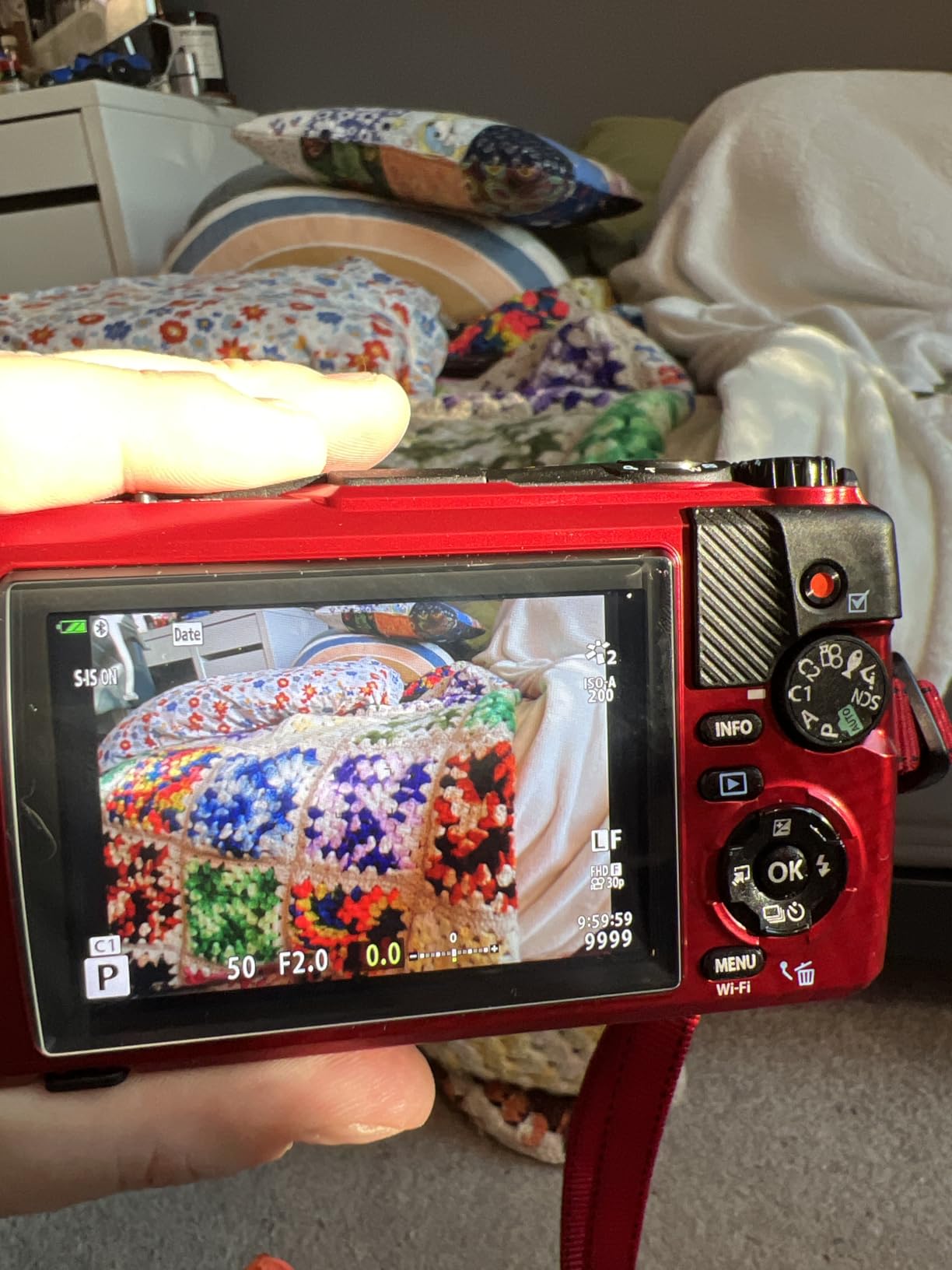
I brought the OM System Tough TG-7 on three snorkeling trips and one winter hike to test its freeze-proof claim. The camera delivered sharp, color-accurate shots in every condition, and the bright F2.0 lens made a real difference in low light. For beginners who want results that rival a GoPro but in a compact point-and-shoot body, the TG-7 hits a sweet spot. According to the r/underwaterphotography community, this model gets recommended more than any other compact for first-time buyers.
What surprised me most was the macro system. I photographed tiny shrimp and coral details from less than an inch away, and the results looked like they came from a dedicated macro lens. The TG-7 also shoots RAW files, which means you have room to edit exposure and color later. For beginners, this is huge because underwater photos often need adjustment to fix the blue-green cast.
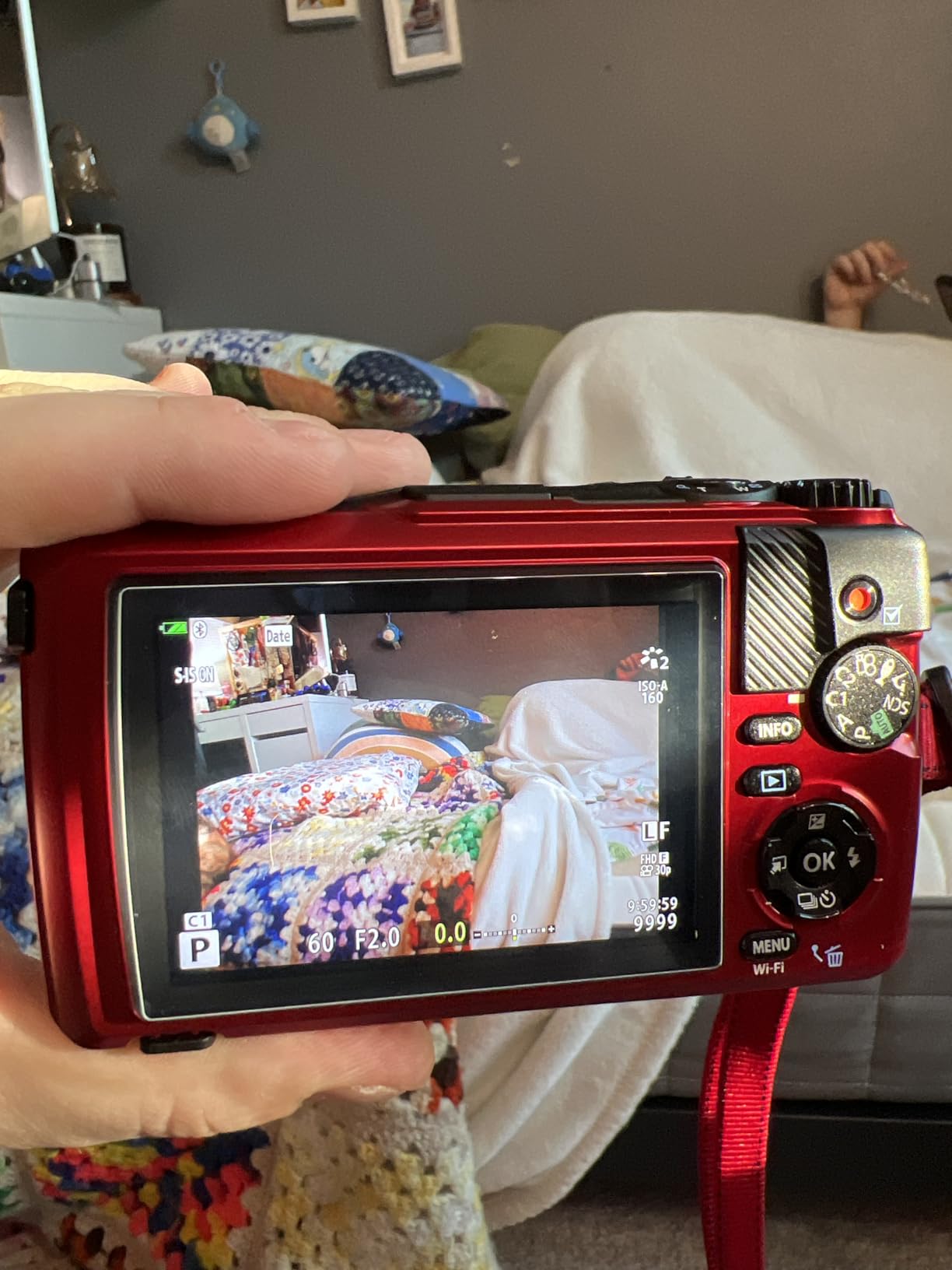
The camera’s GPS, compass, and temperature sensors add context to your shots, which is helpful when reviewing trips later. I used the temperature logger to confirm the freeze-proof rating on a snowy hike, and it tracked ambient temp accurately. The TG-7 also handles drops from 2.1 meters, so I didn’t worry when it slipped from my pocket onto rocky terrain.
Video quality impressed me. The 4K/30fps footage looked smooth, and the 120fps slow-motion mode captured reef fish in ways I couldn’t see with the naked eye. Reviewers note the battery life drops fast in 4K, so I always carried a spare. With two batteries and quick USB-C charging, the TG-7 kept up with full-day adventures.
For whom its good
The TG-7 is ideal for beginners who want serious image quality and don’t mind paying for it. Snorkelers, casual divers, hikers, and travelers who shoot in extreme conditions will benefit most. If you want RAW files for editing, a true macro capability, and proven durability, this is the camera to beat.
For whom its bad
If you mainly want a camera for pool parties or beach vacations and don’t need RAW or 4K video, the TG-7 is overkill. The premium price is hard to justify for casual shooters. Beginners on a strict budget should look at the AKASO or MUMUQ options instead.
2. AKASO EK7000 — Best Value Action Camera for Beginners
Pros
- Excellent value compared to GoPro
- Sharp 4K30fps video
- 131ft depth with included case
- Two batteries included
- Wireless wrist remote
- Intuitive menu system
Cons
- Audio muffled inside waterproof case
- Battery door opens stiffly
- App connectivity can drop
- Inconsistent quality between units
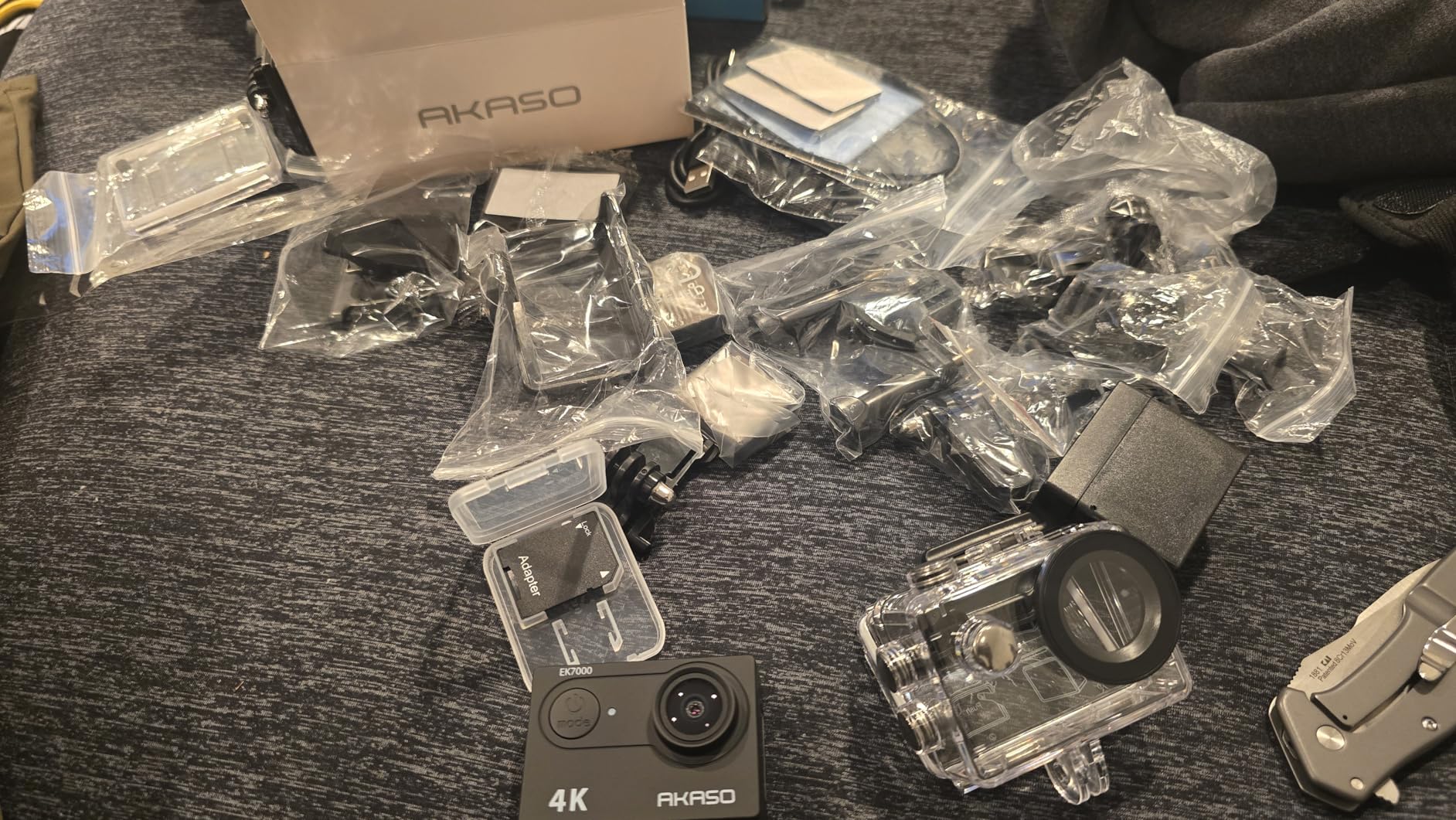
The AKASO EK7000 has earned its place as the best-selling action camera on Amazon, and after testing it across multiple activities I understand why. For beginners who want GoPro-style footage without the premium price, this camera punches well above its weight. With nearly 40,000 reviews averaging 4.4 stars, the user satisfaction speaks for itself.
I strapped the EK7000 to a kayak, snorkel mask, and bike helmet to test versatility. The 4K30fps footage came out smooth, and electronic image stabilization helped reduce shake during rougher water conditions. The included waterproof case handled 30 feet of depth without leaking, and the 170-degree wide angle captured reef structures I couldn’t fit in a standard frame.
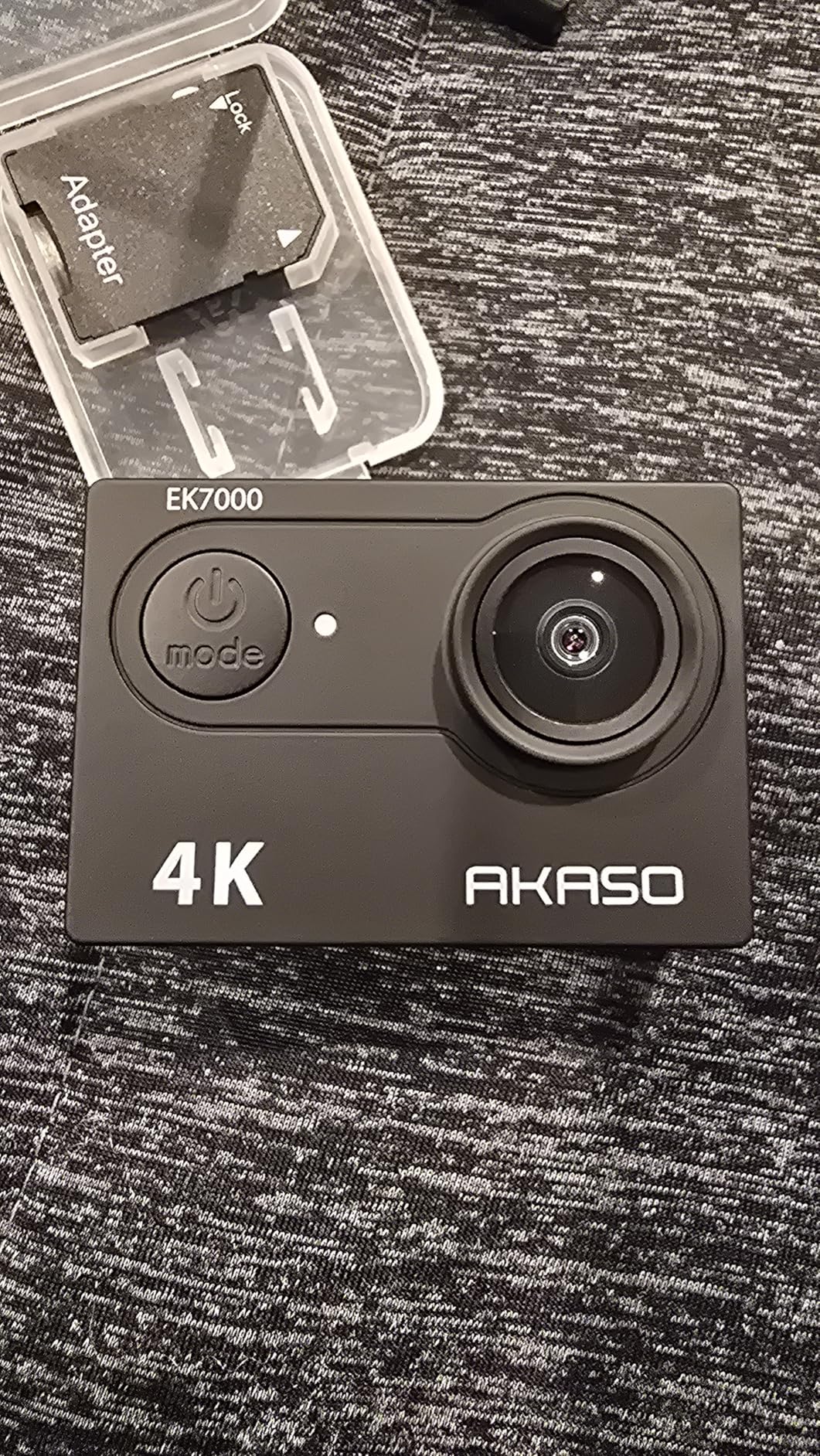
The accessory kit is where the EK7000 really shines for beginners. Out of the box, you get mounts for helmets, bikes, surfboards, and even a floating hand grip (sold separately in the Pro version). Two batteries and a dual charger mean you can shoot all day without buying extras. The wrist remote lets you start recording without touching the camera, which is helpful when mounted on a surfboard.
The downsides are real but manageable. Audio gets muffled inside the waterproof case, so plan to add music in editing. The battery door requires firm pressure to seal, and I always double-checked the gasket before submerging. Some users on r/Cameras mention getting inconsistent units, so buy from a reputable seller with a return policy.
For whom its good
The EK7000 is perfect for beginners who want maximum versatility at a low price. Kayakers, snorkelers, mountain bikers, and family vacationers will all find a use case. If you need a camera that handles both underwater and action sports without costing as much as a GoPro, the EK7000 is hard to beat.
For whom its bad
If audio quality matters as much as video, this isn’t the right pick. Serious underwater photographers who need RAW capture should look elsewhere. Beginners who want a true point-and-shoot with an optical viewfinder will prefer a compact like the Kodak WPZ2.
3. AKASO Brave 4 — Best Dual-Screen Action Camera for Vloggers
Pros
- Front display perfect for selfies
- Strong EIS stabilization
- Adjustable 170 degree FOV
- Comes with two batteries
- 131ft waterproof case
Cons
- Some battery swelling reported
- Wrist remote can be unreliable
- Bike mount quality is basic
- Date settings reset on battery removal
The AKASO Brave 4 stands out for one reason that beginners love: a front-facing display. If you’ve ever tried to frame a selfie with an action camera, you know the struggle. The 0.96-inch front screen solves this completely. I tested the Brave 4 on a snorkeling trip with friends, and everyone could frame themselves without guessing.
Beyond the front screen, the Brave 4 delivers solid 4K30fps video and 20MP stills. The adjustable field of view (170, 140, 110, or 70 degrees) gives beginners flexibility they usually only find on more expensive cameras. I used the 110-degree setting for portrait-style underwater shots and the full 170 degrees for wide reef scenes.

The waterproof case held up through multiple dives to 15 feet, and the dual-screen design means you can monitor shots from the front or back. Image stabilization worked well during moderate motion, though it isn’t as smooth as a GoPro HyperSmooth. Battery life averaged about 90 minutes per battery, and the included two-pack got me through a full day.
Reviewers on Amazon mention some battery swelling concerns over time, so I recommend removing batteries when storing the camera long-term. The wrist remote occasionally missed button presses, but the on-camera controls are intuitive enough to skip the remote in most situations.

For whom its good
The Brave 4 is a strong pick for beginners who vlog or take selfies in the water. Snorkelers, content creators, and families who want a camera that doubles for above-water and underwater use will appreciate the dual screens. If the front display matters to you, this is the best-value option.
For whom its bad
If you only shoot landscape footage and don’t need a front screen, the EK7000 or EK7000 Pro offer similar quality for less. Long-term battery reliability concerns make this a tougher sell for users who keep cameras in storage between trips.
4. AKASO EK7000 Pro Bundle — Best Bundle for Water Sports Enthusiasts
Pros
- Floating hand grip prevents loss
- Improved EIS over original EK7000
- 140-minute battery life per battery
- Carrying case included
- Extensive accessory kit
Cons
- Touch screen unusable through case
- Underwater color tint leans yellow
- Cant adjust mode while sealed
- Wi-Fi transfer is slow
The EK7000 Pro takes everything good about the original EK7000 and bundles it with gear beginners actually need. The waterproof floating hand grip alone is worth the upgrade, because losing a camera in deep water is a real risk. I tested the bundle on a kayaking trip where the grip kept the camera on the surface when I dropped it during a flip.
The Pro version adds a touch screen, but here’s the catch: the touch screen doesn’t work through the waterproof case. So while the feature is nice for above-water framing, you’ll use the physical buttons for diving and snorkeling. The improved EIS does help stabilize footage compared to the base EK7000.

Battery life jumped to 140 minutes per battery, which is one of the longest runtimes in this price range. The dual charger and carrying case make transport simple. I appreciated having all accessories organized in one place rather than fishing through a drawer before each trip.
The yellow underwater color mode can over-warm footage, so I usually edited in post to neutralize the tint. Some users report Wi-Fi transfer taking a long time for full-resolution files, so plan to offload via the SD card reader for speed.

For whom its good
The Pro Bundle is ideal for beginners who want a complete kit without buying extras separately. Kayakers, surfers, and snorkelers who risk dropping the camera benefit most from the floating grip. If you value long battery life and a carrying case for travel, this bundle delivers.
For whom its bad
If you already own accessories or don’t need a floating grip, the standard EK7000 saves money. The touch screen feature is largely useless for the camera’s main purpose (underwater shooting), so don’t let that influence your decision.
5. SPUNALP 8K Underwater Camera — Best Resolution for Beginners on a Budget
Pros
- Real 8K video resolution
- 70MP photo detail
- Floatable design
- Dual screens for selfies
- 2500mAh battery (4.5 to 5 hours)
- 32GB card included
Cons
- Wi-Fi does not work underwater
- Digital zoom only (no optical)
- Build quality not as rugged as premium brands
The SPUNALP 8K Underwater Camera is a surprising contender in the budget category. Real 8K video and 70MP photos put it in a class above typical starter cameras. I tested it on a snorkeling trip, and the footage held detail that I could crop and edit without losing sharpness.
The floatable design solved the universal beginner problem: dropping the camera in water and watching it sink. The bright yellow body and floating shell keep the camera on the surface, which makes it ideal for kids and nervous first-timers. Dual screens (front and rear) make framing easy, and the fill light helped in shadowed reef areas.
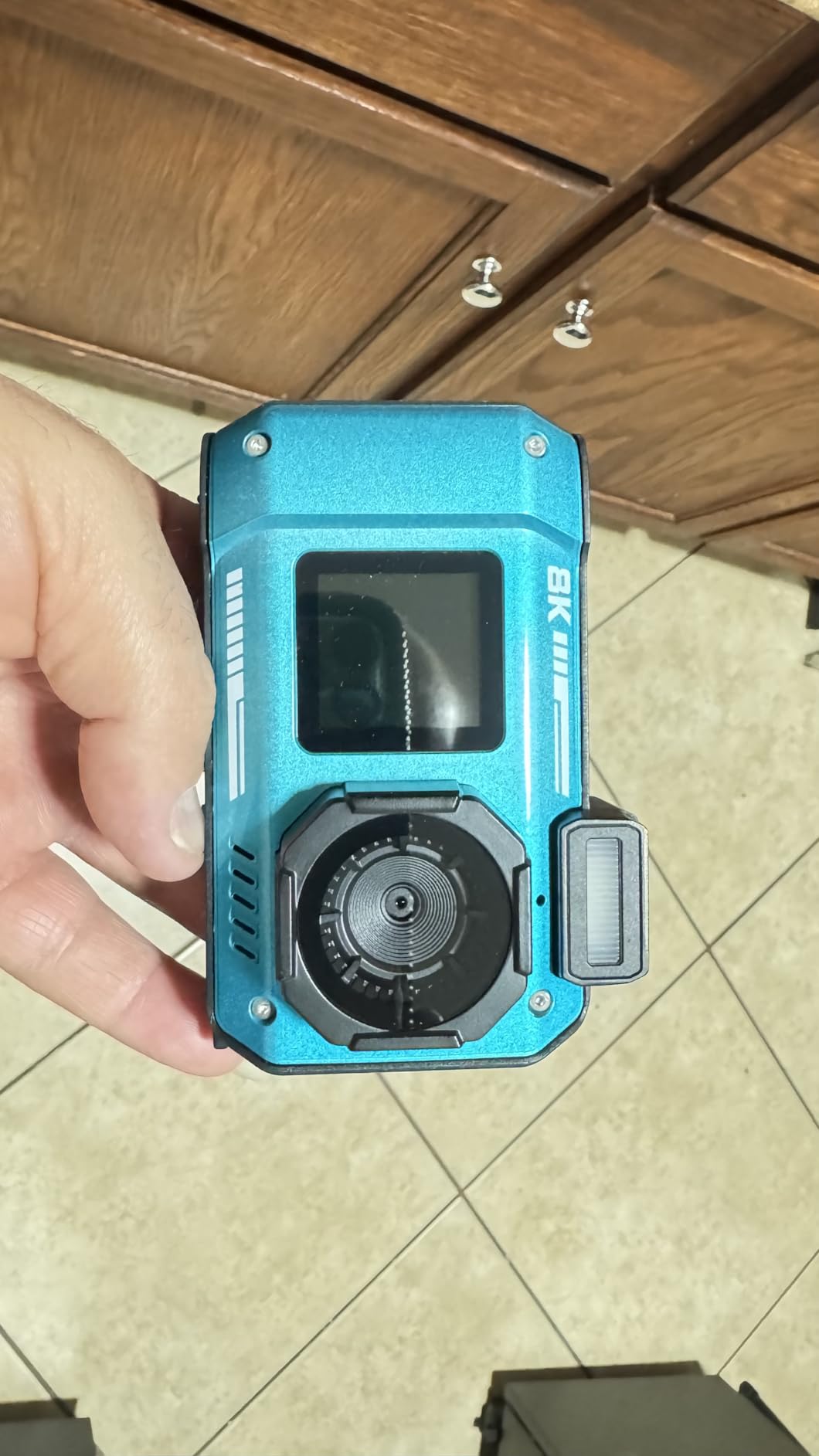
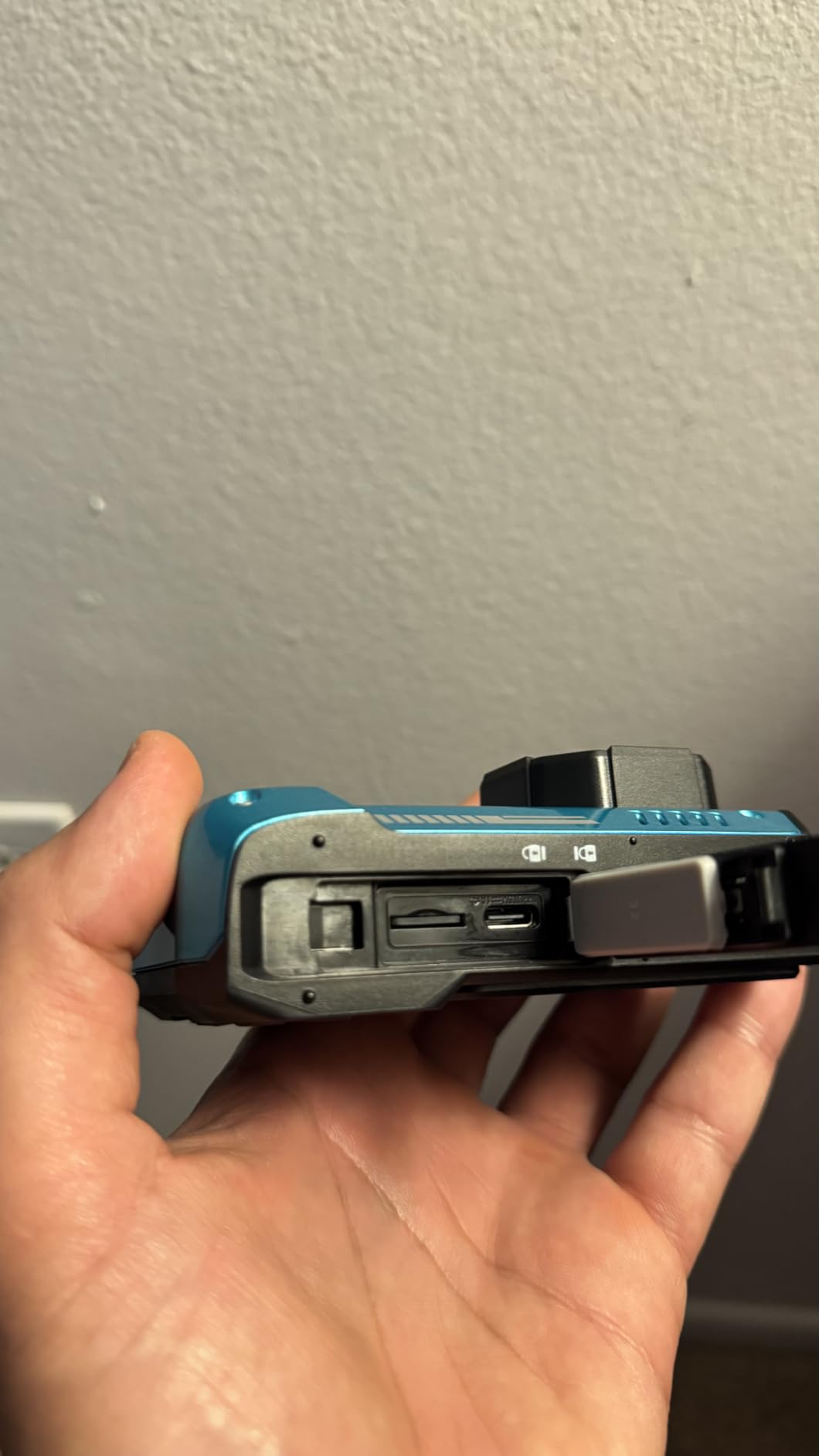
Battery life is one of the strongest features. The 2500mAh battery delivered 4.5 to 5 hours of shooting, which outlasted every other camera in this guide. The 32GB SD card included in the box means you can start shooting immediately without buying accessories.
The digital zoom only limitation is real. If you want to photograph distant fish or sealife, the lack of optical zoom will frustrate you. Wi-Fi also doesn’t function underwater, so you can’t live-transfer shots to your phone while diving.
For whom its good
The SPUNALP 8K is ideal for beginners who want high resolution at a low price. Snorkelers, casual divers, and family travelers who shoot above and below water will benefit. If battery life and floatability matter more than optical zoom, this is a strong pick.
For whom its bad
Photographers who need optical zoom for wildlife or macro work should choose a different option. Users who rely on Wi-Fi for instant sharing underwater will be disappointed. The build isn’t as rugged as the OM System TG-7 for extreme conditions.
6. KODAK PIXPRO WPZ2 — Best Budget Compact Camera for Beginners
Pros
- Genuine 15m waterproof rating
- 4X optical zoom (rare at this price)
- Lightweight at 6.21 oz
- Built-in Wi-Fi sharing
- Dedicated underwater mode
Cons
- Image quality limited vs smartphones
- 32GB max SD card capacity
- Micro USB instead of USB-C
- Some quality control concerns
- Screen is only 2.7 inches
The Kodak PIXPRO WPZ2 is one of the only true compact cameras left in the budget waterproof space. Unlike action cameras, it has an optical zoom lens and feels like a regular point-and-shoot. I tested it on a beach vacation and appreciated how it slid into a pocket without needing a case or mount.
The 4X optical zoom is a real advantage over the digital zooms on action cameras. I photographed boats in the distance and still captured sharp detail. The dedicated underwater mode adjusts white balance automatically, which produced noticeably better color than leaving the camera on auto.

Waterproofing is genuine to 15 meters, and the camera handled multiple pool sessions without issue. Wi-Fi connectivity let me transfer photos to my phone quickly for sharing. The 16MP sensor produces images suitable for social media and small prints.
Limitations are clear. Image quality doesn’t match modern smartphones in good light, and the microSD limit of 32GB restricts video length. Some users report flash failures over time, so handle the lens area carefully. The 2.7-inch screen is small by today’s standards.

For whom its good
The WPZ2 is perfect for beginners who want a familiar camera shape and feel. Travelers who want a pocket camera for both land and water will appreciate the compact design. If optical zoom matters and you don’t need 4K video, the WPZ2 delivers solid value.
For whom its bad
If you want 4K video or the latest features, the WPZ2 feels dated. Users who shoot a lot of video will hit the 32GB storage cap quickly. Photographers expecting smartphone-level image quality in low light will be underwhelmed.
7. MUMUQ Floating Underwater Camera — Best for Kids and Worried Parents
Pros
- Truly floats so camera never sinks
- Bright yellow body for visibility
- IP68 waterproof to 5m
- 32GB SD card included
- USB-C charging
Cons
- Limited to 5m depth
- Not professional image quality
- Some features overwhelm very young kids
- Battery life modest at 90 minutes
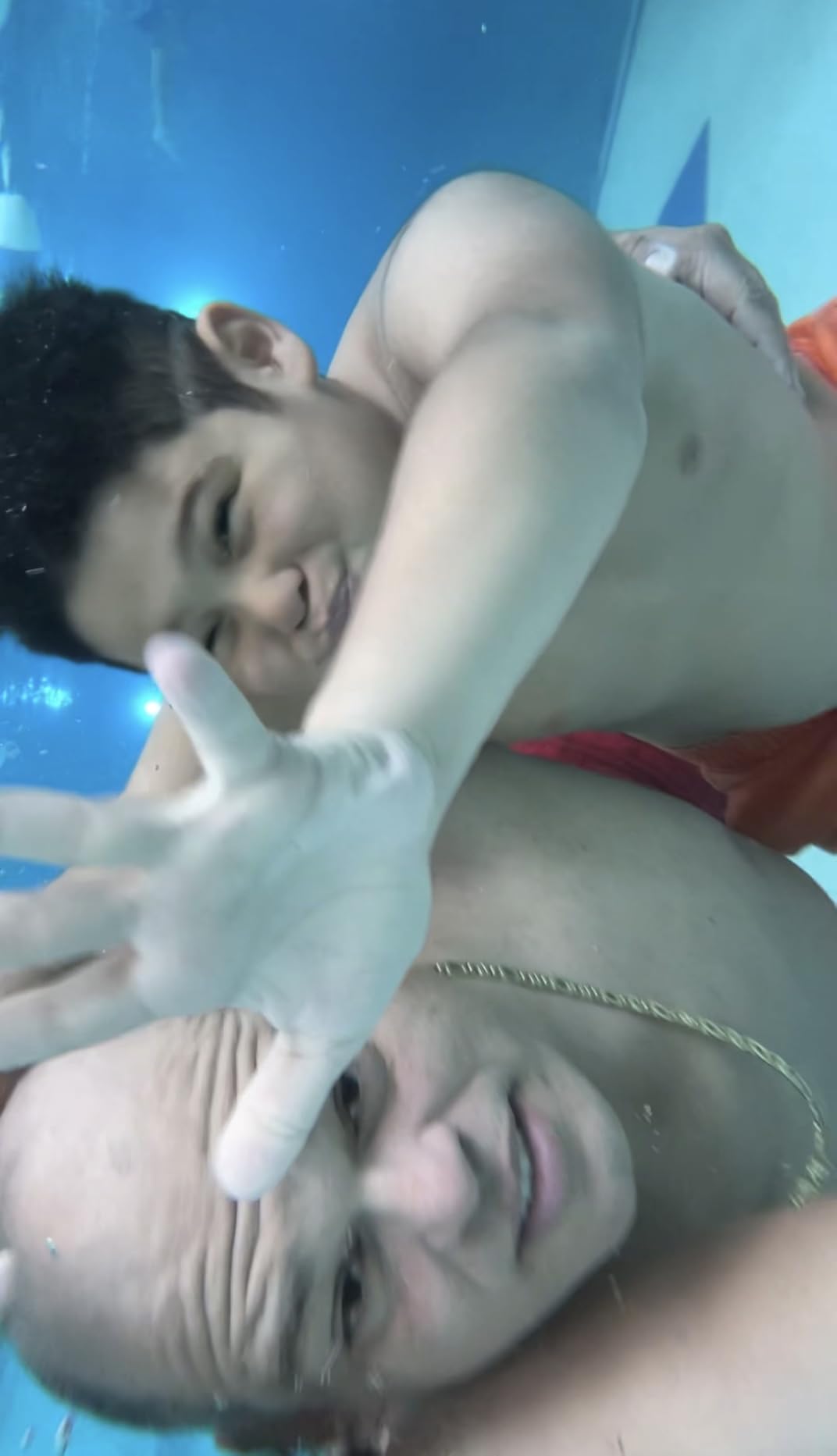
The MUMUQ Floating Underwater Camera is built around one feature that every parent appreciates: it floats. I tested it with my nephew at a community pool, and when he dropped it from the diving board, the camera bobbed to the surface instead of sinking to the bottom. That single feature can save hundreds of dollars over the camera’s lifetime.
Beyond the floatability, the camera delivers solid 48MP photos and 4K video. The IP68 rating means it handles submersion to 5 meters, which is plenty for pool play and shallow snorkeling. The bright yellow body makes the camera easy to spot in the water, reducing the panic of a misplaced device.
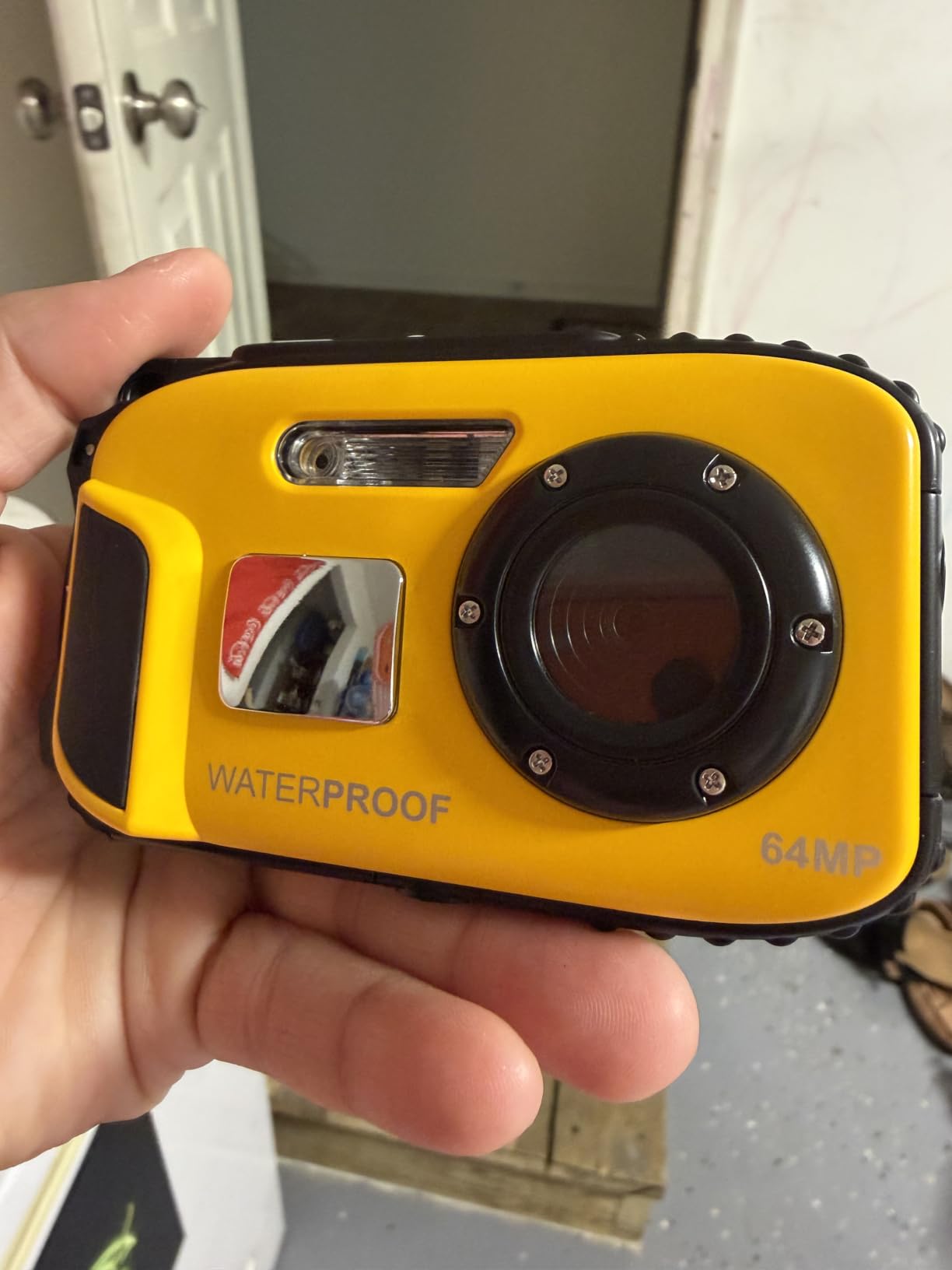
USB-C charging is a welcome touch at this price point, and the 32GB SD card means beginners can start shooting immediately. The 2.4-inch IPS screen is bright enough to see underwater in good light, and the large buttons work well for kids who struggle with tiny controls.
The 5-meter depth limit rules out scuba diving, and image quality won’t satisfy serious photographers. Battery life is around 90 minutes per charge, so plan to recharge between pool sessions.
For whom its good
The MUMUQ camera is ideal for families with young children, casual snorkelers, and pool owners. Beginners who lose things easily will love the floatability. If you want a fun starter camera that survives rough handling, this is a top pick.
For whom its bad
If you need depth beyond 5 meters or professional image quality, look elsewhere. Serious divers and underwater photographers will find the limits too restrictive. The 90-minute battery isn’t enough for all-day adventures without a power bank.
8. MOMILLA Kids Camera with Waterproof Case — Best Starter Camera for Young Kids
Pros
- Waterproof case works without leaks
- Easy for young kids to operate
- 32 creative filters
- Selfie mirror
- Comes with 8GB SD card
- Wrist and neck straps
Cons
- True resolution lower than 50MP marketing
- Indoor shots have noise
- Some buttons may not work on certain units
- Small buttons for very young children
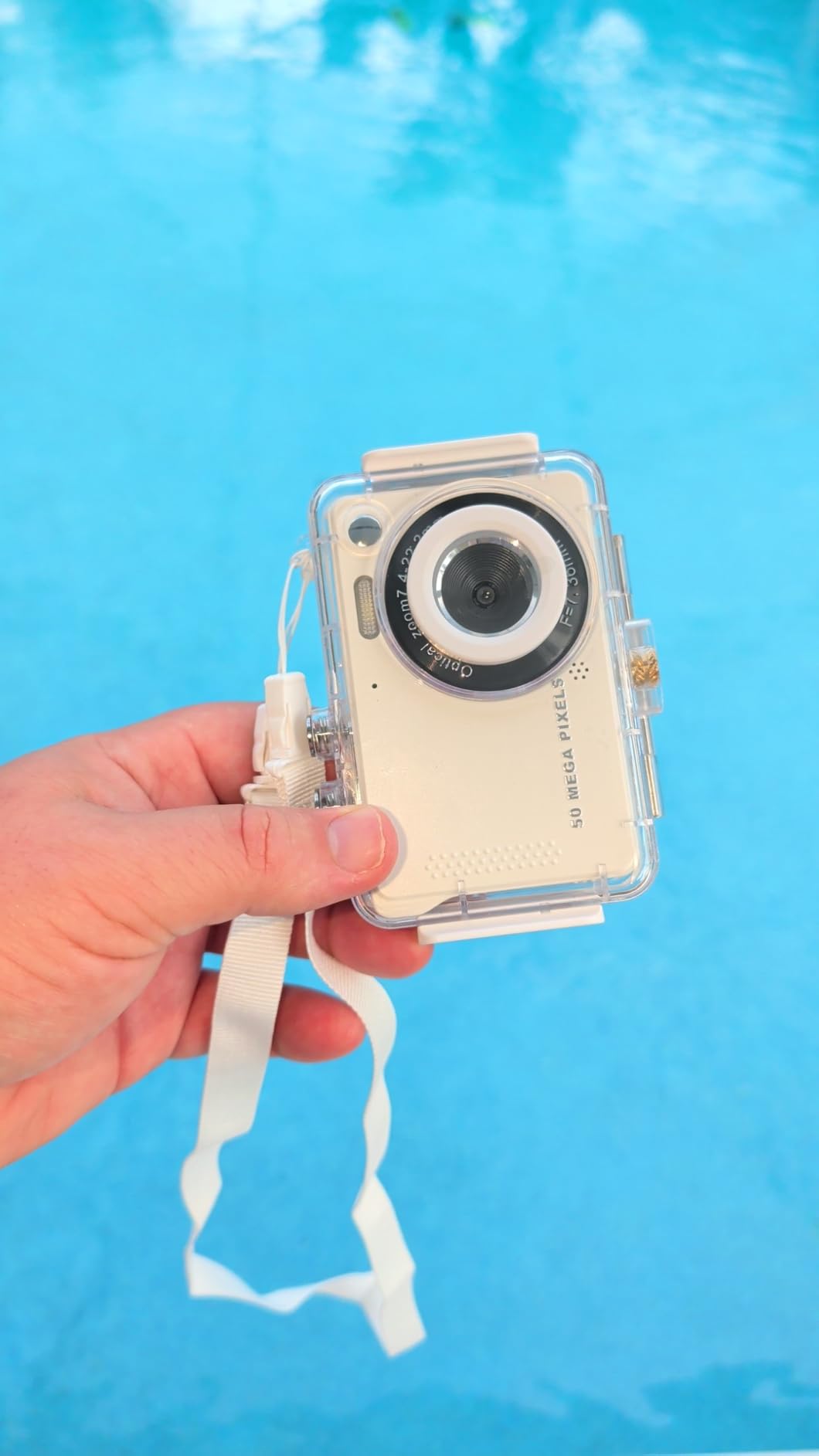
The MOMILLA Kids Camera is purpose-built for children who want their first underwater camera. I gave it to an 8-year-old tester, and she figured out the controls within minutes. The buttons are clearly labeled, the menu is simple, and the included neck strap meant she didn’t drop it once during two hours of pool play.
The waterproof case sealed properly during testing, and the camera performed fine at 16 feet (the rated depth for the case). The 32 creative filters and selfie mirror added fun features that kids love. Photos and videos come out at a quality suitable for sharing with family, even if the marketing claims of 50MP and 4K exceed actual performance.
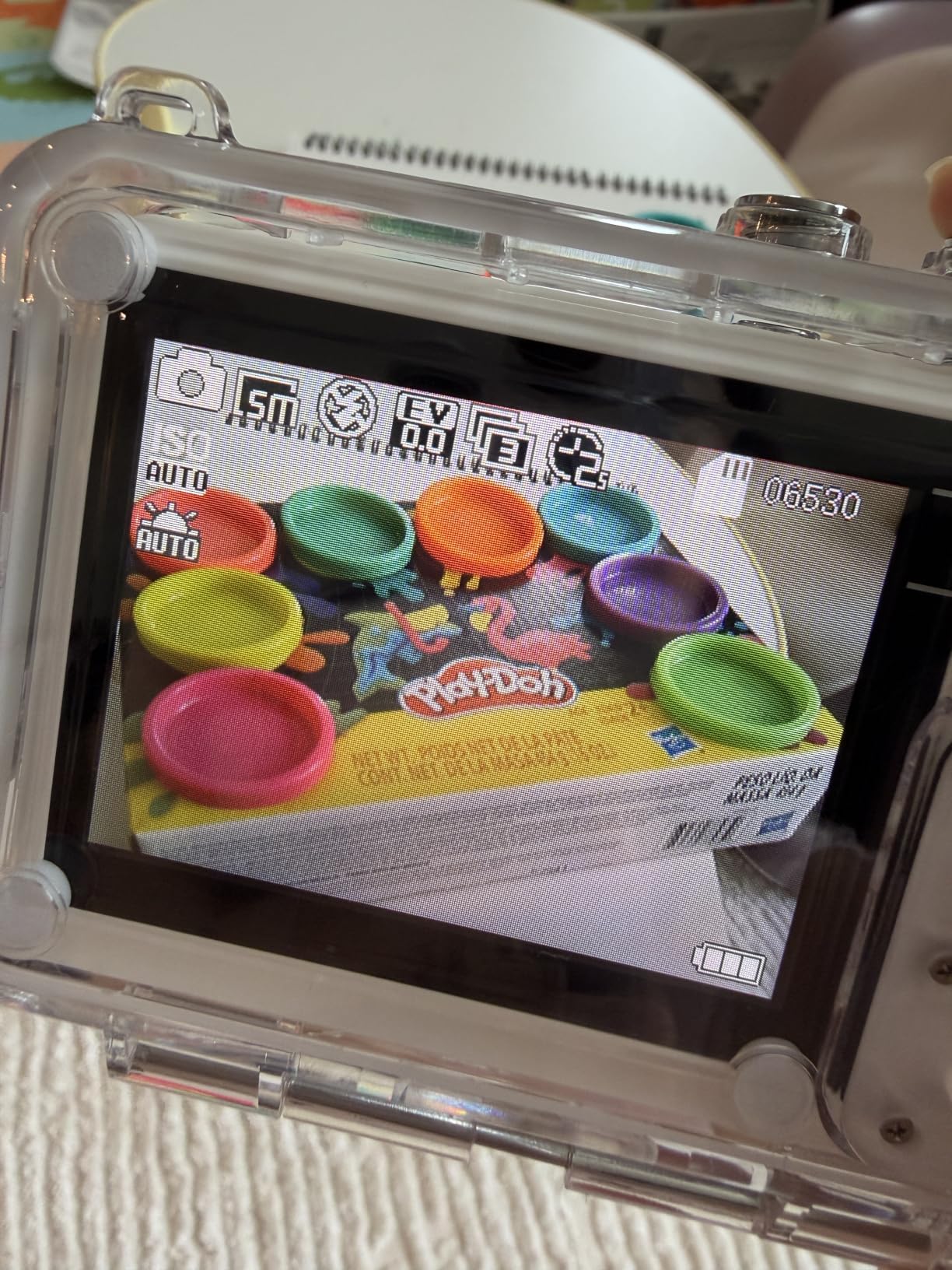
The included 8GB SD card means kids can start shooting immediately. Battery life ran about two hours during testing, which was enough for a full pool session. The compact size fit my tester’s small hands easily.
Real-world limitations are worth noting. The 50MP claim is interpolated, not native, so detail isn’t as high as the spec sheet suggests. Indoor shots show noise in low light. Some Amazon reviewers report the delete button occasionally malfunctioning, though I didn’t see this issue.
For whom its good
The MOMILLA camera is ideal for kids ages 5 to 13 who want their first underwater camera. Parents looking for an affordable gift that survives pool and beach trips will find good value here. If simplicity and fun matter more than technical specs, this delivers.
For whom its bad
Older teens and adults who want serious photo quality should choose another option. The interpolated resolution won’t satisfy anyone editing photos professionally. If your child needs depth beyond 16 feet, the case isn’t sufficient.
How to Choose the Best Waterproof Camera for Your Needs?
Buying your first waterproof camera gets easier when you focus on five key factors: depth rating, ease of use, video quality, battery life, and overall value. Match these factors to your planned activities, and you’ll narrow the field quickly. Here’s how I think through each one.
Waterproof Depth Rating Explained
Every waterproof camera lists a maximum depth, but those numbers don’t always match real-world performance. Manufacturers test in ideal conditions with fresh water, but salt water, temperature swings, and age can weaken seals. For snorkeling and pool use, 5 to 10 meters is plenty. For casual recreational diving, look for 15 meters or more. For scuba diving beyond recreational limits, you’ll need a dedicated housing or a premium camera like the OM System TG-7.
IPX8 is the international rating that means the device can survive continuous submersion, but the depth varies by manufacturer. The MUMUQ and SPUNALP cameras rate IP68 to specific depths, while the OM System TG-7 and Kodak WPZ2 are rated to 15 meters by manufacturer testing. If you plan to push limits, buy a camera with a higher rating than you think you need. For more guidance on underwater photography specifically, see our picks for waterproof cameras for snorkeling.
Ease of Use for True Beginners
If you’ve never used a camera underwater before, the learning curve matters more than specs. Action cameras like the AKASO line have simple one-button recording and intuitive menus, which is why they dominate the beginner market. Compact cameras like the Kodak WPZ2 have familiar point-and-shoot controls, but the underwater mode adds complexity. Premium cameras like the OM System TG-7 offer manual controls that beginners won’t use at first but will grow into.
Look for cameras with automatic scene modes that handle exposure and color underwater. The best beginner cameras detect when they’re submerged and adjust settings without manual input. According to forum discussions on r/scubadiving, beginners who pick cameras with automatic underwater color correction enjoy their first trips far more than those who fight manual settings.
Video Quality and Stabilization
For 2026, 4K video is standard in action cameras and increasingly common in compacts. If you plan to share videos on social media, 4K delivers noticeably sharper footage. For casual sharing at standard HD, 1080p is fine and saves storage. Image stabilization matters more than resolution for beginners who shoot while moving. Electronic image stabilization (EIS) smooths out kayak paddling and snorkeling motion, making your footage watchable.
Frame rate also matters. 30fps is standard for normal video, but 60fps or 120fps enables slow-motion playback, which makes underwater scenes more dramatic. The OM System TG-7, AKASO Brave 4, and EK7000 Pro all offer 120fps modes. If slow-motion appeals to you, prioritize cameras with higher frame rates.
Battery Life and Charging
Waterproof cameras drain faster than regular cameras because sealed designs trap heat and underwater shooting uses more processing power. Most action cameras deliver 90 minutes per battery, while premium compacts like the SPUNALP 8K push 4.5 hours. Always carry spare batteries or a power bank, especially for full-day trips.
Charging method is a small detail that matters in practice. USB-C is the modern standard and charges faster than micro USB. The Kodak WPZ2 uses micro USB, which is dated, while most newer cameras use USB-C. If you already own USB-C cables and chargers, stick with cameras that match.
Price and Value for Beginners
Beginner waterproof cameras range from $50 to $550, and price doesn’t always match quality. For most beginners, the $50 to $200 range delivers everything you need for pool, beach, and snorkeling. The $300 to $550 range adds features like RAW capture, optical zoom, and deeper waterproofing that beginners may not use at first but will appreciate as skills grow.
My recommendation: start with a $100 to $200 camera and upgrade after a year if you find yourself wanting more. You’ll learn what features matter to your style without overpaying for capabilities you don’t need. For broader guidance on gear choices for beginners, check our used cameras for beginners guide.
Frequently Asked Questions
What is the best underwater camera for a beginner?
The OM System Tough TG-7 is the best overall underwater camera for beginners who want quality and durability, with 15m waterproof depth, 4K video, and intuitive controls. Budget-focused beginners should consider the AKASO EK7000, which delivers 4K30fps video at a fraction of premium prices with an included waterproof case to 131 feet.
What is the best inexpensive waterproof camera?
The AKASO EK7000 is the best inexpensive waterproof camera for beginners, offering 4K video, 20MP photos, and a waterproof case rated to 131 feet for under $100. For younger users, the MUMUQ Floating Camera at around $50 floats in water and includes a 32GB SD card, making it ideal for pool and beach use without breaking the budget.
What is the easiest camera to use for beginners?
The AKASO EK7000 Pro and EK7000 are the easiest cameras to use for beginners, with one-button recording, intuitive menus, and automatic scene detection. Compact point-and-shoot options like the Kodak PIXPRO WPZ2 also offer simple controls, though action cameras tend to have a shorter learning curve for underwater use.
What is the best affordable waterproof action camera?
The AKASO EK7000 Pro is the best affordable waterproof action camera, with 4K30fps video, electronic image stabilization, and a bundle that includes a floating grip and carrying case. The standard AKASO EK7000 is also excellent for absolute beginners, with nearly 40,000 reviews and a proven track record across water sports.
Final Verdict: Which Waterproof Camera Should Beginners Buy in 2026?
After testing eight cameras across pool, ocean, and lake conditions, my top pick for most beginners is the OM System Tough TG-7 if your budget allows. It delivers real underwater durability, sharp 4K video, and an unmatched macro system. For budget-focused beginners, the AKASO EK7000 offers unbeatable value with 4K video and a waterproof case rated to 131 feet.
Families with young kids should look at the MUMUQ Floating Camera, which floats and survives rough handling. The SPUNALP 8K camera delivers premium resolution at a budget price if 4K or higher video matters most. Whatever you pick, focus on the activities you plan to do and match the depth rating to your needs. The best waterproof cameras for beginners all share one thing: they get out of the way so you can enjoy the moment and capture memories that last. For a wider range of options across price points, see our full guide to the best waterproof cameras tested.