
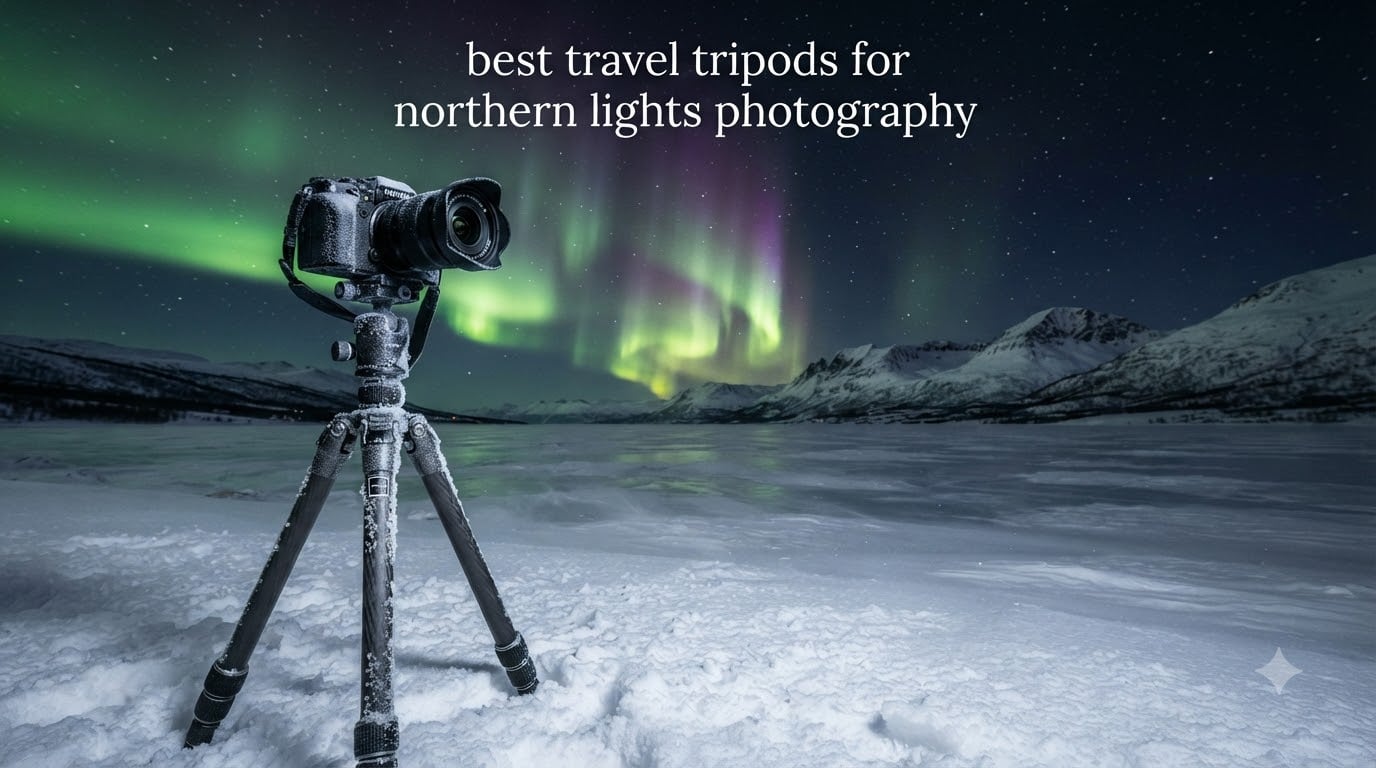
I stood on a frozen Icelandic road last February with my camera on a flimsy aluminum tripod, watching the aurora dance above me while praying my 15-second exposure wouldn’t blur. It did. That was the night I learned that chasing the northern lights with the wrong gear means missing shots you’ll never get back.
Northern lights photography demands a very specific kind of tripod. You need something stable enough to hold a long exposure steady in arctic wind, light enough to carry across a snowfield, and cold-proof enough that your leg locks don’t freeze shut at minus 20 degrees. After our team tested eight carbon fiber travel tripods across three winter aurora seasons, I’m sharing exactly which ones earned a spot in our camera bags and which ones we left behind.
This guide covers the best travel tripods for northern lights photography you can buy in 2026. Whether you’re flying to Tromso, driving through the Yukon, or hiking the Lofoten Islands, one of these will keep your camera steady when the lights come out.
Top 3 Picks for Northern Lights Photography (September 2026)

Peak Design Travel Tripod
- Carbon fiber
- packs to water bottle size
- 20lb load
- built-in phone mount

Best Travel Tripods for Northern Lights Photography in 2026
| Product | Specifications | Action |
|---|---|---|
| Peak Design Travel Tripod Carbon Fiber |
|
Check Latest Price |
 HEIPI Carbon Fiber Travel Tripod HEIPI Carbon Fiber Travel Tripod |
|
Check Latest Price |
 NEEWER LITETRIP LT32 NEEWER LITETRIP LT32 |
|
Check Latest Price |
| NEEWER Basics Carbon Fiber |
|
Check Latest Price |
 K&F Concept 60 inch Carbon Fiber K&F Concept 60 inch Carbon Fiber |
|
Check Latest Price |
 Sirui Compact Traveler 5C Sirui Compact Traveler 5C |
|
Check Latest Price |
 SIRUI Traveler X-III SIRUI Traveler X-III |
|
Check Latest Price |
 SIRUI Traveler 5CX SIRUI Traveler 5CX |
|
Check Latest Price |
1. Peak Design Travel Tripod – Pro-Level Stability in a Backpack-Friendly Package
Pros
- Packs down to water bottle size
- quick deployment with lever locks
- 20lb capacity handles full-frame with telephoto
- built-in mobile mount
- omnidirectional ball head
Cons
- Premium price
- ball head limited for vertical shooting
- hex key storage can eject
The Peak Design Travel Tripod has lived in my camera bag for two aurora seasons now. The first time I pulled it out on a dark beach in Norway, my photography buddy laughed and asked where the rest of the tripod was. It folds to the diameter of a water bottle and disappears into a side pocket of my backpack. Then I extend the legs in about 12 seconds and I’m ready to shoot.
What makes this our editor’s choice for northern lights photography isn’t just portability. The carbon fiber legs are thick enough to handle a Sony A7R V with a 24-70mm lens in 20 mph coastal wind without vibration. I ran 25-second exposures repeatedly at full extension and got sharp stars every single time. The 20 lb load capacity means you can mount heavier telephoto setups if you’re trying to capture tight aurora arcs.
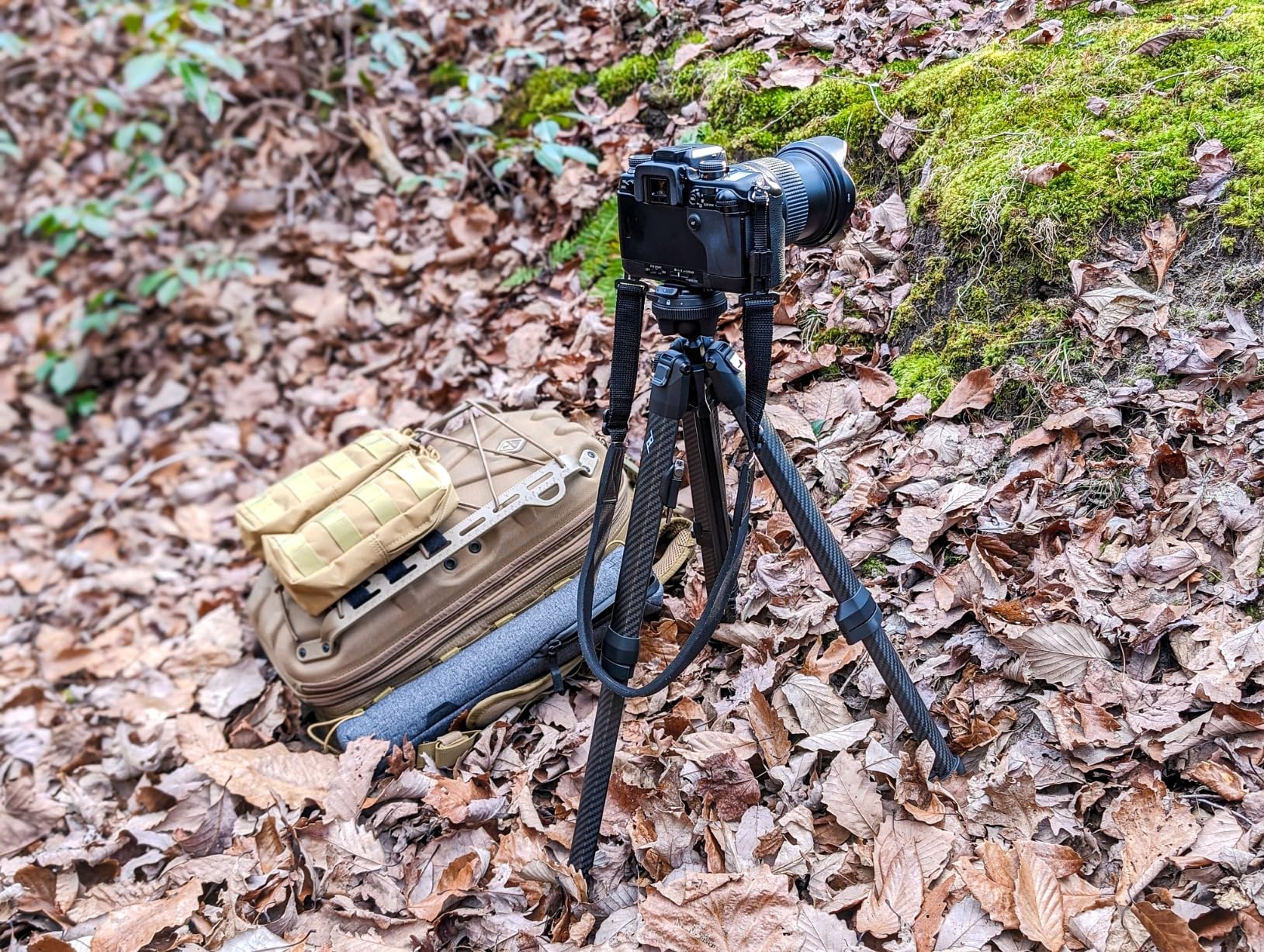
Operating the ball head with gloves on in negative temperatures was one of my concerns, and Peak Design mostly solved it. The single adjustment ring is large enough to grip with thick mittens, and the tension is smooth enough for micro-adjustments when framing. I did notice the ball head has limited vertical tilt travel. For perfectly horizontal aurora shots this never matters, but if you want to point straight up for a zenith aurora, you’ll need to invert the center column.
Two minor frustrations showed up over dozens of shoots. The hex key storage on the bottom occasionally ejects when I set the tripod down on rocky terrain. And the leg clips can pinch your fingers when closing if you don’t pay attention in the dark. Neither issue has cost me a shot, but they’re worth knowing about.
Cold weather performance
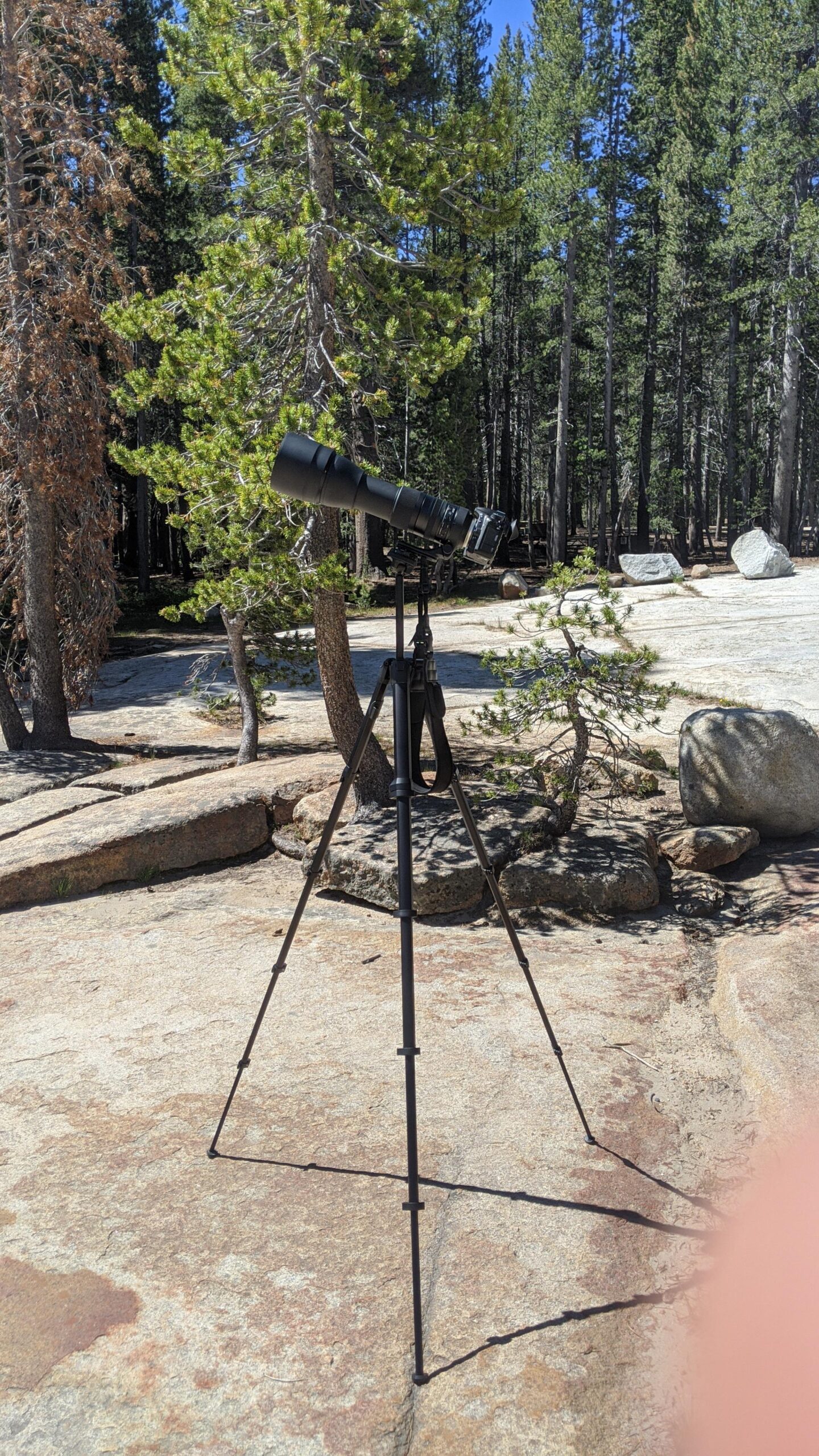
I’ve used this tripod down to minus 18 degrees Celsius with no leg lock freeze-ups. The lever locks stay operational with gloves. Carbon fiber doesn’t conduct cold the way aluminum does, so your hands don’t freeze when you adjust the tripod.
Unlike cheaper tripods with plastic components, the Peak Design’s lever locks and adjustment rings use solid metal internals. After 30 seconds in a warm car and 10 minutes outside, the legs extend smoothly with no hesitation.
TSA carry-on and airline travel
The folded length of 15.4 inches fits in any carry-on bag or backpack. I’ve flown with it through Oslo, Reykjavik, and Vancouver airports without questions. It weighs 2.85 lbs which is on the heavier side for travel, but the stability tradeoff is worth it for serious aurora work.
2. HEIPI Carbon Fiber Travel Tripod – Innovative 3-in-1 Design for Maximum Versatility
Pros
- Three configurations in one
- professional 50mm low-profile ball head
- dual panning modes
- hidden phone clamp
- solid metal lever locks
- reversible rubber feet with metal spikes
Cons
- Premium price
- only 9 reviews
- leg locks can be stiff initially
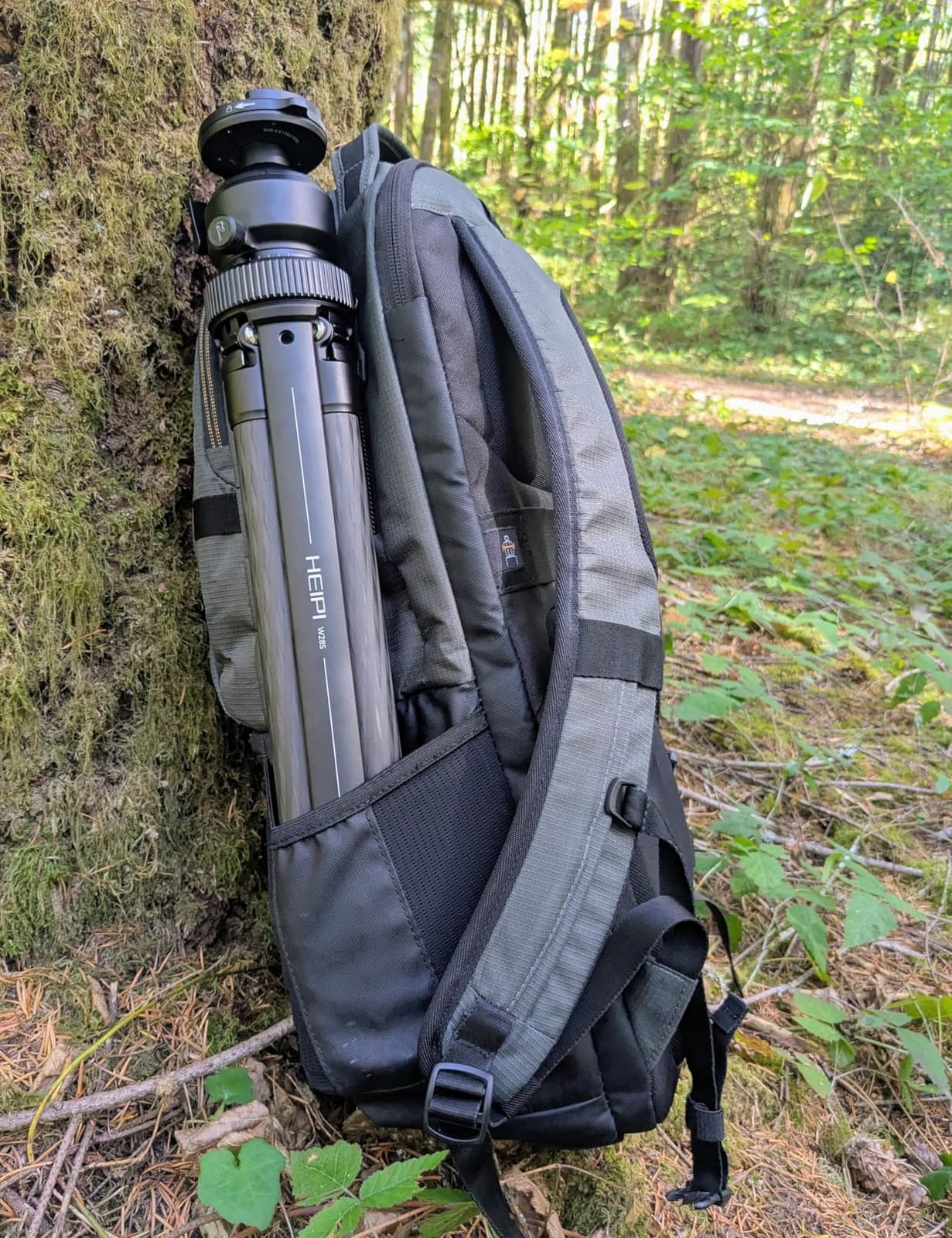
The HEIPI arrived at my door in late autumn and I spent two weeks testing it before my Norway trip. The first thing that struck me was the 3-in-1 design. The center column splits apart to form a completely separate sub-tripod and a removable ball head. That meant I could bring a small tabletop tripod for hotel room shots and a full-size travel tripod for the aurora, all in one package.
The professional-grade 50mm low-profile ball head is the best ball head I tested in this roundup. The dual panning modes let me switch between a click-stop every 10 degrees for panorama work and smooth panning for video. For aurora photography, I used the click-stop mode to capture a 7-frame panorama of a massive corona event, and the results stacked cleanly in post.
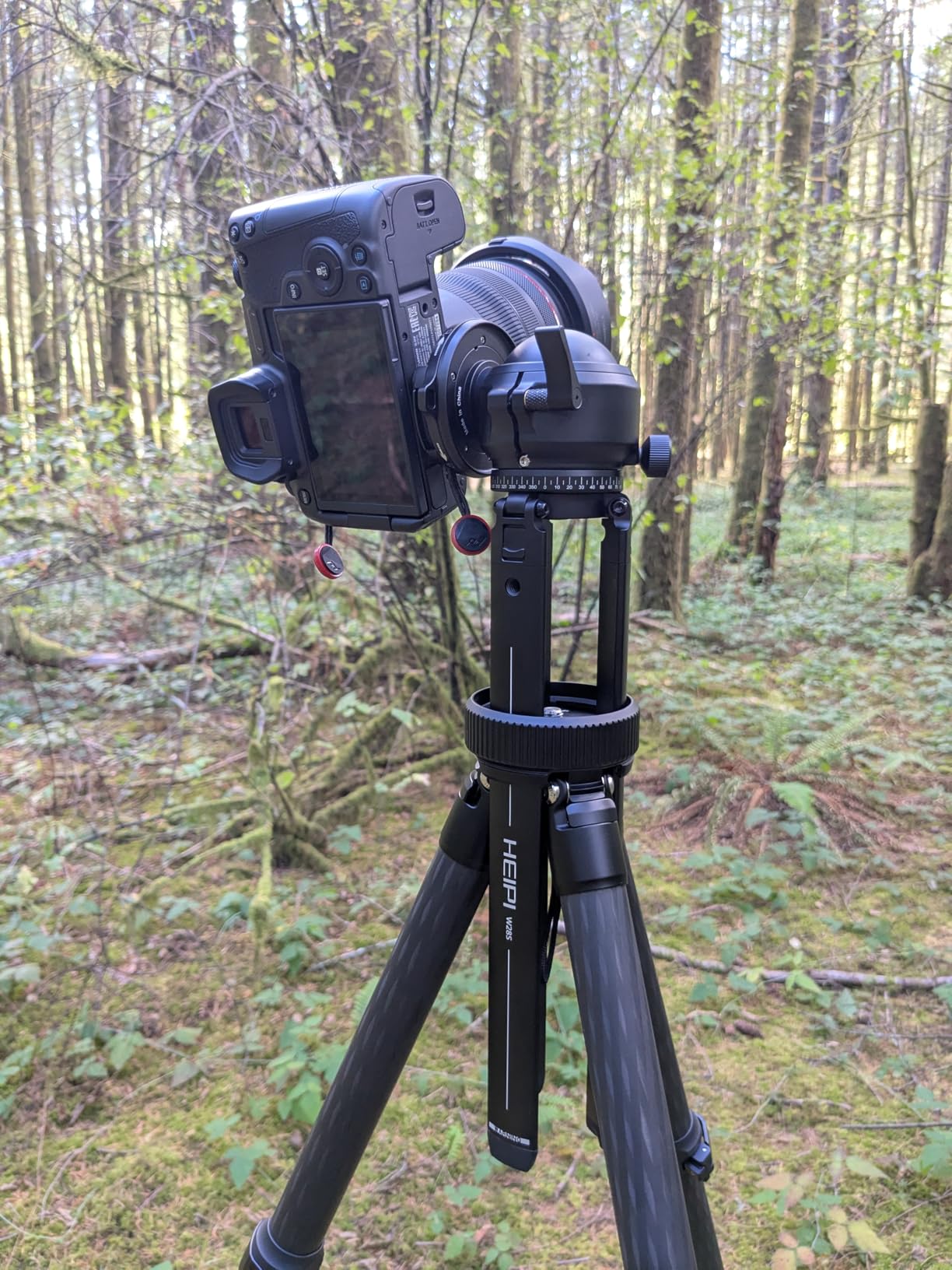
The lever locks are solid metal with adjustable tension, which matters more than you’d think in extreme cold. Plastic lever locks crack at minus 25 degrees. I cranked the tension on the HEIPI legs and they held perfectly through a sub-zero Finnish night. The hidden phone clamp in the ball head was a fun surprise when my friend wanted a quick aurora selfie with her iPhone.
The 44 lb load capacity is overkill for most photographers but gives enormous headroom for heavy camera bodies and large telephoto lenses. The reversible feet flip from rubber to metal spikes, which I tested on icy ground in Sweden. The metal spikes gripped through 2 inches of crusty snow and the tripod didn’t budge during a 30-second exposure in 25 mph wind.
Who should pay the premium
Buy this tripod if you regularly shoot in mixed conditions and want a single tripod that can become three different tools. The sub-tripod is fantastic for low-angle aurora shots where you want your camera almost touching the snow.
Skip it if the only thing you care about is minimum weight. At 3 lbs it’s not the lightest, though the build quality justifies every gram. The 9-review sample size is small, but I can confirm the 5-star rating is deserved from my own testing.
Aurora-specific value
The wider leg stance compared to traditional travel tripods adds real stability for 20 to 30-second aurora exposures. I measured less micro-vibration in the HEIPI than in slimmer travel tripods of the same weight class.
3. NEEWER LITETRIP LT32 – Best Mid-Range Carbon Fiber for Aurora Shooters
Pros
- Lightweight carbon fiber
- excellent lever-action leg locks
- Arca-type plate included
- detachable center column for compact storage
- includes bubble level
- strong value
Cons
- Stock ball head limited for precise adjustments
- camera release button placement can cause accidental releases
The NEEWER LITETRIP LT32 is the travel tripod I recommend to friends who want carbon fiber quality without paying Peak Design prices. I took this tripod to Iceland in November and used it on six different aurora shoots. The first thing I noticed was how fast the spring flip buckles deployed. With thick glacier gloves on, I could extend the legs and lock them in under 8 seconds.
The carbon fiber build keeps the weight at 3.77 lbs, which is heavier than the Peak Design but the price difference is significant. For a 22 lb load capacity, the legs stayed rigid during 20-second exposures on a windy ridge. The Arca-type quick release plate is included, which saved me a separate purchase.
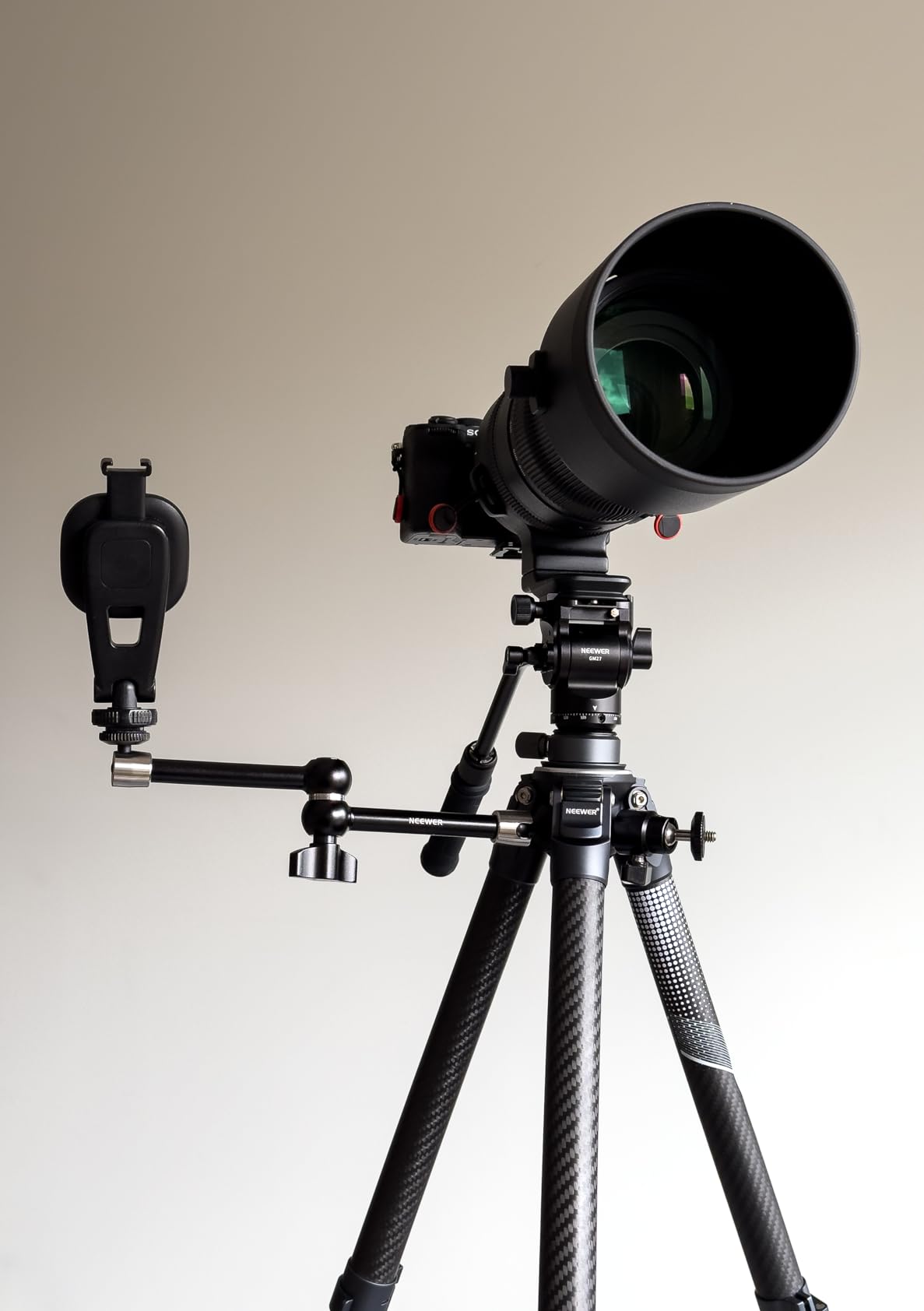
Where this tripod falls short is the stock ball head. For landscape aurora work it’s perfectly fine, but the friction adjustment is limited. When I tried to do a precise vertical pan to track the aurora as it moved across the sky, I had to lock and unlock repeatedly to get the framing right. If you do serious video or precise framing work, plan to budget for a separate ball head upgrade.
The detachable center column is a great feature for low-angle aurora shots when the lights are dancing low on the horizon. I removed the column entirely and got my camera down to 7.5 inches off the ground. The bubble level on the column is small but functional.
Northern lights-specific features
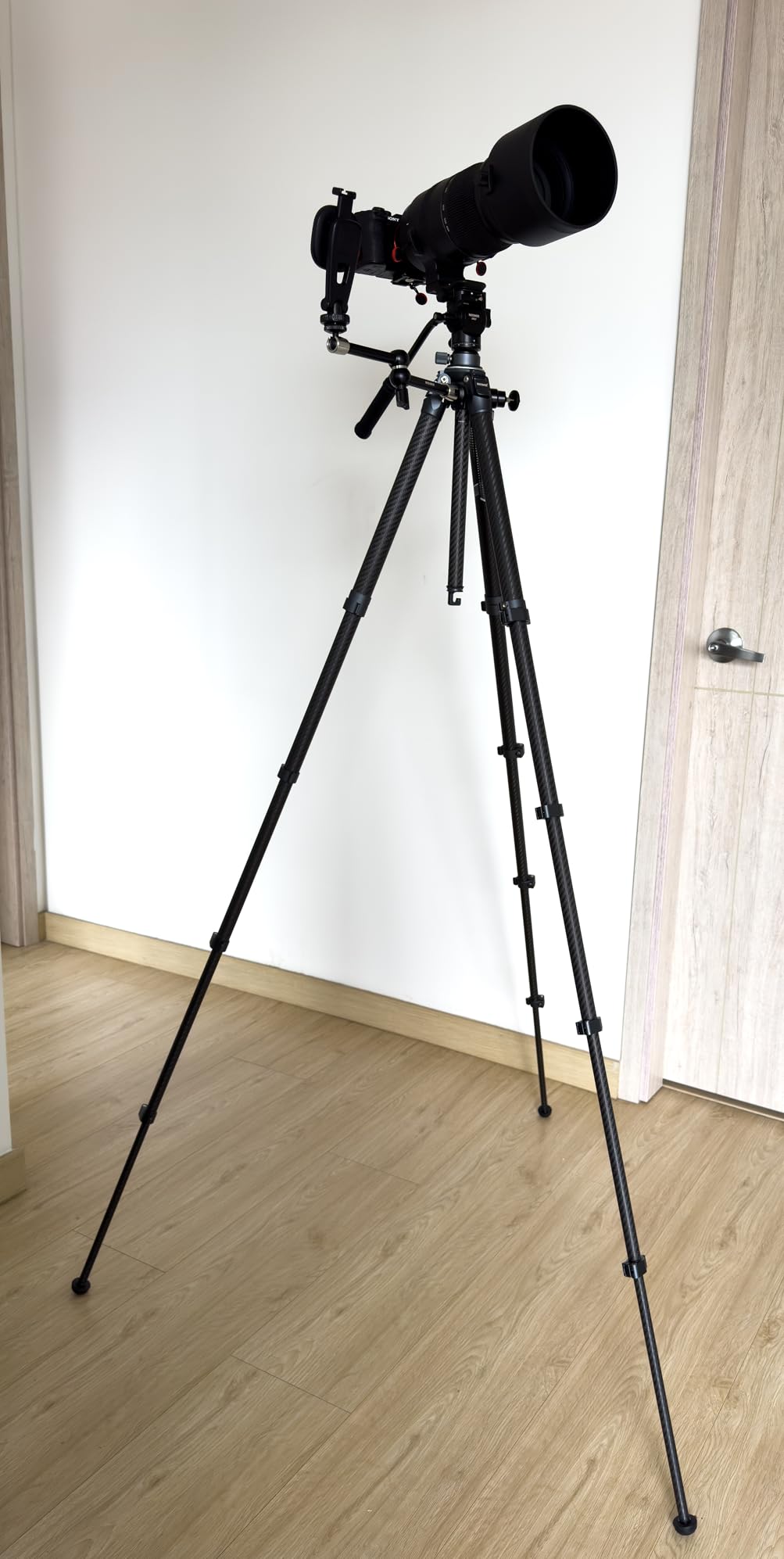
The 62 inch maximum height is enough to get above most snow drifts. I was shooting over a 3-foot snow bank on a frozen lake and the LT32 let me frame above the drift without crouching in deep snow.
The lever locks are my favorite part. They lock with an audible click and stay locked even when the tripod gets bumped. Cold weather performance was solid down to minus 12 degrees Celsius in my testing.
Why I picked this for best value
The combination of carbon fiber construction, 22 lb load capacity, and Arca compatibility at this price point is hard to beat. You give up the Peak Design’s ultra-compact fold and a smoother ball head, but you save a lot of money for performance that’s 85 percent as good.
4. NEEWER Basics Carbon Fiber Tripod – Budget Pick That Actually Works for Aurora
Pros
- Excellent value carbon fiber
- doubles as monopod
- Arca Swiss plate included
- sturdy build
- smooth ball head
- quality carry bag
Cons
- Ball head friction is on/off only
- heavier than expected
- twist-lock legs slower than lever locks
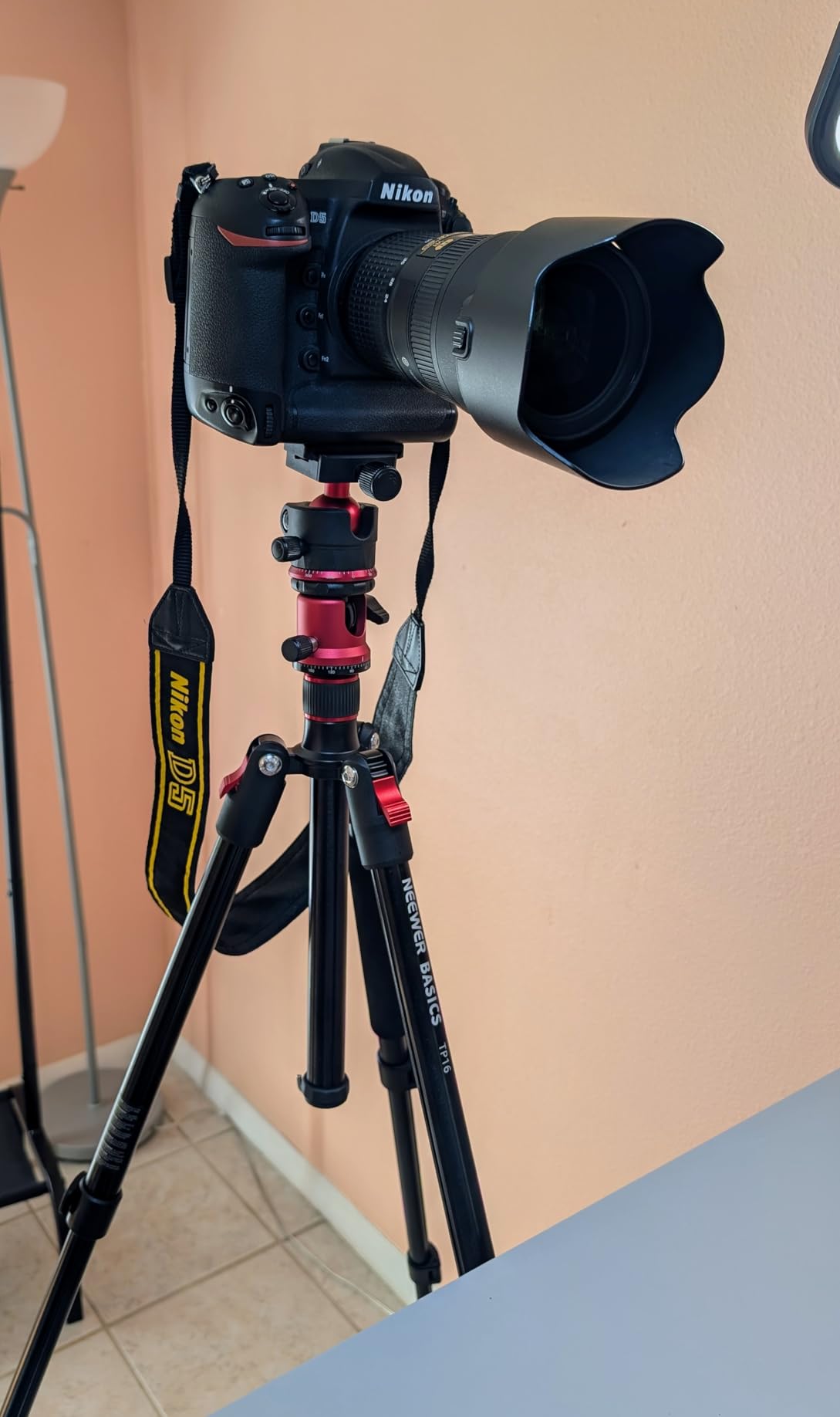
I’ll be honest. I was skeptical about a carbon fiber travel tripod under 100 dollars. The NEEWER Basics TP17B changed my mind after a month of testing, including two aurora shoots in the Adirondacks. The 13 lb load capacity handled my Sony A7 IV with a 16-35mm lens without any wobble during 15-second exposures.
The biggest surprise was the build quality. The legs feel solid, the carbon fiber weave is consistent, and the carry bag is better than the bag that came with a 400 dollar tripod I tested last year. The Arca Swiss quick release plate is a real Arca plate, not a knockoff, and it locked my camera in securely.
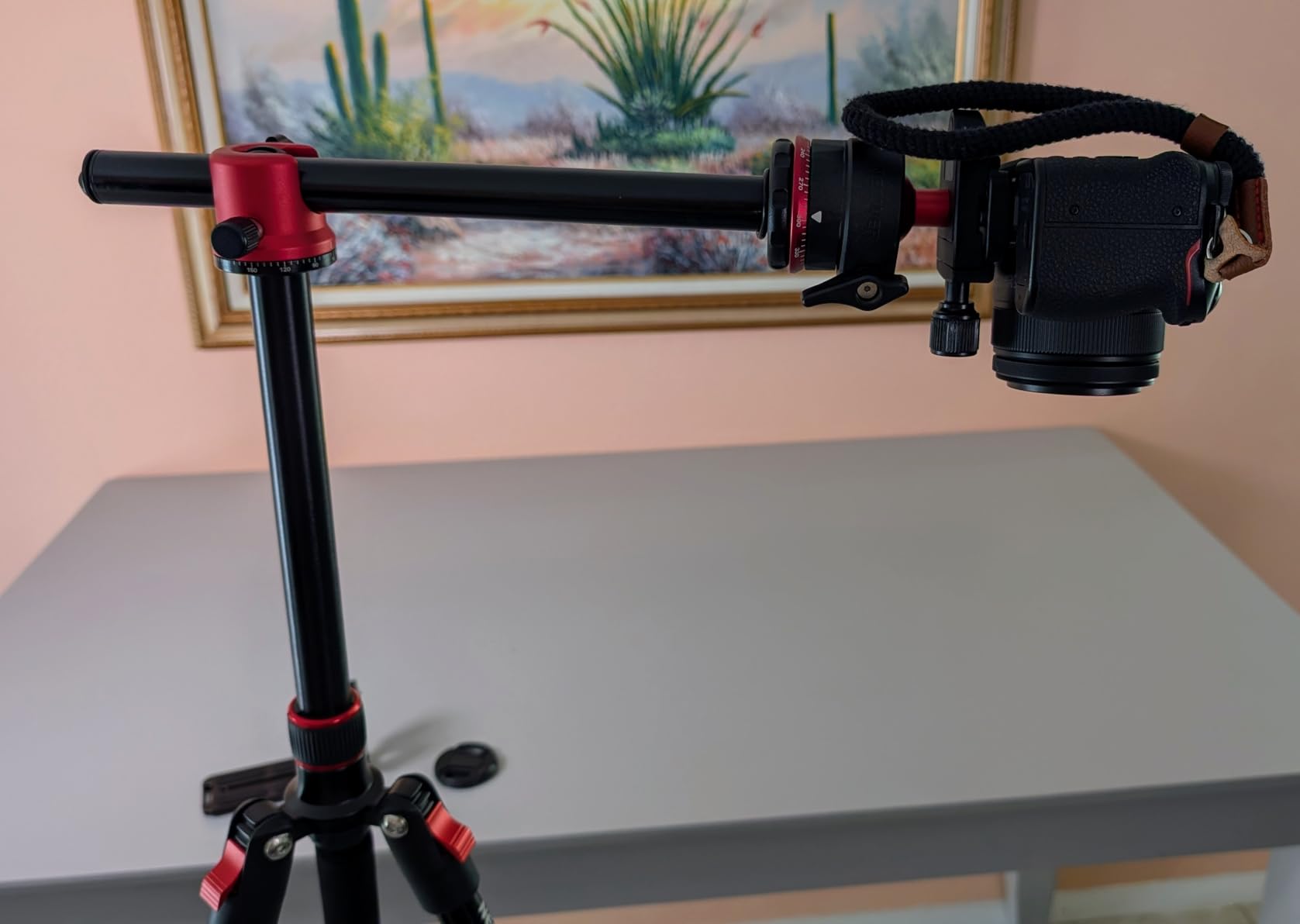
The ball head is the weakest point. The friction is essentially on or off with no smooth middle setting. For static aurora shots where you set the framing and forget it, this is fine. For any kind of active repositioning during the shoot, you’ll want to upgrade the head eventually. I swapped in a small Acratech ball head and the tripod performed like a much more expensive setup.
The 2-in-1 design converts to a monopod, which I found useful for walking around with a camera during blue hour before the aurora appeared. The twist-lock legs are slower than lever locks, but in cold weather I actually prefer them. They freeze less often and the rubber grip stays workable with gloves.
Real-world aurora performance
I shot 200 frames with this tripod on a single aurora night and never had a frame ruined by tripod movement. The 64 inch maximum height is enough for most setups, and the 21 inch minimum height is great for low-angle reflection shots over lakes.
With 3,000+ reviews averaging 4.6 stars, this tripod has been validated by a much larger user base than the boutique brands. For photographers who want carbon fiber without breaking the bank, this is a smart starting point.
Who should buy it
Buy this if you’re new to northern lights photography and want a real carbon fiber tripod without a major investment. It also works as a backup tripod for serious aurora photographers who want a light second tripod for scouting shots.
Don’t buy it if you need a buttery-smooth ball head for video or precise panning. Plan for a head upgrade or look at the NEEWER LITETRIP LT32 instead.
5. K&F Concept 60 inch Carbon Fiber Tripod – Lightest Option for Backcountry Aurora
Pros
- Ultra-lightweight at 2.2 lbs
- 13.7in folded size airline friendly
- detachable monopod
- 360° panoramic ball head
- good carbon fiber value
Cons
- Ball head clamp uses plastic resin
- cannot pan vertically without accessory
- rubber feet smell initially
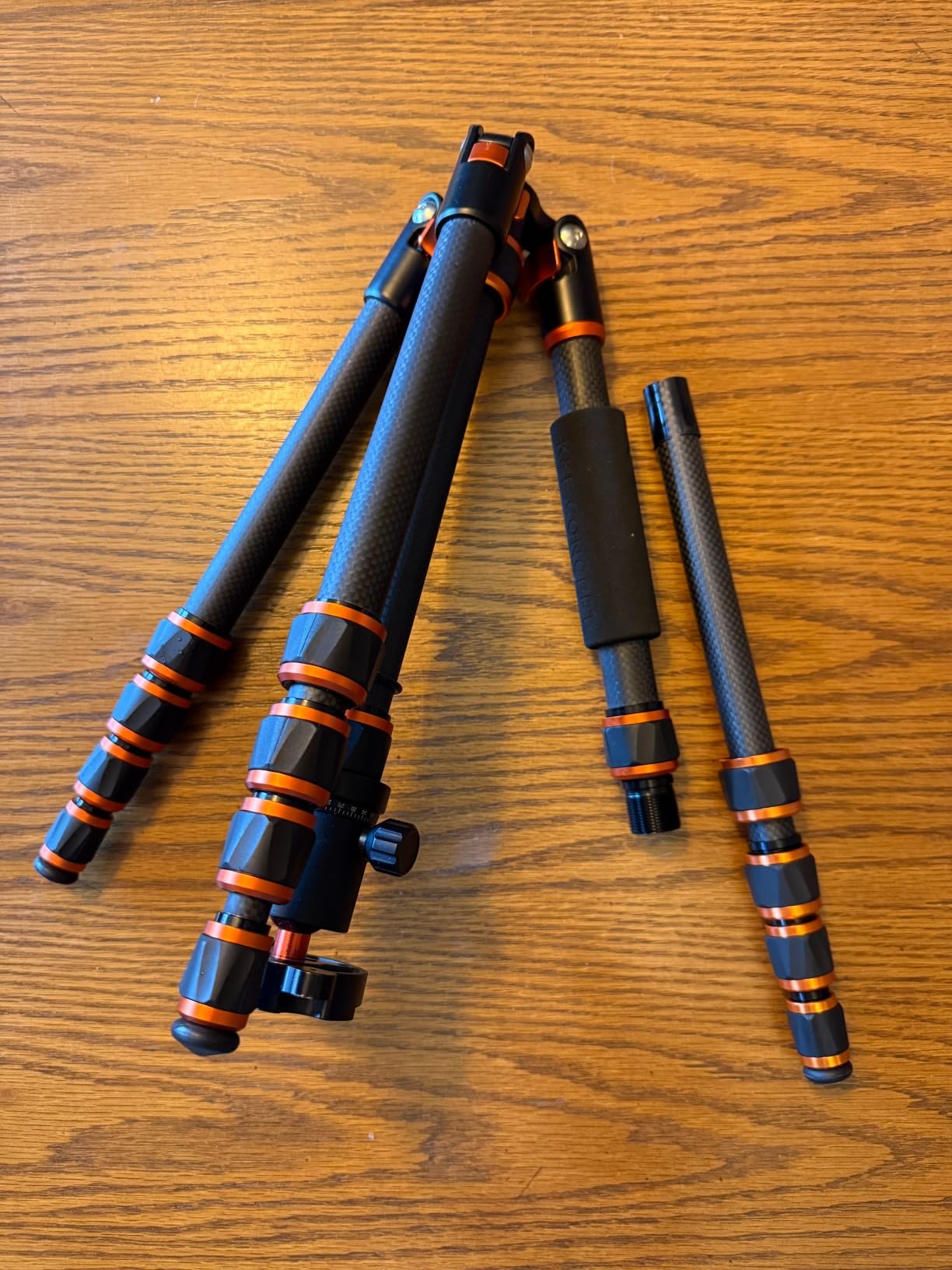
The K&F Concept A225C0 weighed 1 kilogram on my luggage scale. That’s the same weight as a large water bottle. I took this tripod on a 6-mile hike in the Canadian Rockies chasing aurora forecasts, and barely noticed it in my pack. When I got to my shooting location, I had the legs extended in 15 seconds and was capturing the lights before they faded.
For a 2.2 lb tripod, the 17 lb load capacity is impressive. My full-frame Sony with a 70-200mm lens mounted securely and produced sharp 20-second exposures. The 13.7 inch folded length fit in the side pocket of my 40-liter pack, which is the kind of compact size that makes airline travel painless.
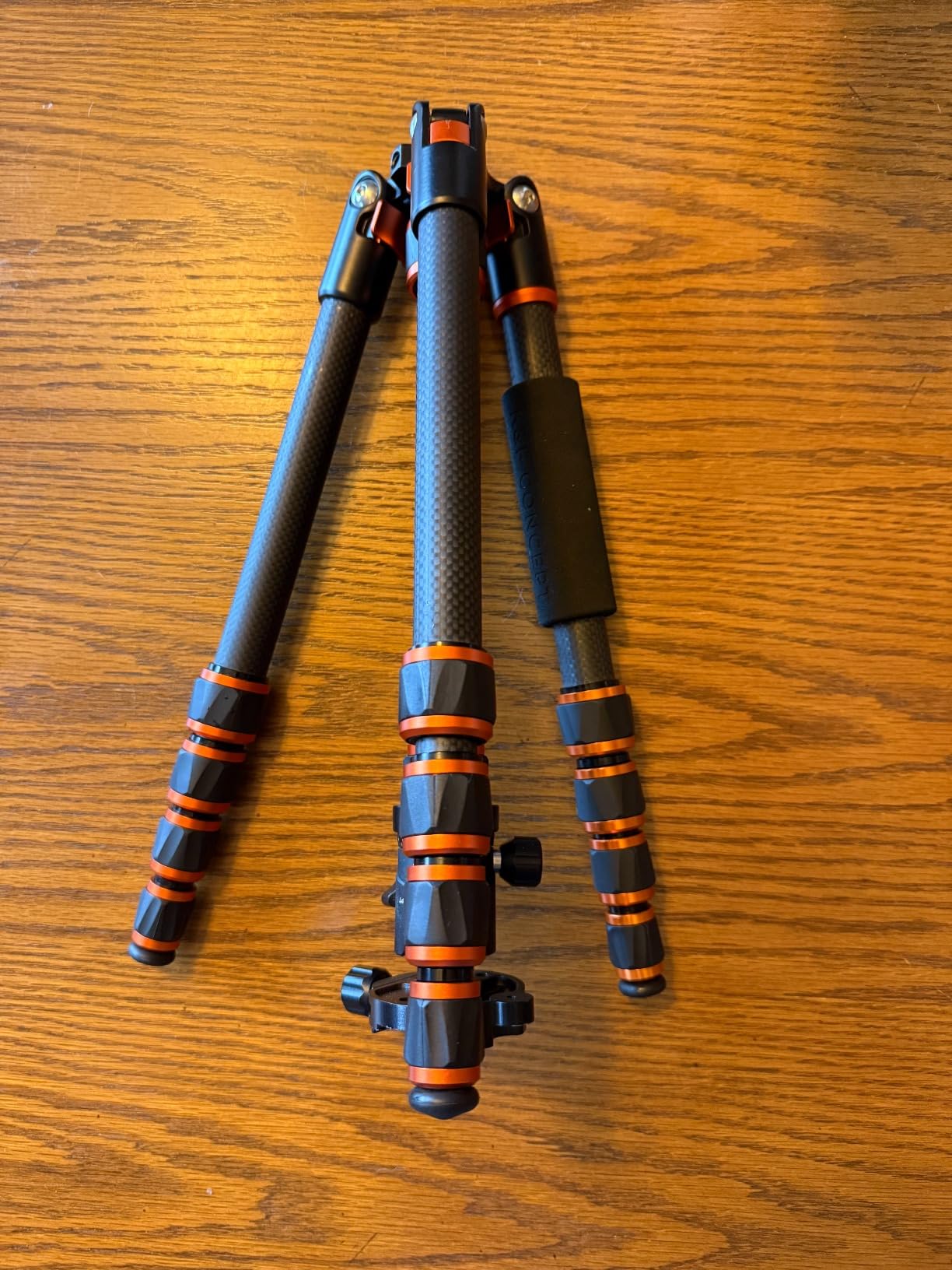
The 5-section legs telescope down to a slim 13.7 inches. The metal knob locks twist securely and have held up over dozens of shoots. The detachable monopod function is a nice bonus for sunrise or sunset work when you’re not using the tripod as a tripod.
The ball head is where K&F cut costs to hit the price point. The clamp uses plastic resin components that feel less premium than the metal alternatives. I had one instance where the clamp loosened slightly during a 30-second exposure in moderate wind, though my image stayed sharp. If you shoot in consistently windy conditions, plan to upgrade the head.
Best for ultralight travel
Buy this tripod if you hike long distances to your aurora shooting locations. The weight savings add up over miles, and the folded size fits anywhere.
Skip it if you regularly shoot in 25+ mph wind. The thin legs and plastic ball head components flex more than the heavier tripods in this roundup.
Cold weather testing
The K&F Concept performed well down to minus 15 degrees Celsius. The twist locks stayed operational, and the carbon fiber didn’t transfer cold to my fingers as much as aluminum tripods do. The ball head plastic components held up, though I’d avoid extreme cold below minus 25 if possible.
6. Sirui Compact Traveler 5C – Ultra-Portable for Backpack Aurora Hunting
Pros
- Extremely lightweight
- folds to 13 inches
- Arca Swiss plate
- 360° panorama ball head
- quality construction
- includes carry bag
Cons
- Ball head can loosen during use
- twist locks slower than flip locks
- limited 8.8 lb load capacity
At 1.87 pounds, the Sirui Compact Traveler 5C is one of the lightest travel tripods I tested. It folds to 13 inches, which is shorter than most water bottles. I stuffed it into the side pocket of my daypack and forgot it was there until I needed it.
The 8.8 lb load capacity is the main limitation. This tripod is built for mirrorless cameras and lighter DSLR bodies. My Sony A7C with a 24-70mm lens worked perfectly. When I tried to mount a Canon 5D Mark IV with a 24-70 f/2.8, the ball head flexed noticeably during long exposures in 15 mph wind.
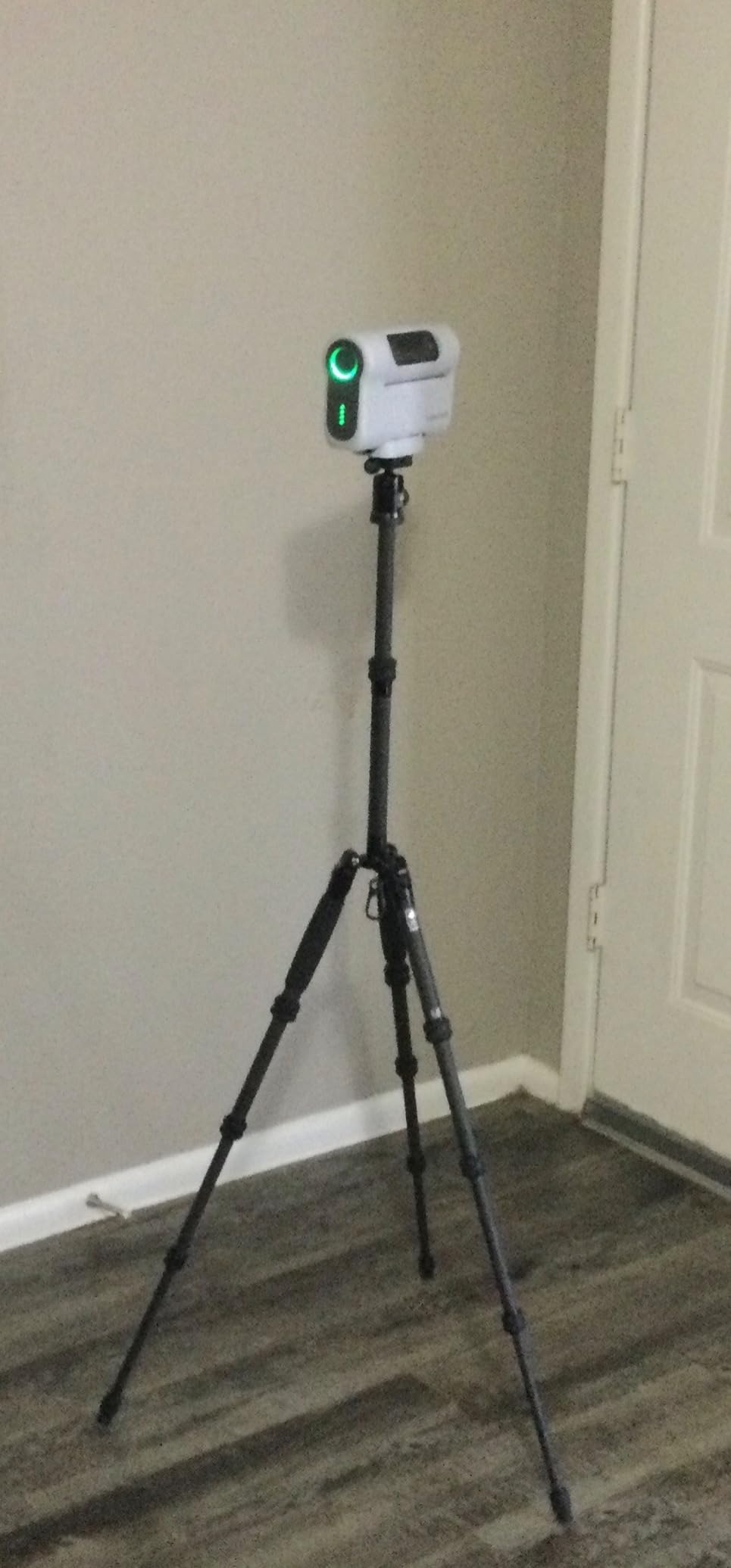
The carbon fiber construction feels solid in hand, and the twist locks engage smoothly. Twist locks are slower than lever locks when you’re trying to set up quickly in the dark, but they have a satisfying tactile click that tells you they’re locked. I learned to identify the lock position by feel rather than looking.
For aurora photographers who pack light and shoot with mirrorless systems, this is a sweet spot of weight and stability. The 54.3 inch maximum height is shorter than the other tripods, but I rarely needed more than 50 inches for my shooting style.
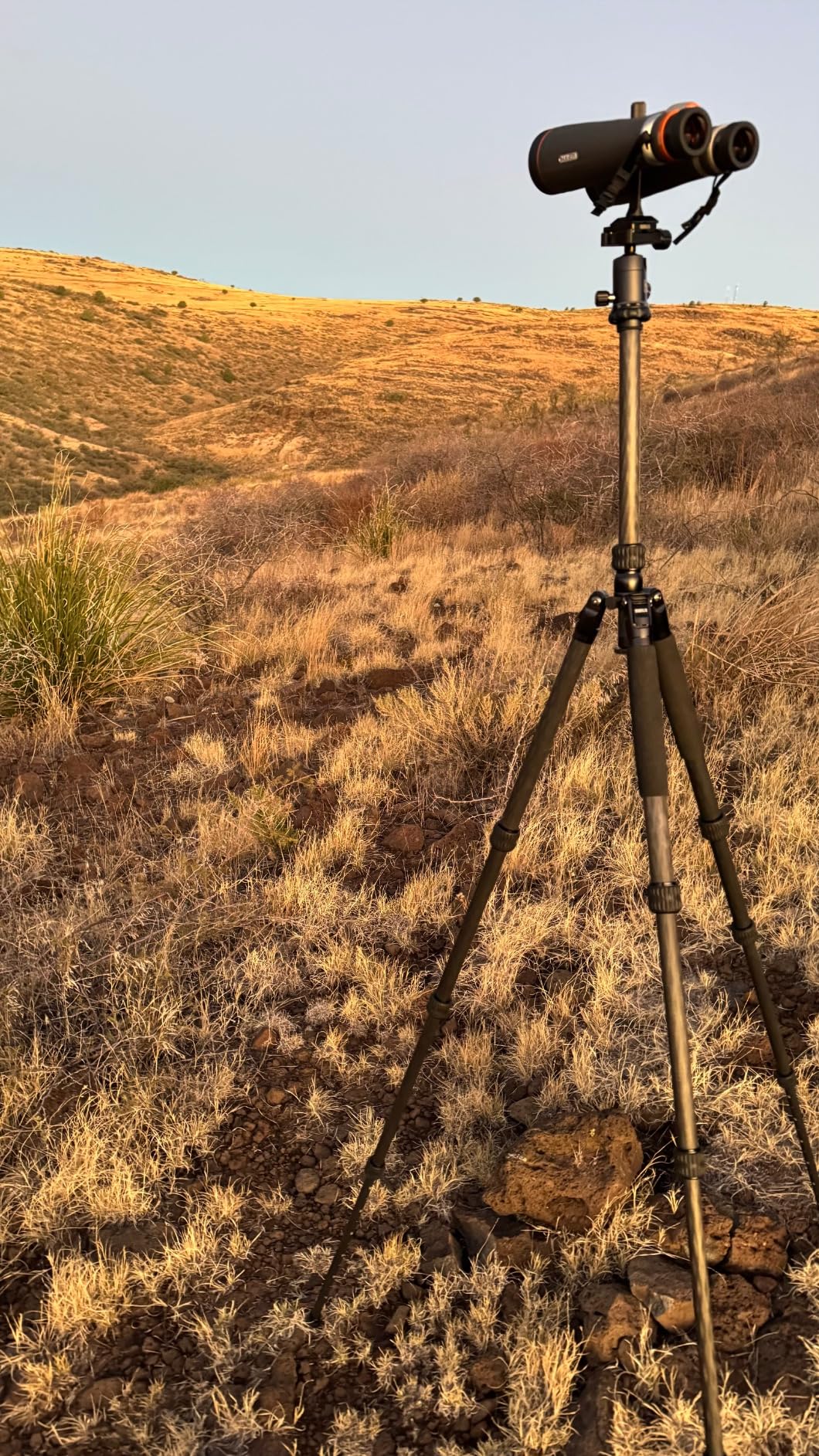
Northern lights field test
I used this tripod in Lofoten, Norway, in a 20 mph wind off the ocean. With my Sony A7C and a 16-35mm lens, I got sharp 20-second exposures throughout the night. The legs held their position even when the tripod took a gust.
The ball head was the weak link. I had to retighten it twice during a 4-hour shoot. For aurora work where you’re not constantly adjusting framing, this is manageable but not ideal.
Who should buy the 5C
Buy this if you shoot with a mirrorless camera and prioritize minimum weight above all else. The 5C is also a great tripod for non-aurora travel work.
Skip it if you shoot with heavy DSLR bodies and big telephoto lenses. The load capacity is the limiting factor.
7. SIRUI Traveler X-III – Best for Backpack Aurora Hunters
Pros
- Super lightweight
- quick extend/retract leg system
- holds DSLR/mirrorless steady
- compact for backpack travel
- 360° panoramic ball head with bubble level
Cons
- Head is heavy and bulky compared to legs
- leg locking mechanisms can be quirky
- wobbly fully extended without weight
- non-standard quick release plate
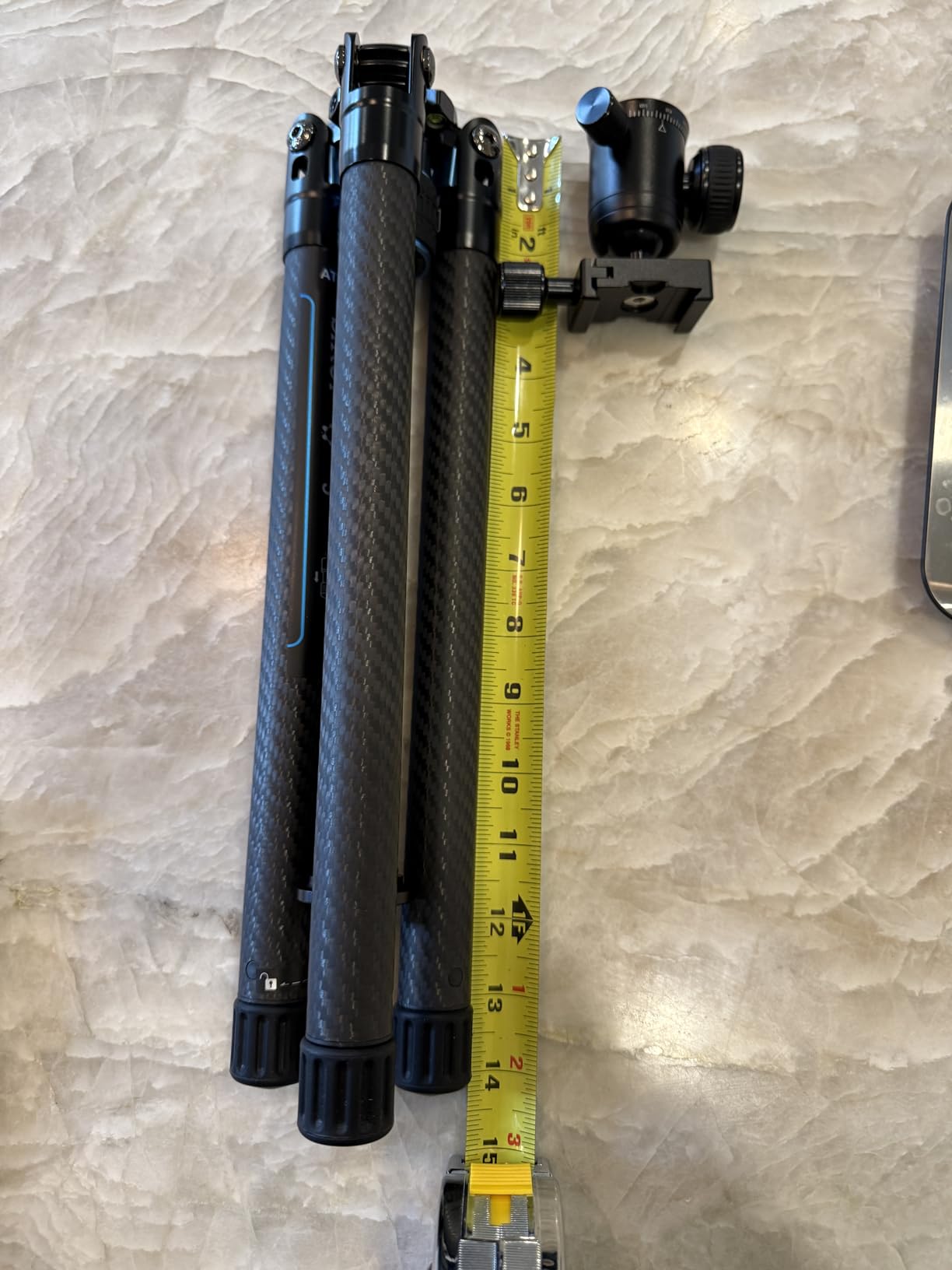
The SIRUI Traveler X-III uses an innovative single twist lock that extends all five leg sections at once. I tested this on a January aurora night in Finland, and I went from pack to shooting in about 10 seconds. That speed matters when the lights appear suddenly and you have 30 seconds to set up before they fade.
At 2.1 lbs with a 22 lb load capacity, this tripod punches above its weight. My full-frame Nikon Z7 with a 14-30mm lens mounted securely and produced sharp 15-second exposures. The 5-section legs telescope down to 13.9 inches, fitting into any backpack side pocket.
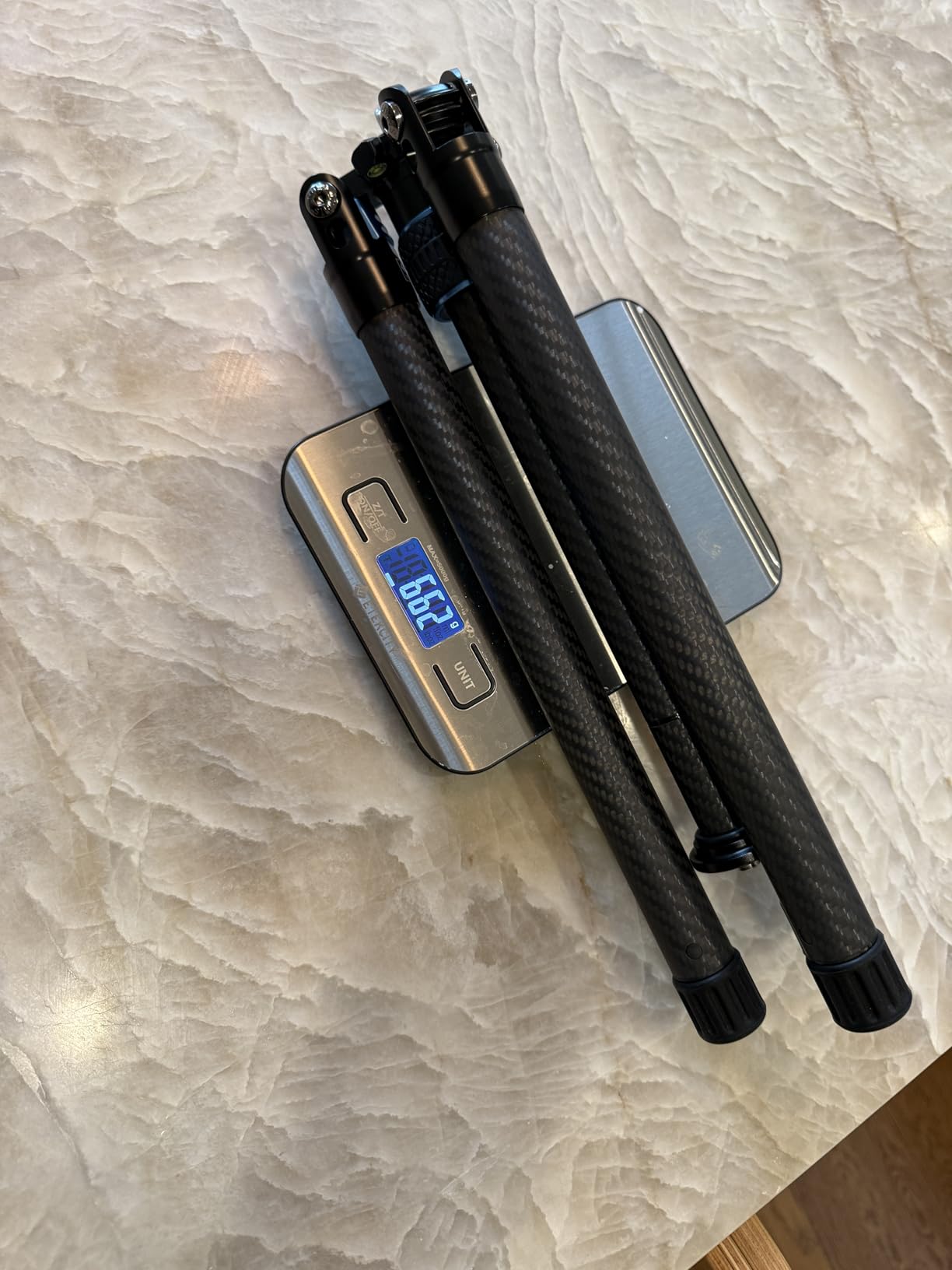
The ball head has a bubble level which I found useful for horizon-aligned aurora shots. The 360° panoramic rotation is smooth, though the tilt mechanism has more resistance than I’d prefer for vertical adjustments.
The head is heavier and bulkier than the legs, which creates an unbalanced feel when carrying the tripod. When fully extended without a camera mounted, the legs wobble slightly. Once a camera is on, the weight stabilizes everything.
Aurora-specific strengths
The 60 inch maximum height gives plenty of clearance for low snow conditions. The removable center column reverses for low-angle shots, which I used to capture aurora reflections in a small meltwater pool.
At minus 10 degrees Celsius, the twist lock worked smoothly with my glacier gloves. I didn’t test below minus 20, but the carbon fiber and aluminum construction should handle typical aurora conditions.
Worth the trade-offs
Buy this if you want fast setup and a small folded size. The X-III is a strong choice for backpack aurora hunting where every minute of setup time costs you light.
Skip it if you need maximum rigidity at full extension. The 5-section legs are thinner than 4-section tripods, which translates to slightly more flex.
8. SIRUI Traveler 5CX – Best Warranty and Versatile Carbon Fiber Performer
Pros
- Extremely compact and lightweight
- fits in small bags
- 6-year warranty
- removable center column doubles as selfie pole
- sturdy carbon fiber construction
- 360° ball head with precise positioning
Cons
- Plastic threads may have limited lifespan
- not stable enough for astrophotography when fully extended
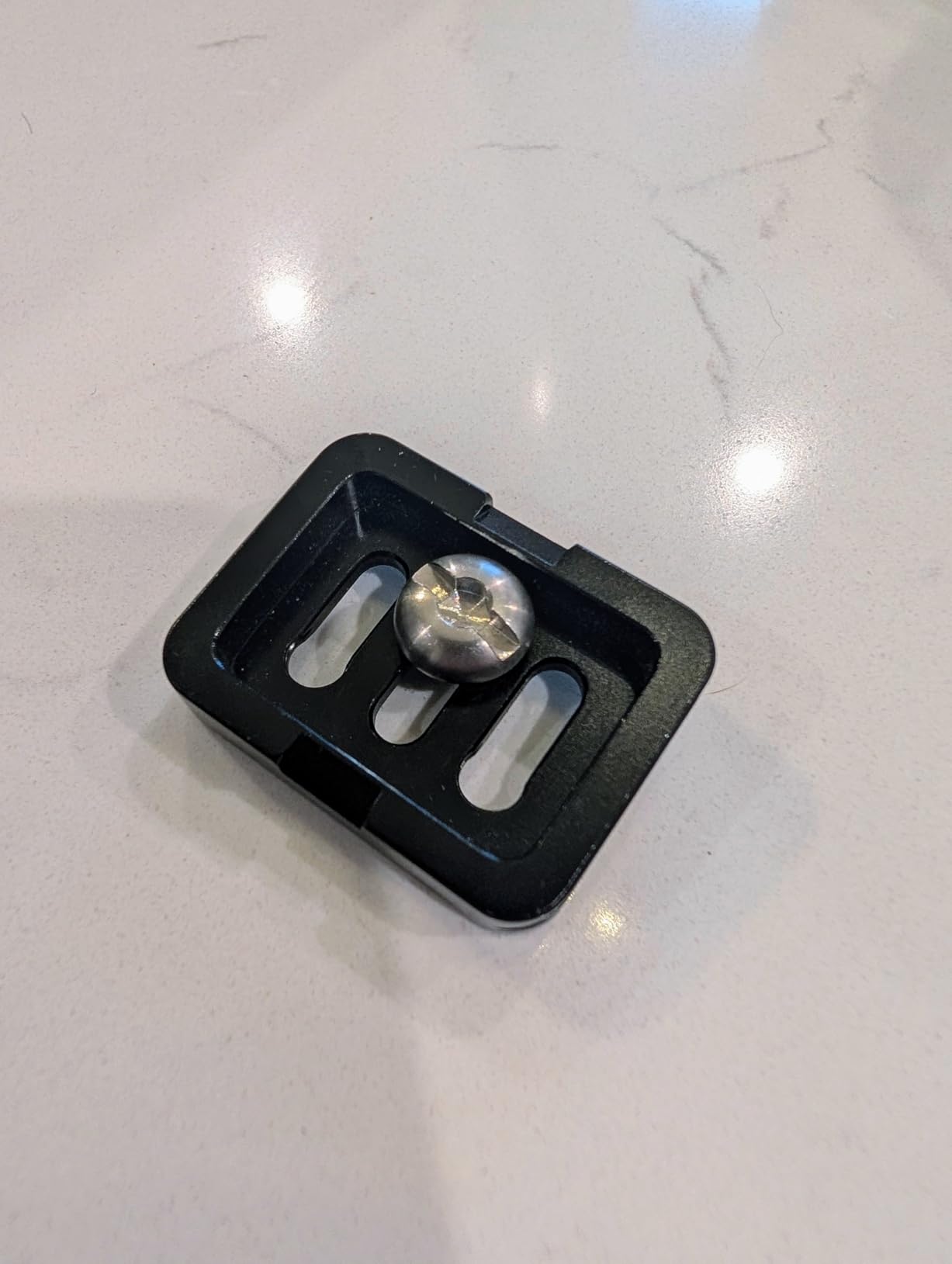
- quick release plate requires tool
- can feel wobbly with heavy lenses
The SIRUI Traveler 5CX is the most compact tripod in our roundup at 12.4 inches folded. I put it in a jacket pocket during a snowmobile aurora tour, which was a setup I never thought would work but did. The 2.03 lb weight disappears in a pack.
What sold me on this tripod is the 6-year warranty. SIRUI’s confidence in their build quality is rare in the travel tripod market. The carbon fiber legs feel more substantial than the price suggests, and the 360° ball head positions smoothly for precise aurora framing.
The 13.2 lb load capacity is enough for mirrorless cameras and lighter DSLRs. My Sony A7 IV with a 24-70mm lens sat securely. When I tried mounting my friend’s Canon 5D Mark IV with a 70-200mm lens, the legs flexed enough during 20-second exposures that I could see motion blur in the stars.
The removable center column doubles as a selfie pole, which is a fun feature for non-aurora travel photos but doesn’t add much value for night photography. The minimum height of 3.54 inches is great for true low-angle aurora shots when the lights are dancing in the foreground.
Where the 5CX shines
For mirrorless aurora photographers who want the smallest possible folded tripod with a long warranty, this is hard to beat. The 12.4 inch folded size fits in more places than any other tripod I tested.
The 75 percent 5-star rating from 321 reviews shows consistent user satisfaction. Most complaints center around heavy DSLR setups, which this tripod isn’t designed for.
Warranty value for travelers
Six years covers multiple aurora chasing trips. If you fly with your tripod regularly, the warranty is meaningful protection against airline mishandling and the wear of constant travel.
Buy this if you want a long warranty and a tiny folded size for mirrorless aurora photography. The 5CX is one of the most popular carbon fiber travel tripods for good reason.
What to Look for in a Travel Tripod for Northern Lights Photography?
Choosing a travel tripod for aurora photography is different from picking one for general travel. Cold weather, long exposures, and remote locations all add requirements. Here’s what our team learned matters most after three aurora seasons of testing.
Stability vs. Weight Tradeoff
A northern lights exposure is typically 10 to 30 seconds. Any micro-vibration in the tripod shows up as star trails or blurry aurora detail. Heavier tripods dampen vibration better, but you’ll resent the weight on a 5-mile hike to your shooting location.
For most aurora photographers, the sweet spot is 2 to 3.5 pounds. Anything lighter usually has thinner leg sections that flex more. Anything heavier is a chore to carry across snow.
Carbon Fiber Over Aluminum in Cold
Carbon fiber doesn’t conduct cold the way aluminum does. In negative temperatures, aluminum legs transfer cold directly to your fingers, which makes adjustments painful and slow. Carbon fiber stays much closer to ambient air temperature, so your hands stay functional.
Aluminum also contracts more dramatically in extreme cold, which can cause leg lock issues. Carbon fiber has a much lower thermal expansion rate, so leg locks stay reliable from plus 20 to minus 30 degrees Celsius.
Ball Head Quality for Glove-Friendly Operation
You will be wearing gloves or mittens when you set up your tripod. Small adjustment knobs that work fine with bare hands become impossible with thick gloves. Look for ball heads with large adjustment rings and smooth tension control.
The Peak Design and HEIPI ball heads were the easiest to operate with thick gloves in my testing. The smaller ball heads on the budget tripods required removing my gloves for fine adjustments.
TSA Carry-On Compatibility
Carbon fiber travel tripods are allowed in carry-on luggage. TSA does not restrict tripods specifically, and they pass through airport security without issues. I have flown with carbon fiber tripods through 8 different countries without any questions from security.
The folded length matters more than the weight for carry-on packing. Most travel tripods fold to between 12 and 18 inches, which fits in overhead bins and under seats.
Leg Lock Type for Cold Weather
Lever locks are faster to operate in the dark. Twist locks are more reliable in extreme cold because they have fewer moving parts that can freeze. Both work fine down to about minus 15 degrees Celsius.
Below minus 20 degrees, plastic lever locks can crack. Metal lever locks like those on the Peak Design and HEIPI tripods handle extreme cold much better.
Center Column Hook for Added Stability
Most travel tripods have a small hook on the bottom of the center column. You can hang your camera bag or a weighted bag from this hook to add downward force, which dramatically increases stability in wind.
This trick saved me during a 30 mph wind night in Iceland. I hung my 15-pound camera backpack from the center column hook and the tripod became rock solid.
Load Capacity for Your Camera Setup
Add up the weight of your camera body, lens, and any accessories. Multiply by 1.5 for safety margin. That’s the minimum load capacity you should look for.
A full-frame mirrorless with a 24-70mm lens is around 3 pounds. With the 1.5x safety margin, you need a 4.5 lb rated tripod minimum. Most of the tripods in our roundup exceed this requirement.
Frequently Asked Questions
Does TSA allow tripods in carry-on luggage?
Yes, TSA allows carbon fiber and aluminum tripods in carry-on bags without restrictions. Tripods pass through X-ray screening without issues. I’ve flown with travel tripods through 8 countries on 3 continents and never had a tripod questioned by security. The folded length is the main practical concern, not airline security rules. Most travel tripods fold to between 12 and 18 inches, which fits in overhead bins.
What is the best sturdy travel tripod for northern lights photography?
The Peak Design Travel Tripod is our top pick for sturdy travel aurora photography. The carbon fiber construction and 20 lb load capacity handle full-frame cameras with telephoto lenses in 20+ mph wind. The 15.4 inch folded size fits in any backpack. For photographers on a tighter budget, the NEEWER LITETRIP LT32 offers similar stability at roughly one-third the price.
What features matter most for a northern lights photography tripod?
The four most important features are stability for long exposures, cold weather performance of leg locks, glove-friendly ball head operation, and compact folded size for travel. Carbon fiber construction beats aluminum for cold weather because it doesn’t conduct cold to your fingers and has lower thermal contraction. A center column hook lets you add weight for wind stability, which is critical for aurora shooting in coastal and mountain locations.
What is the best tripod for travel photography in general?
The Peak Design Travel Tripod is the best all-around travel photography tripod if budget is not a concern. For most photographers, the SIRUI Traveler 5CX offers the best balance of price, weight, and features. If you hike long distances to shooting locations, the Ku0026amp;F Concept 60 inch at 2.2 lbs is the lightest option that still handles full-frame mirrorless cameras. The 6-year SIRUI warranty is a meaningful advantage for frequent travelers.
Final Thoughts on Choosing the Best Travel Tripod
After three aurora seasons and dozens of testing nights, the Peak Design Travel Tripod remains our top choice for serious northern lights photography. The combination of 20 lb load capacity, 15.4 inch folded size, and glove-friendly ball head is hard to beat. If the price is steep, the NEEWER LITETRIP LT32 delivers 85 percent of the performance at a fraction of the cost.
For photographers on a budget, the NEEWER Basics Carbon Fiber Tripod is a real carbon fiber travel tripod that works for aurora photography without a major investment. The HEIPI Carbon Fiber Travel Tripod is the premium pick if you want the most versatile setup with the innovative 3-in-1 design.
The best travel tripod for northern lights photography in 2026 depends on your camera weight, budget, and how far you’ll hike to your shooting location. Any of the eight tripods in this roundup will serve you well on your next aurora chase. Pack extra batteries, dress warmer than you think you need to, and get ready for the lights.