
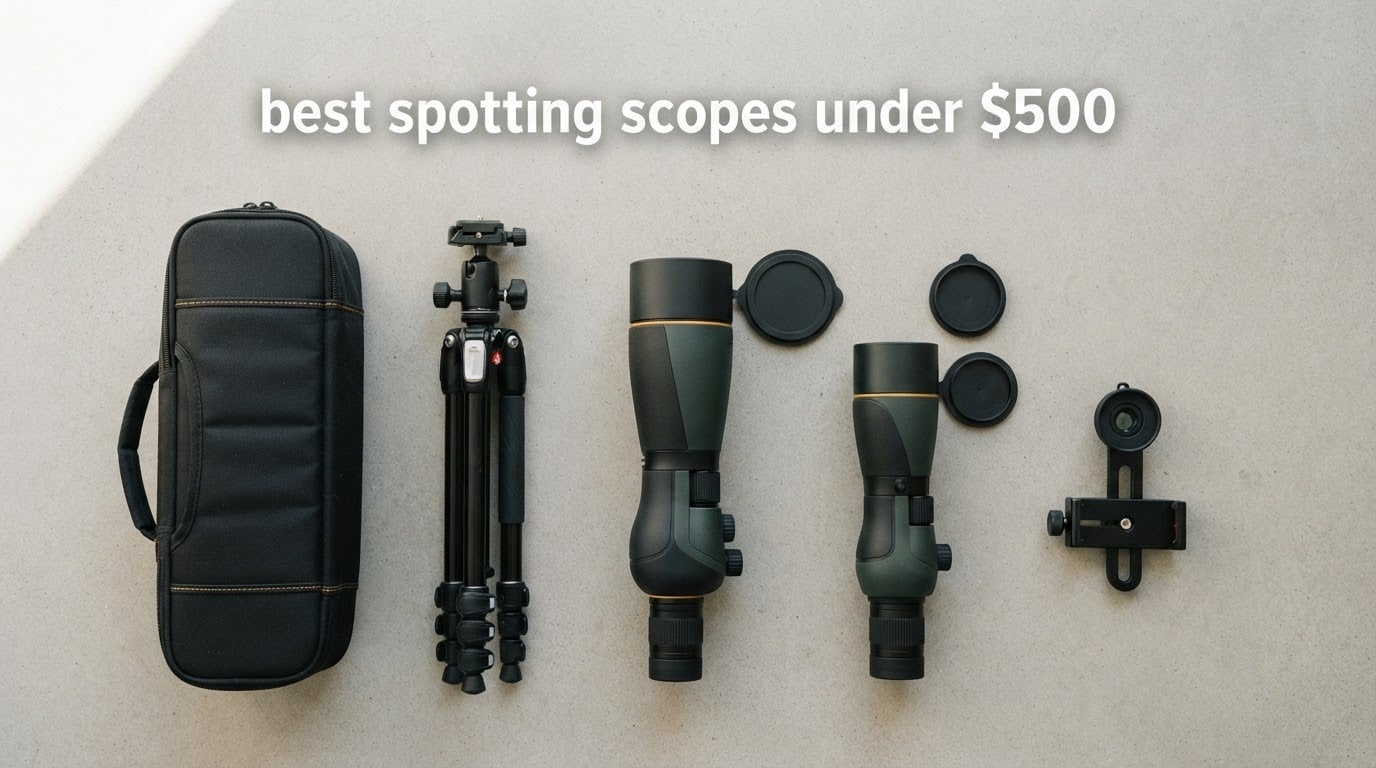
A spotting scope is a high-magnification monocular optic, built around a large objective lens and designed to sit on a tripod, that lets you study a distant subject at power well beyond what binoculars can reach. When you start comparing the best spotting scopes under 500, you are looking at the price bracket where a scope stops being a novelty and starts being genuinely useful: fully multi-coated optics, nitrogen purging, rubber armouring and reliable eye relief all show up here, while the four-figure glass does not.
We narrowed more than two dozen candidates down to eight. The filter was simple: a real magnification range rather than a single fixed power, a stated objective diameter, weather sealing that survived owner reports, and a warranty longer than a paper napkin. Every pick below has been judged on field of view, close focus, weight, eye relief and how it holds up past 40x, because that is where scopes in this tier tend to give themselves away. I have also leaned on what owners report in the field rather than what the spec sheet claims, and on the questions people actually argue about in threads: is ED glass worth chasing below 500, is 60mm of objective enough, and why does everything soften at the top of the zoom?
If your interest is broader than glass, our wildlife watching roundup covers the use cases in more depth, and this list is the budget-first version of the same conversation. Prices move daily, so treat 500 as a ceiling rather than a target and use the buttons to confirm current numbers.
Top 3 Best Spotting Scopes Under $500 in October

Celestron Ultima 20-60×80
- 20-60x zoom
- 80mm objective
- 45 degree angled body
- integrated T-adapter
Athlon Talos 20-60×80
- Fully multi-coated 80mm objective
- nitrogen purged
- 2.4 lb
- lifetime transferable warranty

All 8 Spotting Scopes Under $500 at a Glance in 2026
Field of view is the number most spec sheets state least clearly, so use the table below as a fast filter, not a final answer. The range runs from a 25x minimum for near work to a 60x-66x ceiling, and objective diameter from 65mm up to 100mm.
| Product | Specifications | Action |
|---|---|---|
| Celestron Ultima 20-60×80 Angled |
|
Check Latest Price |
| Athlon Talos 20-60×80 |
|
Check Latest Price |
 Bushnell Trophy Xtreme 20-60×65 Bushnell Trophy Xtreme 20-60×65 |
|
Check Latest Price |
 Celestron C70 Mini Mak 25-75×70 Celestron C70 Mini Mak 25-75×70 |
|
Check Latest Price |
 Celestron Ultima 22-66×100 Celestron Ultima 22-66×100 |
|
Check Latest Price |
 Barska Benchmark 25-125×88 Barska Benchmark 25-125×88 |
|
Check Latest Price |
| GOSKY 20-60×80 HD |
|
Check Latest Price |
 SVBONY SV28 25-75×70 SVBONY SV28 25-75×70 |
|
Check Latest Price |
1. Celestron Ultima 20-60×80 Angled – The All-Round Pick
Pros
- Sharp and bright from 20x through 40x
- Well damped focus dial behind the tripod mount for one-finger focusing
- Metal main tube with deep multi-coatings on every lens surface
- Integrated T-adapter makes phone and camera digiscoping straightforward
Cons
- Blue colour fringing at the top of the 20-60x range with no ED glass
- Front weighted so it needs a tripod with some mass behind it
- No pull-out objective sunshade and an unpadded nylon case
This is the scope I keep coming back to, because it makes the fewest compromises that matter at this price. Owners rate the 20-40x range as sharp and bright on the strength of the 80mm multi-coated objective, and a good share of them put the overall performance at roughly 90 to 95 percent of far costlier ED-glass scopes for daylight work. The 64 degree apparent field of view means a wide, forgiving view that makes tracking a moving bird genuinely easy rather than a constant fight.
The focus dial sits behind the tripod mount, which sounds minor until you have used a scope whose knob is under your supporting hand. It means one-finger focusing with a stable brace, and the focus itself is well damped so nothing overshoots when a deer steps out of the timber.
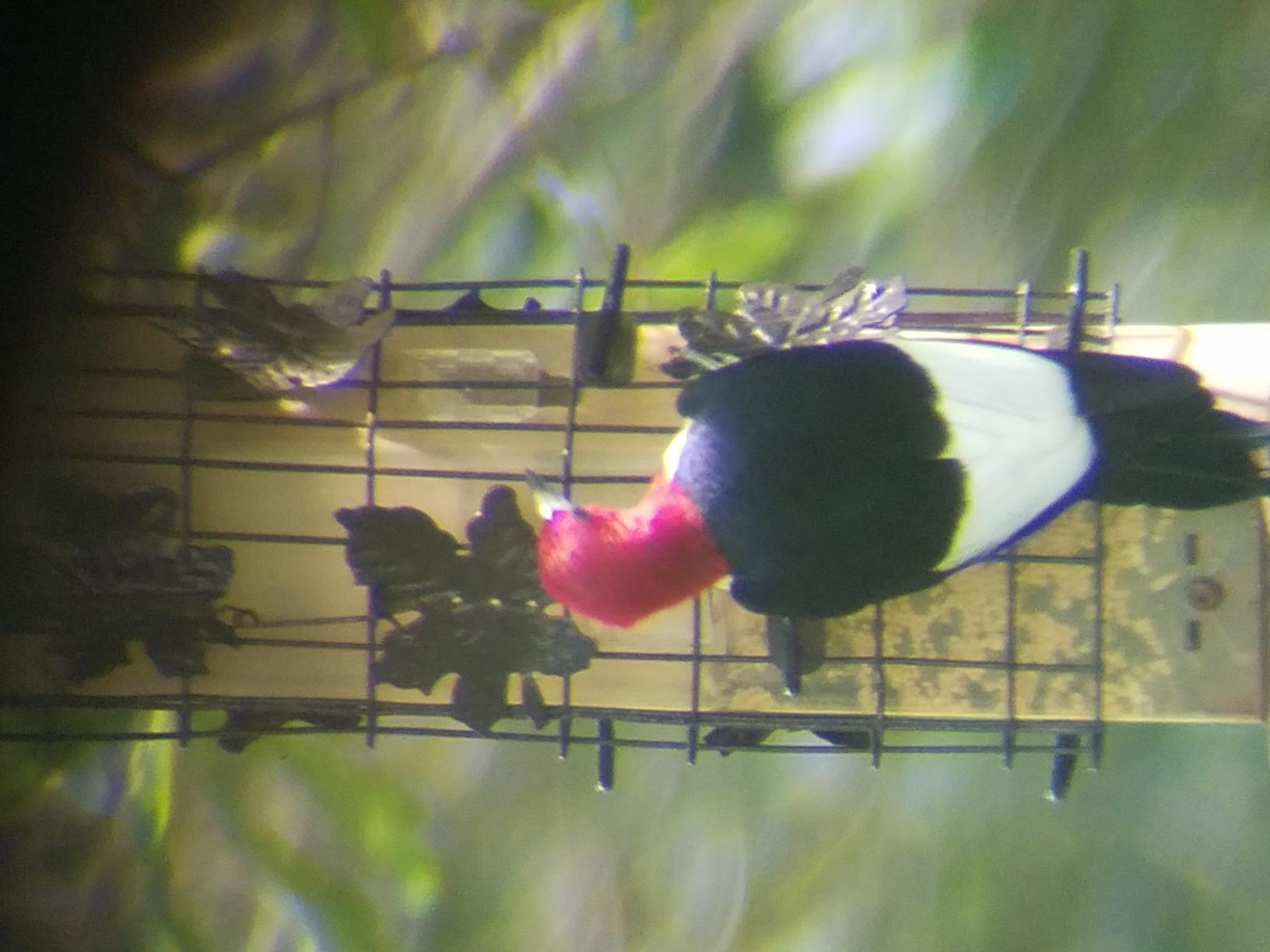
Two details decide it for me. The zoom eyepiece carries an integrated T-adapter, so attaching a phone or a camera body with a T-ring takes seconds rather than requiring a separate purchase, and the package includes an eyepiece pouch, a lens cloth and an extended mounting plate. The 3.6 lb weight and forward bias do mean a light travel tripod will wobble, and there is no sunshade, so in open country you shield the objective with your hand.
The honest limit is at the far end of the zoom. Without ED glass you get visible blue fringing around high-contrast edges at 50x and above, and reviewers note some pincushion distortion at full magnification. If you mostly live in the middle of the range, that is a fair trade for the brightness and build quality you get everywhere else.
Is this the right scope for calling shots at 500 yards?
Yes, with one condition. At 20-40x this scope resolves a clean, bright image at typical big game and match distances, and the 80mm objective holds up in the flat grey light that means a long sit in a stand. If you expect to spend much of the day at 55x or 60x, look at a scope with ED glass or a larger objective instead.
Who should skip it?
Glass wearers benefit from the angled body, but anyone who plans to shoot late-season dawn sessions in rain should budget for a proper tripod, because the front weight is real. Photographers who want the sharpest possible digiscope output will also find a scope with ED glass a better fit, since the T-adapter makes attachment easy but cannot fix colour fringing.
2. Athlon Talos 20-60×80 – Best Value Per Dollar Spent on Glass
Pros
- Highest average rating in the group at 4.6 out of 5
- Nitrogen purging plus waterproofing for dependable all-weather use
- Fully multi-coated lenses give bright
- contrasty images
- Light 2.4 lb aluminum body is easy to carry on long approaches
Cons
- No tripod or carrying case in the listed package
- Bore-the-scope ownership without a case means extra kit to buy
- Slower review volume than the big sellers in this roundup
The Talos is the pick I recommend to anyone who wants the most optic for the least outlay. It pairs an 80mm fully multi-coated objective with a Porro prism and nitrogen purging in a 2.4 lb aluminium body, and at 4.6 stars it holds the highest average rating of anything in this roundup, with 74 percent of ratings at five stars. Owners consistently describe the images as bright and contrasty rather than merely adequate.
That combination is the whole argument. A 20-60x range with an 80mm objective is the configuration experienced users keep naming as the sweet spot for general purpose work, and this is one of the least expensive places in the group you will find it with proper weather sealing. Field of view is listed at 1.57 degrees, a touch narrower than the Celestron Ultima, so tracking is a little more deliberate.
The catch is logistics rather than optics. The listed package contains no tripod and no carrying case, and most of the critical reviews are about arriving without them. Budget for a tabletop tripod for car-window work and a padded case if you plan to leave the scope in a vehicle overnight, because an unprotected tube in a hot trunk is how coatings get ruined.
It is also backed by a lifetime transferable warranty, which is a genuine advantage in a category where most rivals offer one to two years. If the next owner ever needs service, the coverage moves with the scope.
How does it handle dawn and dusk hunting light?
Better than its weight class suggests. Nitrogen purging keeps the internals clear through temperature swings, and the 80mm objective holds brightness into the pre-dawn grey when a 65mm scope starts to look flat. That is the single biggest practical reason to spend here rather than lower.
What are you giving up versus the Celestron Ultima?
You lose the integrated T-adapter, the included eyepiece pouch and cloth, and about a pound of front-end heft that makes the Ultima steadier on a light tripod. If digiscoping is part of your plan, budget for a T-ring and adapter kit; if you are purely a glass user, the Athlon is the smarter buy.
3. Bushnell Trophy Xtreme 20-60×65 – Brightest at Dawn and Dusk
Pros
- Best in class brightness for low light and twilight viewing
- Hard case and soft carry bag both included in the box
- Integrated tabletop tripod with car window mount plus a 1/4-20 shoe
- Retractable sunshade built into the front barrel
Cons
- Straight eyepiece gets uncomfortable over long wildlife sessions
- Image washes out noticeably above 40x and the 60x view is small and murky
- Focus appears to shift between magnification settings
Owners repeatedly single out brightness as this scope’s defining strength, and in the conditions where it matters most, low light and twilight, that is worth more than magnification headroom. The 20-60x zoom stays usable for reading splatter and calling hits out to 400-600 yards, and a 1 kg body is one of the lighter options in the group.
The accessory package is unusually generous for the money: a hard case, a soft carry bag, and a tabletop tripod with a car window mount. That last detail makes it a genuinely good first scope, because a beginner does not have to buy a tripod before leaving the house.
Owners are clear about where it stops working. Above 40x the image washes out, and the 60x end is small and murky even in full sun, so treat the printed maximum as a limit rather than a capability. Several reviewers also note that focus seems to shift when you change magnification, which is common in budget zooms where the whole eyepiece group rotates.
The straight eyepiece is the other recurring ergonomic complaint. It is fine for a car window or a sit in a blind, and less fine for a birding hide where you would spend hours with your neck bent. There is also a tight eye box, so glasses wearers may need to press in closer than they would like.
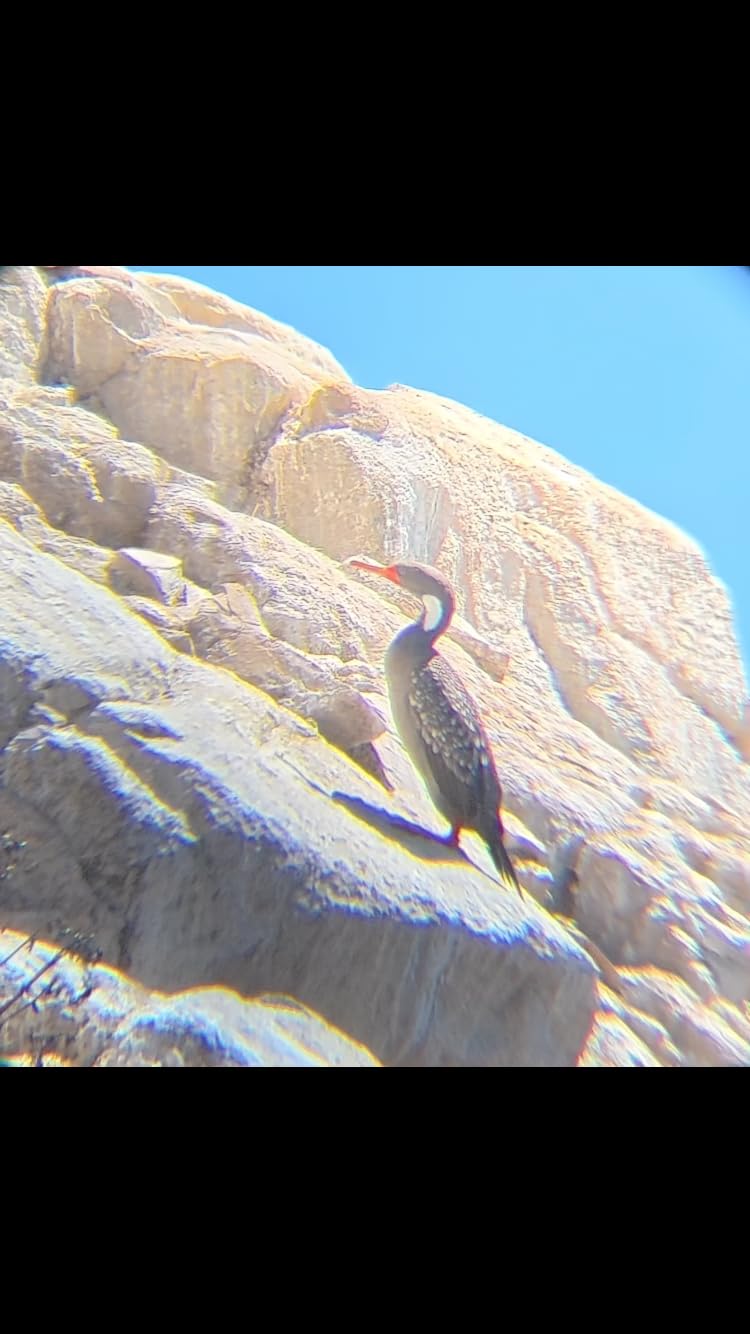
Is a 65mm objective big enough?
For daylight work and moderate twilight, yes. A 65mm objective is a reasonable compromise when you want to stay under 1 kg, and the fully multi-coated Porro optics do more with it than many people expect. If your sessions start in near-darkness, a wider objective will serve you better than extra magnification.
Who should buy it as a first scope?
Anyone who wants a complete package under one purchase, and anyone whose main viewing position is a vehicle or a bench. It is also the easy choice for a gift, since the tripod, case and window mount are all in the box. Skip it if glasses are a permanent fixture or if you spend whole days on a birding hide.
4. Celestron C70 Mini Mak 25-75×70 – Lightest and Most Travel Ready
Pros
- Compact and light at 2.3 lb and around 11 inches long
- Maksutov-Cassegrain design gives high contrast with minimal chromatic aberration
- Works for daytime birding and for the Moon
- Jupiter and Saturn
- Tabletop tripod with slow motion controls is included
Cons
- 70mm aperture at f/10 looks dimmer than 80mm or 100mm scopes in low light
- Very narrow 1.55 degree field of view makes finding moving subjects slower
- 700mm focal length needs a steady tripod at high power
This is the one to pack. At 2.3 lb and roughly 11 inches long it is the smallest scope here, and the Maksutov-Cassegrain design delivers contrast that holds up well with almost no colour fringing, which is unusual at this tier. If you want colour-accurate views of a bird in flat overcast light, the optical design works in your favour.
It is also the most versatile. Owners use it for backyard birding in the morning and then for the Moon, Jupiter and Saturn after dark, because the 25-75x zoom and the 700mm focal length translate well to the night sky. A tabletop tripod with slow motion controls is included, which is a real convenience for planetary work.
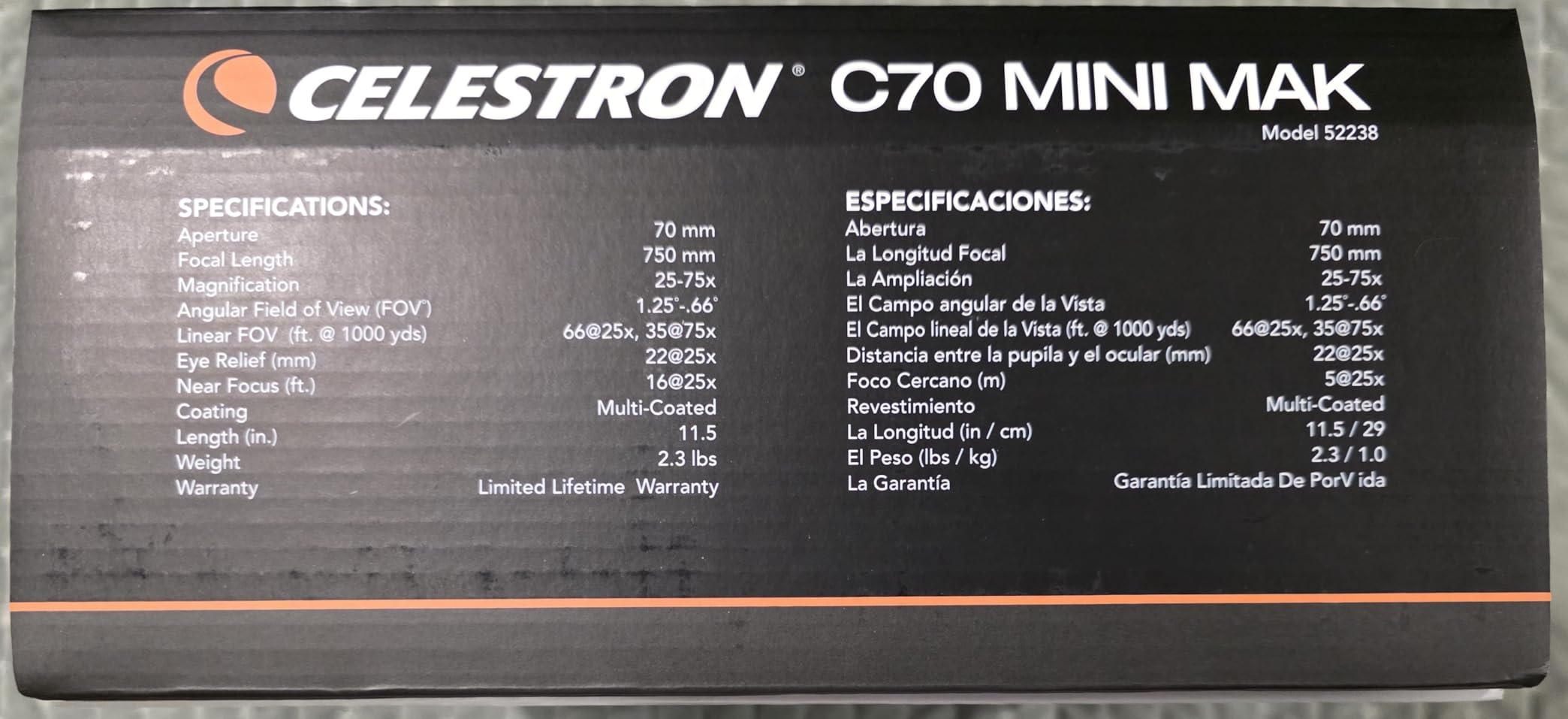
The trade is light gathering. A 70mm aperture at f/10 is dimmer in low light than an 80mm or 100mm objective, and the 1.55 degree field of view is the narrowest in the roundup, so locating and tracking a moving subject takes longer. The long focal length also means high magnification on a shaky tripod turns into a shimmering blur, so a proper head is worthwhile once you leave the table.
For digiscoping it opens up: the body accepts 1.25 inch eyepieces, which widens your camera and adapter options well beyond a fixed T-adapter design.
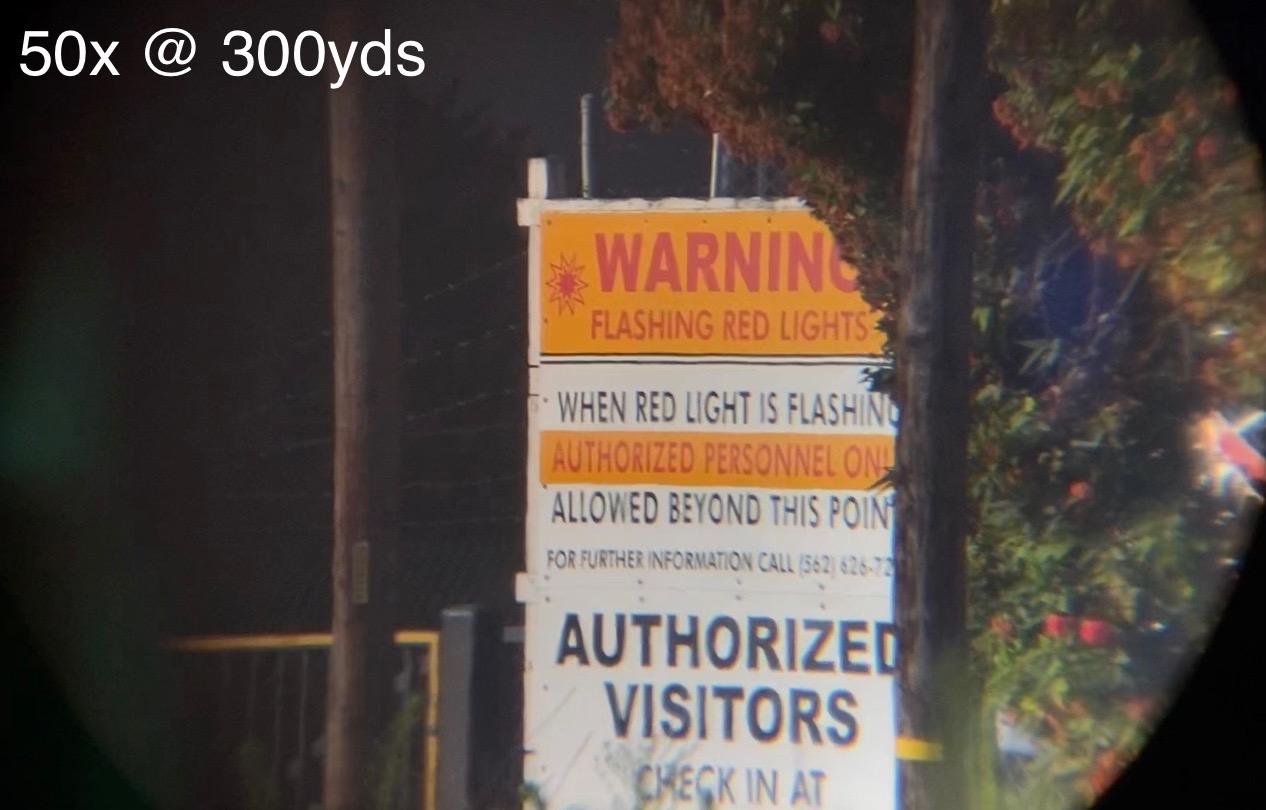
Is it good enough for hunting scopes?
For calling big game at 300-500 yards in daylight, yes. It is not the choice for the last 30 minutes of a November evening, where the 70mm aperture runs out of light. If you hunt in a climate that demands both, this is a home and travel scope rather than a tree stand companion.
Who should pick it over an 80mm scope?
Travellers, astro-curious users and anyone whose sessions are in good daylight. It is also the choice if colour fringing bothers you and you would rather have a different optical design than ED glass. If you need the brightest possible image at dawn, an 80mm or 100mm objective wins.
5. Celestron Ultima 22-66×100 – Longest Reach on Paper
Pros
- 100mm objective resolves small holes on white paper at 150-300 yards even in twilight
- Owners report clarity matching four-figure scopes at a fraction of the cost
- Sharp detailed views of the Moon
- Saturn and distant scenery
- Adjustable balancing mount steadies a very front heavy body
Cons
- Heaviest scope here at 4.5 lb and needs a heavy duty or carbon tripod
- Sharpness falls off with colour fringing at the top of the 22-66x range
- Non-rotating angled eyepiece needs a step-up for very high positions
Light gathering is the entire argument here. A 100mm objective is a full 20mm wider than the common 80mm, and owners report resolving .22 holes on white paper at 150-300 yards in twilight, which is a genuinely useful measurement rather than a marketing line. Several buyers who compared it against four-figure Vortex and Leupold scopes report comparable clarity.
The adjustable balancing tripod mount is the detail that makes it workable. Without it, a 4.5 lb scope with all that mass behind the front element is unpleasant to hold steady, and the included mount lets you shift the weight to suit your head. The soft case opens at both ends, so you can view without pulling the scope out.
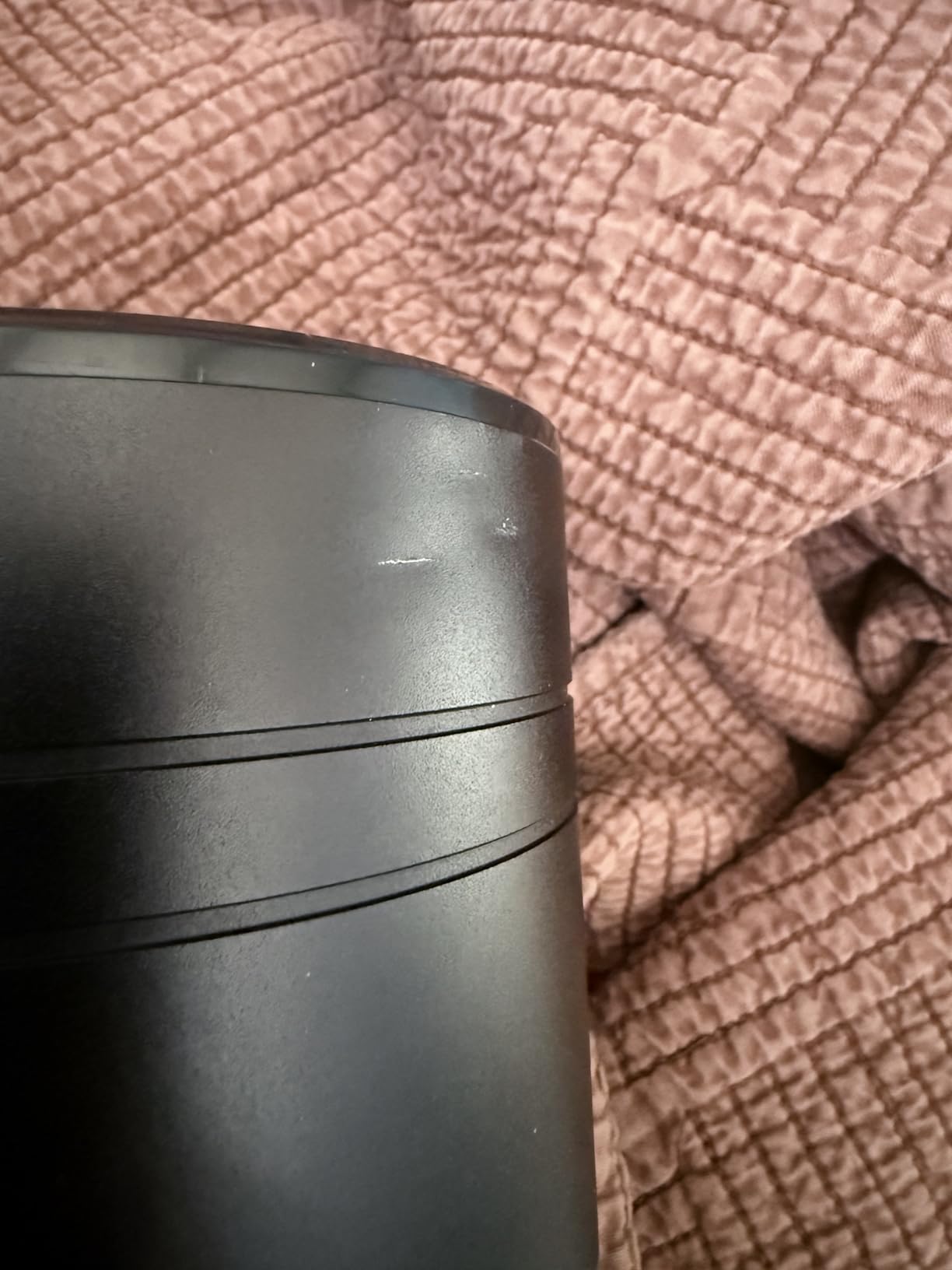
Two downsides are worth stating plainly. First, weight: at 4.5 lb this is the heaviest scope in the roundup by a wide margin, and it demands a tripod with real legs, not a folding table stand. Second, the same physics that produces a bright, detailed centre of the image also produces colour fringing and softness at the top of the 22-66x range, and the eye box is small at those powers.
The non-rotating angled eyepiece is a minor irritation if your head position is high, since you would need a step-up riser or the straight-bodied version. For most glass use, that is a smaller problem than the weight.
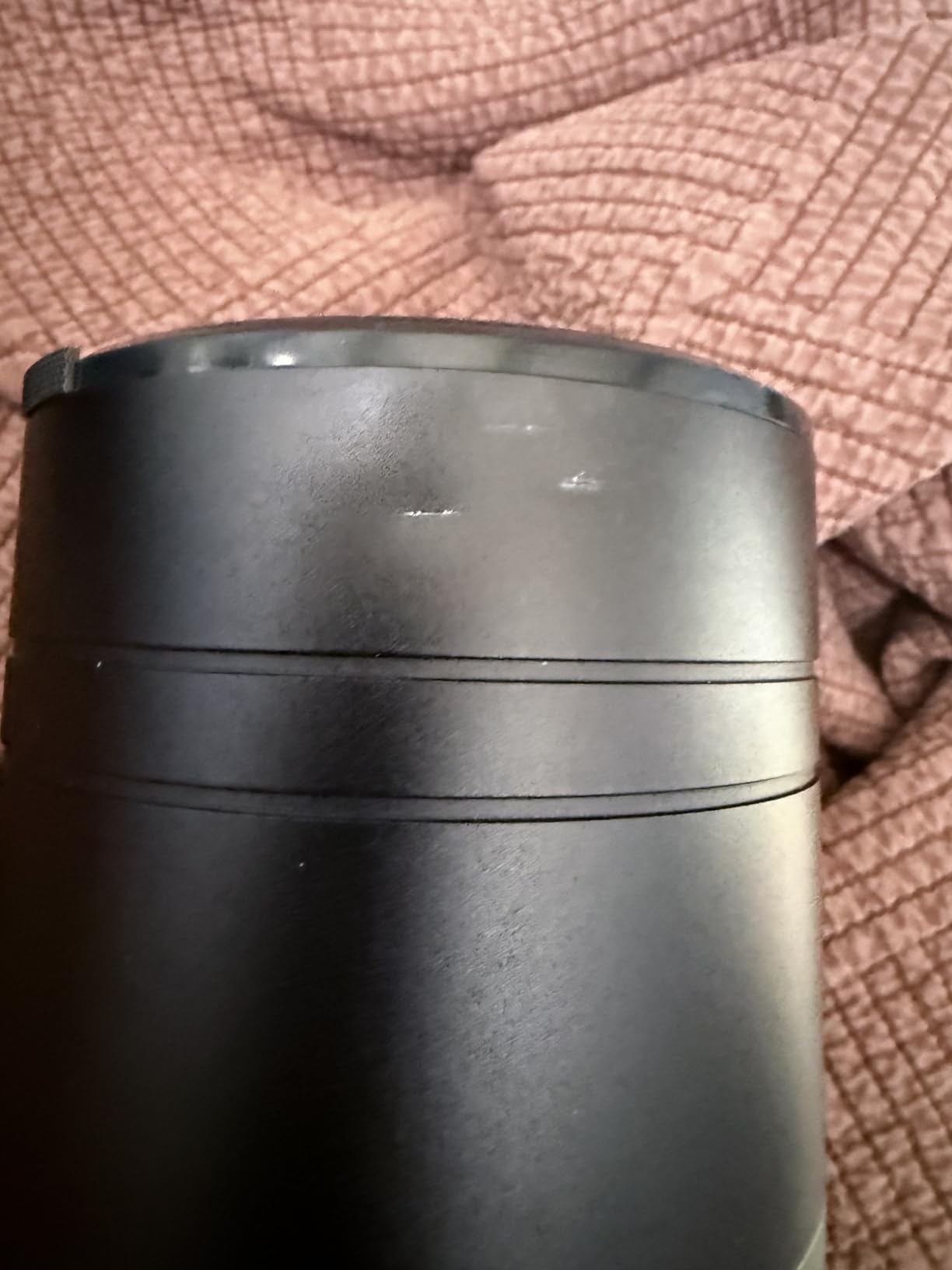
When is 100mm of objective worth the weight?
When your sessions run past sunset or start before it. The extra aperture is what lets you keep working in the blue hour and the last minutes of usable light, which is exactly when deer move and you cannot switch to a different optic. If you only ever view at midday, the extra weight buys you very little.
Who should look elsewhere?
Anyone who has to carry a scope any distance on foot, or who already owns a mid-weight carbon tripod and needs the glass to be light. It also suits people who shoot at longer distances than 600 yards, where the extra aperture and the extra magnification both help.
6. Barska Benchmark 25-125×88 – Widest Zoom Range in the Group
Pros
- Widest zoom range in the roundup for scanning then drilling in
- 88mm objective with fully coated BK-7 glass gives a bright clear view
- Objective focus lets you fine adjust the front focus while holding the target
- Waterproof
- fogproof and shockproof rubber armor exterior
Cons
- Fully coated rather than multi-coated optics
- Coarse image quality and distortion at the top of the 25-125x range
- Bundled tabletop tripod is not height adjustable for standing use
The 25-125x range is the reason to look at this one. You can scan a whole hillside at 25x and then go to 125x on a single object without swapping optics, which is a genuine advantage for wildlife and for checking distant target placement. At 1.8 lb it is also one of the lighter bodies here, and the accessory list includes a tabletop tripod, a handle and both hard and soft cases.
Objective focus is the other feature that gets praise. Because the front element can be adjusted independently, you can fine tune near focus while keeping the subject in the frame, which helps when a bird moves from a fence post to the hedge beside it.
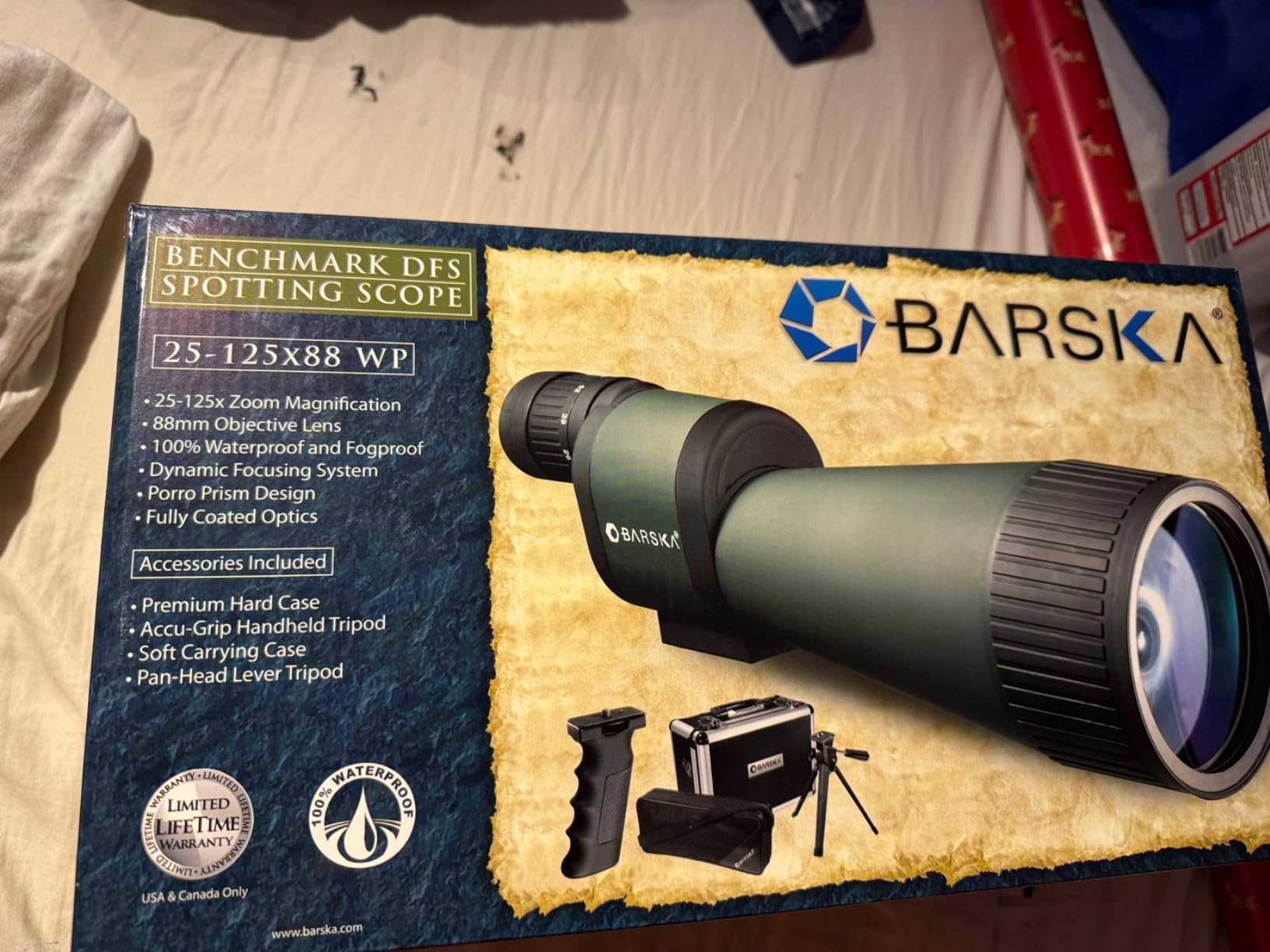
It is also the weakest rated scope in this group at 4.0, with 9 percent one-star reviews, and the reasons are consistent. The optics are fully coated rather than multi-coated, and the glass is BK-7, so the image is bright and clear at moderate powers but coarse and distorted at the top of the range. Treat 125x as a feature on the box rather than a working magnification.
The straight eyepiece design and the non-height-adjustable bundled tripod both limit long sessions. For casual viewing, general wildlife and target checking, it does the job at a price that leaves room for a proper tripod later.
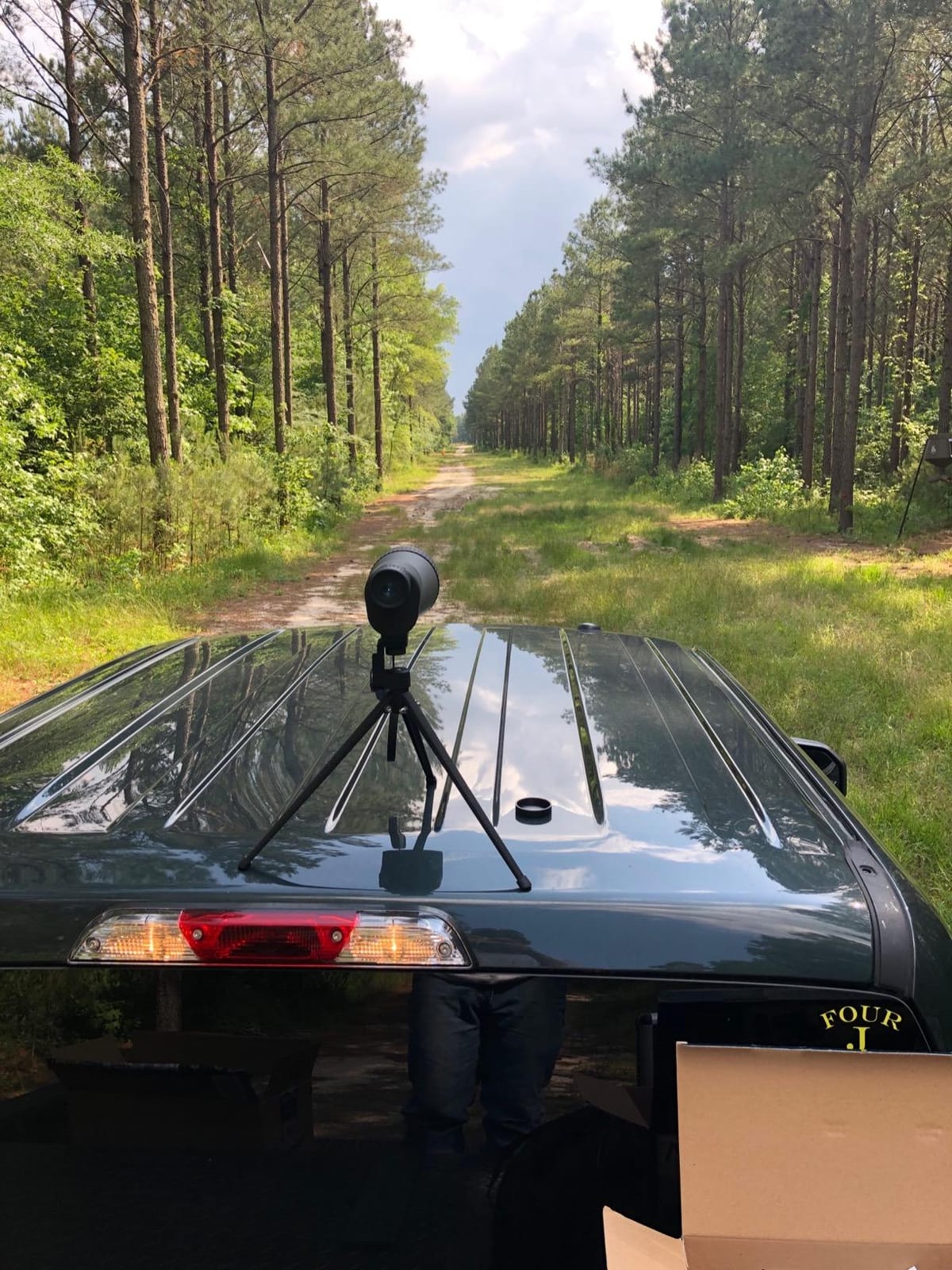
Is 125x magnification actually usable?
Occasionally, and not as a default. Atmospheric shimmer, heat haze and the inherent limits of the glass all stack up as power rises, and reviews describe the upper end as coarse. If you plan to spend meaningful time above 60x, a scope with ED glass and a tighter optical design will serve you far better.
Who is it right for?
People who want one optic to cover scanning, casual birding, astronomy and long-range checking without worrying about weight or budget. It suits a first purchase, a gift, and a family scope that gets left in the car. Serious target shooters should keep looking.
7. GOSKY 20-60×80 HD – Best for Digiscoping Out of the Box
Pros
- BaK4 Porro prism with fully multi-coated 80mm objective for crisp bright images
- Most complete accessory package in the roundup with a phone adapter and Nikon T-ring
- Waterproof and nitrogen purged with shock absorbing rubber armour at only 2.4 lb
Cons
- Image quality and brightness fall off past 40x and again at 60x
- Bundled tripod is flimsy with limited height adjustment
- Phone adapter is fiddly to align and can vignette or darken corners
This is the volume seller here, with well over 6000 ratings, and the review pattern is consistent: a strong entry-level scope that punches above its price between 20x and 40x, with most criticism aimed at the accessories rather than the glass. The BaK4 Porro prism and fully multi-coated 80mm objective give a crisp, bright image, and the magnesium body with shock absorbing rubber armour keeps the weight to 2.4 lb.
For photographers, the accessory package is the headline. It ships with a smartphone digiscoping adapter, a T-ring and M42 T-mount for Nikon bodies, a tripod and a carry case. Nothing else in this roundup lets you attach a camera or a phone without a separate purchase, and for wildlife or landscape photography that is the difference between a five minute setup and a weekend project.
Field of view is listed at 1.74 degrees, equivalent to 82.9-48 ft at 1000 yards, so you have genuine width at the low end of the zoom for finding and tracking birds. The dynamic focusing system is designed to bring the image up quickly and hold it more steadily than a basic manual collar.
Is the included phone adapter worth using?
It is a good starting point, with a caveat. Owners report that it is fiddly to align and that a phone can produce dark patches or a circular vignette, particularly at the edge of the frame. Once you know what alignment you need, a proper clamp adapter and a T-ring are a straightforward upgrade.
Who should skip it?
Anyone who needs edge-to-edge sharpness. A phone sensor crops heavily, so the centre of the frame looks good while the corners soften, and the same applies to a crop sensor camera. It is also not the scope for anyone who will live above 40x, since brightness and image quality both drop away there.
8. SVBONY SV28 25-75×70 – Cheapest Way Into the Hobby
Pros
- Lowest cost entry point here
- with 70mm objective and fully multi-coated optics
- Number one best seller in Spotting Scopes with over 3300 ratings
- 70mm objective shows .223 and 6.5mm hits on target at 200 yards
- Light at 910 g and small enough to pack for hiking or family trips
Cons
- 25x minimum makes subjects under 30-40 feet hard to focus
- Bundled tripod has no height adjustment and phone adapter sits over the zoom dial
- Only a 60 day warranty and thin documentation
It ranks as the number one best seller in Spotting Scopes with more than 3300 ratings, and reviewers treat it as a genuinely capable ultra-budget optic rather than a toy. A 70mm fully multi-coated objective is respectable hardware, and owners report seeing .223 and 6.5mm hits on target at 200 yards, which is a real measurement at real-world distances.
At 910 g it is the lightest scope here by a comfortable margin, and the 45 degree angled body with a built-in extendable sunshade is comfortable for birding and effective against glare. The package includes a universal phone adapter, a carrying case, lens covers, a cleaning cloth and a small tripod.
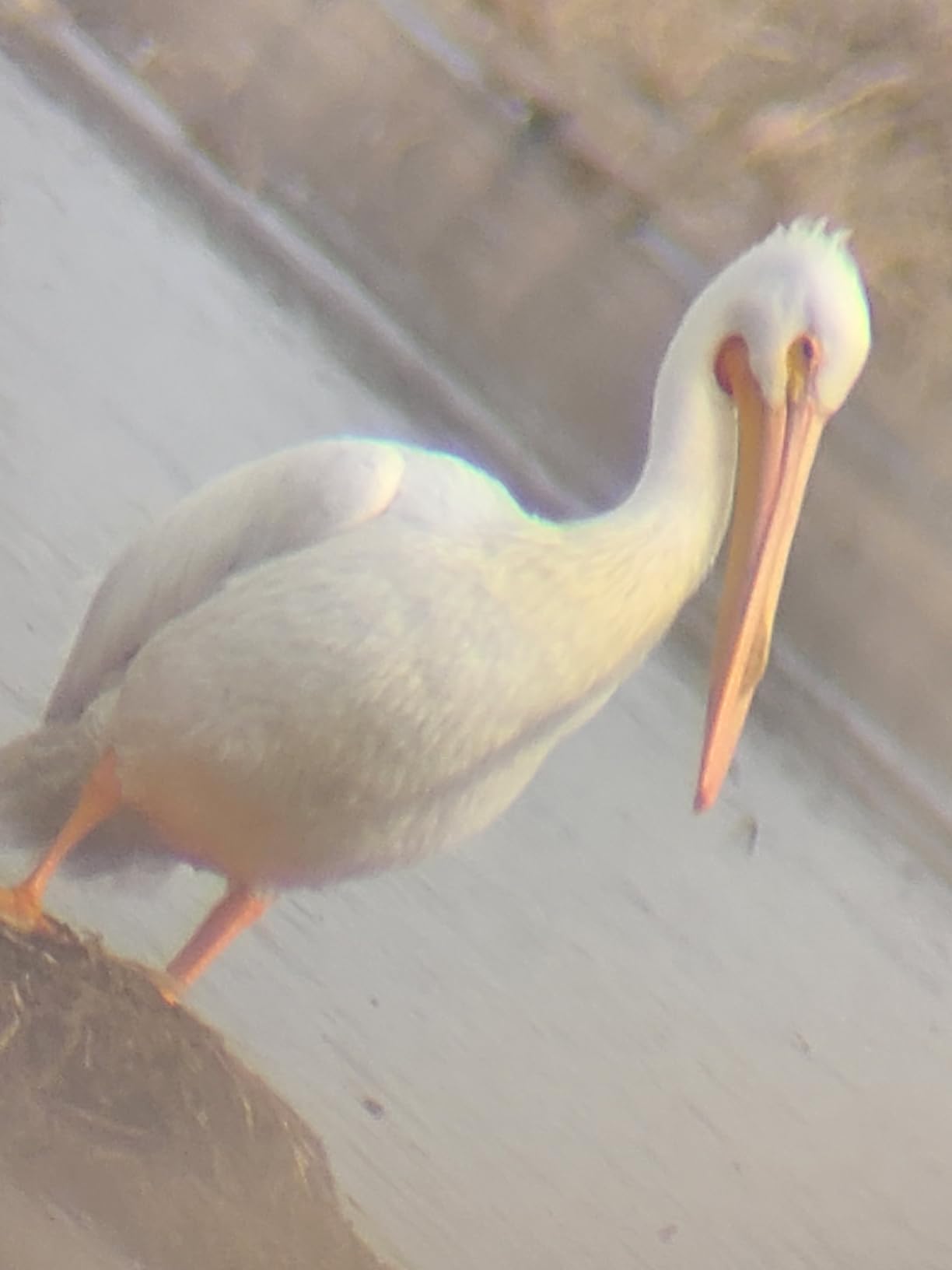
The constraints are real but predictable. A 25x minimum magnification means anything closer than 30-40 feet is genuinely hard to focus, so this is a distance scope, not a nature-close-up scope. The bundled tripod has no height adjustment, and the phone adapter mounts over the zoom dial, so a heavy phone can rotate the zoom and blur the view mid-shoot.
Support is the weakest part: a 60-day warranty and thin instructions, and a few buyers report a strong plastic smell on arrival that fades. None of that matters much if you keep it simple, but it is where the money saved shows up.
How good is it for target shooting at 100-200 yards?
Good enough for recreational range work, which is what most owners use it for. At 100-200 yards the 70mm objective resolves group shots and individual holes in good light. Beyond that, or at the 75x ceiling, the view softens and you will be wishing for ED glass.
Is it worth spending more instead?
Only if you know you will use it regularly. If you are testing whether you enjoy glass watching, this is the cheapest sensible way to find out, and the money you do not spend can go toward a proper tripod, which matters far more to the experience. If you already know you are hooked, the Athlon Talos or Celestron Ultima will serve you better for a modest step up.
How to Choose a Spotting Scope Under 500
Six numbers decide this purchase, and only one of them is magnification. Work through them in order and the model choice usually makes itself.
1. Objective diameter. This is the light-gathering lens and the single biggest driver of how the scope performs at dawn and dusk. A 65mm objective is fine for daylight, 80mm is the sensible all-rounder, and 90-100mm buys real twilight performance at the cost of weight. A 100mm body in this group weighs around 4.5 lb, which changes what tripod you need.
2. Magnification range, honestly assessed. 20-60x is the consensus sweet spot and it is what we would choose for general use. Anything claiming 125x on a budget scope is a range you will rarely use above 60x. Note the minimum as well: a 25x floor makes nearby subjects hard to focus.
3. Eye relief and body type. You want enough eye relief to use the scope with glasses on. Angled bodies put the eyepiece at 45 degrees, which is far more comfortable for long birding sessions and easier on your neck; straight bodies are cheaper, pack smaller and suit vehicle use. If you wear glasses, test before you commit.
4. Glass and prism. ED glass reduces colour fringing at high power and is the quality upgrade to look for first, though true ED glass remains uncommon at this ceiling. BaK-4 prisms transmit noticeably more light than BK-7, and multi-coated lenses beat fully coated ones. The Celestron C70 uses a Maksutov design, which trades a little aperture for contrast and very little colour fringing.
5. Weather sealing. Nitrogen purging plus O-ring seals is what stops internal fogging across a cold morning sit. All eight picks here claim some form of it, but build quality and the presence of a real sunshade still vary. A retractable sunshade is a small thing that saves your image in open country.
6. Mount and tripod. Nearly every scope in this tier has a 1/4-20 threaded foot, and that is the standard your tripod head should accept. Only two of these picks include any tripod at all, and the bundled ones are table-height models. Budgeting for a proper tripod is the highest-value money you can add to a budget scope; our spotting scope tripod roundup covers the options. If you want the premium tier instead, our Vortex Razor HD review shows what sits above this price bracket.
Warranty deserves a mention too. Two picks here carry lifetime coverage, and in a category where most rivals offer one or two years, that is a legitimate tiebreaker between optically similar models.
Can a Spotting Scope Be Used for Photography?
Yes, and this is the technique known as digiscoping, but the results depend heavily on which scope you own.
Two routes exist. A phone adapter clamps over the eyepiece and is the cheapest way in, and it works acceptably when the phone sits close to align with the optical axis. Expect vignetting and dark corners until you align it properly, and expect a heavy crop because phone sensors are small. A T-ring plus the correct T-mount for your camera body gives a far cleaner result, because the camera sits in the optical path and uses the full sensor.
This matters when choosing a scope. The Celestron Ultima 20-60×80 and the Ultima 22-66×100 both carry an integrated T-adapter in the zoom eyepiece, so a camera attaches directly. The Celestron C70 accepts standard 1.25 inch eyepieces, which opens up the widest range of adapters. The GOSKY 20-60×80 HD ships with a phone adapter and a Nikon-compatible T-ring and M42 mount already in the box, which is why it is our digiscoping pick.
Mind the crop. A 1.5x or 2x crop factor turns a 300mm equivalent view into something much tighter, and a spotting scope has no autofocus and no image stabilisation, so you need a solid tripod and a patient shutter release. Our smart binoculars roundup covers a lighter alternative for closer bird photography.
Where Spotting Scopes Under 500 Fall Short
Two limits show up in almost every owner review of this tier, and both are worth knowing before you spend rather than after.
The blur ceiling. Almost every scope in this roundup is at its best between 20x and 40x. Past roughly 40-50x, images soften and colour fringing appears, and several reviews describe the top of the range as murky even in full sun. Buy the magnification you need for 20-40x work, not the number on the box.
The accessories. Soft, unpadded cases, rudimentary lens caps and flimsy table-height tripods are standard here. The Bushnell Trophy Xtreme and Barska Benchmark are the exceptions with a real case and a bundled tripod, and the GOSKY leads on mount hardware. Plan to spend some of your budget on a tripod, because it changes the experience more than any other accessory.
For very distant subjects, remember that atmosphere is often the limit, not glass. Heat shimmer, dust and window glare will soften a view long before magnification does, and our plane spotting binoculars guide covers the cases where a shorter, wider view actually works better.
Frequently Asked Questions
What is the best spotting scope for value for money?
The Athlon Talos 20-60×80 is the strongest value pick in this roundup, pairing a fully multi-coated 80mm objective with nitrogen purging in a 2.4 lb body, and it holds the highest average rating of the group. The Celestron Ultima 20-60×80 costs a little more and adds an integrated T-adapter plus included eyepiece pouch and cloth, which makes it better if you plan to digiscope. Judge value on objective diameter and coating first, not on magnification.
What is the best budget long range scope under 500?
For long range work the Celestron Ultima 22-66×100 leads, because a 100mm objective resolves small holes on white paper at 150-300 yards even in twilight, and it includes an adjustable balancing tripod mount to steady the weight. It is the heaviest scope here at 4.5 lb, so budget for a proper tripod. If you need less reach and less weight, the Ultima 20-60×80 covers most situations.
What is the best budget bird spotting scope?
The Celestron Ultima 20-60×80 angled is our pick for birding, since a 45 degree angled body is far more comfortable over long sessions than a straight design and the 80mm objective keeps the image bright in flat light. The Celestron C70 Mini Mak is the alternative if portability matters most or you also want night sky use, as its Maksutov design shows minimal chromatic aberration.
How much magnification do I need for 500 yards?
At 500 yards you rarely need more than 40x, and this is the point most buyers get wrong. Scopes in this tier look their best between 20x and 40x and soften noticeably past 40-50x, so a 20-60x range covers 500 yards comfortably. A wide field of view matters more than extra power at that distance, because it is what lets you find and track the target in the first place.
Is an angled or straight spotting scope better?
Angled bodies put the eyepiece at 45 degrees, which is far more comfortable for long birding sessions, easier on your neck and simpler for digiscoping, and they usually let the scope sit lower on a tripod. Straight bodies are more compact, often cheaper and easier to pack, and they work well from a car window or a bench. If you wear glasses, an angled body with good eye relief is usually the safer choice.
The Best Spotting Scopes Under 500 in 2026
The Celestron Ultima 20-60×80 angled is the best spotting scope under 500 overall, because it is bright and sharp where scopes in this price range need to be, it includes a T-adapter that makes cameras easy, and 1350 ratings suggest the ownership experience is solid. If you want the most glass for the least outlay, take the Athlon Talos. If your sessions start in the dark, look at the Bushnell Trophy Xtreme for brightness or the Celestron Ultima 100 for raw light gathering.
Whichever you pick, spend some of the budget on a tripod. Glass quality matters, but a scope on a wobbling head will never show you what it is capable of.