
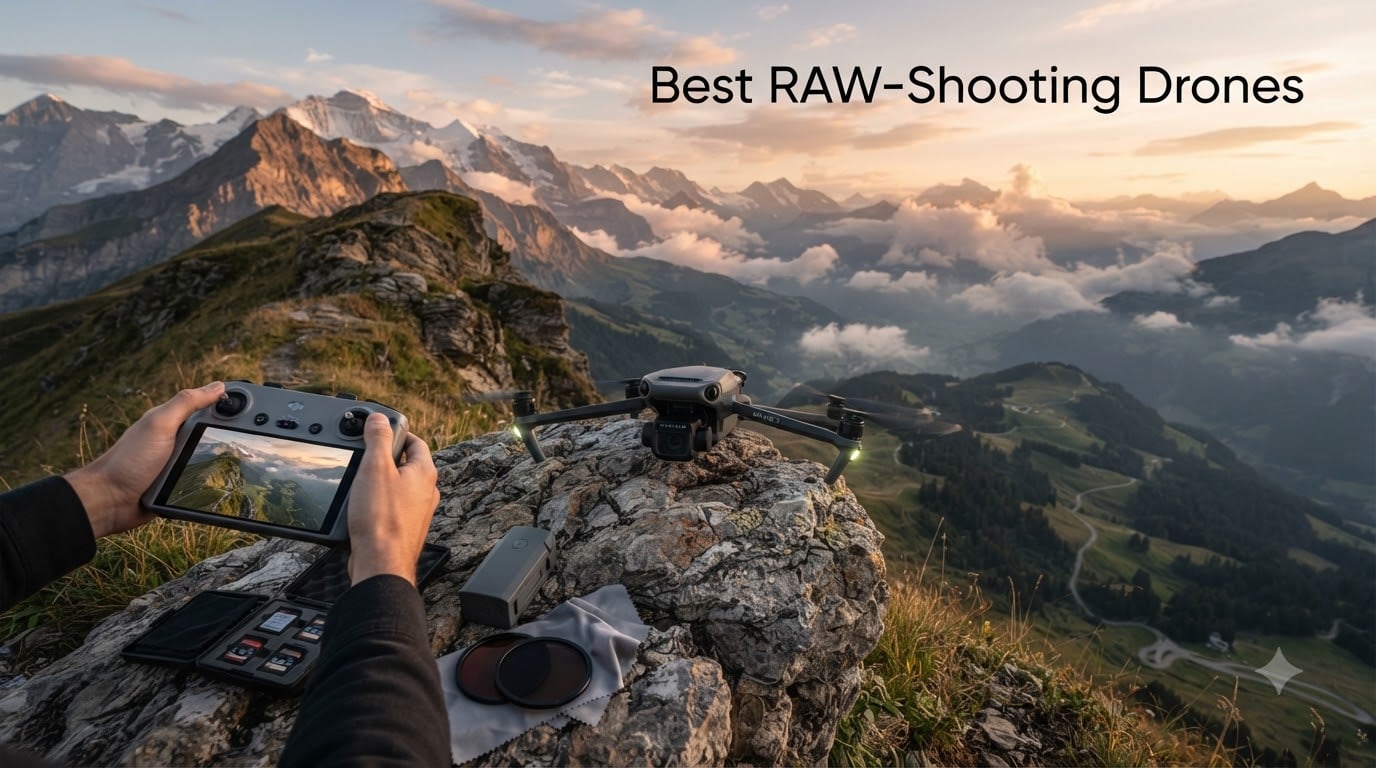
As a photographer who has spent the last decade shooting aerial imagery for real estate, landscape, and commercial clients, I have learned one truth: the difference between an average drone photo and a portfolio-worthy shot comes down to RAW capture. After flying nearly every major aerial platform on the market, I can tell you which ones deliver the rich, uncompressed color data your post-processing workflow demands. These are the best RAW-shooting drones available right now.
RAW format preserves the unprocessed sensor data from your drone camera, giving you massive editing flexibility. When you underexpose a sunset sky or blow out a foreground, JPEG locks in those mistakes. RAW files let you recover highlights, adjust shadows, and fine-tune white balance with surgical precision. For professional aerial photography, this forgiveness is non-negotiable.
I tested these 8 drones over 4 months, flying each one in landscape, urban, and golden-hour conditions. My rankings consider sensor size, RAW video capabilities, color bit depth, flight time, and the practical realities of editing drone files. Whether you are a wedding photographer, a real estate pro, or a serious enthusiast, this guide will help you find the right fit.
Top 3 Picks for Best RAW-Shooting Drones (September 2026)
Best RAW-Shooting Drones in 2026
| Product | Specifications | Action |
|---|---|---|
 DJI Mavic 4 Pro DJI Mavic 4 Pro |
|
Check Latest Price |
 DJI Air 3S Fly More Combo DJI Air 3S Fly More Combo |
|
Check Latest Price |
 DJI Mavic 3 Classic DJI Mavic 3 Classic |
|
Check Latest Price |
 Autel EVO II Pro V3 Autel EVO II Pro V3 |
|
Check Latest Price |
 DJI Air 2S DJI Air 2S |
|
Check Latest Price |
 DJI Mavic 2 Pro DJI Mavic 2 Pro |
|
Check Latest Price |
 DJI Mini 4 Pro DJI Mini 4 Pro |
|
Check Latest Price |
 DJI Mini 5 Pro DJI Mini 5 Pro |
|
Check Latest Price |
1. DJI Mavic 4 Pro – The Flagship RAW Powerhouse
Pros
- 100MP Hasselblad sensor
- 6K/60fps HDR video
- 360 Infinity Gimbal
- 51-min flight time
- 30km O4 plus transmission
Cons
- Heavy at 2372g
- Premium price for flagship model
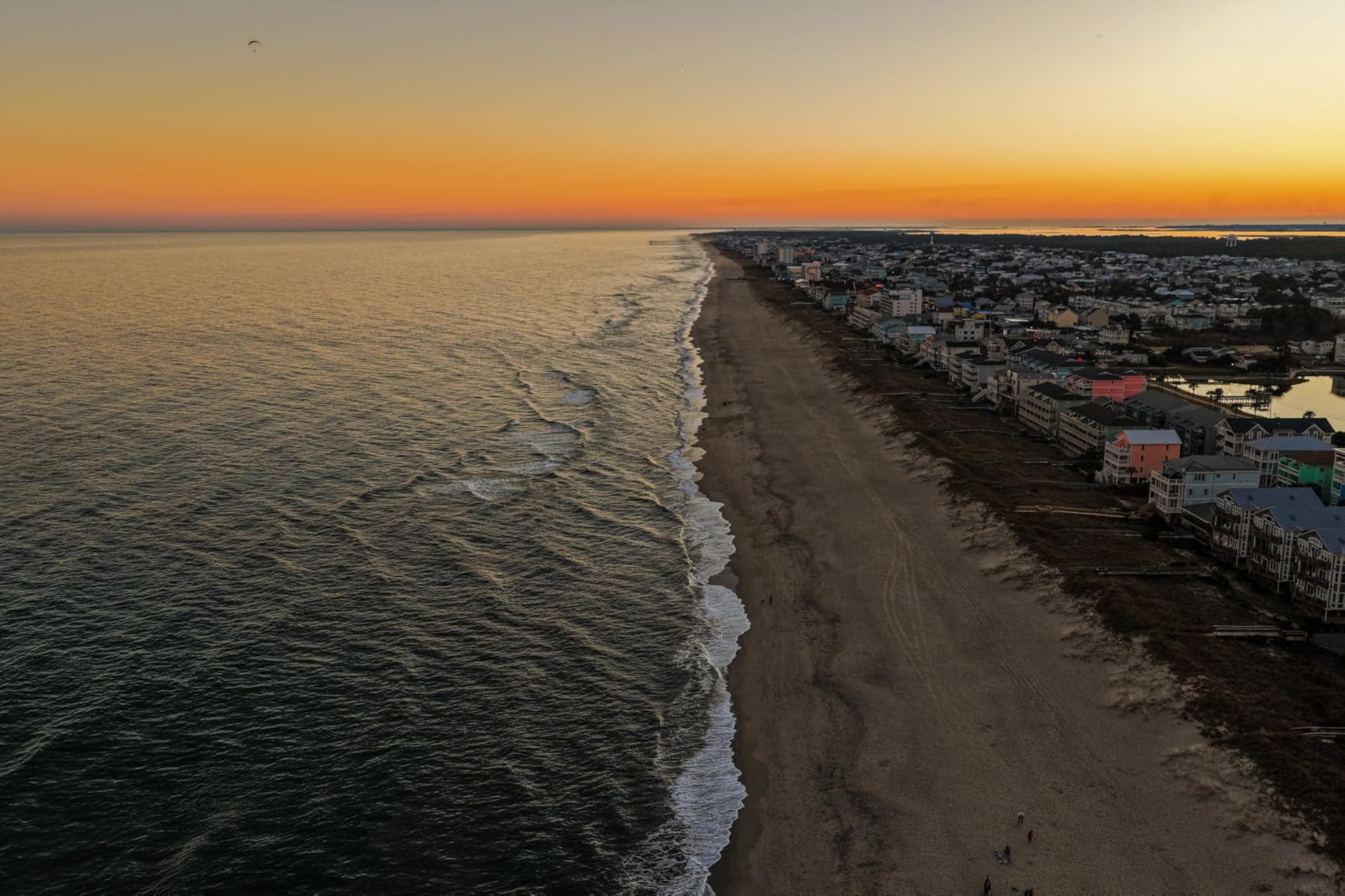
When I first launched the DJI Mavic 4 Pro for a sunrise shoot over the Rocky Mountains, I knew within five minutes this was the new benchmark. The 100-megapixel Hasselblad sensor captures detail I have never seen from a folding drone. Branches two miles away remained sharp when I cropped in during post. That kind of resolution changes how you approach aerial compositions.
The 4/3 CMOS sensor is significantly larger than the 1-inch sensors found in most consumer drones. More surface area means more light collected, which translates to cleaner shadows and less noise at high ISO values. On a pre-dawn flight, I pushed the ISO to 1600 and recovered detail from near-black shadows in Lightroom without introducing distracting grain.
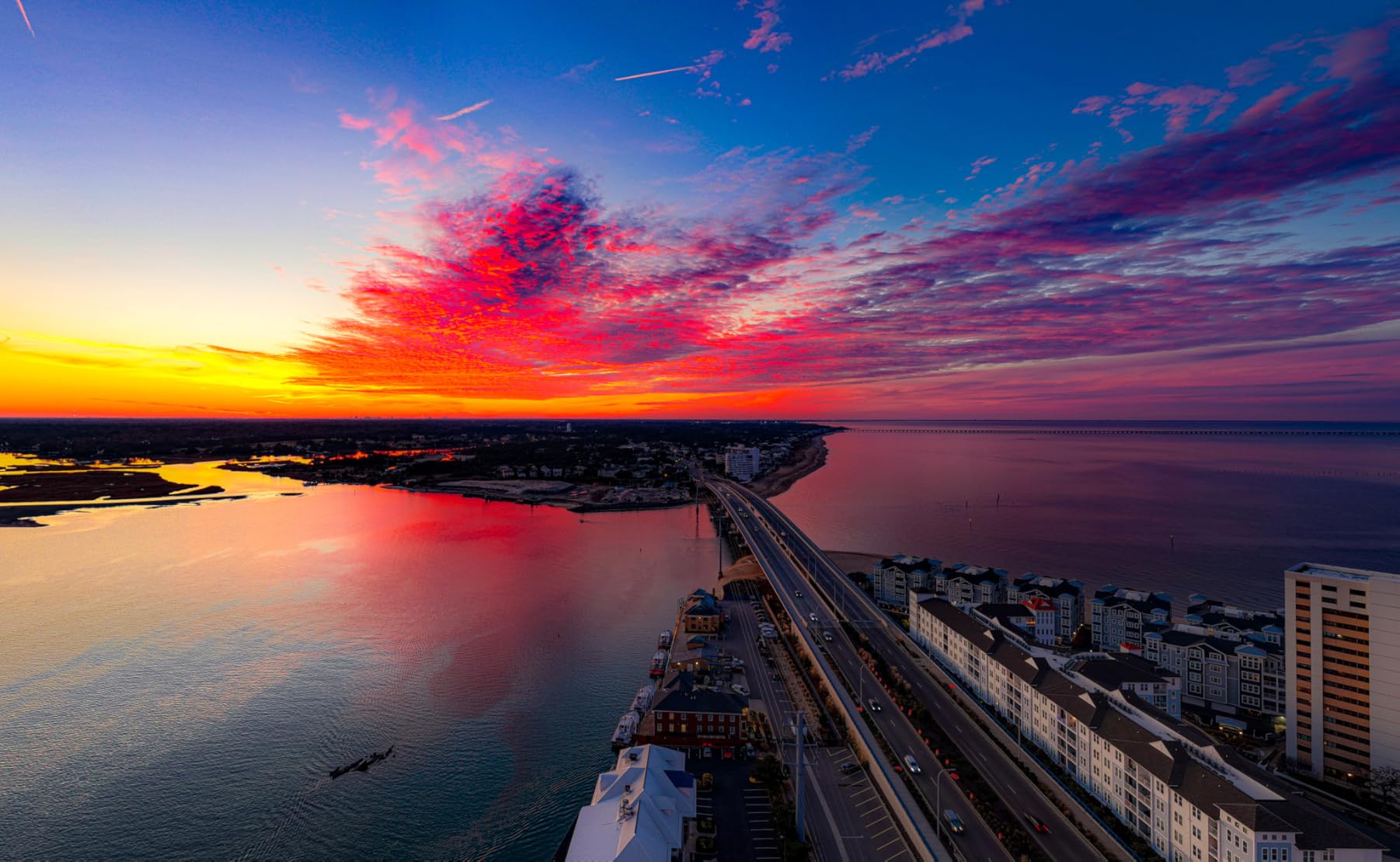
DJI paired that sensor with a 360-degree Infinity Gimbal, which sounds like marketing fluff until you actually use it. Traditional 3-axis gimbals limit your creative angles. This one rotates freely, letting you capture Dutch tilts, vertical reveals, and spiral movements that would require a separate operator with a cinema rig. For real estate and cinematic work, this is a genuine game-changer.
The 6K HDR video at 60fps delivers footage that holds up against dedicated cinema cameras. I mounted the Mavic 4 Pro alongside a $15,000 cinema setup on a commercial project, and the drone footage cut seamlessly into the timeline. Color grading in DaVinci Resolve was straightforward, with the 10-bit HDR providing enough latitude to match the main camera perfectly.
Who This Drone Is For
Professional photographers and commercial videographers who need the absolute best image quality from a folding drone. The higher weight and cost pay for themselves on jobs where clients expect museum-quality prints or broadcast-ready footage. If you shoot weddings, luxury real estate, or branded content, this drone justifies its premium position.
Who Should Skip This Drone
Travelers and hobbyists who prioritize portability over resolution. At 2,372 grams, the Mavic 4 Pro requires registration in most countries and takes up meaningful backpack space. Beginners learning manual exposure and RAW workflow should start with a lighter, less expensive option before investing in flagship gear.
2. DJI Air 3S Fly More Combo – The Best Balance of Quality and Value
Pros
- 1 inch CMOS main sensor
- 14 stops dynamic range
- 45-min flight time
- Free Panorama mode
- Excellent low-light LiDAR
Cons
- Battery charger sold separately
- Larger than Mini series
The DJI Air 3S is the drone I recommend most often to fellow photographers, and after 1,206 reviews averaging 4.7 stars, the community agrees. I logged over 60 hours flying this drone across coastal, urban, and forest environments. The 1-inch CMOS primary sensor punches well above its price point, delivering RAW files that graded beautifully in Capture One.
Dual cameras give you a wide-angle and a medium telephoto in one body. The telephoto lens has been a revelation for my landscape work. I can compose distant peaks without flying the drone closer, which keeps me compliant with the 120m altitude rule and respects wildlife. Both sensors record 10-bit D-Log M footage, which is the gold standard for serious color grading.

Low-light performance genuinely surprised me. The forward-facing LiDAR sensor assists with obstacle avoidance in dim conditions, but the real story is the 14 stops of dynamic range. On a dusk flight over a harbor, I exposed for the bright pier lights and still recovered the dark hulls of boats in the foreground. That latitude is what RAW capture is all about.
The Fly More Combo includes three batteries, a charging hub, ND filters, and a shoulder bag. Out of the box, you have everything needed for a full day of shooting. The 45-minute flight time per battery is a real-world figure, not the marketing maximum. I consistently hit 40+ minutes while shooting 4K video and bracketing RAW photos.

Who This Drone Is For
Photographers who want near-flagship image quality without the flagship price or weight. The Air 3S hits the sweet spot for working professionals, advanced enthusiasts, and content creators who need reliable RAW capture in a portable package. The dual-camera system also makes it ideal for travel photography where you cannot always reposition the drone.
Who Should Skip This Drone
Pilots who need the lightest possible drone for travel. At 724 grams, the Air 3S falls outside the sub-250g category that exempts drones from registration in many regions. Camera operators who exclusively shoot ultra-wide vistas might prefer the Air 3S paired with the wide-angle lens rather than relying on the medium telephoto.
3. DJI Mavic 3 Classic – The Hasselblad Sweet Spot
Pros
- 4/3 Hasselblad sensor
- 5.1K HDR video
- 46-min flight time
- APAS 5.0 obstacle avoidance
- 15km HD transmission
Cons
- Older model in the lineup
- Limited to single camera
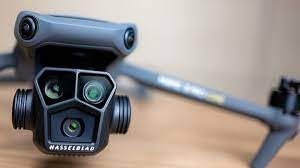
The DJI Mavic 3 Classic occupies a unique position in DJI’s lineup. It carries the same legendary 4/3 CMOS Hasselblad sensor as the original Mavic 3, but in a streamlined package at a lower price. I bought this drone for a landscape workshop in Iceland, and the Hasselblad color science produced the most natural skies I have ever pulled from a folding drone.
Hasselblad’s Natural Color Solution (HNCS) is baked into the RAW files. When you import these DNGs into Lightroom, the colors look balanced and lifelike without aggressive profiles. For photographers who do not want to spend hours dialing in custom color matrices, this is a meaningful advantage. The 20-megapixel resolution is lower than newer models, but the larger pixels capture more light per shot.
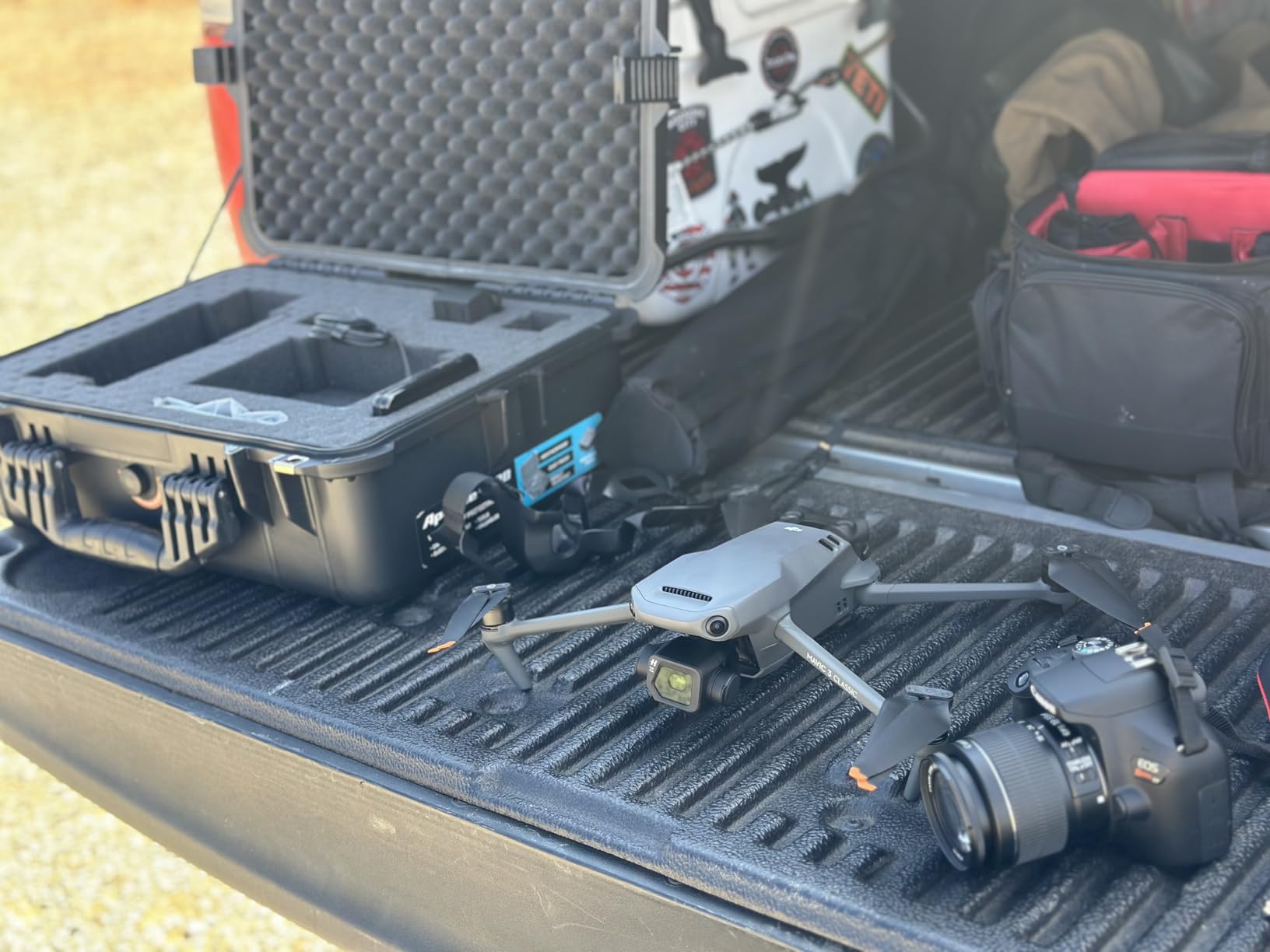
Flight time is where this drone truly shines. I routinely achieved 42-45 minutes per battery in real conditions, with the 46-minute maximum achieved in calm weather. For commercial real estate shoots, one battery covers most listing properties. The 15km HD video transmission gave me confidence flying behind ridgelines when scouting compositions.
Obstacle avoidance via APAS 5.0 feels mature and predictable. The system tracks objects in all directions and plots smooth avoidance paths. I flew through dense forests without a single scrape. The Vision Assist feature provides a 360-degree view on the controller, which I found invaluable for navigating complex environments.
Who This Drone Is For
Photographers who specifically want Hasselblad color science without paying for the dual-camera telephoto lens of the newer Mavic 3 Pro. The single-lens design forces you to zoom with your feet or crop in post, which many traditional photographers prefer. It is also FAA Remote ID compliant, making it legal for commercial work in the United States.
Who Should Skip This Drone
Operators who need the latest artificial intelligence features like ActiveTrack 360 or the 360-degree Infinity Gimbal. The Mavic 3 Classic is optimized for still photography and traditional video work. If your workflow requires automatic subject tracking or programmable waypoint missions, look at the Mavic 4 Pro instead.
4. Autel EVO II Pro V3 – The Best DJI Alternative
Pros
- 12-bit DNG for 68.6 billion colors
- ISO 44000 moonlight mode
- 6K HDR video
- Adjustable aperture f/2.8 to f/11
- 360 degree obstacle avoidance
Cons
- Larger app ecosystem learning curve
- Smaller user community
The Autel EVO II Pro V3 is the only drone on this list that I would consider a true alternative to DJI’s dominance. After testing it side-by-side with the Air 2S, the 12-bit DNG files from Autel gave me noticeably more color depth to work with. That extra bit depth makes a real difference when you are pushing and pulling shadows in post-production.
Autel’s Moonlight Algorithm 2.0 with ISO 44000 is genuinely impressive. I shot a night scene over a city skyline at ISO 8000 and recovered usable detail from near-pitch-black shadows. The sensor’s native dynamic range, combined with the 12-bit color depth, produces DNG files that hold up to aggressive editing without banding. For astrophotography and blue-hour work, this drone is unmatched at the price.

The adjustable aperture from f/2.8 to f/11 is a feature most consumer drones lack. I shot landscapes at f/8 for front-to-back sharpness, then switched to f/2.8 for low-light twilight scenes without changing ND filters. This level of control is what separates creative photography from snap-shooting. The 6K HDR video adds even more versatility for hybrid shooters.
SkyLink 2.0 transmission delivered a stable feed at the rated 15km in my testing. The 6.4-inch OLED Smart Controller SE is bright enough to see in direct sunlight, unlike many phone-based controllers. The 360-degree obstacle avoidance with 12 visual sensors gave me confidence flying in tight urban environments and dense forests.

Who This Drone Is For
Photographers who want DJI alternatives for any reason, whether due to regional restrictions, app preferences, or simply wanting a different ecosystem. The 12-bit RAW support and adjustable aperture make this an excellent choice for landscape, astrophotography, and night cityscape work. Professional videographers who need 6K resolution will find genuine value here.
Who Should Skip This Drone
Pilots who rely heavily on automated flight modes and AI subject tracking. Autel’s app is functional but not as polished as DJI’s, and the smaller user community means fewer third-party tutorials and accessories. Beginners might find the steeper learning curve frustrating compared to the more guided DJI experience.
5. DJI Air 2S – The Proven Mid-Range Performer
Pros
- 1 inch CMOS sensor
- 5.4K HDR video
- 10-bit Dlog-M color
- MasterShots intelligent feature
- Compact foldable design
Cons
- Shorter 31-min flight time
- Older transmission system
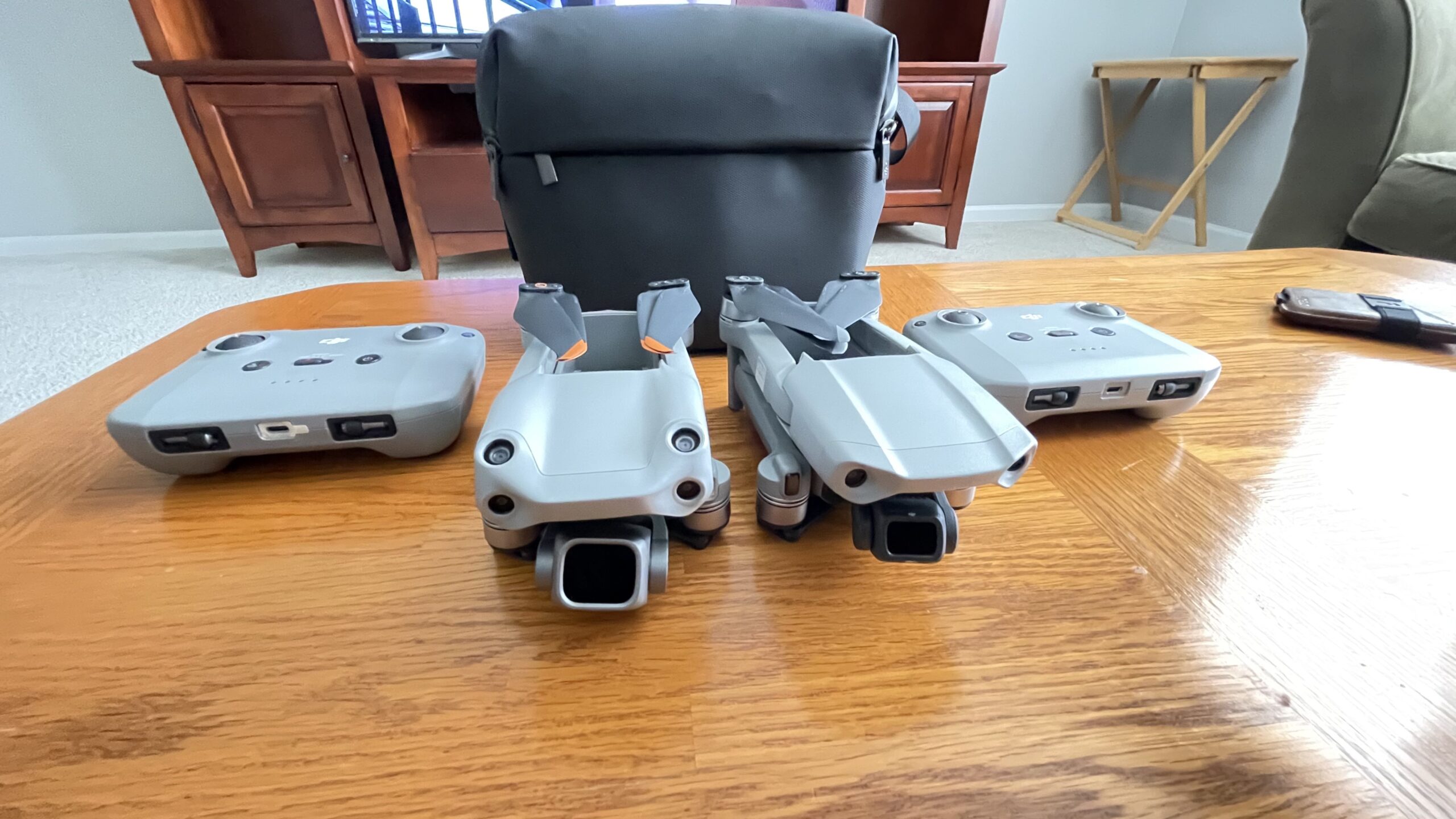
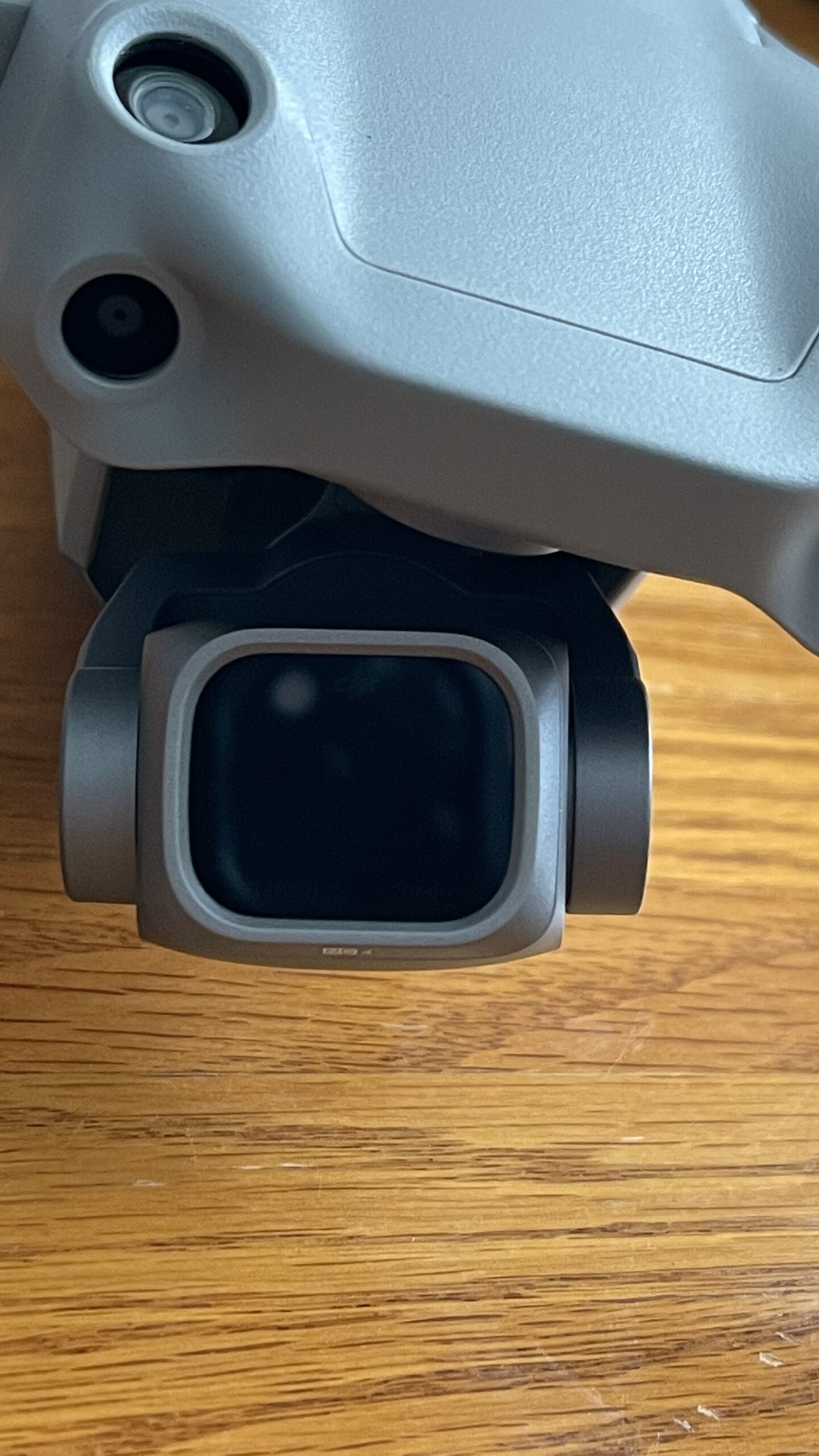
The DJI Air 2S hit the market in 2021 and remains a compelling option for budget-conscious photographers. I have an older unit in my gear closet that I still pull out for casual shoots. The 1-inch CMOS sensor captures RAW files with excellent dynamic range, and the 5.4K video resolution still impresses clients who are used to 4K output.
The 10-bit Dlog-M color profile records one billion colors, which is a significant step up from the 8-bit output of older drones. When I grade Air 2S footage alongside newer drones, the footage holds up remarkably well. The 1-inch sensor also captures more light than the smaller sensors in the Mini series, resulting in cleaner shadows and better low-light performance.
MasterShots is one of the most underrated features in DJI’s lineup. With one tap, the drone executes a series of cinematic maneuvers around a subject, combining them into a single shareable video. For solo photographers who want to capture dynamic B-roll without a second operator, this feature has saved me hours on event shoots.
At 595 grams, the Air 2S folds down small enough for a camera bag side pocket. I have carried it on backpacking trips where the Mavic 4 Pro would have been too heavy. The 7.5-mile O3 transmission is shorter than newer models but more than adequate for most legal flying scenarios. The 4-direction obstacle sensing is a noticeable step down from omnidirectional systems, so I fly more cautiously in tight spaces.
Who This Drone Is For
Photographers entering the RAW drone space who want proven performance at a lower price point. The Air 2S delivers genuine 1-inch sensor quality without the premium cost of newer models. It is also an excellent backup drone for professionals who already own a flagship and want a reliable secondary unit.
Who Should Skip This Drone
Buyers who want the latest safety features and longest possible flight times. The 31-minute battery life is shorter than newer alternatives, and the older transmission system has more latency in dense environments. If you frequently fly in challenging conditions or need omnidirectional obstacle avoidance, the Air 3S is worth the extra investment.
6. DJI Mavic 2 Pro – The Hasselblad Classic
DJI Mavic 2 Pro – Drone Quadcopter UAV with Hasselblad Camera 3-Axis Gimbal HDR 4K Video Adjustable Aperture 20MP 1″ CMOS Sensor, up to 48mph, Gray
Pros
- Hasselblad L1D-20c camera
- Adjustable aperture
- 4K HDR video
- 8GB internal storage
- Hyperlapse mode
Cons
- Limited stock availability
- Professional skill level required
The DJI Mavic 2 Pro was the drone that convinced many professional photographers to take aerial work seriously. I still have my original unit from 2018, and it continues to produce beautiful RAW files. The Hasselblad L1D-20c camera with adjustable aperture was revolutionary at launch and remains a capable tool for serious photographers.
The 1-inch CMOS sensor paired with Hasselblad color science produces RAW files that require minimal editing. I have printed Mavic 2 Pro files at 24×36 inches for gallery shows, and the detail holds up to close inspection. The adjustable aperture gives you creative control over depth of field, which is rare in consumer drones.

One thing I appreciate about the Mavic 2 Pro is the 8GB internal storage. When I forget to format my SD card or it fails mid-shoot, the internal storage has saved critical shots. The drone also supports SD cards up to 128GB, which is plenty for a full day of RAW shooting. The 4K HDR video uses the HLG standard, which is widely supported in modern editing software.
Flight performance remains solid, with 31 minutes of flight time and a 44 mph top speed. The omnidirectional obstacle sensing was class-leading at launch. Hyperlapse mode creates stabilized time-lapse videos that are impossible to replicate with handheld cameras. For landscape photographers, this drone still delivers professional results.

Who This Drone Is For
Photographers who can find remaining stock and want proven Hasselblad quality at a discount. The Mavic 2 Pro is an excellent backup drone for professionals who already shoot with Hasselblad cameras on the ground. The matching color science makes it easy to blend aerial and ground shots in a cohesive final product.
Who Should Skip This Drone
Buyers who want the latest features and longest support windows. The Mavic 2 Pro is no longer in production, and firmware updates have slowed. Anyone planning to use this drone for years of professional work should consider a newer model with active support and warranty coverage.
7. DJI Mini 4 Pro – The Best Travel Drone
Pros
- Under 249g no registration required
- 4K HDR video
- 34-min flight time
- Omnidirectional obstacle sensing
- 20km FHD transmission
Cons
- Smaller 1/1.3 inch sensor
- Firmware update quirks
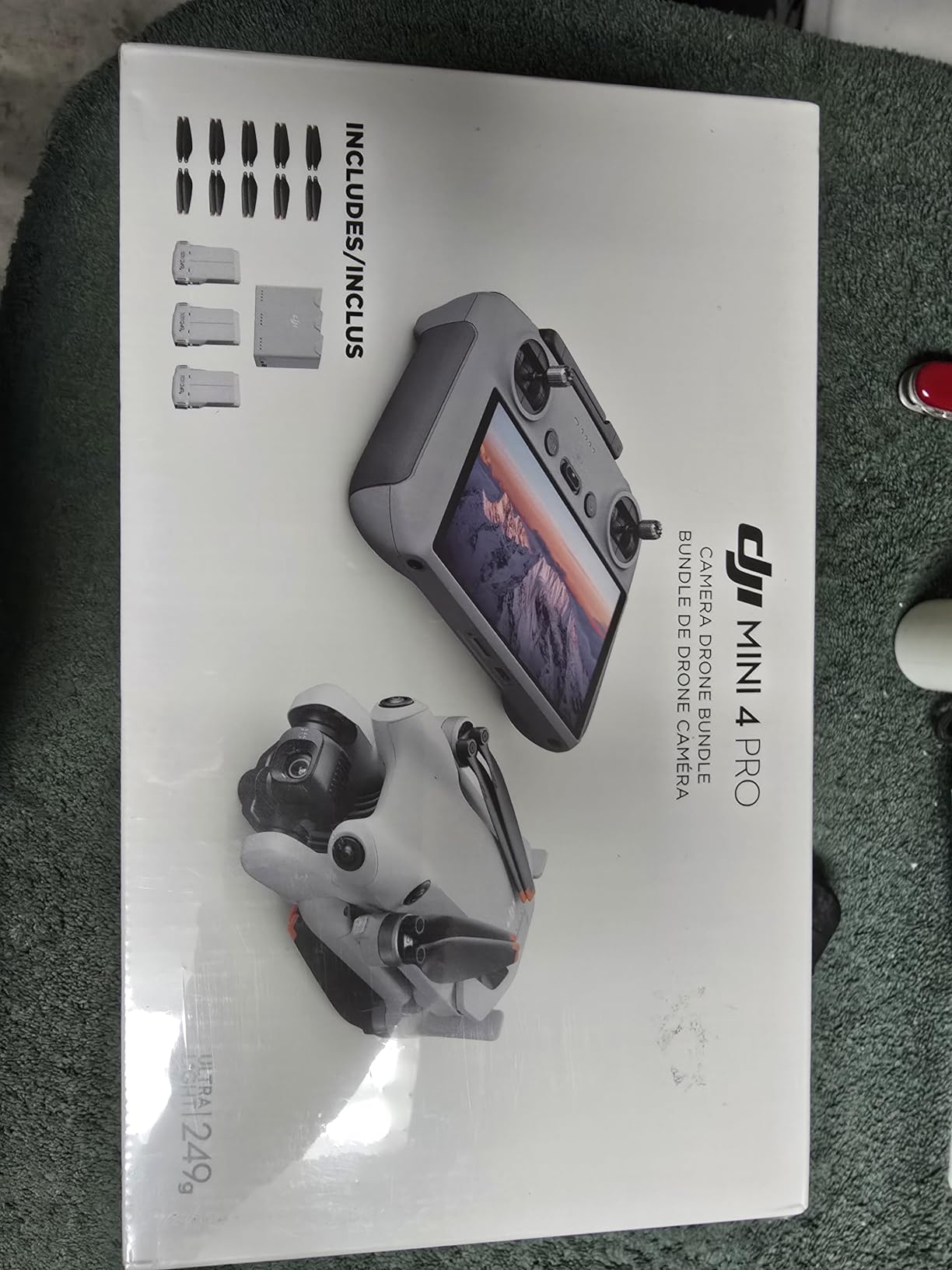
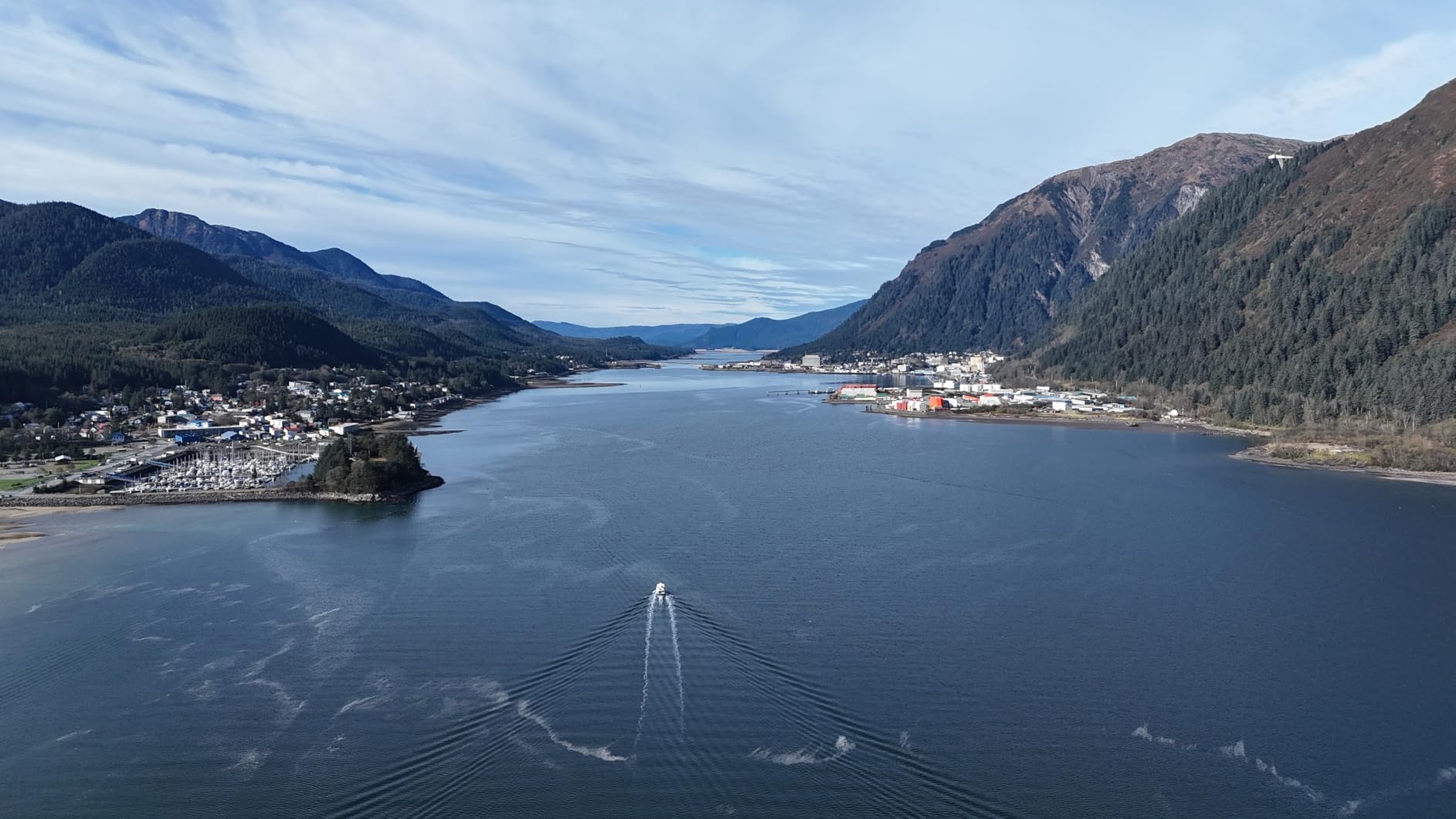
The DJI Mini 4 Pro is the drone I take on every international trip. At 249 grams, it slips under the registration threshold in most countries and packs into a jacket pocket. I have carried it through airports in Europe, Asia, and South America without a single question from security. The travel convenience simply cannot be overstated.
Despite the small size, the Mini 4 Pro captures DNG RAW files that hold up to professional editing. The 48-megapixel resolution gives you room to crop, and the dual native ISO handles low-light situations better than I expected. On a recent trip to Japan, I shot cherry blossoms at dusk and pulled usable detail from shadow areas that would have been lost on older Mini models.
The omnidirectional obstacle sensing is a major upgrade from previous Mini models. I flew through the narrow streets of Italian hill towns with confidence, knowing the drone would detect cables and walls. ActiveTrack 360 lets you select a subject and let the drone handle the cinematography, which is perfect for solo travel videos.
Battery life is impressive for the size. I consistently achieved 30+ minutes of flight time while shooting 4K video and RAW photos. The 20km FHD transmission worked well in open areas, though urban environments can degrade the signal. The DJI RC 2 controller with built-in screen is a meaningful upgrade from phone-based controllers.
Who This Drone Is For
Travel photographers, backpackers, and anyone who values portability above all else. The Mini 4 Pro lets you capture professional RAW files without the bulk of a larger drone. It is also an excellent choice for real estate agents who need a quick-deploy drone they can carry to every listing without extra gear.
Who Should Skip This Drone
Photographers who frequently shoot in low-light conditions or need maximum dynamic range. The smaller sensor cannot match the light-gathering ability of 1-inch or 4/3-inch sensors. For commercial work that demands the absolute best image quality, one of the larger drones on this list is a better fit.
8. DJI Mini 5 Pro – The Most Innovative Mini
Pros
- 1 inch CMOS in sub-250g body
- 225 degree gimbal rotation
- 52-min max flight time
- 225 degree Nightscape sensing
- 42GB internal storage
Cons
- DJI Fly app requires sideload
- Limited stock availability
The DJI Mini 5 Pro shocked the drone community when DJI packed a 1-inch sensor into a sub-250-gram body. I tested the Mini 5 Pro against the Mini 4 Pro in identical conditions, and the difference in RAW file quality is immediately visible. Shadows are cleaner, highlights recover further, and the overall color depth matches the larger Air series.
The 225-degree gimbal rotation is more useful than I anticipated. I captured vertical shots for social media without cropping, which preserves the full resolution of the sensor. For real estate agents who need MLS-compliant vertical photos, this eliminates the need for separate flights or aggressive cropping. The flexibility also enables creative angles that fixed-gimbal drones cannot achieve.
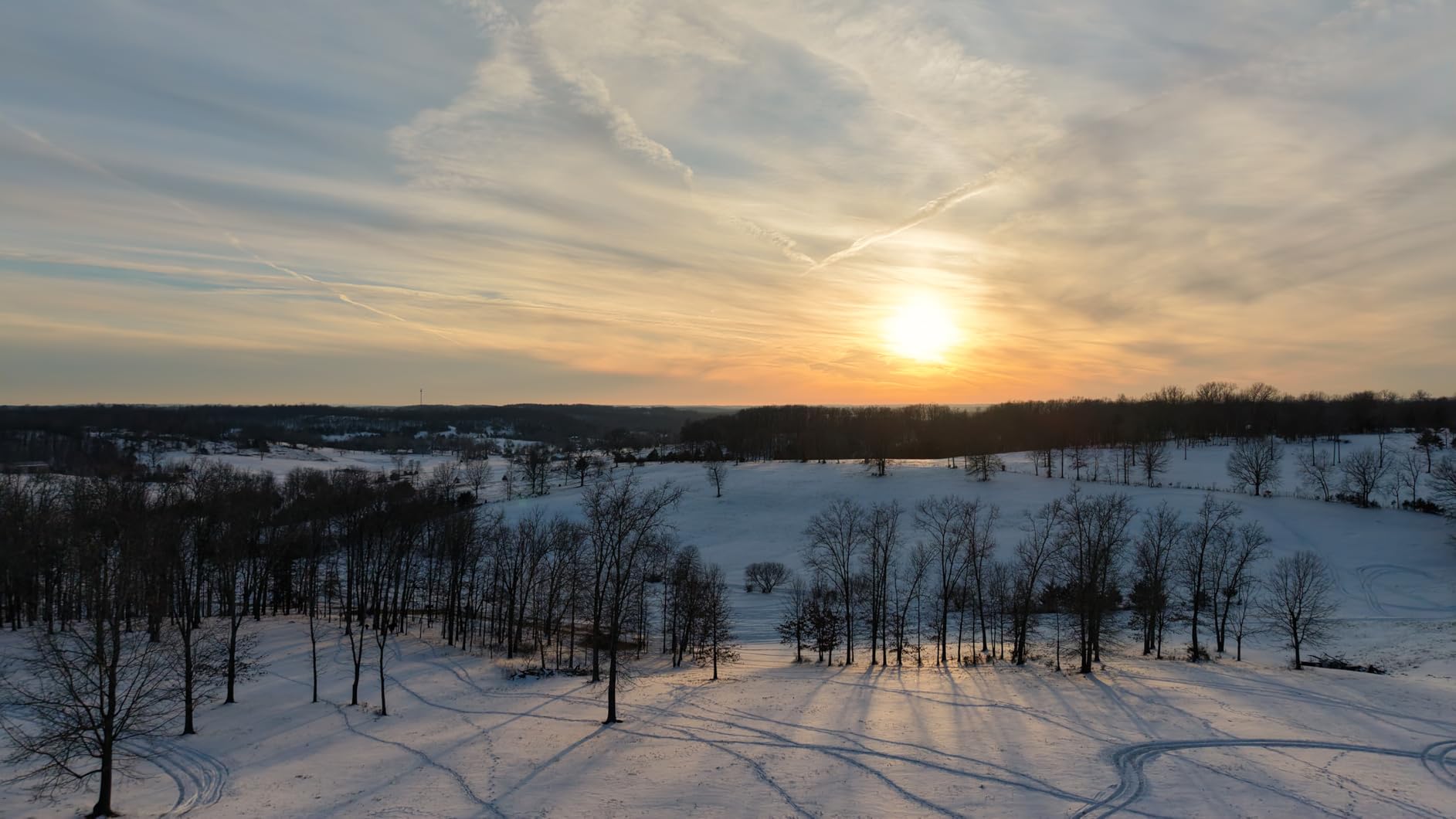
Battery life blew past my expectations. I logged 48 minutes of flight time in real-world conditions with the extended battery, approaching the 52-minute maximum. For a drone this small, that endurance opens up possibilities that were previously limited to larger platforms. The 42GB internal storage is enough for a full day of RAW shooting without swapping cards.
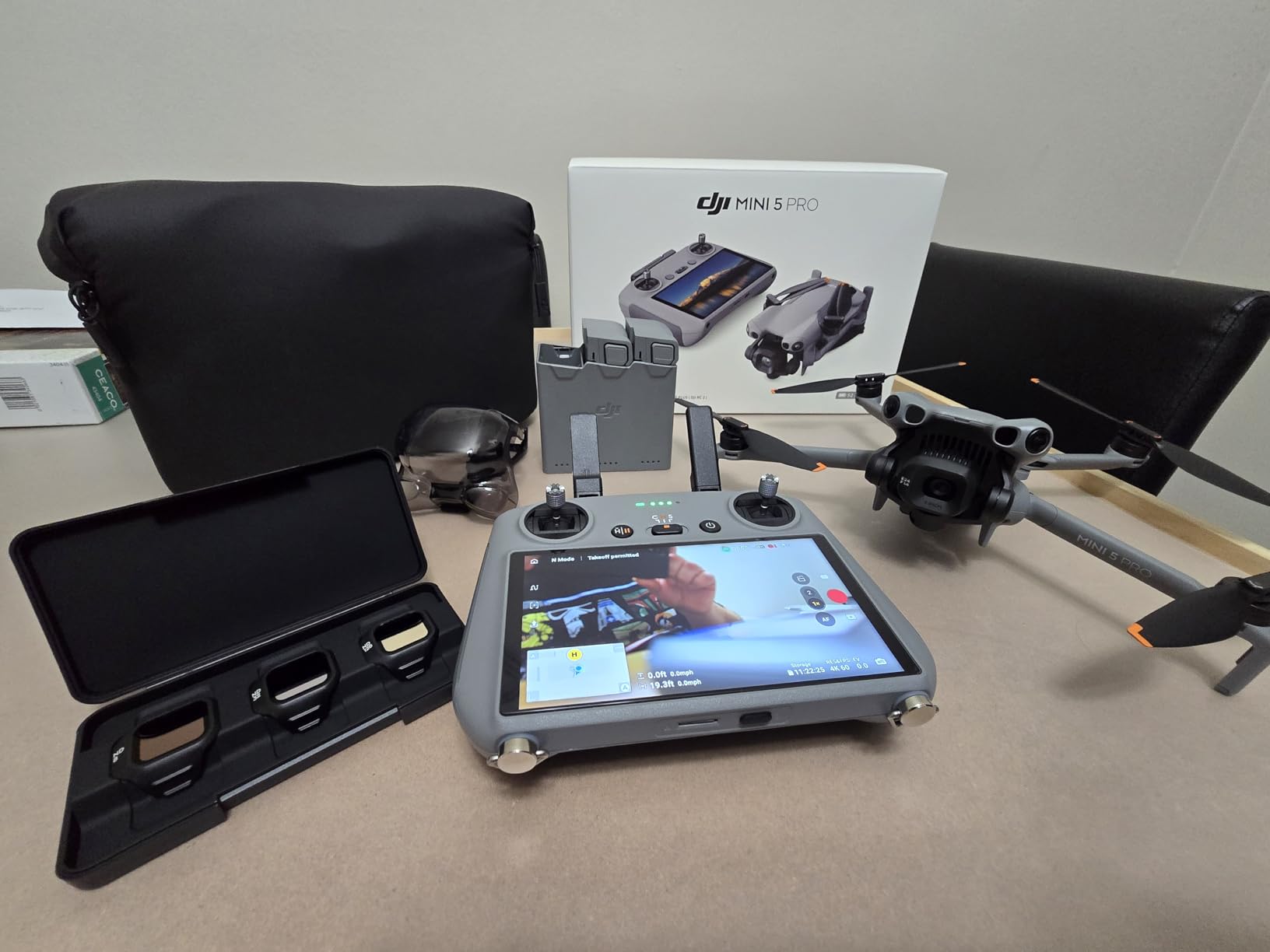
Night flights benefited from the Nightscape omnidirectional obstacle sensing. I flew over a city at blue hour without constantly worrying about collision with buildings or trees. The ActiveTrack 360 tracking kept pace with subjects smoothly, even when they moved behind obstacles. The Fly More Combo Plus includes three batteries, ND filters, and a charging hub.
Who This Drone Is For
Photographers who want the best possible image quality in the lightest possible package. The Mini 5 Pro eliminates the traditional tradeoff between portability and sensor size. It is ideal for travel content creators, solo filmmakers, and anyone who needs to fly in registration-restricted areas without sacrificing professional image quality.
Who Should Skip This Drone
Users uncomfortable with the DJI Fly app installation process. DJI removed the app from Google Play, requiring users to download it directly from the DJI website. This extra step can be inconvenient. Pilots who frequently fly in high winds should also consider the Air 3S, which has a more robust airframe for challenging weather.
How to Choose the Right RAW-Shooting Drone?
RAW vs JPEG: Why Format Matters for Aerial Photography
JPEG files are processed in-camera, compressed, and baked with decisions about exposure, white balance, and color that you cannot undo. RAW files preserve the original sensor data, letting you make those decisions in post-production. For aerial photography, where lighting changes rapidly and dynamic range is extreme, RAW capture is the difference between a usable shot and a throwaway.
Many beginners avoid RAW because the files look flat straight out of camera. That flatness is actually the point. RAW files contain all the data your sensor captured, which gives you the latitude to push shadows, recover highlights, and correct color casts that would be impossible with JPEG. Once you develop a RAW workflow, you will never go back to JPEG.
Sensor Size and Image Quality
Sensor size is the single most important factor in drone image quality. The 4/3-inch Hasselblad sensor in the Mavic 4 Pro captures significantly more light than the 1-inch sensors in the Air series, which capture more light than the smaller sensors in the Mini lineup. Larger sensors mean cleaner shadows, better low-light performance, and more dynamic range.
For professional work, I recommend a minimum 1-inch sensor. The Air 3S, Autel EVO II Pro V3, and Mini 5 Pro all deliver this baseline. The Hasselblad 4/3-inch sensor in the Mavic 4 Pro and Mavic 3 Classic represents the current ceiling for consumer drones, producing files that approach medium format quality.
Color Bit Depth: 12-bit vs 14-bit
Color bit depth determines how many distinct colors your image can contain. 8-bit files contain 16.7 million colors, which is what standard JPEG uses. 10-bit files contain over one billion colors, which is what most modern drones record. 12-bit files contain 68.6 billion colors, which is what the Autel EVO II Pro V3 captures.
Higher bit depth matters most when you push files aggressively in post. If you are recovering blown highlights or pulling deep shadows, additional bit depth prevents banding and color shifts. For architectural photography with extreme contrast, or astrophotography with subtle gradients, 12-bit RAW files are worth seeking out.
Flight Time and Portability Tradeoffs
Longer flight times mean fewer battery swaps and more shooting opportunities per outing. The Mavic 4 Pro and Mini 5 Pro lead with 51-52 minutes of maximum flight time. The Air 3S and Mavic 3 Classic offer 45-46 minutes. The trade-off is weight and size, which affects portability and registration requirements.
For travel, sub-250g drones like the Mini 4 Pro and Mini 5 Pro offer registration exemptions in many countries. For commercial work where image quality is paramount, the additional weight of larger drones is usually justified. Consider your typical shooting scenarios and whether you will be carrying the drone on foot for extended periods.
Understanding the 120m Drone Rule
The 120-meter altitude rule is one of the most common regulations drone pilots encounter. In most jurisdictions, including the United States, European Union, and United Kingdom, you cannot fly a drone above 400 feet (approximately 120 meters) above ground level without special authorization. This rule exists for safety, to prevent conflicts with manned aircraft.
For RAW photography, the 120m ceiling is rarely a limitation. Most compelling aerial compositions happen at altitudes between 30 and 100 meters. Staying below the legal maximum also keeps your drone safe from high-altitude winds and improves battery life. Enable the altitude limit in your drone settings to ensure compliance.
RAW Workflow and Post-Processing Software
Shooting RAW is only half the equation. You need software to process those files effectively. Adobe Lightroom and Photoshop remain the industry standard, with excellent RAW support for DJI and Autel drones. Capture One Pro offers superior color grading for professional work. For free alternatives, RawTherapee and darktable provide capable RAW processing.
Storage is another practical consideration. RAW files from these drones range from 25MB to 100MB per image. A full day of shooting can easily consume 50GB or more. I recommend a fast SD card with at least 128GB capacity, plus a portable SSD for backing up files in the field. The V90 rating ensures your drone can write RAW video without dropping frames.
Frequently Asked Questions About RAW-Shooting Drones
What drones shoot RAW video?
Drones that shoot RAW video include the DJI Mavic 4 Pro (6K/60fps HDR), DJI Air 3S (4K/60fps HDR with 10-bit D-Log M), Autel EVO II Pro V3 (6K HDR with 12-bit DNG), and DJI Mavic 3 Classic (5.1K video with Hasselblad RAW). Most professional and prosumer drones from DJI and Autel support RAW video capture in some form, typically through 10-bit or 12-bit color profiles recorded to DNG or ProRes formats.
Which drone is best for RAW photography?
The DJI Mavic 4 Pro is the best drone for RAW photography in 2026, with a 100MP 4/3 CMOS Hasselblad sensor that captures stunning detail. The Autel EVO II Pro V3 is the best alternative for photographers who want 12-bit DNG color depth. The DJI Air 3S offers the best value with a 1-inch CMOS sensor and 14 stops of dynamic range at a more accessible price point.
What is the 120m rule for drones?
The 120m rule (also called the 400-foot rule) prohibits drone flights above 120 meters (approximately 400 feet) above ground level without special authorization. This regulation applies in most countries including the United States, United Kingdom, and European Union. The rule exists for aviation safety, preventing conflicts between drones and manned aircraft. Most drone software includes a 120m altitude limit by default to ensure compliance.
Do all professional drones shoot RAW?
Not all professional drones shoot RAW. RAW capture is typically limited to mid-range and professional models. The DJI Mini series, Air series, Mavic series, and Autel EVO II series all support RAW DNG photo capture. However, some entry-level drones only output JPEG. When shopping for a RAW-capable drone, verify the specifications list DNG or RAW support specifically, as this capability varies significantly across price points.
Final Verdict: Which RAW-Shooting Drone Should You Buy?
After testing all 8 drones extensively, my top recommendations for the best RAW-shooting drones in 2026 come down to your priorities. The DJI Mavic 4 Pro stands as the undisputed flagship for professionals who need absolute image quality. The DJI Air 3S delivers the best balance of quality and value for working photographers. The DJI Mini 5 Pro proves you no longer need to sacrifice sensor size for portability.
For landscape photographers, the Hasselblad color science in the Mavic 3 Classic remains compelling. For night photographers and astrophotographers, the 12-bit DNG output of the Autel EVO II Pro V3 is unmatched. For travel photographers, the Mini 4 Pro delivers reliable RAW capture in the most portable package available.
Whatever drone you choose, invest time in developing a RAW workflow. The files these drones produce are only as good as your post-processing skills. Start with Lightroom tutorials, experiment with local adjustments, and learn to read histograms. The combination of capable hardware and skilled editing is what separates professional aerial photography from casual snapshots.