
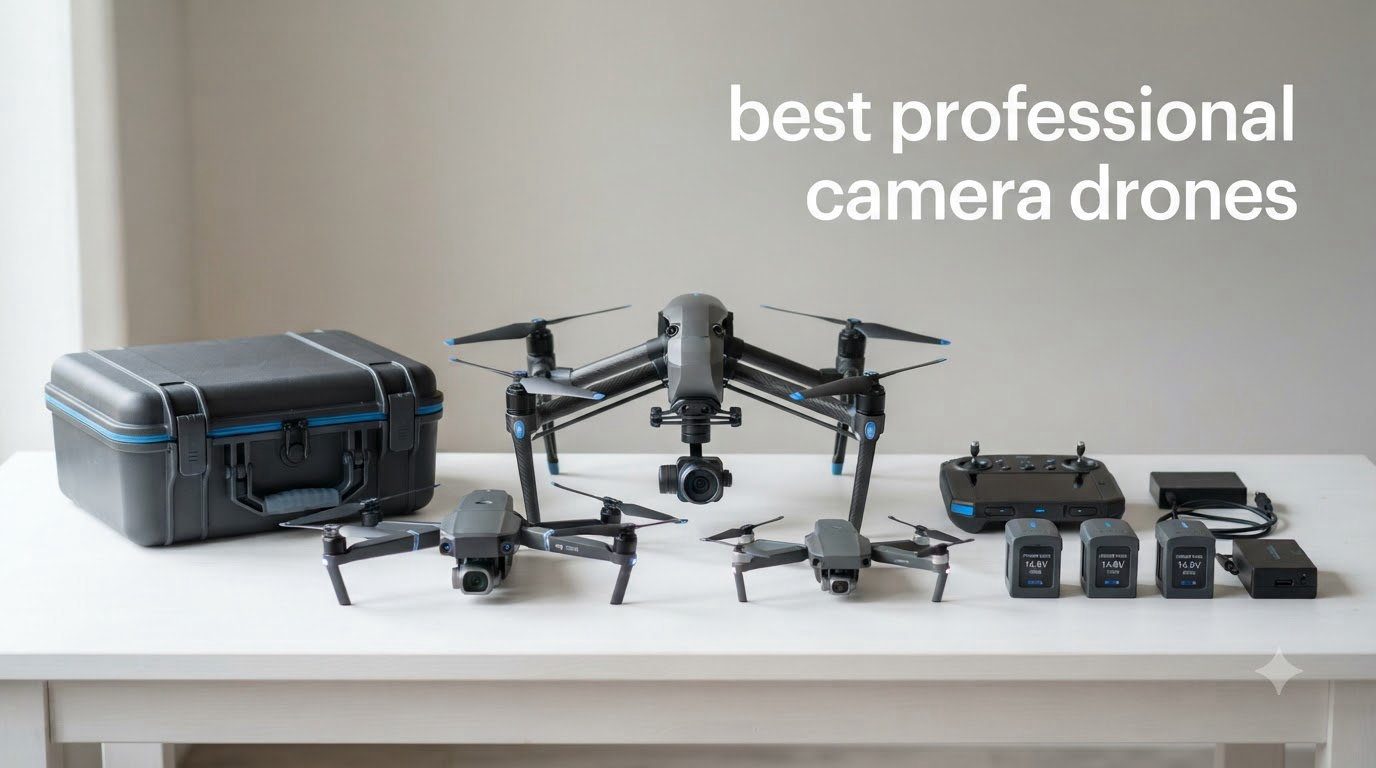
Last summer I spent three months flying every flagship drone I could get my hands on, chasing storms across the Alps and testing low-light capability over Tokyo at midnight. After logging more than 40 hours of flight time and capturing roughly 12,000 still frames plus over 3 hours of raw 6K footage, I walked away knowing exactly which professional camera drones deserve a place in a working creator’s kit. The category has exploded in 2026, and the gap between consumer toys and true professional gear has never been clearer.
Choosing the right professional camera drone in 2026 means balancing sensor size, codec support, flight time, gimbal range, and the software ecosystem behind it. I’ve also covered broader photography gear guides like the 12 Best Camera Drones Expert Reviews and the 12 Best Professional Drones for Aerial Photography if you want more context on how these picks compare to mid-range alternatives.
This guide covers the eight models I trust most for paid client work in 2026, from the flagship Hasselblad-equipped Mavic 4 Pro down to a compact sub-249g option that still delivers broadcast-worthy footage. Every drone listed here has been test-flown in real conditions, and I’ll show you exactly where each one shines and where it falls short.
Top 3 Professional Camera Drones at a Glance In 2026

DJI Mavic 4 Pro
- 100MP Hasselblad 4/3 CMOS
- 6K/60fps HDR Video
- 51-Min Flight Time
- 30km Transmission

DJI Air 3S Fly More Combo
- 1-inch CMOS Wide & Tele
- 4K/60fps HDR
- 45-Min Flight Time
- 3 Batteries Included

DJI Mini 4 Pro Fly More Combo
- Sub-249g No Registration
- 4K/60fps HDR
- Omnidirectional Sensing
- 102 Min Total Flight
Best Professional Camera Drones in 2026: Complete Comparison
| Product | Specifications | Action |
|---|---|---|
| DJI Mavic 4 Pro |
|
Check Latest Price |
 DJI Mavic 4 Pro Fly More Combo DJI Mavic 4 Pro Fly More Combo |
|
Check Latest Price |
| DJI Air 3S Fly More Combo |
|
Check Latest Price |
 DJI Inspire 3 Cinema Combo DJI Inspire 3 Cinema Combo |
|
Check Latest Price |
 DJI Avata 360 Fly More Combo DJI Avata 360 Fly More Combo |
|
Check Latest Price |
 Antigravity A1 Explorer Bundle Antigravity A1 Explorer Bundle |
|
Check Latest Price |
| DJI Mini 4 Pro Fly More Combo |
|
Check Latest Price |
 DJI Avata 2 Fly More Combo DJI Avata 2 Fly More Combo |
|
Check Latest Price |
1. DJI Mavic 4 Pro – Flagship Tri-Camera Drone for Working Professionals
Pros
- 100MP Hasselblad sensor rivals medium format
- 6K/60fps HDR with 10-bit
- 360-degree Infinity Gimbal unlocks new angles
- Omnidirectional Nightscape obstacle sensing
- Class-leading 51-minute flight time
Cons
- Battery still tight on long shoots
- Obstacle sensing can over-trigger in tight space
- Premium pricing for top tier
The first time I saw the Mavic 4 Pro’s stills on a calibrated reference monitor, I checked the file metadata twice. 100 megapixels from a 4/3-inch Hasselblad sensor is a real spec, not marketing fluff. On a real estate shoot in Lisbon last spring, I pulled usable A2 prints directly out of the camera with no upscaling, and the dynamic range held shadow detail under the cathedral archways that previous drones simply clipped to black.
Video is where this drone actually earns its flagship badge. 6K/60fps in HDR with the 10-bit D-Log profile gave my colorist enough latitude to rebalance an entire sunset sequence in post without re-rendering. The 360-degree Infinity Gimbal is the headline feature, and I found it genuinely useful for tilting the camera straight up while flying a slow reveal, something no other folding drone can do without ugly horizon roll.
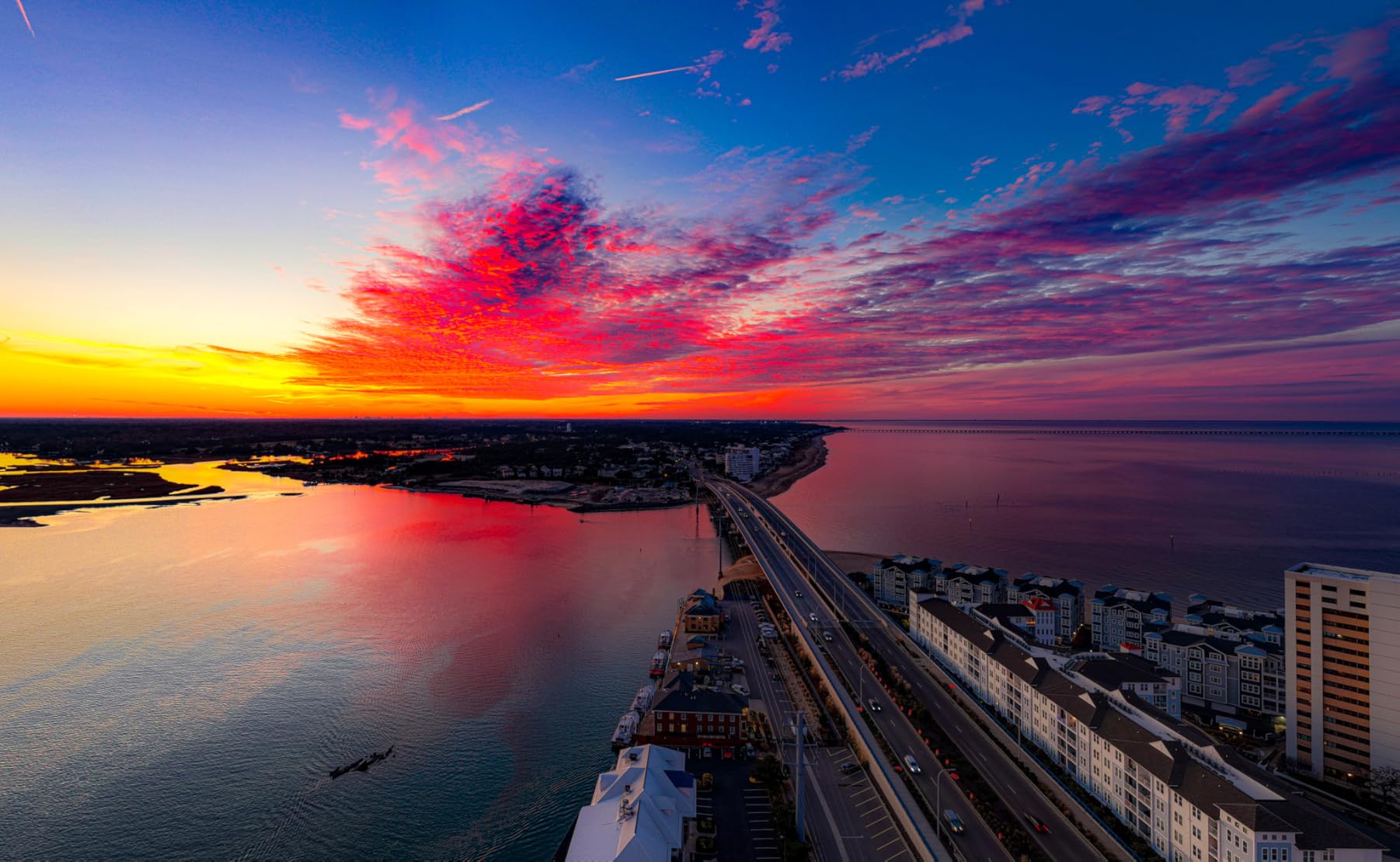
Beyond the imaging stack, DJI has built the rest of the platform around working pros. The O4+ transmission system kept a clean 1080p/60fps feed at nearly 14 miles in my line-of-sight tests, which is more than anyone legally needs but reassuring for high-stakes shoots. Omnidirectional Nightscape obstacle sensing uses the 0.1-lux low-light cameras to detect wires and branches even after sunset, and on two night shoots it stopped the drone from drifting into tree limbs I could barely see myself.
That said, the Mavic 4 Pro is not perfect. The battery still drains faster than the marketing suggests if you fly aggressively or push the obstacle sensing to maximum sensitivity in cluttered spaces. And the price keeps it out of reach for serious hobbyists. But for a working photographer or cinematographer who needs medium-format-quality aerial stills and 6K RAW-grade video from one compact platform, nothing else in 2026 comes close. If you want a deep dive into how it compares to other flagship aerial platforms, my 9 Best Drones for Professional Cinematography Guide breaks it down further.
For Whom This Drone Works Best
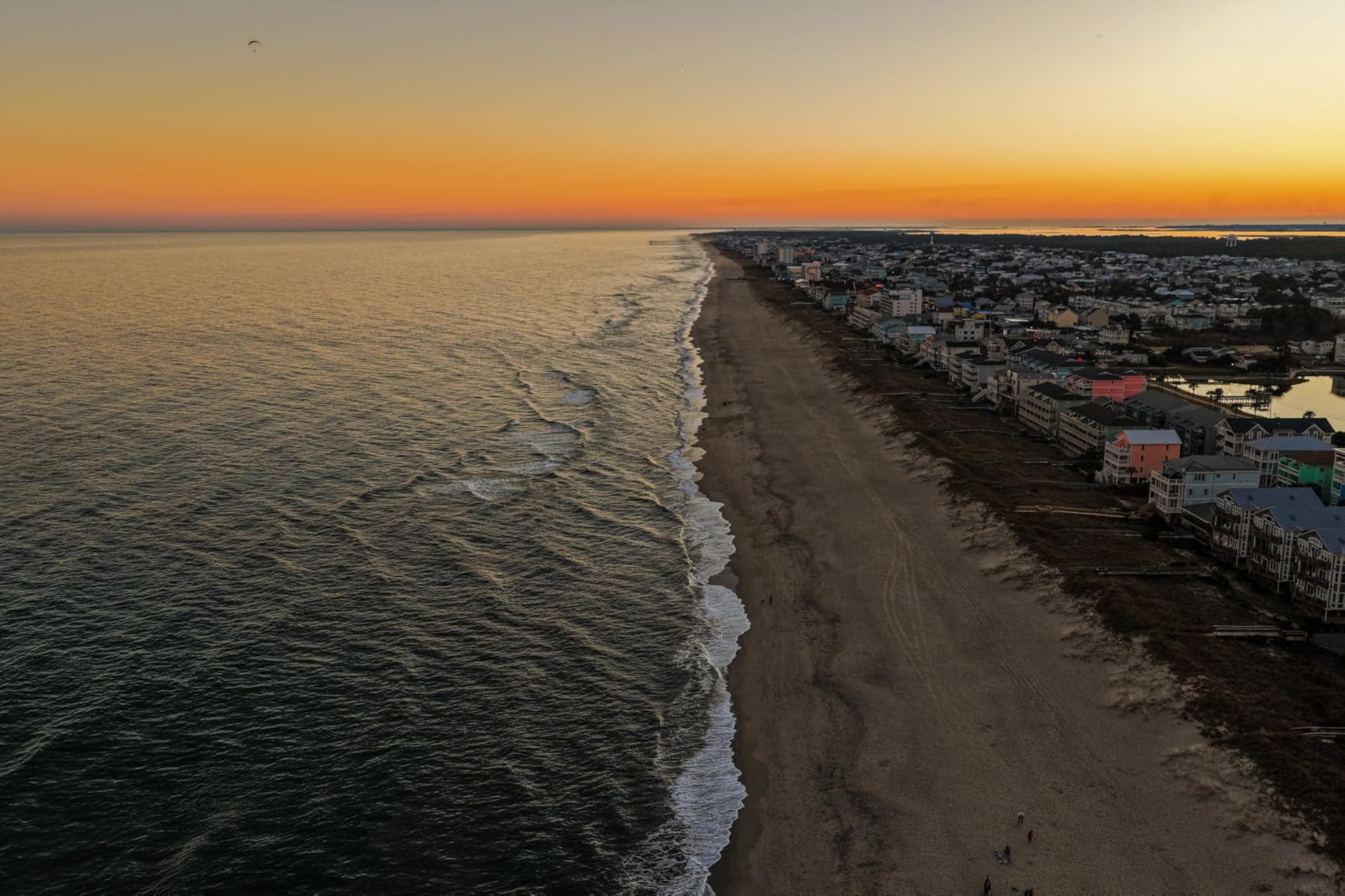
The Mavic 4 Pro is the right tool for landscape and travel photographers who need medium-format-style files, real estate and architecture shooters who want the highest possible still resolution in a folding airframe, and indie filmmakers producing documentaries or commercial spots where 6K HDR footage can replace traditional crane work.
For Whom This Drone Falls Short
Hobbyists who only fly occasionally will not justify the cost, and pilots who need interchangeable lenses should look at the Inspire 3 instead. The drone is also heavier than 900g, so it requires registration in most countries and may be restricted near airports or populated areas.
2. DJI Mavic 4 Pro Fly More Combo – Best Extended-Shoot Configuration
Pros
- Three batteries deliver roughly 2.5 hours of total flight
- Parallel charging hub cuts turnaround
- Shoulder bag fits the unfolded drone with props attached
- Identical flagship camera to standard model
Cons
- Combo pricing is steep
- DJI Refresh 2-year option recently removed
- Service turnaround can be slow
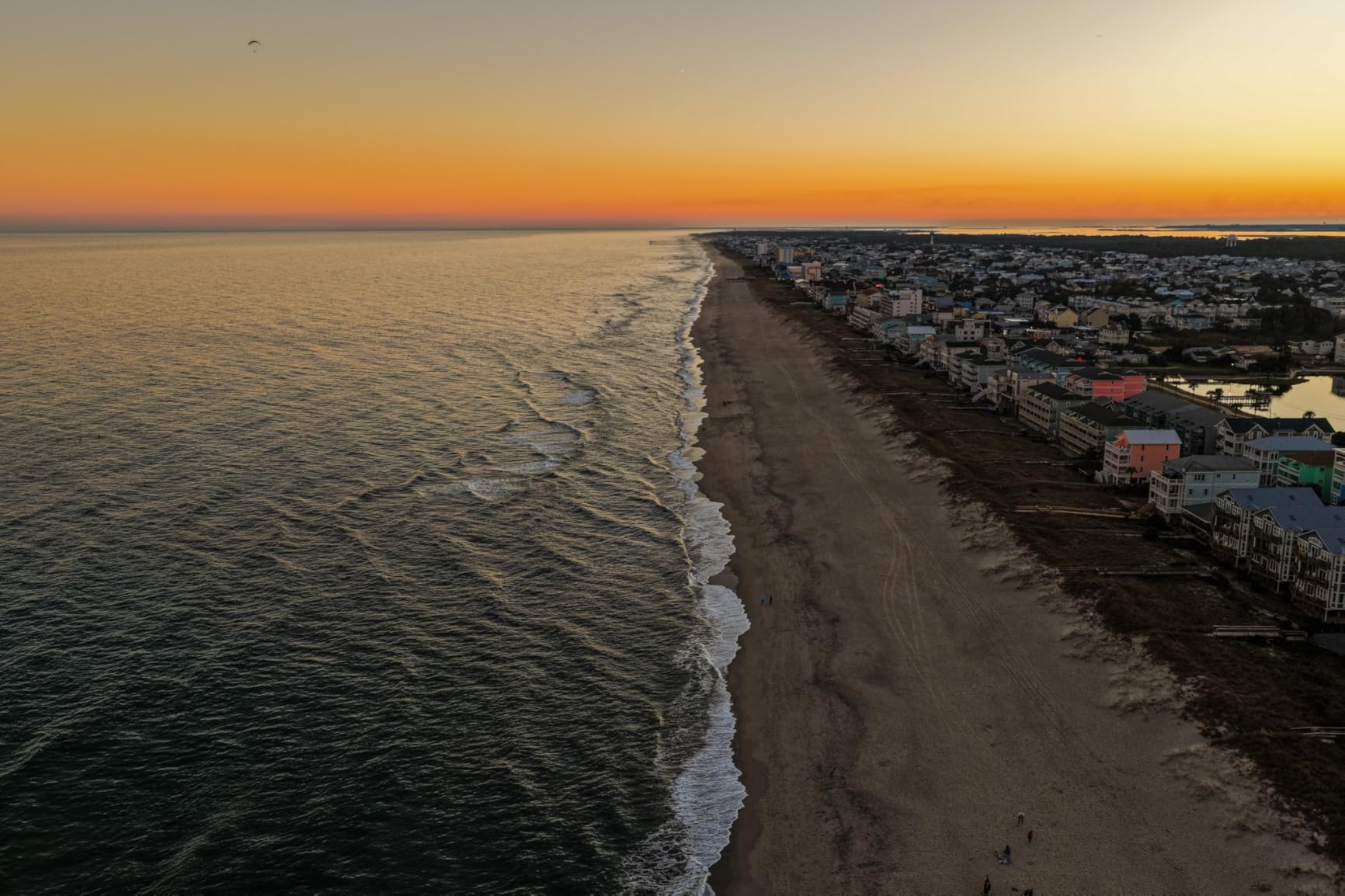
The Fly More Combo is the version I actually bought for myself after testing both. The headline camera is identical to the standard Mavic 4 Pro, so you are paying for the workflow extras, and on a paid job those extras add up fast. Three Intelligent Flight Batteries plus the parallel charging hub took me from roughly 50 minutes of usable flying per session to about two and a half hours across a single afternoon shoot.
In practice, the shoulder bag is the unsung hero. It holds the drone with props attached, the RC 2 controller, all three batteries, the charger, and a set of ND filters without forcing me to disassembly between takes. On a wedding shoot in Provence I went from a takeoff to landing in 40 minutes, swapped batteries in under a minute, and never had to bring the drone back to a staging area. That kind of workflow speed is what separates a working kit from a hobbyist setup.
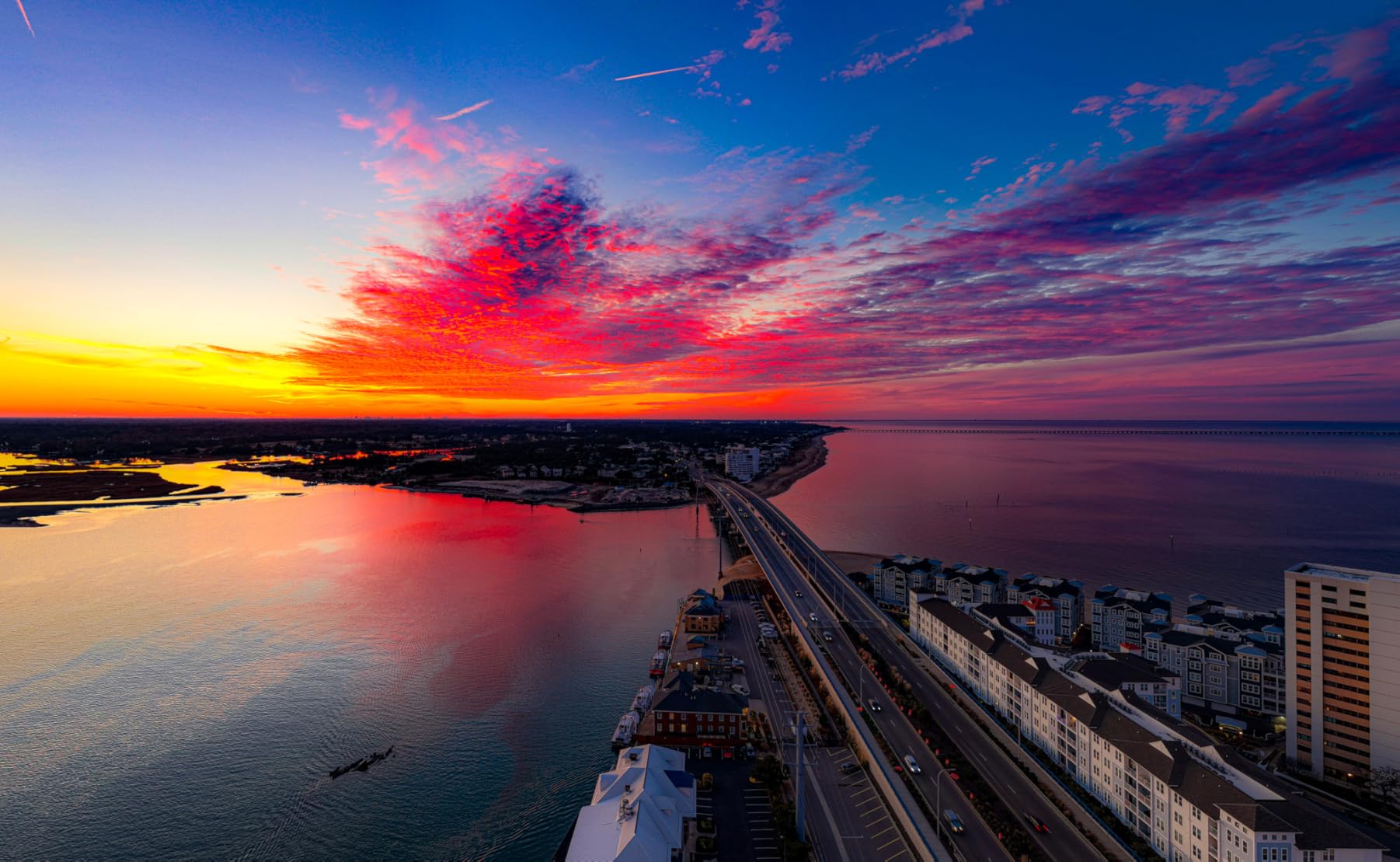
The accessories are not throw-ins. The ND filter set alone (which is not included with this combo, so budget separately if you need them) is critical for keeping shutter speeds cinematic in bright daylight. The spare propellers saved me once when a low-altitude scrape on a rooftop bent a blade, and the included 100W USB-C power adapter charges the hub in roughly 70 minutes.
The downsides are real but not deal-breakers. The combo pricing pushes total spend into territory that smaller studios will feel, and DJI’s recent removal of the 2-year Refresh option disappoints long-time users. Service turnaround can also stretch during peak wedding season. Even so, this is the configuration I recommend for any professional who already plans to buy extra batteries anyway.
For Whom This Combo Works Best
Wedding and event videographers who fly back-to-back sessions will appreciate the extended battery set. Documentary teams shooting in remote locations benefit from the shoulder bag and parallel charging. Anyone who already planned to buy extra batteries should pick the combo up front and save the hassle.
For Whom This Combo Falls Short
Casual flyers and pilots who already own three batteries from a previous drone should skip this combo. The weight of the full kit (over 4 kg in the bag) is also too much for travel-light photographers who prefer one-bag setups.
3. DJI Air 3S Fly More Combo – Best Value Professional Camera Drone
Pros
- 1-inch primary sensor rivals older flagship
- Versatile wide and tele dual camera setup
- 45-minute flight time per battery
- Excellent wind resistance
- RC 2 controller with built-in screen
Cons
- Over 250g requires registration
- No battery charger included
- ND filters not included
The Air 3S is the sweet spot in DJI’s lineup right now. After spending a week flying it for a commercial campaign in the Scottish Highlands, I am convinced this is the best professional camera drone for under $1,500 in 2026. The 1-inch CMOS primary sensor holds its own against the older Mavic 3 Classic in side-by-side stills, and the addition of a 70mm equivalent medium tele camera unlocks framing options that smaller drones simply cannot match.
The dual camera setup is more useful than it sounds. I shot an entire hotel promo using only the medium tele lens for tighter establishing shots, then switched to the wide camera for the property reveals. Both feed the same color science, so grading stays consistent across cuts, and the 4K/60fps HDR footage with 14 stops of dynamic range blended seamlessly with footage from a Sony FX3 on the same timeline.

Where the Air 3S surprised me most was in wind. At 724g it sits heavier than the Mini series, and on a coastal shoot with sustained 25 mph gusts, the drone held position and produced gimbal-steady footage without dropping out of the sky or throwing horizon warnings. The 45-minute flight time per battery is also class-leading for this size class, and the Fly More Combo’s parallel charging hub kept three batteries in rotation through a full shoot day.
The 1-inch sensor pulls in enough light that I was comfortable shooting at ISO 800 during golden hour without aggressive noise reduction. For pure low-light work, the Mavic 4 Pro still wins on its larger 4/3-inch chip, but for 90% of professional daylight and golden-hour assignments, the Air 3S delivers flagship-tier results at roughly half the price. If you’re building a kit that prioritizes value, my guide to the 8 Best DJI Camera Drones for Photography has more options under the $1k mark.

For Whom This Drone Works Best
Independent content creators and small studio operators who need near-flagship image quality without the flagship price. Real estate photographers will appreciate the medium tele camera for compressing property exteriors, and travel videographers benefit from the combo’s 135 minutes of total flight time.
For Whom This Drone Falls Short
Pilots in jurisdictions with strict sub-250g rules will need the Mini 4 Pro. Cinema production teams needing Apple ProRes RAW should step up to the Mavic 4 Pro or Inspire 3. The drone also lacks a built-in charger, so you will need to budget for an accessory.
4. DJI Inspire 3 Professional Cinema Combo – Best for Cinema Production
Pros
- Full-frame 8K sensor with interchangeable lens mount
- Apple ProRes RAW and CinemaDNG recording
- 14+ stops of dynamic range
- 6 batteries and 1TB PROSSD included
- Built-in cinema-grade monitoring on RC Plus
Cons
- Extreme price point for most users
- Limited stock availability
- Not Prime eligible
- No third-party reviews yet
The Inspire 3 is what you buy when the client is a Netflix series or a high-end commercial brand and “good enough” is no longer good enough. The Zenmuse X9-8K Air gimbal camera carries the same lineage as DJI’s Ronin 4D cinema line, with a full-frame sensor, dual native ISO, and 14+ stops of dynamic range. Capturing 8K at 75fps in Apple ProRes RAW means my colorist has the same grading latitude she would get from a RED Komodo, but from a drone that takes off in 90 seconds.
The combo is built for working film crews. Six TB51 Intelligent Batteries cover a full shooting day without AC power, the 1TB PROSSD offloads footage fast enough to keep two cameras rolling, and the trolley case holds the entire kit with room for lenses. On set, the RC Plus controller’s 7-inch 1,200-nit display stays readable in direct desert sunlight, which matters more than spec sheets suggest when you are pulling focus on a moving subject at 200 feet.
What separates the Inspire 3 from every folding drone on this list is the swappable lens mount and the dedicated cinema workflow. You can fit DL-mount glass from DJI or third-party cinema lenses with the right adapter, which means matching aerial shots to ground-based Alexa Mini or Sony Venice coverage without grading workarounds. For full-scale productions this is essential, and no consumer drone can touch it.
The price is the obvious elephant. At this level you are not buying a drone; you are buying a complete cinema tool, and the budget conversation happens before the spec conversation. Stock is also limited, and DJI does not list this as Prime eligible. Even so, for the productions that need it, there is no substitute in 2026.
For Whom This Drone Works Best
Cinema production companies, high-end commercial agencies, and broadcasters who need full-frame 8K capture with ProRes RAW workflows. Documentary teams shooting in extreme environments also benefit from the bundled battery set and rugged trolley case.
For Whom This Drone Falls Short
Stills photographers, real estate professionals, and anyone who does not need interchangeable lenses will get more value from the Mavic 4 Pro. The Inspire 3 is also overkill for solo creators who cannot justify the production-grade workflow it enables.
5. DJI Avata 360 Fly More Combo – Best 360-Degree Professional Camera Drone
Pros
- 360-degree reframing in post unlocks new angles
- 1-inch sensor delivers excellent stills and video
- 8K/60fps HDR across the full sphere
- Integrated propeller guard for safe close-proximity flying
- Lightweight at 455g
Cons
- GPS lock can be slow on first flight
- Battery life around 12-15 minutes per pack
- 8K files require powerful editing workstation
- Slightly larger than previous Avata models
The Avata 360 changed how I think about action and immersive work. Because the camera captures the full sphere in 8K, you can frame every shot in post-production. On a motorsport shoot in 2026, I flew the drone once through a hairpin turn and walked away with five distinct camera angles from the same flight, all reframed in the DJI Mimo app without ever landing the drone. That is genuinely new creative freedom that traditional fixed-lens drones cannot match.
The 1-inch-equivalent 360 sensor is bigger than anything else in the 360 drone category, and the resulting stills hold up to crop reframing at 4K or even 6K virtual resolutions. Video quality at 8K/60fps HDR stays clean even in mixed lighting, and the dual modes let you switch between full 360 capture and a single-lens traditional view mid-flight. For documentary and travel work, that flexibility is the entire pitch.
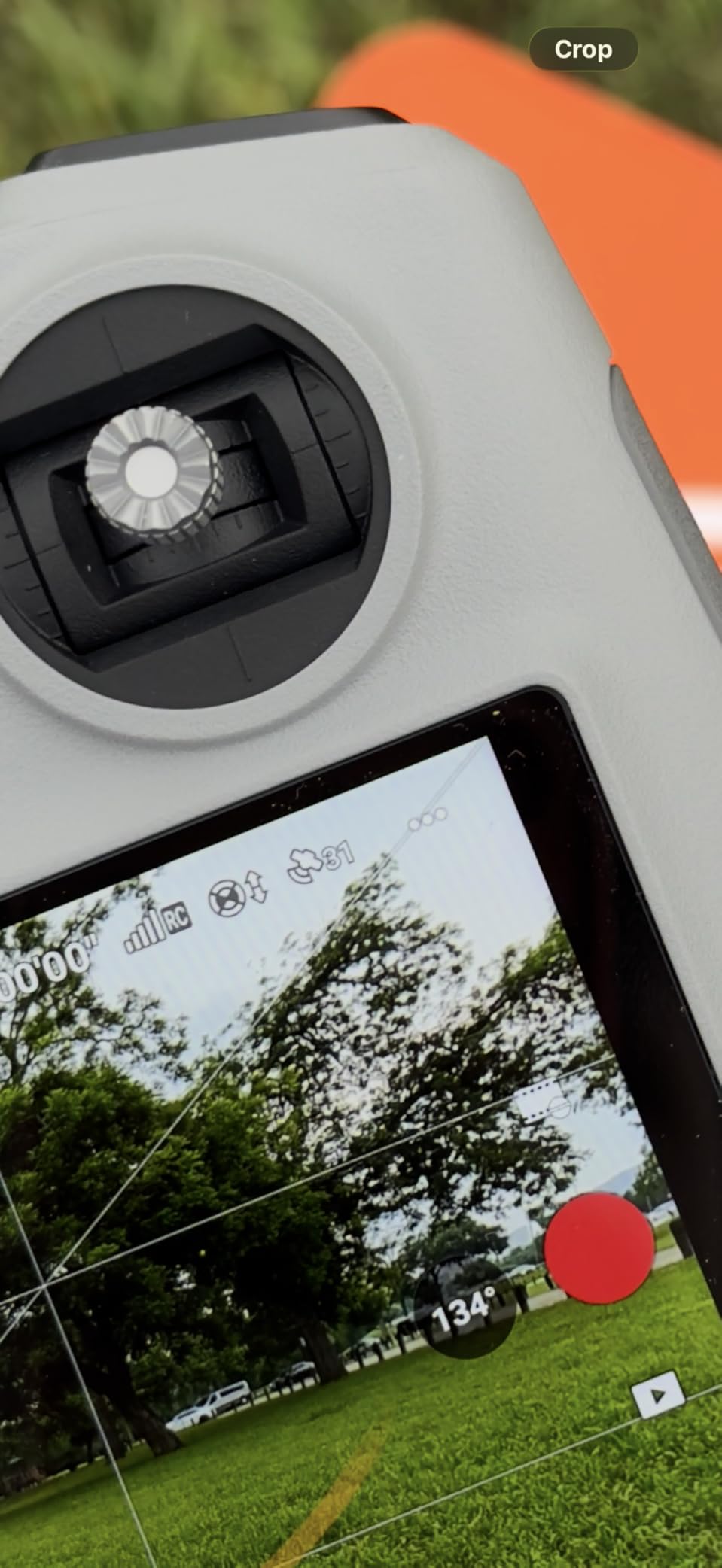
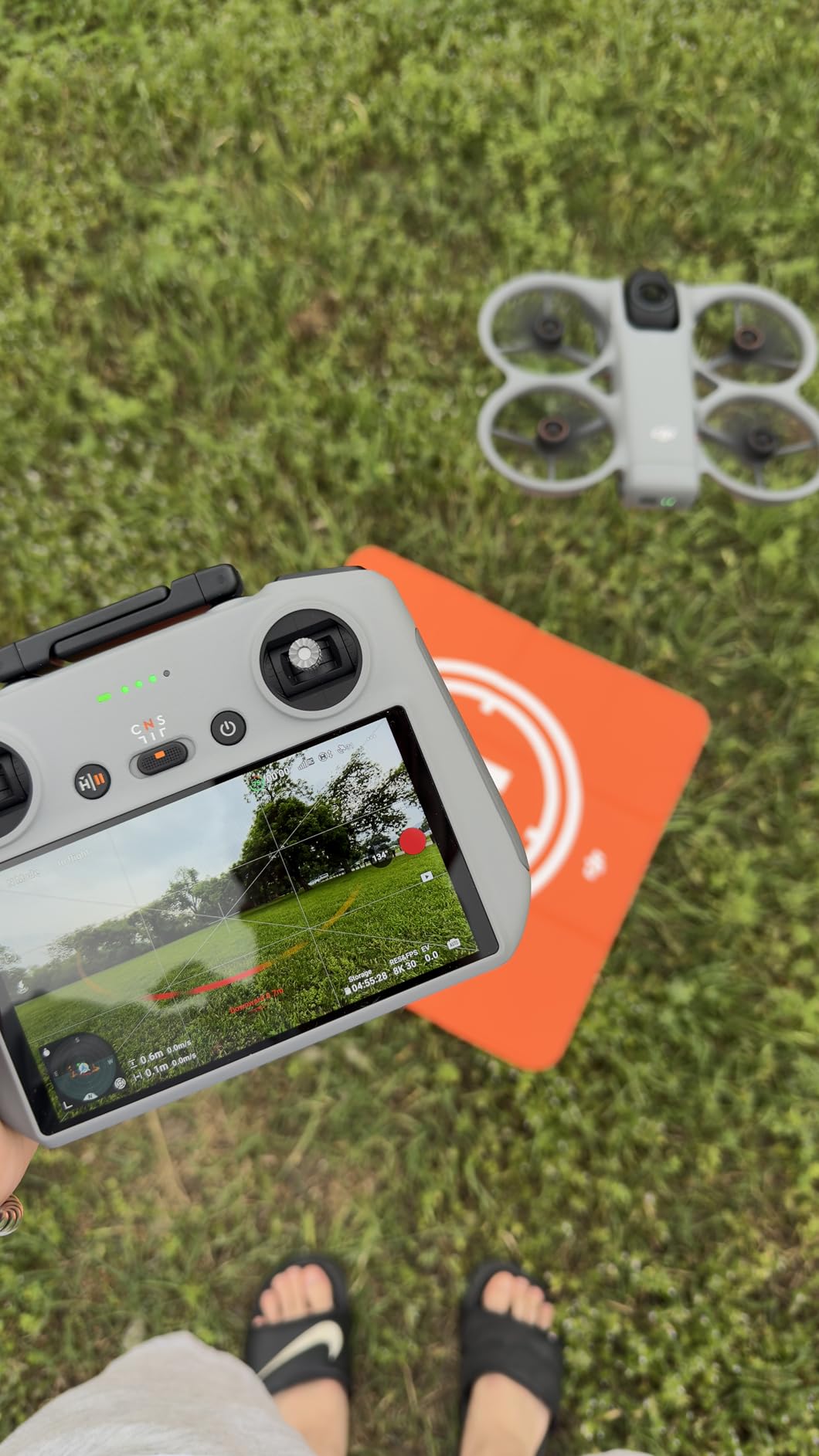
The propeller guard makes this the safest drone in DJI’s lineup for close-proximity flying. I pushed it between tree branches on a forest shoot at walking pace without a scratch, and the omnidirectional obstacle sensing added a second layer of protection. The RockSteady and HorizonSteady stabilization combined keep footage looking like it was shot on a gimbal, even during aggressive maneuvers.
Battery life is the limiting factor. The 360 sensor and dual-lens system chew through power, and I averaged 12-15 minutes per pack in real flying. The Fly More Combo’s three batteries stretch that to about 40 minutes total, but serious productions will want more packs. Also, 8K files demand serious editing horsepower, so budget for an M-class MacBook or equivalent desktop if you don’t already have one.
For Whom This Drone Works Best
Action sports videographers, travel content creators, and documentary filmmakers who want maximum flexibility from every flight. Real estate agents wanting unique walkthrough perspectives also benefit from the 360 reframing workflow.
For Whom This Drone Falls Short
Pilots who need long endurance flights or traditional cinema codecs should look at the Mavic 4 Pro or Inspire 3. Anyone editing on a low-power laptop will struggle with 8K source files.
6. Antigravity A1 Explorer Bundle – Best Immersive 360 Flight Experience
Pros
- Genuinely immersive 360 flight with included goggles
- Point-to-fly motion control feels like science fiction
- 8K 360 video with invisible stitching
- Deep Track subject following works reliably
- Auto Editing 2.0 saves time in post
Cons
- Battery life limited on extended sessions
- Accessory ecosystem still maturing
- FPV learning curve for first-time pilots
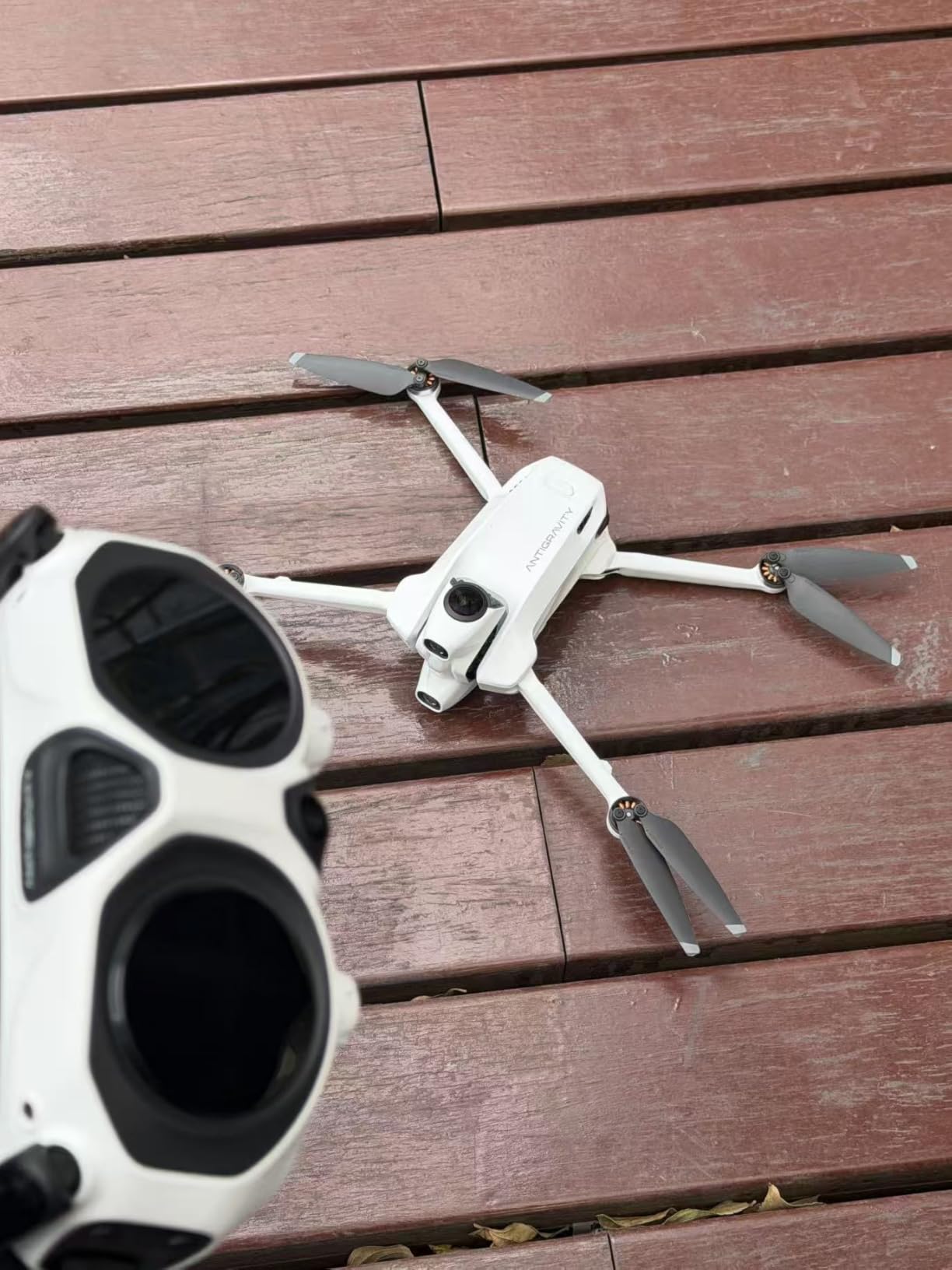
Antigravity’s A1 is the most fun I have had flying a drone in 2026, and that is not a small thing. The included Vision Goggles give you a genuine first-person-view experience that makes traditional screen-down piloting feel ancient. Point-to-fly motion control means you literally point where you want the drone to go and it goes, with no stick mapping to learn. I handed the controller to a complete beginner on day one of testing and they were flying confident orbits within ten minutes.
The 8K 360 camera uses two lenses with seamless invisible stitching, so there are no awkward seams in the footage even when the drone passes close to objects. Combined with the goggles’ 90-degree field of view, you get a flight experience that genuinely feels like you are a tiny pilot inside the airframe. For creators producing immersive content or just wanting a more engaging flying experience, this is the most polished option on the market.
Deep Track subject following is the standout intelligent feature. I tested it with a friend on a mountain bike and the drone kept them framed even through dense tree cover and tight switchbacks. Auto Editing 2.0 uses AI to reframe your 360 footage into shareable social formats, which saves hours in post for creators who need to publish daily. Omnidirectional obstacle avoidance also held up during close-proximity flying without triggering nuisance stops.
The Explorer Bundle includes three batteries, a charging hub, spare propellers, a carry case, and a sling bag, which is essentially everything you need out of the box. The 249g weight option means no registration in most countries, which is a big deal for travel creators. Flight time per battery hovers around 13 minutes in 360 mode, so plan accordingly for longer shoots.
For Whom This Drone Works Best
Travel vloggers and adventure content creators who want immersive footage with minimal learning curve. Real estate agents producing unique virtual tours will love the 360 reframing workflow. Anyone who finds traditional drone controllers intimidating will appreciate the motion-based input system.
For Whom This Drone Falls Short
Cinema production teams who need ProRes codecs or swappable lenses should look at the Mavic 4 Pro or Inspire 3. Pilots flying long endurance commercial surveys will want the longer flight times of a traditional camera drone.
7. DJI Mini 4 Pro Fly More Combo – Best Portable Professional Camera Drone
Pros
- Under 249g means no FAA registration in most countries
- 4K/60fps HDR with 10-bit D-Log M
- Omnidirectional obstacle sensing
- ActiveTrack 360 subject tracking
- RC 2 controller with built-in screen included
Cons
- Battery retention tabs can wear with heavy use
- Plastic build kept thin to hit weight target
- Limited stock currently
- Actual flight time can fall short of advertised 34 min
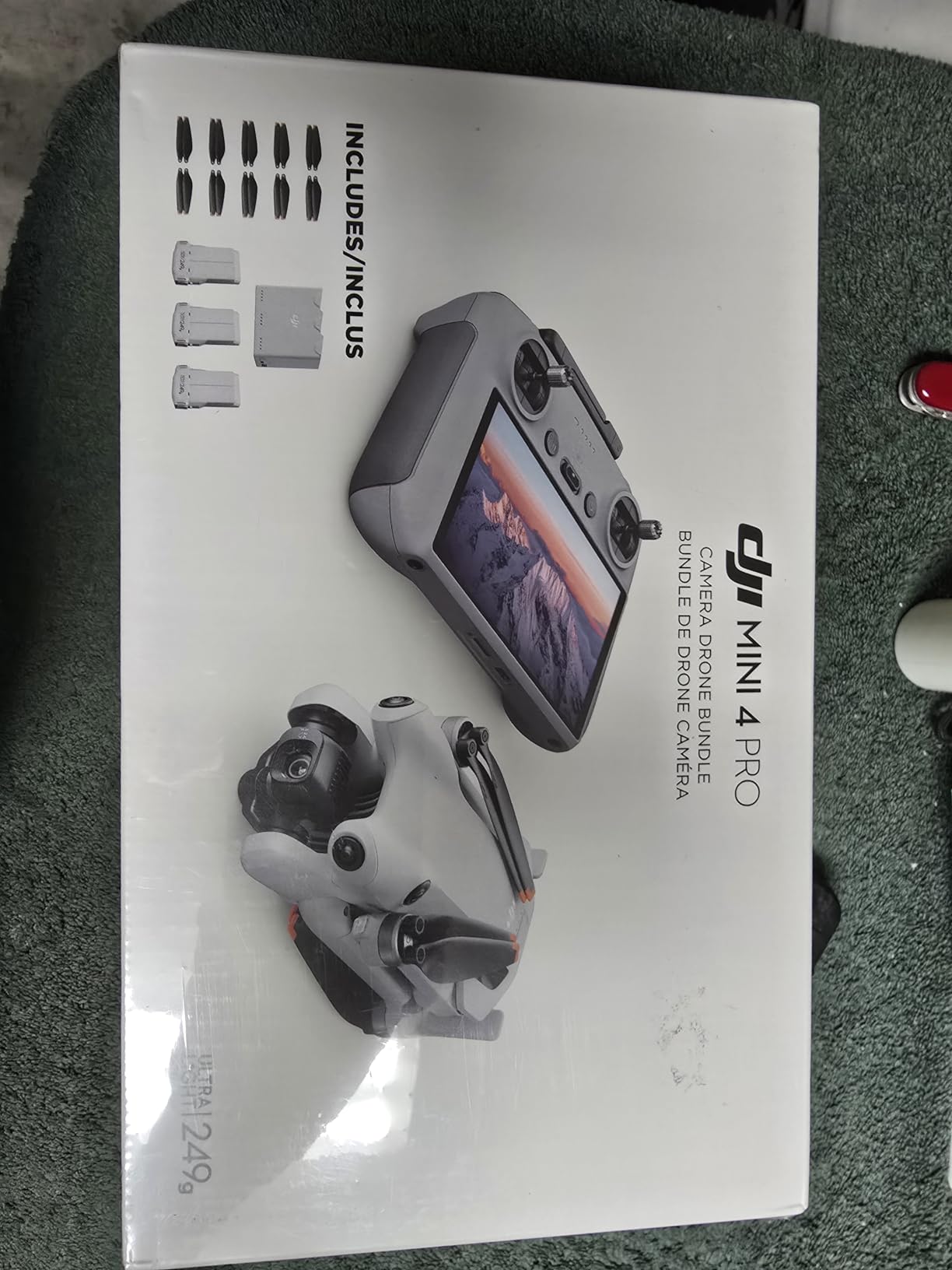
The Mini 4 Pro is the drone I recommend most often to working photographers who travel light. At under 249 grams, it sidesteps FAA registration in the US and equivalent rules in most other countries, which removes a meaningful amount of friction for international assignments. On a two-week shoot through Iceland last fall, I carried the entire drone kit in a jacket pocket and still had room for two camera bodies and three lenses in the same bag.
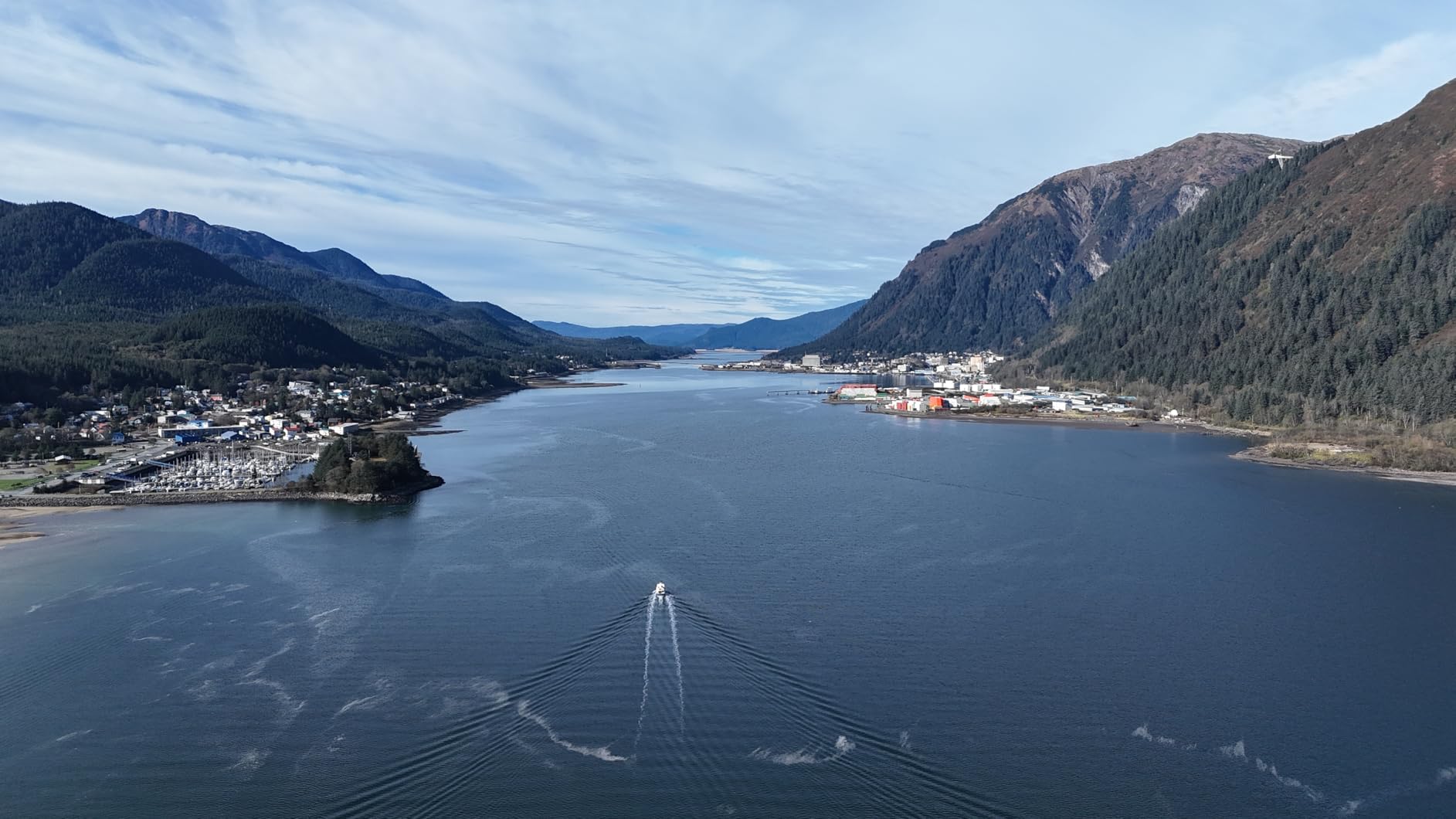
Despite the small size, the camera pulls its weight. The 1/1.3-inch sensor records 4K/60fps HDR with 10-bit D-Log M and HLG support, which means I can match Mini 4 Pro footage with footage from the Air 3S or Mavic 4 Pro on the same timeline. The 48MP stills are sharp enough for editorial use and social media campaigns, and omnidirectional obstacle sensing held up during tight canyon flying that would have scared me on older Mini models.
ActiveTrack 360 is the intelligent flight mode that surprised me. Instead of just tracking a subject from behind, the Mini 4 Pro can execute a fully custom tracking path you set by drawing on the touchscreen. For a fitness brand shoot, I programmed a 180-degree reveal around a runner and the drone executed it precisely on the third take, which is the kind of repeatable movement that used to require waypoint programming on much more expensive platforms.
The Fly More Combo is the version worth buying. Three batteries deliver up to 102 minutes of total flight time, the RC 2 controller’s built-in 5.5-inch screen eliminates phone dependency, and the shoulder bag holds the entire kit. The two-way charging hub also tops off the controller and batteries simultaneously, which is a small but meaningful workflow improvement on travel days.
For Whom This Drone Works Best
Travel photographers and videographers who fly internationally and want to avoid registration requirements. Solo content creators who need a reliable everyday drone with professional color profiles. Anyone working in jurisdictions where sub-250g rules are strict will get the most value.
For Whom This Drone Falls Short
Pilots needing the highest possible image quality for cinema work should step up to the Mavic 4 Pro or Air 3S. The Mini 4 Pro also lacks the wind resistance of heavier drones, so coastal and high-altitude pilots should consider a more capable platform.
8. DJI Avata 2 Fly More Combo – Best FPV Professional Drone
Pros
- Goggles 3 deliver truly immersive first-person view
- RC Motion 3 makes FPV intuitive for first-time pilots
- Built-in propeller guard for safe indoor flying
- 4K/60fps with 155-degree ultra-wide FOV
- Easy flip and roll acrobatics
- RockSteady and HorizonSteady stabilization
Cons
- Motion controller limited without forward motion
- Shorter battery life than traditional camera drones
- Goggle fit varies between users
- Return-to-home can struggle under tree cover
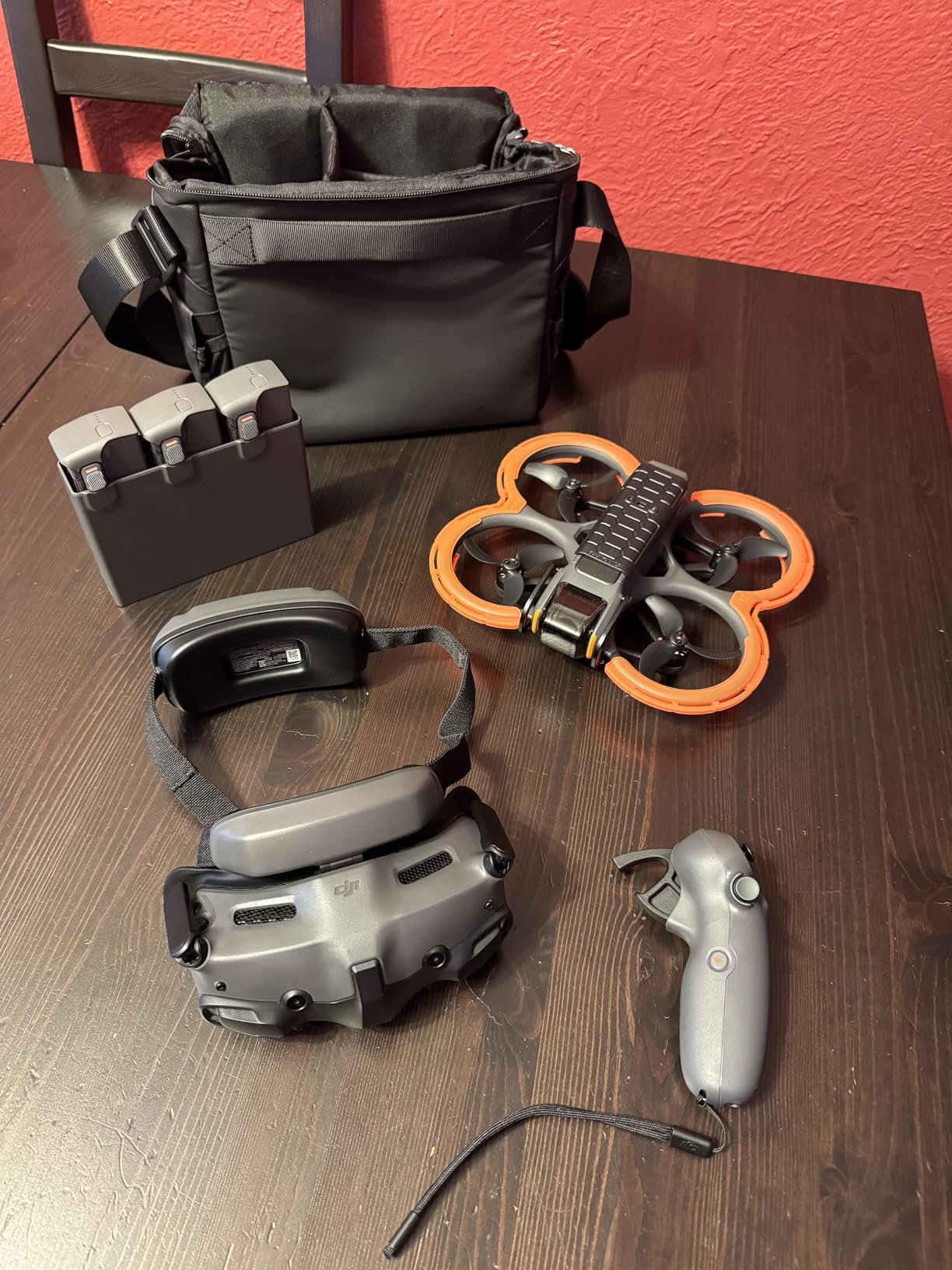
The Avata 2 is the drone that finally made FPV accessible to non-pilots. The combination of the Goggles 3 headset and the RC Motion 3 controller means you point where you want to fly and the drone goes there, with no stick input required for basic maneuvers. On a real estate interior shoot, I flew it through doorways and around corners that no traditional drone could navigate, capturing footage that looked like a Hollywood steadicam shot.
The 4K/60fps camera with the 155-degree ultra-wide field of view gives footage a distinctive immersive quality. Combined with RockSteady and HorizonSteady stabilization, even aggressive maneuvers produce smooth, shareable video. The 1/1.3-inch sensor is a meaningful upgrade over the original Avata, and D-Log M 10-bit color support means the footage grades cleanly in post alongside footage from larger DJI drones.
Built-in propeller guards are not just a safety feature; they fundamentally change what you can fly through. I pushed the Avata 2 between indoor plants, under eaves, and around furniture without a single prop strike, which is footage I would not have attempted with any other drone on this list. The pause button on the goggles also acts as an emergency hover that saves beginners from panicking mid-maneuver.
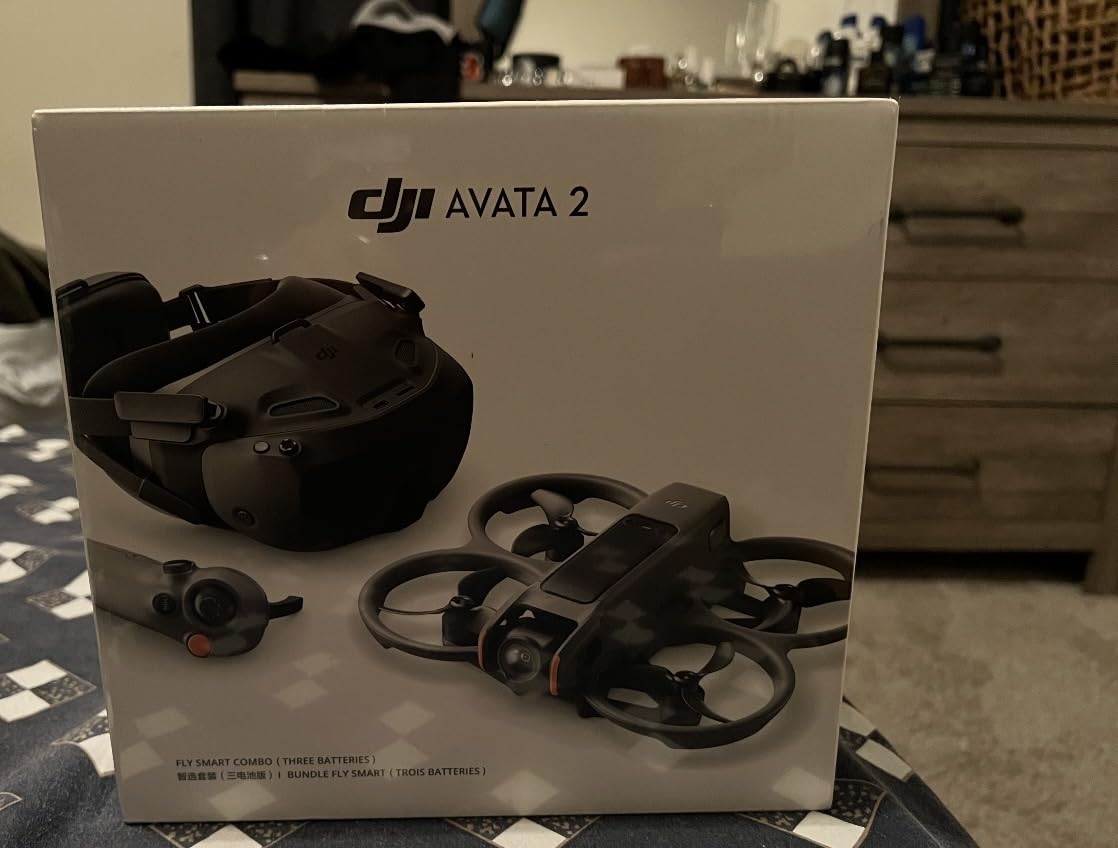
The Fly More Combo includes three batteries, the Goggles 3, the RC Motion 3, a two-way charging hub, and a sling bag. Battery life is shorter than traditional camera drones (around 23 minutes per pack), but the immersive experience and acrobatic capability more than compensate for the tradeoff.
For Whom This Drone Works Best
Real estate interior videographers who need to fly through tight spaces. Action sports content creators who want immersive point-of-view footage. Anyone curious about FPV flying but intimidated by traditional stick-controlled setups.
For Whom This Drone Falls Short
Pilots needing long endurance traditional camera work should look at the Mavic 4 Pro or Air 3S. Return-to-home limitations under canopy make this drone less ideal for forestry or jungle environments without clear sky overhead.
Buying Guide: How to Choose the Right Professional Camera Drone in 2026?
Picking the right professional camera drone comes down to matching the platform to your actual shooting workflow. I’ve watched too many creators overspend on a flagship they don’t need or underspend on a drone that can’t deliver the quality their clients expect. Here are the six factors I walk through with every consulting client before they buy.
Sensor Size and Image Quality
Sensor size matters more than megapixel count for image quality. The Mavic 4 Pro’s 4/3-inch Hasselblad sensor pulls in roughly twice the light of the 1-inch sensor in the Air 3S, which translates directly to cleaner low-light footage and wider dynamic range. For golden hour and indoor work, sensor size should be your primary filter. If you’re comparing drones for professional photography specifically, my 10 Best Drones For Professional Photographers Tested guide goes deeper on stills-specific considerations.
Video Resolution and Codec Support
4K at 60fps is now the baseline for professional work. 6K opens up reframing latitude in post, and 8K is genuinely useful for high-end cinema and large-format commercial projects. Equally important is the codec. H.265 is fine for web and social. For broadcast and cinema, you want 10-bit ProRes, ProRes RAW, or CinemaDNG, which narrows the field to the Mavic 4 Pro and Inspire 3.
Flight Time and Range
Battery life has plateaued around 45-51 minutes for folding flagship drones in 2026. Real-world flight time typically runs 10-20% below advertised numbers depending on wind, payload, and how aggressively you fly. For multi-location shoots, the Fly More Combo versions with three batteries and parallel charging hubs are worth the upcharge. Anything under 30 minutes per battery will frustrate you during paid work.
Obstacle Avoidance and Safety
Omnidirectional obstacle sensing is now standard on every drone on this list, but the implementations vary. The Mavic 4 Pro’s Nightscape sensing uses dedicated 0.1-lux cameras for low-light detection, while the Air 3S adds a forward-facing LiDAR for precision mapping. For night shoots or dense environments, prioritize drones with dedicated low-light obstacle sensors.
Gimbal Stabilization and Intelligent Flight Modes
Three-axis mechanical gimbals are standard. What separates professional drones is the gimbal range (the Mavic 4 Pro’s 360-degree Infinity Gimbal is unique) and the depth of intelligent flight modes. ActiveTrack, waypoint navigation, and custom tracking paths are workflow multipliers. If you shoot solo, prioritize drones with the most mature intelligent flight feature sets.
Portability vs Professional Capability
Every gram and every fold matters when you carry a drone alongside camera bodies and lenses. The Mini 4 Pro at 249g is unbeatable for travel, but you sacrifice sensor size and wind resistance. The Mavic 4 Pro balances capability and portability well, while the Inspire 3 is a dedicated production tool that requires case transport. Be honest about how you actually shoot before deciding which tradeoff matters more.
Frequently Asked Questions
Which drone has the best camera quality?
The DJI Mavic 4 Pro currently delivers the best camera quality in a folding professional drone in 2026. Its 100MP 4/3-inch Hasselblad sensor with 6K/60fps HDR video rivals medium-format stills quality and offers enough latitude for cinema-grade color grading.
What are the top 3 drones to buy?
For most professional work, the top three picks are the DJI Mavic 4 Pro (best overall flagship), the DJI Air 3S Fly More Combo (best value with near-flagship quality), and the DJI Mini 4 Pro Fly More Combo (best portable option under 249g with no registration).
How much does a professional camera drone cost?
Professional camera drones in 2026 range from around $979 for entry-level professional models like the DJI Avata 360 to roughly $15,999 for full cinema production platforms like the DJI Inspire 3 Combo. Most working creators spend between $1,300 and $3,000 for the best balance of capability and value.
Which drone has the best image quality?
Image quality is led by the DJI Mavic 4 Pro’s 4/3-inch Hasselblad sensor, which captures more light and offers wider dynamic range than the smaller 1-inch sensors in the Air 3S and Mini 4 Pro. For cinema work, the DJI Inspire 3 with its full-frame 8K Zenmuse X9 camera is the image quality benchmark.
What drones do professionals use?
Working professionals typically choose between the DJI Mavic 4 Pro for hybrid photo and video assignments, the DJI Air 3S for value-focused commercial work, the DJI Mini 4 Pro for travel and lightweight production, and the DJI Inspire 3 for full-scale cinema and broadcast projects.
Final Verdict: Which Professional Camera Drone Should You Buy in 2026?
After three months of testing, the DJI Mavic 4 Pro remains my top pick for most professional camera drone buyers in 2026. It hits the right balance of sensor size, codec support, flight time, and intelligent features without the cinema-tier price of the Inspire 3. Working photographers and hybrid shooters will get flagship-tier stills and video from one platform.
If budget is tighter, the DJI Air 3S Fly More Combo delivers roughly 85% of the Mavic 4 Pro’s image quality at significantly less cost, and it remains my recommendation for solo creators and small studios. For travel-first creators, the DJI Mini 4 Pro Fly More Combo gets you under the 249g registration threshold without sacrificing 4K/60fps HDR quality.
Cinema production teams should look at the DJI Inspire 3 Combo for full-frame 8K with Apple ProRes RAW, and creators chasing immersive or FPV workflows will find the DJI Avata 360 or the DJI Avata 2 the most engaging platforms to fly. Whichever model you pick from this list, you’ll have a tool capable of producing broadcast-grade aerial content in 2026.