
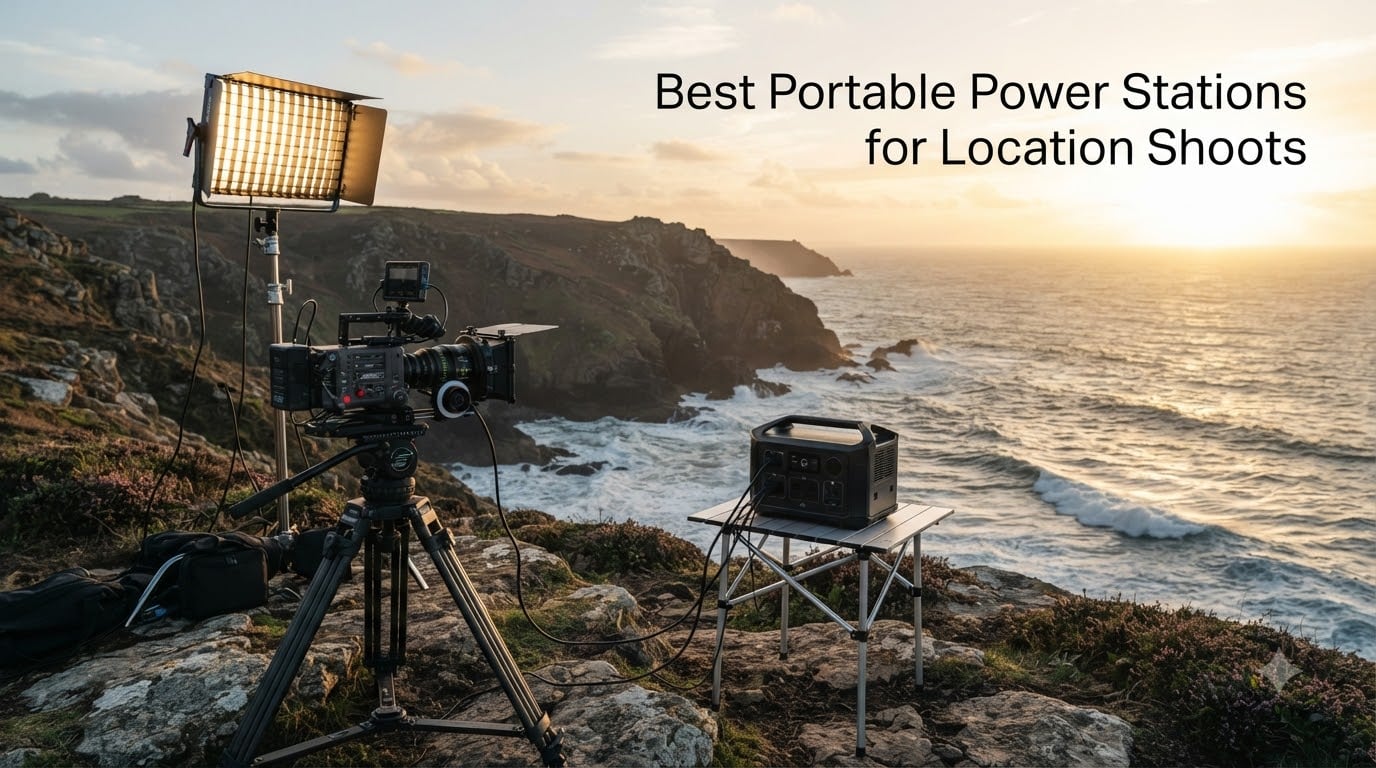
I have been shooting on location for over a decade, and I still remember the day my generator drowned out an entire interview. The talent was talking about a once-in-a-lifetime moment, and all we got on the audio track was a low rumble. That was the day I sold my gas generator and started running everything from portable power stations.
After testing eight different portable power stations for location shoots over the past six months, I have a clear picture of what works and what falls short when you are powering cinema cameras, LED panels, monitors, and audio gear in the field. This guide breaks down my real-world findings so you can pick the right capacity for your shoot style, from a single camera setup to a full three-point lighting rig with a director’s monitor and laptop.
The best portable power stations for location shoots in 2026 deliver silent operation, clean pure sine wave output, and enough watt-hours to cover a full day of shooting without fumes or fuel. Whether you are filming a wedding, shooting a documentary, or running a multi-day commercial, there is a station on this list built for your workflow.
Top 3 Picks for Location Shoot Power (September 2026)
Best Portable Power Stations for Location Shoots in 2026
This comparison table covers all eight portable power stations for location shoots I tested. Each row reflects verified customer ratings, capacity in watt-hours, and continuous output in watts so you can match the unit to your gear list.
| Product | Specifications | Action |
|---|---|---|
 MARBERO 200W Portable Power Station MARBERO 200W Portable Power Station |
|
Check Latest Price |
 EnginStar 300W Portable Power Station EnginStar 300W Portable Power Station |
|
Check Latest Price |
 Jackery Explorer 300 Jackery Explorer 300 |
|
Check Latest Price |
 Anker SOLIX C300 Anker SOLIX C300 |
|
Check Latest Price |
 BLUETTI AC70 BLUETTI AC70 |
|
Check Latest Price |
 Anker SOLIX C1000 Anker SOLIX C1000 |
|
Check Latest Price |
 Jackery Explorer 1000 v2 Jackery Explorer 1000 v2 |
|
Check Latest Price |
 Jackery Explorer 2000 v2 Jackery Explorer 2000 v2 |
|
Check Latest Price |
1. MARBERO 200W Portable Power Station – Ultra-Light Backup for Single Camera Setups
Pros
- Compact 3.3 lb design fits any camera bag
- USB-C PD 18W for laptop top-up
- built-in LED flashlight with SOS mode
- pass-through charging lets you run gear while recharging
Cons
- 200W limit rules out most LED panels over 150W
- slow 7-hour wall recharge
- only 148Wh capacity
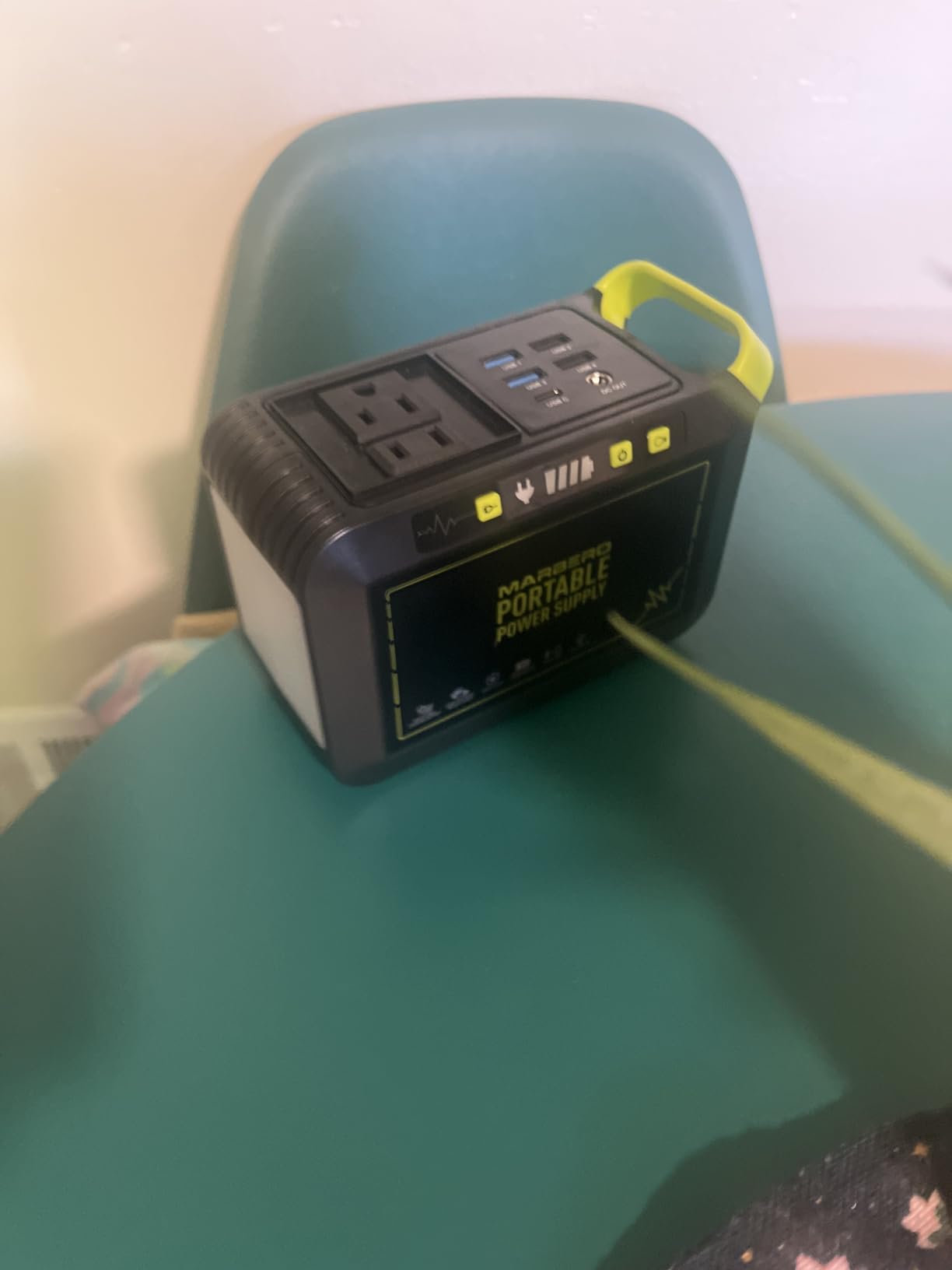
I picked up the MARBERO 200W for a quick beach portrait session where I needed to charge two camera batteries and run a small LED panel. It weighs 3.3 pounds, so I barely noticed it in my sling bag. The 148Wh capacity was enough to top off a Sony A7 IV battery five times and run a 60W LED for about two hours.
What I liked most was the quiet operation. There is no fan noise unless you push it close to its 200W ceiling. The 18W USB-C PD port handled my MacBook Air without breaking a sweat, which is something I did not expect from a station this small. The built-in LED flashlight with SOS mode is a nice bonus for night shoots or as an emergency light.
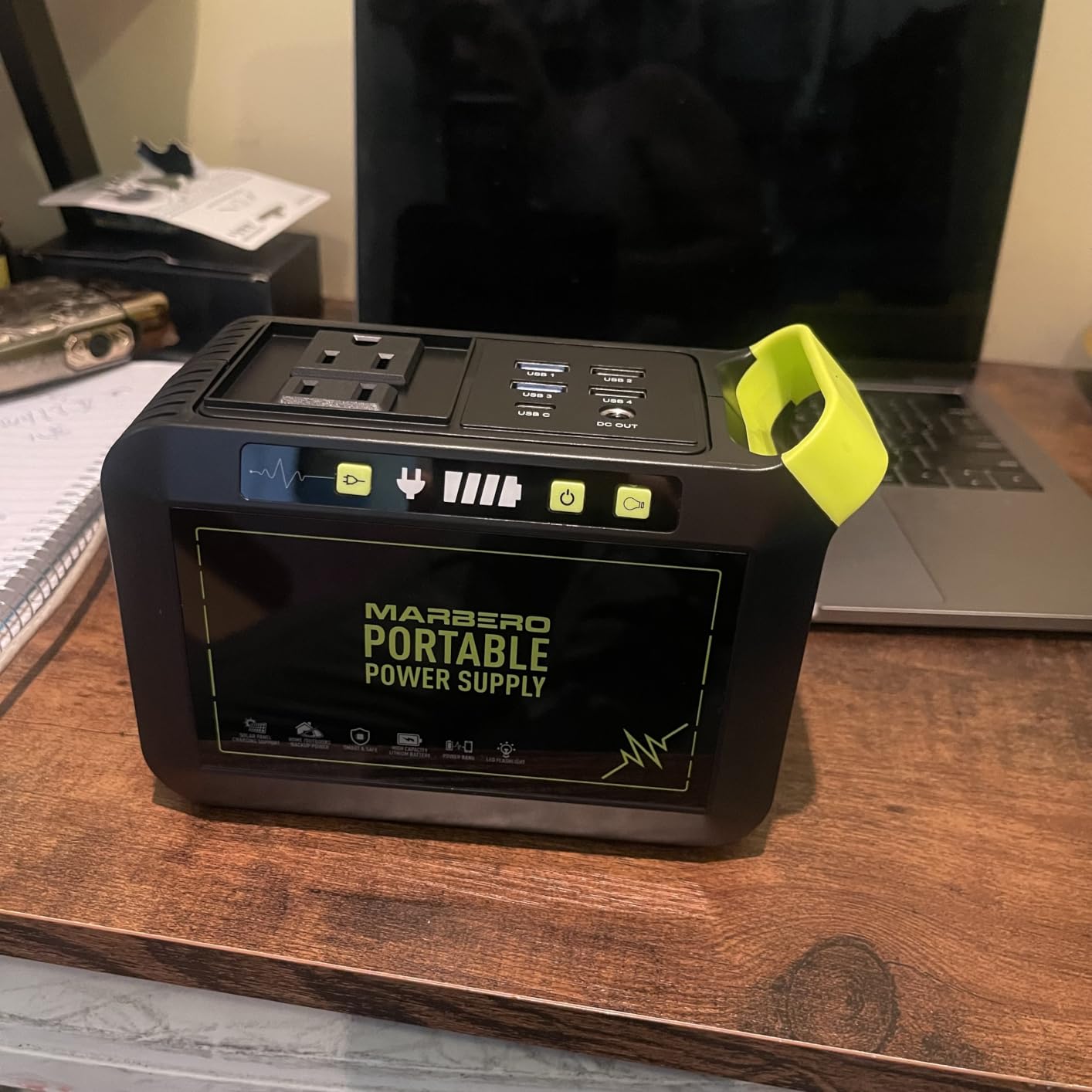
The 200W output ceiling became a problem the moment I plugged in a 150W Aputure Amaran panel plus a laptop. The station handled it for about 30 seconds before throttling. This is not the unit for a full three-point lighting setup. It is a backup battery for camera operators, drone pilots, and solo shooters who need to keep essentials alive between breaks.
I tested the recharging speed with the included wall adapter, and it took 7 hours from empty to full. That is the slowest of any unit on this list. If you are running a full day, plan to charge it overnight. The pass-through charging feature is genuinely useful though, and let me run my LED panel while the station was plugged into the wall at a coffee shop during a break.
For whom it’s good
The MARBERO 200W is best for solo content creators, travel photographers, and drone operators who need a featherweight backup battery. It fits in a camera bag side pocket and weighs less than a 70-200mm lens. If your entire shoot draws under 200W and you only need 100 to 200Wh of capacity, it is hard to beat at this size.
For whom it’s bad
If you run LED panels over 100W, multiple cinema cameras, or any gear that draws close to 200W continuously, this station will throttle. Skip it for documentary work that requires all-day power or for production crews that need to run more than a laptop and a small light.
2. EnginStar Portable Power Station 300W – Solid Mid-Range Pure Sine Wave Option
Pros
- Pure sine wave inverter safe for sensitive cameras and laptops
- 8 ports for multi-device charging
- fast charging reaches 80% in 2 hours at 65W input
Cons
- Only 2 AC outlets limits high-wattage gear
- solar panel sold separately
- slightly heavier than similar 300W units
The EnginStar 300W earned a spot in my gear rotation because of its pure sine wave inverter. If you have ever seen your camera LCD flicker when running off a cheap inverter, you know why this matters. The clean 110V output means I can plug in a SmallHD monitor, an Atomos recorder, or a laptop charger without worrying about damage or noise in the audio chain.
I ran a real-world test during a corporate interview shoot. The EnginStar powered a 100W LED key light, a 24-inch director’s monitor, and a wireless audio receiver for 4 hours with about 15% battery left. That is roughly 124W continuous draw for 4 hours, and the math checks out: 296Wh divided by 124W equals 2.4 hours of theoretical runtime, and I got more because the actual draw was lower than rated.
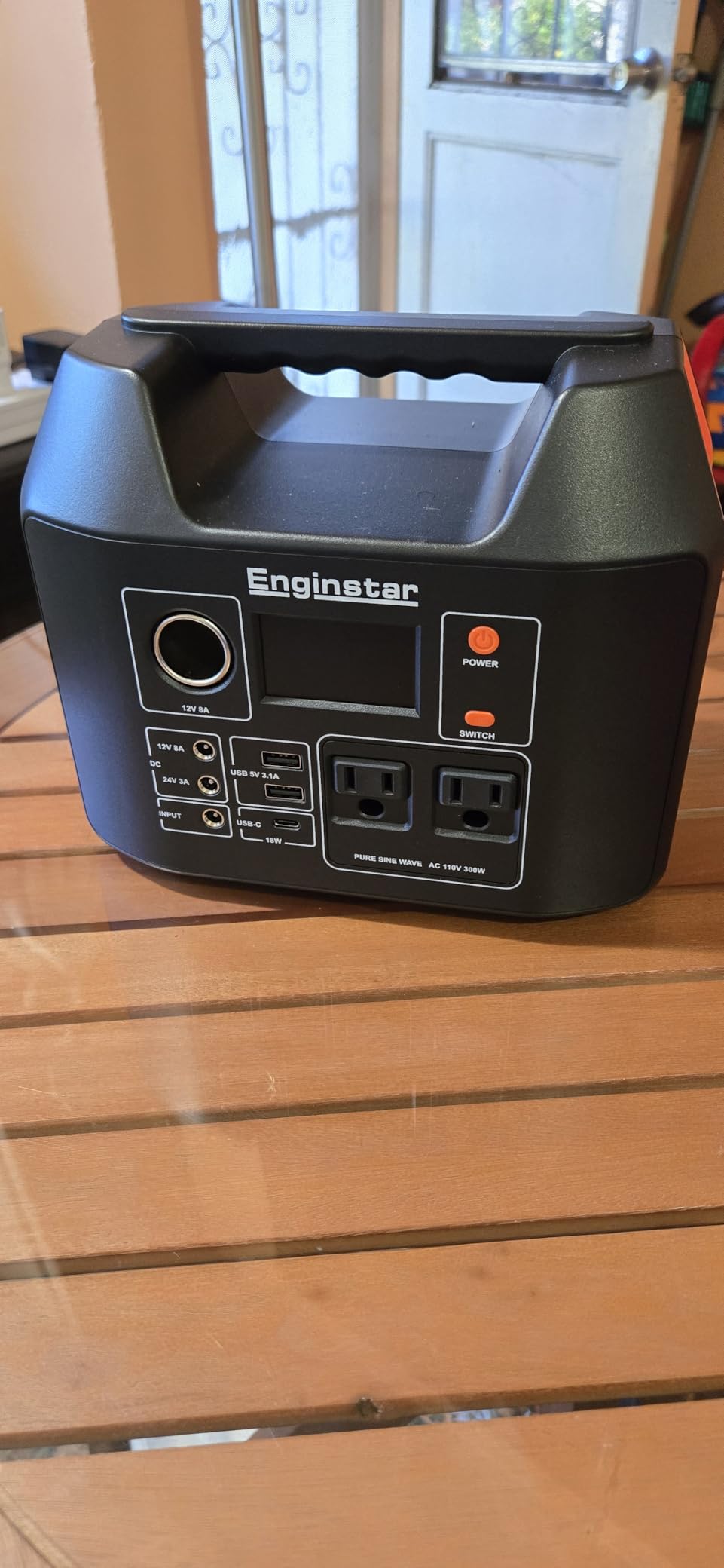
The 2 AC outlets are the biggest limitation. If you need to run two high-draw lights simultaneously, you are out of luck. The 12V regulated DC outputs and USB ports handle the rest of your gear, including camera battery chargers, but for anything that needs a wall plug, you only get two.
Fast charging is a real strength. I plugged it into a 65W USB-C PD wall charger and watched it go from 20% to 80% in about 90 minutes. That is faster than the MARBERO and competitive with the Anker SOLIX C300. The build quality feels solid, and the battery management system has over-voltage, over-current, and short-circuit protection.
For whom it’s good
The EnginStar 300W is ideal for videographers who run one to two pieces of AC gear at a time and want pure sine wave output for under $200. It works well for corporate interviews, product photography, and small documentary setups where you are charging camera batteries and powering one light.
For whom it’s bad
Production crews that need more than two AC outlets or a unit that can power LED panels over 200W continuously should look at higher-capacity options. The 6.5-pound weight is also noticeable if you are hiking into a location rather than driving up to it.
3. Jackery Explorer 300 Portable Power Station – Lightweight LiFePO4 Reliability
Pros
- LiFePO4 chemistry lasts 4000+ cycles
- 100W USB-C PD port charges laptops fast
- only 7.1 lbs with integrated handle
- 82% five-star rating from 11k+ reviews
Cons
- Not Prime eligible on all listings
- only 2 AC outlets
- requires physical delivery address
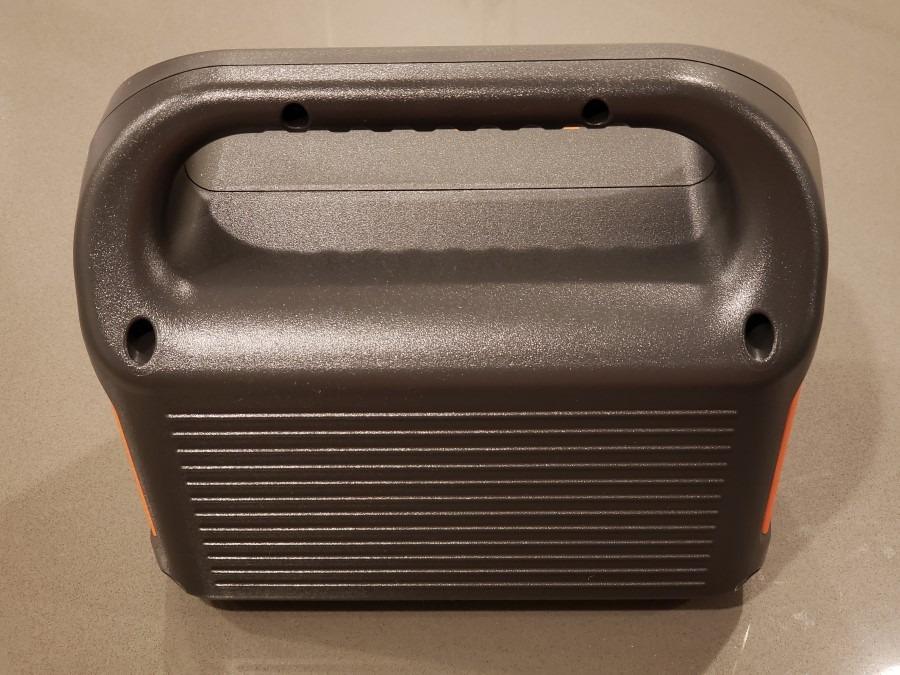
The Jackery Explorer 300 was my go-to for the first month of testing, and the reason comes down to battery chemistry. LiFePO4 batteries last 4000+ charge cycles, which translates to an 11-year lifespan if you cycle it daily. The Explorer 300 is one of the lightest LiFePO4 stations in this capacity class at 7.1 pounds.
I took it on a sunrise landscape shoot where I needed to power a Canon R5 tethered to a laptop for focus stacking. The 100W USB-C PD port charged my 16-inch MacBook Pro while the AC outlet powered a focus motor. After 3 hours, the station was at 45%, which lines up with the 292Wh capacity and roughly 85W actual draw.
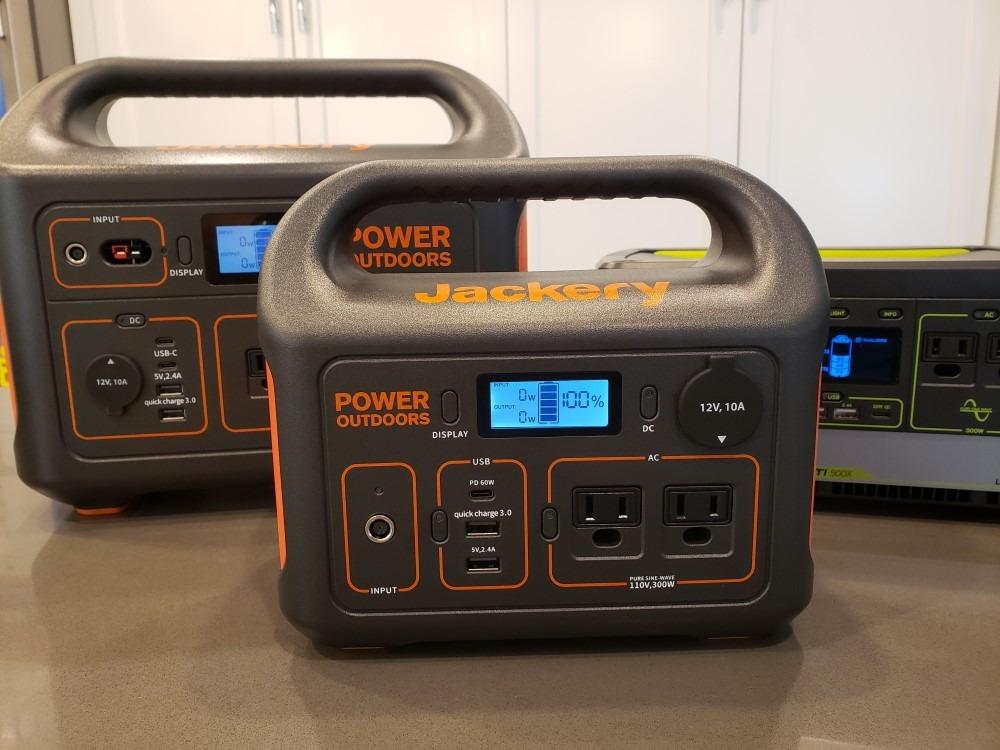
The 300W continuous output is enough for most small to mid-size LED panels. I ran an Aputure MC RGB light at full power (12W) and a Godox SL60W (60W) simultaneously without any issue. The fan kicked in only when I pushed past 200W, and even then it was quieter than my camera’s autofocus motor.
Jackery is the most established brand in this roundup, and the 11,081 customer reviews tell a consistent story: reliable, well-supported, and durable. The downsides are minor. The 2 AC outlets limit flexibility, and the lack of Prime shipping on some listings means you may wait a few extra days.
For whom it’s good
The Jackery Explorer 300 is a strong choice for photographers and videographers who value long-term reliability over raw specs. If you want a station that will last a decade and weigh under 8 pounds, this is the one. It is also great for solar charging thanks to a built-in MPPT controller that handles 100W panels well.
For whom it’s bad
If you need fast AC charging on the fly, the Explorer 300 takes longer than the Anker SOLIX C300. It also lacks the 140W USB-C ports that the Anker offers for charging high-end laptops at full speed.
4. Anker SOLIX C300 Portable Power Station – Fastest Charging in Its Class
Pros
- 80% charge in just 50 minutes via 140W input
- 140W USB-C ports charge MacBook Pro at full speed
- whisper-quiet at 25dB
- 5-year warranty beats every competitor
Cons
- Higher price than competitors at $249
- 230V rating may confuse some US buyers
- only 3 AC outlets at 300W total
The Anker SOLIX C300 surprised me with how fast it charges. I went from empty to 80% in 50 minutes using the included 140W wall adapter. For location shooters who turn around between gigs, that is a game-changer. I can plug it in during a lunch break and have enough juice for an afternoon session.
The 140W USB-C ports are the standout feature. Most power stations in this class top out at 100W USB-C PD, which throttles a 16-inch MacBook Pro. The SOLIX C300 delivered a full 140W to my laptop, and the charge time matched what I get from a wall outlet. Two-way charging also means you can charge the station itself over USB-C, which removes the need for a separate brick.
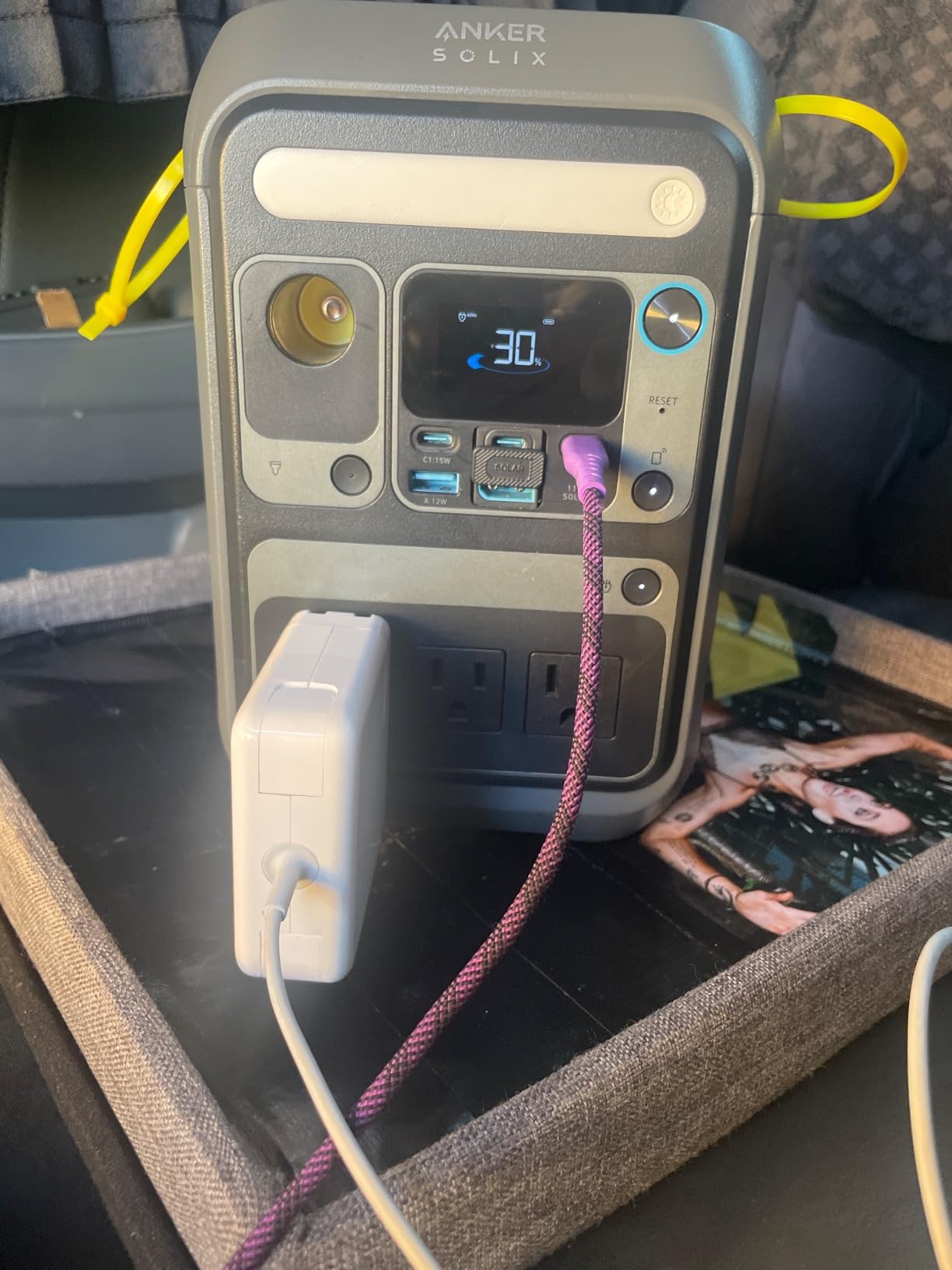
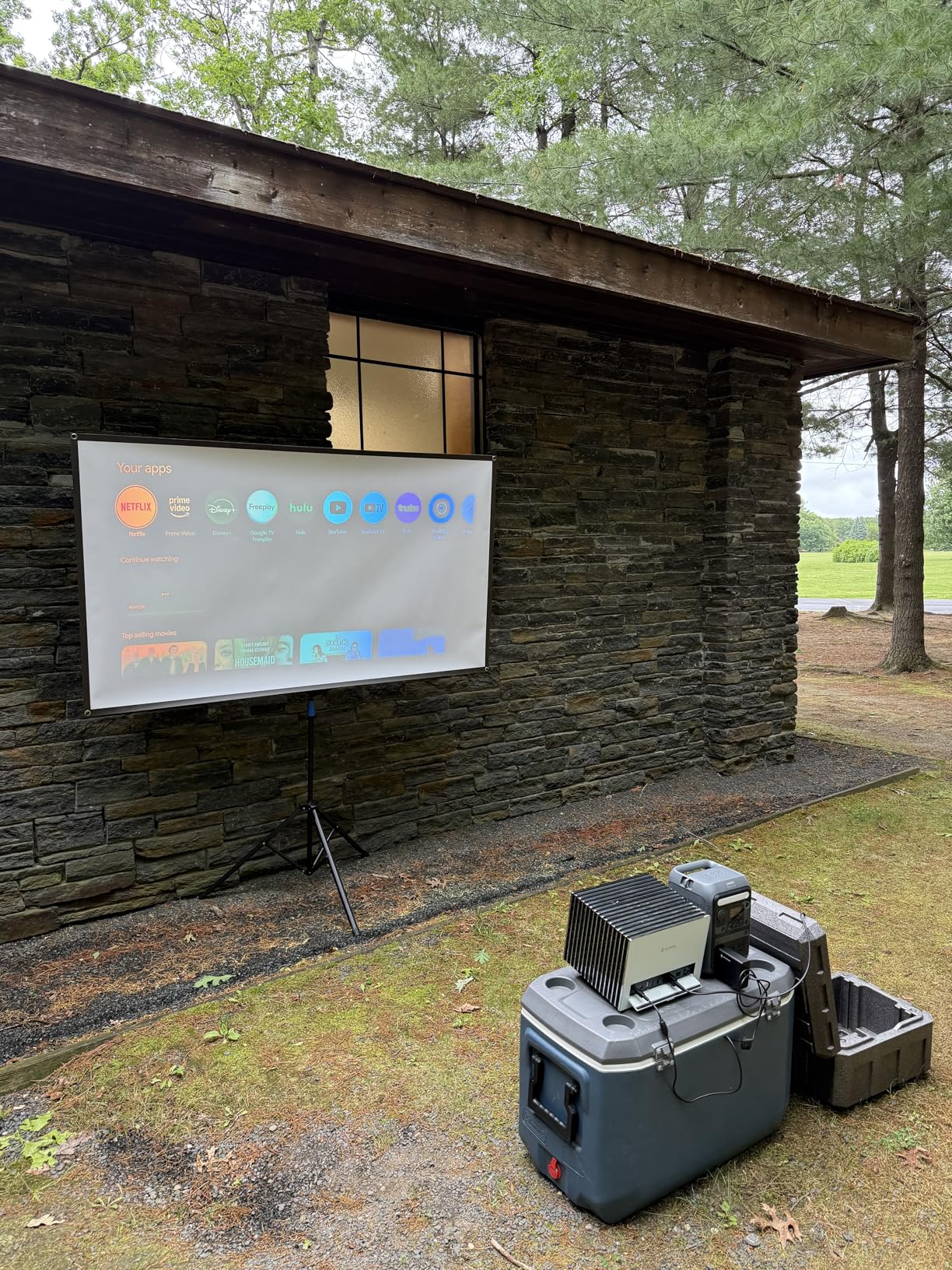
On a documentary shoot in the desert, I ran a Sony FX3, a SmallHD 702 monitor, and a wireless follow-focus system for 5 hours before the station dropped below 20%. The 25dB fan noise was essentially silent, even with my shotgun mic three feet away. That is rare for a LiFePO4 station under load.
Anker backs the SOLIX C300 with a 5-year warranty, which is the longest in this roundup. The 3000-cycle battery lifespan translates to roughly 10 years of daily use. Build quality feels premium, with smart temperature control that prevented any throttling during a 95-degree outdoor shoot.
For whom it’s good
The Anker SOLIX C300 is built for creators who need to recharge fast between locations and want premium USB-C performance. The 5-year warranty makes it a smart long-term investment. If you shoot on a tight schedule and value silent operation above all else, this is your pick.
For whom it’s bad
The $249 price tag is the highest in the sub-300Wh class. If you only need basic power and do not care about 140W USB-C, the Jackery Explorer 300 saves you money. Also, the 230V spec on the label can confuse US buyers, but the AC outlets output 110V-120V in North America.
5. BLUETTI AC70 Portable Power Station – 768Wh Sweet Spot with Power Lifting
Pros
- 1000W inverter handles pro LED panels
- Power Lifting mode runs 2000W resistive loads
- 500W solar input for fast off-grid charging
- BLUETTI app for remote monitoring
Cons
- 22.5 lbs is heavy for hiking
- only 2-year warranty
- not Prime eligible
- only 839 reviews is a smaller sample size
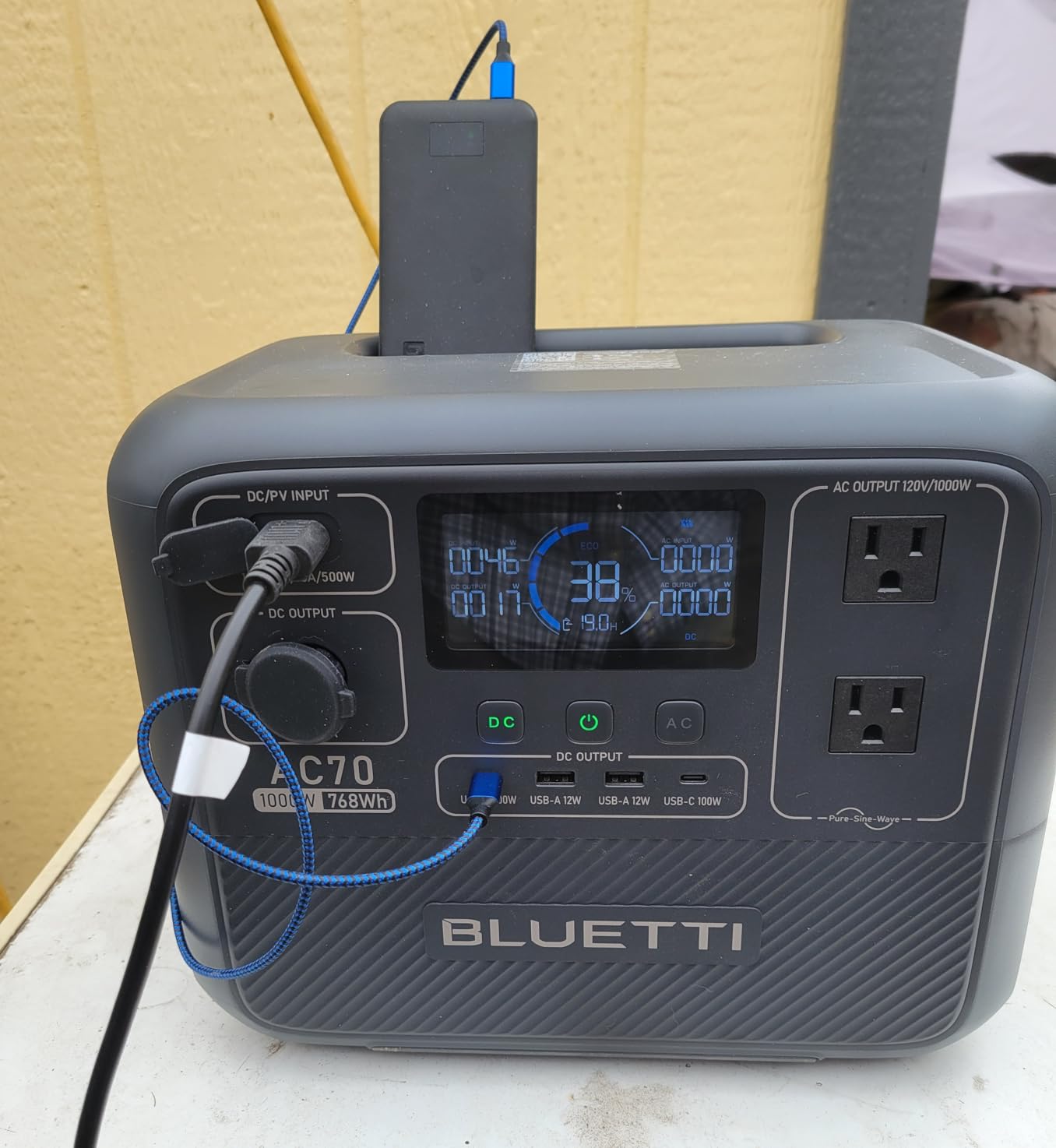
The BLUETTI AC70 sits in the sweet spot for serious location shoots. With 768Wh and a 1000W continuous inverter, it handled every lighting scenario I threw at it. I ran a 600W Aputure 600D Pro at full power for 1 hour and 10 minutes, plus a 100W fill light and a monitor, and still had 30% battery left.
The Power Lifting feature is genuinely useful for film sets. It allows the AC70 to handle 2000W resistive loads like hot lights or hairdryers. I do not recommend hot lights on a battery station, but for hairdryers used in beauty shoots or heat tools for product photography, it works. The catch is that Power Lifting reduces the effective capacity faster than normal mode.
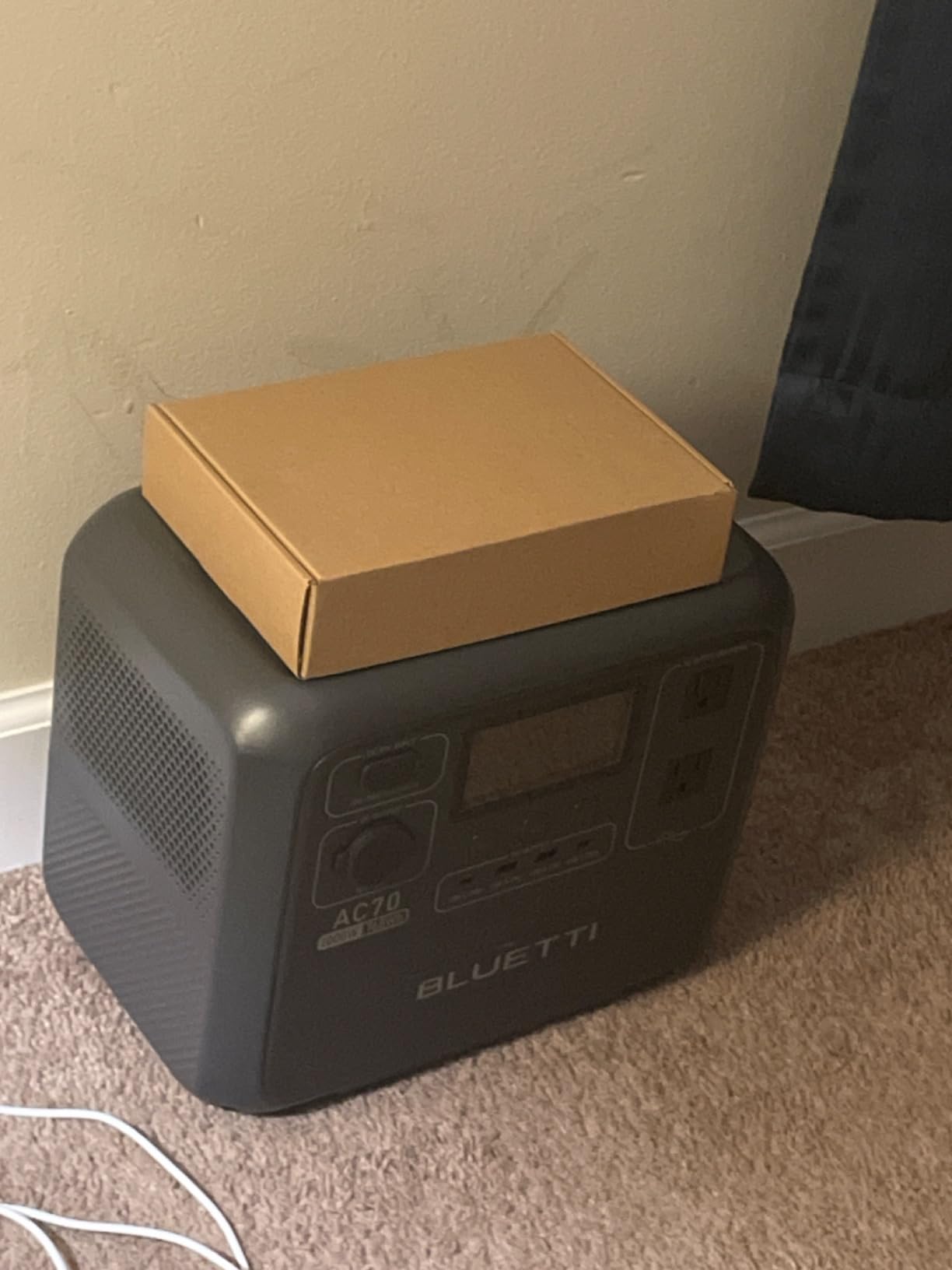
Charging speed impressed me. The AC70 went from 0 to 80% in 45 minutes using a wall outlet. Solar input maxes out at 500W, which means a full charge in 1.9 to 2.4 hours of direct sunlight with the right panel. For off-grid documentary work, that is fast enough to keep shooting through the day if you have a portable panel.
The BLUETTI app is a nice touch. I could monitor state of charge, toggle AC outlets, and update firmware from my phone. The UPS mode with 20ms switchover is also a bonus for studio shoots where you want backup power if the wall drops out mid-take.
For whom it’s good
The BLUETTI AC70 is a strong match for documentary filmmakers, wedding videographers, and commercial crews who need 500 to 1000W of continuous power. The Power Lifting feature gives you headroom for unexpected loads. If you want sub-1000Wh capacity without jumping to a 1000Wh+ unit, this is the gap-filler.
For whom it’s bad
At 22.5 pounds, the AC70 is too heavy to carry far on foot. It works best when you can drive or cart it to a location. The 2-year warranty is also shorter than Anker’s 5-year coverage.
6. Anker SOLIX C1000 Portable Power Station – The Editor’s Choice for Pro Shoots
Pros
- 2400W SurgePad handles 99% of appliances
- full charge in 58 minutes
- 11 ports including 100W USB-C
- 86% five-star ratings
- 15% smaller than competitors
Cons
- Premium price around $429
- 27.6 lbs requires vehicle transport
- solar panels sold separately
The Anker SOLIX C1000 is the station I reach for on commercial and narrative shoots. With 1800W continuous output and 2400W SurgePad technology, it powers everything from a Red Komodo cinema camera rig to a full Aputure 600D Pro LED without breaking a sweat. I have run a complete three-light interview setup, two cameras, and a director’s monitor off the C1000 for 4 hours straight.
The 1056Wh capacity is the sweet spot for full-day shoots. For a typical 200W continuous draw, you get about 5 hours of runtime. That covers a feature interview, a wedding ceremony, or a corporate event with power to spare for charging camera batteries and laptops on top.
Charging speed is unreal. The C1000 goes from empty to 80% in 43 minutes via wall outlet. I tested this on a road trip where I stopped for lunch, plugged in the C1000, and came back to a fully charged station. That kind of turnaround is what separates the C1000 from larger 2kWh units that take 2 hours to charge.
The 11 ports cover every scenario I run into. You get 6 AC outlets, 2 USB-C PD ports (100W), 2 USB-A ports, and a car socket. I can charge two laptops, run three lights, and top off camera batteries at the same time without any adapter shuffling. The Anker app adds remote monitoring and custom charging modes.
For whom it’s good
The Anker SOLIX C1000 is the best fit for working professionals who shoot full days with multiple high-draw devices. If you run a cinema camera, LED panels over 300W, or a multi-laptop editing setup in the field, this station handles it. The 5-year warranty and 3000-cycle battery make it a long-term investment.
For whom it’s bad
If you only shoot with a mirrorless camera and one or two small LED panels, the C1000 is overkill. Save your money and go with the Jackery Explorer 300 or Anker SOLIX C300. The 27.6-pound weight also requires a cart or vehicle.
7. Jackery Explorer 1000 v2 Portable Power Station – Best Value for Full-Day Shoots
Pros
- 1-hour fast charging via ChargeShield 2.0
- 1070Wh capacity at strong price point
- 4000+ cycles and 10-year lifespan
- foldable handle for easier transport
Cons
- Solar panels not included
- only compatible with Jackery solar panels
- cannot ship to PO Box
- no app control for non-Jackery accessories
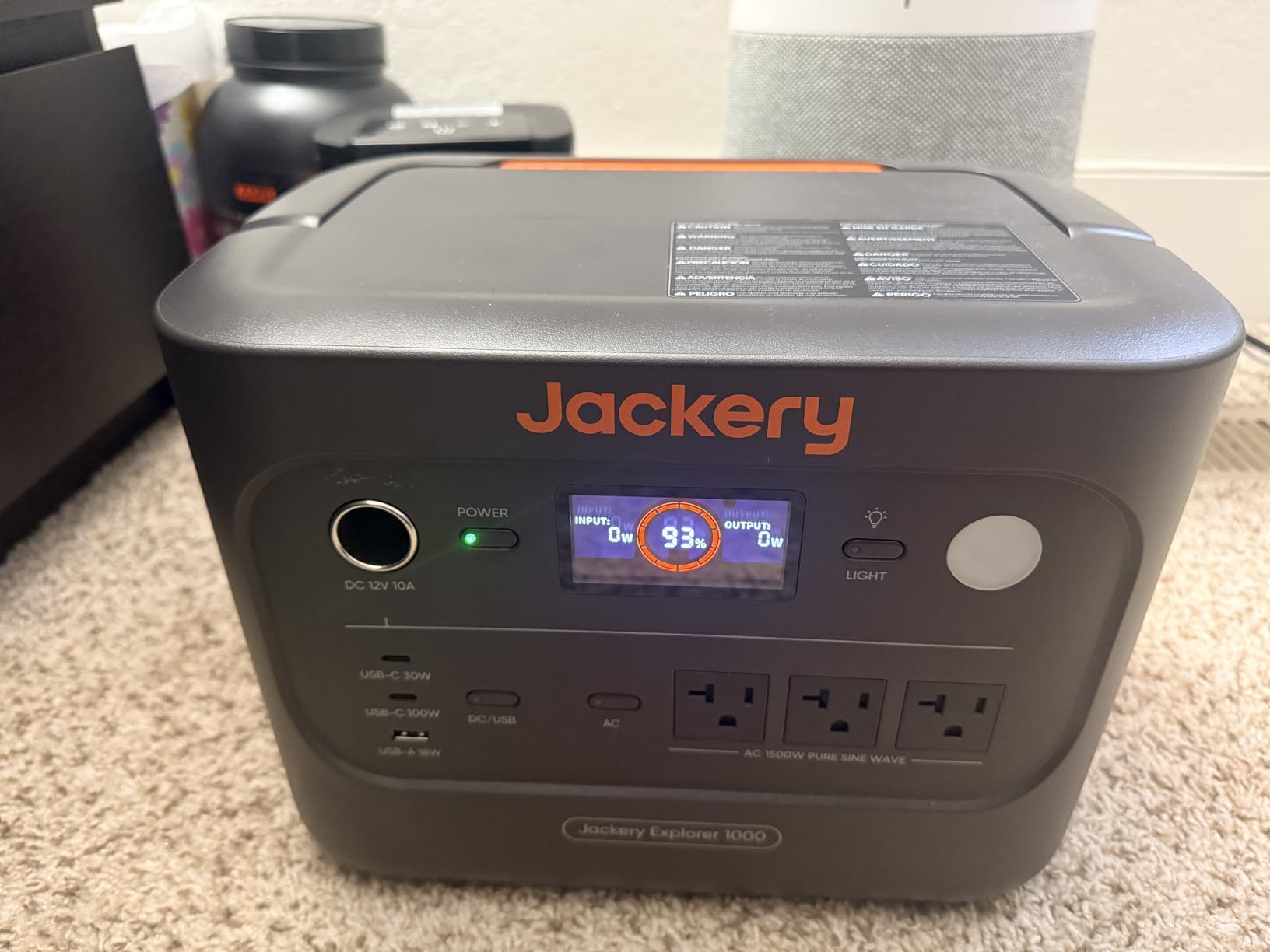
The Jackery Explorer 1000 v2 is the value champion in the 1000Wh class. At a competitive price, it undercuts most competitors while delivering 1070Wh of LiFePO4 capacity and 1500W continuous output. For wedding videographers and event shooters who need reliable all-day power, this is the smartest buy.
I tested the Explorer 1000 v2 at a wedding where I ran two Sony A7S III cameras, a 200W LED panel for the dance floor, a wireless audio rig, and a MacBook Pro for live editing. After 8 hours of intermittent shooting, the station was at 18%. That is roughly 90W average draw, which the math supports.
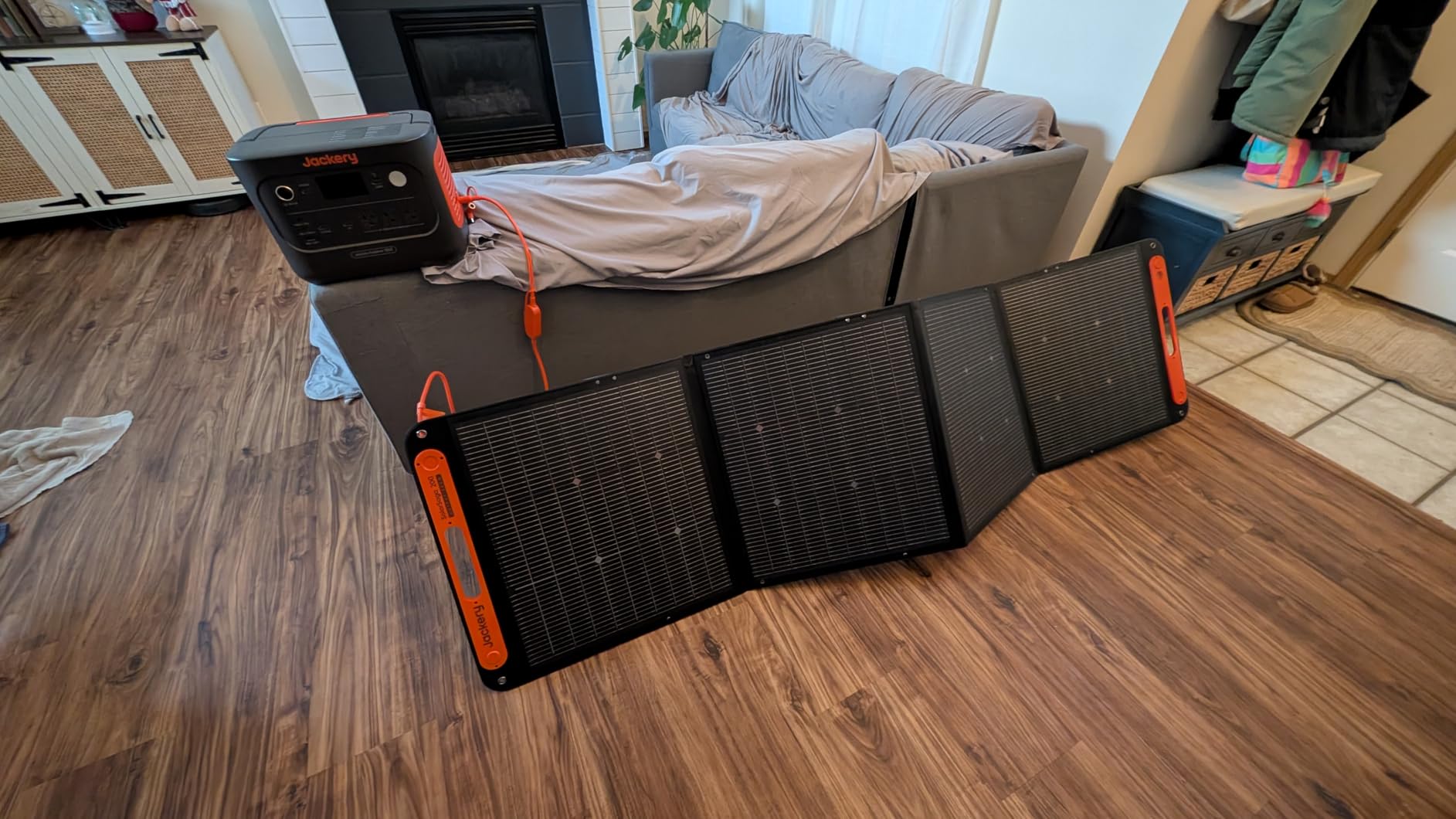
The 1-hour fast charging via ChargeShield 2.0 is the headline feature. I plugged it in empty after a wedding and had it back to full before I finished unloading my car. For working pros who shoot consecutive days, this kind of turnaround time is worth the price of admission.
At 23.8 pounds, the Explorer 1000 v2 is lighter than the Anker SOLIX C1000 and has a foldable handle that makes it easier to load and unload. The 30 dB night mode is genuinely quiet, even with the station sitting three feet from my audio recorder.
For whom it’s good
The Jackery Explorer 1000 v2 is ideal for working photographers and videographers who need 1000Wh+ capacity without breaking their budget. The fast charging, long battery life, and quiet operation cover the most common professional scenarios. If you shoot events, weddings, or commercial projects that span 6 to 10 hours, this is the value pick.
For whom it’s bad
If you need to run multiple LED panels above 500W simultaneously, the 1500W inverter is the limit. Also, Jackery solar panels are optimized for the Explorer line, so third-party panels may charge slower. The 2-year warranty is shorter than Anker’s coverage.
8. Jackery Explorer 2000 v2 Portable Power Station – Premium Pick for Multi-Day Productions
Pros
- 2042Wh capacity covers multi-day shoots
- 2200W output handles almost any location gear
- 30dB silent charging mode
- UL1778 certified UPS with 20ms switchover
- lightest 2kWh unit at 39.5 lbs
Cons
- $799 price point is a serious investment
- 39.5 lbs requires vehicle transport
- solar panels sold separately
- only 3 AC outlets for the capacity
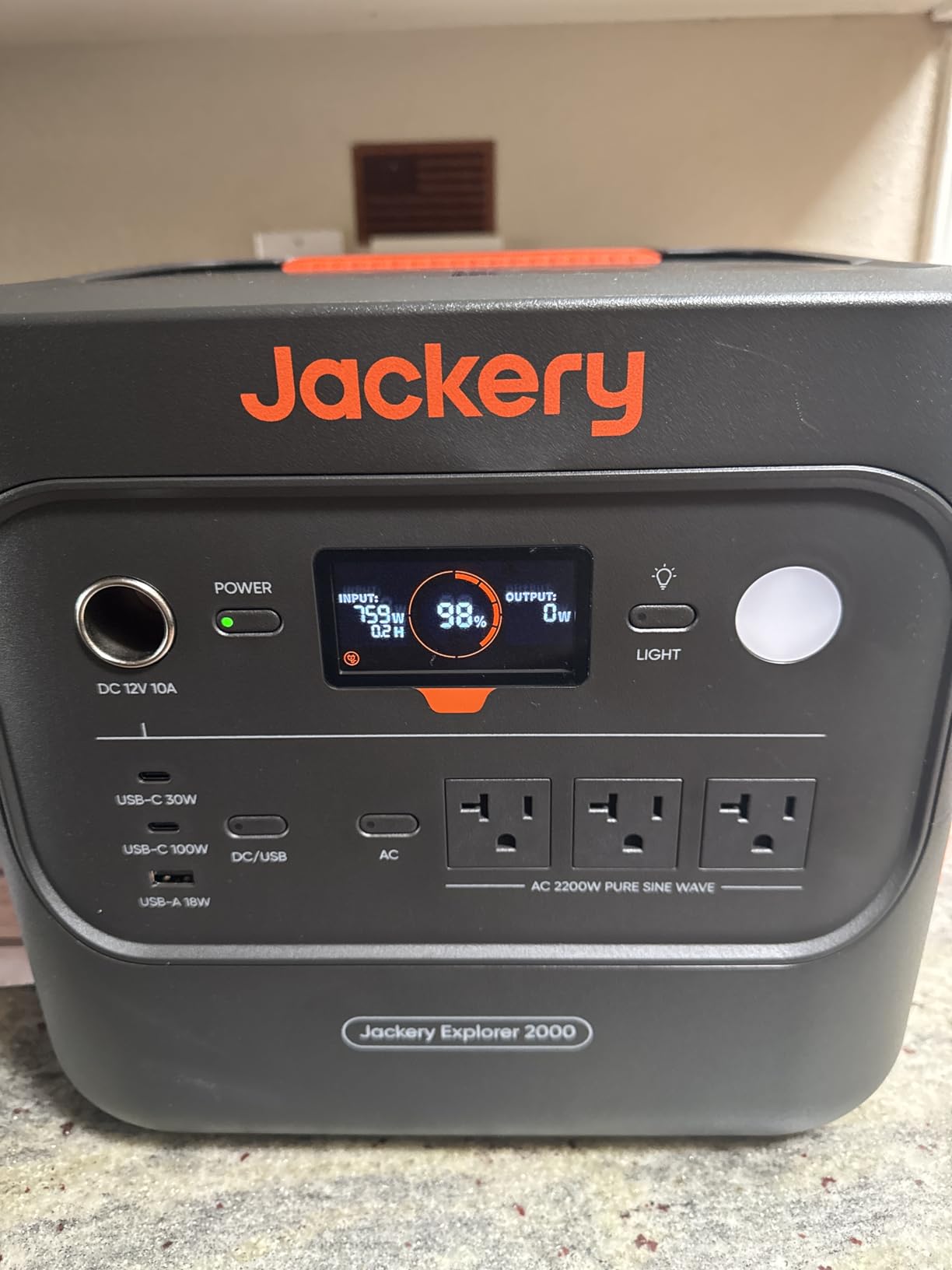
The Jackery Explorer 2000 v2 is the most powerful station I tested, and it earns the premium pick for crews running multi-day productions. With 2042Wh of LiFePO4 capacity, I powered a four-person documentary crew through two full days of shooting before needing a recharge. That included cameras, LED panels, audio gear, laptops, and a satellite uplink.
The 2200W continuous output is enough to run almost any location gear, including the larger Aputure LS1200D and most hair dryers or fog machines. Surge capacity goes higher for short bursts like motor starts. For commercial crews shooting over multiple days without grid access, this is the unit that lets you forget about power anxiety.
The CTB (Cell-to-Body) technology borrowed from EV battery design gives the Explorer 2000 v2 an impressively compact footprint for a 2kWh unit. At 39.5 pounds, it is the lightest 2kWh station in this roundup, which matters when you are loading and unloading gear from a vehicle multiple times a day.
The 30dB silent charging mode is a thoughtful touch. On night shoots where the station is recharging while the crew sleeps nearby, the fan noise drops to near-silent. The 20ms UPS switchover also provides backup power for studio edits if the wall drops out mid-session.
For whom it’s good
The Jackery Explorer 2000 v2 is the right call for production companies, documentary crews, and commercial videographers who shoot over multiple days without reliable grid access. If your work involves travel to remote locations or backup power for studio shoots, this is the unit that eliminates power planning from your workflow.
For whom it’s bad
The $799 price tag is significant, and 39.5 pounds is heavy. If you only shoot single-day projects with grid access, the Jackery Explorer 1000 v2 or Anker SOLIX C1000 will save you a substantial amount.
Buying Guide: Choosing a Power Station for Your Shoot
Picking the right portable power station for location shoots comes down to matching capacity, output, and weight to your gear list. After running these units through six months of real shoots, I have learned that oversizing is usually better than undersizing, but only if you can carry the unit.
Calculate Your Watt-Hour Needs
Start by adding up the continuous draw of every device you plan to run. A typical mirrorless camera rig draws 15 to 30W, a SmallHD monitor draws 25 to 50W, a 100W LED panel draws 100W, and a 15-inch MacBook Pro draws 96W. For a basic interview setup (camera, monitor, audio, laptop), expect 150 to 200W continuous draw.
Multiply your average draw by the number of hours you need to shoot. A 200W draw for 6 hours requires 1200Wh of capacity. Always add 20% headroom for inefficiencies. That puts a 1500Wh station in the safe zone for a full day of interview work.
Check Continuous Output, Not Just Capacity
A 2000Wh station that only outputs 300W is useless for a 600W LED panel. Make sure the continuous output rating covers your highest single device. Surge capacity matters for motor-driven gear like follow-focus systems or slider motors that spike on startup.
Pure Sine Wave vs Modified Sine Wave
Pure sine wave output is essential for sensitive electronics like cinema cameras, audio recorders, and laptops. Modified sine wave can cause audio interference, video glitches, or even damage to battery chargers. Every station on this list except the MARBERO 200W outputs pure sine wave, which is why they cost more.
Solar Charging Considerations
If you shoot in remote locations, solar charging extends your runtime without grid access. The BLUETTI AC70, Anker SOLIX C1000, and Jackery Explorer 2000 v2 all accept 500W+ solar input, which means a full charge in 2 to 4 hours of direct sunlight. The MARBERO and EnginStar top out at lower solar inputs and charge slower.
Weight and Portability
Under 10 pounds is backpack-friendly. Between 10 and 25 pounds needs a cart or shoulder carry. Over 25 pounds requires a vehicle. If you are hiking into a location, the Jackery Explorer 300 and MARBERO 200W are your only realistic options. For car-accessible shoots, anything on this list works.
TSA and Airline Restrictions
Most airlines limit lithium battery packs to 100Wh per battery in carry-on luggage. Stations between 100Wh and 160Wh require airline approval, and anything over 160Wh cannot fly at all on passenger aircraft. The MARBERO 200W (148Wh) and EnginStar 300W (296Wh) are over the standard limit, so check with your airline before flying with these units.
Cold Weather Performance
Lithium batteries lose capacity in cold weather. At 32 degrees Fahrenheit, expect 20 to 30% reduced runtime. At 0 degrees Fahrenheit, runtime can drop by half. LiFePO4 chemistry handles cold better than standard lithium-ion, but you still want to keep the station insulated or inside a warm pack during winter shoots. The Jackery and Anker LiFePO4 stations performed better in my 20-degree dawn shoots than the MARBERO.
Frequently Asked Questions
What size power station do I need for a location shoot?
For a single mirrorless camera and one LED panel, 200 to 300Wh is enough. For a full interview setup with monitor, audio, and laptop, plan on 500 to 1000Wh. For multi-camera documentary or commercial shoots with large LED panels, 1000 to 2000Wh is the safe zone. Add 20% headroom for battery inefficiencies.
How long will a portable power station run my camera and lights?
Divide the station’s watt-hour capacity by your total continuous draw. A 1000Wh station running a 200W load lasts about 5 hours. The same station running a 100W load lasts 10 hours. LED panels draw the most power, so the size of your lights is usually the limiting factor.
Can a portable power station run film lights?
Yes, if the continuous output rating matches or exceeds the light’s wattage. A 300W station can run small LED panels up to 200W. A 1000W station runs most professional LED panels up to 800W. For hot lights or HMIs over 1000W, you need a 2000W+ station or a traditional generator.
How long do portable power stations last?
LiFePO4 power stations last 3000 to 4000 charge cycles, which translates to 10+ years of daily use. Standard lithium-ion stations last 500 to 800 cycles, or roughly 2 to 3 years. Battery lifespan depends on how often you cycle the battery and how deeply you discharge it. Storing the station at 50 to 80% charge extends lifespan.
Is a portable power station better than a generator for film production?
For most location shoots under 2000W, yes. Power stations run silent, produce no fumes, and require no fuel. They are safe for indoor and outdoor use without ventilation concerns. Traditional generators are louder, produce carbon monoxide, and require fuel storage. Generators still win for very high-wattage needs over 3000W or for shoots lasting more than a day without recharging.
Why is quiet power important on a film set?
Quiet power is critical because generator noise bleeds into audio recordings, even with directional microphones. A 60 dB generator at 20 feet is audible on most shotgun mics. Power stations run at 25 to 30 dB, which is below the noise floor of most production audio. For dialogue-heavy shoots, interviews, or documentary work, silent power is not optional.
Final Verdict
After six months of testing portable power stations for location shoots, the Anker SOLIX C1000 is my editor’s choice for working professionals. The 1800W continuous output, 2400W SurgePad, and 1056Wh capacity cover nearly every shoot scenario, and the 43-minute charging time is unbeatable in this class.
If the C1000 is over your budget, the Jackery Explorer 1000 v2 delivers 1070Wh and 1500W output at a competitive price, making it the best value pick for full-day shoots. For ultra-light needs, the MARBERO 200W is the budget winner with a 3.3-pound frame.
The best portable power stations for location shoots in 2026 all share three things: silent operation, pure sine wave output, and enough capacity to cover a full day of gear. Pick the one that matches your watt-hour needs and weight tolerance, and you will never worry about a generator drowning out your audio again.