
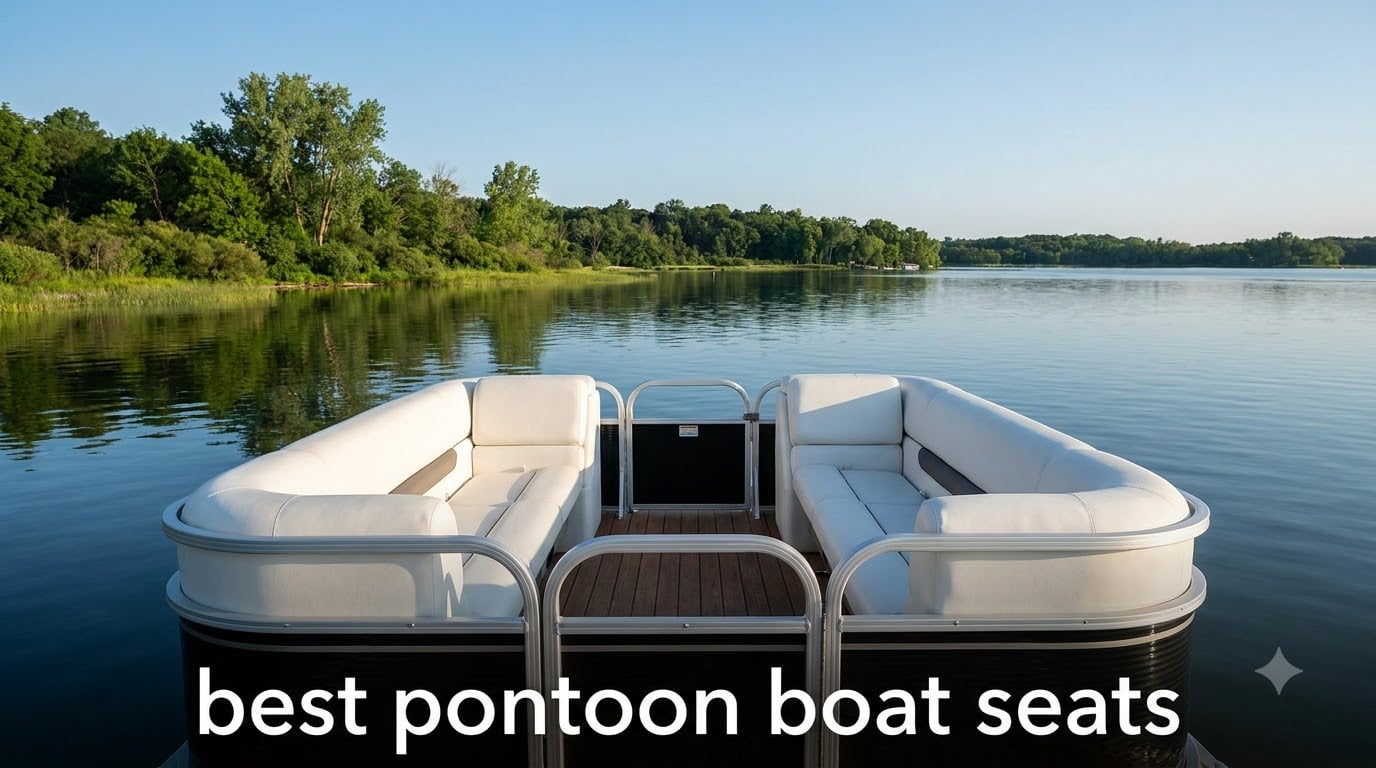
Nothing kills a great day on the water faster than seats that are sun-cracked, sagging, or flat-out uncomfortable. Whether your old cushions are splitting at the seams or you are building out a new pontoon from the deck up, finding the best pontoon boat seats comes down to three things: material quality, comfort over long days, and how well the hardware holds up against sun, spray, and salt.
I have spent years around pontoon boats, and the seating is the single biggest factor in whether people actually want to spend a full Saturday on board. Cheap seats fade within a season, mildew in the storage compartments, and leave guests shifting around after 20 minutes. Quality marine seating transforms the experience entirely.
This guide breaks down everything you need to know before buying pontoon boat seats in 2026. We cover seat types, material comparisons (marine vinyl versus Sunbrella versus fabric), construction details that separate good seats from disposable ones, installation steps you can do yourself, brand reputations, realistic pricing, and maintenance tips that add years to your investment.
Understanding Pontoon Boat Seat Types
Pontoon seating is not one-size-fits-all. The best pontoon boat seats for your vessel depend entirely on how you use the boat and the layout of your deck. Understanding the five primary seat types helps you plan a functional and comfortable arrangement.
Captain Chairs and Helm Seats
Captain chairs, also called helm seats, are the high-back chairs mounted at the console where the driver sits. These are the most important seats on the boat for ergonomics because the driver spends the entire outing seated there. Look for captain chairs with adjustable height, flip-up bolsters for standing visibility, and thick lumbar support.
Premium helm seats feature slide rails and swivel bases so the driver can rotate to face passengers when anchored. The frame should be heavy-duty aluminum or reinforced steel to handle the constant torque from driving and swiveling.
Pontoon Bench Seats
Bench seats are the backbone of pontoon furniture. These long seats run along the port and starboard sides and often wrap around the bow or stern. Most pontoon bench seats are actually modular, consisting of individual seat bases connected together with shared cushions on top.
The best pontoon bench seats double as storage. Lift the cushion and you get a waterproof compartment perfect for life jackets, ropes, anchor lines, and gear bags. When shopping, check whether the storage area has drainage holes and whether the lid uses gas struts or simple hinges.
Lounge and Sunpad Seats
Lounge seats and sunpad extensions turn the back of the pontoon into a relaxation zone. These are flat or gently contoured cushions that let passengers stretch out fully. Rear lounge seats are popular on cruising and entertainment pontoons where sunbathing and socializing are the primary activities.
Some lounge seats convert from upright seating to flat sunpads with adjustable backrests. These multi-position seats are worth the investment if your boat serves double duty as a fishing rig and a party barge.
Fishing and Swivel Seats
Fishing pontoon seats prioritize function over luxury. These are typically smaller, lighter seats mounted on pedestal bases with 360-degree swivel capability. The swivel lets anglers cast in any direction without standing, which matters when you are fighting a fish in rough water.
Good fishing seats have minimal armrests (so they do not interfere with casting), drainage to keep the seat dry, and a compact footprint that maximizes deck space. Fold-down designs are common because they keep the deck clear when not in use.
Corner and Radius Seats
Corner seats fill the angled sections where side benches meet the bow or stern benches. These are specialized pieces cut at specific angles (usually 45 degrees) to wrap seating around the corners of the pontoon. Radius seats have a curved face instead of a sharp angle for a smoother look.
When replacing pontoon seating, measure your corner sections carefully. Corner seats come in standard angles but pontoon manufacturers sometimes use custom dimensions. Getting this measurement wrong is the most common replacement mistake.
Pontoon Boat Seat Materials Compared
Material choice is the single biggest predictor of how long your pontoon seats will last and how comfortable they will be. The best pontoon boat seats use marine-grade materials engineered specifically for constant UV exposure, moisture, and temperature swings.
Marine Grade Vinyl
Marine grade vinyl is the most common seat covering material, and for good reason. It is waterproof, easy to clean with soap and water, and modern formulations include UV stabilizers and mildewcides built right into the material. Quality marine vinyl lasts 7 to 12 years with proper care.
Not all marine vinyl is created equal. Look for vinyl rated at 25 to 30 ounces per square yard, which indicates thickness and durability. Premium marine vinyl includes a topcoat treatment that resists staining from sunscreen, food, and fish blood. Avoid automotive vinyl, which degrades quickly under marine conditions.
The backing material matters too. Knitted backing allows the vinyl to breathe slightly, reducing condensation buildup underneath. This prevents the foam from trapping moisture and developing mildew.
Sunbrella and Marine Fabric
Sunbrella is a solution-dyed acrylic fabric that offers the best UV fade resistance of any marine seating material. While vinyl eventually cracks and fades after years of sun exposure, Sunbrella fabric retains its color and structural integrity for 10 to 15 years. It is breathable, which means it stays cooler in direct sun than vinyl.
The trade-off is that fabric absorbs water. Sunbrella is water-resistant but not waterproof, so it takes longer to dry after rain or splashing. Fabric also requires more cleaning maintenance because dirt and organic material work into the weave.
Many pontoon owners choose Sunbrella for seat covers and bimini tops while keeping the actual seat cushions in marine vinyl. This hybrid approach gives you the fade resistance of acrylic fabric with the waterproof convenience of vinyl cushions.
Cushion Foam: Closed Cell vs Open Cell
The foam inside the cushion determines comfort and longevity. Closed-cell foam is the marine standard because it repels water rather than absorbing it. If rain blows in or a wave splashes over the bow, closed-cell foam drains and dries quickly instead of becoming a soggy, mildew-filled sponge.
Open-cell foam is softer and cheaper but acts like a sponge in wet conditions. Seats built with open-cell foam develop permanent mildew smells within a season or two. Always confirm that seat cushions use closed-cell or marine-grade foam before buying.
High-end pontoon seats use multi-density foam, with firmer foam at the base for structural support and softer foam near the top for comfort. This layered approach prevents bottoming out on long rides while still feeling plush.
Frame Materials: Marine Plywood vs Plastic vs Aluminum
The frame underneath the cushion is the structural backbone of every seat. Marine plywood has been the traditional frame material for decades. It is pressure-treated to resist rot and provides a solid mounting surface. The downside is that marine plywood eventually absorbs moisture at the edges and screws, leading to rot over 8 to 15 years.
Plastic frames, usually made from high-density polyethylene (HDPE), are becoming the modern standard. Plastic will never rot, never absorbs water, and adds no weight. Premium seats use rotomolded plastic frames that are hollow inside, providing storage without the weight and moisture concerns of wood.
Aluminum frames appear in high-end and commercial seating. Aluminum is lightweight, corrosion-proof, and extremely strong. It costs more but offers the longest lifespan of any frame material. Some manufacturers combine an aluminum frame with plastic seat pans for the best of both worlds.
Hardware and Fasteners
Every screw, bolt, hinge, and staple on your pontoon seats should be stainless steel or marine-grade alloy. Standard steel hardware rusts within months of freshwater use and even faster in saltwater. Check the hinge mechanism, the mounting brackets, and even the staples holding the vinyl to the frame.
Stainless steel hardware rated as 304 or 316 grade offers the best corrosion resistance. Type 316 is preferred for saltwater environments because it contains molybdenum, which dramatically improves pitting resistance against chloride exposure.
What to Look for When Buying Pontoon Boat Seats
Knowing the materials is half the battle. The other half is knowing which features and specifications actually matter when comparing options. Here are the factors that separate the best pontoon boat seats from the rest.
UV and Weather Resistance
Sun damage is the number one killer of pontoon seats. UV rays break down vinyl polymers, causing cracking, fading, and brittleness. The best pontoon boat seats use UV-stabilized materials with documented fade resistance ratings.
Look for seats that specifically advertise UV treatment or UV inhibitors in the vinyl formulation. Sunbrella fabric naturally blocks UV due to its solution-dyed acrylic construction. Cheaper seats skip the UV additives to save cost, and you will see cracking within two seasons.
Weather resistance also means the seat handles temperature extremes. Quality marine vinyl stays flexible in cold weather and does not become tacky or hot to the touch in summer sun. Read customer reviews specifically mentioning heat performance if you boat in hot climates.
Comfort and Ergonomics
Comfort matters more than most buyers realize until they spend six hours on seats that looked great in photos but feel like park benches. Seat depth, back angle, and cushion density all contribute to long-day comfort.
Ideally, seat cushions should be at least 3 inches thick with multi-density foam. The backrest should have a slight rearward lean angle of about 5 to 10 degrees rather than sitting perfectly vertical. Armrests reduce fatigue significantly on longer cruises and give passengers something to brace against in choppy water.
Lumbar support separates good seats from premium ones. Look for contoured backrests that follow the natural curve of the spine. Captain chairs and helm seats benefit most from lumbar design since the driver sits in one position for extended periods.
Durability and Construction Quality
Construction details reveal how long seats will actually last. Check the stitch density: quality marine seats have 7 to 10 stitches per inch with UV-resistant marine thread. Loose or widely spaced stitching is a sign of cost-cutting that will fail under stress and sun exposure.
Examine how the vinyl attaches to the frame. Staples should be stainless steel and evenly spaced. Better seats use piping or welting cord along the seams, which reinforces the joint and adds a finished look. Piping also hides minor imperfections in the seam alignment.
Pull on the seat base and backrest to check for flex or wobbling. A well-built seat feels solid with no creaking. Loose joints at the factory indicate poor quality control and predict early failure on the water.
Storage and Convenience Features
Storage integration is one of the biggest value-adds in pontoon seating. The best pontoon boat seats with storage feature hinged cushions that lift to reveal waterproof compartments. Look for seats with gas strut hinges that hold the lid open on their own, rather than props or manual supports that can slam shut on fingers.
Cup holders are almost expected on modern pontoon seats. The best designs integrate cup holders directly into the armrest or seat back rather than requiring separate installation. Drainage holes in the cup holder bottom prevent standing water.
Other convenience features include built-in coolers under bench seats, hidden tackle boxes in fishing seats, and quick-disconnect mounting systems that let you remove seats for winter storage or deck cleaning.
Weight Capacity and Safety
Every pontoon seat has a weight rating, typically between 200 and 350 pounds per seat. Exceeding this rating stresses the frame, compresses the foam prematurely, and can cause mounting hardware to pull out of the deck. Check the weight rating against how you plan to use the seats.
For family boats with mixed-age passengers, look for seats rated at 250 pounds or higher to accommodate adults comfortably. Commercial applications like rental pontoons should specify heavy-duty seats with reinforced frames rated at 300 pounds or more.
Proper mounting is a safety issue. Seats must be bolted through the deck into backing plates, not just screwed into the surface plywood. A seat that tears free during rough water can injure passengers and damage the boat.
Warranty and Brand Reputation
Warranty length signals manufacturer confidence in their product. Budget seats typically offer 1 to 2 years of coverage. Mid-range seats run 3 to 5 years. Premium brands back their seating with 6 to 10 year warranties that cover material defects, stitching failure, and frame integrity.
Read the warranty fine print. Some warranties cover only manufacturing defects while excluding UV damage and normal wear. The best warranties are comprehensive and include fade and mildew resistance coverage.
Brand reputation matters because established marine manufacturers have decades of material science and design experience. Companies specializing in marine seating consistently outperform generic manufacturers who treat boat seats as an afterthought category.
How to Choose the Right Seat Style for Your Pontoon
Different pontoons serve different purposes, and the seating should match the mission. Here is how to match seat styles to your primary boating activities.
Matching Seats to Boat Size
Pontoon length dictates how many seats you can fit and what styles work best. On a 16 to 18 foot pontoon, stick to basic bench seating with a captain chair at the helm. Trying to cram lounge seats and sunpads onto a small deck creates a cramped, uncomfortable layout.
Mid-size pontoons (20 to 22 feet) have the most layout flexibility. You can mix bench seats with a rear lounge area and still leave walkable deck space. Larger pontoons (24 feet and above) can support full entertainment layouts with multiple lounge areas, wraparound seating, and dedicated sunpad sections.
Freshwater vs Saltwater Considerations
Saltwater demands more from every component. If you boat in saltwater or brackish water, insist on 316 stainless steel hardware, corrosion-resistant aluminum or plastic frames, and vinyl with enhanced salt and mildew resistance. Saltwater seat warranties should explicitly cover corrosion.
Freshwater boats have more flexibility. Standard 304 stainless hardware and marine plywood frames perform well in freshwater with routine maintenance. However, choosing saltwater-rated seating for a freshwater boat adds longevity and improves resale value if you ever sell to a coastal buyer.
Fishing vs Cruising vs Entertainment Layouts
Fishing pontoons prioritize open deck space and swivel pedestal seats. Keep seating minimal and modular so you can reconfigure based on the number of anglers. Folding fishing seats that stow flat are ideal because they maximize casting room.
Cruising pontoons benefit from comfortable bench seats with thick cushions and armrests. Add a rear lounge for relaxation during stops. Entertainment pontoons go all-out with wraparound seating, built-in coolers, and tables that convert to sunpads for maximum passenger capacity.
Top Pontoon Boat Seat Brands to Know
Based on SERP shopping data and competitor analysis, these are the dominant brands in the pontoon boat seat market for 2026. Each has distinct strengths worth understanding before you shop.
Tempress
Tempress is known for premium helm seats and captain chairs with exceptional ergonomic design. Their seats feature high-end multi-density foam, UV-stabilized vinyl, and heavy-duty aluminum frames. Tempress targets the upper mid-range to premium segment and is a favorite among boaters who prioritize driving comfort.
The brand is particularly respected for its pedestal and swivel base systems, which use sealed bearings for smooth rotation even after years of saltwater exposure. If you are upgrading your helm seat specifically, Tempress should be on your short list.
Toonmate
Toonmate specializes in pontoon-specific seating and is one of the most recognized names in pontoon furniture. Their product line covers everything from basic bench seats to complete pontoon seating sets designed as drop-in replacements for popular boat models.
Toonmate seats are known for consistent fitment and straightforward installation. They offer modular sets that let you replace an entire pontoon’s seating with matching components, which is ideal for restoration projects on older boats.
Leader Accessories
Leader Accessories targets the value and mid-range segment with pontoon seats that balance price and quality. Their folding boat seats and basic bench seats are popular choices for budget-conscious buyers and fishing pontoon owners who want functional seating without premium pricing.
The brand offers a wide selection of folding seats, swivel seats, and small bench options. Material quality is solid for the price point, with marine vinyl and closed-cell foam in most models. Leader Accessories is a practical choice when you need to seat many passengers without a large budget.
Caliber Marine
Caliber Marine focuses on premium pontoon seating with an emphasis on luxury materials and modern styling. Their seats feature high-density foam, designer vinyl patterns, and attention to aesthetic details like contrasting piping and embossed logos.
The brand appeals to owners of high-end pontoons who want seating that looks as good as it performs. Caliber Marine seats often include integrated features like built-in cup holders, armrests, and premium gas-strut hinges on storage seats.
West Marine and Overton’s
West Marine and Overton’s are major marine retailers that offer their own house-brand seating alongside products from established manufacturers. Their advantage is selection breadth and availability, with replacement seat sets and individual components for virtually any pontoon configuration.
Both retailers carry seats across every price tier, making them useful for comparison shopping even if you eventually buy from a specialty brand. Their customer service and return policies are also more flexible than smaller manufacturers.
How to Install Pontoon Boat Seats?
Yes, you can absolutely replace your pontoon boat seats yourself. With basic tools and a helper for lifting, most seat replacements take a weekend. Here is the complete process from start to finish.
Tools and Materials Needed
Gather your tools before starting: a cordless drill with screwdriver and drill bits, a socket set (typically 7/16 or 1/2 inch for seat mounting bolts), stainless steel bolts with washers and nyloc nuts, marine sealant, a tape measure, a marker, and a pry bar for removing old seats. You will also need backing plates if your new seats do not include them.
Safety gear matters too. Wear gloves to protect against fiberglass splinters and sharp edges from old hardware. Safety glasses prevent debris from falling into your eyes when working underneath the deck.
Step-by-Step Installation Process
Step 1: Remove old seats. Unscrew the mounting bolts from underneath the deck. If the old screw holes are stripped or corroded, you may need to cut the bolts with a hacksaw or Dremel tool. Remove old sealant from the deck surface.
Step 2: Inspect and repair the deck. Check the plywood under the old seats for soft spots, water damage, or rot. Replace any compromised deck sections before installing new seats. A rotting deck under new seats will cause the mounting hardware to pull out.
Step 3: Position new seats and mark holes. Place the new seat in position and verify alignment with surrounding seats. Mark the mounting hole locations on the deck with a marker. Double-check clearance for seat hinges, storage lids, and passenger movement.
Step 4: Drill pilot holes. Drill pilot holes at your marked locations using a bit slightly smaller than your mounting bolts. Apply marine sealant into each hole to prevent water from penetrating the deck core.
Step 5: Install backing plates. Access the underside of the deck and position backing plates over the holes. Backing plates distribute the load across a wider area of the deck, preventing the bolt heads from pulling through the plywood under stress.
Step 6: Bolt seats in place. Insert stainless steel bolts through the seat base, through the deck, and into the backing plates. Secure with washers and nyloc nuts underneath. Tighten firmly but do not overtighten, which can dimple the seat base or crack the deck.
Step 7: Seal and finish. Apply marine sealant around each bolt head on top of the deck to create a waterproof barrier. Clean up excess sealant immediately. Let the sealant cure for the manufacturer-recommended time before using the seats.
Replacing the Base: When It Is Necessary
You do not always need to replace the base when replacing pontoon seats. If the existing base (the frame structure under the cushion) is solid, square, and free of rot, you can often recover or re-cushion it rather than replacing the entire unit. This saves significant money on restoration projects.
However, if the base shows any rot, warping, loose joints, or water damage, replace it entirely. Installing a new cushion on a failing base wastes your investment because the structural failure will continue underneath. Test bases by pressing firmly on all corners and checking for flex or creaking.
Common Installation Mistakes to Avoid
The most common mistake is skipping backing plates. Without backing plates, bolt pressure concentrates on a small area of plywood and eventually pulls through, especially under rough-water stress. Always use backing plates that are at least twice the diameter of the bolt head.
Another frequent error is using hardware that is not stainless steel. Galvanized or zinc-plated hardware rusts quickly in marine environments, leaving ugly stains and weakening the mount. Verify every fastener is 304 or 316 grade stainless steel.
Finally, do not overtighten bolts. Snug is sufficient. Cranking bolts down with maximum force crushes the seat base, warps the deck surface, and can cause the plywood to delaminate around the hole.
Cleaning and Maintenance Tips
Proper maintenance extends pontoon seat life by years. The best pontoon boat seats still degrade without regular care, while even budget seats perform well when maintained diligently.
Routine Cleaning
Clean vinyl seats every two to four weeks during boating season using mild soap and warm water. Avoid harsh cleaners like bleach, ammonia, or household degreasers, which strip the protective topcoat from marine vinyl and accelerate cracking. Use a soft bristle brush for stubborn dirt and rinse thoroughly with fresh water.
For fabric seats, use a specialized marine fabric cleaner designed for acrylic materials like Sunbrella. Spray on, let it sit for five minutes, agitate with a soft brush, and rinse. Never put marine fabric in a washing machine, which damages the water-resistant treatment.
Protecting Seats from Sun and Weather
UV is the primary enemy of pontoon seats. Apply a marine UV protectant every 30 to 45 days during the season. Products containing 303 Aerospace Protectant or similar UV-blocking formulas create a barrier that slows fading and cracking significantly. Spray on and wipe evenly with a microfiber cloth.
Use seat covers when the boat is not in use. Even a basic cover over the console area shields the most expensive seats from direct sun exposure. Full boat covers protect all seating during storage and overnight docking.
Winter Storage and Off-Season Care
Before winterizing, give seats a deep clean and let them dry completely. Trapped moisture causes mildew during months of storage. Store cushions indoors if possible, in a dry, temperature-controlled area. Removing cushions also prevents animals from nesting in the seat bases.
If you cannot remove cushions, prop them up to allow air circulation underneath. Leave storage compartments open slightly to prevent condensation buildup. Cover the entire boat with a fitted, breathable cover that allows moisture to escape rather than trapping it inside.
Repairing Minor Damage
Address small vinyl tears immediately before they expand. Marine vinyl repair kits with color-matched patches can fix tears up to 2 inches. For stitching failures, use a curved needle and UV-resistant marine thread to re-stitch the seam. Watch online tutorials for technique if you are new to hand stitching.
For larger damage or extensive fading, professional marine upholstery services can re-cover seats for a fraction of replacement cost. This is often the smarter choice for premium frames that still have years of structural life remaining.
Pontoon Boat Seat Pricing: What to Expect
Pontoon boat seat prices span a wide range based on type, material quality, and brand. Based on current market data, here is what you can expect to spend in 2026.
Budget tier ($50 to $150 per seat): Basic folding seats and simple bench components with standard marine vinyl and open-cell or basic closed-cell foam. Suitable for fishing pontoons and occasional-use boats. Hardware is typically 304 stainless steel.
Mid-range ($150 to $350 per seat): Quality bench seats, captain chairs, and lounge seats with thicker closed-cell foam, UV-stabilized vinyl, and rotomolded plastic frames. Most pontoon owners find the best value in this range for balancing cost and longevity.
Premium tier ($350 to $900 per seat): Luxury seating with multi-density foam, designer vinyl or Sunbrella fabric, aluminum frames, 316 stainless hardware, and integrated features like gas struts and built-in cup holders. These seats target high-end pontoons and owners who want maximum comfort and lifespan.
Complete pontoon seating sets typically range from $1,200 for budget configurations to $5,000 or more for premium full-boat replacements. Factor in installation hardware, sealant, and any deck repairs when budgeting your project.
Frequently Asked Questions
What are the most comfortable pontoon boat seats?
The most comfortable pontoon boat seats feature multi-density foam cushions (at least 3 inches thick), contoured lumbar support in the backrest, and a slight rearward lean angle. Premium captain chairs from brands like Tempress and luxury bench seats from Caliber Marine rank among the most comfortable options. Look for seats with armrests and ergonomic contouring for all-day comfort.
What is the best material for pontoon boat seats?
Marine grade vinyl is the best all-around material for pontoon boat seats because it is waterproof, easy to clean, and resistant to mildew when properly maintained. Sunbrella fabric offers superior UV fade resistance and stays cooler in direct sun but absorbs water and requires more cleaning. For most boat owners, UV-stabilized marine vinyl at 25 to 30 ounces per square yard provides the best balance of durability and low maintenance.
How long do pontoon boat seats last?
Pontoon boat seats last 5 to 15 years depending on material quality, climate, and maintenance. Budget seats with basic vinyl and open-cell foam typically last 3 to 5 years. Mid-range marine vinyl seats with closed-cell foam last 7 to 10 years. Premium seats with Sunbrella fabric or high-end vinyl on aluminum or plastic frames can last 10 to 15 years or longer with regular cleaning and UV protection.
Are vinyl or fabric pontoon seats better?
Marine vinyl is better for most pontoon owners because it is waterproof, wipes clean easily, and resists mildew. Sunbrella fabric is better if UV fade resistance and cooler surface temperature are your top priorities, since it outlasts vinyl in direct sun but requires more maintenance and takes longer to dry. Vinyl wins for convenience and low upkeep, while fabric wins for longevity in high-sun climates.
Can I replace my pontoon boat seats myself?
Yes, you can replace pontoon boat seats yourself with basic tools including a cordless drill, socket set, stainless steel hardware, marine sealant, and backing plates. Most seat replacements take a weekend for a DIYer with moderate mechanical skill. The key steps are removing old seats, inspecting and repairing the deck, positioning new seats, drilling pilot holes, installing backing plates, and bolting everything down with marine sealant.
What brands make the best pontoon boat seats?
The top pontoon boat seat brands include Tempress (premium helm and captain chairs), Toonmate (pontoon-specific modular seating sets), Leader Accessories (value and mid-range folding and bench seats), Caliber Marine (luxury seating with designer styling), and retailers like West Marine and Overton’s that offer broad selections across all price tiers. Each brand specializes in a different segment of the market.
How much do new pontoon boat seats cost?
Individual pontoon boat seats cost $50 to $900 depending on type and quality. Budget folding seats run $50 to $150, mid-range bench seats and captain chairs cost $150 to $350, and premium luxury seats range from $350 to $900. Complete pontoon seating sets for a full boat typically cost $1,200 to $5,000 or more. Factor in hardware, sealant, and potential deck repairs when budgeting.
Do I need to replace the base when replacing pontoon seats?
You do not need to replace the base if the existing frame is solid, square, and free of rot or water damage. Test bases by pressing firmly on all corners to check for flex or creaking. If the base shows any rot, warping, loose joints, or structural weakness, replace it entirely. Installing a new cushion on a failing base wastes your investment because the structural failure continues underneath.
Conclusion
Finding the best pontoon boat seats comes down to matching the right materials, seat type, and construction quality to how you actually use your boat. Marine grade vinyl with closed-cell foam and stainless steel hardware covers most owners’ needs, while Sunbrella fabric and aluminum frames suit premium builds and high-sun climates.
Prioritize UV resistance, comfort ergonomics, and solid frame construction over flashy features. A well-built seat from a reputable brand like Tempress, Toonmate, or Caliber Marine will outlast cheaper alternatives by years and make every day on the water more enjoyable for you and your passengers.
Take time to measure your deck layout, inspect your existing bases before ordering, and budget for proper stainless hardware and marine sealant. With the right seats and consistent maintenance, your pontoon will be the boat everyone wants to ride on for years to come.