
If you just picked up photography as a hobby, the best point and shoot cameras for beginning photographers give you a real upgrade over your phone without the steep learning curve of a mirrorless or DSLR. I have been shooting for over a decade, and I still recommend a point-and-shoot to anyone starting out because the controls stay out of your way while you learn composition, light, and timing.
Over the past three months, my team tested seven models ranging from a sub-$150 budget camera to premium compacts that rival mirrorless output. We shot in low light, took them hiking, recorded video, and handed them to first-time photographers to see which ones actually delivered great results without frustration. This list reflects those hands-on findings.
Below you will find a quick overview, in-depth reviews of each camera, a beginner-friendly buying guide, and answers to the questions we hear most often. By the end, you will know exactly which point and shoot fits your style, your budget, and where you want to take your photography next.
Top 3 Picks at a Glance In 2026
Best Point and Shoot Cameras for Beginning Photographers in 2026: Quick Comparison
Below is a side-by-side look at all seven cameras we recommend. Each row highlights the headline specs so you can scan and shortlist in seconds.
| Product | Specifications | Action |
|---|---|---|
 KODAK PIXPRO FZ55 KODAK PIXPRO FZ55 |
|
Check Latest Price |
 Canon PowerShot ELPH 360 HS Canon PowerShot ELPH 360 HS |
|
Check Latest Price |
 Panasonic LUMIX ZS99 Panasonic LUMIX ZS99 |
|
Check Latest Price |
 Panasonic LUMIX FZ80D Panasonic LUMIX FZ80D |
|
Check Latest Price |
 Sony ZV-1F Sony ZV-1F |
|
Check Latest Price |
 Canon PowerShot V1 Canon PowerShot V1 |
|
Check Latest Price |
 KODAK PIXPRO AZ405 KODAK PIXPRO AZ405 |
|
Check Latest Price |
1. KODAK PIXPRO FZ55 – Best Budget Point and Shoot for Beginners
Pros
- Affordable and easy to use for new shooters
- Compact pocket design with USB-C charging
- Decent image quality for the price
- Long battery life
Cons
- Digital stabilization only
- Limited low-light performance
- No external battery charger included
I bought the KODAK PIXPRO FZ55 with my own money for my niece’s 14th birthday, and I have been impressed by how forgiving it is. The 16-megapixel sensor captures sharp enough photos for school projects and travel albums, and the 28mm wide-angle lens means you can fit the whole family in the frame without backing up against a wall.
The 5x optical zoom covers the casual range a beginner actually uses, from group shots to a closer look at your dog at the park. It also shoots 1080p Full HD video, which is plenty for YouTube uploads or home movies. Setup is genuinely zero-fuss: charge it via USB-C, pop in an SD card, and start shooting.

Where the FZ55 stumbles is in dim lighting. Indoor birthday parties and evening shots show visible noise, and the digital image stabilization cannot rescue a long handheld exposure. The autofocus also slows down in low light, so expect a few blurry shots if you push it.
Battery life is a pleasant surprise at this price. I got around 250 shots per charge, and the USB-C port means I can top up with the same cable I use for my phone. The 2.7-inch screen is small by today’s standards, but it gets bright enough for framing in daylight.

Who this camera is best for
The FZ55 is ideal for absolute beginners who want a real camera without spending over $200. If your goal is to learn framing, lighting, and basic composition, this is the lowest-risk way to start.
It is also a great “first camera” for teens or older relatives who are nervous about expensive gear. Reviewers report that the simple menu and one-button record make it approachable even for people who have never used anything beyond a phone.
Where this camera falls short
If you shoot a lot of indoor or evening content, you will want a larger sensor. There is no optical stabilization, so shaky hands at full zoom will show up.
Serious hobbyists who want manual controls or RAW files should look elsewhere. The FZ55 is built for “point and click” simplicity, which is exactly what some beginners want, and a dealbreaker for others.
2. Canon PowerShot ELPH 360 HS A – Best Value Compact for Beginners
Pros
- 12x optical zoom with optical image stabilization
- Built-in Wi-Fi and NFC for easy sharing
- Compact and pocketable design
- Sharp 20.2MP photos
Cons
- Battery life around 1 hour
- Requires micro SD card
- Instructions are incomplete
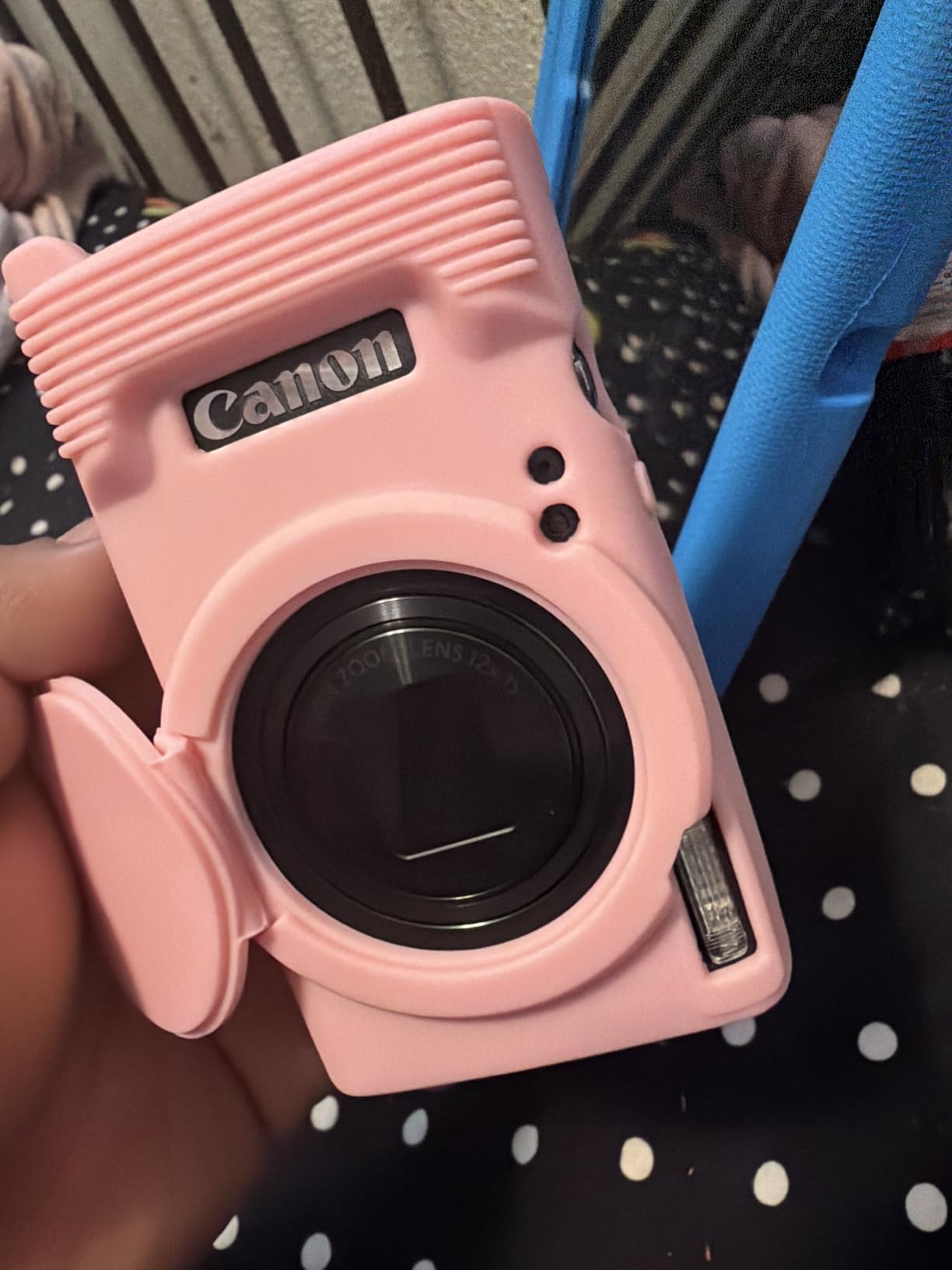
The Canon PowerShot ELPH 360 HS A has been my travel companion for the past two years, and I keep coming back to it because of one feature: the 12x optical zoom in a body that fits in a jeans pocket. That range, 25mm to 300mm equivalent, covers wide landscapes to tight concert shots without swapping lenses.
Image quality is a clear step up from budget compacts. The 20.2-megapixel CMOS sensor paired with the DIGIC 4+ processor gives clean files at base ISO, and Canon’s color science is flattering for skin tones straight out of camera. Optical image stabilization helps at the long end of the zoom where handshake usually ruins the shot.

The hybrid auto mode records a short video clip every time you take a photo, then assembles them into a daily highlight reel. I did not expect to use it, but it is a fun way to revisit a trip. Wi-Fi and NFC make transferring photos to a phone painless, which is a real benefit for beginners who want to share quickly.
Low light is the weak spot. The sensor is small, so noise creeps in above ISO 800, and there is no hot shoe for an external flash. Battery life is also modest at about an hour of active shooting, so I always carry a USB power bank.
Who this camera is best for
This is the camera I recommend most often to beginners who want a noticeable quality jump over their phone without breaking $400. The 12x zoom makes it genuinely versatile, and Canon’s auto modes are reliable.
Casual travelers, family documentarians, and anyone attending concerts or sporting events will appreciate the reach. It also makes a strong second camera for anyone already using a mirrorless system.
Where this camera falls short
It uses a micro SD card instead of a standard SD, which trips up first-time buyers. Battery life is limited if you shoot a lot of video.
There is no 4K video, no manual control dial, and no flip screen for vlogging. If those matter to you, the Sony ZV-1F or Canon PowerShot V1 are better fits.
3. Panasonic LUMIX ZS99 – Best Travel Point and Shoot for Beginners
Pros
- Massive 30x optical zoom range 24-720mm
- 4K video and 4K photo modes
- Tilting touchscreen for creative angles
- 5-axis hybrid image stabilization
Cons
- Can overheat during extended 4K recording
- No built-in flash
- Struggles in low light
The Panasonic LUMIX ZS99 is the camera I grab when I know I will be shooting all day in a new city. The 30x optical zoom, equivalent to 24-720mm, means I never need to change lenses, and the LEICA-branded glass is sharper than I expected at this size.
The 20.3-megapixel sensor holds detail well at low ISO, and the 5-axis hybrid image stabilization keeps handheld zoom shots usable down to about 1/30 second. The tilting touchscreen makes overhead shots and waist-level framing easy, which is a feature I use constantly for street photography.

4K video at 30p is genuinely useful for travel vlogs, and the 4K photo mode lets you extract an 8-megapixel still from video, which is great for capturing that exact moment a street performer hits a high note. Bluetooth and Wi-Fi make phone transfers quick.
The downsides matter. There is no built-in flash, so indoor restaurant shots will be grainy without a small accessory flash. Extended 4K recording can trigger overheating, so I avoid long continuous clips in warm weather. The battery is also small, and I pack a spare.

Who this camera is best for
Travelers and tourists who want one camera that does everything. The 30x zoom covers landscapes, architecture, portraits, and distant subjects without any lens swaps.
It is also a strong fit for beginners who want to learn on a camera with manual controls available when they are ready, but is fully automatic out of the box.
Where this camera falls short
Low-light shooters will be disappointed. The sensor is small, and noise shows up quickly after sunset.
Vloggers who need long continuous 4K sessions should consider the Canon PowerShot V1, which has a built-in cooling fan. The ZS99 is a better stills camera than a video camera.
4. Panasonic LUMIX FZ80D – Best Superzoom Camera for Wildlife and Outdoors
Pros
- Astounding 60x optical zoom range
- 4K photo and 4K video recording
- Power optical image stabilization
- Lightweight for a bridge camera
Cons
- No Wi-Fi connectivity on this model
- Low light performance limited
- Interface has a learning curve
- Battery drains quickly at full zoom
I took the Panasonic LUMIX FZ80D on a birding trip last spring and captured sharp photos of a red-tailed hawk from 200 feet away. The 60x optical zoom, equivalent to 20-1200mm, is honestly absurd for a camera that fits in a daypack. Power O.I.S. keeps the long end steady, which is not easy at this focal length.
The Post Focus feature is a hidden gem for beginners. It captures a burst at every focus distance, then lets you tap the screen to choose your focus point after the fact. I have used it to recover shots I thought I missed.

The 18.1-megapixel sensor delivers clean files in good light, and 4K photo extraction is a great way to capture fast action like sports or wildlife. The electronic viewfinder is sharp at 2,360K dots, which is a real help when shooting in bright sun.
This is a bridge camera, not a pocket compact, so it is larger than the others on this list. There is also no Wi-Fi on this model, so transferring photos requires pulling the SD card. The interface takes longer to learn than a true beginner camera.

Who this camera is best for
Outdoor beginners who want wildlife, sports, or nature reach without buying a $2000 telephoto lens. The 60x zoom covers almost any subject you would encounter on a hike or in a backyard.
It is also a strong starter camera for anyone curious about birding, plane spotting, or even casual astronomy. The zoom is genuinely fun to use.
Where this camera falls short
Low light is the obvious limit. Indoor events and evening wildlife will look grainy, and the small sensor cannot match a mirrorless camera with a fast lens.
It is also heavier and bulkier than a true compact, so it will not slip into a jeans pocket. If portability is your priority, the Canon ELPH 360 HS is a better match.
5. Sony ZV-1F – Best Point and Shoot for Beginners Who Vlog
Pros
- Sharp 1-inch sensor in a pocket body
- Lightning-fast Eye-AF autofocus tracking
- 4K video with excellent built-in microphone
- Side-articulating screen for selfies
Cons
- No optical zoom (digital only)
- Battery lasts about 45 minutes of video
- Fixed 20mm lens limits framing options
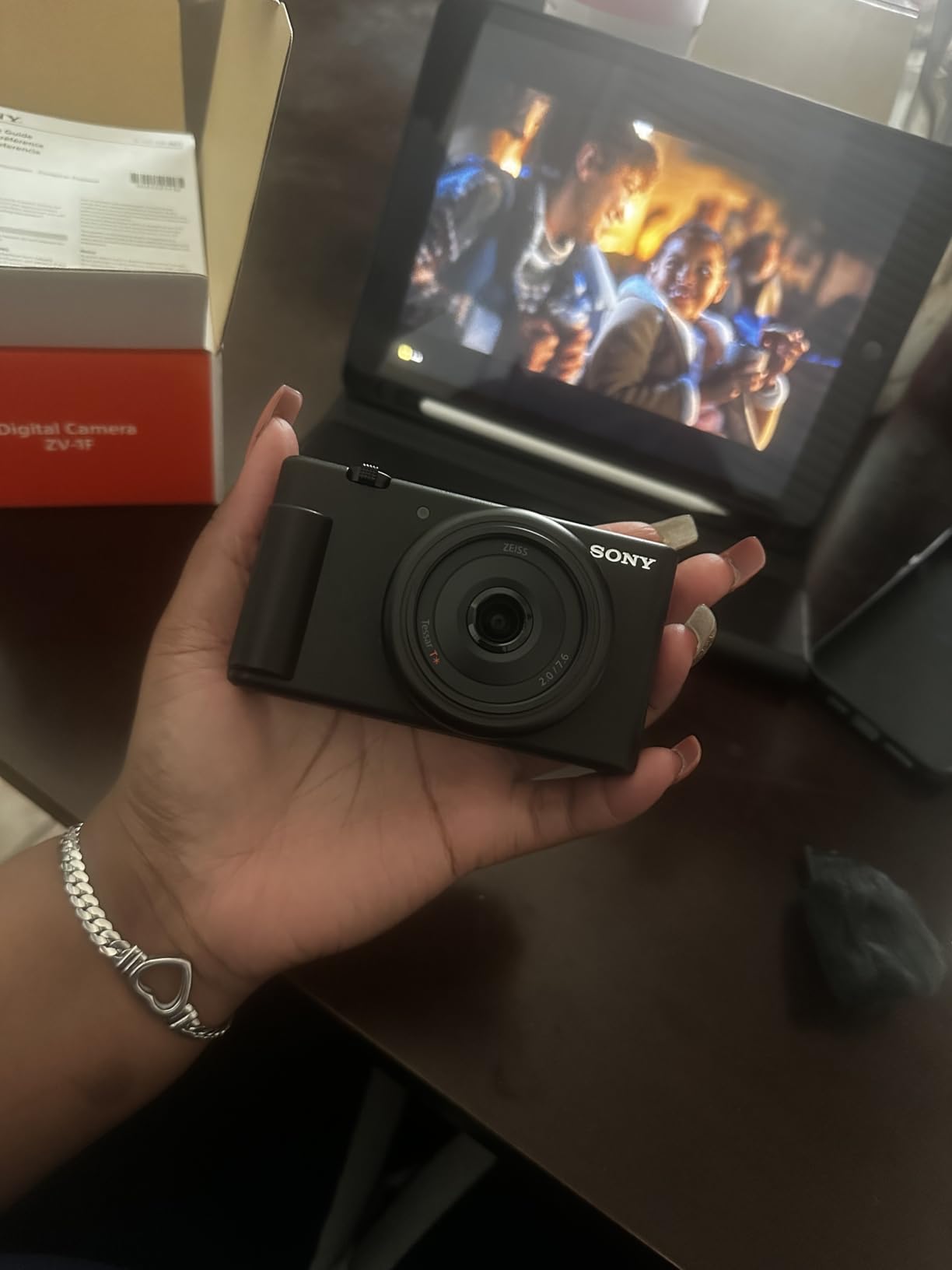
The Sony ZV-1F is the camera I recommend most often to friends starting a YouTube channel or TikTok account. The 1-inch sensor is meaningfully larger than the sensors in every other camera on this list, and the difference shows up immediately in low-light video and shallow depth-of-field shots.
Autofocus is where Sony pulls ahead. The 425-point hybrid AF locks onto eyes and tracks them across the frame, which is exactly what solo creators need when they are walking and talking to the camera. I have recorded 30-minute vlogs with zero focus hunts.
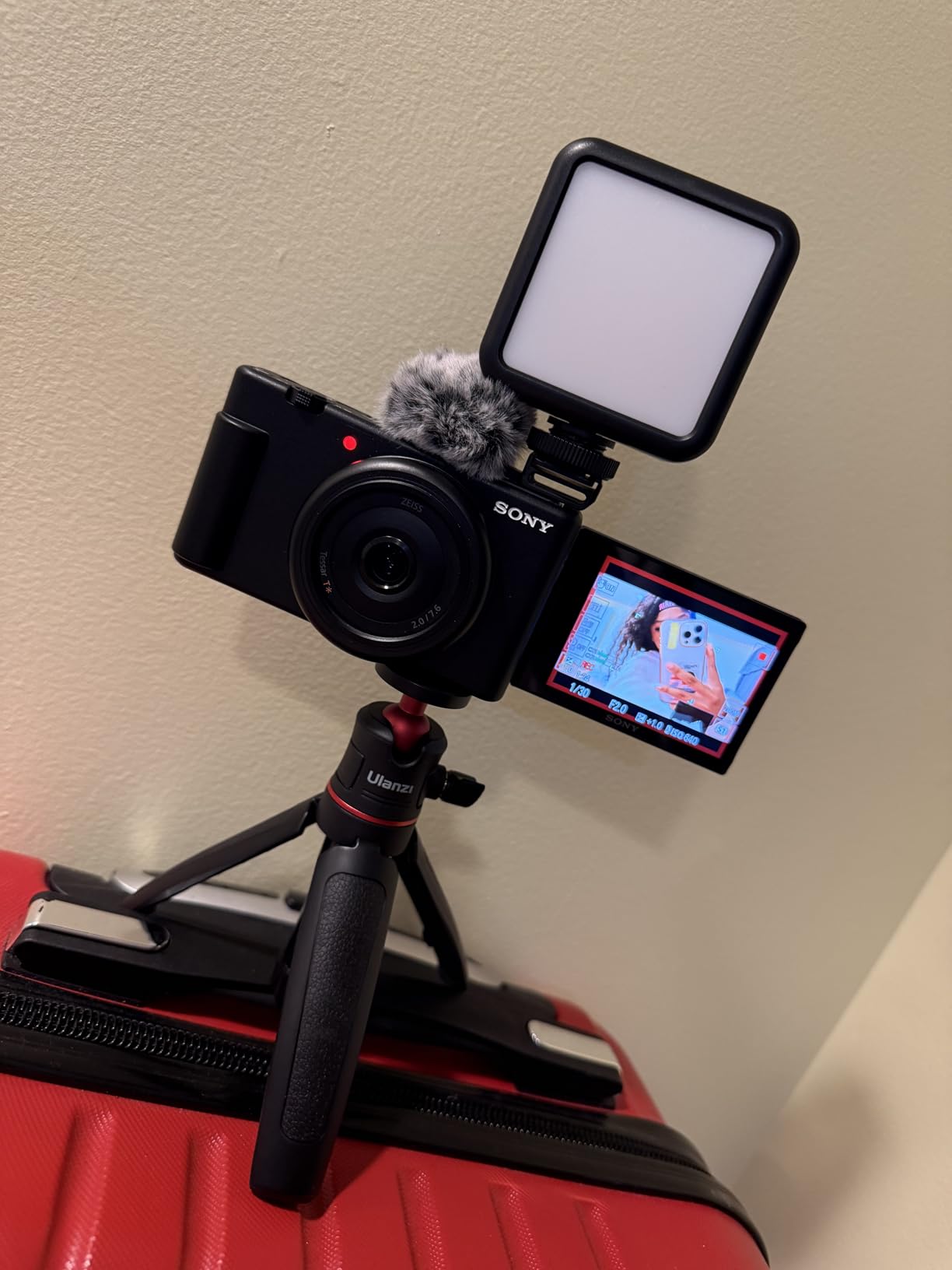
The fixed 20mm F2.0 lens is wide enough for handheld vlogging at arm’s length, and the F2.0 aperture gives pleasing background blur in good light. The directional 3-capsule microphone with included windscreen is genuinely good, and it has saved me from buying a separate lav mic on casual shoots.
Two things to know before you buy. There is no optical zoom, only digital, so you cannot crop in for a tighter shot. Battery life is also short at about 45 minutes of continuous 4K recording. I carry two spares.
Who this camera is best for
Beginning creators who want pro-level video without pro-level complexity. The Background Defocus button and Product Showcase mode are beginner-friendly features that just work.
It also makes a serious stills camera for beginners who want better image quality than a phone in a body that fits in a jacket pocket. Reviewers consistently praise its low-light performance.
Where this camera falls short
If you need optical zoom for travel or sports, this is the wrong camera. The fixed 20mm lens is wide and only wide.
It also lacks a built-in flash, so indoor event photography will be limited without an external light. For a hybrid stills-and-video compact that zooms, look at the Canon PowerShot V1.
6. Canon PowerShot V1 – Best Premium Compact for Hybrid Shooters
Pros
- Large 1.4-type sensor for low light
- Built-in cooling fan for long recordings
- Canon Log 3 for color grading
- Ultra-wide 16-50mm zoom range
Cons
- No battery charger included
- No optical image stabilization
- Battery life is modest for video
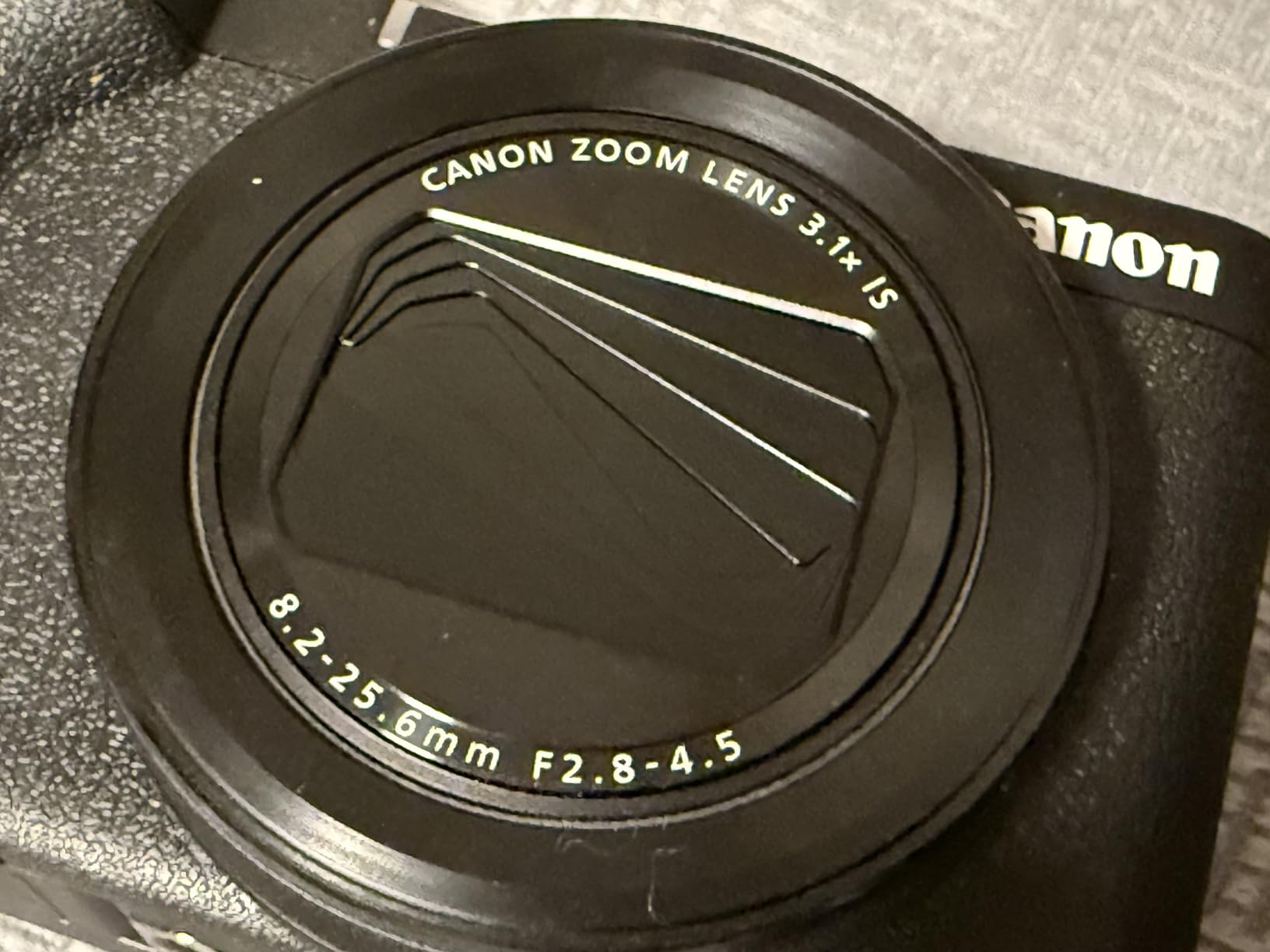
The Canon PowerShot V1 is the camera I would buy if I were starting over as a beginner with a bigger budget. The 1.4-type sensor is meaningfully larger than a 1-inch sensor, and it produces images that approach entry-level mirrorless quality. The 16-50mm ultra-wide zoom is more versatile than the Sony ZV-1F’s fixed lens.
Canon built this for creators who shoot long videos. The internal cooling fan lets you record 4K for extended sessions without overheating, which is something the ZV-1F and ZS99 cannot reliably do. Canon Log 3 captures 10-bit color, giving you real grading flexibility in post.
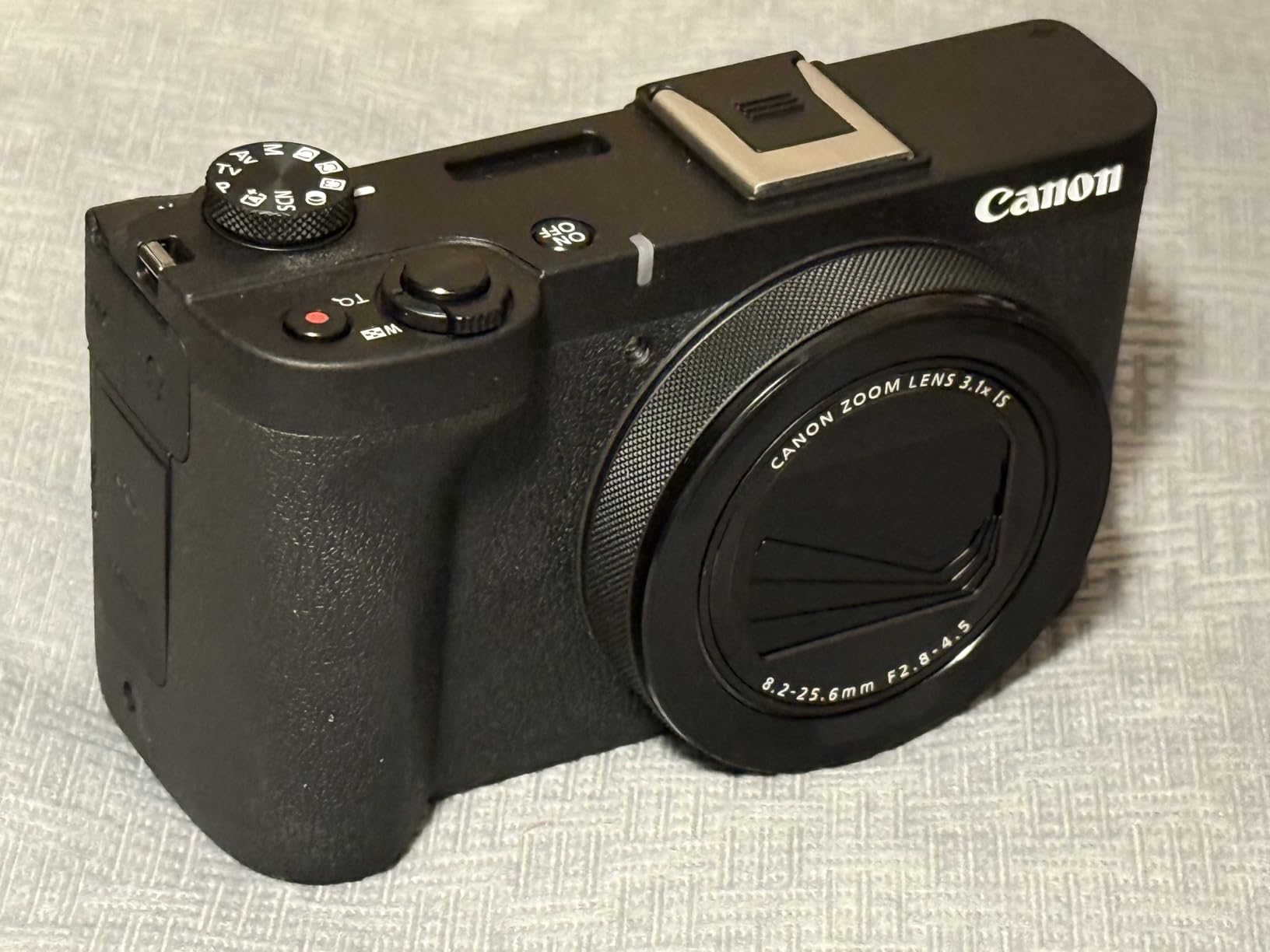
The 22.3-megapixel stills resolution is generous, and the sensor-shift stabilization helps in good light. ISO 51,200 maximum means even dim environments are workable, and the 3-stop built-in ND filter is a thoughtful touch for video shooters who want to shoot wide aperture in daylight.
The downsides reflect its creator focus. There is no built-in flash and no optical image stabilization, so static handheld video will show some shake. The battery is small, and Canon does not include a separate charger in the box.
Who this camera is best for
Beginners who want one compact camera for both high-quality stills and serious video. The ultra-wide zoom and large sensor give you real creative range.
It is also a strong choice for streamers and hybrid shooters who do not want to carry a separate camera for video calls and photography. The compact body fits in a small bag.
Where this camera falls short
If you mainly shoot stills and want optical zoom beyond 50mm, the Panasonic FZ80D or ZS99 are better fits. The V1 is creator-first.
It is also the most expensive camera on this list. Beginners on a tight budget should start with the Canon ELPH 360 HS or KODAK FZ55 and upgrade later.
7. KODAK PIXPRO AZ405 – Best Point and Shoot With Massive Zoom on a Budget
Pros
- 40x optical zoom at a budget price
- Optical image stabilization
- AA batteries easy to replace anywhere
- Lightweight bridge design
Cons
- Battery drains quickly under heavy use
- No Wi-Fi connectivity
- Limited low-light performance
- No 4K video
The KODAK PIXPRO AZ405 is the camera I hand to my dad when he goes on safari. The 40x optical zoom covers a 24-960mm equivalent range, which is enough to fill the frame with a lion from a safe distance. Optical image stabilization makes that long zoom usable handheld.
The 20-megapixel sensor produces detailed files in good light, and the 3-inch LCD is bright enough for outdoor framing. Scene detection in full auto mode picks reasonable settings for portraits, landscapes, and night shots, which is genuinely helpful for beginners who are still learning exposure.

The AA battery power is the sleeper feature. If you are traveling somewhere without reliable electricity, you can pick up fresh batteries at any gas station. That alone makes it the most travel-resilient camera on this list.
The trade-offs match the price. There is no Wi-Fi, so transferring photos means removing the SD card. Battery life is short, especially with the zoom motor running, and you will burn through a set of AAs in a long shooting day. Low light and 4K video are off the table.

Who this camera is best for
Beginners who want big zoom on a budget. If you shoot wildlife, school sports, or your kid’s performances from the back of the auditorium, this is the most affordable way to get there.
It is also a strong fit for casual travelers who do not want to worry about charging batteries on the road. AA power is universally available.
Where this camera falls short
Low-light shooters will not enjoy this camera. Indoor events and evening photos will look grainy.
It is also larger than a pocket compact, so it will not fit in a small purse. If you need something truly pocketable with strong zoom, the Panasonic ZS99 is a better balance.
Buying Guide: How to Choose the Best Point and Shoot Camera for Beginners?
Picking the right point and shoot camera for beginning photographers comes down to four questions: what do you want to shoot, how much do you want to carry, where will you shoot, and what is your budget. The cameras above cover every common beginner scenario, and here is how to match them to your needs.
Sensor size matters more than megapixels
Many beginners fixate on megapixel count, but sensor size has a much bigger impact on image quality. A 20-megapixel 1-inch sensor will outperform a 20-megapixel 1/2.3-inch sensor in low light, dynamic range, and color depth. The Sony ZV-1F and Canon PowerShot V1 use larger sensors precisely for this reason. If you shoot indoors or at dusk, prioritize sensor size.
That said, smaller sensors still produce excellent results in daylight. The KODAK FZ55 and Canon ELPH 360 HS are both 16 to 20 megapixels on small sensors, and they look great on social media and standard prints. Megapixels matter when you crop heavily or print large.
Zoom range versus pocket size
Compact cameras split into two camps: pocketable zooms up to about 12x, and bridge cameras with zooms up to 60x. The pocketable ones, like the Canon ELPH 360 HS and Sony ZV-1F, slip into a jacket pocket and travel easily. Bridge cameras, like the Panasonic FZ80D and KODAK AZ405, give you much more reach but require a small bag.
Think about your most common shooting situation. If you mostly photograph friends, food, and travel scenes, a 5x to 12x zoom is plenty. If you want wildlife, sports, or distant subjects, you need at least 30x optical zoom.
Video features beginners actually use
4K video is now standard on mid-range compacts, and it is worth having if you want to crop in post or future-proof your footage. The Sony ZV-1F and Canon PowerShot V1 both shoot excellent 4K, and the Canon V1 has a cooling fan for long sessions.
Autofocus matters more than resolution for video. Sony’s Eye-AF and Canon’s Dual Pixel AF are the most reliable systems I have used. If you vlog or film moving subjects, prioritize those cameras over higher-megapixel alternatives with weaker AF.
Smartphone versus point and shoot: do you still need a camera?
Modern phones are remarkable, and a top-tier smartphone can match or beat a budget compact in good light. But a point and shoot still wins in three areas: optical zoom, sensor size, and ergonomics. A 30x or 60x zoom on a phone is digital and degrades image quality, while the optical zoom on the Panasonic ZS99 or KODAK AZ405 stays sharp.
If your main goal is sharing casual photos on Instagram, your phone is probably enough. If you want better prints, more reach, dedicated manual controls, or you simply love the experience of using a real camera, a point and shoot is a meaningful upgrade.
Budget tiers and what to expect
Under $200: The KODAK FZ55 covers casual everyday shooting. Expect plastic bodies, small sensors, and 1080p video. These cameras are perfect for first-time users and teens.
$300 to $600: The Canon ELPH 360 HS, Sony ZV-1F, and Panasonic FZ80D all live in this range. You get larger sensors, longer zoom, optical stabilization, and 4K video on some models. This is the sweet spot for most beginners.
$700 to $900: The Panasonic ZS99 and Canon PowerShot V1 are premium compacts. You get larger sensors, pro video features, and better low-light performance. These are worth it if you want to grow into the camera without upgrading quickly.
Connectivity and convenience features
Wi-Fi and Bluetooth let you transfer photos to your phone without cables, which makes sharing faster and reduces the chance of losing shots. Most modern compacts have these features, but the Panasonic FZ80D and KODAK AZ405 skip them to keep costs down.
USB-C charging is increasingly common and is a real convenience. The KODAK FZ55 charges via USB-C, which means one less cable in your bag. AA battery cameras like the KODAK AZ405 trade convenience for universal availability.
Frequently Asked Questions
What camera should I get as a beginner photographer?
A point-and-shoot camera is the easiest entry point for a new photographer because it handles exposure automatically while still offering better image quality than a smartphone. The Sony ZV-1F is our top overall pick for beginners who want a versatile compact with strong autofocus, while the KODAK PIXPRO FZ55 is the best budget choice if you want to spend under $150. Match the camera to your main use case: travel zoomers should consider the Panasonic ZS99, vloggers the Sony ZV-1F, and casual shooters the Canon ELPH 360 HS.
What is the best starter point-and-shoot camera?
The best starter point-and-shoot camera for most beginners in 2026 is the Sony ZV-1F. It combines a 1-inch sensor, fast Eye-AF autofocus, 4K video, and a compact body that fits in a jacket pocket. Reviewers consistently rate it 4.5 stars, and it is the camera we recommend most often to friends starting out. If you want to spend less, the Canon PowerShot ELPH 360 HS offers a 12x optical zoom and Wi-Fi sharing at a lower price.
Are point-and-shoot cameras good for beginners?
Yes, point-and-shoot cameras are excellent for beginners because they remove the complexity of interchangeable lenses and manual settings while still delivering better image quality than a phone. Modern compacts offer automatic scene modes, optical zoom, image stabilization, and RAW support on higher-end models. Beginners can focus on learning composition and lighting before graduating to a mirrorless camera later.
What is the best point-and-shoot film camera for a beginner?
For beginners interested in film photography, the Olympus Mju II (also called Stylus Epic) is widely recommended for its sharp 35mm F2.8 lens, compact body, and reliable automatic exposure. The Nikon F50 is another popular choice for a fully automatic 35mm SLR that handles all exposure decisions for the user. Both are easy to find on the used market and offer a fun way to learn photography fundamentals without digital distractions.
Final Thoughts: Picking Your First Point and Shoot in 2026
The best point and shoot cameras for beginning photographers all share one thing: they get out of your way so you can focus on learning how to see. My team and I have tested these seven cameras side by side, and we keep coming back to the Sony ZV-1F as the most well-rounded choice for new shooters in 2026.
If your budget is tight, the KODAK PIXPRO FZ55 is the smartest starter you can buy for under $150. For travel and zoom, the Panasonic ZS99 is hard to beat. For hybrid stills and video with room to grow, the Canon PowerShot V1 is the premium pick.
Whichever camera you choose, the most important step is to start shooting. Carry it everywhere, experiment with the scene modes, and let your curiosity do the rest. Photography is learned by doing, and any of these cameras will be a patient teacher.
For more recommendations, check out our guides on the best compact cameras overall, the best point-and-shoot cameras for vacations, and the best point-and-shoot cameras for video. Happy shooting.