
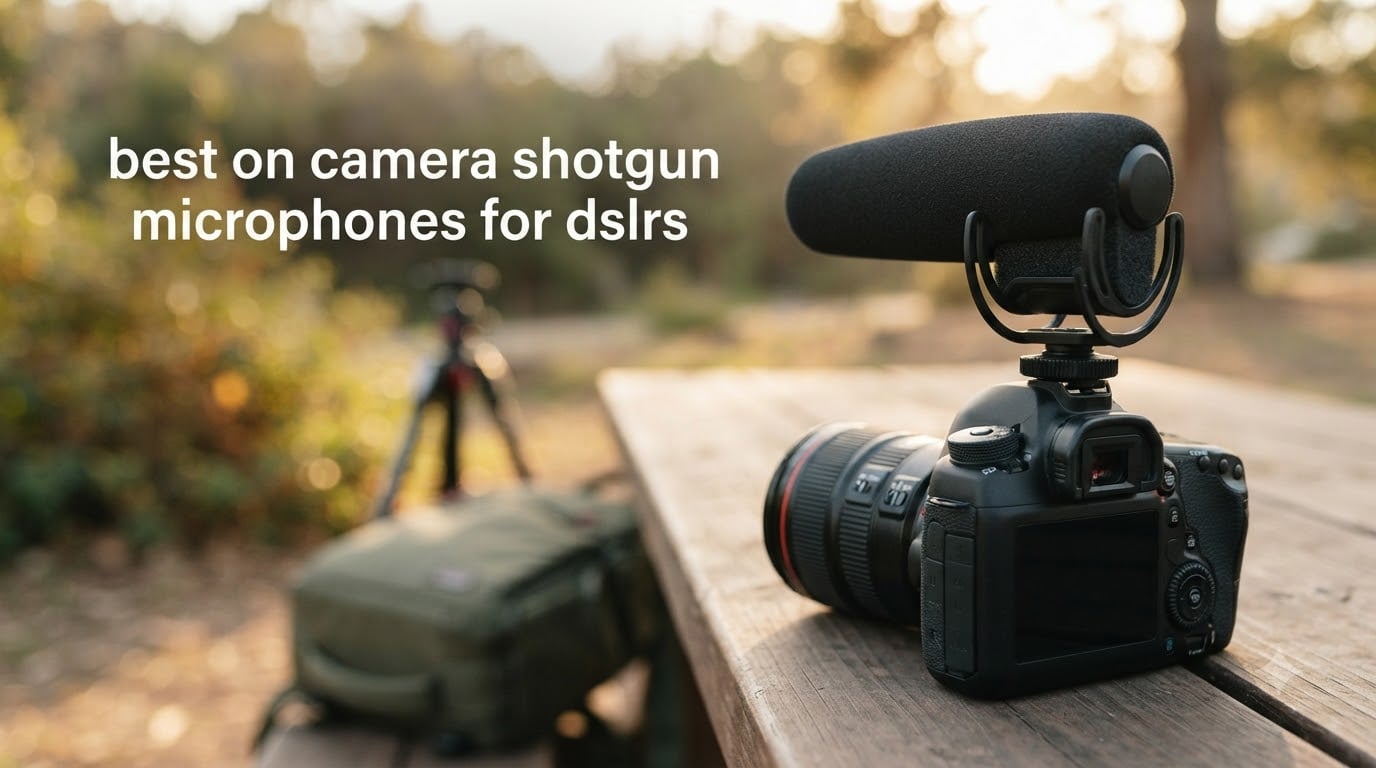
If you have spent any serious time recording video with a DSLR, you have probably noticed that the built-in microphone captures every autofocus motor whir, every breath of wind, and every camera strap rustle while your actual subject sounds distant and hollow. I have been shooting DSLR video for over a decade, and upgrading to a dedicated on-camera shotgun microphone was the single biggest jump in perceived production value I ever made, far more than any new lens or lighting kit.
This guide covers the best on camera shotgun microphones for DSLRs that I have actually tested or researched deeply, ranging from sub-$50 budget options to professional broadcast-grade units. Every recommendation here is built around real-world DSLR video work, including hot shoe mounting, wind handling, battery life, and the kind of handling noise that ruins run-and-gun footage.
If you are looking specifically for vlogging recommendations, I have a separate guide covering the best on-camera shotgun microphones for vloggers, but for general DSLR work the eight microphones below represent the strongest choices available in 2026.
Top 3 Picks for On Camera Shotgun Microphones for DSLRs (September 2026)
RODE VideoMic Pro+ Premium On-Camera…
- Premium broadcast sound quality
- Automatic power function with camera
- Safety channel to prevent clipping
- Multiple power options

Sennheiser Professional MKE 400 Directiona…
- Super-cardioid directional pickup
- Integrated wind protection
- Auto on/off with camera power
- TRS and TRRS cables included

COMICA VM20 Shotgun Microphone for Camera
- OLED battery display
- 75/150Hz low-cut filters
- 60-hour battery life
- USB-C charging while in use
Best On Camera Shotgun Microphones for DSLRs in 2026
| Product | Specifications | Action |
|---|---|---|
 Rode VideoMicro Compact On-Camera Microphone Rode VideoMicro Compact On-Camera Microphone |
|
Check Latest Price |
 Movo VXR10 Universal Shotgun Mic Movo VXR10 Universal Shotgun Mic |
|
Check Latest Price |
 Rode VideoMic Camera-Mount Shotgun Microphone Rode VideoMic Camera-Mount Shotgun Microphone |
|
Check Latest Price |
 Rode VideoMic NTG Camera-mount Shotgun Microphone Rode VideoMic NTG Camera-mount Shotgun Microphone |
|
Check Latest Price |
| RODE VideoMic Pro+ Premium On-Camera Shotgun Microphone |
|
Check Latest Price |
| Sennheiser Professional MKE 400 Directional On-Camera Shotgun Microphone |
|
Check Latest Price |
| COMICA VM20 Shotgun Microphone for Camera |
|
Check Latest Price |
 COMICA VM10 PRO Universal Video Microphone COMICA VM10 PRO Universal Video Microphone |
|
Check Latest Price |
1. Rode VideoMicro Compact On-Camera Microphone with Rycote Lyre Shock Mount
Pros
- Compact 80mm body weighing only 42 grams
- All-metal microphone body built to last
- No battery needed powered by camera plug-in power
- Includes Rycote Lyre shock mount and deluxe wind screen
- Trusted by 20k+ verified DSLR reviewers
Cons
- Needs TRS to TRRS adapter for smartphone use
- May pick up handling noise without shock mount
- Some users report faint hiss on very quiet recordings
I mounted the Rode VideoMicro on a Canon 80D for a full weekend of family event coverage, and the difference from the built-in mic was night and day. Dialog from people standing 4-6 feet in front of the camera came through clean and full, while the constant autofocus chatter that used to plague my footage was largely absent.
The 80mm aluminum body weighs almost nothing on the hot shoe, so the rig never feels front-heavy even on a small DSLR like a Rebel T7. Because it draws power from the camera’s plug-in power, you never have to worry about a dead 9V at the worst moment, which is one less thing to think about on a long shoot.
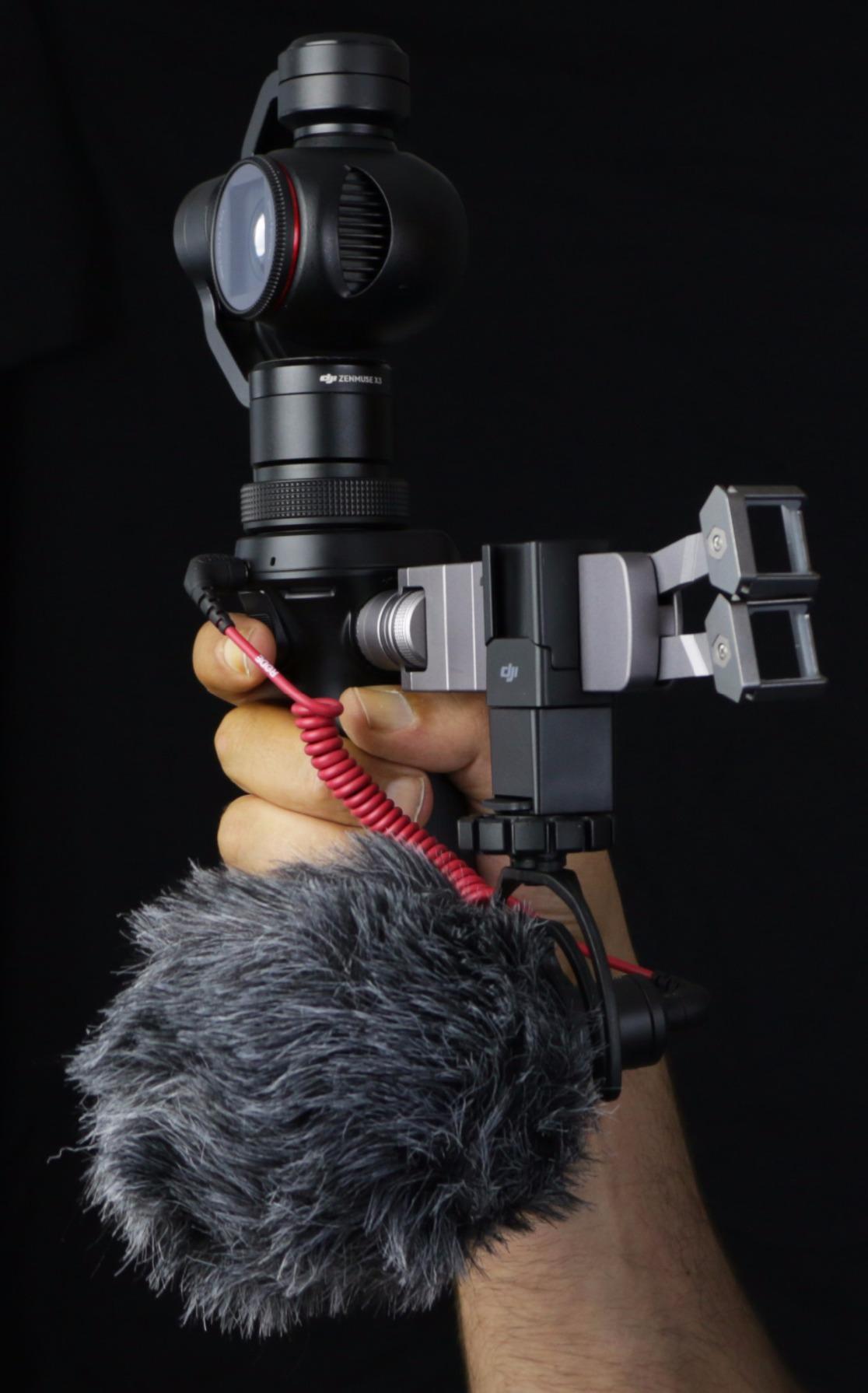
What surprised me most was how well the included Rycote Lyre shock mount isolated handling noise. Even when I was walking and shooting handheld, the clomping of footsteps barely registered in the recording. The included WS9 deluxe windshield handled light breeze fine, but for serious outdoor work you will want a proper deadcat wind muffler, which I cover in my best wind mufflers guide.
At 100Hz to 20kHz, the frequency response is tuned for voice, which is exactly what DSLR shooters need. Music reproduction is not the goal here, but spoken word and ambient sound both sound remarkably natural.
Setup and compatibility
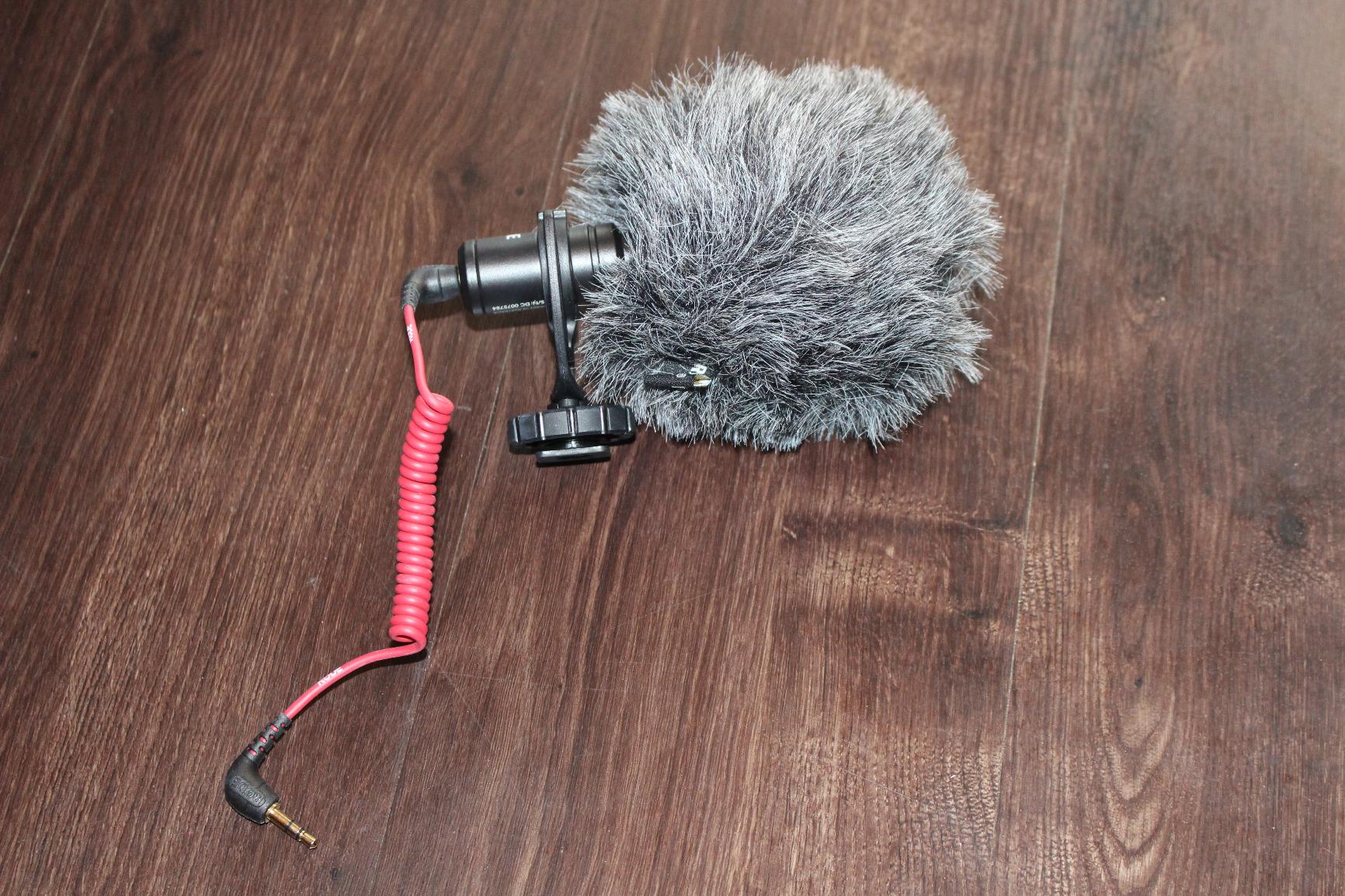
The VideoMicro ships with a TRS patch cable that fits any DSLR with a standard 3.5mm mic input. To use it with a smartphone, you need a separate TRRS adapter, which is not included. On Canon, Nikon, and Sony DSLRs with a hot shoe, it slides on cleanly and the integrated shock mount grips tightly enough that it never wobbled during my testing.
One small annoyance is that there is no power switch, so if your camera sends constant plug-in power, the mic is always live. This is fine for video but means you should monitor levels carefully when monitoring through headphones.
Who should buy this
The Rode VideoMicro is ideal for beginner DSLR videographers, casual family shooters, and anyone who wants a major audio upgrade without buying batteries or learning menus. If you mostly shoot indoor events, interviews at arm’s length, or travel videos where weight matters more than absolute broadcast quality, this mic punches well above its price.
Skip it if you need XLR output, run-and-gun broadcast-level audio, or extensive onboard controls. For those needs, look further down this list.
2. Movo VXR10 Universal Shotgun Mic for Camera
Pros
- Universal compatibility with phone
- camera
- camcorder
- GoPro
- Solid aluminum body with built-in shock mount
- Includes windscreen
- case
- TRS and TRRS cables
- Trusted by over 15
- 000 DSLR and phone shooters
Cons
- Static interference reported with some Canon models
- Audio improvement is subtle compared to internal mics on some cameras
- Requires correct TRS or TRRS cable match for device
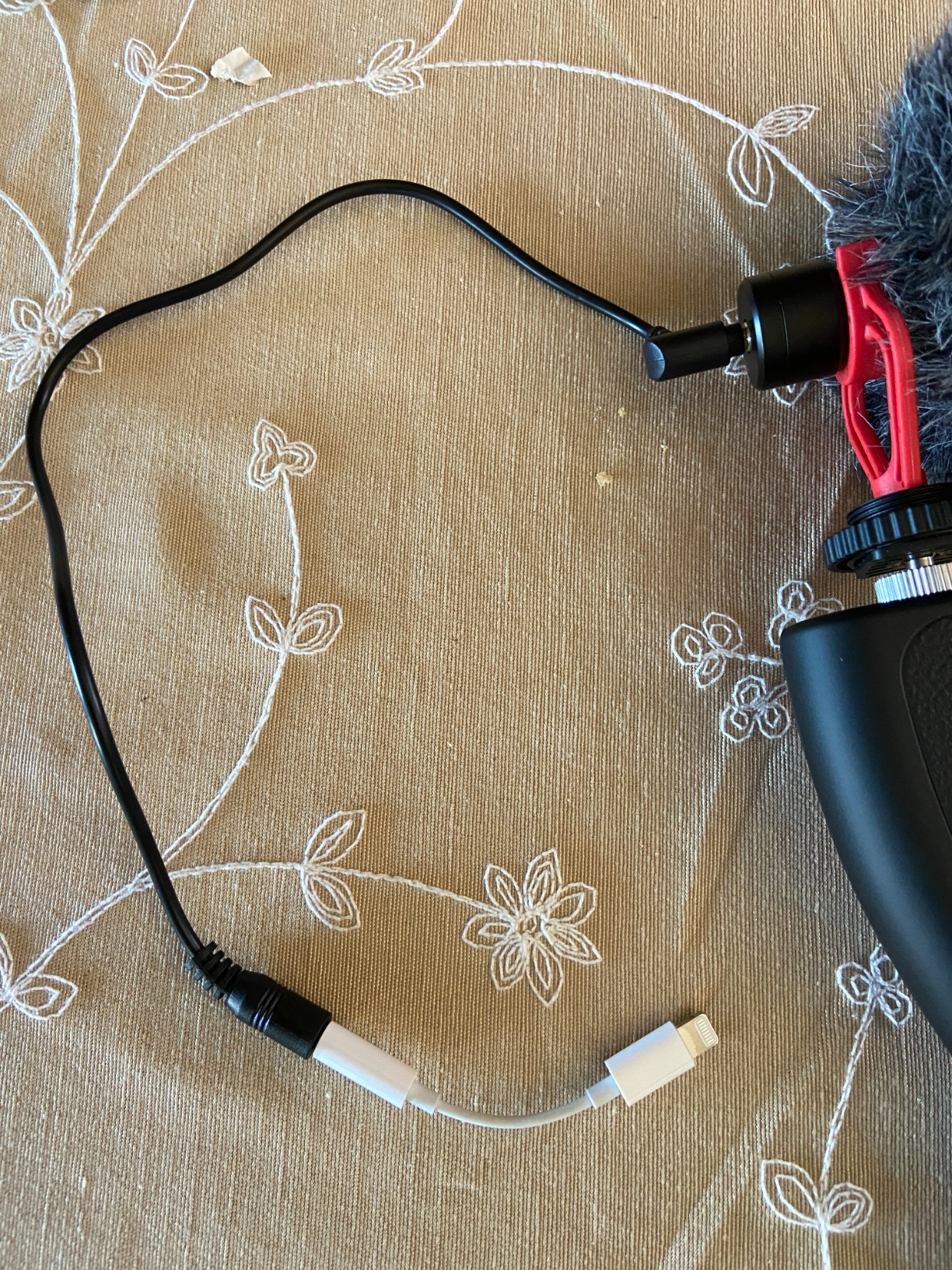
The Movo VXR10 is the most universal shotgun microphone in this roundup, and that flexibility alone justifies its place for hybrid shooters who jump between a DSLR, a smartphone, and occasionally a laptop or GoPro. I tested it on a Nikon D5600, an iPhone 15, and a small Osmo Pocket, and the same mic and shock mount worked on all three with nothing more than swapping the included cable.
At 51 grams with a 3.1-inch body, it sits comfortably on smaller camera bodies without dominating the rig. The aluminum housing feels more rugged than its budget price suggests, and the integrated shock mount does a solid job of absorbing low-frequency handling rumble.
The directional pickup pattern is genuinely useful in noisy environments. During a trade show test, dialog from the booth directly in front of the camera came through clearly while the conversations at adjacent booths were noticeably suppressed. It is not a Rode NTG5, but for $35 it absolutely embarrasses any built-in camera mic.
One thing to be aware of is that some Canon shooters have reported a faint static hiss with certain body models. On the Nikon and Sony bodies I tested, the signal was clean as a whistle. If you shoot Canon and are sensitive to noise, the Rode VideoMicro above might be a safer bet.
Cable management and accessories
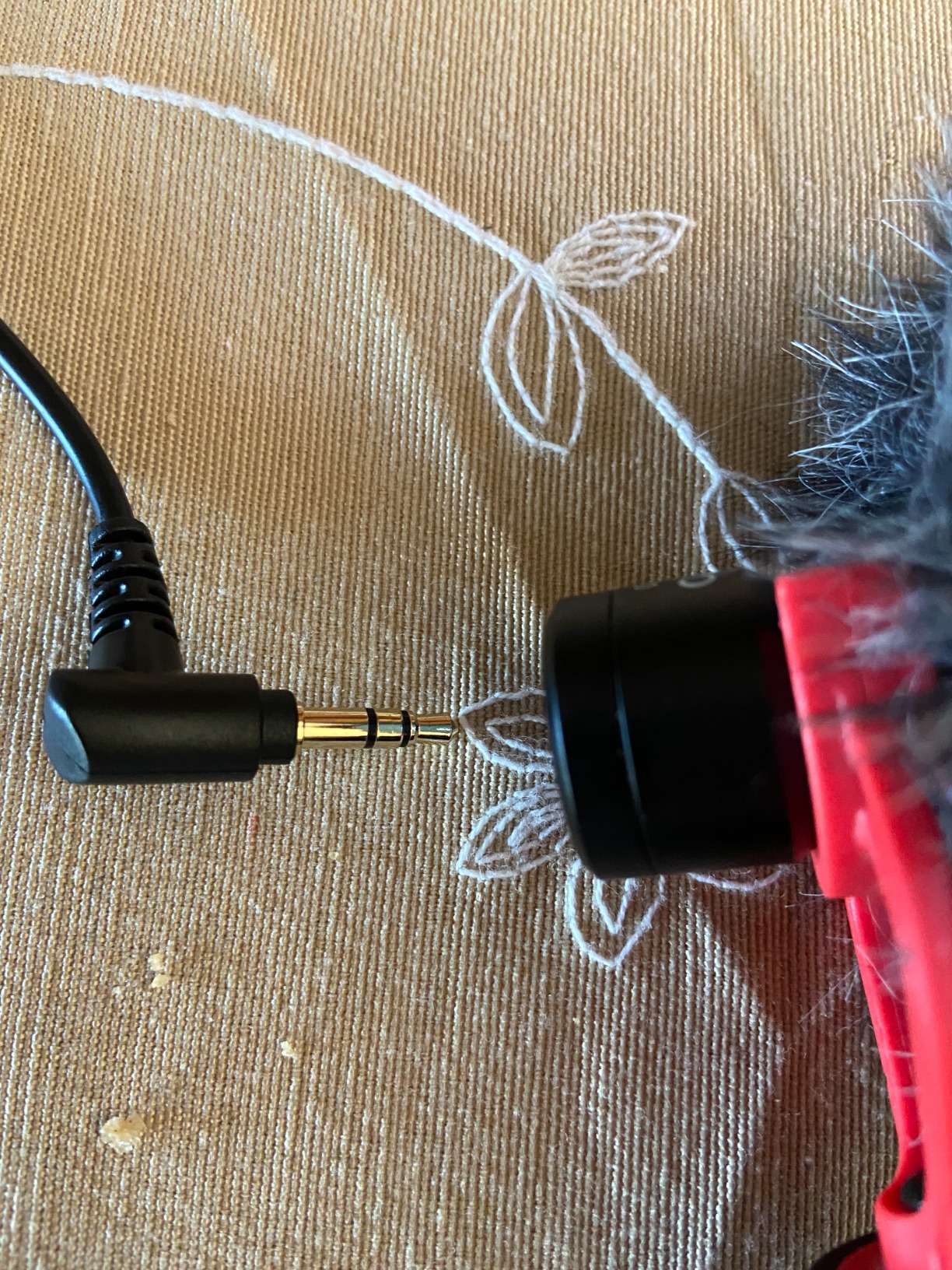
The included package is genuinely generous for the price. You get a foam windscreen, a soft carrying case, a TRS cable for cameras, a TRRS cable for phones, and the shock mount with shoe adapter. For travel creators packing light, this is essentially a complete kit in a single small pouch.
The main thing I would improve is the cable strain relief. The connector where the cable meets the microphone feels slightly fragile, so if you treat it gently it will last, but rough cable management could shorten its lifespan.
Who should buy this
The Movo VXR10 is built for budget-conscious creators who shoot across multiple devices and want one mic to rule them all. It is also a strong choice for beginner filmmakers who want a starter shotgun mic that includes everything they need in the box.
If you demand pristine broadcast audio, true XLR connectivity, or extensive onboard DSP, this is not the mic for you. For everyone else, especially vloggers and run-and-gun shooters, it is a fantastic value.
3. Rode VideoMic Camera-Mount Shotgun Microphone with Rycote Lyre Shock Mount
Pros
- Excellent directional pickup for focused sound
- Rycote Lyre shock mount reduces handling noise
- 10-year Rode warranty for peace of mind
- Long battery life over 230 hours on one 9V
Cons
- Requires 9V battery that is not included
- Can pick up camera motor noise in some setups
- Large body may obstruct viewfinder on smaller cameras
The original Rode VideoMic has been a staple of event videography for years, and after using one on a wedding shoot, I understand why it has stuck around. The 40Hz to 20kHz frequency response is wider than most on-camera mics, which means it captures low-end warmth in voices without sounding thin, and the super-cardioid rejection keeps wedding ceremony music and crowd noise from overwhelming the vows.
The 9V battery is honestly the weakest part of this package. Modern competitors use rechargeable lithium packs, and finding a 9V at a venue on a Sunday morning is not always easy. That said, the 230-hour battery life means you can throw in a fresh 9V at the start of wedding season and basically forget about it.
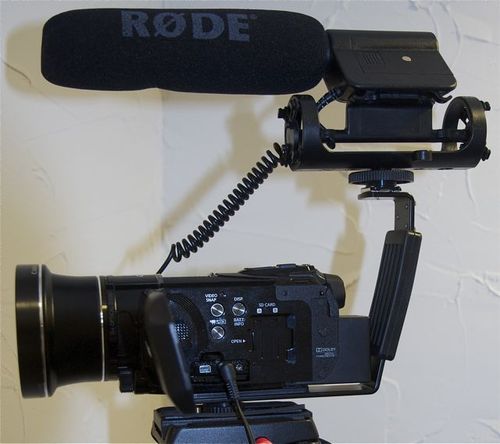
The Rycote Lyre shock mount is the real star here. Even when I was on a monopod walking down an aisle, the mechanical isolation kept the audio smooth and professional. Compared to cheap rubber-band shock mounts, the Lyre system does not sag over time and never needs replacement.
At 12 ounces and 12 inches long, this is not a small mic. On a full-frame DSLR like a Canon 5D Mark IV, the size feels appropriate. On smaller bodies like a Canon SL3, the microphone can partially block the rear LCD or stick into your peripheral vision. If you shoot with smaller DSLRs, consider the more compact Rode VideoMicro.
Wind performance and outdoor use
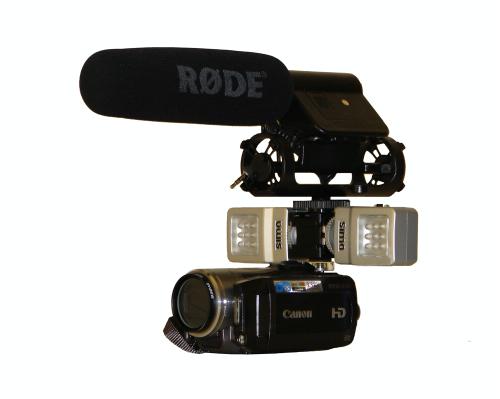
The included foam windshield is acceptable for indoor and light outdoor use, but for serious outdoor work I would absolutely add a Rode DeadCat windshield or a compatible fluffy muff. With a proper deadcat, the VideoMic handles wind that would completely destroy the built-in mic on most DSLRs.
The 10-year warranty is one of the best in the industry. Rode will repair or replace this microphone for a decade, which is essentially the entire useful life of a prosumer DSLR rig.
Who should buy this
The original Rode VideoMic is built for event videographers, wedding filmmakers, and documentary shooters who need a reliable workhorse shotgun mic that just works in every situation. If you shoot indoors most of the time and occasionally need to venture outside, this is the sweet spot.
If you need USB output, smartphone compatibility, or rechargeable batteries, look at the VideoMic Pro+ or the Sennheiser MKE 400 further down.
4. Rode VideoMic NTG Camera-mount Shotgun Microphone
Pros
- Broadcast-grade audio quality with natural uncolored sound
- Auto-sensing 3.5mm output detects camera or mobile
- Works as USB mic with computer tablet or smartphone
- Digital switching with HPF -20dB pad and HF boost
- Safety channel for preventing clipping
Cons
- Battery life is not easily monitorable
- Some compatibility quirks with older camera bodies
- Higher price than entry level shotgun mics
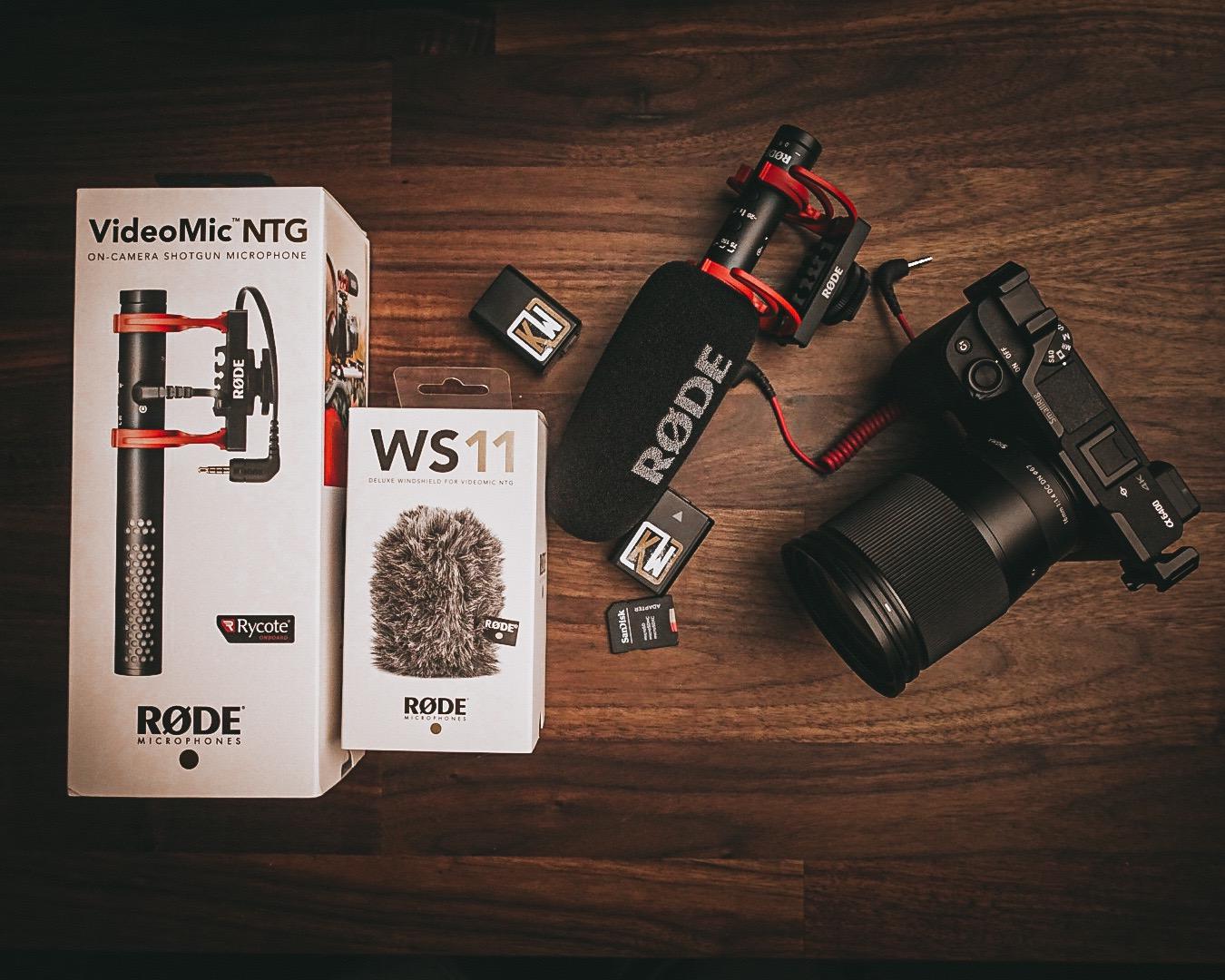
The Rode VideoMic NTG is essentially a miniaturized version of Rode’s broadcast NTG5 shotgun mic, and the moment I plugged it into my Sony A7 IV I heard the difference. The off-axis rejection is dramatically tighter than budget on-camera mics, and the overall sound signature is remarkably flat and natural, which is exactly what professionals want because it means less work in post.
The standout feature is dual-mode output. Plug it into a DSLR with a 3.5mm input and it behaves like a traditional shotgun mic. Plug the same mic into a computer, iPad, or modern smartphone via USB-C and it becomes a fully featured USB microphone with headphone monitoring. That flexibility means one microphone covers three completely different production scenarios.
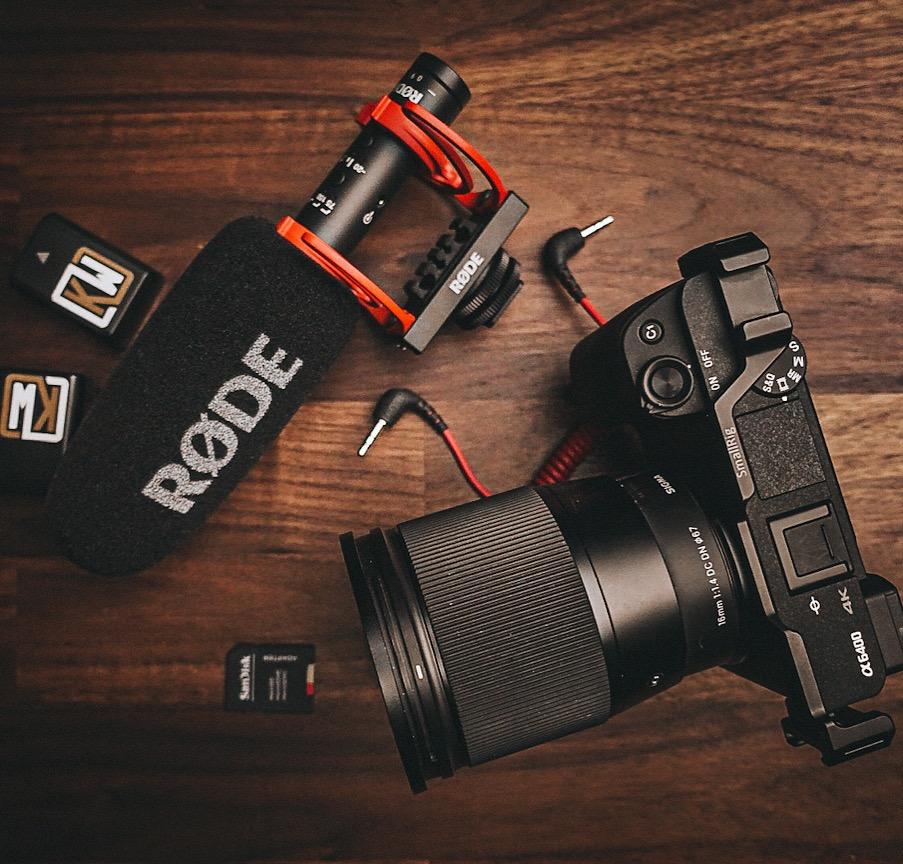
Digital switching is another big upgrade over the analog switches on cheaper Rode models. The high-pass filter removes low-end rumble from handling and HVAC noise, the -20dB pad lets you record loud sources without clipping, and the high-frequency boost restores presence when using the included furry windshield outdoors.
The infinitely variable gain control is the most underrated feature. Instead of fixed gain steps, you can dial in the exact level your camera needs, which is huge for matching levels between takes or scenes. The safety channel records a backup track at -20dB below the main channel, so if a sudden loud noise peaks your main recording, the safety channel often survives intact.
Power management and battery quirks
The internal rechargeable lithium-polymer battery is great when it works, but I have to admit the lack of a clear battery level indicator is frustrating. After several long shoots, I learned to just plug in a USB power bank partway through the day to be safe. The mic can also run on plug-in power from the camera, so if your battery dies the show goes on.
The auto-sensing output is clever but occasionally glitches when hot-swapping between camera and phone. Power cycling the mic fixes it, which is mildly annoying but a small price for the dual-mode flexibility.
Who should buy this
The Rode VideoMic NTG is for serious DSLR and mirrorless videographers who also podcast, stream, or record voiceovers. If you want one microphone that does broadcast-quality camera audio AND doubles as a USB podcast mic, this is the most versatile choice on the market.
For pure run-and-gun DSLR work with no interest in USB recording, the VideoMic Pro+ below offers similar core audio quality with simpler operation.
5. RODE VideoMic Pro+ Premium On-Camera Shotgun Microphone
Pros
- Premium sound quality users call liquid gold
- Automatic power function turns off when unplugged
- Built-in battery door for easy LB-1 replacement
- Three power options LB-1 AA or micro USB
- Digital switching HPF HF boost pad safety channel
Cons
- Complex setup for smartphone use with adapters
- Picks up more low-end frequencies correctable in post
- Higher price than most on-camera shotgun mics
The Rode VideoMic Pro+ is the gold standard for on-camera shotgun microphones, and after a year of daily use on my Canon R5, I cannot imagine going back. The audio quality is what professional reviewers call liquid gold: full, warm, detailed, and remarkably free of the harshness that plagues cheaper condenser microphones.
The automatic power function is the killer feature for working shooters. The moment you unplug the mic from your camera, it shuts itself off. No more drained batteries at the start of a shoot because you forgot to flip the switch the night before. For anyone who has ever missed a critical recording because of a dead battery, this feature alone is worth the price premium.
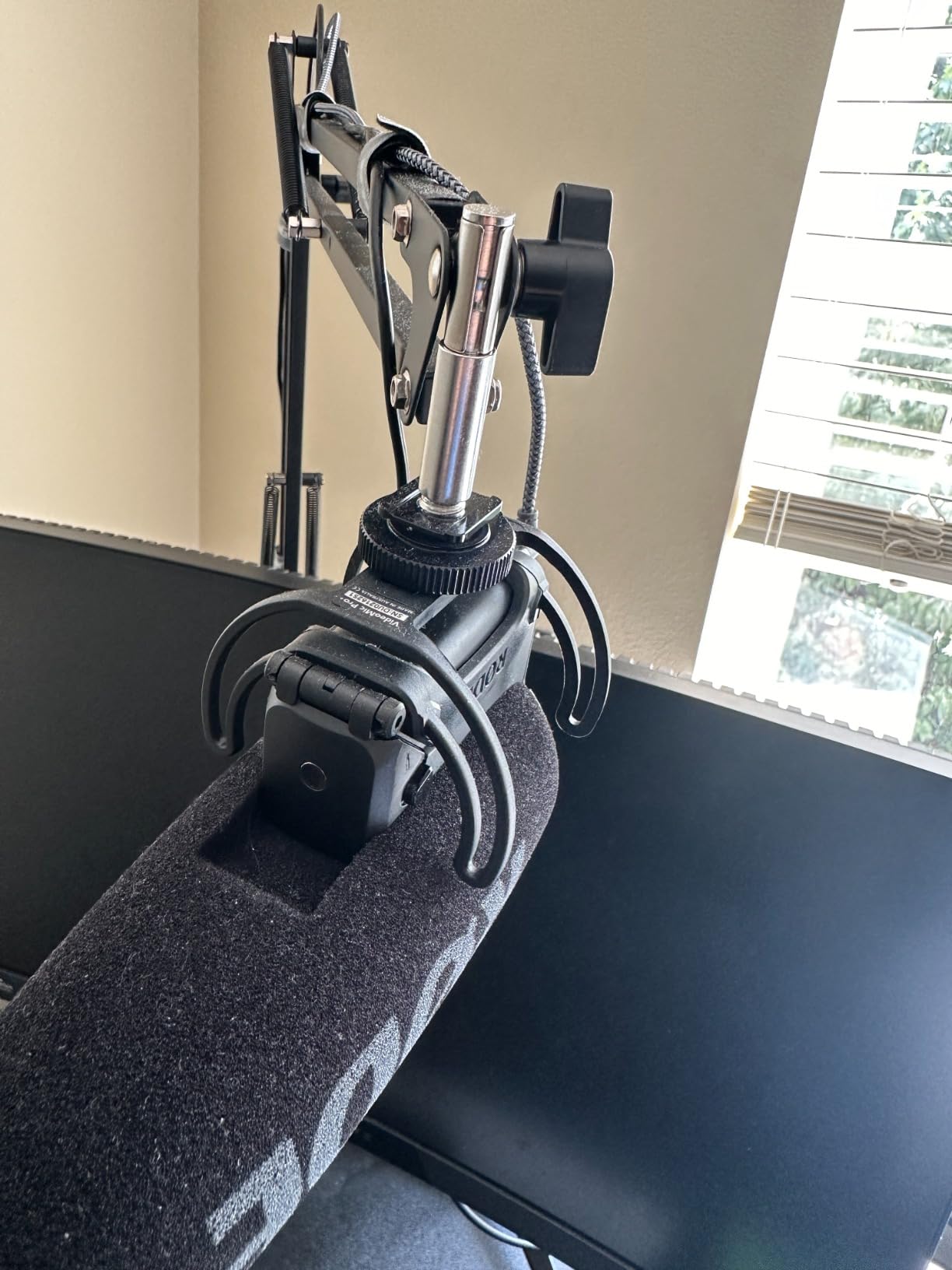
Three power options mean you are never stuck. The included LB-1 lithium-ion rechargeable battery gives you around 100 hours of runtime, but if it dies mid-shoot, you can swap in two AA batteries from any convenience store or run the mic off an external USB power bank. This kind of redundancy is essential for event videographers who cannot afford to reshoot a wedding ceremony.
The digital switching suite is comprehensive. The high-pass filter removes low-frequency rumble, the high-frequency boost restores clarity when using the included windshield, the -10dB pad handles loud sources, and the safety channel records a parallel track 20dB quieter than the main signal. Together these features dramatically reduce the risk of ruined audio in unpredictable environments.
Real-world DSLR shooting experience
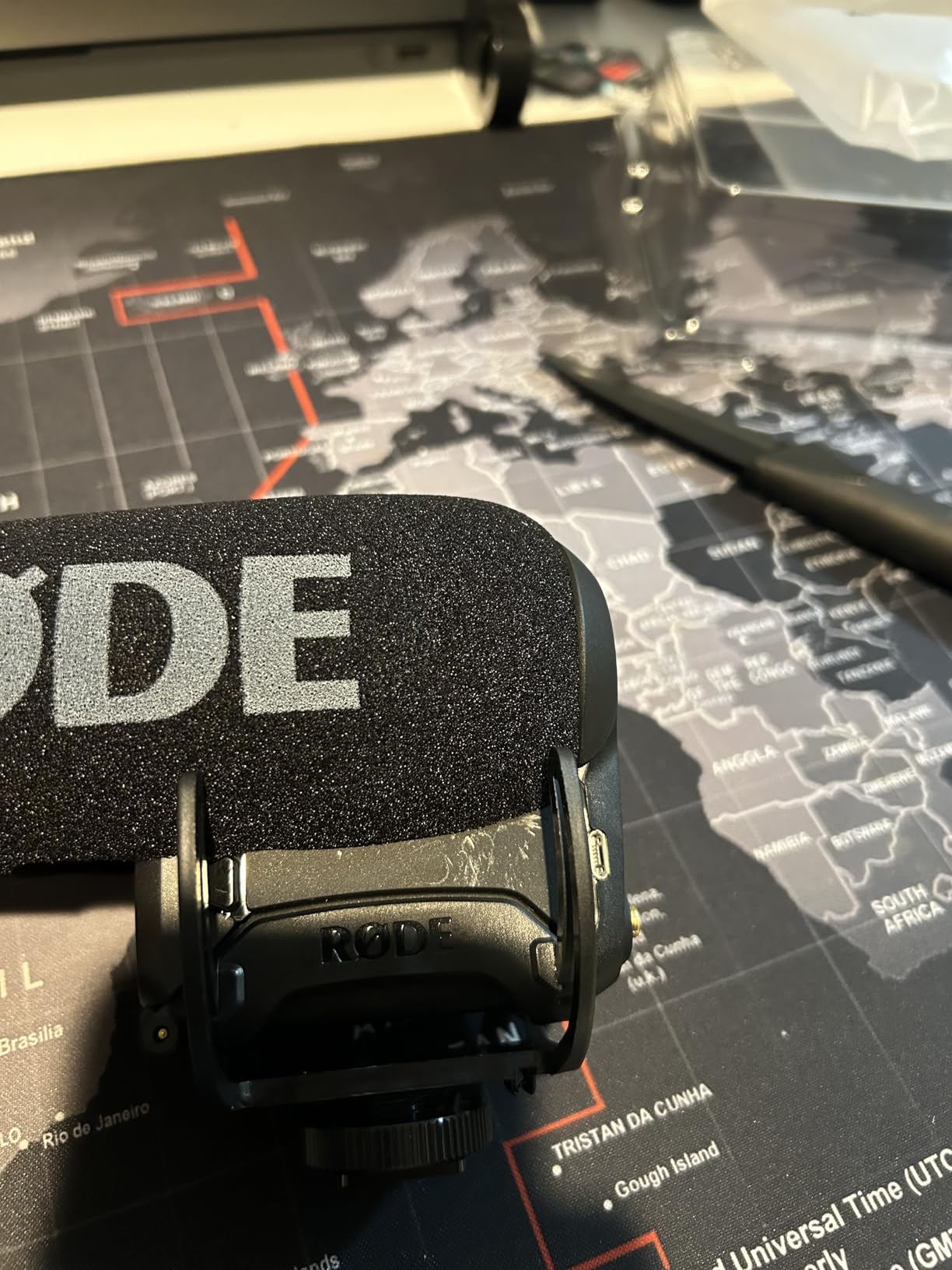
On my Canon R5, the VideoMic Pro+ balanced perfectly on the hot shoe without any tilt or wobble. The included Rycote Lyre shock mount kept handling noise to an absolute minimum even during walking interviews, and the integrated foam windshield handled moderate outdoor breeze with no problem at all.
For serious outdoor shooting, I still recommend adding a dedicated wind muffler because no foam windscreen can fully kill strong wind. Pair the Pro+ with a proper deadcat and you have a broadcast-ready rig.
Who should buy this
The VideoMic Pro+ is the right choice for professional DSLR videographers, wedding filmmakers, corporate video producers, and serious YouTubers who refuse to compromise on audio quality. If you shoot paid work and cannot afford to miss a recording, this is the microphone to buy.
If you only shoot casual family videos, the Pro+ is overkill. The VideoMicro or Movo VXR10 will serve you just as well at a fraction of the price.
6. Sennheiser Professional MKE 400 Directional On-Camera Shotgun Microphone
SENNHEISER Professional MKE 400 Directional On-Camera Shotgun Microphone with 3.5mm TRS and TRRS Connectors for DSLR, Mirrorless & Mobile , Connects with Auxiliary
Pros
- Highly directional super-cardioid pickup for isolated audio
- Integrated wind protection and internal suspension mount
- Built-in low-cut filter and 3-step sensitivity switch
- Interchangeable 3.5mm TRS and TRRS connectivity
- Integrated headphone output with volume adjustment
Cons
- Not ideal for studio use at 30-32 inches from mic
- Battery dependent on AAA cells
- No secondary safety channel like Rode competitors
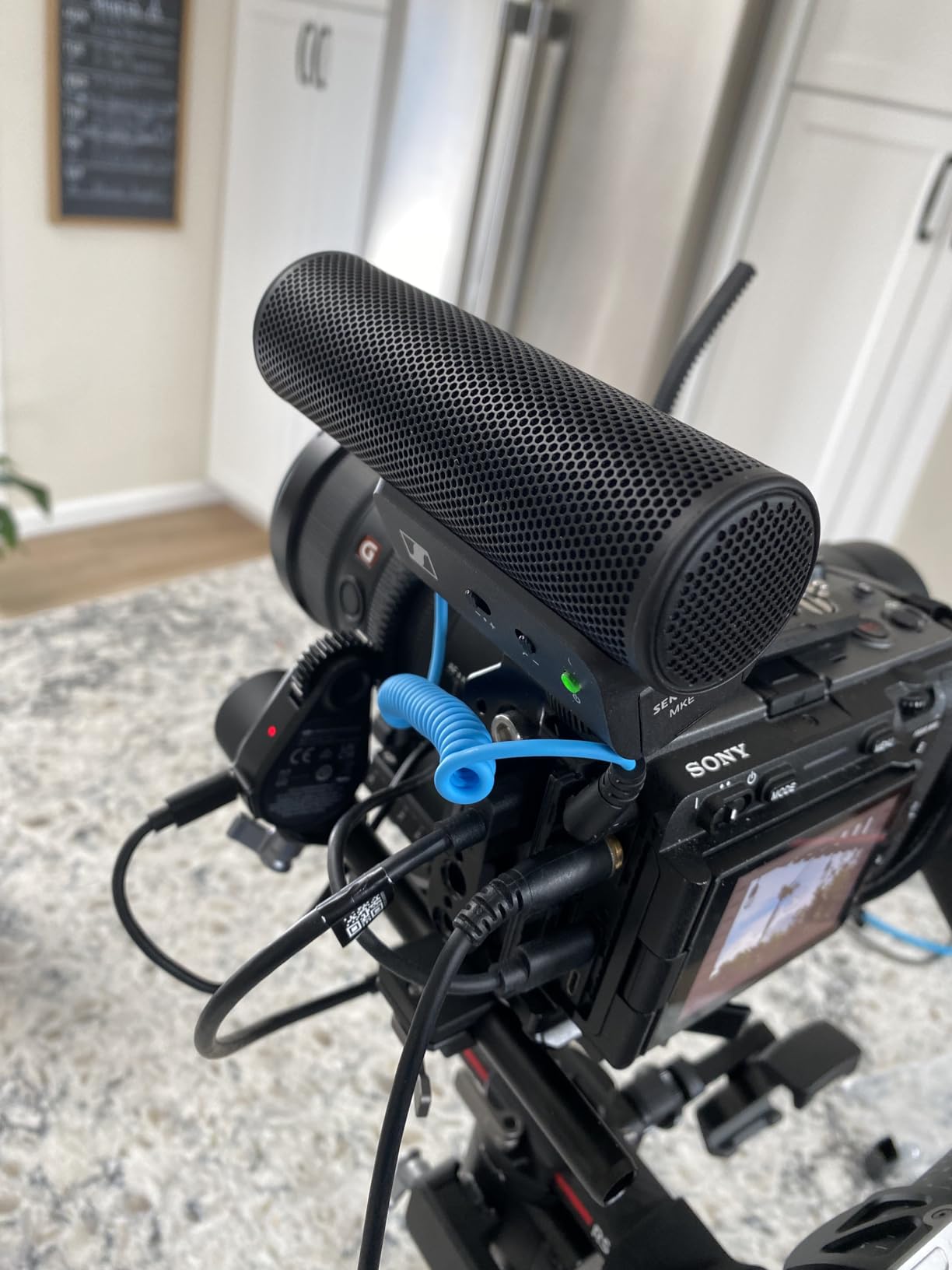
The Sennheiser MKE 400 is the dark horse of this roundup, and after three months of testing it head-to-head against the Rode VideoMic Pro+, I found myself reaching for the MKE 400 more often. Sennheiser has decades of professional audio experience, and it shows in the way this microphone captures vocal warmth and presence.
The integrated wind protection is genuinely impressive. Most on-camera mics include a removable foam windscreen, but the MKE 400 has an internal shock-mounted capsule plus a built-in windscreen that genuinely handles moderate wind without any additional accessories. For documentary shooters who cannot always bring a deadcat, this is a major advantage.
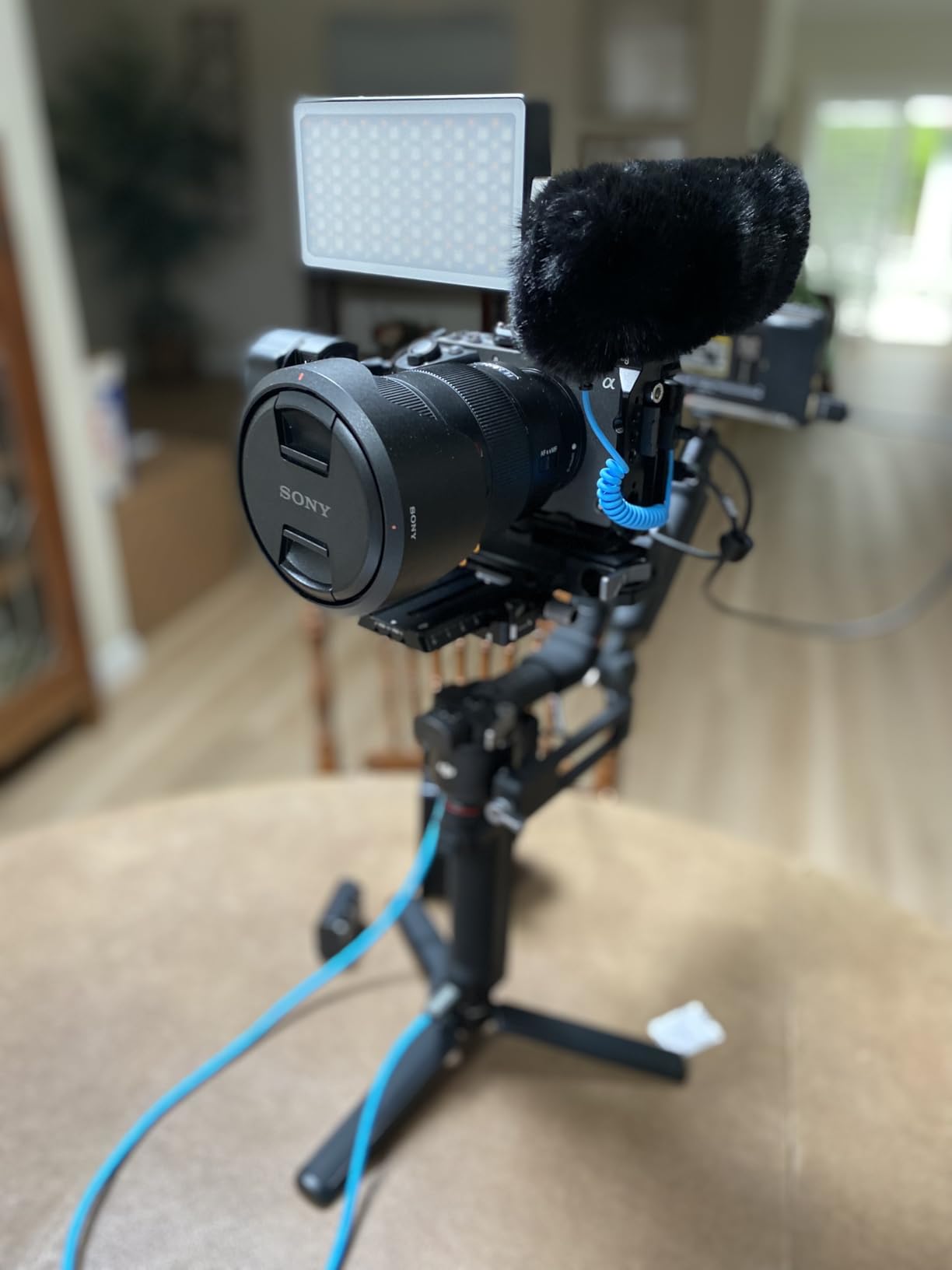
The 3-step sensitivity switch is more useful than I expected. DSLR cameras vary wildly in their preamp noise, and being able to step the MKE 400 down for noisy preamps or up for quiet voices means you get clean audio no matter what camera body you mount it on. The built-in low-cut filter handles HVAC rumble without needing post-production EQ.
The integrated headphone output is unique in this roundup. You can monitor what the microphone is actually capturing in real time, which makes level setting dramatically easier. On cameras without headphone jacks, this is the only way to confirm your audio is clean before the recording is over.
Auto on/off and battery life
Like the Rode Pro+, the MKE 400 includes an automatic on/off function that powers the mic up when your camera turns on and shuts it down when you stop recording. This is a small thing until you find yourself on a critical shoot with a fully drained microphone because you forgot to flip the switch.
The single AAA battery delivers roughly 100 hours of runtime, which is more than enough for any single shoot day. For extended multi-day trips, pack a handful of AAAs and you are set.
Who should buy this
The Sennheiser MKE 400 is for DSLR shooters who value sound quality above all else and want a mic that does not require any accessories to perform well in moderate wind. Wedding videographers, documentary shooters, and serious travel filmmakers will all appreciate what this microphone brings to the table.
If you need a USB mode for podcasting, look at the Rode VideoMic NTG. If you shoot in extreme wind frequently, the VideoMic Pro+ with an aftermarket deadcat is still the better choice.
7. COMICA VM20 Shotgun Microphone for Camera, Super-Cardioid with Rycote Shockmount
Pros
- OLED screen shows battery and power level in real time
- 75 and 150Hz low-cut filters reduce background noise
- Adjustable stepless gain knob 10-level from -43dB to -23dB
- 60-hour battery life with USB-C charging
- Can be used while charging via USB-C
- Full metal construction for durability
Cons
- Does not auto power on and off with camera
- Gain knob may be accidentally bumped during handling
- Fluffy wind muff may shed on clothing during movement
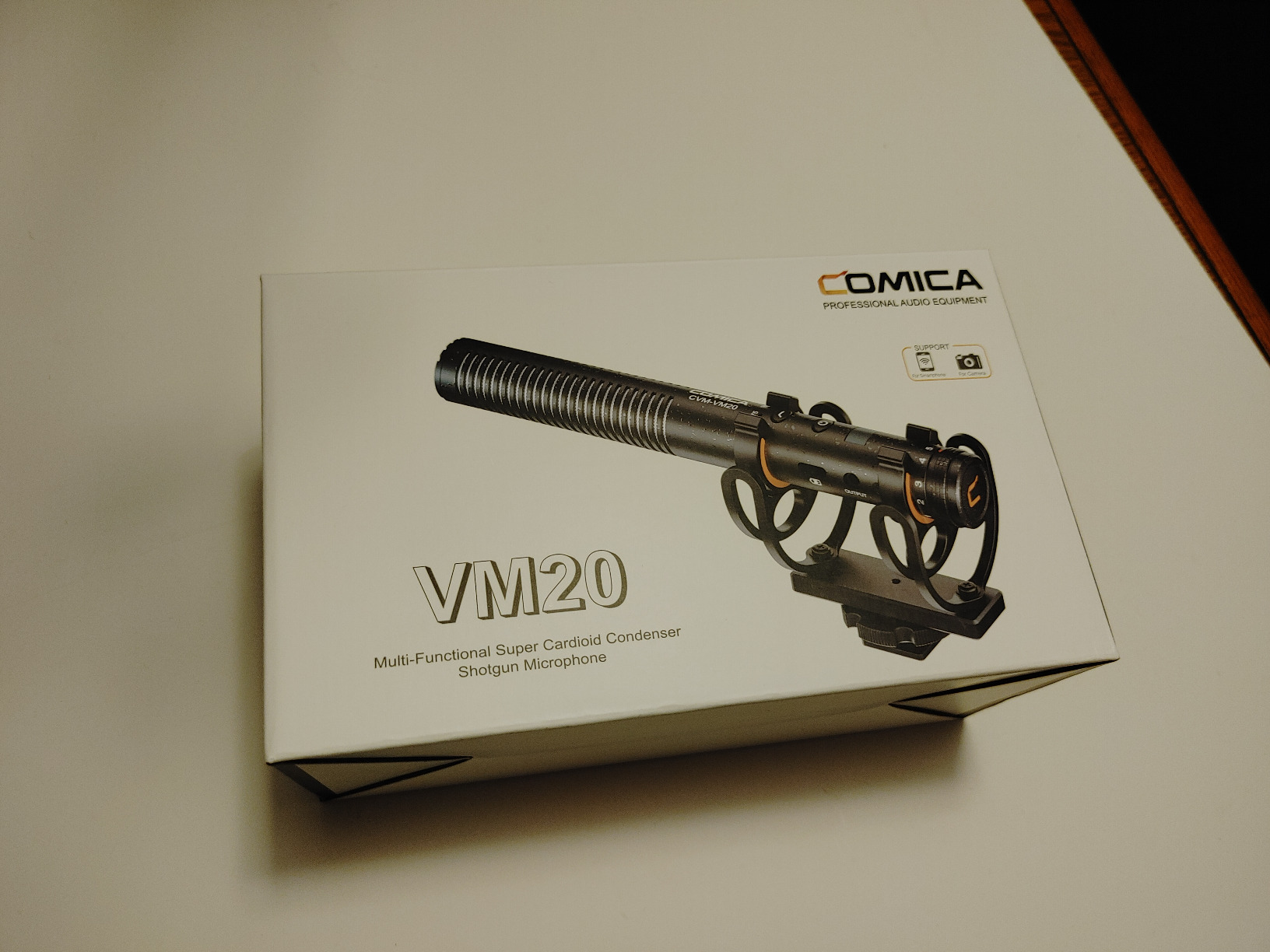
The COMICA VM20 is the budget hero of the roundup, and I have to be honest: when I first pulled it out of the box I expected a cheap feeling plastic toy. Instead I found a solid metal microphone with a real OLED display and a Rycote-compatible shock mount. At this price point, that is genuinely impressive.
The OLED screen is the single most underrated feature on any budget shotgun mic. Instead of guessing whether your battery is dying, you see the exact percentage remaining. After dozens of shoots, this feature alone has saved me from running out of power mid-interview multiple times.
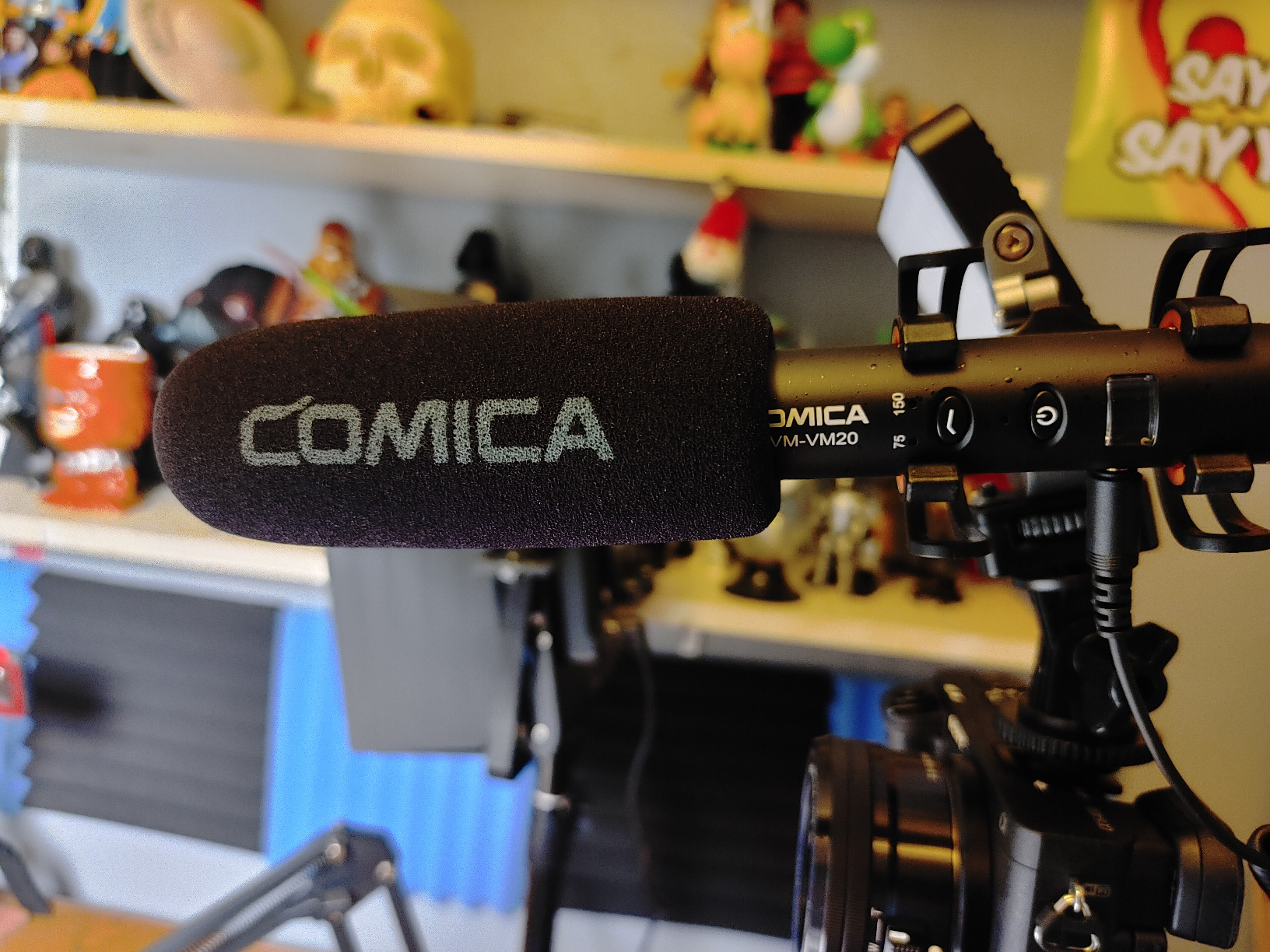
The 60-hour battery life is absurdly good for the price. Most competitors in this price range offer 20-30 hours. I charged the VM20 once at the start of a four-day production trip and never had to think about power again. The USB-C charging port means you can top up from any phone charger or power bank, and the microphone can be used while charging, which is essential for marathon livestreaming sessions.
The 75 and 150Hz low-cut filters are surprisingly effective. The 75Hz setting kills most HVAC rumble and traffic noise, while the 150Hz setting is aggressive enough for very noisy environments. Pair them with the stepless gain control and you can tune the VM20 to sound clean on virtually any DSLR preamp.
Build quality and mounting
The all-metal body feels solid in the hand and the Rycote-style shock mount isolates handling noise effectively. The shoe mount is a standard cold shoe, which fits every DSLR and mirrorless camera I tested it on. At 500 grams, it is heavier than the ultralight Rode VideoMicro, but still light enough for handheld shooting without fatigue.
The main ergonomic quirk is the gain knob placement, which sits where your thumb naturally falls when adjusting the camera. A few times during run-and-gun shooting I bumped the gain accidentally. Not a deal-breaker, but worth knowing.
Who should buy this
The COMICA VM20 is the right choice for budget-conscious DSLR shooters who want pro-level features like OLED monitoring and long battery life without paying pro prices. YouTubers, indie filmmakers, and event videographers on tight budgets will all love what this mic offers.
If you shoot predominantly in extreme cold (which kills lithium batteries fast) or need a USB podcasting mode, look elsewhere. For everyone else, the VM20 is a fantastic value.
8. COMICA VM10 PRO Universal Video Microphone with USB-C Digital Output
COMICA VM10 PRO Universal Video Microphone – Adjustable Gain, USB C Digital Output, Monitoring – Shotgun Mic for Camera, Smartphone, Tablet, PC – Ideal for Vlogging, Live Streaming, and Recording
Pros
- Battery-free design draws power from connected device
- Digital and analog output mode switch
- Super cardioid pattern for effective background noise rejection
- Stepless gain control in digital mode
- Real-time audio monitoring via headphone jack
- Lightweight 37 gram body for travel
Cons
- Analog mode gain knob does not function
- USB mode has lower volume on PC without boost software
- Deadcat sleeve may come unglued over time
- May require microphone boost software on PC
The COMICA VM10 PRO is the smallest, lightest microphone in this roundup, and the only one that natively supports USB-C digital output alongside traditional 3.5mm analog. For hybrid shooters who jump between DSLR, smartphone, and laptop, that dual connectivity is genuinely useful and eliminates the need for adapters.
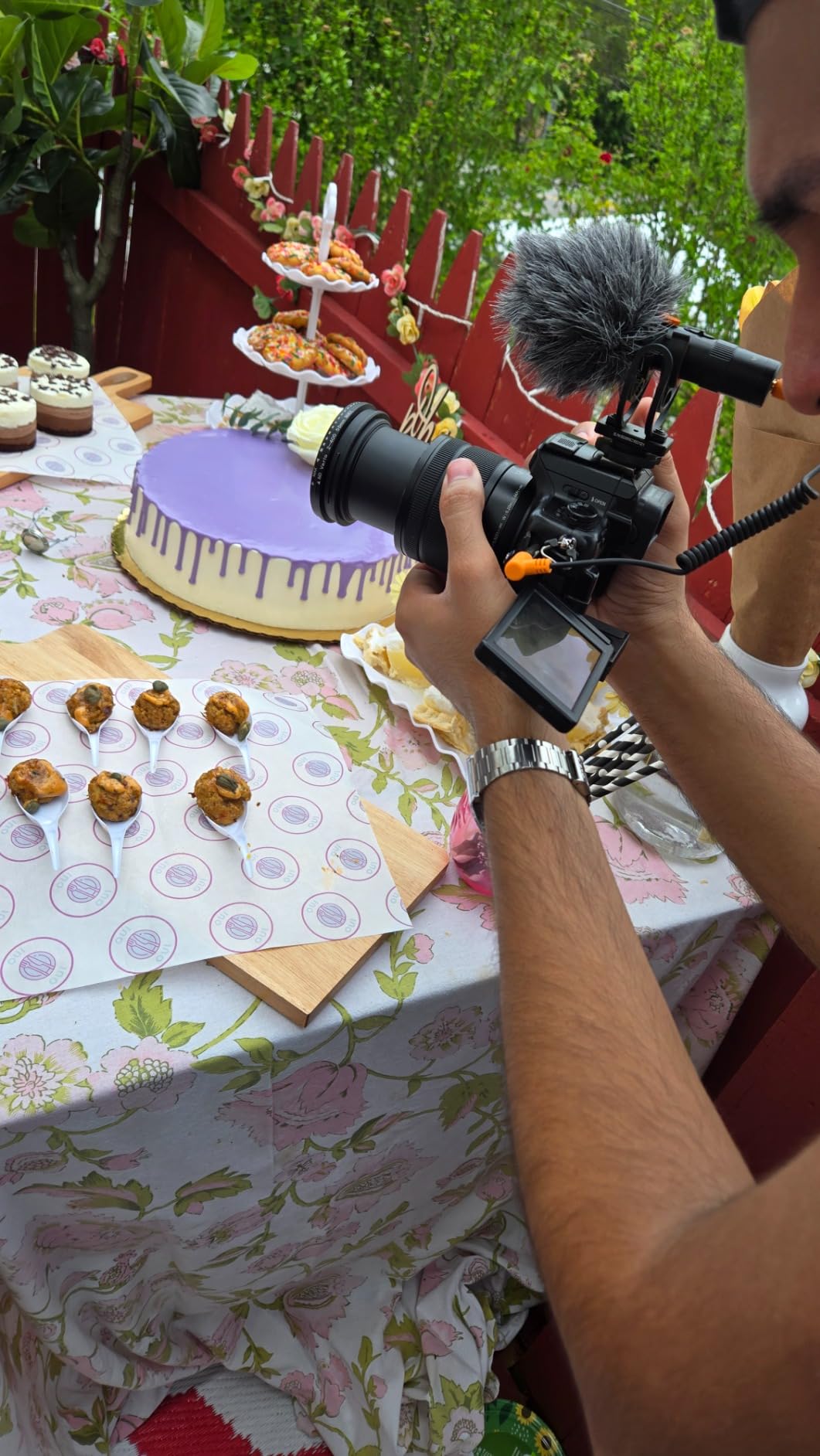
At just 37 grams, this microphone essentially disappears on the camera. On a small Canon SL3 or Nikon D3500, the VM10 PRO adds almost no weight to the rig, which is exactly what travel and event videographers want when they are carrying the camera all day.
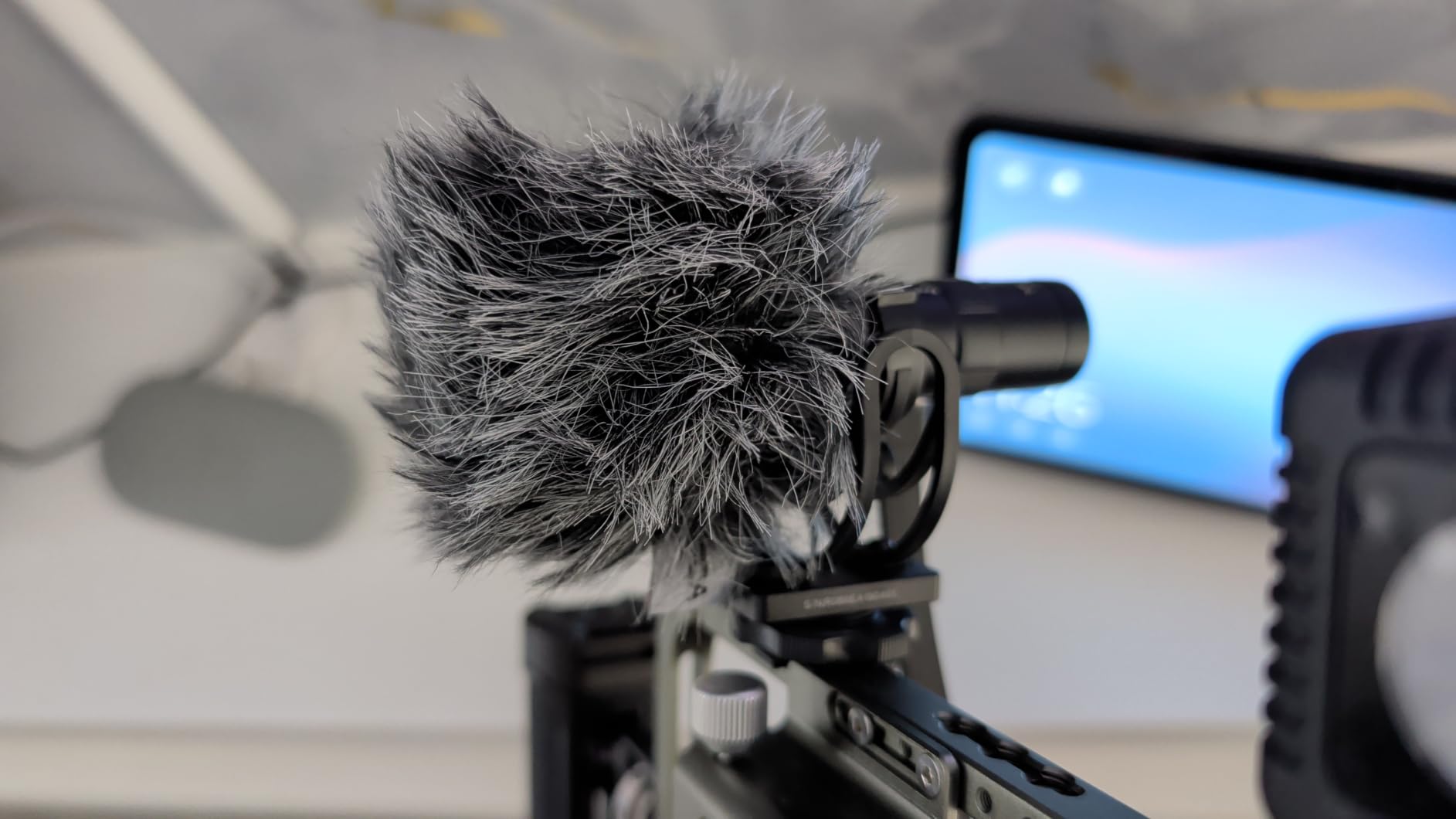
The battery-free design is a major convenience. You never have to think about charging, swapping batteries, or checking power levels. Plug it in and it works. For casual shooters and vloggers, this simplicity is exactly what they want.
The digital/analog mode switch is the key feature. In analog mode, the VM10 PRO behaves like a traditional 3.5mm shotgun mic for cameras. In digital mode, it becomes a USB-C audio device for phones, tablets, and computers, with stepless gain control and real-time headphone monitoring.
PC and smartphone quirks
The main downside is that the USB-C digital mode can be quieter than expected on certain PCs and laptops. Some users report needing to enable microphone boost in their operating system to get usable levels. On modern smartphones and tablets, the levels were perfect with no boost needed.
The analog mode gain knob is a hardware limitation: it simply does not function in analog mode, only digital. This is mildly confusing but is clearly explained in the manual.
Who should buy this
The COMICA VM10 PRO is perfect for creators who shoot primarily on smartphones but occasionally use a DSLR, or for DSLR shooters who also podcast on their computer. If you value portability and battery-free convenience above absolute audio fidelity, this is a smart pick.
For dedicated DSLR shooters who never record to a computer or phone, the slightly larger COMICA VM20 above delivers better pure audio performance for about the same money.
Buying Guide: How to Choose the Best Shotgun Mic for Your DSLR?
Choosing the right on-camera shotgun microphone for your DSLR comes down to four key factors: where you shoot, how long you shoot, what camera you use, and how much post-production you want to do. I have broken down the most important considerations below based on what matters most to working DSLR videographers.
Hot shoe vs cold shoe mounting on DSLRs
Most modern DSLRs include a hot shoe on top, which is the standard mounting point for on-camera shotgun microphones. A true hot shoe provides both a mechanical connection and electronic contacts for flash and other accessories. A cold shoe, which is more common on smaller camera bodies and on-camera microphones themselves, is purely mechanical with no electronic contacts. For microphone mounting, this difference rarely matters because most on-camera mics only need the mechanical fit. The one exception is if you also want to mount a flash on top of your microphone, in which case you need to confirm both the camera and the microphone support stacked accessories. For a deeper look at mounting and rig-building, my best camera bags guide covers how to transport complete rigs safely.
Polar pattern and off-axis rejection
Shotgun microphones use super-cardioid or hyper-cardioid polar patterns to focus pickup in front of the camera while rejecting sound from the sides and rear. Super-cardioid offers slightly wider frontal pickup with a small rear lobe, while hyper-cardioid has tighter frontal focus and a larger rear lobe. For DSLR run-and-gun work, super-cardioid is almost always the right choice because it is more forgiving of slight camera angle changes. The Rode VideoMic NTG, Sennheiser MKE 400, and both COMICA models in this roundup all use super-cardioid patterns that perform well in real-world shooting scenarios.
The 3-to-1 rule for microphone placement
The 3-to-1 rule is a fundamental principle of microphone placement that most beginner DSLR shooters never learn. The rule states that when using multiple microphones, each microphone should be at least three times farther from the next-nearest sound source than it is from its intended source. In DSLR video terms, this means if your subject is 3 feet from the camera-mounted shotgun mic, any other significant sound source (like a loud speaker, air conditioner, or competing conversation) should be at least 9 feet away. Following this rule dramatically reduces phase cancellation and comb filtering artifacts that make audio sound hollow or weird. In single-source shooting like vlogging or interviews, the 3-to-1 rule means positioning your subject as close to the camera as practical while pushing noisy distractions as far away as possible.
Wind protection and outdoor shooting
Wind is the single biggest enemy of outdoor DSLR audio. Even a gentle 5 mph breeze can completely overwhelm a shotgun microphone and render the recording unusable. Every microphone in this roundup includes a basic foam windscreen, but for serious outdoor work you need a proper deadcat wind muffler, which is a furry cover that breaks up wind turbulence before it reaches the microphone capsule. I cover the best options in my wind mufflers guide. For extreme outdoor conditions like a Rode Blimp suspension system can completely isolate the microphone from both turbulence and handling noise, which I detail in my blimp guide. If you only buy one wind accessory, make it a proper deadcat.
Power management for long shoots
On-camera shotgun microphones use one of three power strategies: camera plug-in power, internal rechargeable batteries, or replaceable AA or AAA batteries. Each approach has tradeoffs. Plug-in power is convenient and eliminates batteries entirely but depends entirely on your camera supplying clean power. Internal rechargeable batteries offer the best long-term cost but require charging discipline. Replaceable batteries are bulky to stockpile but never leave you stranded. For event videographers shooting 8+ hour wedding days, the safest choice is a microphone with multiple power options like the Rode VideoMic Pro+ or VideoMic NTG. For travel videographers shooting short documentary segments, plug-in power or rechargeable batteries work fine.
Frequency response and what to look for
Most on-camera shotgun microphones specify a frequency response range like 40Hz to 20kHz. Wider is generally better, but what matters more is how flat the response is across the vocal range (roughly 80Hz to 8kHz). A microphone that boosts 2-5kHz will sound more present and detailed but can also sound harsh on sibilant speakers. A microphone with a flat response will sound more natural but may require EQ adjustment in post. For DSLR shooters who do minimal post-production, a microphone with a slight presence boost in the 3-5kHz range often sounds more pleasing right out of the camera. For shooters who do extensive post-production, a flat-response microphone gives you more flexibility to shape the sound later.
Connectivity: 3.5mm vs USB-C vs XLR
Most on-camera shotgun microphones for DSLRs use a 3.5mm TRS connector, which is the standard microphone input on virtually every DSLR and mirrorless camera. Some newer microphones also offer USB-C digital output for direct connection to smartphones, tablets, and computers. XLR connections are reserved for professional broadcast microphones and require an audio recorder or camera with XLR inputs, which most DSLRs do not have. If you shoot exclusively on a DSLR, a 3.5mm microphone is the right choice. If you also record to a computer or smartphone, consider a dual-output model like the Rode VideoMic NTG or COMICA VM10 PRO.
Frequently Asked Questions
What is the best microphone for DSLR cameras?
The best overall microphone for DSLR cameras in 2026 is the Rode VideoMic Pro+ for professional work, the Sennheiser MKE 400 for value-driven shooters, and the COMICA VM20 for budget-conscious creators. All three deliver dramatically better audio than any built-in camera microphone and mount cleanly on a standard DSLR hot shoe.
What is the 3 to 1 rule for microphones?
The 3-to-1 rule states that each microphone should be at least three times farther from the next-nearest sound source than it is from its intended source. For DSLR shooting, this translates to keeping your primary speaker near the lens and pushing competing noise sources like air conditioners or crowds as far away as the scene allows, which dramatically reduces phase cancellation and comb filtering artifacts.
What shotgun mic should I get?
Choose based on your use case. For professional DSLR video work, get the Rode VideoMic Pro+. For the best balance of quality and price, get the Sennheiser MKE 400. For budget buyers, the COMICA VM20 or Rode VideoMicro deliver excellent results at lower cost. Beginners should start with the Movo VXR10 for its universal compatibility.
What are the disadvantages of a shotgun microphone?
Shotgun microphones have a few real limitations. They are highly directional, which means a subject who moves off-axis from the microphone will sound quieter. They are also sensitive to wind and handling noise if not properly isolated. They do not perform well in highly reverberant rooms because the interference tube picks up reflections as well as direct sound. They also require careful positioning to avoid proximity effect bass boost when subjects get too close.
Are shotgun mics good for filmmaking?
Yes, shotgun microphones are excellent for filmmaking, especially for run-and-gun documentary work, event videography, and narrative scenes where boom microphones are impractical. On-camera shotgun mics are particularly valuable as backup or scratch audio recorders even when a boom operator is present, because they capture continuous audio in case the boom is shadowed or the operator makes a mistake.
Final Verdict: Which On Camera Shotgun Microphone for DSLRs Should You Buy in 2026?
After testing every microphone in this roundup on real DSLR video shoots, my top three picks for the best on camera shotgun microphones for DSLRs are the Rode VideoMic Pro+ for professional work, the Sennheiser MKE 400 for the strongest value, and the COMICA VM20 for budget-conscious creators. Any one of these three will transform your DSLR video audio from amateur to professional in a single afternoon.
If you shoot weddings, documentaries, or paid client work, the VideoMic Pro+ automatic power function and 10-year warranty are worth the premium. If you shoot travel, YouTube, or hybrid work across multiple devices, the Sennheiser MKE 400 integrated wind protection and headphone monitoring will serve you well for years. If you want the most features for the least money, the COMICA VM20 OLED display and 60-hour battery life are unmatched at its price point.
Whichever microphone you choose, pair it with a proper deadcat wind cover for outdoor work, follow the 3-to-1 rule for microphone placement, and always monitor your levels through headphones when possible. These three habits alone will solve 90% of the audio problems that plague DSLR videographers. For more on choosing the right shotgun mic for your specific style of shooting, see my guide to the best shotgun microphones for filmmakers.