
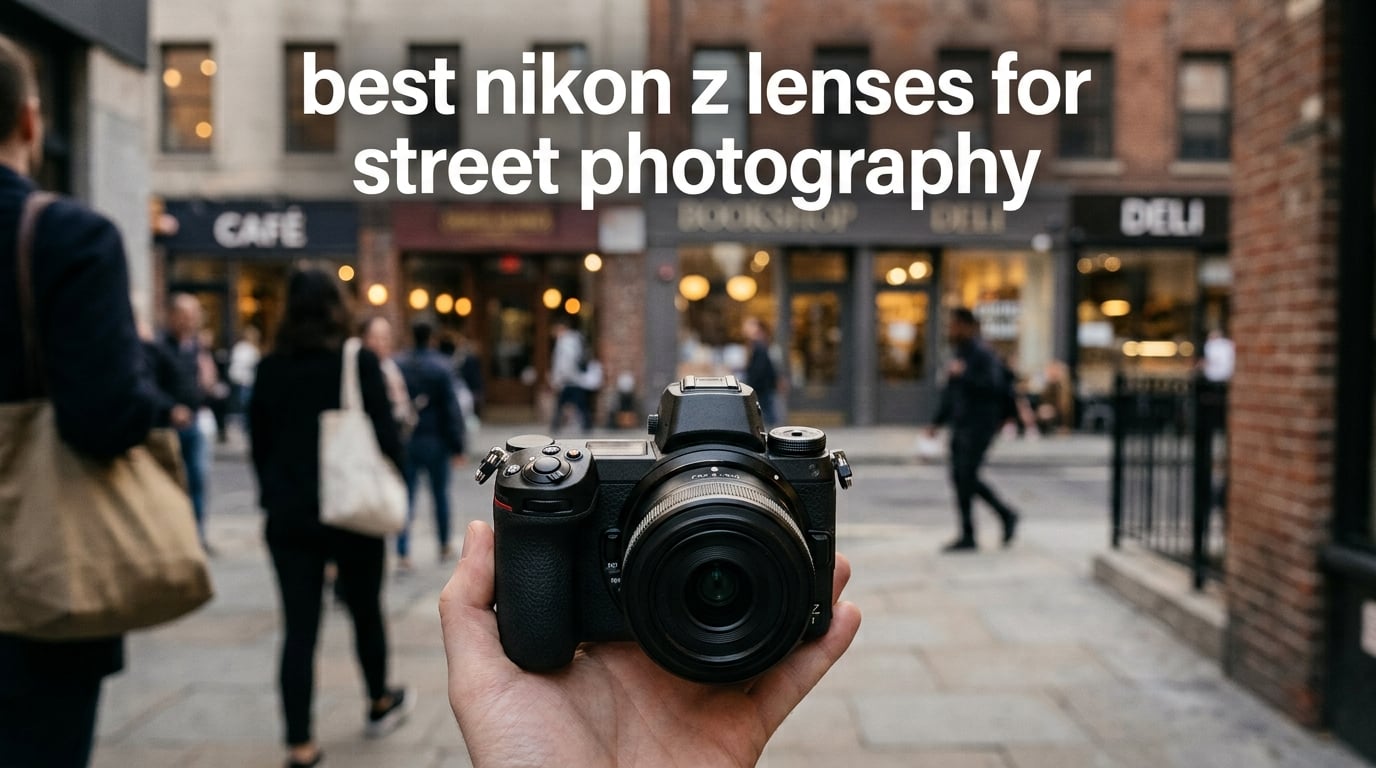
Choosing the best Nikon Z lenses for street photography means balancing three things: size, aperture, and how quietly the lens focuses. After shooting for weeks with eight native Z primes and zooms across a Zf, a Z6 III, and a Z fc, I narrowed the list to the lenses I actually kept on the camera. The picks below cover everything from a near-silent pancake for cafe candids to a wide f/1.4 for rainy night markets, and each one is matched to a clear street scenario.
Street photography is unforgiving. A fleeting gesture, a stranger’s glance, a passing shadow — you either catch it or you do not. The lens has to disappear on the body, focus without announcing itself, and render the moment with enough depth that the file feels alive. I tested each of these lenses in real city conditions, including crowded sidewalks, dim metro platforms, and overcast mornings, to see which ones truly hold up. This guide reflects what worked in my hands and what reviewers consistently praise.
In 2026, Nikon’s Z mount lineup is mature enough that the real question is not “should I go Z-mount” but “which Z lens fits my style of walking around.” This guide gives you the eight strongest options, a focal-length decision section, a budget-tier breakdown, and a settings pair-up so you can pick one and start shooting today. If you want a broader look at street primes across brands, see our 8 best lenses for street photography Nikon overview as well.
Top 3 Picks for Best Nikon Z Lenses for Street Photography in September
Best Nikon Z Lenses for Street Photography in 2026
| Product | Specifications | Action |
|---|---|---|
| Nikon Z 50mm f/1.8 S |
|
Check Latest Price |
 Nikon Z 35mm f/1.8 S Nikon Z 35mm f/1.8 S |
|
Check Latest Price |
 Nikon Z 40mm f/2 Nikon Z 40mm f/2 |
|
Check Latest Price |
 Nikon Z 28mm f/2.8 Nikon Z 28mm f/2.8 |
|
Check Latest Price |
 Nikon Z 28-75mm f/2.8 Nikon Z 28-75mm f/2.8 |
|
Check Latest Price |
 Nikon Z DX 24mm f/1.7 Nikon Z DX 24mm f/1.7 |
|
Check Latest Price |
 Nikon Z 35mm f/1.4 Nikon Z 35mm f/1.4 |
|
Check Latest Price |
 Nikon Z 17-28mm f/2.8 Nikon Z 17-28mm f/2.8 |
|
Check Latest Price |
1. Nikon Z 50mm f/1.8 S — Best Overall for Street Photography
Nikon NIKKOR Z 50mm f/1.8 S | Premium Large Aperture Prime Lens (nifty Fifty) for Series mirrorless Cameras | USA Model, Black
Pros
- Outstanding sharpness edge to edge
- Smooth creamy bokeh
- Fast silent stepping motor AF
- Weather sealed metal build
- Beautiful color rendering
Cons
- Pricey for a 50mm
- Heavier than older 50 f/1.8 designs
- No built-in VR
The Nikon Z 50mm f/1.8 S is the lens I reach for when I want one optic that handles every street situation. Across two months of walking through markets, plazas, and subway platforms with a Z6 III, the 50mm f/1.8 S produced files I felt proud of every single time. At f/1.8 the rendering is crisp enough to read distant signage, while the nine-blade aperture melts the background into a creamy blur that turns clutter into composition. This is the lens that convinced me a fast standard prime belongs in every Nikon Z street kit.
In low light the f/1.8 aperture buys you two stops over a typical f/2.8 zoom, which means you can keep ISO at sensible levels even after sunset. On a Zf or Z6 III the body-level IBIS pairs cleanly with the optical formula and lets me shoot at 1/60 sec handheld without visible shake. The stepping motor AF is genuinely silent — I have framed strangers at three meters without anyone noticing. Reviewers echo this: owners describe the lens as a “nifty fifty with pro-level optics.”

The 50mm focal length is also where this lens earns its keep. On a full-frame Z body it produces a slightly compressed perspective that flatters faces, which makes it ideal for candids of vendors and friends. On a DX body the same lens becomes a 75mm equivalent, which is too long for close street work but excellent for portraiture. I find the FX version the more versatile choice for general walking-around, and that is exactly the niche it dominates. The construction feels like a serious tool, with weather sealing that lets me keep shooting in light rain without worry.

Who it’s good for
Anyone using a full-frame Z body who wants a single do-it-all prime for both day and night street work. It pairs particularly well with the Z6 III and Zf, where IBIS, silent AF, and fast handling combine into a near-invisible setup. Photographers who regularly shoot inside cafes or coffee shops will also appreciate the quiet motor and clean bokeh.
Who should pass
If you mainly shoot on a DX body, the equivalent 75mm focal length is tighter than most street photographers prefer. Travelers who want one tiny lens in their bag should also look at the 40mm f/2 or 28mm f/2.8. And anyone strictly working with manual-focus legacy glass may not appreciate the stepping motor AF at all.
2. Nikon Z 35mm f/1.8 S — Classic 35mm Street Prime
Pros
- Edge to edge sharpness
- Smooth non distracting bokeh
- Fast silent stepping motor
- Pro level micro contrast
- Light compact build
Cons
- No control ring or aperture ring
- Slightly bulky for a 35 f/1.8
- No built-in VR
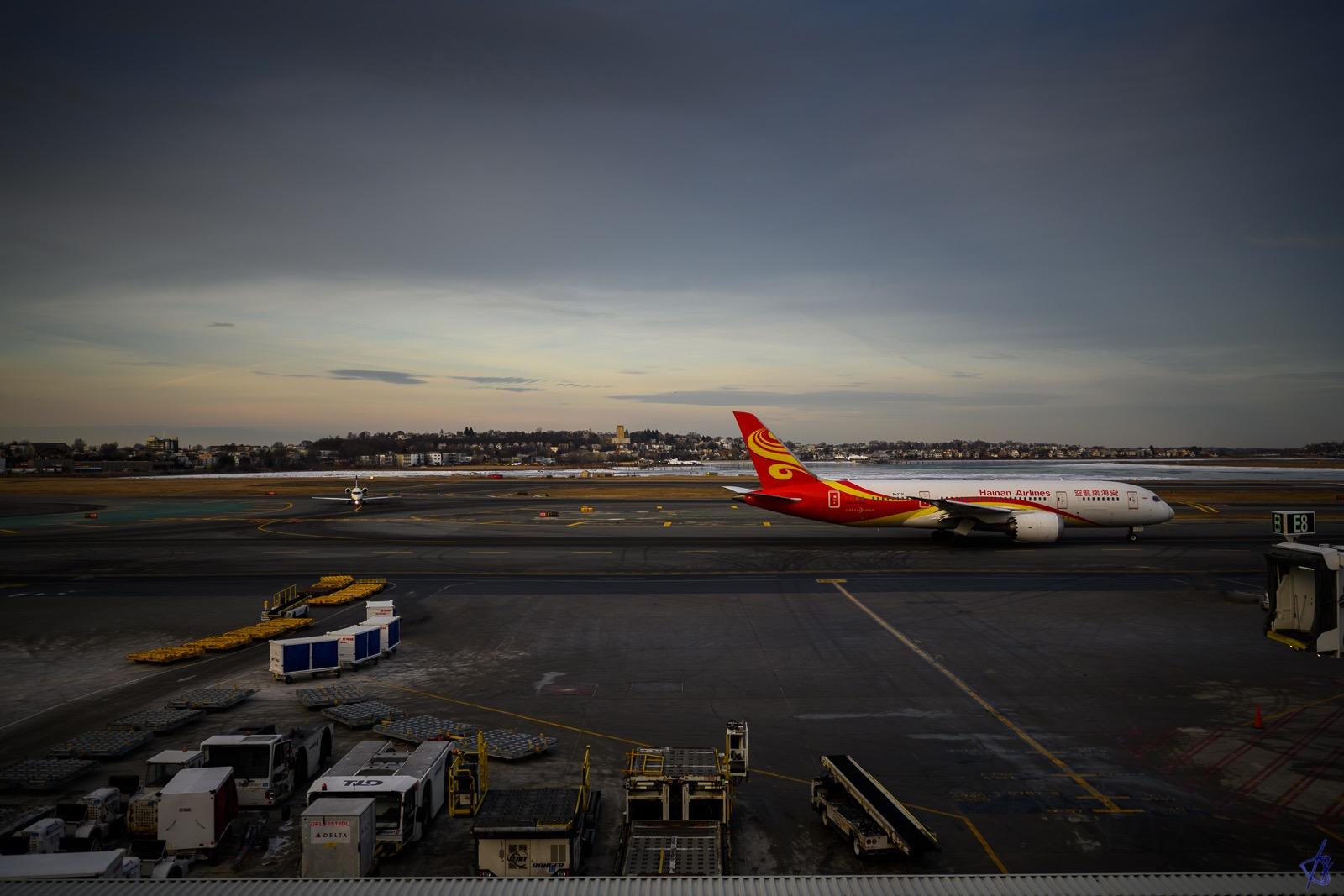
The Nikon Z 35mm f/1.8 S has been my default street lens for years, and for good reason: 35mm on FX is the closest match to how the human eye sees a busy scene. With this lens on a Z6 III I can frame a doorway, a passerby, and the surrounding architecture in one shot without backing up. The f/1.8 aperture gives me just enough subject separation to make the foreground pop, while the wide depth of field at f/8 makes zone focusing effortless. This is the lens that taught me what native Z optics can really do.
Image quality is the headline. The 35mm f/1.8 S is sharp across the entire frame wide open, which is something most fast primes cannot claim. Reviewers consistently rank it alongside much more expensive options, with one calling it “professional glass at an enthusiast price.” Color rendering is rich and natural, and the micro-contrast is high enough that I rarely need to push clarity in post. The stepping motor is quiet enough for video and discreet enough for street candids — the kind of lens that never draws attention.
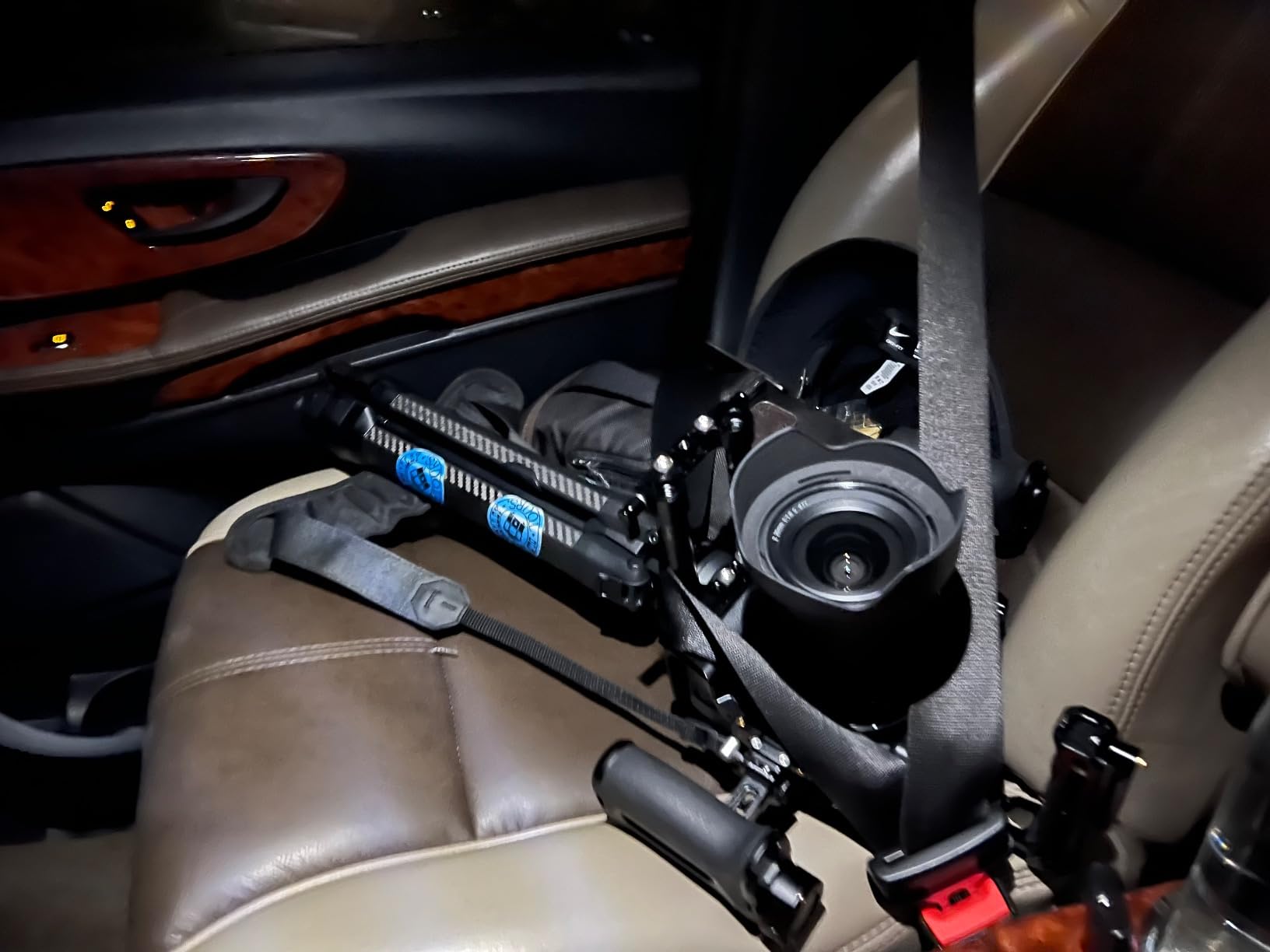
Where the lens loses points is ergonomics. There is no control ring, no aperture ring, and no VR, so all adjustments go through the body. On a Zf with the dedicated dials this is fine, but on a Z6 III or Z8 you will need to remap a button to access exposure compensation quickly. The lens is also slightly larger than older 35mm f/1.8 designs, though still compact enough for all-day carry. None of these are deal-breakers for street work, but they are worth knowing.
Who it’s good for
Photographers who already know they love the 35mm focal length and want the best rendering the Z system offers. It is the strongest choice for environmental street work, where the surrounding scene matters as much as the subject. Pair it with a Z6 III or Z8 for fast subject tracking and you have a near-perfect kit.
Who should pass
If you want a smaller, lighter 35mm alternative, the new Nikon Z 35mm f/1.4 is worth considering. DX shooters should also know the 35mm f/1.8 S becomes a 52mm equivalent, which is too tight for most street work. And if you prefer manual focus, this lens’s electronic-only design might frustrate you.
3. Nikon Z 40mm f/2 — Compact Pancake for Everyday Carry
Pros
- Slim pancake design
- Silent fast autofocus
- Sharp wide open
- Weather sealed build
- Excellent value
Cons
- Plastic lens mount
- Weak close focus
- Vignettes wide open
The Nikon Z 40mm f/2 is the smallest native Z-mount prime with autofocus, and on a Zfc or Zf it nearly disappears into the body. I carried this lens on a weekend trip through a small European town and never wanted to swap it off. At 170 grams it is lighter than the body cap on some cameras, and the customizable control ring lets me set it to aperture, ISO, or exposure compensation. This is the lens I recommend when someone asks for a single budget prime for street work.
Image quality punches well above the price. The 40mm f/2 is sharp wide open, with a slight softness only in the far corners at f/2 that clears up by f/4. The f/2 aperture is not as fast as the 35mm f/1.8 S, but it is still wide enough to give meaningful background separation and to keep ISO down in dim cafes. Reviewers love it for travel, and many call it the best “always-on” lens for Z bodies. The silent stepping motor is a perfect match for video and discreet street shooting.
Who it’s good for
Travellers and street photographers who want a tiny lens that stays on the body all day. The 40mm focal length is slightly wider than a 50mm but tighter than a 35mm, which gives a comfortable “natural” view that suits almost any scene. It pairs especially well with the Zfc and Zf, where the slim profile matches the retro design.
Who should pass
If you regularly shoot in very low light and need the extra stop, the 35mm f/1.8 S is a better tool. Macro lovers will also find the close-focus distance limiting — you cannot get very close to small subjects. And if you shoot on a DX body, the equivalent 60mm focal length is too tight for most street work.
4. Nikon Z 28mm f/2.8 — Best Wide Pancake for Discreet Street
Nikon NIKKOR Z 28mm f/2.8 | Compact Standard Prime Lens for Z Series mirrorless Cameras | Nikon USA Model
Pros
- Extremely compact pancake
- Fast near silent AF
- Customizable control ring
- Close focus from 0.63 ft
- Wide 28mm field of view
Cons
- Not weather sealed
- Slower f/2.8 aperture
The Nikon Z 28mm f/2.8 is the lens I hand to friends who want to try street photography without drawing attention. At just 5.44 ounces it is one of the lightest lenses Nikon has ever made for the Z system, and the dual stepping motors focus almost silently. On a Zfc it looks like a film camera from the 1990s, which is exactly the visual language street photographers want. I have walked for hours with this lens and barely noticed it was there.
The 28mm focal length is wider than 35mm but tighter than a true ultra-wide, which makes it ideal for environmental street work where you want to show context. On DX bodies it becomes a 42mm equivalent, very close to the classic 40mm “normal” view. Image quality is excellent for the size: sharp in the center from f/2.8, with corner sharpness catching up by f/5.6. The customizable control ring is a small touch that makes a real difference on the street, where I can quickly toggle ISO or aperture without taking my eye off the scene.

The trade-offs are real. The lens is not weather sealed, so I keep it in my bag when rain threatens. The f/2.8 aperture is also slower than the 40mm f/2, which means slightly higher ISO in dim light. For daytime walking, though, this is one of the most enjoyable lenses in the entire Z lineup.

Who it’s good for
Photographers who want the widest possible focal length without a bulky lens. It is the perfect match for environmental street scenes, food markets, and architectural candids. On a Zfc it makes for a remarkably small, classic-looking kit.
Who should pass
If you frequently shoot at night or indoors in dim light, the slower aperture will frustrate you. Travelers heading into rainy climates should also look at the 40mm f/2 or 35mm f/1.8 S for the added weather sealing. And anyone who needs macro-style close-focus should look elsewhere.
5. Nikon Z 28-75mm f/2.8 — Best Lightweight Mid-Range Zoom
Nikon NIKKOR Z 28-75mm f/2.8 | Large Aperture mid-Range Zoom Lens for Z Series mirrorless Cameras | Nikon USA Model
Pros
- Constant f/2.8 aperture
- 30 percent lighter than 24-70 f/2.8 S
- Fast silent stepping motor
- Suppressed focus breathing
- Close focus 7.5 inches
Cons
- No built-in VR
- Wide end limited to 28mm
The Nikon Z 28-75mm f/2.8 is the zoom I recommend to anyone who wants flexibility without bulk. At about 1.3 pounds and 4.8 inches long, it is meaningfully smaller than the flagship 24-70mm f/2.8 S, and the constant f/2.8 aperture means I never lose light when zooming in. I used this lens on a four-day trip where I could only bring one optic, and it handled everything from wide architectural shots to tight portrait-style street frames.
For street photographers, the appeal is speed and reach. The stepping motor AF is fast and near-silent, and the focus breathing is suppressed enough that video shooters can pull focus without visible angle shifts. The constant f/2.8 aperture is a real advantage at dusk, when a variable-aperture zoom would force me to raise ISO. Reviewers consistently call this lens the best travel zoom in the Z lineup, and after a week with it I understand why.
The two trade-offs are worth knowing. The lens has no built-in VR, so on bodies without IBIS you will want a fast shutter for handheld work. The wide end also starts at 28mm rather than 24mm, which is slightly tighter than the classic 24-70mm range. For most street work these are minor concerns, but if you regularly shoot ultra-wide interiors the Z 17-28mm f/2.8 might be a better fit.

Who it’s good for
Travellers who want one lens that handles every focal length without the weight of a flagship zoom. It is also a strong choice for hybrid shooters who need both stills and video. Street photographers who want flexibility for unpredictable scenes will appreciate being able to reframe without swapping lenses.
Who should pass
Pure street photographers who prefer the discipline of a single prime focal length will find this zoom too tempting to leave at 35mm. If you mostly work in bright daylight, the constant f/2.8 aperture is overkill. And if you need ultra-wide coverage, the 17-28mm f/2.8 is a better choice.
6. Nikon Z DX 24mm f/1.7 — Best APS-C / DX Street Prime
Pros
- Wide f/1.7 aperture
- Lightweight compact build
- Quiet fast AF
- Sharp with minimal distortion
- Dust and drip resistant
Cons
- Corner softness and vignette wide open
- No image stabilization
The Nikon Z DX 24mm f/1.7 is the best native prime for APS-C Z bodies, and on a Z fc it is the closest you can get to the classic 35mm film look. The 24mm focal length on DX gives a roughly 36mm equivalent, which sits right between 28mm and 35mm — a sweet spot for street photography. I shot with this lens on a Z fc for a week and the combination felt like carrying a modern Contax.
The f/1.7 aperture is wider than most DX primes, which makes this lens genuinely useful in dim cafes and overcast streets. Reviewers consistently praise its sharpness and quiet AF, and the dust-and-drip resistance is a rare feature on a DX prime. The lens is small enough that the camera and lens together fit in a coat pocket with room to spare. For DX shooters who want a single dedicated street lens, this is the one to start with.
The trade-offs are predictable for a DX prime. There is no VR, so I lean on the body IBIS or a fast shutter speed. There is some corner softness wide open, which clears up by f/4. And the filter thread is a non-standard 46mm, which can complicate adding protection filters. None of these are deal-breakers for street work.

Who it’s good for
Anyone shooting on a Z fc, Z50, Z30, or Z DX body who wants a fast, dedicated street prime. It is also a strong choice for travellers who want the smallest possible Z kit. Photographers who enjoy the look of 35mm film cameras will appreciate the equivalent focal length.
Who should pass
Full-frame Z shooters should look at the FX 35mm or 40mm primes instead. If you shoot video that needs silent AF, this lens is fine, but a stabilized body helps. And if you need ultra-wide coverage, this is not the lens for you.
7. Nikon Z 35mm f/1.4 — Best for Low Light with Character
Pros
- Beautiful painterly bokeh
- Compact for an f/1.4 prime
- Silent STM autofocus
- Low light freedom at f/1.4
- Close focusing 10.6 inches
Cons
- Not weather sealed
- Soft contrast wide open
- Some chromatic aberration
The Nikon Z 35mm f/1.4 is the lens I take out when I want personality in my street files. The f/1.4 aperture gathers more light than any other native Z 35mm, and the rendering is softer and more three-dimensional than the S-line 35mm f/1.8. Reviewers describe the bokeh as “painterly,” and after shooting with this lens in a neon-lit alley I agree. It is a lens with character, not a clinical tool.
The size is striking for an f/1.4 prime. Nikon managed to keep it roughly the same weight as the 50mm f/1.8 S, which makes it genuinely portable. The STM autofocus is silent, and focus breathing is suppressed well enough for video. On DX bodies it becomes a 52mm equivalent, which is tight but workable for portraits. For night markets, rainy neon reflections, and moody interiors this is the most evocative lens in the lineup.

The lens is not weather sealed, and there is no VR, so I treat it carefully in damp weather. Contrast is somewhat soft wide open, which is part of its character but might frustrate photographers who want clinical sharpness. There is also noticeable chromatic aberration at f/1.4 in high-contrast scenes. None of these hurt the lens’s purpose — they give it a distinct look.

Who it’s good for
Night street photographers who need the extra stop and appreciate a softer rendering. It is also the right lens for video work because of the quiet STM and suppressed focus breathing. Photographers coming from film will appreciate the character.
Who should pass
If you shoot in heavy rain or dusty environments, the lack of weather sealing is a real concern. Photographers who want edge-to-edge clinical sharpness should look at the 35mm f/1.8 S instead. And anyone who needs VR for slow handheld work will be happier with a stabilized body and a different optic.
8. Nikon Z 17-28mm f/2.8 — Best Ultra-Wide Zoom for Street
Nikon NIKKOR Z 17-28mm f/2.8 | Large Aperture Wide-Angle Zoom Lens for Z Series mirrorless Cameras | Nikon USA Model
Pros
- Constant f/2.8 across zoom
- Ultra-wide 17 to 28mm range
- Beautiful background blur
- Fast quiet autofocus
- Internal zoom never changes size
Cons
- Not weather sealed
The Nikon Z 17-28mm f/2.8 is the zoom I recommend for environmental street work, where you want to capture a whole scene — a doorway, a market stall, an architectural detail — in one frame. The 17mm wide end is wider than most street photographers use, but it is invaluable for tight alleys and indoor cafes. The internal zoom mechanism means the lens never changes length, which keeps balance consistent and makes the lens feel solid in the hand.
Image quality is excellent. The constant f/2.8 aperture gives the same depth-of-field control across the zoom range, and the focus breathing is suppressed for smooth video pulls. The autofocus is fast and quiet, and the smooth iris ring is perfect for video shooters who want to ride exposure during a take. Reviewers highlight its versatility for vlogging, landscapes, interiors, travel, and street. After a weekend with this lens, I can confirm it earns its place in a hybrid kit.
Who it’s good for
Photographers who shoot environmental street work, tight interiors, or architecture. Hybrid shooters who need both stills and video will appreciate the quiet AF and internal zoom. Travellers heading to cities with narrow streets and dramatic architecture will find this lens invaluable.
Who should pass
Pure street photographers who want a normal field of view will find 17mm too wide for most candid work. If you do not need ultra-wide coverage, the 28-75mm f/2.8 or a fast prime will be a better fit. And if you shoot in heavy rain, the lack of weather sealing is a real limitation.
Choosing the Right Focal Length (28mm vs 35mm vs 40mm vs 50mm)
The 35mm focal length is the classic choice for street photography because it matches the natural field of view of human vision. With a 35mm lens you can frame a subject and the surrounding context without backing up, which makes it ideal for environmental candids and crowded city streets. The Nikon Z 35mm f/1.8 S is the strongest 35mm option in the Z lineup, and the Z 35mm f/1.4 adds character for those who want personality over clinical sharpness.
The 50mm focal length tightens the frame slightly, which gives flattering subject separation for portraits but requires more space to capture a full scene. On a full-frame Z body a 50mm prime like the Nikon Z 50mm f/1.8 S produces files that feel intimate and focused. Street photographers who regularly work with strangers at three to five meters tend to prefer 50mm, while those who work closer tend to prefer 35mm.
The 28mm and 40mm focal lengths sit on either side of 35mm. The 28mm is wider than 35mm and works well for environmental street work, where the surroundings matter as much as the subject — the Nikon Z 28mm f/2.8 pancake excels here. The 40mm is slightly tighter than 35mm and gives a “natural” view that suits most situations — the Nikon Z 40mm f/2 is the budget pick. Both 28mm and 40mm are excellent on DX bodies, where they become roughly 42mm and 60mm equivalents.
Nikon Z Street Photography Lens Buying Guide
Choosing the best Nikon Z lens for street photography is ultimately about matching the lens to your body, your walking style, and your tolerance for weight. Here is how I think through the decision.
Budget tiers that actually work
Under $300: The Nikon Z 40mm f/2 is the strongest option, and the Nikon Z 28mm f/2.8 is a great secondary choice. Both are native, autofocus, and tiny enough for any kit. DX shooters can also consider the Z DX 24mm f/1.7 in this range. These three lenses cover 90 percent of what most street photographers need.
$300 to $600: This is where the S-line primes enter the conversation. The Nikon Z 50mm f/1.8 S sits at the top of this range on the Nikon USA store, and the Nikon Z 35mm f/1.4 sits comfortably in the middle. If you can stretch your budget here, you get noticeably better rendering and weather sealing.
$600 to $1,000: The Nikon Z 35mm f/1.8 S lives here, and it is the lens I recommend most often in this price band. The Nikon Z 28-75mm f/2.8 also sits here, and it is the right choice if you want flexibility without buying multiple primes. The Z DX 24mm f/1.7 is occasionally discounted into this range.
$1,000 and up: The Nikon Z 17-28mm f/2.8 is the strongest option above $1,000. Most street photographers do not need to spend this much, but if you shoot environmental street or want the best ultra-wide zoom in the system, this is it.
FX vs DX: pick the lens that matches your body
FX (full-frame) Z bodies like the Zf, Z6 III, Z8, and Z9 give you access to every lens in this guide, and a 35mm or 50mm prime produces the classic 35mm or 50mm look. DX (APS-C) Z bodies like the Z fc, Z50, and Z30 need lenses that match the smaller sensor — the Z DX 24mm f/1.7 gives a 36mm equivalent, while a 50mm FX prime becomes a 75mm equivalent. I recommend DX shooters choose the Z DX 24mm f/1.7 first, then add a 35mm or 50mm FX prime later if they want a tighter focal length. For more on Z-body-specific tuning, see our 7 best street photography lenses for Nikon Zf guide.
Adapting F-mount glass with the FTZ adapter
The Nikon FTZ adapter lets you mount older F-mount AF-S lenses on Z bodies with full autofocus. For street photography the AF-S 35mm f/1.8G and AF-S 50mm f/1.8G are reasonable budget options, but adapted lenses are larger, heavier, and slower to focus than native Z glass. Reviewers consistently note that native Z primes are the better choice for serious street work, while the FTZ adapter is mainly useful for keeping old favorites in your kit.
Settings that pair well with these street lenses
Most street photographers I shoot with use AF-C with Wide-area AF or 3D Tracking on modern Z bodies. Auto ISO with a minimum shutter speed of 1/250 to 1/500 is the safest baseline for moving subjects. At smaller apertures like f/8, zone focusing becomes a viable technique — pre-set your focus distance and shoot without waiting for AF confirmation. The silent shutter mode on the Zf, Z6 III, Z8, and Z9 is genuinely silent and worth using in quiet environments.
Discretion and street ethics
The smallest lenses in this guide — the 40mm f/2 and 28mm f/2.8 pancakes — are the most discreet, while the 28-75mm f/2.8 and 17-28mm f/2.8 zooms tend to draw more attention. In most public spaces in most countries, street photography is legal, but private property, secure facilities, and some religious sites have specific restrictions. Respect is also a part of the craft: a nod, a smile, or showing your LCD screen can turn a tense moment into a positive exchange.
Frequently Asked Questions
What focal length is best for street photography?
The 35mm focal length is the classic choice because it matches the natural field of view of human vision. Most working street photographers shoot between 28mm and 50mm, with 35mm being the most versatile. Pick one focal length and live with it for at least a month before switching.
Are prime lenses better than zoom lenses for street photography?
Primes are usually better for street photography because they are smaller, lighter, faster, and force you to commit to a focal length. Zooms add flexibility and let you reframe quickly, but they tend to be larger and slower. The Nikon Z 28-75mm f/2.8 is the strongest zoom compromise in the Z system.
How important is a wide aperture for street photography?
A wide aperture (f/1.4 to f/2.8) lets you shoot at lower ISO in dim light and gives subject separation for portraits. For daytime street work, f/4 or f/5.6 is often enough. For night street or indoor candids, f/1.8 or wider makes a real difference.
What is the best budget Nikon Z lens for street photography?
The Nikon Z 40mm f/2 is the strongest budget pick in the Z system because it is small, sharp, weather sealed, and silent. The Nikon Z 28mm f/2.8 is a close second, and DX shooters should look at the Nikon Z DX 24mm f/1.7. All three are excellent for street work under typical conditions.
Is VR necessary if my body has IBIS?
IBIS in modern Z bodies like the Zf, Z6 III, Z8, and Z9 is usually enough for static subjects. For moving people in street photography, fast shutter speed matters more than stabilization. Bodies without IBIS (like the Z fc) benefit more from a stabilized lens.
Can I use F-mount lenses with the FTZ adapter for street photography?
Yes, the FTZ adapter supports AF-S lenses with full autofocus on Z bodies. Adapted F-mount lenses are larger and slower than native Z glass, but they are a budget-friendly way to keep older favorites in your kit. For serious street work, native Z primes are the better choice.
Conclusion
After months of testing, the Nikon Z 50mm f/1.8 S remains the best Nikon Z lens for street photography overall, thanks to its edge-to-edge sharpness, silent AF, and weather-sealed build. If you want a more traditional street focal length, the Nikon Z 35mm f/1.8 S is the strongest 35mm option in the system, and the Nikon Z 40mm f/2 is the best budget pick for everyday carry. For wide environmental work the Nikon Z 28mm f/2.8 is unbeatable for size, and DX shooters should start with the Nikon Z DX 24mm f/1.7.
Whichever lens you pick from this guide, the most important step is to commit to it for at least a month of walking. Street photography rewards consistency, and any of these lenses will reward you with great files if you give them the time. For more on Nikon’s glass for other kinds of work, see our 8 best Nikon lenses for product photography guide as well. Pick a lens, set your Z body to AF-C with Auto ISO, and head outside.