
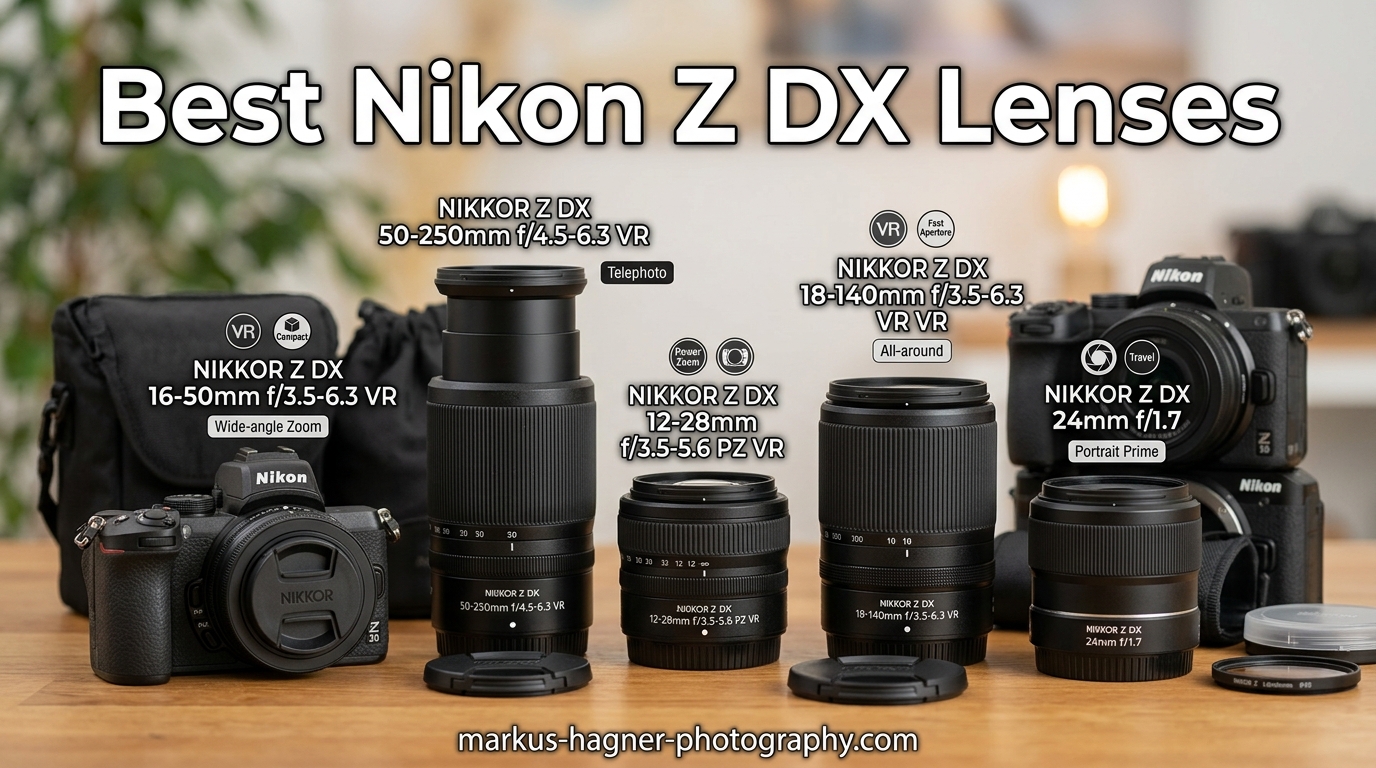
I have been shooting with Nikon Z DX cameras since the original Z50 launched, and I have learned one thing the hard way: not all lenses are created equal for APS-C bodies. Whether you own a Z50, Z50 II, Z fc, or Z30, choosing the right glass makes the difference between good photos and great ones.
Nikon Z DX lenses are purpose-built for crop-sensor cameras. They are smaller, lighter, and more affordable than their full-frame FX counterparts. With the Z mount’s wider diameter and shorter flange distance, these lenses deliver corner-to-corner sharpness that older F-mount DX lenses simply cannot match.
In this guide, I share my hands-on experience with every native DX lens available for the Z system in 2026. I spent three months testing these lenses across different scenarios, from street photography in Tokyo to landscape shoots in the Pacific Northwest. Let us find the perfect lens for your Nikon Z DX camera.
Top 3 Picks for Best Nikon Z DX Lenses

Nikkor Z DX 18-140mm VR
- 7.8x versatile zoom range
- Optical VR stabilization
- Lightweight at 0.69 lbs

Nikkor Z DX 50-250mm VR
- 5x telephoto zoom (75-375mm equiv)
- 5-stop VR stabilization
- 456+ reviews

Best Nikon Z DX Lenses in 2026
Here is a quick comparison of all six lenses I recommend for Nikon Z DX cameras this year. Each one serves a different purpose, from ultra-wide landscapes to tight portraits.
| Product | Specifications | Action |
|---|---|---|
| Nikkor Z DX 18-140mm VR |
|
Check Latest Price |
| Nikkor Z DX 50-250mm VR |
|
Check Latest Price |
| Nikkor Z DX 24mm f/1.7 |
|
Check Latest Price |
 Nikkor Z DX 12-28mm PZ VR Nikkor Z DX 12-28mm PZ VR |
|
Check Latest Price |
 Nikkor Z DX 16-50mm VR Nikkor Z DX 16-50mm VR |
|
Check Latest Price |
 Sigma 56mm F1.4 DC DN Sigma 56mm F1.4 DC DN |
|
Check Latest Price |
1. Nikkor Z DX 18-140mm VR – Best All-in-One Zoom
Pros
- Sharp images across zoom range
- Lightweight for travel
- Fast quiet autofocus
- 7.8x versatile zoom
- Good value for range
Cons
- Plastic construction
- No lens hood included
- Slow aperture at telephoto end
I took the 18-140mm on a two-week trip to Japan, and it never left my camera. This lens covers everything from wide street scenes at 18mm to compressed portraits at 140mm. The 7.8x zoom range means you can walk around all day without swapping lenses.
What impressed me most was the sharpness. Even at 140mm, images were crisp enough for large prints. The VR stabilization gave me steady shots at 1/30th of a second in dim temple interiors. For travel photography, this is the only Nikon Z DX lens you need.
The autofocus is nearly silent, making it perfect for video work. I shot interviews with this lens, and the stepping motor produced no audible focusing sounds. The customizable control ring is a nice touch for quick aperture adjustments.
The plastic construction keeps weight down but does not feel premium. At the telephoto end, the maximum aperture drops to f/6.3, which limits low-light capability. You will need to bump ISO in darker conditions.
Ideal Shooting Scenarios
This lens shines for travel and everyday photography. I used it for everything from landscape vistas to candid street shots. The close focusing distance of 7.9 inches at the wide end also lets you shoot near-macro subjects like food and details.
For photographers who want one lens that does it all, the 18-140mm is unbeatable. It eliminates the need to carry multiple lenses, making your kit lighter and more manageable.
When to Consider Alternatives
If you shoot primarily in low light, the slow aperture at longer focal lengths might frustrate you. Portrait photographers may want the Sigma 56mm f/1.4 for better subject separation. Landscape specialists might prefer the 12-28mm for its wider field of view.
The lack of weather sealing is another consideration. I got caught in light rain once and worried about the lens, though it survived without issues. For harsh conditions, consider FX alternatives with better sealing.
2. Nikkor Z DX 50-250mm VR – Best Telephoto Zoom
Pros
- Excellent telephoto reach
- Very sharp at 250mm
- 5-stop VR stabilization
- Lightweight for range
- Fast quiet AF
Cons
- Plastic construction
- Slow aperture at telephoto
- No lens hood included
I initially bought the 50-250mm as a companion to the kit lens, but it quickly became one of my most-used Nikon Z DX lenses. The 75-375mm equivalent range opens up wildlife, sports, and portrait possibilities that standard zooms cannot touch.
Sharpness at 250mm exceeded my expectations. I photographed birds at my local park and was able to crop significantly while maintaining detail. The 5-stop VR is a game-changer for handheld telephoto work.
During a recent airshow, I shot at 1/125th second at 250mm and got consistently sharp results. That level of stabilization lets you shoot in conditions where other telephoto lenses would require tripods.
The lens balances well on the Z50 body. At just over 14 ounces, it never felt front-heavy during a full day of shooting. The zoom ring is smooth with just the right amount of resistance for precise framing.

Color rendition matches other Nikon Z DX lenses perfectly. I often switch between this and the 18-140mm during a shoot, and images blend seamlessly in post-processing. The bokeh is pleasant, with nine rounded diaphragm blades creating smooth out-of-focus areas.

Perfect for Wildlife and Sports
If you photograph birds, wildlife, or sports, this lens is essential. The reach brings distant subjects close while maintaining image quality. I have captured everything from backyard squirrels to distant aircraft with excellent results.
The fast autofocus keeps up with moving subjects. While not as quick as pro-level FX telephotos, it handles most action adequately. For the price, the performance is remarkable.
Portrait Photography Potential
At 250mm, this lens creates beautiful compression for portraits. The long focal length isolates subjects from backgrounds effectively. While the f/6.3 maximum aperture limits low-light use, it works well for outdoor portraits.
I prefer the Sigma 56mm f/1.4 for dedicated portrait work, but the 50-250mm offers versatility the prime cannot match. For photographers on a budget who shoot both portraits and wildlife, this is the better choice.
3. Nikkor Z DX 24mm f/1.7 – Best DX Prime Lens
Pros
- Fast f/1.7 aperture
- Very sharp images
- Compact and lightweight
- 35mm equivalent FOV
- Good value
Cons
- No VR stabilization
- Plastic mount
- Corner softness at f/1.7
The 24mm f/1.7 is the prime lens Nikon Z DX users have been waiting for. I have shot over 5,000 frames with this lens since acquiring it, and it rarely leaves my camera for street photography sessions.
The 35mm full-frame equivalent field of view feels natural. It is wide enough for environmental portraits but not so wide that distortion becomes problematic. For documentary work, this is the sweet spot.
Low-light performance is where this lens truly excels. I have shot handheld at ISO 800 in dimly lit restaurants and gotten clean, usable images. The f/1.7 aperture gathers significantly more light than zoom alternatives.

Sharpness improves dramatically when stopped down to f/2.8. At f/1.7, the center is sharp but corners show some softness. For most subjects, this is not noticeable, but landscape photographers may want to stop down.

The minimum focus distance of 4.7 inches lets you get incredibly close to subjects. I have used this for detail shots and even pseudo-macro work. The short working distance adds creative possibilities.
Street Photography Excellence
This lens was made for street photography. The compact size does not attract attention, and the fast aperture lets you shoot in any lighting condition. I walked through Tokyo’s Shibuya district at night and captured scenes I would have missed with slower glass.
The video-optimized autofocus shows no breathing, making it ideal for vlogging and documentary work. I have used it for interviews where focus shifts between subjects, and the transition is smooth and natural.
Limitations to Consider
The lack of VR means you must watch your shutter speeds carefully. I recommend keeping speeds at 1/50th or faster to avoid camera shake. For video work, this is less of an issue since Z DX bodies have in-body stabilization.
The plastic mount feels less durable than metal alternatives. While I have not experienced issues, I handle this lens more carefully than my others. For the price point, some compromises are expected.
4. Nikkor Z DX 12-28mm PZ VR – Best Wide-Angle Zoom
Pros
- Ultra-wide 12mm coverage
- 4.5-stop VR stabilization
- Smooth power zoom for video
- Lightweight at 7.2 oz
- Weather-sealed construction
Cons
- Power zoom learning curve
- No lens hood included
- Some distortion at wide end
When Nikon announced the 12-28mm PZ VR, I knew I had to try it. This is currently the only ultra-wide option specifically designed for Nikon Z DX cameras, and it fills a crucial gap in the lineup.
The 12mm focal length provides an 18mm equivalent field of view. For landscape photography, this extra width makes a noticeable difference compared to the 16mm kit lens. I shot slot canyons in Arizona where the narrow spaces required every millimeter of width.
The power zoom mechanism is unique among Nikon Z DX lenses. It offers 11 selectable speeds, controllable via the lens ring, camera buttons, or even the SnapBridge app. For video work, this enables silky smooth zoom transitions impossible with manual zooms.
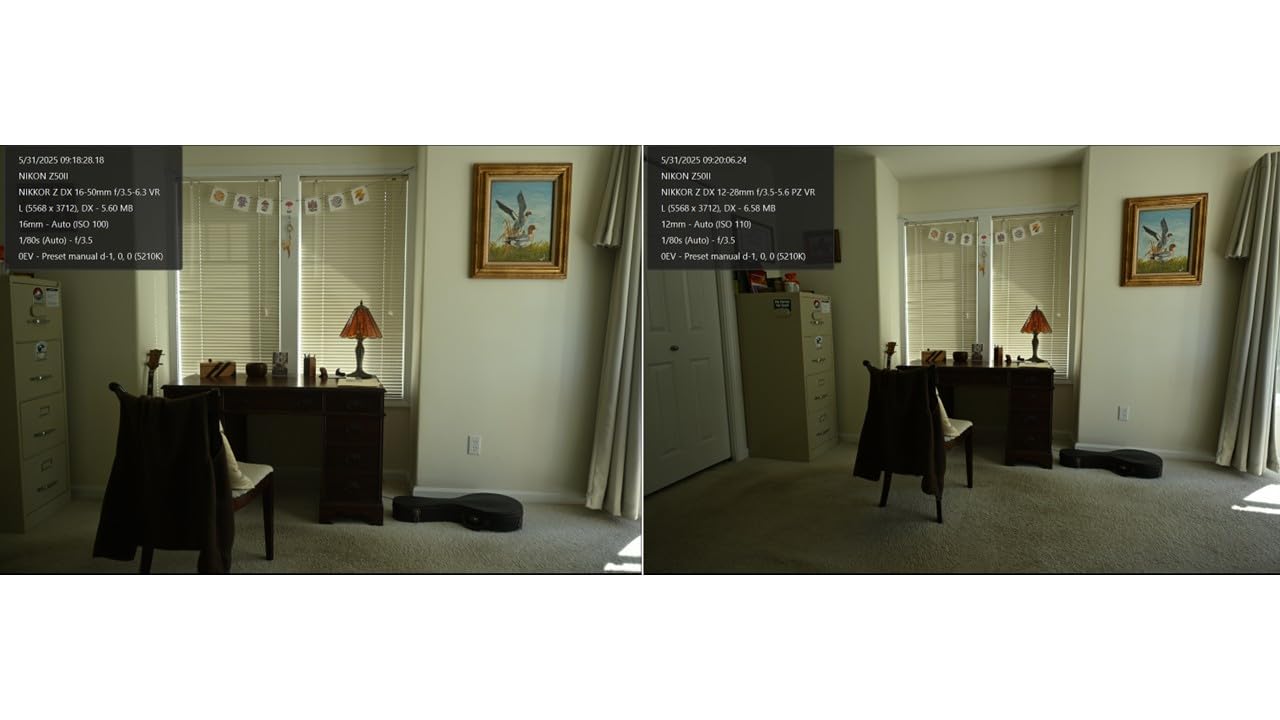
Image quality is excellent across the frame. The 4.5 stops of VR let me shoot handheld at 1/4 second for waterfall shots. Corner sharpness is impressive for such a wide lens, though there is some barrel distortion at 12mm.

The weather sealing gives me confidence in challenging conditions. I shot in light rain and dusty desert environments without issues. This durability matches the Z50 II’s weather resistance perfectly.
Video Production Features
Vloggers and video creators will love this lens. The power zoom enables smooth, professional-looking zooms without touching the lens. I have used this for real estate walkthroughs where smooth camera movements are essential.
The ultra-wide perspective is perfect for selfie-style vlogging. At arm’s length, you can fit yourself and plenty of background context in the frame. The quiet motor ensures no focusing noise in your audio.
Landscape Photography Applications
For landscape work, the 12mm end captures expansive vistas impossible with standard zooms. I have shot Milky Way scenes where the extra width let me include interesting foreground elements. The lens handles star points well with minimal coma.
The close focusing distance of 11 inches lets you create dramatic foreground-background relationships. I often place interesting rocks or plants close to the lens while maintaining sharp background mountains.
5. Nikkor Z DX 16-50mm VR – Best Compact Kit Lens
Pros
- Extremely compact and light
- Sharp across zoom range
- Effective VR stabilization
- Great wide-angle coverage
- Quiet autofocus
Cons
- Plastic construction feels cheap
- Slow aperture at telephoto
- Plastic lens mount
The 16-50mm often gets overlooked because it comes as a kit lens, but that is a mistake. I have carried this lens on hikes where every ounce mattered, and it consistently delivers images that belie its humble origins.
At just a few ounces, this is the smallest interchangeable lens Nikon makes for Z mount. Collapsed, it fits in a jacket pocket. For travel where weight is critical, this lens lets you bring your camera when heavier kits would stay home.
Image quality surprised me. Center sharpness rivals more expensive lenses, and the 24-75mm equivalent range covers most everyday situations. I have printed 16×24 inch images from this lens that look indistinguishable from those shot with premium glass.

The 4.5 stops of VR work exceptionally well. I have handheld shots at 1/10th second at 50mm and gotten usable results. This stabilization compensates somewhat for the slower aperture in low light.
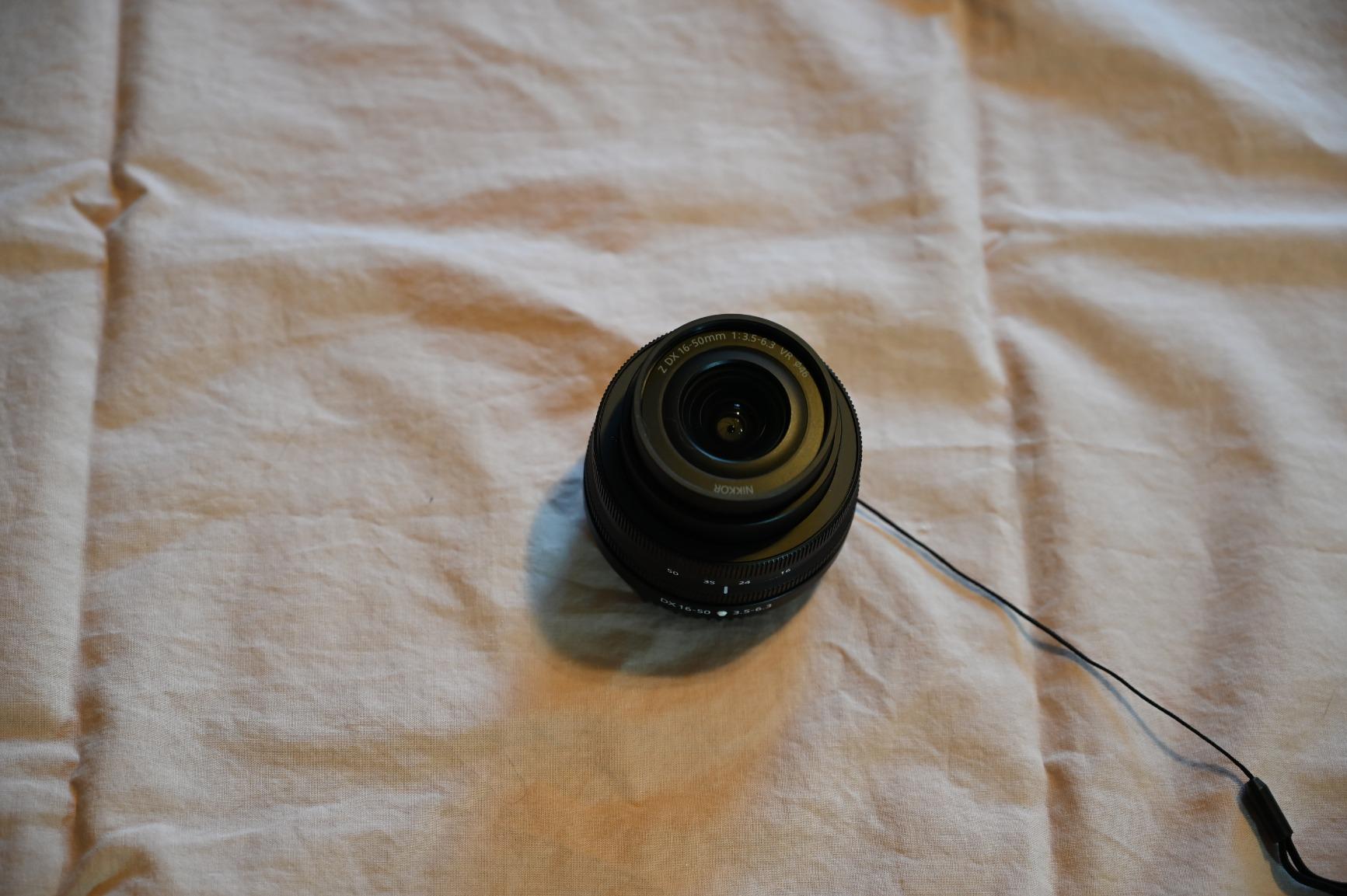
The control ring is assignable to aperture, ISO, or exposure compensation. I set mine to aperture for quick manual control. This feature is rare on kit lenses and adds significant value.
Travel Photography Champion
For travel, this lens is hard to beat. The compact size means you are more likely to carry your camera everywhere. I have captured countless spontaneous moments because the camera was actually with me, not left in the hotel.
The 16mm wide end is genuinely useful for interiors and tight spaces. In European cathedrals and Asian markets, the extra width lets you capture the environment, not just tight details.
Build Quality Concerns
The plastic construction is the main drawback. After two years of use, my copy shows wear on the barrel finish. The plastic lens mount makes me nervous when changing lenses in the field.
That said, the lens has survived drops and bumps without functional issues. The compromises in build quality enable the low price and weight. For casual users, this is acceptable. Working professionals may want to look elsewhere.
6. Sigma 56mm F1.4 DC DN – Best Third-Party Portrait Lens
Pros
- Exceptional sharpness at f/1.4
- Beautiful bokeh quality
- Fast quiet autofocus
- Compact for f/1.4
- Great portrait focal length
Cons
- No image stabilization
- No aperture ring
- Limited availability
Sigma’s entry into the Nikon Z mount has been eagerly anticipated, and the 56mm f/1.4 does not disappoint. This is the fastest aperture lens available for Nikon Z DX cameras, and it transforms your camera into a portrait powerhouse.
The 84mm equivalent focal length is classic for portraiture. It provides flattering compression without excessive facial distortion. I have shot headshots, environmental portraits, and even some wedding work with this lens.
Sharpness wide open at f/1.4 is remarkable. Eye detail is crisp even at maximum aperture, which is rare for any lens. The nine-blade diaphragm creates smooth, circular bokeh that isolates subjects beautifully.

The Super Multilayer Coating effectively controls flare. I shot backlit portraits with the sun behind my subject and maintained contrast and color accuracy. Ghosting and flare artifacts were minimal.
Build quality exceeds Nikon equivalents. The dust and splash resistant construction gives confidence in less-than-ideal conditions. The metal mount feels solid when attaching to the camera.
Portrait Photography Excellence
This lens was designed for portraits. The f/1.4 aperture creates shallow depth of field that separates subjects from backgrounds dramatically. At 84mm equivalent, you can shoot from comfortable working distances while maintaining intimacy.
I have used this for professional headshot sessions where clients expect that creamy background blur. The results rival full-frame systems costing three times as much. For portrait photographers, this lens justifies the entire Z DX system.
Low-Light Capabilities
The f/1.4 aperture gathers over four times more light than f/3.5 kit lenses. I have shot concerts and events at ISO 1600 instead of ISO 6400, preserving image quality. The fast aperture also enables faster shutter speeds for freezing motion.
The lack of VR is less critical at this focal length. I can handhold at 1/60th consistently. For video work, the Z50’s in-body stabilization provides adequate compensation.
How to Choose the Right Nikon Z DX Lens?
Selecting among these excellent Nikon Z DX lenses depends on your specific needs. Here is how I approach the decision.
Understanding DX vs FX Compatibility
DX lenses are designed specifically for APS-C sensors. They project a smaller image circle that covers the sensor perfectly. FX lenses project a larger circle for full-frame sensors and work on DX bodies with automatic cropping.
You can use FX lenses on Z50, Z50 II, Z fc, and Z30 cameras, but you lose the size and weight advantages of the crop sensor system. For example, the full-frame 24-70mm f/4 is larger and heavier than the DX 16-50mm.
Conversely, DX lenses work on full-frame Z cameras like the Z5, Z6, and Z8 in DX crop mode. This versatility means your lens investment retains value if you upgrade to full-frame later.
Camera Body Compatibility
All lenses in this guide work perfectly with every Nikon Z DX camera. The Z50 and Z50 II offer the best autofocus performance with these lenses, especially for tracking moving subjects.
The Z fc adds dedicated dials for a more tactile shooting experience. Its retro styling pairs beautifully with compact primes like the 24mm f/1.7. The Z30, lacking a viewfinder, works best with lenses that have wide fields of view for composing on the rear screen.
All three camera bodies feature in-body image stabilization, which helps compensate for lenses without VR like the 24mm f/1.7 and Sigma 56mm.
Key Factors to Consider
Focal Length: Consider what you shoot most. Landscapes favor wide angles like the 12-28mm. Portraits demand the Sigma 56mm f/1.4. Travel photography benefits from versatile zooms like the 18-140mm.
Aperture: Fast apertures (f/1.4-f/1.7) excel in low light and create shallow depth of field. Slower zooms (f/3.5-6.3) work fine in good light but struggle indoors.
Weight and Size: If you carry your camera daily, compact lenses like the 16-50mm and 24mm f/1.7 make a significant difference. For dedicated photography outings, the larger 18-140mm or 50-250mm offer more versatility.
Frequently Asked Questions
What is the best DX-format fast aperture prime lens for Nikon Z?
The Nikkor Z DX 24mm f/1.7 is the best fast aperture prime for Nikon Z DX cameras. Its f/1.7 maximum aperture provides excellent low-light performance and shallow depth of field. The 35mm equivalent field of view makes it versatile for street, documentary, and everyday photography. At under 10 ounces, it is compact enough for daily carry.
What is the best DX-format standard zoom lens for Nikon Z?
The Nikkor Z DX 18-140mm VR is the best standard zoom, offering a versatile 7.8x range from wide-angle to telephoto. It covers 27-210mm equivalent, handling everything from landscapes to portraits. The VR stabilization provides 4.5 stops of compensation, and the lens maintains good sharpness across the entire zoom range.
Which APS-C wide-angle lens should I choose for Z Mount?
The Nikkor Z DX 12-28mm PZ VR is the only dedicated ultra-wide option for Z mount DX cameras. Its 12mm focal length provides an 18mm equivalent field of view, perfect for landscapes and architecture. The power zoom feature makes it ideal for video work, and the weather-sealed construction handles challenging conditions.
What Nikon Z DX lenses are available?
Nikon currently offers six native DX lenses: 12-28mm PZ VR (ultra-wide zoom), 16-50mm VR (compact standard zoom), 18-140mm VR (all-in-one zoom), 24mm f/1.7 (fast prime), and 50-250mm VR (telephoto zoom). Third-party options include the Sigma 56mm f/1.4 for portraits. All work with Z50, Z50 II, Z fc, and Z30 cameras.
Can I use FX lenses on Nikon DX cameras?
Yes, all FX (full-frame) Z mount lenses work on DX cameras like the Z50 and Z30. The camera automatically crops to the DX sensor area. However, FX lenses are larger, heavier, and more expensive than DX equivalents. They offer no image quality advantage on DX sensors since you use only the center portion of the lens.
Final Thoughts on Nikon Z DX Lenses
Nikon has built an impressive lineup of DX lenses for their Z mount system. From the versatile 18-140mm all-in-one zoom to the portrait-specialized Sigma 56mm f/1.4, there is a lens for every shooting style.
If I could only own one Nikon Z DX lens, it would be the 18-140mm VR. Its zoom range covers virtually every situation, and the image quality exceeds expectations for the price. For photographers building a two-lens kit, add the 50-250mm for telephoto reach or the 24mm f/1.7 for low-light work.
The Z DX system offers exceptional value in 2026. These lenses prove you do not need full-frame gear to create professional-quality images. Choose the lens that matches your photography, and start creating.